Salmorejo: A Thick, Cold Starter From Córdoba's Bars and Taverns
Tomatoes, bread, olive oil, garlic and salt, and nothing else in the base. The bread is not a topping or a side. It is the backbone of the soup, and the olive oil turns it into something you eat with a spoon.
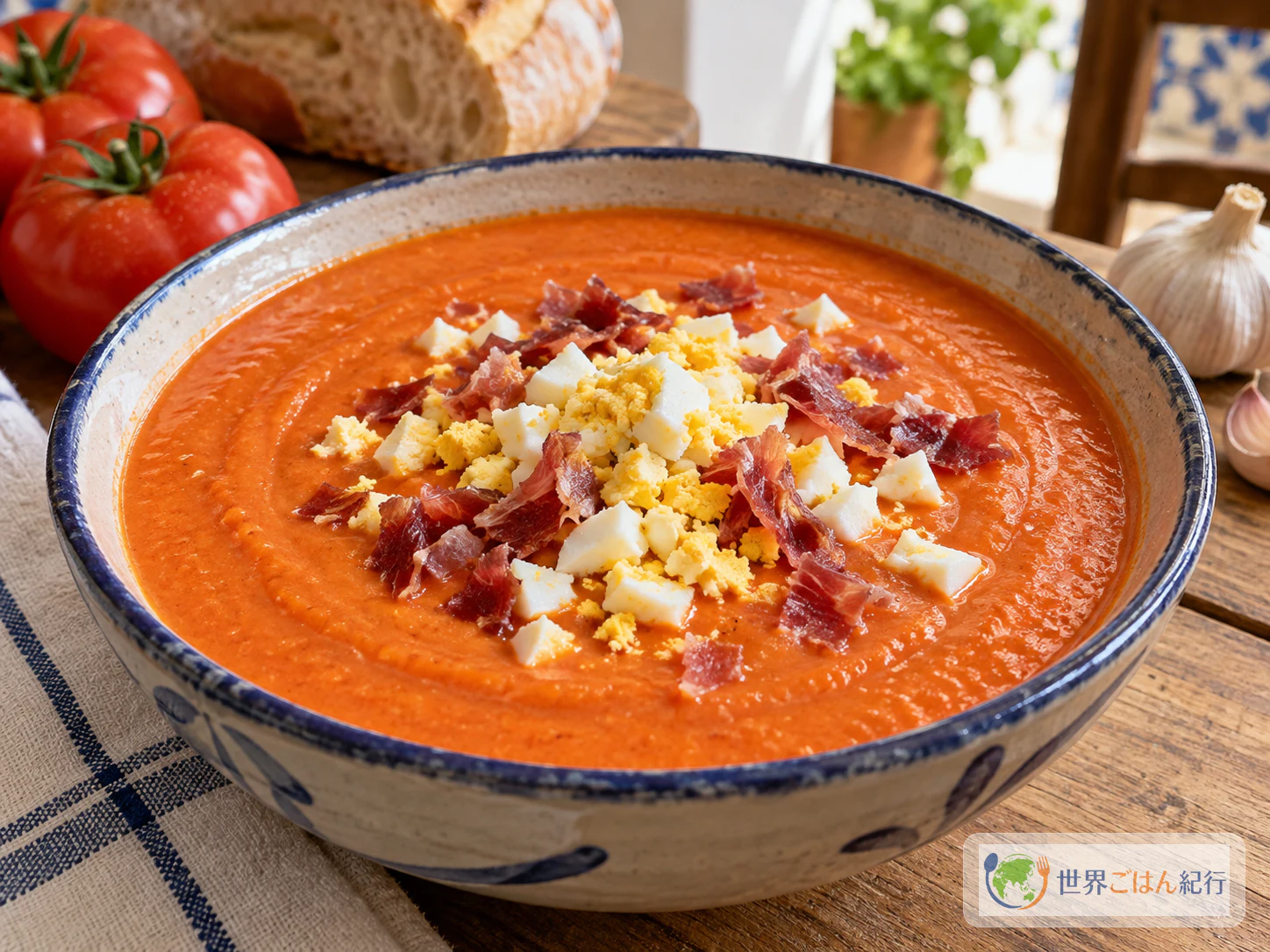
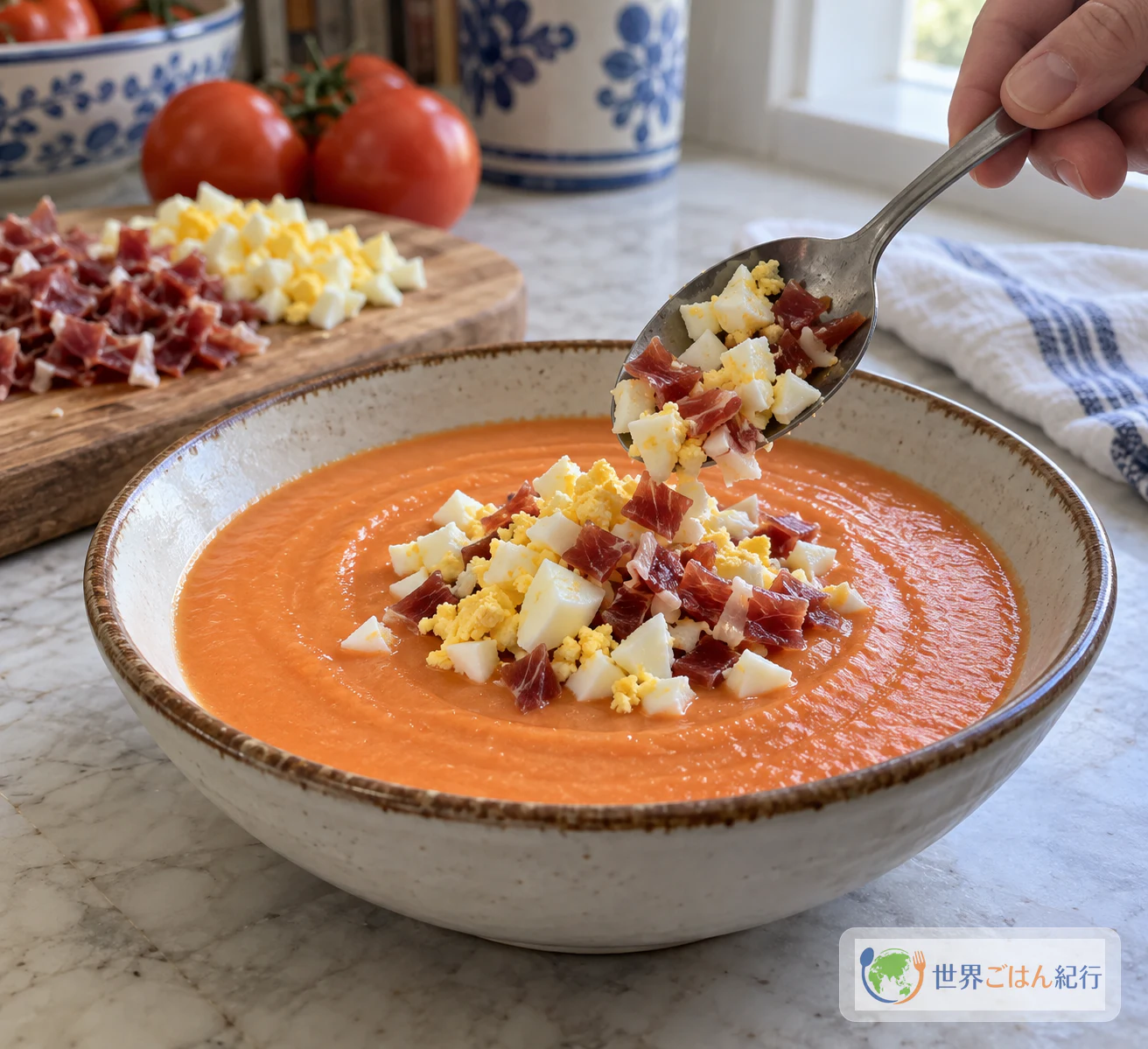
A bowl comes out of the refrigerator, deep red-orange and so thick that a spoon leaves a trail on the surface. On top go a little chopped white egg and a few small pieces of red ham. In Córdoba, the city's own tourism guide describes salmorejo cordobés as one of the city's signature dishes: a creamy cold soup built on tomato, bread and olive oil, served as a starter in bars, taverns and restaurants.
What surprises many first-time cooks is how much bread goes in. In the version used here, a kilogram of tomatoes is blended with 200 g of Córdoba's white telera bread and 100 g of extra-virgin olive oil. The bread does not float in the soup. It disappears into it and gives the soup its body.
This article is about salmorejo cordobés, the cold tomato and bread dish of Córdoba in Andalusia. The word "salmorejo" is also used in other parts of Spain for different preparations, such as sauces for stewed dishes. That is why the full name includes "cordobés."
This recipe follows a single published version, the "Salmorejo Cordobés" recipe from the Cofradía Gastronómica del Salmorejo Cordobés, credited to the Aula de Cultura Gastronómica of the Universidad de Córdoba. Its ingredients and order are kept as published. Where this article suggests substitutes for cooks outside Spain, it says so.
How It Differs From Gazpacho: Body From Bread and Oil
Both are cold, tomato-based and Andalusian, so the two are often compared. The clearest way to see the difference is to look at the specific recipe used here. This salmorejo contains no cucumber, no green pepper, no vinegar and no added water. What it does contain is 200 g of bread and 100 g of olive oil blended with the strained tomato, which makes a dense, creamy texture you eat with a spoon.
This is not a strict rule for every bowl. Some gazpachos also include bread, and recipes vary from cook to cook and from town to town. It is not accurate to say that gazpacho is always a thin drink and salmorejo is always thick. But if you set this published salmorejo next to a typical vegetable-heavy gazpacho, the short ingredient list and the weight of bread and oil are what set it apart.
Ingredients: The Cofradía Recipe, Unchanged
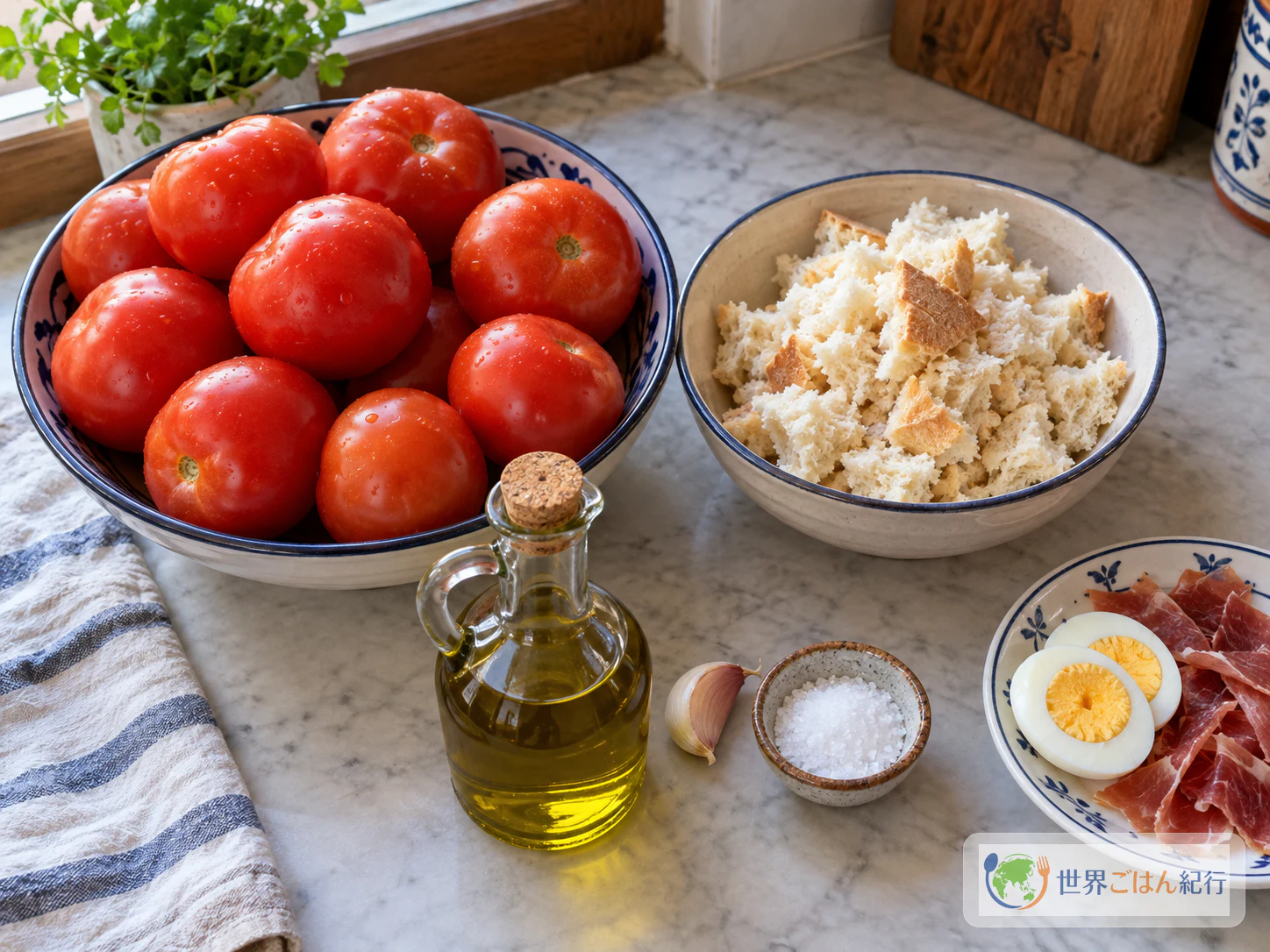
These amounts are exactly as published in the Cofradía recipe. The source does not give a number of servings, a finished yield, any times, or amounts for the egg and ham, so none are given here. The 1 kg of tomatoes is the amount you start with, before straining. You do not need to top the strained purée back up to 1 kg.
This recipe contains wheat (gluten) from the bread and egg in the garnish. Check the labels of the bread and the ham you buy for allergen and shared-facility information.
Equipment
- Blender (a powerful one makes it easier to blend the tomato and bread evenly)
- Fine-mesh sieve
- Large bowl to catch the strained purée
- Cutting board and knife
- Kitchen scale (the oil, bread and salt are given by weight)
- Clean container with a lid, for chilling
Choosing Bread, Tomatoes and Garlic Outside Córdoba
Bread. Telera is a bread from Córdoba. In a Spanish TV report on salmorejo cordobés, the cook at the featured restaurant recommended telera and explained that it is a bread with plenty of white crumb (miga). If you can't find it, a practical substitute is the crumb of a dense white loaf or country-style bread, weighed to 200 g. This is a substitution for availability, not the same bread, and the texture of the soup may differ.
Note one detail. The source specifies 200 g of telera bread. It does not say "200 g of crumb only." If you use a substitute and remove the crust, weigh the 200 g after removing it, so you don't confuse it with the weight of the loaf before trimming. If you use a sandwich loaf, choose a dense one rather than soft, airy slices, which absorb liquid differently and may not give the same texture. Do not soak the bread in water or milk beforehand. The published recipe adds nothing of the kind.
Tomatoes. Choose ripe tomatoes with good flavor and aroma for eating raw. The Cofradía recipe does not name a variety, so a specific variety is not part of the recipe. If your tomatoes are watery, don't fix it by adding more bread or oil. That turns the recipe into a different one. A regional tourism recipe from Priego de Córdoba recommends pear-shaped tomatoes and notes that removing excess water makes the soup thicker. If you try that, treat it as an optional adjustment taken from that regional source, not part of the base recipe.
Garlic. The source specifies one clove of garlic from Montalbán, a town in Córdoba province. Elsewhere, one clove of ordinary fresh garlic is the practical substitute. Cloves vary in size and sharpness, so if you are sensitive to raw garlic, choosing a smaller clove is a reasonable way to deal with that variation. The recipe itself still calls for one clove.
Olive oil and salt. Choose an extra-virgin olive oil whose aroma you like, since it is not cooked and you will taste it. Keep the salt at the published 10 g to start. The ham on top is also salty, so if you decide to use less salt, that is your own change to the recipe.
Method: Blend, Strain, Blend Again, Chill
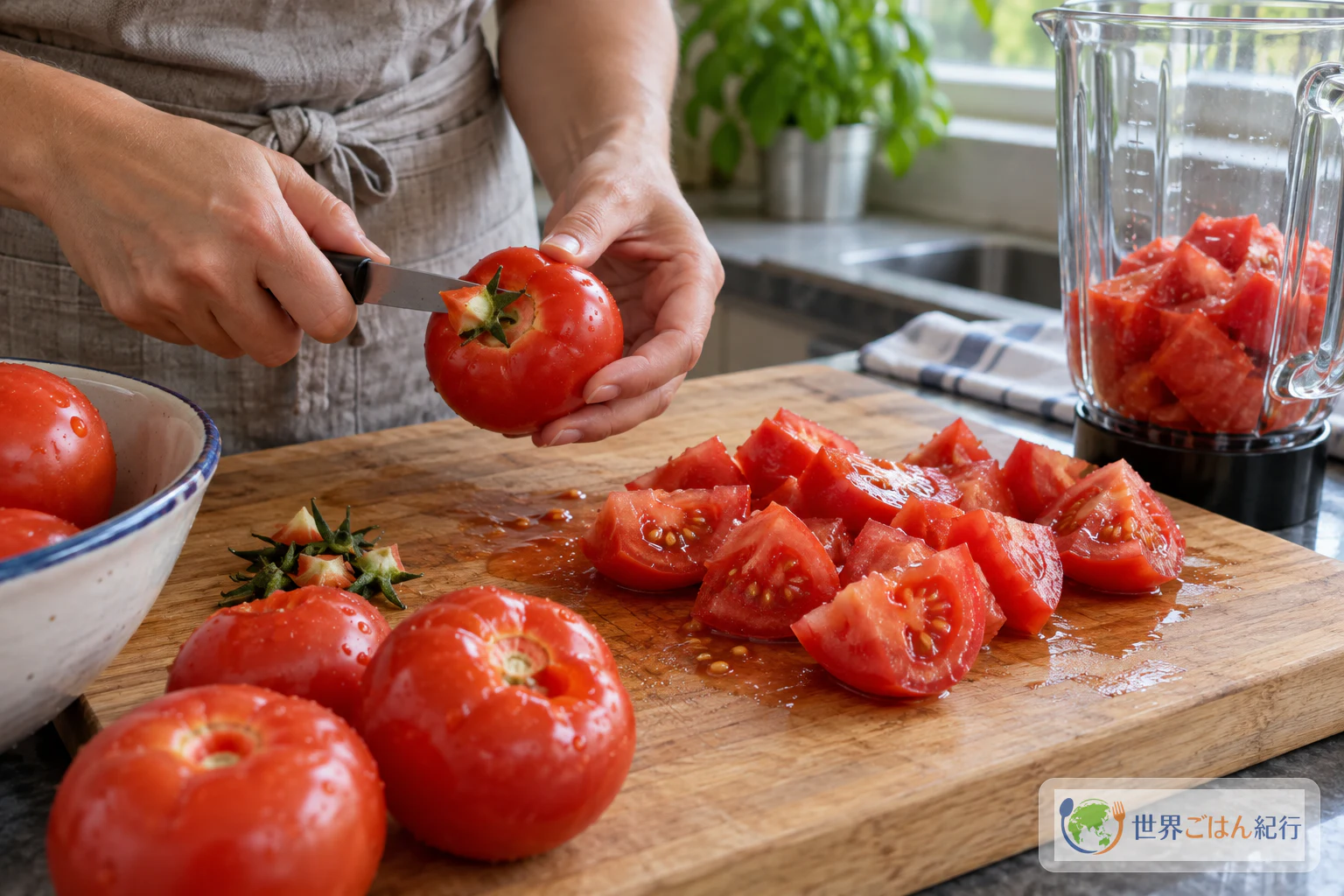
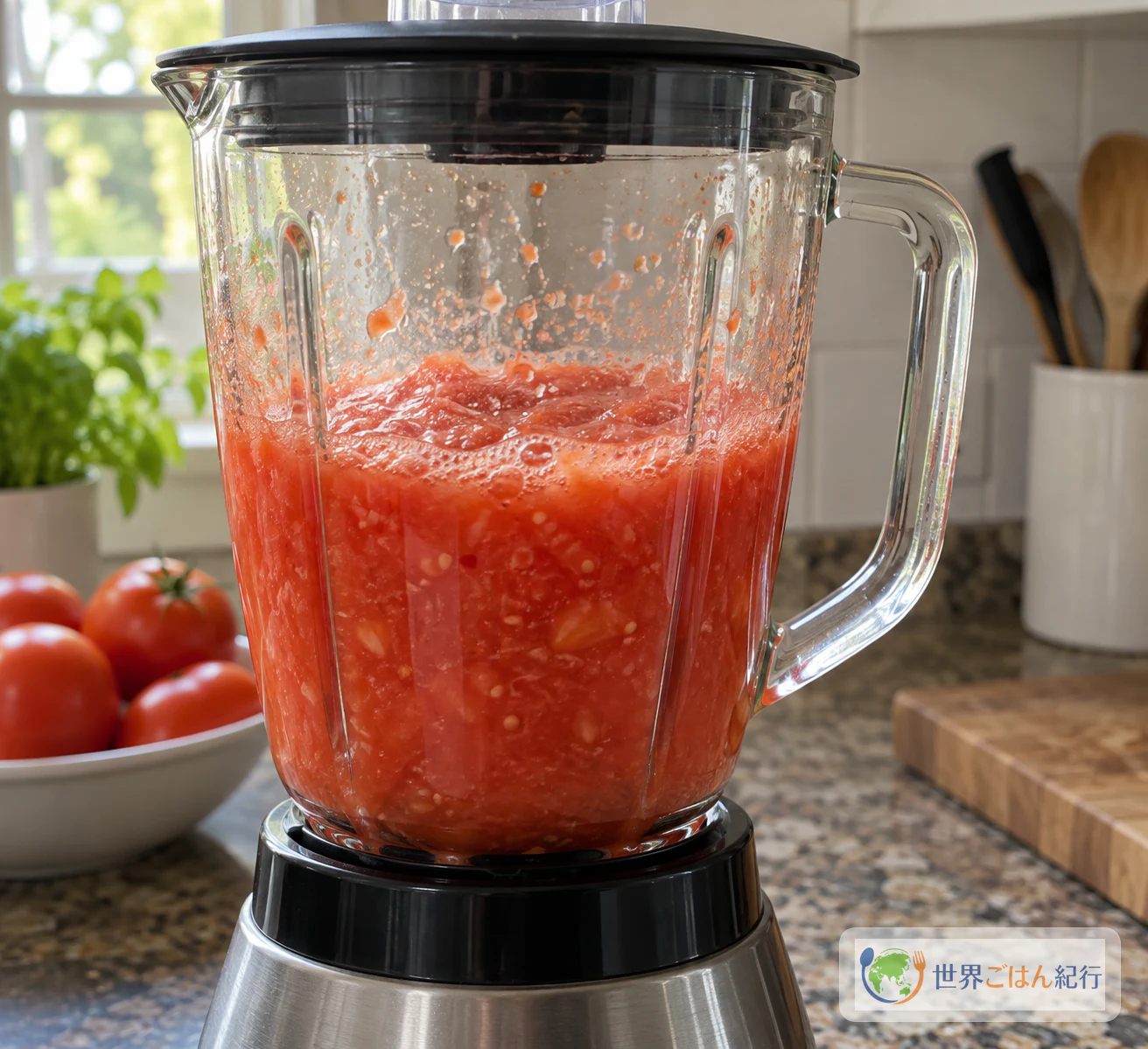
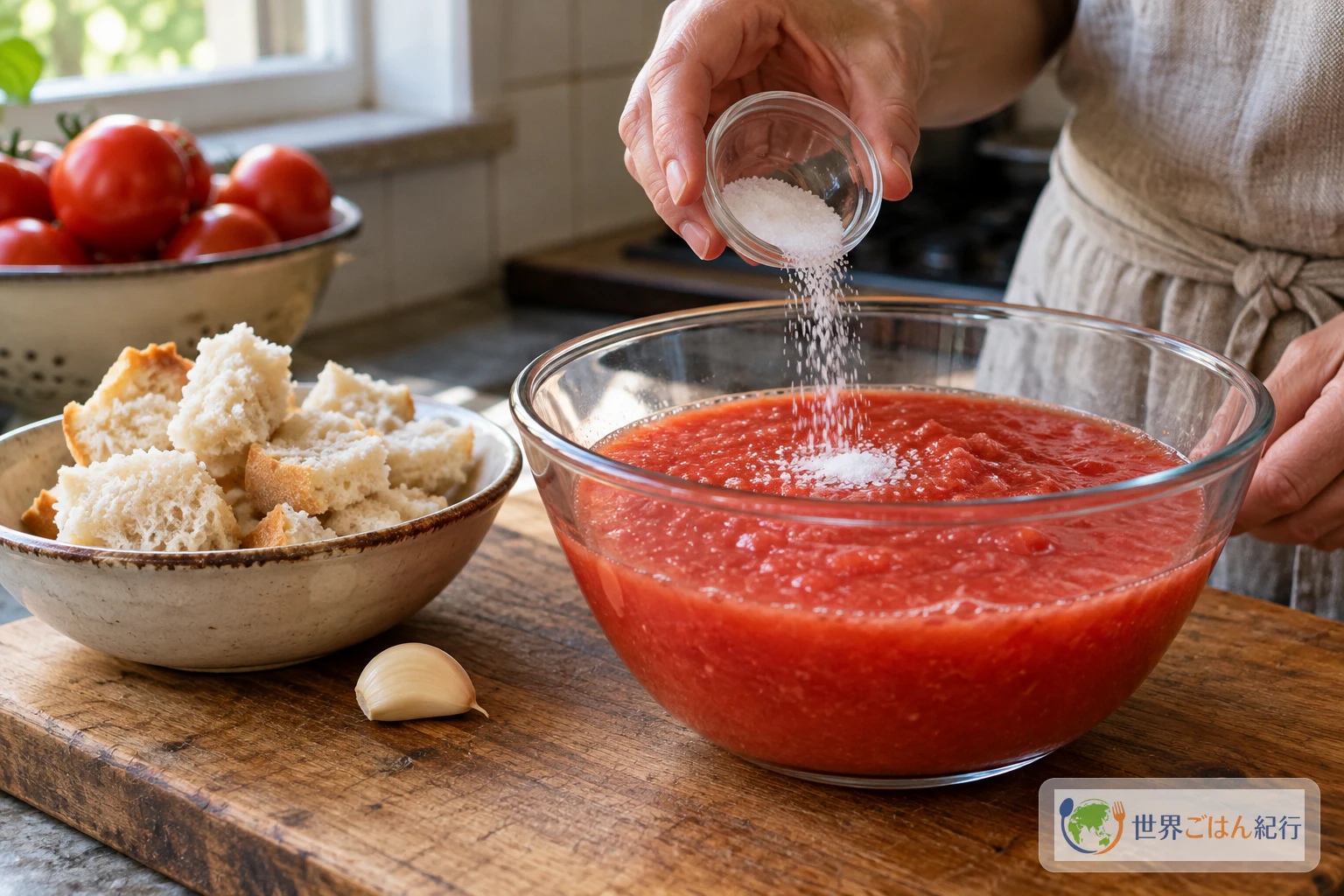
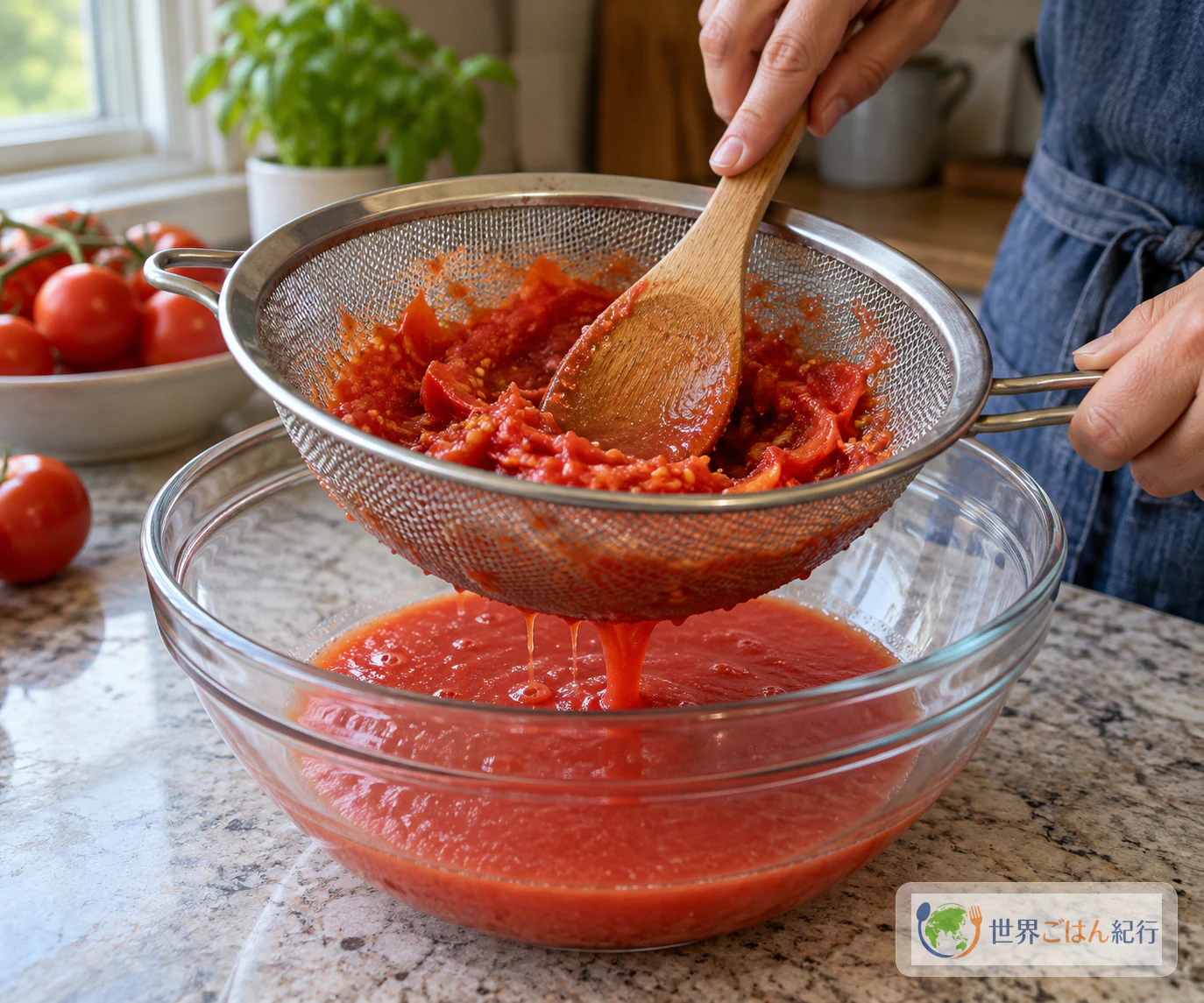
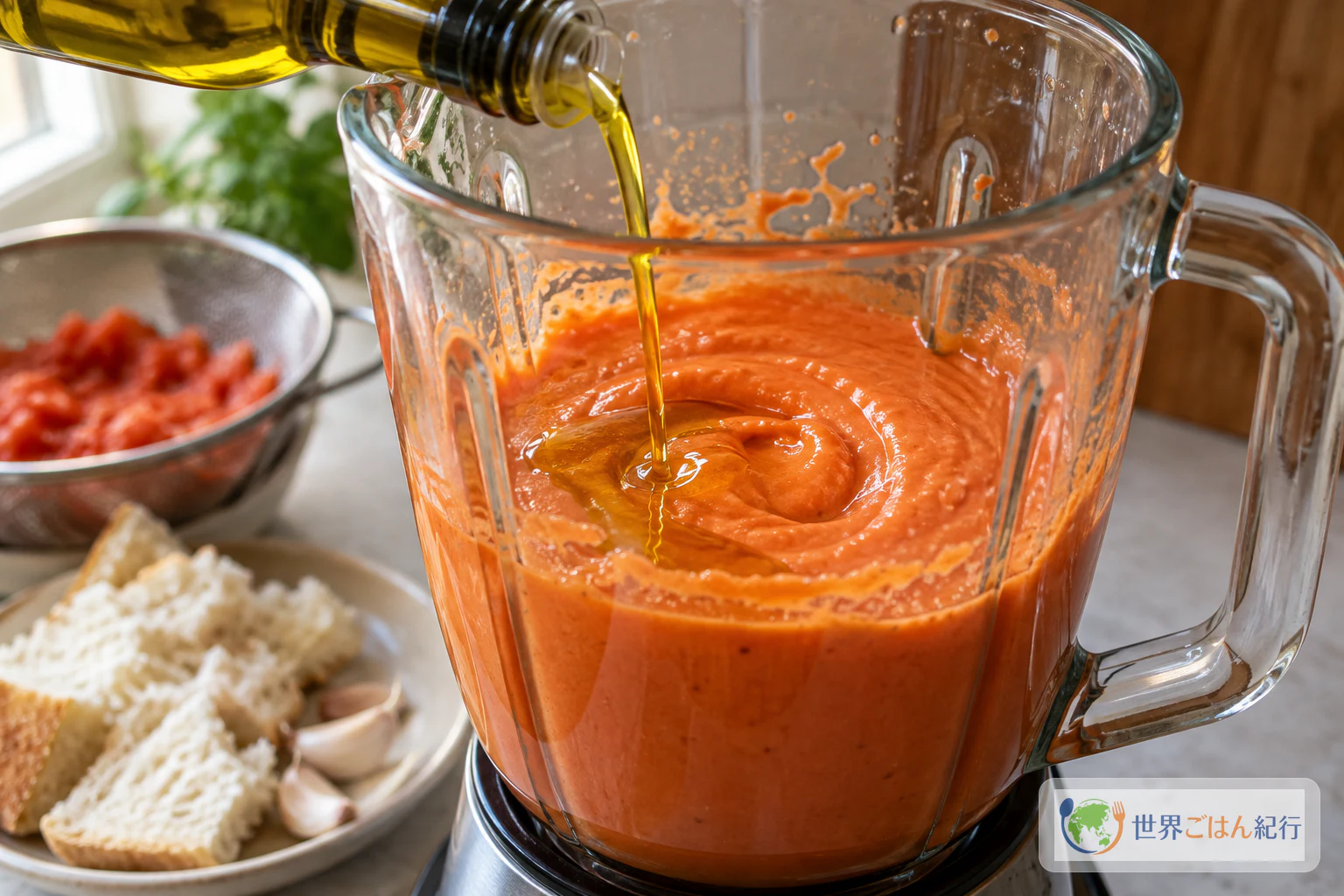
The Cofradía recipe blends the tomatoes first, strains out the skins and seeds, and only then adds the bread, oil, garlic and salt for a second blend. Nothing is cooked at any stage.
The source gives no times or temperatures for blending, and no rule for how fast to add the oil. Use your blender according to its manufacturer's instructions, and judge each stage by how it looks.
Salmorejo is made from raw vegetables and is never heated, so do not treat it as a cooked or sterilized food. Following the advice of Spain's food safety agency (AESAN) for dishes eaten cold:
- Use clean hands, utensils and work surfaces, and keep raw and ready-to-eat foods from cross-contaminating.
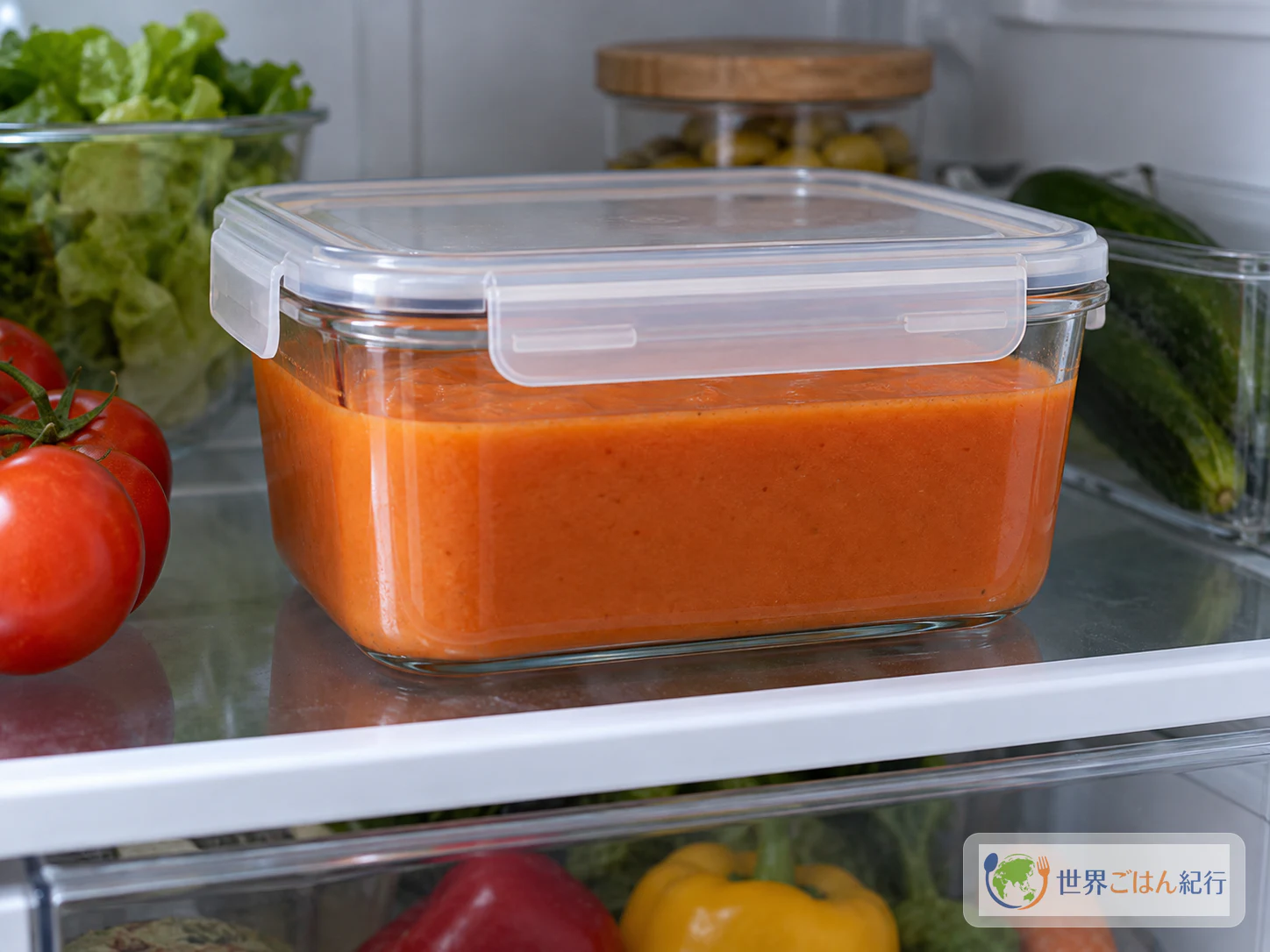
- Refrigerate the salmorejo promptly after making it.
- Do not leave it at room temperature for more than 2 hours. This is an upper limit, not a recommended waiting time.
- Keep refrigerated food at 5°C or below. This is general food-safety guidance, not a guarantee of how long salmorejo will keep.
If you carry it somewhere, keep it cold and don't let it sit out for long. The sources used here give no specific number of days salmorejo can be stored, so none is given. Refrigerate it promptly and eat it soon.
Grainy, Loose or Too Sharp: Fixing the Texture
These are general kitchen explanations, not statements from the published recipe. Try them before changing the recipe's amounts. Adding extra bread or oil is not the basic fix, because that makes a different recipe.
| Problem | Likely reason | What to try |
|---|---|---|
| Grainy texture | Not blended long enough, or bread with a coarse, uneven crumb | Blend longer, within your blender's instructions. Next time, choose a denser white bread |
| Specks of skin or seed | The sieve was coarse, or too much purée was pushed through at once | Strain again through a finer sieve, in smaller batches |
| Looser than expected | Watery tomatoes, or a light, airy bread | Chilling firms it somewhat. Next time, choose riper, more flavorful tomatoes and a denser bread, rather than adding more bread or oil |
| Garlic too strong | The clove was large or particularly sharp | Next time, choose a smaller clove. The recipe still uses one clove |
| Warm after blending | Heat from the blender motor | Refrigerate until thoroughly cold before serving |
| Too salty with the ham | Salt in both the soup and the topping | Use less ham. Reducing the 10 g of salt is a change from the source |
Regional Versions and Variations
The Cofradía recipe is one published version, not the only one. Other versions are not wrong. They are simply different recipes, and it helps to keep them separate rather than mixing amounts.
| Version | What it uses | How it differs from this recipe |
|---|---|---|
| Cofradía recipe (this article) | Tomatoes 1 kg, telera 200 g, EVOO 100 g, Montalbán garlic 1 clove, salt 10 g | Tomatoes blended and strained first, then blended again with the rest. Garnished with egg and jamón serrano |
| Priego de Córdoba (Subbética regional tourism recipe) | Ripe tomatoes 1 kg, green pepper 50 g, hard wheat bread 400 g, garlic 2 cloves, EVOO 150 ml | Includes green pepper, more bread and more oil, and lets the tomatoes, bread and other ingredients rest for 2 hours before blending |
| RTVE report (Ahora o Nunca) | Telera 200 g, tomatoes 1 kg, EVOO 150 ml, garlic 1 clove, salt | More oil, measured by volume. The soup is chilled, then topped with egg and ham |
| Córdoba city tourism guide | Bread, oil and garlic, without fixed amounts for bread and oil | The bread is soaked in oil and garlic from the night before |
Without pork. If you don't eat pork, you can serve the salmorejo topped with egg only. Keep in mind that the traditional garnish in the Cofradía recipe is both egg and jamón serrano.
Without bread. You can blend tomatoes, oil, garlic and salt without bread, but the result is no longer salmorejo as this recipe makes it. It is better treated as a different dish.
Substitute ham. Other cured hams can stand in for jamón serrano, but their saltiness and aroma differ.
Salmorejo on the Córdoba Table
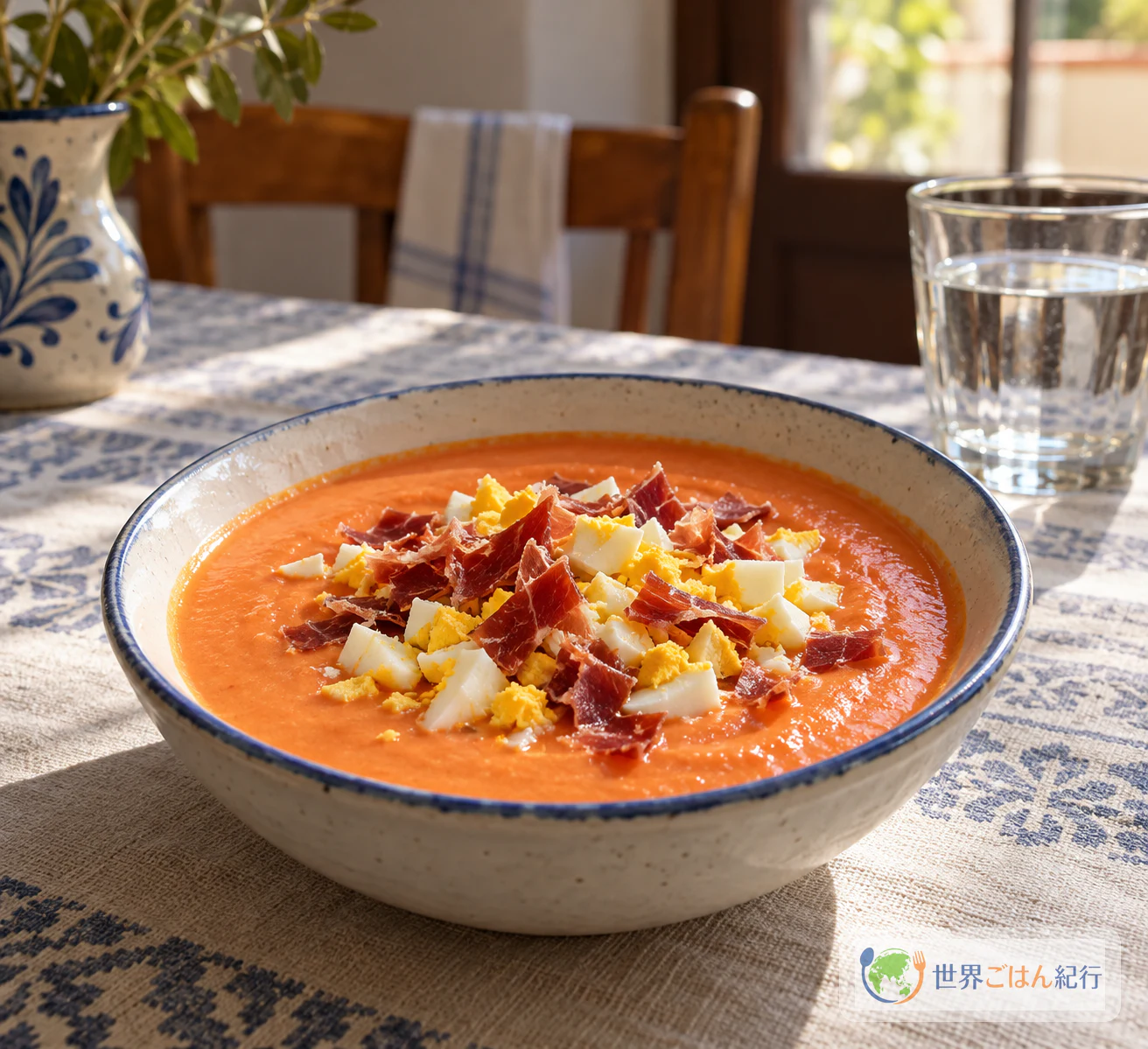
Córdoba's tourism guide presents salmorejo cordobés as one of the city's representative dishes and says it is served as a starter in bars, taverns and restaurants. At home, that role works the same way: a modest bowl, well chilled, with the egg and ham on top, before the rest of the meal.
The star is not only the tomato. It is the balance of ripe tomato with the white crumb of the bread and the olive oil. That is why the choice of bread receives so much attention in Córdoba, and why the published recipe weighs the oil rather than pouring it freely.
The origins of the dish and the history of its name are not covered here, because the sources used for this recipe do not settle them. For more dishes from Spain, see the Spain page.
Frequently Asked Questions
How is salmorejo different from gazpacho?
In this recipe, salmorejo uses only tomatoes, bread, olive oil, garlic and salt, with no cucumber, green pepper, vinegar or water. The 200 g of bread and 100 g of oil make it thick enough to eat with a spoon. Gazpacho recipes vary, and some include bread, so the difference is a matter of typical recipes rather than an absolute rule.
Can I make it without bread?
You can blend the other ingredients, but without bread the soup loses the body that defines this recipe. It becomes a different dish, not salmorejo as published here.
What if I can't find telera bread?
Use the crumb of a dense white loaf or country-style bread, weighed to 200 g. It is a practical substitute, not the same bread, so the texture may differ. Avoid soft, airy sliced bread, and don't soak the bread in water or milk.
Does salmorejo include green pepper or vinegar?
Not in the Cofradía recipe used here. Some other published versions do differ. For example, the regional tourism recipe from Priego de Córdoba includes green pepper.
How many days does salmorejo keep?
The sources used for this recipe do not give a number of days, so none is given here. It is a raw, uncooked dish. Refrigerate it promptly in a clean, covered container, keep it at 5°C or below, don't leave it at room temperature for more than 2 hours, and eat it soon.
Should I drizzle olive oil on top?
The Cofradía recipe puts all 100 g of olive oil into the blend and finishes the soup with egg and ham only. A finishing drizzle is not part of this recipe.
Sources
- Cofradía Gastronómica del Salmorejo Cordobés, "Salmorejo Cordobés" (PDF, credited to the Aula de Cultura Gastronómica, Universidad de Córdoba). Source of the ingredients and amounts (tomatoes 1 kg, telera cordobesa 200 g, extra-virgin olive oil 100 g, one clove of Montalbán garlic, salt 10 g), the order of blending, straining the skins and seeds, and the garnish of hard-boiled egg and jamón serrano. It does not give servings, times, or garnish amounts. https://www.cofradias.net/Recetas/RecetaSalmorejoCordob%C3%A9s.pdf
- Turismo de Córdoba (Ayuntamiento de Córdoba), "Córdoba Gastronomy / Guía gastroturística de Córdoba," 2018. Describes salmorejo cordobés as a representative dish of Córdoba, a creamy cold soup based on tomato, bread and olive oil, served as a starter in the city's bars, taverns and restaurants. Its own recipe soaks the bread in oil and garlic from the night before. https://www.turismodecordoba.org/archivos/2018/20180509114619.pdf
- Turismo Subbética Córdoba / Mancomunidad de la Subbética, "Salmorejo | Priego de Córdoba." A regional version with ripe tomatoes 1 kg, green pepper 50 g, hard wheat bread 400 g, two cloves of garlic and extra-virgin olive oil 150 ml, a 2-hour rest before blending, and advice on pear-shaped tomatoes and removing excess water. https://turismodelasubbetica.es/priego-de-cordoba/item/salmorejo
- RTVE / Ahora o Nunca, "Así se hace el salmorejo cordobés, ¡el auténtico!," 2023. The featured restaurant's cook recommends telera bread with plenty of white crumb. Also shows a different recipe (telera 200 g, tomatoes 1 kg, extra-virgin olive oil 150 ml, one clove of garlic, salt), chilled and topped with egg and ham. https://www.rtve.es/television/20230922/receta-salmorejo-cordobes-trucos-secretos-pan-miga/2456481.shtml
- Agencia Española de Seguridad Alimentaria y Nutrición (AESAN), "Prevenir intoxicaciones alimentarias en verano." General food-safety advice: refrigerate dishes eaten cold promptly, do not leave food at room temperature for more than 2 hours, keep refrigerated food at 5°C or below, and use clean hands, utensils and surfaces to avoid cross-contamination. It does not set a storage period for salmorejo. https://www.aesan.gob.es/es/actualidad/campanyas-seguridad-alimentaria/campania_verano