Turrón de Jijona: The Soft One on the Christmas Plate
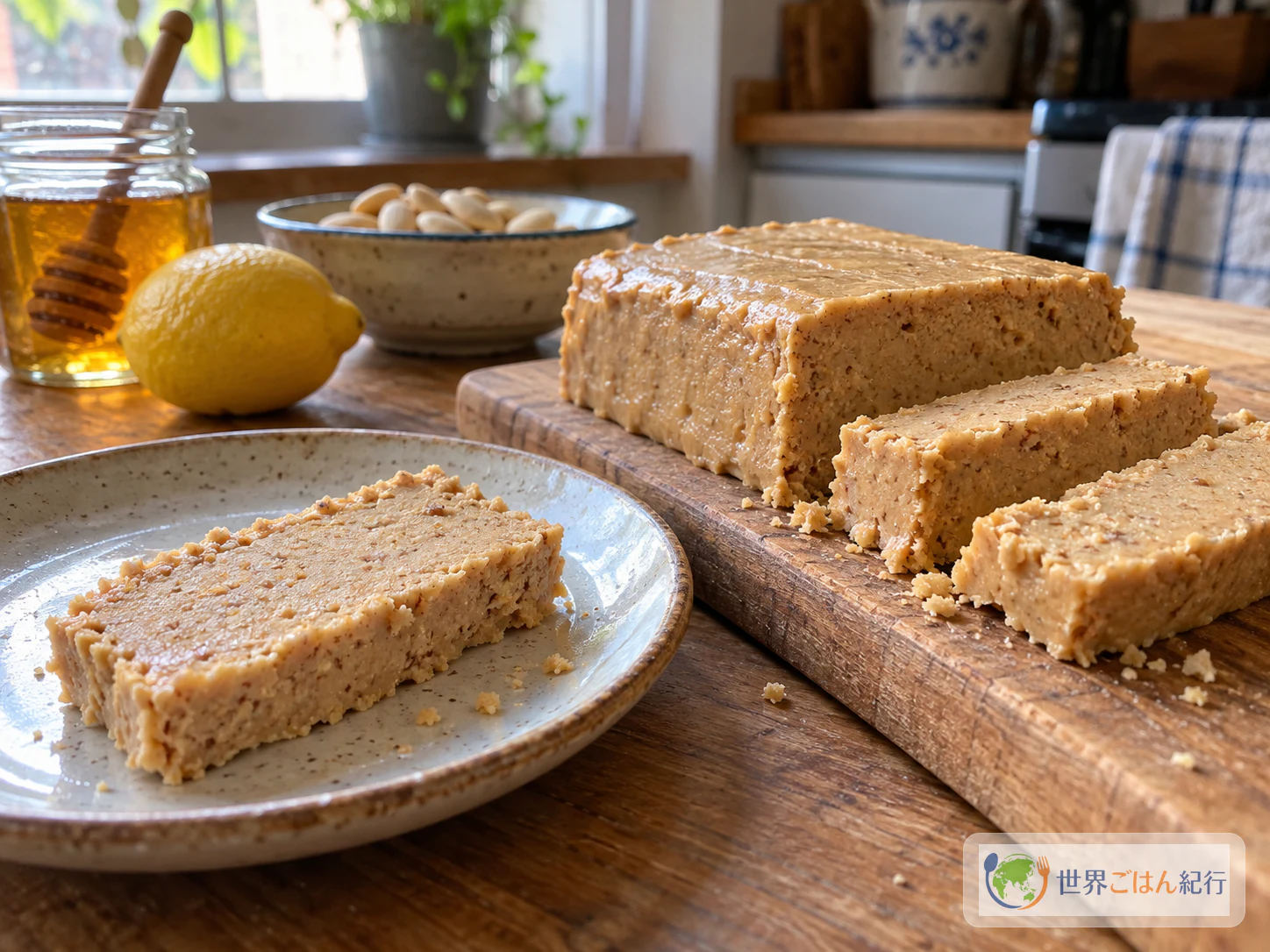
This is the soft turrón de Jijona: almonds ground until their own oil binds them with honey, sugar and egg white. It does not use the chopped almonds or wafer sheets of the hard Alicante type.
At Christmas in Spain, a plate of sweets often holds more than one kind of turrón. One is a hard bar with almond pieces showing through. Another gives way under the knife and has a fine, even almond texture in its cut face. Both are called turrón, yet they are made differently and eat differently. This article covers the second: soft turrón de Jijona, also sold as turrón blando.
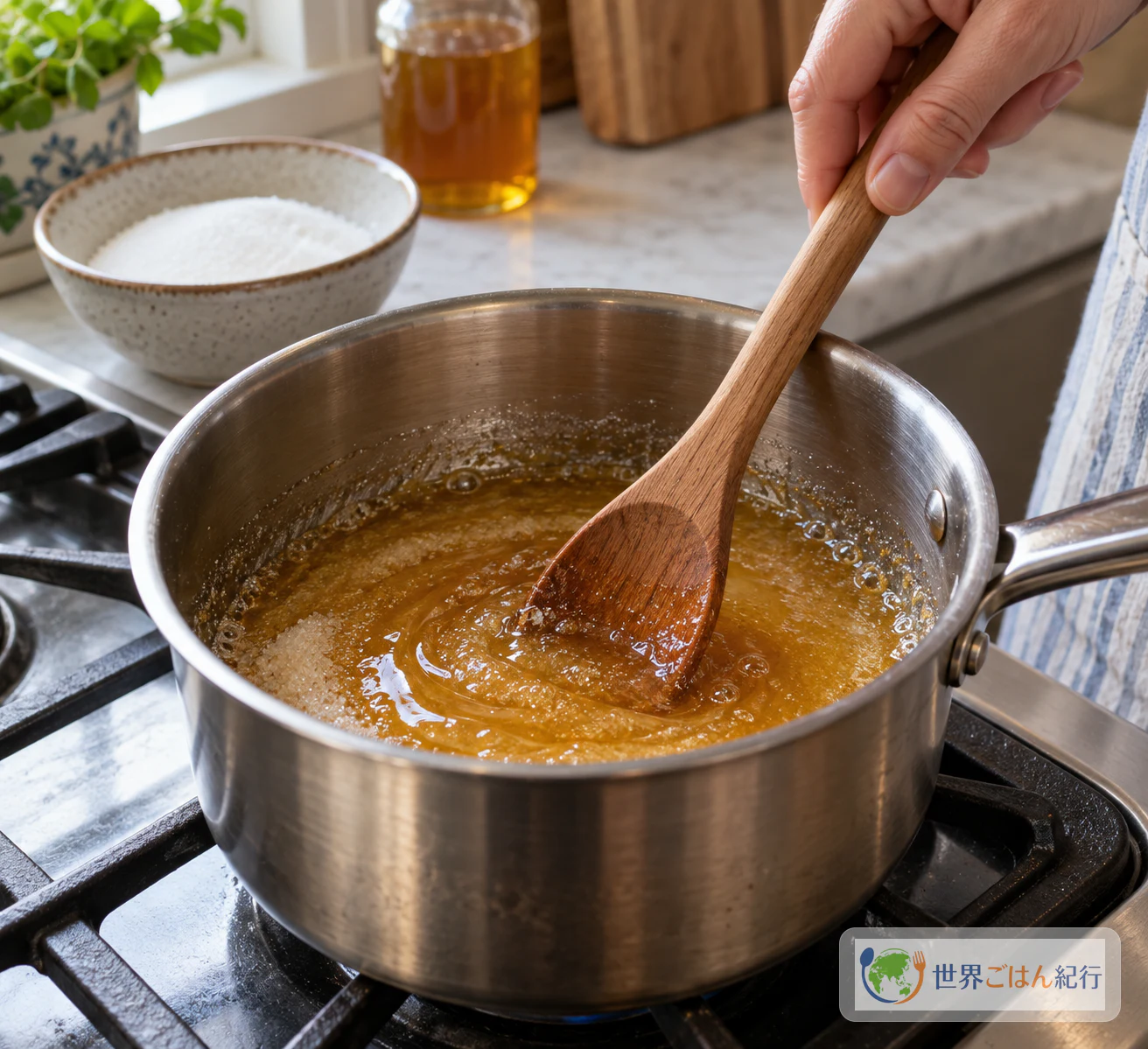
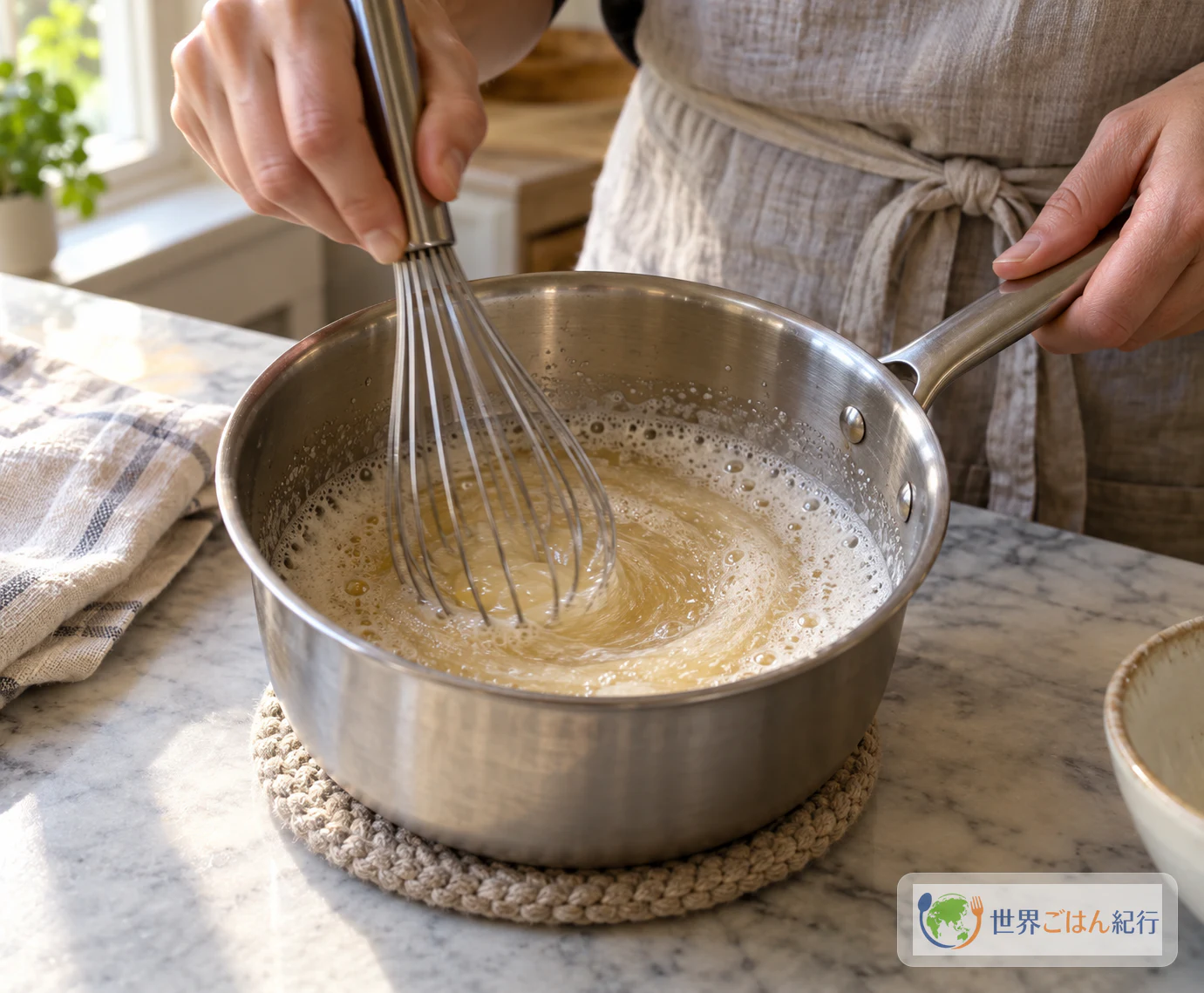
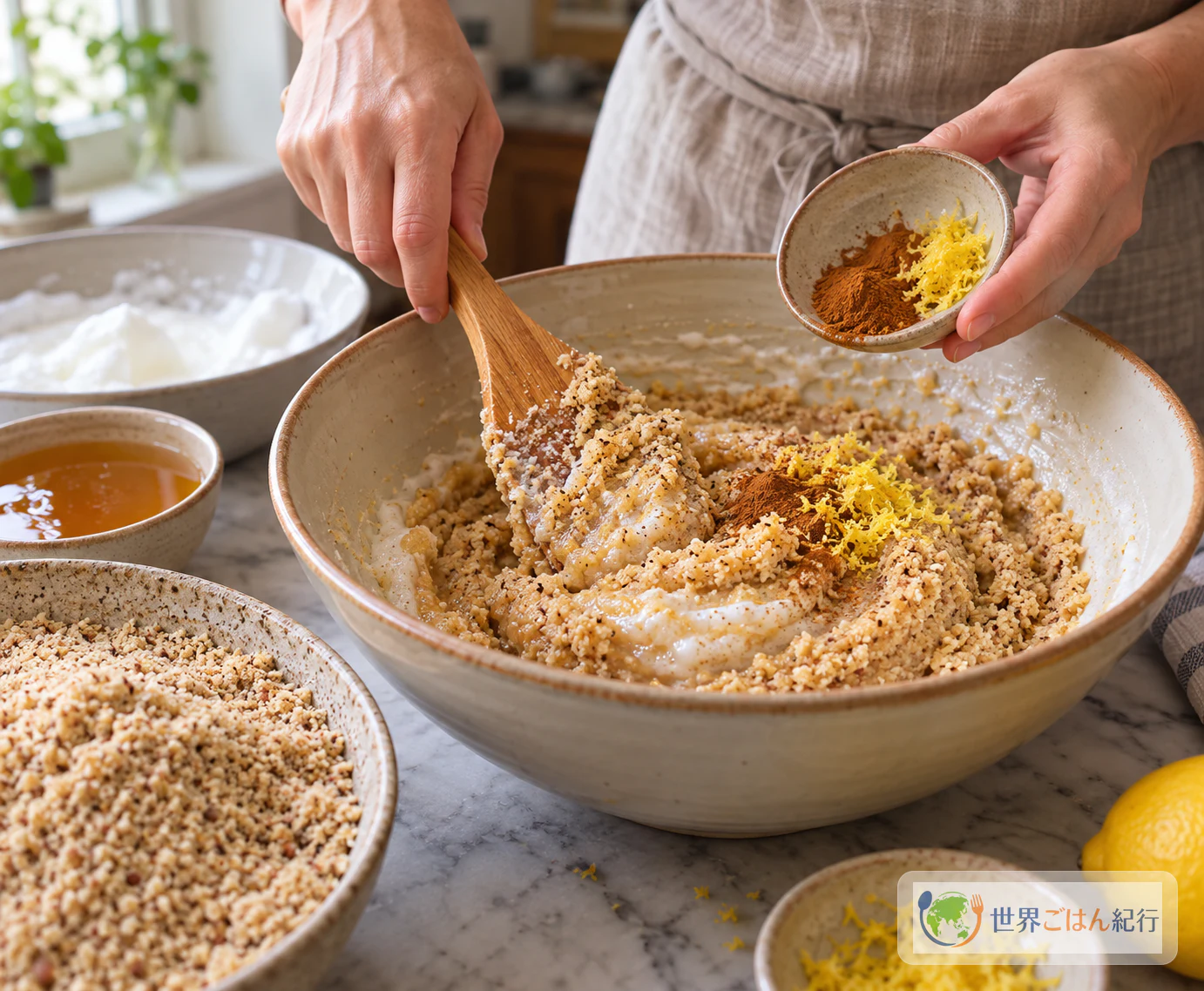
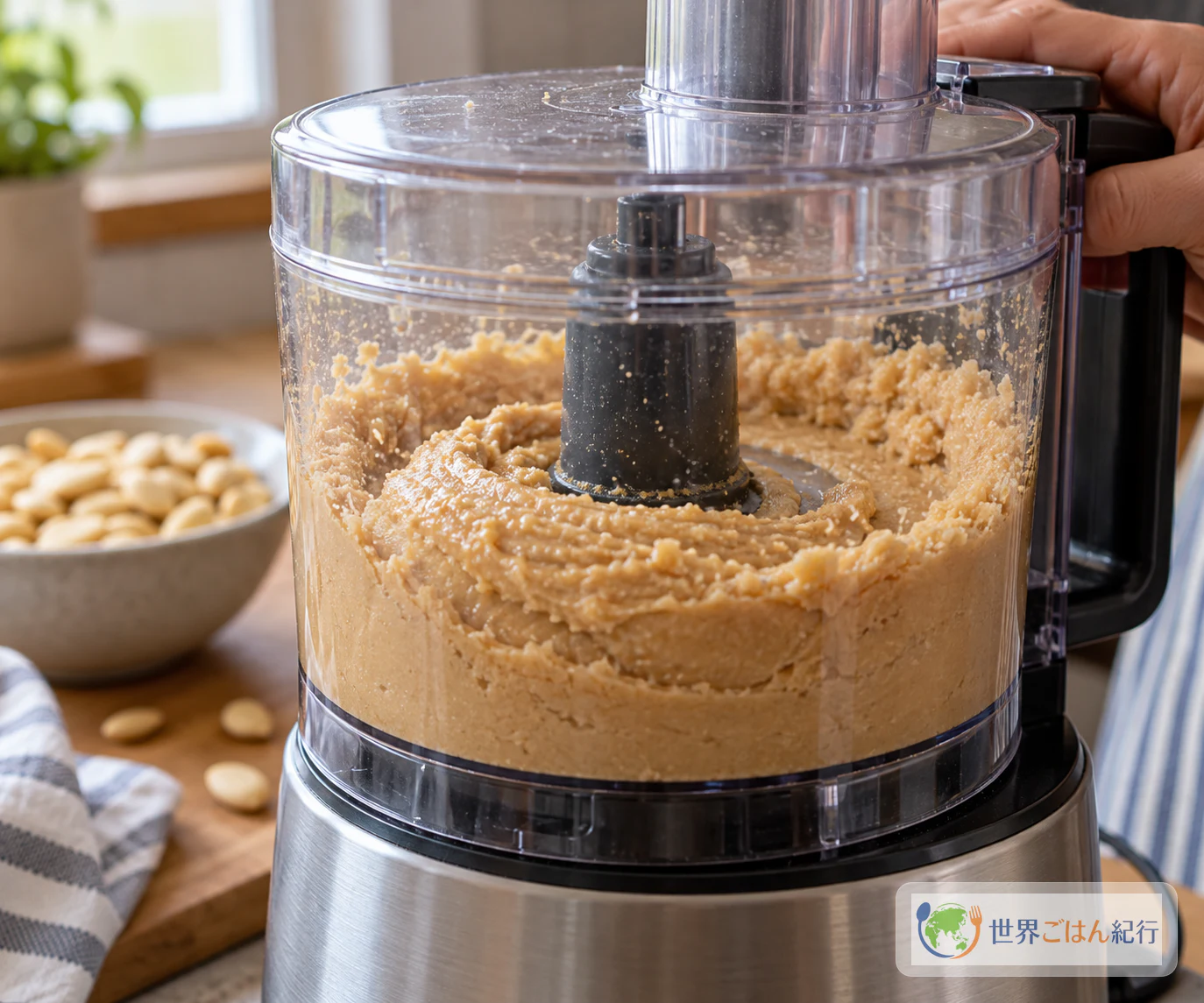
The method follows a short home recipe shared from Jijona by the Valencian Community's tourism board. Honey and sugar are warmed together and taken off the heat. Egg white is mixed in, then ground almonds, cinnamon and lemon zest. The mixture is ground again until it turns into a soft mass. That recipe is a simplified home version. It is not the specification for the protected Jijona product made by registered producers, and this article keeps the two apart.
For more dishes from the same country, see the Spain country page.
What Turrón Is: Jijona Versus Alicante
Turrón is a broad name for a family of Spanish sweets, and Jijona and Alicante are two distinct types within it. According to the regulatory council for the Jijona and Alicante protected geographical indications (PGIs), turrón de Jijona is made by grinding and refining almonds into a soft paste. Turrón de Alicante uses toasted whole or chopped almonds in a hot mass that contains egg white, set between wafer sheets into a hard bar. The European Commission likewise describes them as two separate PGI products that differ in texture, almond form and process.
| Point | Turrón de Jijona (soft) | Turrón de Alicante (hard) |
|---|---|---|
| Almonds | Ground and refined into a paste | Toasted whole or chopped |
| Texture | Soft | Hard |
| Wafer sheets | Not used | The mass is set between wafer sheets |
| This article | The recipe below | Described for comparison only |
The PGI names carry regional and production requirements. The European Commission explains that both products are made and packaged in the municipality of Jijona. The council also describes commercial steps such as grinding, reheating in machines called boixets, and cooling and resting. A home recipe made in an ordinary kitchen is not a PGI product. In shops, a label reading "turrón blando" is not necessarily the same as a product carrying the Jijona PGI name, so check the label if the distinction matters to you.
The Town Where Jijona Turrón Grew Up
Jijona lies in the province of Alicante, in the Valencian Community. The PGI council and the European Commission connect the sweet to the area's almond trees and honey, and to the rosemary, lavender and thyme of the surrounding hills. The tourism board also describes Jijona's turrón as built on almonds, honey, sugar and egg white.
On history, the European Commission's material says that Arab and Jewish peoples may have brought related customs to the area. It also cites a document from Valencia in 1484 as an early record. These are explanations given in that source, not a settled origin story, and this article goes no further than they do.
Turrón is closely tied to Christmas in Spain. It is not only a Christmas sweet, though: the regional tourism board and the European Commission both mention its use in ice cream in Jijona as part of how it is enjoyed through the year. This recipe treats turrón as a sweet to slice and serve. Ice cream would be a separate recipe.
Ingredients for Turrón de Jijona
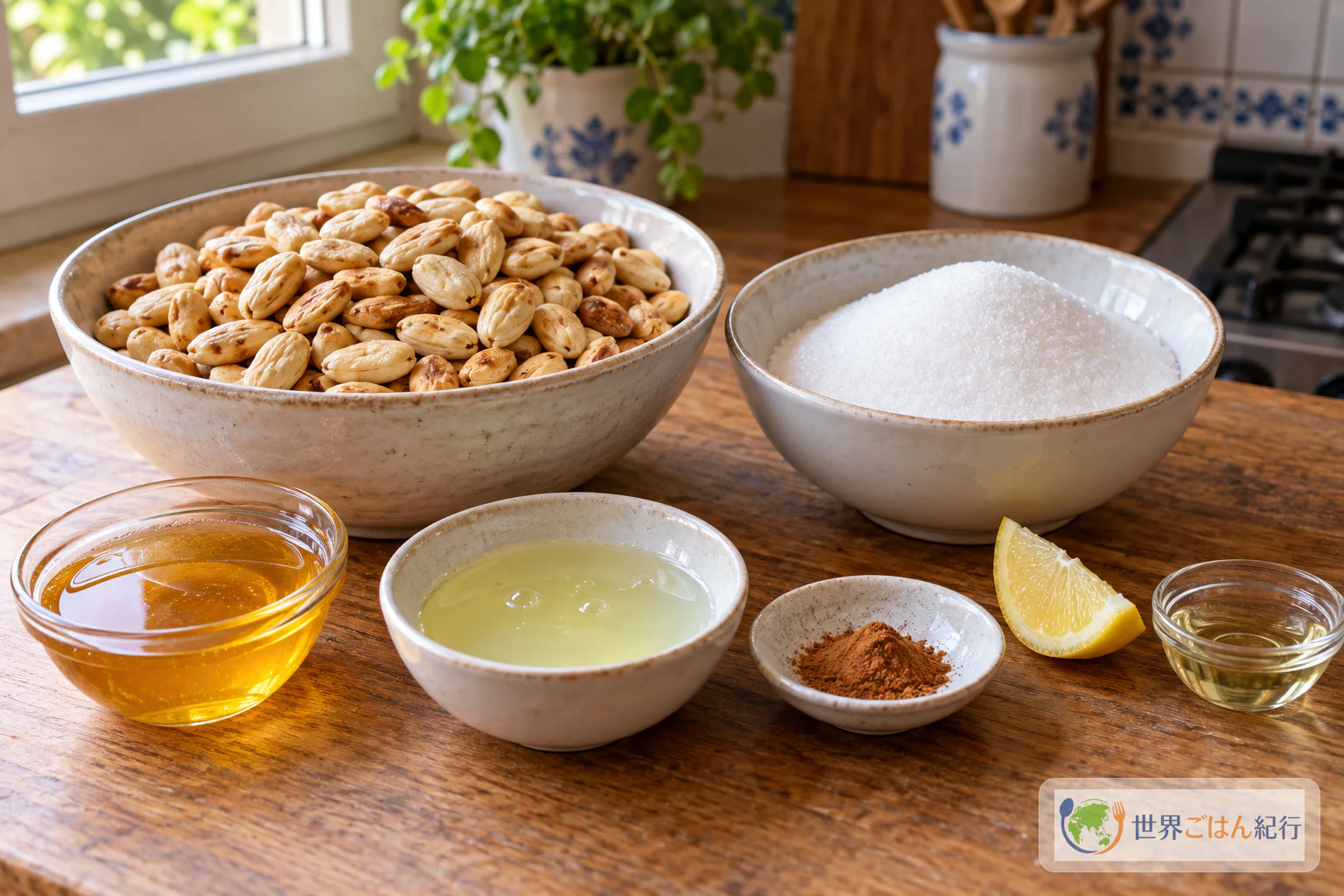
These are the amounts given in the home recipe. The source states no number of servings, finished weight or mold size, so none is given here. The lemon zest has no stated amount. The source does not list oil for the mold among the ingredients, but the method calls for an oiled mold, so it appears below as a separate line.
- Allergens: This turrón contains almonds (tree nuts) and egg.
- Honey and babies: Do not give honey, or sweets containing honey, to babies under 1 year old. Japan's Ministry of Health, Labour and Welfare states that ordinary heating and cooking do not remove this risk. That applies to this turrón.
- Egg white: The source recipe mixes the egg white into the syrup after it comes off the heat. It gives no temperature or time that would pasteurize the egg. Japan's Ministry of Agriculture, Forestry and Fisheries notes that raw or undercooked egg dishes can cause Salmonella food poisoning, and that young children and older adults should avoid them. The U.S. FDA advises using pasteurized eggs or egg products instead of raw shell eggs in egg dishes that are not thoroughly cooked. For that reason, this version uses unsweetened pasteurized liquid egg white that the label says can be used without cooking. Follow the label's conditions of use and its conversion for one egg white. That is general guidance for egg products, not a test of this recipe. Do not assume that ordinary raw egg white becomes safe in this method. Even with a pasteurized product, think carefully before serving this to young children, older adults or anyone else at higher risk.
- If you cannot find a pasteurized product: This simple recipe does not provide a fully safe alternative, and an egg-free version would need a different recipe.
Choosing and Substituting
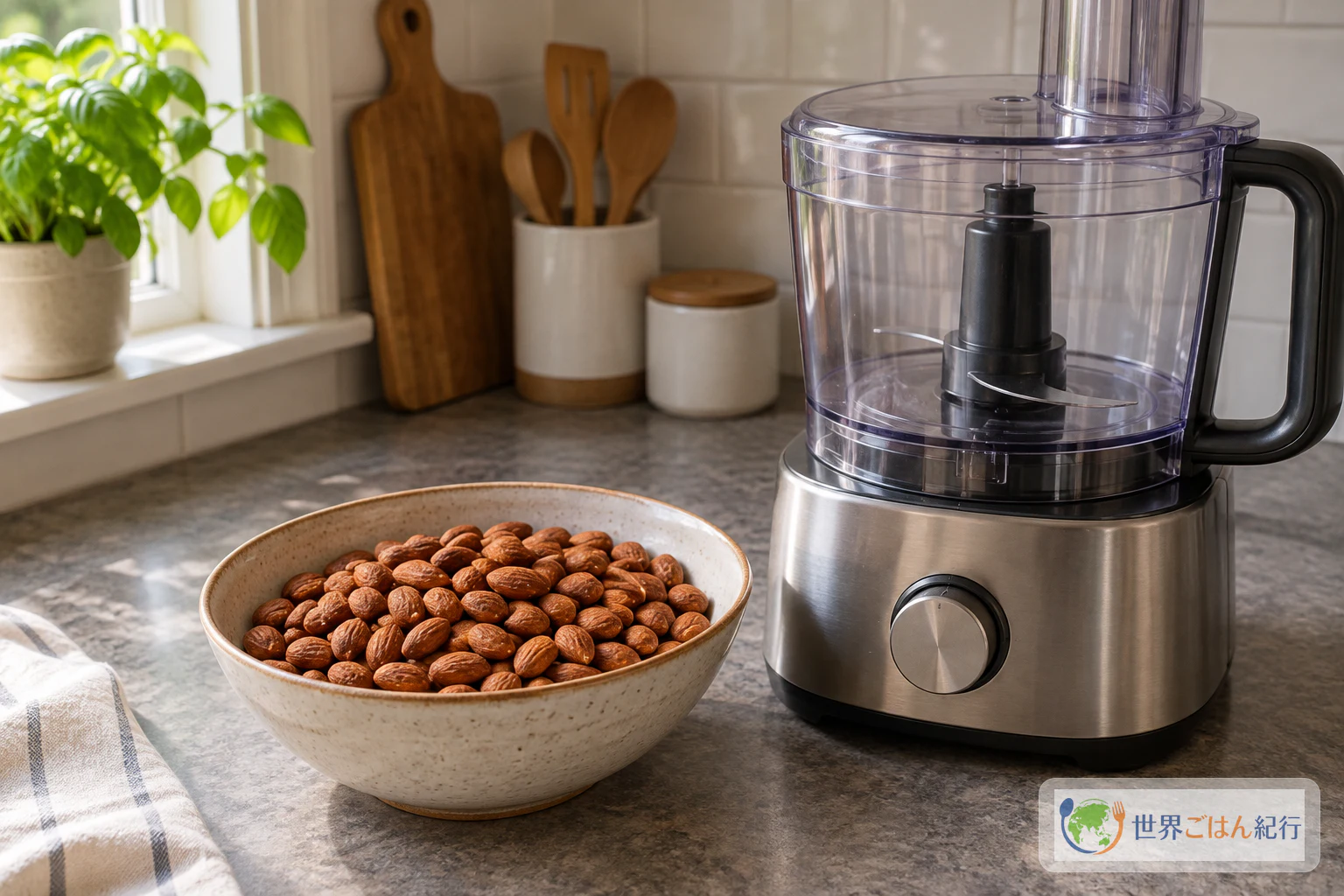
Almonds. The source specifies unsalted almonds that are already roasted. Salted almonds make the turrón noticeably salty and change how the sweetness comes across, so avoid them. No particular variety, such as Marcona, is required. If you can only find raw almonds, the source gives an option: roast them in an oven preheated to 180°C for about 5 minutes, then cool them completely. If your almonds are already roasted, skip this; roasting them a second time is not part of this version. Small diced almond pieces leave more bite and move away from Jijona's smooth texture.
Sugar. The source does not name a type of sugar; this version uses granulated sugar. Less refined brown sugars bring a stronger aroma and darker color, which is a departure from the regional sweet rather than a like-for-like swap.
Honey. The source does not name a floral variety. A honey that is not too strongly flavored is a practical choice, though it will not taste exactly like honey from Jijona. Do not replace it with maple syrup or another syrup; the aroma and thickness both change.
Cinnamon and lemon. Leaving out the cinnamon gives a plainer almond-and-honey flavor. Leaving out the lemon zest removes the citrus note. Use only the yellow zest and do not add lemon juice.
Oil. A thin coat of neutral, unscented vegetable oil keeps the mold from adding flavor. Olive oil may make its own aroma noticeable.
Equipment
- Food processor rated for nuts and sticky pastes, and for the temperature of what you put in it
- Small saucepan
- Wooden spoon or spatula
- Whisk
- Sturdy mixing bowl
- Mold (the source gives no size)
- Clean, food-safe cover for the mold
- Small knife for slicing
- Baking tray and oven (only if starting from raw almonds)
Method: Making Soft Turrón de Jijona
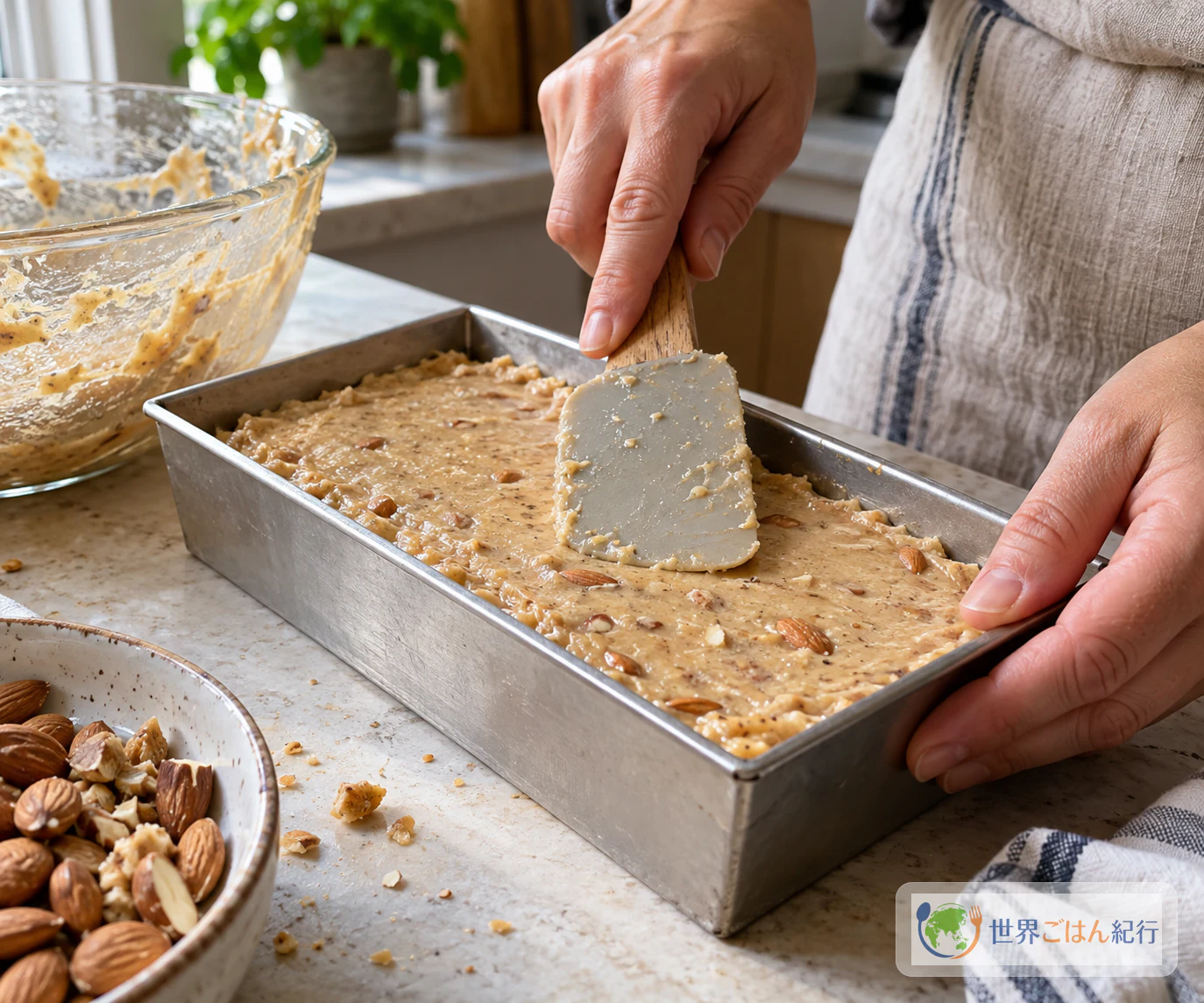
The source gives no syrup temperature, no cooking time, no grinding time, no mold size and no finished amount. The steps below describe the stages without adding numbers the recipe does not provide.
Getting the Texture Right: Troubleshooting
The source recipe gives no syrup temperature, grinding time or mold size, so the causes below cannot always be pinned down. These notes stay within what the recipe describes.
| Problem | What to look at | What to do |
|---|---|---|
| The almonds taste burnt | Already-roasted almonds were roasted again, or raw almonds went too far | Do not re-roast roasted almonds. For raw almonds, use the source's 180°C for about 5 minutes and watch the color. That is a guide, not a guarantee |
| The syrup scorched | The heat was too high | Warm it gently and do not raise the heat to save time |
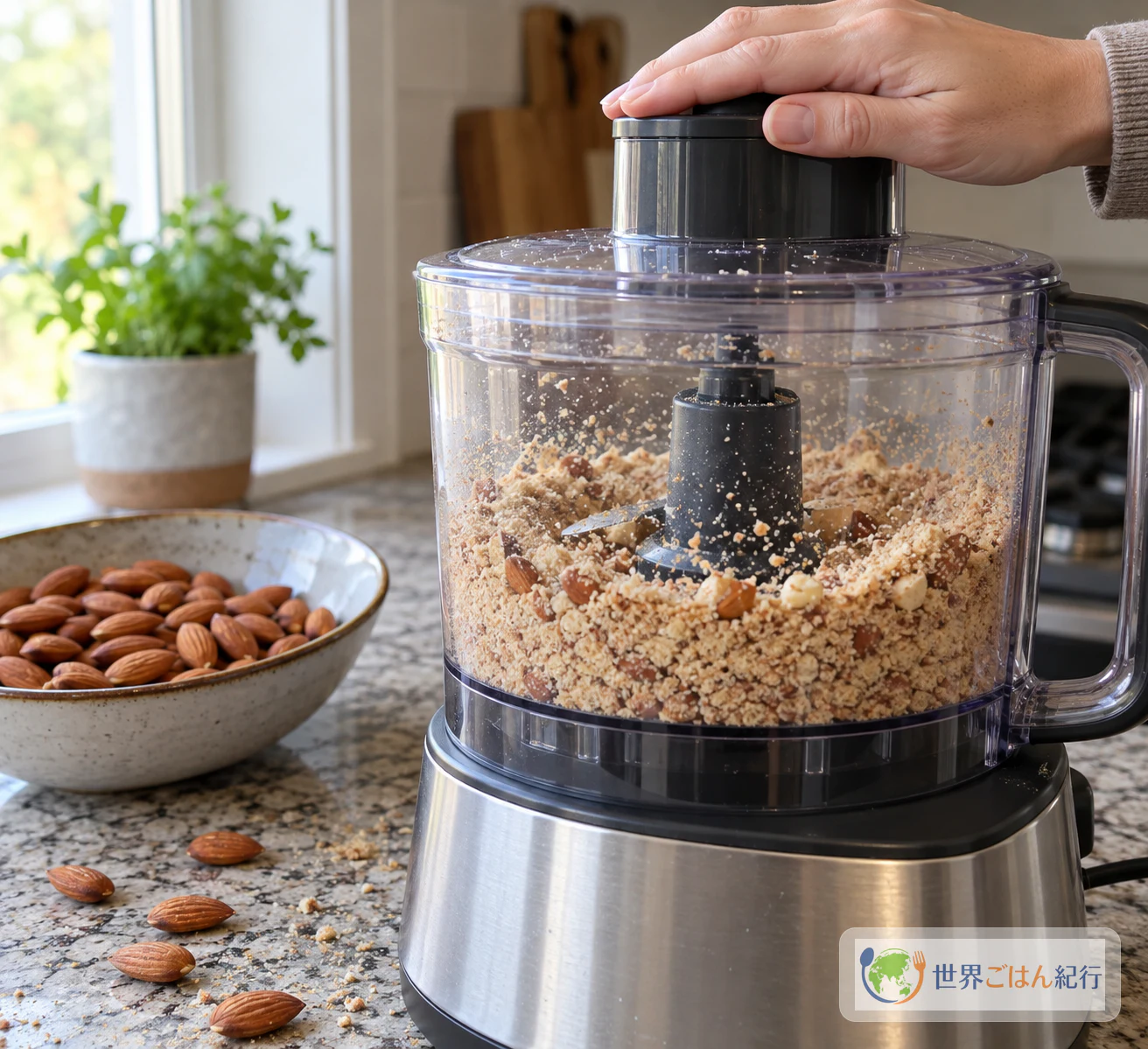
| The mixture stays crumbly | The almond oil has not been released yet | The source says further grinding releases the oil and brings the mass together. Keep within your machine's running and rest limits |
| It won't come together, or it sets too hard | The source gives no syrup temperature to check against | Do not add extra sugar or honey on your own; the recipe's ratio is what holds it together |
| It feels gritty or chunky | The almonds were not ground finely enough | Jijona turrón is meant to be smooth. A coarse grind gives a different texture |
Serving Turrón
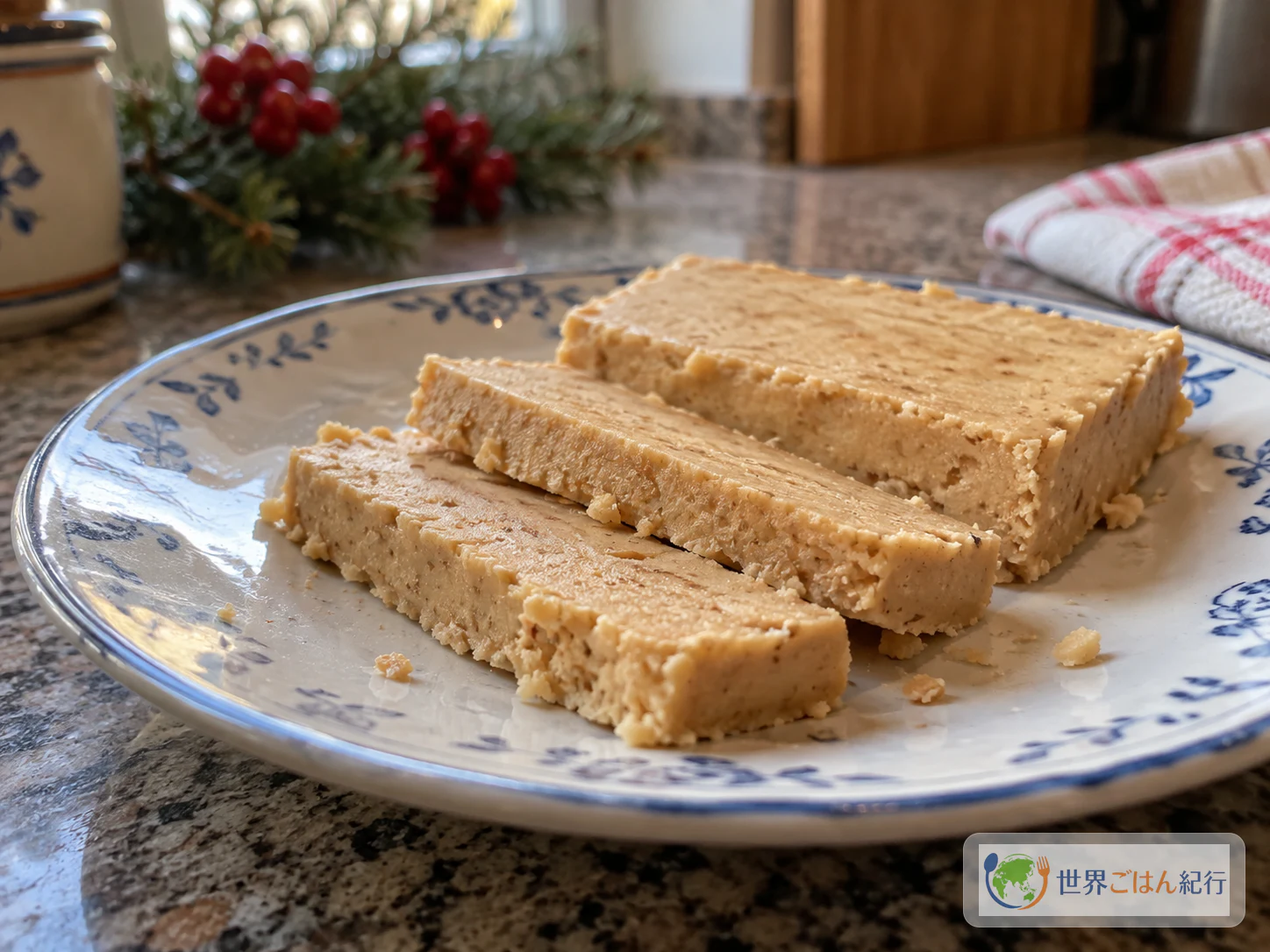
Once chilled and set, unmold the turrón and cut it into modest slices with a small knife. In Spain it is a familiar part of the Christmas table, served as a sweet alongside other treats. In Jijona, turrón is also used in ice cream, but that is a separate preparation from this one.
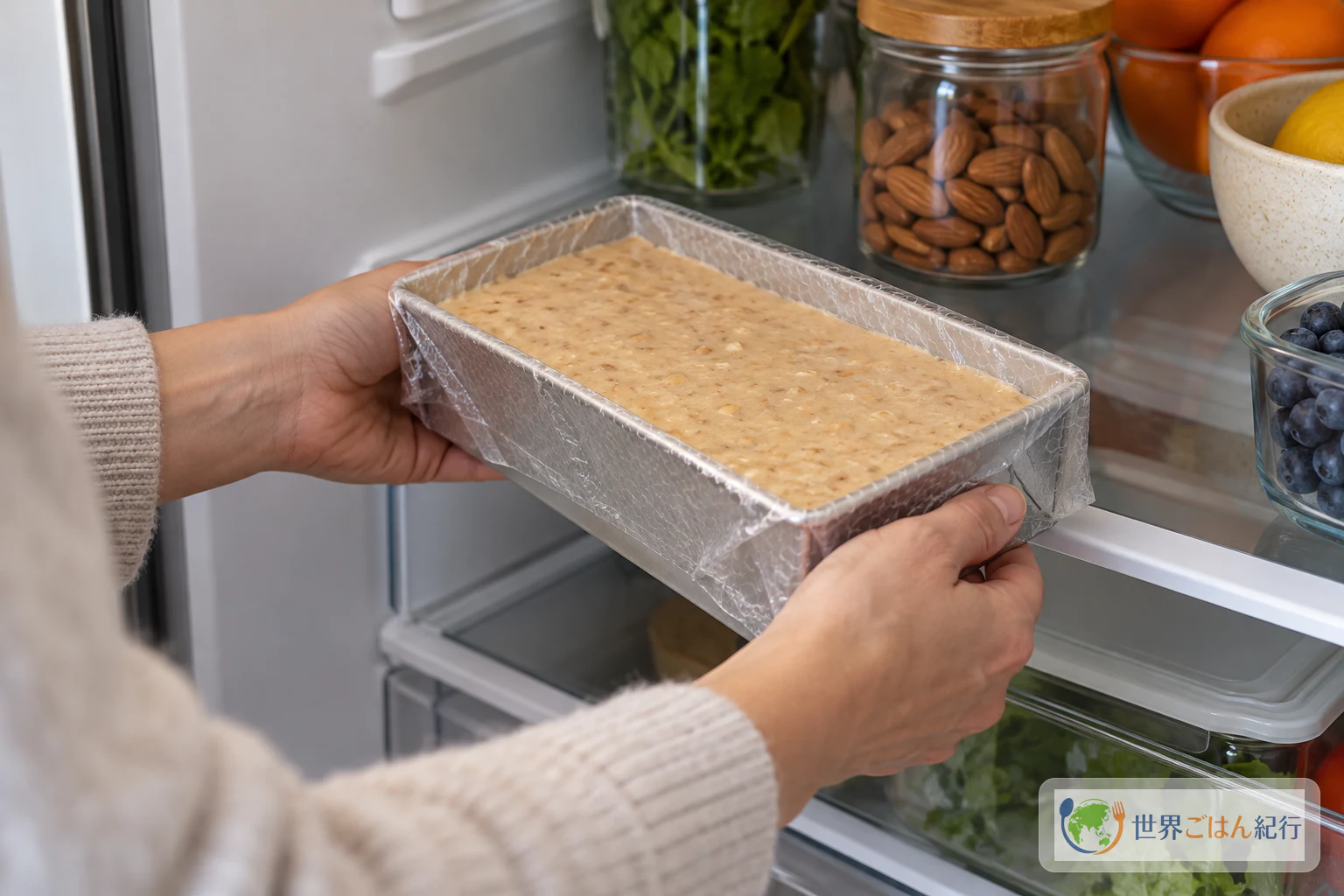
The source recipe covers only the several hours of chilling needed to set the turrón. It gives no storage period, no freezing instructions and no reheating guidance, so this article does not state how long it keeps. The honey warning for babies under 1 and the egg and almond allergen notes apply to every slice.
Variations
- A coarser home version. Leave the almonds a little coarser for more bite. This moves away from the smooth texture of traditional Jijona turrón, so treat it as a home variation rather than the regional type.
- Comparing honeys. Keep the honey at 75 g and try different floral varieties to compare aroma. No particular origin is required.
- Almond and honey only. Leave out the 1/2 tsp cinnamon for a plainer flavor centered on almonds and honey.
- Without lemon. Leave out the lemon zest for a quieter aroma without the citrus note.
- The Alicante type is a different recipe. Hard turrón de Alicante uses toasted whole or chopped almonds and wafer sheets. Do not add those to this Jijona mixture; it calls for its own recipe.
Frequently Asked Questions
Is turrón the same as turrón de Jijona?
Turrón is a broad name for a family of Spanish sweets. Turrón de Jijona is one type within it: the soft one, made with almonds ground into a paste.
What is the difference between Jijona and Alicante turrón?
Jijona is soft, made with almonds ground and refined into a paste. Alicante is hard, made with toasted whole or chopped almonds in a mass set between wafer sheets. The European Commission describes them as two separate PGI products.
Can I use any almonds?
The source specifies unsalted roasted almonds and does not name a variety, so a particular variety such as Marcona is not required. Avoid salted almonds. Almonds from different places may taste different from those used in Jijona.
What if I only have raw almonds?
The source suggests roasting them in an oven preheated to 180°C for about 5 minutes. Take them out before they color too much and let them cool completely before grinding.
Can I use regular egg white?
The source recipe uses egg white but gives no temperature or time that would pasteurize it after mixing. Because raw or undercooked egg can cause Salmonella food poisoning, this version uses unsweetened pasteurized liquid egg white labeled for uncooked use, following the label's conditions and its one-white conversion. Do not assume that ordinary egg white becomes safe in this method.
How long does homemade turrón keep?
The source recipe does not give a storage period, so this article does not state one. The several hours of chilling in the method is the setting time, not a shelf life.
Sources
- Turisme Comunitat Valenciana, "Turrón de Jijona: así es su historia y elaboración." Home recipe for turrón de Jijona: ingredients and amounts, the optional almond roasting at 180°C for about 5 minutes, the method, and the several hours of chilling, along with Jijona's turrón culture, its link to Christmas, and its use in ice cream. https://www.comunitatvalenciana.com/es/mediterraneo-en-accion/turron-de-jijona
- Consejo Regulador IGP Jijona y Turrón de Alicante, "El Turrón." How PGI Jijona turrón is made from ground and refined almonds, how it differs from hard Alicante turrón with whole or chopped almonds and wafer sheets, and commercial production steps. https://jijona.com/el-turron/
- European Commission, Directorate-General for Agriculture and Rural Development, "Turrón de Alicante IGP / Turrón de Jijona IGP." The two separate PGIs and their differences, geographical requirements, the region's almond and honey culture, the link to Christmas in Spain, and the historical explanations given in the source. https://agriculture.ec.europa.eu/farming/geographical-indications-and-quality-schemes/geographical-indications-food-and-drink/turron-de-alicante-pgi_es
- Ministry of Agriculture, Forestry and Fisheries of Japan, "サルモネラ(細菌)" (Salmonella). Raw and undercooked egg dishes as a cause of Salmonella food poisoning, and caution for young children and older adults. https://www.maff.go.jp/j/syouan/seisaku/foodpoisoning/f_encyclopedia/salmonella.html
- Ministry of Health, Labour and Welfare of Japan, "ハチミツを与えるのは1歳を過ぎてから。" (Do not give honey before age 1). Not giving honey or honey-containing sweets to babies under 1 year old, even after ordinary heating and cooking. https://www.mhlw.go.jp/stf/seisakunitsuite/bunya/0000161461.html
- U.S. Food and Drug Administration, "Assuring the Safety of Eggs and Menu and Deli Items Made From Raw, Shell Eggs." General guidance on using pasteurized eggs or egg products in place of raw shell eggs in dishes that are not thoroughly cooked, and on cleaning utensils and preventing cross-contamination. https://www.fda.gov/food/retail-food-industryregulatory-assistance-training/assuring-safety-eggs-and-menu-and-deli-items-made-raw-shell-eggs