A taste of the North that IKEA can't tell you about
Köttbullar. Outside Sweden they're known as "Swedish meatballs," mostly from the IKEA food court. But the IKEA version and the köttbullar a Swedish grandmother makes at home are different things. It's no exaggeration to call them two different dishes with the same name.
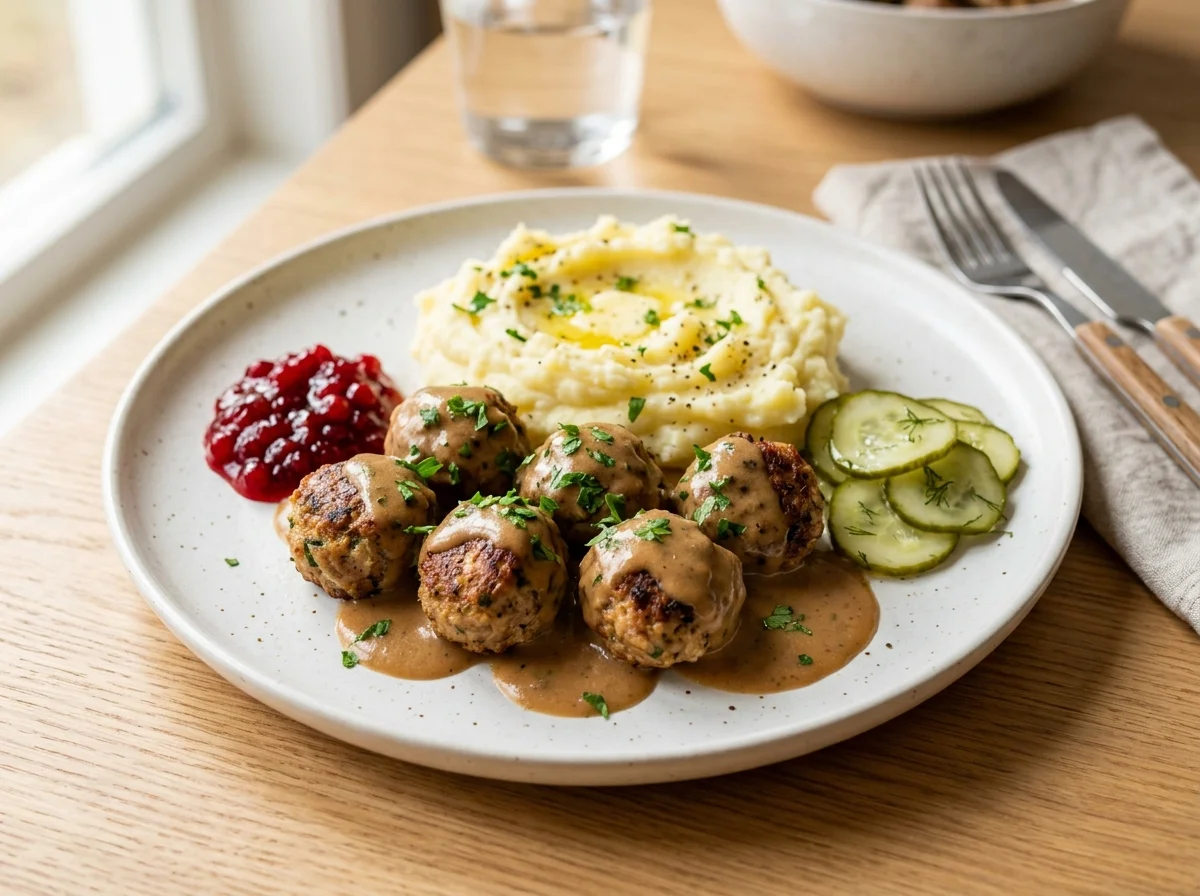
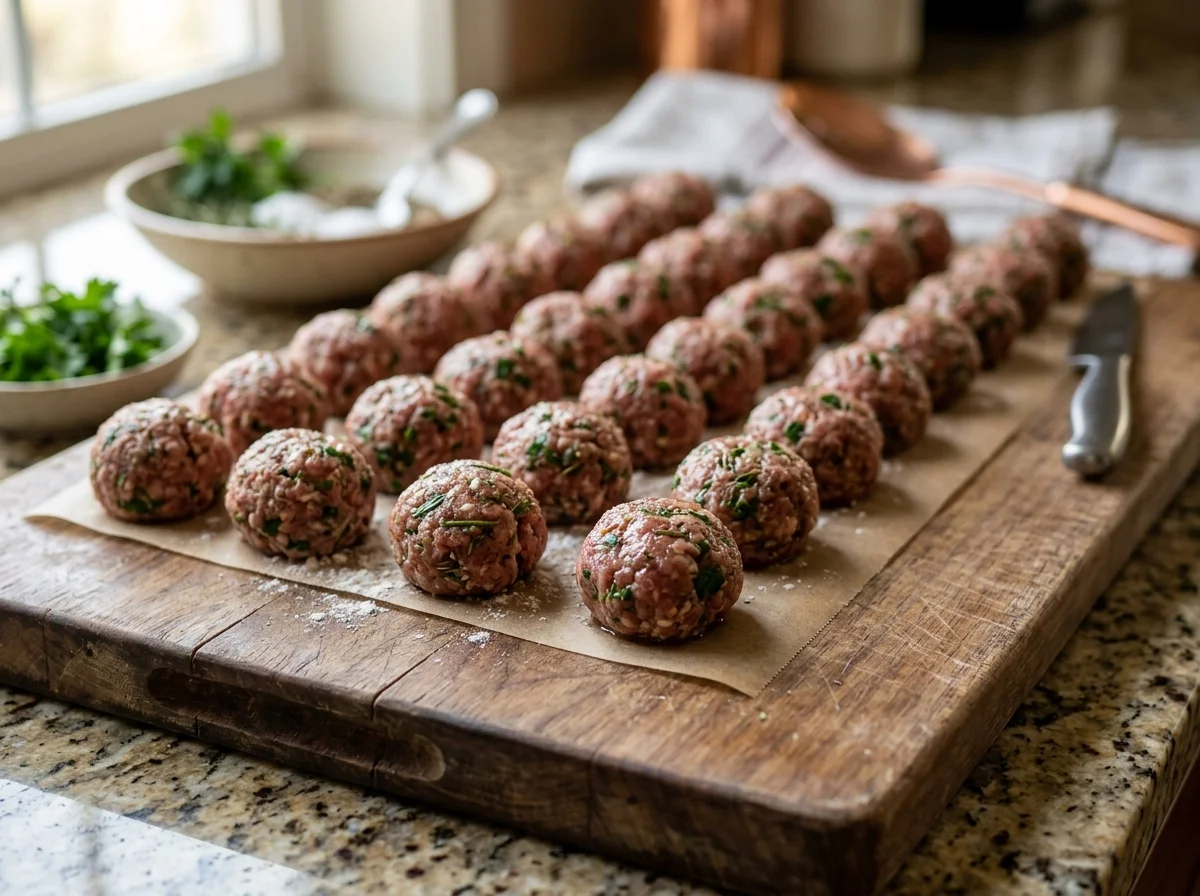
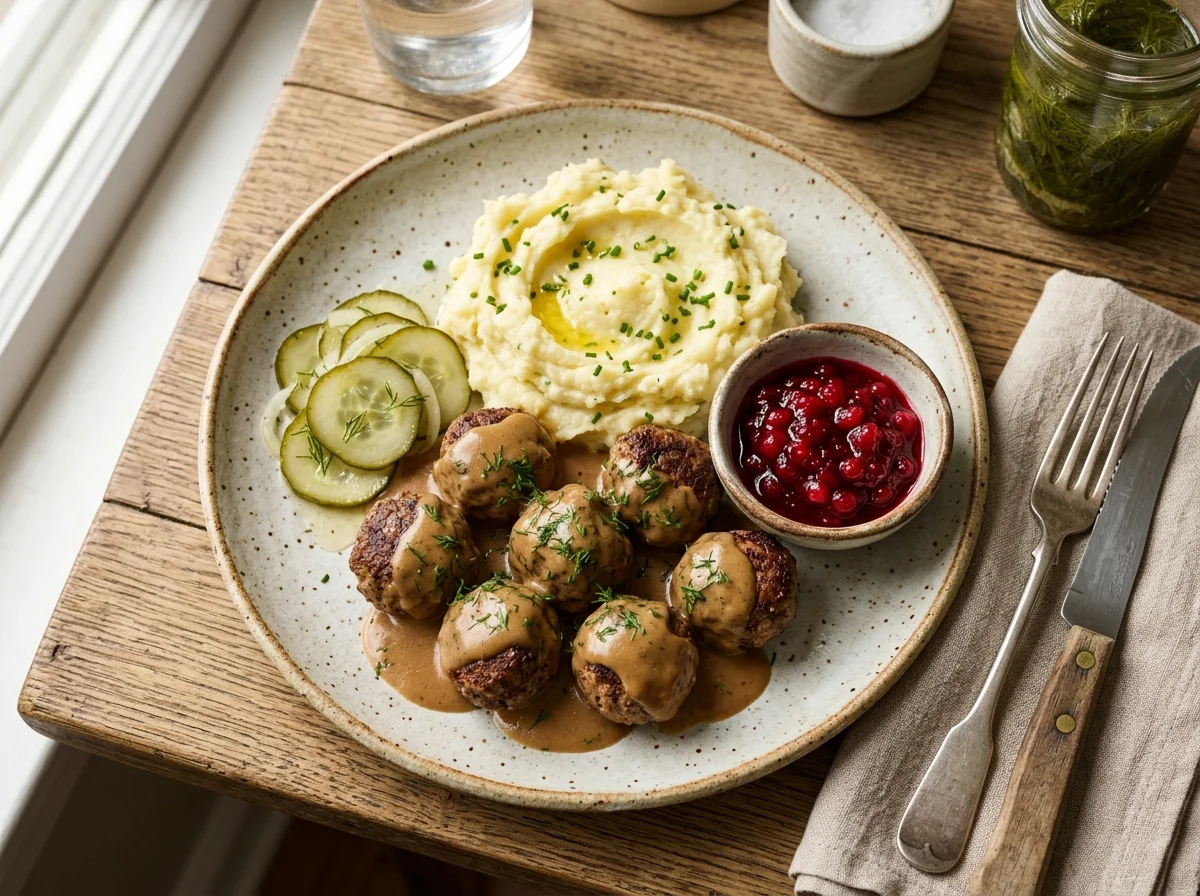
Authentic köttbullar are small, about 3 cm (1 in) across. The warm fragrance of allspice and nutmeg reaches your nose, and when you bite in, the juices flood out. Dip them in a rich cream gravy, set them on buttery mashed potatoes, and reset your palate with the sweet-tart lingonberry jam. This trinity is the Swedish taste of home.
In Swedish, "kött" means meat and "bullar" means round lumps (the same word as for bread buns). A well-known story says King Charles XII brought the recipe for köfte (Turkish meatballs) back from his exile in the Ottoman Empire, but there is no firm record and the claim is disputed. Meatballs spread as home cooking after the mid-19th century, when meat grinders became common. Today they are Sweden's unofficial national dish, essential at Christmas, Midsummer and Sunday dinners.
Search for "Swedish meatballs" and IKEA's recipe dominates the results. Yet there is a great deal of deeper information on köttbullar as Swedish home cooking. Why is allspice essential? How do you make the cream gravy's roux? Does lingonberry jam really go with meat? These key home-cooking tips are still hard to find in many places. Alongside Hungarian goulash (in Japanese) and Czech svíčková (in Japanese), this is one of Europe's great meat dishes. This article uncovers the real köttbullar hidden behind the IKEA image.
Ingredients (serves 4, about 30 meatballs)
Lingonberry jam is sold at IKEA stores (as SYLT LINGON) and in Scandinavian food shops. If you can't find it, cranberry sauce is the closest substitute. Both share the job of cutting the meat's fat with sweet-tart flavor and a pleasant bitterness.
Cooking tips
Swedish cooking traditionally uses white pepper (vitpeppar). The strong aroma and visible black specks of black pepper are thought to spoil the refinement of a creamy sauce. White pepper has a mild heat and melts into the sauce's flavor. Just as Portuguese caldo verde (in Japanese) cares about the quality of its olive oil, köttbullar cares about the kind of pepper.
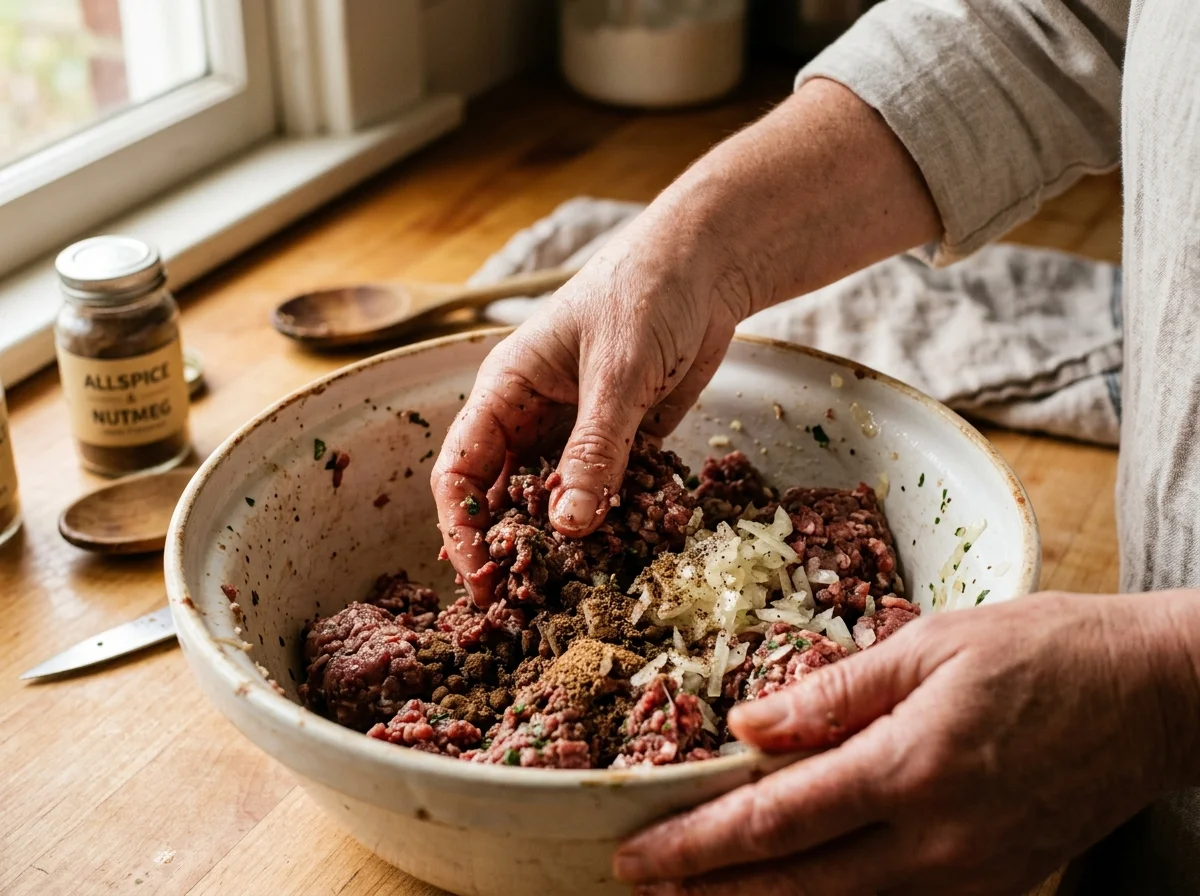
Many English-language recipes say "finely chopped," but in Swedish homes grating is standard. Grated onion disperses evenly through the mixture and gives a smooth mouthfeel when cooked. Chopped onion leaves a texture of onion pieces and strays from the köttbullar ideal of a "smooth meatball."
Low-fat cream can't give the gravy richness. In Sweden, "vispgrädde" (whipping cream) of around 40% fat is commonly used. Choose cream with 35% or more fat. "Non-dairy cream" is unsuitable because the gravy separates easily. Like the beer sauce of Belgian carbonnade (in Japanese), the quality of the sauce base greatly affects the result.
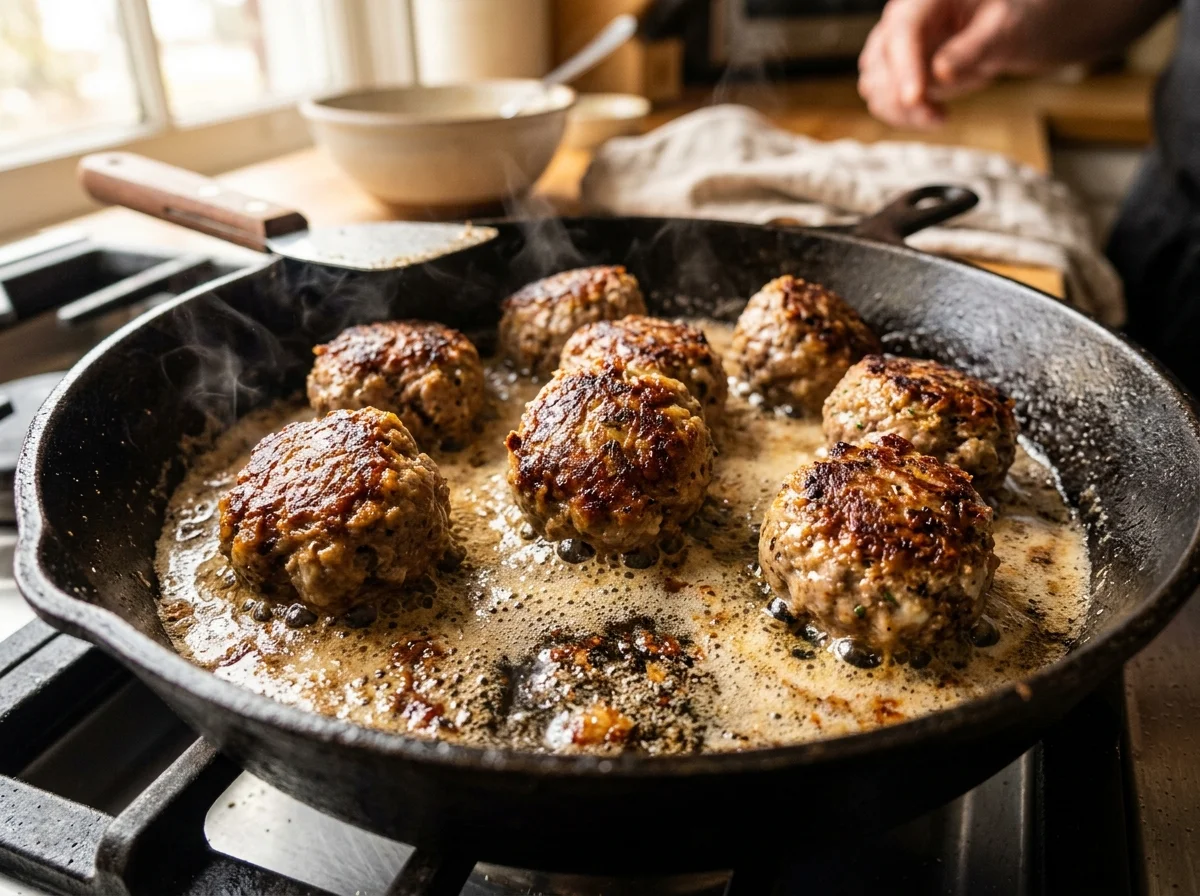
After frying the meatballs, a light simmer in the gravy lets the browned bits (fond) left in the pan soak back into the meatballs. This "deglazing" step is shared with French cooking, and it is why köttbullar sit within Europe's braising tradition.
Variations
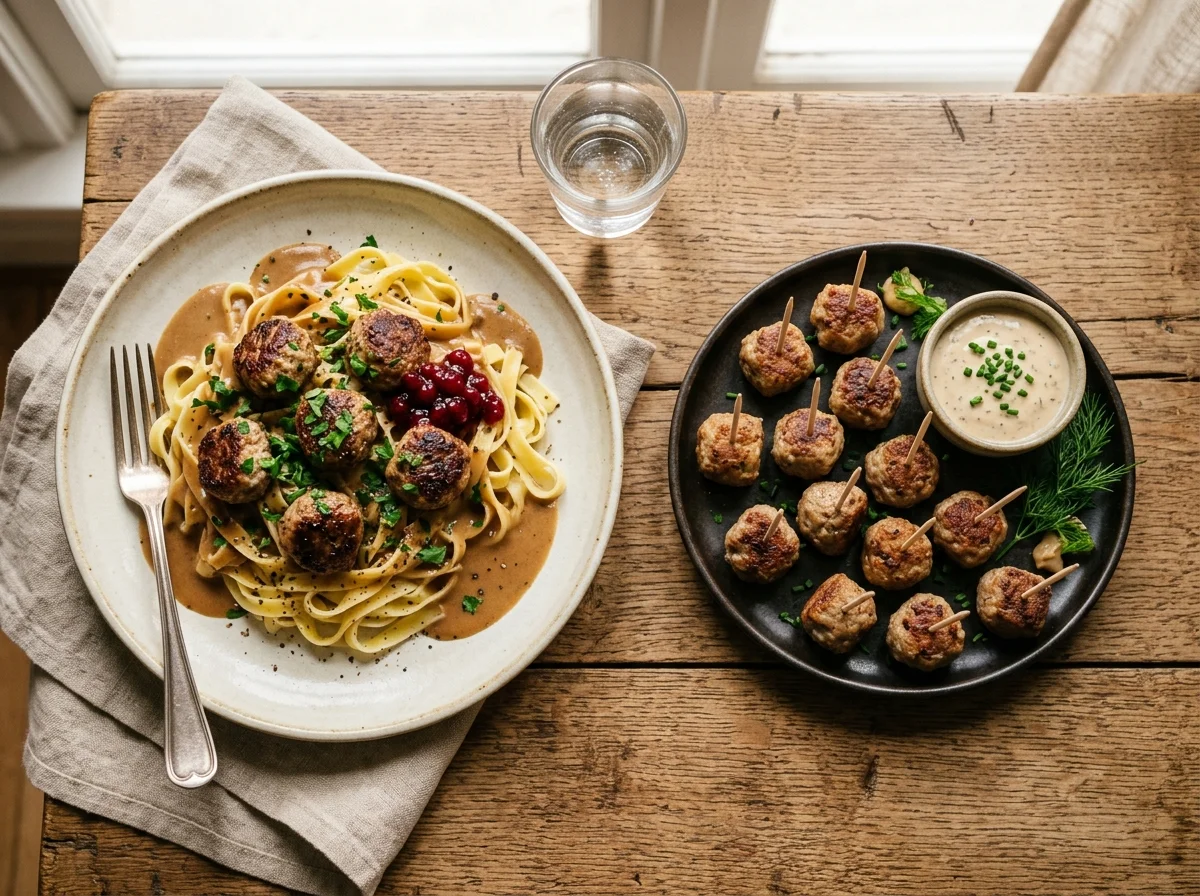
Creamy pasta version
Increase the gravy by 1.5 times and toss with cooked fettuccine. Set the meatballs on the pasta and finish with grated Parmesan. A modern twist popular with younger Swedes.
Curry version (köttbullar med curry)
Add 1 tsp curry powder to the meat mixture and 1/2 tsp to the gravy. A variation for days when you want a different aroma.
Moose version (älgköttbullar)
In northern Sweden, köttbullar are made with moose meat. Lean and with a wild flavor, it harmonizes beautifully with allspice. Venison (game meat) is a good substitute that comes close.
Vegetarian version
Use 300 g cooked and mashed lentils plus 200 g finely chopped mushrooms in place of the ground meat. Using a flax egg (1 tbsp flaxseed plus 3 tbsp water) as the binder instead of egg makes it vegan. IKEA's "plantball," launched in 2020, follows this concept.
Mini version (småbullar)
Make them tiny, 1.5 cm across, as party finger food. Served on toothpicks with gravy for dipping, they are a staple starter at the Swedish Christmas party, the julbord.
The background of this dish
A "souvenir" from the Ottoman Empire
The origin of köttbullar has an interesting history. After his crushing defeat by Russia at the Battle of Poltava in 1709, King Charles XII of Sweden (reigned 1697–1718) spent five years in exile in the Ottoman Empire, in Moldavia (around present-day Romania and Moldova).
There is a theory that during this exile he brought back the recipe for köfte (Turkish meatballs). The resemblance to Turkish köfte (in Japanese), spiced ground meat rolled into small balls and cooked, is indeed striking. In 2018, the official Sweden Twitter account introduced this theory and it drew wide attention.[2][3]
However, some food historians are cautious about it, noting that there is no record of Charles XII having any interest in cooking.[2] Meatballs are said to have become widely made as home cooking from the mid-19th century, once meat grinders became common.[1]
The influence of Charles XII's Ottoman exile on Swedish cuisine isn't limited to köttbullar. Dolma (stuffed grape leaves) are also said to be the ancestor of Sweden's "kåldolmar" (cabbage rolls).
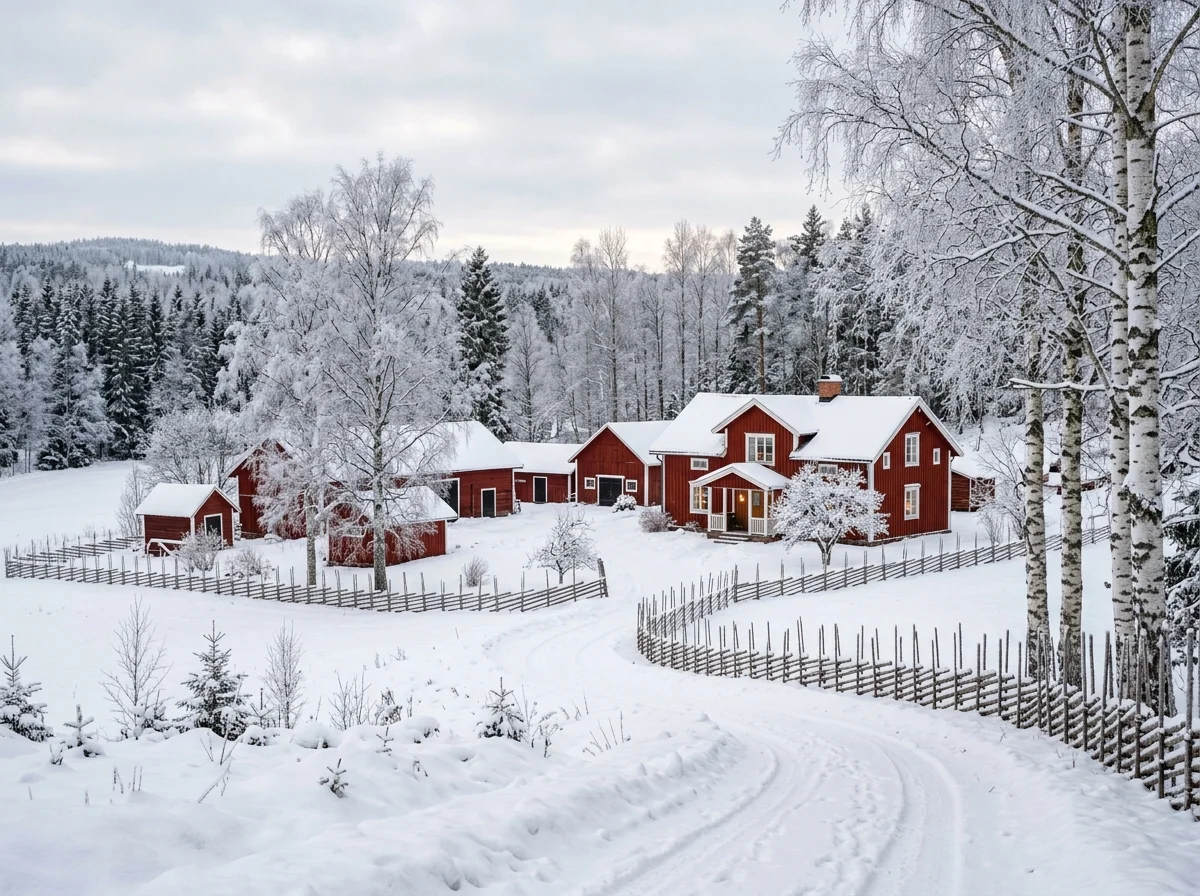
Julbord: the Christmas table
The signature food event of Sweden's Christmas season (December) is the julbord. It is the Swedish version of a buffet, laid out with pickled herring, salmon, ham and always köttbullar.
The word "jul" is said to come from the name of a pre-Christian winter festival. As a hot dish, köttbullar sit at the core of the julbord, bridging the "cold" section (herring, salmon) and the "hot" section (köttbullar, ham).
Just as Norwegian fårikål (in Japanese) is cherished as an autumn national event, köttbullar are the dish that symbolizes the Swedish winter.
Hygge and lagom: the Nordic philosophy of food
Köttbullar embody two important Nordic concepts. One is hygge, from Denmark: a feeling of coziness, warmth and relaxation. The other is Sweden's own lagom, a way of life that means "just right" or "in moderation."
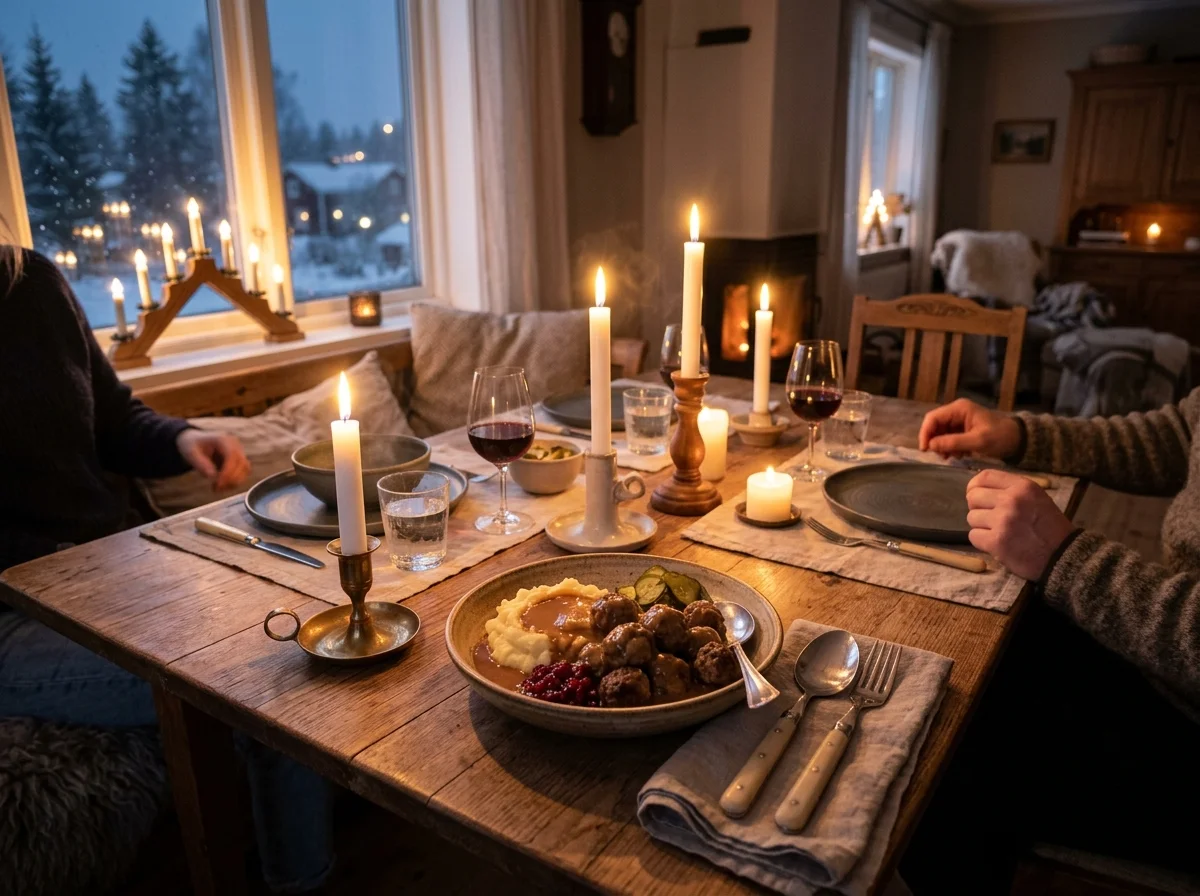
Köttbullar are neither too luxurious nor too plain: truly a "lagom" dish. No expensive ingredients are used, yet careful cooking produces deep flavor. Sharing hot meatballs with your family by candlelight is hygge itself.
Set beside Danish smørrebrød (in Japanese), the differences and similarities of Nordic home tables come into view.
IKEA and the globalization of köttbullar
The biggest contributor to spreading köttbullar around the world is undoubtedly IKEA. IKEA's founder, Ingvar Kamprad, believed that "hungry customers don't shop well" and began putting restaurants inside IKEA stores in the 1960s.
IKEA sells about a billion köttbullar a year, so it is no exaggeration to call it the world's largest meatball chain. Yet English-language food journalists repeatedly point out that "IKEA's köttbullar are not like authentic Swedish food." Because they are mass-produced, the allspice is restrained and the gravy is simplified. The biggest differences from the authentic homemade version are the richness of the cream gravy and how strongly the meatballs are flavored with allspice.
The "plantball" IKEA launched in 2020 is a plant-based meatball made from pea and soy protein, with a carbon footprint of 4% of the meat version. The fusion of Nordic sustainability and köttbullar culture suggests one direction for the future of food.
Meatballs around the world
Köttbullar are one part of a global "meatball culture."
Turkish köfte are a grilled dish seasoned with cumin and paprika, eaten without sauce. Italian polpette are typically simmered in tomato sauce. American meatballs, of Italian immigrant origin, are served with spaghetti. Indian kofta are spiced meatballs simmered in curry sauce. Japanese tsukune are chicken-based and glazed in a sweet-savory teriyaki sauce.
Compared with these, the signature of köttbullar is the combination of cream sauce and sweet-tart berry jam. The trio of meat, cream and fruit is a distinctly Nordic aesthetic. Like Finnish karjalanpiirakka (in Japanese), Nordic cooking is full of wisdom for drawing deep flavor out of simple ingredients.
Nutrition (per serving of 4)
Köttbullar have a fairly high 32 g of fat with 30 g of protein, but combined with the carbohydrates of mashed potatoes they make a balanced meal. Allspice is said to aid digestion, and lingonberries contain antioxidants.
| Nutrient | Amount |
|---|---|
| Calories | 520 kcal |
| Protein | 30 g |
| Fat | 32 g |
| Carbohydrates | 28 g |
| Fiber | 2 g |
| Sodium | 640 mg |
Lingonberry jam is an essential accompaniment to köttbullar. The sweet-tart jam lightens the aftertaste of the rich gravy.
What to cook alongside
- How to make carbonnade (in Japanese) - Shares ingredients and aromas from the same region.
- How to make waterzooi (in Japanese) - Shares ingredients and aromas from the same region.
- How to make pašticada (in Japanese) - Shares ingredients and aromas from the same region.
FAQ
Questions often asked by first-time köttbullar cooks, from choosing spices to storage.
Q1. What can I use if I don't have allspice?
Mix 1/4 tsp clove, 1/4 tsp cinnamon and 1/4 tsp nutmeg to get a flavor close to allspice. Allspice holds these three aromas in one berry, so combining them separately works as a substitute. However, the unity unique to allspice is hard to reproduce, so if possible, we recommend buying it from a spice section or shop.
Q2. What if my meatballs fall apart?
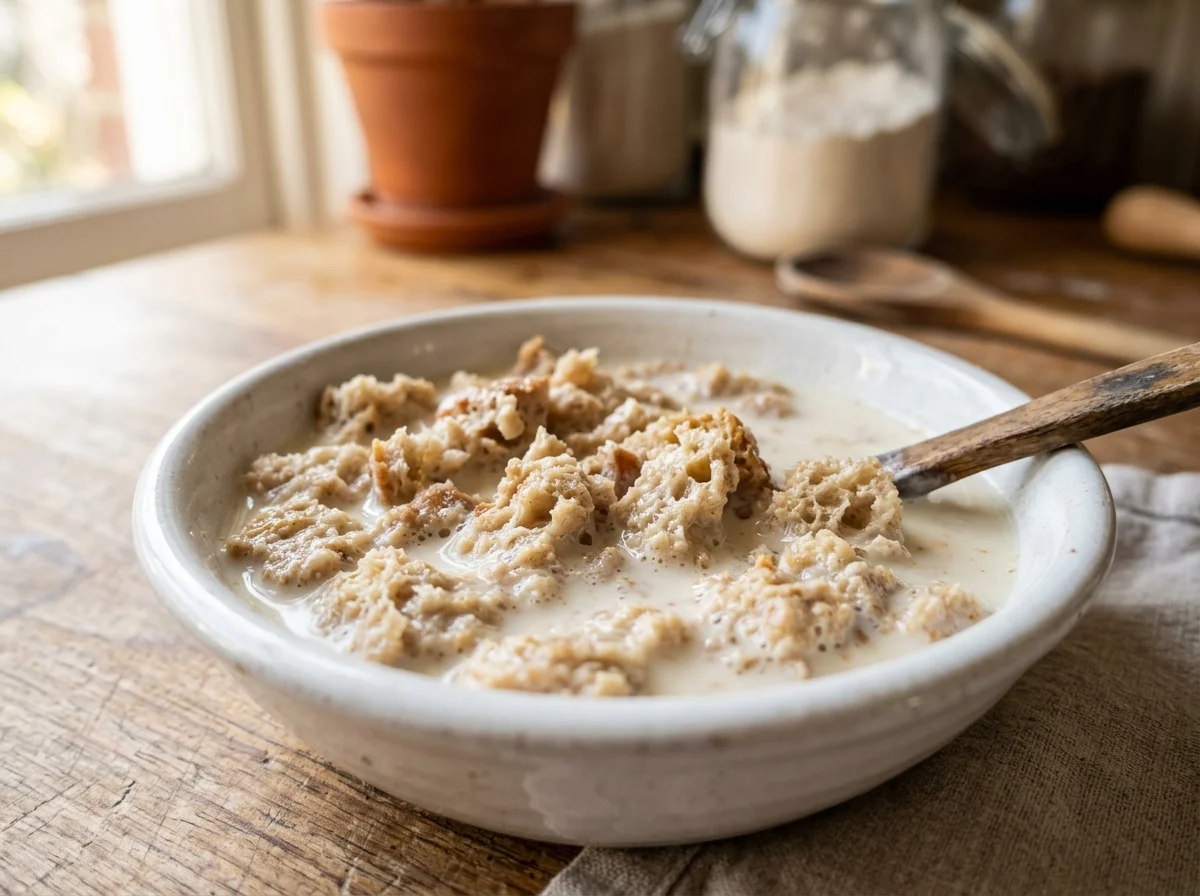
The main causes are too much moisture in the mixture or overmixing. If the breadcrumbs had too much milk, add more breadcrumbs. Overmixing can make them shrink and crack as they cook. Also, chilling for 30 minutes in the refrigerator before frying firms up the fat and makes them much less likely to fall apart.
Q3. What if the gravy gets lumpy?
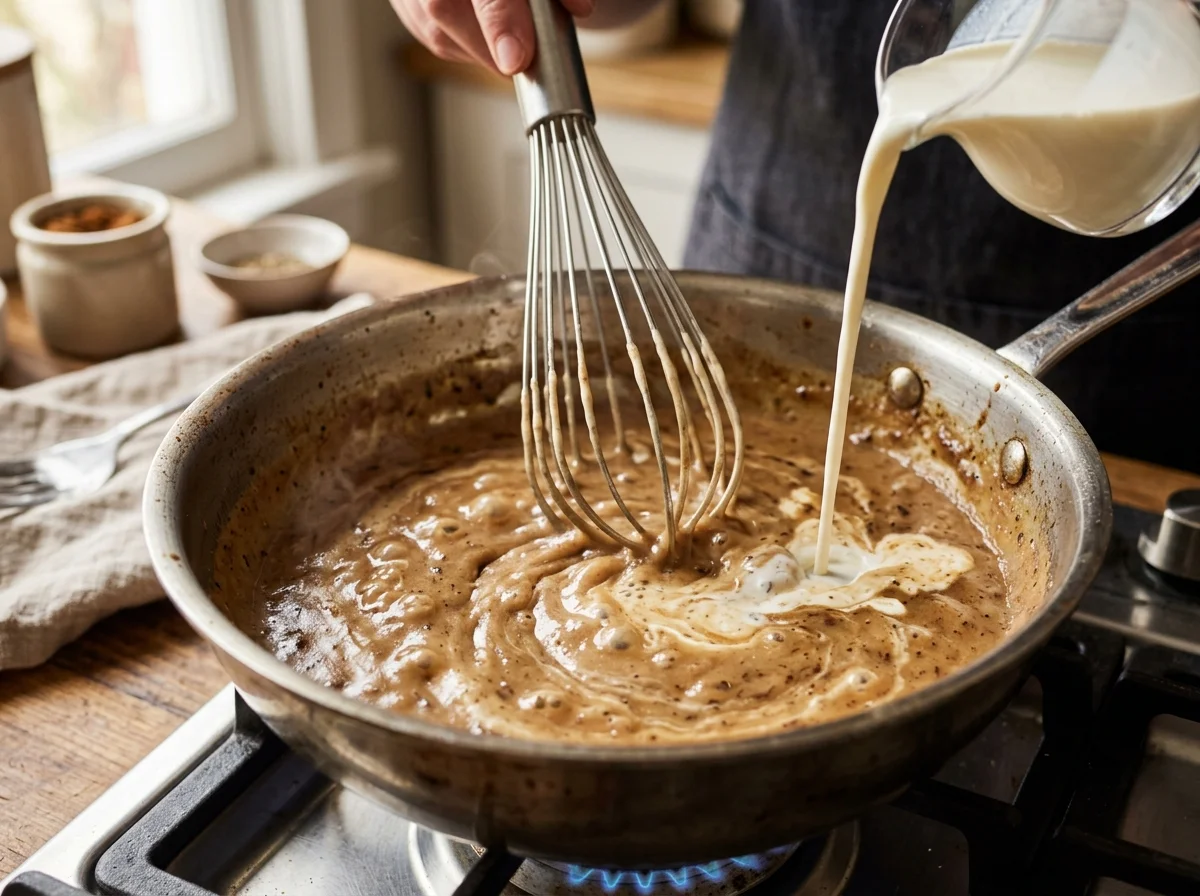
Whisking vigorously gets rid of most lumps. If some remain, strain through a sieve. The fundamental prevention is to add the broth a little at a time, in 3–4 parts. Adding a lot at once causes lumps.
Q4. How do I store köttbullar?
Cooked meatballs keep in the refrigerator for 3 days. Store the gravy in a separate container. To freeze, freeze just the meatballs (1 month) and make fresh gravy when you eat them. Thawing overnight in the refrigerator is recommended.
Q5. How are they different from IKEA's köttbullar?
The biggest difference is the amount of allspice and the richness of the gravy. IKEA's are mass-produced with restrained spicing, while the home version uses allspice generously. The gravy also uses plenty of cream and is based on the pan juices of the fried meatballs, so it is far richer. If IKEA's köttbullar are an "80," the home version is a "100."
Related European dishes
If köttbullar have caught your interest, explore more of Europe's stewing and gravy traditions. Warm dishes shaped by each country's history and climate await.
- Goulash (in Japanese) — Hungary's paprika stew, a representative of central European stewing culture
- Svíčková (in Japanese) — Czech beef in cream sauce, a variation on gravy culture
- Carbonnade (in Japanese) — Belgium's beer stew, a northern European braising technique
Nordic tables are simple but deeply flavorful. Please experience the warm wisdom of the cold countries.
- Fårikål (in Japanese) — Norway's lamb and cabbage stew, the national dish of Nordic autumn
- Cepelinai (in Japanese) — Lithuanian potato dumplings, a hearty Baltic plate
Sources

- [1] Wikipedia, "Meatball" (Swedish meatball section) https://en.wikipedia.org/wiki/Meatball (accessed 2026-10-22)
- [2] The Local Sweden, "Internet goes crazy when it realizes Swedish meatballs aren't Swedish" (2018) https://www.thelocal.se/20180502/internet-goes-crazy-over-swedish-meatballs-turkish-origin (accessed 2026-10-22)
- [3] Euronews, "Swedish meatballs actually originated in Turkey, says Sweden" (2018) https://www.euronews.com/2018/05/02/swedish-meatballs-actually-originated-in-turkey-says-sweden (accessed 2026-10-22)
- [4] Ministry of Health, Labour and Welfare (Japan), "Cook meat thoroughly before eating" (in Japanese) https://www.mhlw.go.jp/stf/seisakunitsuite/bunya/0000049964.html (accessed 2026-10-22)