İskender Kebap: A Plate Built in Layers, Finished with Butter
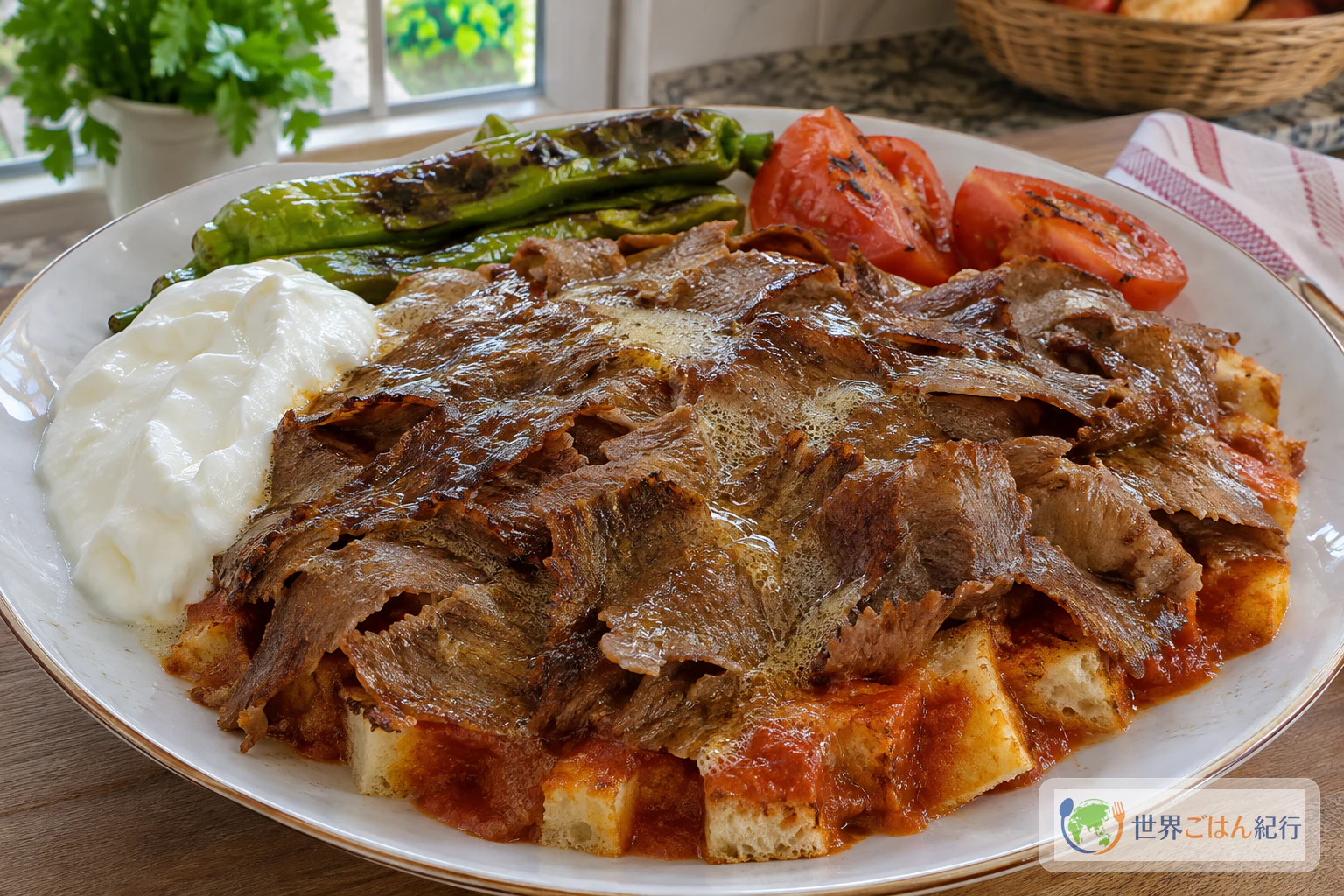
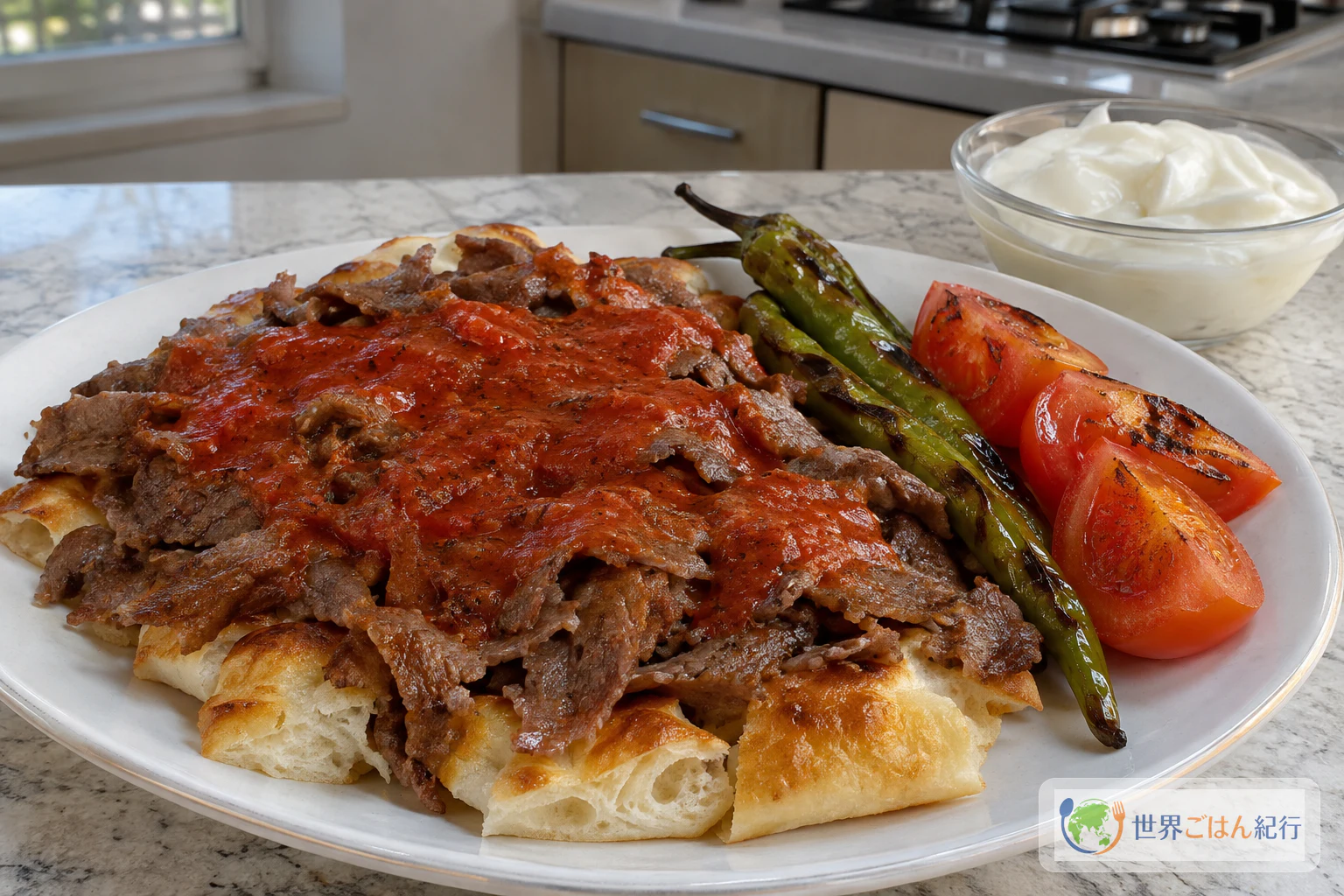
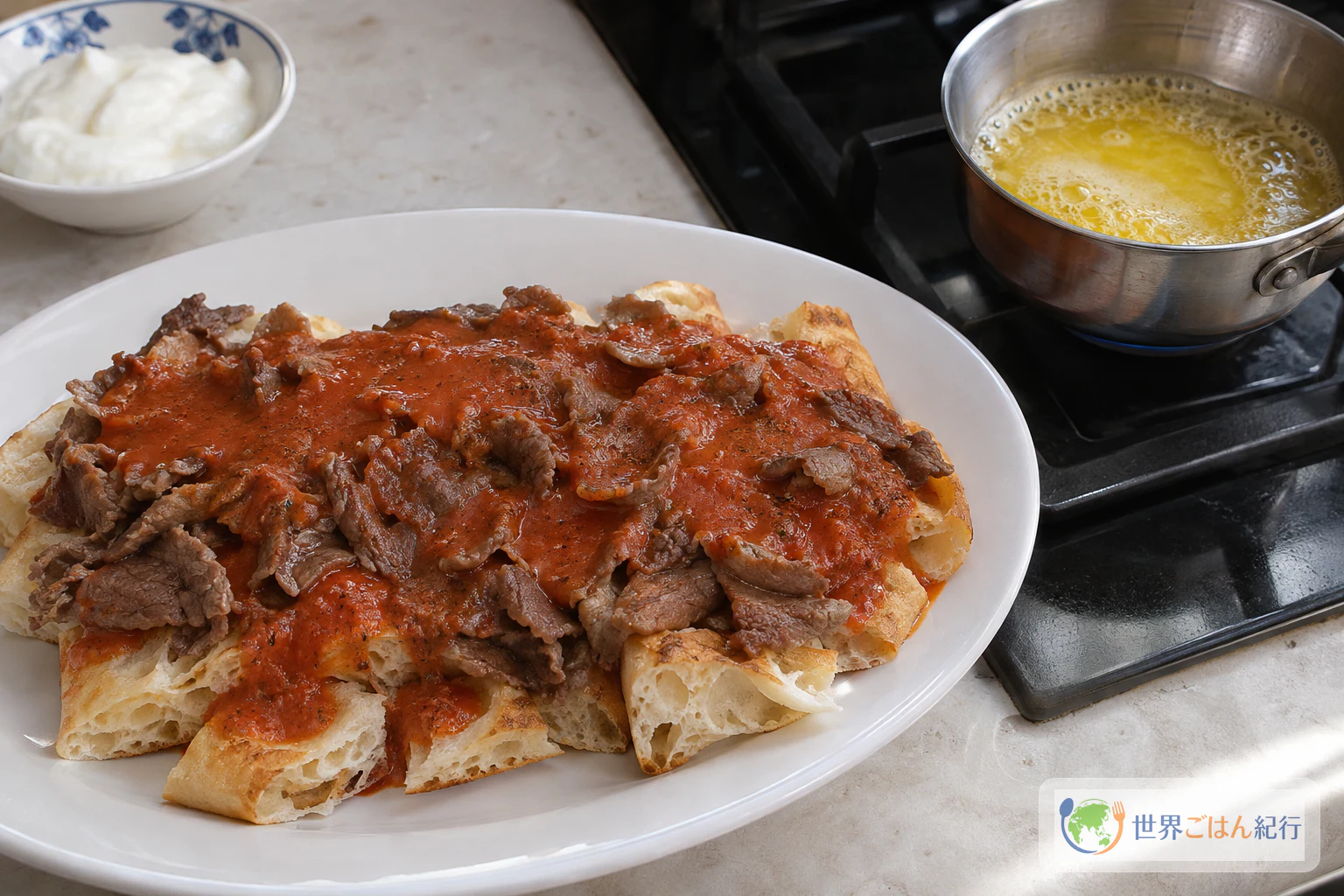
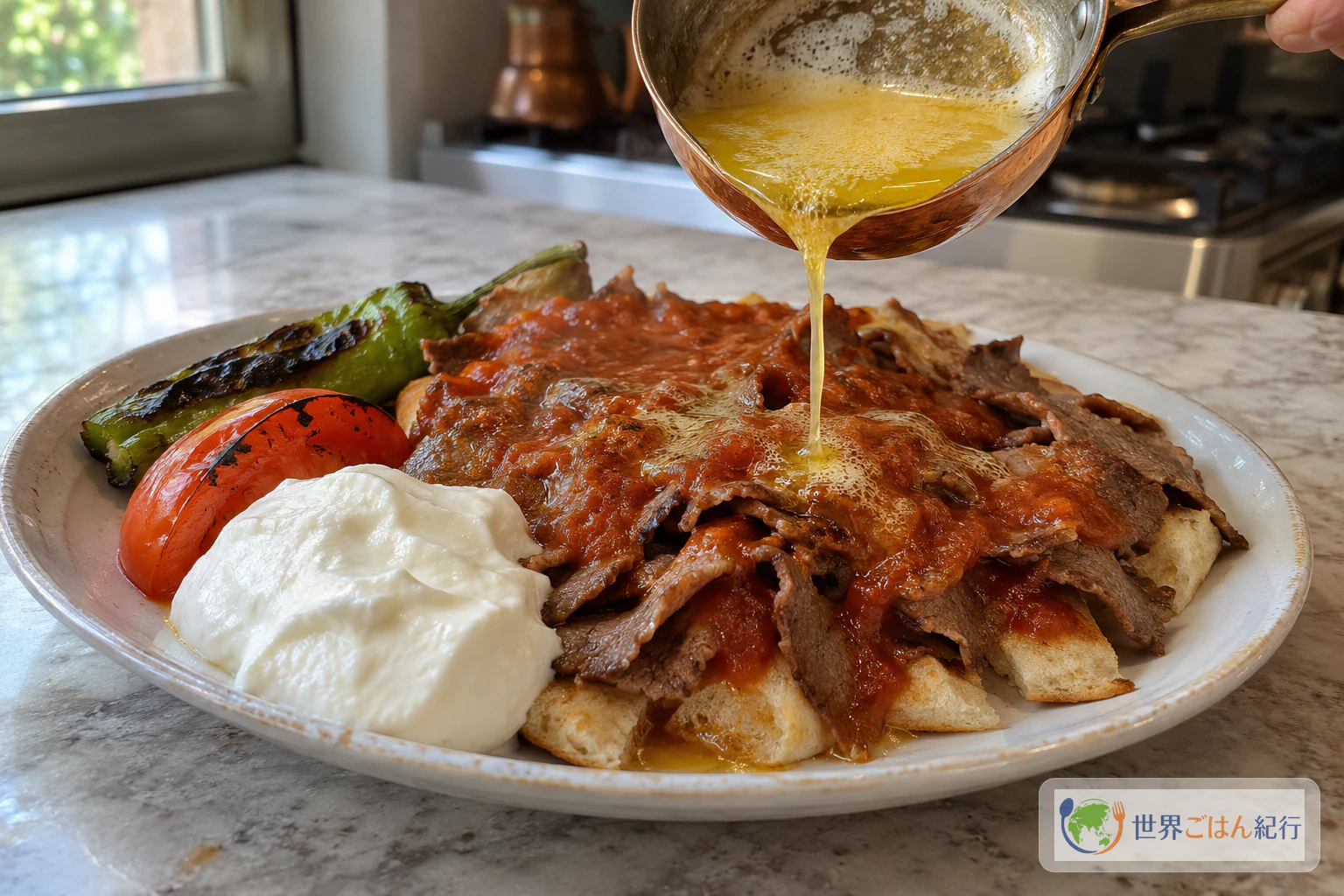
Warm bread takes the tomato sauce, thin browned beef covers the bread, thick yogurt and grilled vegetables stay at the side, and melted butter goes on last.
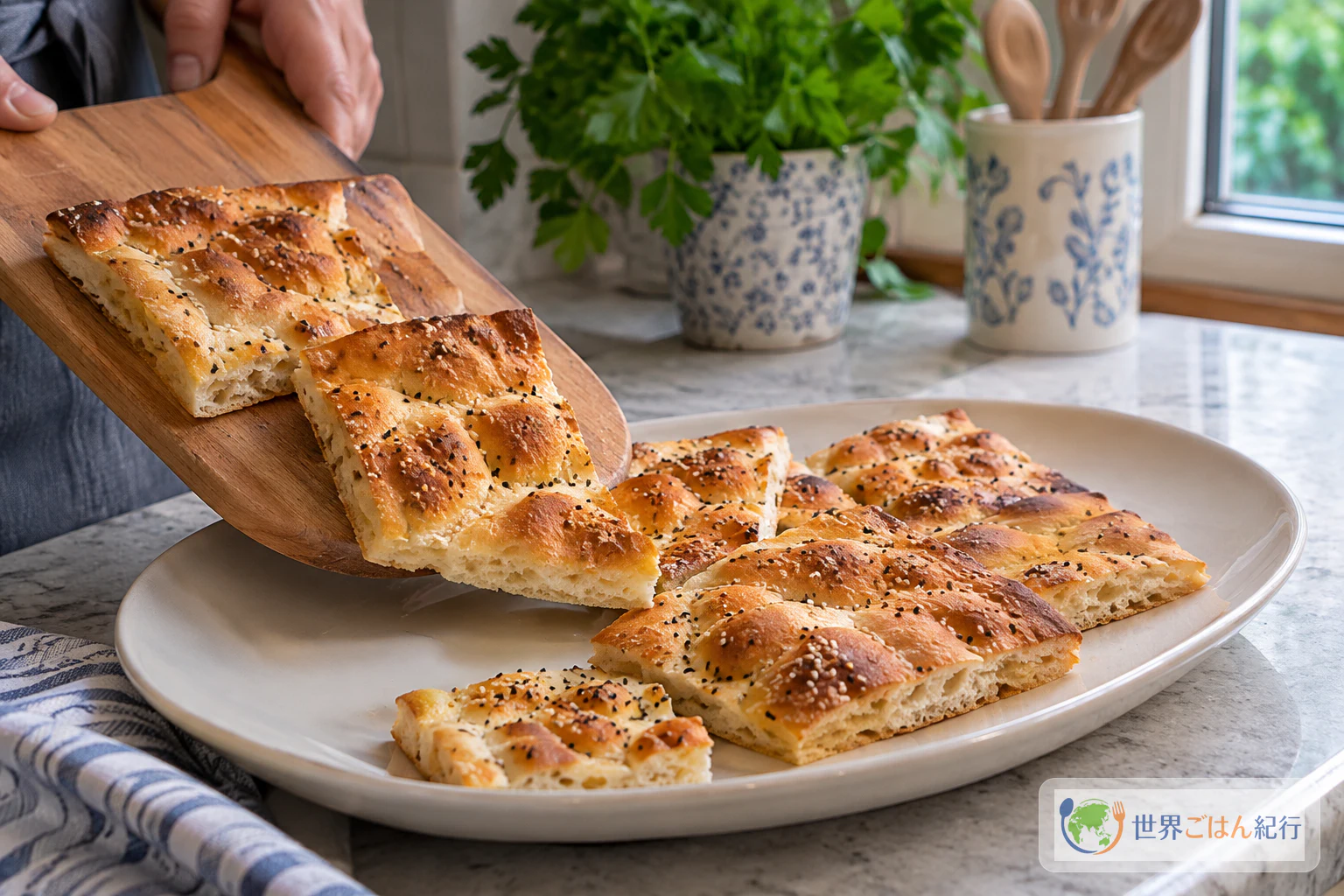
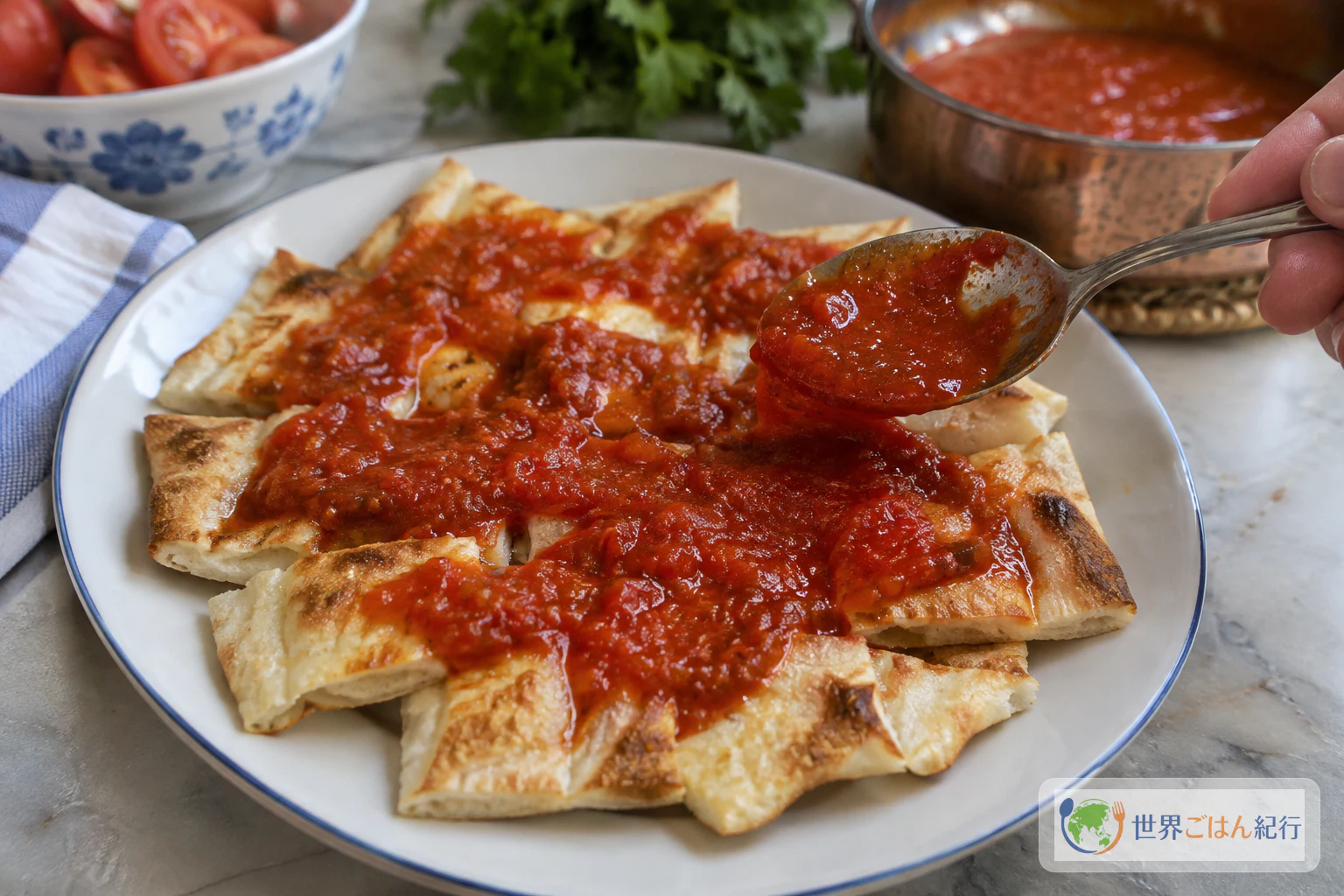
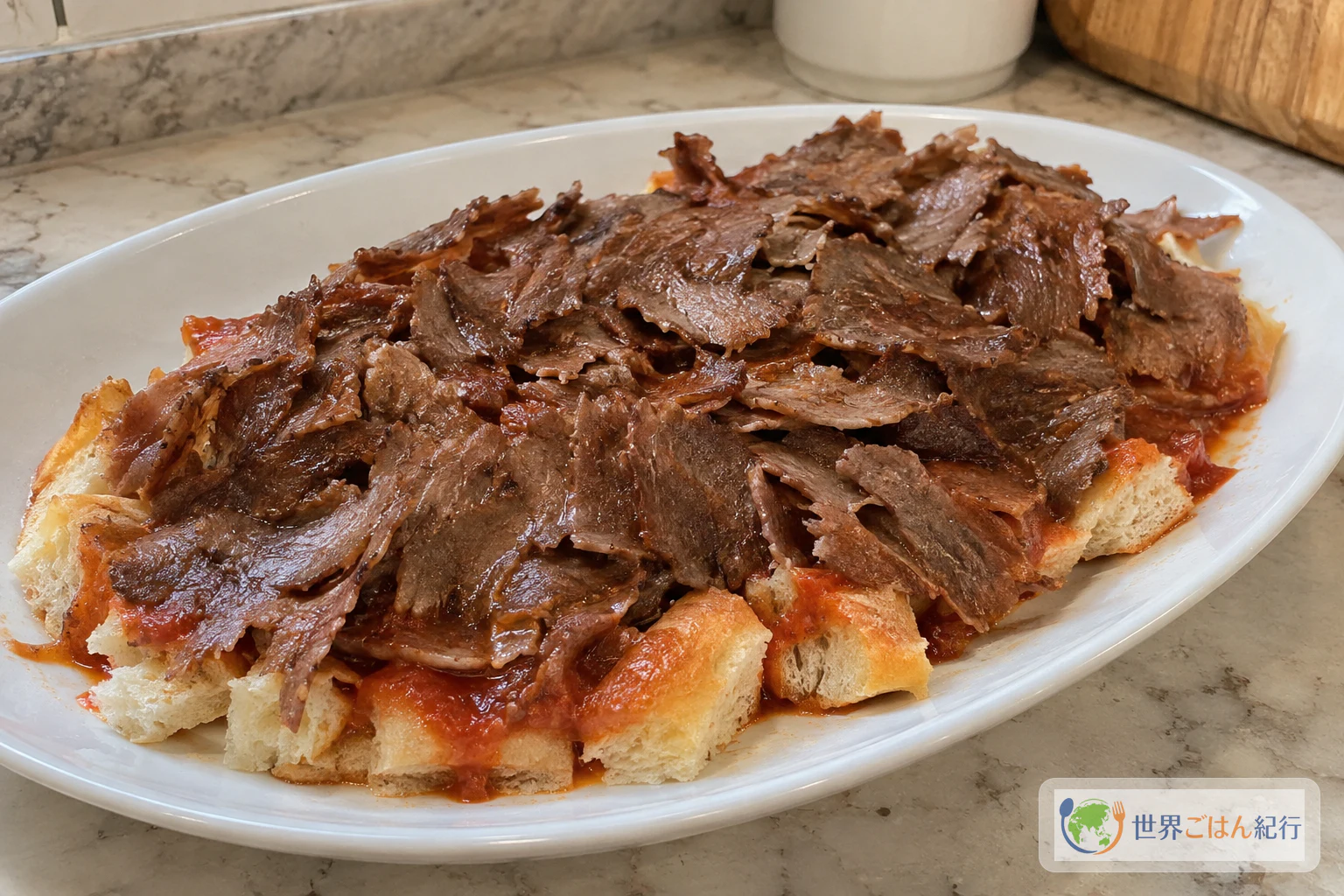
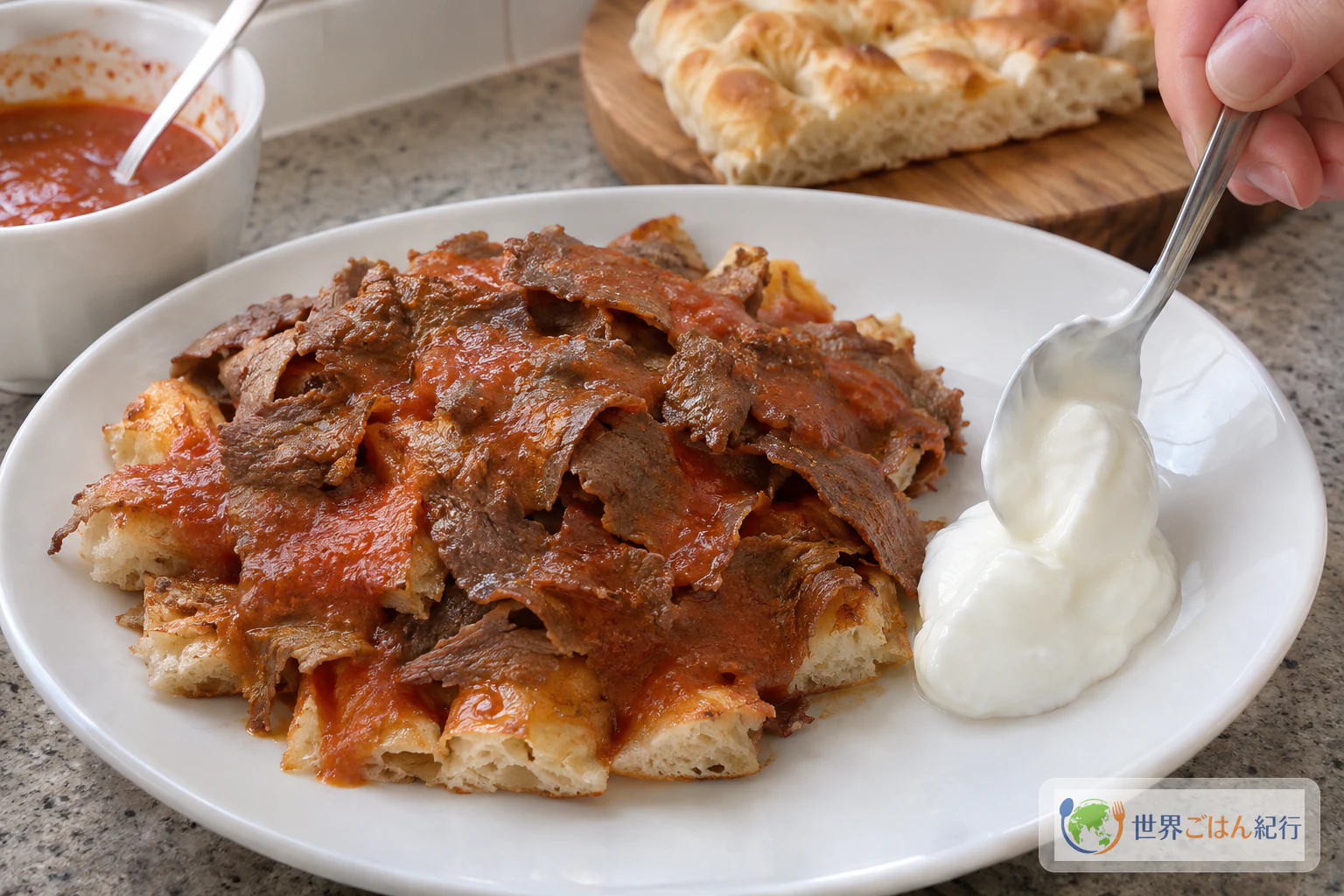
Squares of warm pide drink up a thick red tomato sauce. Thin shavings of browned beef cover them, yogurt waits at the side, and melted butter is poured over just before the plate reaches the table. Türkiye's Ministry of Culture and Tourism presents this dish, İskender kebap or Bursa kebabı, as a specialty of Bursa, built from thin-sliced doner meat, pide, yogurt, tomato sauce and butter.
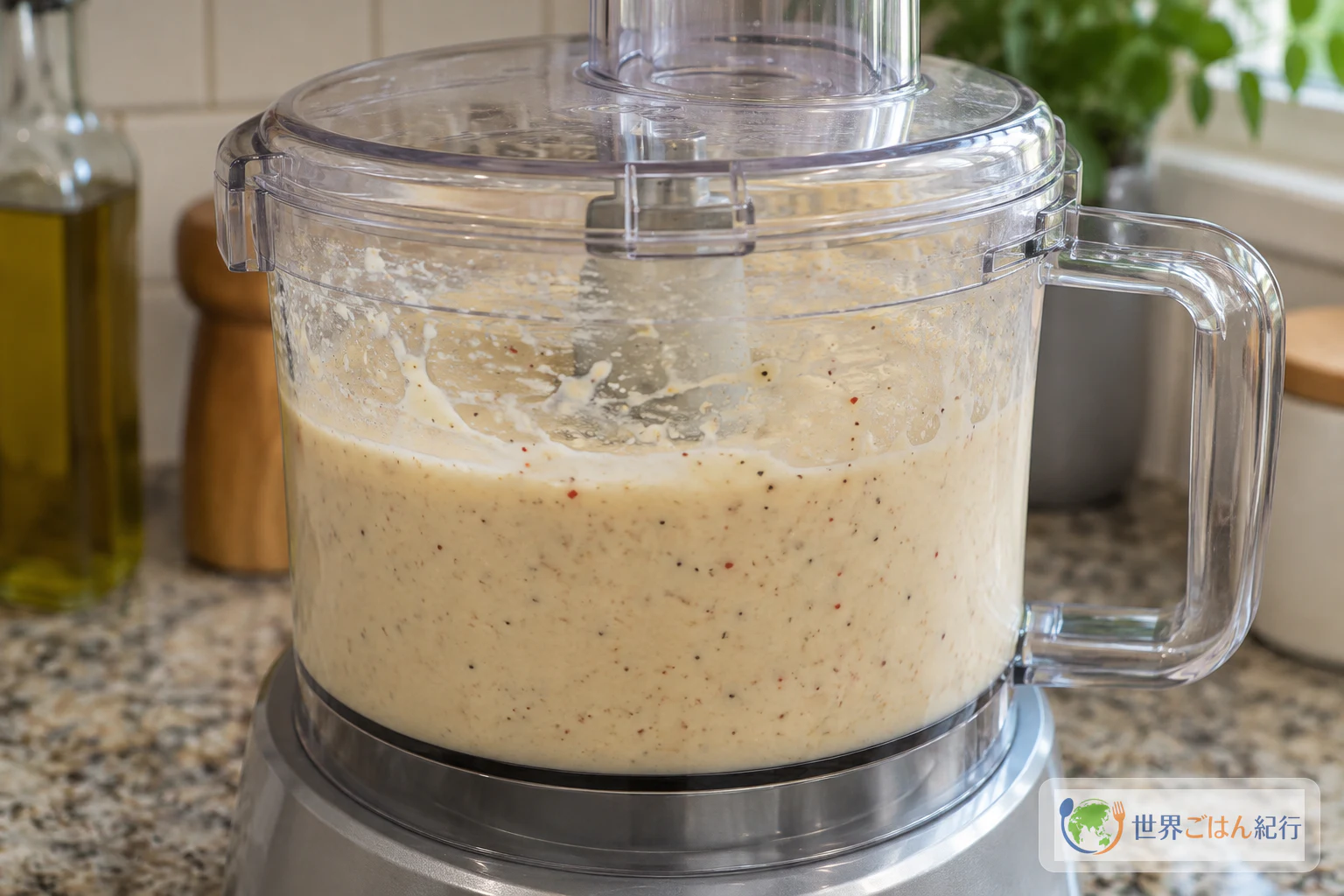
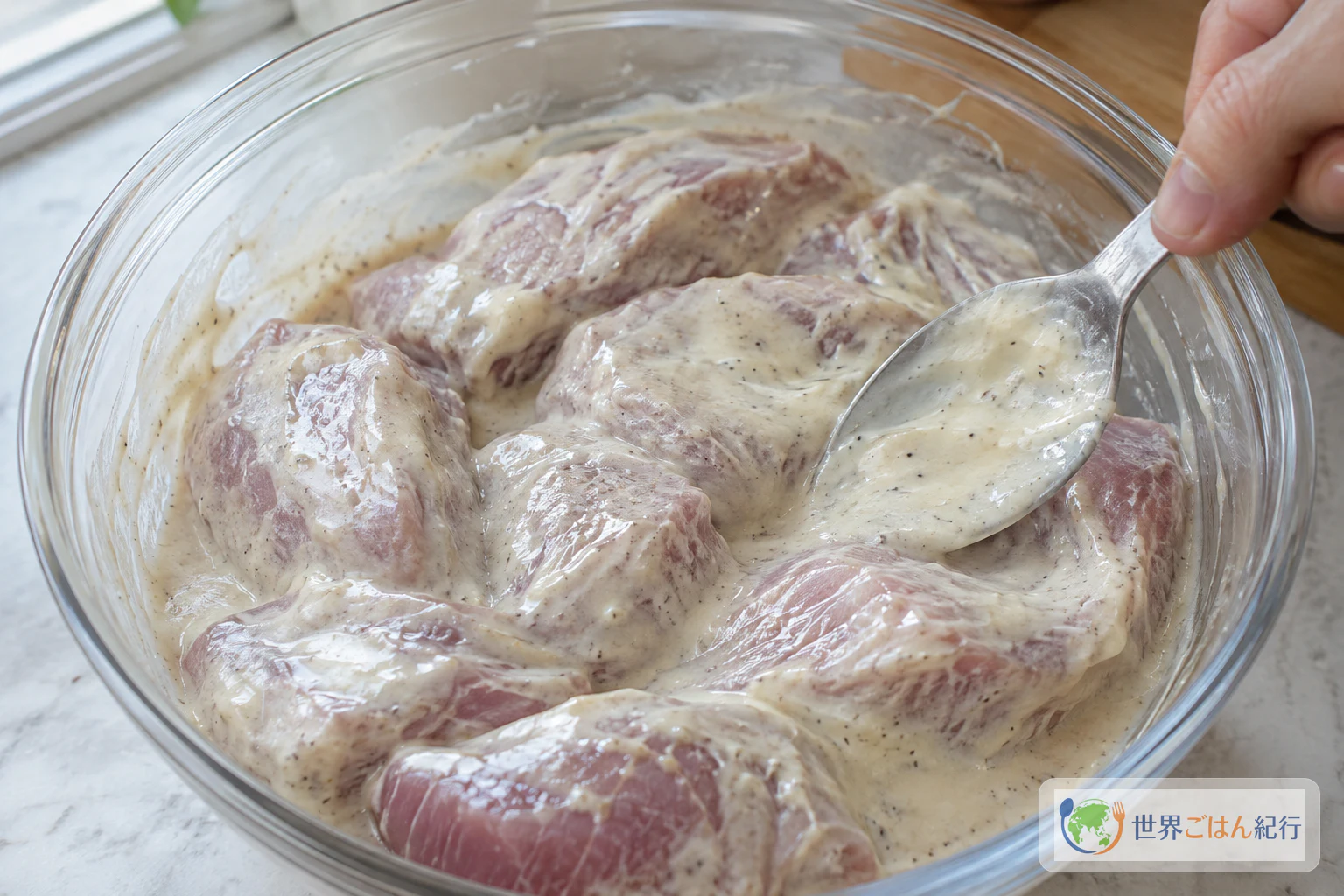
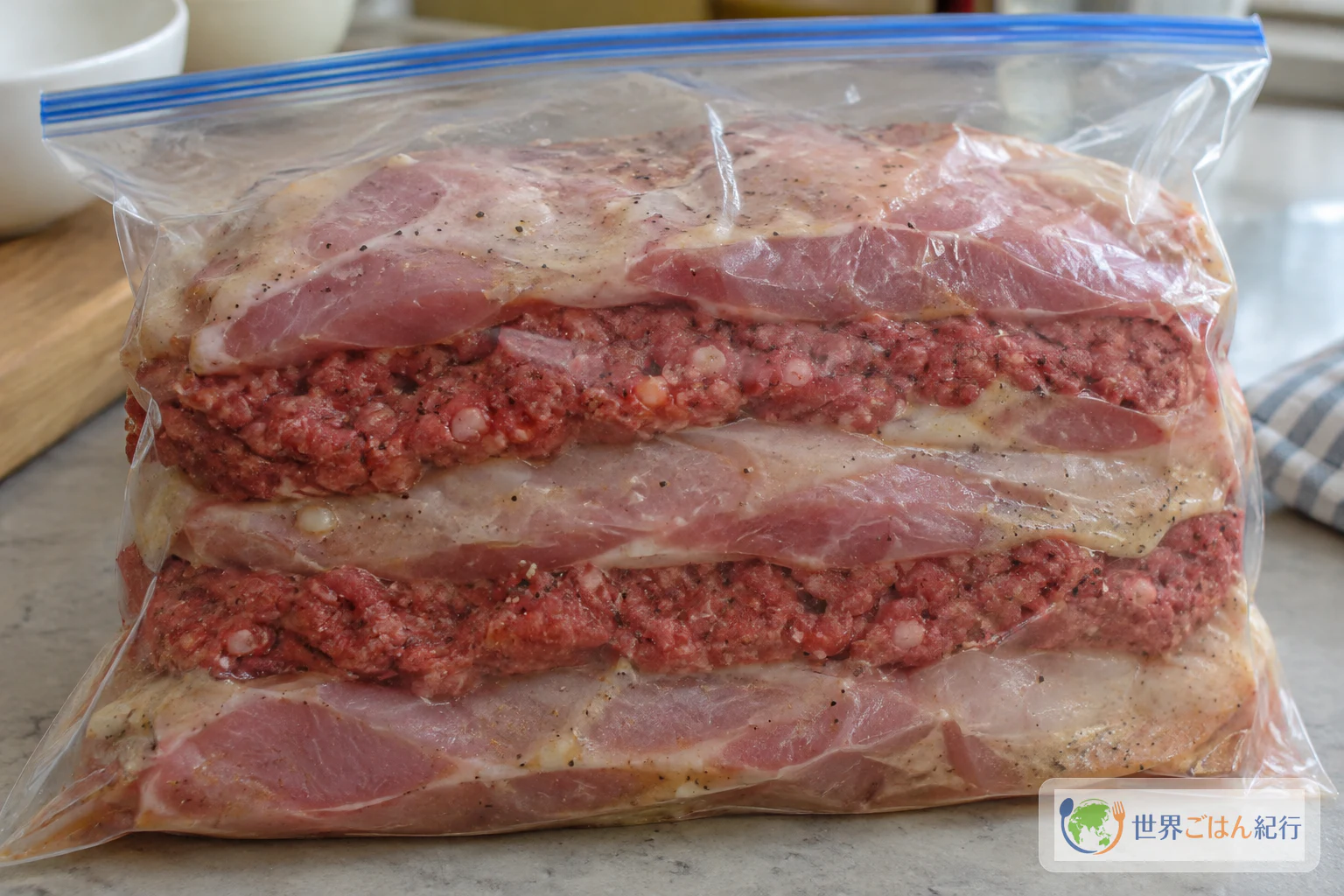
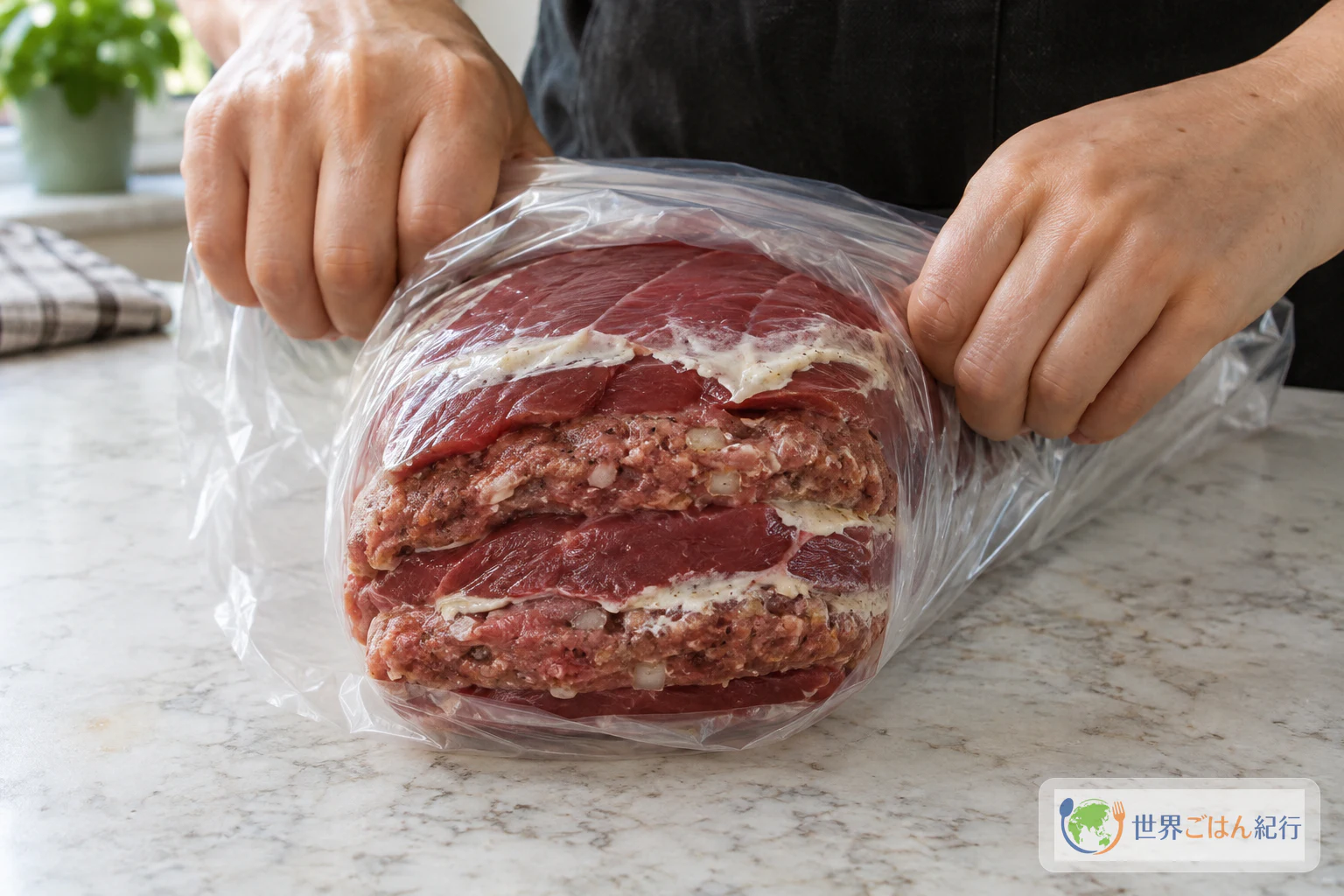
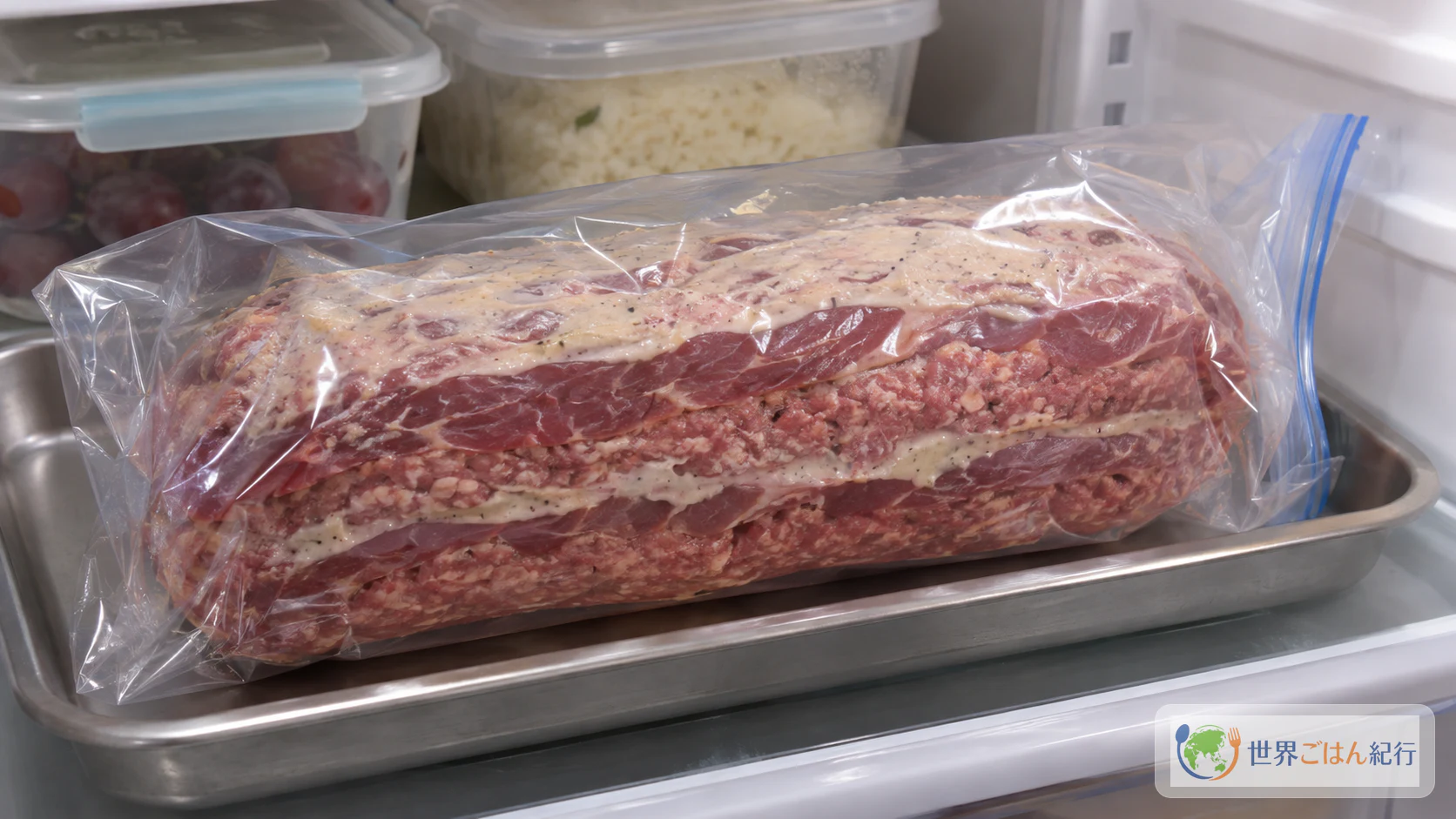
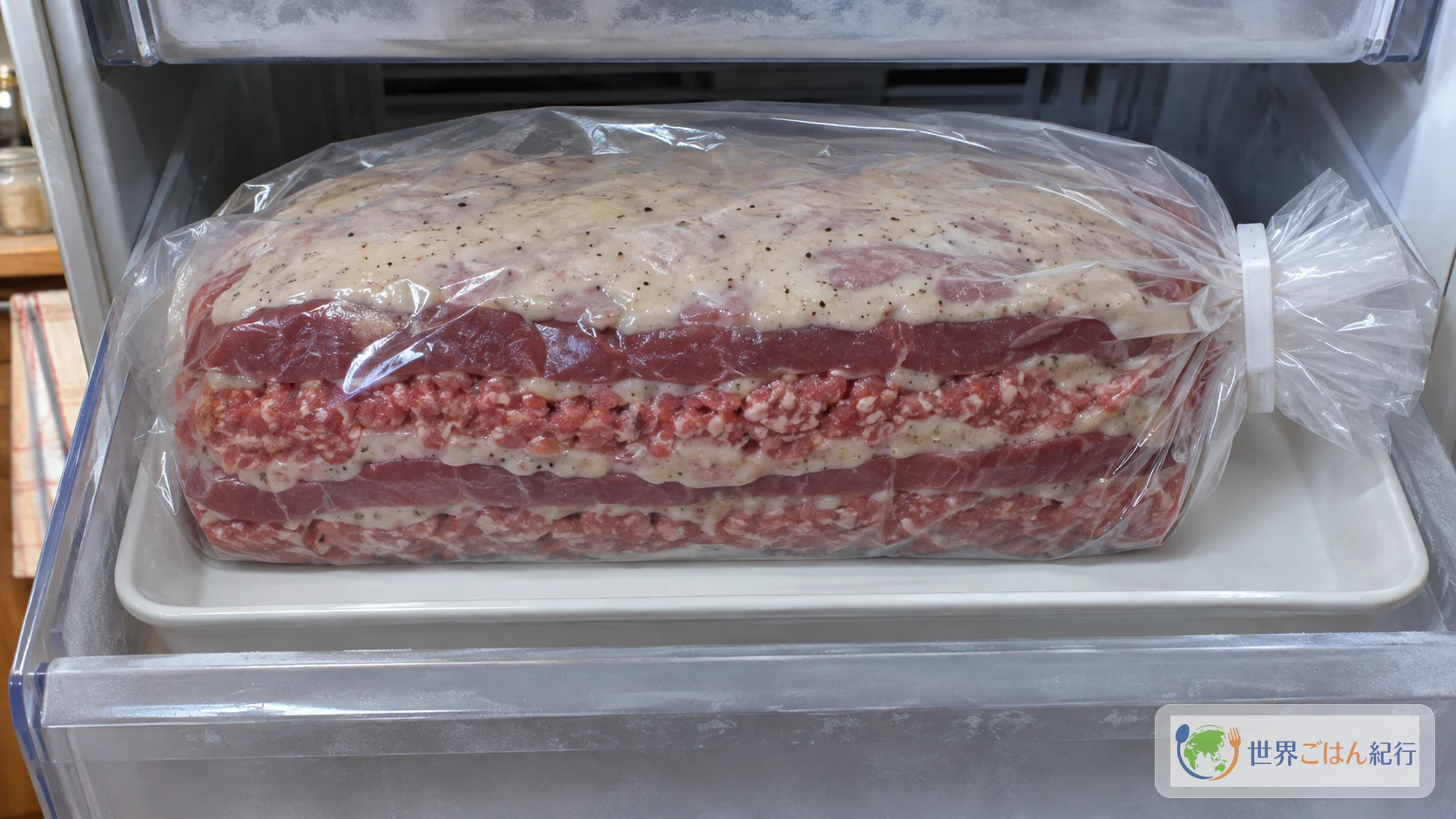
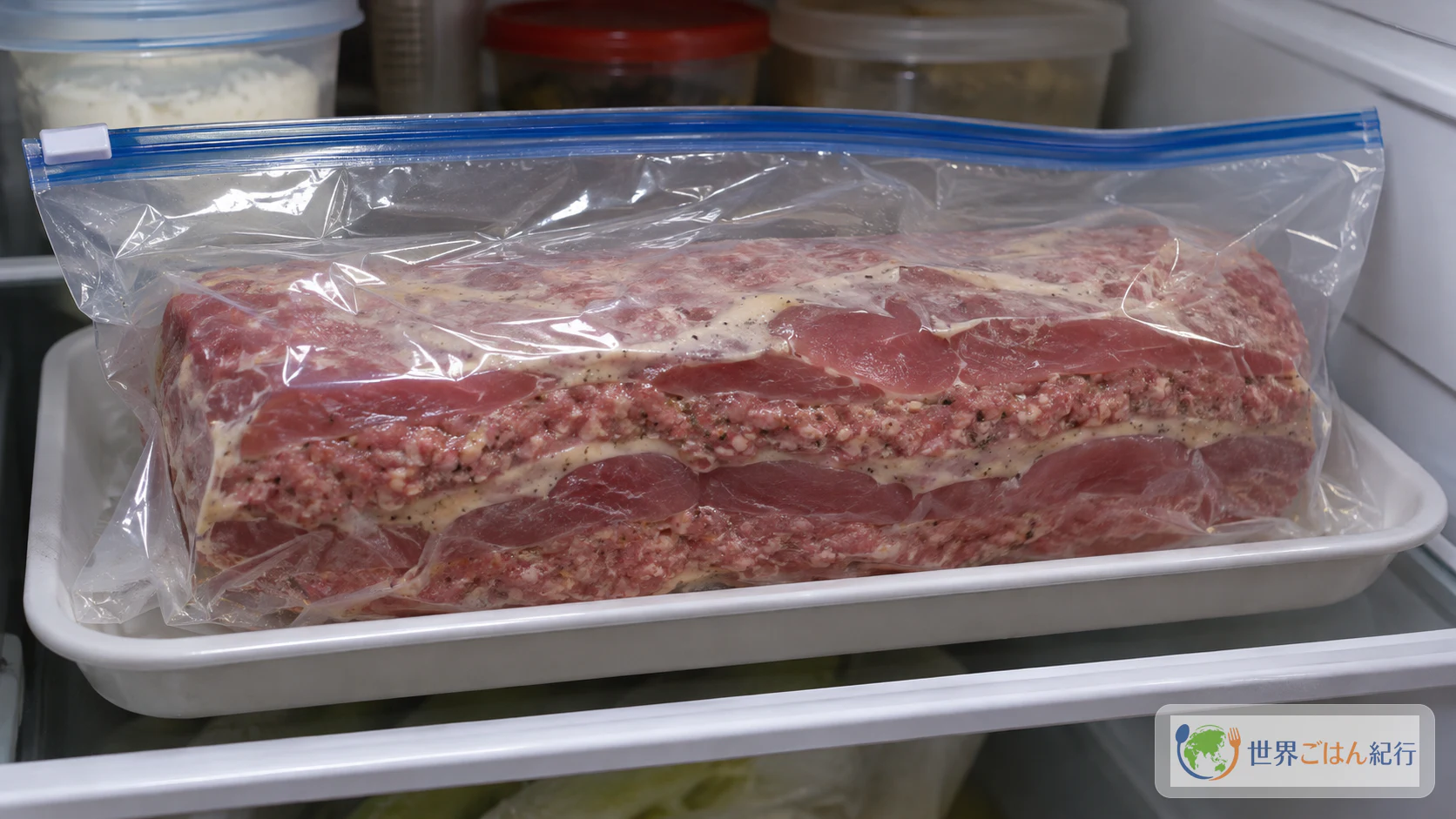
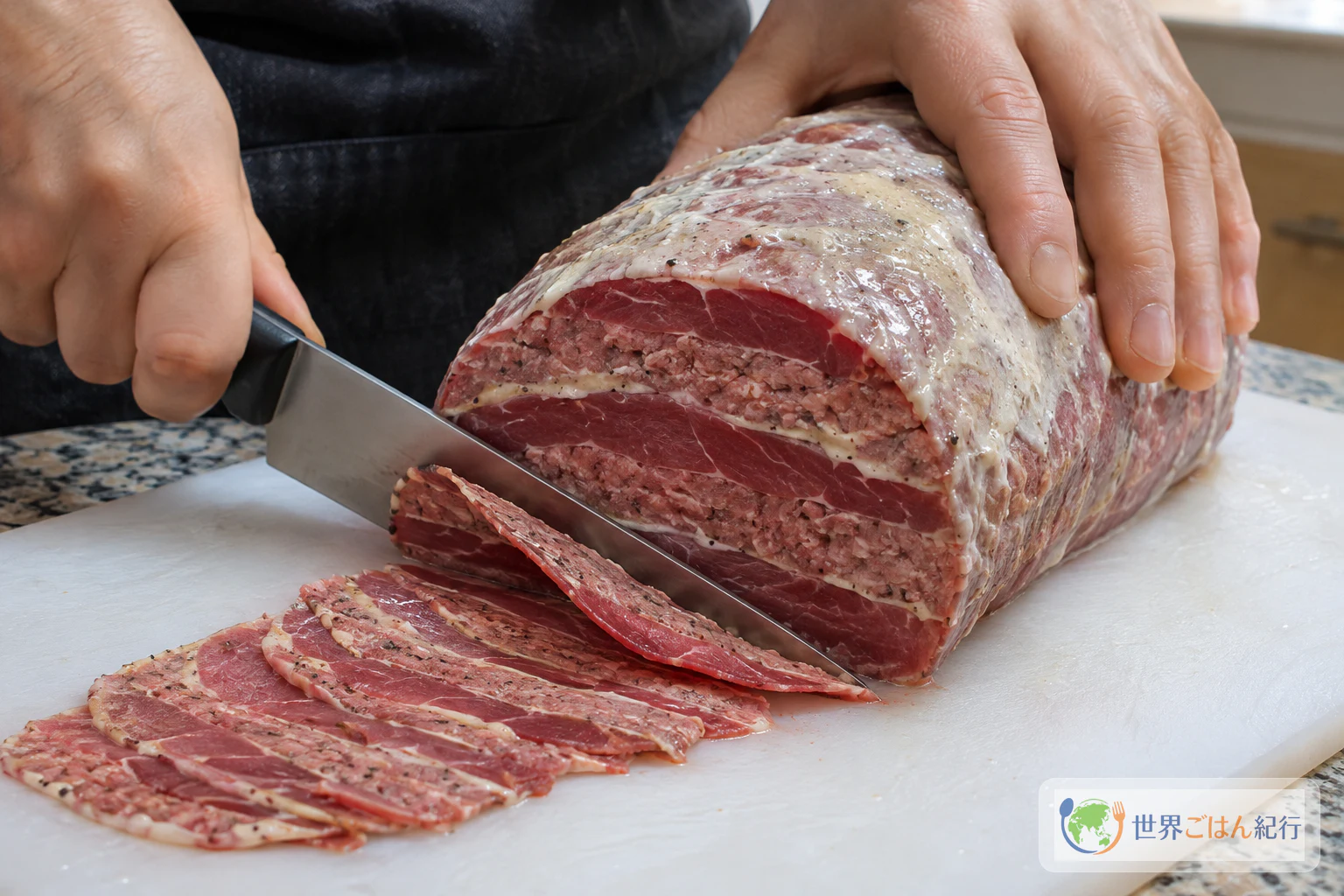
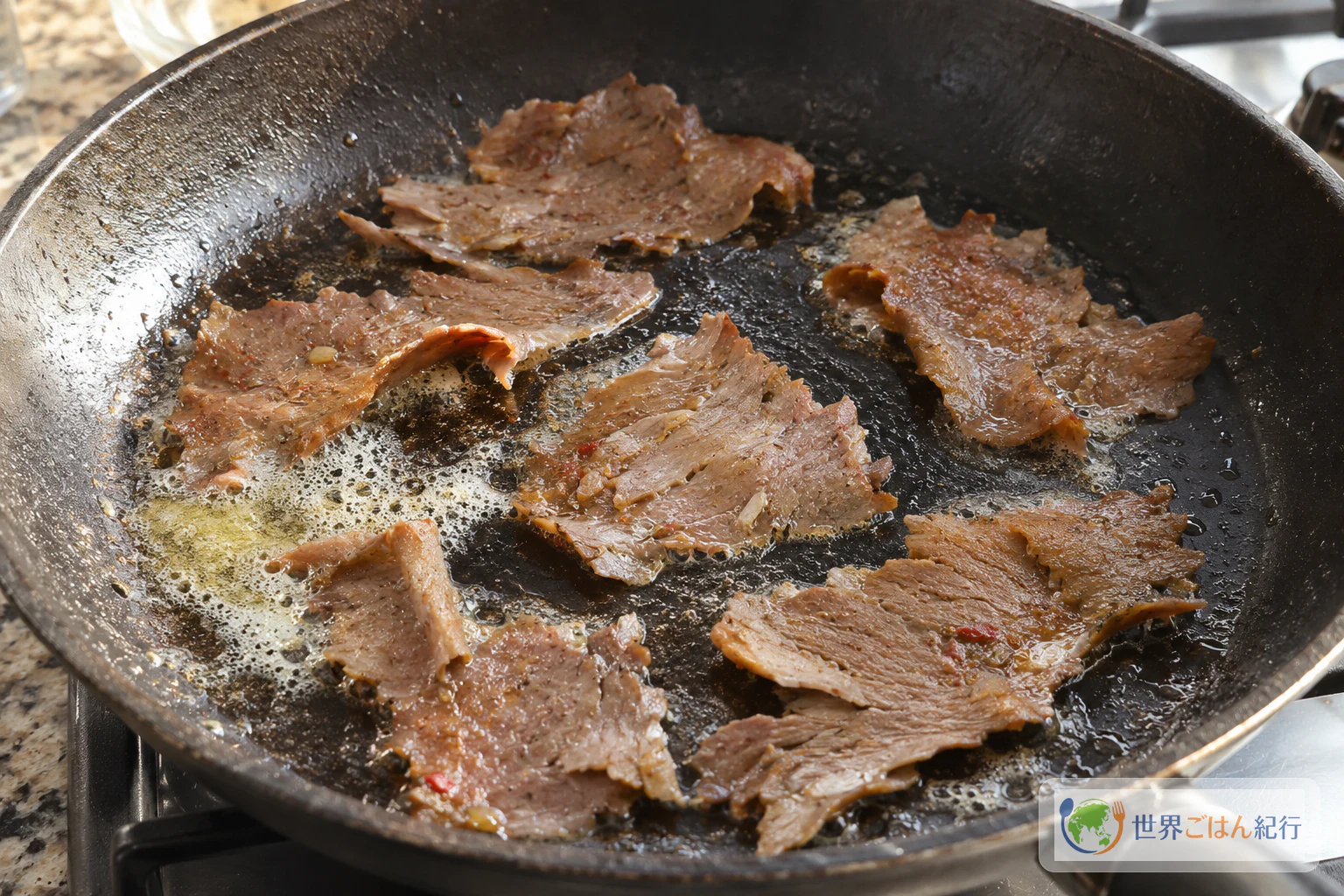
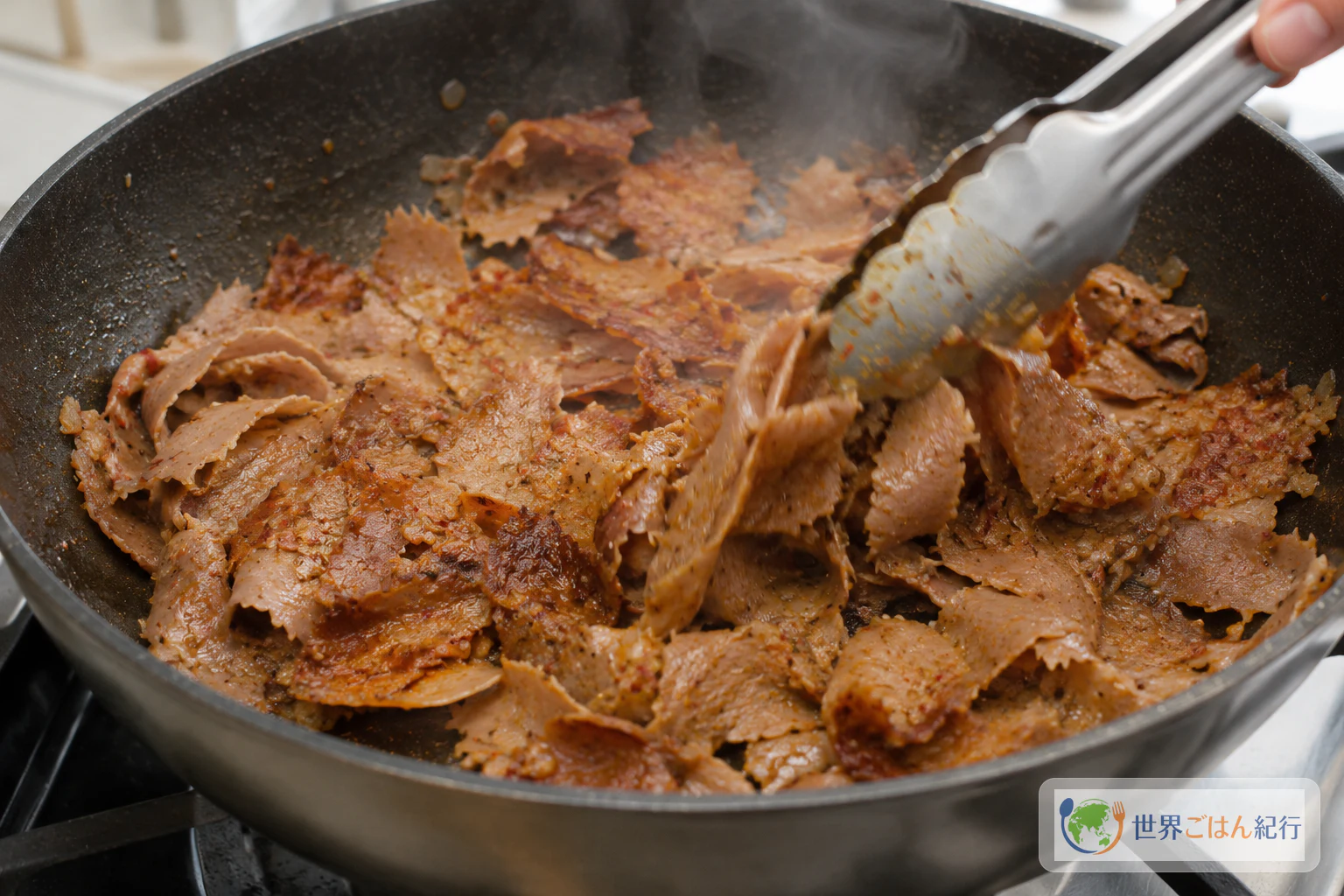
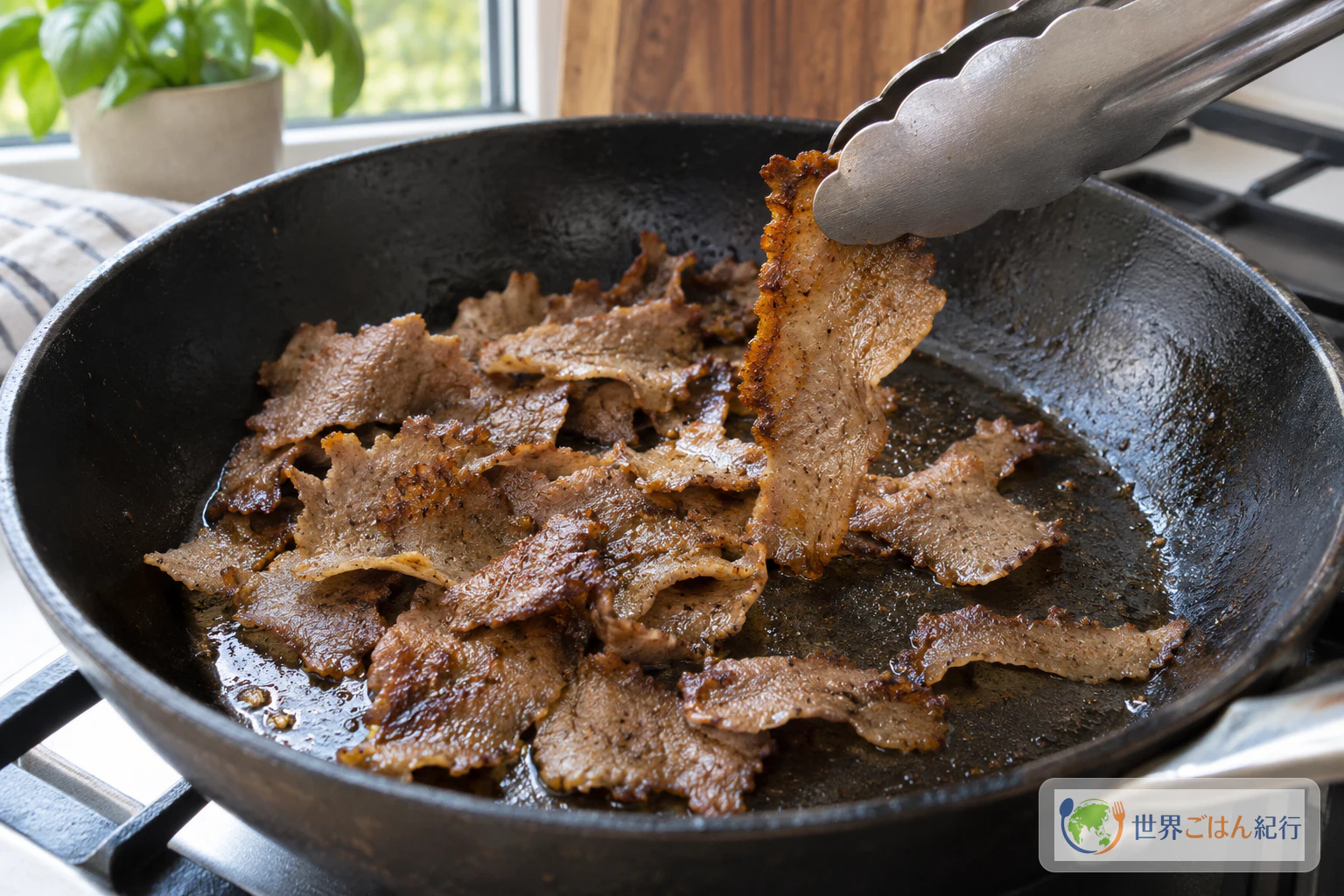
The version here is a household one, not the Bursa standard. It follows Ayşenur Altan's six-serving recipe on Turkish Food Travel, which needs no vertical spit. Beef fillet and ground beef are seasoned separately, stacked in alternating layers, chilled until firm, sliced thinly and browned in a skillet.
Sekai Gohan has not test-cooked this version, so we can't vouch for its results, timing or flavor from our own kitchen. The images illustrate each action, but they can't show a temperature, a dose or a safe result.
You can find more of the country's cooking on our Türkiye page.
Ingredients for 6 Servings
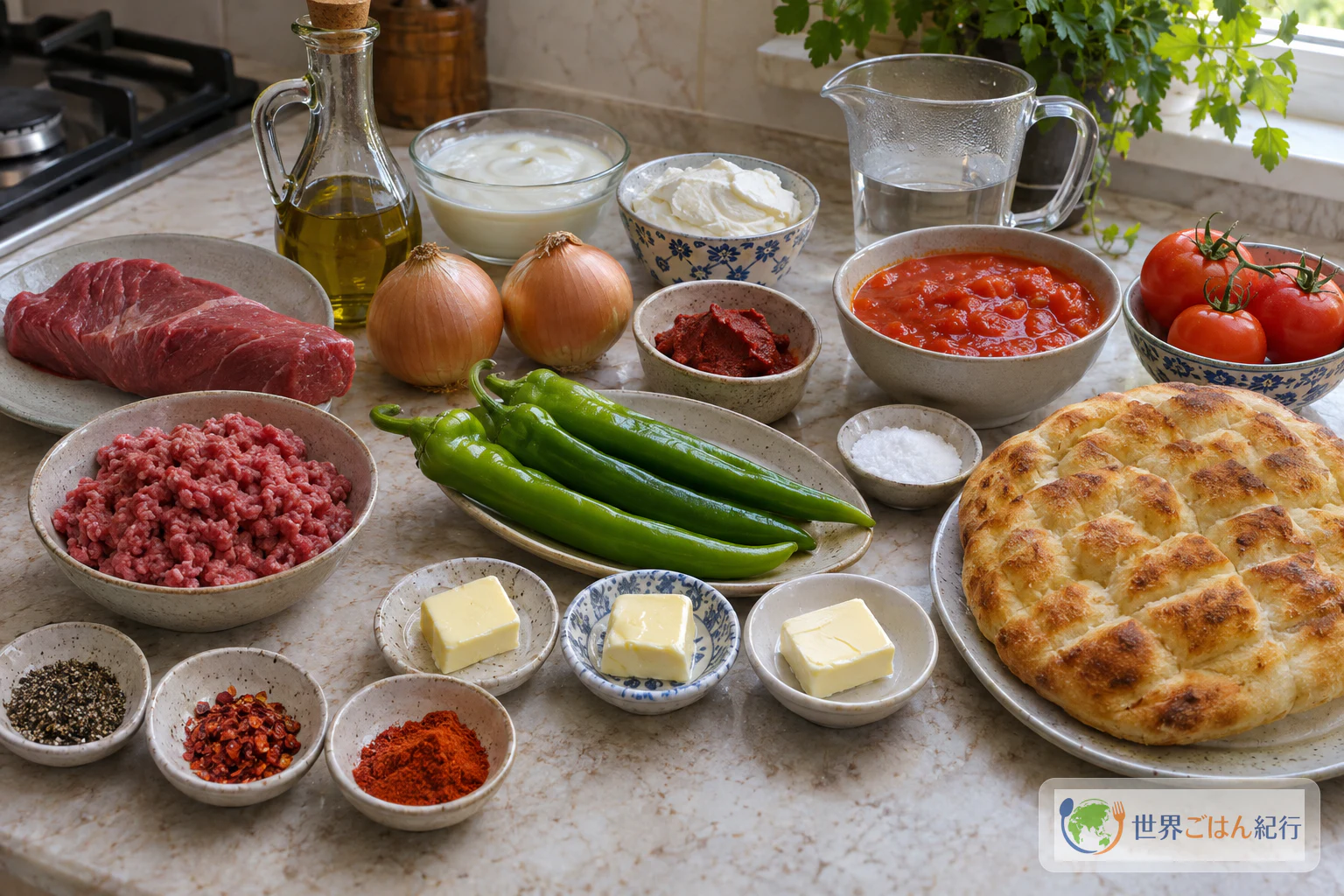
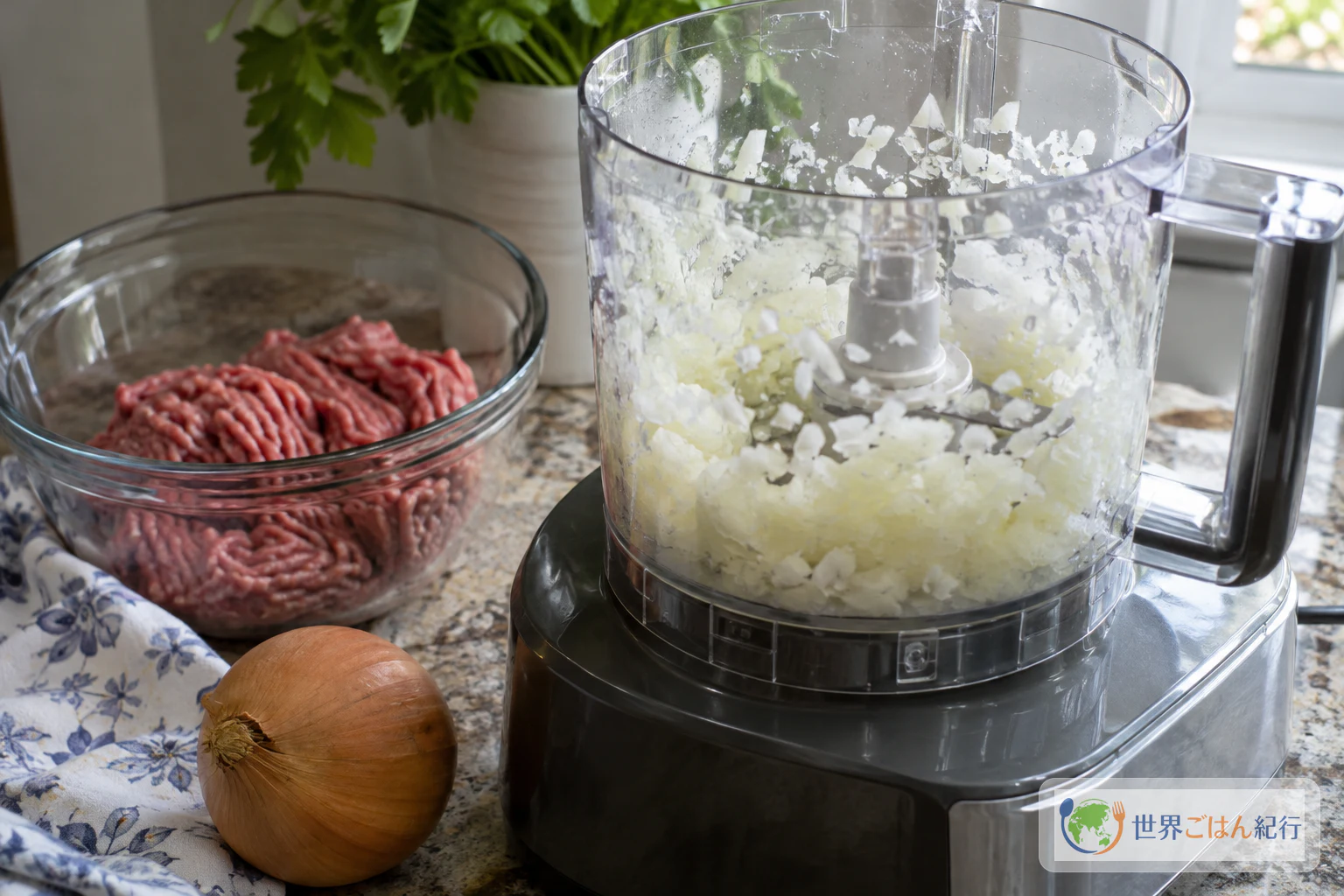
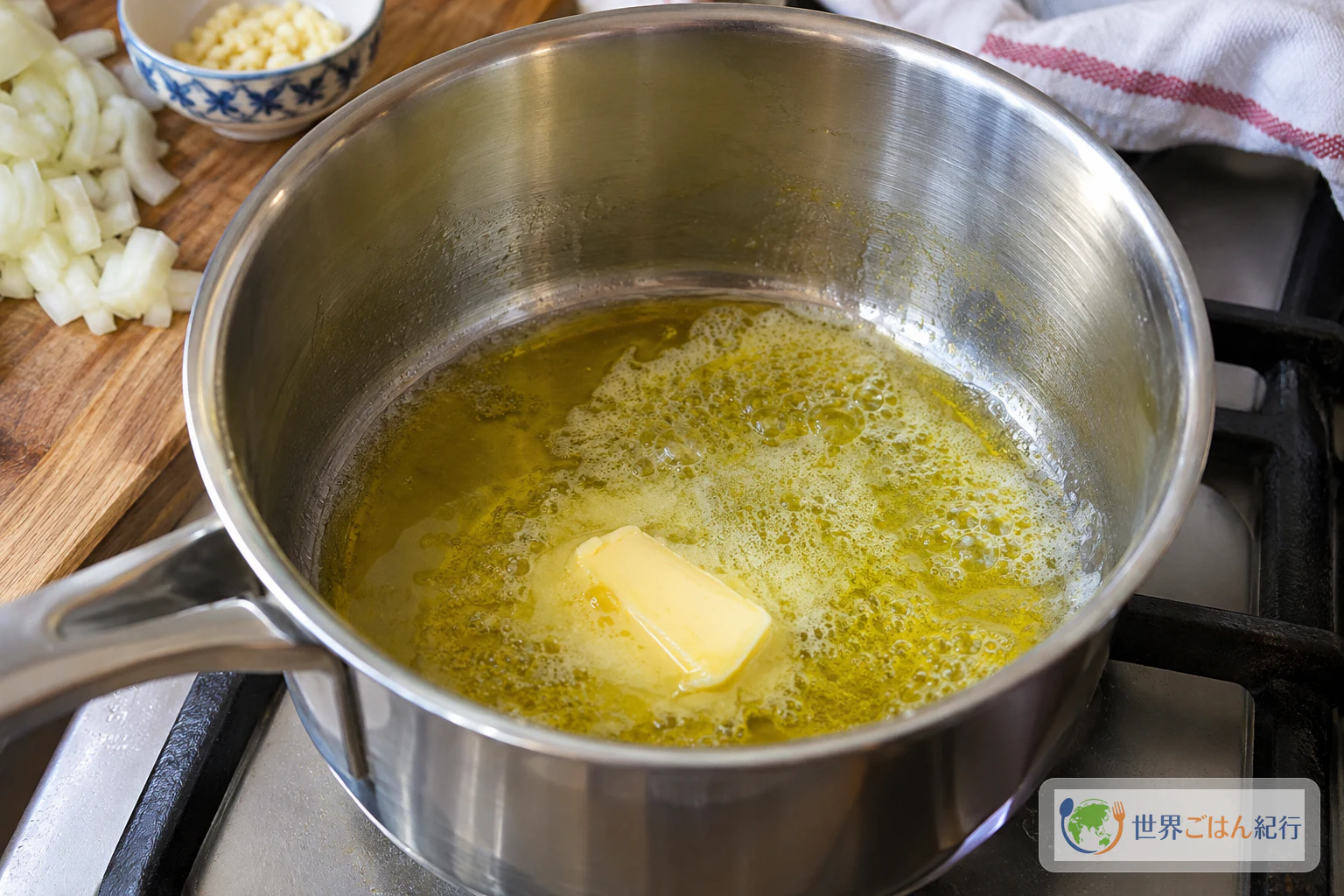
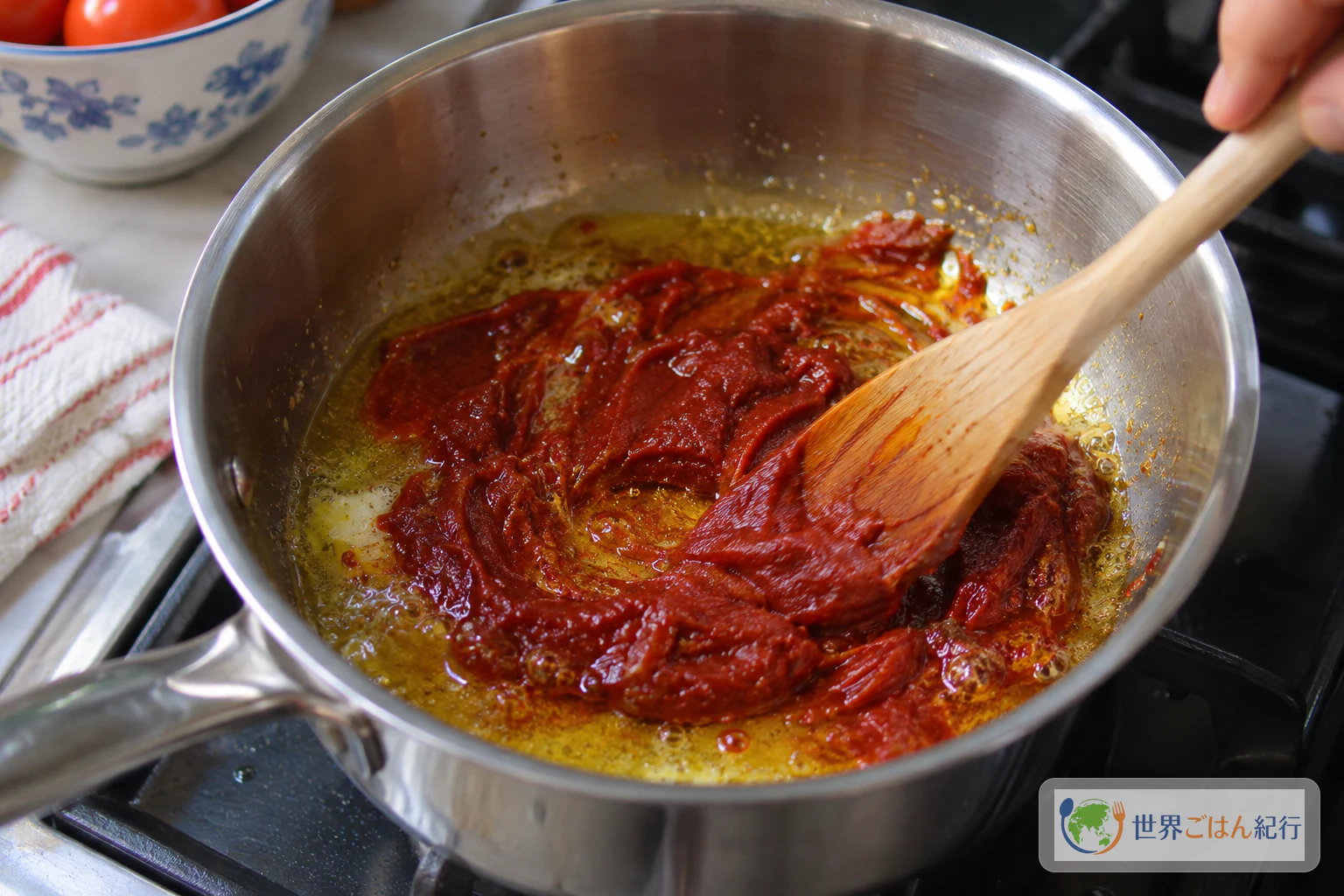
Keep each portion for its own job. Each meat gets its own onion, the sauce tomatoes are separate from the garnish tomatoes, and butter is used separately for the sauce, the frying and the finish.
Choosing and Swapping
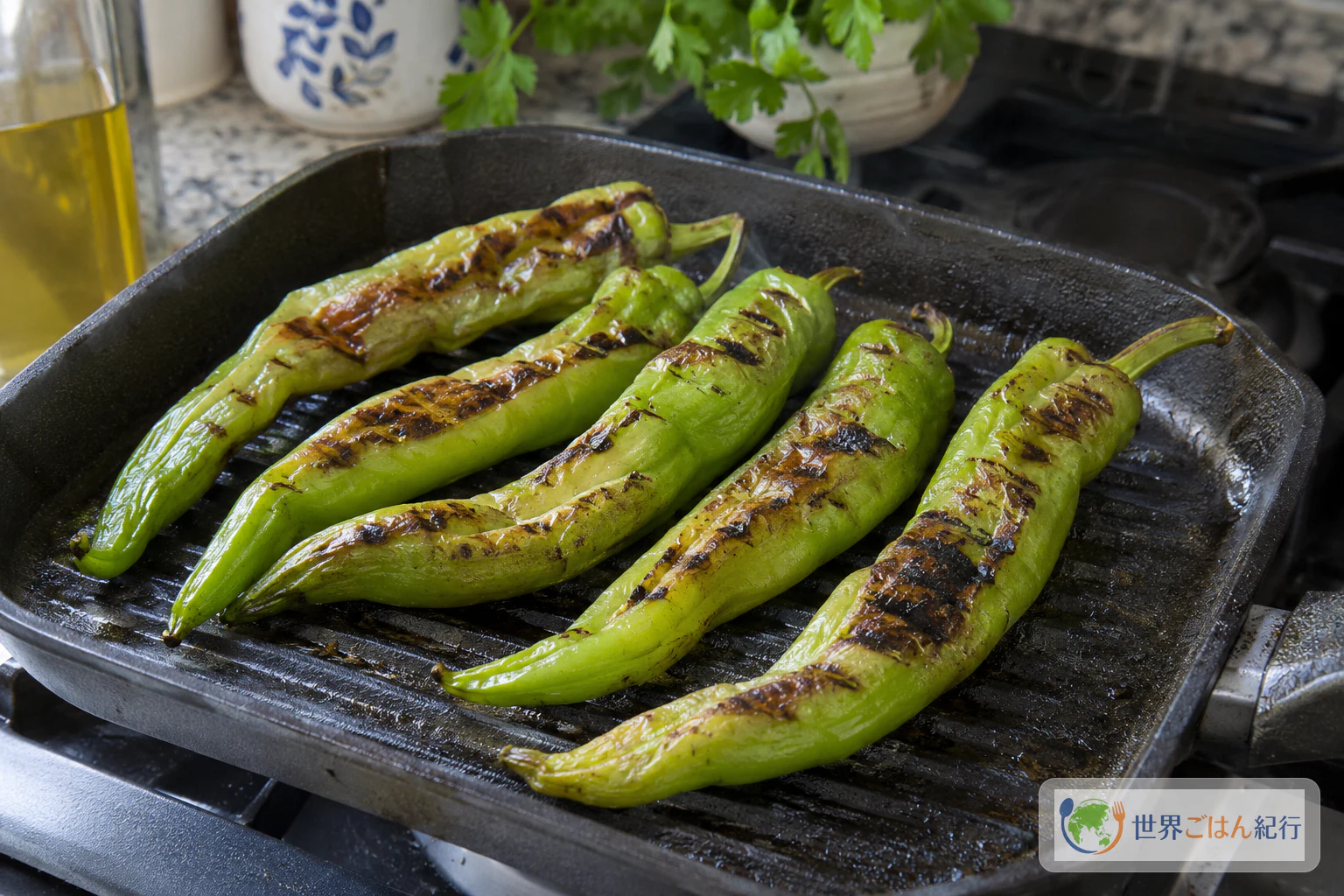
- Long green peppers: Use the slender green peppers common in Turkish cooking if you can. Small bell peppers or other green peppers differ in shape and heat, so treat them as a different garnish rather than an exact match.
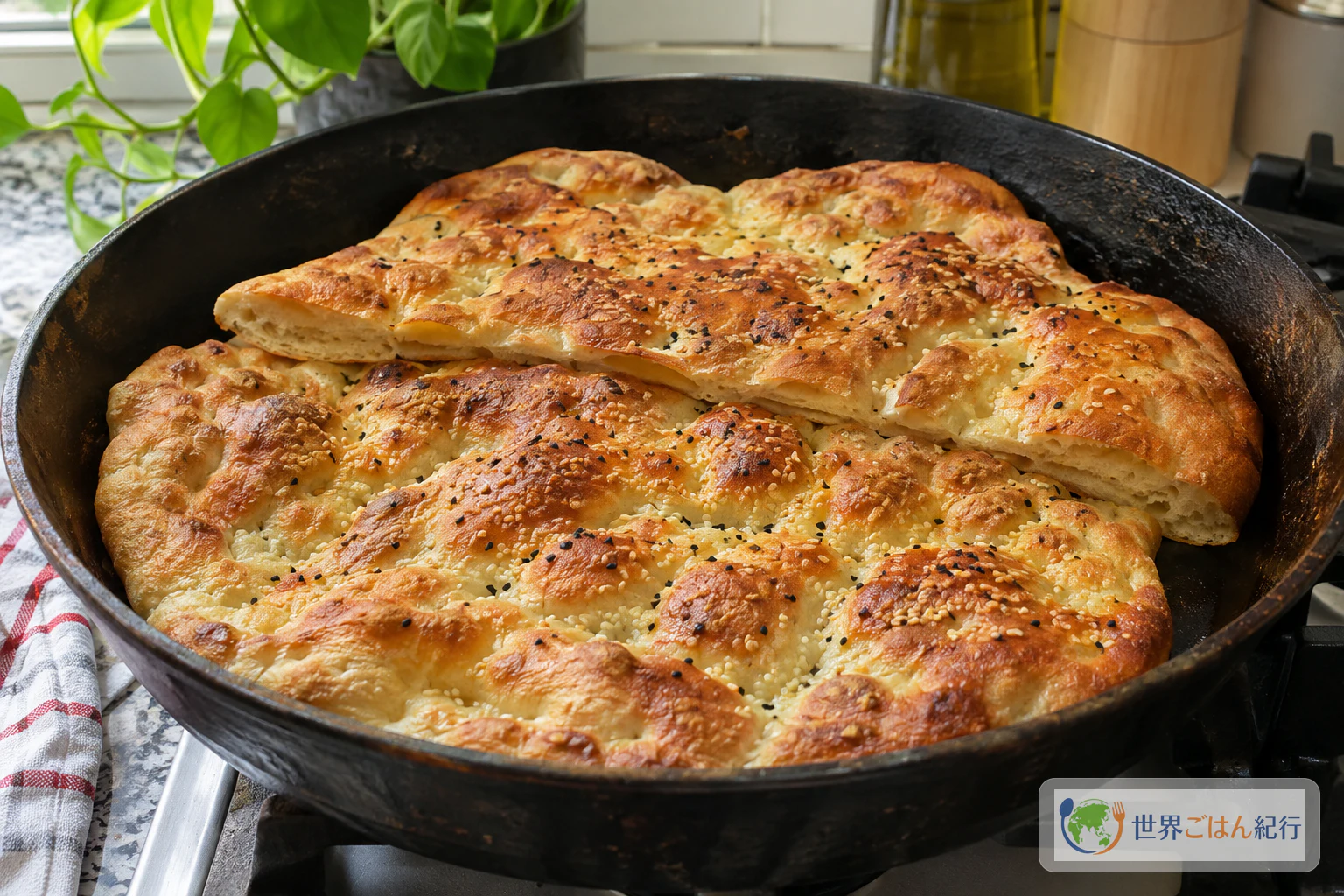
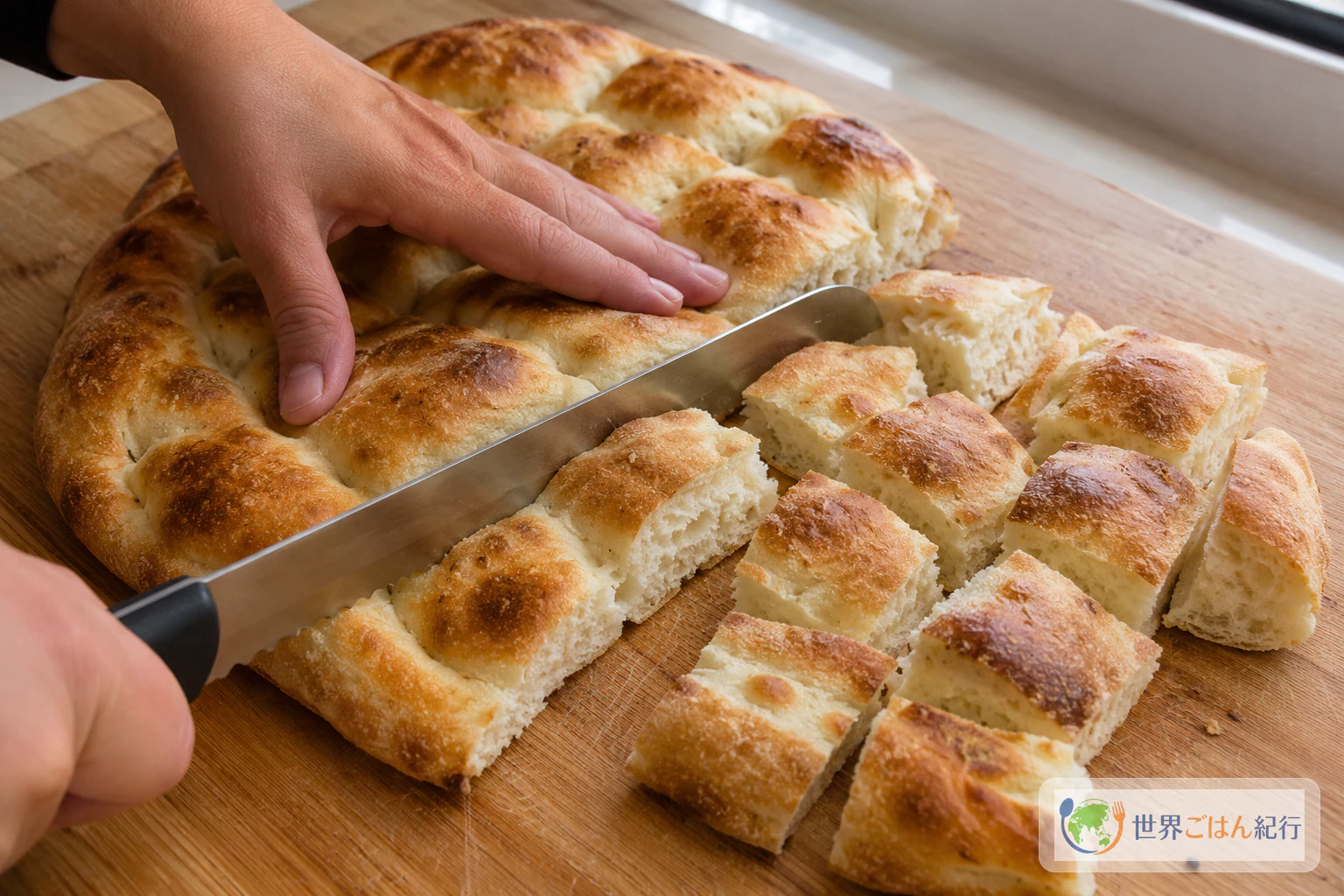
- Bread: Tırnak pide is the traditional choice. A similar fluffy flatbread or a thick unsweetened one also works, but the texture and thickness will differ.
- Thick yogurt: Strained unsweetened yogurt comes close in texture.
- Fillet marinade heat: Use ground red pepper or flakes, and start on the mild side. Taste the blended marinade before it touches the raw beef, never afterward.
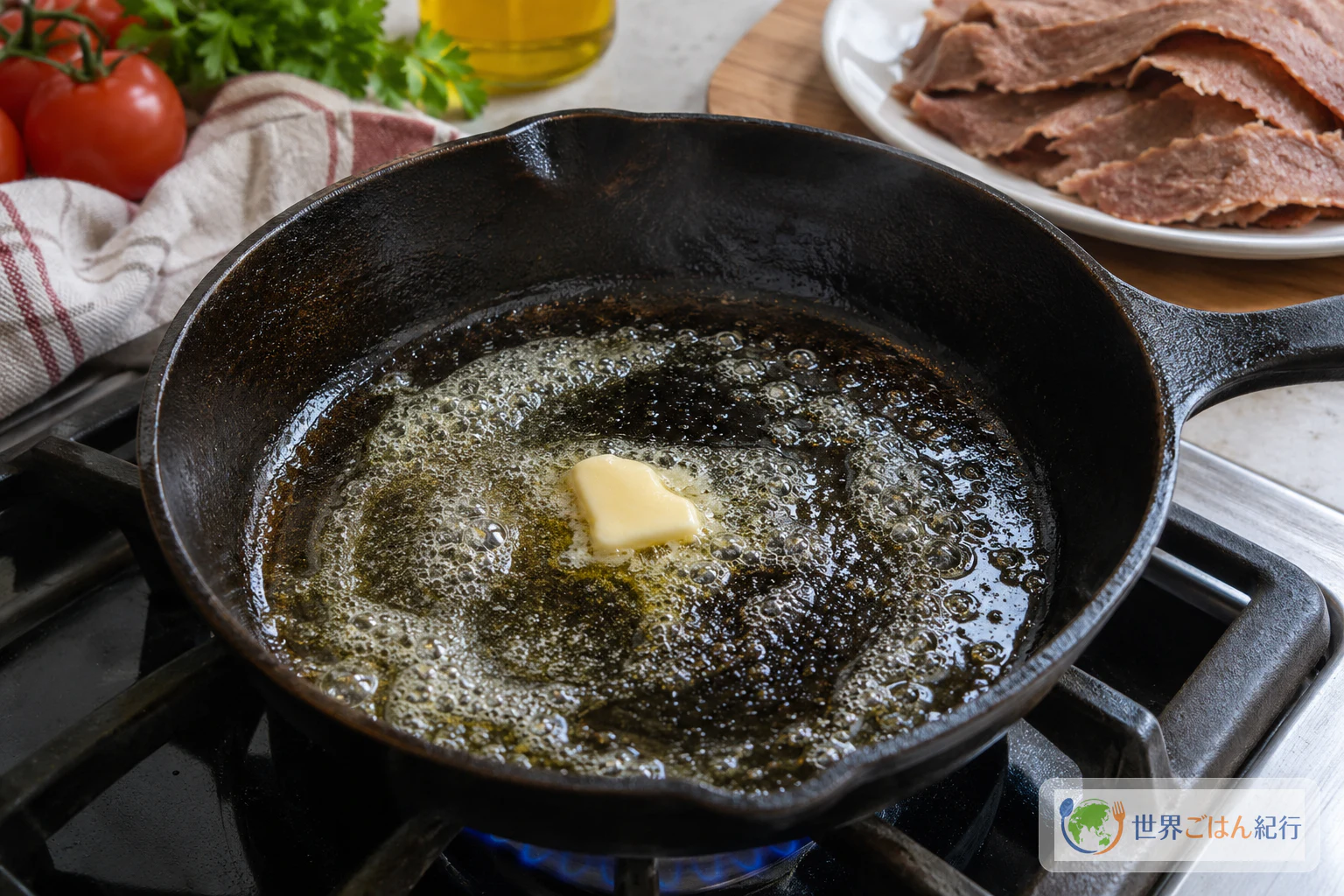
- Frying fat: Olive oil can replace the butter, in the same amount.
- Beef fillet: It slices thinly with ease. Another cut would be your own substitution.
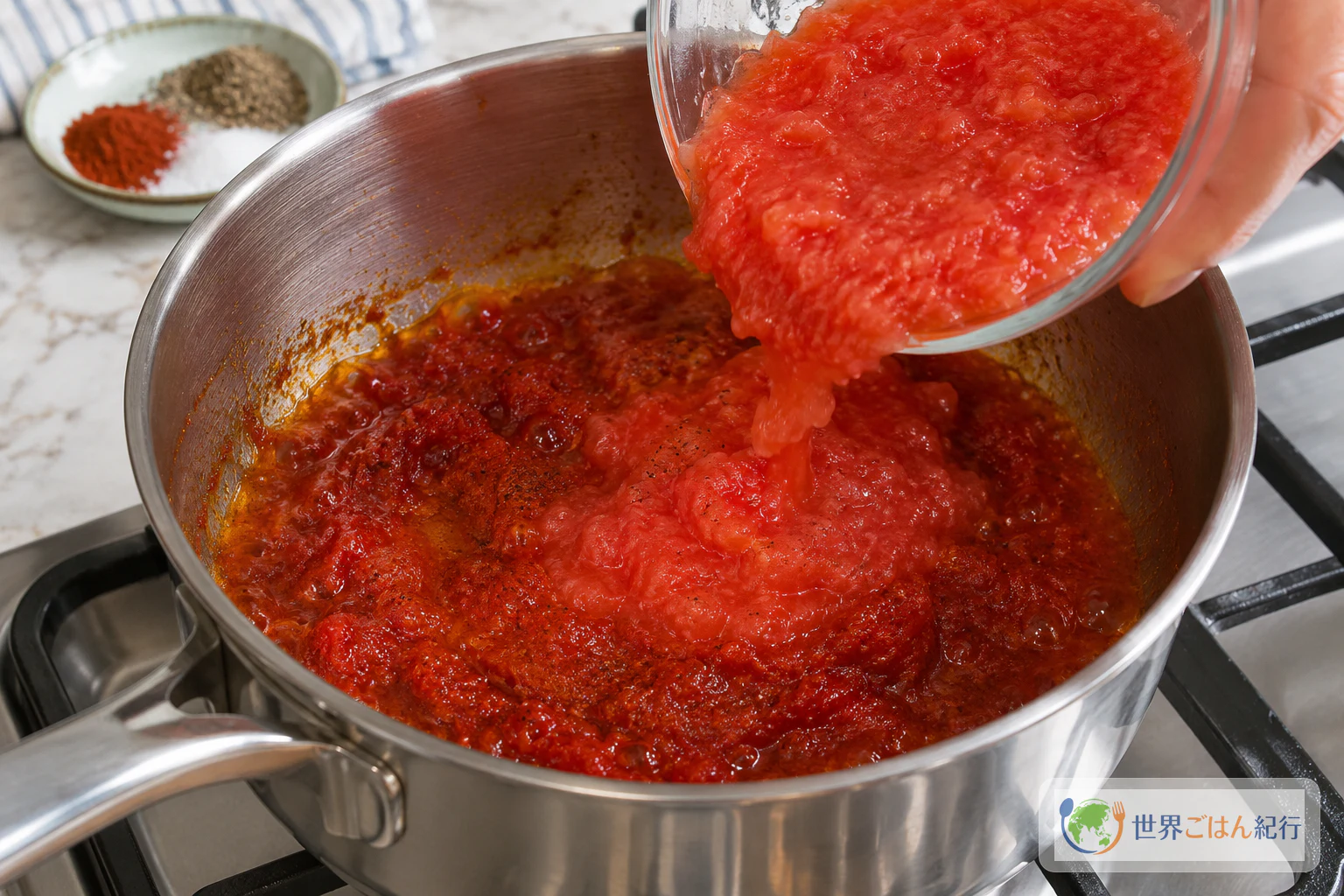
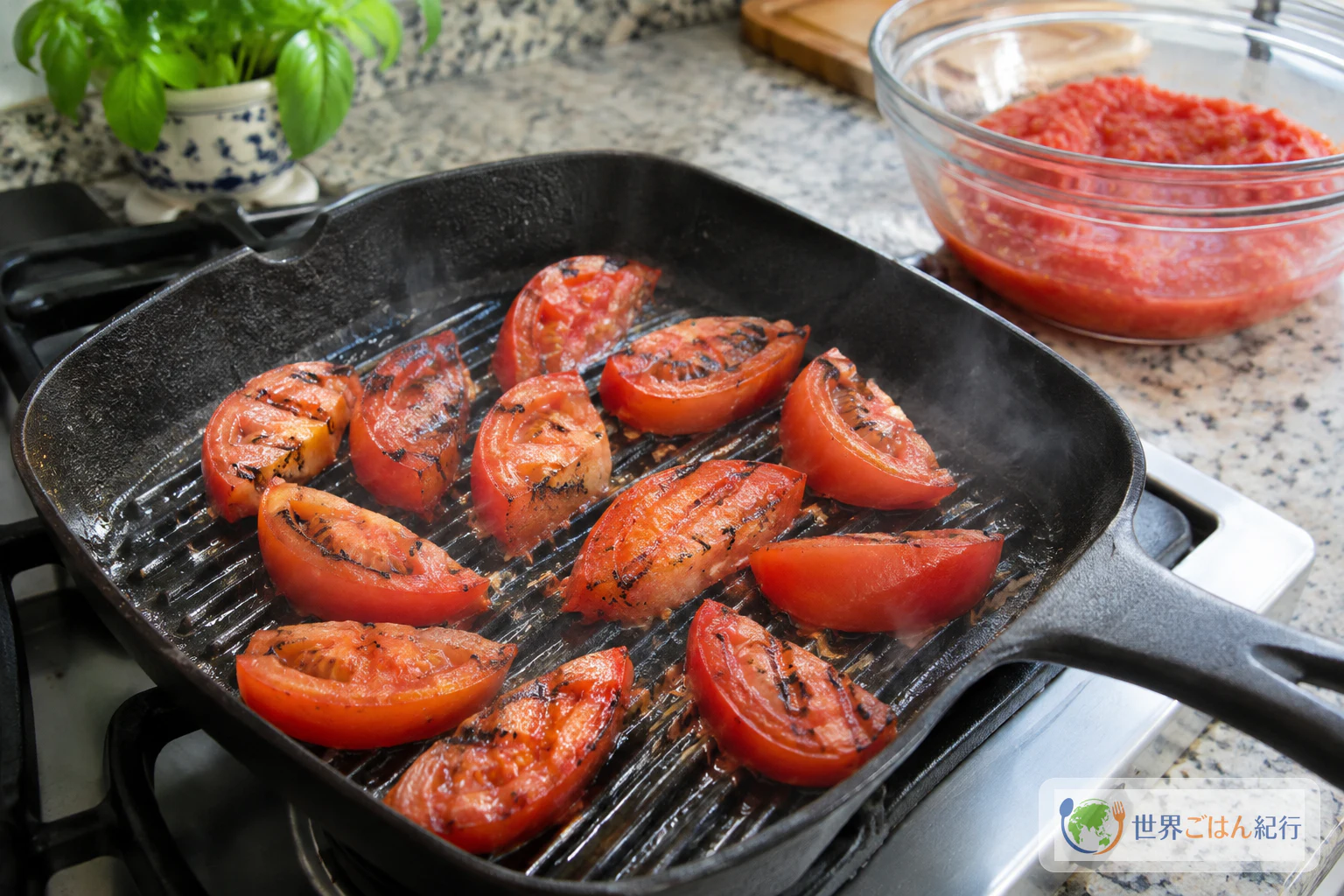
- Sauce tomatoes: This sauce uses grated fresh tomatoes. Canned tomatoes would change the flavor, and we have no tested amount for them.
This dish contains milk (yogurt and butter) and wheat (pide), and it is made with beef. Check the labels on packaged bread and yogurt.
Equipment
- Food processor
- Box grater
- Mixing bowls, including one for each raw meat
- Food-grade freezer bag that closes securely
- Tray that fits your refrigerator and freezer
- Sharp knife and cutting board reserved for raw meat
- Bread knife and a separate clean cutting board
- Saucepan for the tomato sauce
- Small saucepan for the finishing butter
- Heavy skillet for the meat and bread
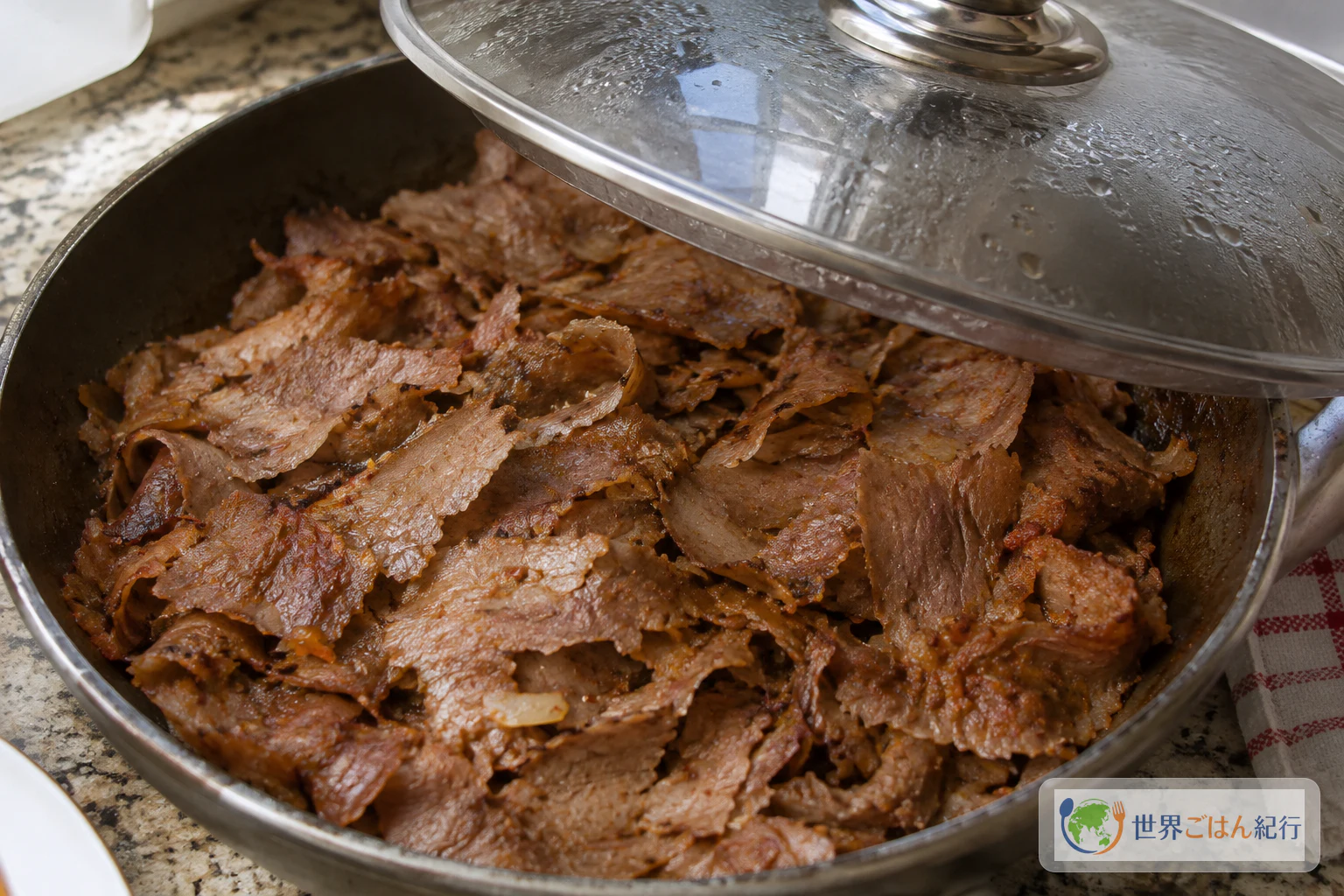
- Separate pan with a lid for holding cooked meat
- Grill pan for the vegetables
- Separate clean tongs or utensils for raw and cooked food
- Broad serving plate
Method: Chill, Slice Thin, Then Build the Plate
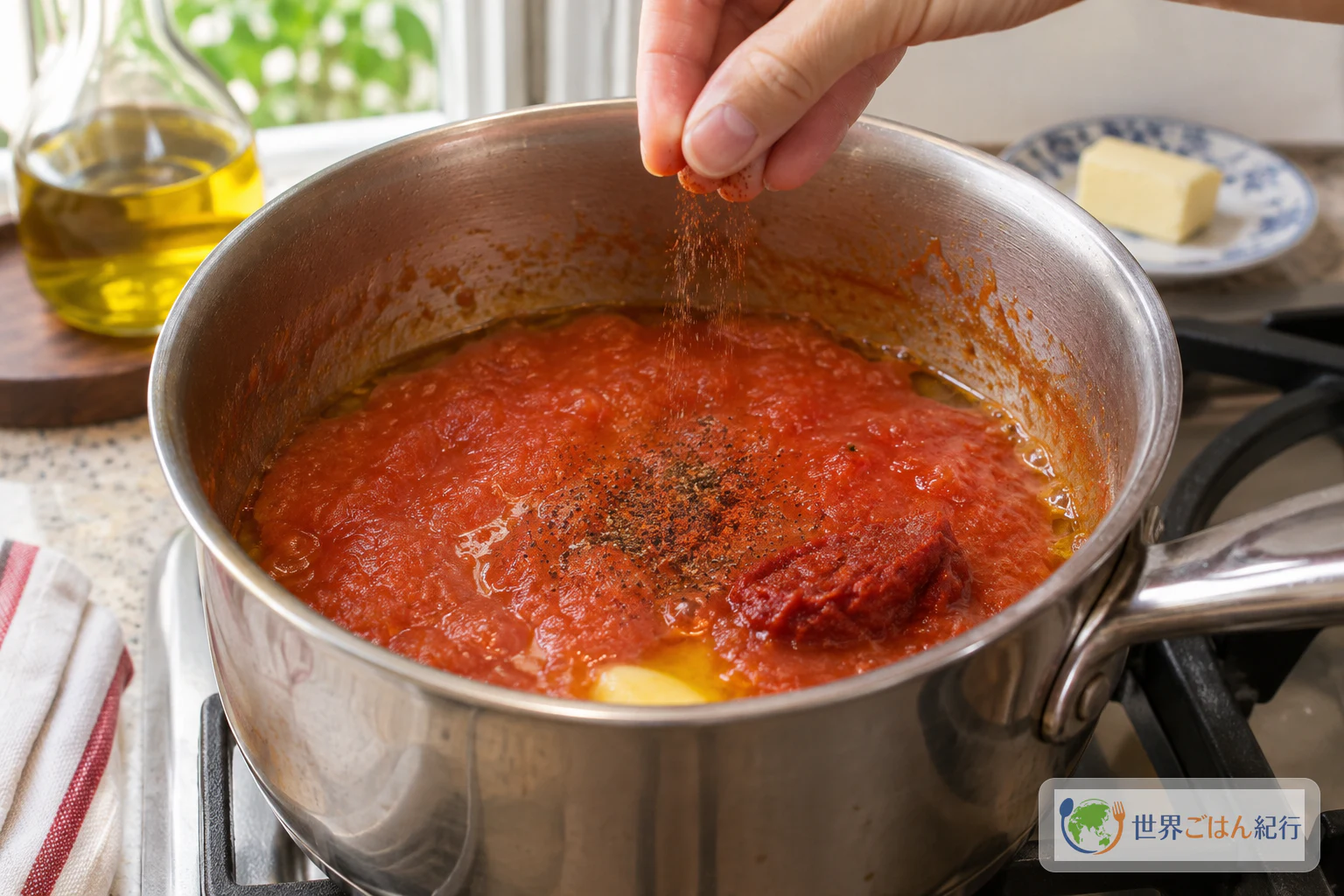
The meat needs chilling time before you can slice it, so start ahead. Judge the log by how firm it is, and judge the sauce by how thick it is.
- Thaw or soften the log in the refrigerator, not on the counter.
- Cut only what you will cook right away, and don't repeat freezing and thawing.
- Keep the knives, boards, utensils and hands that touch raw meat away from cooked and ready-to-eat food.
- This dish contains ground beef, so don't serve it rare. A general household guide is 75°C at the center for at least 1 minute. Brown color alone does not show that this has been reached.
At the Table
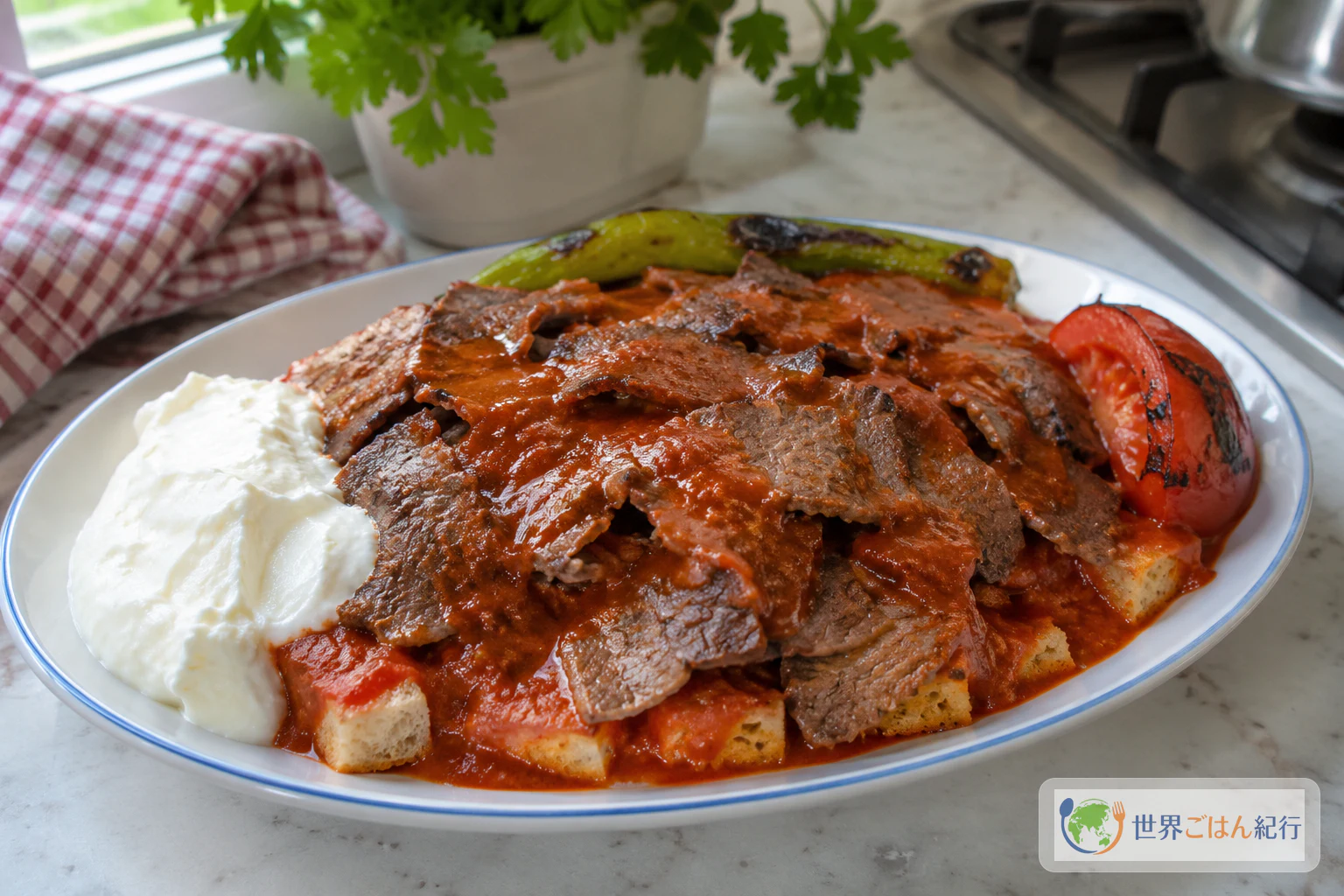
Serve right after the butter goes on, while the meat, sauce and bread are still warm and the yogurt is still a contrast at the side.
What Can Go Wrong
These fixes come from cooking logic and the handling rules above, not from test results.
| Problem | Likely cause | What to do |
|---|---|---|
| The log is too hard to cut | Frozen past the point of slicing | Let it soften in the refrigerator, not on the counter, then slice and cook right away |
| The layers fall apart as you slice | The log has become too soft or was not packed tightly | Cut carefully and cook what you cut right away. Don't refreeze it. Next time, slice while it is firmer |
| The meat steams and stays pale | Too many slices in the pan | Cook smaller batches with space between the slices |
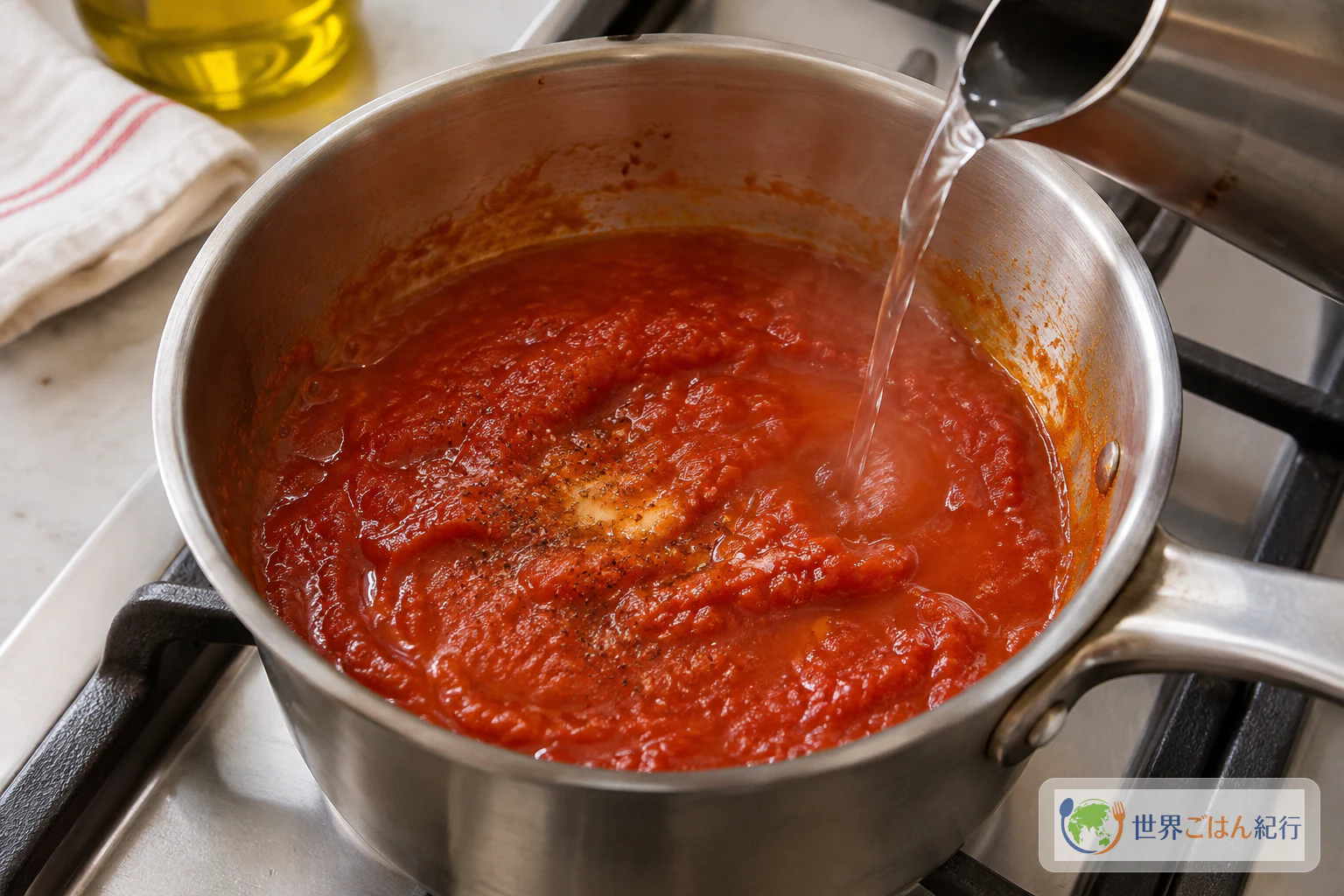
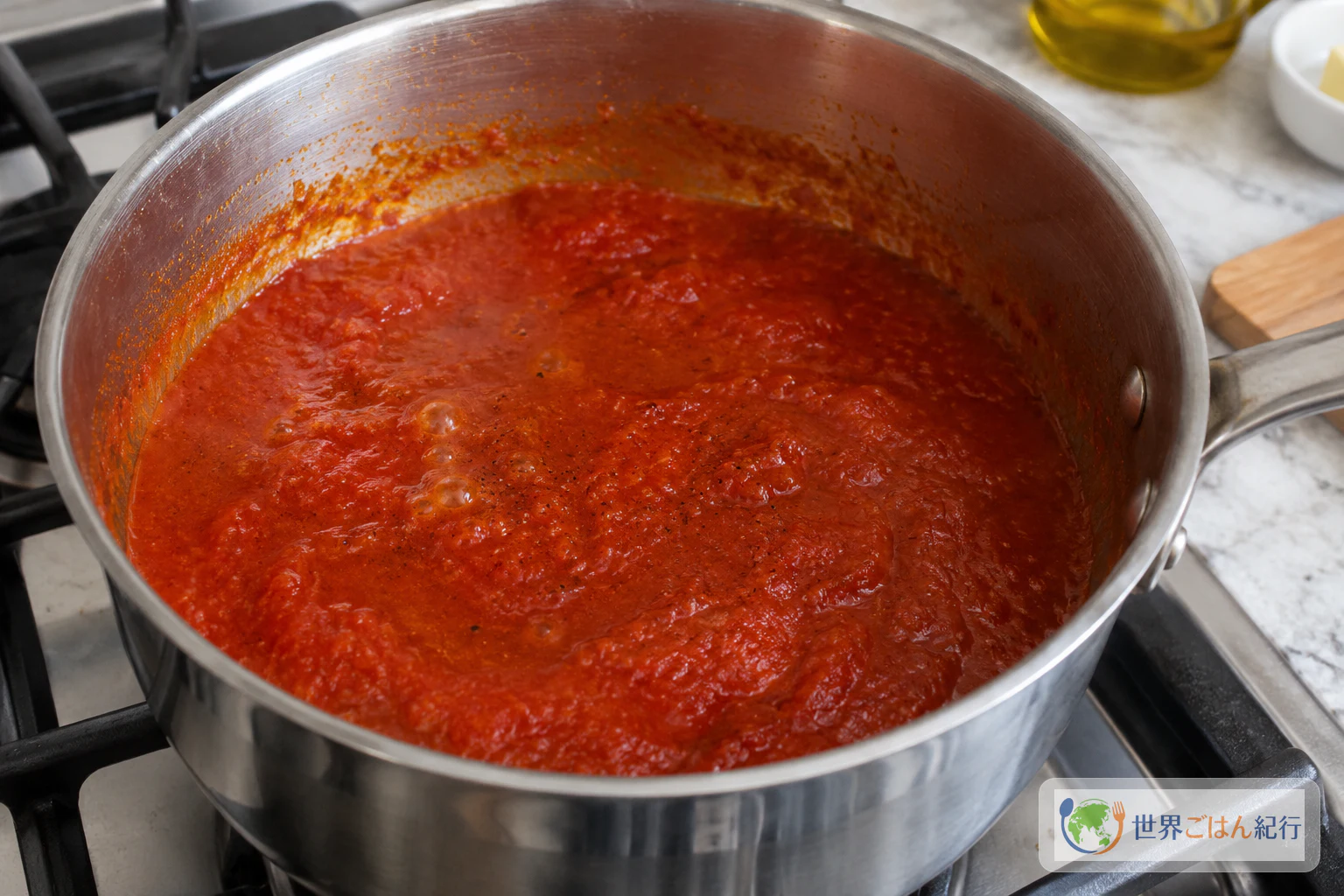
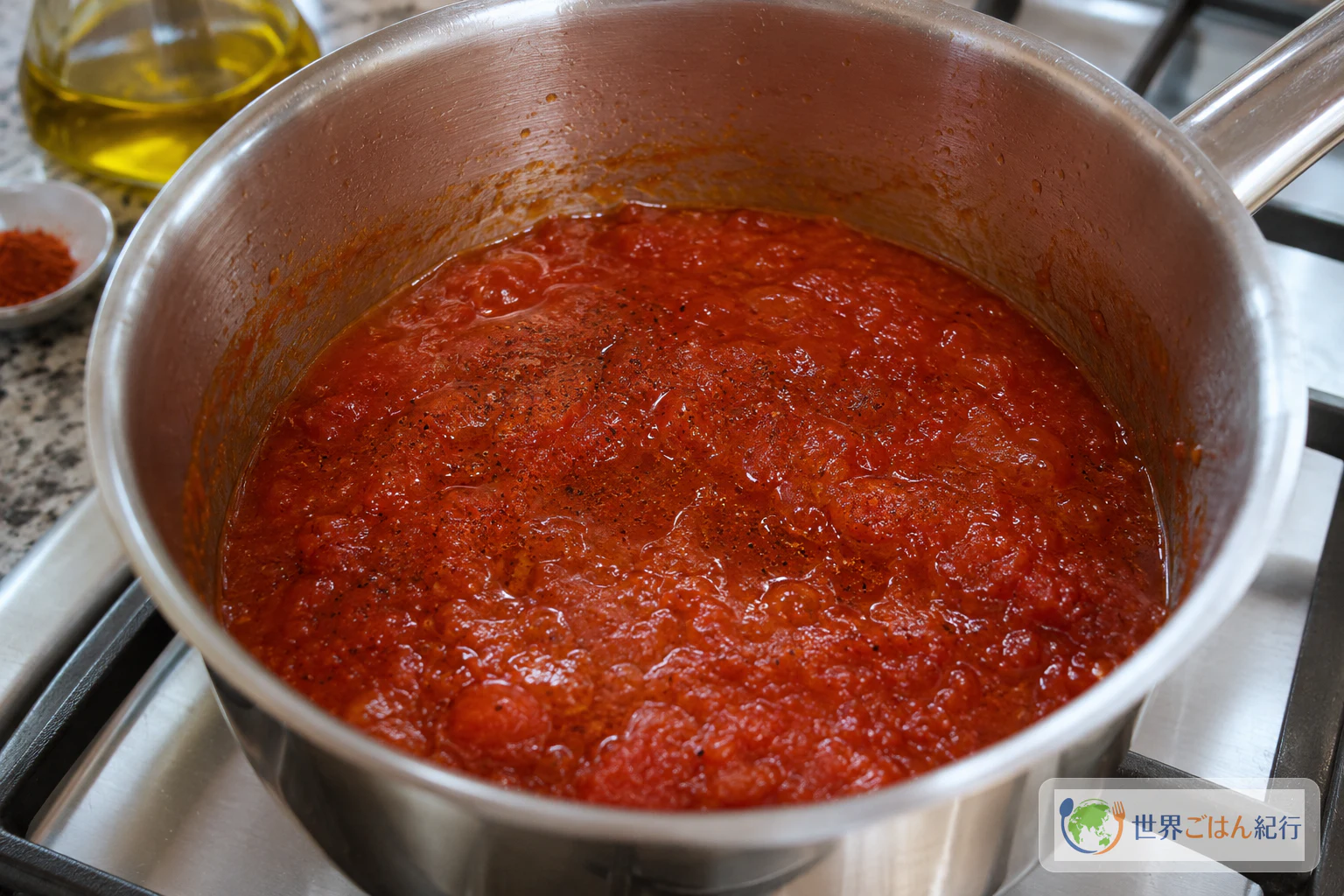
| The sauce is thin | Too much water | Simmer it a little longer |
| The sauce is too stiff | Not enough water | Stir in hot water a little at a time |
| The bread doesn't take up the sauce well | The bread went on the plate cold | Warm it in the skillet before cutting, and rewarm the sauce before plating |
| The butter loses its effect | It was poured too early | Melt and pour it only when everything else is on the plate |
Variations
| Change | What it means |
|---|---|
| All-beef layers | The version on this page: fillet and ground beef, kept in separate layers |
| Olive oil for frying | A direct swap for the frying butter, with a different flavor |
| Thick unsweetened flatbread instead of tırnak pide | Easier to find, but different in chew and thickness |
| No oregano | Oregano is left out here |
| Lamb in the mix | A different recipe, so its amounts would need reworking rather than a simple swap |
| Lamb tail fat | A traditional route to deeper flavor, not used or needed in this version |
Bursa, Kayhan and 1867
İskender kebap is often known in official Turkish sources as Bursa kebabı. According to the Ministry of Culture and Tourism's Kültür Portalı, İskender Efendi developed the dish in Bursa's Kayhan district in 1867, using thin slices of lamb cut from a vertical spit and serving them with pide, yogurt, tomato sauce and butter. The Bursa Provincial Directorate of Culture and Tourism gives a similar account in English, naming 1867 and Kayhan and describing finely cut pita, doner meat, melted butter, tomato sauce and yogurt. Both belong to the same government line, so we treat them as one institutional account and not as two independent studies.
Those accounts describe the same plate this recipe builds, but not the same way of making the meat. A skillet of layered beef is a home substitute for spit-cut lamb, and we don't present it as the traditional method. Home versions also vary among themselves. Kevser's recipe on Turkish Style Cooking, for example, layers beef fillet with ground lamb and uses a different sauce and oven method. We mention that only for comparison and have used none of its quantities or steps here.
Notes on This Version
The ingredients and main sequence come from Ayşenur Altan's recipe on Turkish Food Travel. Where that page is unclear or inconsistent, we made these editorial choices:
- Fillet marinade pepper: The recipe's ingredient list and card group the spices as "1 tsp black pepper, ground red pepper," without saying whether that means 1 tsp each or 1 tsp in total. Its method then mentions red pepper flakes. The author's split isn't available, so we suggest 1 tsp combined as an upper guide, divided to taste, with either ground pepper or flakes. This is our editorial reading, not the author's figure.
- Frying fat: The recipe's prose gives 2–3 tbsp butter or olive oil, while its card gives 5–6 tbsp. We use the prose amount and show butter first.
- Timing: The card lists a 2-hour rest and a 3-hour total, which doesn't fit the prose's 4–6 hours of refrigeration plus freezing until firm. We use the prose conditions and don't promise a total time.
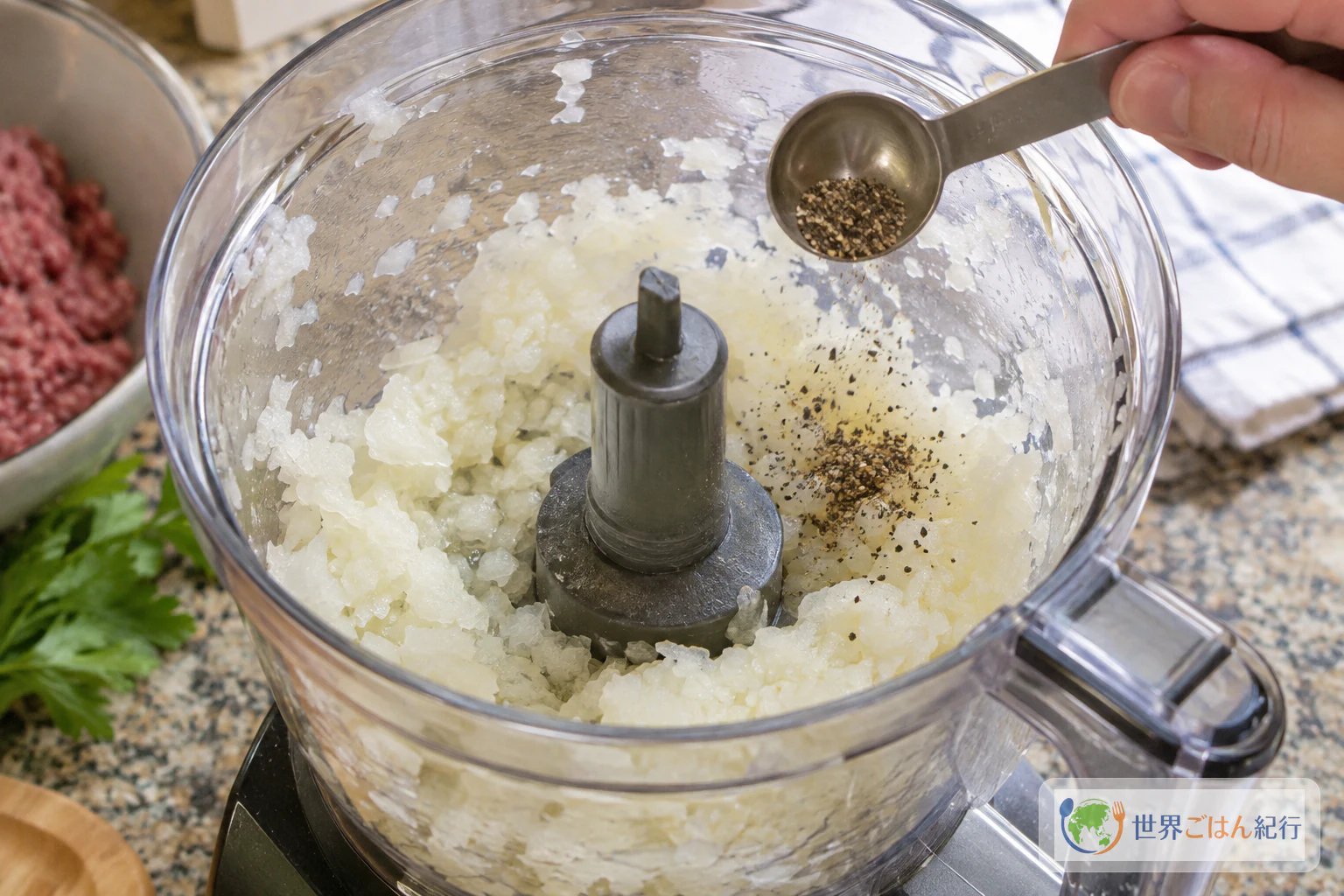
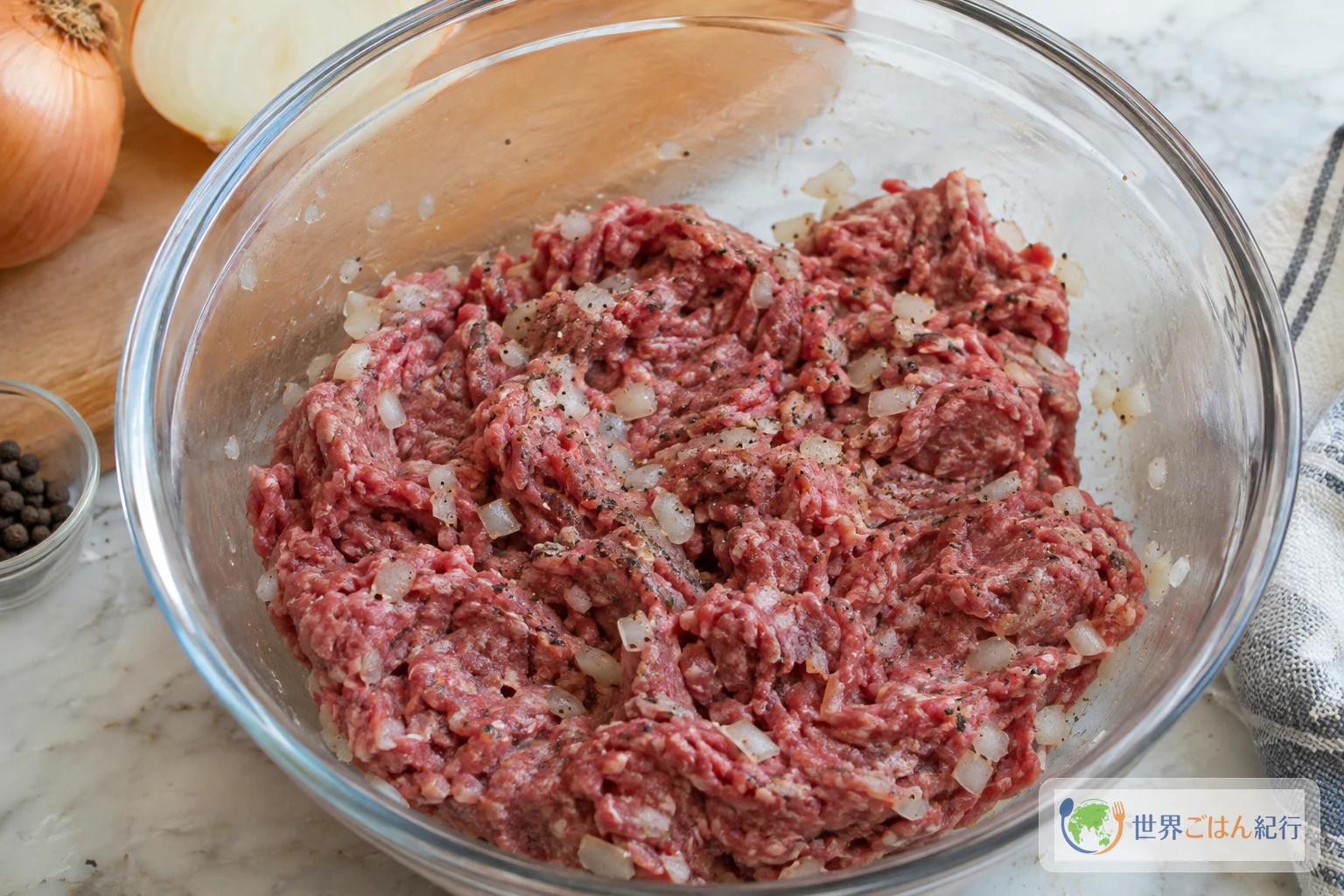
- Seasoning the ground beef: The recipe lists onion and black pepper for the ground beef and then moves to layering, without describing how to combine them. Step 3 is our clarification.
- Cold handling and heating: The recipe can be read as leaving the log out for about 30 minutes and refreezing what you don't use, and it gives no center temperature. We replaced that with household guidance from Japan's Ministry of Health, Labour and Welfare: thaw cold, thaw only what you need, avoid repeated freezing and thawing, keep raw and ready-to-eat tools apart, and heat to 75°C at the center for at least 1 minute. These are our additions, not the author's figures or measurements of this dish.
Frequently Asked Questions
Can I make İskender kebap with only beef?
Yes. This version uses only beef fillet and ground beef. It is a household recipe rather than a claim about how Bursa's restaurants make theirs, and official accounts describe lamb from a vertical spit.
Why doesn't the recipe say 1 tsp each of black and red pepper?
Because the recipe it follows doesn't clearly say that. Its grouped wording could mean either, so we treat 1 tsp combined as an upper guide and leave the split to your taste.
Do I need a vertical spit?
No. Layering, chilling and thinly slicing the meat stands in for the spit at home. The result is a different method from the one in the Bursa accounts, not a copy of it.
What if I can't find tırnak pide?
Turkish Food Travel suggests a similar fluffy flatbread. A thick unsweetened flatbread also works, but expect a different chew and thickness.
Why not leave the log on the counter for 30 minutes?
The Japanese household guidance we follow recommends thawing in the refrigerator or another cold method rather than at room temperature. For that reason, we soften the log in the refrigerator and don't give a counter time.
How do I know the meat is done?
Use the general guide of 75°C at the center for at least 1 minute. The recipe we follow says to stop once the meat is brown, but it gives no temperature, and brown color doesn't prove that the guide has been met. Don't serve this dish rare.
How long can I keep the frozen log or leftovers?
We don't give a storage period because our materials don't provide one. The freezing here is a step for firming the log before slicing, not a storage method or a way to make raw meat safe.
Is oregano part of the dish?
The recipe we follow lists 1 tsp oregano in the fillet marinade as optional. We leave it out here.
Sources
- Ayşenur Altan, Turkish Food Travel, "Iskender Kebab Recipe." Basis for the six-serving home version: ingredients, layered beef, freezing and slicing, sauce, assembly order, and the choice of tırnak pide or a similar fluffy flatbread. https://www.turkishfoodtravel.com/2022/01/21/iskender-kebab-recipe/
- Republic of Türkiye Ministry of Culture and Tourism, Kültür Portalı, "Bursa Kebabı (İskender Kebap) - Bursa." Regional identity of the dish and the institution's account of 1867, Kayhan, İskender Efendi and the plate's components. https://www.kulturportali.gov.tr/turkiye/bursa/neyenir/bursa-kebabi-skender-kebap
- Bursa Provincial Directorate of Culture and Tourism, "Bursa Kebab." English-language description of the plate and its origin account. https://bursa.ktb.gov.tr/EN-207649/bursa-kebab.html
- Turkish Style Cooking / Kevserin Mutfağı, "İskender Kebab Recipe." Comparison only, showing a separate home version with beef and ground lamb. https://turkishstylecooking.com/iskender-kebab-recipe.html
- Ministry of Health, Labour and Welfare, Japan, "家庭でできる食中毒予防の6つのポイント" (Six points for preventing food poisoning at home). General household guidance on cold thawing, thawing only what is needed, avoiding repeated freezing and thawing, preventing cross-contamination, and heating to 75°C at the center for at least 1 minute. https://www.mhlw.go.jp/stf/seisakunitsuite/bunya/kenkou_iryou/shokuhin/syokuchu/01_00006.html