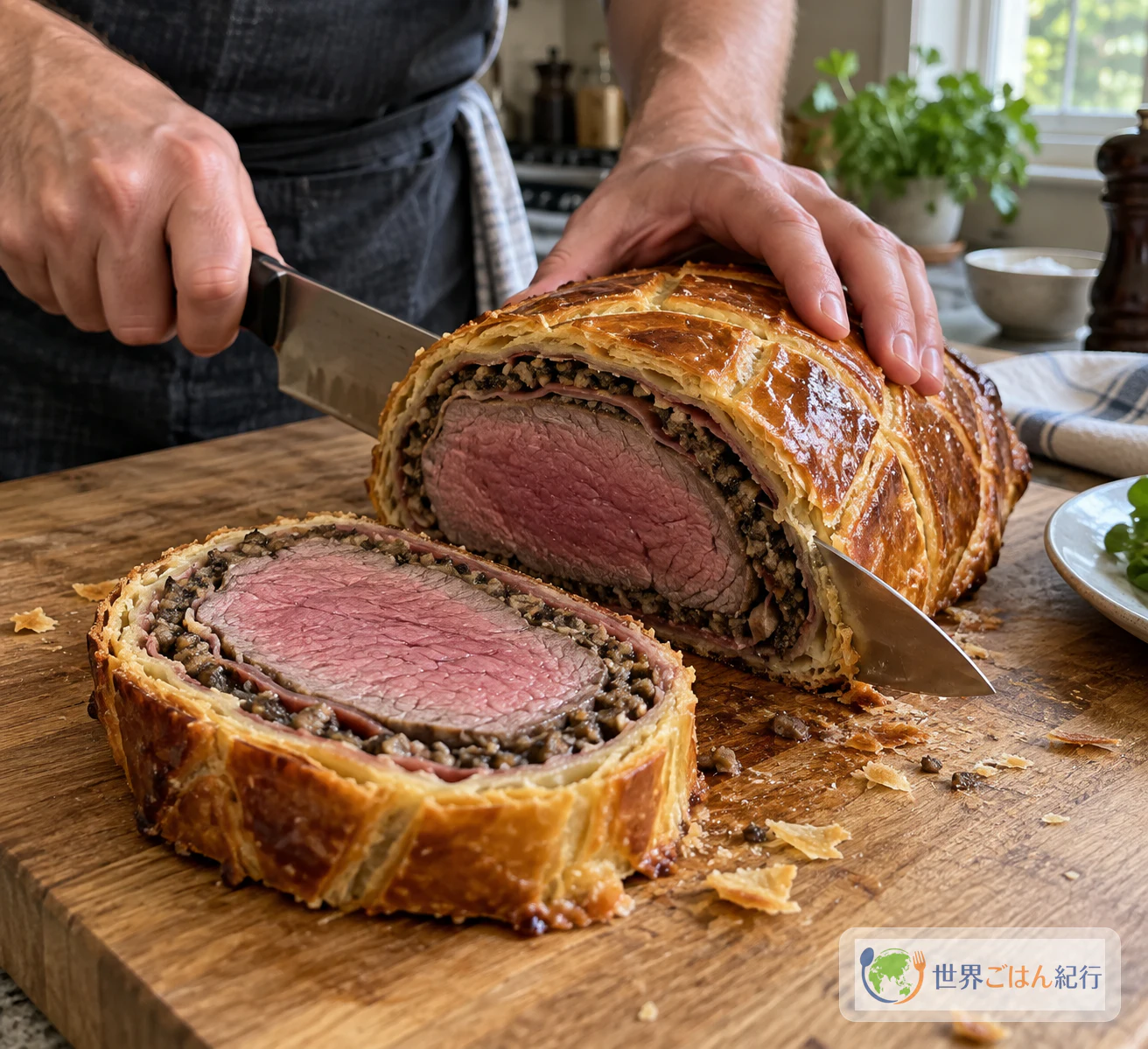
Three Layers in One Slice: Beef, Mushrooms and Pastry
A mushroom layer cooked until truly dry, beef that has been cooled before wrapping, and pastry that goes into the oven cold. Moisture or warmth in these layers can cause problems with the pastry and wrapping.
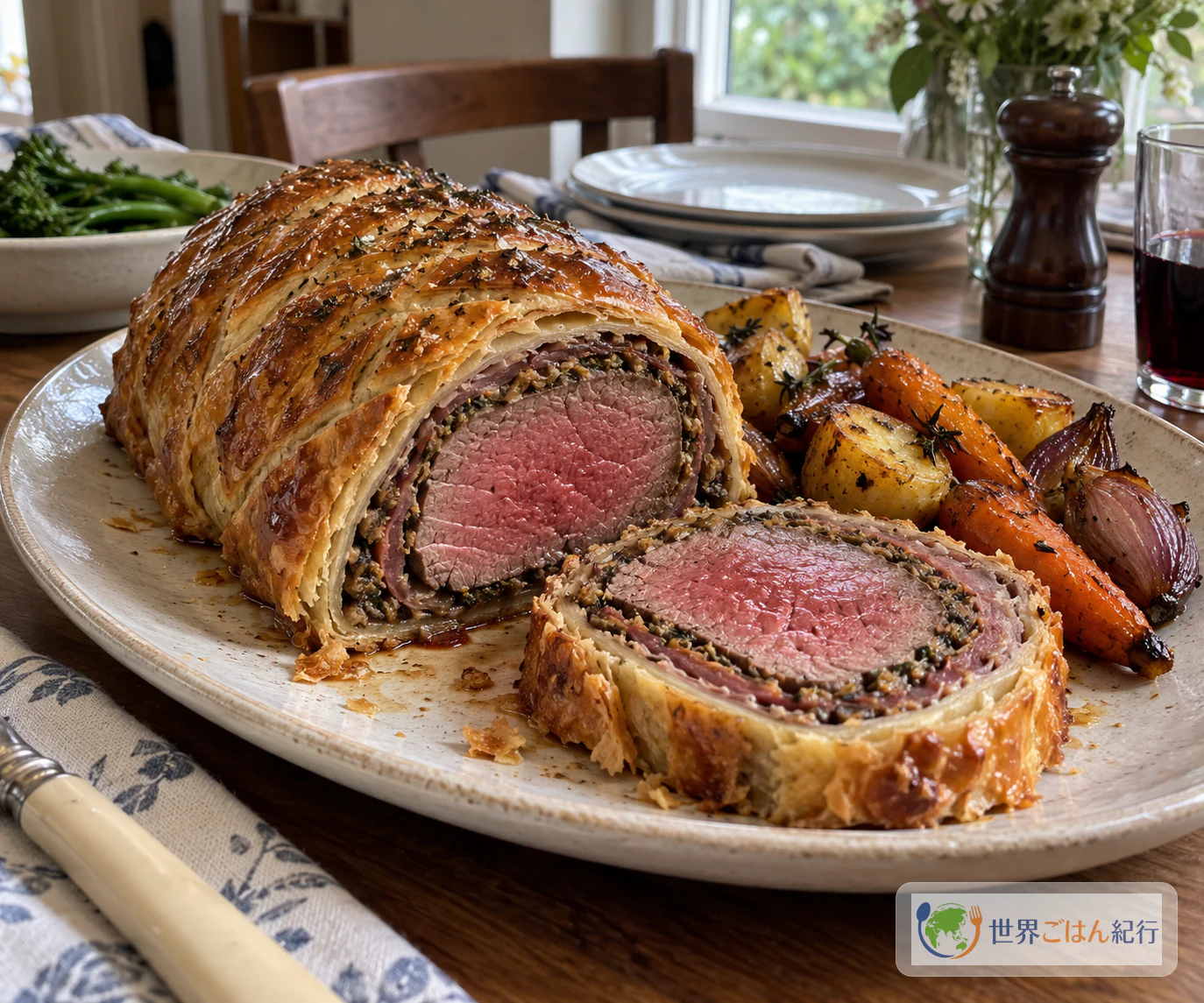
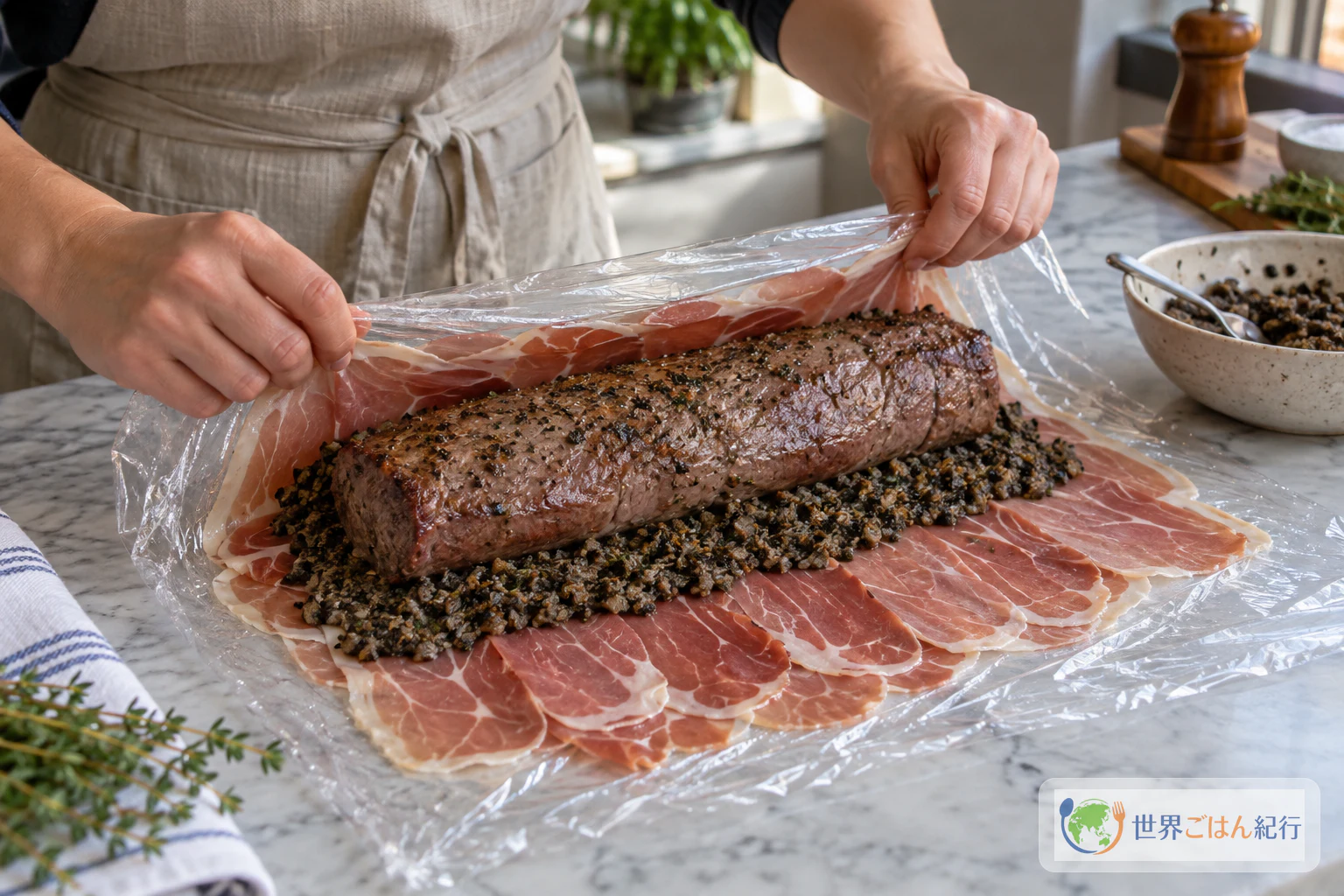
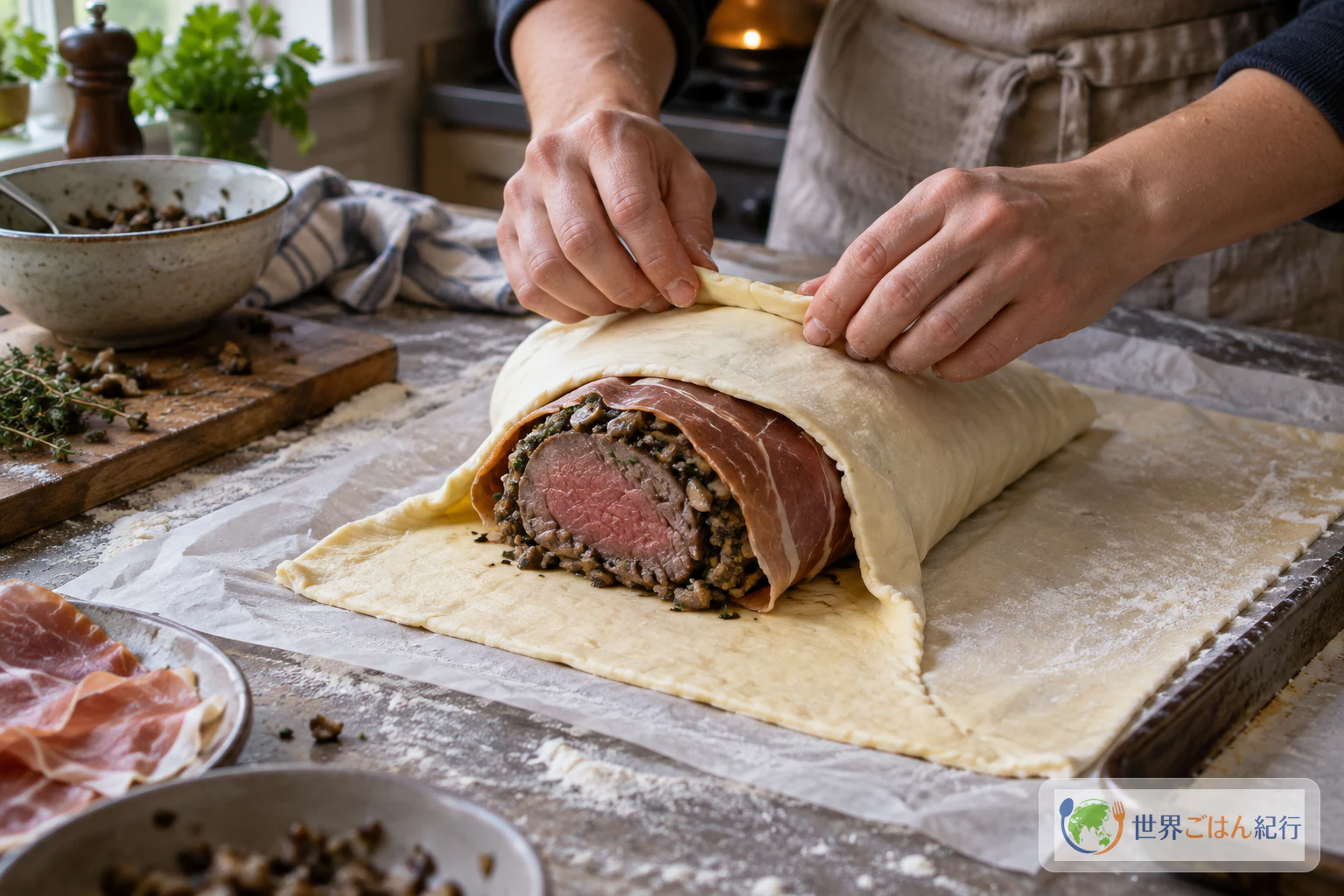
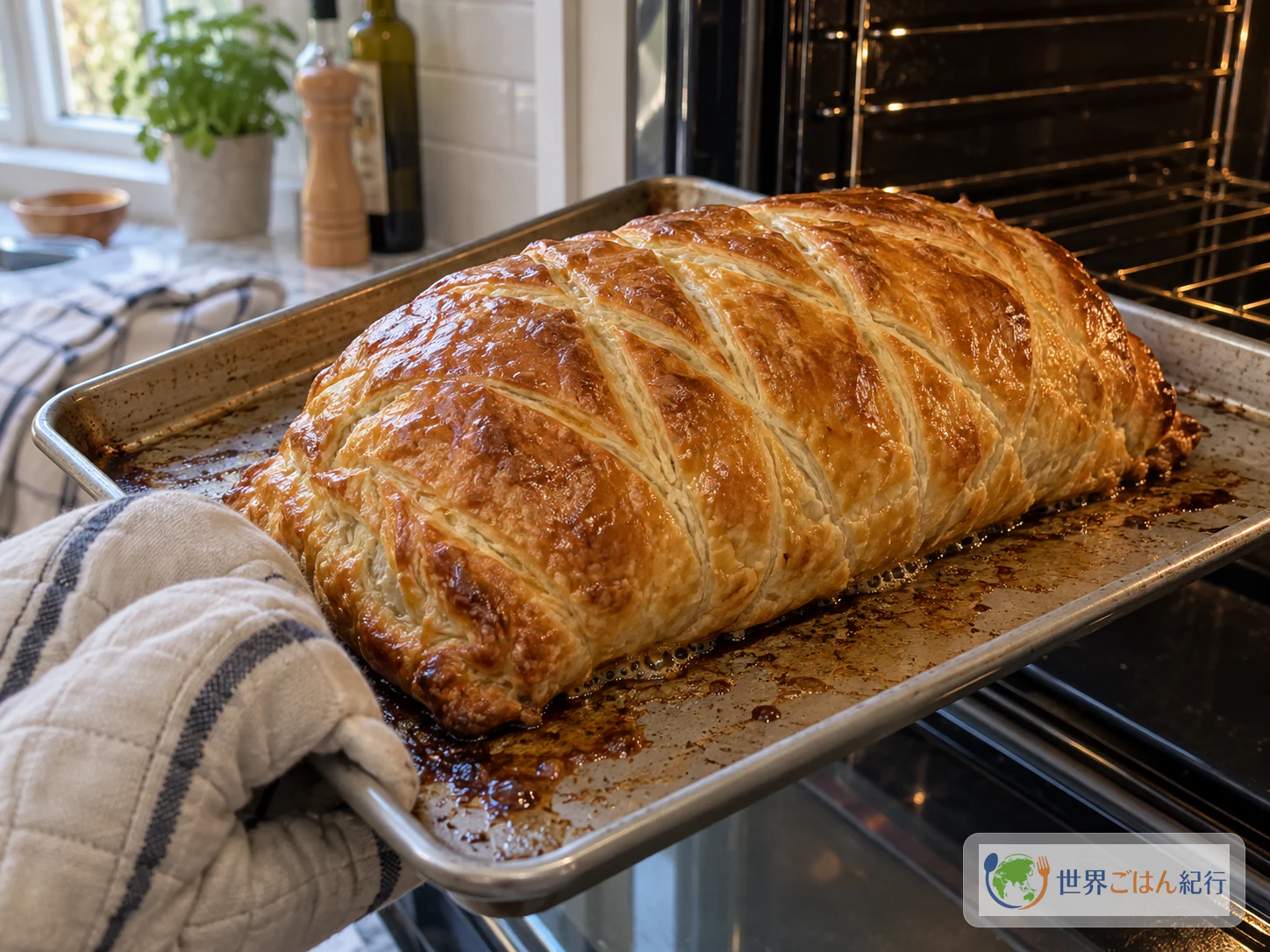
The golden parcel comes to the table whole, and the first slice is the moment everyone watches. The knife goes through crisp, flaking pastry, and the cut face shows a ring of dark, finely chopped mushrooms and thin prosciutto around a centre of beef fillet. Each layer has its own texture: shattering pastry, a dense and savoury mushroom band, and tender beef.
Beef Wellington is generally described as beef fillet wrapped in a layer of finely chopped mushrooms and puff pastry. It is read as a showpiece main course for guests and celebrations, and it is also known as a dish where expensive ingredients meet two real difficulties for the home cook: getting the water out of the mushrooms so the pastry base does not turn soggy, and judging how far the beef is cooked inside a parcel you cannot see into.
This recipe follows a home version for six from BBC Good Food. The beef is roasted in the oven first, cooled, wrapped in duxelles and prosciutto, then wrapped in pastry and baked a second time. Splitting the work this way is what makes the dish manageable at home, and it is also why the baking time in the pastry stage only makes sense as part of that whole sequence.
Ingredients (Serves 6)
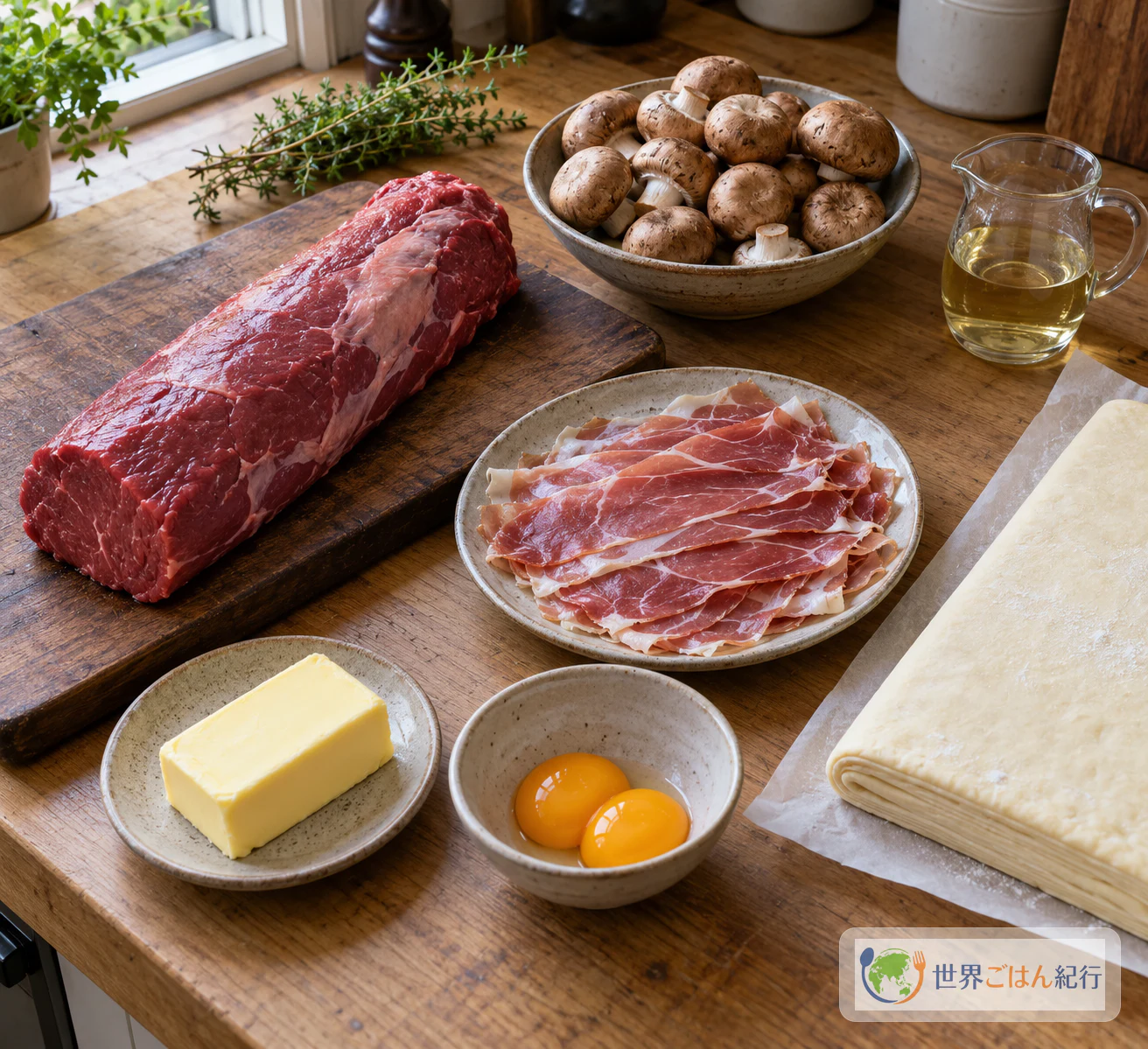
The amounts below follow the BBC Good Food recipe. The source gives no fixed amounts for salt and pepper, so they are listed as "to taste"; season with the saltiness of your prosciutto and pastry in mind.
Choosing and Substituting
Beef fillet. Look for a piece from the centre of the fillet with a fairly even thickness from end to end. Tying thinner end pieces onto a thick piece makes the cooking uneven. An ordinary supermarket may not have the right shape, so it is worth asking a butcher for "a centre-cut beef fillet roasting joint, about 1kg".
Mushrooms. Brown chestnut mushrooms are the first choice. White button mushrooms work, but the aroma is milder.
Prosciutto. Other thin slices of dry-cured ham can stand in. If yours is saltier, use less salt on the beef. The point is to keep a thin, even layer between the mushrooms and the pastry.
Puff pastry. Thaw it in the refrigerator and follow the product's label. All-butter pastry and pastry made with vegetable fat differ in aroma and in how the layers rise. Check the ingredients list as well.
Butter. If you only have salted butter, adjust the salt at the end.
Thyme. If you use dried thyme, start with a very small amount and adjust; there is no fixed conversion here.
Wine. Without alcohol, you can add a little unsalted beef stock at a time instead, though the aroma and acidity will be different.
Equipment
- Oven
- Shallow roasting tray
- Baking tray
- Clean plates for the cooked beef
- Wide frying pan or skillet
- Wooden spoon or spatula
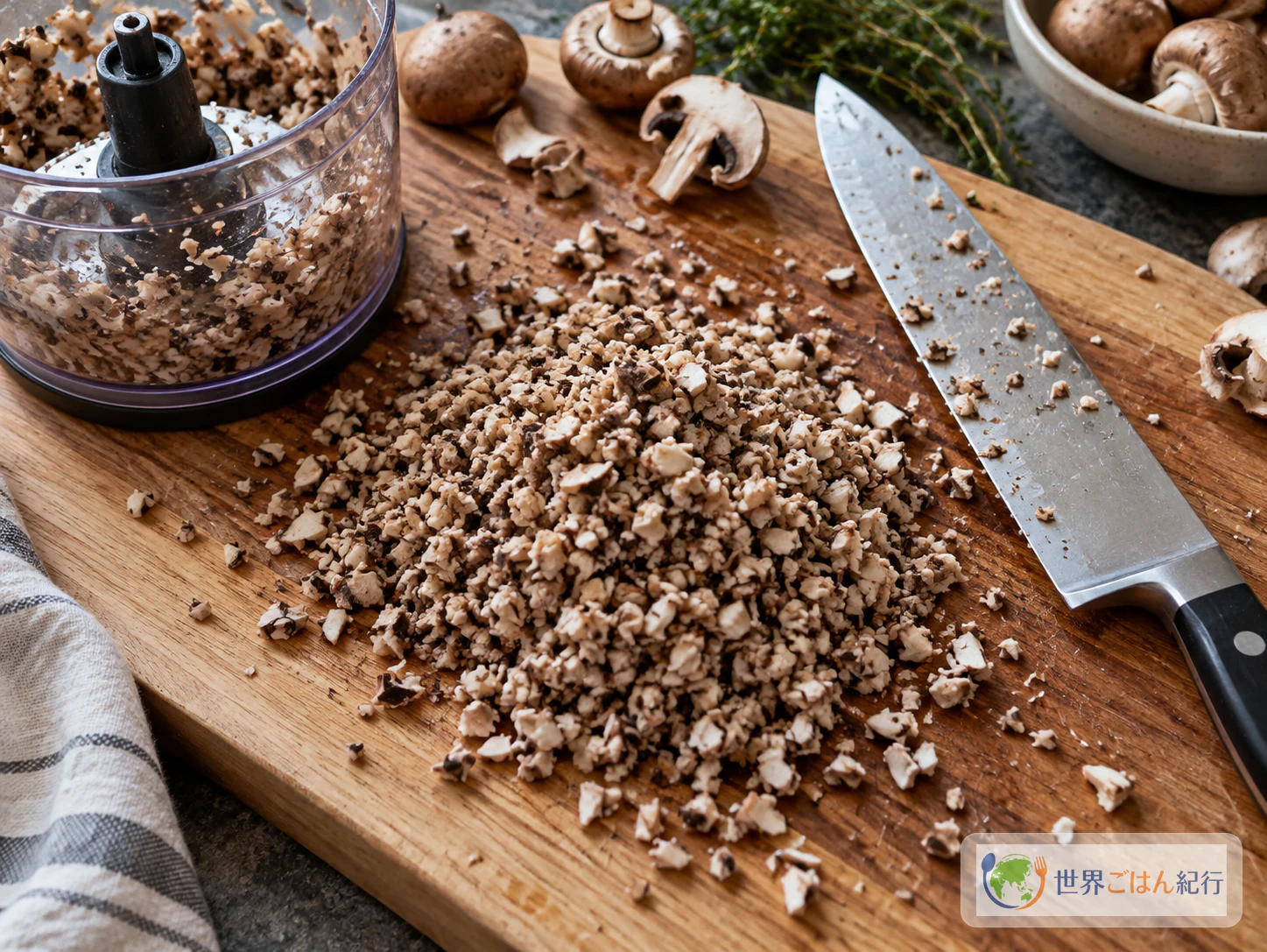
- Sharp chef's knife and cutting board, or a small food processor used in short pulses
- Cling film (plastic wrap)
- Rolling pin
- Pastry brush
- Food thermometer
- Sharp, non-serrated knife for slicing
Method: Roast, Cool, Wrap, Bake
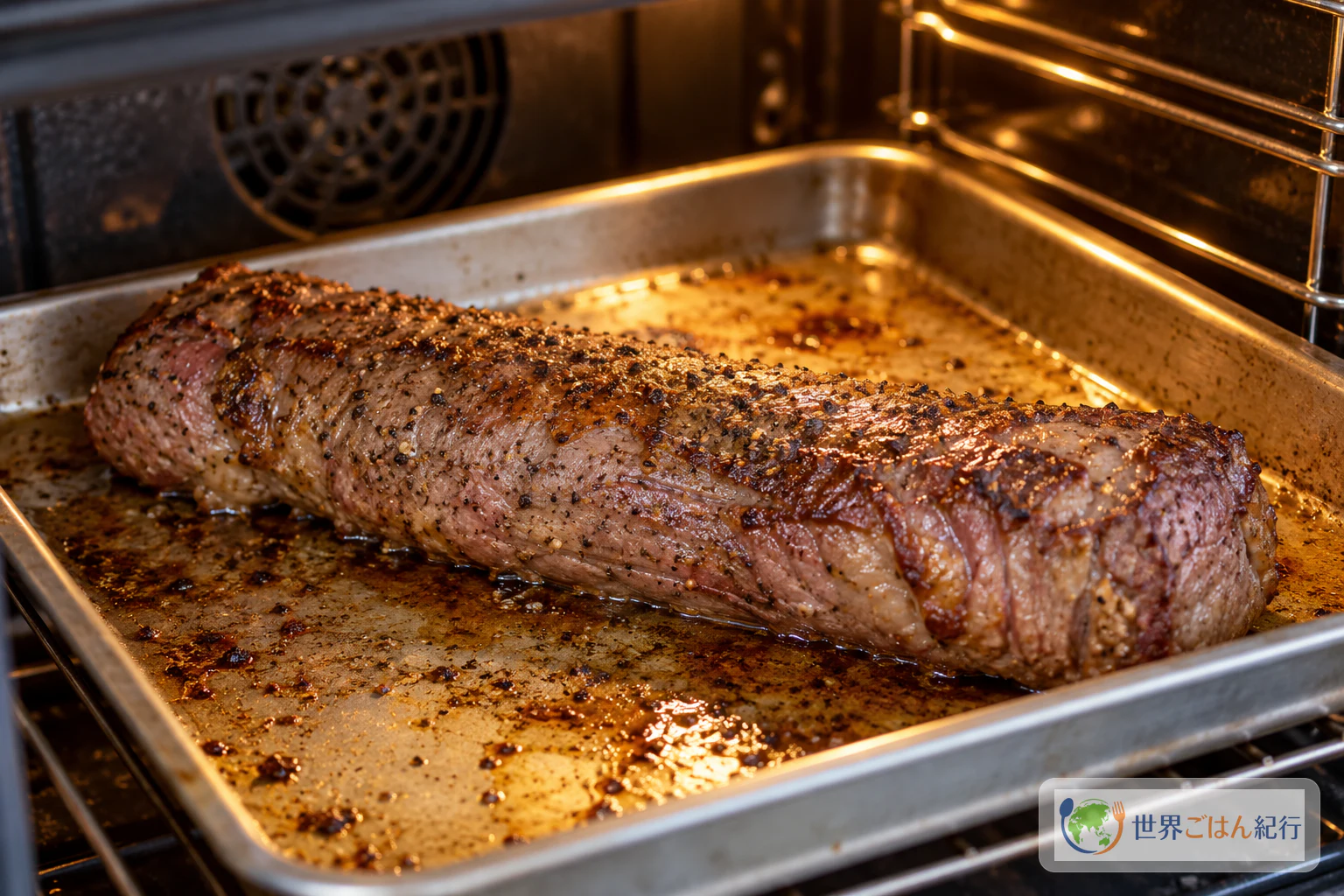
The first roast of the bare beef is at 220°C (200°C fan). The pastry-wrapped parcel bakes later at 200°C (180°C fan). Don't mix them up, and don't treat the pastry-stage baking time as the beef's total cooking time.
Times in this method are examples from the source recipe, not guarantees. The shape of the beef, its starting temperature and your oven all change what happens inside the parcel, so judge by colour and a thermometer.
Fixing Problems: Look at Moisture and Temperature Separately
| Problem | Likely cause | What to do |
|---|---|---|
| Soggy pastry base | Duxelles not cooked down enough; beef or mushrooms still warm; not chilled long enough before wrapping | Check in that order. Cook the duxelles until the spatula trail holds, cool both completely, and chill between stages |
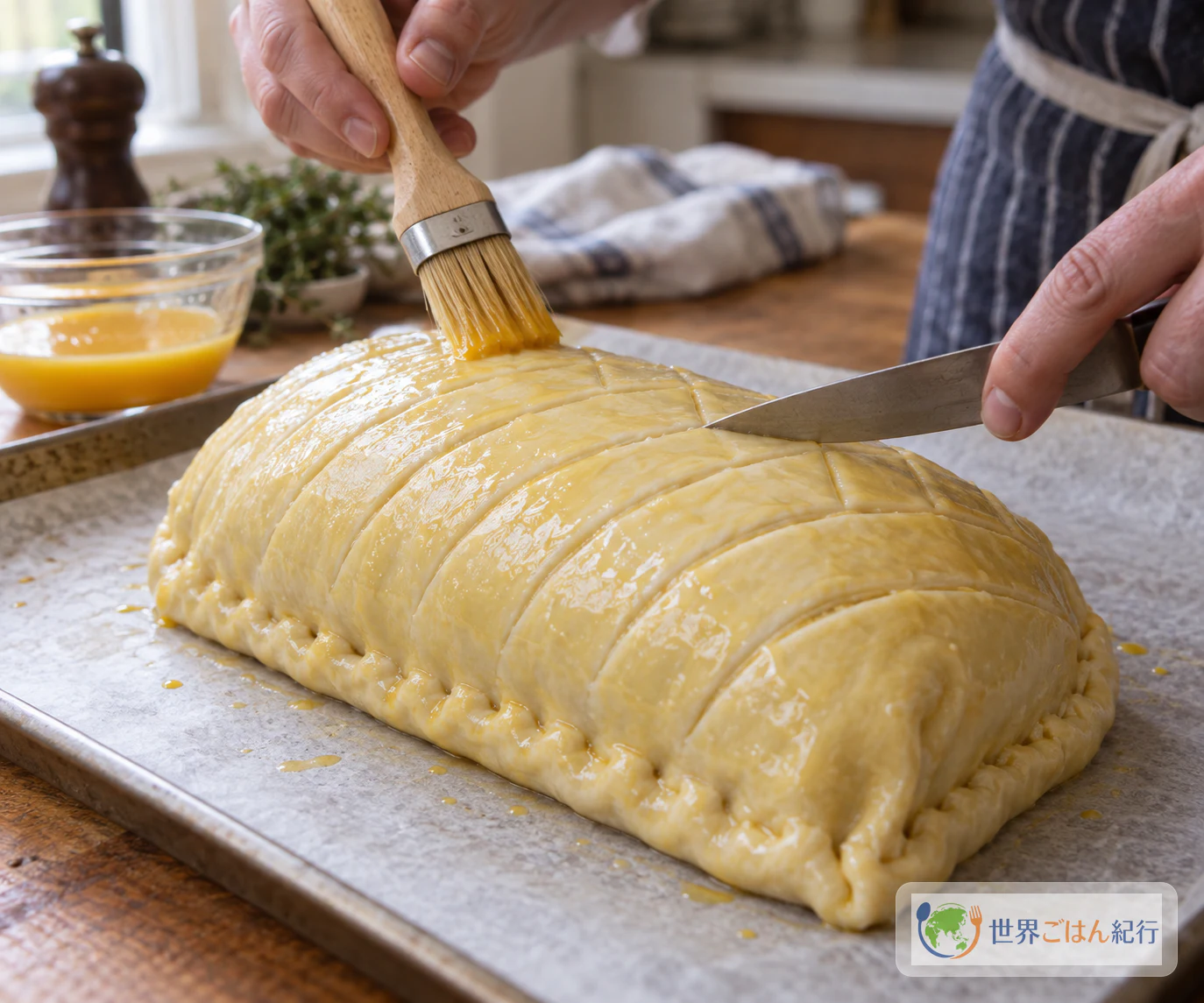
| Pastry layers don't rise | The pastry got warm | Chill after shaping and put it into a fully preheated oven. Follow the pastry product's label |
| Falls apart when sliced | Loose wrap, thick seam, not rested | Next time roll firmly into a cylinder with cling film, keep the seam thin, and rest before cutting |
| Beef cooked further than intended | Timing decided by the clock alone | Measure the centre temperature. Remember a lower finish is not the same as a safety standard |
| Mushrooms turned to paste | Food processor run continuously | Use short pulses and stop while pieces are still visible |
Moisture problems show up at the bottom of the parcel; temperature problems show up in the pastry layers and the beef. Thinking about them separately makes it easier to see which stage to change next time. If the centre needs more heat, don't put the whole parcel back for long without checking: use the thermometer so you don't overshoot the beef.
Variations Worth Knowing
The beef, mushroom and pastry trio stays; the layers around it change from cook to cook.
- A crêpe layer. A thin crêpe placed between the mushrooms and the pastry adds another moisture barrier. It also adds a step and brings in more wheat, egg and milk.
- Chicken liver pâté. Some restaurants and cooks combine pâté with the mushrooms. The flavour becomes richer, though it is harder to find and divides opinion.
- Porcini. Some recipes add a small amount of rehydrated dried porcini for a stronger aroma. Strain the soaking liquid to leave the grit behind, and still cook the duxelles completely dry.
- A different wine. Swapping the dry white wine for Madeira or similar appears in several recipes. Sweetness and aroma change, so adjust how far you reduce it.
- Beet Wellington. A meat-free spin-off made without beef. Treat it as a separate dish rather than a version of this recipe.
Looking Past the Duke: What the Record Shows
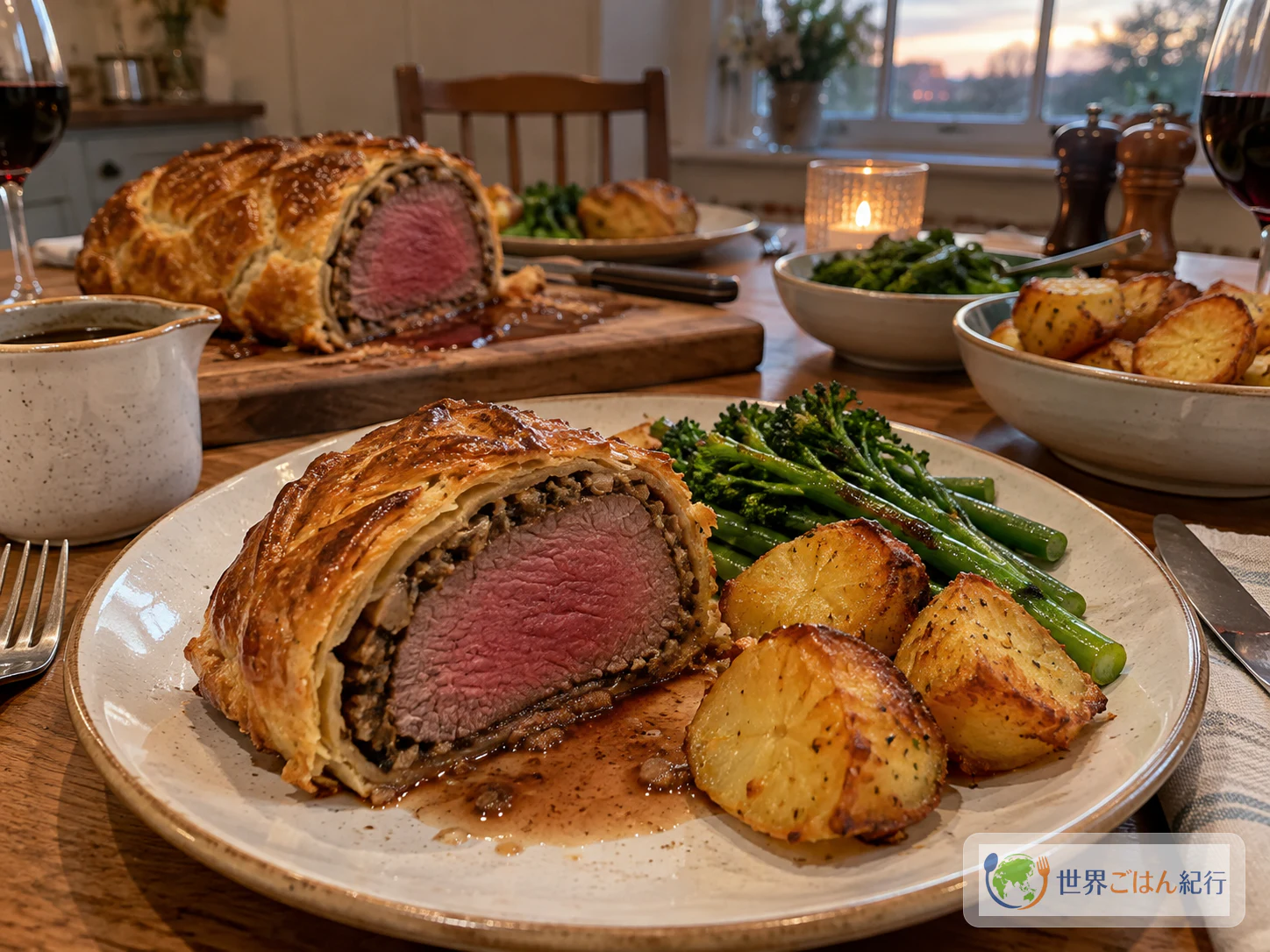
The best-known story is that the dish was named for the Duke of Wellington because it was his favourite. National Geographic Traveller points out that there is no solid evidence for this: the dish's name does not appear on the menu of an 1839 banquet held for the duke. The same article notes records of the name from 1899 and 1903, and early 20th-century appearances in both Britain and the United States, which makes a simple single-country origin story hard to hold on to.
After the Second World War, recipes multiplied in British and American cookbooks and magazines, and Beef Wellington became a dish of entertaining, carrying a certain social glamour. Part of its appeal was exactly what makes it hard: costly ingredients and a cooking process that leaves little room for error. At home today, that same difficulty is easier to handle by splitting the work into stages, as this recipe does.
There is also no single correct form. The Savoy-style Beef Wellington published by Gordon Ramsay Restaurants uses herb pancakes made with egg, flour and milk, plus a mousse of chicken breast and cream alongside the mushroom duxelles. Beef Wellington and boeuf en croûte share the idea of beef baked in pastry, but the names and details are not necessarily identical.
Storage, Reheating and Allergens
Before cooking, keep the beef, prosciutto and egg yolks refrigerated according to their labels and don't leave them at room temperature. Refrigerate leftovers promptly, moving any large unsliced piece to a shallow container, and follow your local food-safety authority's guidance on how long to keep it. This dish contains wheat (pastry and dusting flour), egg (glaze), milk (butter) and pork (prosciutto). Check the ingredient labels on shop-bought pastry and ham, and avoid cross-contact if you change ingredients.
The pastry loses its crispness once reheated. If you warm leftovers, the oven is the better choice; the microwave changes the texture of the pastry noticeably.
Frequently Asked Questions
Why is it called "Wellington"?
The popular story credits the Duke of Wellington, but there is no firm evidence that it was his favourite or that the name comes from him. See "Looking Past the Duke" above.
Does the beef need to be cold before wrapping?
Yes. After the first roast, cool the beef and chill it in the refrigerator before wrapping. That is separate from the chill of at least 30 minutes for the finished pastry parcel before baking; the two do different jobs.
How far do I cook the duxelles?
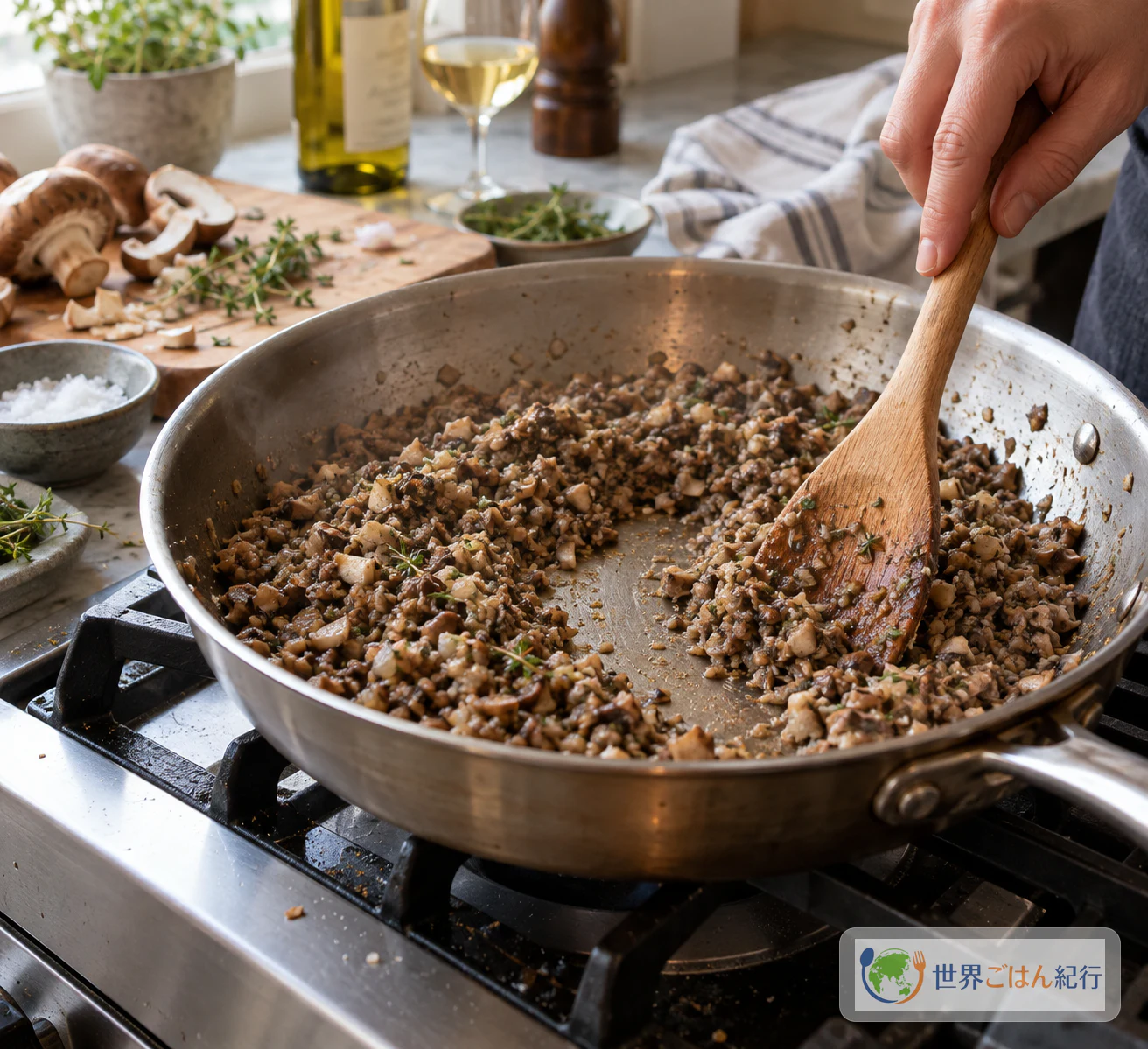
Until no liquid is left, a spatula trail holds in the pan, and the mixture keeps its shape. Damp duxelles can cause a soggy base.
Can I leave out the prosciutto?
Without it, meat juices pass into the pastry more easily. Some versions use a crêpe or other layer instead, but the texture and flavour change.
Is medium-rare safe?
A pink finish is a preference, not an official safety standard. If you want to follow the USDA FSIS guidance, use a thermometer and cook until the centre reaches 62.8°C (145°F), then rest at least 3 minutes. Core temperatures given in restaurant recipes for a pink finish are doneness preferences, not safety recommendations.
Can I use frozen puff pastry?
Yes. Thaw it according to the product's label and keep it cold while you work.
Explore more dishes in British cuisine.
Sources
- BBC Good Food, "Beef wellington" (recipe credited to Gordon Ramsay; Good Food magazine, December 2004). Basis for the six-serving amounts, ingredients, chopping and cooking the duxelles, wrapping, the first roast, baking and resting. https://www.bbcgoodfood.com/recipes/beef-wellington
- Sam Bilton, "How beef wellington became a British classic," National Geographic Traveller (UK). The general structure of the dish, the unproven Duke of Wellington story, early records of the name, its post-war spread, the importance of dry duxelles, and crêpe or ham barriers. https://www.nationalgeographic.com/travel/article/how-beef-wellington-became-a-british-classic
- Gordon Ramsay Restaurants, "Gordon Ramsay's Iconic Beef Wellington Recipe (Savoy's Beef Wellington)." A restaurant version with herb pancakes and chicken mousse, showing how layers differ between recipes. Its core temperature is not used here as a safety figure. https://www.gordonramsayrestaurants.com/recipes/beef-wellington
- USDA Food Safety and Inspection Service, "Safe Minimum Internal Temperature Chart." The US safe minimum of 62.8°C (145°F) for beef roasts with a rest of at least 3 minutes, and the use of a food thermometer. A US standard, not a universal rule. https://www.fsis.usda.gov/food-safety/safe-food-handling-and-preparation/food-safety-basics/safe-temperature-chart