Cottage Pie: A Thick Beef Filling Under Ridged, Golden Mash
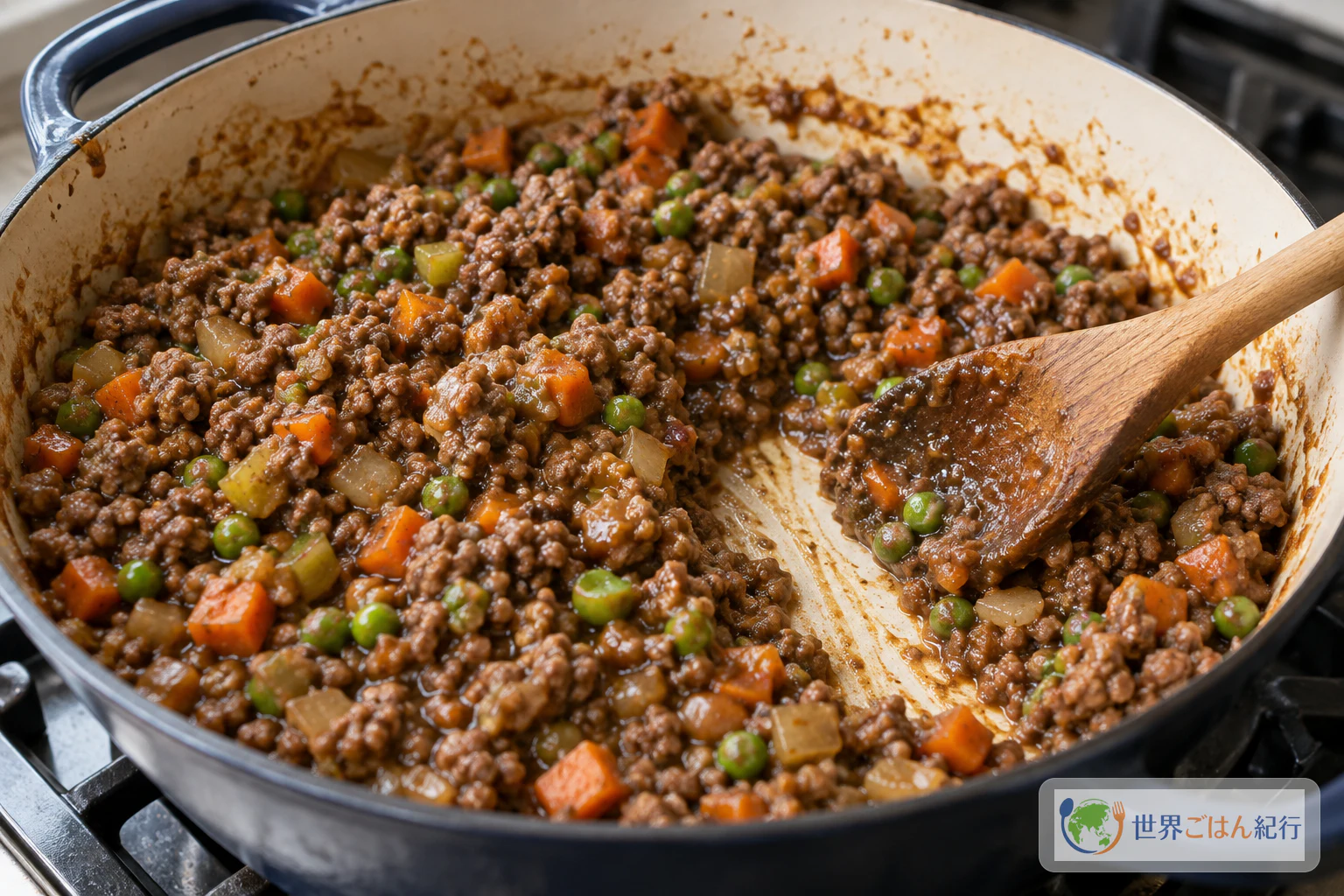
A beef filling reduced until it clings rather than pools, and a mash firm enough to hold fork ridges that brown in the oven. Those two textures matter more than any single ingredient list.
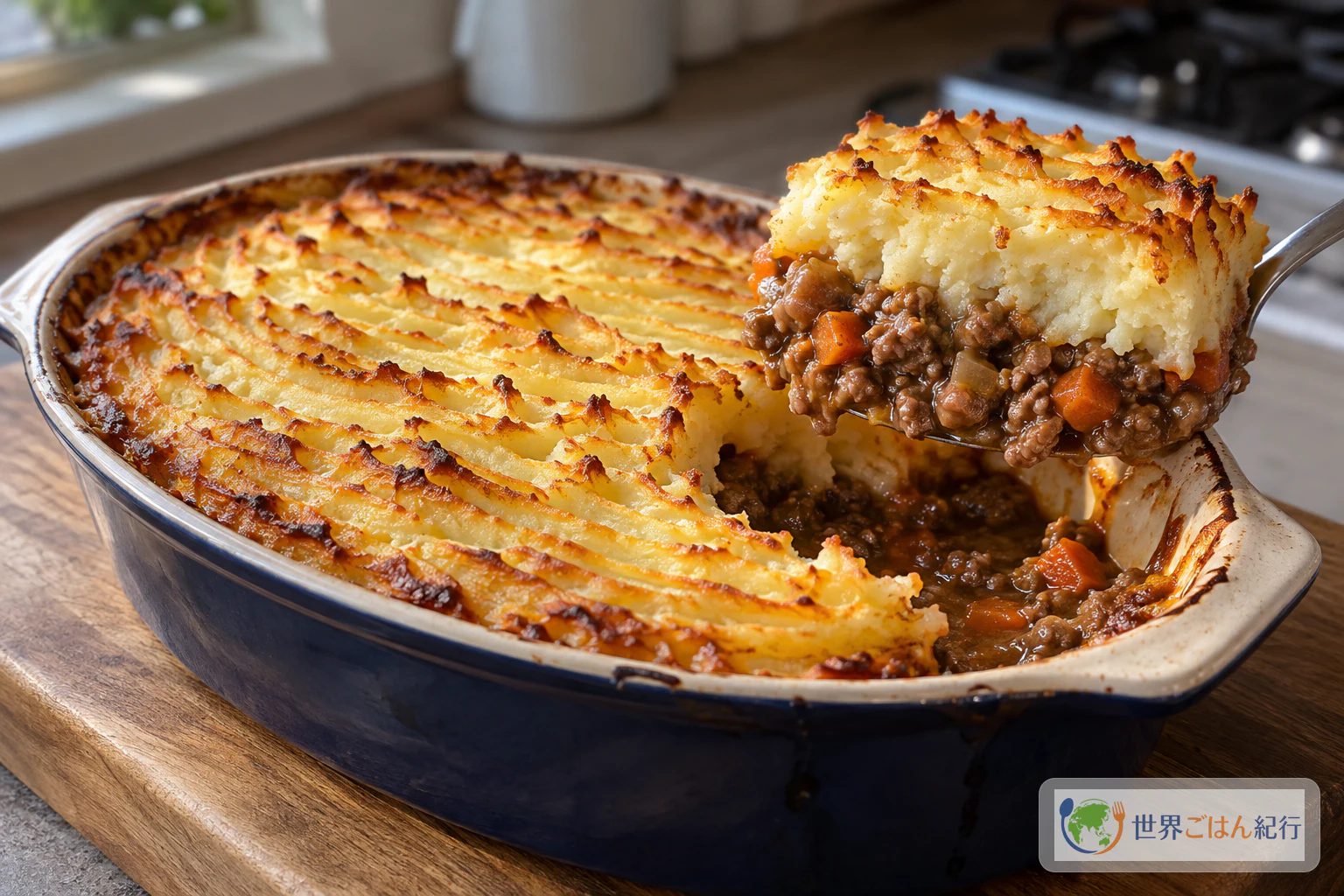
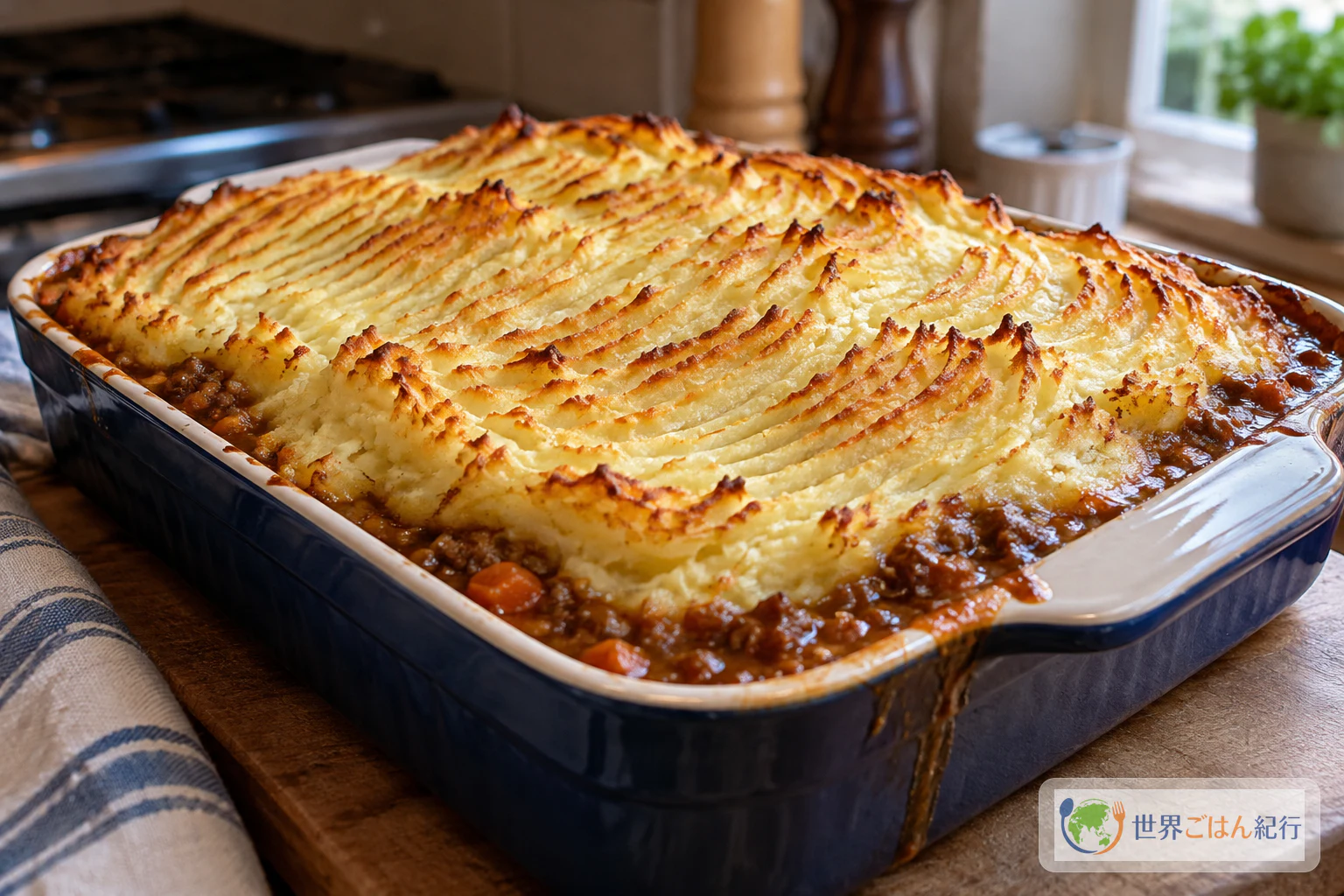
At the edge of the dish, dark beef gravy bubbles up between the potato and the rim. Across the top, the ridges dragged in by a fork have turned golden at their peaks while the hollows stay pale and soft. Cottage pie is a British home dish of savoury beef mince baked under a lid of mashed potato rather than pastry.
This recipe is a home formula for four, assembled from several published UK recipes. It is not a scaled-down version of any one of them, it has not been test-cooked as a fixed standard, and it does not claim to be the one authentic cottage pie. What it does offer is a clear order of work and visual cues at each stage, so you can judge the filling and mash by sight instead of by the clock alone. First, a quick word on the name, since the dish is so often mixed up with shepherd's pie.
What Is Cottage Pie, and How Does It Differ from Shepherd's Pie?
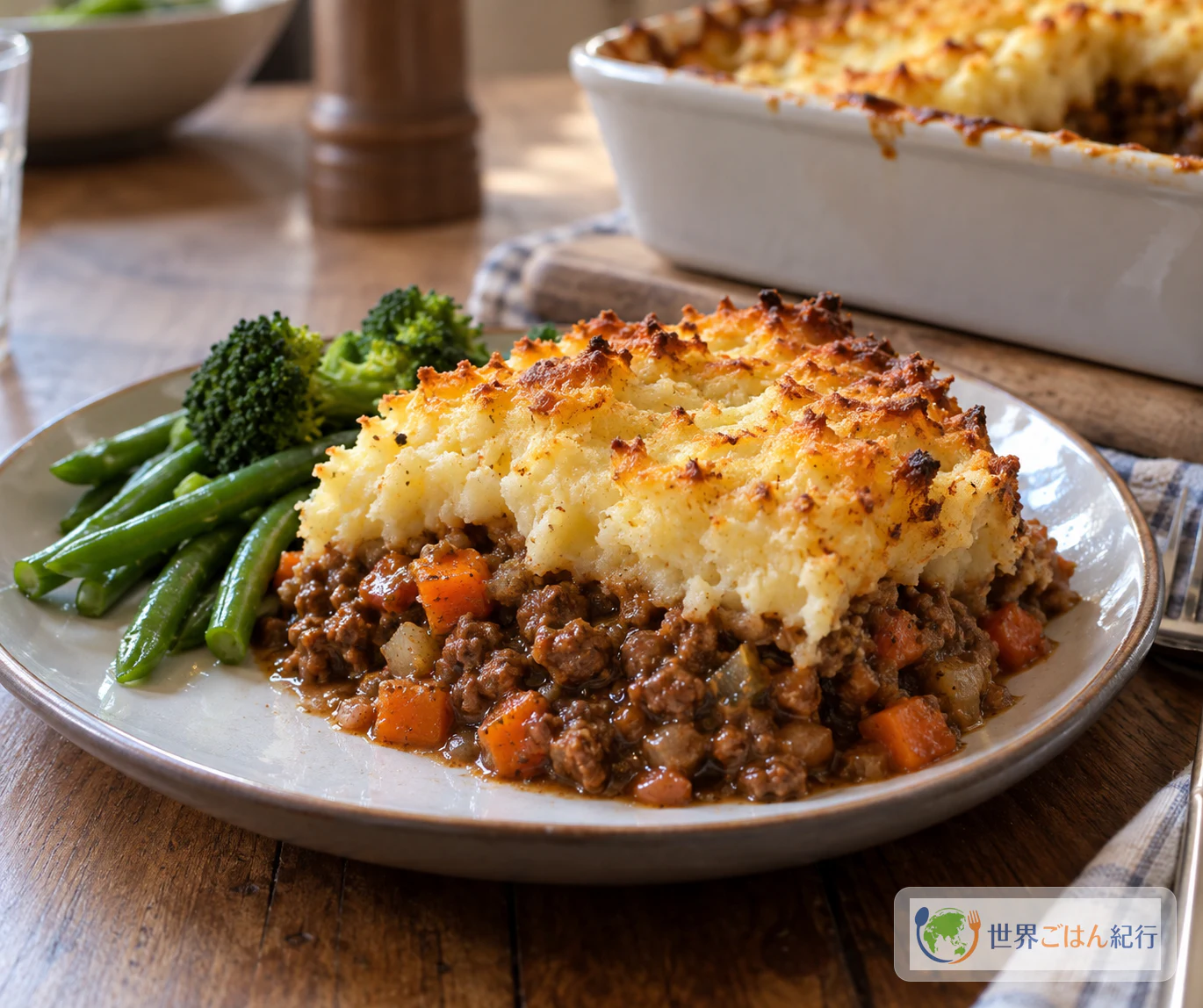
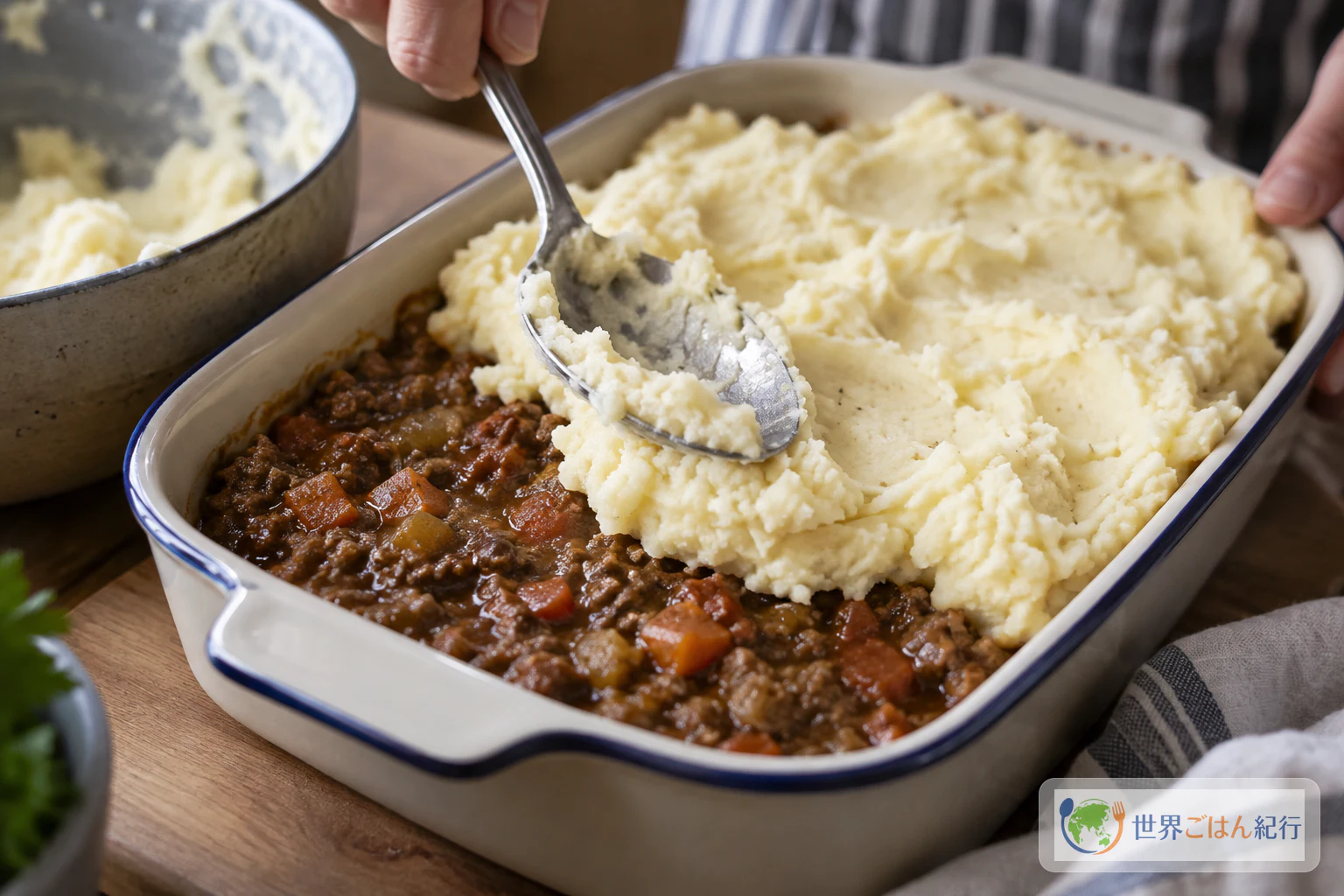
At its simplest, cottage pie is beef mince cooked in a gravy with vegetables, spread in a baking dish and covered with mashed potato. The NHS's family recipe describes it as a pie topped with mash rather than pastry, and both the National Trust and the British Dietetic Association (BDA) present it as a contemporary family dish built on beef mince and mashed potato.
In common modern UK recipe usage, the beef version is called cottage pie and the lamb version shepherd's pie. Pies, Puddings and Pottages, a culinary-history and recipe site, also follows this convention. It is a helpful rule of thumb today, but it should not be read as a fixed, timeless definition; usage can vary.
The history is less tidy than it is often told. The author of Pies, Puddings and Pottages reports that a 1791 entry in the diary of James Woodforde mentions a "cottage-pye" made with chopped veal, and that the entry does not say what topped it. So it is unknown whether that pie had a potato lid at all. The same author reads the familiar mashed-potato topping as a nineteenth-century development, linked to potatoes being a cheap way to stretch meat. That is one writer's interpretation from a secondary source, not a settled origin story; neither the first mention nor any neat tale of who invented the dish can be confirmed here.
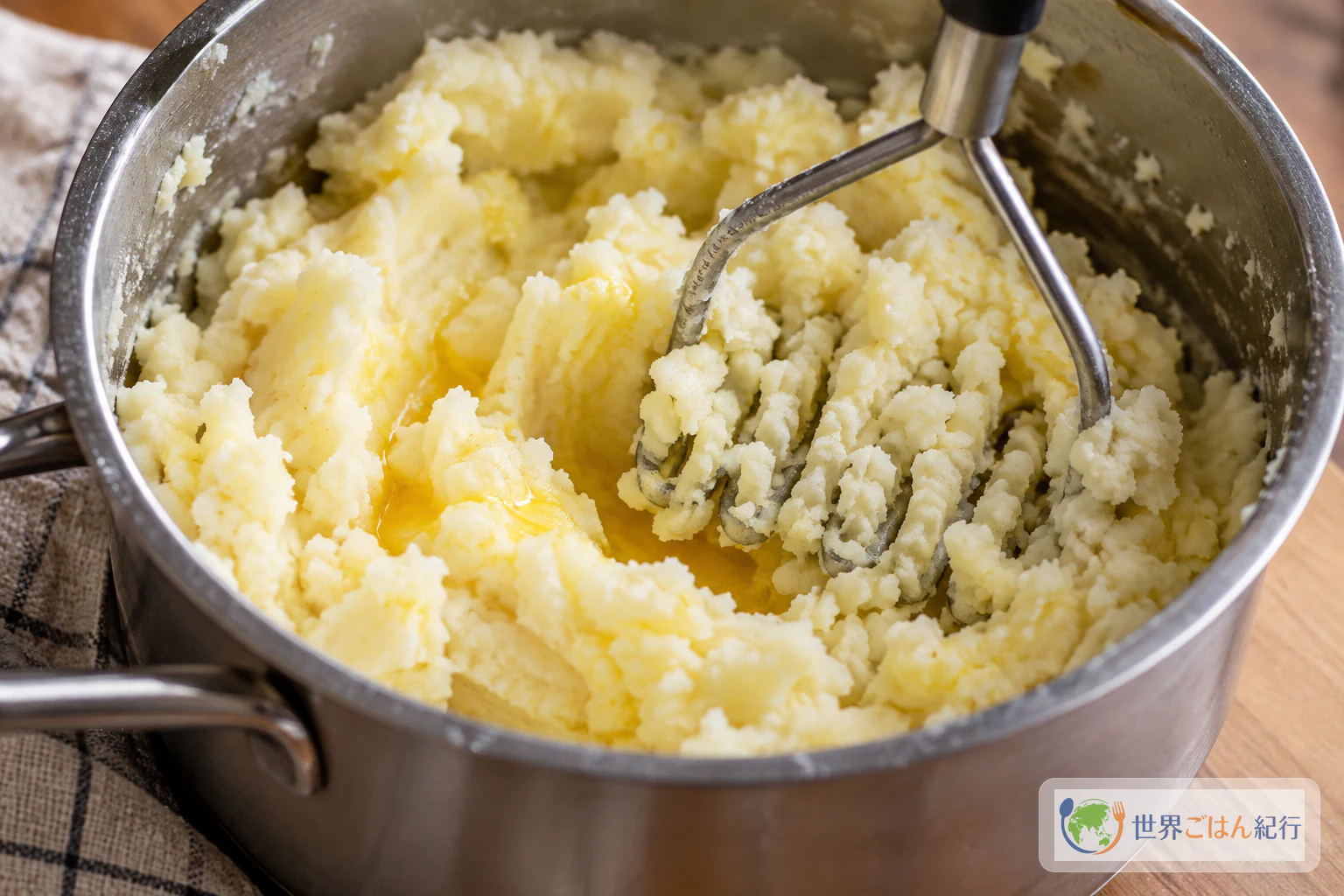
Whatever the name's past, the pleasure of the dish today depends on two things: a filling concentrated enough to support the topping, and a mash with enough body to stand up on it.
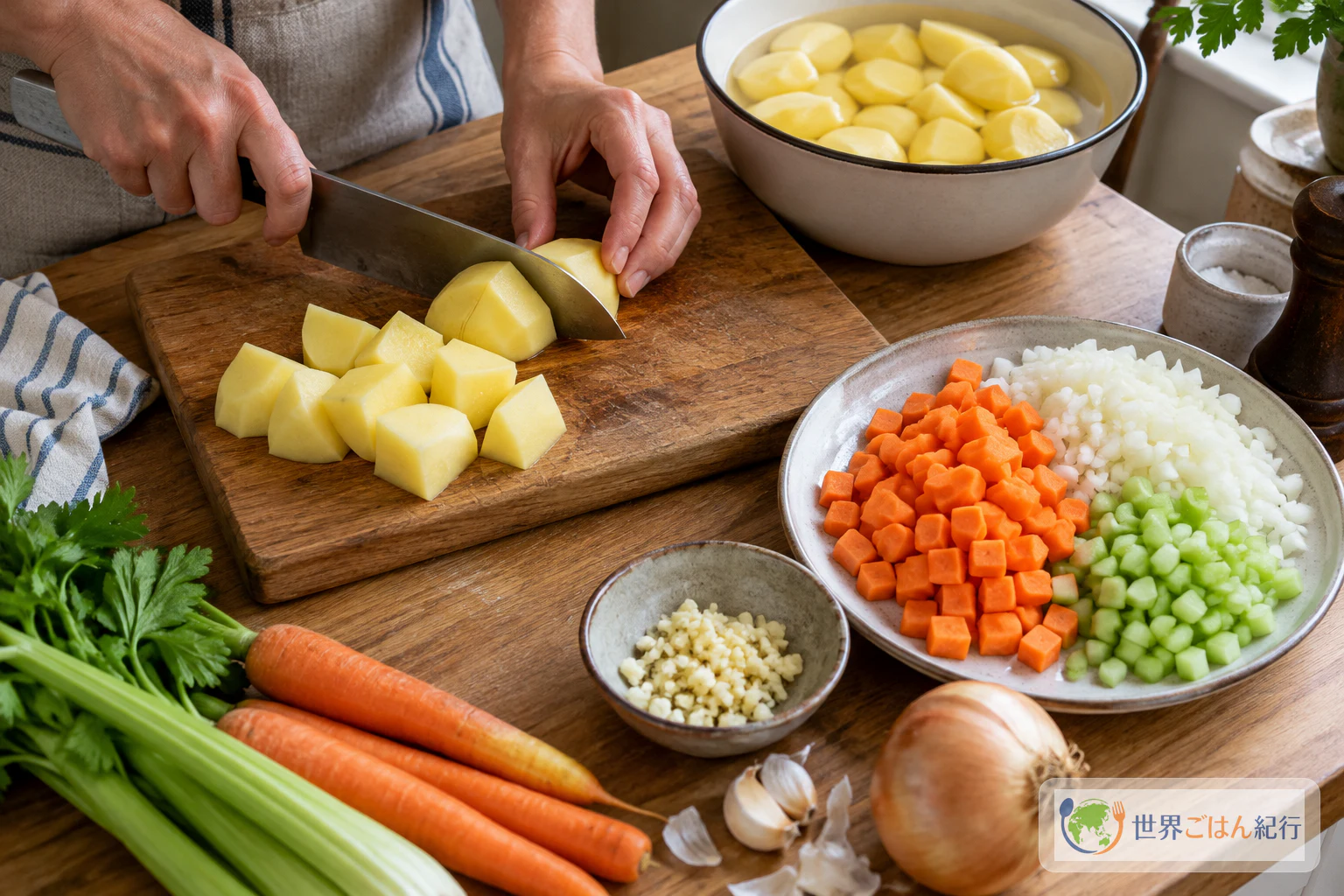
Ingredients for 4: Beef Mince, Floury Potatoes and a Reduced Gravy
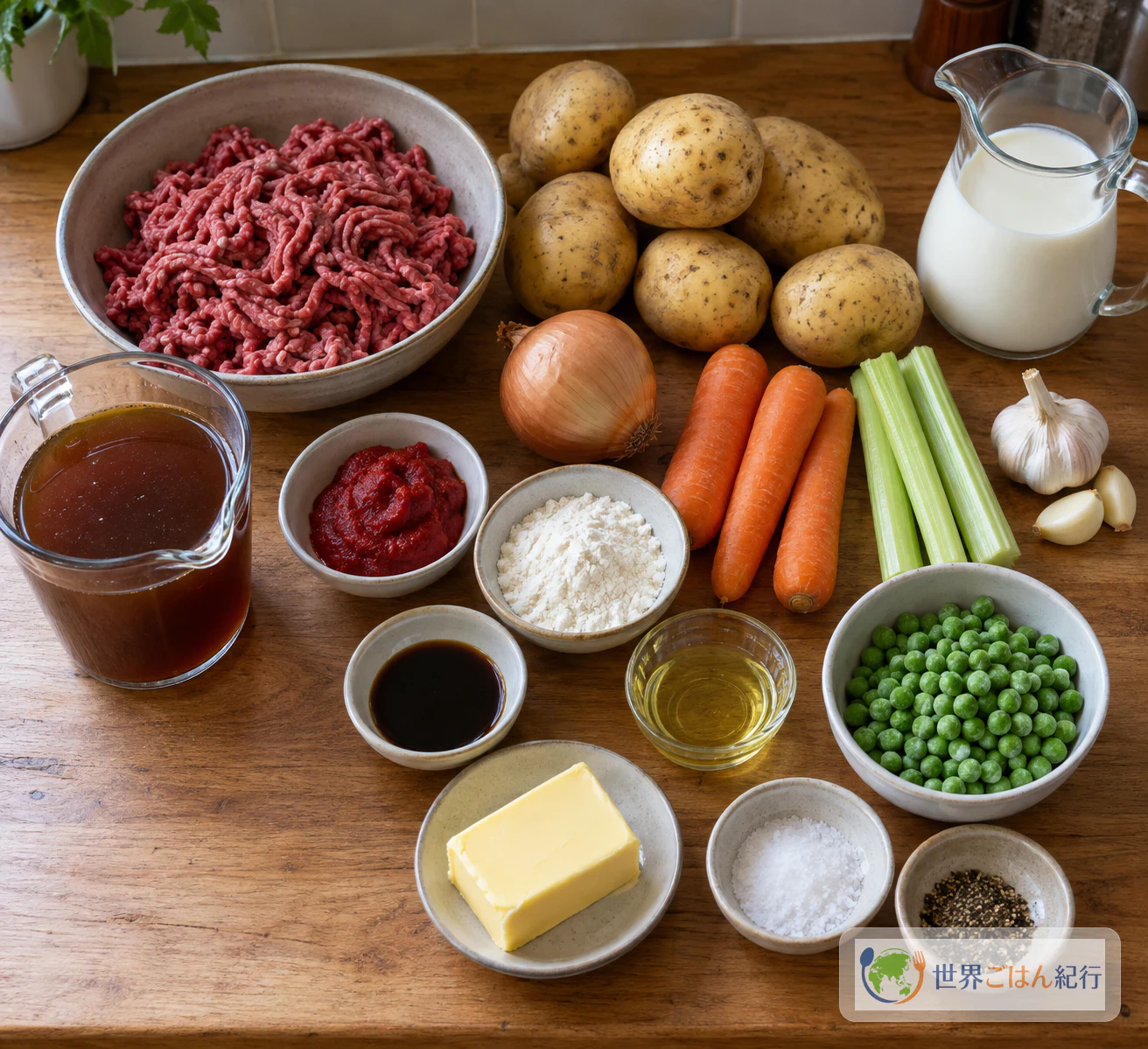
Beef mince and potato are the anchors of the dish. Onion, carrot and peas are common choices across published recipes rather than a mandatory uniform formula. The spoon measures for tomato paste, flour and thyme are kept as spoon measures on purpose.
This recipe contains milk (butter and milk), celery, and wheat/gluten if you use the flour. Some Worcestershire sauce brands contain fish. Check package labels, including for stock. This is general information, not medical advice.
Choosing and Substituting
Potatoes: Choose a floury, mashing variety. Potatoes differ in how dry and starchy they are, so with very floury ones, hold back some of the milk and add it only as needed.
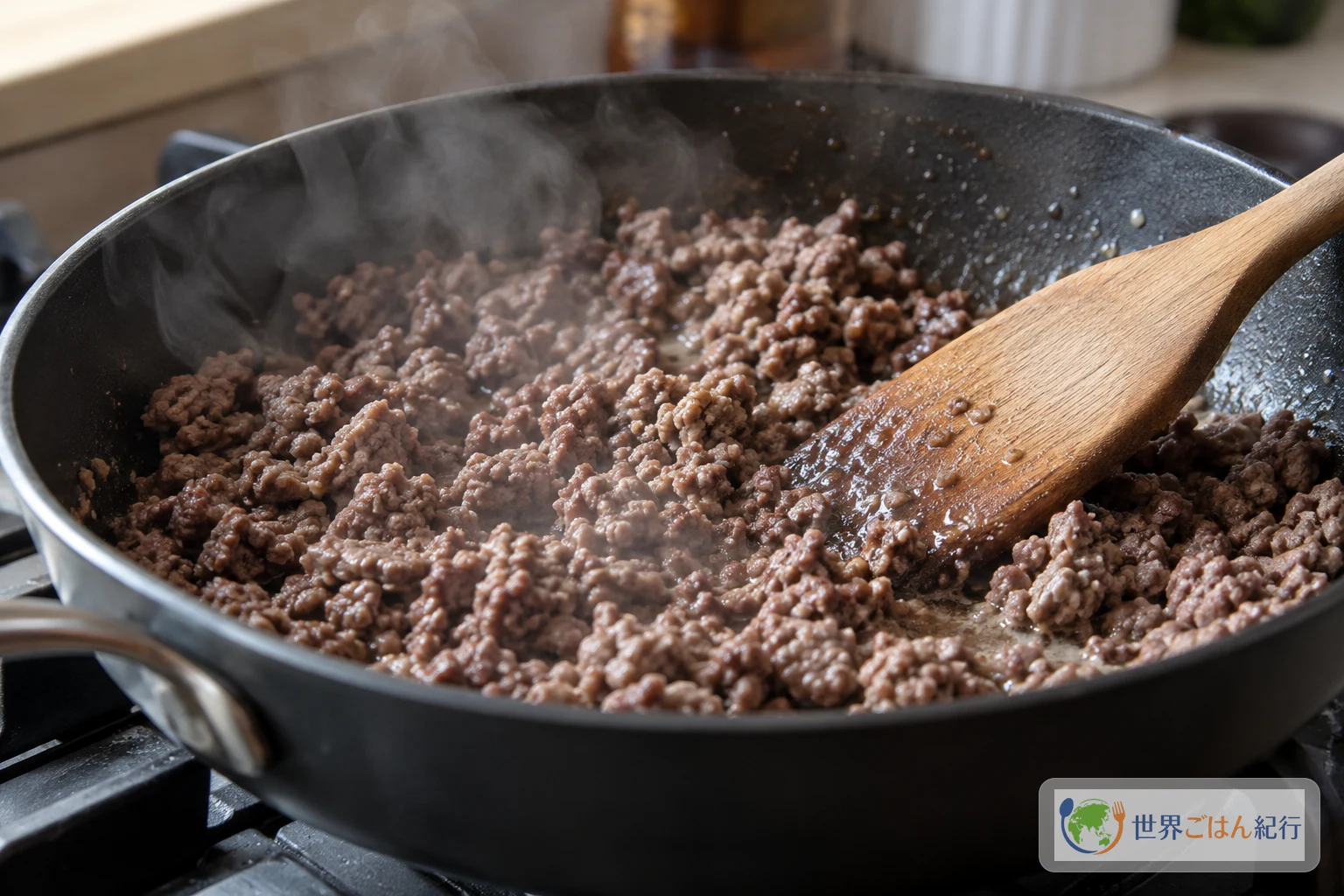
Beef mince: If your mince is very lean, add a little extra oil when browning. If it is fattier, you can use less than the tablespoon of oil.
Stock: Stock cubes and granules vary a lot in salt. Taste the stock first and season with salt only at the end.
Worcestershire sauce: If the only Worcester-style sauce you can find is a sweeter, fruitier type, such as the Japanese style, it will work, but the filling becomes sweeter and tangier and the result is an approximation.
Flour: If you reduce the filling well, the flour can be left out. Do not simply swap it for potato starch or cornflour; reducing the filling is what does the real work.
Celery and garlic: Celery can be left out if you dislike it, though the filling loses some aromatic depth. Garlic is optional.
Thyme: Mixed dried herbs can stand in, but blends differ, so the aroma will shift.
Equipment
- A pot for boiling the potatoes
- A wide frying pan or sauté pan for the filling
- An ovenproof baking dish
- A potato masher (a fork works too)
- A skewer for testing the potatoes
- A spoon for checking the filling and a fork for marking the mash
- A probe thermometer, if you have one
How to Make Cottage Pie
The potatoes go on first and cook while you make the filling, so the mash and the filling are ready at roughly the same time.
Troubleshooting
| Problem | Likely cause | What to do |
|---|---|---|
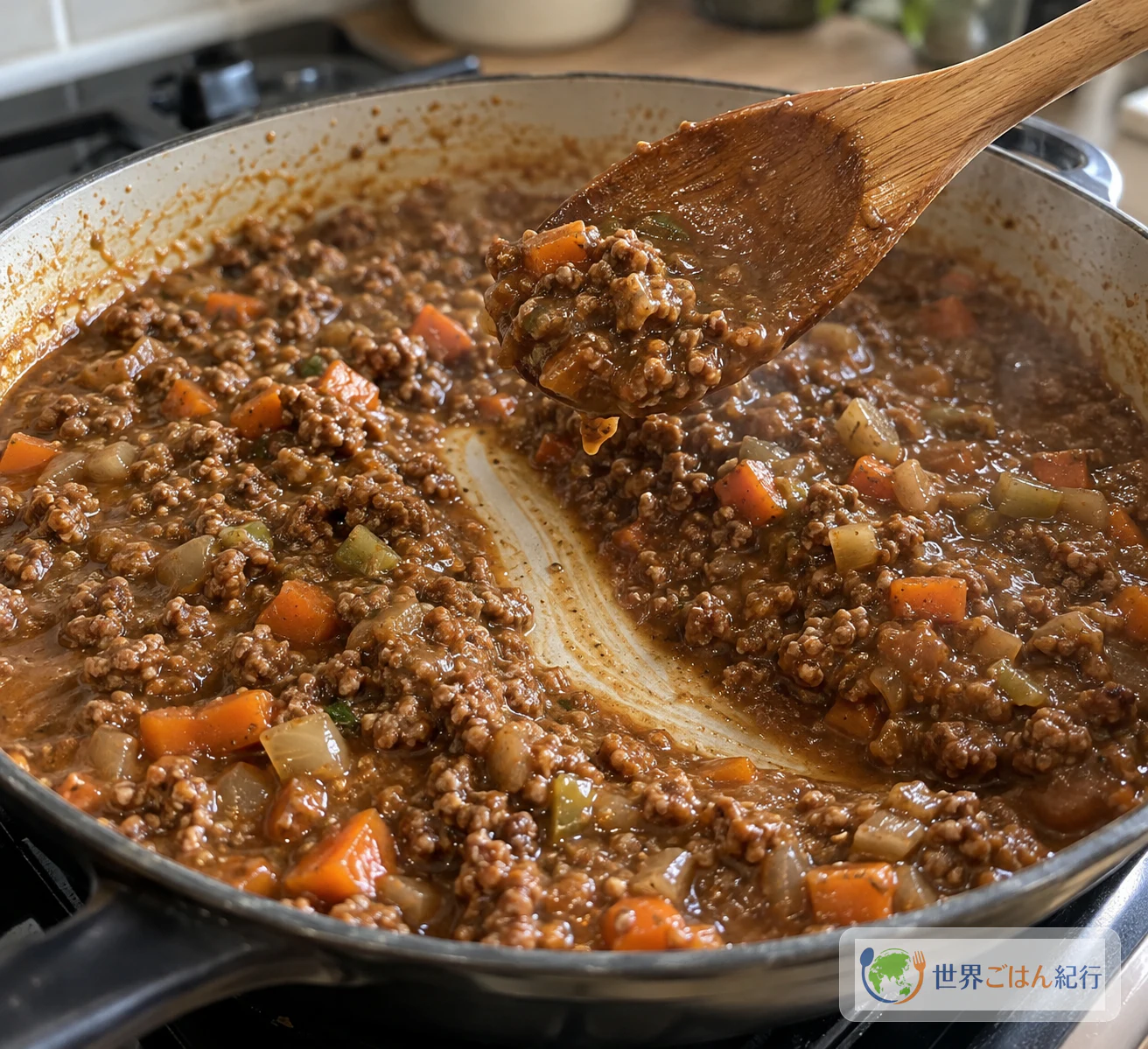
| Watery filling | Not reduced enough before topping | Simmer uncovered until the spoon trail holds. The spoon of flour helps, but it is no reason to skip the reduction |
| Mash sinks into the filling | Filling too loose, mash too wet, or filling still too hot | Reduce the surface liquid, let the filling settle a little, use a firmer mash and lay it from the edges inward |
| Pale top | Smooth surface | Rough up the mash with a fork and bake on a higher shelf, watching so it does not burn |
| Filling too salty | Salty stock | Taste the stock first and add salt only at the end |
| Filling too dry | Over-reduced or lean mince | Loosen with a little hot stock, then simmer again before topping |
Variations
Published UK recipes show how much room there is around the beef-and-mash core. Choose one or two changes rather than piling in every vegetable.
- Mushroom and thyme: The National Trust's version adds mushrooms for a deeper, more savoury filling.
- Peas and carrot: The BDA's family-style version keeps to familiar sweet vegetables, as this recipe does.
- Lighter, vegetable-heavy: The NHS version uses courgette, green beans and sweetcorn.
- Tomato-forward: The BDA and National Trust recipes both include tomatoes in the filling, which gives a looser, brighter sauce that needs its own judgement on reduction.
- Cheddar on the mash, or root-vegetable mash: Optional variations noted in these recipes. Cheese makes a saltier, more browned crust, so add less salt elsewhere. Neither is needed for the base recipe.
- Lamb instead of beef: In common contemporary usage this becomes shepherd's pie rather than cottage pie, though naming conventions vary.
Finishing methods also differ: the NHS recipe browns the mash under the grill, while the National Trust bakes at 170°C conventional / 150°C fan.
Storing and Reheating
Divide leftovers into shallow portions so they cool quickly. Following UK Food Standards Agency guidance, refrigerate them within 2 hours, and eat them within 48 hours or freeze them. Where your local food-safety guidance differs, follow it.
Reheat leftovers only once, until steaming hot all the way through. An oven or microwave both work; covering the dish helps keep it from drying out, but the priority is that the whole portion is piping hot.
Frequently Asked Questions
Is cottage pie the same as shepherd's pie?
In common modern usage, no: cottage pie is made with beef and shepherd's pie with lamb. Usage is not perfectly fixed, though, and the names have not always meant exactly what they mean today.
Can I use frozen peas?
Yes. The BDA recipe uses frozen peas. Add them near the end of simmering, for the last 2–3 minutes.
Why did the filling leak up through the mash?
Usually the filling was too loose or the mash too wet. Reduce the filling until the spoon trail holds, let it settle for a few minutes, keep the mash firm enough to hold its shape, and lay it from the edges inward.
Can I make it ahead?
You can prepare the components and chill them promptly. A specific make-ahead holding time is not established here, so avoid keeping it long. Any leftovers after baking follow the storage guidance above.
Is cheese required?
No. Cheddar on top is an optional variation, not part of the base recipe.
Sources
- NHS Healthier Families, "Classic cottage pie recipe." A family-style cottage pie topped with mash rather than pastry, with beef mince, potato and vegetables including courgette, green beans and sweetcorn, finished under the grill. https://www.nhs.uk/healthier-families/recipes/classic-cottage-pie/
- National Trust, "Cottage pie." A contemporary family dish of beef mince and buttery mash; sauce reduction, roughening the mash for browning, an oven finish, and a mushroom variant. https://www.nationaltrust.org.uk/discover/food/recipes/pies-savoury-treats/cottage-pie
- British Dietetic Association / Let's Get Cooking, "Cottage Pie." A six-serving family recipe pairing beef mince with mashed potato; carrot, onion, peas, tomato, stock and Worcestershire sauce; oven temperature of 190°C / 170°C fan until hot through and browned; placing the mash from the edges inward. https://www.bda.uk.com/resource/cottage-pie.html
- UK Food Standards Agency, "Cooking your food." Cooking minced meat thoroughly, the 70°C for 2 minutes time-temperature combination, and refrigerating, storing and reheating leftovers. https://www.food.gov.uk/safety-hygiene/cooking-your-food?ContensisTextOnly=true
- Pies, Puddings and Pottages, "Cottage pie recipe." The author's report of a 1791 "cottage-pye" entry in James Woodforde's diary, the author's reading of the mashed-potato topping as a nineteenth-century development, and the modern beef/lamb naming convention. A secondary source; historical claims are attributed to its author. https://piespuddingsandpottages.com/recipe-post/cottage-pie/