Shepherd's Pie: A Golden Potato Crust over Bubbling Lamb
The aroma of lamb, a filling that holds its own juices without pooling, and a layer of mashed potato browned in the oven. If those three survive, the dish is still shepherd's pie.
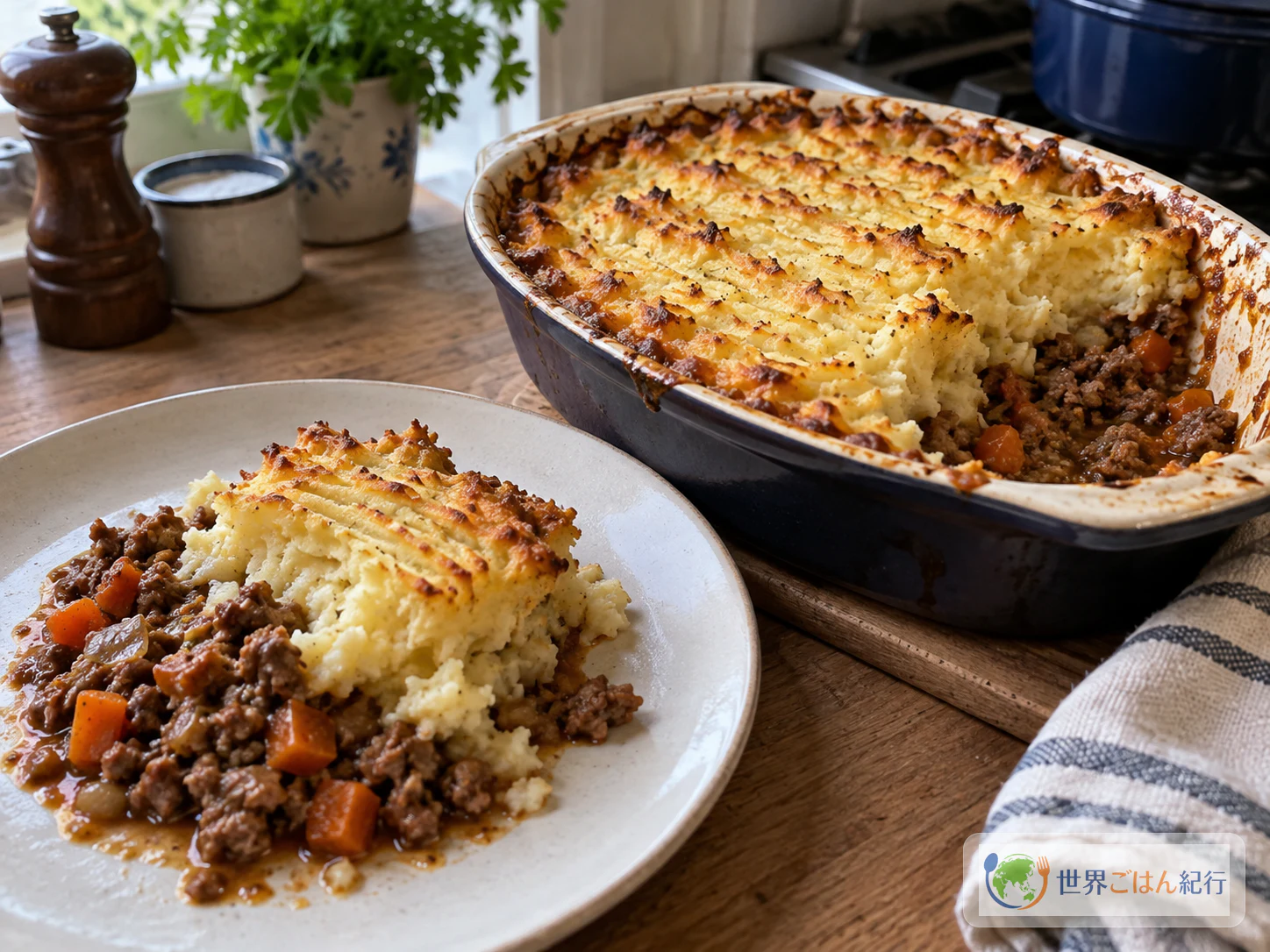
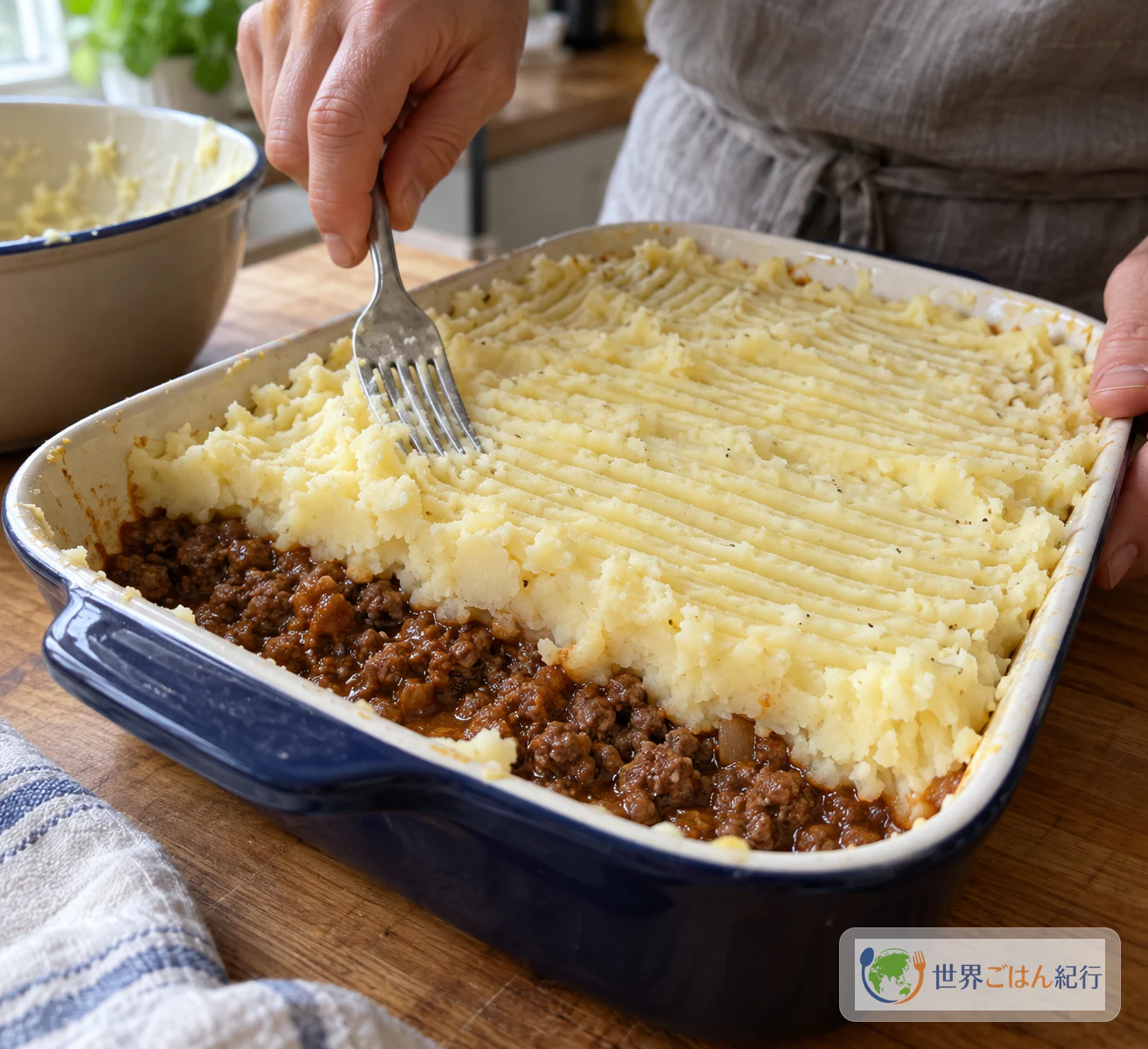
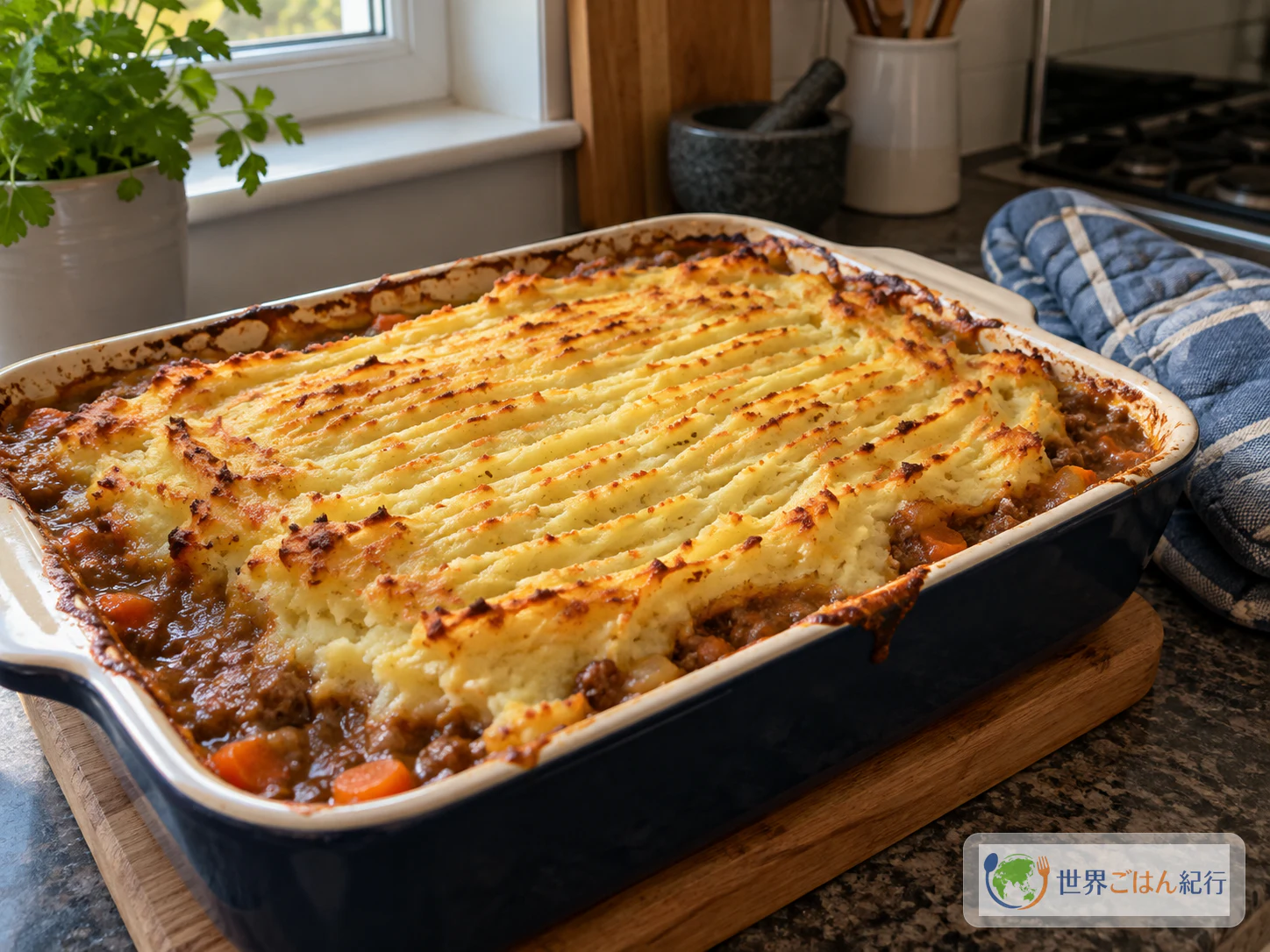
The oven door opens and a wave of steam rises from the dish. The ridges drawn across the mashed potato with a fork have turned golden at their peaks, and around the rim, dark lamb filling is bubbling up against the edge of the dish. One serving is spooned out, and the layers show clearly: soft potato on top, savory mince underneath.
Shepherd's pie is a dish of lamb mince cooked with onion, carrot and stock, covered with mashed potato and baked. The recipe here follows a published four-serving home recipe from BBC Good Food, one example among many family versions. It uses only a handful of ingredients and no special technique; what matters is cooking the filling down patiently and mashing the potatoes well.
What Is Shepherd's Pie? Lamb and Potato in One Dish
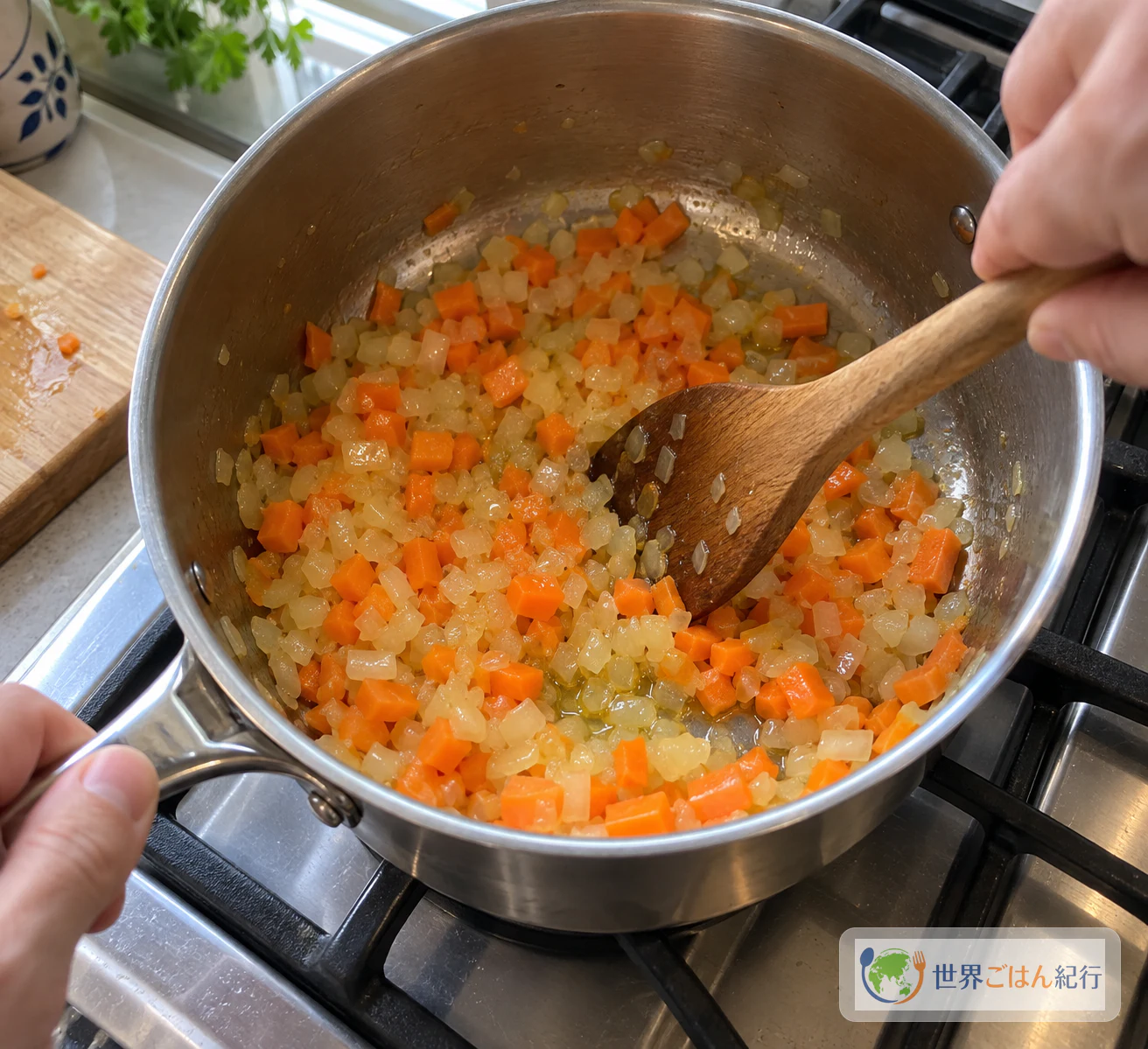
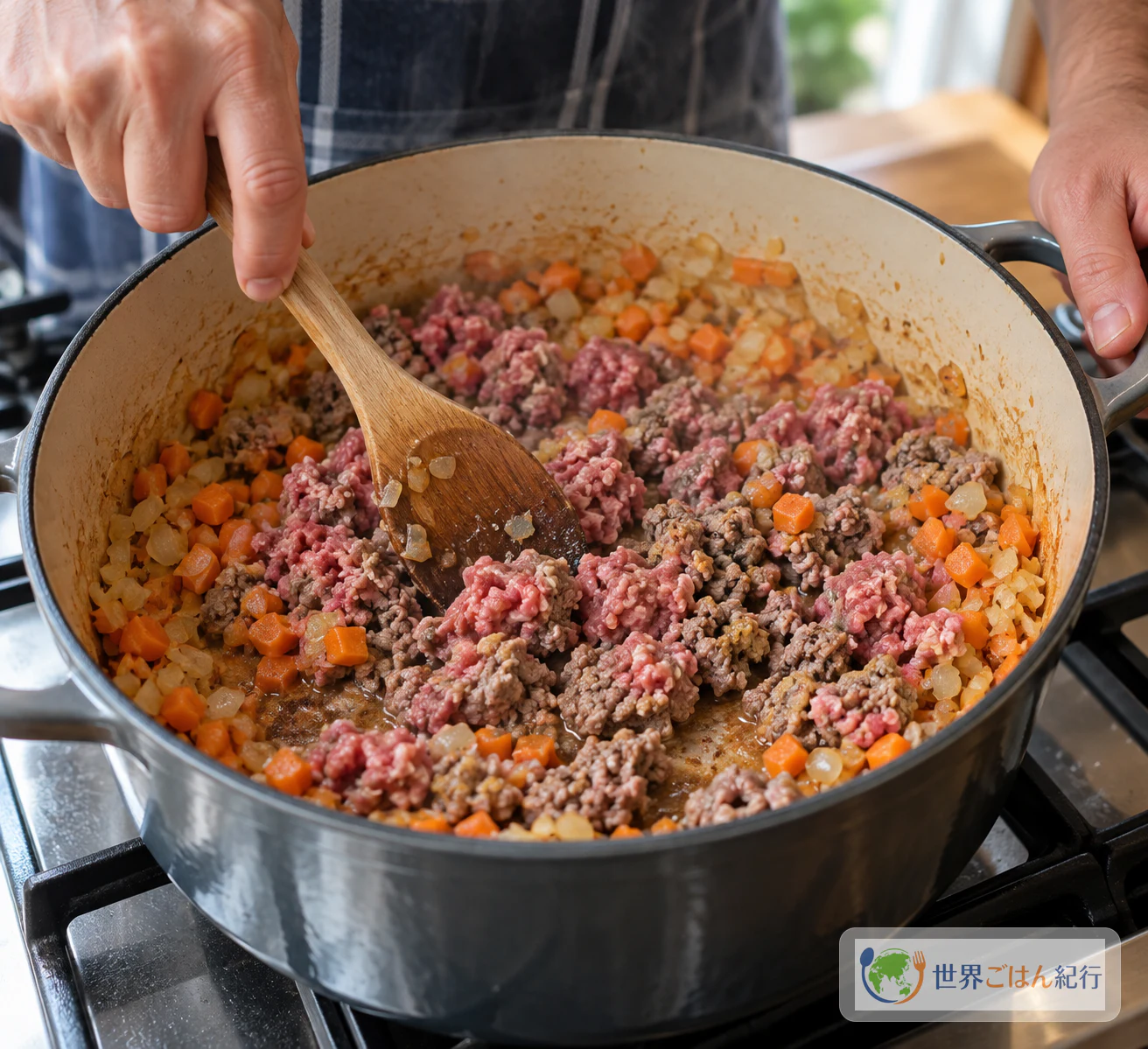
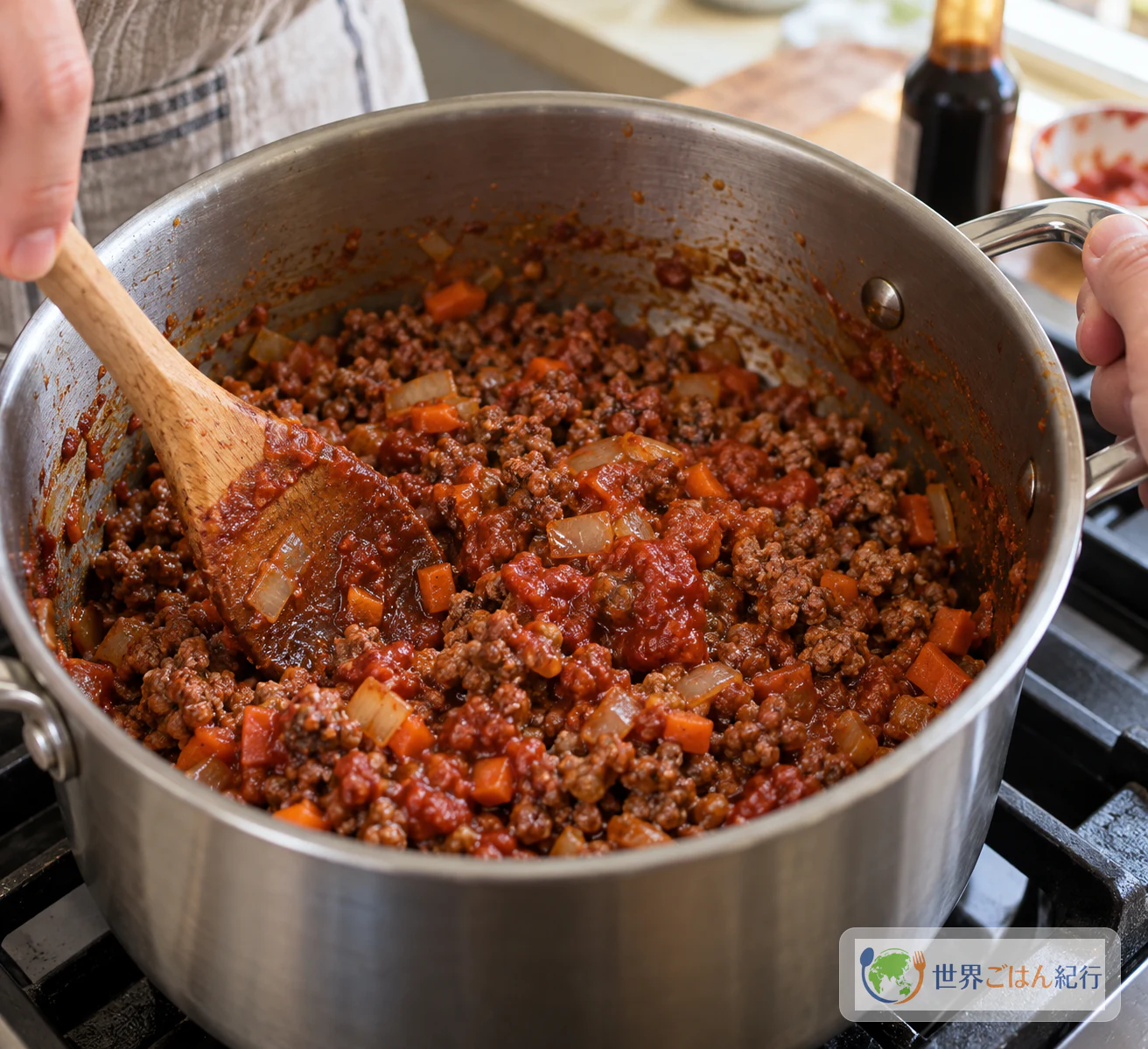
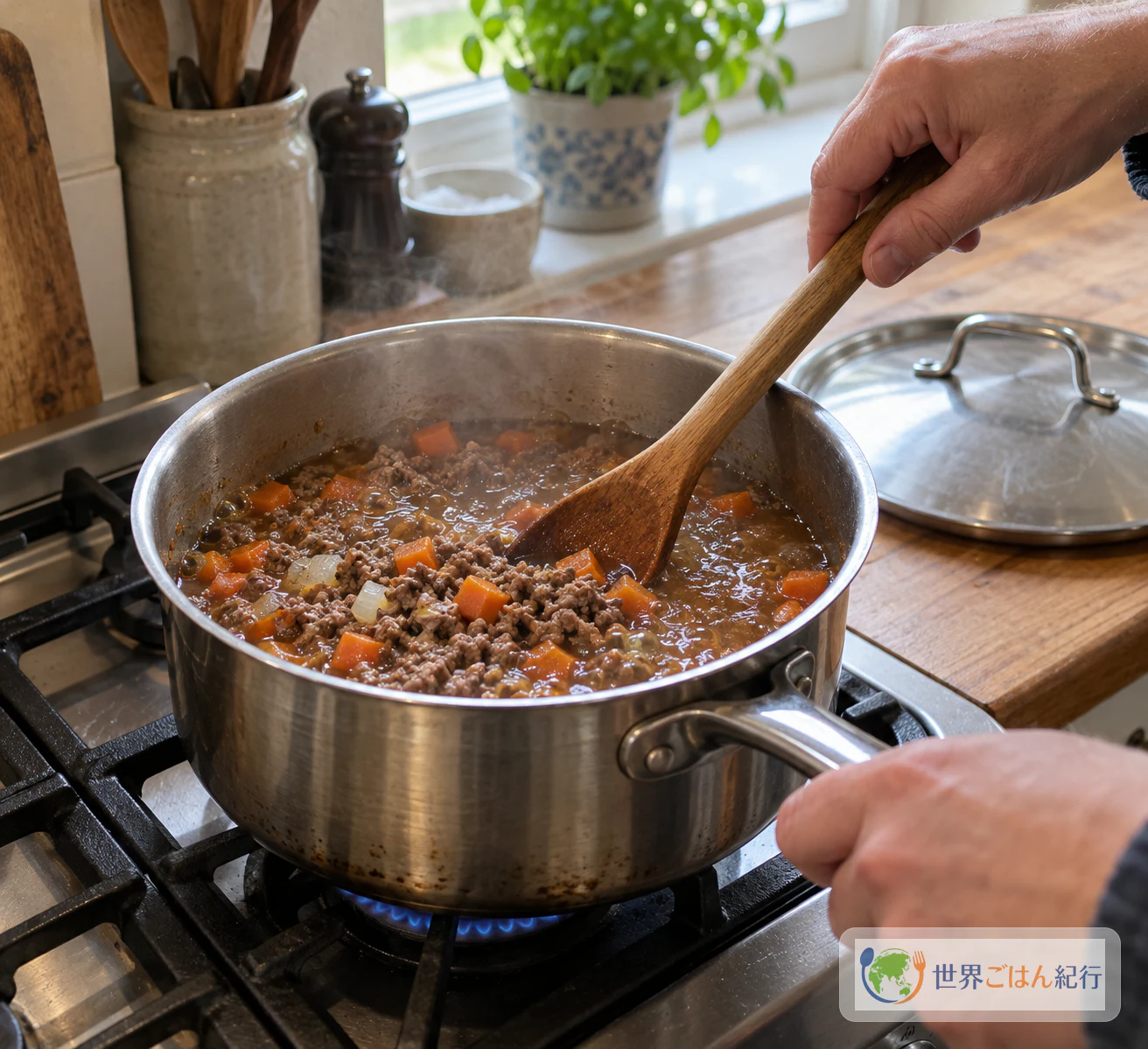
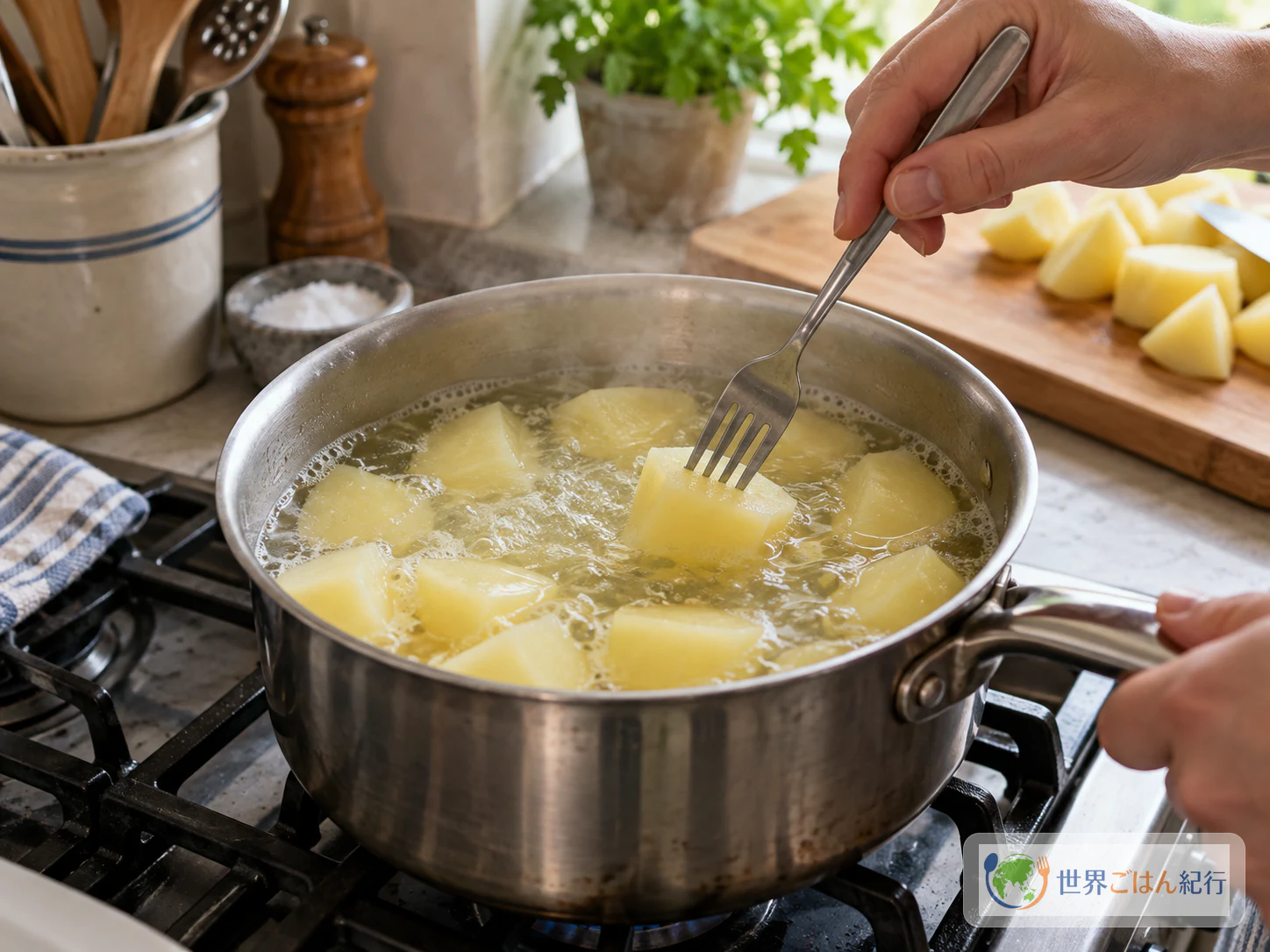
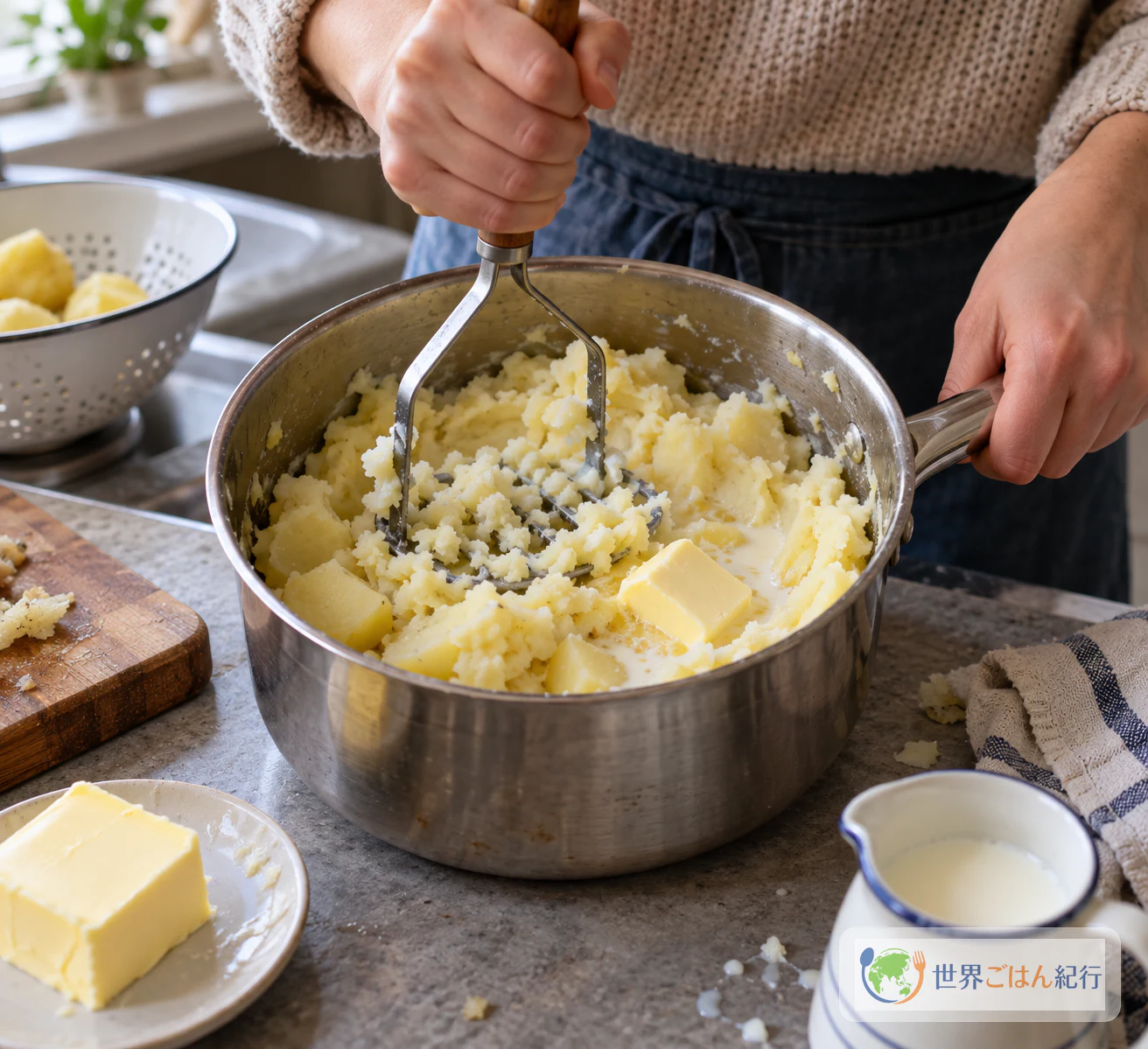
Shepherd's pie pairs a lamb stew with a mashed potato lid, baked in a single dish. The filling is built in one pan: vegetables softened in oil, lamb browned, tomato purée and Worcestershire sauce fried in, then beef stock added and simmered until thick. The potatoes are boiled separately, mashed with butter and milk, spread over the top and baked until colored.
In today's common usage, shepherd's pie is made with lamb, and the same dish made with beef mince is called cottage pie. That is a useful modern guide when choosing what to cook, but it should not be projected back across the whole history of the dish, as the next section explains.
Leftover Meat, History and a Name That Wandered
The Jane Austen Centre quotes an entry dated 29 August 1791 in the diary of James Woodforde that mentions "Cottage-Pye." It is an early written appearance of the word, but a single word in a diary cannot tell us what that dish contained or how it was assembled, and it is not evidence for where modern shepherd's pie began. The same article introduces a cottage pie recipe from Cassell's New Universal Cookery Book (1894) built with potato both under and over cold meat and gravy, with the surface roughened with a fork before baking, an example of how long that fork-ridged top has been part of the picture.
Human Food Atlas points out that the terms shepherd's pie and cottage pie were not consistently divided by type of meat throughout history. The idea that the dish grew out of using up leftover roast meat is plausible, but it cannot be confirmed as the single origin. Rather than a neat founding story, what the record shows is a flexible dish: meat and mashed potato layered together, adjusted to what was on hand.
What has stayed constant is its practicality. Meat and the starch of the meal go into one dish, it can be assembled ahead, and the whole family serves themselves from the same casserole. For more dishes from the same table, see the United Kingdom page.
Ingredients (Serves 4)
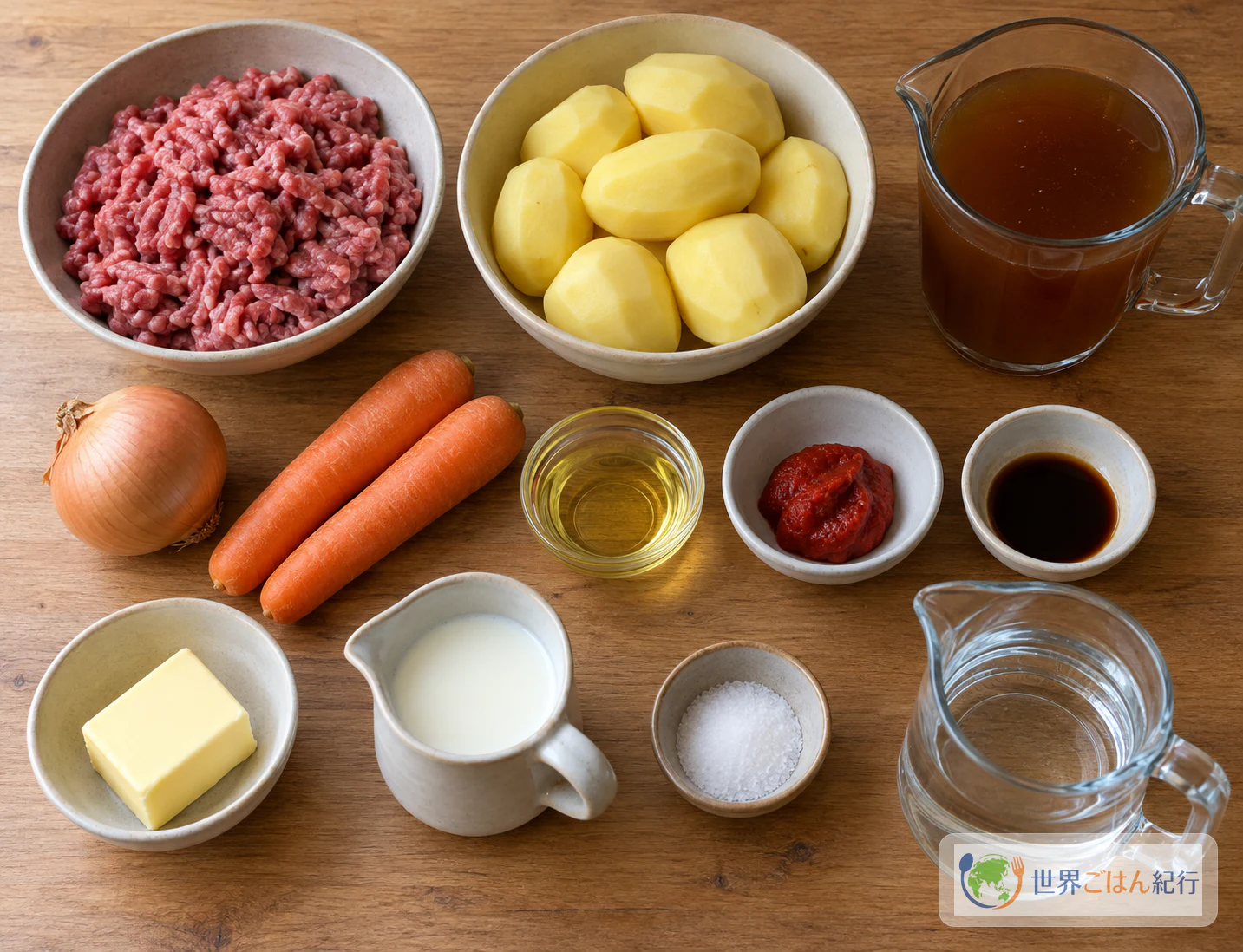
These are the source recipe's own four-serving amounts. Where the source gives a range or a loose measure, it is kept as written rather than turned into grams or milliliters.
Use the same tablespoon for the oil, tomato purée and milk (this article assumes a 15 ml tablespoon). The salt goes only into the potato water; the source gives no fixed amount of salt for the filling, so taste it at the end rather than adding salt by habit.
Equipment
- A saucepan or deep pan with a lid, for the filling
- A second saucepan for the potatoes, and a colander
- A wooden spoon
- A potato masher
- A fork, for ridging the top
- An ovenproof dish large enough to hold the filling and mash with room to spare for bubbling (the source does not give a size)
- Measuring spoons
- A food thermometer, for checking the center temperature
Choosing and Substituting: Lamb and Worcestershire Set the Flavor
Lamb mince is the ingredient worth seeking out. If you can't find it at the supermarket, try a butcher or an import grocer, or buy lamb and ask whether it can be minced for you; availability varies by shop. Beef mince will make a perfectly good dish, but the flavor and the name change: with beef, it is generally called cottage pie, so treat that as a different dish rather than a silent swap.
Worcestershire sauce is added by the "large splash" in the source, and products differ in saltiness and acidity, so add it by eye and taste rather than by measure. A different style of sauce, such as Japanese-style Worcester sauce, can stand in, but expect a shift in sweetness, acidity and spice.
Tomato purée here means concentrated tomato paste. Ketchup is a different product and will not behave the same way.
Oil: if sunflower oil isn't easy to find, the same amount of rapeseed oil works, with a slight difference in aroma.
Potatoes: the source names no variety. Floury potatoes mash more easily and give a lighter result.
Stock: commercial stocks vary widely in salt, which is one more reason to taste the filling before deciding whether it needs anything.
How to Make Shepherd's Pie
The filling simmers for 40 minutes; boil the potatoes during that time so both are ready together. Judge the end points by what you see: tender vegetables, browned meat, a thickened filling, a golden top.
For meat dishes cooked at home, Japan's Ministry of Health, Labour and Welfare gives a guide of 75°C at the center for at least 1 minute. A browned top and bubbling edges are signs the dish is done, not a guarantee of safety; check with a thermometer. Milk and butter contain dairy, and stock and Worcestershire sauce vary by product, so check labels for milk, wheat, soy, fish and other allergens rather than assuming.
Watery Filling, Pale Top: Fixing Common Problems
| Problem | Likely cause | What to do |
|---|---|---|
| The filling is watery | The lid stayed on for the whole simmer | Keep the second 20 minutes uncovered and check that the filling is thick before it goes into the dish |
| The top won't brown | The mash is smoothed flat | Draw clear fork ridges across the surface and check the color toward the end of baking |
| The mash is heavy | Potatoes not drained well, or a waxy variety | Drain thoroughly before mashing; floury potatoes give a lighter mash |
| The lamb is in lumps | The mince set before it was broken up | Break it apart as soon as it hits the pan in step 2 |
Thickening with flour or cornstarch is not part of this recipe, so it isn't offered as the standard fix; uncovering the pan for the second half of the simmer is how the source deals with excess liquid.
Serving, Storing and Reheating
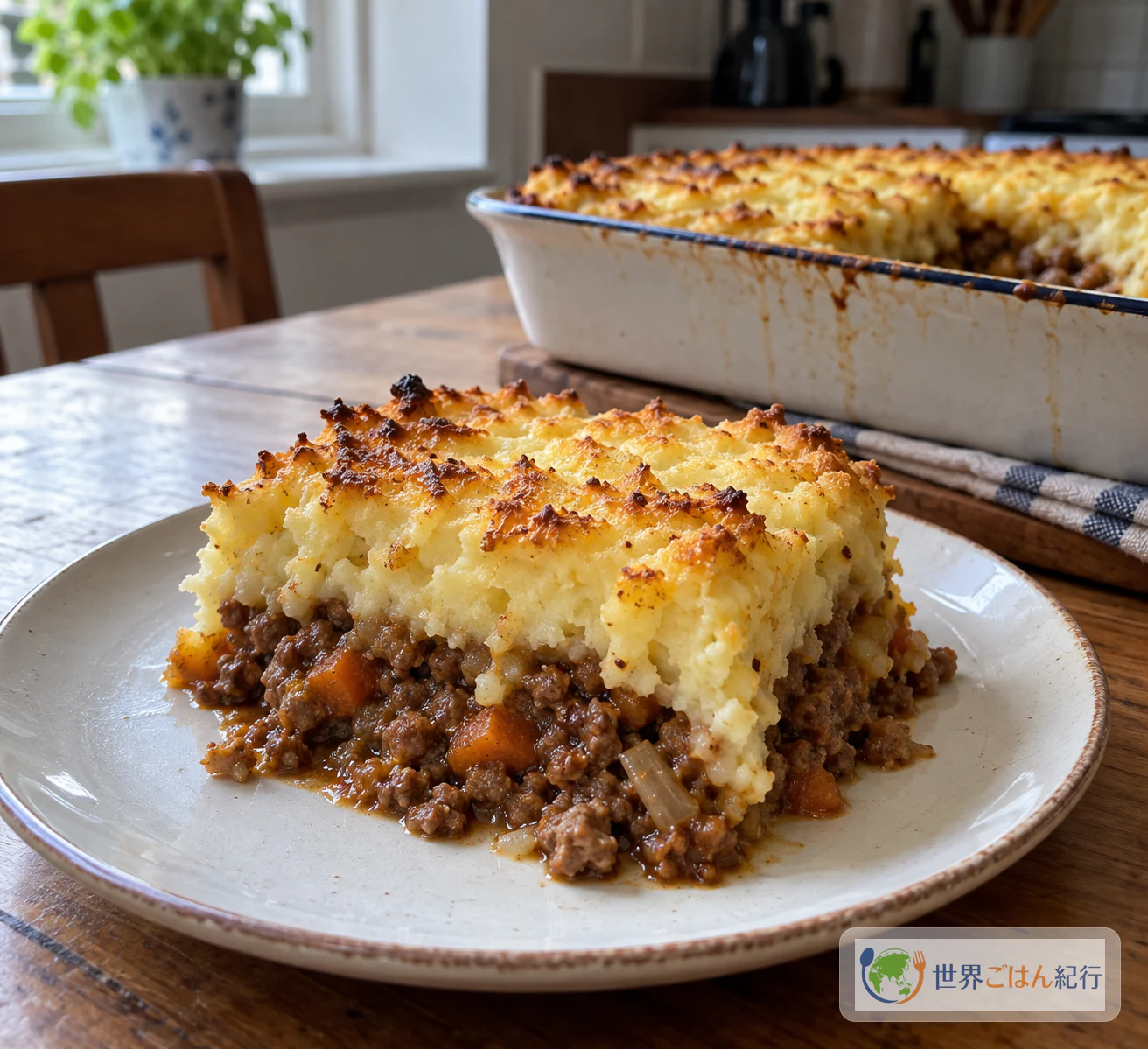
Serve it simply, spooned from the dish at the table. If you want vegetables alongside, put them on a separate plate so the pie itself stays as it is.
The source recipe notes that shepherd's pie can be chilled or frozen. It gives two different oven temperatures for baking from frozen, so this article does not give a bake-from-frozen method.
For leftovers, follow ordinary home food-safety guidance: don't leave the dish at room temperature for long, divide it into clean, shallow containers so it cools quickly, and refrigerate. Reheat until it reaches 75°C or above at the center. Letting it cool completely at room temperature should not be read as permission to leave it standing for hours.
Variations Without Changing the Core
- Other family recipes: a shepherd's pie recipe published by the James Beard Foundation, credited to Clodagh McKenna and Regina Sexton from West Cork, keeps the lamb, onion, carrot, stock and mash but adds tomato paste and Dijon mustard and serves 6. It is a separate recipe with its own amounts; don't mix its ingredients into this one.
- Texture of the top: rough the mash up more or less with the fork. More peaks mean more browned edges, with no extra ingredients.
- With beef instead of lamb: the dish then becomes what is generally called cottage pie. Change the name along with the meat.
- A different Worcestershire-style sauce: workable, with a noticeable shift in sweetness, acidity and spice.
Frequently Asked Questions
What's the difference between shepherd's pie and cottage pie?
Today, shepherd's pie generally means lamb and cottage pie means beef. Historically, though, the two names were not consistently separated by meat, so treat the distinction as modern usage rather than a fixed rule.
What if I can't find lamb mince?
Try a butcher or import grocer, or ask whether lamb can be minced for you. Beef mince changes both the flavor and the name, toward cottage pie. Chopping lamb by hand is outside this recipe, so it can't be called an equivalent substitute without testing.
How many does this serve?
Four, as given by the source recipe. The dish size and weight per portion were not specified.
The top isn't browning. What should I do?
Make sure the mash has clear fork ridges, and check the color toward the end of baking. Ovens vary, so go by the golden top and bubbling edges.
Can I make it ahead or freeze it?
The source says it can be chilled or frozen. Cool leftovers quickly in shallow containers, refrigerate, and reheat to 75°C or above at the center. Because the source gives inconsistent temperatures for baking from frozen, this article doesn't offer one.
Sources
- BBC Good Food, "No-fuss shepherd's pie." The recipe followed here: all ingredients and amounts, 4 servings, method, simmering, boiling and baking times, oven temperature, resting time, the modern lamb/beef distinction between shepherd's pie and cottage pie, and the note that it can be chilled or frozen. https://www.bbcgoodfood.com/recipes/no-fuss-shepherds-pie/
- James Beard Foundation, "Shepherd's Pie." A separate recipe with lamb, onion, carrot, tomato paste, Dijon mustard, stock and mashed potato, cited only as an example of how home recipes vary. https://www.jamesbeard.org/recipes/shepherds-pie
- Human Food Atlas, "Shepherd's pie." On the inconsistent historical use of the names shepherd's pie and cottage pie, and the limits of the leftover-meat origin theory. https://humanfoodatlas.com/dish/shepherd-s-pie
- Jane Austen Centre, "Cottage Pie." Quotes the 1791 "Cottage-Pye" entry in James Woodforde's diary and an 1894 cottage pie recipe with a potato base and top and a fork-roughened surface. Not used as evidence for the origin of shepherd's pie. https://janeausten.co.uk/blogs/home-and-hearth/cottage-pie
- Ministry of Health, Labour and Welfare (Japan), "Preventing food poisoning at home" (in Japanese). Home guidance on cooking to 75°C at the center for at least 1 minute, avoiding cross-contamination from raw meat, cooling leftovers quickly in shallow containers, and reheating to 75°C or above. https://www.mhlw.go.jp/stf/seisakunitsuite/bunya/kenkou_iryou/shokuhin/syokuchu/01_00008.html