Yorkshire Pudding: A Tray of Batter That Rises in Hot Fat
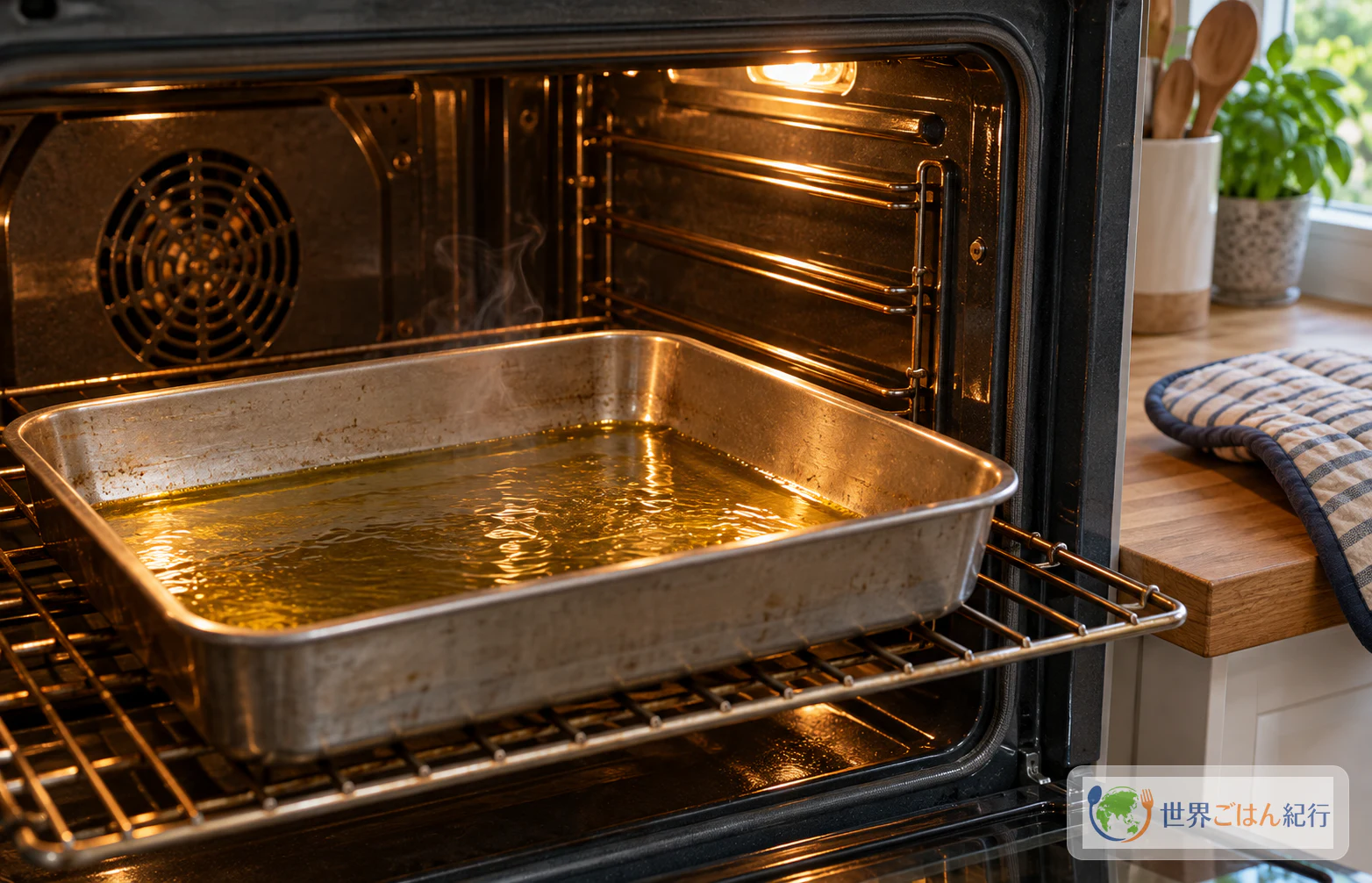
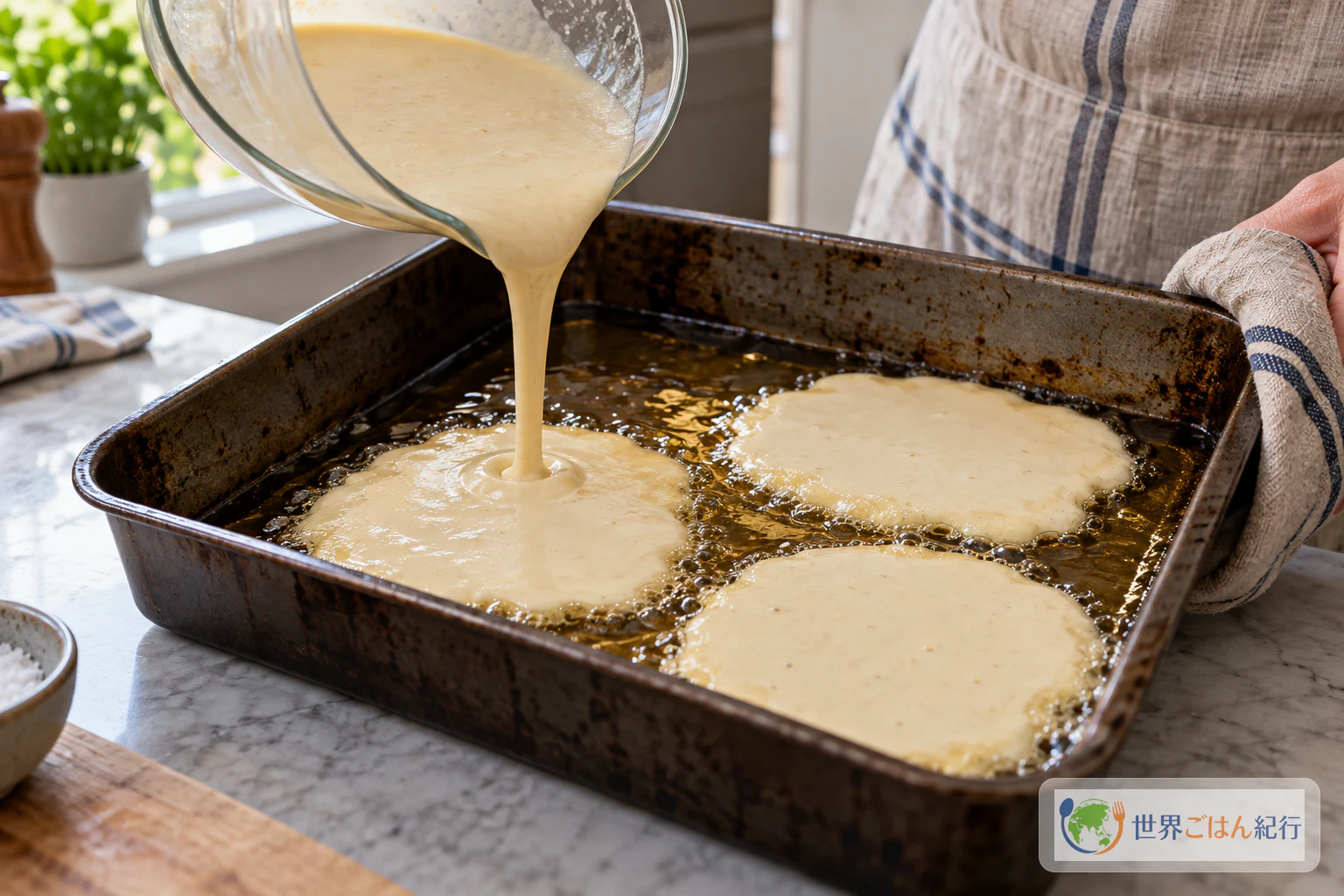
The secret is not a long ingredient list. It is the heat: a tray of fat heated until it just smokes, and a plain batter poured straight into it. Keep that, and the rest of the recipe stays simple.
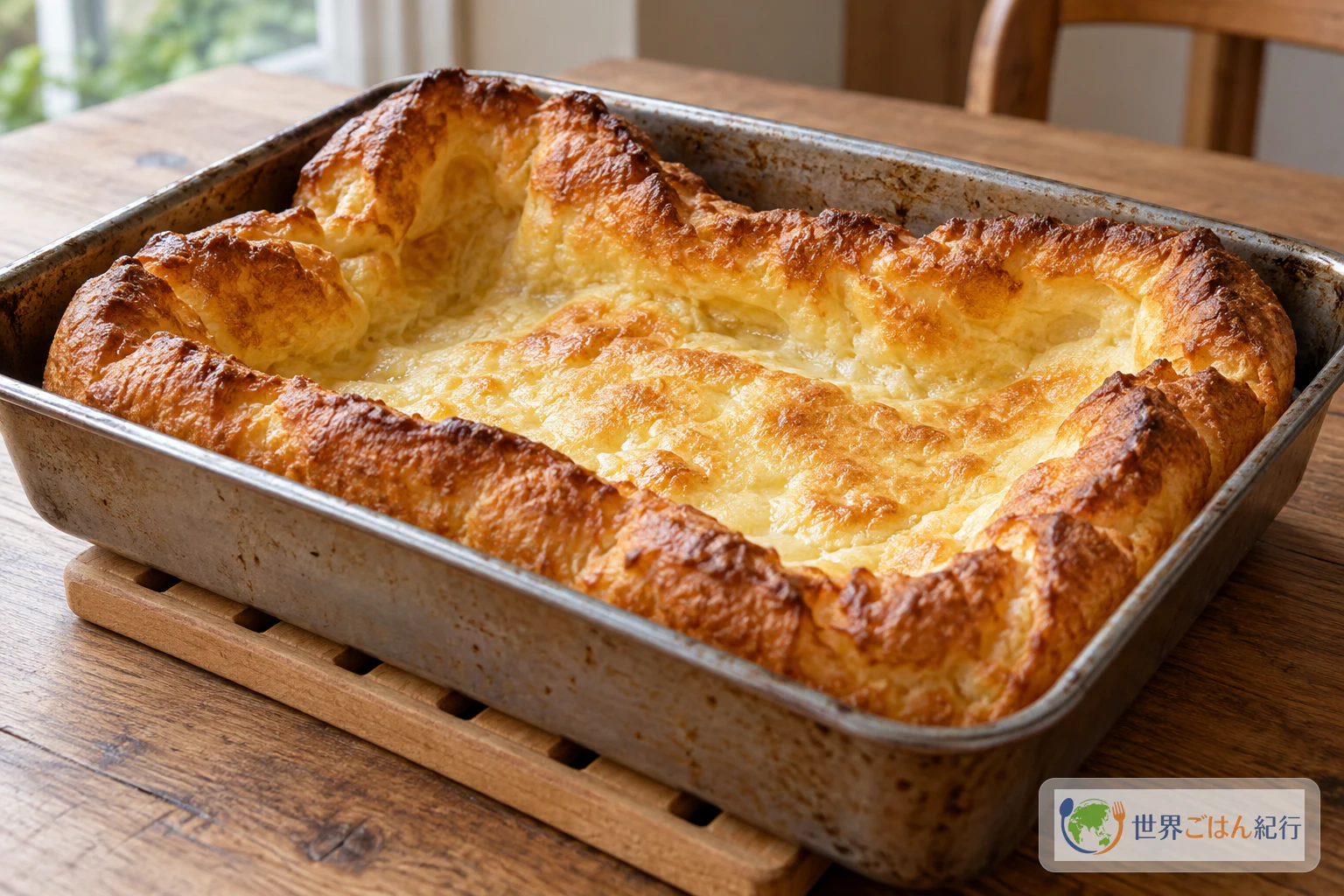
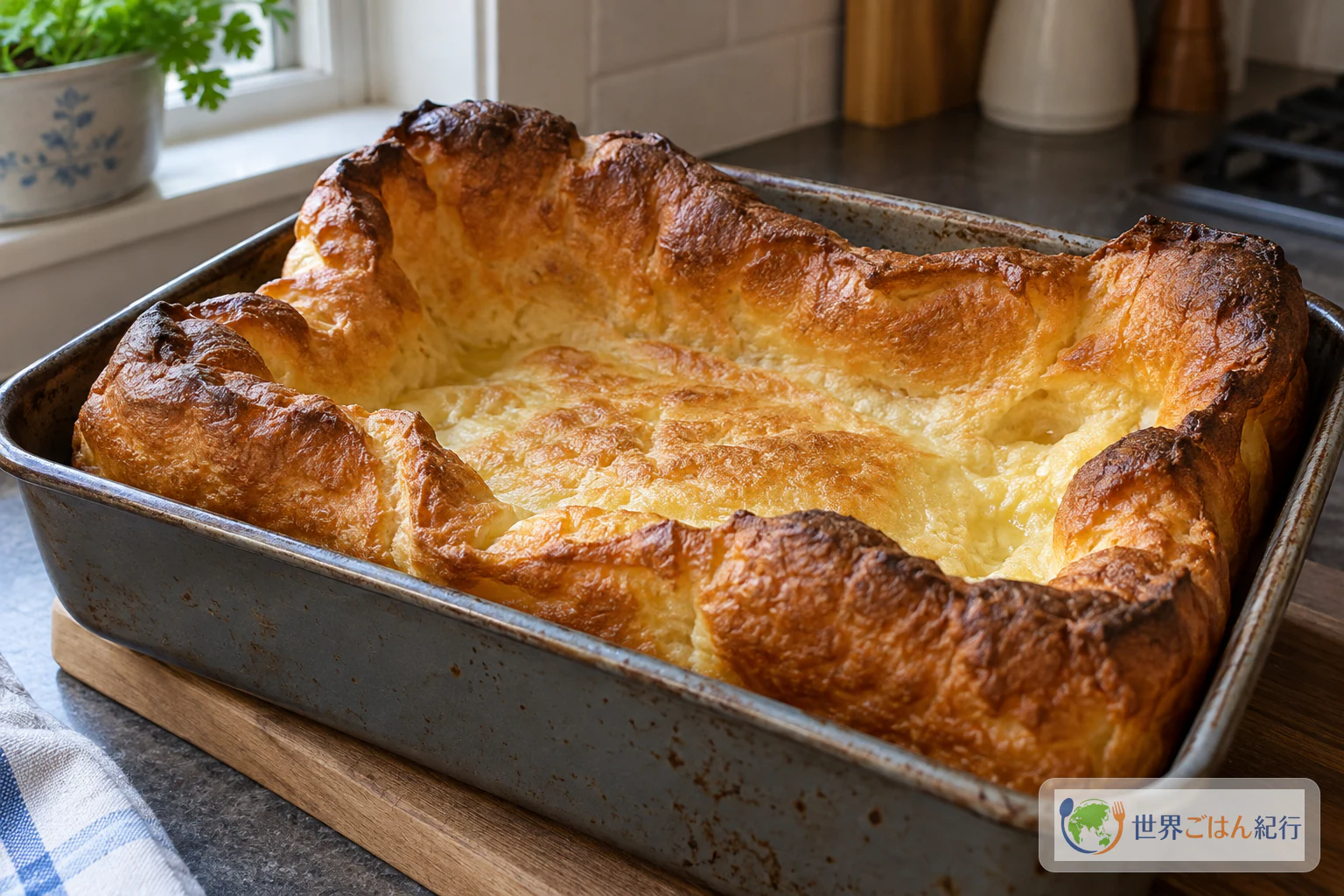
On a British Sunday roast table, Yorkshire pudding is the side that has to arrive straight from the oven. The recipe this article follows, from chef Lisa Goodwin-Allen on Great British Chefs, ends with one instruction: serve it immediately. The edges have risen and turned crisp, while the middle stays thinner and softer.
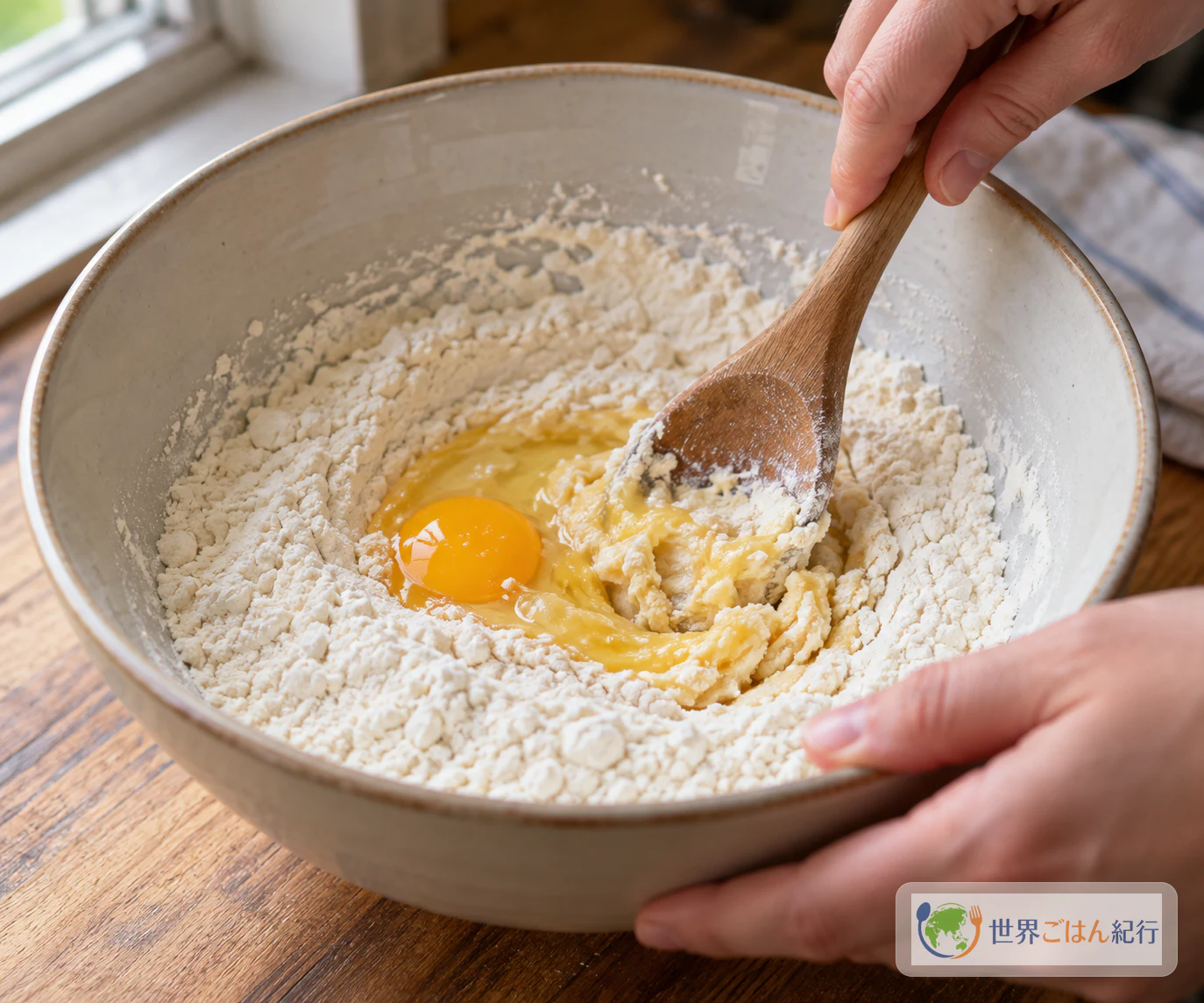
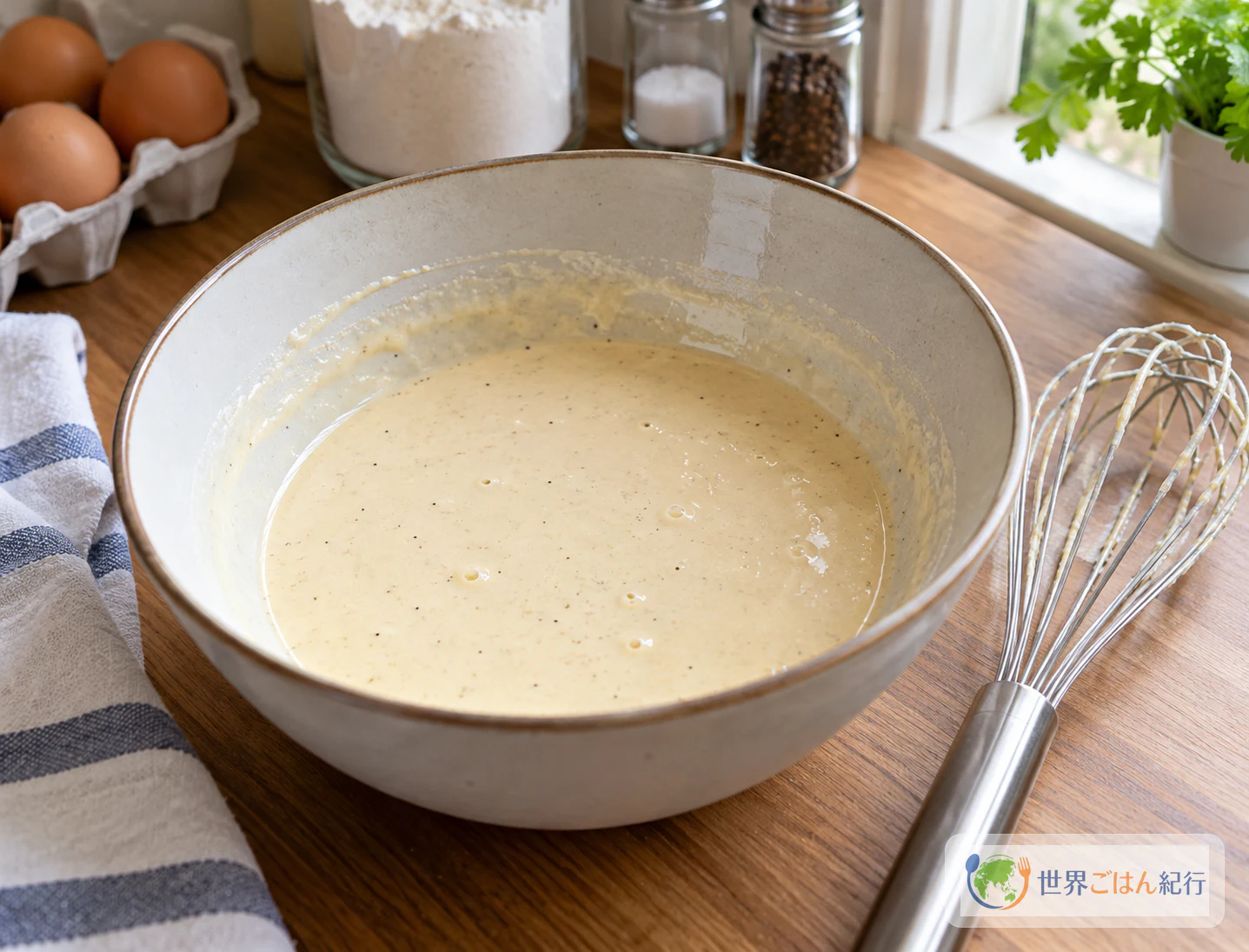
The batter is nothing more than plain flour, one egg, milk, water, salt and pepper. It is poured into vegetable oil or beef dripping that has been heated in the tray until smoking hot, then baked at 220°C. This version is baked as one sheet in a 28 x 18 cm roasting tray and serves 4. It is not the muffin-tin style of individual puddings, so the amounts and times here belong to the single-tray method only.
For more dishes from the same table, see our United Kingdom page.
What Is Yorkshire Pudding?
Despite the name, Yorkshire pudding is not a sweet dessert. It is a savory batter of egg, flour and milk baked in a tray of hot fat, and both the recipe and the Great British Chefs collection place it as a staple of the Sunday roast.
The word "pudding" causes the confusion. The Yorkshire Historical Dictionary at the University of York shows that the meaning of "pudding" has shifted over time and once included savory preparations, citing Yorkshire archival examples from 1632 and 1642. That entry is about the word in general, though, not about Yorkshire pudding itself, so it says nothing about when or where this particular dish began.
On origins, Great British Chefs states that the exact origins of Yorkshire pudding are unknown. In its account, an earlier recipe for a "dripping pudding" was published in 1737, with the "Yorkshire" name arriving later, and batter was once cooked in the drippings falling beneath roasting meat. These are that site's editorial explanations rather than a settled history, and the regional name should not be read as proof of a single birthplace.
Ingredients: Serves 4, One 28 x 18 cm Tray
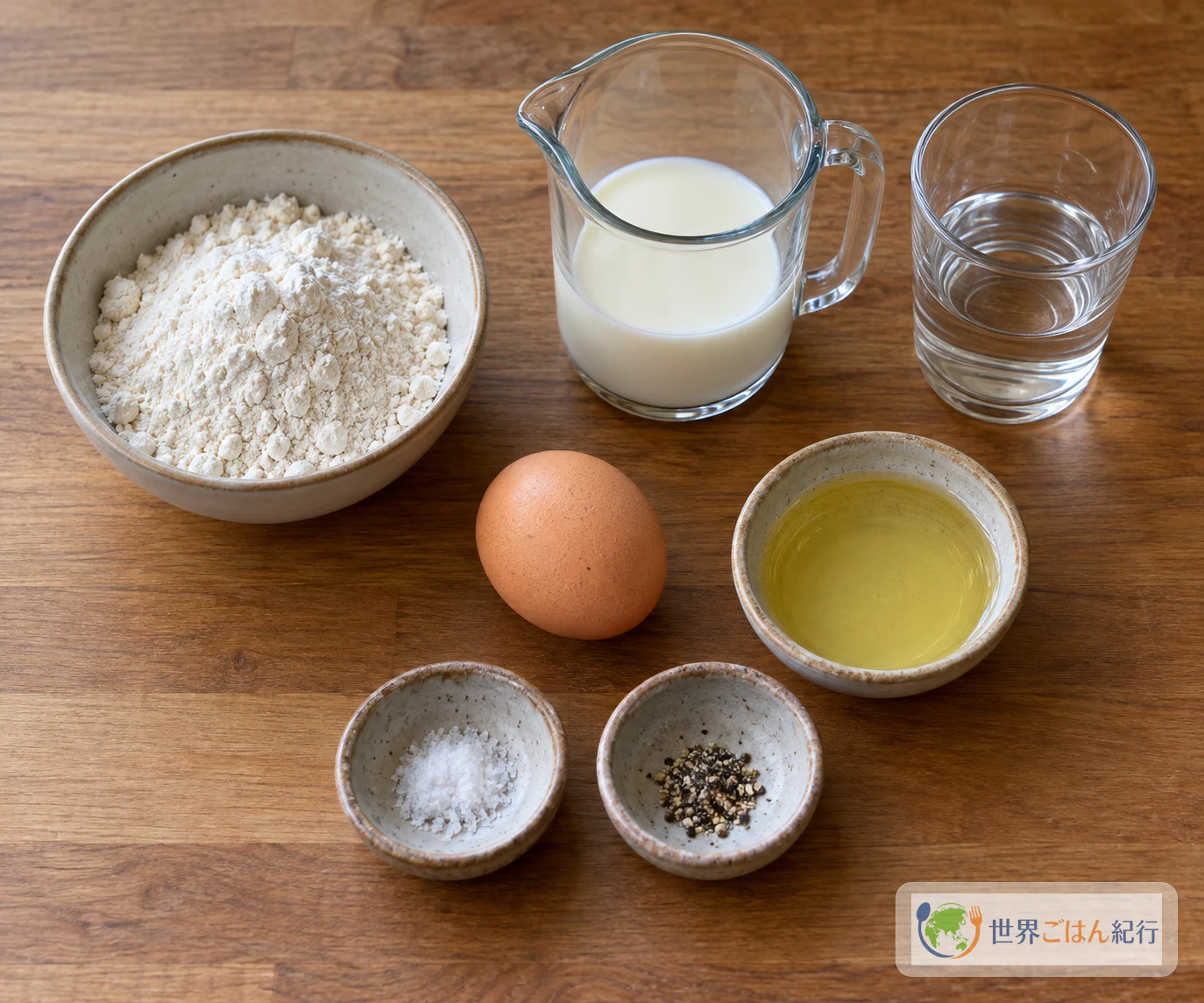
These are the source recipe's amounts, unchanged. The recipe gives 4 servings but does not state a number of pieces; you bake one sheet and cut it into portions at the table.
This recipe contains wheat, egg and milk. Swapping any of them changes the formula, so treat an allergen-free version as a different recipe. Don't taste the raw batter, which contains uncooked egg and flour.
Equipment
- Roasting tray, 28 x 18 cm, metal, suitable for high oven heat
- Sieve
- Mixing bowl
- Wooden spoon
- Whisk
- Dry oven mitts
- A stable heatproof surface or trivet for the hot tray
Choosing the Fat, Flour and Tray
Beef dripping or vegetable oil. The source lists both. Beef dripping is the traditional choice and brings a beefy aroma; vegetable oil is the option the source accepts, and the method below uses it. Expect a lighter, less rich flavor with oil. If you use dripping, keep the source's 2 tbsp rather than converting it to a weight.
Flour. British plain flour is the source's ingredient. In Japan, cake flour (hakurikiko) is a practical stand-in, but we don't claim the two behave identically.
The tray. The source specifies a 28 x 18 cm roasting tray but not its depth or material. A shallow metal oven tray of similar size is a reasonable choice, though a different depth or material may change how the pudding bakes, and we can't promise the same result. Check that your tray is rated for high oven heat and has a rim or edges you can grip safely with mitts. We don't assume a glass baking dish will behave the same way.
Method: Hot Fat First, Then All the Batter at Once
The source gives 220°C and no fan setting. Use your oven's own manual to decide which mode to use; this recipe does not provide a fan conversion. The source recipe does not call for resting the batter, so you can move from mixing straight to baking.
Why Didn't It Rise? Troubleshooting
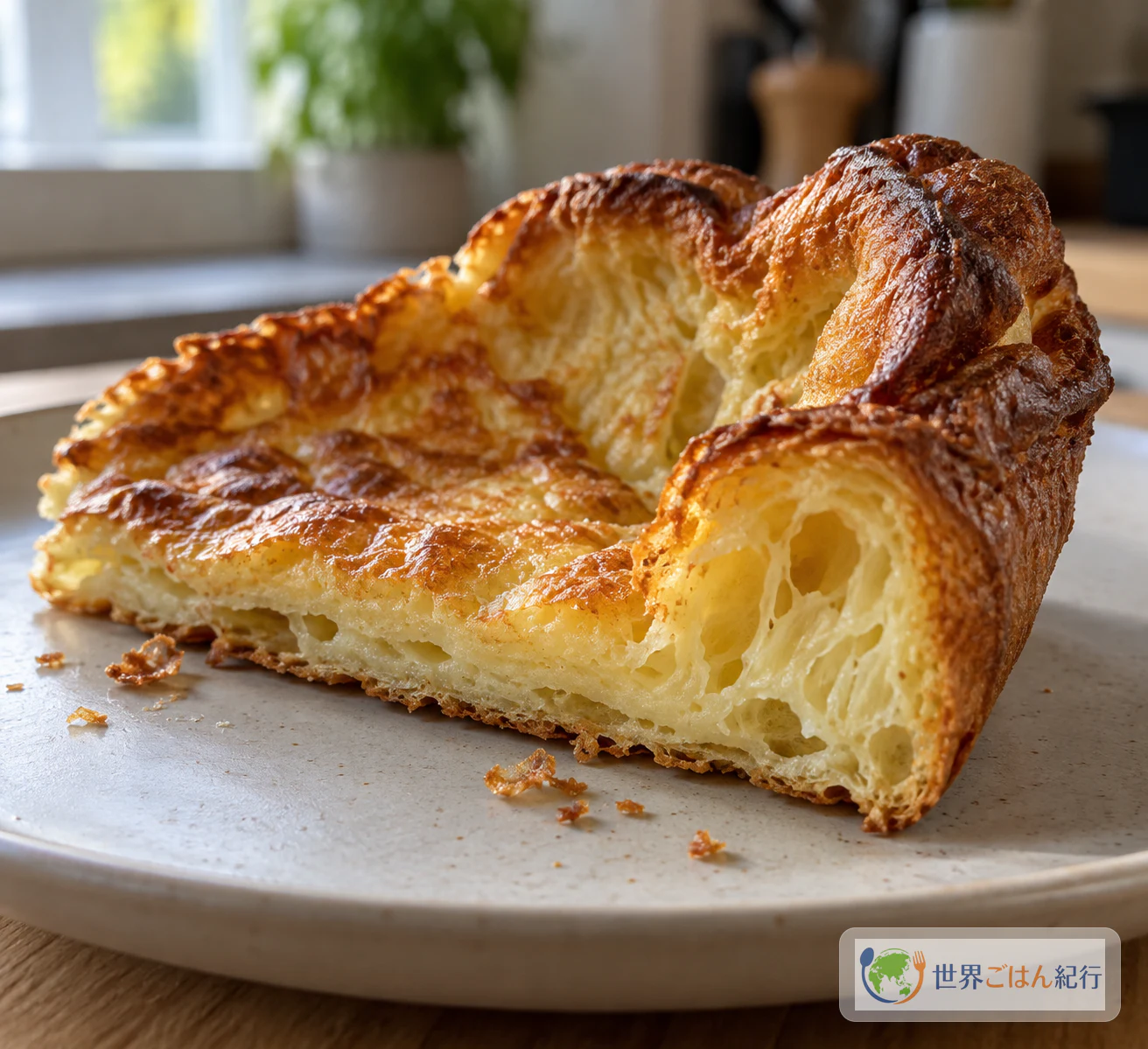
These troubleshooting suggestions have not been verified by test-cooking this recipe here; treat them as possible causes to check, not guarantees.
| What happened | Possible cause | What to try |
|---|---|---|
| Weak rise | The tray and fat weren't hot enough when the batter went in | Heat the fat for the full time, until it is smoking, and pour the batter in without delay |
| Rose, then sank or stayed flat | The oven door was opened often during baking, possibly letting the temperature drop | Keep the door closed and check through the glass |
| Looks very different from the photos | A different tray size, depth or material was used | Use a tray close to 28 x 18 cm; with other trays, watch the bake rather than relying on the time |
| Pale, soft edges | Not baked long enough | Bake toward the end of the 30–40 minute range, until the edges are crisp |
| Lumpy batter | Liquid added too quickly | Scrape down the bowl and whisk until smooth before baking |
Serving: Straight From the Oven to the Sunday Roast
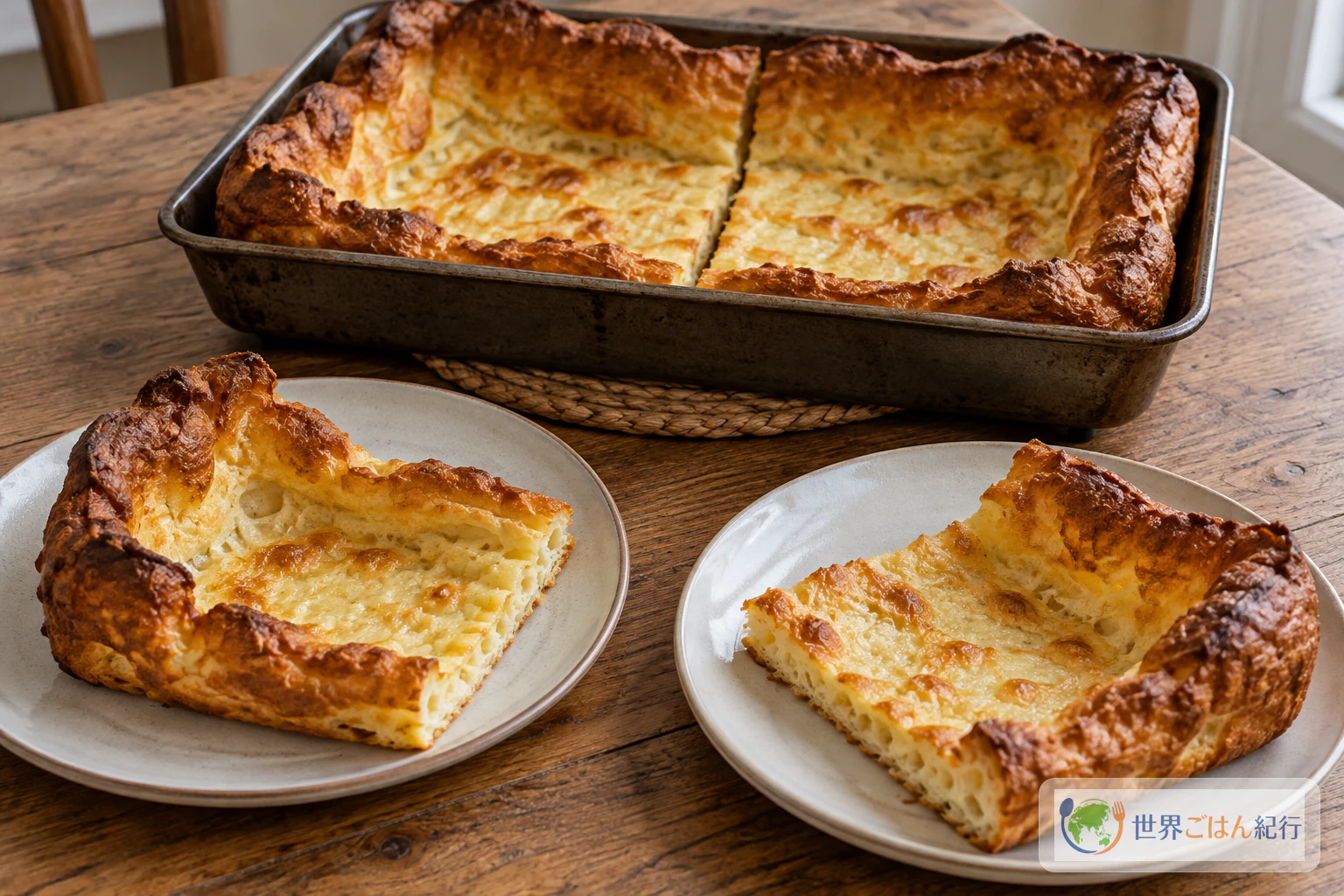
The source recipe asks for Yorkshire pudding to be served immediately, and both Great British Chefs pages tie it to the Sunday roast. Cut the single tray into four broad portions at the table. Roast meat and gravy are common companions, but they are part of the meal rather than the recipe.
If you have leftovers, follow general home food-safety advice from Japan's Ministry of Health, Labour and Welfare: divide them into shallow containers, cool them quickly and refrigerate, and reheat until piping hot, with 75°C or above as a guide. We can't give a storage time or promise that reheated pudding will regain its crispness.
Variations
| Idea | How it relates to the source recipe |
|---|---|
| Beef dripping, served with roast beef | Uses the source's own fat option for a beefier flavor |
| Vegetable oil, served with roasted vegetables | Uses the source's oil option for a meat-free roast |
| Gravy on the side | Serve a savory, unsweetened gravy separately, so the edges stay crisp |
| Small individual tins | A different method. Another published recipe on BBC Radio Scotland uses muffin trays, a different batter ratio and a resting time. The amounts and times in this article have not been checked for small tins, so don't assume they carry over |
| Filled at the table as a light meal | A derivative idea, separate from the classic side |
Frequently Asked Questions
It's called a pudding, so why isn't it sweet?
Yorkshire pudding is a savory batter dish. The Yorkshire Historical Dictionary shows that "pudding" once covered savory preparations and that its meaning has changed over time. That explains the word in general, not the origin of this specific dish.
Can I make it without beef dripping?
Yes. The source lists vegetable oil as an alternative, and the method here uses it. The flavor will be lighter and less rich than with dripping.
Should I rest the batter?
The recipe used here doesn't call for resting. Other published recipes do include a rest, but that belongs to their formulas, not this one.
How many does it make?
The source says it serves 4 but gives no piece count. This version is one sheet baked in a 28 x 18 cm tray, cut into portions. It is not the same as four individual muffin-tin puddings.
Why didn't mine puff up?
Check first that the tray and fat were properly hot, smoking after about 10 minutes, and that the oven door stayed closed while baking. Oven differences and tray changes can also affect the result, so treat these as things to check rather than certain causes.
Sources
- Great British Chefs (Lisa Goodwin-Allen), "Yorkshire pudding." The recipe followed in this article: ingredients and amounts, serves 4, 220°C oven, 28 x 18 cm roasting tray, fat heated until smoking for about 10 minutes, baking about 30–40 minutes until puffed and crisp, served immediately, and its association with the Sunday roast. https://www.greatbritishchefs.com/recipes/classic-yorkshire-pudding-recipe
- Great British Chefs, "Yorkshire pudding recipes." The site's account that the dish's exact origins are unknown, of an earlier "dripping pudding" recipe published in 1737 with the Yorkshire name arriving later, of batter once cooked in drippings beneath roasting meat, and of the dish as a Sunday roast staple. https://www.greatbritishchefs.com/collections/yorkshire-pudding-recipes
- Yorkshire Historical Dictionary, University of York, "pudding." The changing historical meaning of the word "pudding," including savory preparations, and Yorkshire archival examples from 1632 and 1642. Not a source for the origin of Yorkshire pudding itself. https://yorkshiredictionary.york.ac.uk/words/pudding
- BBC Radio Scotland, "John Molloy's Yorkshire Puddings." A separate published recipe, referenced only for comparison of its muffin-tray method and batter rest; its amounts are not used here. https://downloads.bbc.co.uk/radioscotland/recipes/john_molloy_yorkie_recipe.pdf
- Ministry of Health, Labour and Welfare (Japan), "家庭での食中毒予防" (Preventing food poisoning at home). General home food-safety advice on dividing leftovers into shallow containers, cooling them quickly, and reheating to 75°C or above as a guide. https://www.mhlw.go.jp/stf/seisakunitsuite/bunya/kenkou_iryou/shokuhin/syokuchu/01_00008.html