One crust from the bottom of the pot shows you Iranian rice cooking
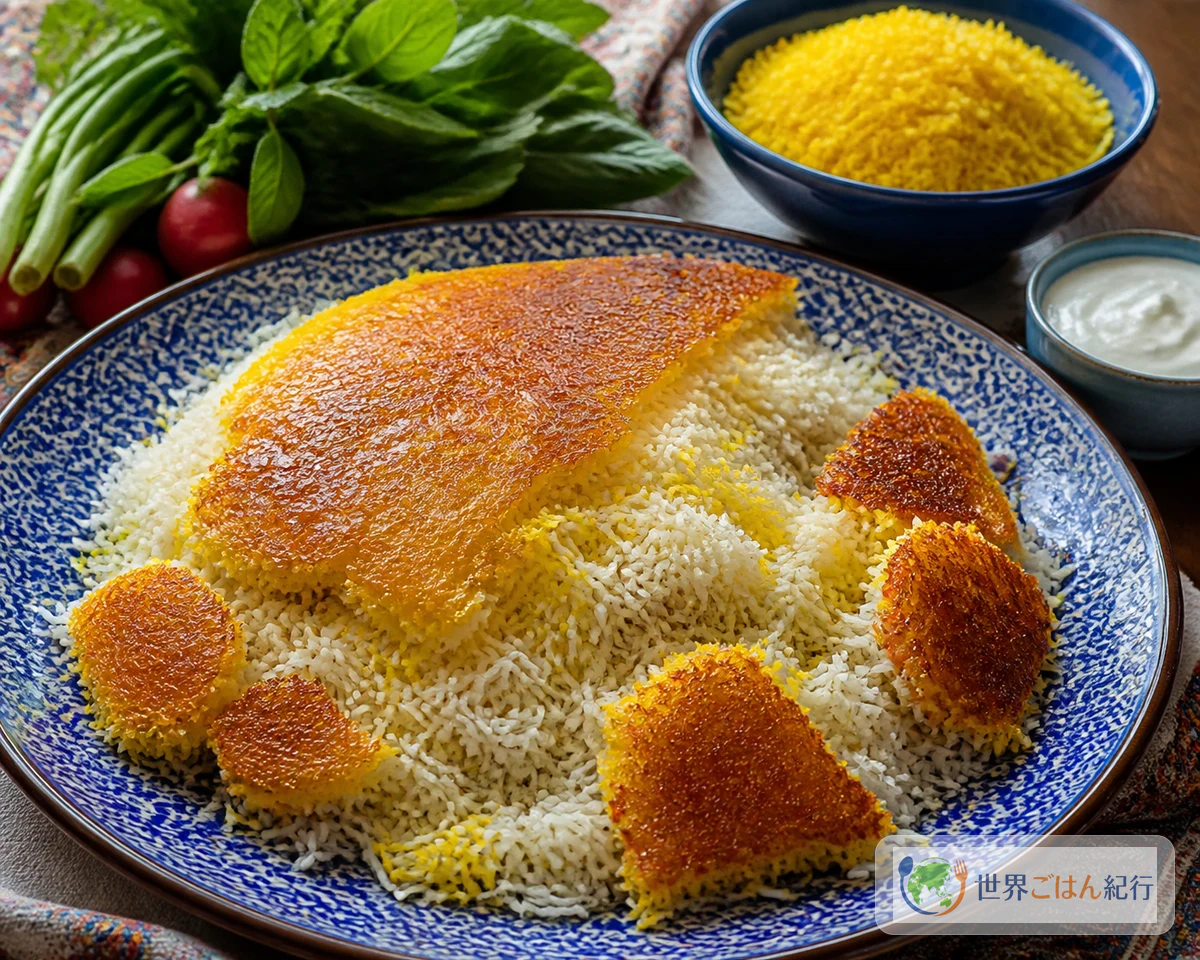
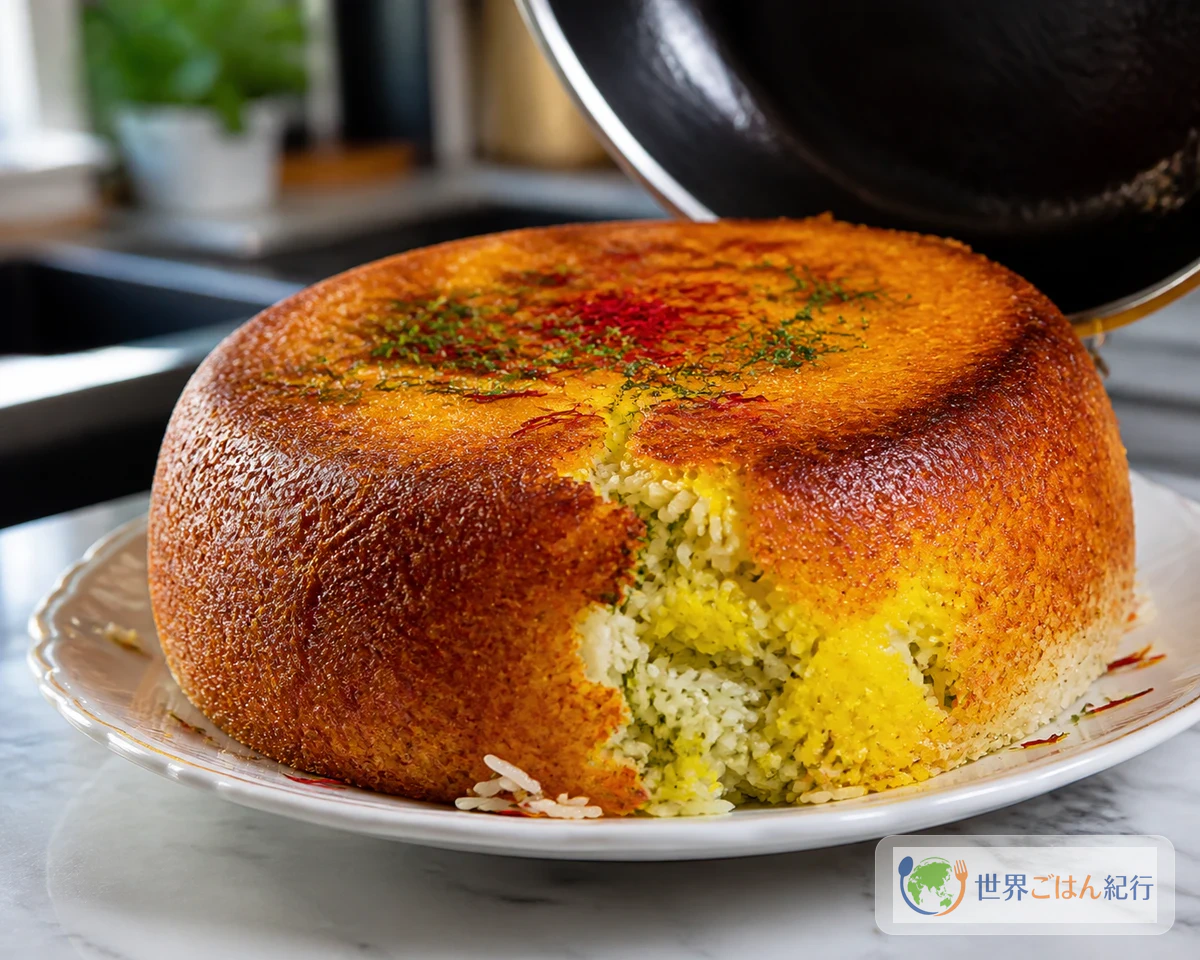
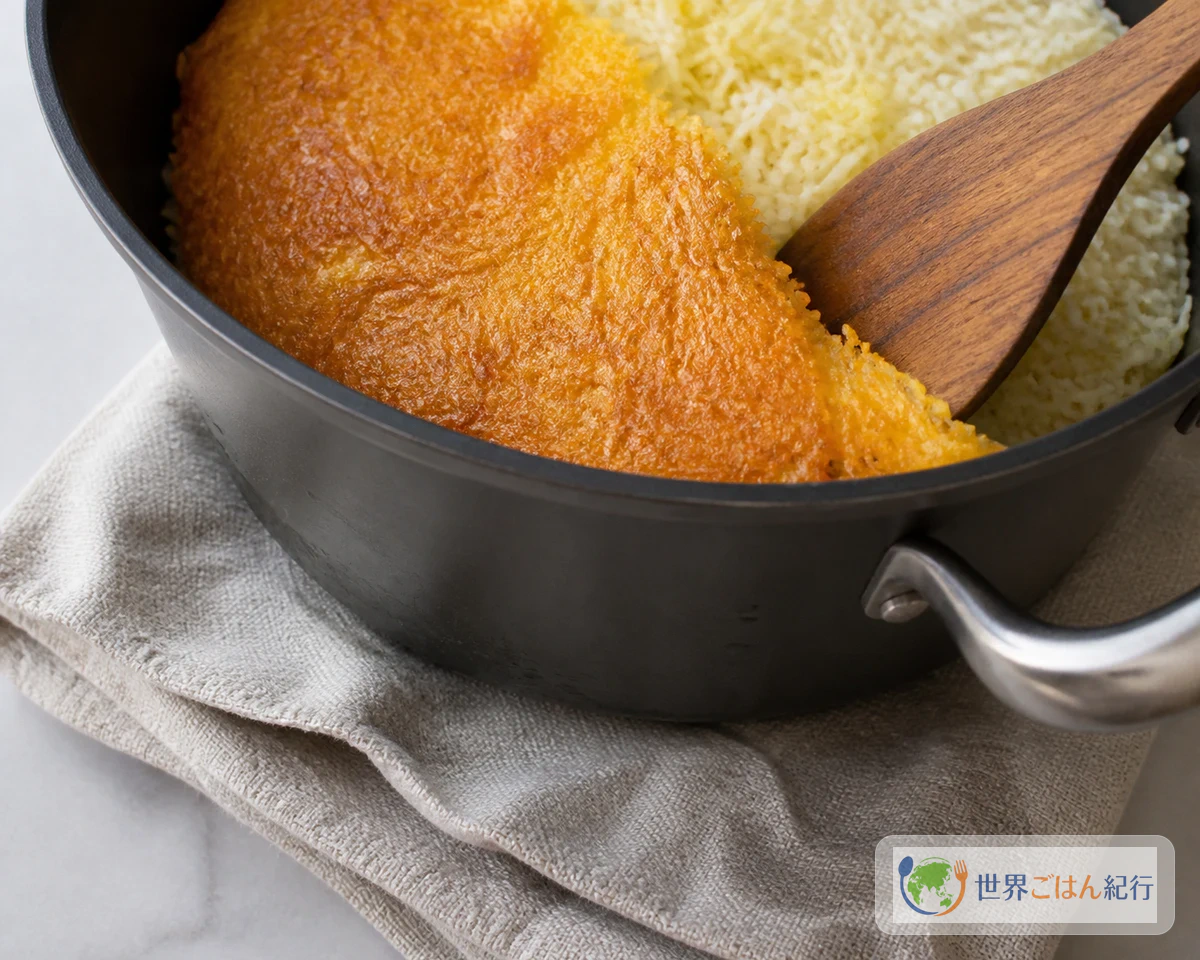
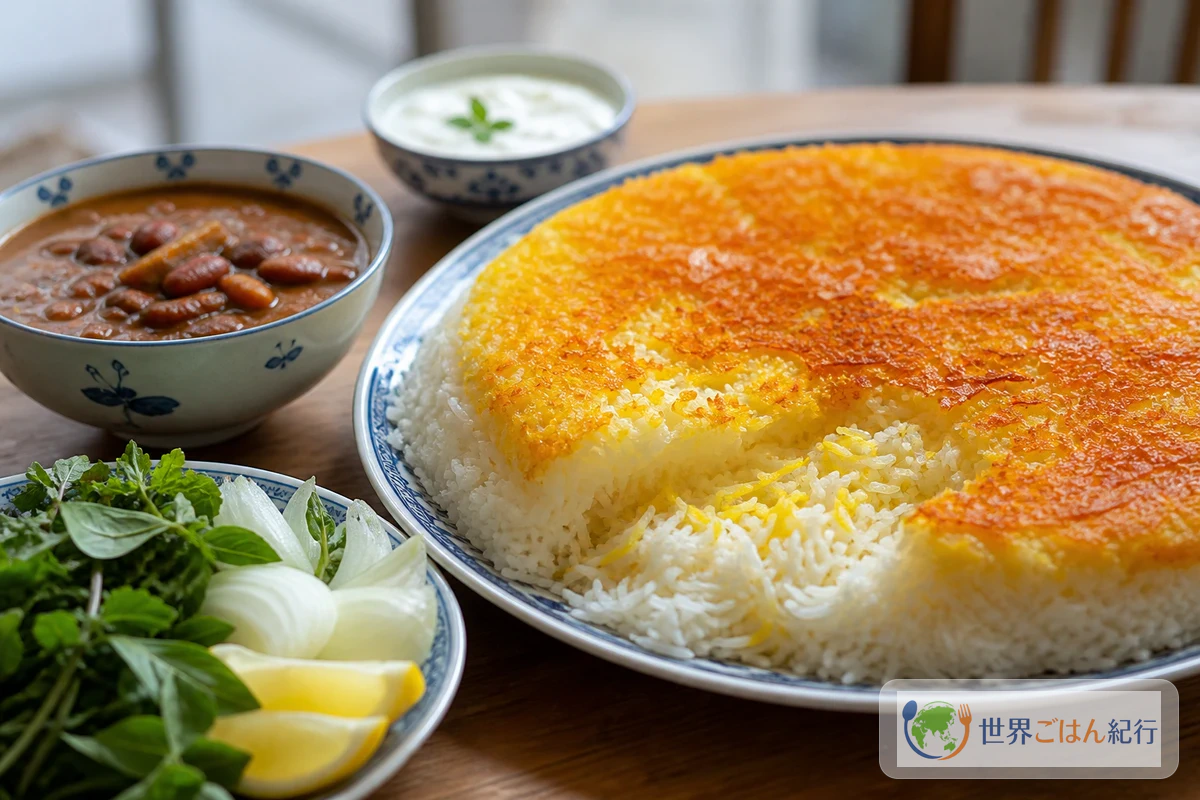
Lift the lid and the mound of rice loosens through the steam. Underneath is a golden sheet you almost want to tip the whole pot to see. Slide a spatula under it and the surface is hard, with a slightly hollow crack running through the inside. This is tahdig.
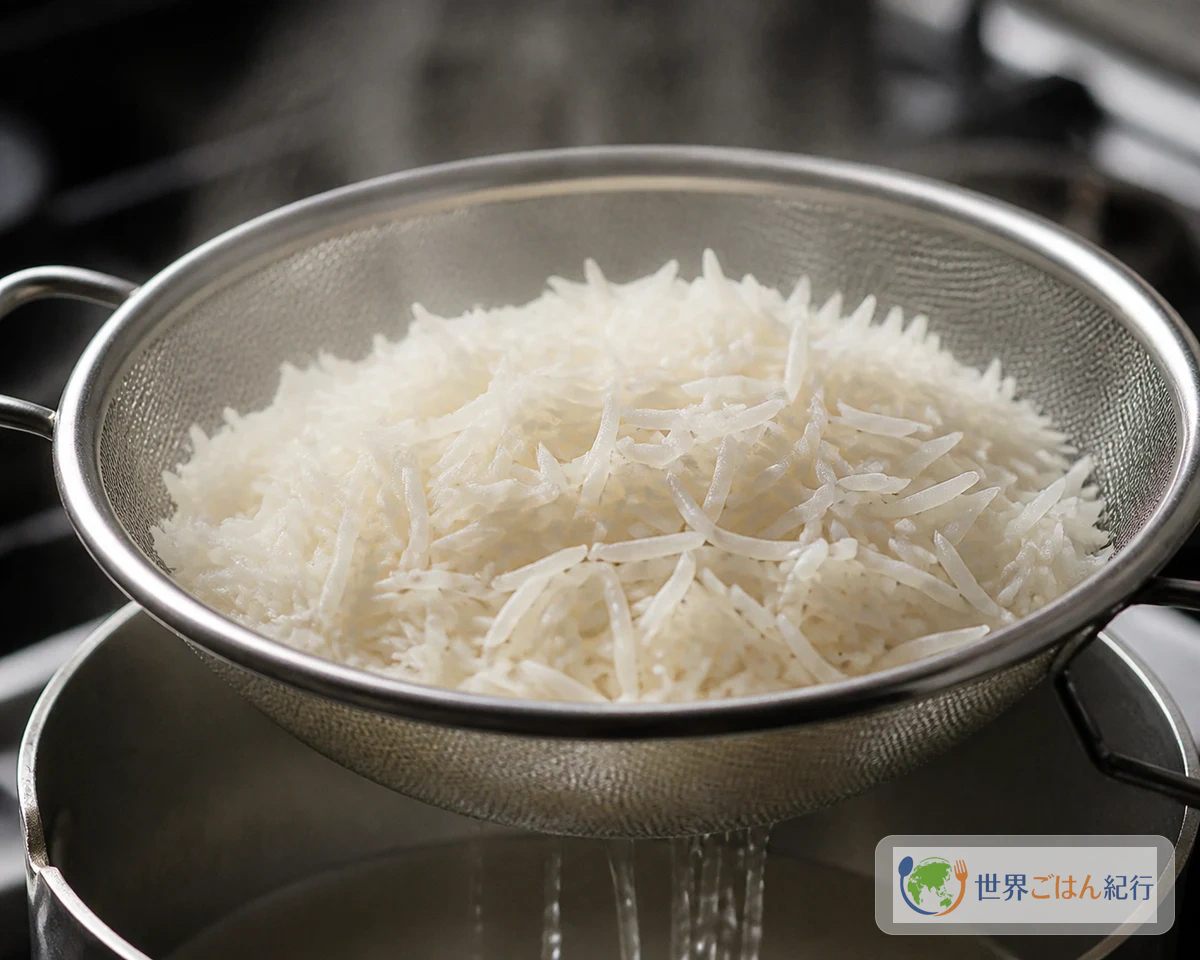
In Persian the word means "bottom of the pot." It is less a dish than the crisp layer that forms under a rice dish. For Iranian chelow, rice is parboiled in plenty of water and then steamed in a pot, so the top stays white and fluffy while only the bottom dries into a crust with oil and heat. It resembles the scorched rice (okoge) of Japan, but instead of collecting an accidental burn, you prepare the rice so that the bottom is meant to be eaten.
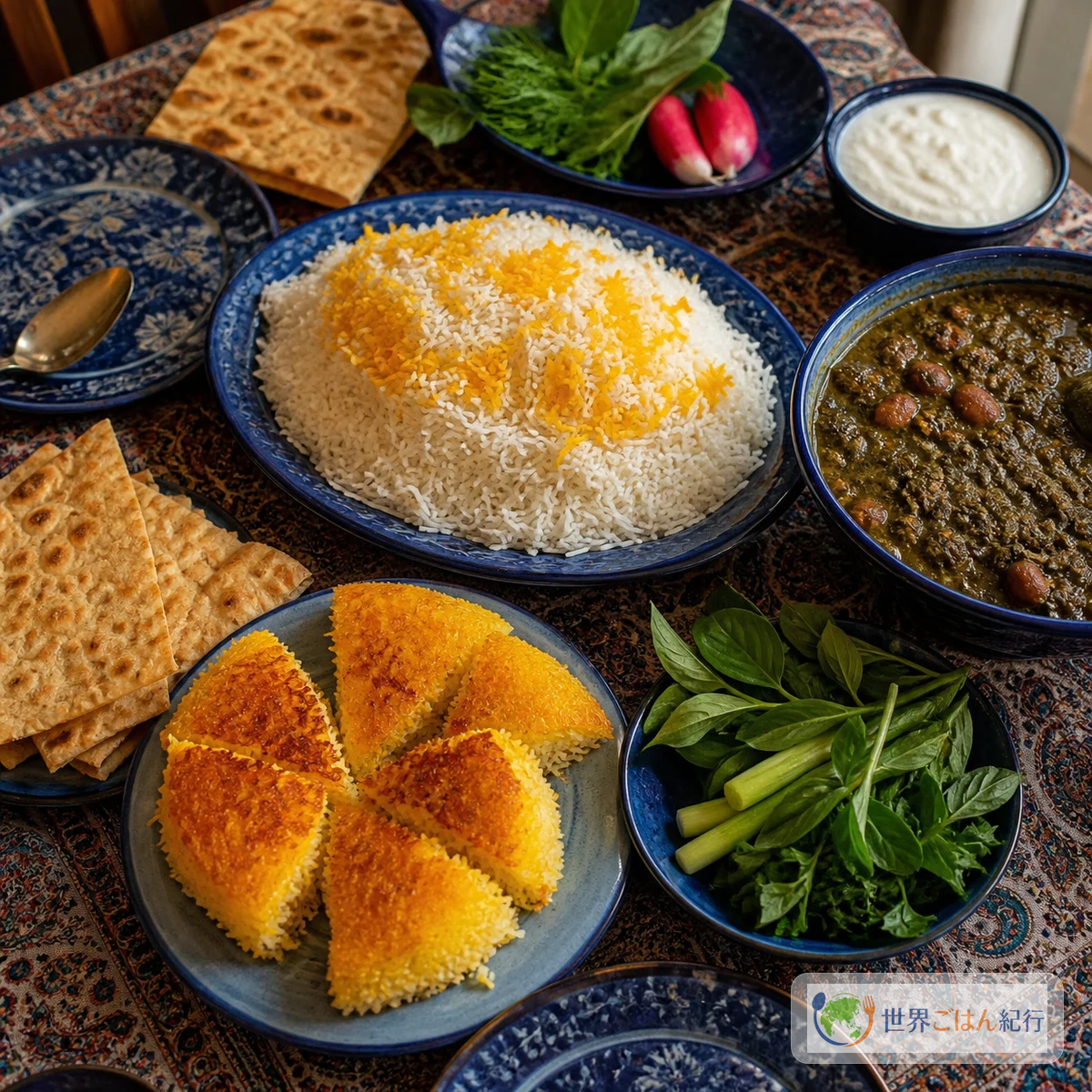
For a first attempt, skip the polo with ingredients mixed in and make plain white chelow with a little saffron. You can then check the doneness of the rice, the sound from the bottom of the pot, and the color change one at a time. Serve a meat stew or a bean stew on a separate plate, and you get a table where you break the tahdig and let it soak up the sauce.
This makes basmati rice for 4 servings in a nonstick pot about 20 cm across. Plan on 30 minutes of soaking, 5–7 minutes of parboiling, and 30–35 minutes of steaming. Pots and stoves vary, so decide when to turn off the heat by the doneness of the rice, the sound from the bottom of the pot, and the color of the crust, not by the clock alone.
The chelow table, and where tahdig sits in it
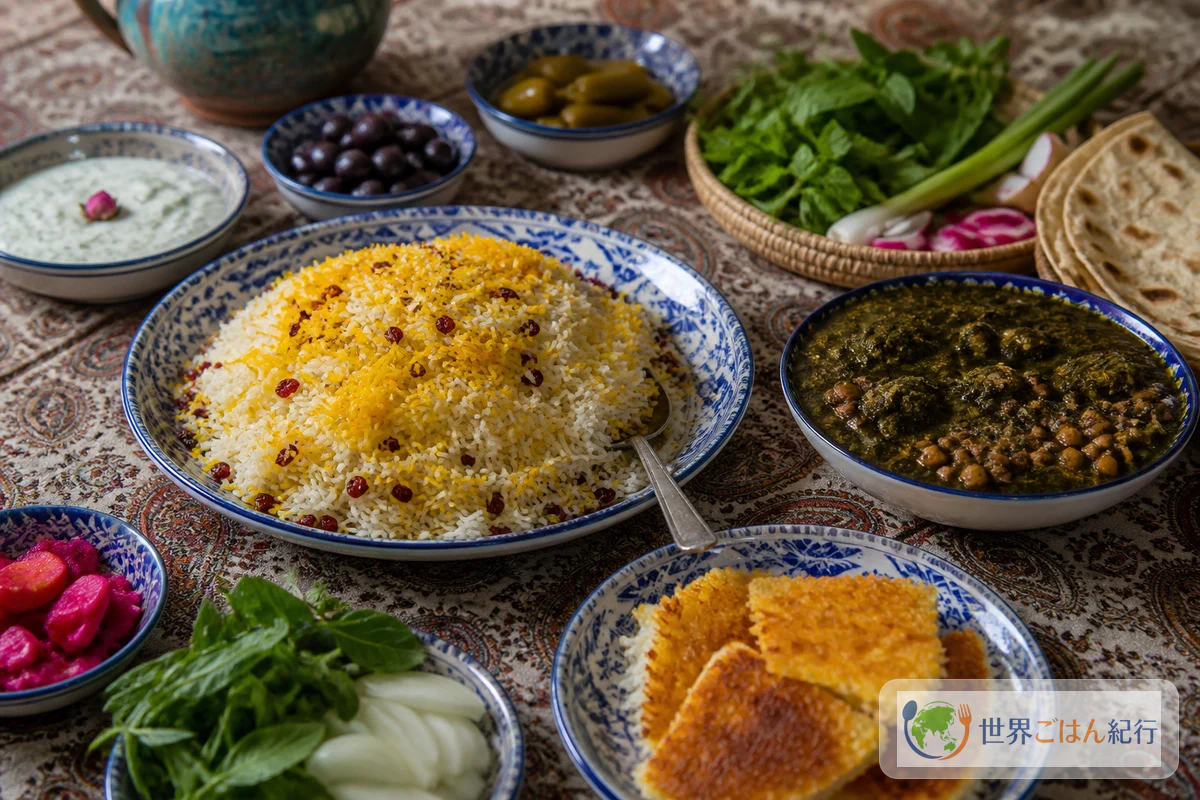
Iranian rice dishes change character depending on whether the ingredients are mixed into one pot. Chelow is relatively plain steamed rice served alongside meat or stews. Polo (also written pilaf in some regions) means a dish in which meat, vegetables, fruit, or beans are layered with the rice. Both rest on a technique that separates parboiling from steaming and keeps each grain intact, rather than simply "cooking rice."
Tahdig forms on the bottom of chelow or polo, but it is not a garnish. At the table the crust is broken into large pieces and set on a separate plate or arranged around the mound of rice. When a meat or bean stew is spooned over it, the hard surface catches the sauce and the rice inside absorbs the aroma. Some households divide it evenly among everyone, others offer the crispiest pieces to guests or children first, and that one layer from the bottom of the pot gets people talking.
On the Caspian coast in Gilan, known as rice country, rice is the center of daily meals and is paired with sour stews, vegetable dishes, and fish. In the drier interior and on the plateau, bread and wheat are also strong traditions, so even within Iran rice does not appear on the table in the same form everywhere. Regional differences show up less in whether there is tahdig than in which rice is grown, what goes alongside, and how much oil and sourness shape the plate.
Tahdig's origin is sometimes tied to a particular dynasty or a single cook, but such stories are later folklore. Take the claim that it "was born by accident at court" as a story, not as established history. Tahchin, in which yogurt and egg are mixed into the rice and set, is a separate dish built on tahdig. It is baked with a filling such as chicken, so its ingredients and texture differ from the simple chelow here. On a day when you want elaborate layers, treat it as its own recipe: how to make tahchin.
Ingredients (serves 4)
Choose rice with long, slender grains and a fragrance that holds up after parboiling. You do not need expensive equipment at the start, but the lid and the condition of the pot bottom directly affect the result.
The yogurt is there to bind the bottom layer of rice thinly and make it crisp. It is not meant to add sourness, so choose plain unsweetened yogurt rather than sweetened or flavored. If you skip dairy, mix oil and saffron liquid into 1 cup of rice and spread it thinly for the crust. It will hold together, though the browning and cohesion will differ.
Equipment
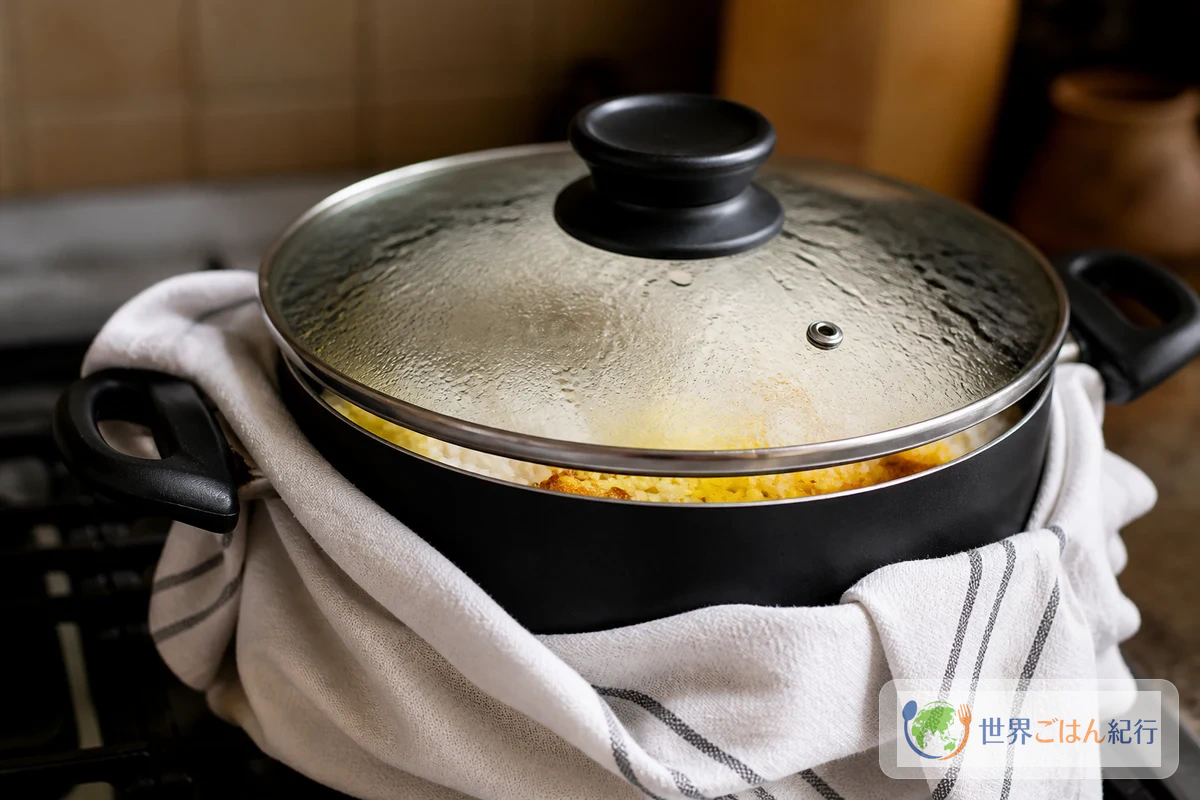
You need a nonstick pot about 20 cm across, a tight-fitting lid, a fine-mesh strainer, and a clean, thick kitchen towel. The towel is wrapped around the lid, so keep it short enough that no corner can hang down toward the flame. A mortar is handy for grinding saffron, but the back of a spoon and a small dish will do.
This recipe uses yogurt and butter. If you avoid dairy, use the substitutes in the ingredient table. The variation that lays flatbread on the bottom of the pot contains wheat. Secure the towel at the lid handle and keep it away from the stove flame and vent.
Method: loosen with water, set with steam
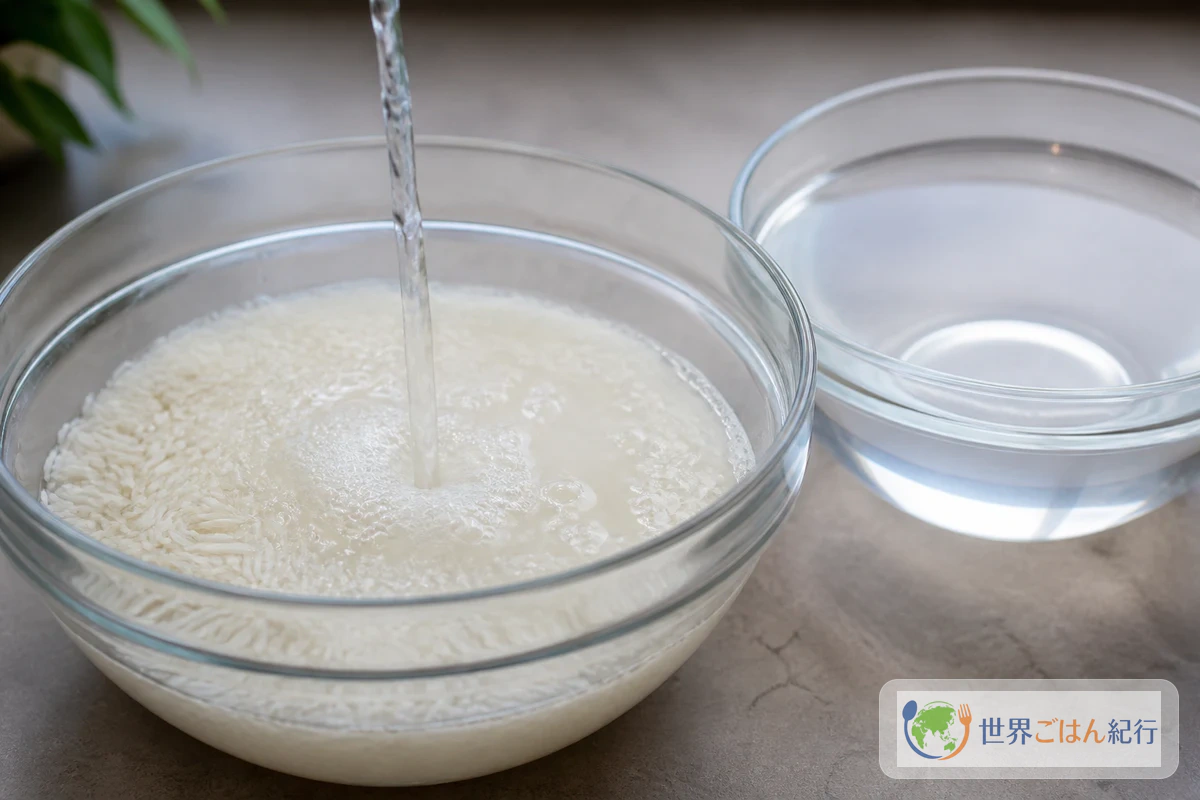
STEP 1: Rinse the rice and soak briefly (40 min)
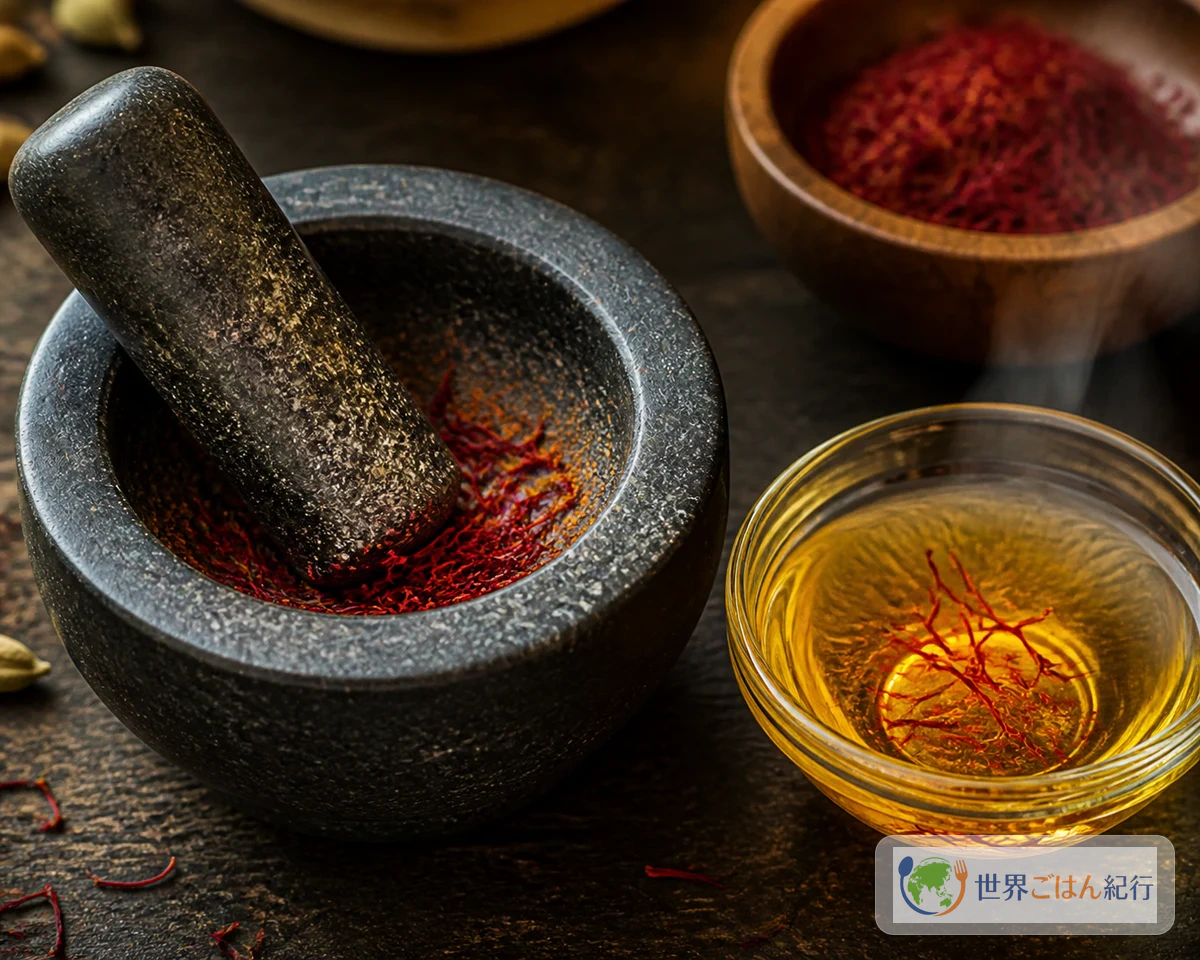
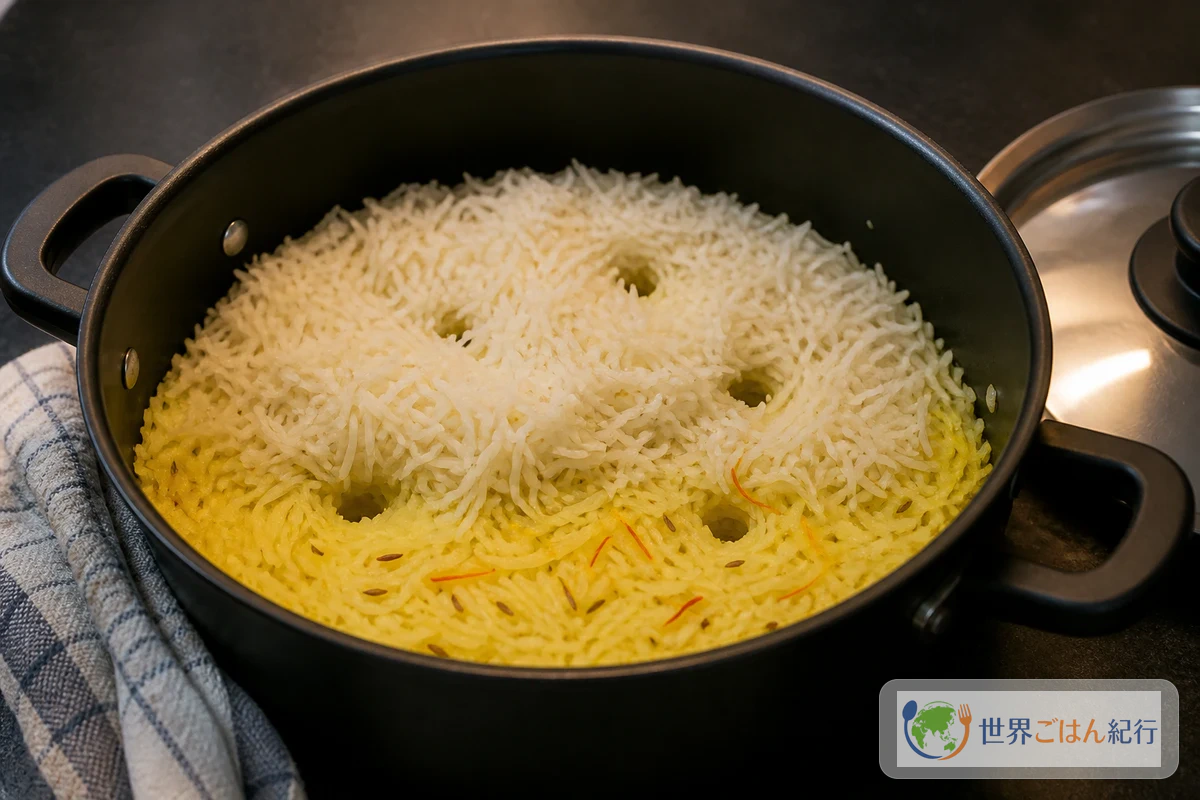
STEP 2: Bloom the saffron (10 min)
STEP 3: Parboil the rice to al dente (8 min)
STEP 4: Build the bottom layer and mound the rice (10 min)
STEP 5: Steam, cool, then flip the pot (40 min)
Three ways to read the color, and how to recover when it goes wrong
Tahdig steams the rice on top while drying only the bottom of the pot. What matters is not a darker brown but keeping the steam in and drawing the moisture out of the bottom alone. If the heat is too high, only the surface turns black; if it is too low, the rice stays white, still holding steam.
Reading the pot and the heat
The first is the material of the pot. A nonstick pot releases the crust in one piece and suits a first attempt. You can also use a heavy stainless steel pot, but the temperature at the bottom varies from spot to spot, so turn the pot slightly partway through for even browning. With an iron pot, season it well with oil and do not press the rice hard against the bottom.
The second is the first 6 to 8 minutes. If you do not hear a sizzle by then, the oil and the layer of rice are not yet receiving heat. Delaying the drop to low by about 5 minutes is fine, but if you see smoke or smell something bitter, lower the heat at once and move the pot to another burner.
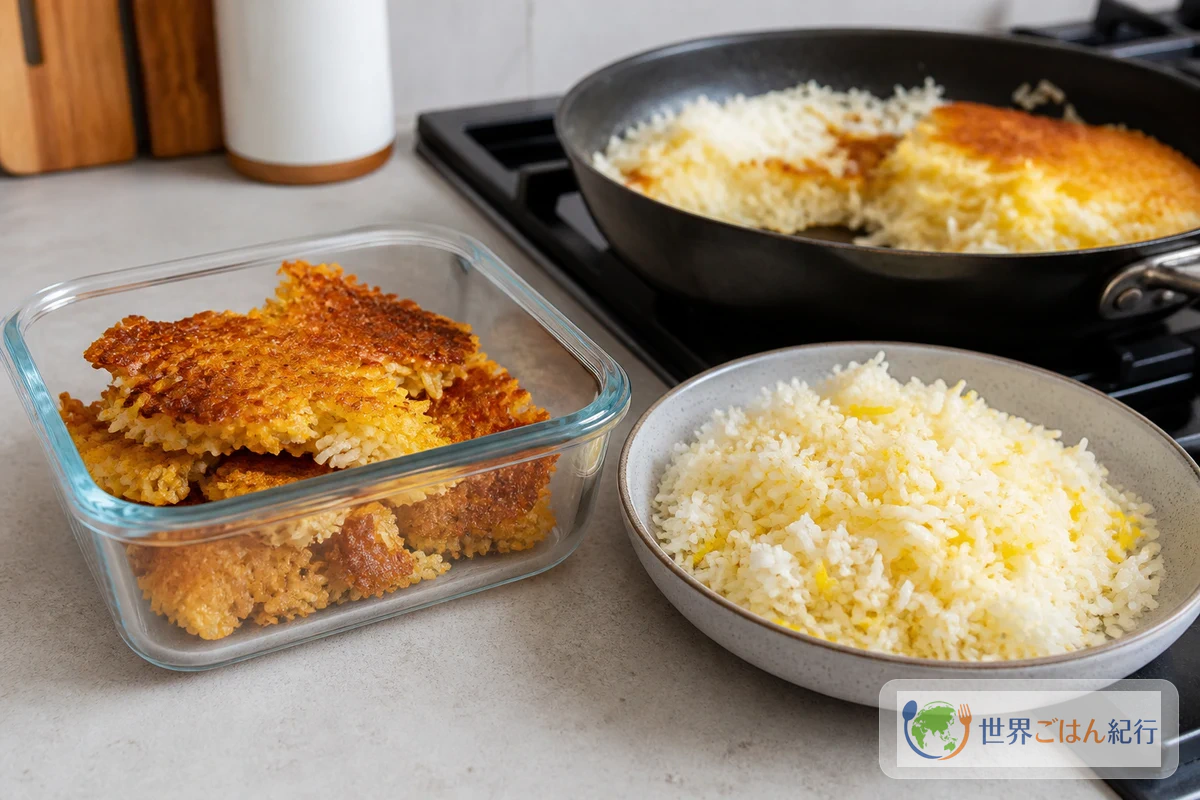
The third is the final cooling. Even if the crust is stuck to the pot, do not scrape it right away with a metal spatula. Cool the bottom on a damp towel and loosen only the edge, and a slight gap opens between the pot bottom and the oil. If it still breaks, crumble the crust and scatter it over the rice; you keep the aroma and the texture.
| Symptom | Likely cause | Fix on the spot |
|---|---|---|
| Rice is white and there is no sound from the bottom | The first heat was too low or the oil was cold | Replace the lid and add 5 minutes on medium, then go to low. Do not add water |
| The bottom is black and bitter | The heat is too high or the pot is thin | Turn off the heat at once and move the top rice to another plate. Do not mix in the black layer |
| The rice is sticky | Parboiled too long or not washed enough | Take off the lid and let steam escape on low for 1 to 2 minutes only. Lift it 30 seconds earlier next time |
| The center of the rice is hard | Parboiled too briefly or steam leaked | Drizzle 2 tbsp of boiling water around the pot wall and steam on low for 10 minutes with the towel-wrapped lid |
| The crust will not release | The bottom has not cooled or rice remains at the edge | Hold a damp towel against the bottom and run a wooden spatula around the edge before flipping |
Potato, flatbread, lettuce: how the bottom layer changes the texture
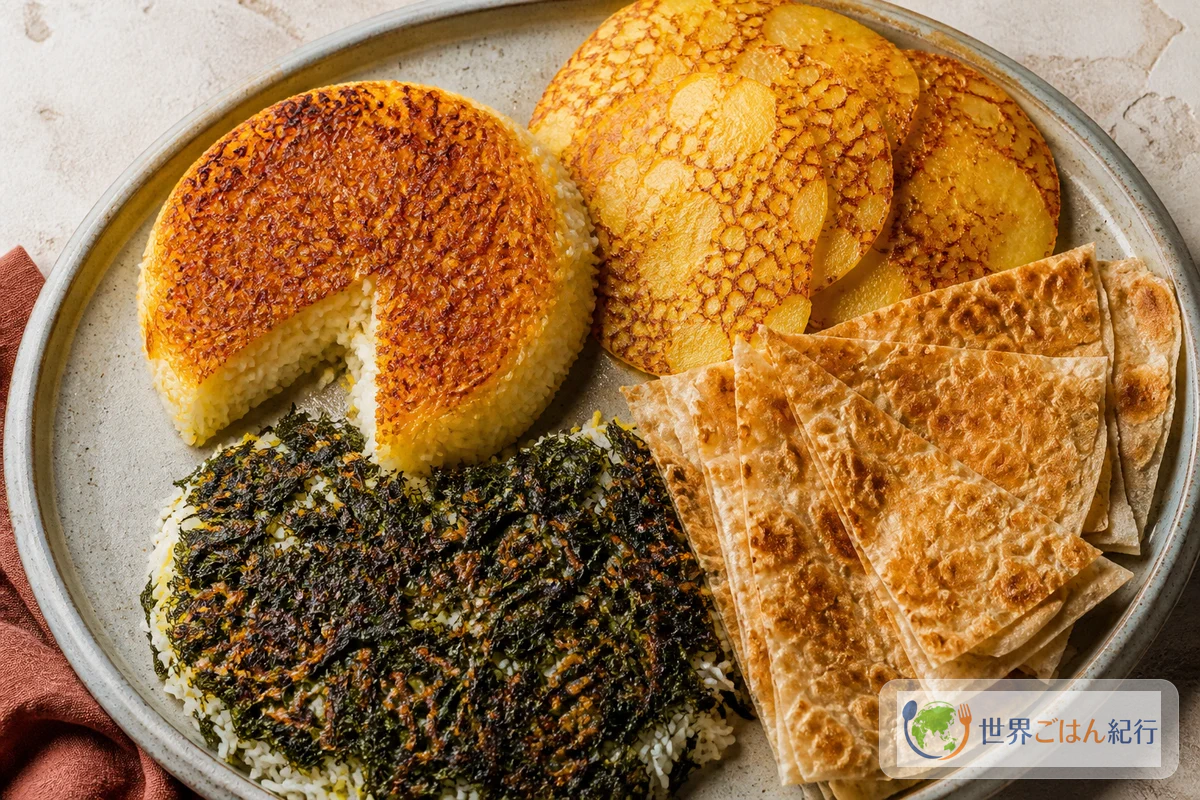
The base of tahdig is not only yogurt-mixed rice. At home, people put another ingredient on the bottom of the pot and let it turn crisp while the rice steams. Change the ingredient and, even with the same "bottom of the pot," the order you eat in and the dishes you serve alongside change too.
Potato tahdig
Cut 1 potato into 5 mm slices, lay them without gaps over the oiled pot bottom, and mound the rice on top. It is thicker than a rice crust and stays fluffy inside, so it takes up sour tomato stews and bean dishes well. If it is too thin it falls apart partway; if it is too thick the center stays hard, so stick to 5 mm at first.
Flatbread tahdig
Lay thin bread such as lavash on the bottom of the pot and the bread absorbs the oil and becomes a crust that breaks easily. The toasty wheat aroma comes forward ahead of the rice, so lay it over only half the pot if you want the rice to be the star. Skip it if someone has a wheat allergy, or if you prefer the separate-grain quality of chelow.
Using lettuce or cabbage
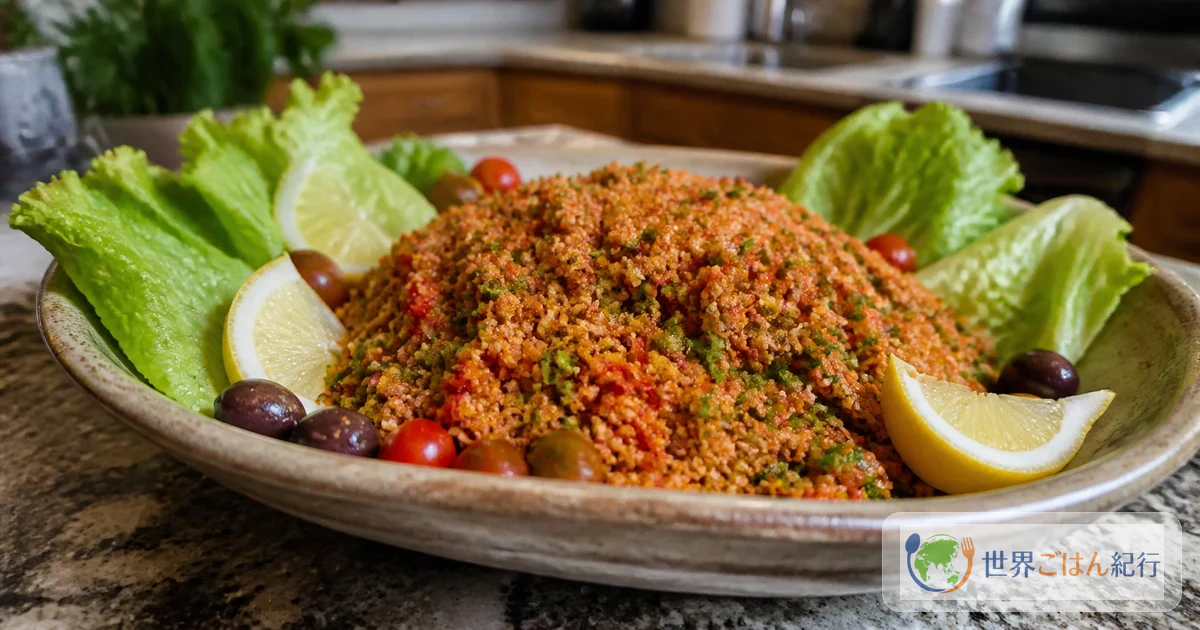
You can also line the bottom of the pot with leaves that have been briefly blanched and drained. The edges of the leaves brown in the oil, giving a lighter toastiness than browning the rice directly. Layering watery leaves raw makes the crust steam and go soft, so blanch them and press them dry with a towel first.
Without saffron
Saffron adds aroma and color, but it is not the one ingredient that decides whether chelow works. If it is hard to find, leave it out of the yogurt rice and enjoy the contrast between the white rice and the crust. Adding turmeric for yellow does not reproduce saffron's aroma, so if you use it, use only a tiny amount.
Sourcing ingredients
Oil, yogurt, potatoes, and unsalted butter are easy to find at any ordinary supermarket and need no special product. Basmati rice and saffron, on the other hand, vary in aroma and ease of use by type and package size, so it is worth choosing your first bag with some care.
Start basmati with a 1 kg bag
Other long-grain rice will substitute, but this method assumes basmati grains that lengthen when parboiled and loosen as they steam. For a first attempt, buy a 1 kg bag, and check the label for the origin, the net weight, and that the ingredient is basmati rice. Only people who make pilaf or biryani several times a month need consider a large bag; for someone trying tahdig once, a 5 kg bag takes up too much storage space. If you decide ordinary rice will do, skip buying and go straight to the substitutes in the ingredient table.
Look for saffron as threads, and check the net weight
Choose red threads (the dried stigmas) rather than pale yellow powder. You use so little that even a small packet of around 1 g lasts several batches at this quantity. Check the package for net weight and form. Making it without saffron and with a white crust does not lose the backbone of the flavor.
A mortar is a tool for people who use saffron often
With a mortar you can loosen saffron a little at a time and crush cardamom or cumin. For this recipe, though, a small dish and a spoon will do. Buy one only if you plan to keep cooking Persian or Indian food and are happy to give up the shelf space for the weight of the stone. For a one-time attempt, it adds one more thing to wash and takes up storage, so it is fine to pass. When you shop, check that it is natural stone, whether a pestle is included, and the size of the bowl.
If you use short-grain rice, what to keep and what to change
You can try the idea of tahdig with 300 g of short-grain (Japanese-style) rice. But the grains are short and hold water, so if you handle them with the same timings as basmati, stickiness comes first. After washing, shorten the soak to 10 minutes, and begin checking a grain at 4 to 5 minutes of parboiling. Drain when the outside is soft and the center is only slightly firm, and rinse the surface with cold water.
Use less yogurt rice for the bottom layer than with basmati: 150 g. Short-grain rice breaks easily, so when mounding the top rice, do not press it, just poke the steam holes. Start with 25 to 30 minutes of steaming, and if it is still hard add 2 tbsp of boiling water and extend by 5 minutes. The result is not chelow with separate grains but a rice dish with a toasty layer on the surface.
At the table, serve tahdig with meat dishes like chelow kabab (in Japanese), a bean-and-herb stew, or grilled vegetables. Put yogurt, herbs, and thinly sliced onion on a separate plate, and you can balance the richness of the crust in your mouth. Eating it by combining rice, crust, stew, and something sour in each bite, rather than blending everything into one flavor, is closer to how a chelow table is eaten.
Storing and reheating
Do not leave leftover rice in the pot at room temperature; move it to a shallow container and let the heat dissipate. Refrigerate and plan to eat it by the next day, reheating until it is thoroughly hot all the way through in a microwave. If you keep the crust separate, you can warm a little oil in a skillet and revive both sides over low heat. If you freeze, wrap only the rice in single portions, and accept that the crust loses its texture more easily.
Frequently asked questions
Is tahdig the same as Japanese okoge?
They share a toasty flavor, but the way they are made differs. Japanese okoge can form naturally during or at the end of cooking, whereas tahdig combines oil, parboiled rice, and steaming time to build a layer at the bottom of the pot. The aim is not to scorch the bottom; what matters is that it dries as the rice above steams.
Can I leave out the saffron?
Yes. The white chelow and the toasty crust remain. If you add a lot of turmeric just for color, it gives an earthy aroma different from saffron, so even then keep it to a pinch.
Can I get a crust without yogurt?
Yes. Spread oil over the bottom of the pot and lay part of the parboiled rice thinly on it for a rice-only tahdig. It holds together less well than yogurt tahdig and breaks easily when flipped, so at first do not force it into one sheet; breaking it up and plating it is the safer approach.
What if I do not have a nonstick pot?
You can use a heavy pot, but the temperature at the bottom tends to spike in places, and the crust may break when you release it. Spread the oil evenly, turn the pot slightly partway through, and cool the bottom on a damp towel at the end before loosening the edge. Avoid scraping hard with a metal spatula, which damages both the pot and the crust.
Can I cook meat with it?
Tahdig itself is the bottom of the rice pot. Mixing meat or vegetables into the rice moves it toward polo, and the moisture from the meat changes how the bottom browns. For a first attempt, make the stew separately and check the state of the crust first, then layer in the filling next time; you will learn the cooking judgments more easily.
Sources
- Encyclopaedia Iranica: BERENJ "rice" iii. In Cooking (distinction between chelow and polo, the method of parboiling and steaming rice, an explanation of tahdig; accessed and checked 21 August 2026)
- Encyclopaedia Iranica: GILĀN xxi. Cooking (rice eating in Gilan, regional ingredients and cooking tendencies; accessed and checked 21 August 2026)
- Serious Eats: How to Make Tahdig (Persian Crunchy Rice) (parboiling, steaming, handling the pot, crust variations and fixes; accessed and checked 21 August 2026)
- The Splendid Table: Chelo Ba Tahdig (explanation of chelow and polo, the steps using saffron and yogurt, pot and heat guidelines; accessed and checked 21 August 2026)
- Los Angeles Times: The secret (OK, shortcut) to perfect tahdig (rice cookers used for Iranian rice dishes and cookware choices for the home cook; accessed and checked 21 August 2026)