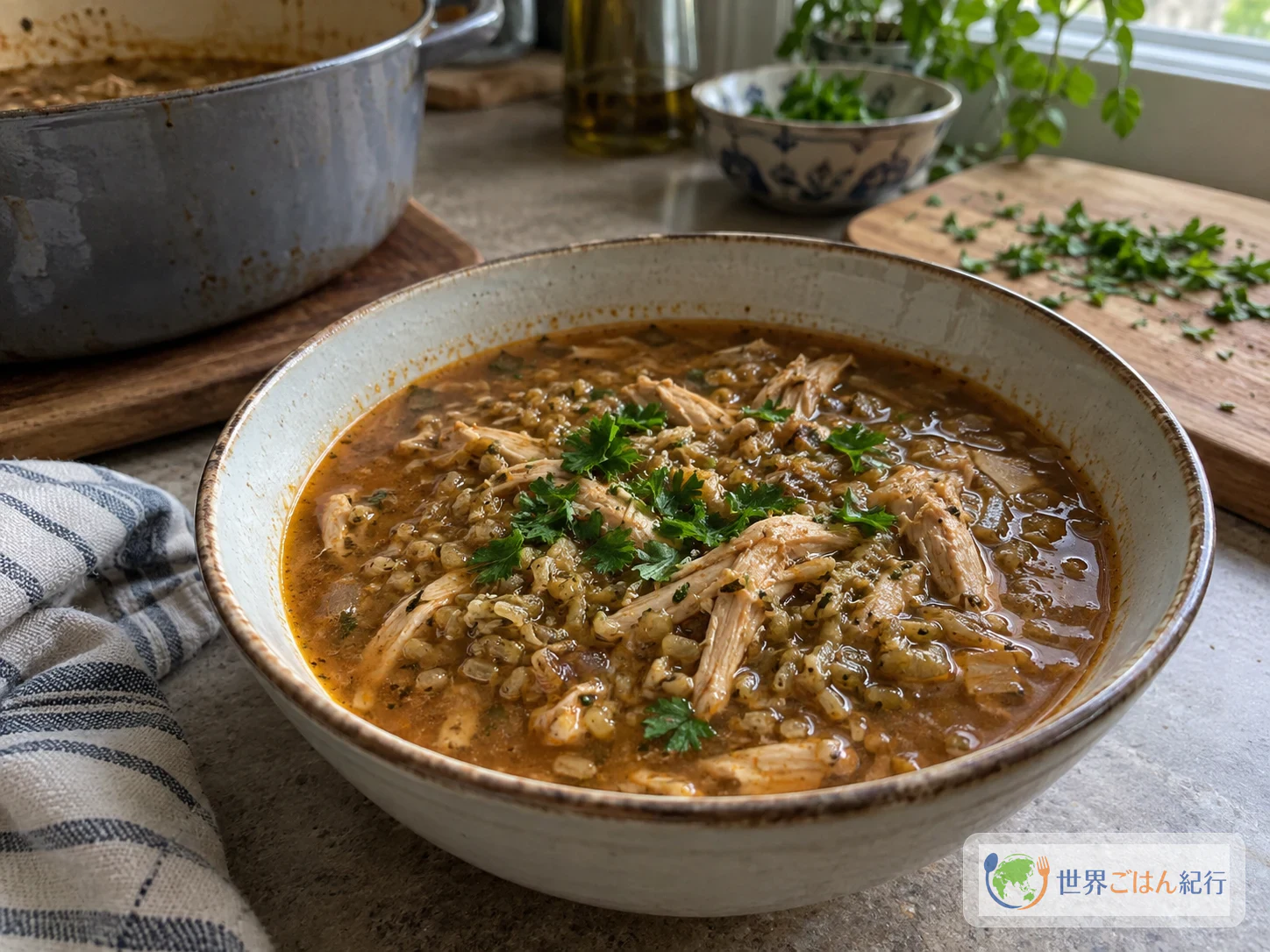
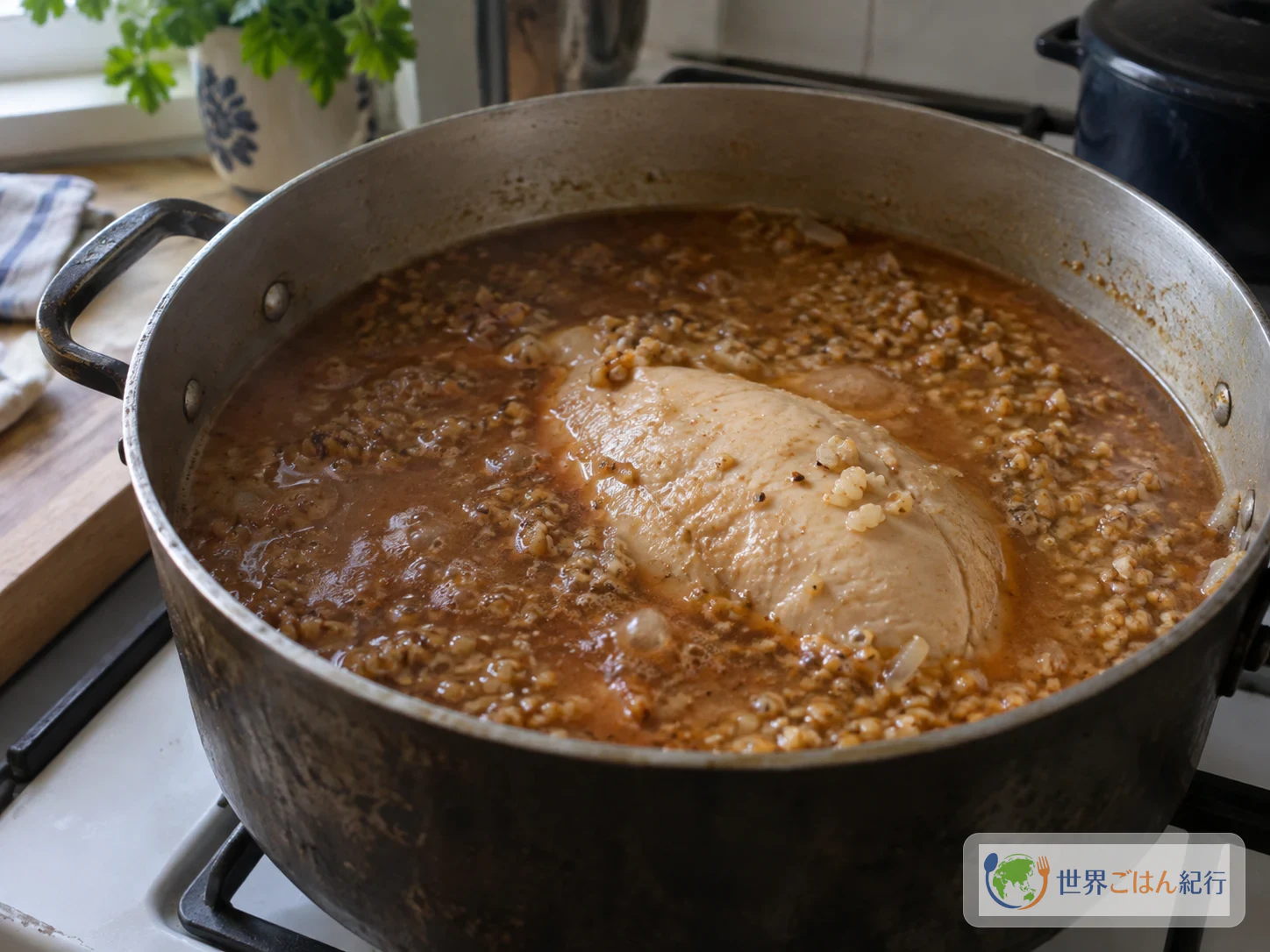
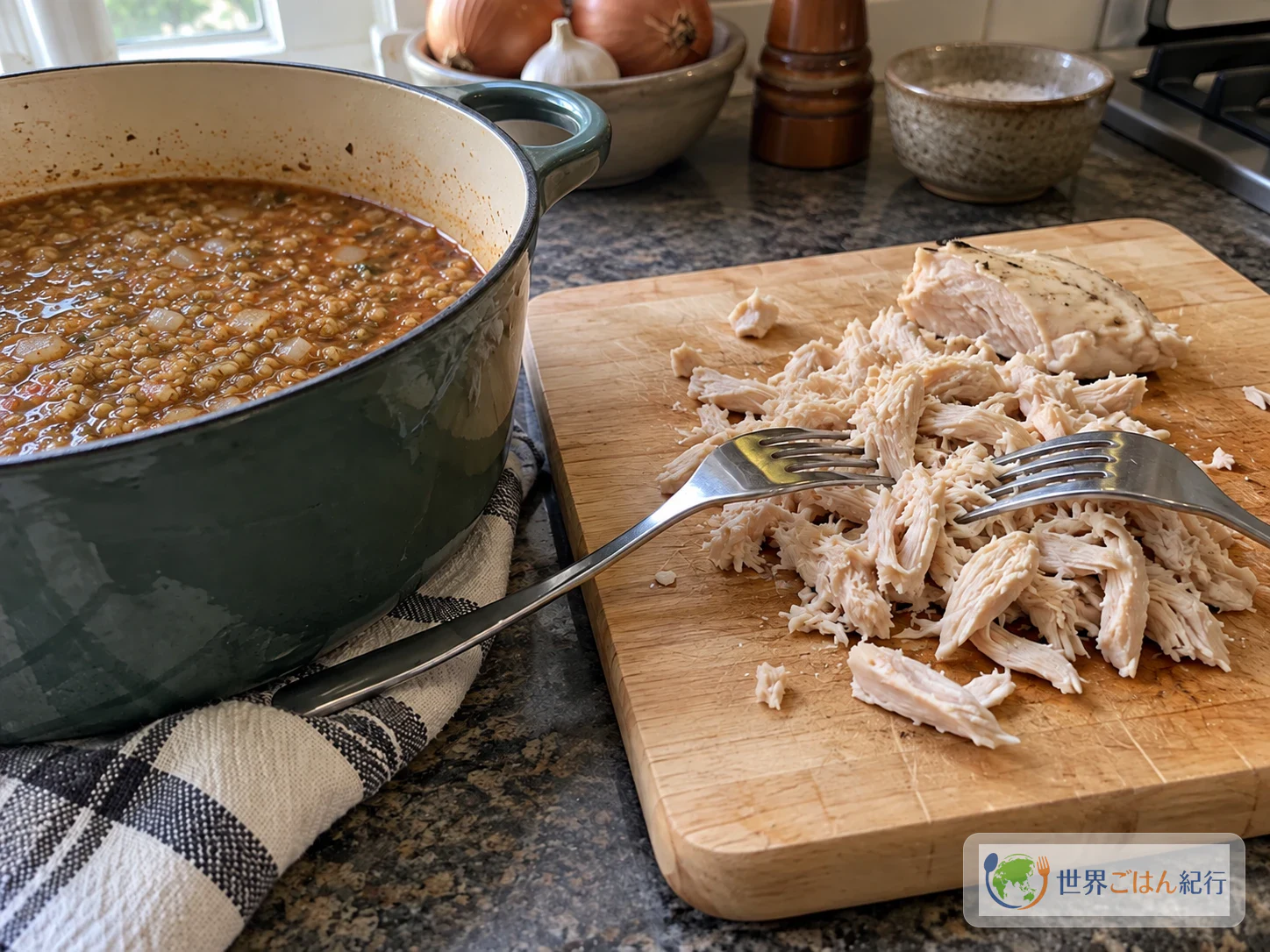
From the steaming pot, a ladle lifts cracked wheat and shredded chicken into a bowl. What rises is not the heat of chili but the toasty scent of grain and the warmth of spices.
Freekeh is a grain made by roasting young wheat. In Lebanese home cooking with chicken, the toasty aroma and light chew of roasted wheat define the whole soup. With every spoonful the grains loosen in your mouth, and you realize this is a soup you chew.
Young wheat over the fire, in a Levantine kitchen
Freekeh is a grain made by harvesting immature durum wheat while still green, roasting it, and removing the husks. In Palestine, the process of cutting spring wheat, roasting it over an open fire, and rubbing off the husks is still used today. The smoky flavor in the grain itself comes from this production process, and the toasty aroma of roasting is a different thing from the aroma you get with smoked seasoning or browned onion.
The same grain is at tables in several countries. In Lebanon there is a soup using chicken, onion, and cracked freekeh, and in Palestine it is used in soups simmered slowly in broth. Zaytoun, a distributor, presents this as a traditional use. The Egyptian-born cook Suzy Karadsheh says freekeh is a grain she has known since she was small. That is only her own account and does not indicate the eating habits of all of Egypt. Do not think of freekeh as belonging only to Lebanon; take it that behind today's bowl lies a long culture of processing grain.
Zaytoun relates a story that freekeh was born when a village's wheat field was burned. But this is a legend. The year of the invasion, the village's name, and the country of origin cannot be confirmed, so we do not tell it as history and only enjoy it as one tradition.
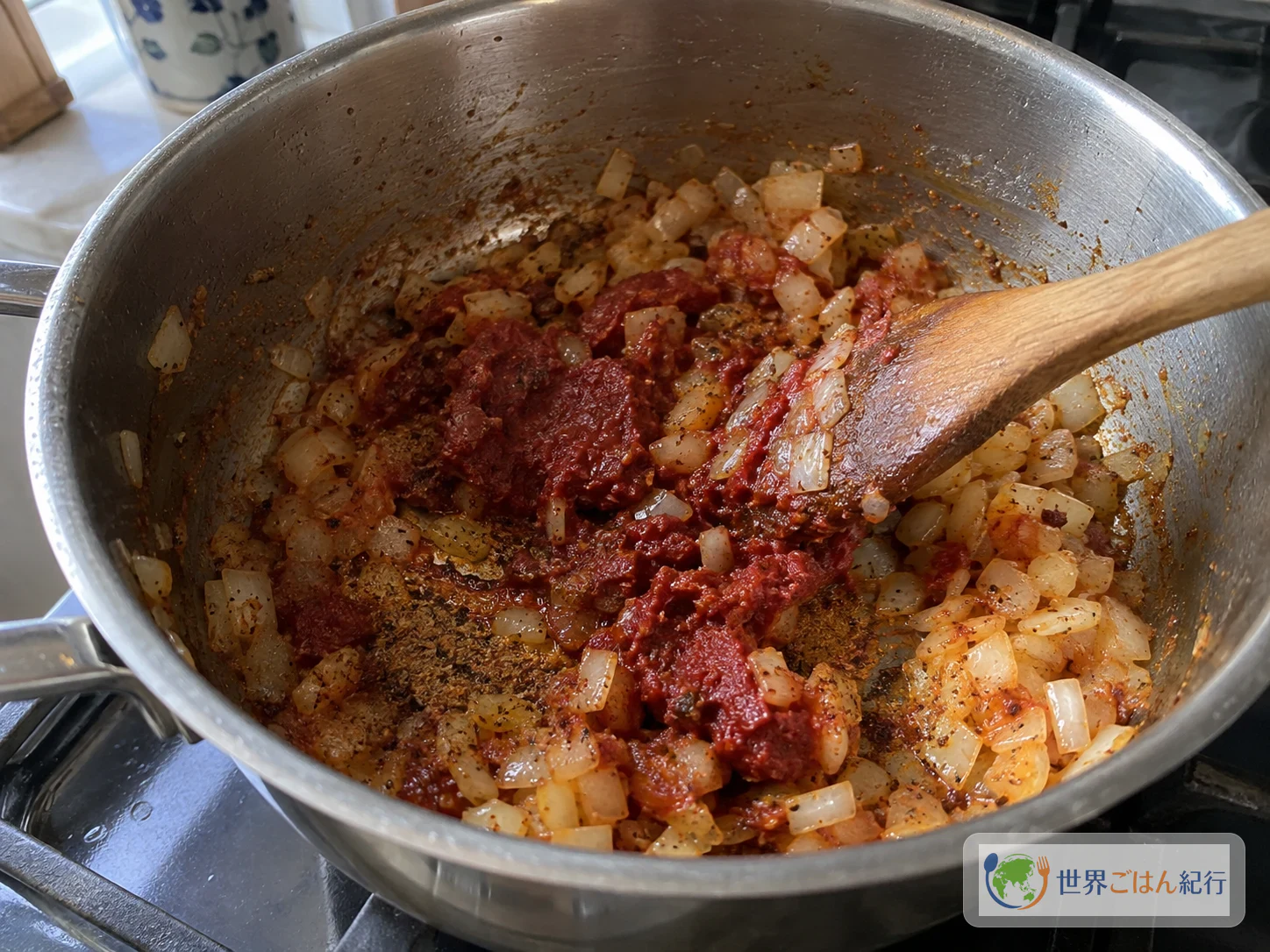
The color of the pot differs slightly from home to home. Yumna Jawad explains that she learned the trick of adding tomato paste from her original cooking assistant, and also notes that it is not used traditionally. The blend in this article is one adjusted for home cooks, using a small amount of tomato paste. It is not made into a red tomato soup; the stars remain the wheat and the chicken. Suzy Karadsheh's modern recipe uses carrot, celery, and roasted tomatoes. This is not a fixed formula by country but one example from a cook. Take it that there are home blends, including whether tomato is used at all.
Ingredients (serves 4)
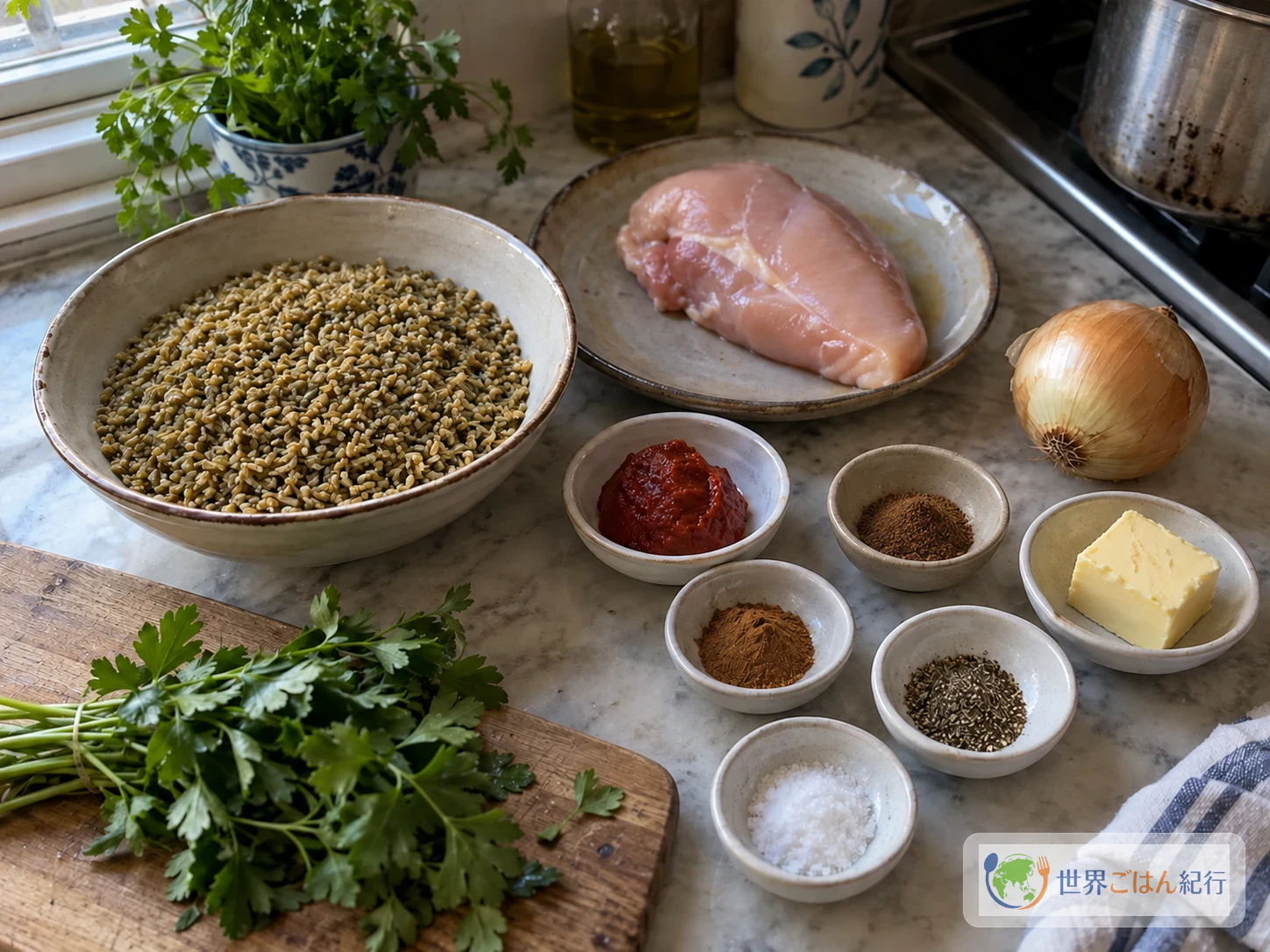
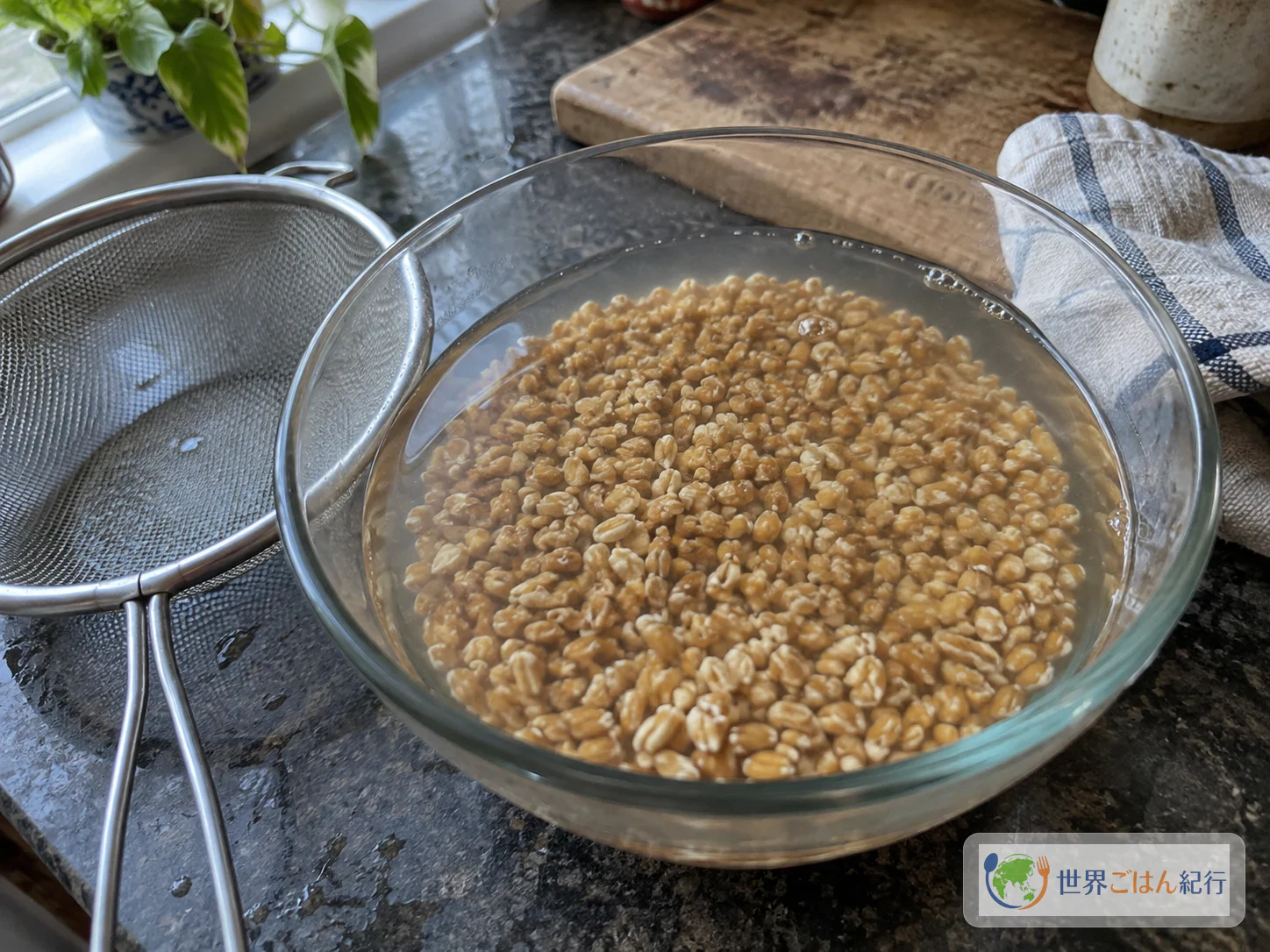
Four servings is the amount as a soup, a bowl in which the grain is eaten in place of rice or noodles. The basic home blend is 160 g cracked freekeh, 1,200 ml water, and 250 g chicken breast. As a time guide, prep takes 40 minutes (including 30 minutes of soaking) and cooking takes 60, for a total of 100 minutes. Water and unsalted butter are used to control the salt, and an ordinary pot of about 3 L is enough, so no special cookware is needed.
Check grain size and ingredients before you buy
At Middle Eastern grocers or online, look for it under names such as freekeh or freeka. We cannot guarantee any particular shop's stock or price here. Be sure to look at the grain size. Cracked has the grains broken; whole has the grains intact. Read the cooking time on the package too. The same weight does not necessarily soften in the same time. If you want the aroma of freekeh, do not change the grain. If you want to keep the aroma, it has to be freekeh. Rolled barley makes a different chicken and barley soup, and the roasted aroma cannot be reproduced.
Allspice is a single spice and differs from products that mix several spices. This time we use small amounts of allspice and cinnamon, so the sweet aroma does not become too strong. Apart from black pepper, no chili is added.
Freekeh is wheat and contains gluten. Do not serve it to people with a wheat allergy or who need to avoid gluten. Rolled barley is also barley and is no substitute for avoiding gluten. Unsalted butter contains dairy. Check the ingredient labels of what you use.
How to make it
The goal is a state with the grains of wheat and the chicken remaining in a broth with just a little thickening. Don't let it absorb all the water as with pilaf; keep in mind to leave broth. The cooking times are guides for cracked grain, so checking the hardness of the core and measuring the center temperature of the chicken are done separately.
Even if the wheat is still hard, if the chicken's center is 74°C or more, take it out first. The meat and the grain do not need to finish cooking at the same time. Whole grain may take over 30 minutes. Follow the time on the grain's package, and check the grains while topping up the broth.
The fine grains of cracked freekeh sink to the bottom of the pot. Once it thickens, trace the bottom with a wooden spoon every 5 minutes. Keep small bubbles under a lid over low heat. If the boil sounds strong or the broth drops suddenly, lower the heat and add 100 ml boiling water.
Wash the cutting board, forks, and plates that touched raw meat before using them again. Do not rinse raw chicken; wash your hands and utensils instead. For chicken and reheated dishes, confirm with a thermometer that the center has reached 74°C or more. Taste only after confirming it is cooked.
When the grains are hard or the broth has reduced
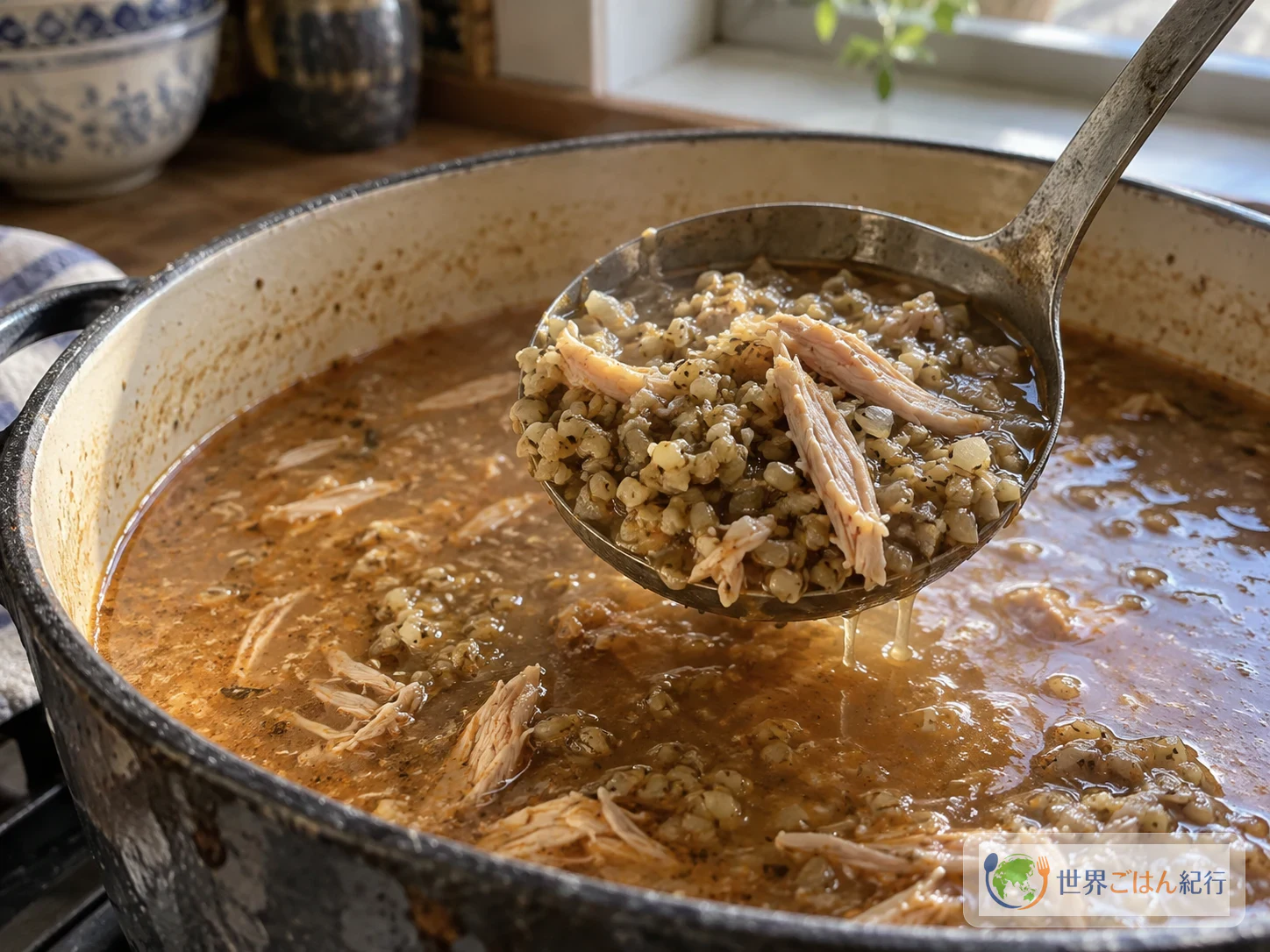
Before extending the time, cool a grain to an edible temperature and bite it. Tell the springiness on the outside from a hard core inside. If there is a hard core, add 100 ml boiling water at a time and simmer 5 minutes at a time over low heat. If there is no core but no broth, only top up the liquid and do not cook long.
| What happened | State to check | How to fix |
|---|---|---|
| Grains are hard | There is a dry, hard core in the center | Add 100 ml boiling water and extend 5 minutes at a time over low heat |
| Broth is gone | The ladle holds only grains and no broth flows | Add boiling water 100 ml at a time and check salt last |
| Watery | Grains are soft but there is too much broth | Take out the chicken, remove the lid, and simmer 3–5 minutes over medium-low |
| Onion or paste scorched black | There is a bitter smell | Distinguish it from the brown before scorching. Redo the sautéing step |
| Chicken is tough | It shreds but the fibers are dry | Shred it finely and eat it with the broth. Next time, take it out first once it reaches temperature |
Freekeh itself has a roasted aroma, so you do not need to cook things dark in the pot to strengthen the aroma. The key is not to scorch it black. If the grain has cooked apart, it cannot be restored, but by topping up the broth you can still eat it as a soft soup. Next time shorten the cooking time to keep the shape of the grains.
Changing the aroma and ingredients at the table
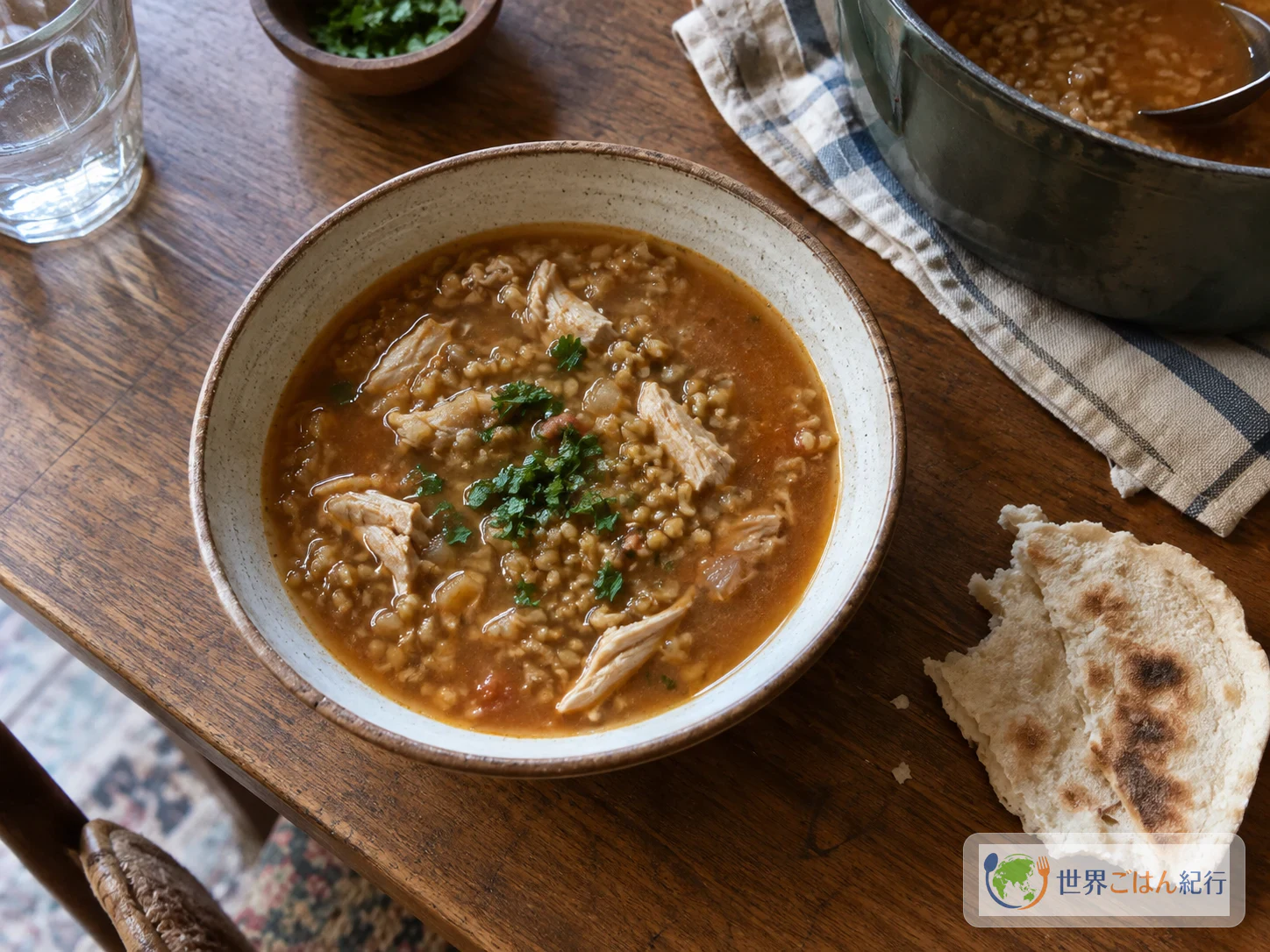
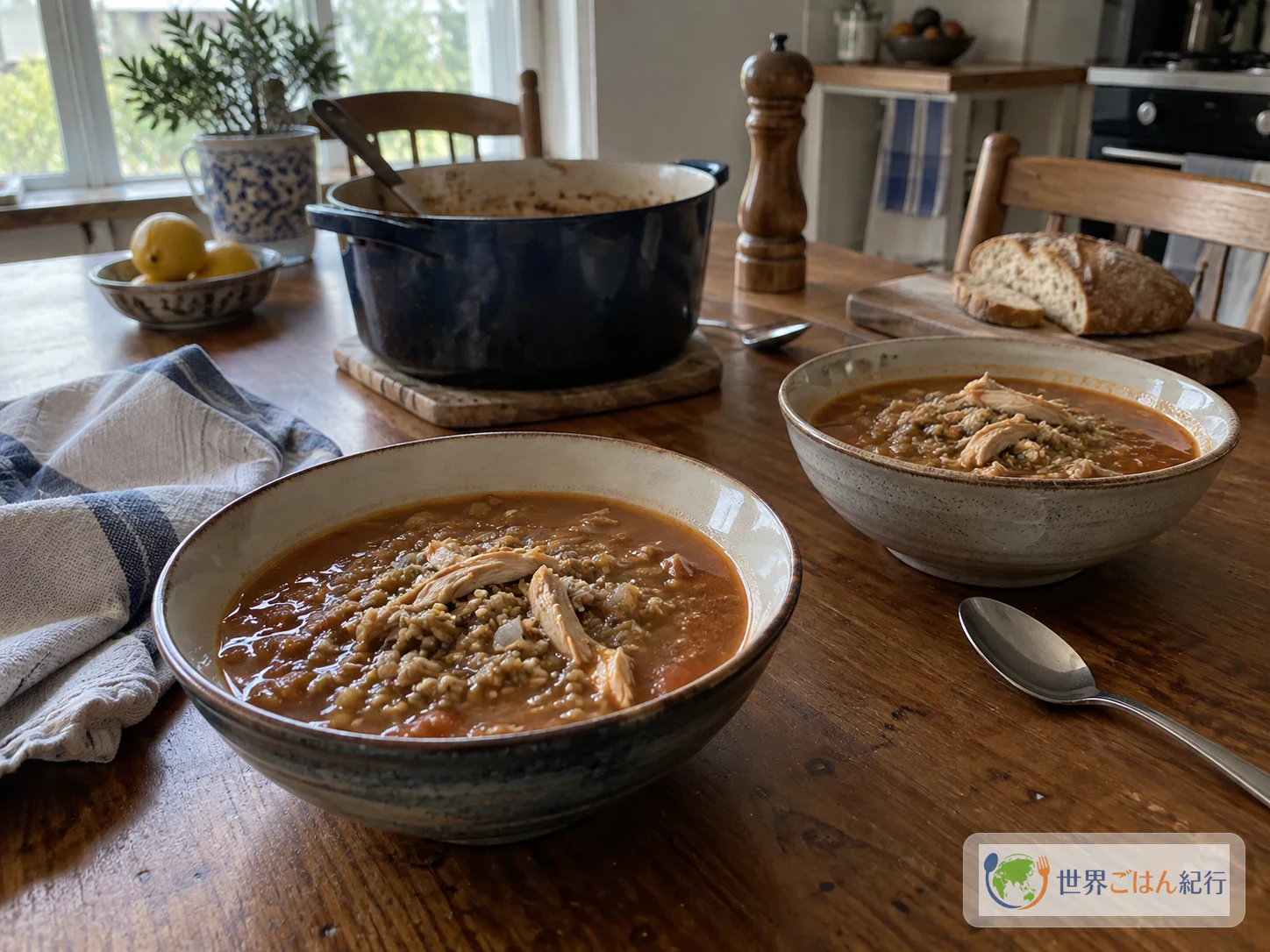
Pour it into bowls as a warm soup and eat the wheat, chicken, and broth with the same spoon. Taking grains and broth together is how to enjoy this bowl. Serving a little bread or salad is a suggestion for home cooks and not an essential local custom. What you serve alongside can be light. If grain dishes pique your interest, also try mujaddara (in Japanese), cooked from lentils and rice.
| Variation | What to change for 4 servings | Difference in flavor and process |
|---|---|---|
| No tomato | Leave out the 20 g tomato paste | A paler color that lets the wheat aroma come forward. Cook the seasonings 1 minute |
| With mushrooms | Add 100 g shimeji mushrooms | Separate into small clusters and cook with the onion. A home-cook addition |
| More vegetables | Add 80 g carrot and 50 g celery | Cut into 5 mm dice and cook with the onion. Adds sweetness and aromatics |
| Made with chicken thigh | Change 250 g chicken breast to 250 g skinless thigh | Don't decide on time alone; confirm 74°C or more at the center |
| Made without meat | Leave out the chicken and change the water to 1,200 ml unsalted vegetable stock | The grain and onion are the stars. For a vegetarian version, also replace the butter with 1 tbsp oil |
The added vegetables and meatless ideas in the table are home-cook variations, not blends handed down in any region. Even without tomato, the flavor of cooked onion and roasted wheat remains. Changing it with vegetables is fun too, and replacing butter with oil weakens the mellowness of dairy as a difference in dairy flavor. For a side dish for the same Lebanese table, tabbouleh, centered on parsley, goes very well.
Storage and frequently asked questions
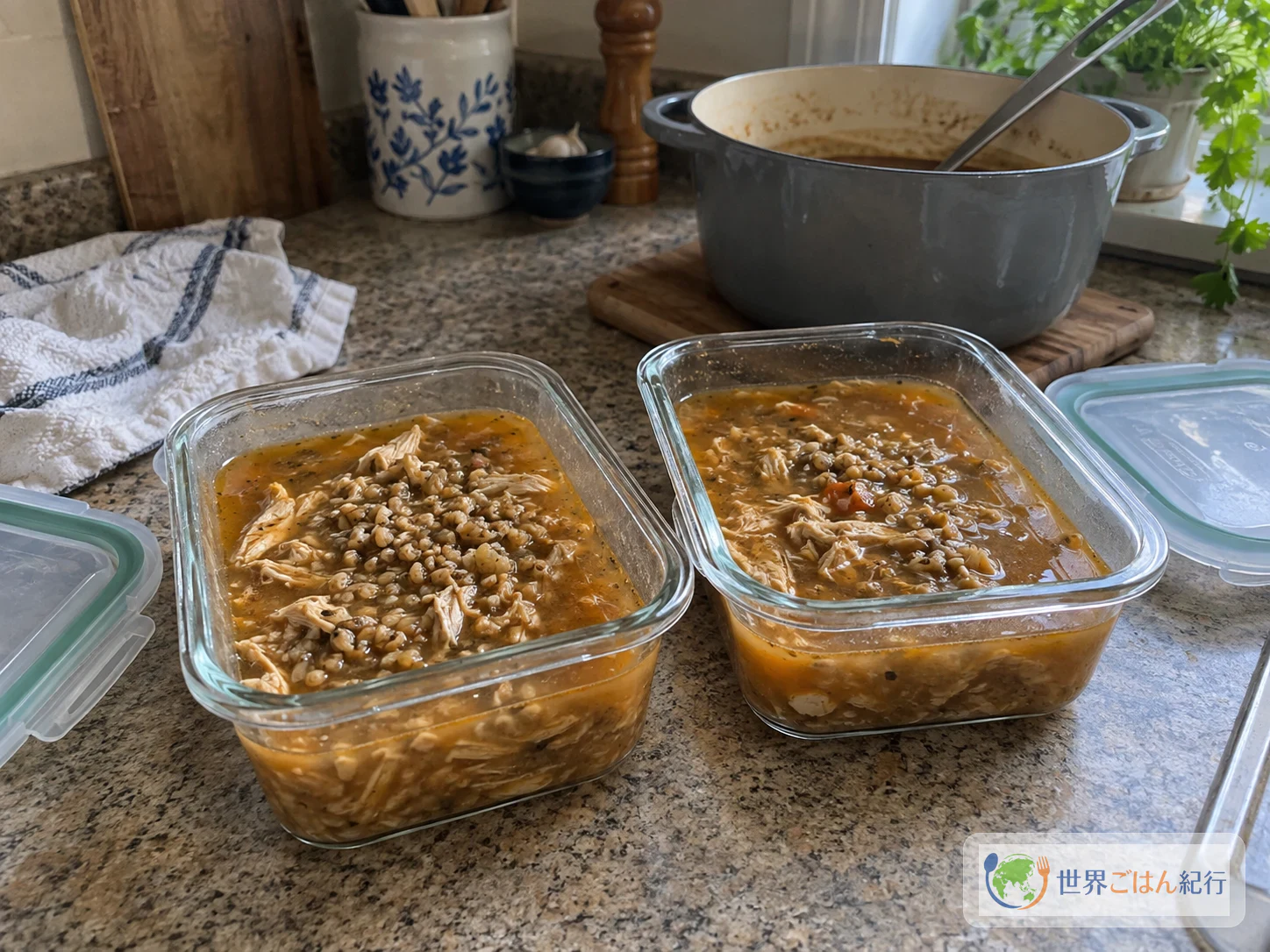
Portion what you will not eat right away into shallow containers and refrigerate promptly. Do not wait until it cools completely at room temperature. Put it in a refrigerator at 4°C or below within 2 hours of cooking, or within 1 hour in an environment above 32°C. The upper limit for refrigerator storage is 3–4 days as a guide, and at home finish it sooner. For freezing, 2–3 months at −18°C or below is the quality guide.
It turned into porridge when I reheated it
The grains keep absorbing broth while stored. When reheating, add from 2 tbsp water per serving and warm over medium-low heat, stirring. Add water a little at a time, stir from the bottom, and confirm that the center is 74°C or more. Check the saltiness last. Thaw what was frozen in the refrigerator before reheating. Do not thaw at room temperature.
Can I make it with rolled barley or bulgur?
Rolled barley can be used in place of the grain in a chicken grain soup, but it has no roasted aroma. Know before you buy that it will not taste the same as freekeh soup itself. Follow the package for soaking and cooking times. Do not apply freekeh's 30 minutes as is. Bulgur is also wheat, but it is processed differently, so it does not necessarily take the same cooking time. It is also no substitute for someone with a wheat allergy.
What if I bought whole grain?
Follow the package directions and cook it longer than cracked. Take the chicken out once it reaches a safe center temperature and keep cooking only the grain. While topping up with 100 ml of boiling water at a time, check in 5-minute steps until no core remains. The time for whole grain cannot be stated as one figure.
Is it a spicy soup?
No chili goes into this blend. Allspice and cinnamon are warm aromas, and black pepper is a light sting. If you do not like heat, halve the black pepper. Keep the safety conditions for dairy and wheat separately from the question of spiciness.
What are the nutrition values?
The approximate per-serving values, dividing the basic blend into four, are 257 kcal, 20.4 g protein, 6.7 g fat, 31.9 g carbohydrate, and 3.2 g fiber. They are values totaled by ingredient weight from the published composition of cracked freekeh and, from the Standard Tables of Food Composition in Japan, chicken breast, onion, unsalted butter, and tomato paste; parsley and the small amounts of spices are not included. The numbers change with product differences in the grain, ingredient changes, and added salt. They do not indicate any nutritional or therapeutic effect.
Sources
- Yumna Jawad / Feel Good Foodie, "Lebanese Freekeh Soup with Chicken": rinsing and soaking cracked freekeh, a recipe with chicken, home differences in tomato. (accessed and checked 5 October 2026)
- Suzy Karadsheh / The Mediterranean Dish, "Freekeh Soup with Chicken and Fire Roasted Tomatoes": processing of young wheat, personal food culture in Egypt, a modern recipe with vegetables. (accessed and checked 5 October 2026)
- Zaytoun, "Freekeh from Palestine" (PDF): spring harvest, roasting, husk removal, use in soup, distinguishing legend. (accessed and checked 5 October 2026)
- FoodSafety.gov, "Safe Minimum Internal Temperatures": 74°C center for chicken and leftovers. (accessed and checked 5 October 2026)
- FoodSafety.gov, "Cold Food Storage Chart": refrigerator and freezer storage times for soup. (accessed and checked 5 October 2026)
- FoodSafety.gov, "4 Steps to Food Safety": preventing cross-contamination, shallow containers, time to refrigeration. (accessed and checked 5 October 2026)
- FDA, "Gluten and Food Labeling": gluten in wheat and barley. (accessed and checked 5 October 2026)
- MEXT Food Composition Database, "Chicken breast, skinless, raw": reference values for the nutrition estimate. (accessed and checked 5 October 2026)
- MEXT Food Composition Database, "Onion, raw": reference values for the nutrition estimate. (accessed and checked 5 October 2026)
- MEXT Food Composition Database, "Unsalted butter": reference values for the nutrition estimate. (accessed and checked 5 October 2026)
- MEXT Food Composition Database, "Tomato paste": reference values for the nutrition estimate. (accessed and checked 5 October 2026)
- Belazu Ingredient Company, "Cracked Freekeh Product Specification" (2017 edition, PDF posted by a distributor): reference values for the nutrition estimate. (accessed and checked 5 October 2026)