A Lebanese Morning, Scooping Up Warm Chickpeas
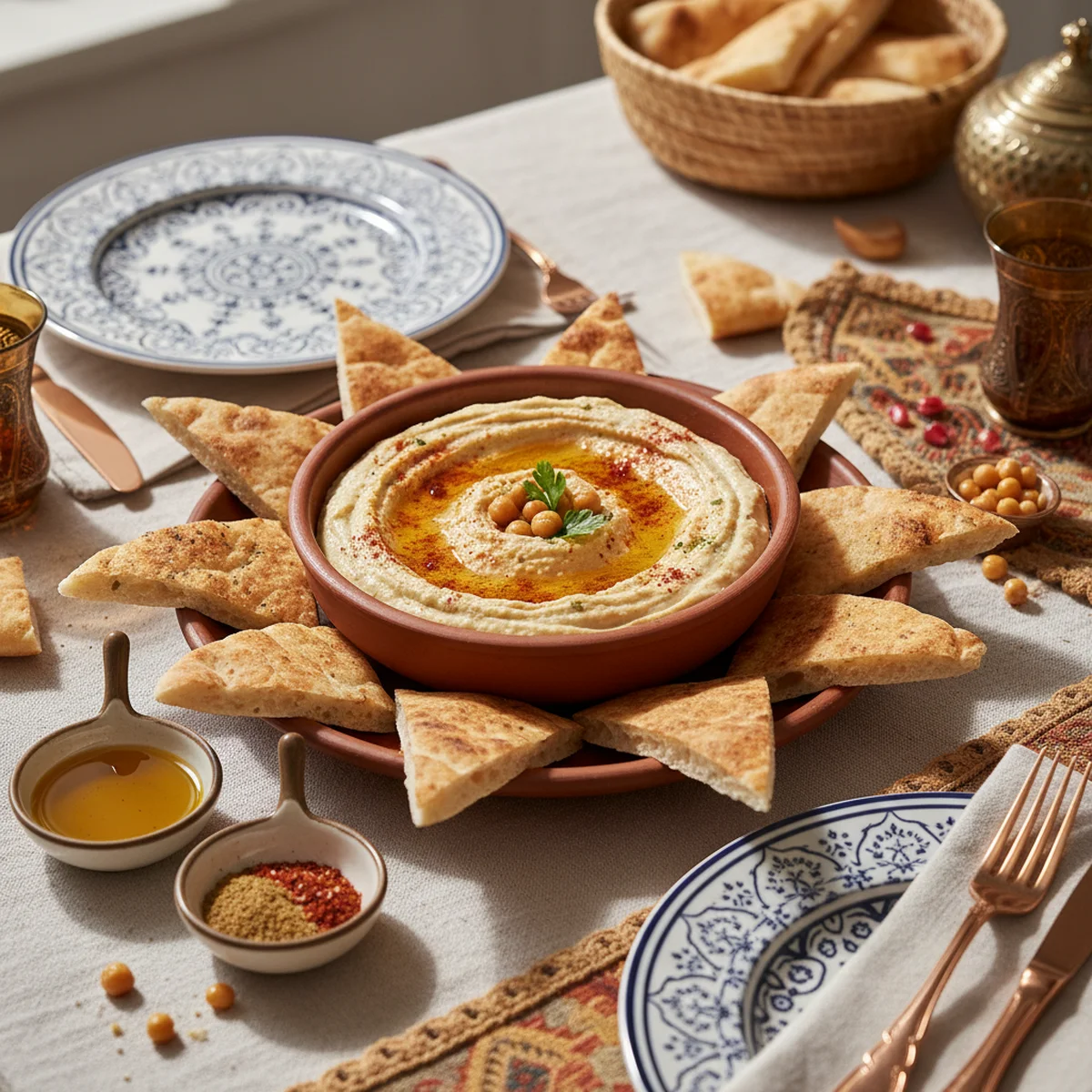
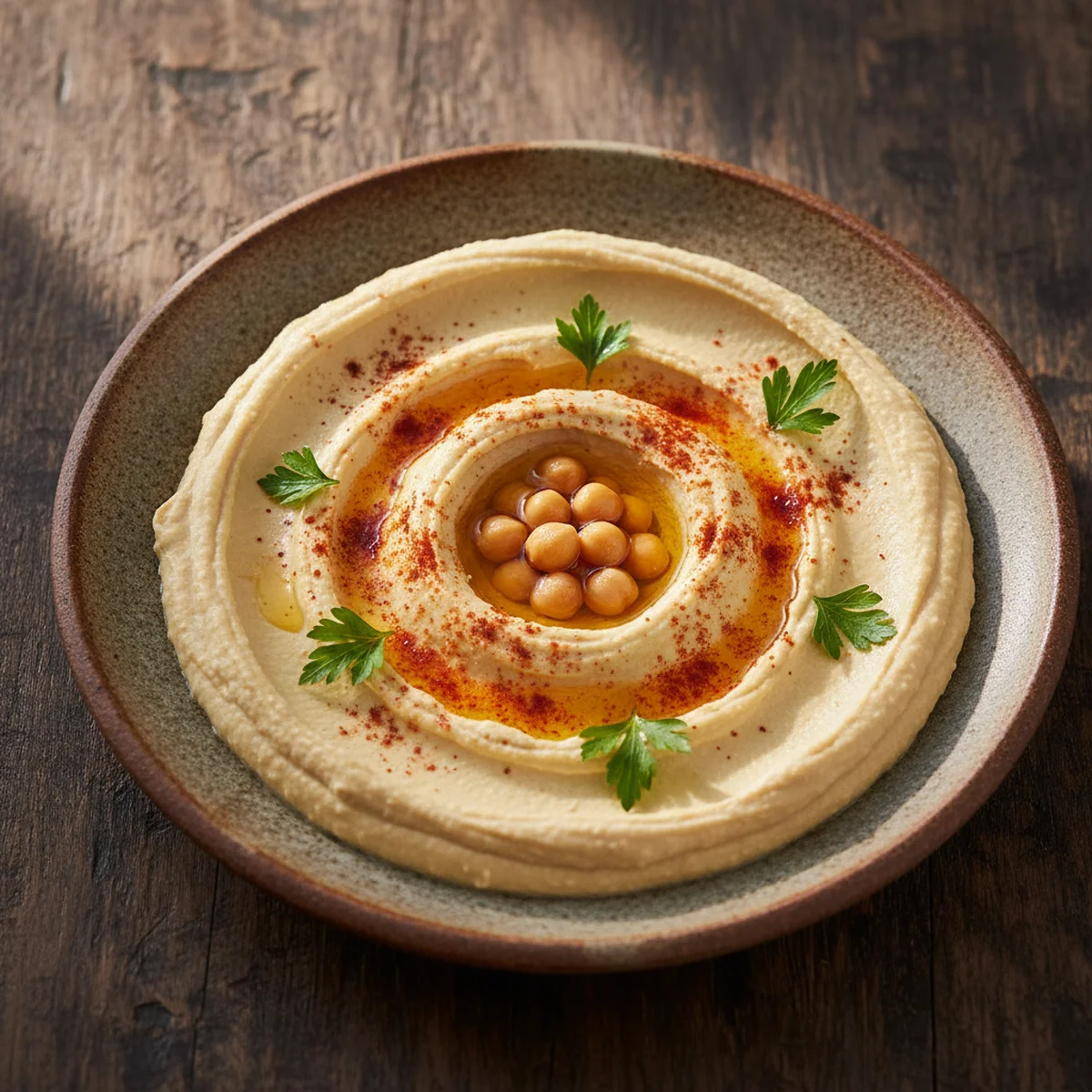
The aroma of steaming chickpeas and the puff of freshly baked pita. As one example of a Lebanese breakfast, a plate of hummus is topped with whole warm chickpeas and served with olive oil and cumin. Next to it sit ful medames, mint, and raw onion. Rather than dipping lightly into a cold dip, you scoop the plate of hummus with warm chickpeas and pita. That is the center of this morning. Put a few small dishes on the table and it is already a breakfast meze spread.
The name hummus comes from the Arabic word for chickpea, and it is written in many ways, such as حمص, hummus, and hommus. The basis of hummus bi tahini is a paste of tender-cooked chickpeas with tahini, garlic, lemon, and salt. The relative amounts of ingredients, and the strength of the acidity and garlic, vary by household, restaurant, and region. The recipe in this article is the editors' own formula for six servings, with the Lebanese way of eating as its entry point. We do not claim it is the only authentic one or that this is the country of origin.
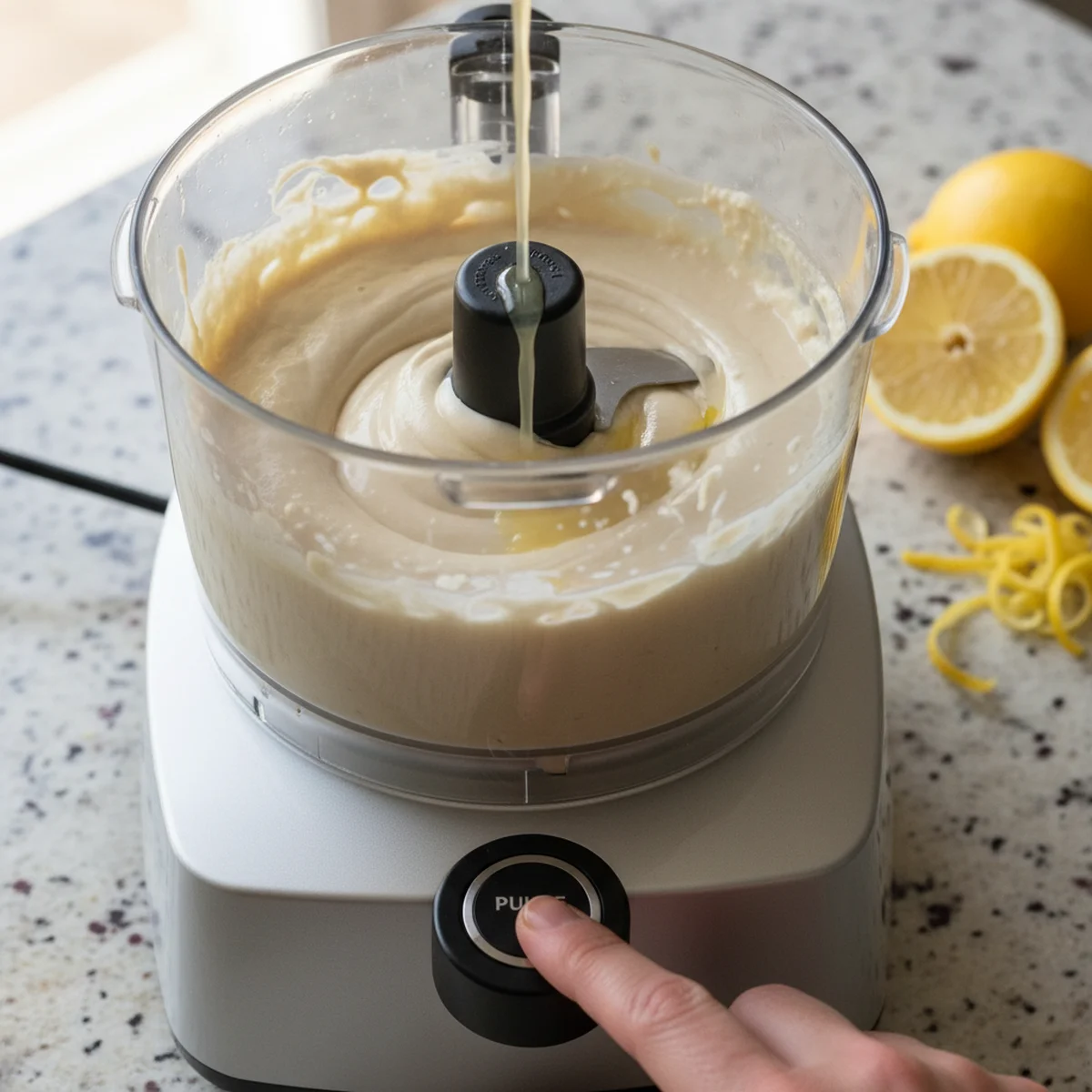
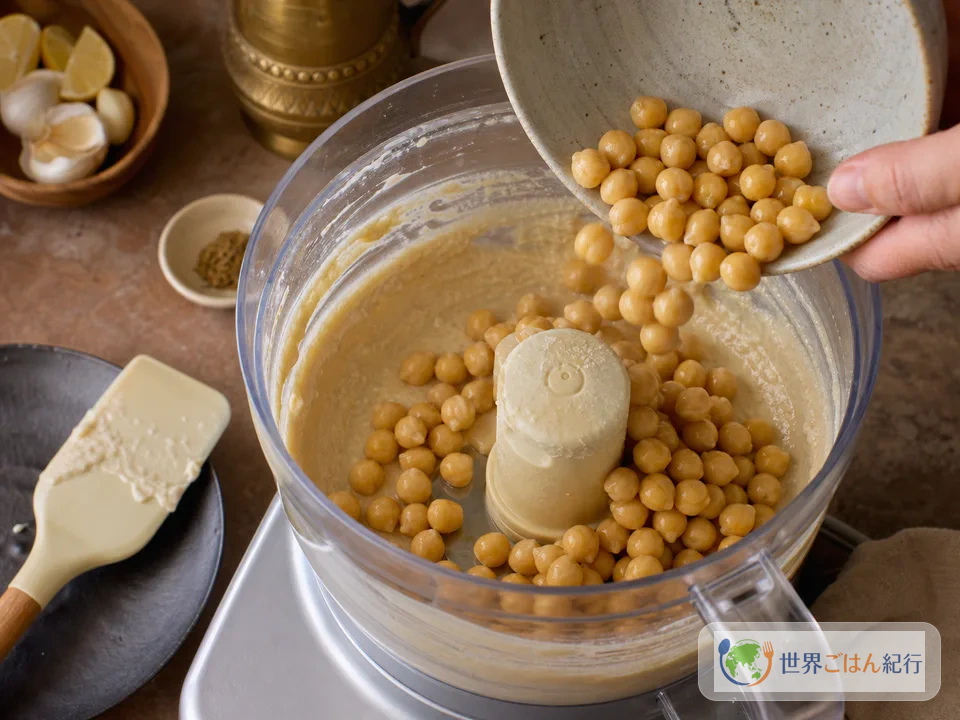
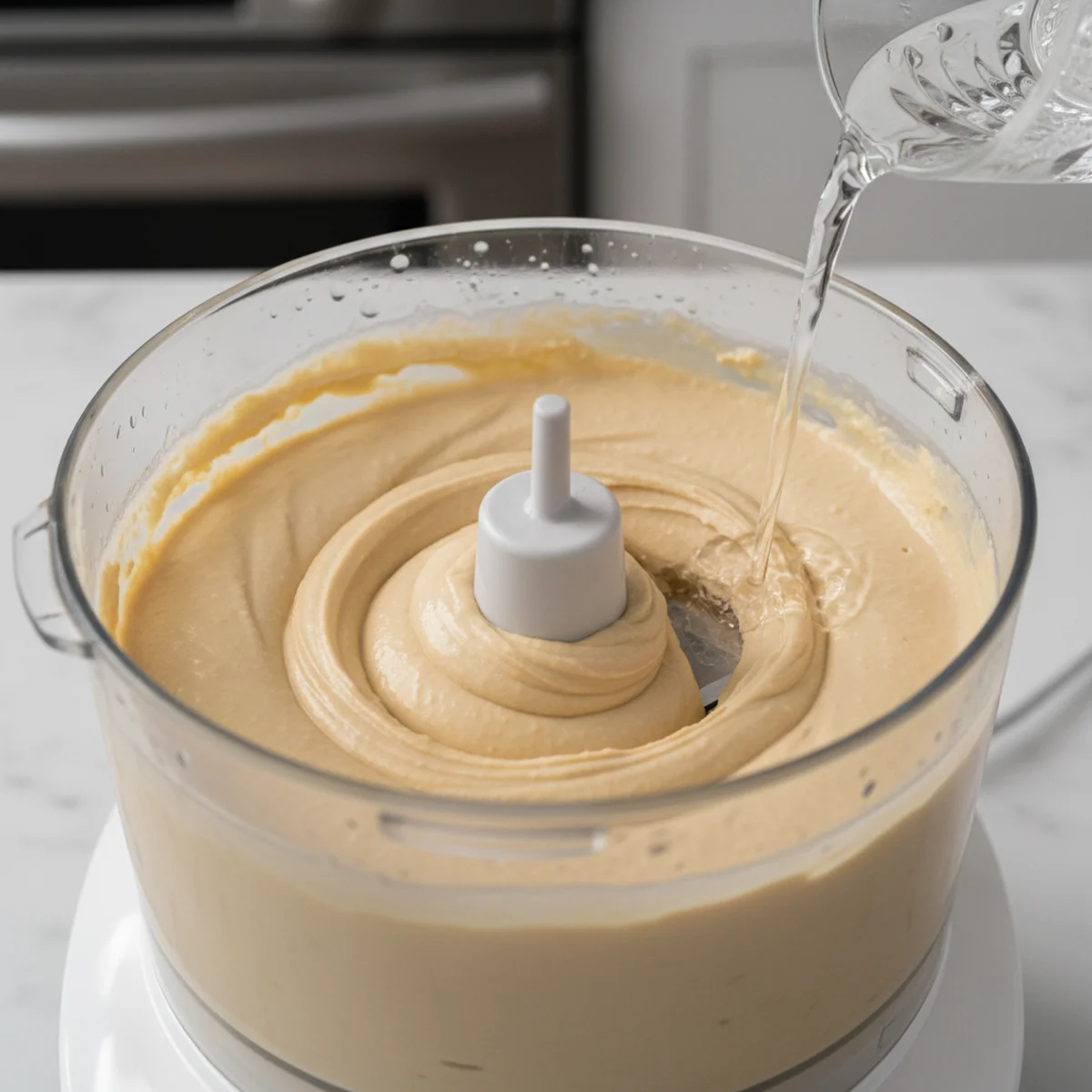
Let me describe the flow first. Based on 200 g dried chickpeas, first cook the chickpeas, skins and all, until they crush under a finger. Next combine the lemon and garlic ahead of time, add ice water to the tahini a little at a time, and finally blend in the warm chickpeas. The finished hummus is a pale beige with no graininess, at a thickness where the mark of a spoon slowly closes back. Then on to the ingredient list.
Articles that connect to the same table
- How to make balila: warm chickpeas for a Lebanese breakfast (in Japanese)
- How to make tabbouleh: the Lebanese salad with parsley as the star
- How to make muhammara: Aleppo's red dip
After breakfast, the next plate that goes well is balila, warm chickpeas with lemon and cumin. At a meze table, tabbouleh with parsley, mint, and acidity takes up the richness of the hummus. When you want to add the color and texture of red pepper and walnut, put out the Levantine dip muhammara.
From the Levantine Table: The History of Hummus and Its Commercialization
The long time chickpeas have traveled is longer than you would imagine. AGYA's material presents chickpea cultivation in the Middle East as having a history of at least 7,500 years. The same material also brings up a 13th-century Syrian cookbook and an early written record associated with Ibn al-Adim of Aleppo. Although it is a written record that overlaps with the modern plate, its date does not indicate the beginning of oral tradition, nor does it prove the exact formula of modern Lebanese-style hummus. Modern hummus is described as a cold Levantine meze centered on mashed chickpeas and sesame.
The anonymous 14th-century Egyptian cookbook that the AGYA material introduces has a dish called himmas kassā. It uses preserved lemon, parsley, mint, spices, oil, and so on, and is a different dish from modern hummus. Even if a dish of chickpeas appears in an old cookbook, it does not prove the formula of modern Lebanese-style hummus bi tahini or its being the oldest.
Hummus is treated as a dish with roots in the Levant and Egypt, and as it spread across the Middle East, the Mediterranean, and North Africa, the proportions changed. In the style loved in Lebanon there are formulas using plenty of tahini, but acidity, garlic, cumin, temperature, and toppings differ by household and restaurant. The formula changes with the land and the kitchen. The amounts this time too are one guide with the Lebanese way of eating as the entry point, not a rule for the entire Levant.
The origin of the dish and the history of modern industrial production and consumption need to be seen separately. Hirsch and Tene's study treats hummus as an Arab dish and discusses its industrialization in Israel in 1958 and the formation of consumption and representation by the food industry. What this study covers is Israeli industrial production, consumption, and culinary culture; it does not prove the origin of Lebanese cooking or the ownership of one country. We set it apart from the question of origin as the history of a dish moving between homes, eateries, and industrial products.
| Context | Features that appear on the plate | What to keep when recreating it |
|---|---|---|
| Lebanese breakfast | Warm chickpeas, cumin, olive oil, warm pita. Served alongside ful medames and so on | Don't cool the beans fully, and serve bread |
| Levantine meze | Hummus at the center, with bread, grilled vegetables, and meat dishes in small dishes | Don't serve a large amount of hummus alone; add dishes of different sourness and toastiness |
| Household and restaurant formulas | Amounts and texture of tahini, lemon, garlic, and cumin change | Rather than searching for "the real ratio," decide this plate's thickness and acidity first |
Ingredients (serves 6)
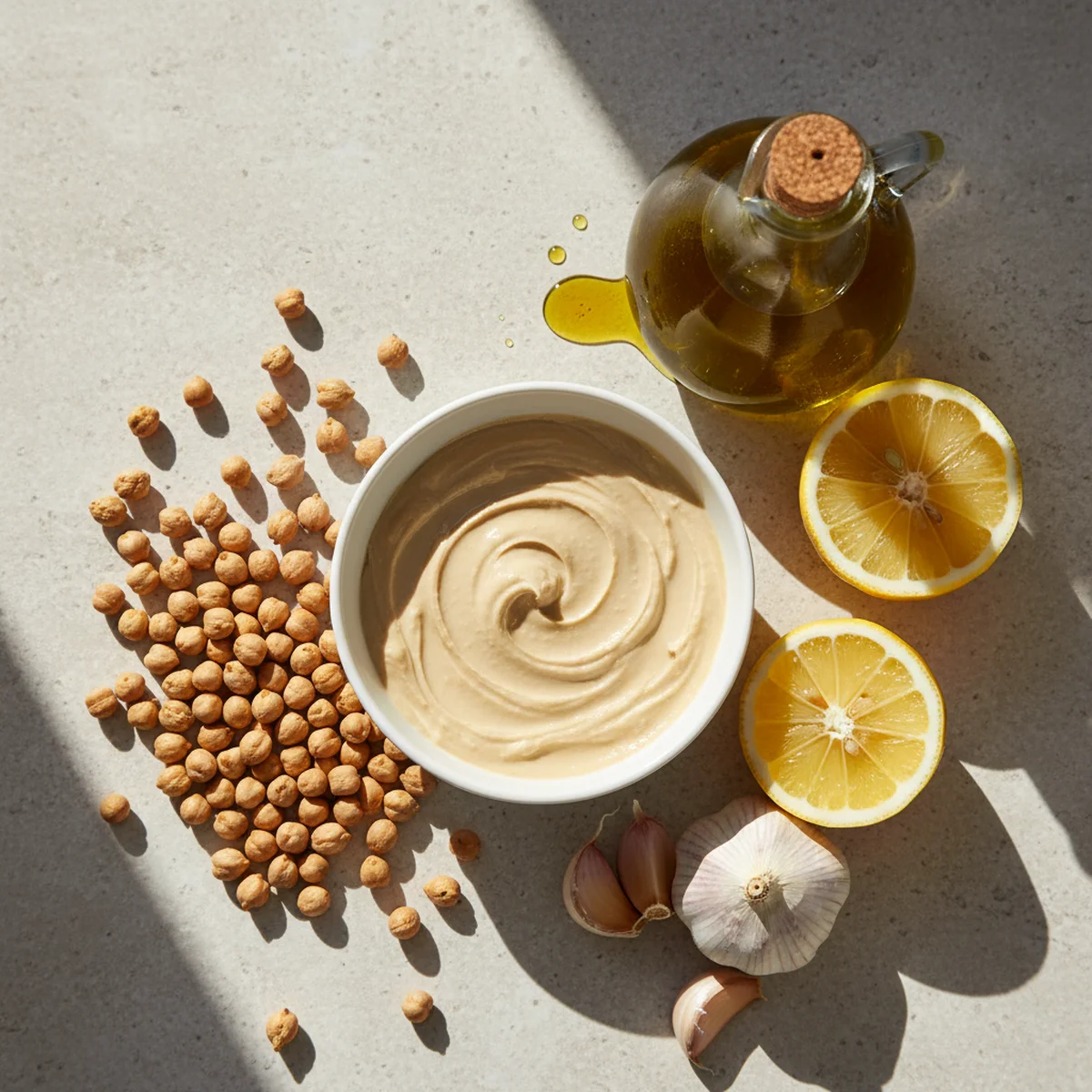
This is the editors' formula, made into six servings as a meze dish from 200 g dried chickpeas. Water and baking soda are divided between soaking and cooking, and 120 ml of cooking liquid and 40 g of chickpeas for garnish are set aside during the steps. Canned chickpeas, 400 g, can substitute, but you must wash them and reheat them in fresh water, and the aroma and the way the skins break down will not be the same as with dried beans. Tahini is a 100 percent sesame paste, and this is tahini as the foundation of the flavor. White sesame paste can also substitute, but sweetness, saltiness, and roasted aroma differ.
Tahini's richness and oil in the sesame come through directly in the flavor, so choose tahini whose ingredients are mainly sesame. When buying, use the generic name "tahini" as your guide. The oil may have separated in the jar, so stir from the bottom until uniform before measuring. If you use white sesame paste, you can start from 120 g too, but taste at the end and adjust the lemon juice and salt.
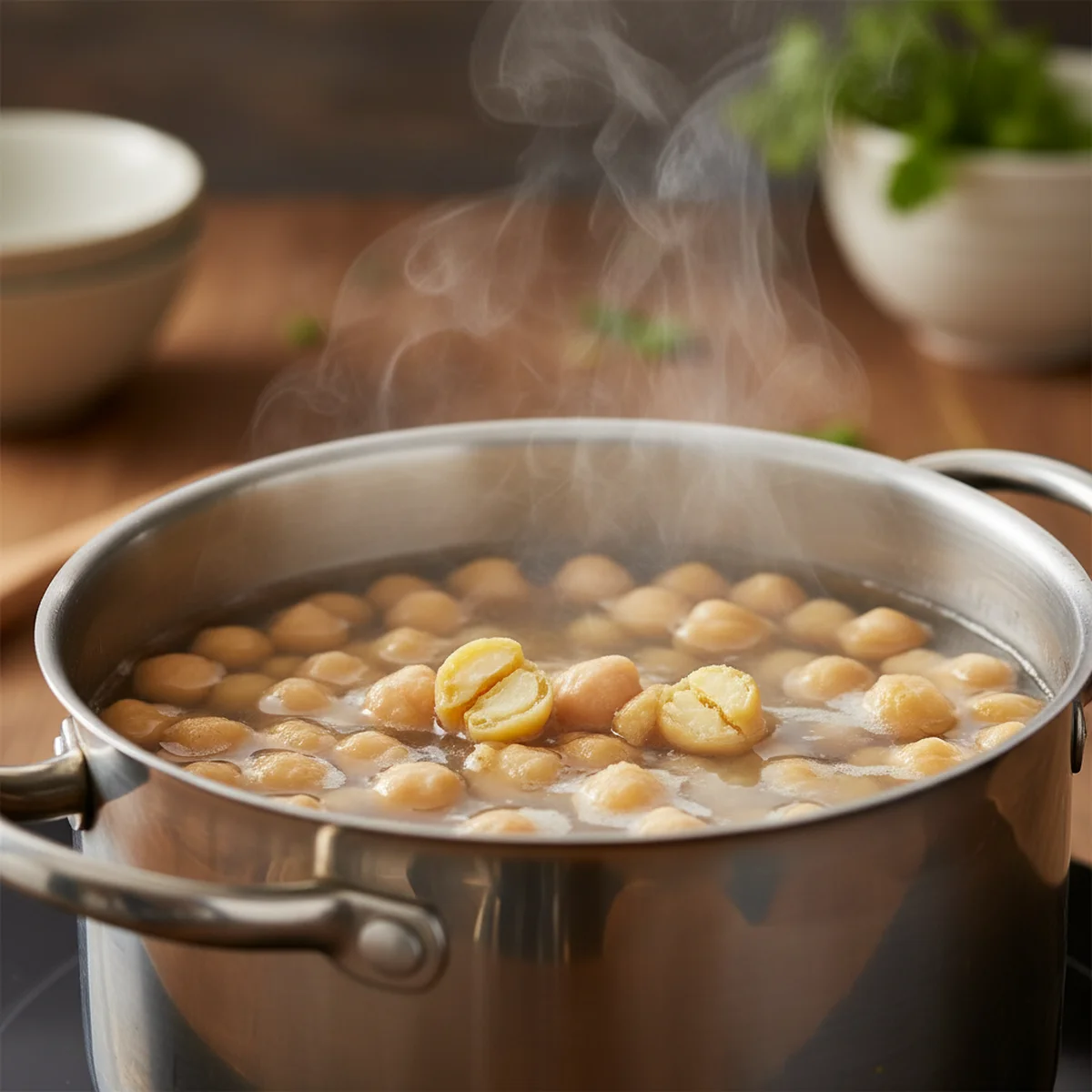
Cooking time varies with the age of the beans. 45–60 minutes is only a guide; if a core or bite remains, extend by 10–15 minutes at a time. Cooking them until they crush, skins and all, with no core left lets them blend smoothly when processed.
Both tahini and white sesame paste are made from sesame, so they are not recommended as substitutes for people who need to avoid sesame. Japan's Consumer Affairs Agency provides information on its specified-ingredient labeling system for packaged processed foods and allergy information. For store-bought products, check the ingredients and allergen labeling each time you buy, and for eating out or bulk sales, ask the shop. Also look at labeling about shared equipment and production lines, and do not judge safety by appearance alone.
Method
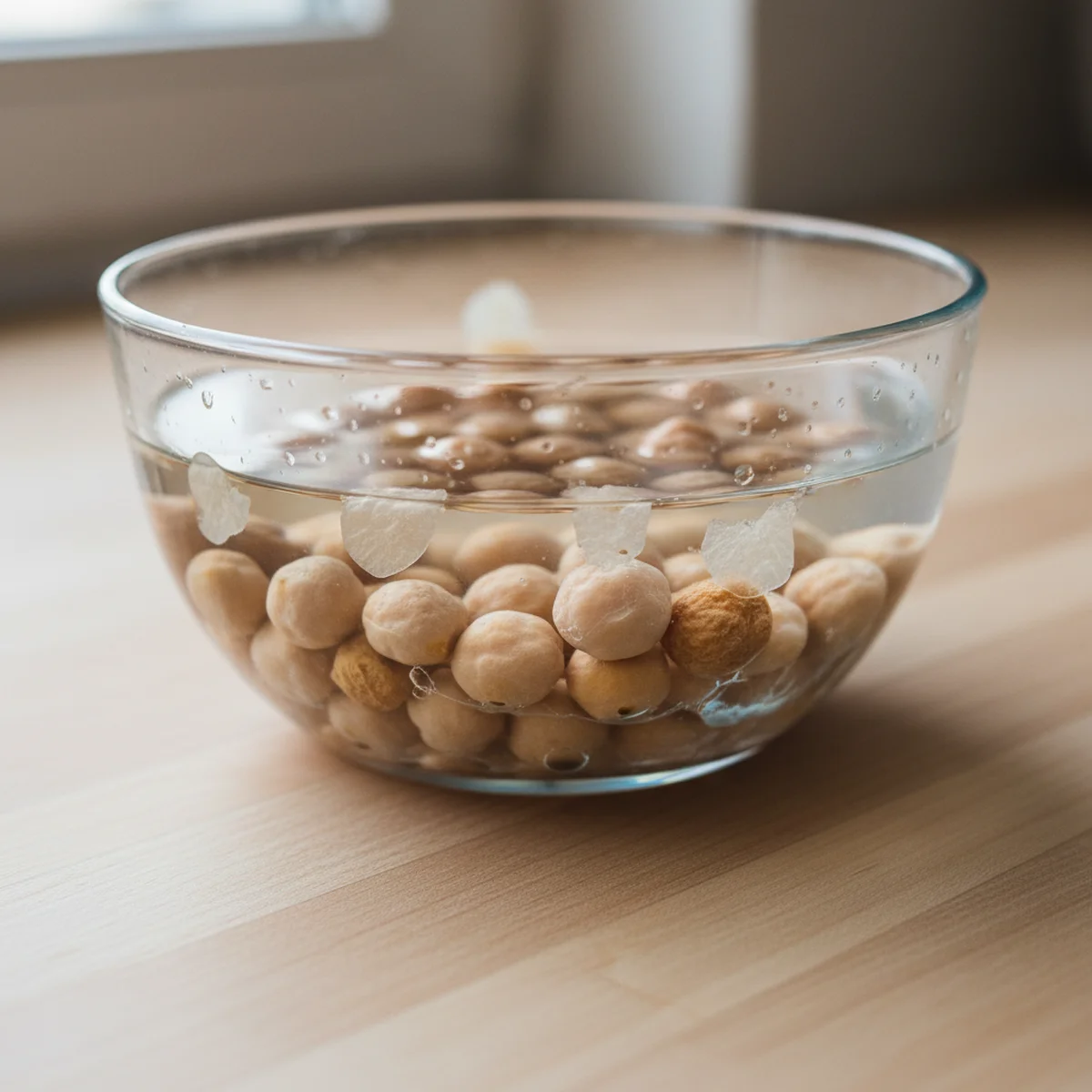
The flow is: soak the dried beans for 8–12 hours, cook them until they crush skins and all, make a sauce of lemon, garlic, and tahini, then blend in the warm beans and plate. The aim is a pale beige with no graininess and a thickness where the mark of a spoon slowly closes back, taking a few seconds to return. When it doesn't go well, look in the order of the firmness of the beans, how the sauce has tightened, and how you added liquid. When adding, it is liquid 15 ml at a time.
Plating Between Breakfast and Meze
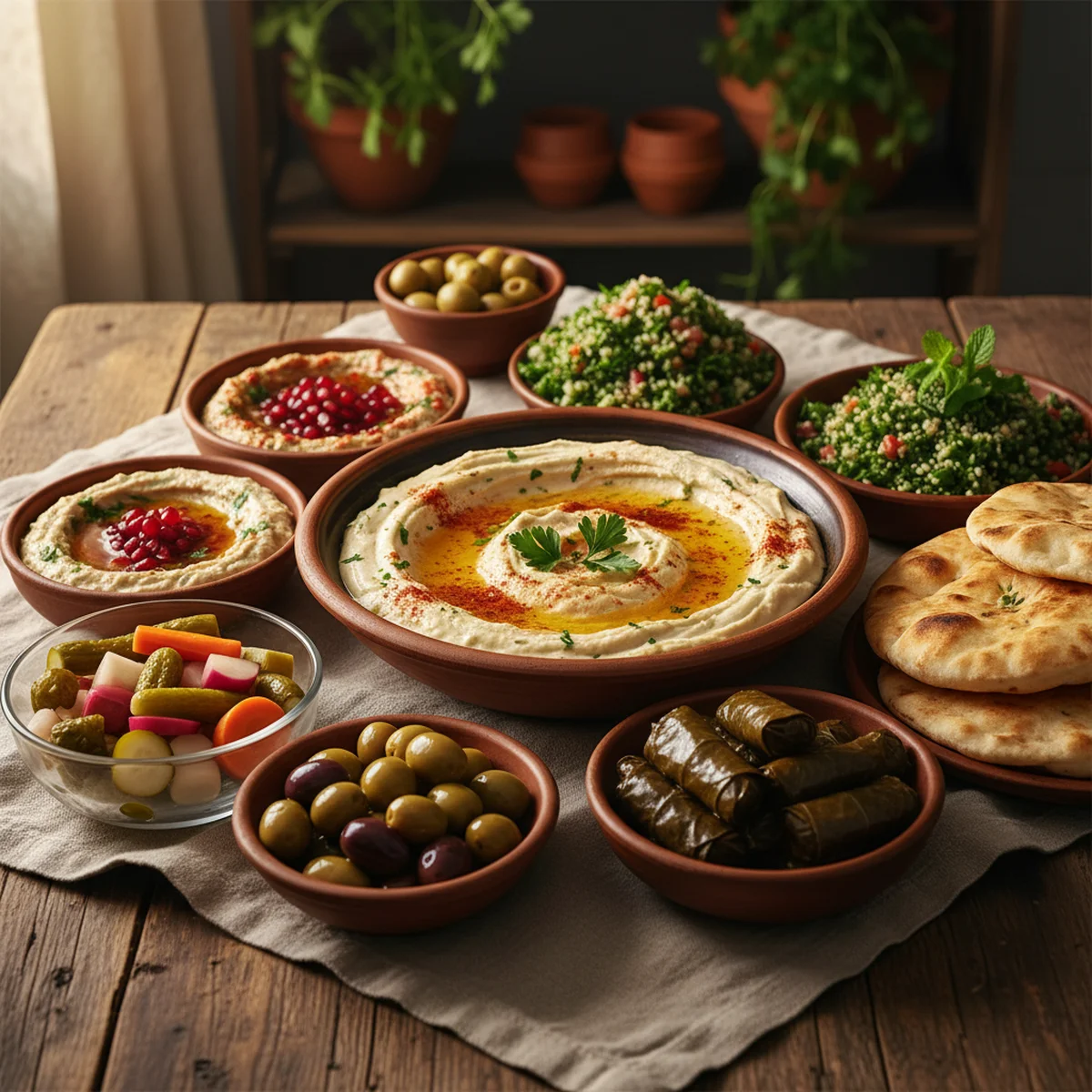
One example of breakfast is warm chickpeas, olive oil, cumin, and warm pita served together with ful medames, mint, raw onion, and so on. Keep eating as if tracing the grooves of the dish with warm pita. At a meze table, it may be served with grilled meat, grilled vegetables, and sandwiches. Taking the richness of the white beans with the neighboring dish keeps the table from being monotonous. If it has stiffened after refrigeration, loosen it just before eating by adding cooking liquid or water in small amounts.
Choose the dishes you put beside it by difference in flavor, color, and texture. Sour tabbouleh, coarse-textured balila, muhammara of red pepper and walnut. Rather than keep adding flavor to the hummus itself, it is more natural to change the neighboring dish and add acidity, color, aroma, and grain. Adding acidity and a red color to the white hummus changes the expression of the whole meal.
Four ways to change the look of the plate
Keep the basic smoothness of beans and tahini as is, and move aroma, color, and texture with the finish and accompaniments. The following are neither a standard across Lebanon nor a combination always eaten there.
- Warm chickpeas and cumin: The form introduced as a Lebanese breakfast. Top with a few beans to keep texture
- Beets: A variation in the AGYA handout. Adds color and earthy sweetness but is not called a standard Lebanese formula
- Preserved lemon and herbs: The direction of the himmas kassā seen in historical sources. Not to be equated with modern hummus
- Adding garlic just before eating: A method introduced as a storage technique. Use it separately when you don't want strong aroma left in the refrigerated portion
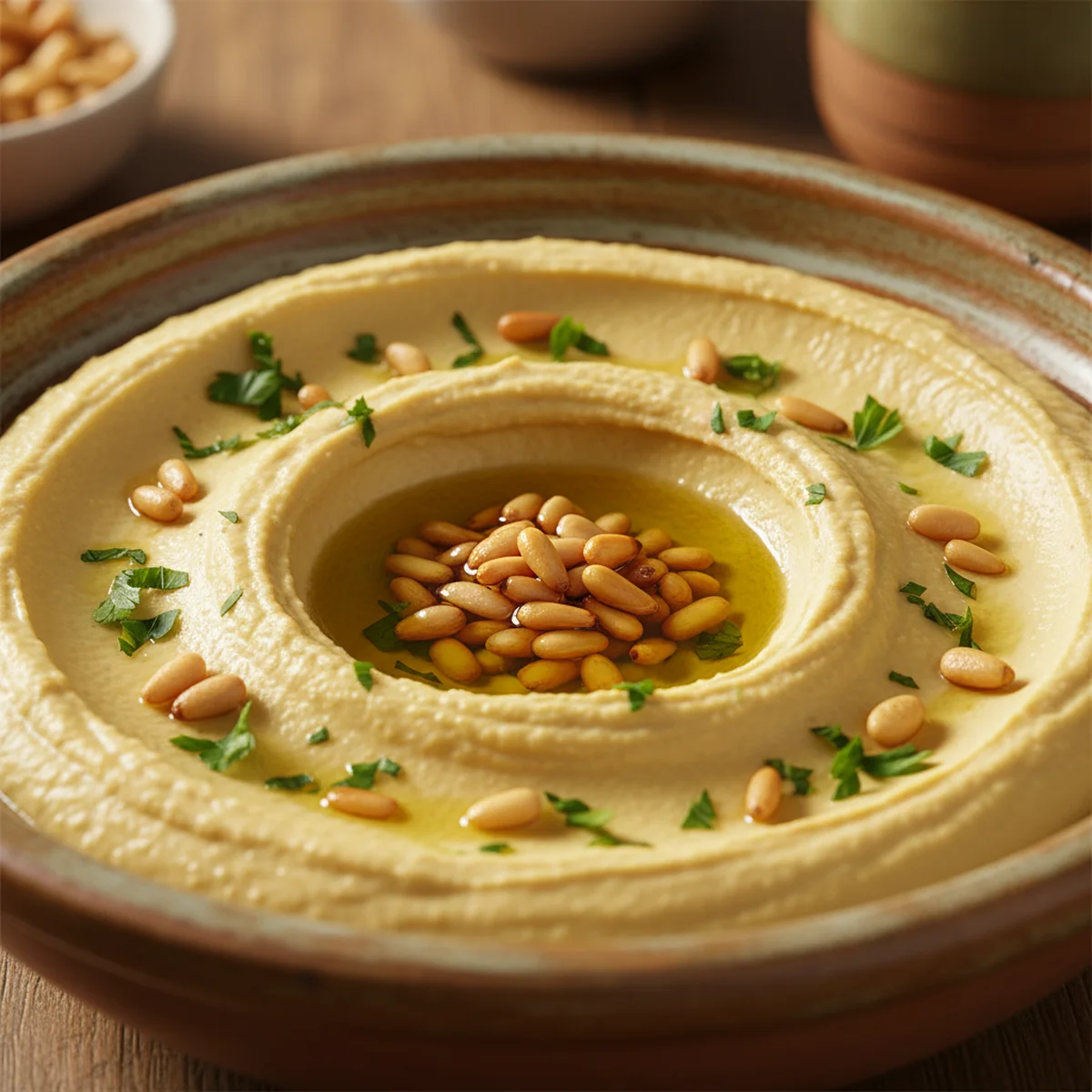
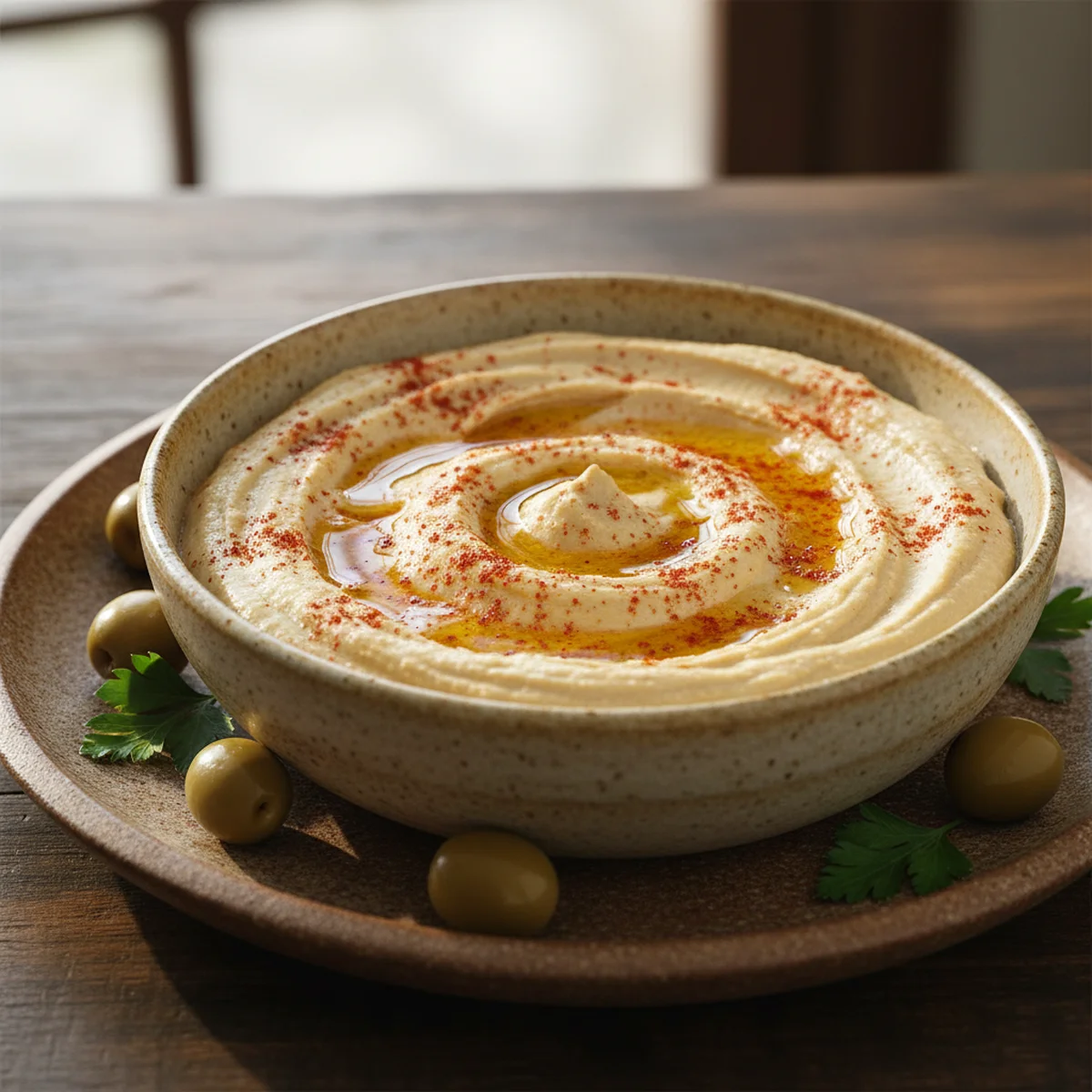
Several modern recipes show finishes such as olive oil at the center, warm beans, parsley, cumin, and paprika. The historical dishes that the AGYA material introduces include, besides oil and herbs, pistachios and rosebuds. Even when the garnish differs, the structure of the plate, a paste of chickpeas and tahini eaten with bread, does not change.
FAQ: Storage, Substitutes, and Recovering from Graininess
The questions that come up after making it are canned beans, a tahini substitute, no food processor, graininess, garlic sharpness, and shelf life. Think of storage as a combination of clean containers, quick cooling, and time in the refrigerator, and do not judge safety by appearance. A dish includes how you handle it after making it.
Can I make it with canned chickpeas?
Yes. Wash 400 g after draining under running water, and reheat with fresh water and a little baking soda until they crush under a finger. Serious Eats also explains a method of washing canned beans and cooking them in fresh water. Don't add a lot of canning liquid as is; use a little at a time of the water you reheated them in to adjust thickness. The aroma and the way the skins break down differ from dried beans, so it will not turn out the same.
If I have no tahini, can I substitute white sesame paste?
You can start with the same amount, 120 g, of white sesame paste. But sweetness, saltiness, and roasted aroma differ. Add lemon juice and salt a little at a time at the end, and don't try to make up the difference in flavor by adding water. If you have a sesame allergy, white sesame paste is not a substitute either. We also do not recommend it as something that will taste the same without sesame.
What if I have no food processor?
With a mortar, potato masher, or fork, mash the warm beans and then mix in the tahini sauce. Bits of skin tend to remain and it differs from a fully machine-blended paste, but it holds together as a coarse bean dish. If it dries out, add cooking liquid 1 tsp at a time, and mash before the beans cool.
How do I recover if graininess remains?
If the centers of the beans are hard, return them to the pot and cook an additional 10–15 minutes at a time in hot water. If the beans are tender enough, add cooking liquid 15 ml at a time and blend 1 minute each, scraping down the sides. Even if you left out the tahini sauce, don't add acidity and oil all at once; re-mix a little at a time. Recook the hardness and restore the liquid one spoonful at a time. That is the order.
What if the garlic is too sharp?
Resting it 10 minutes in lemon juice and salt tends to soften the sting of garlic. If you dislike the sharpness, strain out only the liquid, and when adding it at the finish, taste a little at a time. For the portion you will store, there is a method of adding garlic separately just before eating. Note that you cannot extend the shelf life by adding a lot of raw garlic.
How long does it keep?
Let off the heat, put it flat in a clean shallow airtight container, and refrigerate as soon as possible. FoodSafety.gov's Cold Food Storage Chart gives 3–4 days in the refrigerator for some cooked foods and leftovers, but that is not a guaranteed number of days for hummus specifically. For this home-made batch, sealed flat, use 3 days in the refrigerator as a guide. Do not eat anything left at room temperature for long, or with a dried surface, off smell, mold, or unnatural separation, even within the days. If it has stiffened with cold, loosen it by adding cooking liquid or water a little at a time.
Use a clean spoon for serving, and do not return the whole amount brought to the table to the storage container. People who avoid sesame should check the labeling of products containing tahini, white sesame paste, and sesame oil, and ask the shop or manufacturer about shared equipment and eating out. Do not judge either shelf life or allergic reaction by appearance alone.
Sources
- Hadia's Lebanese Cuisine, “Lebanese Hummus” — https://hadiaslebanesecuisine.com/blog/lebanese-hummus/2/ (accessed and checked 2026-10-03)
- J. Kenji López-Alt / Serious Eats, “The Food Lab's Science of Great Hummus” — https://www.seriouseats.com/israeli-style-extra-smooth-hummus-recipe (accessed and checked 2026-10-03)
- Bon Appétit, “Israeli-Style Hummus Recipe” — https://www.bonappetit.com/recipe/israeli-style-hummus (accessed and checked 2026-10-03)
- The Arab-German Young Academy of Sciences and Humanities, “Hummus – A Levantine dish travels the world” — https://agya.info/fileadmin/user_upload/Key_Activities/2020_In_the_Eyes_of_the_BeholderThe_Worldthe_Other_and_the_Self_from_Arab_and_German_Perspectives/AGYA__SalonSophieCharlotte2020_Hummus-Rezept_148x105_02.pdf (accessed and checked 2026-10-03)
- Dafna Hirsch and Ofra Tene, “Hummus: The making of an Israeli culinary cult” — https://journals.sagepub.com/doi/10.1177/1469540512474529 (accessed and checked 2026-10-03)
- Zaatar and Zaytoun, “Lebanese Hummus Recipe” — https://zaatarandzaytoun.com/best-hummus-recipe/ (accessed and checked 2026-10-03)
- Consumer Affairs Agency (Japan), “Information on food allergy labeling” — https://www.caa.go.jp/policies/policy/food_labeling/food_sanitation/allergy/ (accessed and checked 2026-10-03)
- FoodSafety.gov, “Cold Food Storage Chart” — https://www.foodsafety.gov/print/pdf/node/15?id=foo- (accessed and checked 2026-10-03)