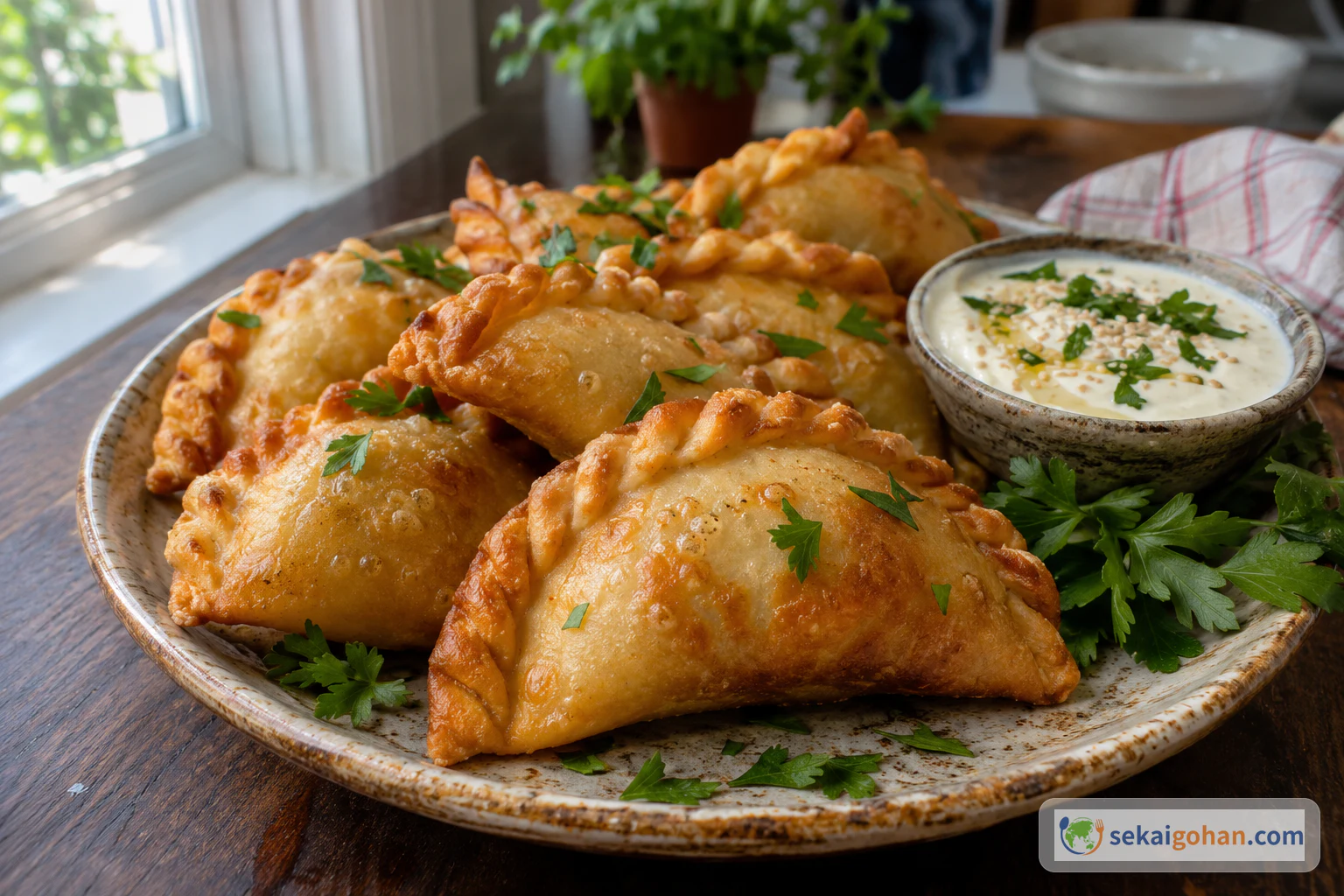
Golden fried Lebanese sambousek piled high on a ceramic platter, with a yogurt-tahini dip and chopped parsley alongside
CuisineLebanese

Sambousek: Lebanese Fried Half-Moon Beef and Pine Nut Pastries

Lebanese sambousek, half-moon pastries of spiced beef and pine nuts. Learn the oil-rubbed dough, a seal that holds in the hot oil, and simple swaps.

Level: Intermediate

Cooking flow

Cooking steps

STEP 11 / 9

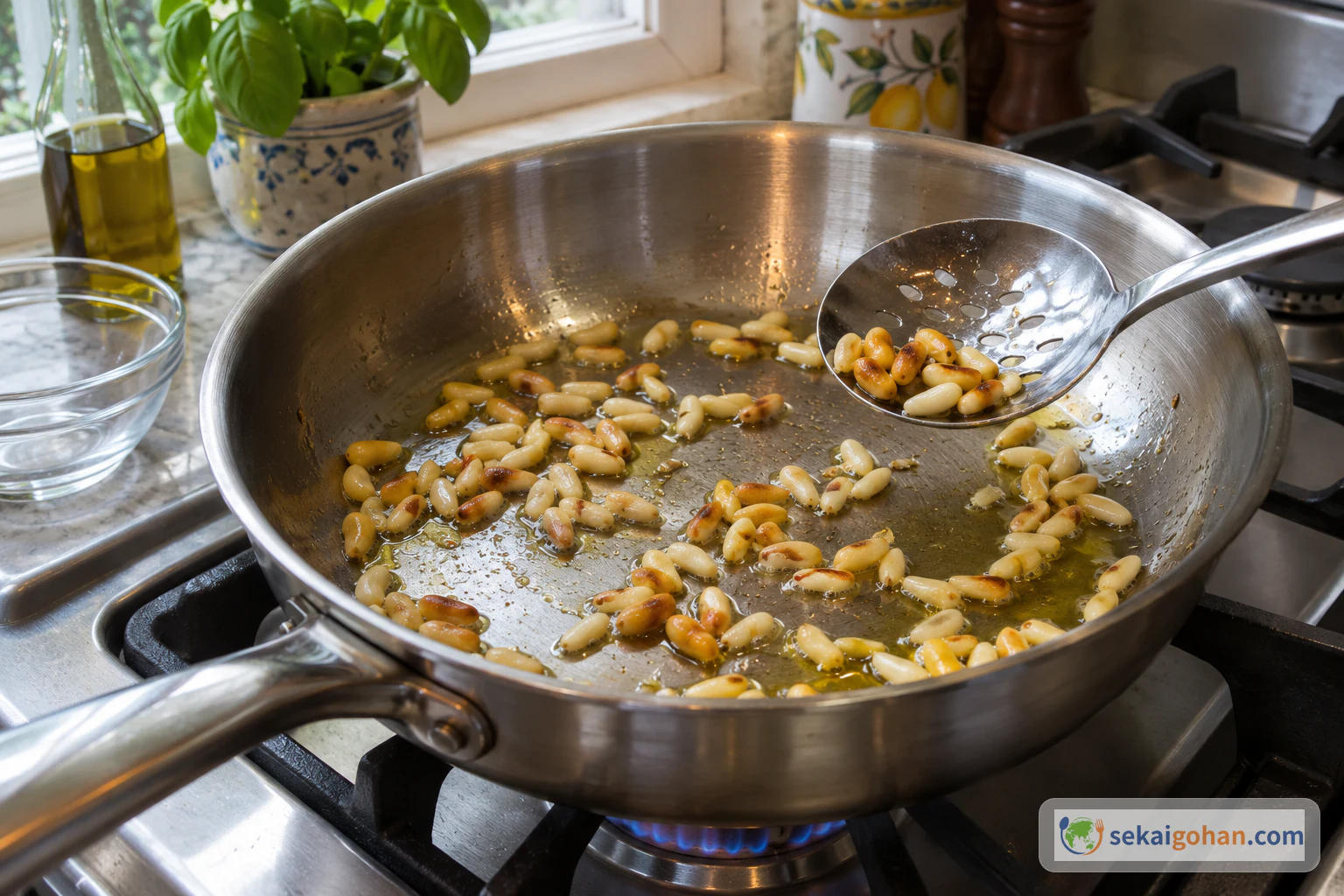
Toast the pine nuts

Pine nuts frying golden in olive oil in a heavy skillet, lifted out with a slotted spoon
Pull them while a few are still pale; they keep darkening in the bowl from their own heat

Heat the 2 tbsp of filling olive oil in the skillet and add the pine nuts. Stir them constantly, because they go from pale to brown in moments. When they are evenly golden and smell nutty, lift them out with a slotted spoon into a small bowl. Leave the oil in the pan for the onion.

STEP 22 / 9

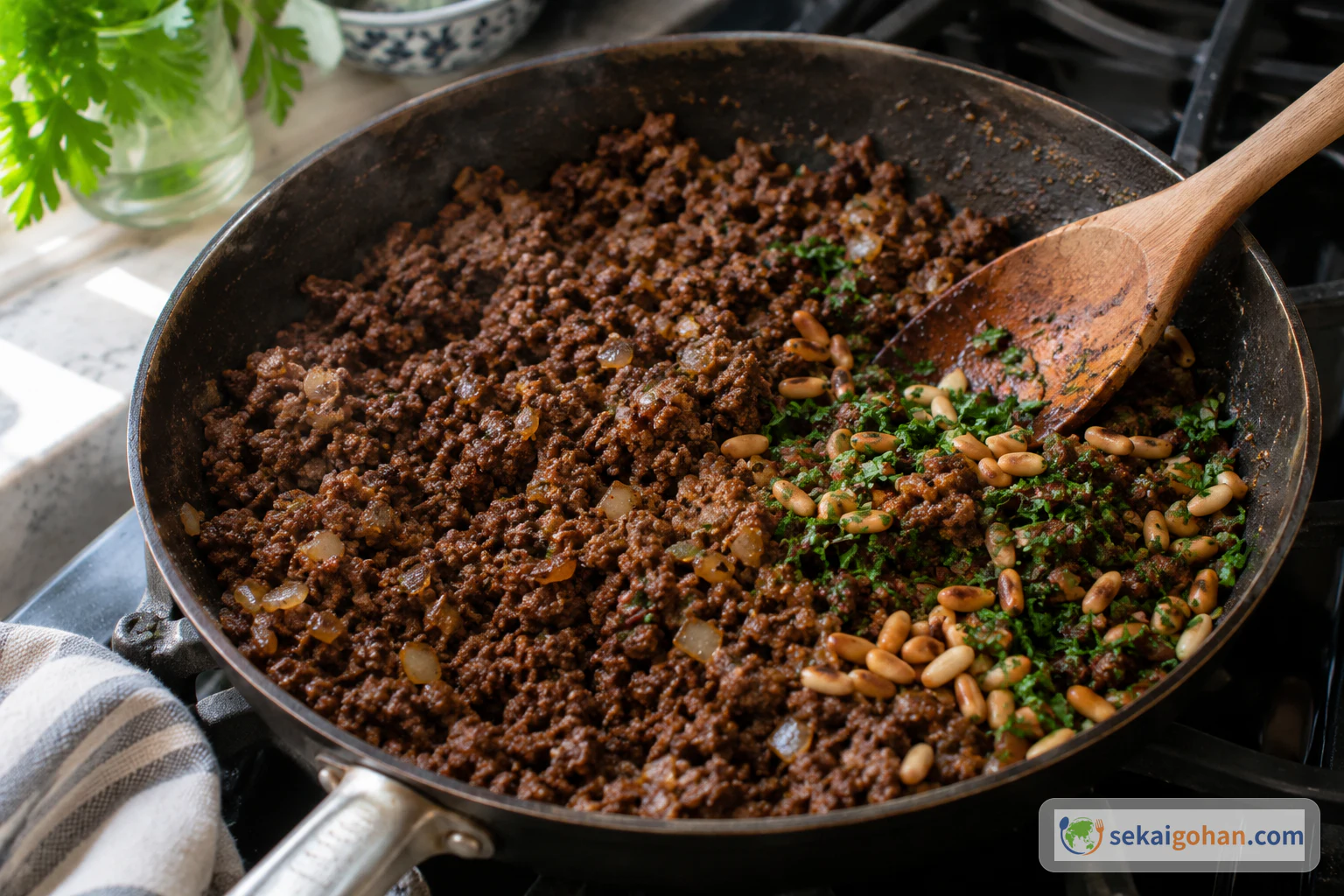
Cook the filling until dry, then cool it

Finished filling in the skillet: onion and ground beef fried dry with spices and pine nuts mixed in
Crumbly and matte, with nothing pooling at the edge of the pan

In the same pan, fry the onion until it takes on color, then add the beef and break it up as it browns. Keep frying until every bit is browned and the pan is dry, with no liquid left. Stir in the pomegranate molasses, cinnamon, allspice, salt and pepper for a few seconds until they smell fragrant, then turn off the heat and mix in the pine nuts and parsley. Spread the filling on a tray and let it cool completely; the meat should feel crumbly and dry to the touch.

Cook the meat through

Ground meat must reach 167°F (75°C) in the center. Check with a food thermometer before you add the spices. Wash your hands, board and tools after handling raw meat, and keep the raw meat away from the cooked filling.

STEP 33 / 9

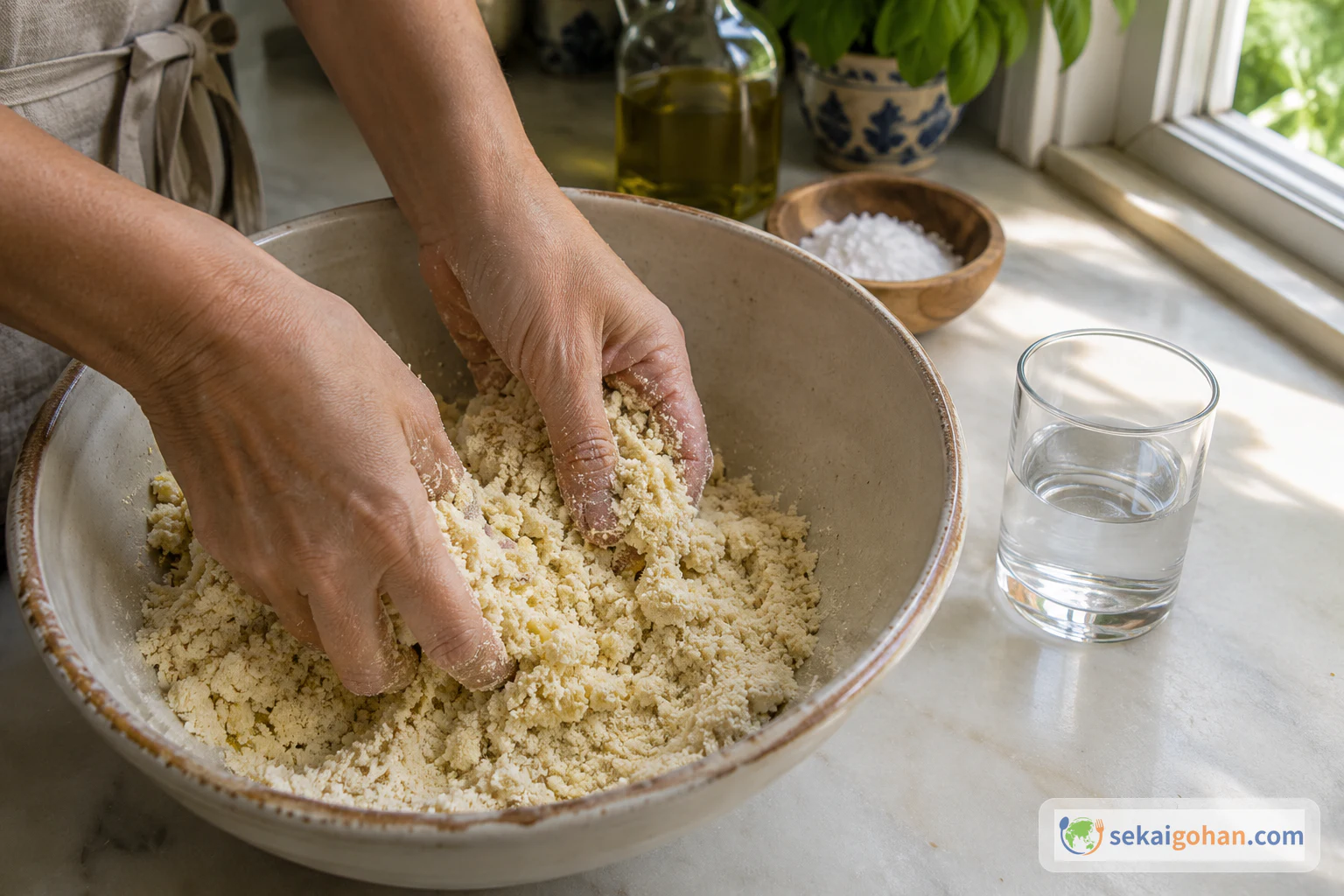
Rub the oil into the flour

Olive oil rubbed into flour in a bowl until it forms coarse crumbs
No dry, white flour should be left at the bottom of the bowl

Mix the flour and the dough salt in a large bowl. Drizzle the 3 tbsp of olive oil over the whole surface and rub it into the flour between your palms, working through every bit. Keep going until the mixture looks like coarse, damp sand. Squeeze a handful in your fist: it should clump together, then crumble as soon as you open your hand.

The rubbing makes the crust

Coating every grain of flour with oil is what gives the fried shell its flaky, crisp break. Rushed rubbing leaves a crust that is tough instead of crisp, so take the time here.

STEP 44 / 9

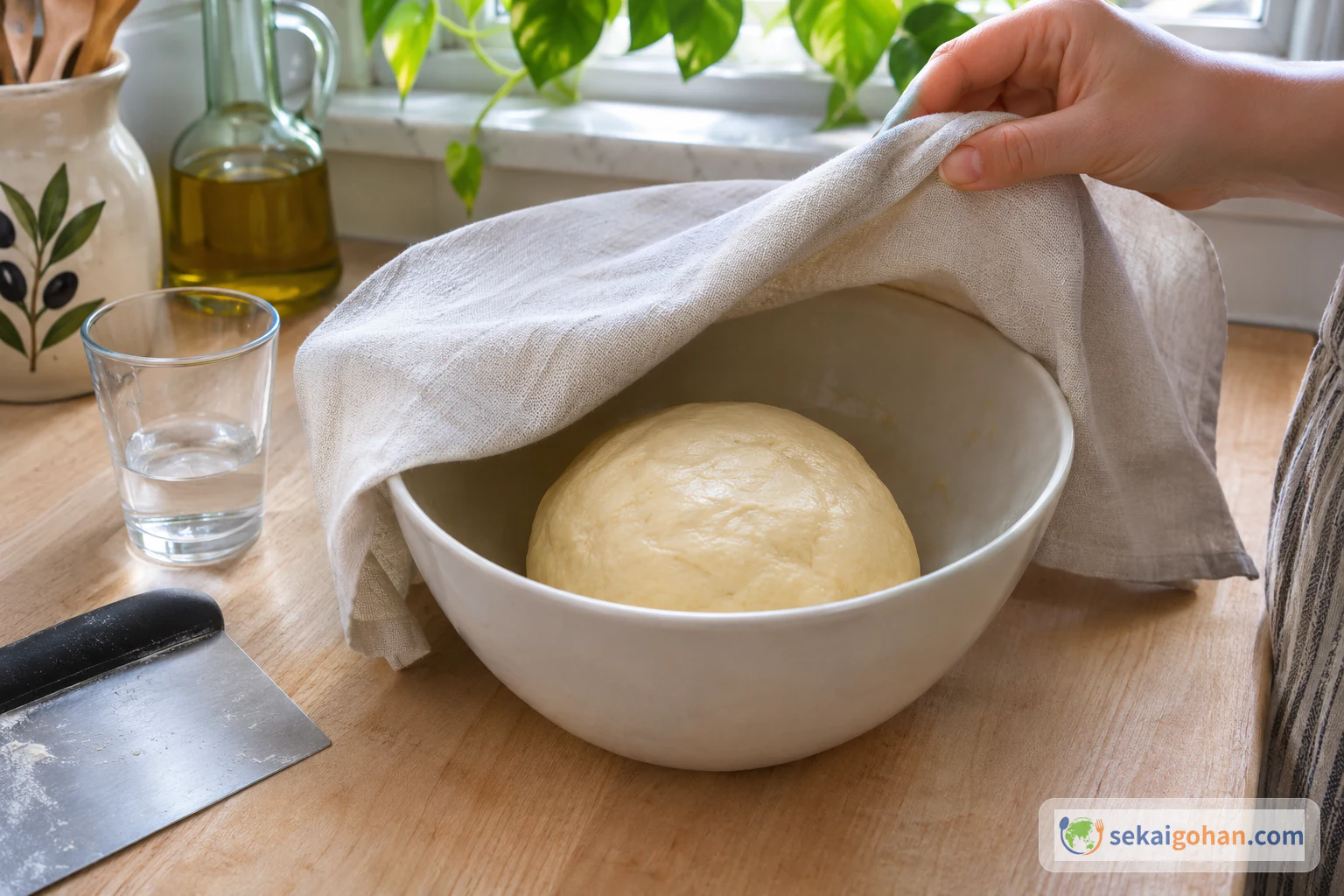
Knead and rest the dough

Kneaded dough rounded into a ball in a bowl and covered to rest
A smooth, unbroken surface on the ball shows the kneading is done

Add most of the water and gather the dough with a rubber spatula, holding the rest back and adding it only if dry patches remain. Knead by hand for 8 to 10 minutes. The dough is ready when it no longer feels sticky and stretches thin without tearing. Shape it into a smooth ball, cover it and let it rest for 1 hour without skipping it.

STEP 55 / 9

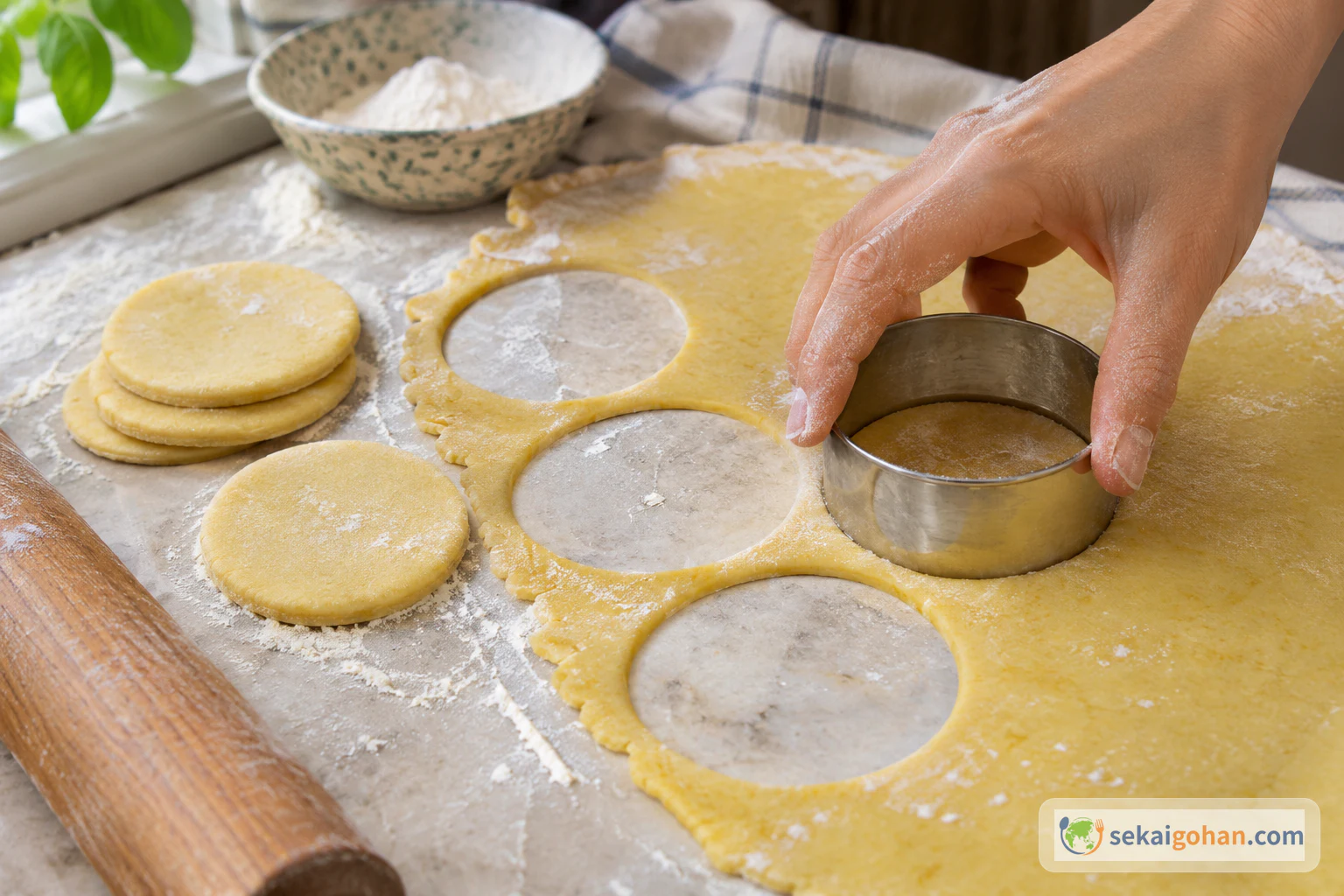
Roll and cut the rounds

Dough rolled on a lightly floured counter, cut into rounds with a round cutter
A light haze of flour on the counter is enough; the dough should not look dusty

Dust the counter lightly and roll the dough from the center outward to an even sheet at least ¼ inch (6 mm) thick. Use as little flour as you can, because extra flour dries the dough and leads to tears in the oil. Cut rounds with the 3-inch (8 cm) cutter, starting at the edge to fit in as many as possible. Gather the scraps, roll them again and keep all dough covered while you work; the rounds should lift cleanly and keep their shape.

STEP 66 / 9

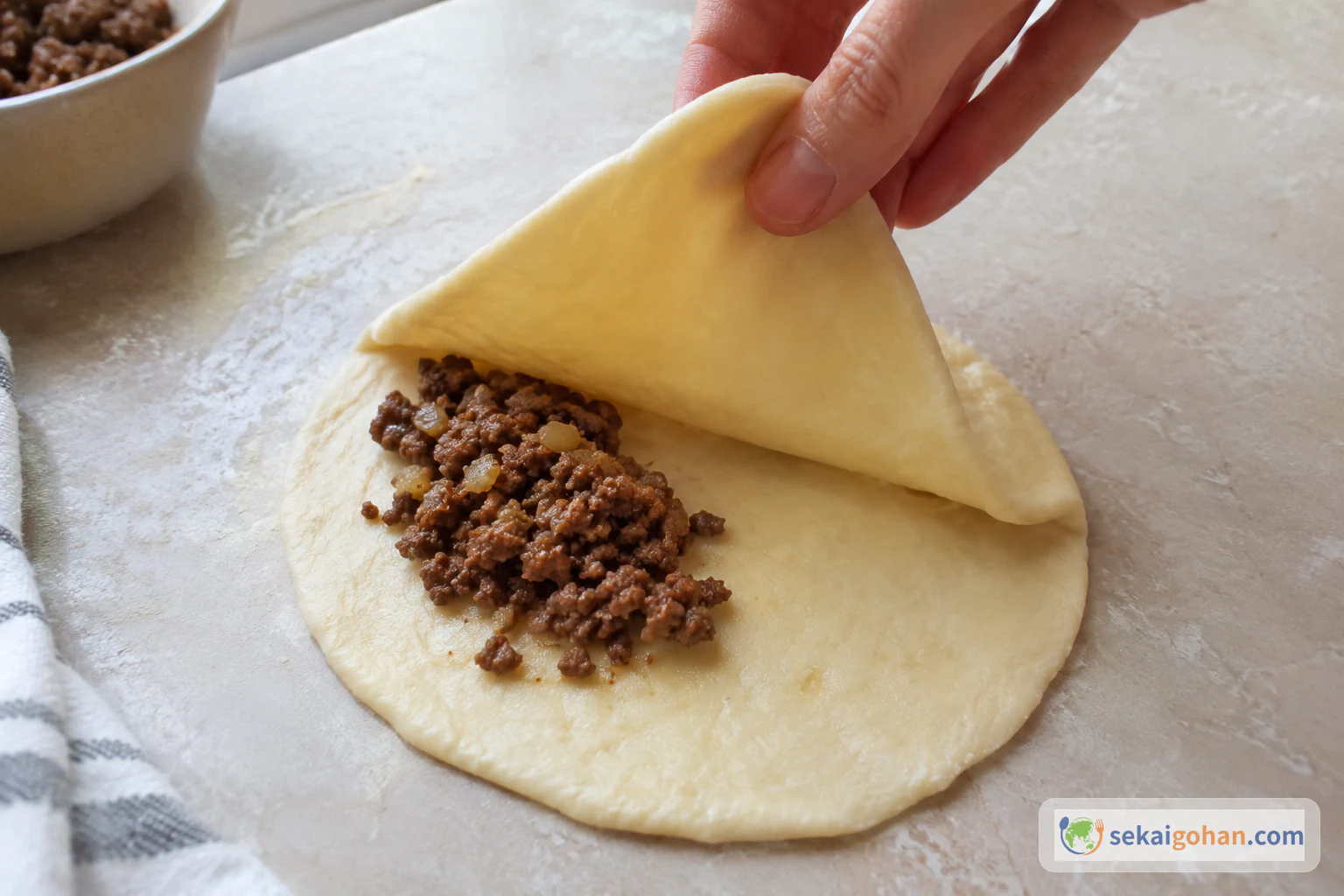
Fill and fold

A round of dough with meat filling on one half and a clear border, half folded into a half-moon
Keep the filling well back from the line where the edges will meet

Place 1 to 2 tsp of filling on one half of each round, leaving a wide, clean border. Wipe away any crumbs of meat that land on the edge, since a single crumb in the seam is enough to make it open in the oil. Fold the other half over into a half-moon. Press gently from the filling outward to push out the air; the top should lie snug over the meat with no puffed pocket.

STEP 77 / 9

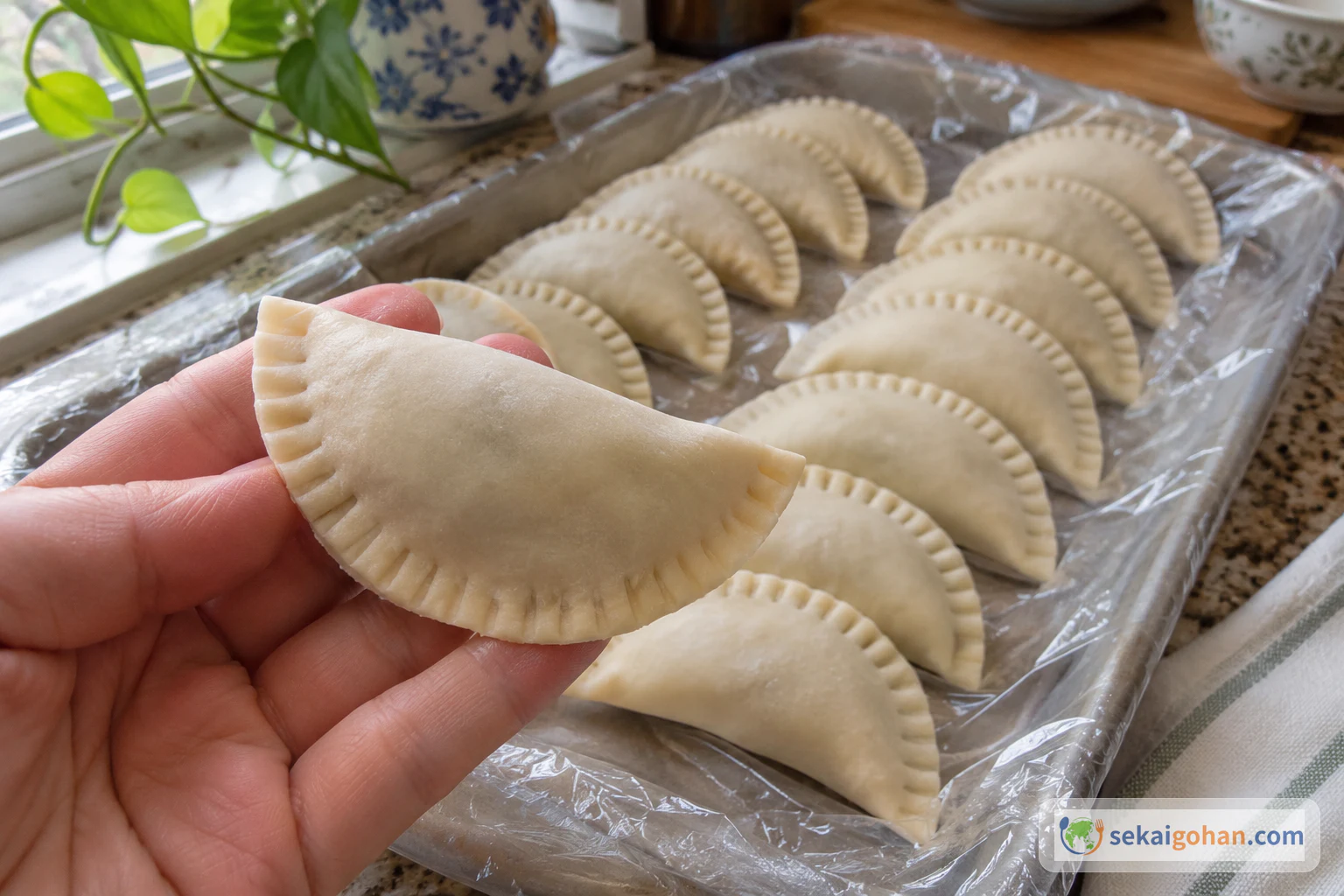
Seal and set them on a tray

Sealed sambousek lined up on a tray, one held up to show the fork-crimped edge
The crimp lines should run right to both corners of the half-moon

Press the edges together firmly with a fork or your fingers to crimp and seal them. Lay the pastries in rows on a tray lined with cling film. Freezing the tray for 10 minutes firms them and makes them easier to handle in the oil. For a make-ahead batch, freeze them solid on the tray and move them to a freezer bag; the sealed edge should feel firm and flat, with no gaps.

STEP 88 / 9

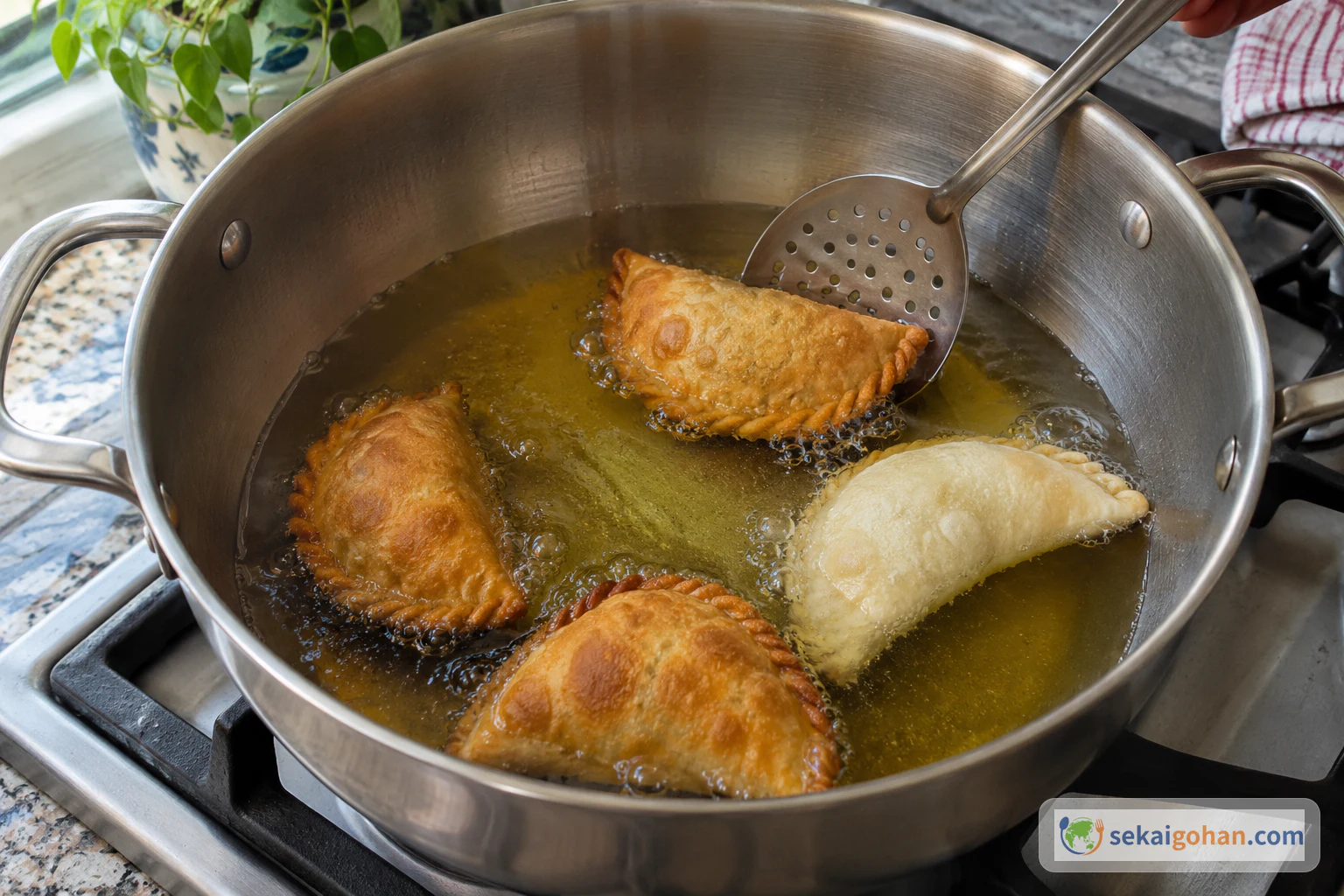
Fry in small batches

Sambousek frying a few at a time in hot oil in a deep pan, turning golden on both sides
Steady, even bubbles around each pastry mean the oil is holding its heat

Heat oil at least 2 inches (5 cm) deep in a deep pan over medium-high heat. Drop in a scrap of dough: it should sizzle at once. A thermometer reading of about 340°F (170°C) is a good guide. Fry 3 to 5 pastries at a time, spooning hot oil over their exposed tops for the first 45 seconds. Then fry for 4 to 6 minutes, turning them about once a minute, until both sides are evenly deep gold.

Hot oil

Use a deep pan so the oil sits well below the rim, and lower the pastries in with a slotted spoon. Stay at the stove the whole time and keep children away from the pan.

Small batches keep the oil hot

Crowding the pan drops the oil temperature, and cool oil leads to pale, greasy pastries that split open. Wait for the oil to sizzle a scrap again before each new batch.

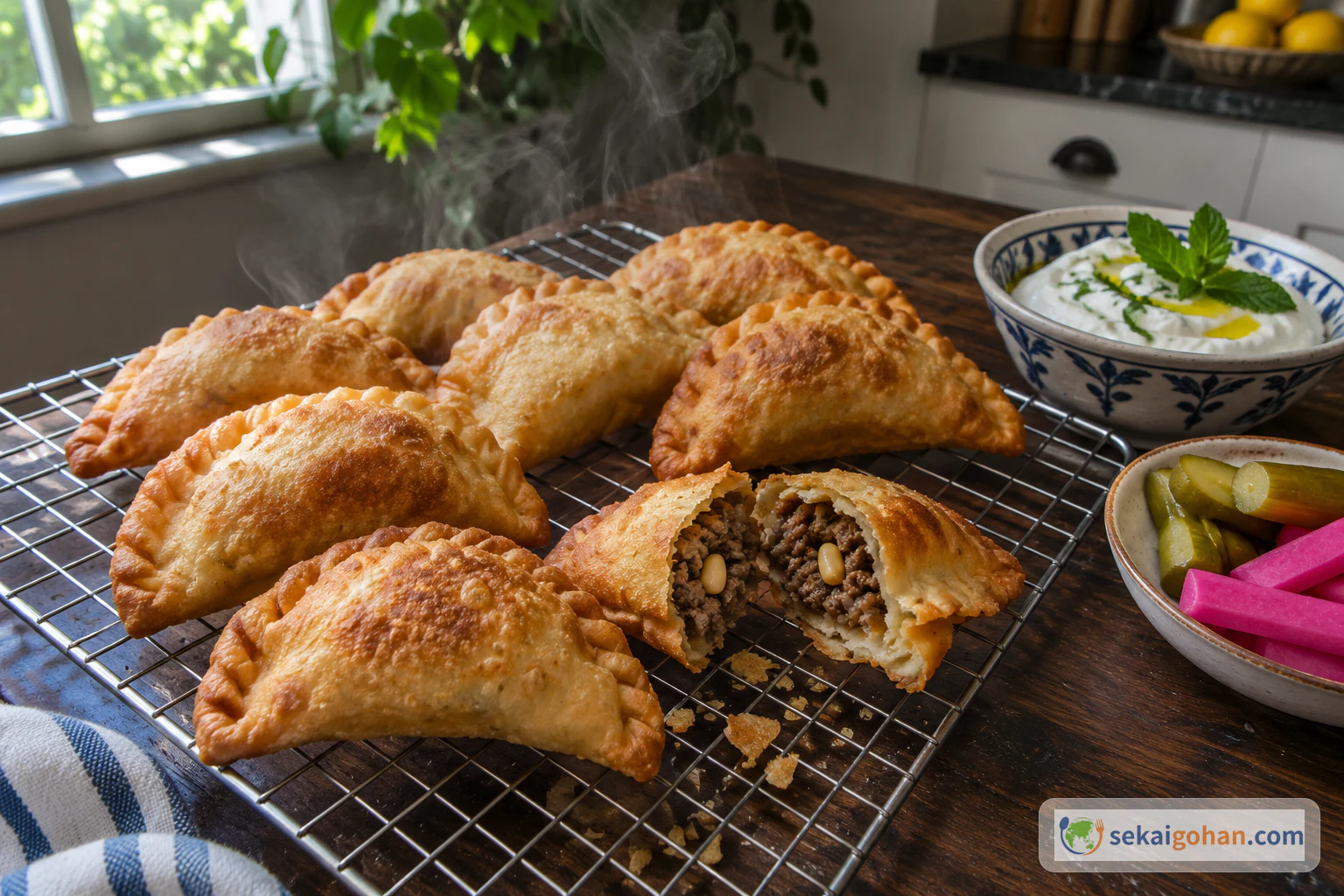
STEP 99 / 9

Drain on a rack and serve warm

Sambousek draining on a wire rack, one broken open to show beef and pine nut filling, with yogurt and pickles on a mezze-style table
Air on all sides keeps the bottoms as crisp as the tops

Lift the pastries out with the slotted spoon onto a wire rack or mesh colander. Paper towels underneath trap steam and soften the crust, while a rack lets the oil drip away. Serve them warm. Break one open: the shell should shatter crisply around a dry, steaming filling.

0 / 0
Ingredients

Ingredients

1 / 1

Ingredients

Ingredient Amount Role
All-purpose flour 1½ cups Body of the dough
Salt, for the dough ½ tsp Seasons and tightens the dough
Olive oil, for the dough 3 tbsp Rubbed into the flour for a flaky, crisp shell
Water ½ cup (120 ml), most of it at first Brings the dough together
Olive oil, for the filling 2 tbsp Toasts the pine nuts, then cooks the onion and meat
Pine nuts 2 tbsp Nutty aroma and a soft crunch in each bite
Onion 1 large, finely chopped Sweetness in the filling
Ground beef 9 oz (250 g) The main filling
Ground cinnamon ¼ tsp Warm, sweet spice
Ground allspice ¼ tsp Depth behind the cinnamon
Pomegranate molasses (dibs rumman), optional 1 tsp A faint sweet-sour note and gloss
Black pepper, freshly ground 1 tsp, or to taste Gentle heat
Salt, for the filling To taste Seasoning
Parsley, chopped, optional A little Color and freshness
Oil for frying Enough to reach at least 2 inches (5 cm) deep in the pan Frying
0 / 0

The first half-moons go into the oil with a sharp sizzle, and for the opening seconds you tip spoonfuls of hot oil over their pale tops until the whole surface bubbles. A few minutes later they come out deep gold, crimped edges standing up like little ropes, and the smell of cinnamon, allspice and toasted pine nuts reaches the next room. Sambousek are small fried meat pastries from Lebanon: a crisp, flaky shell made with olive oil, and inside, beef and onion cooked until dry, warmed with sweet spice and lifted by a little pomegranate molasses. They are finger food, eaten warm from a shared platter, and they disappear fast.

Half-Moons on the Mezze Table

In Lebanon these pastries turn up wherever people gather in numbers. They are a fixture at family gatherings and wedding buffets, they appear on the table to break the fast during Ramadan, and they sit among the small plates of an evening mezze. Lebanese cooks split the occasions by filling: cheese sambousek, made with Akkawi or jibneh baida, belong to the breakfast table, while the meat version waits for the evening spread. For more of the country's dishes, see the Lebanon country page.

The name is old. A tenth-century Baghdad cookbook already lists sanbusaj, and a fifteenth-century manuscript from central India names the samosa. The pastry is usually traced to Central Asia, from where it spread both west and east, and one account has a Persian sanbosag reaching the Levant along medieval trade routes. Where it was first made is not settled, but the family of names has been travelling for more than a thousand years.

How it differs from the samosa and from house to house

The Indian samosa shares that ancestry and little else at the table. It is folded into a triangle from a firm dough and usually filled with spiced potato. Lebanese sambousek are round cut, folded into half-moons and filled with meat and pine nuts, so the shape, the pastry and the filling all come from a different line.

Within Lebanon the dough itself changes with the cook. The version here rubs olive oil into flour for a short, flaky crust with no egg or milk. Other households knead a soft yeast dough with egg and milk and twist large batches into crescents for parties. Another style rubs melted ghee into the flour, rolls the pastry much thinner and fills it with lamb, finishing the edge with tiny angled pleats. Cooks also vary the crimp so the meat and cheese pastries can be told apart on the same platter.

One pastry, many spellings

You will see sambousek, sambusak, sambousak and sanbusak on Lebanese menus, and سمبوسة in Arabic script, which reads as sambusa. Samosa is the South Asian name for its own regional style.


Ingredients
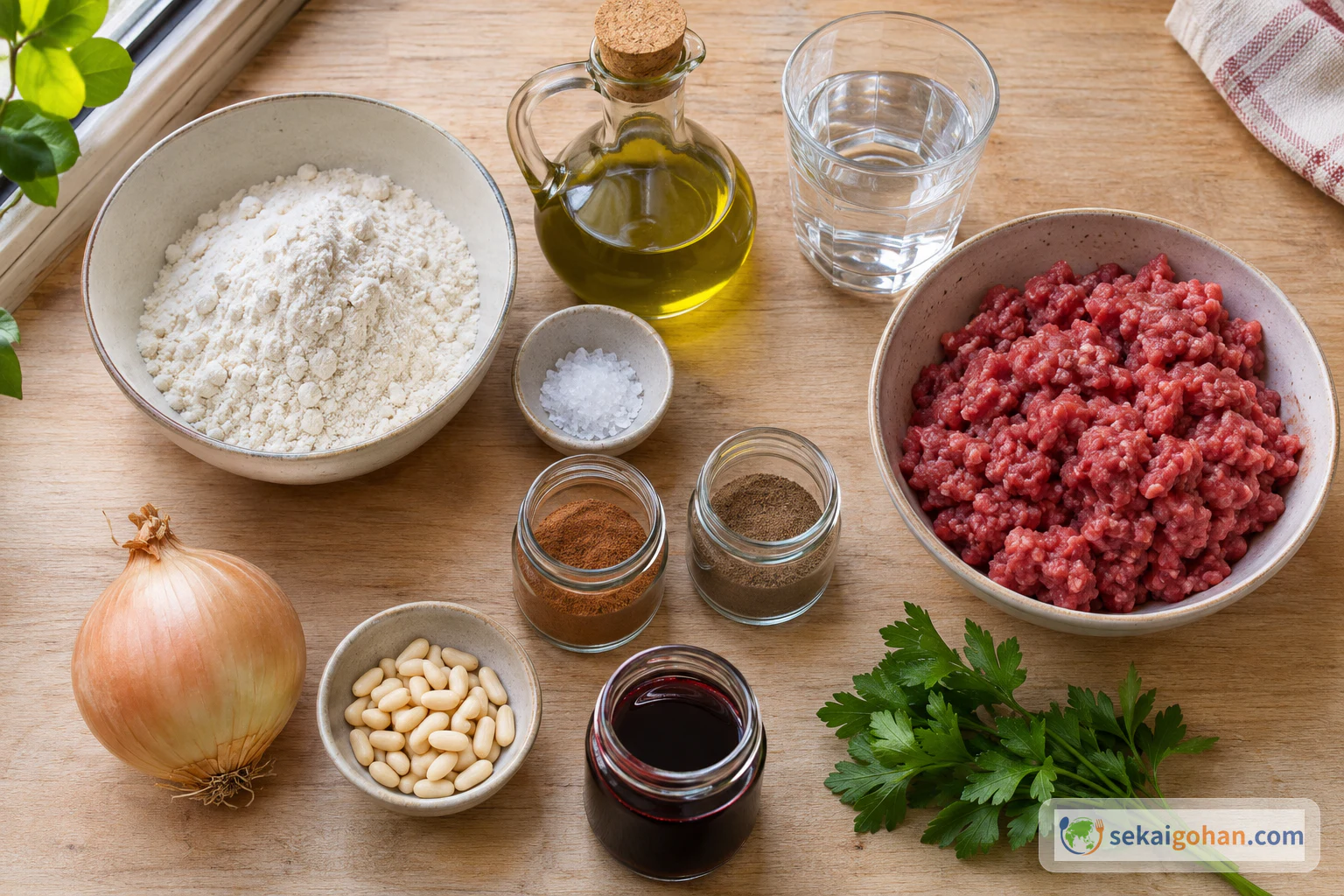
Overhead view of sambousek ingredients on a wooden board: flour, olive oil, water, salt, ground beef, onion, pine nuts, cinnamon and allspice, pomegranate molasses and parsley
Olive oil appears twice: one measure for the dough, a separate one for the filling

Two things decide how these taste: the pine nuts fried first and stirred in at the end, and spices kept to a whisper so the beef stays in front.

Allergen information

The pastry contains wheat (gluten), and the filling contains pine nuts. The main recipe uses no egg, milk or sesame. The yeast-dough style described in the variations adds egg and milk, and the cheese filling contains milk. Check the labels of spice blends if you use one in place of allspice.

Equipment

  • Large mixing bowl and rubber spatula
  • Skillet and slotted spoon
  • Rimmed tray for cooling the filling
  • Rolling pin
  • 3-inch (8 cm) round cutter, or a glass with a rim of the same size
  • Fork for crimping
  • Tray lined with cling film
  • Deep pan that holds oil at least 2 inches (5 cm) deep with plenty of room above it
  • Wire rack or mesh colander for draining
  • Food thermometer

Choosing and Substituting

Most of the list comes from any supermarket. Pine nuts are the one item worth buying properly: a small bag is enough, and their buttery crunch is the signature of the filling. If you cannot get them, use almonds split lengthwise; they give a firmer, sharper bite and a less rounded flavor. Pomegranate molasses lives in Middle Eastern grocers and online shops. It adds a dark, tart edge and a little shine, and when you have none, leave it out and the filling is simply milder.

Lamb is the other meat Lebanese cooks fill these with, and chicken also works in place of beef. Allspice can be replaced with an Arabic spice blend you already own, such as Lebanese seven-spice. For the dough, olive oil can be swapped for a heat-tolerant oil mixed with melted ghee. Keep the cinnamon at the measured amount: more of it makes the filling taste sweet and flat.

Keep the pine nuts separate until the end

Toasted first and added after the heat is off, the pine nuts stay crunchy and fragrant. Stirred in raw with the meat, they soften and lose their toastiness in the pan juices.


Method

Make the filling first, because it has to be completely cold before it touches the dough; it can even be cooked a day ahead and refrigerated. While it cools, mix and knead the dough, then give it its full hour of rest, which is the main hands-off stretch. Rolling, filling and sealing go quickly once the dough is ready, and the frying itself is done in small batches.

When They Open, Sag or Go Soft

What you see Why What to do
Pastries split open in the oil Dough rolled too thin or dried out, crumbs in the seam, too much filling, or oil not hot enough Roll to at least ¼ inch (6 mm), dust lightly, wipe the edge clean before folding, keep to 1 to 2 tsp of filling and wait for the sizzle test
Shell is hard rather than crisp and flaky Oil not rubbed well into the flour, or fried short and too hot Rub until the flour is like damp sand, and fry the full 4 to 6 minutes, turning about every minute
Filling makes the dough soggy Meat not fried dry, or filling used while still warm Return it to the pan until dry, then cool it completely before shaping
Dough sticky after adding water Water went in faster than the flour could take it Keep kneading; the dough absorbs it. Next time hold back part of the water
Crisp crust softens soon after frying Pastries drained on paper Drain on a rack or colander

Serving, Variations and Storage

At the table

Set the platter out with the rest of the mezze while the pastries are still warm, so people can pick them up with their fingers. They sit easily next to other Lebanese small plates, and at an iftar or a family party a full tray goes quickly.

Variations

  • Cheese filling: use the same dough with Akkawi or jibneh baida inside, the breakfast version in Lebanon. Change the crimp pattern so the cheese and meat pastries are easy to tell apart.
  • Spinach and greens: fillings of spinach or chard, sometimes with raisins, give a meat-free and vegan version with an earthier, slightly sweet flavor.
  • Baked: brush the pastries with oil and bake at 425°F (220°C) for about 15 minutes for a drier, breadier shell and less oil at the stove.
  • Yeast dough: a soft dough with egg and milk twisted into crescents makes a larger party batch with a puffier, bready bite. It contains egg and milk.
  • Pleated rope edge: instead of a fork crimp, fold small overlapping pleats at an angle along the edge. It changes the look, not the taste.

Storage and making ahead

Make the filling the day before and keep it covered in the refrigerator. Unfried pastries frozen solid on the tray keep in the freezer for a month or two in a bag or container; fry them straight from frozen without thawing. Once fried pastries have cooled, refrigerate them in a covered container the same day rather than leaving them at room temperature, and eat them within 5 days. Reheat them in an oven preheated to 250°F (120°C) for 6 to 8 minutes; on the day you fry them, you can also warm them in a skillet, turning them as they heat. A microwave makes the crust soft.

Frequently Asked Questions

How many pastries does this batch make?

About 15 half-moons cut with a 3-inch (8 cm) cutter. Lebanese party batches made with yeast dough run to 30 or 40, which is why they are the version for weddings and big gatherings. For a mezze spread, this amount suits a small group.

Why roll the dough a full ¼ inch thick? Isn't thinner crisper?

This olive-oil dough needs the thickness to hold the filling and its seam through several minutes in hot oil. Rolled thinner, it tears and splits. The ghee-based pastry rolled to about ⅛ inch (3 mm) is a different dough built to be thin.

How do I tell meat and cheese pastries apart on one platter?

Give each filling its own crimp. Use fork tines on one and a finger-pressed or pleated edge on the other, and anyone reaching for a pastry knows what is inside before the first bite.

Sources

  • But First Chai (Famidha Ashraf), "Sambousek (Lebanese meat pies)." Dough, filling, shaping, frying, troubleshooting, freezing, refrigeration and reheating, substitutions, yield, Ramadan and mezze context, and the history of the name. https://butfirstchai.com/sambousek-recipe
  • The Matbakh (Mariam Nabbout), "Lebanese Beef Sambousek (sambousek lahme)." Place at Lebanese family gatherings and wedding buffets, the yeast dough with egg and milk, the baked alternative, the warning against overfilling and the spinach, chard and raisin option. https://thematbakh.com/sambousek-meat-pastries-sambousek-lahme
  • SOFRA, "Sambousek Recipe — Pastries with Lamb or Cheese (سمبوسك)." Arabic name, the ghee pastry with lamb, frying oil at 170°C, the pleated rope edge, cheese for breakfast and meat for evening mezze, and the Persian sanbosag account. https://www.sofrabeirut.com/recipes/sambousek
  • Food Standards Australia New Zealand, "Preparing and cooking food." Cooking ground meat to 75°C in the center checked with a food thermometer, and keeping raw meat apart from ready-to-eat food. https://www.foodstandards.gov.au/business/charities/preparing-and-cooking-food
  • NHS, "Food poisoning." Thorough cooking and reheating, proper chilling and freezing, avoiding long periods at room temperature, and handwashing. https://www.nhs.uk/conditions/food-poisoning/