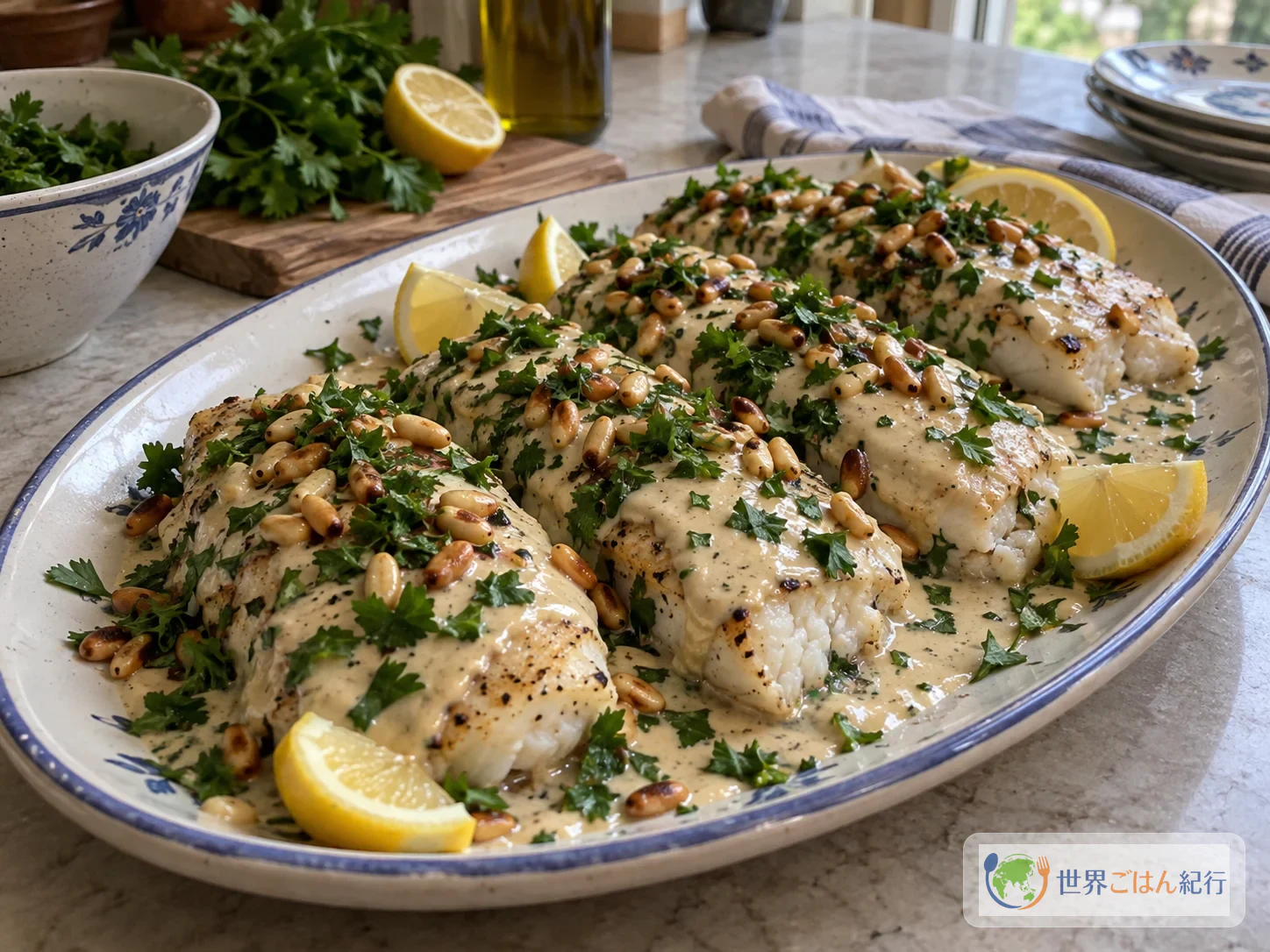
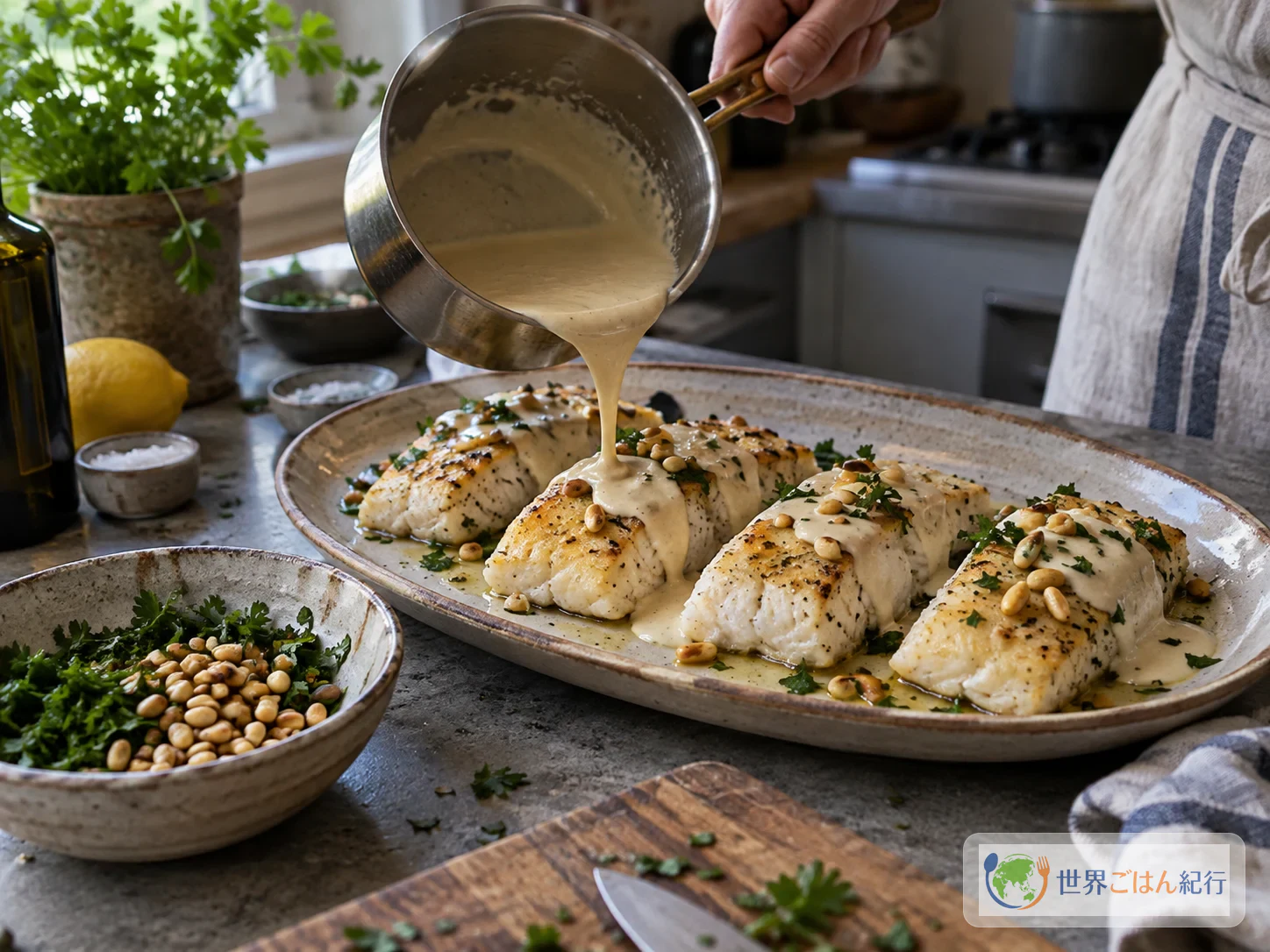
In northern Lebanon, there is a fish dish tied to the port towns of Tripoli and El Mina. For celebrations and family gatherings, baked fish arrives on a big platter, and a pale, nutty tahini sauce is spooned thickly over it. The finish is a scatter of pine nuts and herbs. At the table, people tear bread, scoop up the sauce, lay it over flaked fish and eat. It is white fish and sesame sauce, shared at the center of the gathered family.
The name is Samkeh Harra (Samkeh Harra, سَمْكة حَرّة), meaning "spicy fish," and it is also written Samke Harra. Tahini's rich sesame is layered with lemon's sourness, garlic and chile, and finished with pine nuts and herbs. Lemon's sourness and chile tighten up the heavy sesame flavor. The dish is made with whole fish and with fillets, so this recipe is a home version for 4 servings built on 800 g of unsalted white fish and 120 g of tahini.
A celebration fish from the port, eaten with bread
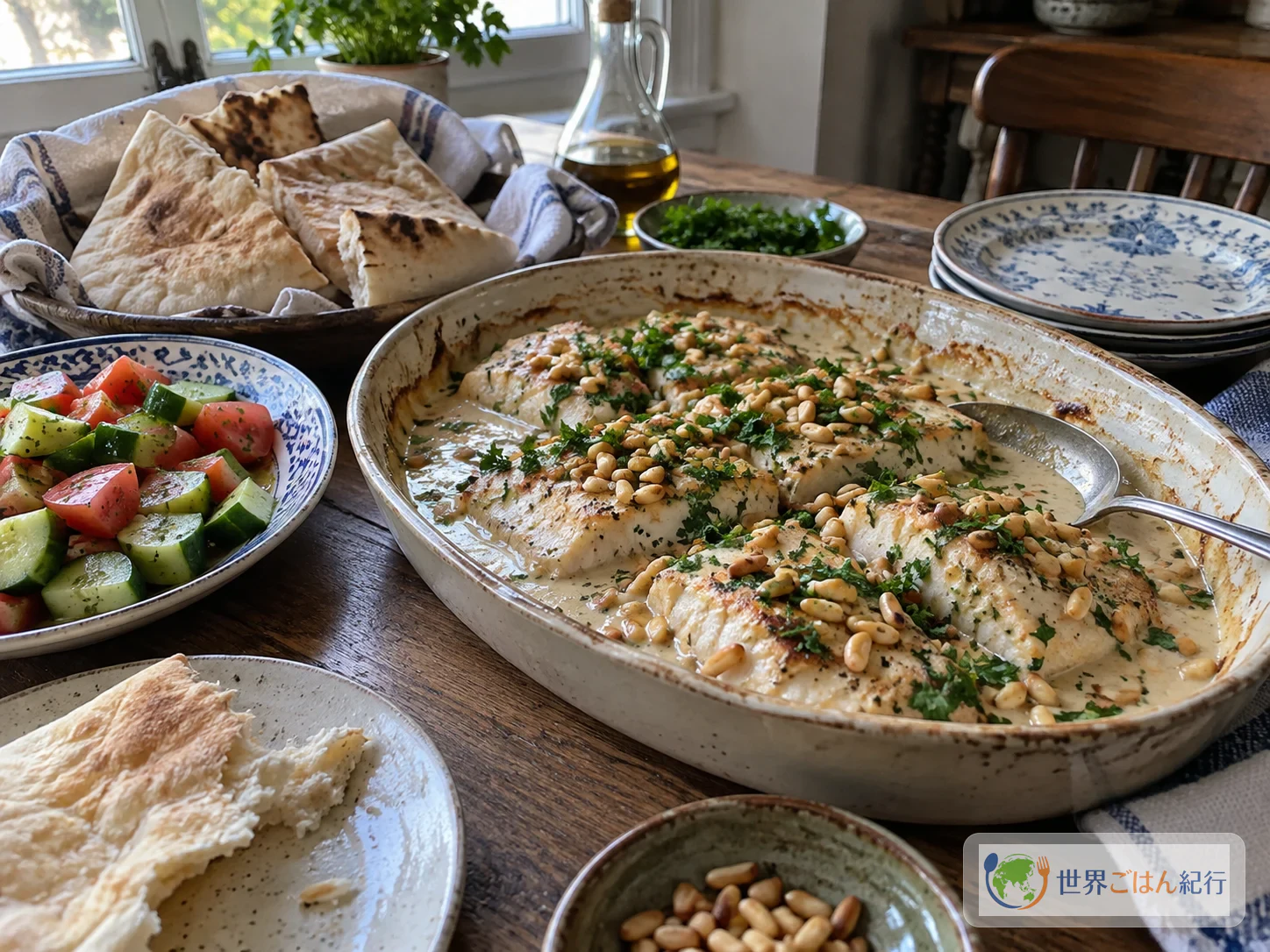
Tripoli is a coastal town in northern Lebanon, and samkeh harra is also presented as a specialty of El Mina. Some cooks serve a baked whole fish as is, others serve boned flesh, and both are covered with a nut-based sauce for celebrations and family gatherings. The link between harbor and fish dishes is easy to imagine, but this article says nothing about catch figures, the birth of the dish or an Ottoman-era origin. What is certain is that it has been eaten as a platter for the family to gather around.
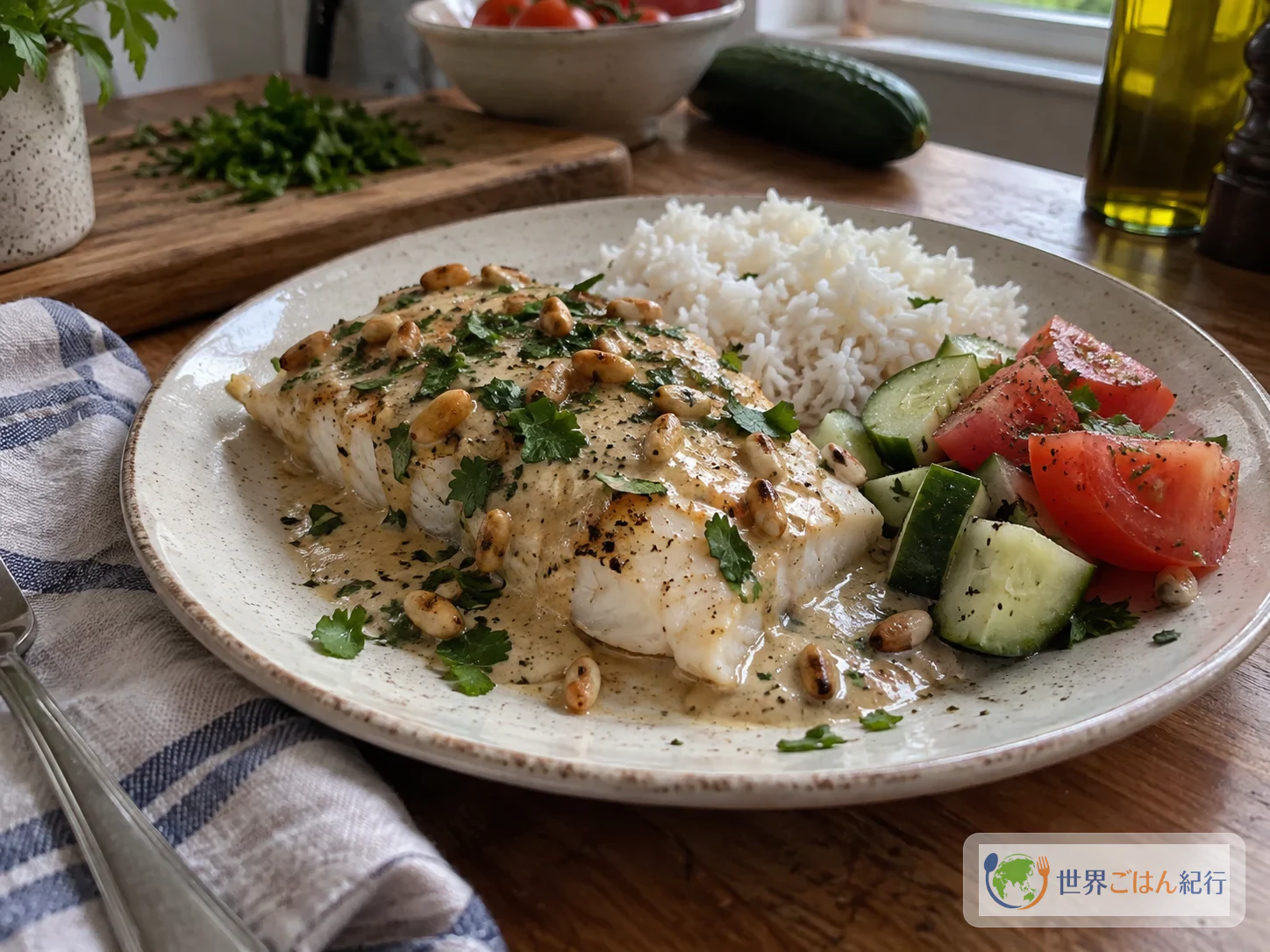
Once the warm fish is generously coated in sesame sauce, add pita. The bread's job is to catch the sauce and flaked fish, and scooping the sauce with bread is how you eat this dish. You can also tuck lettuce and tomato into the pita for a sandwich. For a meal, serve it with bread or rice as the starch and fresh vegetables. The starch is not counted in the ingredient tables below or in the nutrition estimate.
The "harra" in the name is a word for spiciness, and the amount of chile varies from recipe to recipe. You don't have to think it must be fiery because of the name; you can adjust the chile while keeping the flavor of lemon, garlic and sesame. Leaving out the heat is a home adaptation, not a standard set by local cooks.
Ingredients (serves 4)
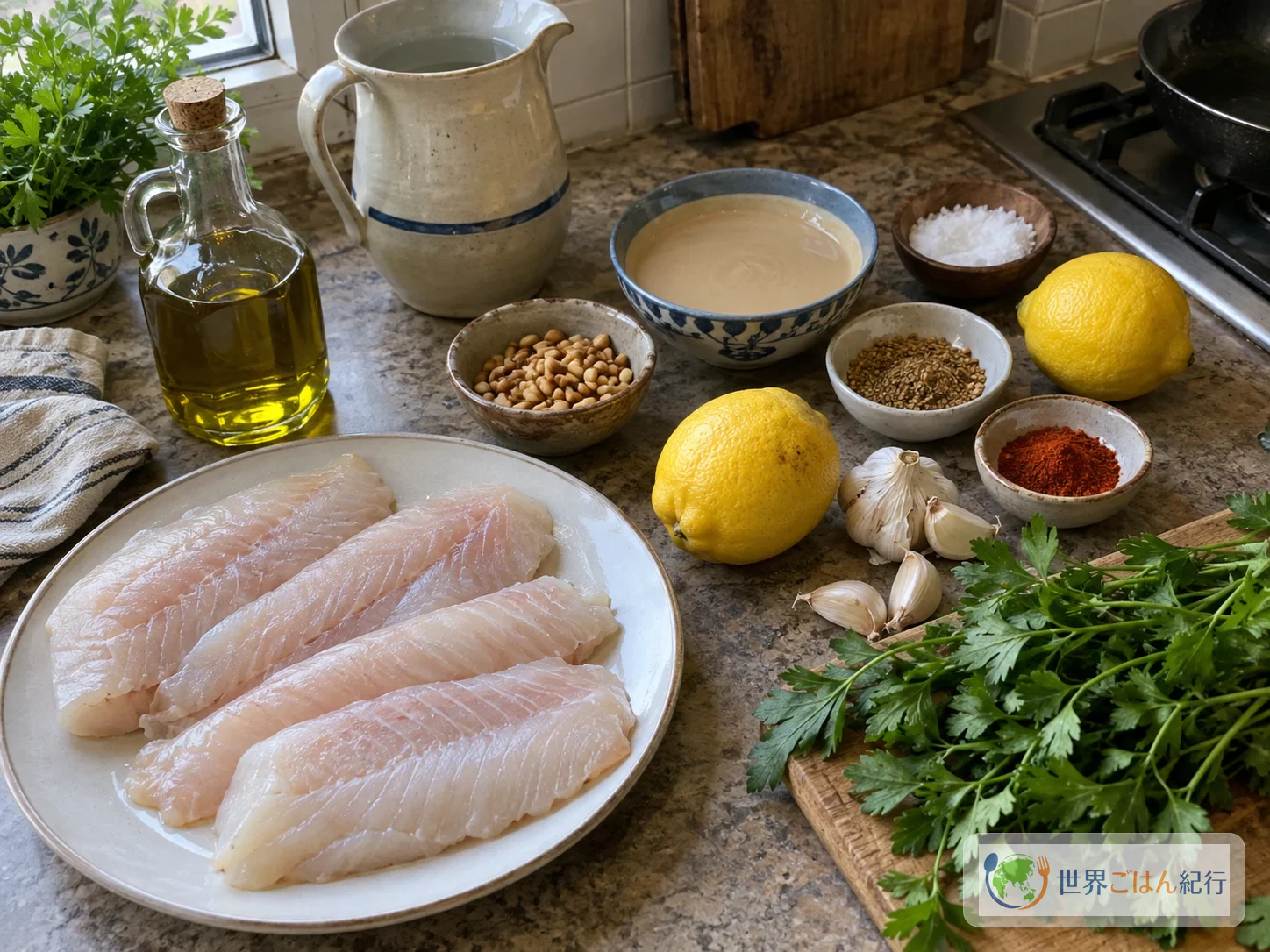
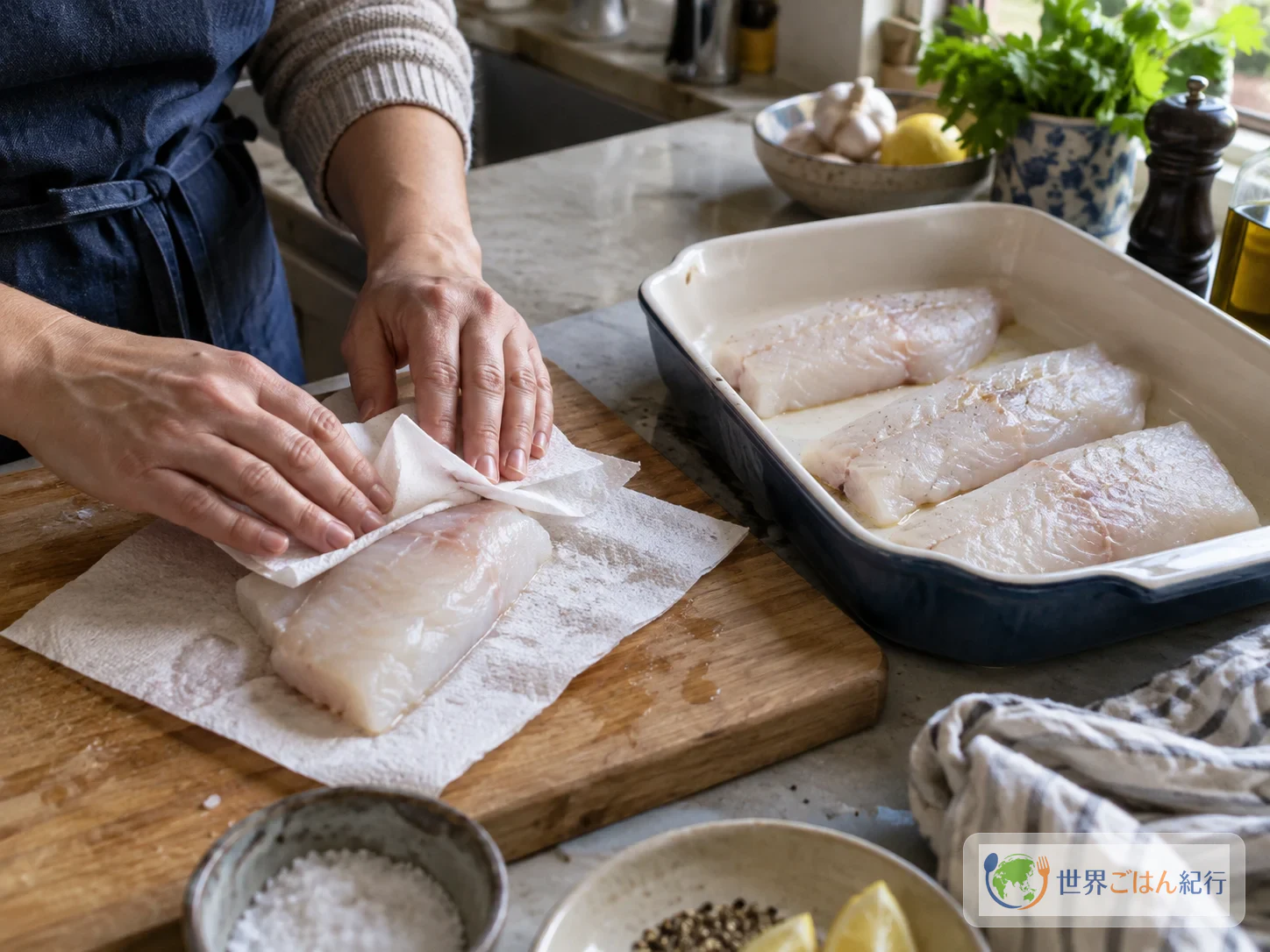
For the fish, choose unsalted white fish such as cod, sea bream or sea bass. The total is 800 g, cut into 4 pieces 2–3 cm (about 1 inch) thick. Avoid salt cod. Cod is mild and pairs easily with the sauce, so I recommend it for home cooks; that is only a suggestion, not a claim that any particular fish was a Lebanese ingredient. Thaw frozen fish in the refrigerator the night before, and pat the surface dry before cooking. Thawing time is not included in the 45 minutes.
Buying the sesame paste
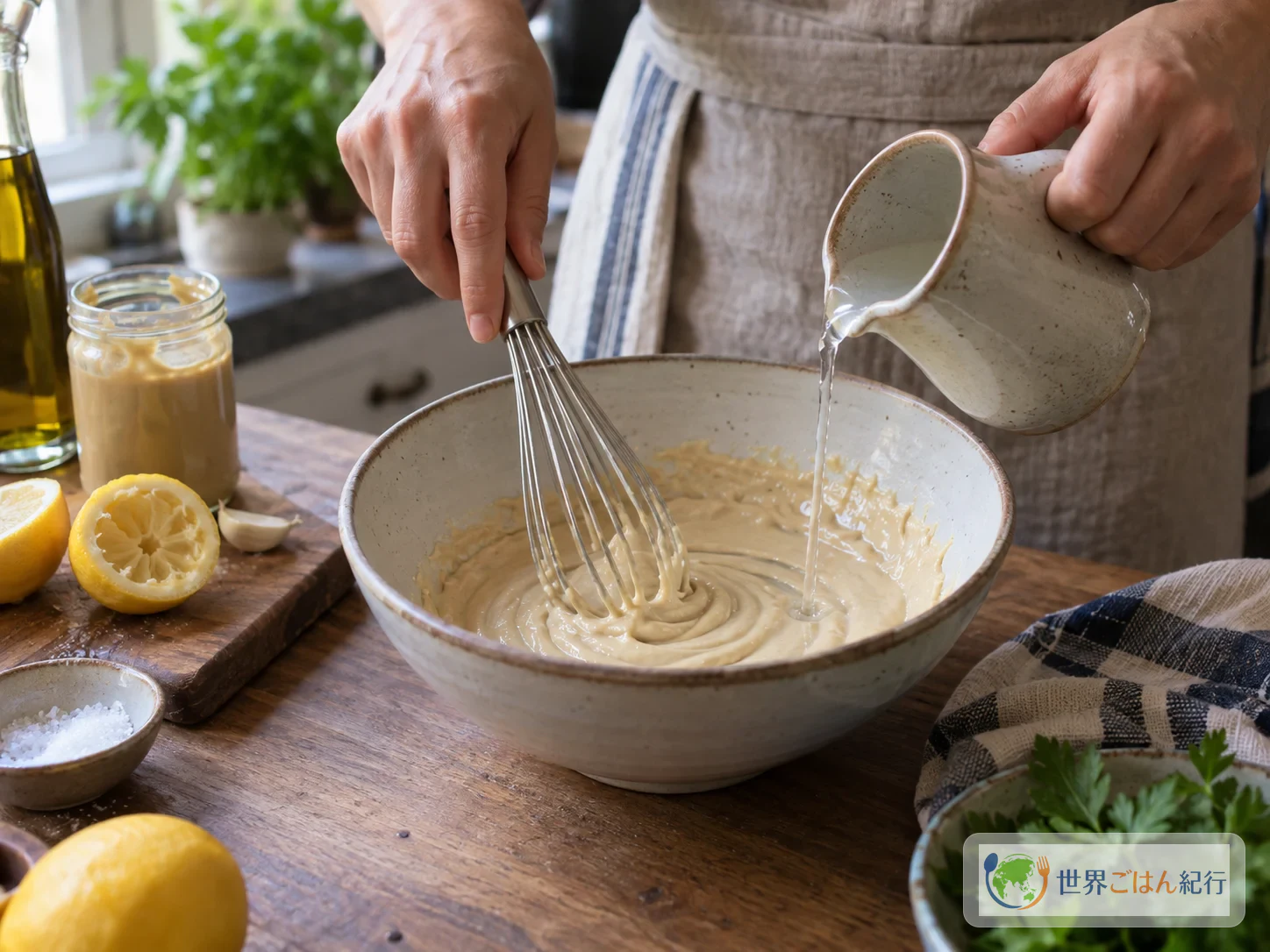
Tahini is a paste of sesame. Choose unsweetened, unsalted sesame paste, mix the oil floating on top of the jar thoroughly with the thick part at the bottom, and then weigh out 120 g. White sesame paste can replace it at the same weight. This is a suggestion for home cooks; roasted aroma and thickness differ by product, so adjust with the amount of water. Some sesame dressings contain sugar and vinegar, and they cannot be used as is in place of this amount of tahini.
Look for tahini by its general name at a Middle Eastern or international grocer, or online. Stock and prices of individual stores cannot be guaranteed here. For coriander, choose ground seed; for cayenne, a powder of chile alone. A blend sold as chili powder may be seasoned differently, so read the ingredients. The pine nuts are used at the end, so a small amount is enough. Using walnuts instead is not a way to avoid an allergy to other tree nuts. If you have tahini left over, you can use the same sesame in another dish with hummus (in Japanese).
This recipe contains fish, sesame and pine nuts. If you substitute walnuts, then walnuts are included. If you have a sesame allergy, use neither tahini nor white sesame paste. Leaving out the nuts does not protect against sesame or fish allergy. Check the ingredient and cross-contact labels on seasonings. If you serve pita, check for wheat too.
Method
Prep is 20 minutes and cooking 25 minutes, about 45 minutes in all. This is a home timing for fillets. You make the sauce while the fish bakes in the oven, so the plan is to make the sauce while the fish bakes. The fish and sauce are cooked separately and combined at the end, so you can adjust the fish from overcooking and the sauce from over-reducing independently.
If, just before serving, the sauce has thickened so much that it drops from the spatula in clumps, add 1 tbsp of water at a time and stir over low heat. Stop when it is back to a thick stream you can pour over the fish. Don't add all of the fish's pan juices to the sauce; that changes the saltiness and makes it watery, so adjust with water.
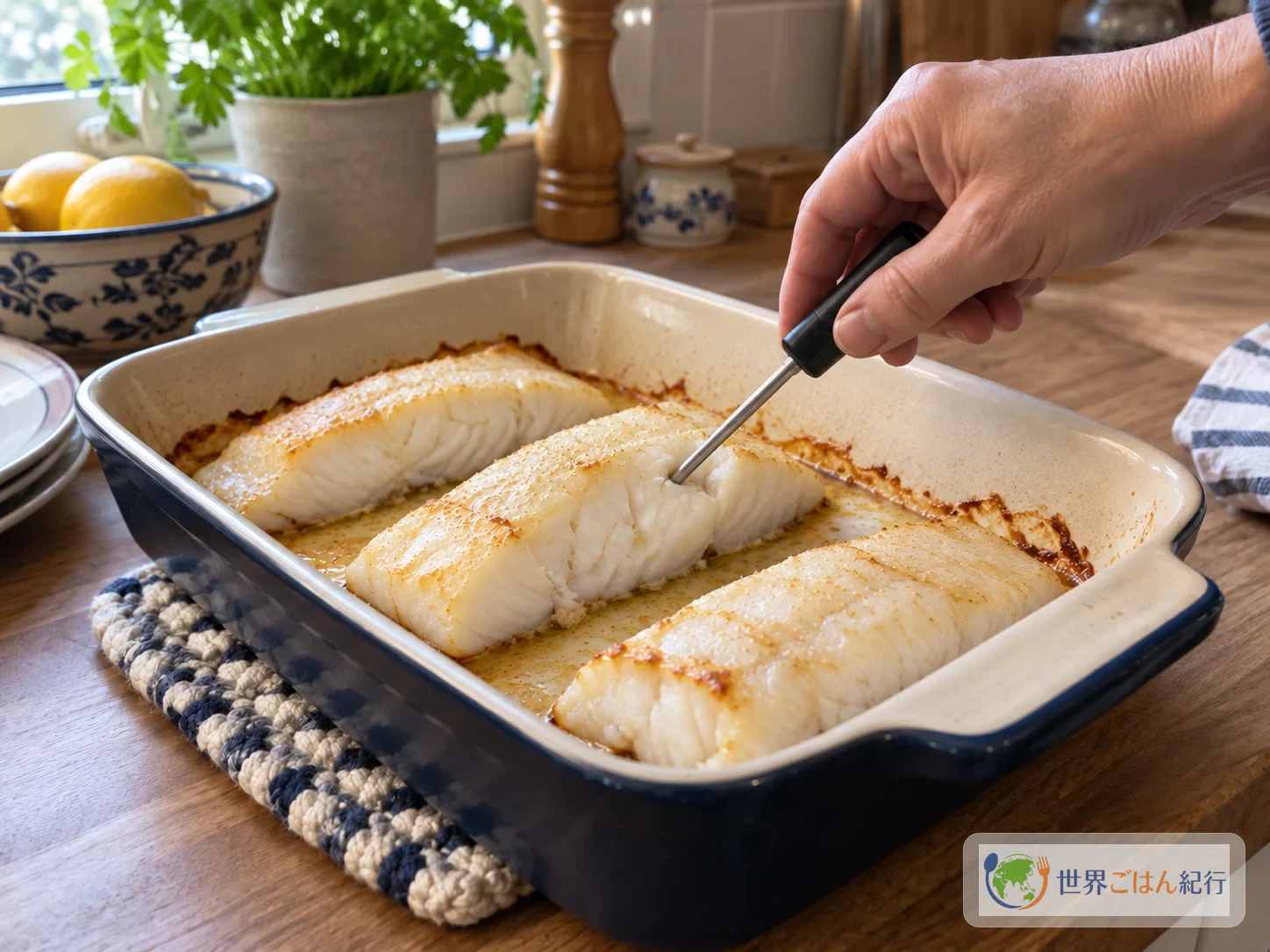
After handling raw fish, wash your hands with soap for at least 20 seconds. Keep cutting boards and tools separate from those used for herbs and serving. Do not put cooked fish back on a plate that held raw fish and hasn't been washed. Check with a thermometer that the first cooking of the fish reaches 63 °C (145 °F) at the center. Lemon juice is not a substitute for cooking.
Tips for the sesame sauce and the fish
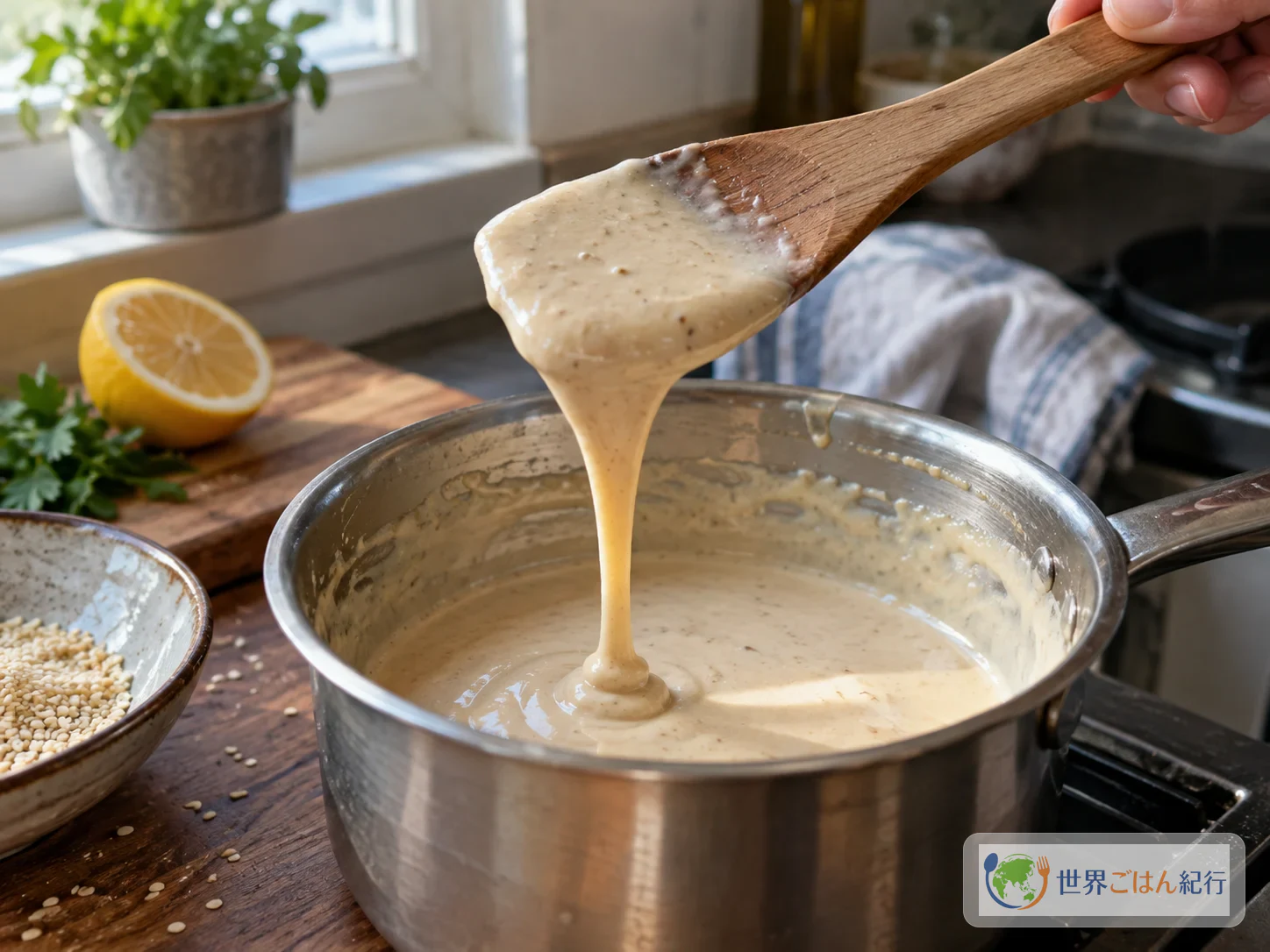
If you use only the oil that has separated in the jar, the proportion of solids in the sauce changes. It is important to stir to the bottom of the jar before measuring. Tahini's thickness varies by product, so treat the water amount as a guide and finish by watching for a thick ribbon falling from the spatula. Right after you mix in the lemon and a little water, the sauce may stiffen for a moment. When that happens, don't add oil; add water a little at a time and stir.
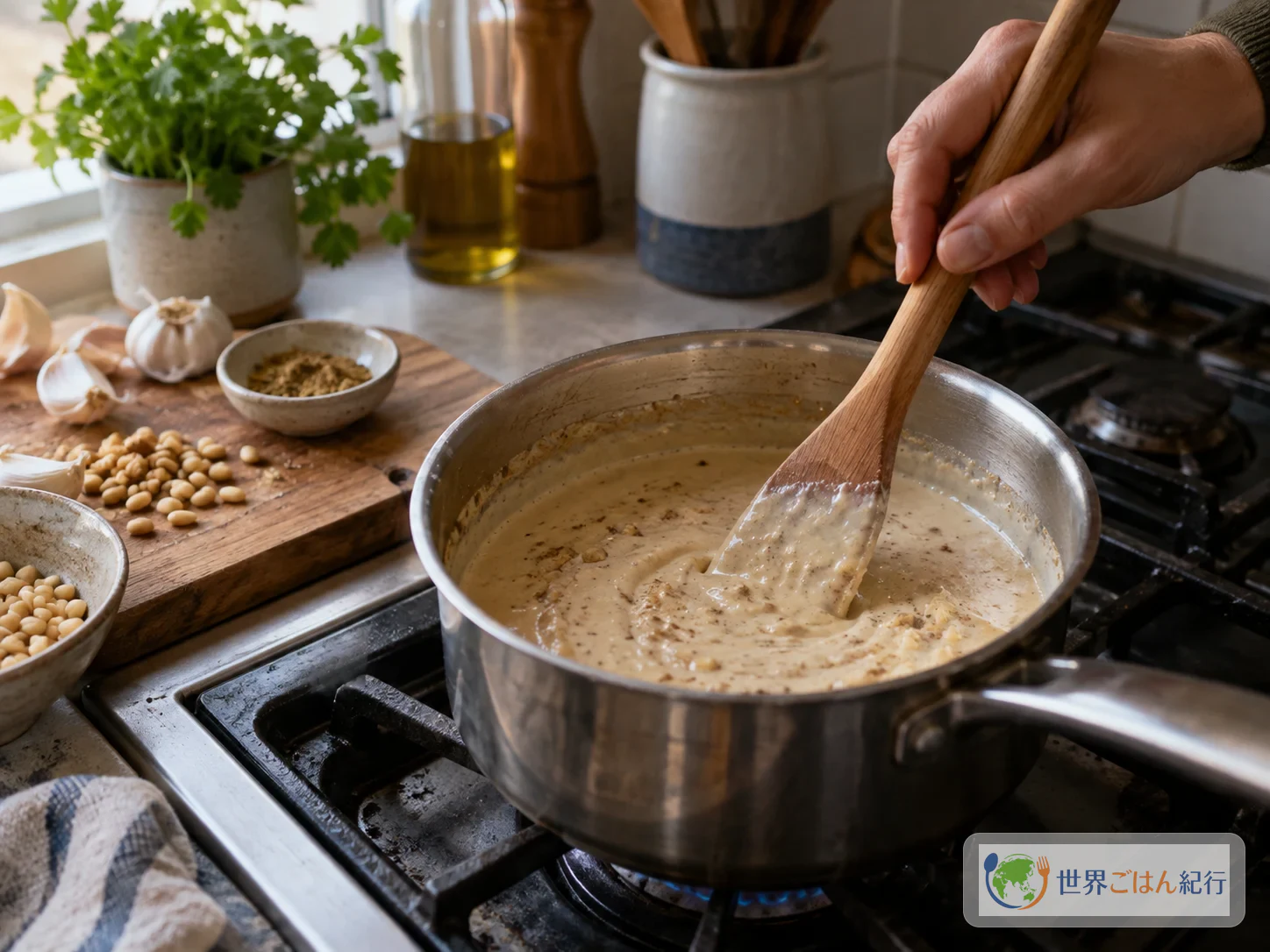
When the edge of the pot bubbles, lower the heat and run the spatula along the bottom and corners. Don't keep reducing it over high heat. If the sauce is thin, heat over low heat 1 minute at a time while stirring. Saltiness and sourness concentrate together, so stop by looking at the thickness. If it is too sour, turn off the heat and, in a separate bowl, dissolve 1 tsp tahini in 1 tbsp water and add it a little at a time. This extra is not included in the base recipe or the nutrition estimate. If there is a burnt smell or black scorch, don't stir it in and hide it; make the sauce again.
Start checking the fish's internal temperature at 15 minutes, and take it out when it reaches 63 °C. Even at the same time, how the heat reaches the center depends on the thickness of the fillet. When serving, rather than picking at the flesh repeatedly with chopsticks, use a wide spatula to support the flesh from underneath. If it breaks, check for bones, gather the pieces on the plate and sauce them; that is fine. Serving baked fish without bones also appears in sources from the region.
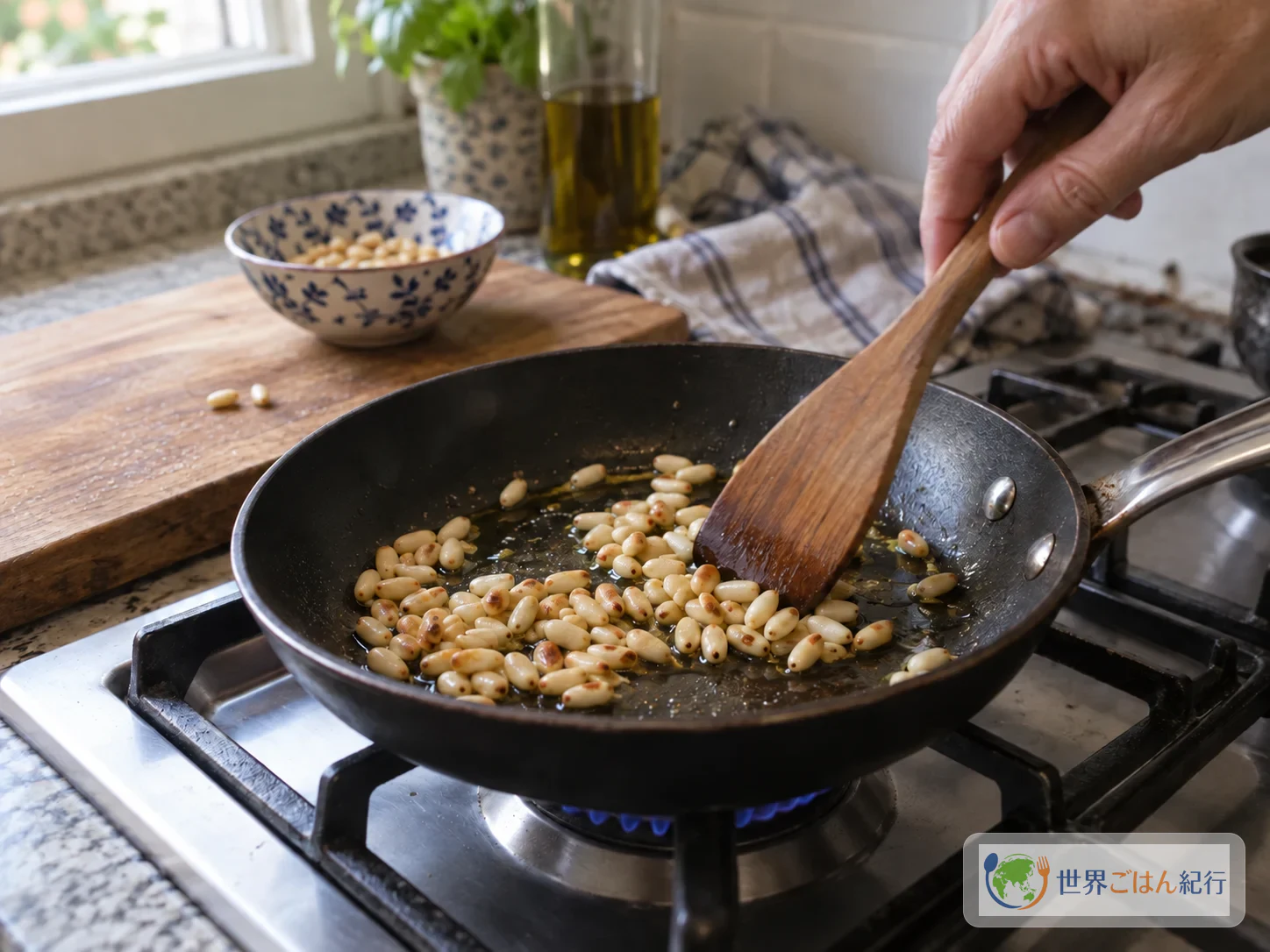
Take the pine nuts out of the pan when they are a pale golden color. Pine nuts keep browning from residual heat, so if you don't move them to a plate, they darken. The portion crushed into the sauce gives it grain, and the portion kept back gives the finishing crunch. Parsley is scattered at the end. If you use fresh cilantro, add it at the end too. It has a different purpose from dried ground coriander.
Changing the heat and herbs for your usual meals
To lower the heat, reduce the cayenne to 1/8 tsp. If you dislike heat, you can leave it out. Those who want more can add it only to their own portion. The trick is to adjust only the chile; if you halve the lemon and garlic along with it, the roles of the flavors blur. This is a home adaptation to bring a spiced fish dish to a comfortable level of heat, and does not indicate the standard heat across the region.
As for herbs, local write-ups include versions with fresh coriander and versions that combine ground coriander with parsley. If you like fresh cilantro, replace the 20 g of parsley with the same amount and add a fresh fragrance at the end. Ground seed and fresh leaf are different things, with different aromas. Don't swap ground coriander and fresh cilantro at the same quantity.
To replace 30 g of pine nuts with 30 g of walnuts, chop them coarsely and dry-toast over medium-low heat for 1–2 minutes without scorching. Walnuts give more grain and astringency than pine nuts. Leaving out the nuts reduces the grain of the sauce and the crunch of the garnish. But because it uses tahini, it does not become a sesame-allergy-friendly dish. Serve white rice or bread with it. Fresh vegetables add a different texture to the rich sauce. If you want an herb salad too, try tabbouleh alongside.
From whole fish to sandwiches on the Lebanese table
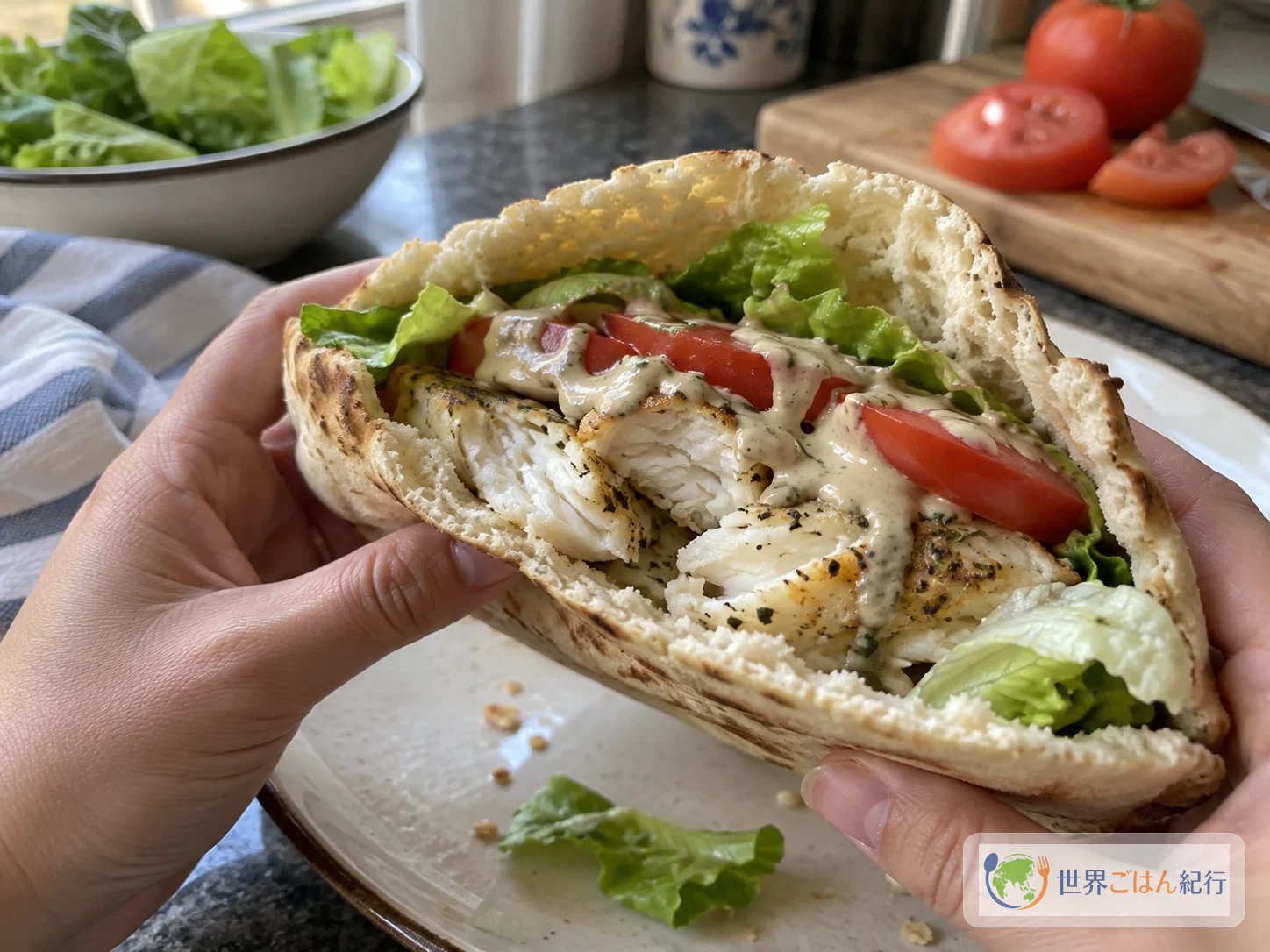
At family gatherings in Tripoli, it is described as a dish of baked whole fish. In a home kitchen, switching from whole fish to fillets to suit the number of eaters is an easy way to bring it into your cooking. But if you simply replace a whole fish with 800 g of fillets, the weight of bones and head and the thickness change. The 15–20 minutes here is for fillets 2–3 cm thick, so do not use it for a whole fish. We could not confirm the year of origin, an inventor or customs shared by a whole people, so we do not write them. We introduced this dish from the confirmed place names and its role at the table.
The sauce has a range too. A version shared from Tripoli has a walnut sauce, topped with almonds and pine nuts. Another Lebanese home recipe divides the pine nuts between the sauce and garnish and uses parsley and ground coriander. There is also a version with fresh coriander and onion that is sauced and then lightly broiled. Rather than treating any one as the single right answer for the region, enjoy the differences in nuts and herbs and in cooking method as the breadth of the table.
Lebanese home-cooking write-ups also include a way to eat fish and tahini sauce with lettuce and tomato wrapped in pita. It is separate from using the next day's leftovers: flake freshly baked fish, check for bones and put it into the bread on the spot. You can taste the same sauce in the traditional platter form and in the easy-to-carry bread form.
The combination of tahini, lemon and garlic is used in dishes beyond fish. In this dish, you taste it as a warm nutty sauce. If you want to pair roasted eggplant with sesame, there is baba ghanoush (in Japanese). It widens the uses of the same tahini further.
FAQ
Can I use white sesame paste if I have no tahini?
White sesame paste works. Replace it with 120 g of unsweetened, unsalted paste. Aroma and thickness differ by product, so adjust with water, 1 tbsp at a time. A strongly roasted product changes the aroma, so it cannot be said to taste exactly like tahini. Both tahini and white sesame paste contain sesame, so neither is a substitute for people with a sesame allergy.
What if I don't have an oven?
You can cook the fillets in a frying pan. As a suggestion, keeping the fish and seasoning the same, cook in an oiled pan over medium heat for 3 minutes, turn, cover, and cook over low heat for 4–6 minutes. This assumes fillets 2–3 cm thick. Don't judge safety by time alone; confirm 63 °C or higher at the center, and if it's not there, add 1–2 minutes at a time over low heat. Make the sauce in a separate small pot and add it afterward. Don't boil the fish and sesame sauce over high heat from the start.
Can I prepare ahead? How do I store leftover fish?
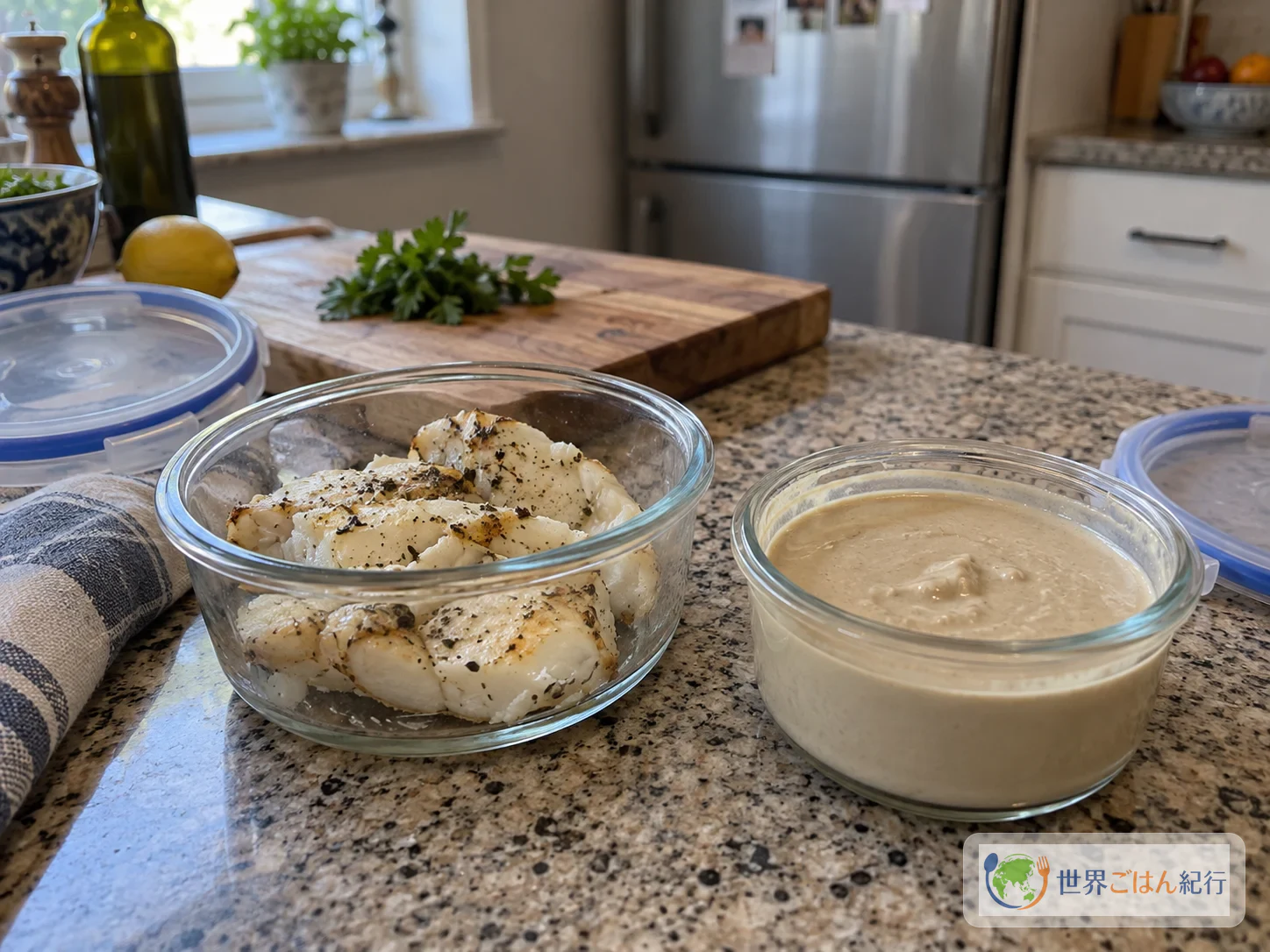
For the best flavor, bake the fish just before eating and make the sauce the day before. Divide into clean shallow containers and refrigerate. Keeping fish and sauce separate makes it easier to adjust the consistency the next day. Refrigerate within 2 hours of cooking, or within 1 hour in an environment above about 32 °C (90 °F). Aim for a refrigerator at 4 °C (40 °F) or below, and check the temperature. Don't let it sit until fully cooled at room temperature; refrigerate promptly in shallow containers. Eat stored food by the next day. This is a conservative home guideline, not a deadline that guarantees safety under any conditions. Check with a thermometer that reheated fish reaches 74 °C (165 °F) at the center. Add water to the sauce if needed and reheat while stirring until it boils. Heat only the portion you will eat.
If food has stayed at room temperature for more than 2 hours, or more than 1 hour above about 32 °C (90 °F), do not eat it. Smell and appearance alone cannot confirm safety. Don't judge by tasting something whose temperature handling you don't know. A rich sauce can't hide the off smell of fish, and lemon's sourness or reheating can't cancel out a long time left out.
Do the nutrition numbers include bread or rice?
No. The nutrition is a rough estimate for the whole base recipe with 800 g of cod, for 4 servings: 1800 kcal, 169 g protein, 118 g fat and 31 g carbohydrate. It is not a measured value. One serving is a quarter of the total, about 450 kcal. The starch of bread or rice, side vegetables and ingredients other than the extra tahini or water added for adjusting are not included. The numbers vary with the type of fish, sesame paste and nut substitutes. They do not indicate nutritional benefit or suitability for health.
Sources
- Food Heritage Foundation — Samkeh harra (Spiced fish): a specialty of Tripoli/El Mina, family gatherings, whole fish, walnut tahini sauce and nut finish. Accessed and checked 13 October 2026.
- Mama's Lebanese Kitchen — Lebanese Samkeh Harra Recipe: meaning of the name, fillets and whole fish, pine nuts, parsley and ground coriander, eating it in pita. Accessed and checked 13 October 2026.
- Homemade by Manal — Spicy Tahini Fish – Samkeh Harra: published 28 November 2015. Fillets, onion, fresh coriander, broiling after saucing. Accessed and checked 13 October 2026.
- Thuraya Delights — Samkeh Harra recipe: local-language spelling, thinning tahini with water, herb paste, pan-cooked fillets. Accessed and checked 13 October 2026.
- FDA — Selecting and Serving Fresh and Frozen Seafood Safely: thawing fish in the refrigerator, preventing cross-contamination, internal temperature of 145°F (about 63°C), time left at room temperature. Accessed and checked 13 October 2026.
- FDA — Safe Food Handling: cooling in shallow containers, refrigerator temperature, reheating leftovers to 165°F (about 74°C), bringing sauces to a boil. Accessed and checked 13 October 2026.