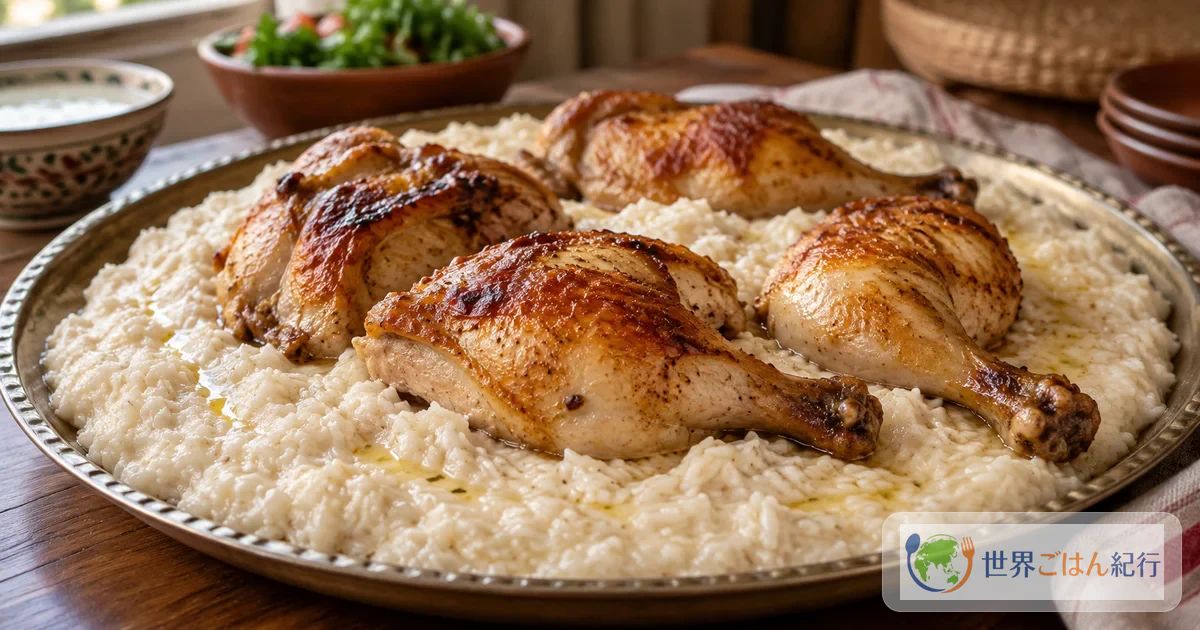
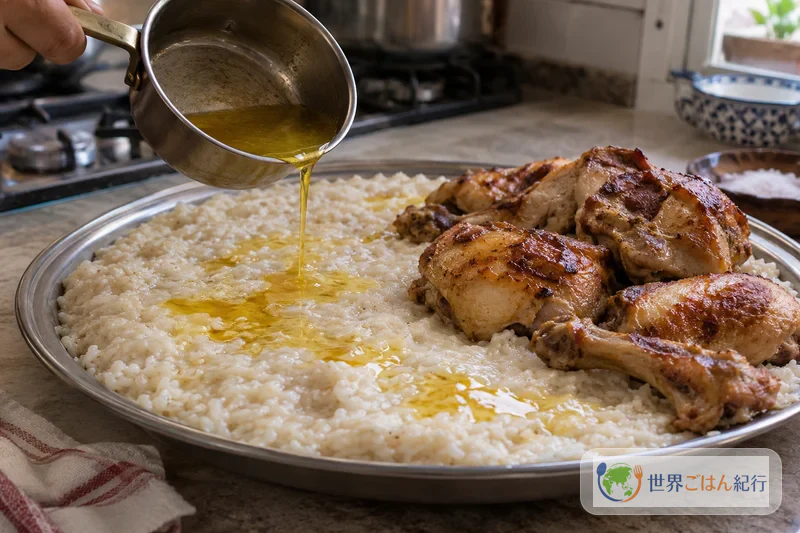
On a winter night, a large round platter is carried to the middle of the table. It is covered edge to edge with pure white, creamy rice. Melted ghee shines on top, and browned chicken rests above it. Breathing in the steam scented gently with cardamom, you put a little red tomato relish from the side on the rice and take a bite. Saleeg is a dish long loved in Hejaz in western Saudi Arabia: rice simmered in chicken broth and milk.
A dish that never shames you in front of guests
The English-language Saudi newspaper Arab News introduces saleeg as a popular dish in Hejaz and writes that Arabs call it "the dish that whitens the face." It means a dish that does not embarrass you in front of guests, one that saves your honor as a host. The ingredients are close at hand and the method is simple, so even when unexpected guests arrive, it can be added to the table right away.
The same article says saleeg is delicious, nourishing, and easy to digest, and that even children who dislike milk eat it happily. It is especially favored in winter. It is said to be best moved piping hot from the pot straight to the platter. In Aramco's in-house magazine The Arabian Sun, there is a family memory in which the author's father, raised in Medina in Hejaz, loved saleeg above all, and her mother, from Riyadh, went around asking her mother-in-law and neighbors how to make it in order to master the flavor. The writer notes that even within the same country, food in Hejaz and in central Najd is clearly different.
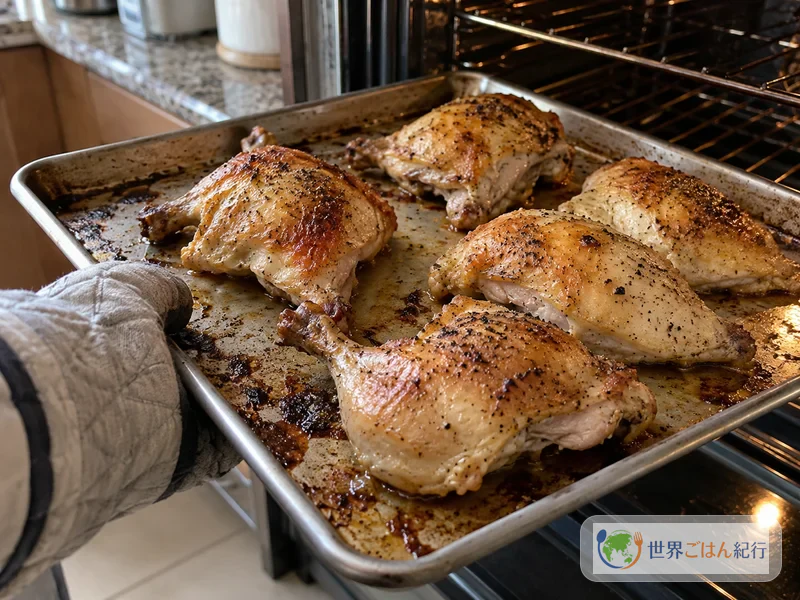
Saleeg is said to be especially popular in Taif, a high mountain town in Hejaz. Traditionally it is served on a large platter called a tabasi, with roasted meat set on top of the rice.
Similar to risotto, and where it differs
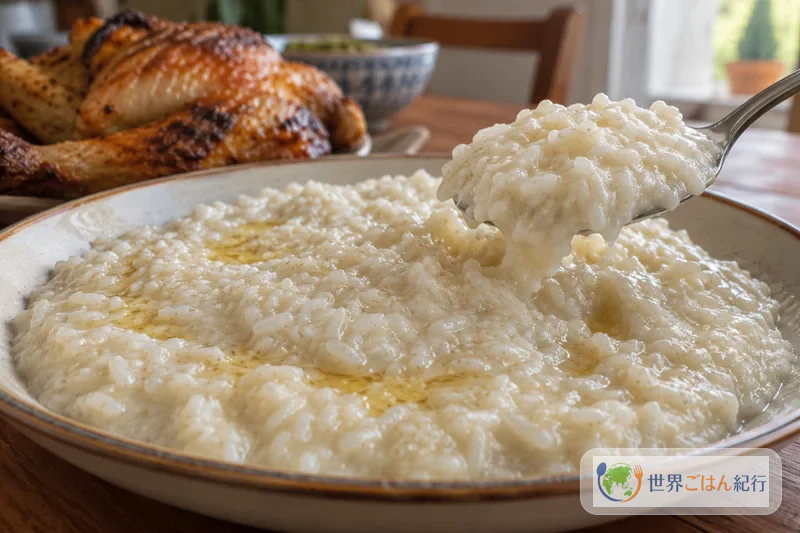
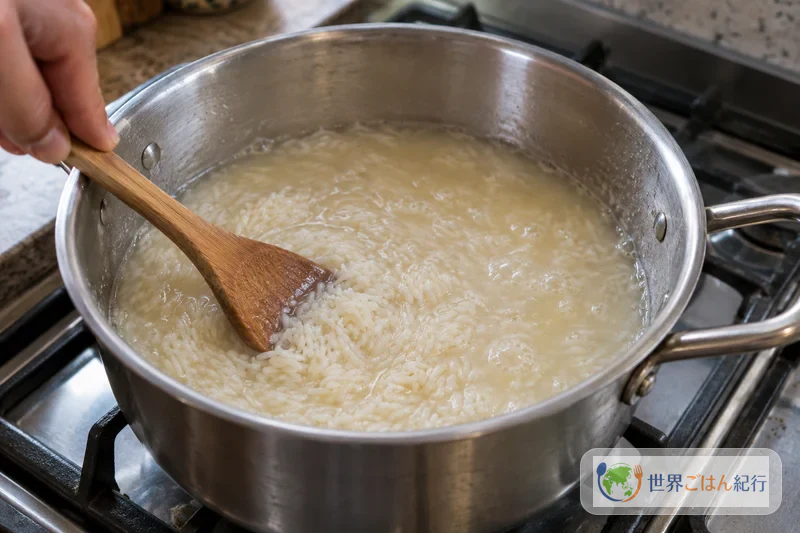
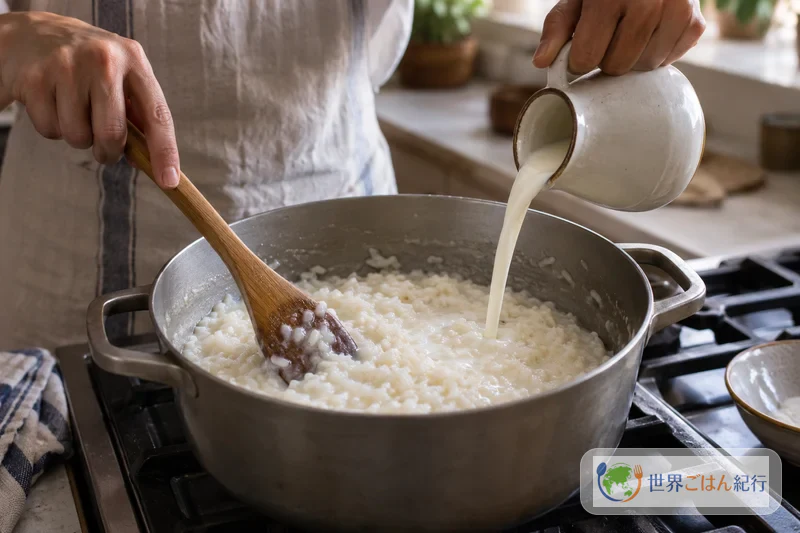
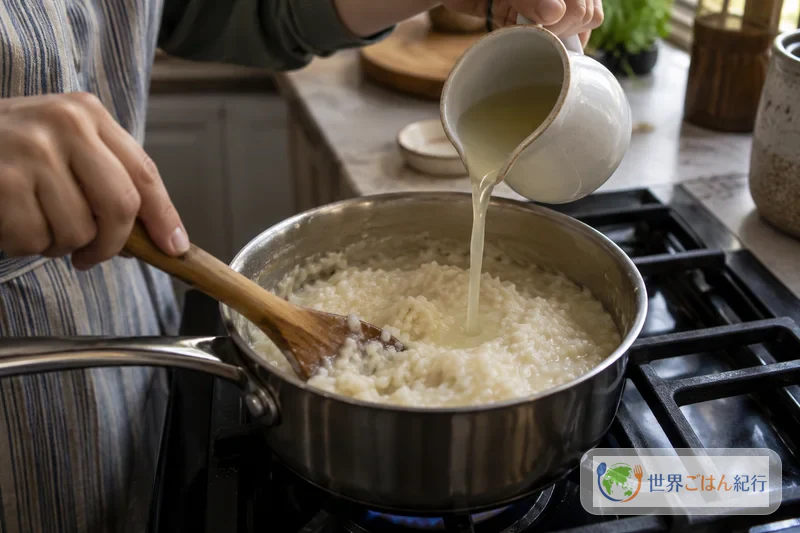
Saleeg, which simmers rice in broth until creamy, is sometimes compared to Italian risotto or Indonesian bubur (rice porridge). But Arab News writes that the difference is that milk is added. Rice is cooked soft in chicken broth, then milk is added at the end and stirred over low heat until smooth. Melted ghee or butter is drizzled over to finish, so the gentle sweetness of milk and the richness of butter combine into a flavor like nothing else.
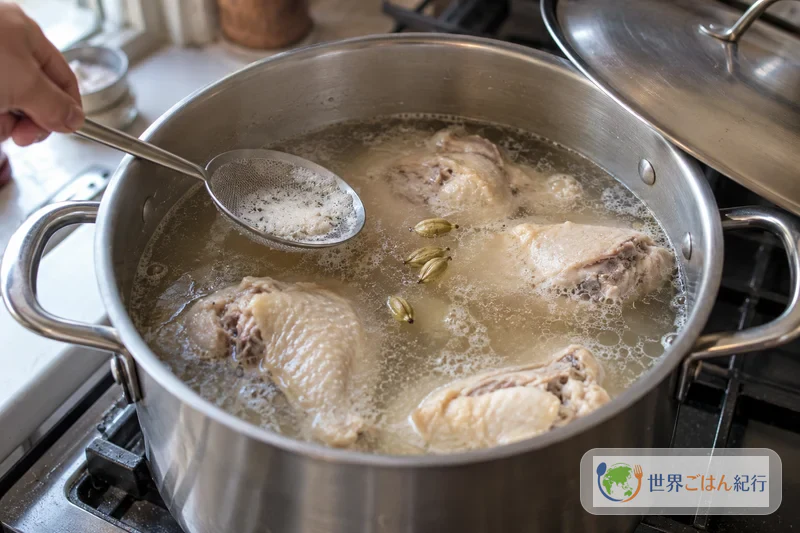
Cardamom and white pepper scent the broth, along with mastic (mastiha) if you like. Mastic is a tree resin gathered on the Greek island of Chios and elsewhere, with a refreshing, pine-like aroma. Just a little turns chicken broth into a distinctly Middle Eastern fragrance.
Ingredients (serves 4)
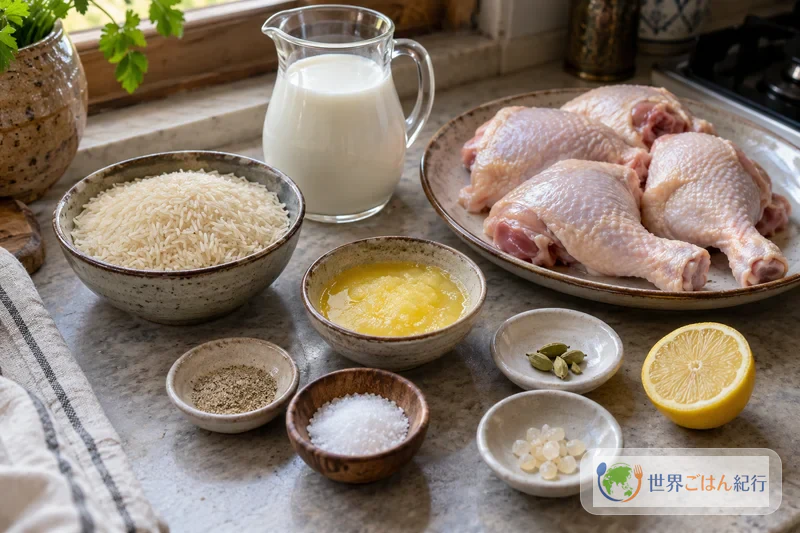
The ingredients are based on the chicken saleeg recipe (for 4 servings) presented by Arab News. One cup of rice is a US measuring cup (240 ml).
Mastic is sold as small beads at import food stores and online. It is very aromatic, so 2 small pieces are enough. Grinding it in a mortar with a little sugar before using makes it powder more easily and dissolve better in the broth. You can make the dish without it, but adding it brings you much closer to the scent of a Hejazi home. According to Wikipedia, long-grain rice is traditionally used. Short-grain rice also works, but it turns sticky easily, so take care not to overcook it.
Bone-in chicken with skin gives the broth plenty of flavor and richness. A combination of bone-in thighs and drumettes gives an equally good broth without the trouble of breaking down a whole chicken.
Boil the chicken until it is cooked through to the thickest part and clear juices run out. Also, rice after the milk is added scorches easily and spatters hot, so always keep stirring over low heat. This dish contains dairy (milk and ghee).
If you turn the heat up after adding the milk, the bottom of the pot scorches and brown bits mix into the white rice. Keep the heat low and keep stirring with a wooden spoon, tracing the bottom of the pot; that is the best way to finish pure white and smooth.
Over time the rice in saleeg absorbs liquid and stiffens. If serving will be delayed, add a little of the reserved cooking liquid, reheat, and bring it back to a creamy state before plating.
With duggus, the tomato relish
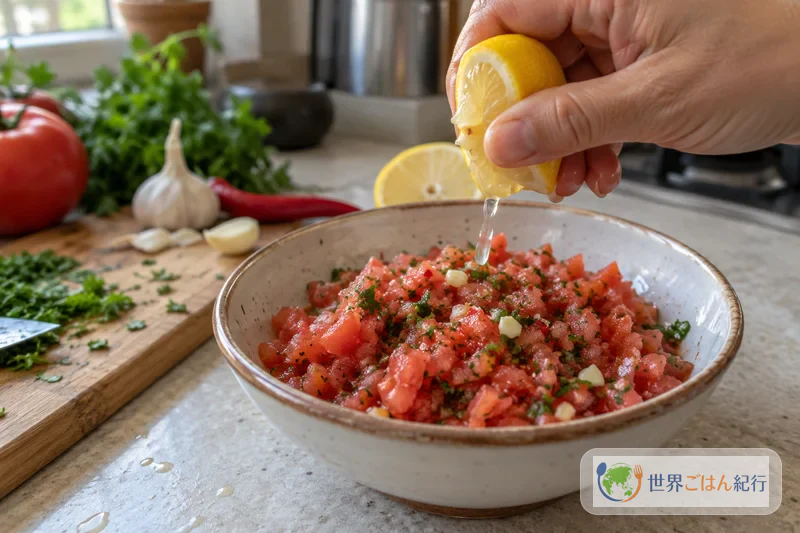
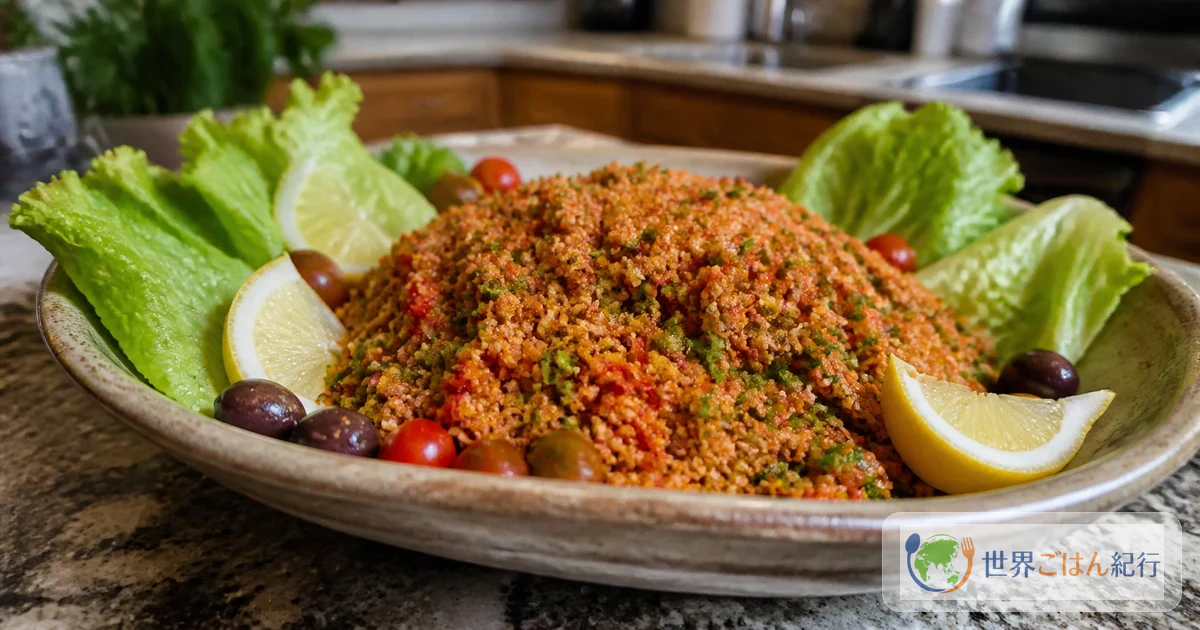
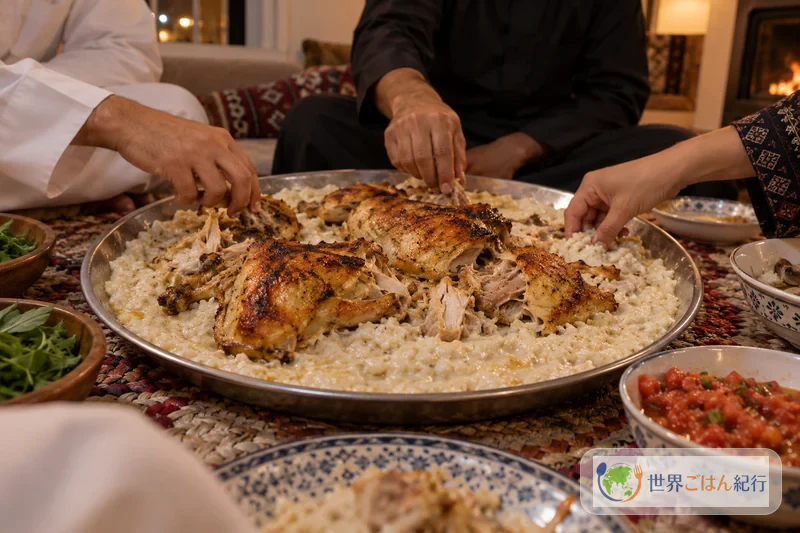
According to Arab News, saleeg is eaten with duggus, a cold tomato relish, along with pickled lemon and a leafy green salad. Duggus is introduced as an essential relish on the Saudi table. Put peppery, sour tomato on the gentle milk-simmered rice, and each bite is sharpened.
| Ingredient | Amount | Substitutes & notes |
|---|---|---|
| Tomatoes | 2 | Finely chopped |
| Parsley or cilantro | 4 leaves | Finely chopped |
| Garlic | 1 clove | Finely chopped |
| Red chili | 1 | Finely chopped. Heat to taste |
| Lemon | 1/4 | Squeeze the juice |
| Salt | A pinch |
Finely chop all the ingredients, mix, and season with lemon juice and salt. Chill in the refrigerator and serve alongside hot saleeg.
On a large platter, while hot
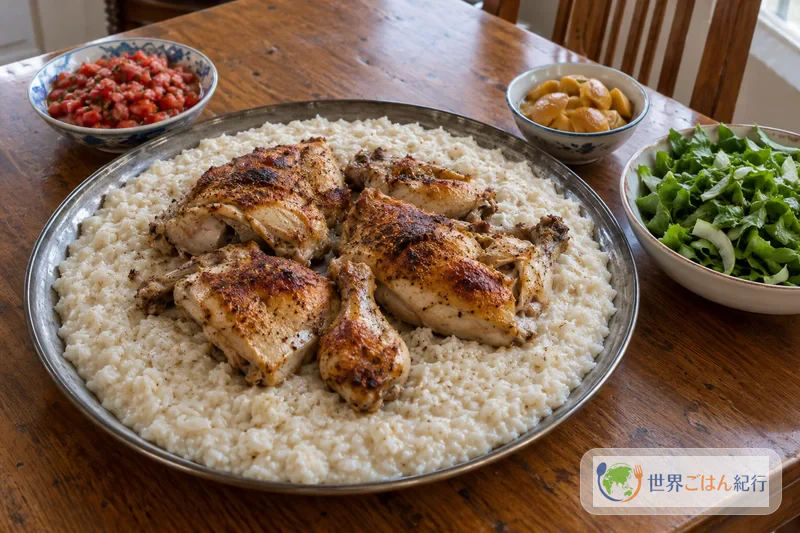
Saleeg is best eaten right after it moves from the pot to the platter, while hot. Lay the roasted chicken on the rice spread on the large platter and let everyone serve themselves. Spoon up some rice, put a little duggus on it, and eat it with the chicken. It is a welcome winter dish that warms a chilled body from the inside.
Among Saudi rice dishes, comparing it with kabsa (in Japanese), in which chicken and rice are cooked together with spices, shows clearly that even with the same chicken and rice, simmering with spices versus simmering in milk makes completely different dishes. Jareesh (in Japanese), which simmers cracked wheat, is another Saudi home flavor that, like saleeg, cooks a grain until creamy.
Frequently asked questions
Can I make it without mastic?
Yes. In the Arab News recipe too, mastic is an optional ingredient. With cardamom and white pepper alone, the chicken broth still comes out with a gentle aroma.
Can I make it with beef or lamb?
Yes. Arab News also introduces saleeg made with meat. Instead of chicken, boil the meat in water with cardamom, salt, and pepper to make the broth, and some people add peeled onion and garlic. Strain the broth and simmer the rice the same way.
I heard of a version made with powdered milk.
In a home recipe in Aramco's The Arabian Sun, powdered milk dissolved in a little water is added in place of milk. Either is fine, depending on what you have on hand.
What should I do with leftovers?
Let it cool slightly, put it in a storage container, refrigerate, and finish it soon. It stiffens when cold, so when reheating, put it in a pot, add the reserved cooking liquid or water, and stir over low heat until hot through.
Sources
- Arab News, Doha Shata, "Saleeg — a Saudi dish that won't let you down," 11 September 2013. (accessed and checked 22 October 2026) https://www.arabnews.com/news/464223
- Aramco LIFE / The Arabian Sun, Daliah Darweesh, "Food for the Soul," 22 September 2021. (accessed and checked 22 October 2026) https://www.aramcolife.com/en/publications/the-arabian-sun/articles/2021/week-39-national-day/food-for-the-soul
- Wikipedia, "Saleeg." (accessed and checked 22 October 2026) https://en.wikipedia.org/wiki/Saleeg