Hummus with Spiced Lamb: Smooth Chickpeas Under a Warm Topping
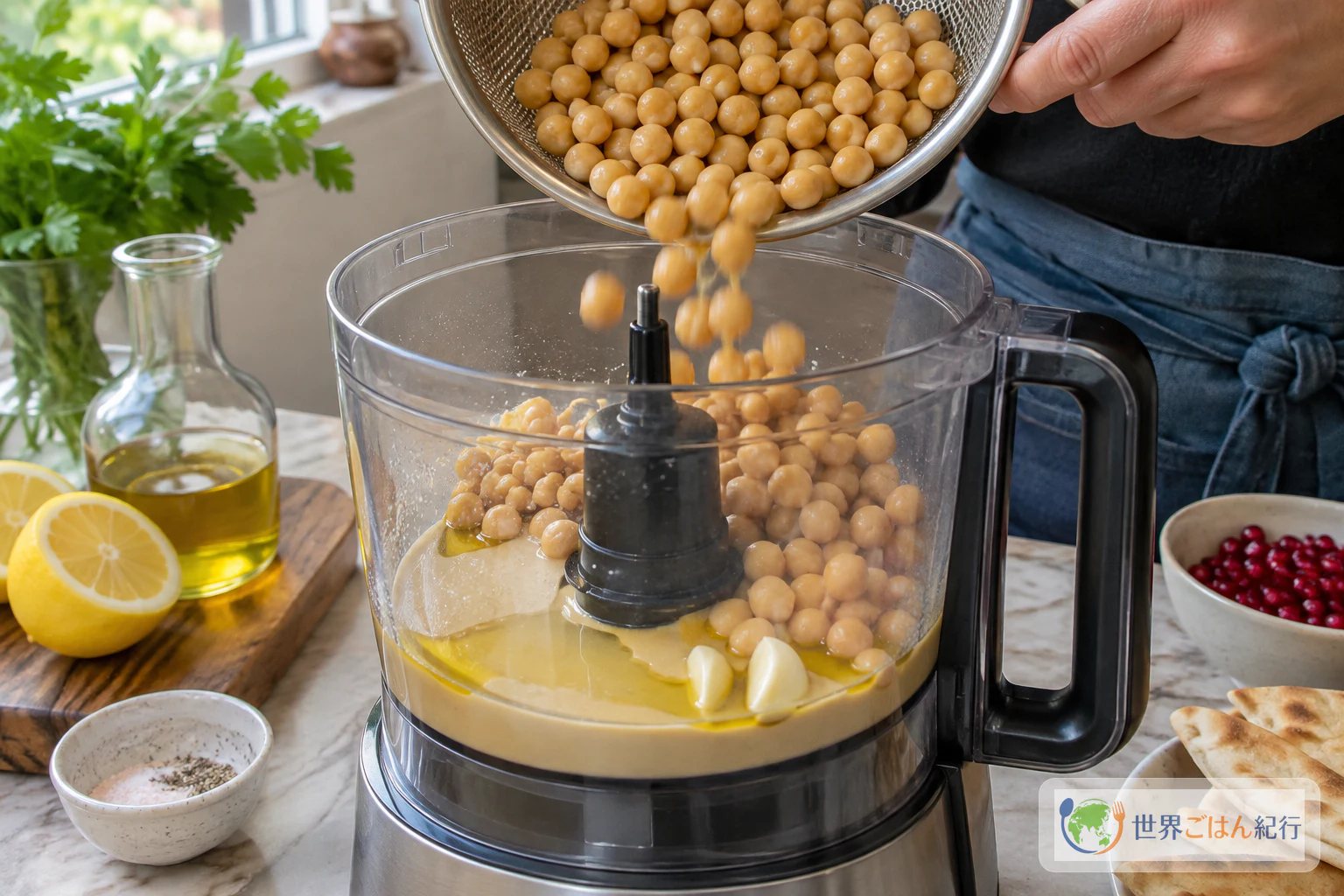
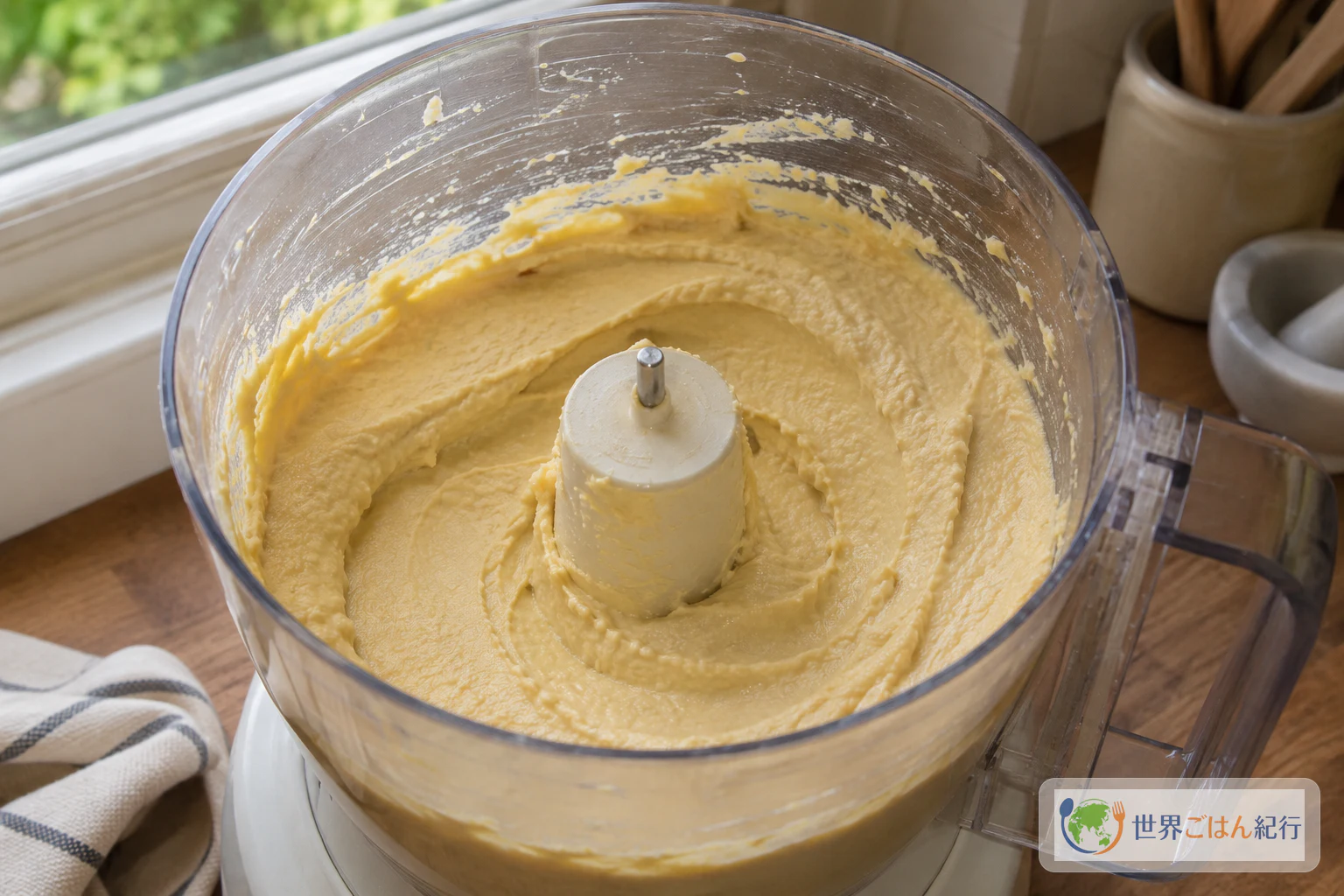
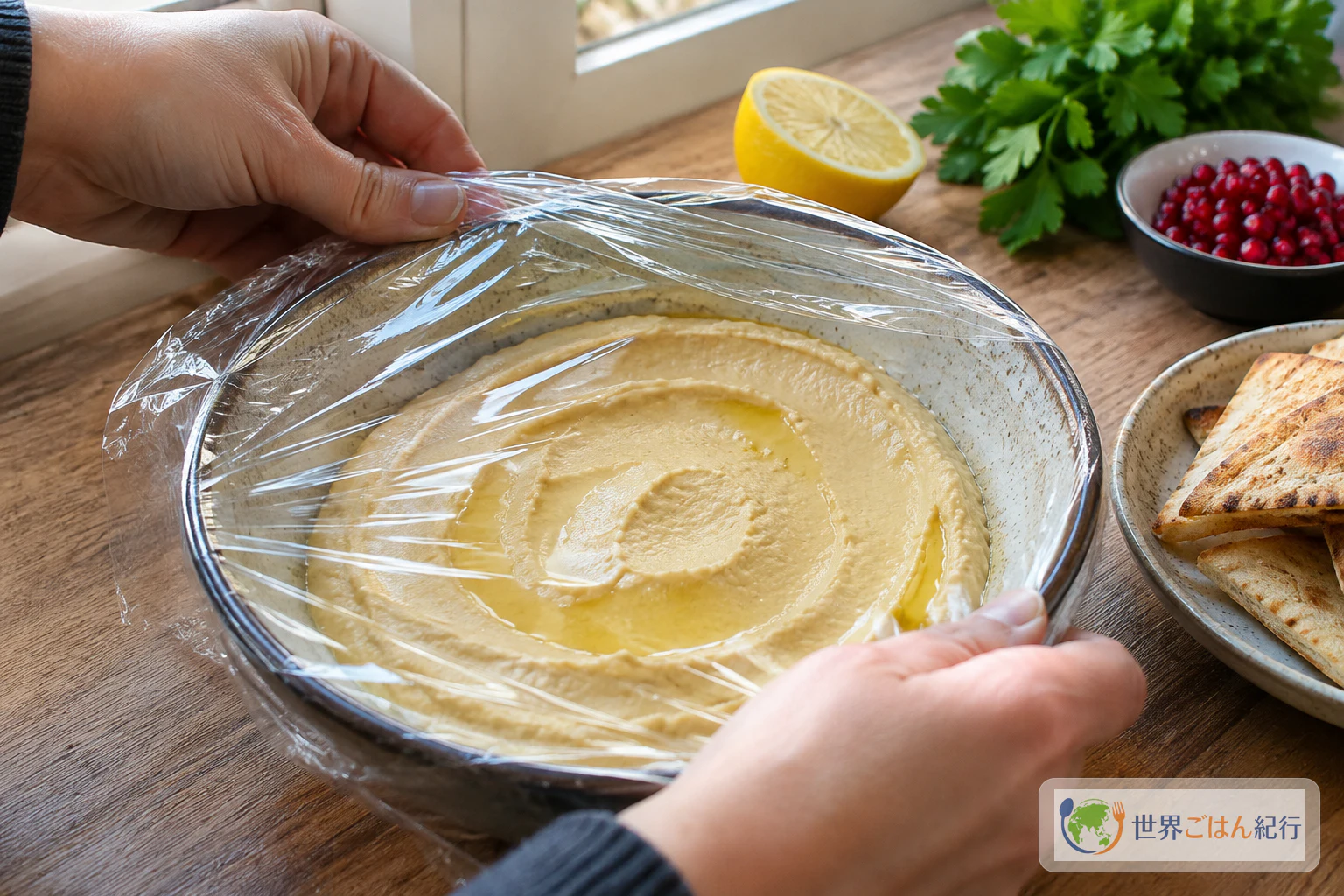
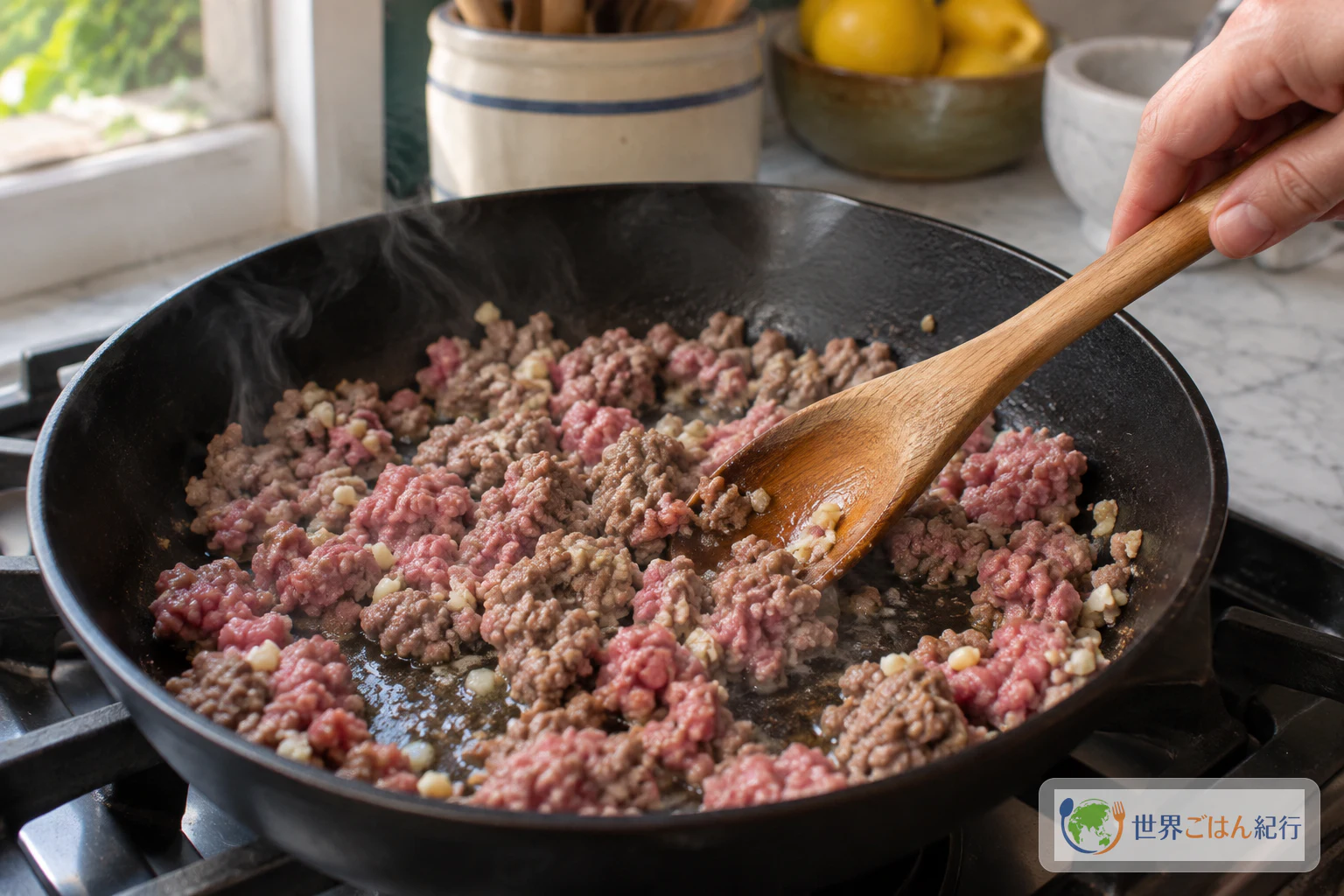
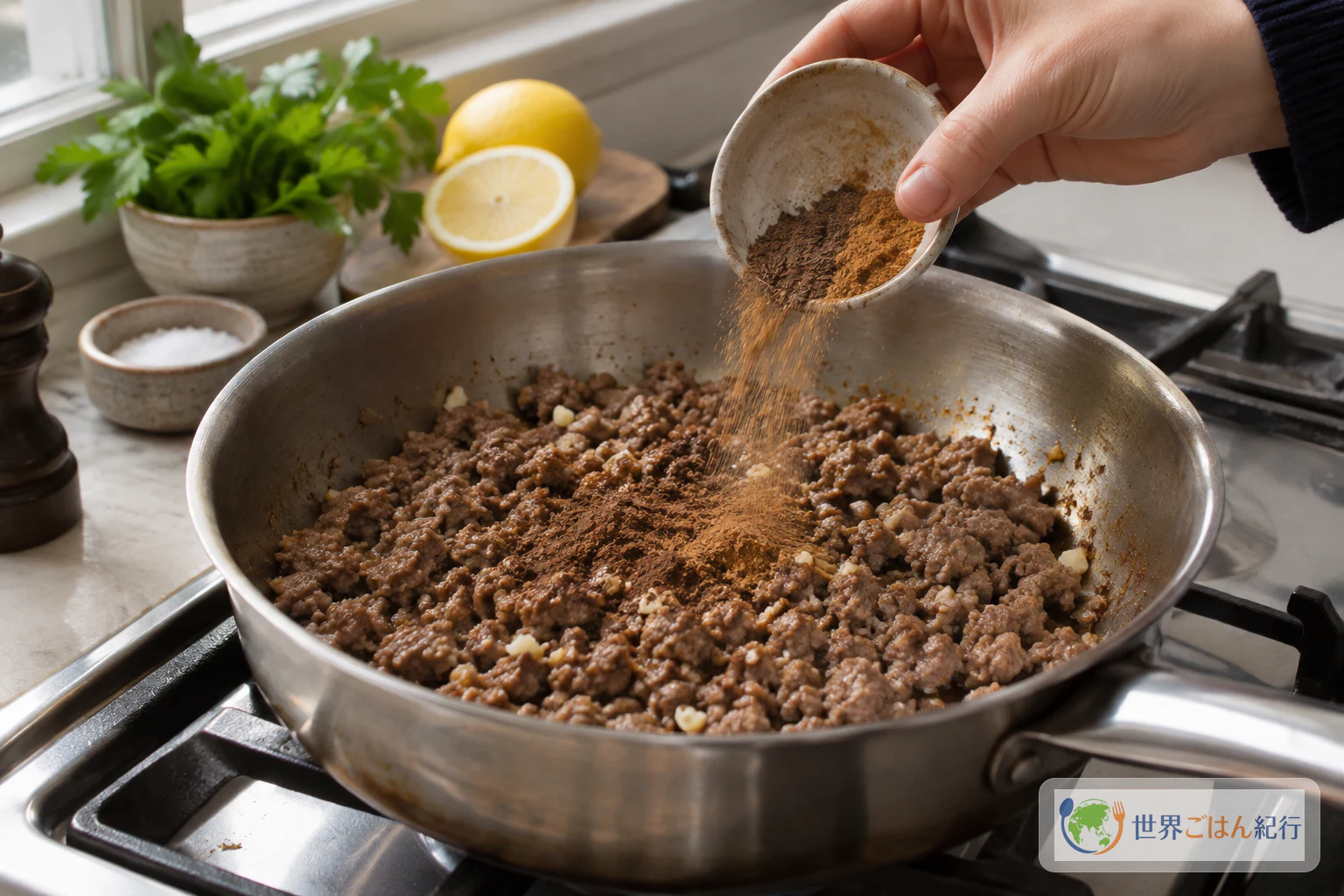
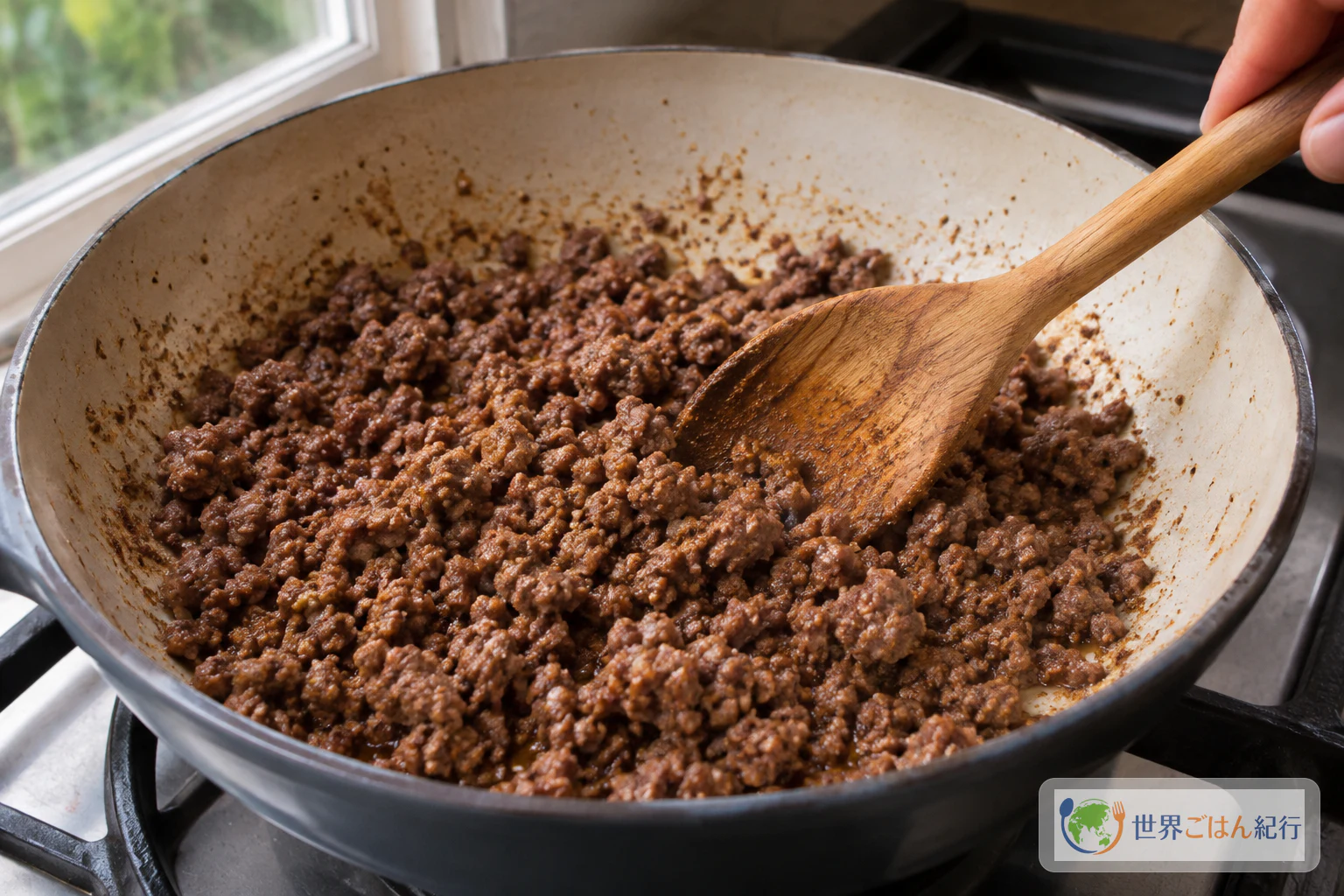
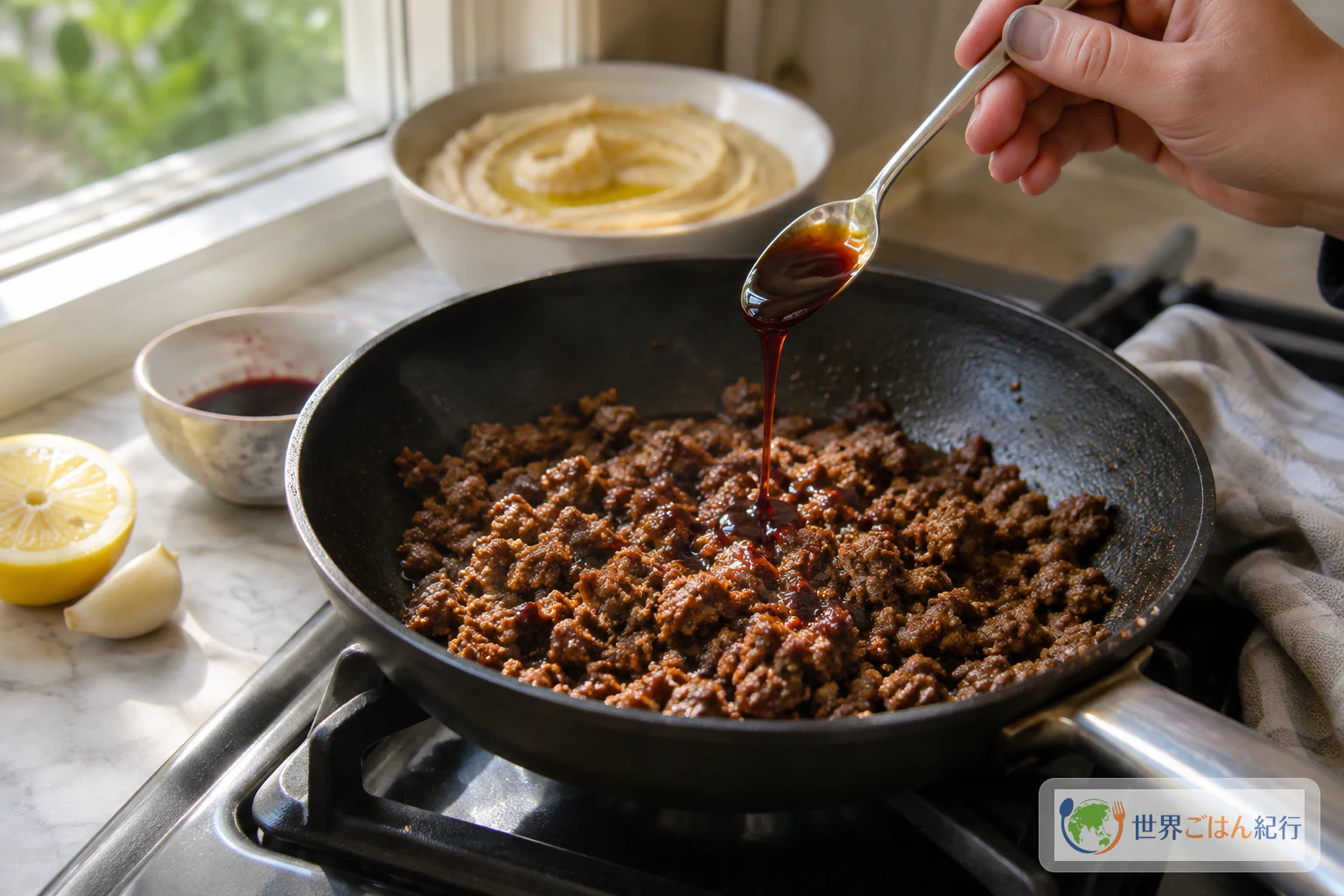
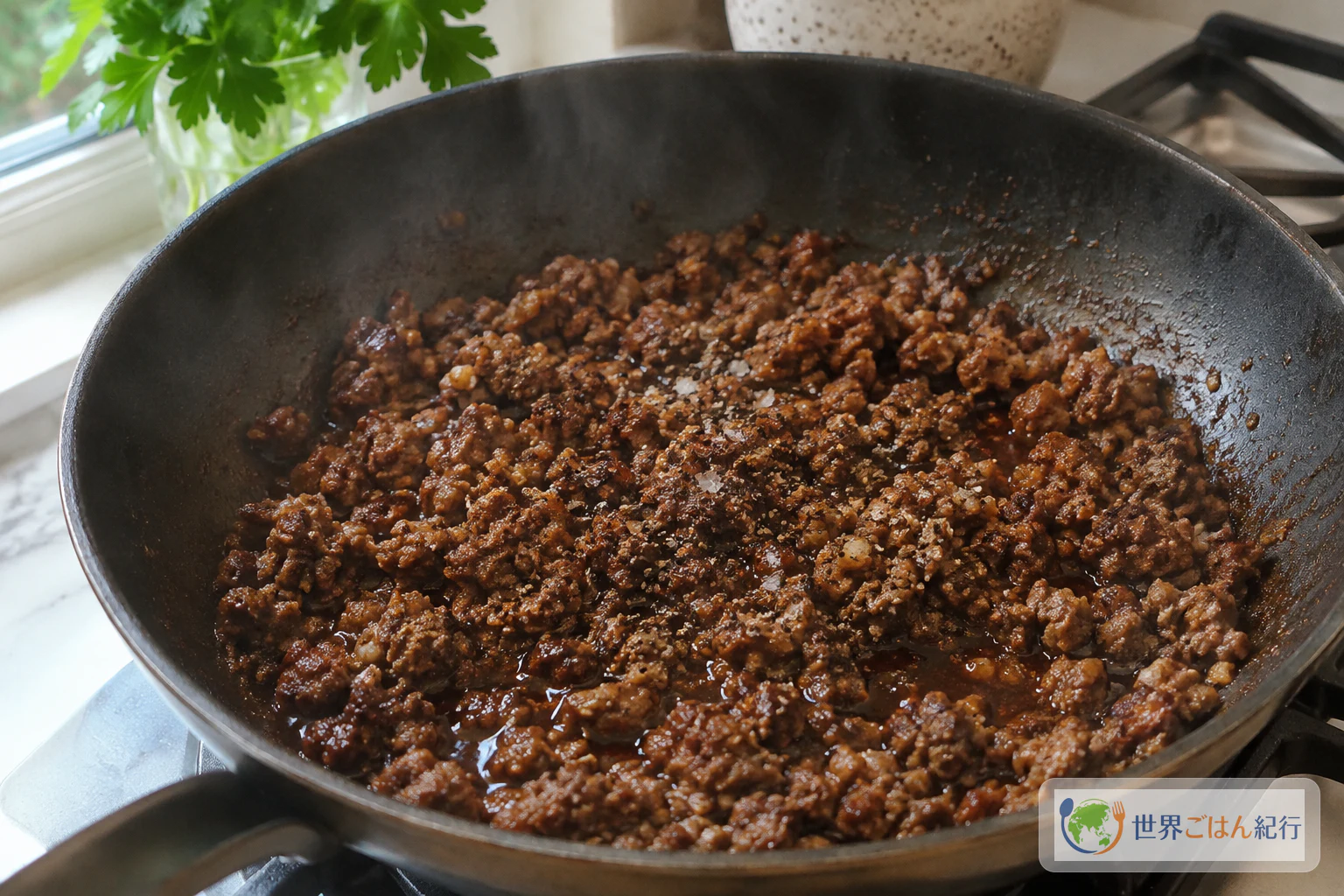
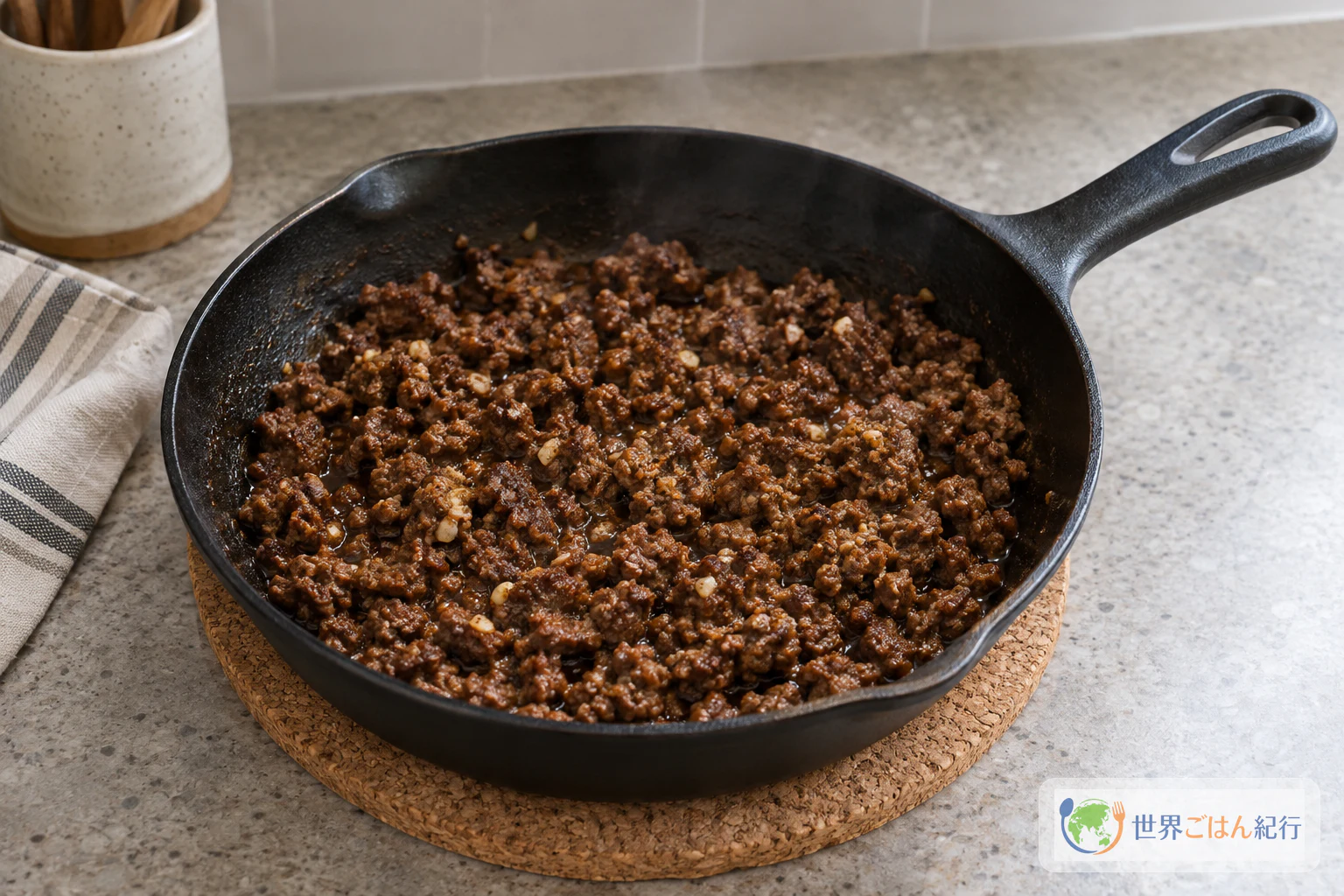
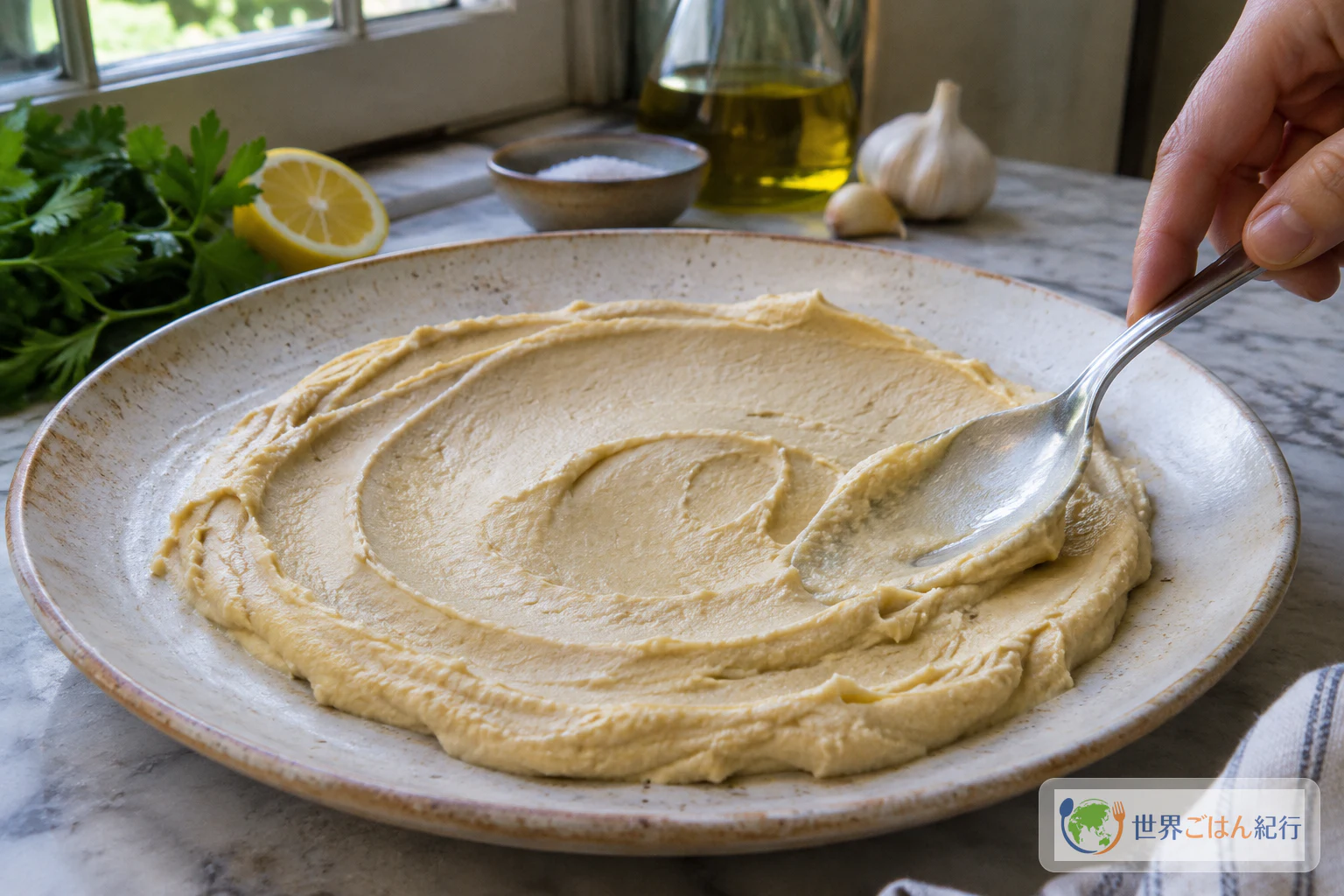
Blend the hummus until it is smooth. Cook the lamb until it is browned all over and properly hot in the centre, so the warm, spiced meat sits on the hummus. The parsley, pomegranate seeds and extra pomegranate molasses go on at the very end.
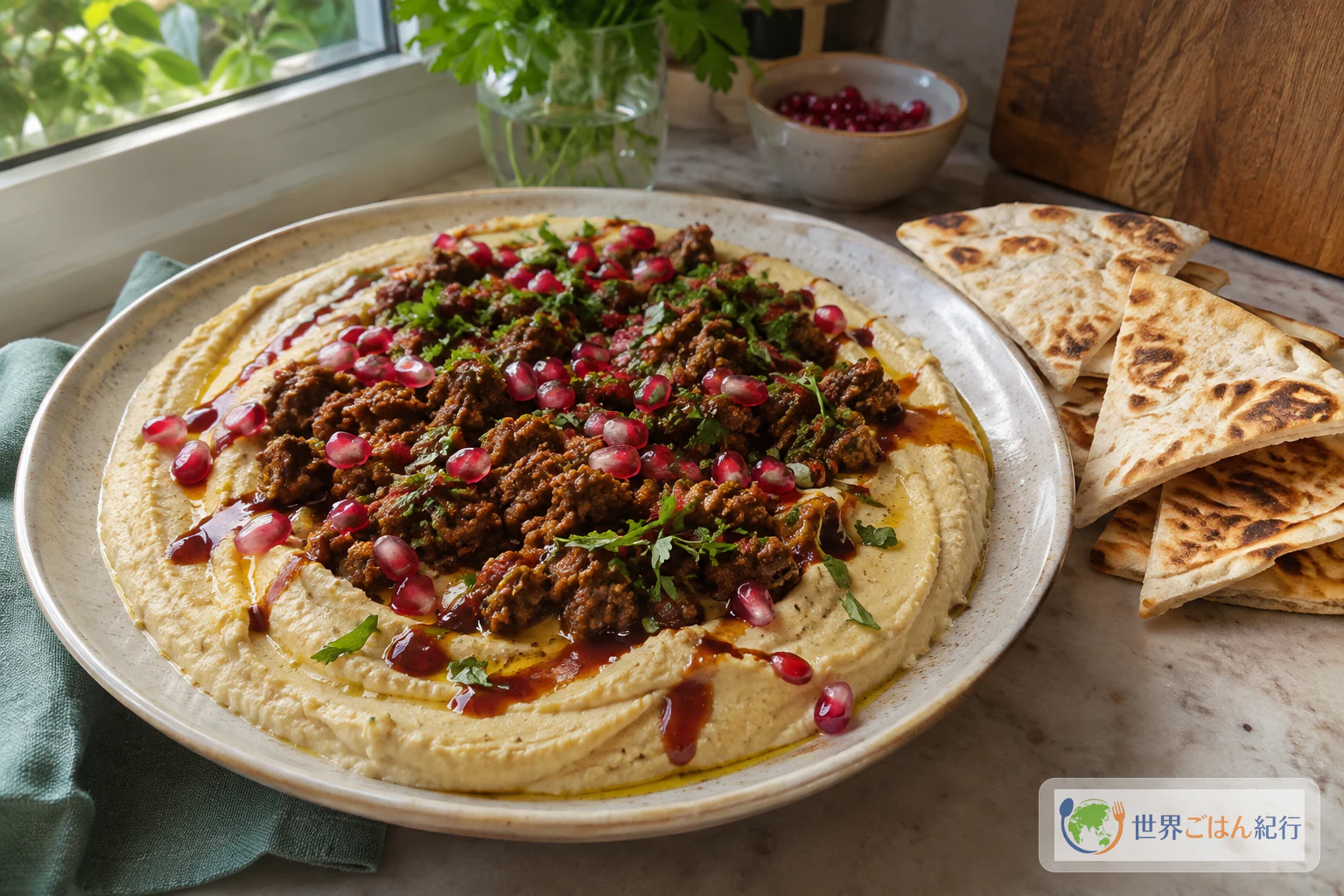
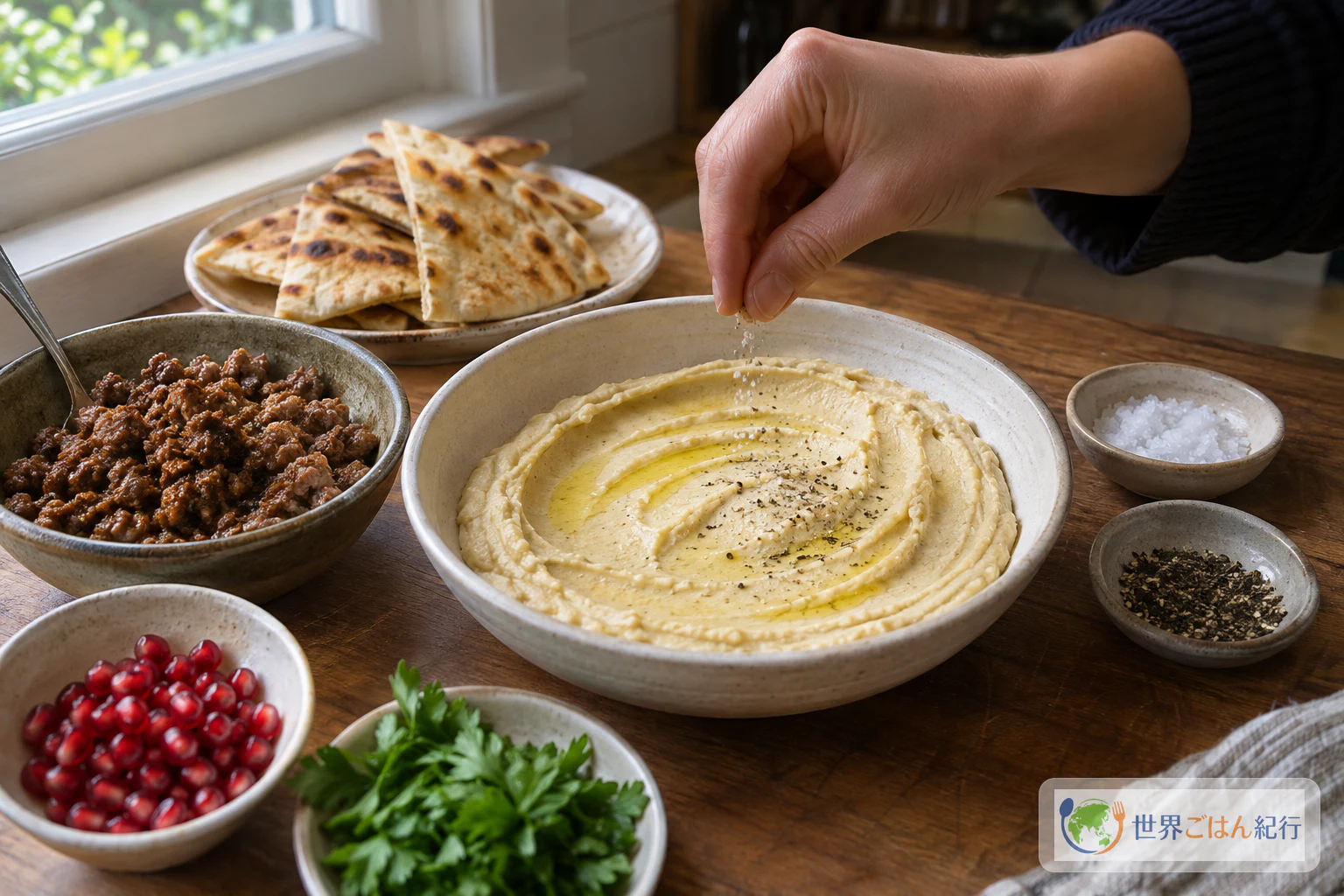
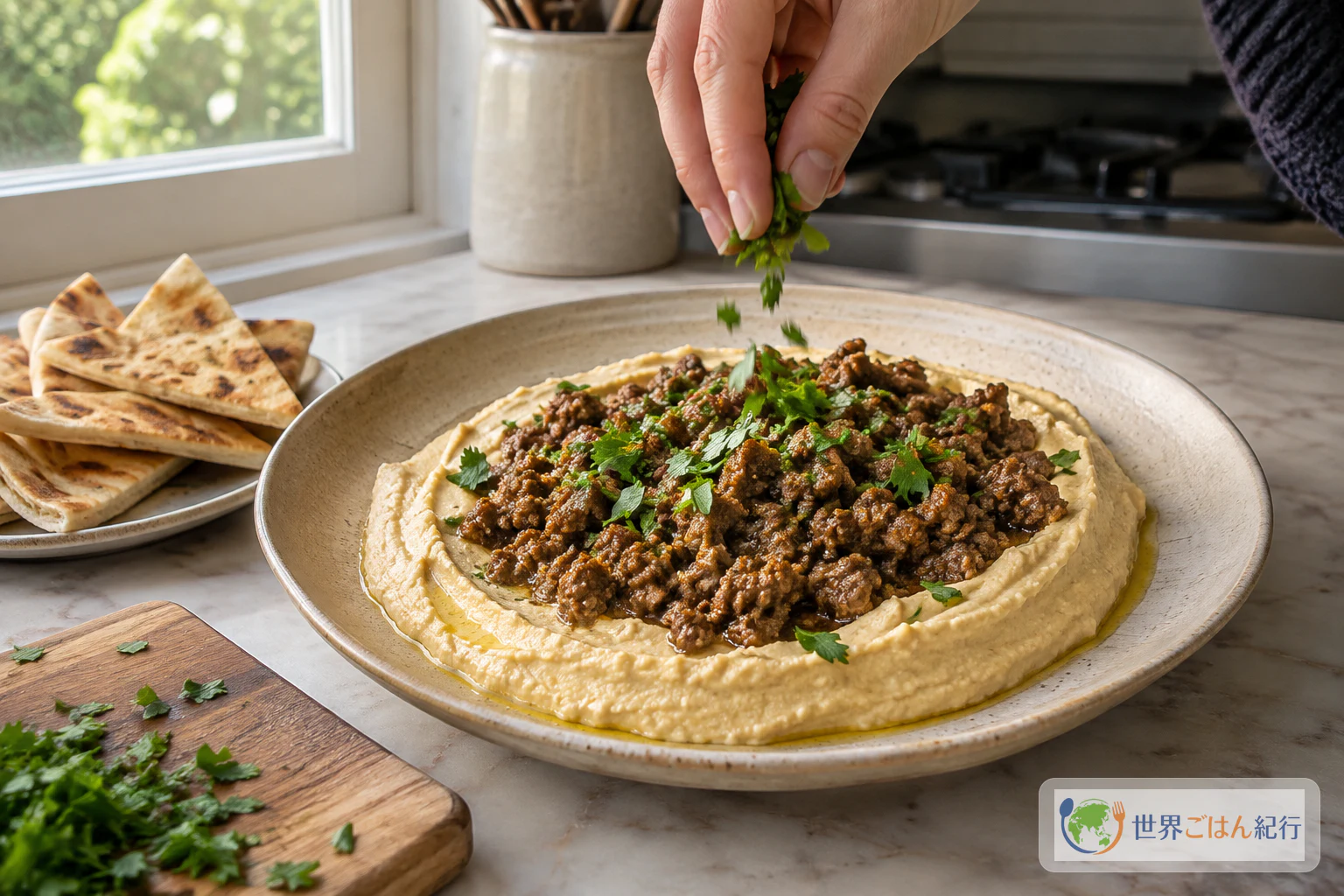
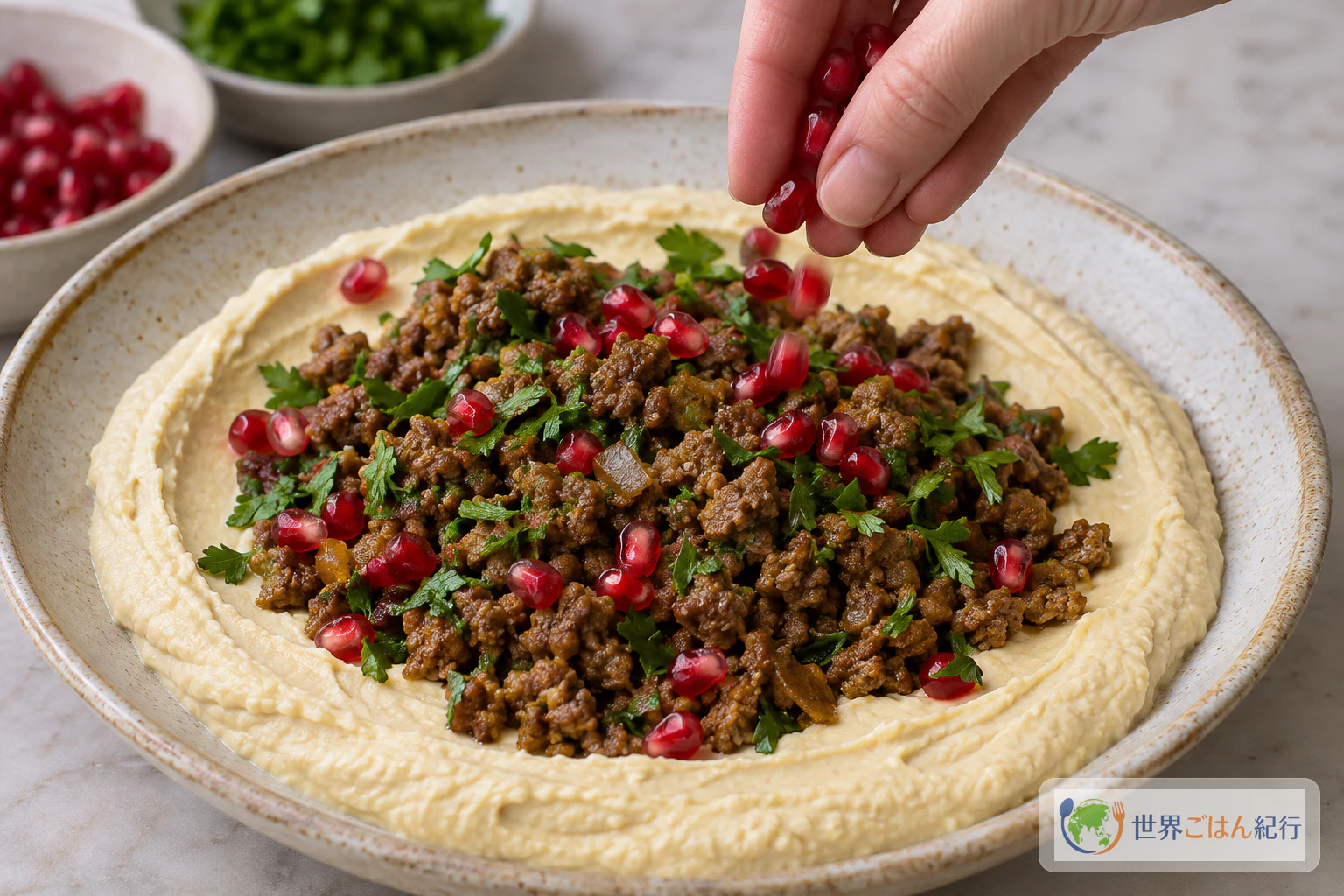
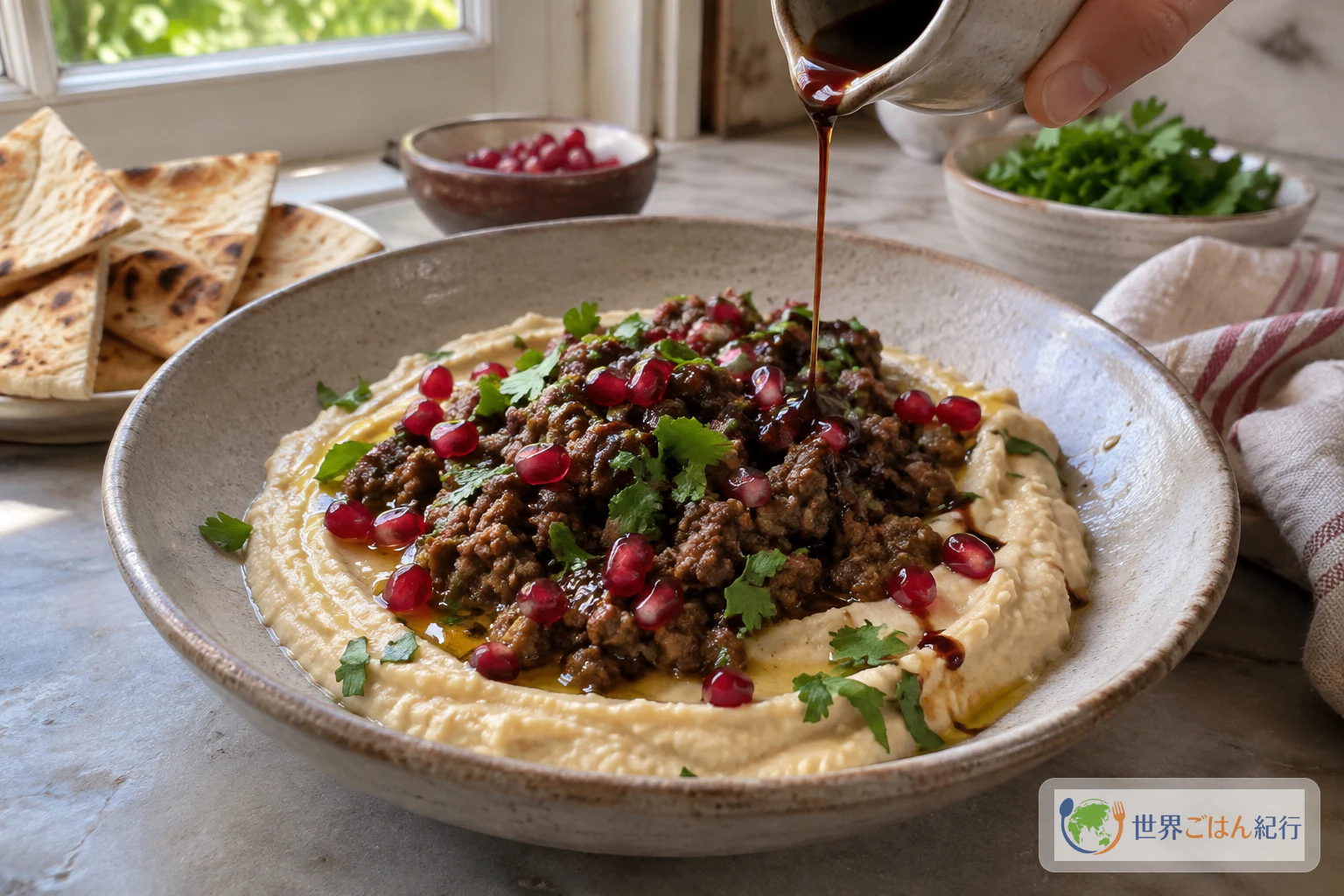
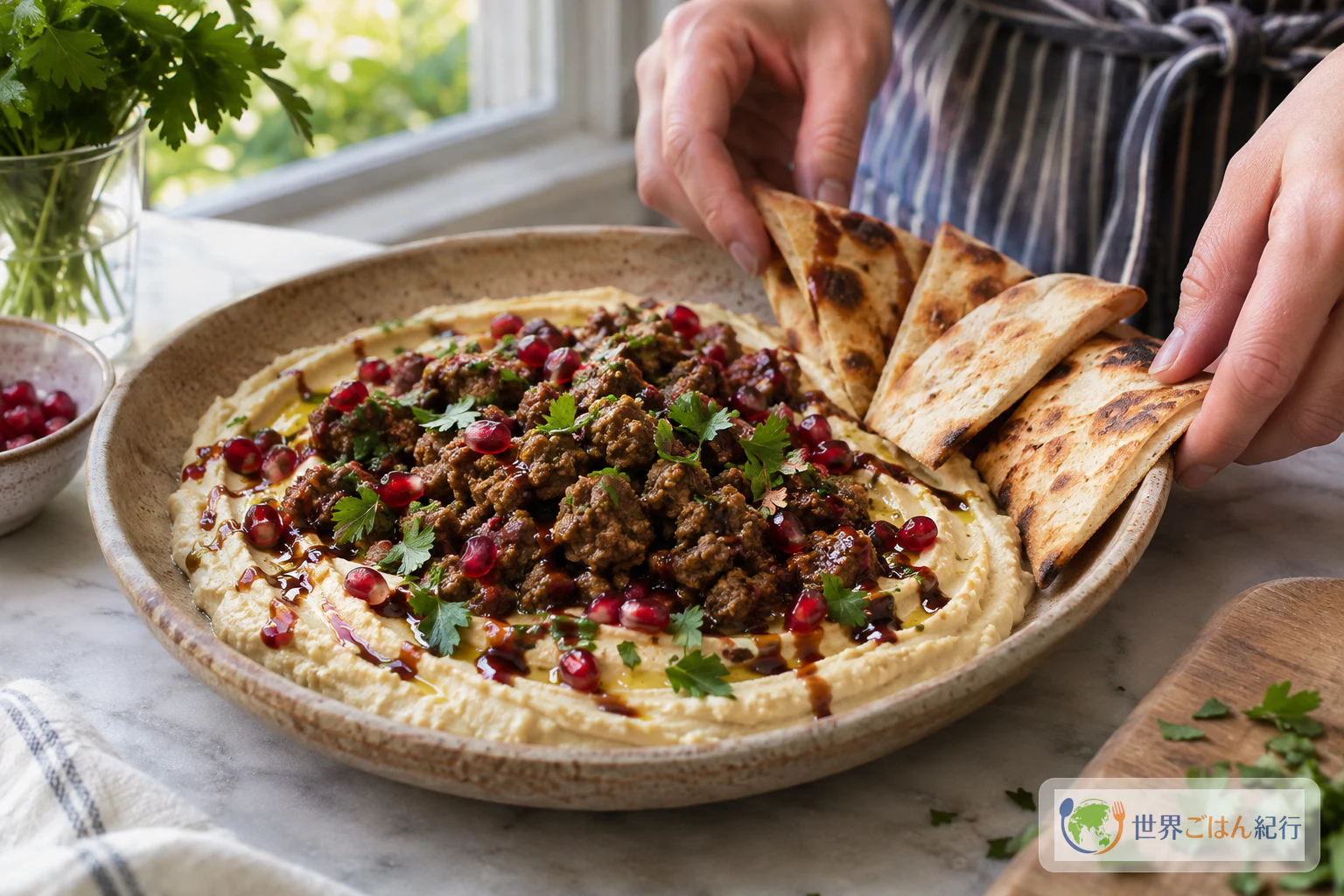
A broad plate of pale hummus is topped with a mound of browned minced lamb. The lamb is fragrant with allspice and cinnamon and glossy with pomegranate molasses. Chopped flat-leaf parsley and ruby pomegranate seeds are scattered over it, a thin thread of dark molasses runs across the top, and toasted pita sits alongside for scooping.
This article follows one specific recipe: Phoebe Wood's "Hummus with spiced lamb (hummus b'lahmeh)," published by SBS Food and noted on its page as seen in Feast magazine, March 2014, Issue 29. SBS introduces it as a comforting dish with versions made throughout the Middle East. We present it as one home-style version of a dish with many forms, not as the single authentic recipe or the version from one particular place.
The recipe gives 6–8 servings. Its measures are Australian: 1 cup = 250 ml, 1 tablespoon = 20 ml, 1 teaspoon = 5 ml. It prints its own timing estimates: 20 minutes of preparation, 10 minutes of cooking and 5 minutes of cooling. Sekai Gohan has not kitchen-tested this recipe. Treat those figures as the publisher's estimates, not as times we have measured, and judge each step by what you see in the processor and the pan.
SBS titles the dish "Hummus with spiced lamb" and gives hummus b'lahmeh in parentheses. On Sekai Gohan it is filed with the dishes collected under Syria. That placement is how our catalog is organised. It is not a claim that the dish is uniquely Syrian or that it began there.
One Recipe Among Many Versions Across the Middle East
The SBS introduction is short, but it sets the frame for this article: versions of this dish are made throughout the Middle East. It does not name a single region of origin or a fixed canonical form, and neither do we. This page does not describe specific regional recipes or a history of the dish, because the sources here do not document them.
What this version shows clearly is its structure. It has two parts that are made separately and only meet on the plate:
| Part | What goes into it | How it is finished |
|---|---|---|
| Hummus | Canned chickpeas, tahini, lemon juice, most of the olive oil, half the garlic, warm water, salt and pepper | Blended until smooth, covered and set aside |
| Lamb topping | The rest of the olive oil, the rest of the garlic, minced lamb, allspice, cinnamon, pomegranate molasses, salt and pepper | Browned, spiced, sweetened and cooled slightly |
| To serve | Parsley, pomegranate seeds, extra pomegranate molasses, toasted pita | Scattered, drizzled and served alongside |
If you want a broader picture of Syrian home cooking, Interlink Publishing describes Imad Alarnab's cookbook Imad's Syrian Kitchen: A Love Letter to Damascus as a collection of traditional and adapted Syrian home recipes. That book is general background only. It is not the basis for any amount or step in the recipe below, and it does not establish where this dish comes from.
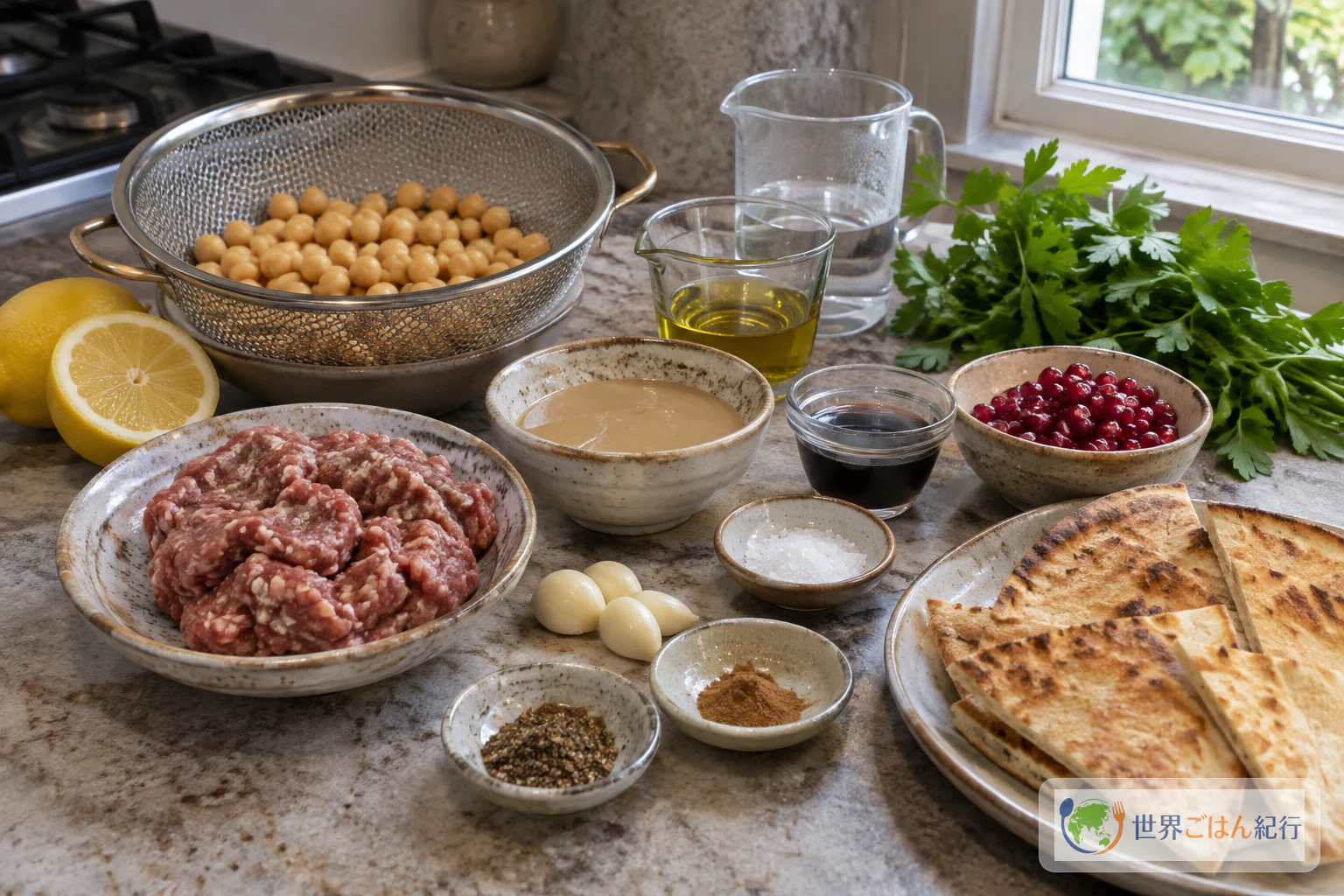
Ingredients (serves 6–8)
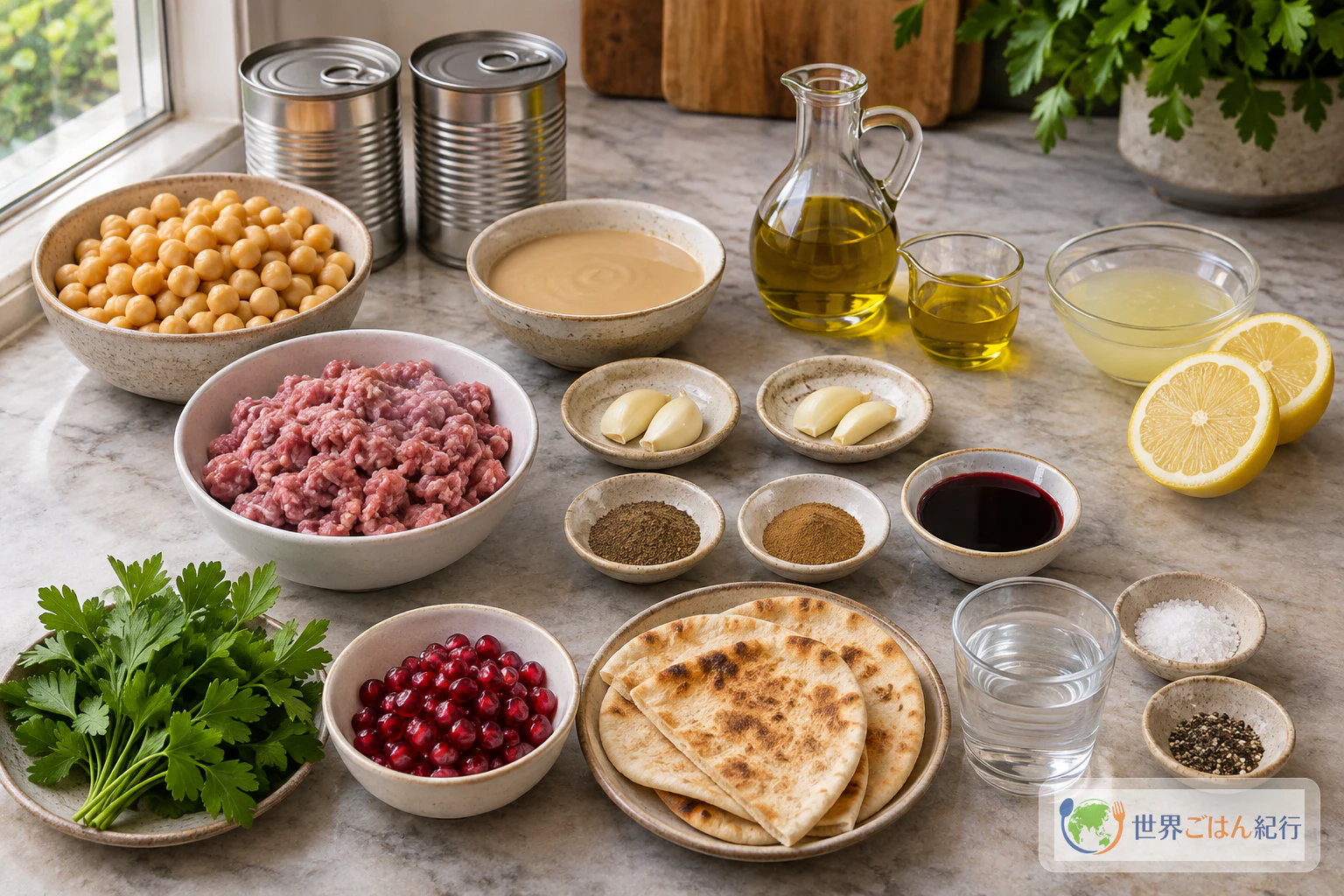
Tahini is made from sesame. Check the labels on the tahini, the pomegranate molasses and the pita for allergens and shared-facility statements. Keep raw minced lamb away from the finished hummus, parsley, pomegranate seeds and pita. Use a separate board and knife for raw meat.
Equipment
- Colander
- Food processor
- Bowl and a cover for the finished hummus
- Frying pan
- Wooden spoon
- Clean food thermometer
- Heatproof trivet
- Broad, shallow serving plate
- Separate board and knife for raw meat
Shopping and Choosing: Tahini, Pomegranate Molasses and Lamb
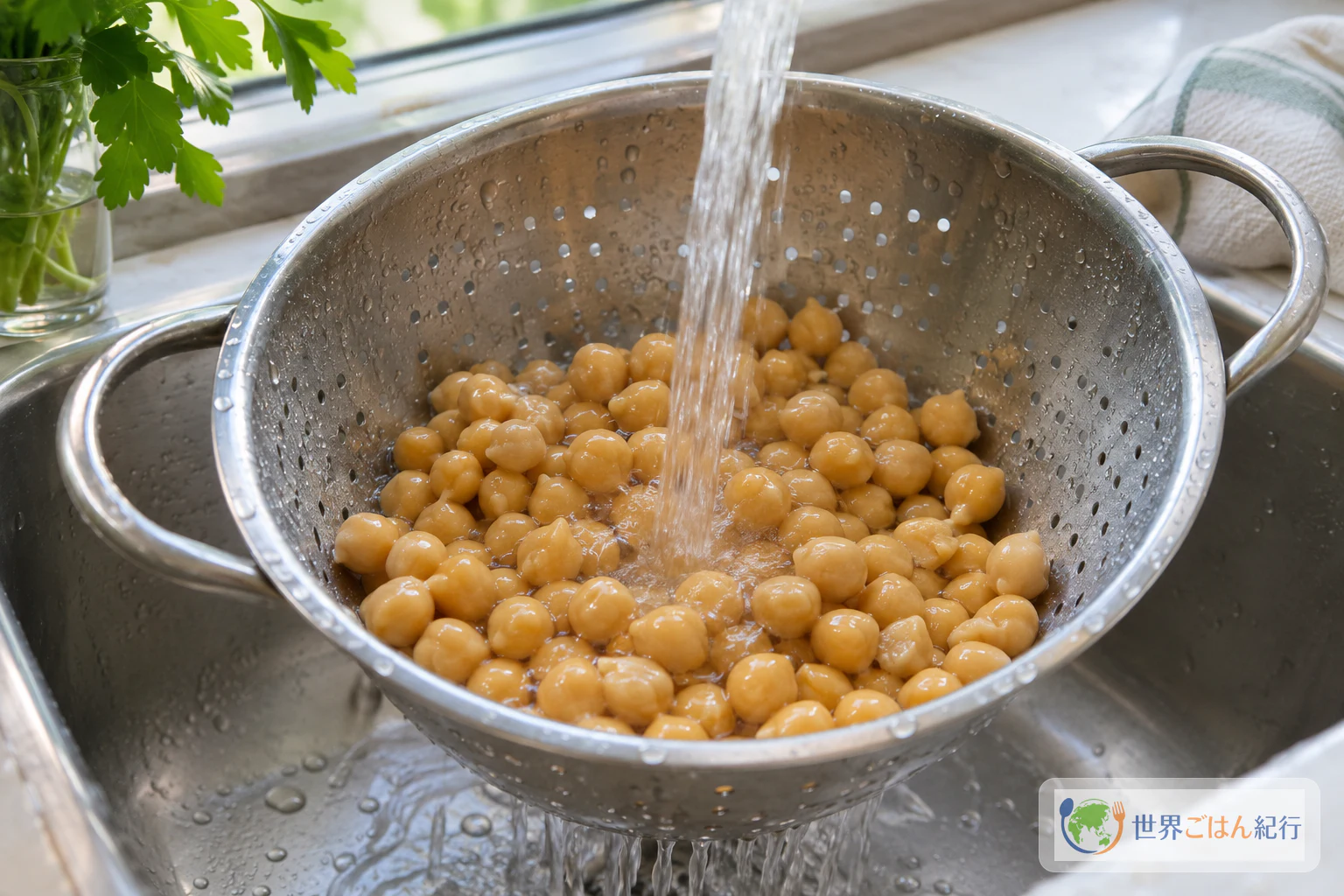
Chickpeas. Use canned chickpeas, rinsed and drained. The 400 g label refers to each can's size. This article does not offer a dried-chickpea method.
Tahini. Look in Middle Eastern grocers, import shops or online. Other sesame pastes, such as East Asian toasted sesame paste, will change the flavour and thickness. If you use one, treat it as a change to the dish, not the same ingredient. Check the label for allergens.
Pomegranate molasses. Look for it in Middle Eastern grocers and import shops. No substitute has been checked for this recipe, so we do not suggest one.
Minced lamb. If your supermarket doesn't carry it, a butcher or specialty shop may. Beef mince makes a different dish with a different flavour. It is not the version described here.
Pomegranate seeds and pita. You can take the seeds from a whole pomegranate. If you buy chilled or frozen seeds, follow the product label. Toast the pita before serving.
Method: Hummus First, Then the Lamb
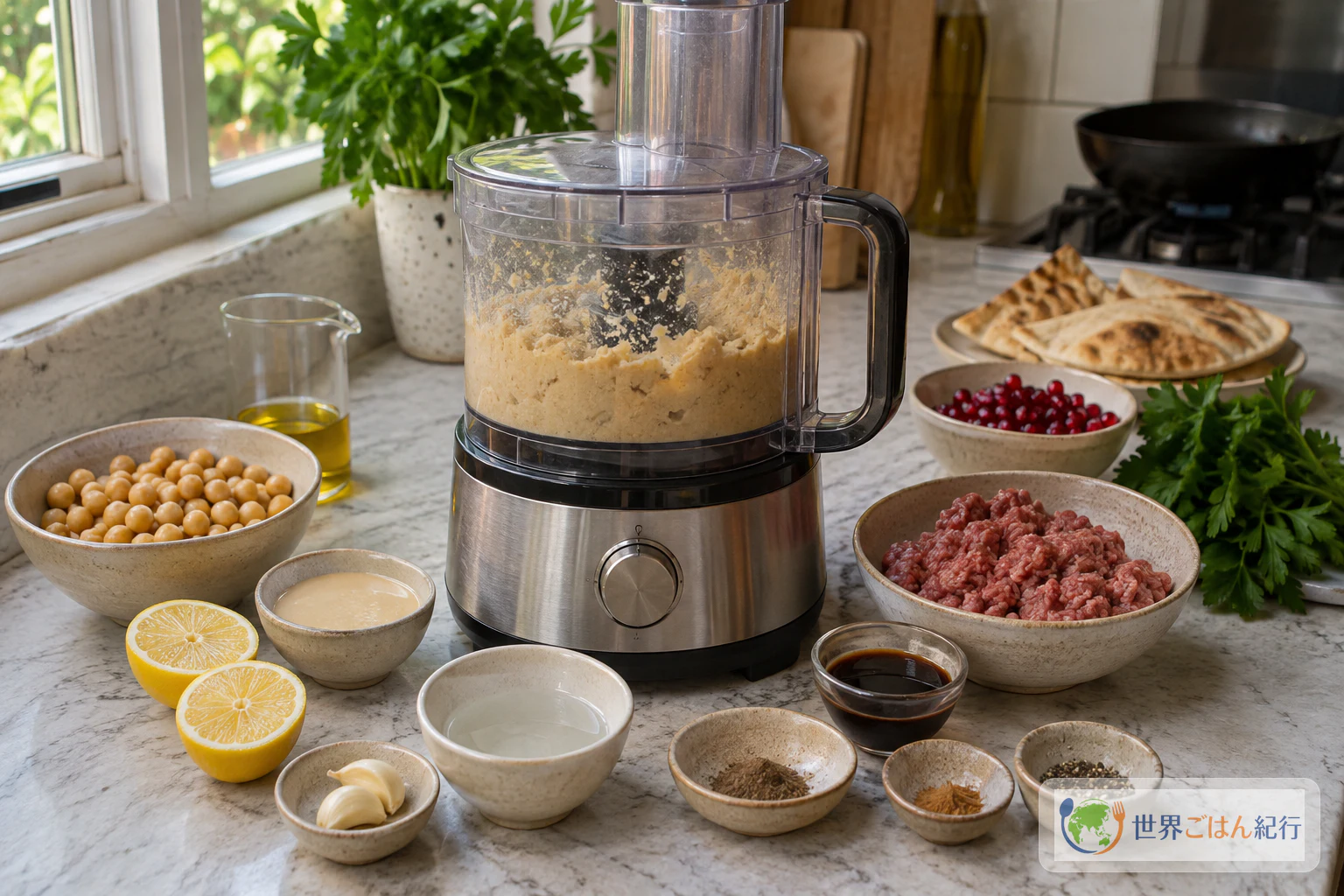
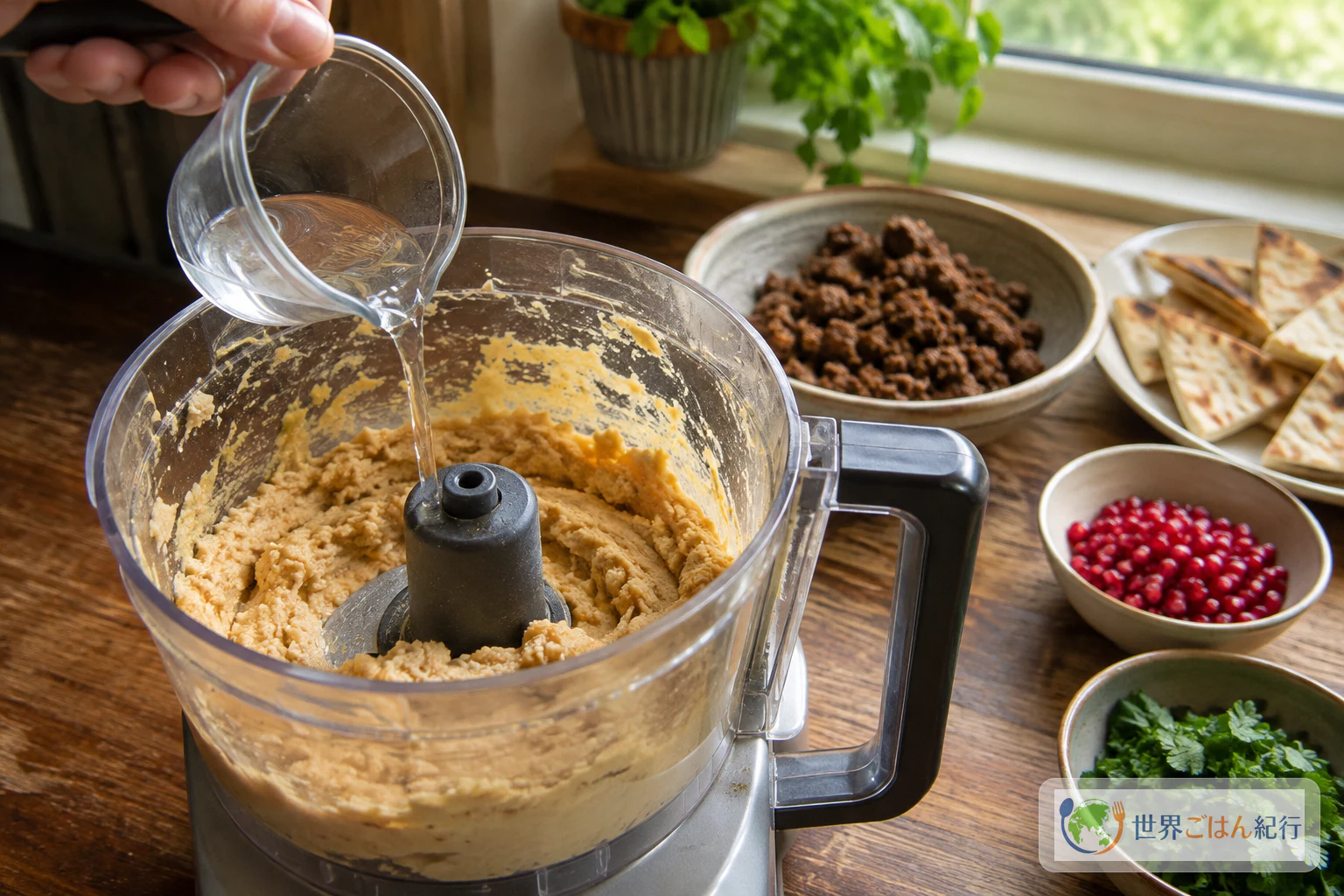
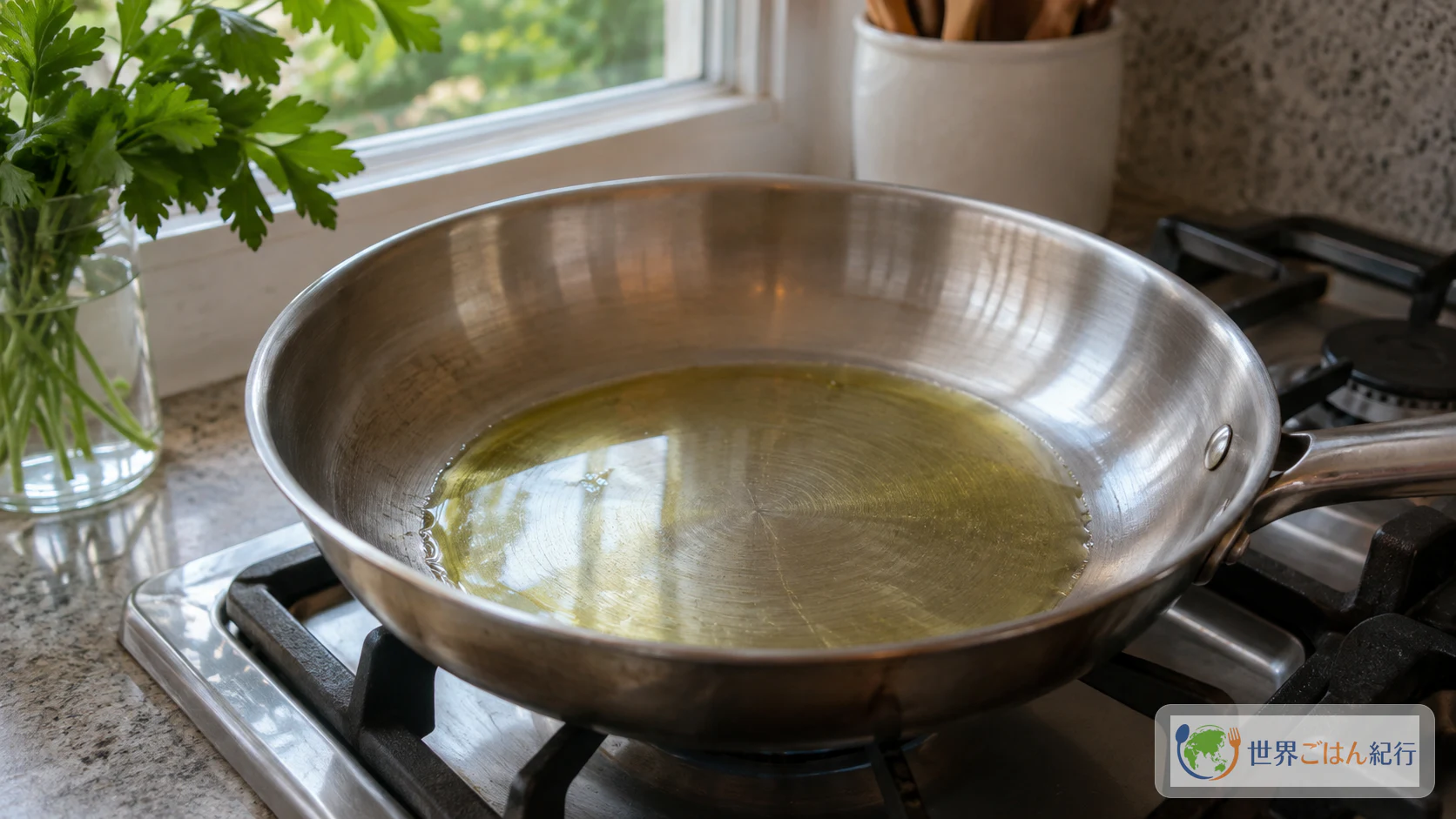
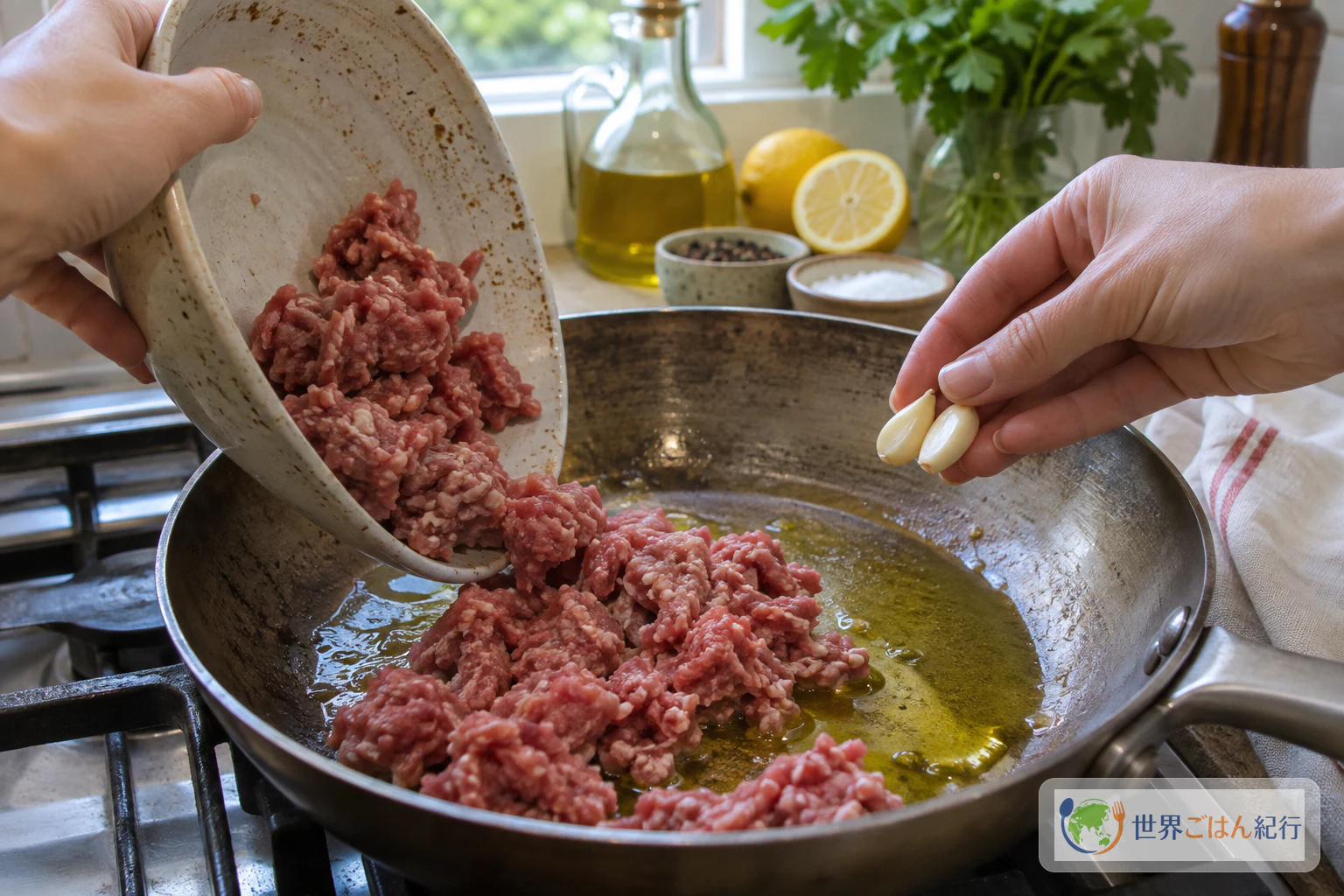
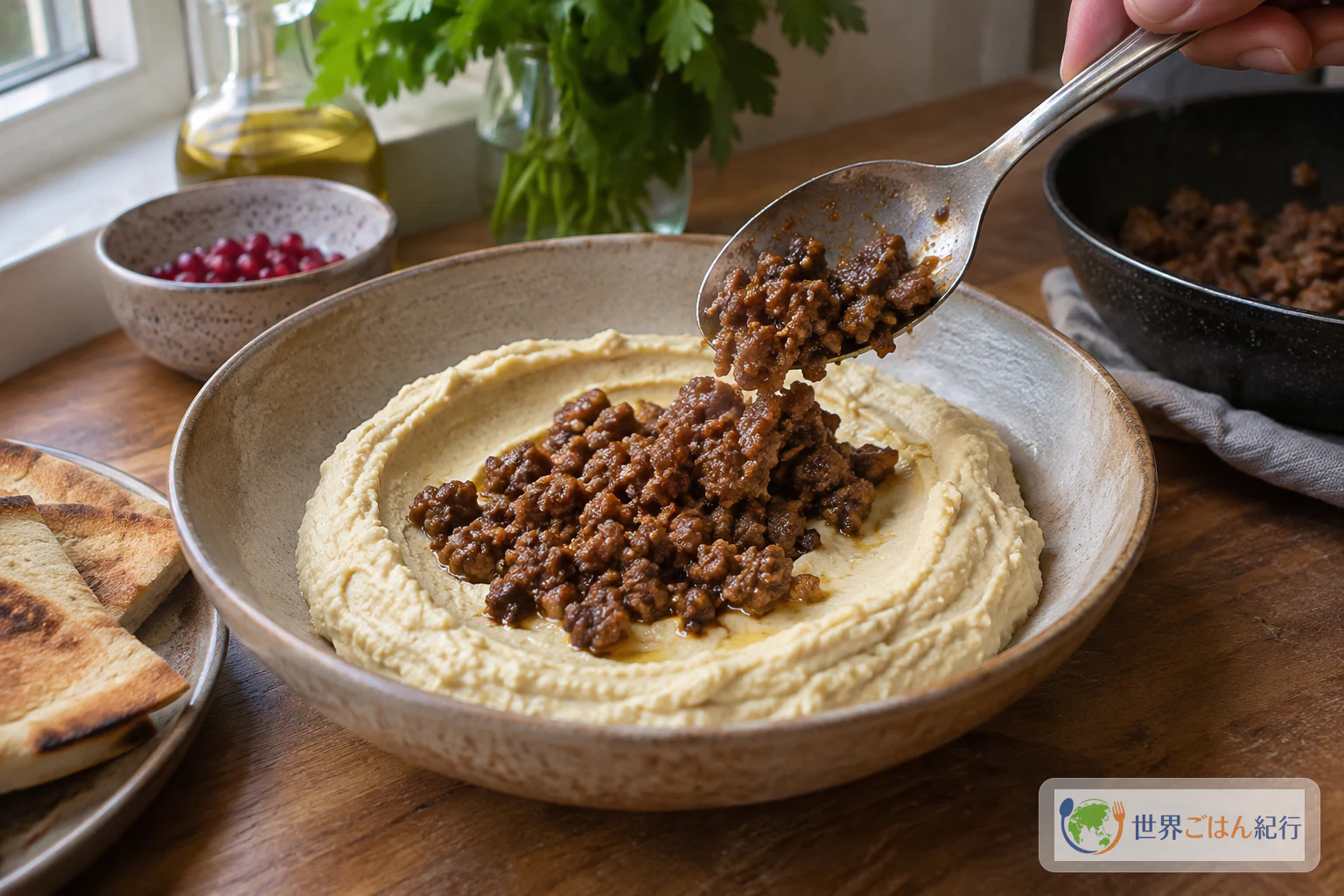
Make and cover the hummus first. Then cook the lamb in a pan with the remaining oil and garlic, let it cool slightly, and bring the two together on the plate.
Checks Before You Serve
| What you notice | What to do |
|---|---|
| The hummus is still grainy after adding the water | Keep processing until it is smooth before you season it |
| The lamb still has pink patches | Keep cooking and breaking it up until it is browned all over, then check the centre reaches at least 75°C |
| No thermometer at hand | The cooking time alone does not confirm the meat is safe. Use a clean food thermometer for minced meat |
| Garnishes or pita have been near the raw lamb | Keep raw meat, its board and its knife apart from everything that is eaten without further cooking |
| The topping is very hot when you plate it | Let it rest off the heat a little longer so it cools slightly before it goes on the hummus |
Serving: A Shared Plate with Pita
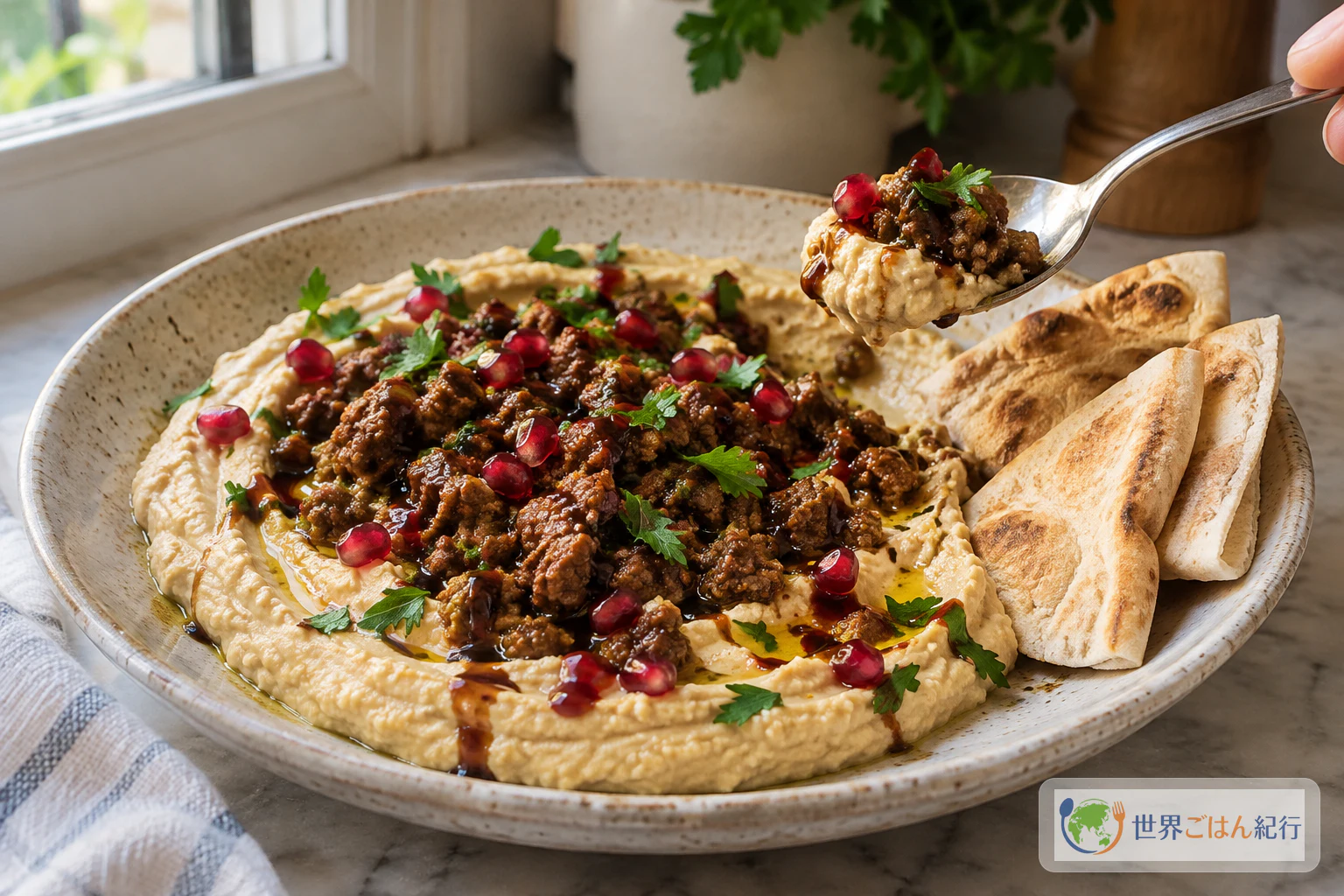
The recipe makes one plate for 6–8 people, served with toasted pita. When you serve, spoon up some hummus and some lamb together so each portion gets both, along with a few pomegranate seeds and a little parsley.
Variations and What Changes
SBS notes that versions of this dish are made throughout the Middle East, but its short introduction does not describe them. So we don't present specific regional versions here. Within this recipe, these are the honest choices:
- Beef mince instead of lamb: this makes a different dish with a different flavour. It is not tested here.
- Another sesame paste instead of tahini: the flavour and thickness change. Treat it as an adaptation.
- Dried chickpeas instead of canned: there is no reliable conversion from the can sizes, so this article doesn't give one.
- Ingredients from other lamb-topped hummus recipes, such as onion, pine nuts, ghee, baharat or sumac: these belong to other recipes and are not part of this version.
Frequently Asked Questions
Is this a Syrian dish?
SBS describes versions of it being made throughout the Middle East. It does not tie the dish to one country. Sekai Gohan files it under Syria in our catalog, but we don't claim it is uniquely Syrian or that it originated there.
How long does it take?
SBS prints 20 minutes of preparation, 10 minutes of cooking and 5 minutes of cooling. Sekai Gohan has not kitchen-tested the recipe, so treat these as the publisher's estimates. Judge doneness by the lamb being browned all over and reaching 75°C in the centre.
Where does the 75°C figure come from?
It comes from Food Standards Australia New Zealand (FSANZ). Its general food safety guidance recommends that minced meat, including lamb mince, reaches at least 75°C at the centre, checked with a clean food thermometer. FSANZ also advises keeping raw meat separate from ready-to-eat food, with a separate board and knife. The SBS recipe itself gives the cooking as 8 minutes or until browned, then 2 minutes with the spices. The temperature check is a separate safety step added here.
Why is tahini given as both 140 g and 1/2 cup?
SBS prints both measures. A weight and a volume of a thick paste don't line up neatly, so we keep both as printed and don't recalculate them.
Is the 400 g on the chickpea cans the drained weight?
No. 400 g is the can size. The chickpeas are rinsed and drained, and no drained weight is given.
Why aren't the warm water, salt and pepper in the SBS ingredient list?
In the SBS recipe, these appear only in the method. The ingredient table above includes them so you have everything ready before you start.
Sources
- SBS Food, Phoebe Wood, "Hummus with spiced lamb (hummus b'lahmeh)," as seen in Feast magazine, March 2014, Issue 29. The recipe followed in this article: full ingredient list, method and serving suggestions, 6–8 servings, printed preparation, cooking and cooling times, the Australian cup and spoon definitions, and the note that versions of the dish are made throughout the Middle East. https://www.sbs.com.au/food/recipe/hummus-with-spiced-lamb-hummus-blahmeh/5mnvupjbe
- Food Standards Australia New Zealand (FSANZ), "Food safety basics." General official guidance that minced meat, including lamb mince, should reach at least 75°C at the centre, checked with a clean food thermometer, and that raw meat should be kept separate from ready-to-eat food. This is not a recipe source. https://www.foodstandards.gov.au/consumer/prevention-of-foodborne-illness/food-safety-basics
- Interlink Publishing, "Imad's Syrian Kitchen: A Love Letter to Damascus." Publisher's bibliographic description of Imad Alarnab's cookbook as a collection of traditional and adapted Syrian home recipes. Used only as general background. It does not support this recipe's amounts or method, or any claim about the dish's origin. https://interlinkbooks.com/product/imads-syrian-kitchen/