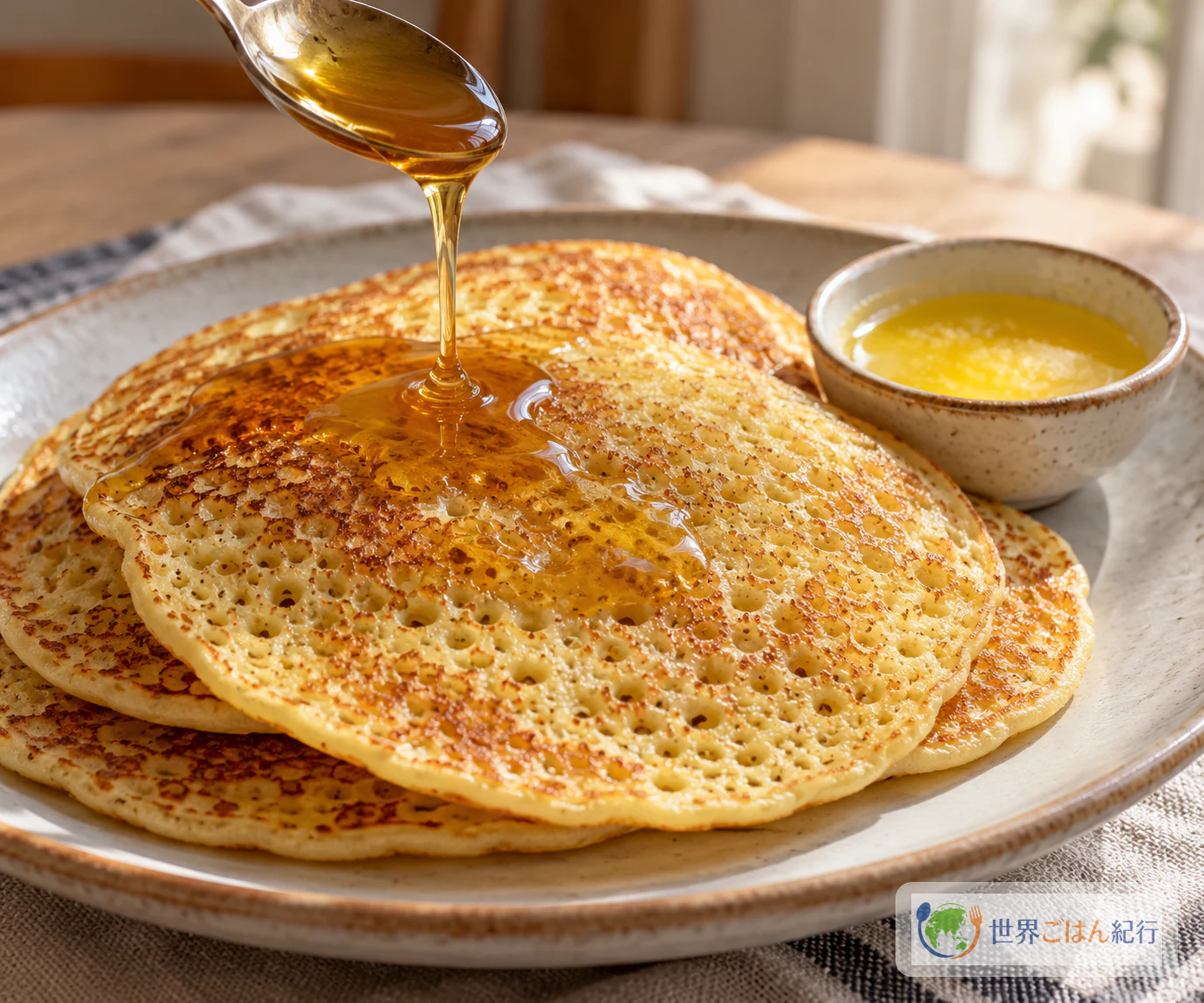
Chebab: Saffron-Gold Pancakes Marked with Tiny Holes
Saffron soaked in hot water colors the batter, and cardamom scents it. Rest the batter covered for 30 minutes, then let the bubbles on the surface and the lifting edges tell you when to turn each pancake.
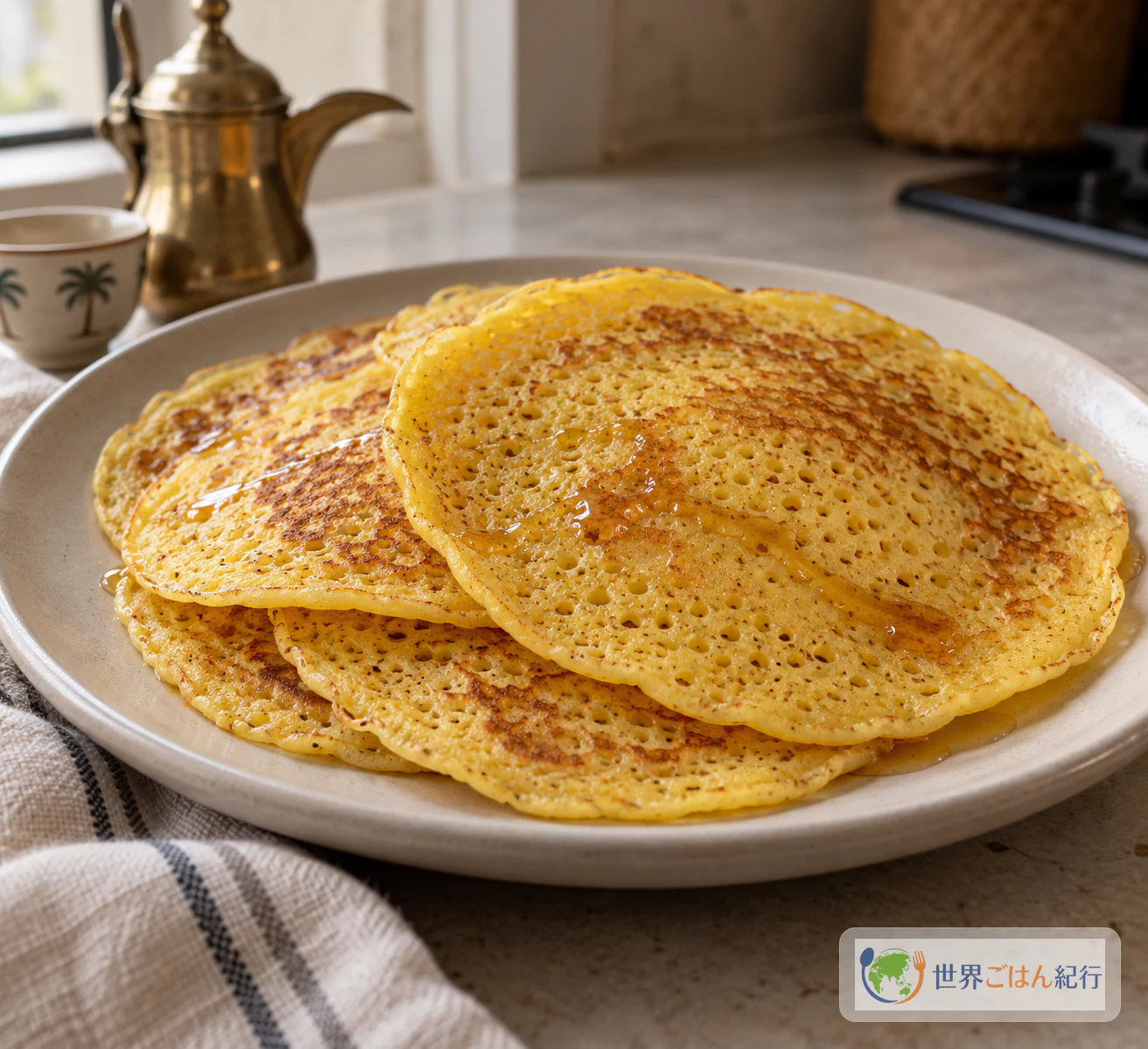
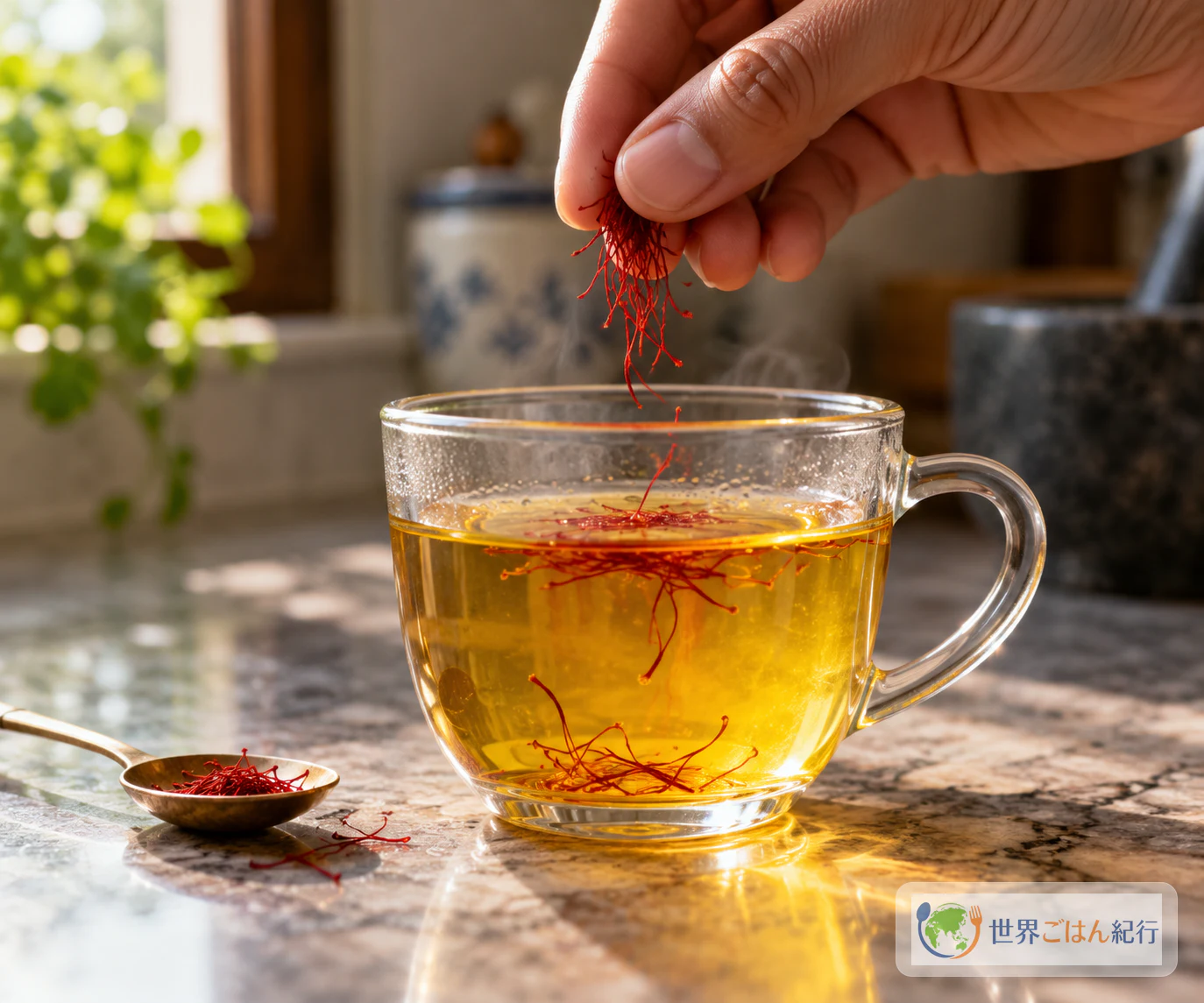
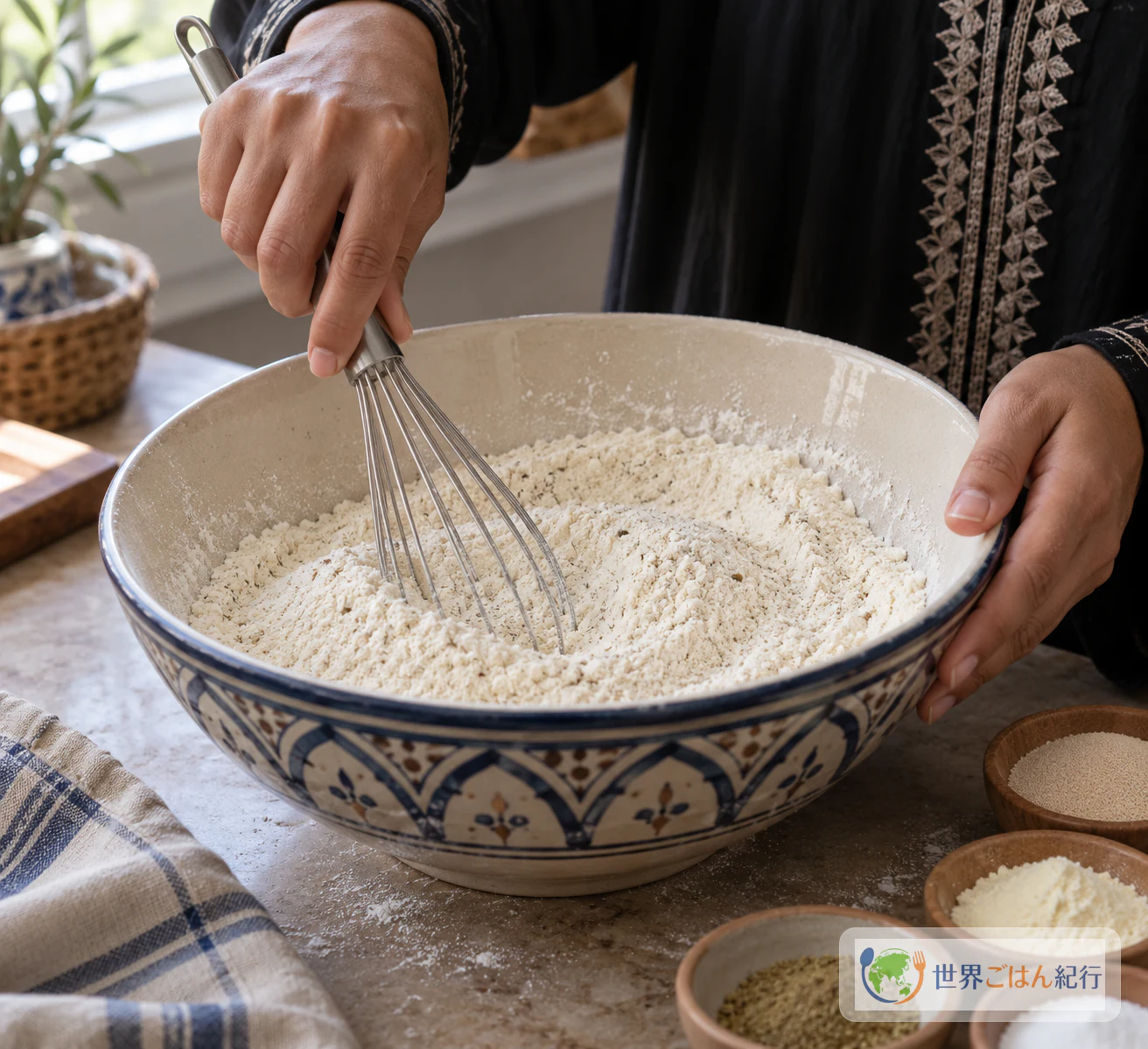
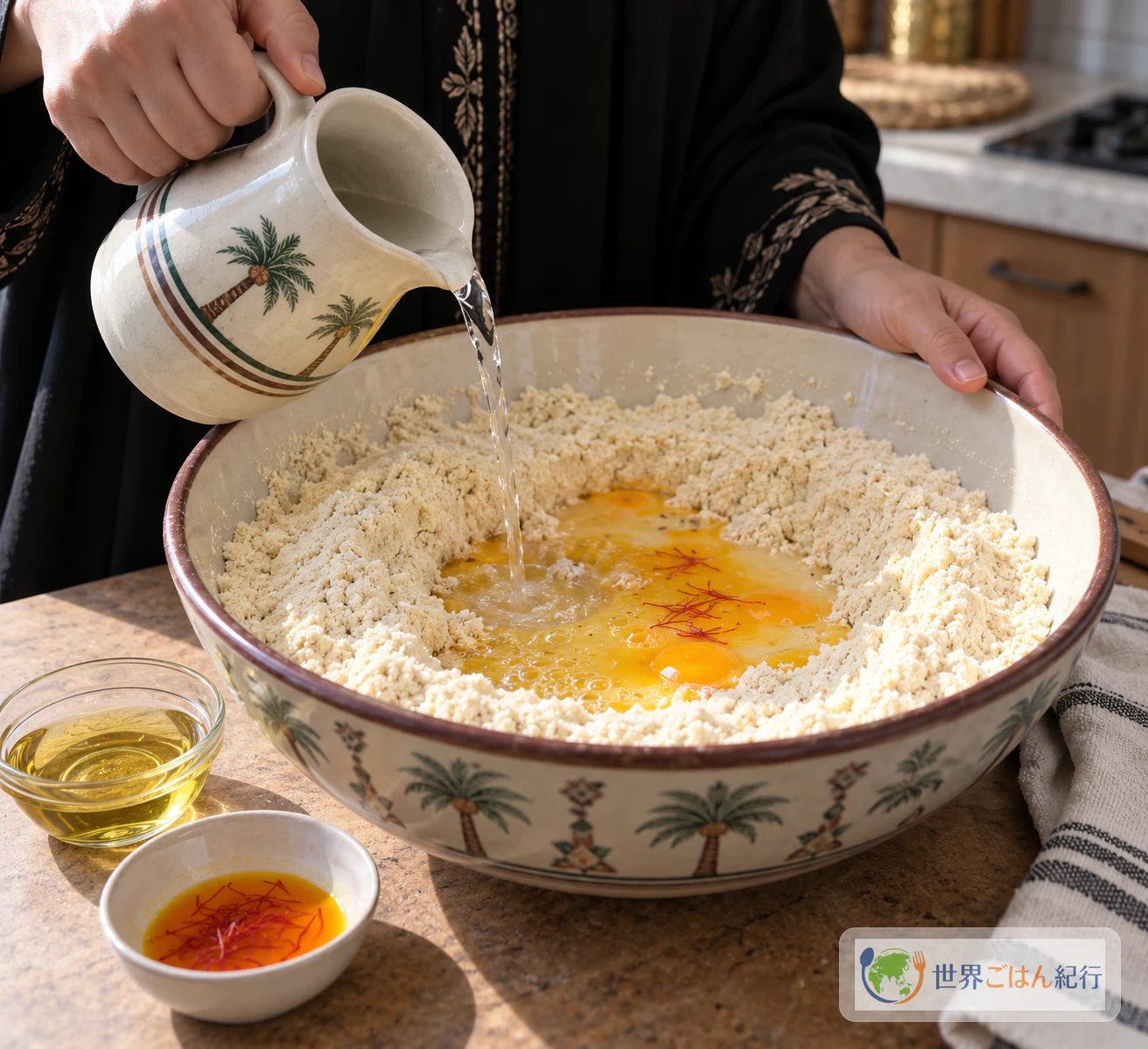
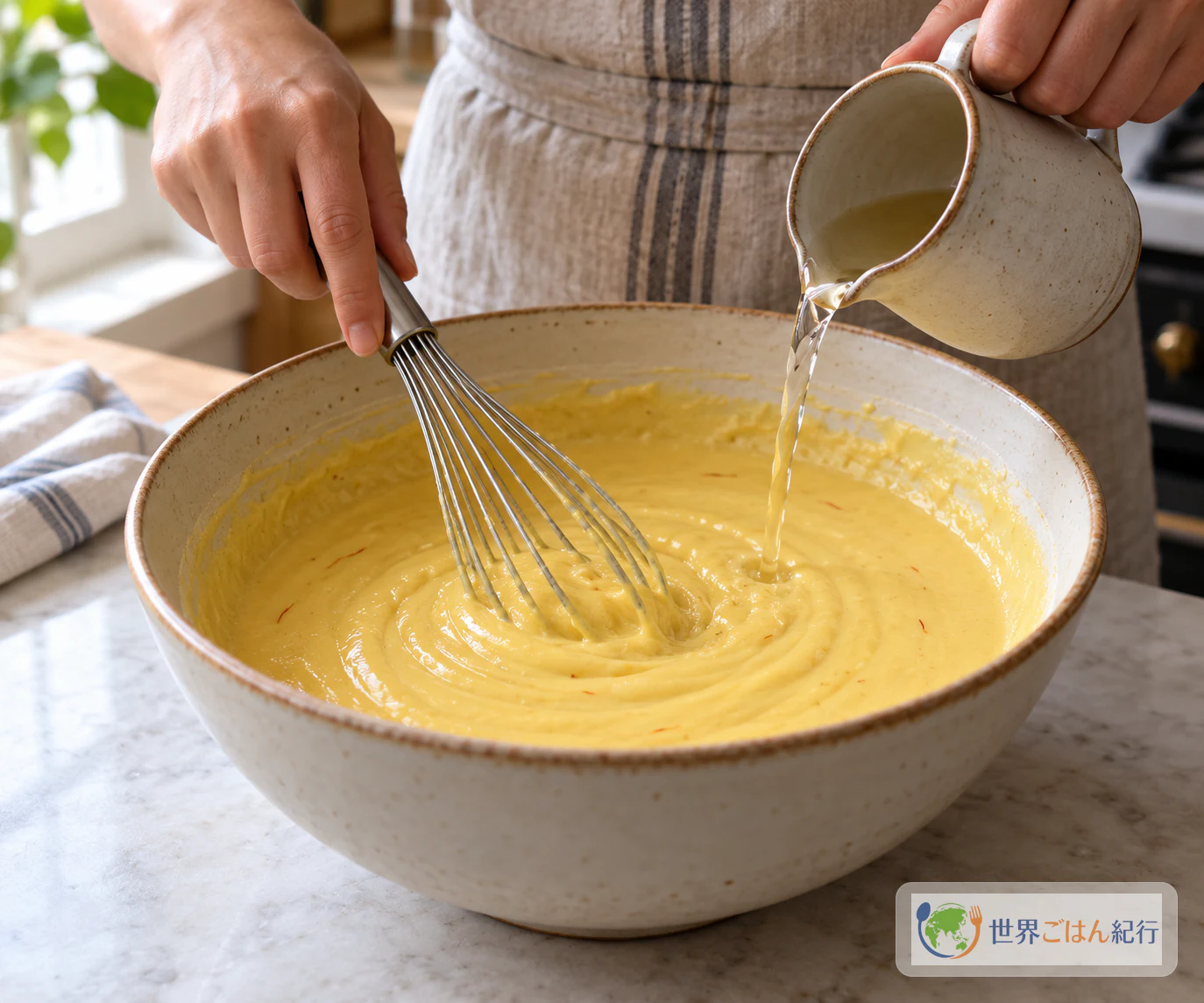
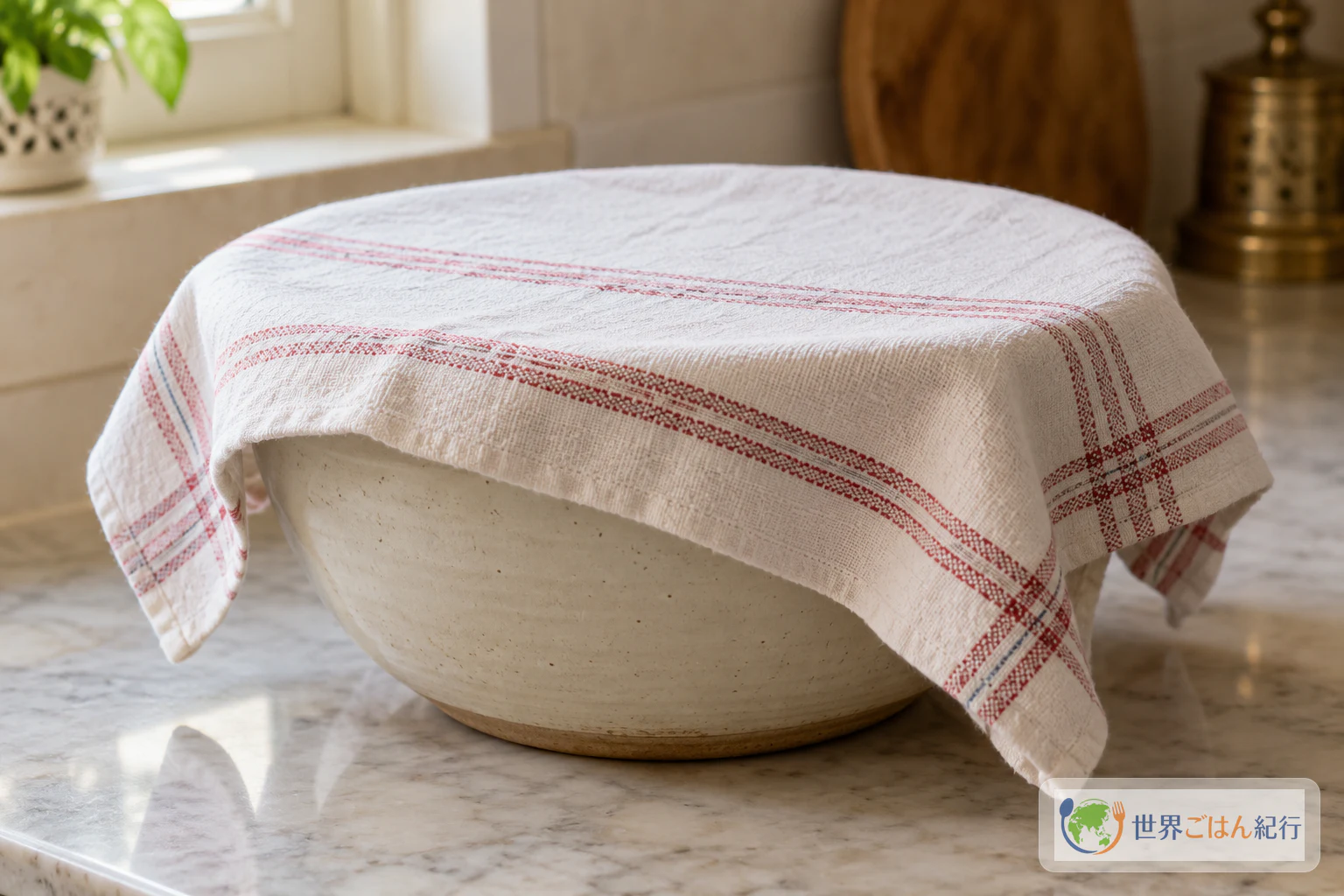
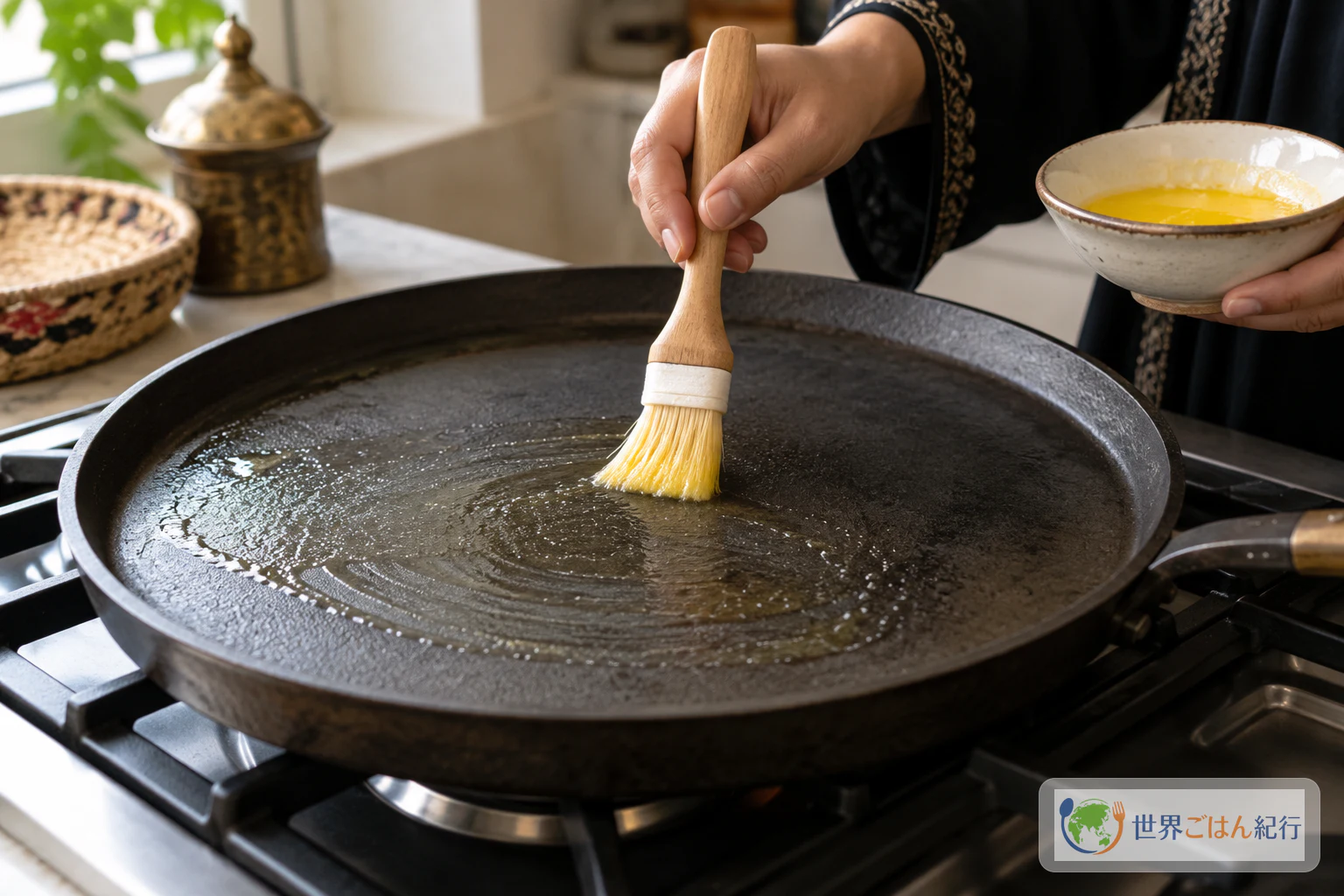
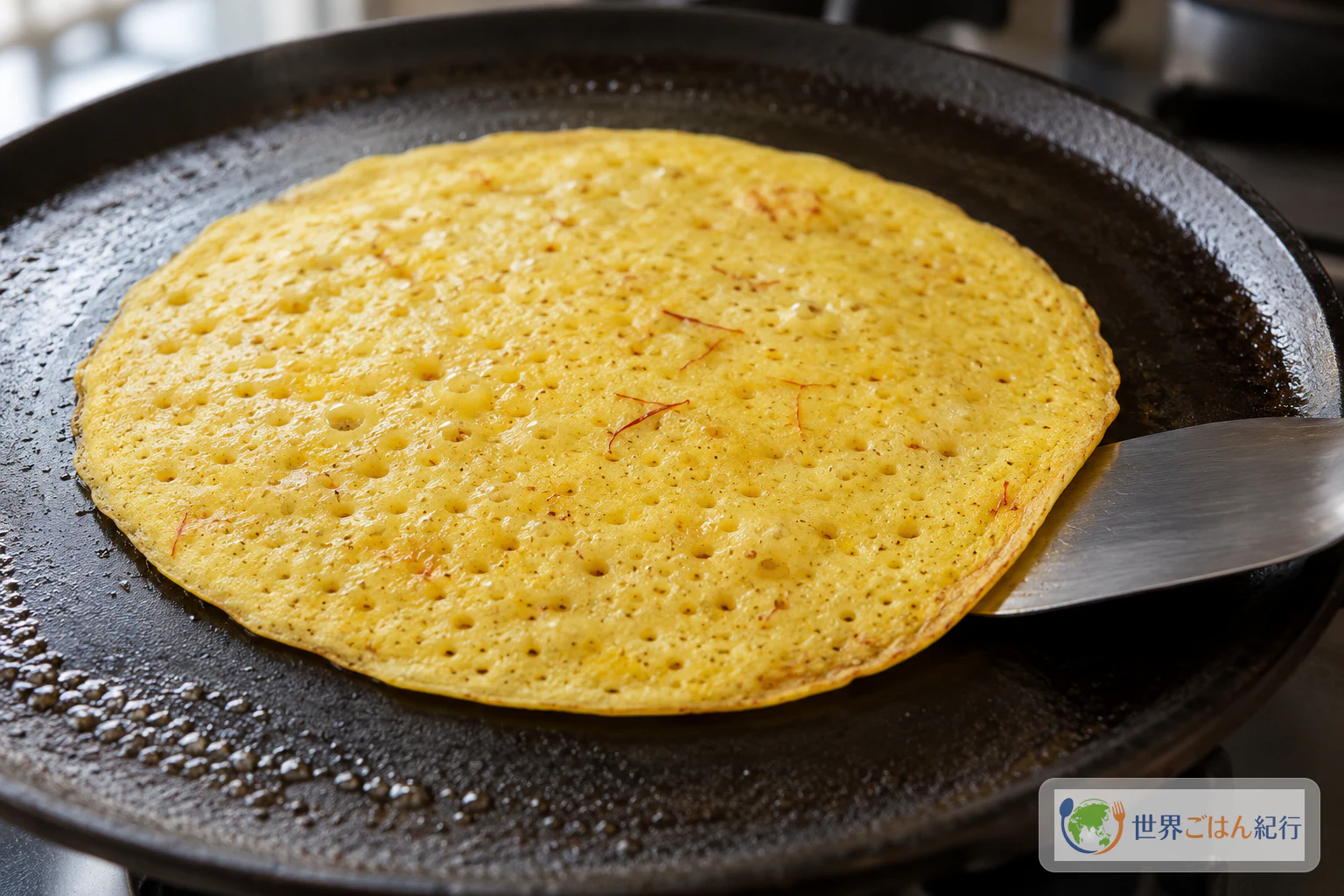
Crushed saffron goes into a small cup of hot water to steep. That infusion, together with eggs, oil and warm water, goes into a bowl of flour, powdered milk, sugar, yeast and cardamom. After a 30-minute rest under a cover, the batter is poured onto a thick pan brushed with melted butter. Small bubbles rise through the surface, the edges begin to lift, and it is time to flip. This is chebab, a pancake from the United Arab Emirates.
Experience Abu Dhabi, the emirate's official tourism site, introduces chebab as Emirati pancakes. In a Condé Nast Traveller Middle East feature, Emirati chef Khaled Alsaadi describes it as a breakfast dish. He places its texture between a crepe and an American pancake: thicker than the first, thinner than the second, with small holes across the surface that soak up whatever goes on top.
About This Recipe Version
The recipe on this page follows a single published formula: the "Chebab Recipe" from House of Artisans at Qasr Al Hosn, a two-page bilingual PDF whose footer identifies the Abu Dhabi Department of Culture and Tourism. Its Arabic heading names the dish الجباب. Amounts and steps come from that recipe alone; ingredients, quantities and toppings from other chebab recipes have not been mixed in.
Two points are worth knowing before you start:
- Baking powder. The ingredient list includes 1 tsp baking powder alongside 1 tbsp dried yeast, but the English method's dry-mix line does not name it. The Arabic method in the same PDF says to mix all the dry ingredients, so this article adds the listed 1 tsp to the dry mix. This is an editorial resolution within that one recipe, not a borrowed step.
- No yield or cooking times. The recipe does not state how many pancakes it makes, a serving count, a pan temperature or how long each side cooks. This article does not add them. Judge each pancake by the bubbles, the lifting edges and the color.
This recipe has not been kitchen-tested by Sekai Gohan.
Ingredients
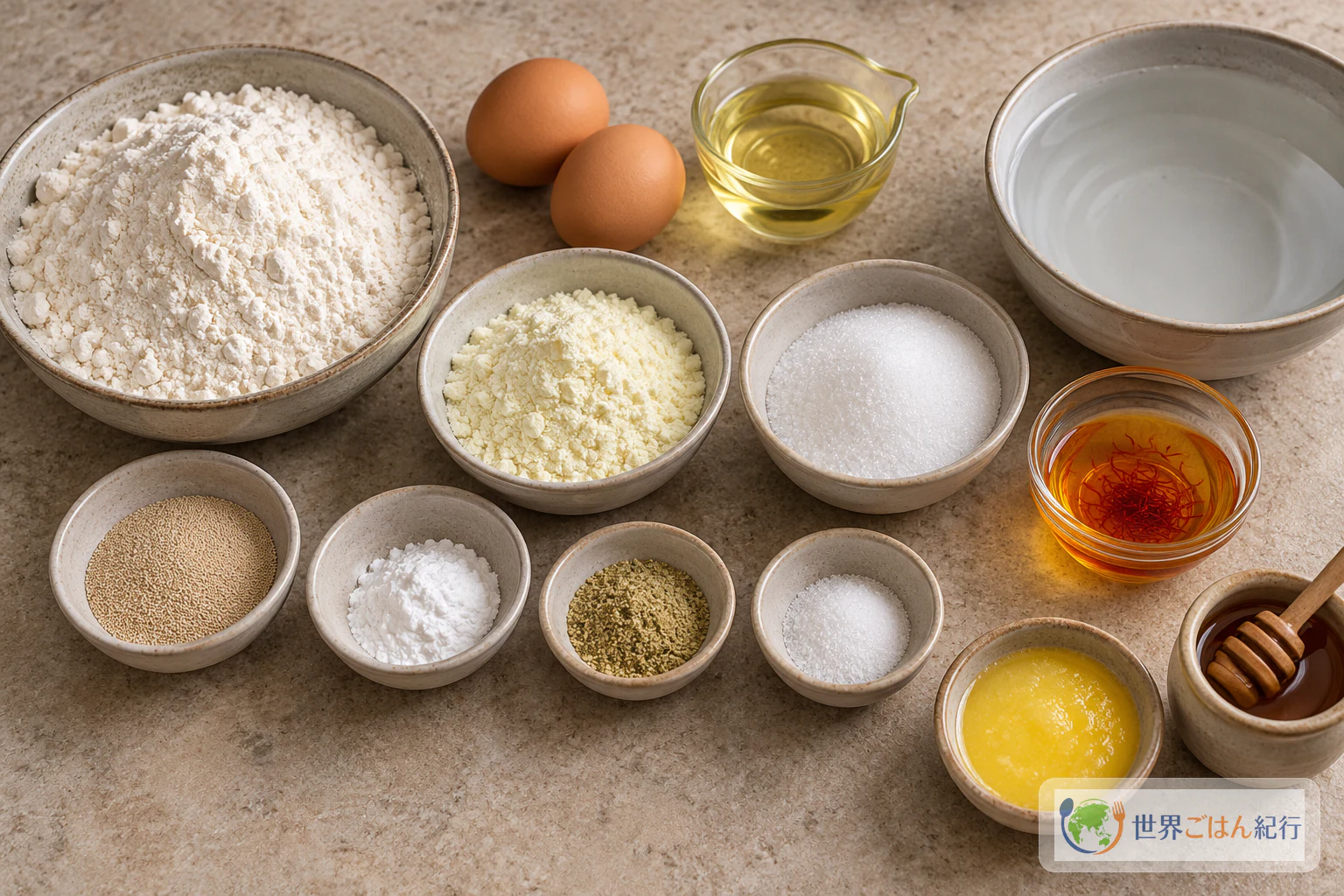
The 2 tbsp hot water is only for the saffron; the 2 1/4 cups warm water is for the batter. The vegetable oil goes into the batter, and the butter goes onto the pan.
Equipment
- Measuring cups, including a 1/3-cup measure
- Measuring spoons
- A small cup for the saffron infusion
- A large mixing bowl
- A whisk
- A cover for the bowl, such as a lid or a clean kitchen cloth
- A thick-based pan or griddle
- A pastry brush
- A spatula for flipping
Choosing and Substituting
- Powdered milk is not interchangeable with liquid milk. The batter's liquid is the measured warm water; the milk comes in dry. Pouring in liquid milk changes the balance of the batter, so use powdered milk.
- Keep the flour as all-purpose flour. Some other chebab recipes use additional flours, but this version uses only all-purpose flour.
- Butter. Use melted butter or clarified Emirati butter for the pan and for topping. This article does not treat ghee or other cooking fats as the same thing as clarified Emirati butter.
- Syrup. Honey is shown here, but any syrup you like will do.
- Saffron. Crush the threads before soaking.
Method
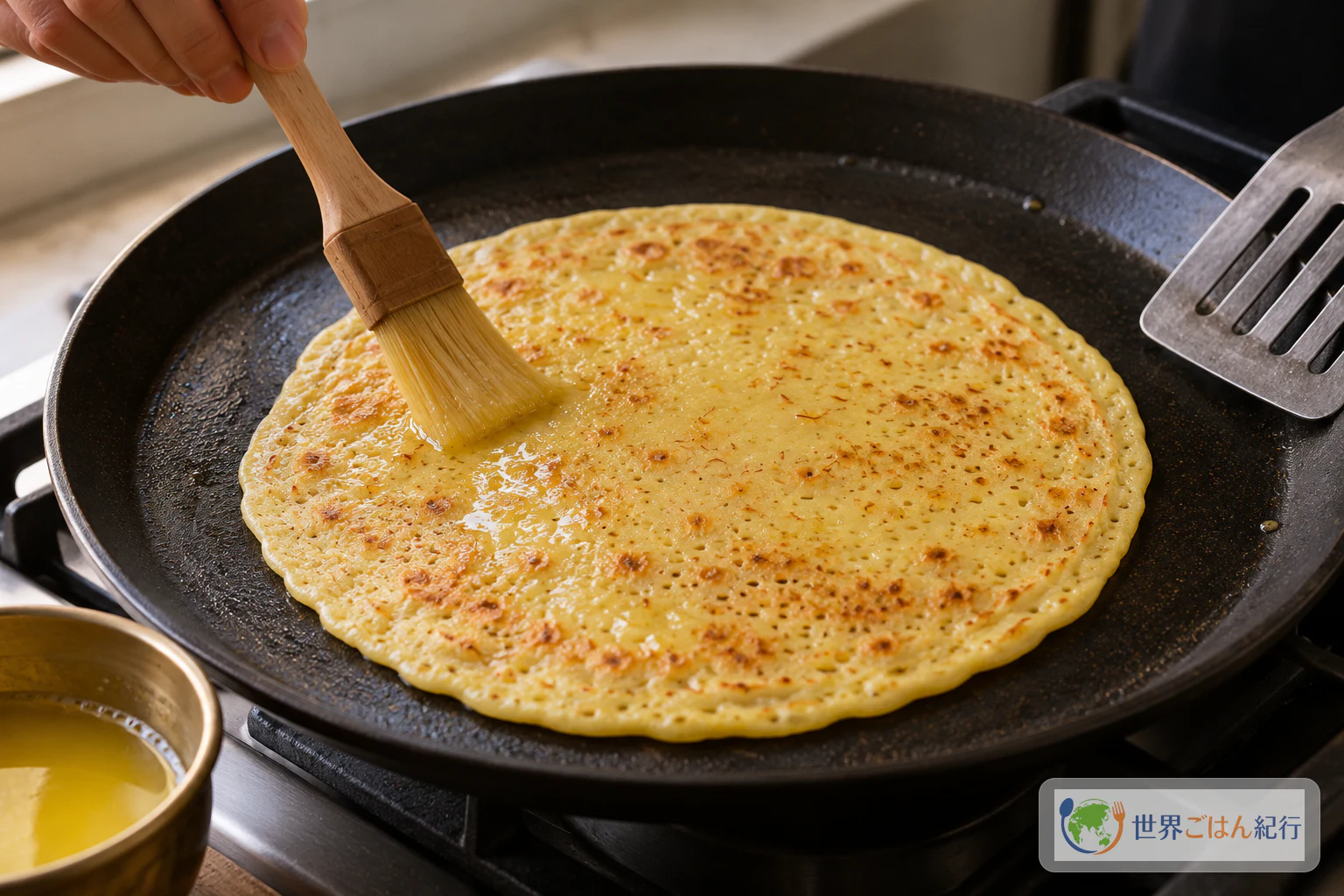
Only the rest has a fixed time: 30 minutes. At the pan, turn each pancake when bubbles appear on the surface and the edges lift, and finish it when both sides are golden brown.
Troubleshooting at the Bowl and the Pan
| What you see | What to check | What to do |
|---|---|---|
| Dry pockets in the batter | Whether all the remaining warm water went in at once | Keep whisking while adding the water gradually, until no dry pockets remain |
| The batter seems very runny or very thick | Whether the hot water and warm water were measured separately, and whether liquid milk was used | Next time, measure 2 tbsp hot water for the saffron and 2 1/4 cups warm water for the batter, and use powdered milk |
| The pancake tears when you flip it | Whether bubbles had appeared and the edges had lifted | Wait for both cues before turning |
| The pancake sticks to the pan | Whether the pan was brushed with butter | Brush the pan with melted butter before pouring the batter |
| The color is darker than golden | Whether the heat is above medium | Keep the pan at medium heat and finish at golden brown |
| The batter has no saffron color | Whether the saffron was crushed and soaked | Crush the threads and steep them in the hot water before mixing |
Variations and Other Ways to Serve
The version on this page is finished with honey or a preferred syrup and with butter. Other sources show different paths:
- Date molasses. Experience Abu Dhabi mentions chebab served with date molasses, and chef Khaled Alsaadi says chebab is usually eaten with date syrup. If you want to try that pairing, pour it over in place of honey. It is a different way of serving, not part of the recipe above.
- A different formula. Gulf News published a separate full chebab recipe that combines all-purpose and super-fine flour and adds turmeric and fennel with the saffron and cardamom. It rests for 30 minutes after mixing, cooks 3 tbsp portions in a medium pan, and turns them after the color goes golden. Its suggested finishes include cream cheese, date molasses or honey, and strawberries. That is its own recipe; its amounts and toppings are not combined with the one above.
Seeing these side by side shows that chebab is not a single fixed national formula. Choose one version and follow it through, rather than mixing ingredients from several.
Chebab at the Emirati Table
Experience Abu Dhabi lists chebab, which it spells Chabab, among the Emirati dishes worth knowing in Abu Dhabi and presents it as Emirati pancakes. The same page describes gahwa (Arabic coffee) and dates as part of Emirati hospitality, though it does not tie gahwa to chebab specifically.
Chef Khaled Alsaadi's description adds a sense of what the pancake is like to eat. He calls it a breakfast dish, places its thickness between a crepe and an American pancake, and points to the small holes across the surface that absorb the toppings. That is one chef's view rather than a rule for every household, but it matches what the recipe asks you to watch for at the pan: bubbles rising through the batter before the first flip.
Chebab is also a different dish from other Emirati favorites such as luqaimat, a fried-dough sweet, and balaleet. The sources used here do not establish the dish's origin, a date of first appearance, or a link to particular festivals, so this article does not make those claims. For more dishes from the country, see the United Arab Emirates.
Frequently Asked Questions
Why does the recipe use both yeast and baking powder?
The House of Artisans ingredient list includes both 1 tbsp dried yeast and 1 tsp baking powder. The English method leaves the baking powder out of the dry-mix line, while the Arabic method says to mix all the dry ingredients. This article therefore adds the listed baking powder to the dry mix rather than dropping it or importing a step from another recipe.
How many pancakes does this make?
The recipe does not give a yield or number of servings, so none is given here. Each pancake uses 1/3 cup batter.
Can I use liquid milk instead of powdered milk?
The recipe uses powdered milk mixed in dry, with warm water as the liquid. Liquid milk is not the same ingredient and would change the liquid in the batter, so this article does not suggest it.
Can I serve chebab with date molasses?
Yes. Experience Abu Dhabi mentions date molasses with chebab, and chef Khaled Alsaadi says it is usually eaten with date syrup. The House of Artisans recipe used here calls for honey or a preferred syrup, so date molasses is a natural choice of syrup, presented here as a separate way of serving.
Do I need clarified Emirati butter?
The recipe names melted butter or clarified Emirati butter for cooking and topping, so ordinary melted butter is within the recipe. This article does not describe how clarified Emirati butter is made or equate it with ghee.
Has this recipe been tested?
No. The recipe has not been kitchen-tested by Sekai Gohan. The amounts and steps follow the House of Artisans recipe as published, with the baking powder addition explained above.
Sources
- House of Artisans, Qasr Al Hosn (PDF footer identifies the Abu Dhabi Department of Culture and Tourism), "Chebab Recipe." The recipe followed in this article: the full ingredient list including both dried yeast and baking powder; the saffron soaked in hot water; the powdered milk and warm water; the 30-minute covered rest; the medium-heat, thick-based pan or griddle brushed with melted butter; 1/3-cup portions; flipping after surface bubbles and lifting edges, brushing with butter and flipping again until golden brown; melted or clarified Emirati butter for cooking and topping; and honey or a preferred syrup for serving. https://qasralhosn.ae/-/media/qah/feature/pagecontent/house-of-artisan/hoa_chebab-recipe_12may.pdf?rev=-1
- Experience Abu Dhabi, "Emirati Food and Coffee Culture in Abu Dhabi." Chebab presented as Emirati pancakes among dishes to know in Abu Dhabi, with date molasses as a serving option; gahwa and dates described as part of Emirati hospitality. https://visitabudhabi.ae/en/things-to-do/culture/emirati-culture/food-and-coffee
- Gulf News, "Emirati Chebab." A separately published full recipe variant, used here for comparison only: its flours, turmeric and fennel, 30-minute rest, 3-tbsp portions, and finishes of cream cheese, date molasses or honey, and strawberries. https://gulfnews.com/food/cooking-cuisines/emirati-chebab-1.1609076712834
- Pearl Yan, "The best Emirati dishes in the UAE, according to Emirati chefs," Condé Nast Traveller Middle East. Chef Khaled Alsaadi's description of chebab as an Emirati pancake and breakfast dish usually eaten with date syrup, thicker than a crepe and thinner than an American pancake, with small holes that absorb toppings. https://www.cntravellerme.com/story/the-best-emirati-dishes-in-the-uae-according-to-emirati-chefs