Balaleet: Sweet, Fragrant Noodles Under a Salty Omelet
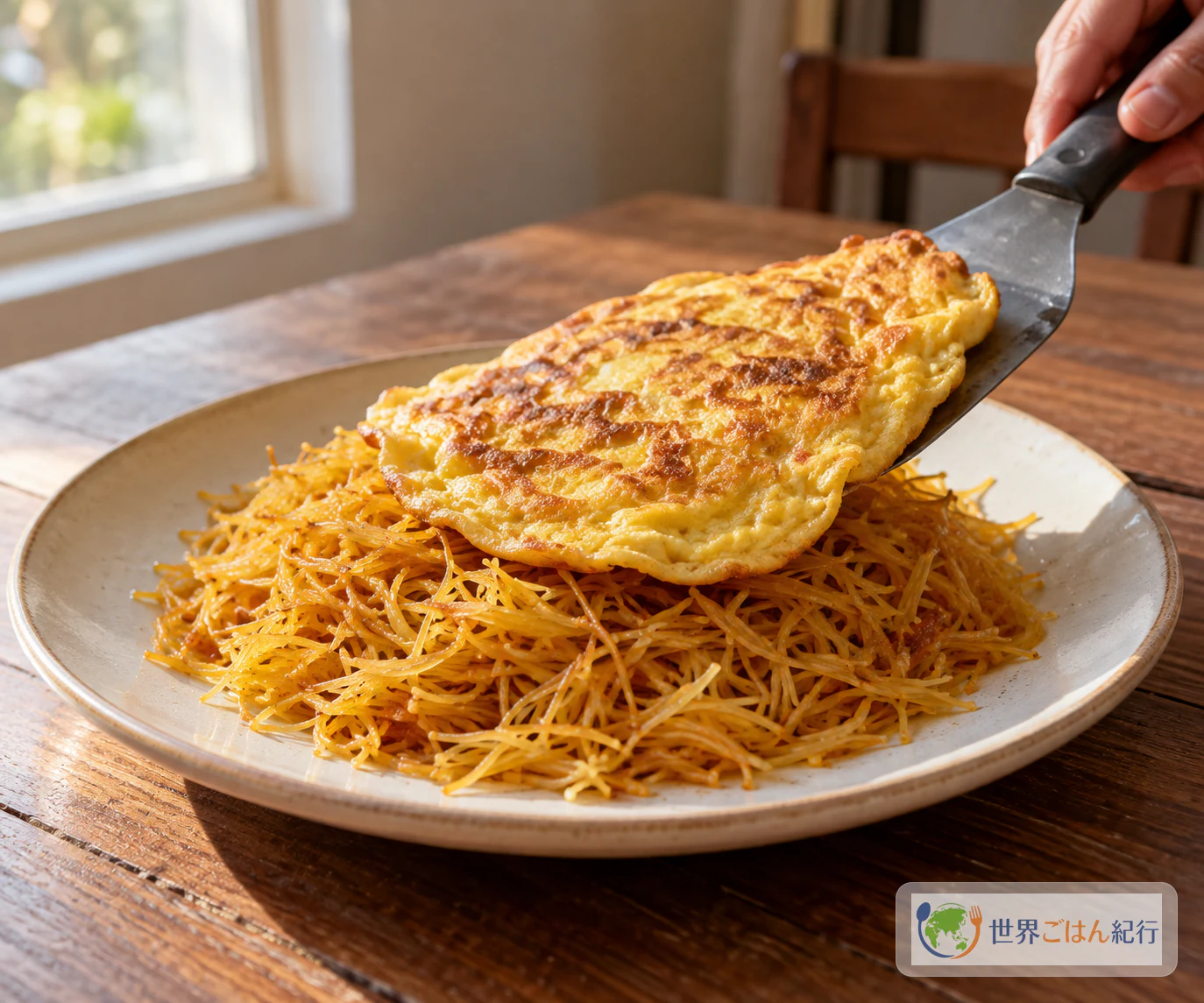
Keep the noodles sweet and perfumed with saffron, cardamom and rose water, and keep the omelet savory with salt and black pepper. The two are cooked apart and only meet on the plate.
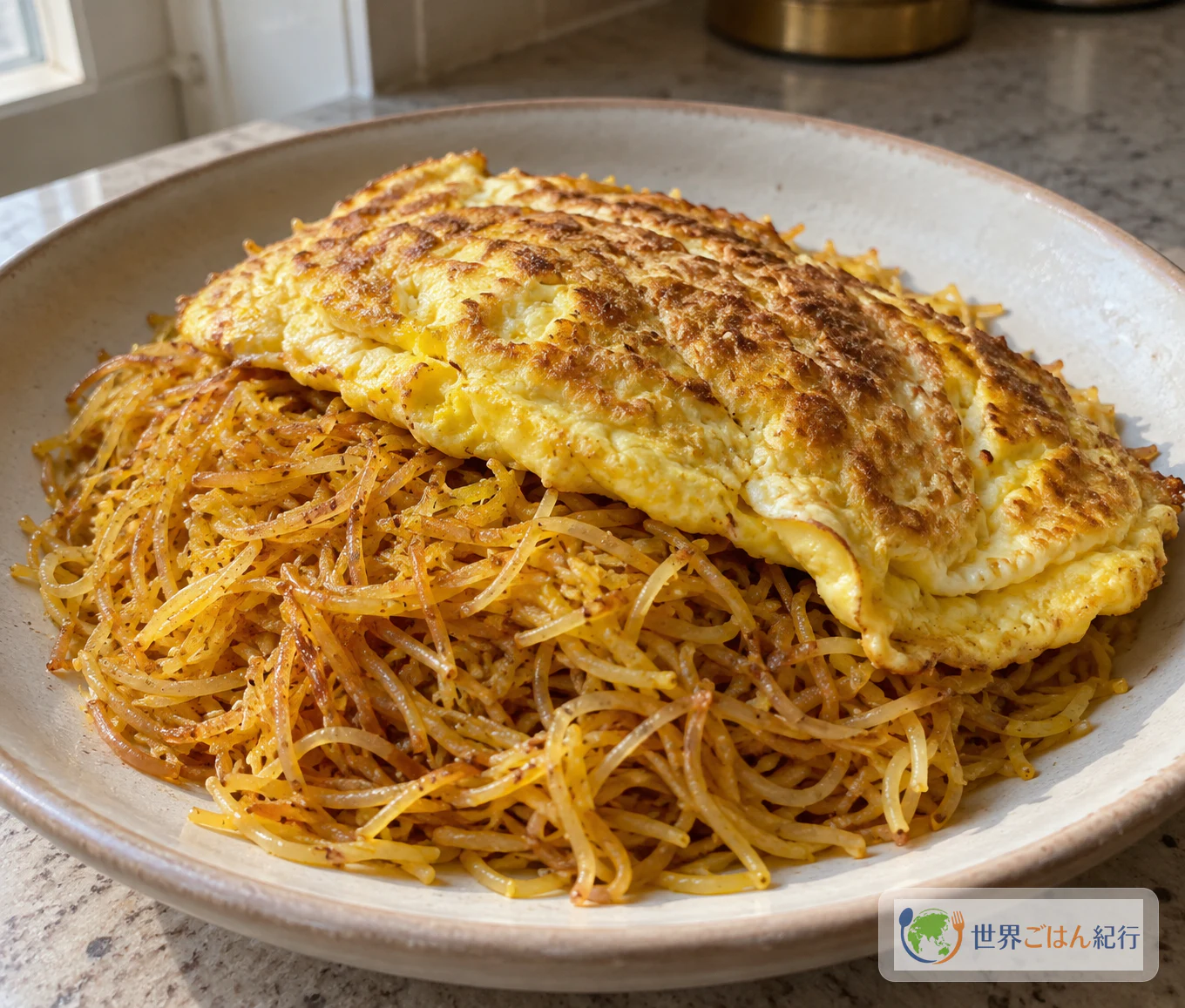
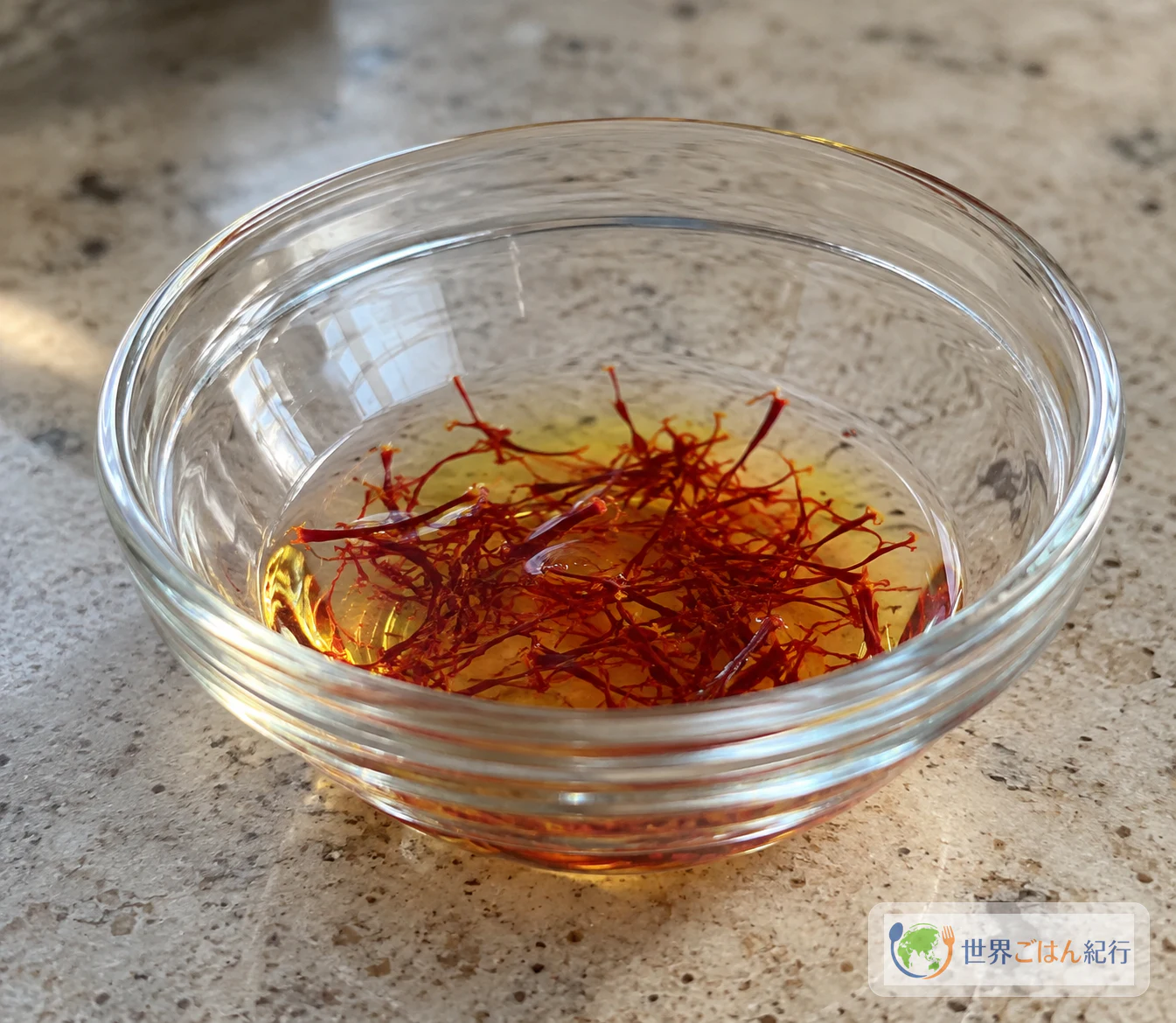
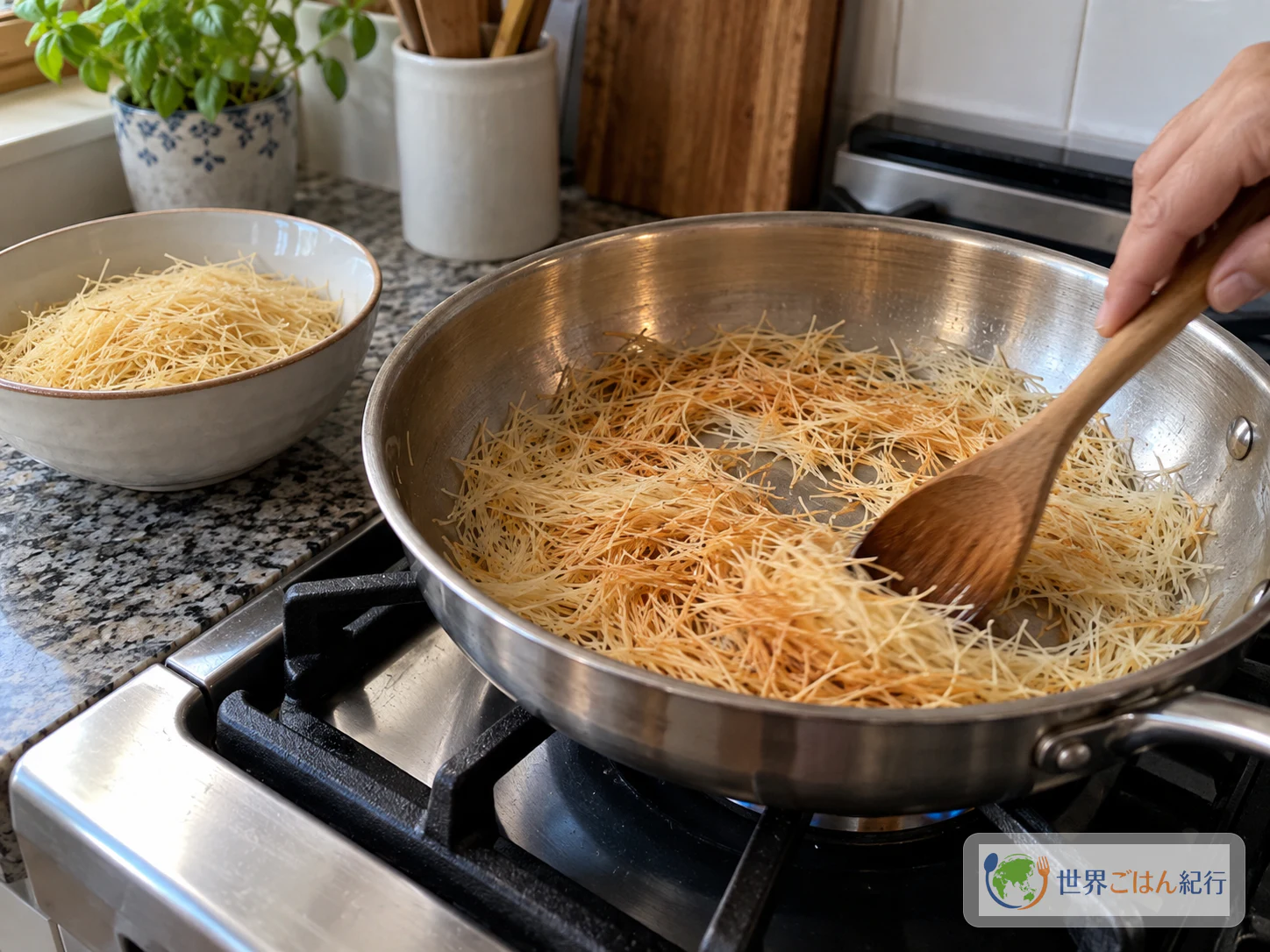
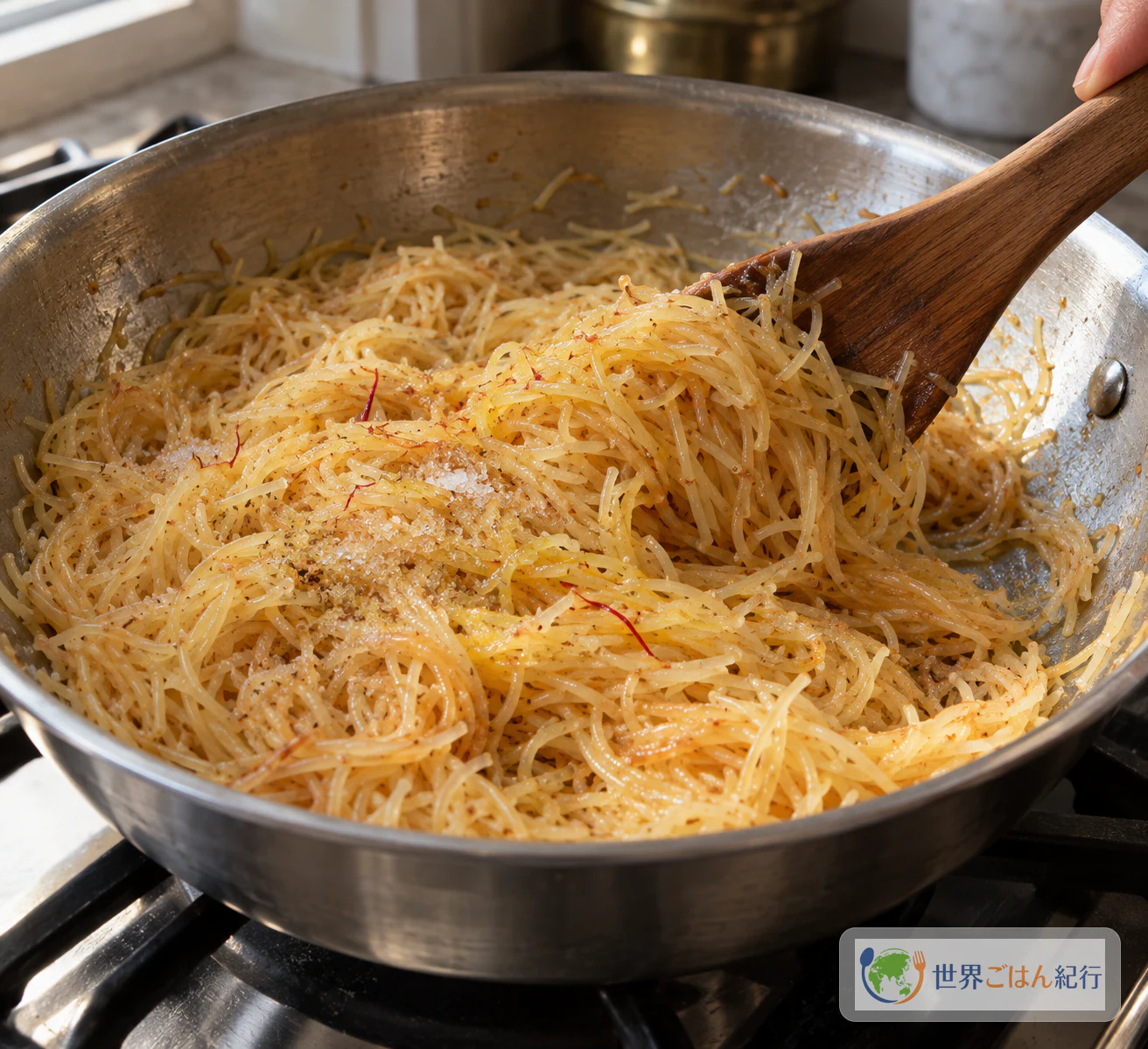
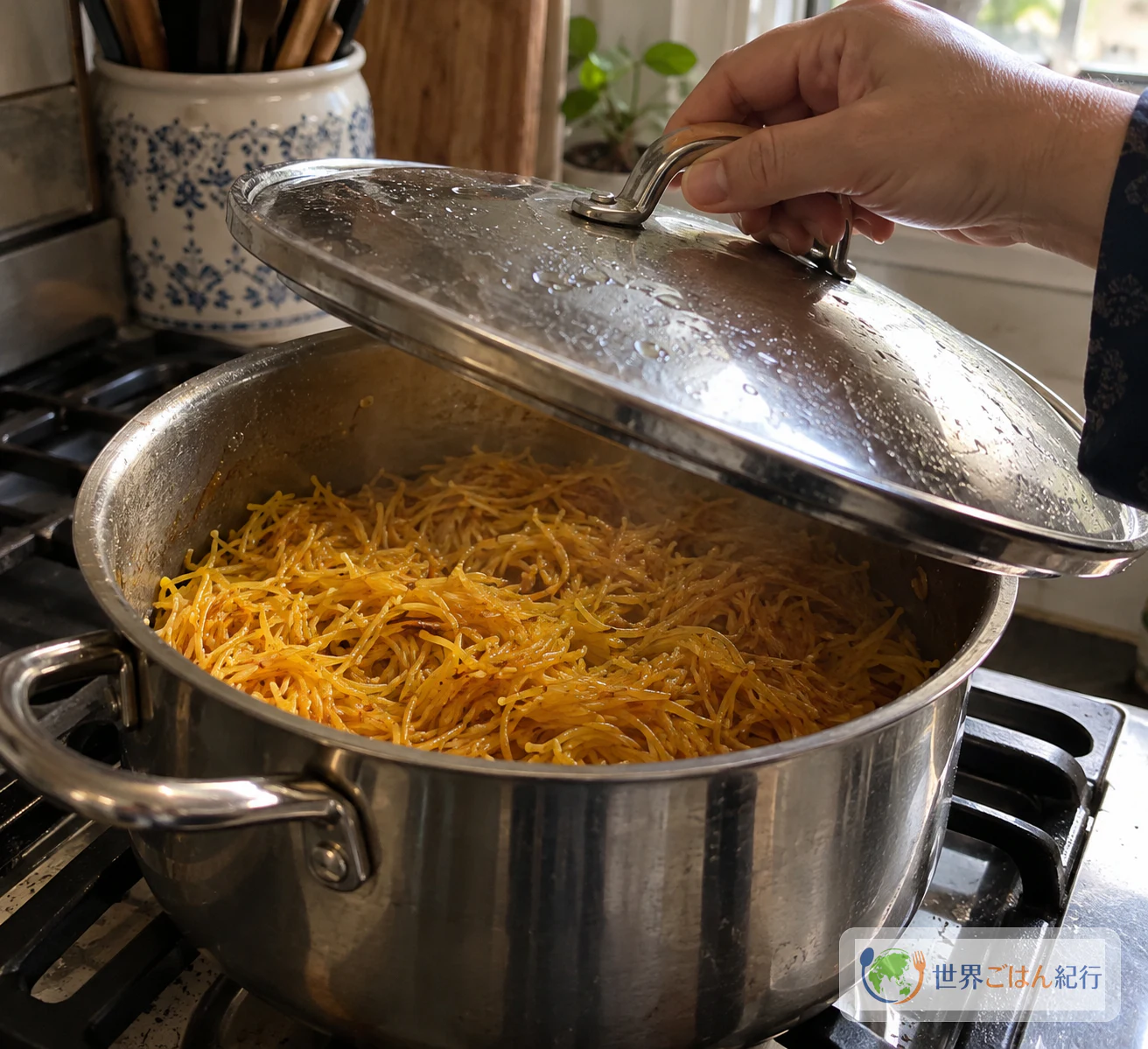
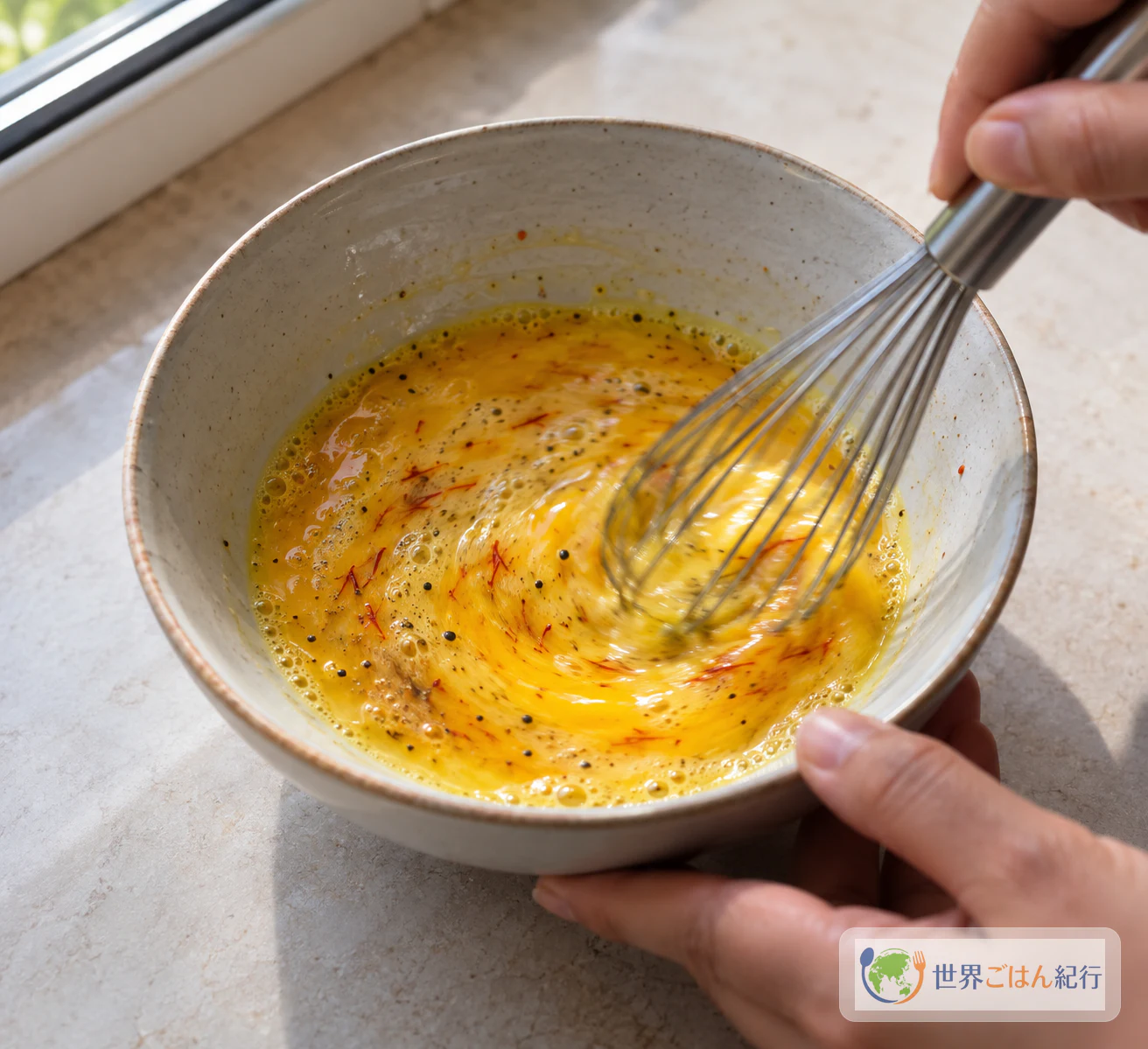
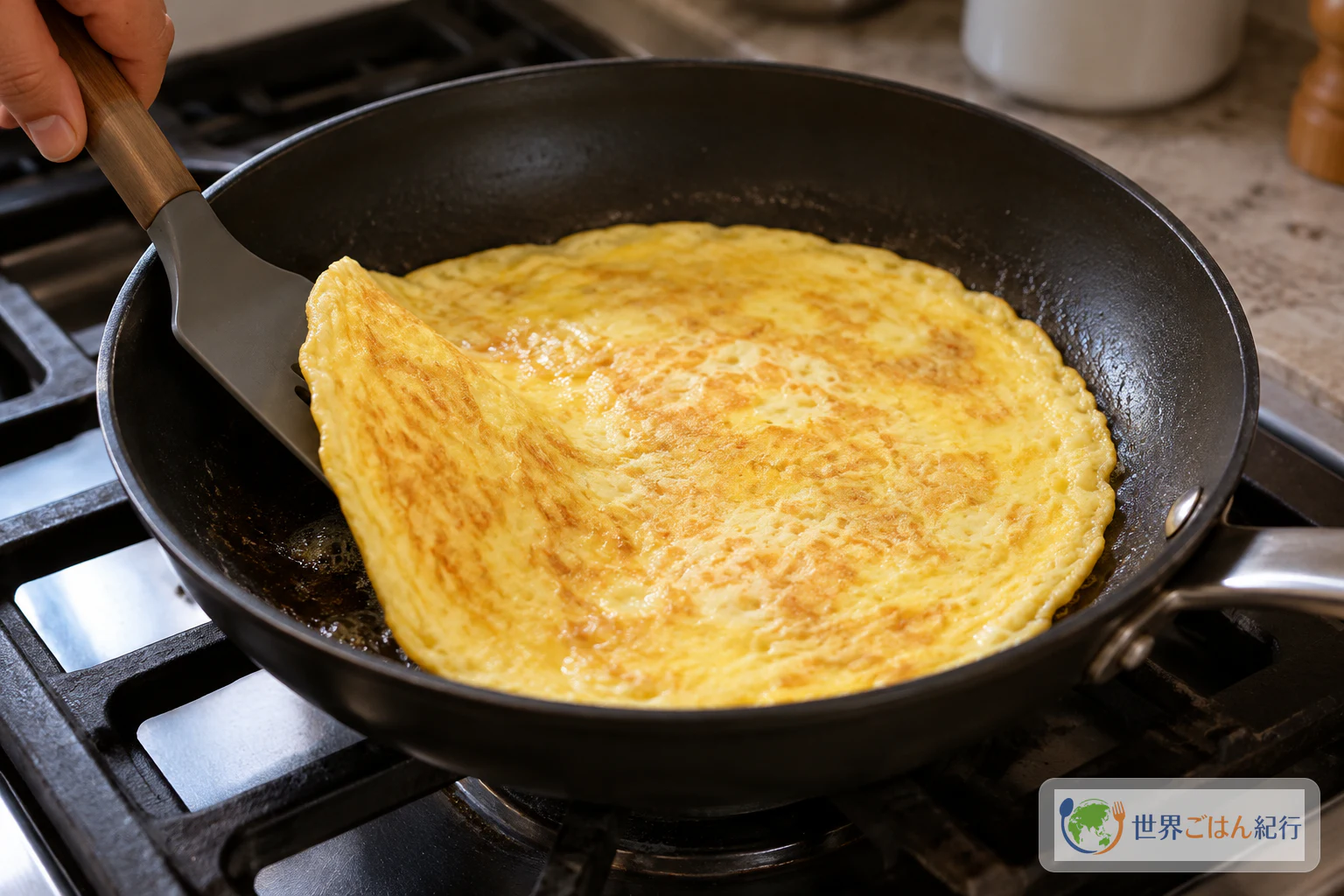
Golden strands of vermicelli, some of them toasted to a deeper brown, are tossed with sugar, ground cardamom and saffron-tinted rose water, then covered and left to absorb the last of their moisture. In a separate pan, two eggs seasoned with salt, black pepper and a little more cardamom and saffron are cooked in butter on both sides. The omelet goes on top of the noodles, and the dish is eaten by taking sweet noodles and salty egg in the same bite. That is balaleet (بلاليط).
The pairing can sound unexpected if you have only met vermicelli in savory soups or sweet milk puddings. Balaleet sits between the two: the noodles carry the sugar and the floral, warm aromatics, and the egg brings salt and pepper to balance them. Platinum Heritage's Emirati recipe book describes the dish in exactly these sweet-and-salty terms.
This article follows one published recipe only: the balaleet recipe from the House of Artisans at Qasr Al Hosn. Its amounts are given in cups, teaspoons and tablespoons, and they are kept that way here, without conversion. The recipe does not state a number of servings, so none is given here either; the 500g bag of vermicelli is a package size, not a yield.
A Dish Shared Across the Gulf
Balaleet is not the property of a single country. Visit Qatar, Qatar's official tourism site, lists it among Qatar's traditional dishes and describes it as fried vermicelli flavored with rose water, cardamom, saffron and turmeric, topped with egg. The recipe used here comes from a heritage institution in the United Arab Emirates, and recipes for the same dish are published by other Emirati sources. It is best understood as a dish found across the Gulf region, with recipes that vary from source to source, rather than as one country's invention.
Platinum Heritage's recipe book also records a tradition of serving balaleet on the Eid table alongside black-eyed peas and chickpeas. That book's own recipe uses different spices and amounts of fat, so it is mentioned here for context, not mixed into the method below.
If you want to keep exploring the table this recipe comes from, browse more dishes from the United Arab Emirates.
Ingredients: Two Separate Sets, One for the Noodles and One for the Egg
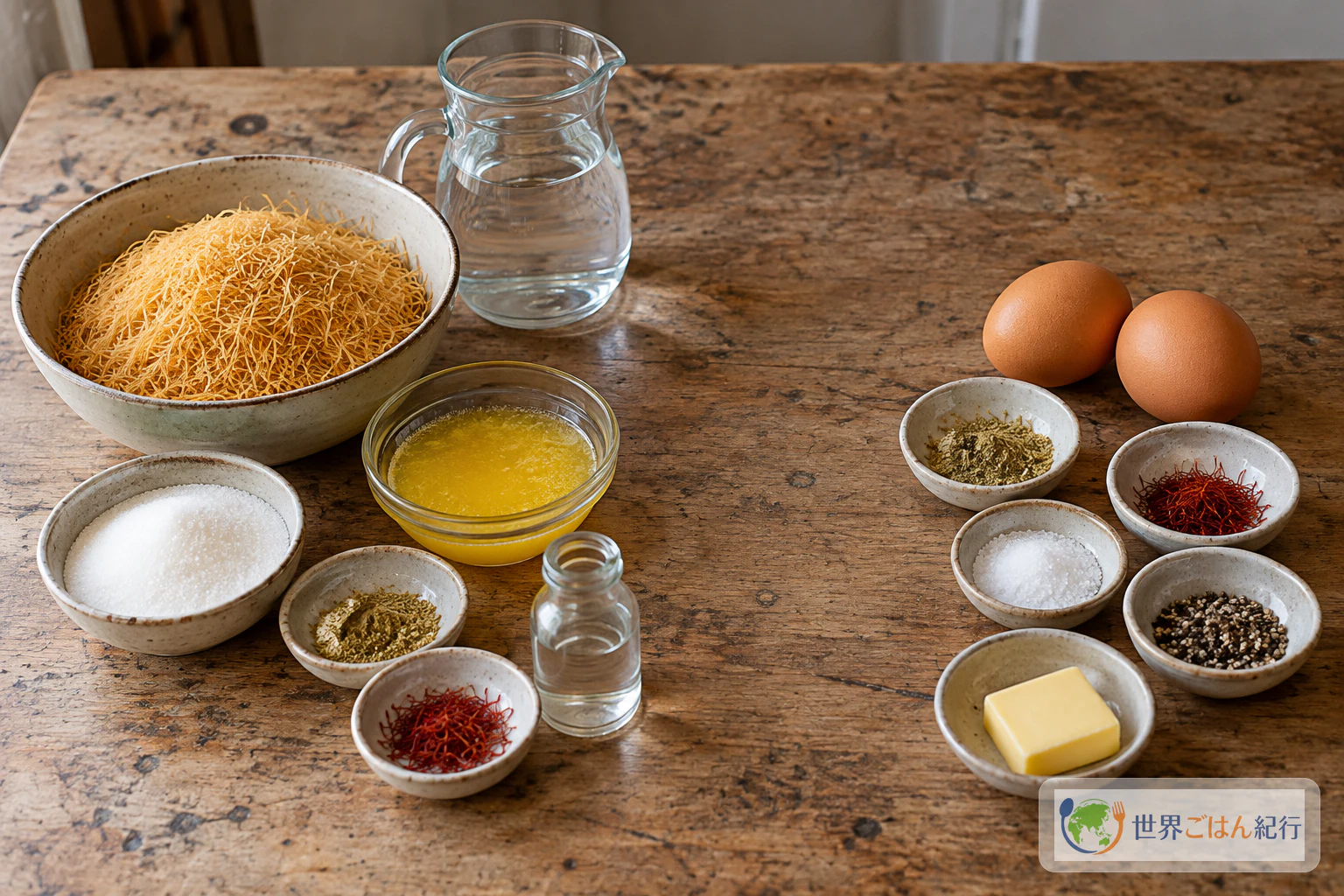
Cardamom, saffron and butter each appear twice in this recipe, in different amounts and for different jobs. Measure them into two groups before you start so the egg seasonings never end up in the noodles. Amounts are exactly as written in the source recipe, in cups, teaspoons and tablespoons; the source does not specify a cup standard.
Equipment
- A small bowl for soaking the saffron in rose water
- A pan or pot with a lid, for toasting, boiling and steaming the vermicelli
- A colander for draining
- A bowl and a whisk or fork for the eggs
- A separate frying pan for the omelet
- Measuring cups and measuring spoons
Choosing Vermicelli, Rose Water and Spices
The recipe is written in cups, teaspoons and tablespoons. Use measuring cups and spoons rather than converting by eye, and do not swap in other cup standards from memory; the source gives no gram equivalents for these amounts.
Vermicelli. The source simply says "vermicelli." Look for packets of thin, dry noodles sold under that name. The recipe does not specify what the noodles are made from, so check the label if that matters to you. Noodles sold as vermicelli can differ in ingredients and texture. The source does not establish a specific noodle material or an equivalent substitution, so do not assume that different products will behave identically.
Rose water. Use rose water labeled for food or cooking use. Rose water is also sold for cosmetic purposes, so check the label before you buy.
Saffron and cardamom. Together with rose water, these are the heart of the dish's aroma. The source calls for crushed saffron threads and ground cardamom. Keep the noodle amounts (1/2 tsp saffron, 1 1/2 tsp cardamom) and the omelet amounts (1/4 tsp of each) in separate small dishes.
What not to add. Visit Qatar's description of balaleet mentions turmeric, and other recipes finish the dish with nuts or rose petals. None of these are in the Qasr Al Hosn recipe, so they are not used here.
Sweetness. The 3/4 cup of sugar is the source's amount. If you choose to use less, that is a departure from this recipe.
Method: Toast, Boil, Perfume, Steam, Then Cook the Egg Apart
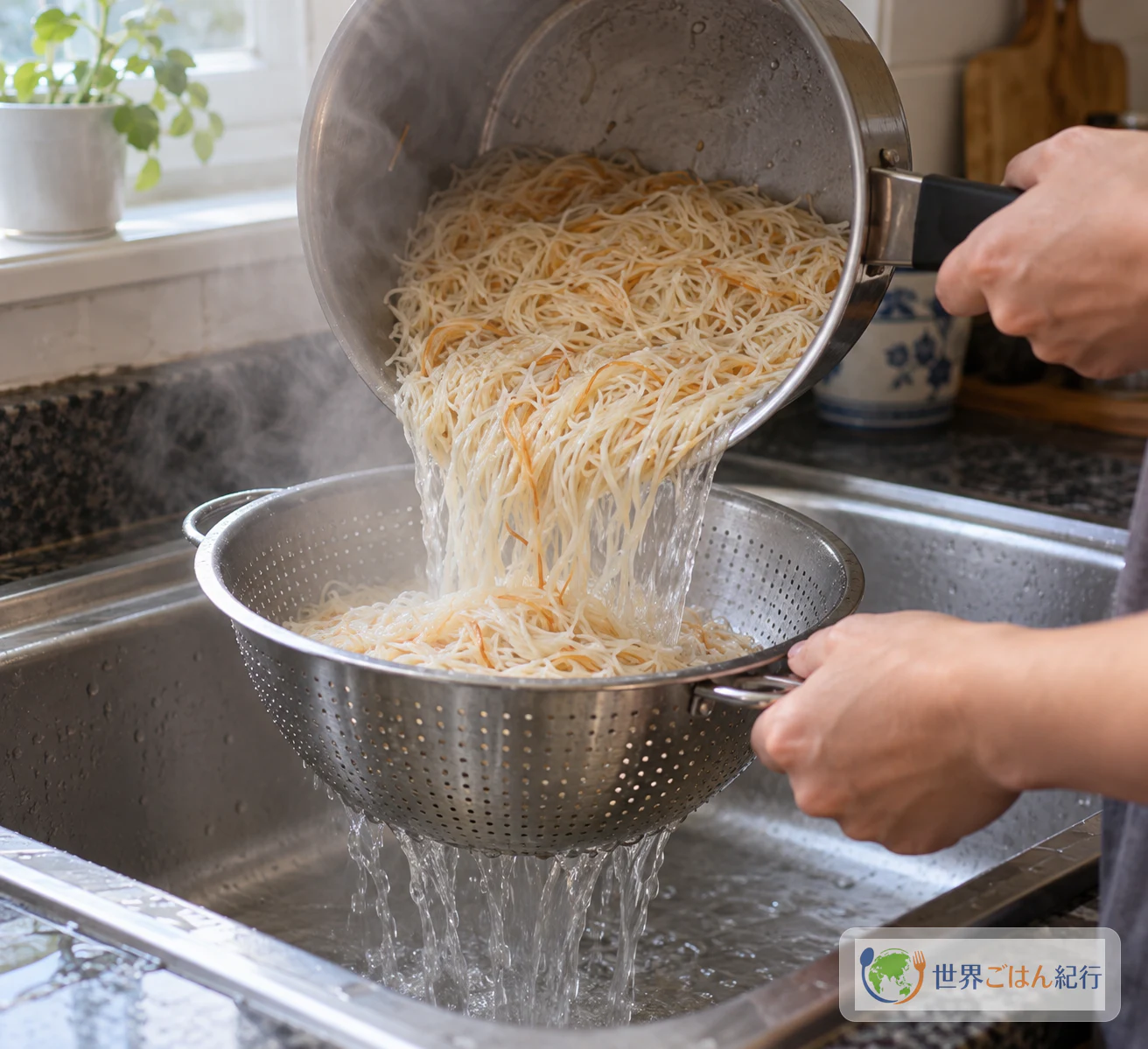
The Qasr Al Hosn recipe is printed in English and in Arabic. Both say to boil the noodles for about 3 minutes. The English steps do not say when to add the melted butter or how long to steam; the Arabic steps add the melted butter together with the sugar and spices, and steam covered for 15 minutes or until the water has gone. The method below follows the Arabic steps on those two points. This recipe has not been kitchen-tested by Sekai Gohan.
Troubleshooting
| Problem | Likely cause | What to do |
|---|---|---|
| The dish tastes bitter or burnt | The toasted half went too dark | Stir constantly while toasting and stop once the noodles are golden. If they have blackened, it is better to start that half again |
| The noodles are mushy | Boiled too long before steaming | Keep the boil to about 3 minutes; the noodles soften further under the lid |
| Water is still pooled in the pan | Steaming has not finished | Keep the lid on over low heat and check again; the Arabic steps allow 15 minutes or until the water has gone |
| The noodles stick to the bottom | Heat too high during steaming | Keep the heat low and check under the lid during steaming |
| The noodles taste salty or peppery | Egg seasonings went into the noodles | Keep the omelet seasonings in their own dish and add them only to the eggs |
| The texture is very different from expected | A different type of noodle was used | Products sold as vermicelli may behave differently; the source does not specify their raw material, so do not assume equivalence |
| The amounts seem off | Cups and spoons were converted or estimated | Use measuring cups and spoons for the amounts as written |
How Other Versions Differ
Published balaleet recipes vary, and their proportions should not be mixed with the recipe above.
- Turmeric. Visit Qatar's description of the dish includes turmeric alongside rose water, cardamom and saffron. The Qasr Al Hosn recipe does not use it.
- Different proportions. Barilla UAE publishes a version for 4 people with 200g of noodles and 4 eggs, also seasoned with saffron and rose water. It shares the same overall approach of toasting the noodles, cooking them in water and cooking the egg separately, but its amounts are its own.
- Different spices and fat. The recipe in Platinum Heritage's Emirati recipe book uses different spices and amounts of oil.
- Garnishes. Some recipes finish the plate with nuts such as pistachios or with rose petals. These belong to those recipes, not this one.
- Festive serving. Platinum Heritage records balaleet served at Eid with black-eyed peas and chickpeas.
Frequently Asked Questions
How many people does this recipe serve?
The source recipe does not say. It uses a 500g bag of vermicelli and 2 eggs, but no serving count is given, so this article does not invent one.
Why toast only half the vermicelli?
That is how the source recipe is written: half is toasted until golden, and the other half goes in untoasted with the hot water. Toasting adds color and a roasted note to part of the noodles.
When does the melted butter go in?
The English steps of the source list melted butter in the ingredients but do not say when to add it. The Arabic steps add it together with the sugar, cardamom and saffron rose water after the noodles are drained, and this article follows that.
How long do I steam the noodles?
The English steps do not give a time. The Arabic steps say 15 minutes or until the water has gone. Watch the pan rather than the clock, and check for sticking.
Can I use the same spice mixture for the noodles and the egg?
No. The noodles get 1 1/2 tsp cardamom and 1/2 tsp saffron with sugar and rose water; the eggs get 1/4 tsp each of cardamom, saffron, salt and black pepper. Keeping them apart is what creates the sweet-and-salty contrast.
Should I add turmeric, nuts or rose petals?
Not for this recipe. Turmeric appears in Visit Qatar's description of the dish, and nuts or petals appear in other recipes, but the Qasr Al Hosn version uses none of them.
Sources
- Qasr Al Hosn / House of Artisans, "Balaleet Recipe" (PDF). The recipe followed in this article: ingredients and amounts for the vermicelli and the omelet; toasting, the roughly 3-minute boil, draining and cooking the omelet. The Arabic steps also give the timing of the melted butter and the 15-minute covered steaming. https://qasralhosn.ae/-/media/Feature/PageContent/House-of-Artisan/HOA_Balaleet-Recipe_8MAY-V1.pdf?la=en
- Visit Qatar / Qatar Tourism, "The local cuisine of Qatar." Lists balaleet as a traditional dish of Qatar and describes vermicelli with rose water, cardamom, saffron and turmeric, topped with egg. https://visitqatar.com/intl-en/about-qatar/cuisine
- Barilla UAE, "Balaleet." A different published recipe used for comparison only: 4 servings, 200g of noodles, 4 eggs, saffron and rose water, with the noodles toasted then cooked in water and the egg cooked separately. https://www.barilla.com/uae/recipe/all/balaleet
- Platinum Heritage, "Emirati Recipe Book" (PDF). Describes the sweet-and-salty pairing of vermicelli and egg, and the tradition of serving balaleet at Eid with black-eyed peas and chickpeas. Its own recipe is not used here. https://uae.platinum-heritage.com/emirati-recipe-book.pdf