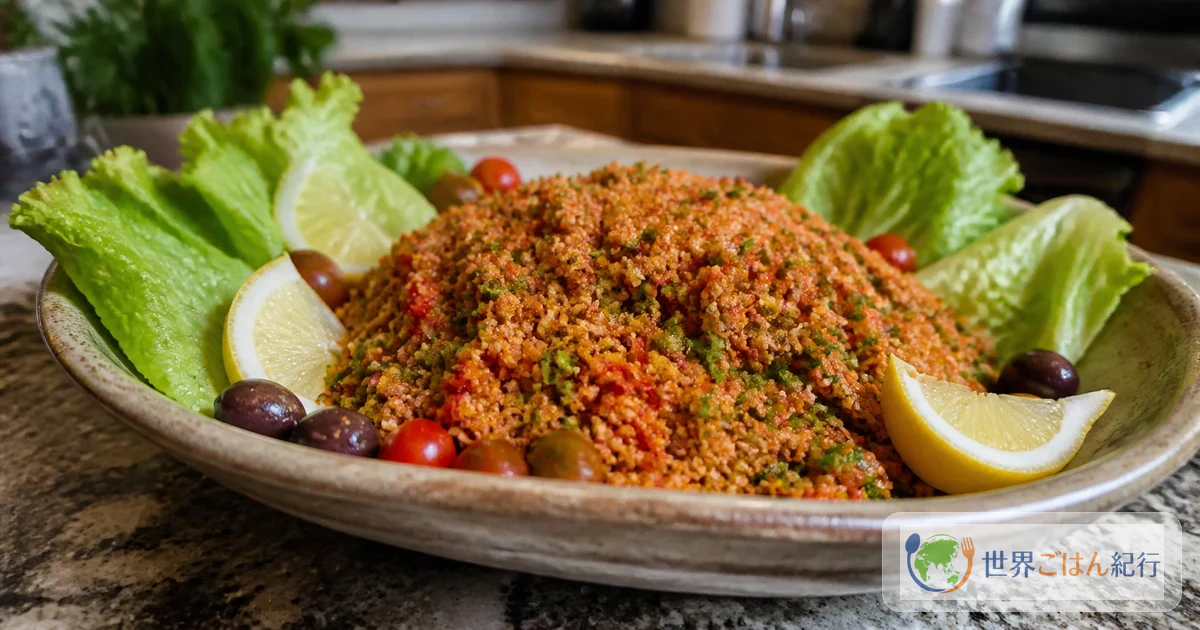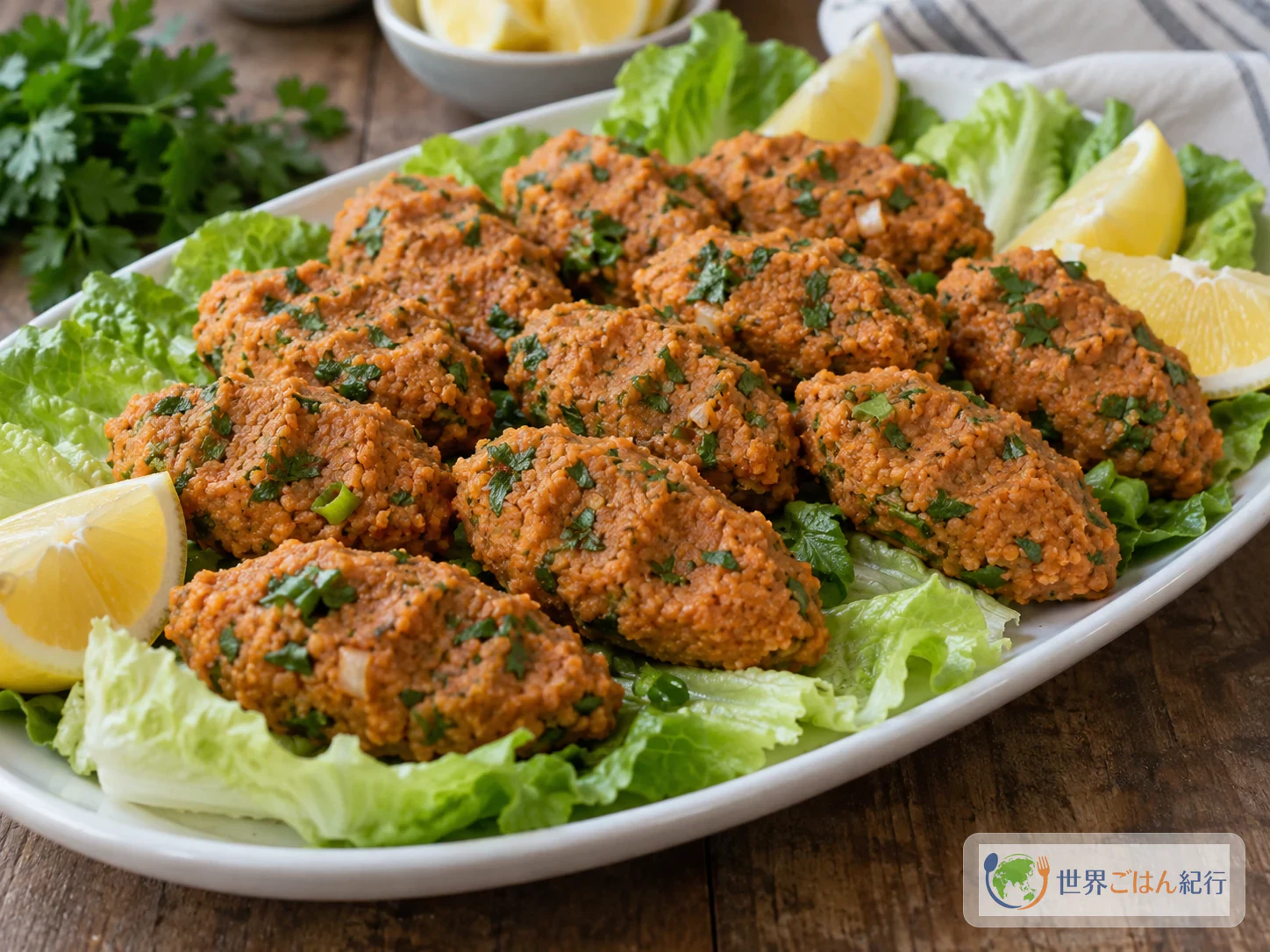
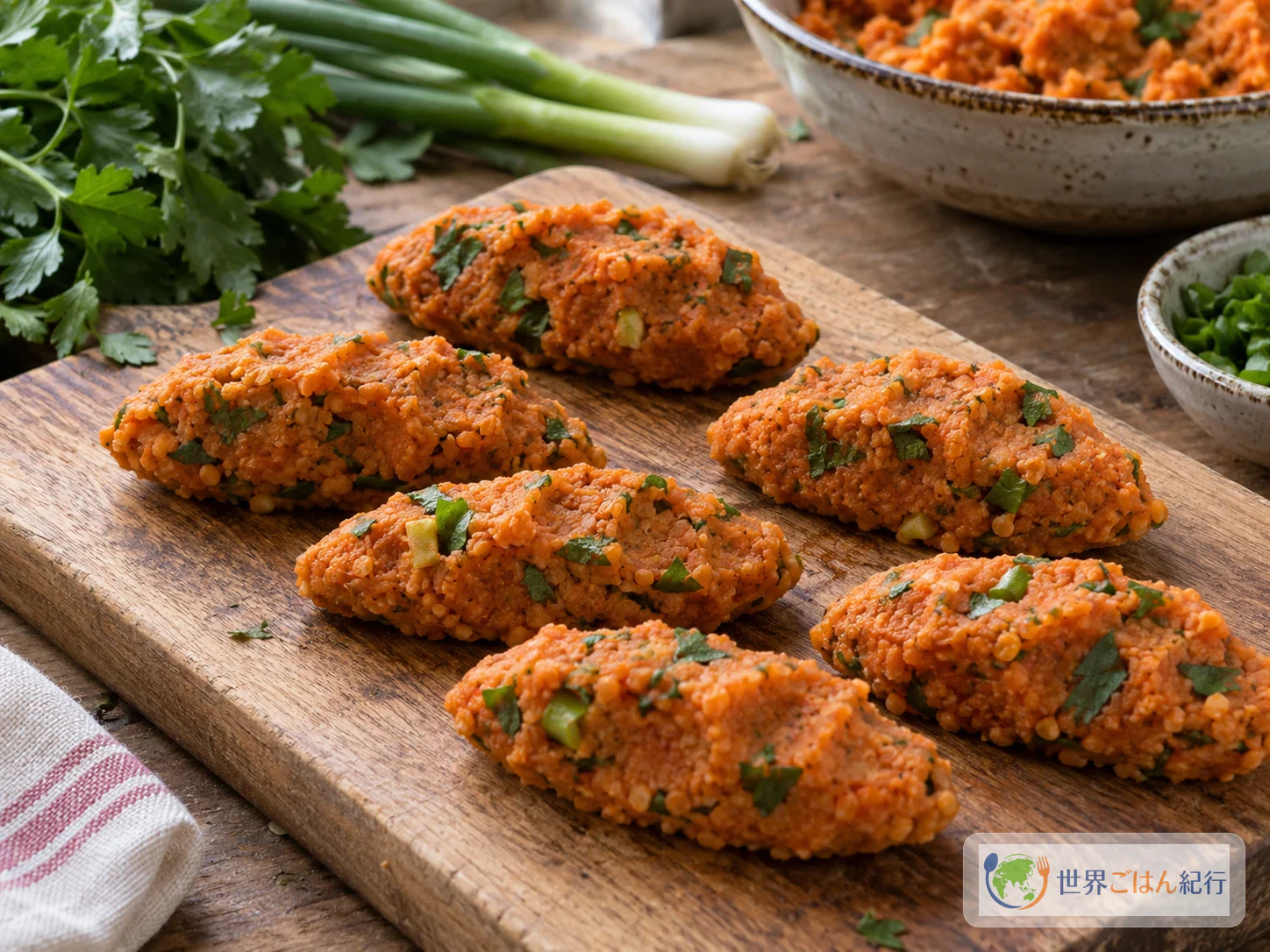
An afternoon tea gathering in a Turkish home. Next to the sweet pastries sits a plate lined with lettuce. On it are slim orange-red köfte, with shallow finger dents, each a mouthful taken in the palm from a soft lentil mixture flecked with green parsley and scallion. Right before eating, you squeeze lemon over, wrap a lettuce leaf around one, and take it in one bite. This is a köfte without meat.
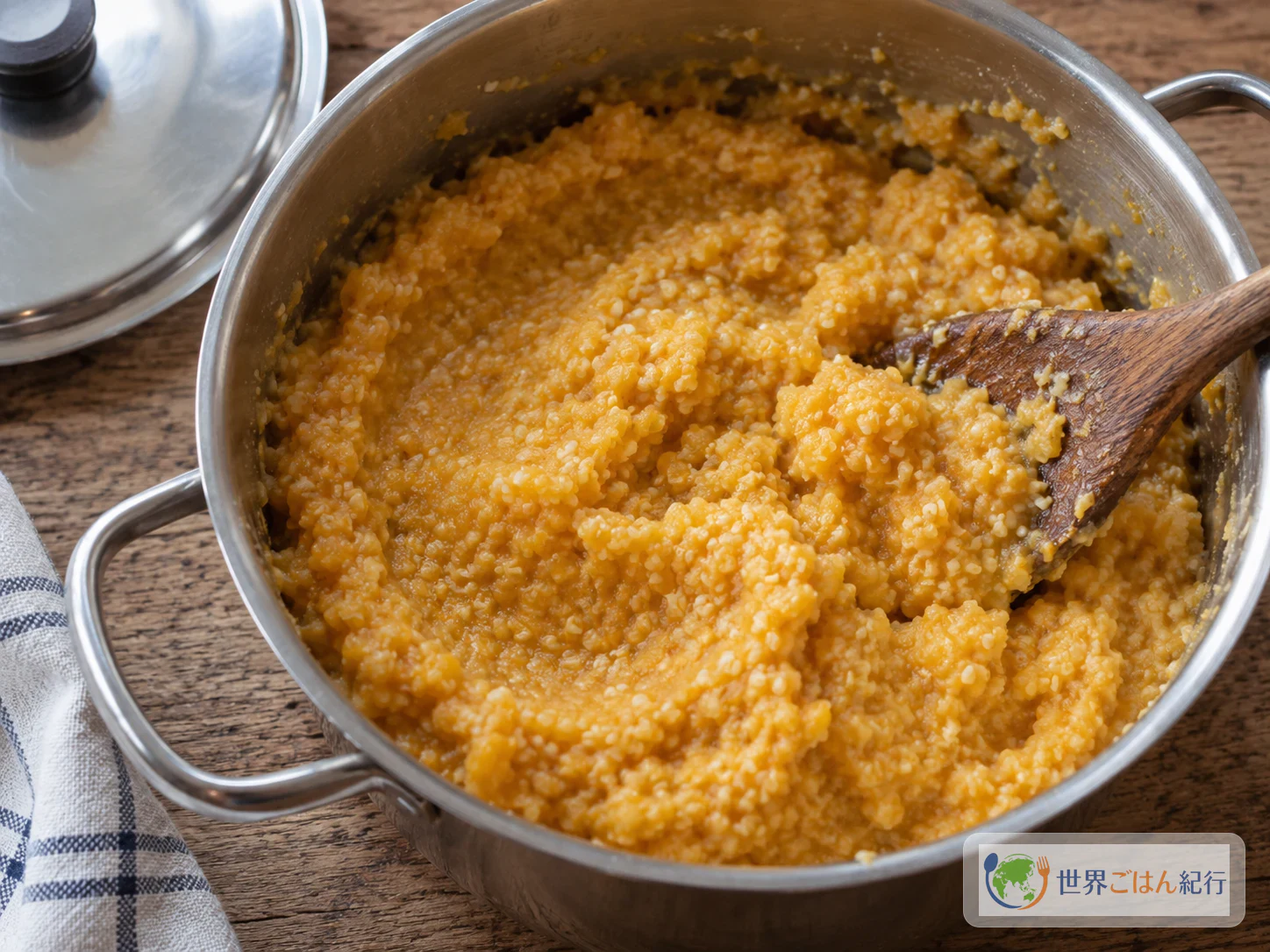
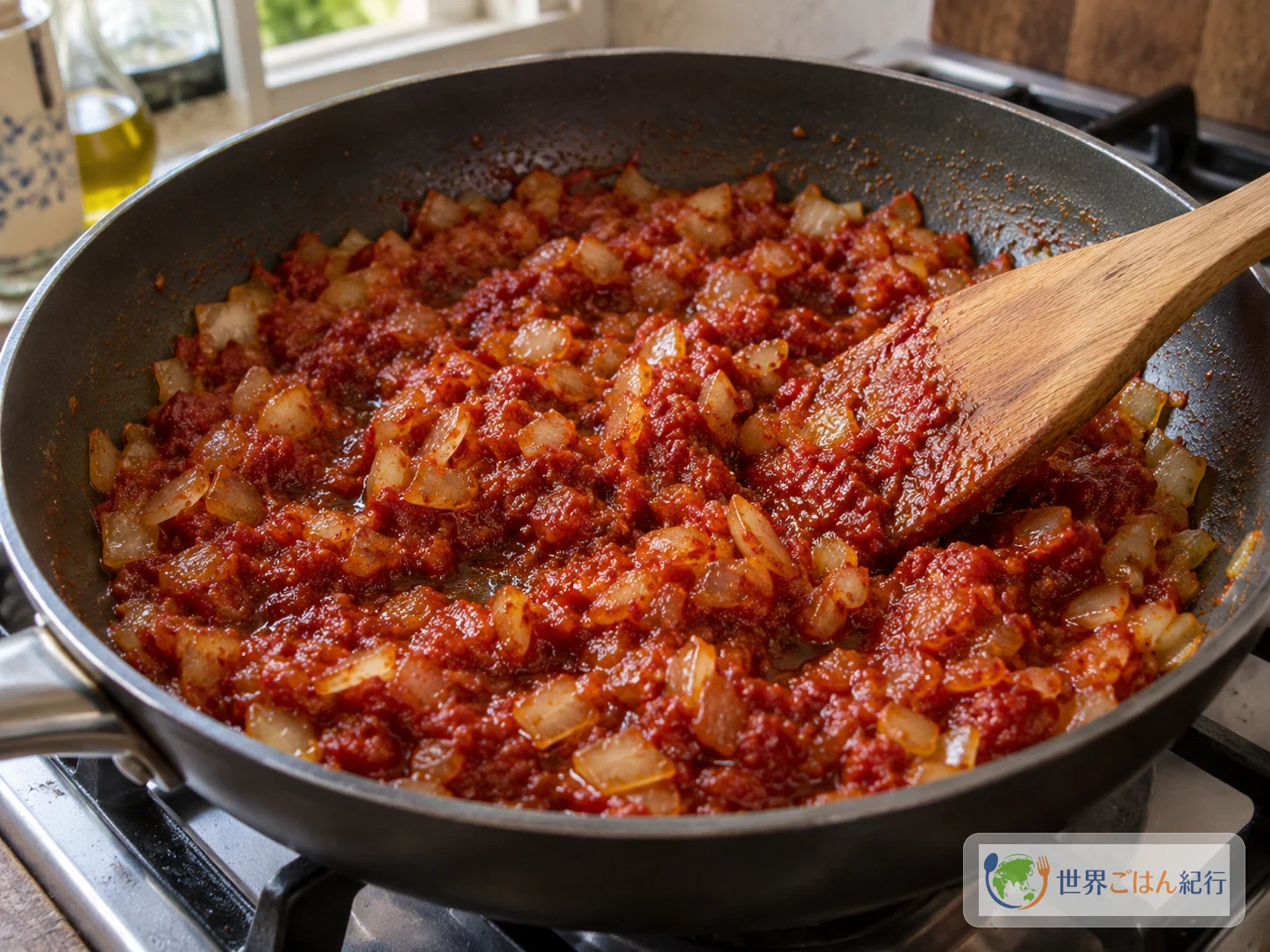
It is called mercimek köftesi. The stars are skinless red lentils and fine bulgur, and you can make it in any kitchen. The lentils are cooked and broken down first, and their heat and moisture rehydrate the bulgur grains. Sautéed onion goes in to bring the mixture together, and once shaped it is not cooked again. You are not aiming for the hard crust of a fried food or the bounce of a meatball; it keeps its shape yet comes apart softly in the mouth. The key is letting the moisture of the lentils rehydrate the grains.
A Dish for Afternoon Tea, Not Only Sweets
It is a home dish that appears at tea gatherings, at buffet dinners and on lunch tables. It cannot be said to be made in every home almost daily. Still, the sight of a salty dish beside the tea is indispensable in talking about it. When sweets alone tire the palate, a savory bite to go with tea slips in neatly.
At the table it is paired with small dishes called meze, or set beside salads and savory pastries. It is eaten at room temperature or cold. That does not mean it is fine to leave it out at room temperature for long, however. Storage is discussed in detail later.
There is one record of where this recipe came from. The Turkish-born cook Ozlem Warren writes that when she lived in Elazığ, her mother learned the recipe from a neighbor. According to her account, it was a dish served when women gathered in the afternoon. This is one cook's family memory, not representative of the history of the whole country. Even so, it hints at a recipe passed from home to home, from neighbor to kitchen and from kitchen to another kitchen.
From the Southeast to Everywhere, with a Different Aroma in Each Home
The Turkish Ministry of Culture and Tourism introduces it as a recipe from the southeast while explaining that it is made in many parts of the country. The origin cannot be pinned to one city. The published formula includes mint, and shows a substitution with tarragon. On the other hand, some formulas use red pepper paste and cumin. It seems best to take differences in herbs and heat not as the rule of a particular city but as differences between households and between formulas.
When people hear köfte, many think of meatballs, but the name is not limited to meat dishes. This dish takes its shape from cooked red lentils and bulgur. It looks like a relative of kısır, the salad with bulgur grains as the star, but here the broken-down lentils bind the grains into a mixture you can shape. It is also a different dish from çiğ köfte, which looks similar.
Ingredients (serves 4)
For four as an appetizer, expect about 24 to 28 slim köfte. The count changes with size. The formula has been adjusted for home cooks; it is the basic, non-spicy form that uses tomato paste in place of red pepper paste. The time is about 75 minutes. This is a guide including cooking, soaking, cooling and shaping, and there is no baking after shaping. Please note this is not a cooking time that was actually measured. When shopping, choosing fine bulgur matters above all.
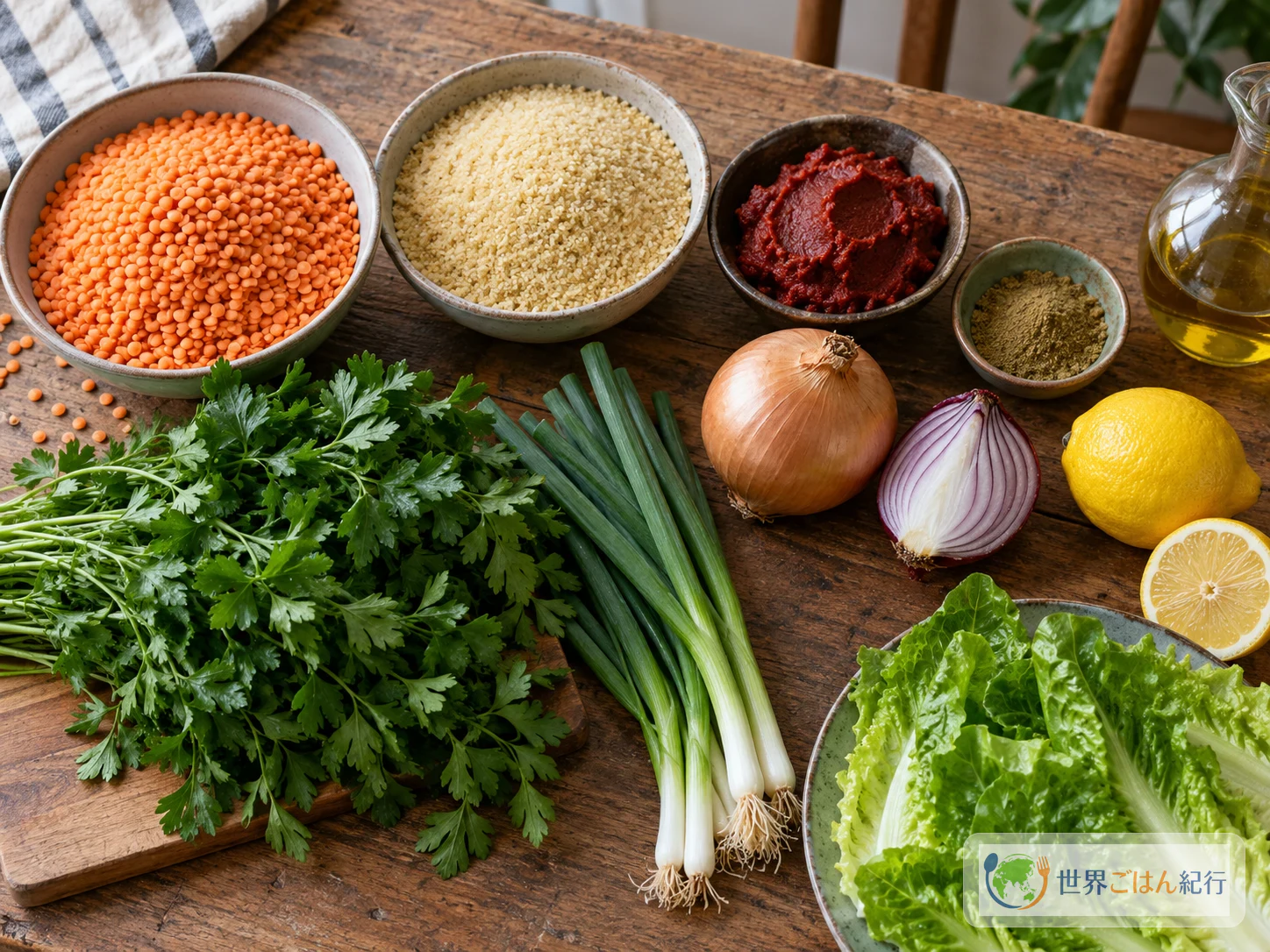
What to look for first is skinless red lentils and fine bulgur. Check the type of lentil and the fineness of the grain at an international grocery or online. Stock and prices change from store to store. Bulgur is a grain of cooked wheat that has been dried and cracked, and is different from granular pasta or raw cracked wheat. With coarse or pilaf-grade bulgur, the residual heat alone may not make it equally soft. Avoid swapping it in at the same quantity. Whether the bag says skinless red lentils is also worth checking when you pick it up.
Choose concentrated tomato paste. Adding the same amount of tomato sauce, juice or ketchup changes the moisture, sugar and salt. If you use red pepper paste, combine 25 g with 50 g tomato paste. Then check whether it is hot or mild and what the salt content on the label is. The basic 75 g tomato paste is a formula that works as a replacement. It cannot be said to reproduce the aroma that only red pepper gives.
Method
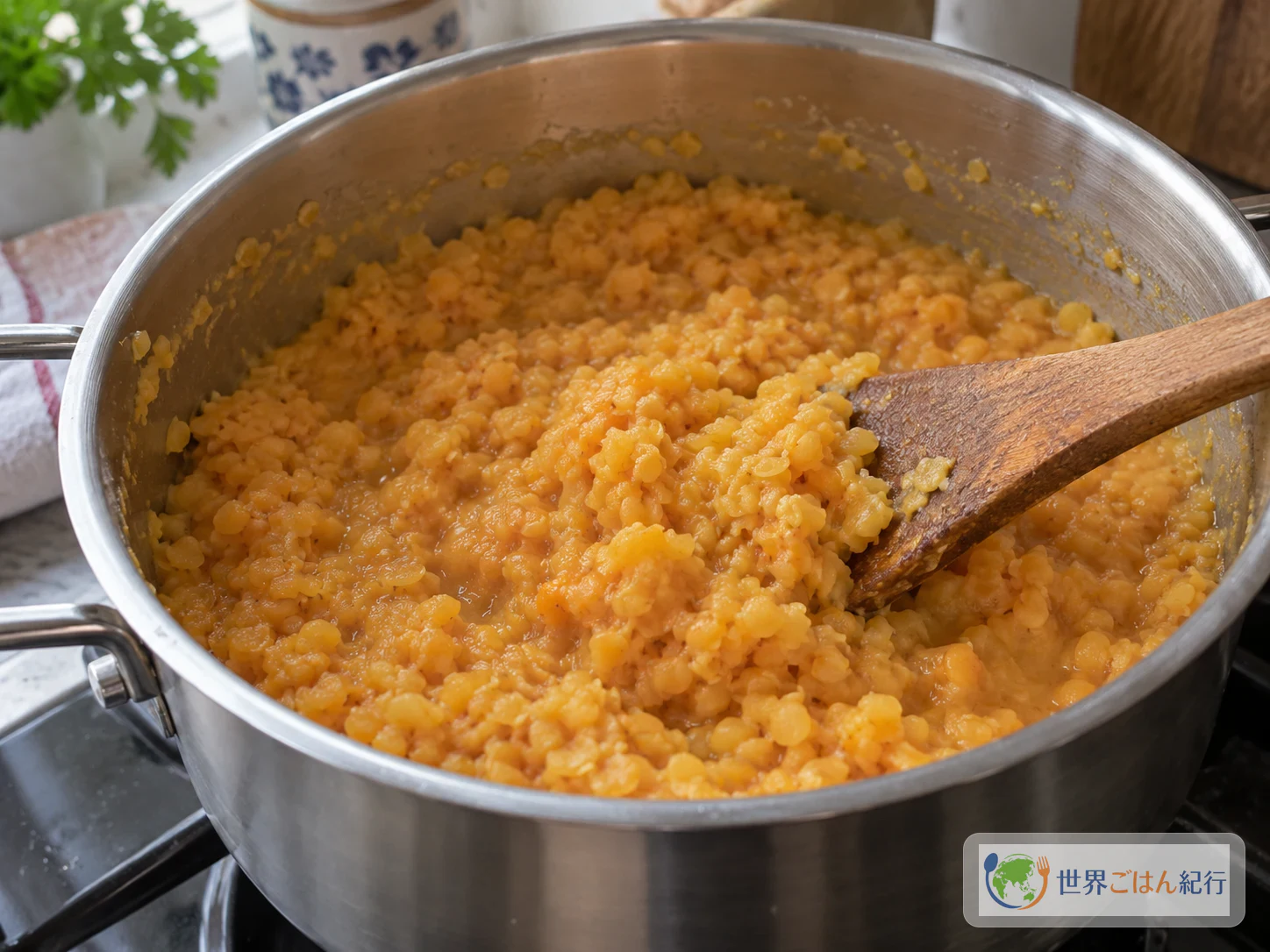
Get the work that uses heat out of the way first. There are three: cooking the lentils, rehydrating the bulgur and sautéing the onion. While the lentils cook you can sauté the onion, so the times overlap. Adding up the guide for each step does not give the total time. The parsley, scallion and raw red onion are mixed in after the mixture has cooled. Remember: leaves after it has cooled.
Bulgur absorbs moisture, but if the lentils are still like soup, the mixture is hard to bring to a shapeable firmness. Check the moisture in the pot at the point when the lentils have broken down. If you reduce after mixing in the leaves, their texture and color change. Do not stop the heat by the clock alone; look both at whether the lentils have a core and at how much moisture remains.
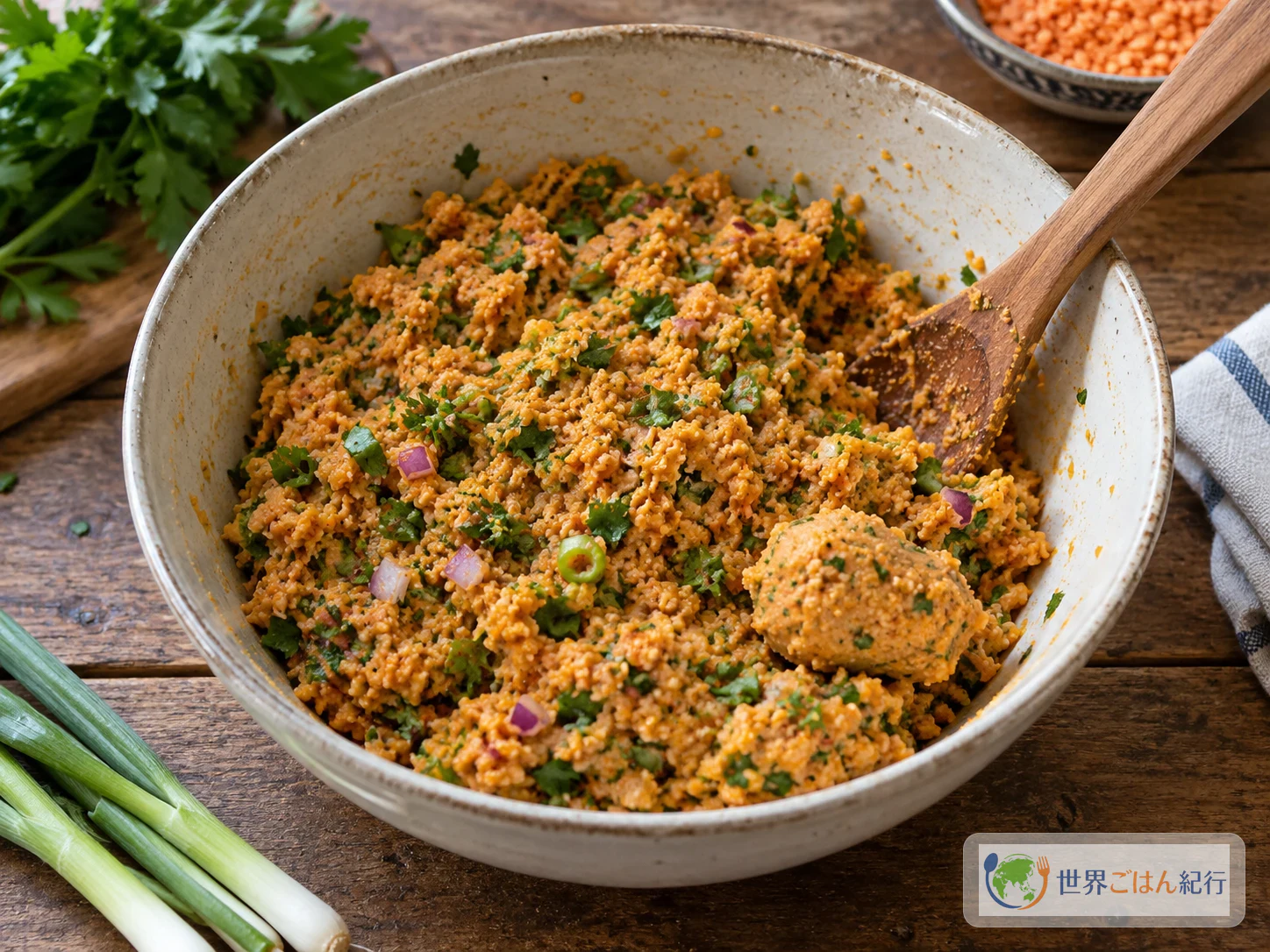
The target is a state that keeps a finger mark, can be lifted, and comes apart softly in the mouth. Crumbling right after shaping and being soft when eaten are separate matters. Do not add flour or egg in search of the bounce of a hard meatball. Avoid adding so much oil that the fingers turn greasy; when correcting dryness, add 1 teaspoon at a time.
What You Can Change in Your Kitchen, and the Texture to Keep
Replacing red pepper paste with tomato paste still makes the dish, but the aroma and heat of the chile are weaker. Parsley can be swapped between flat-leaf and curly; chop finely and remove hard thick stems. Replacing scallion with leek changes both the sharpness and the fibers, so it cannot be called the same taste. The fineness of the bulgur grain and whether the red lentils have skins directly affect the texture of the mixture. Do not skip the grain fineness. Brown lentils tend to leave grains and are not suited to a same-quantity substitution in this process.
If you have red lentils left over, make soup; if fine bulgur is left over, use it for salad. Soup leans toward enjoying the lentils smooth, and kısır toward keeping the texture of the grains, and each gives a different pleasure from this köfte, where lentils are broken down to bind the grains.
Red lentil soup, mercimek çorbası
Bulgur is wheat. This formula is not gluten-free. Do not serve it to anyone who must avoid it, such as people with wheat allergy. Having no meat, egg or dairy is a different matter from having no allergens. Check the ingredient labels of the paste and spices as well. Substituting another grain does not guarantee the same formula or texture. When serving someone with an allergy, confirm the ingredients with that person, and watch for cross-contact through utensils.
Wrapped in Lettuce, and Five Ways to Enjoy It
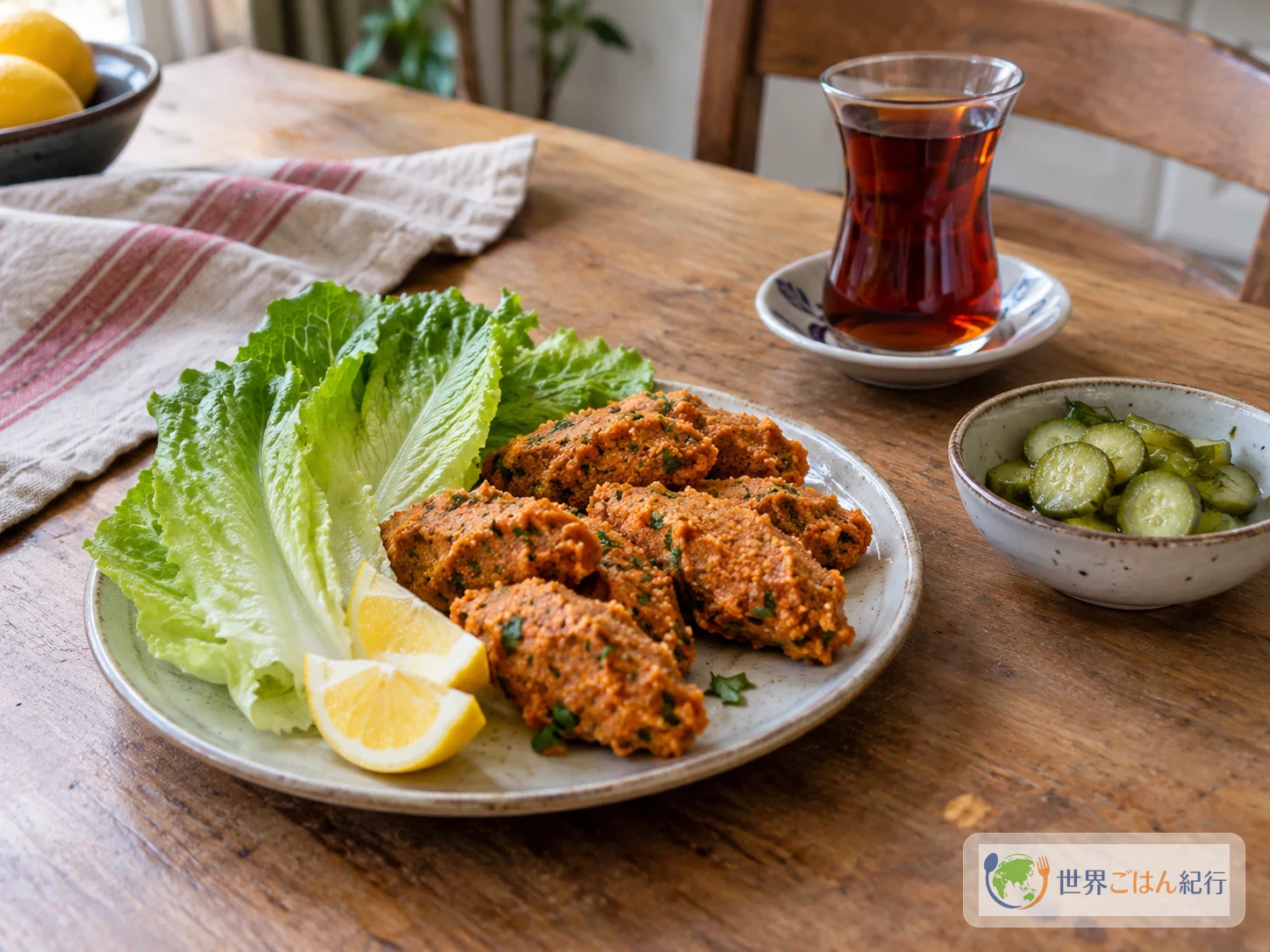
The crunch of lettuce and the acidity of lemon layer onto the soft lentil mixture. It is a dish where the mixture, held together with oil and paste, is eaten wrapped in a leaf. Squeezing the lemon just before eating keeps the leaf crisp. You can enjoy it beside pickles, salads and other small dishes. It is not served as a sauce over rice or as a fried side dish.
There are five ways to vary the enjoyment at the table while keeping the original mixture.
- Basic lettuce and lemon.
- Replace the 75 g tomato paste with 50 g and 25 g of mild red pepper paste to move the aroma closer.
- Cut the salt for a salted paste and serve pickles on a separate plate.
- A home variation: keep the scallion and parsley and add a little fresh mint.
- Only for people who like heat, add a little red chile at the table. There is no need to make the whole batch hot.
Heat belongs on each person's plate. Adding mint or heat is a change of flavor, and is neither the only correct formula nor the tradition of any particular region. Leave the amounts in the basic ingredient table as they are.
The oval shape is shown in several recipes. When you squeeze your fingers closed, wave-like dents remain. They do not all need to be the same size. When plating, think of an amount that is an easy mouthful. The dents are not described as a religious or historical symbol.
Fixing It When It Crumbles, Is Hard or Is Too Hot
When the mixture crumbles, suspect in this order: too much cooking liquid in the lentils, not enough bulgur soaking, leaves with water left on them. A warm mixture should first be given a short wait to finish soaking and cooling. Do not try to firm it by leaving it long at room temperature. A mixture that will not hold even after cooling need not be forced into balls. Put it on lettuce with a spoon and eat it; the taste does not change. It is a cooked food, so observe the limits on storage time. Do not hurry by adding dry grains.
| Problem | What to check | How to fix |
|---|---|---|
| Mixture is watery and crumbles | Lentil liquid, soaking, water on the leaves | First check soaking and cooling. Do not add a lot of raw bulgur |
| Surface is dry and cracks | Are the grains soft, is the oil even | If the grains have no core, mix in olive oil 1 tsp at a time, up to 2 tsp |
| Grains are hard | Is it fine bulgur, is soaking finished | Check the grain size and the bag's rehydration instructions. Do not shape with hard grains left |
| Taste is strong and salty | Salted paste and added salt | Oil or lemon will not reduce salt. Next time use less, and this time serve with mild accompaniments in small amounts |
| Too hot | Is the paste hot | Choose the mild paste or the tomato formula. Do not claim lemon removes heat |
If the bottom of the lentil pot has scorched, do not mix the black bits through. I do not recommend hiding a strongly scorched mixture with spices. Salt in paste differs by product, so begin with 2 g salt and add the remaining 1 g after tasting. Decide the salt at the last taste. Next time, take 400 ml of water as the starting point and review the evaporation of the pot and the heat. Avoid changing the formula greatly without finding the cause.
Storage and FAQ
A cold appetizer is not something that can be left out at room temperature. Keep the refrigerator at 4°C or below. Store leftovers in a shallow container in the refrigerator, divided into portions and refrigerated promptly. Do not wait for it to cool completely at room temperature in the pot. Perishable cooked food should not stay outside the refrigerator for more than 2 hours. If the surroundings exceed 32°C, within 1 hour. A custom of eating at room temperature does not guarantee storage safety. Put out only the amount to be served and return the rest to the refrigerator.
This dish is shaped and not cooked afterward, so hand hygiene directly affects the safety of the result. Before shaping, wash your hands with soap and water for at least 20 seconds and use clean utensils and a clean work surface. Wash parsley, scallion and lettuce under running water and dry them. Do not use soap to wash vegetables. Do not use a cutting board or plate that touched raw meat without washing it.
Can I make it the day before?
You can make it the day before, refrigerate, and serve the next day. For home use, a short routine of refrigerating and finishing by the next day is best. This is not a verified storage period specific to this dish. Keep the lettuce and lemon separate and combine when plating. If you store the mixture before shaping, also use a shallow container. For food that has been left out at room temperature for a long time, do not judge safety by smell or appearance alone. Nor can it be said to become safe again if refrigerated afterwards.
Can I freeze it?
I have not checked how easy this formula is to shape after freezing, nor the texture of the leaves. I cannot guarantee freezing days or the same texture. Start by preparing an amount you can finish by the next day in the refrigerator. I do not recommend freezing the finished plate with lettuce as it is.
Is it the same dish without bulgur?
Fine bulgur absorbs excess moisture and holds the mixture together. Leave it out and you will not get the same firmness. There are examples of other formulas using cooked quinoa, but I have not checked whether it can replace the 80 g of bulgur in this ingredient table at the same quantity. Do not serve this formula as it is to someone who must avoid wheat. Do not forget that this is an appetizer that contains wheat.
Do you cook it after shaping?
In the basic method it is not cooked. The red lentils are already cooked, and the fine bulgur is softened with heat and moisture before shaping. There are variations that give a toasty browned surface, but think of those and the basic form of this soft appetizer as separate things.
Nutrition Guide
The guide for one of four equal portions is about 330 kcal, 14 g protein, 11 g fat and 49 g carbohydrate. It is an estimate calculated from the composition values of 175 g red lentils, 80 g bulgur, 40 g olive oil, 200 g onion in total and 75 g tomato paste, and corresponds to one of four equal portions, an estimate from the main ingredients. It does not include herbs, spices, accompaniments or the additional oil for adjusting. It also varies with products and the actual amount served. It is not a value from analysis of the finished dish, and does not indicate any health effect.
Sources
- Turkish Ministry of Culture and Tourism, "Lentil Balls" — relationship with the southeast, how it is served at teas and lunch, formula with herbs. Accessed and checked 5 October 2026.
- Vidar Bergum, "Turkish lentil meatballs (Mercimek köftesi)" — weights of red lentils and fine bulgur, soaking in residual heat, shaping. Accessed and checked 5 October 2026.
- Ozlem Warren, "Mercimek Köftesi" — family memory from Elazığ, serving with lettuce and lemon, paste substitutions. Accessed and checked 5 October 2026.
- FoodSafety.gov, "4 Steps to Food Safety" — handwashing, washing vegetables, refrigerator temperature, dividing portions and leaving food at room temperature. Accessed and checked 5 October 2026.
- Food Standards Agency, "Food allergy and intolerance advice for consumers" — wheat and other allergens, ingredient labeling and cross-contact through utensils. Accessed and checked 5 October 2026.
- FAO, "ERC/16/4" Annex 1 — composition values of dried split red lentils and bulgur. Accessed and checked 5 October 2026.
- Ministry of Education, Culture, Sports, Science and Technology (Japan), Standard Tables of Food Composition in Japan (8th revised edition) 2023 supplement: olive oil, onion, tomato paste — composition values of the main ingredients used for the nutrition estimate. Each accessed and checked 5 October 2026.