The moment you open the oven, the outline of breakfast changes
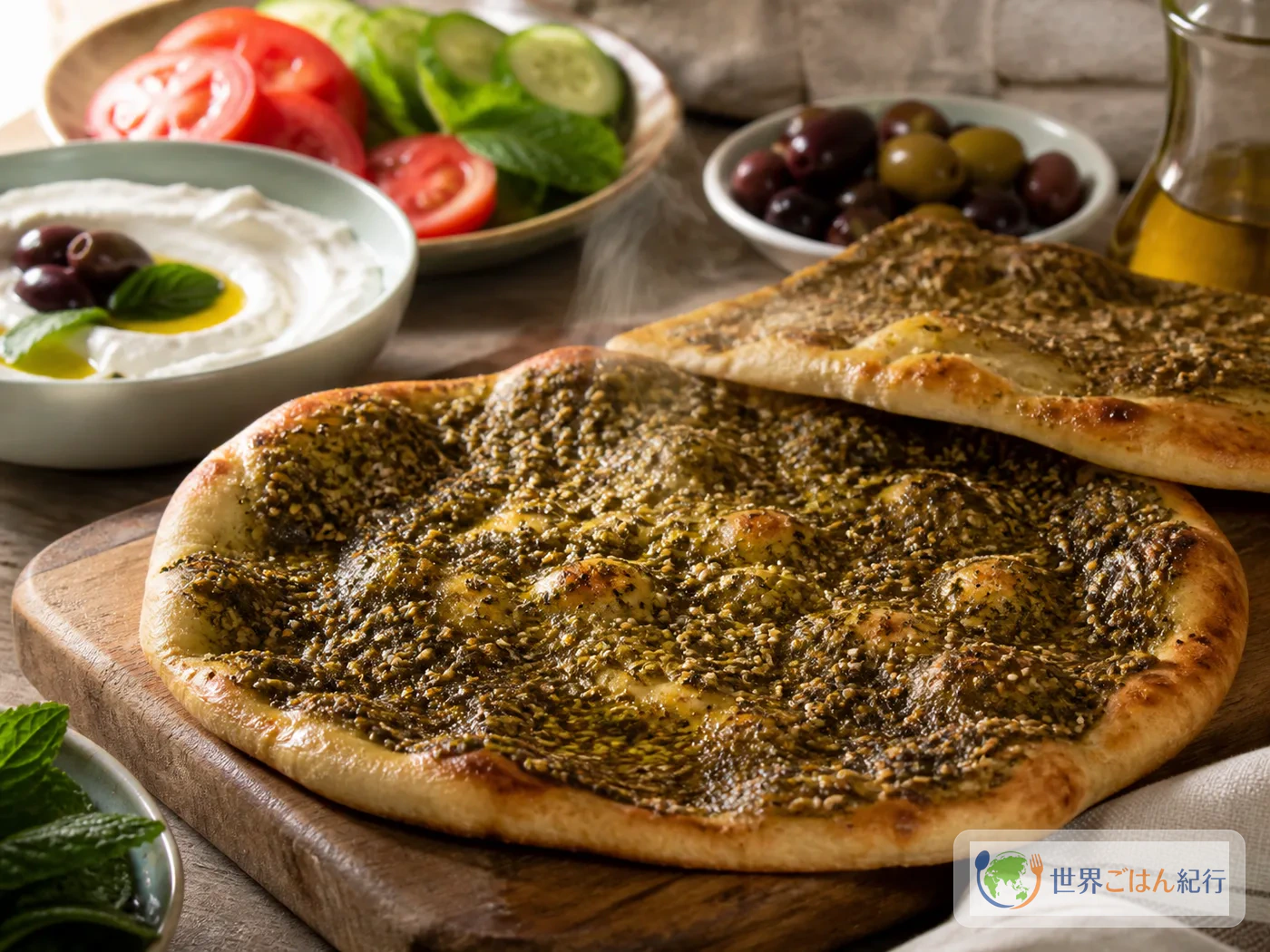
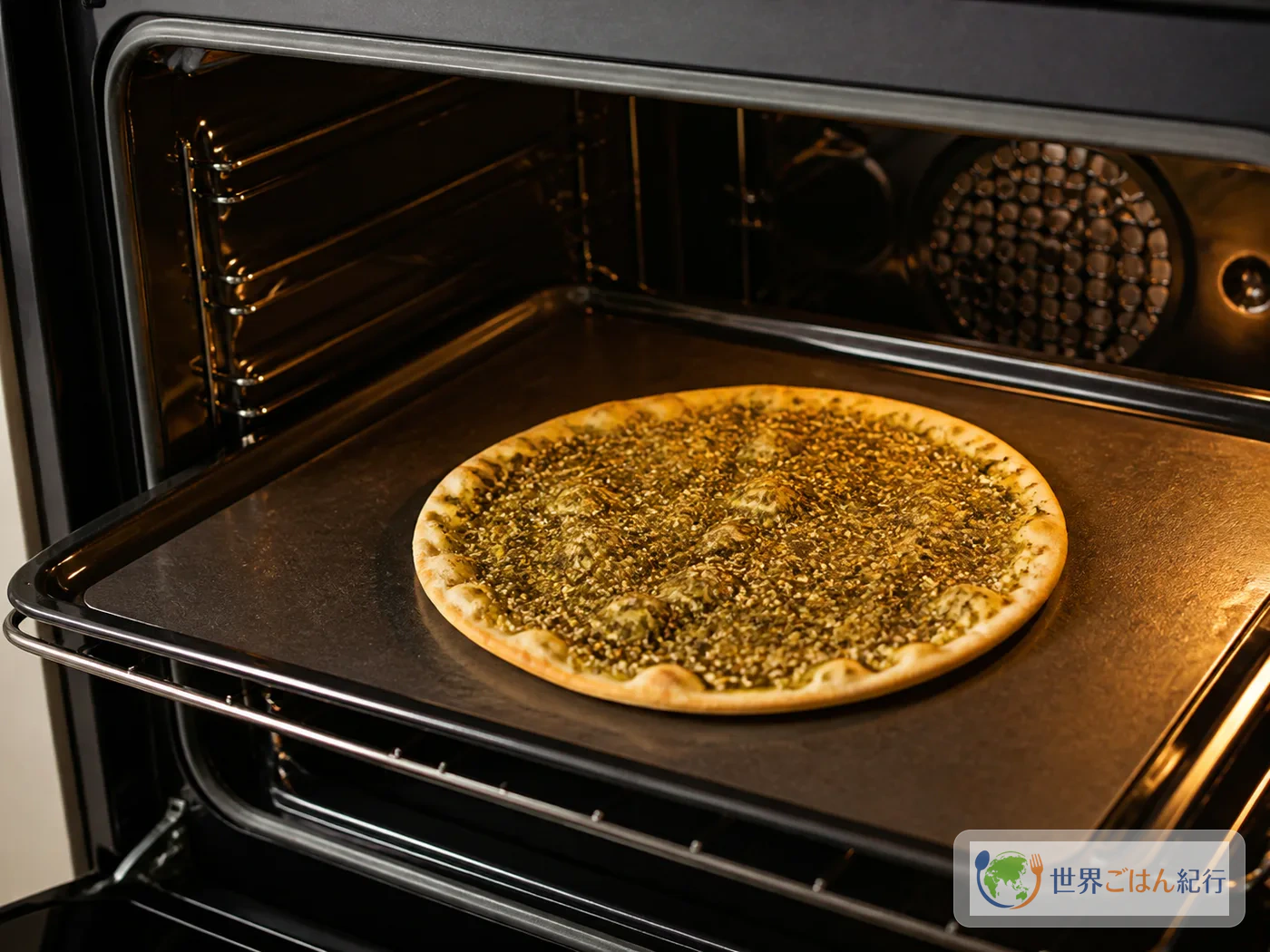
Imagine it. A morning with nothing on the table yet, and when you open the oven door, the scent of dried thyme and sesame rises from the baked dough. The surface has the sheen of olive oil, and only the edges are lightly colored. You can cut it like pizza, but Lebanese manakish is better folded and eaten hot, so the aroma reaches the nose first and the sourness of sumac catches up afterward.
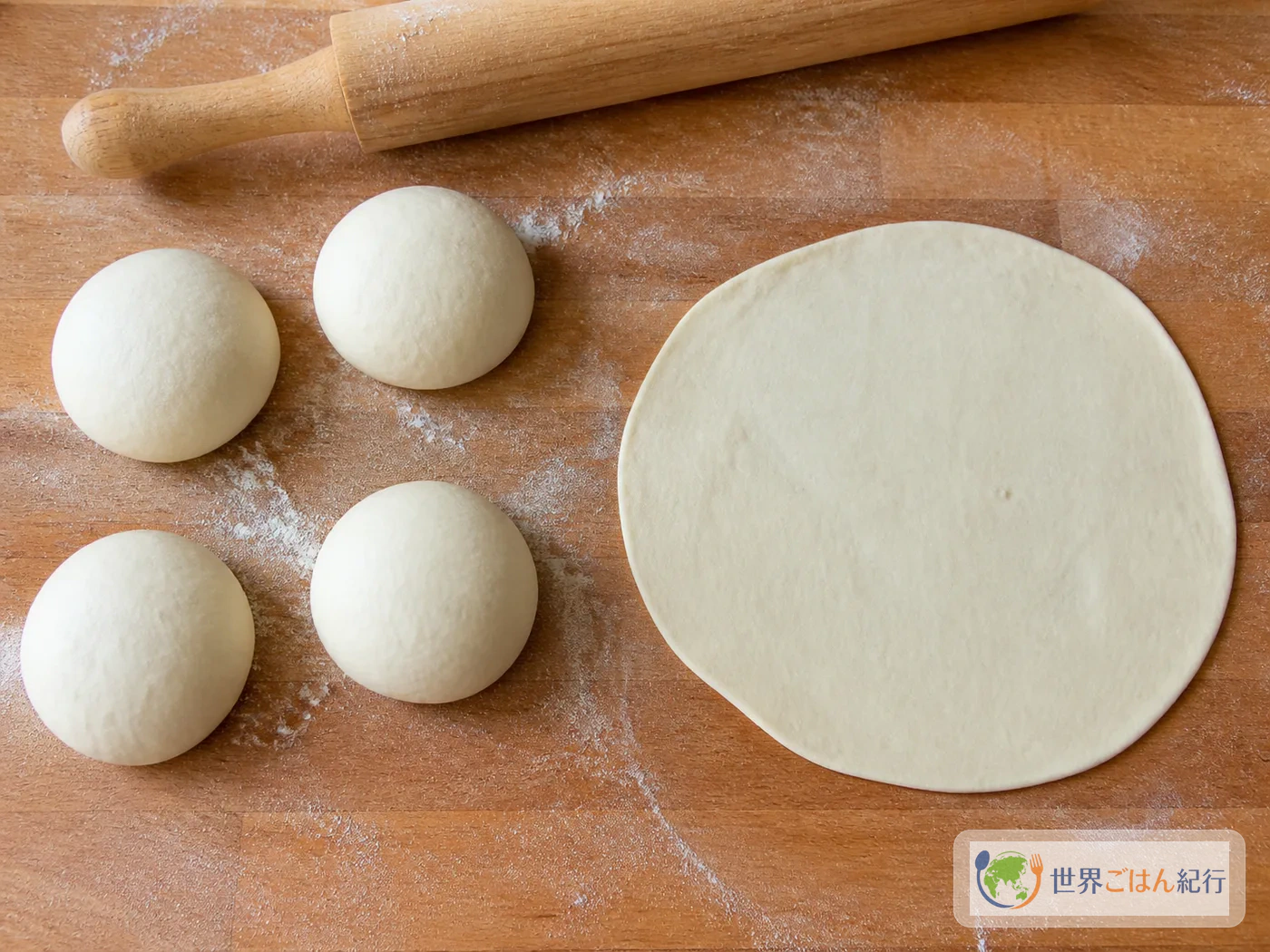
Manakish is a thin flatbread loved in Lebanon for breakfast and as a snack. The classic is za'atar with olive oil, and there are versions topped with cheese or meat. What trips people up in a home kitchen is not the topping but the thickness of the dough and the heat you bake at. If you make the dough as thick as pizza and put it on a cold baking sheet, only the surface dries out and the center turns heavy like bread.
With six small manakish, even a home oven can finish them thin, with color at the edges. If you don't have za'atar on hand, I also show how to combine dried thyme, sumac and sesame. After looking at one baked piece, you should be able to choose what to buy to get closer to the local aroma and what to try first with what you already have.
- How to preheat so that a 3–5 mm dough isn't steamed on a cold baking sheet
- How to decide whether to buy sumac, which sets the sourness of za'atar
- How to tell when it is done, even in a home oven at 230°C
- The range of toppings seen in Lebanon: cheese, kishk, tomato and onion, and more
Breakfast at the Lebanese table
Rather than telling this dish's history through old dates alone, I want to look at what the registration documents show: the way skills are passed down across generations in the home. Regional variation in toppings is not just a difference in names, either. Thickness and amount of topping change with the cheese and herbs available to a household or shop and the size of the oven.
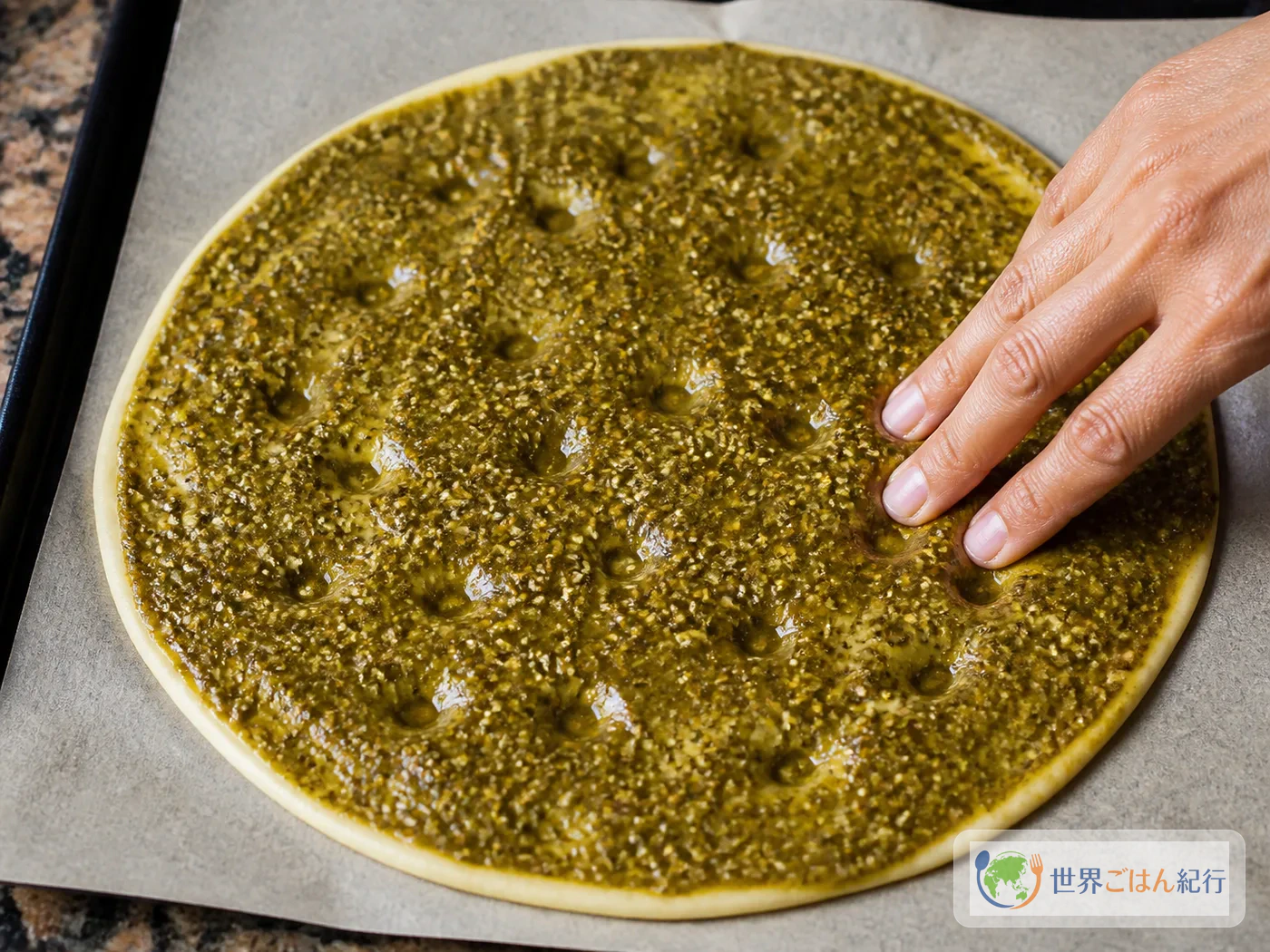
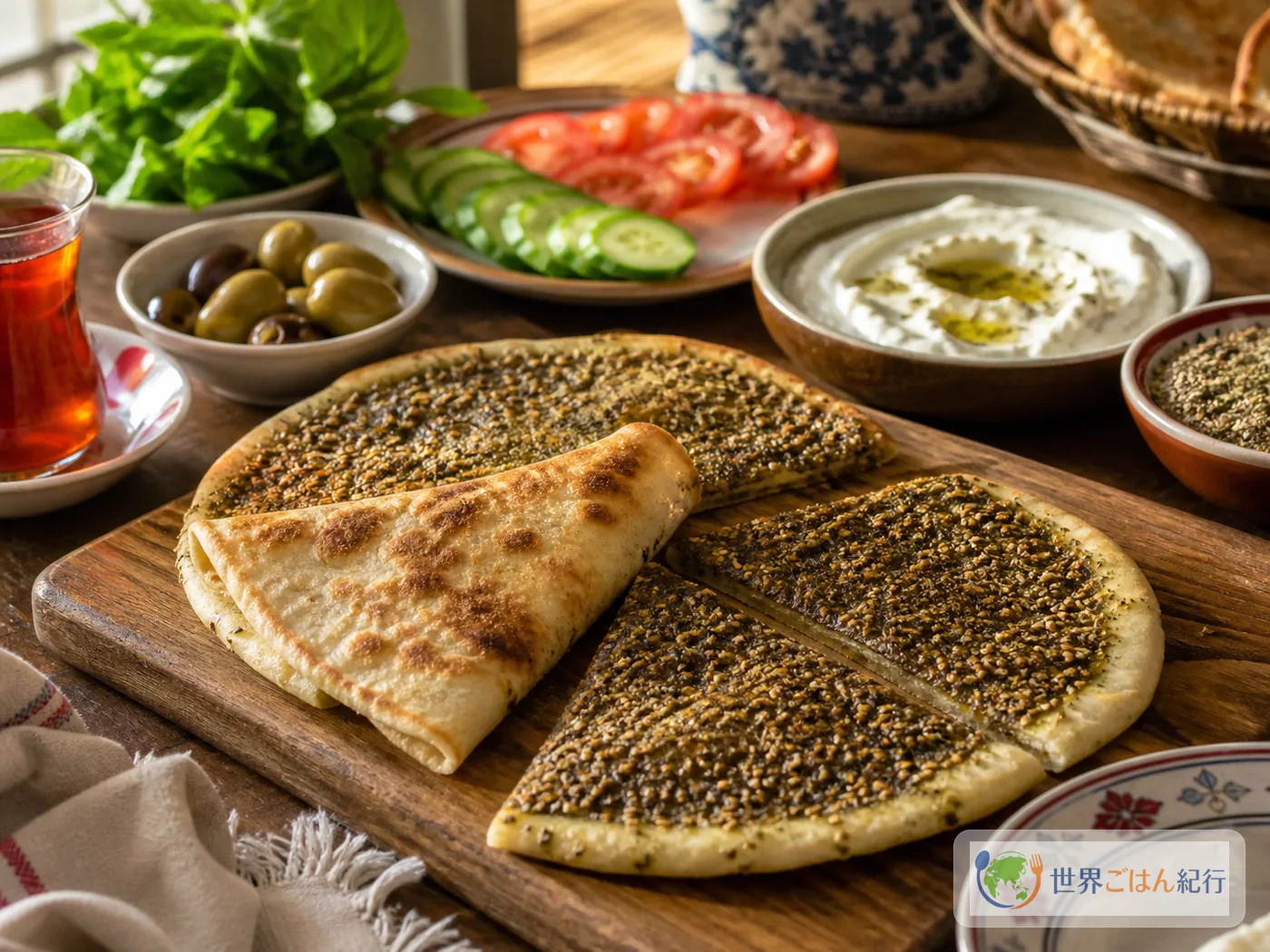
By its name alone, manakish looks like "a flat bread with something on top." In Lebanon, though, its place is closer to a daily bread that reaches the breakfast table than a dish made only on special days. UNESCO's intangible cultural heritage documentation describes al-man'ouché as a Lebanese breakfast made both at home and in professional bakeries. The dough is dimpled with the fingers and spread with a mixture of thyme, sumac, toasted sesame, salt and olive oil. The way it is eaten, with labneh, tomatoes, cucumbers, olives and mint on the side, is recorded as part of the same food culture.
In local recipes, "furn" often appears, meaning a neighborhood bread oven or small bakery. People prepare the dough at home and take it to the hot oven. When morning orders pile up, dough on wooden boards goes into the oven one after another, and the baked pieces are carried home with vegetables and labneh. If you move this flow to a home oven, you don't need to recreate the atmosphere of the oven with decoration. What you need is to heat the baking sheet thoroughly and keep the dough thin until just before baking.
The word za'atar also has some range. It may refer to a herb close to wild thyme, or to the whole seasoning mixed with sumac, sesame and salt. So aroma and saltiness differ from one bag of za'atar to another. Taste it before baking the first piece: if the sourness is weak, add a little sumac, and if it is too salty, increase the olive oil. The first decision is not to assume that a seasoning with the same name has the same taste.
Ingredients (6 pieces, serves 4)
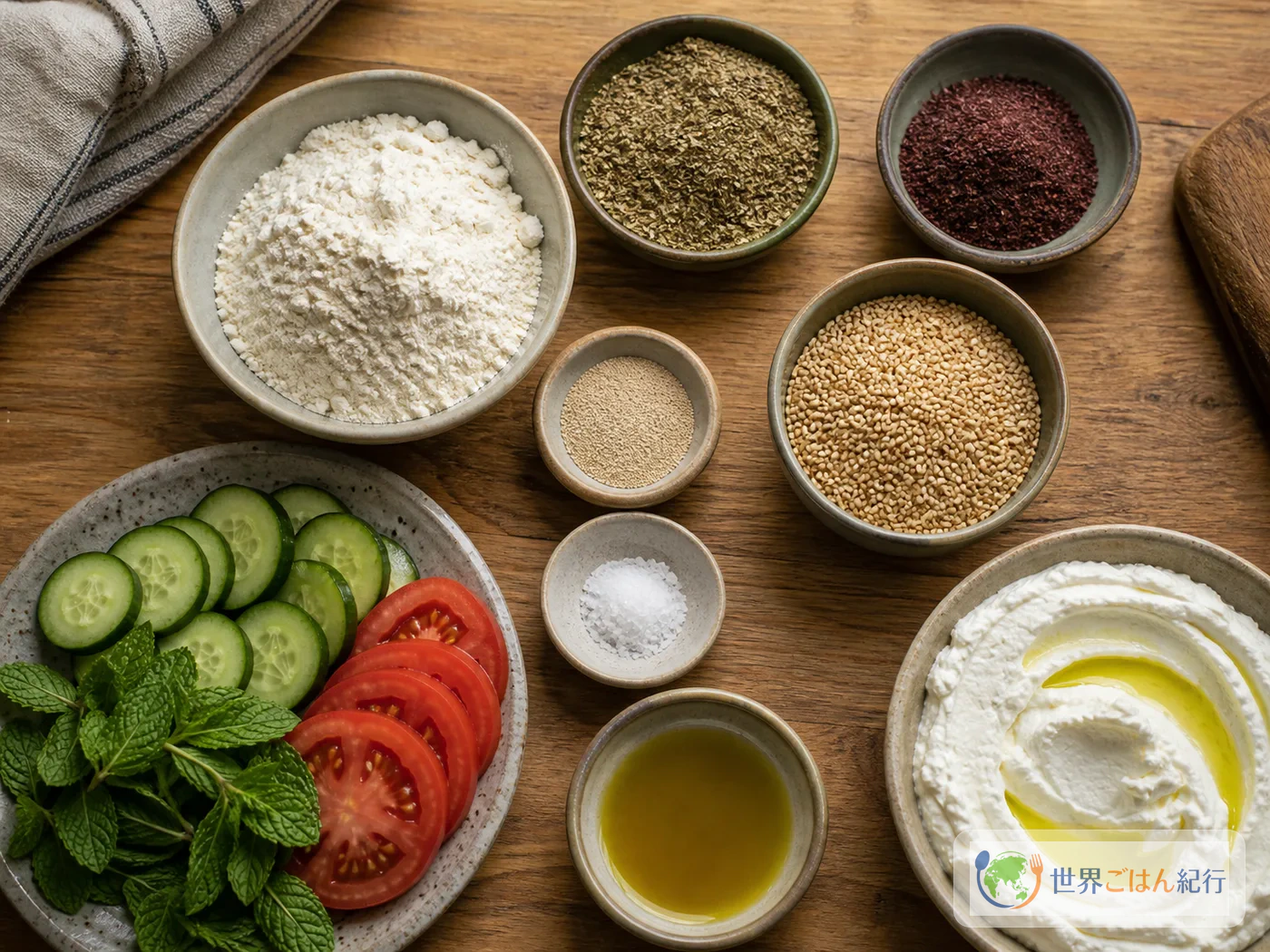
If you mix your own za'atar, combine 20 g dried thyme, 15 g sumac, 15 g toasted sesame seeds, 7 g dried oregano and 3 g salt to make about 60 g. This is a guide using ingredients easy to get at home, and does not reproduce the blend of any particular shop in Lebanon. If your sumac is very sour, start with about 12 g and taste.
To serve alongside
Prepare 200 g labneh or unsweetened Greek yogurt, 2 tomatoes, 1 cucumber, and radishes, black olives and mint as you like. The side dishes are not put on the dough; you tuck them in as you fold the baked manakish and bring it to your mouth. Because it uses wheat, white sesame and dairy, check the ingredient labels and shared equipment if you have allergies.
Buy za'atar, or build the aroma with sumac
If you can't find za'atar at a nearby supermarket, you'll be tempted to substitute thyme alone. The green fragrance of the herb comes close, but it loses the sourness and the roundness of sesame when you bite that are characteristic of manakish. So first look for ready-made za'atar, and if you can't find it, build a home blend with sumac at its core.
Sumac is a powder made by drying a red-purple fruit, with a dry sourness different from lemon. If you're unsure you can use it up on manakish alone, think about whether you could sprinkle it on salads, hummus, and grilled meat or fish. If you can think of two or more such uses, a 100 g bag is unlikely to go unused. If you only want to try it once, check the dough with a little lemon zest as a substitute, and choose sumac the next time you bake.
When looking at a product, check the net weight (a 100 g size is typical) and the ingredient list. Buy it if you have other dishes where you want to add a sour aroma besides manakish. If the only use for sumac is one dish, it is less wasteful to try first with a small packet of za'atar or the dried herbs you already have.
Should you add a tool for grinding za'atar?
If you use store-bought za'atar, you don't need a mortar. If you mix dried thyme, sumac and sesame yourself, though, you can crush the sesame lightly in a granite mortar and let the herb and sourness blend together. If you already have a small mortar or a food processor, there is no need to buy more.
The condition for buying is that you plan to make spice salts, herbs or nut pastes besides za'atar. If you will try the blend only once, mixing with a spoon in a bowl is enough, and introducing a tool does not decide the aroma. Look at the material, granite, and the contents of the set, mortar and pestle, before you choose.
Method: decide the thinness and the heat first
Before baking, set the oven to 250°C, or to the highest temperature of your home oven. Leave the baking sheet or a pizza stone on a lower rack and preheat for at least 30 minutes. The key is not to take the sheet out and then put the dough on it, but to heat the sheet itself inside the oven.
Three ways to tell why a bake turned out differently
When the center is heavy
If the center is white, doesn't spring back when pressed, and bites like a dumpling, the thickness or the heat of the sheet was lacking. Before baking the next piece, roll the remaining dough thinner. If that doesn't help, return the baking sheet to the lower rack and preheat another 20 minutes before baking. Thin dough loses moisture quickly, so don't leave it waiting a long time once baked.
When the surface is dry and only the herbs are bitter
The za'atar paste may be too thick, or the top heat of the oven too strong. On the next piece, reduce the amount you spread slightly and keep the 5 mm margin at the edge. Adding oil right after baking will not bring the bitterness back, so change how you spread it as soon as a scorched smell appears.
When the dough shrinks and won't make a circle
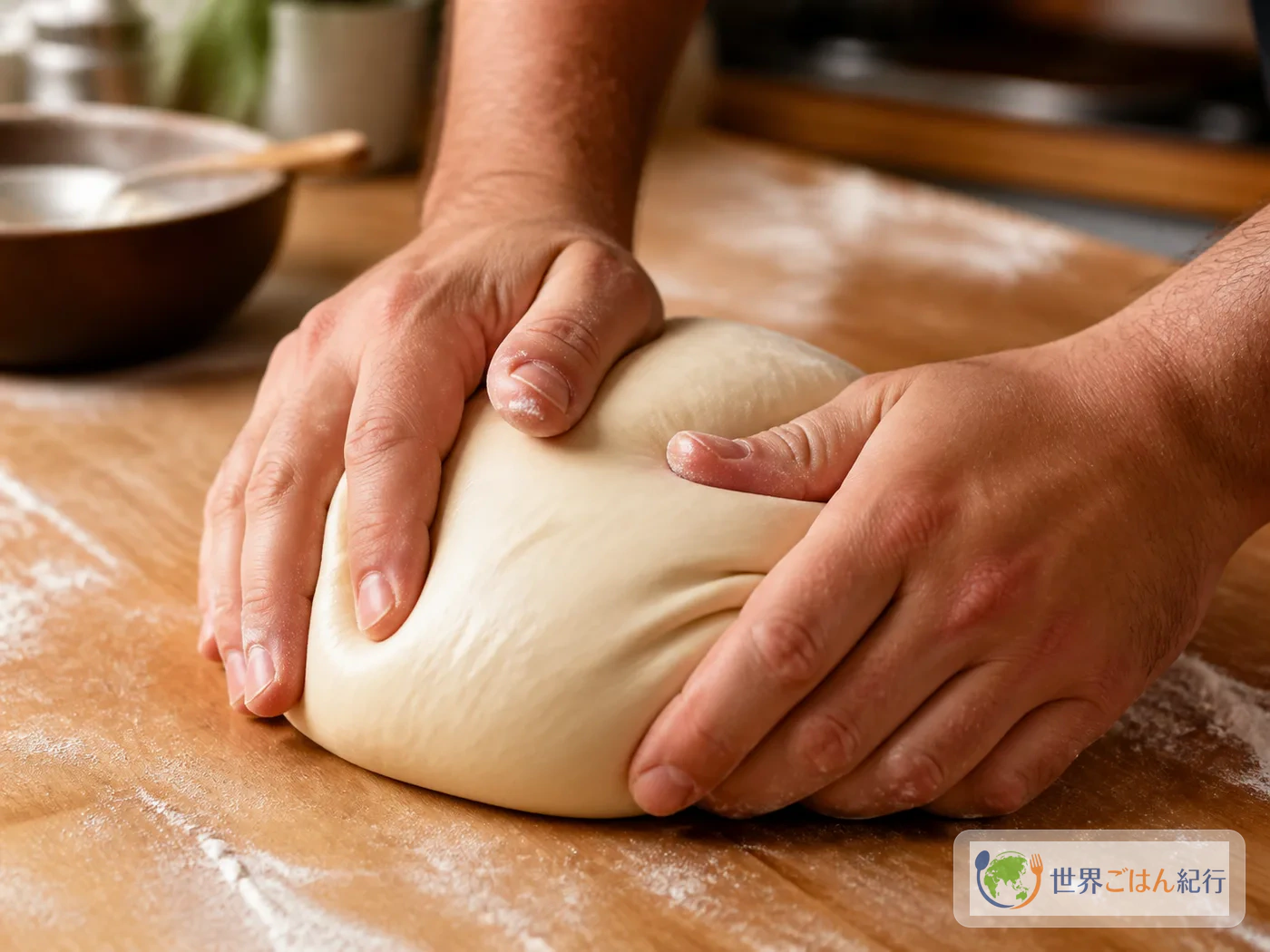
Rolling right after dividing, or gluten tight from kneading, makes the dough spring back after you let go. Extend the rest after rounding from 10 to 15 minutes, and press out little by little from the center. Evening the thickness affects texture more than making a perfect circle.
Even in a model with a 230°C maximum, preheating the baking sheet on a lower rack for 30 minutes or more and moving the dough onto it one piece at a time improves the rise of the base. Packing in many pieces at once drops the oven temperature, so start with up to two. If the color is lacking, you can move it to an upper rack for the last minute, but keep watching the surface of the za'atar.
Toppings seen in Lebanon, chosen for a home kitchen
The za'atar version is only the entrance to manakish. Lebanese recipes and bakery introductions also show versions with cheese, kishk, tomato and onion, and minced meat. When the topping changes, moisture, baking time and even the time of day you eat it change. Learn thinness with za'atar in the first six, then go on to one of the following, and the difference in dough will be easier to see.
| Type | Topping | Judgment for home cooks |
|---|---|---|
| Cheese manakish | Salty cheeses such as akkawi | If using easy-to-find mozzarella, blot the moisture and don't add too much salt |
| Kishk | Fermented yogurt and a bulgur-derived powder | A substitute for the flavor is difficult. A special slot to try in small amounts when you find it |
| Tomato and onion | Finely chopped tomato, onion, herbs | Drain lightly and spread thinly on the dough. Don't be greedy with the amount before baking |
| Lahm bi ajeen | Seasoned minced meat and aromatics | A topping close to a different dish. Bake until the meat is cooked through; don't judge by the same time as za'atar dough |
| Vegetables and labneh | Served alongside the baked bread | Doesn't moisten the dough, and brings the breakfast table closer to the local combination |
| Chile and herbs | Aleppo pepper, mint, parsley and the like | Keep to amounts that don't hide the sumac's sourness, adding one more axis of fragrance |
Of these, the easiest for a home cook to adopt is to add labneh and vegetables after baking the za'atar. You can manage only the moisture of the toppings without changing the thinness of the dough. If you use cheese, rather than spreading za'atar over the whole piece, making just half of it cheese lets you compare in one bake.
Storage and reheating to bring the aroma back
Wrap baked manakish one at a time after it cools slightly. Refrigerated, count on 2 days, and reheat in a 200°C oven for 5–7 minutes to eat. To freeze, cool completely before stacking and use within about 1 month. Reheating from frozen at 200°C for 10–12 minutes makes it easier to restore the crispness of the base. Warming in the microwave alone makes the dough steamy and soft, so even if you use it, finish by drying the surface in a toaster or oven.
You can refrigerate the dough before fermenting, but that requires attention to the state of the yeast and room in the container. For the first time, finishing with the baking before storing saves you from carrying a fermentation judgment over. Keep labneh and chopped vegetables in separate containers and add them just before eating.
Frequently asked questions
Can I make it with thyme alone if I have no za'atar?
You can, but the sourness and the toastiness of sesame will be weaker. The shortcut is to combine dried thyme with toasted sesame and add sumac if you have it. Without sumac you can use a little lemon zest, but its aroma changes when baked, so it won't taste the same.
Can I use all-purpose flour instead of bread flour?
Yes. Kneading with all-purpose flour alone makes the dough easier to tear, so reduce the initial water to 160–170 ml and rest it longer before rolling. The baked bread tends to be crisper than with bread flour. If you have medium-strength flour, using half and half with bread flour makes it easier to handle.
The dough isn't rising.
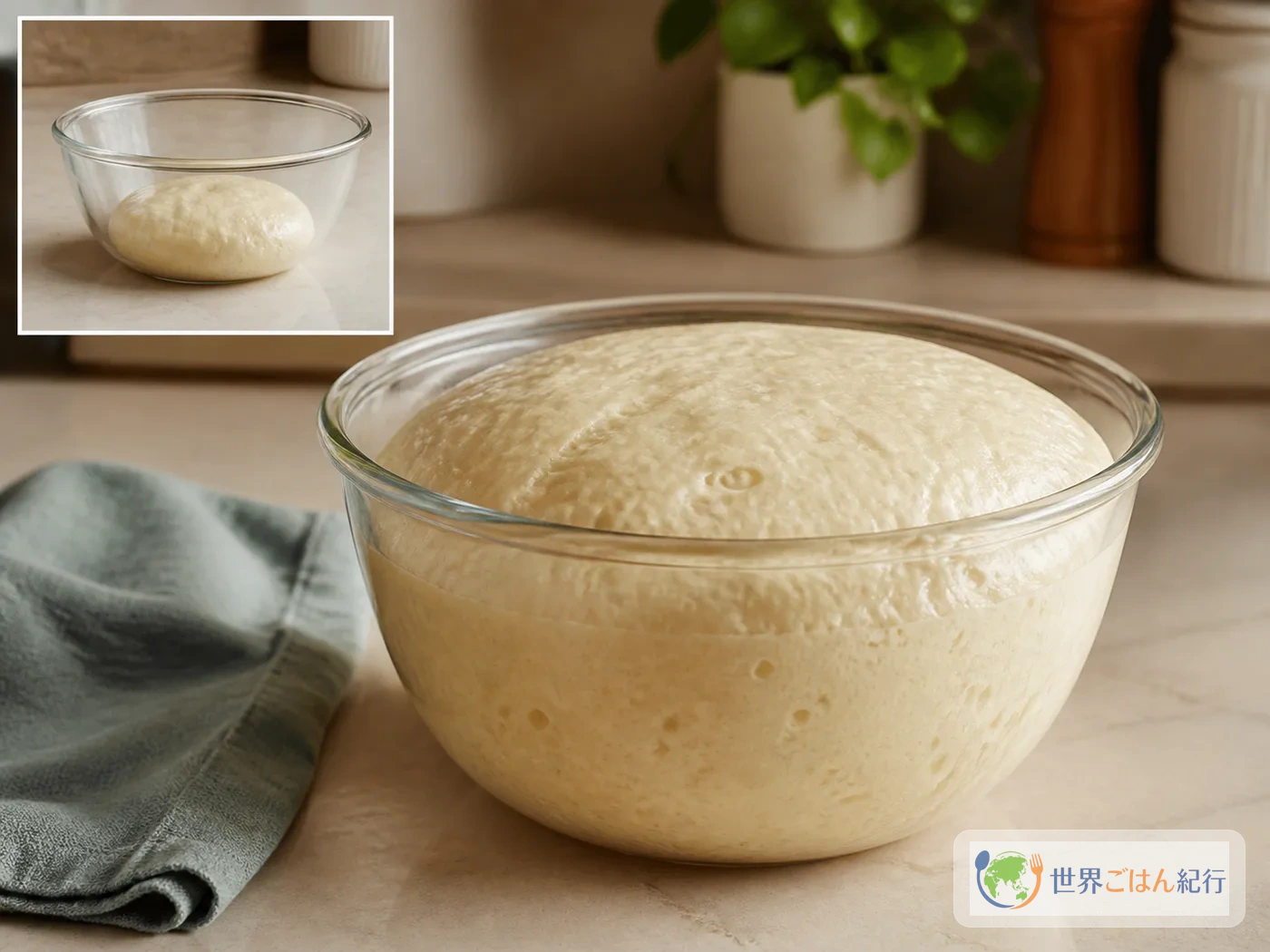
Check whether the water was too cold, the yeast is old, or the place is cold. Even if nothing changes at 60 minutes, you can wait another 30 if the room is cool. If after 90 minutes the volume has barely changed and there are no bubbles on the surface, it is better not to force it to bake but to start over from the yeast liquid.
The dough tore after I put the topping on.
The dough may have been rolled too thin, or the paste gathered too much in the center. Rather than spreading the torn spot closed with your fingers, overlap a little extra dough and re-spread the topping thinly. Next time keep the diameter to 18–20 cm and leave a margin at the edge.
Can I bake it at the same temperature with cheese?
You can bake at the basic temperature, but cheese changes the result through its moisture and salt. For a cheese with lots of moisture, blot the surface and scatter it thinly. If the cheese alone looks like it will scorch before the edge colors, don't move it to the upper rack; keep the sheet on the lower rack and extend the baking time slightly.
Can I bake ahead and eat it in the morning?
Bake the day before, cool completely and wrap. In the morning, reheat at 200°C and add the labneh and vegetables just before eating. If you put aroma first, the process is more stable if you finish the baking than if you divide the dough the day before and refrigerate it.
Narrow down what you buy for breakfast
Manakish can be made without a special oven. But it is not a dish where you bake ordinary bread dough on an ordinary baking sheet. Line up three axes, thinness, heat and the sourness of za'atar, and you get closer to the Lebanese morning sense of "eating the aroma first."
For the first time, you don't need to reproduce the za'atar blend perfectly. Keep to your oven's maximum temperature and the preheating of the sheet, look at how it bakes, and then decide whether to buy sumac or move on to cheese. If you've baked up to the point where you can make that decision, next morning you can roll thin from the first piece without hesitation.
When you want to broaden the Lebanese table a little, it feels natural to link from the labneh and vegetables served with the baked bread. It pairs well with Lebanese Tabbouleh, Baba Ghanoush and Hummus.
Sources
- UNESCO, “Al-Man’ouché, an emblematic culinary practice in Lebanon” — https://ich.unesco.org/en/RL/al-man-ouche-an-emblematic-culinary-practice-in-lebanon-02000?RL=02000 (accessed and checked 5 August 2026)
- King Arthur Baking, “Zaatar Manakeesh” — https://www.kingarthurbaking.com/recipes/zaatar-manakeesh-recipe (accessed and checked 5 August 2026)
- Zaatar and Zaytoun, “Lebanese Manakish Recipes” — https://zaatarandzaytoun.com/lebanese-manakish-recipes/ (accessed and checked 5 August 2026)
- Zaatar and Zaytoun, “Lebanese Manakish Recipe” — https://zaatarandzaytoun.com/lebanese-manakish-recipe/ (accessed and checked 5 August 2026)
- Zaatar and Zaytoun, “Zaatar Manakish” — https://zaatarandzaytoun.com/zaatar-manakish/ (accessed and checked 5 August 2026)
- Mediterra, “How to Make Manakish Za’atar” — https://www.mediterraco.com/blogs/chefs-table/how-to-make-manakish-za-atar (accessed and checked 5 August 2026)