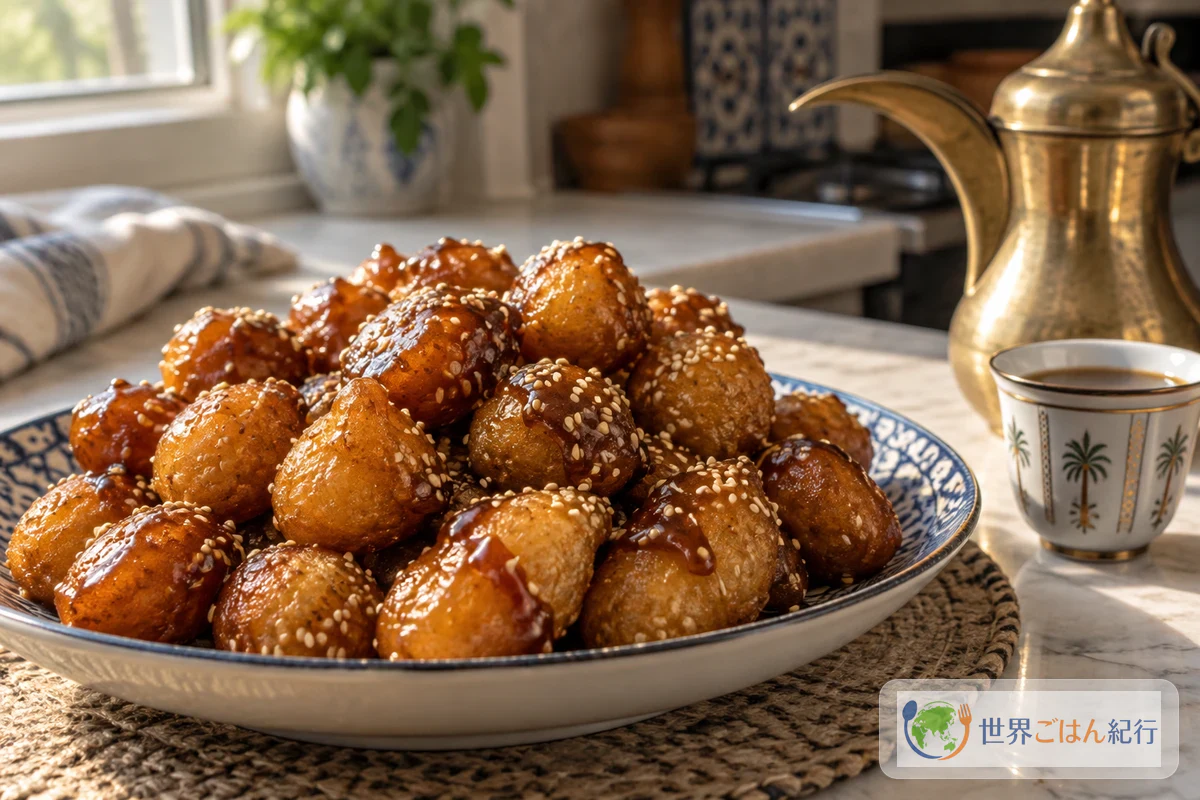
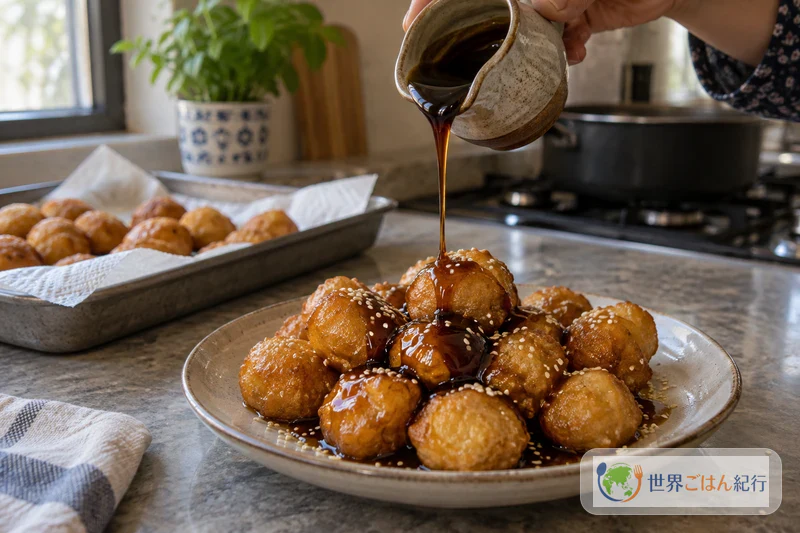
The sun sets, the call announcing the end of the fast rings out over the city, and a big platter on the table is heaped with small golden balls. The surface is thin and crisp; bite in and the inside is soft. Dark brown date syrup, poured over in a thick stream, clings to your fingertips and the scent of saffron and cardamom rises through your nose. Luqaimat (لقيمات) is a bite-sized fried sweet beloved in the United Arab Emirates and the other countries of the Persian Gulf. The name means "small bites" in Arabic.
Small Golden Balls on the Table at Iftar
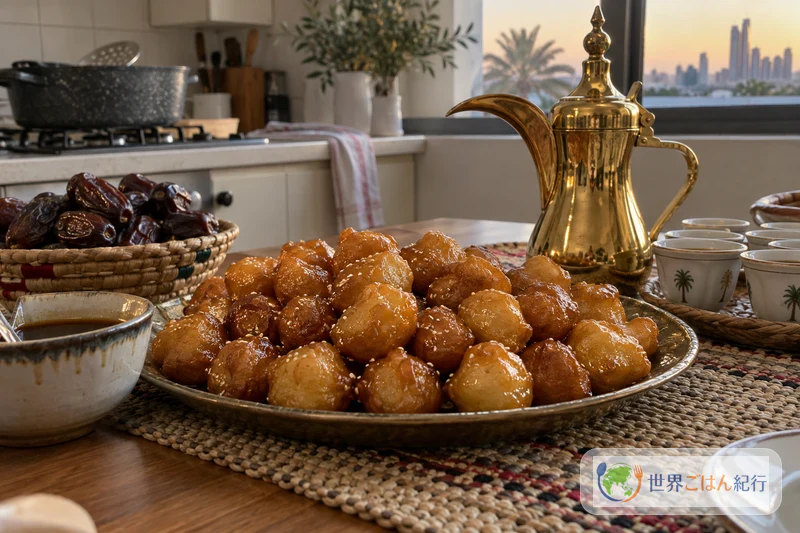
Luqaimat is widely eaten in the Gulf countries: the UAE, Saudi Arabia, Bahrain, Kuwait, Qatar and Oman. It is especially at home in Ramadan, the month of fasting. At iftar, the meal that ends the day's fast at dusk, it is a standard sweet on the table. Nibbling them with Arabic coffee or tea is the usual pleasure in Gulf homes.
The batter is made from the plainest ingredients: flour, water and yeast. To that go saffron and cardamom, familiar in Gulf kitchens, and the fresh-fried balls are drizzled with syrup made from dates (the fruit of the date palm). In a land that the date palm has long supported, the star of the sweetness is not sugar but date syrup. Some households use honey instead of syrup.
The sweet also has a long line of relatives. Its ancestor is said to be the 13th-century Arab sweet "luqmat al-qadi" (the judge's morsel), whose recipe was recorded at least by the Abbasid period. The same family of fried sweets is called "lokma" in Turkey and "loukoumades" in Greece, and eaten with honey or syrup. Gulf luqaimat can be seen as that family with the aroma of saffron and cardamom added.
The spelling of the name is not fixed either. In English you see luqaimat as well as ligemat, lukemat, lgeimat and others. They all refer to the same sweet, and differences in Gulf dialect pronunciation show up directly in the spelling.
The Arabic word at the root of luqaimat, "luqma," means "a bite." Luqaimat is the plural, with the nuance of many such small bites. As the name says, it suits being picked up one at a time with the fingers and tossed into the mouth.
A Batter That Waits Overnight, and One You Fry in an Hour
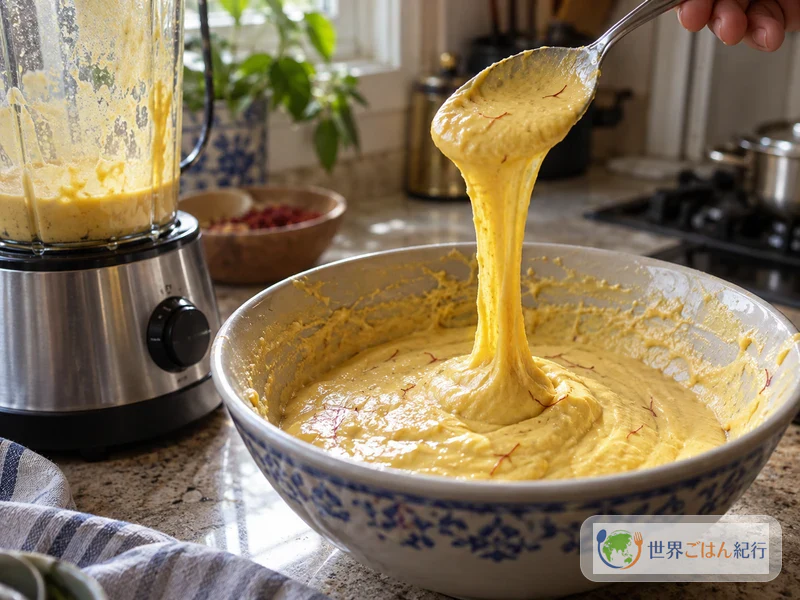
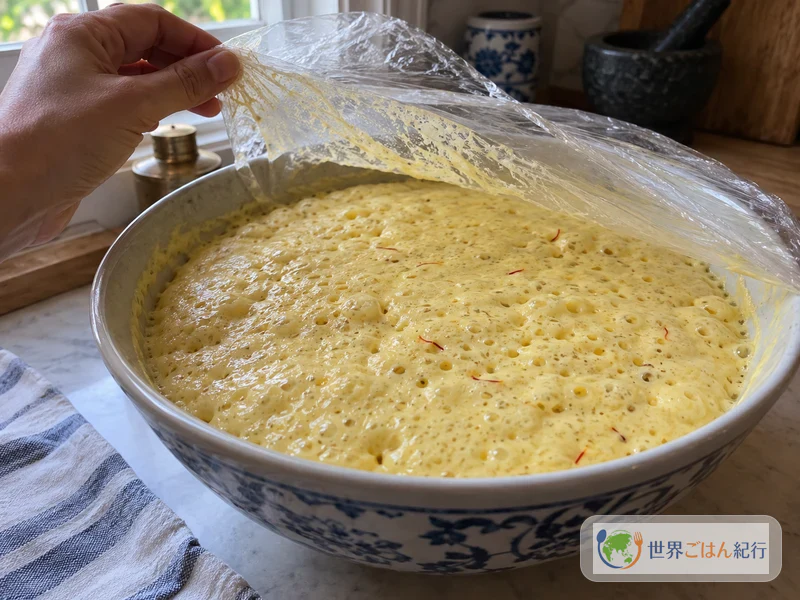
Luqaimat batter is not a dough you knead and bring together like bread. In the traditional method presented in the Gulf paper Gulf News by Harald Oberender, a chef at the Dubai World Trade Centre, the batter is mixed to a state "a little looser than bread dough" and then left to ferment in a warm place for 6 to 10 hours. Long fermentation makes the inside soft and light when fried.
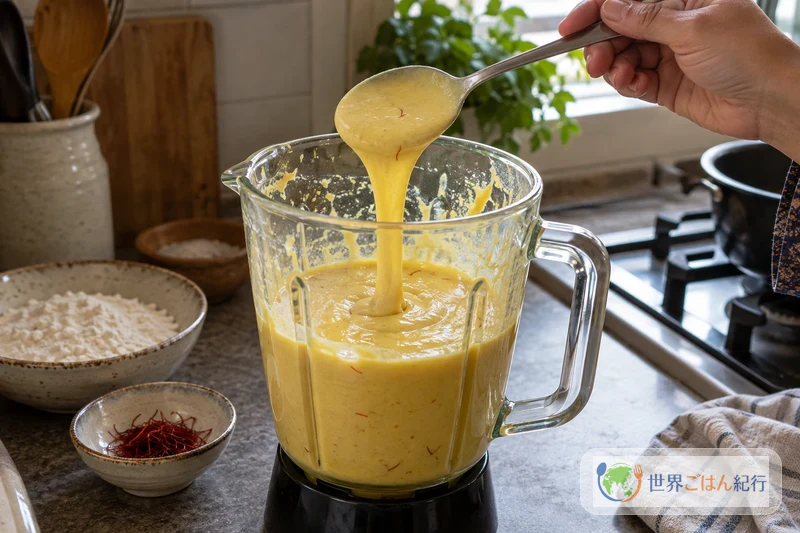
There are shorter methods for casual home cooking. Muna Kenny, who runs the cooking blog Munaty Cooking, presents a formula in which everything goes into the blender for a smooth batter that doubles in about an hour before frying. The recipe in this article follows that method. Adding a little cornstarch is a trick to make the surface crisp.
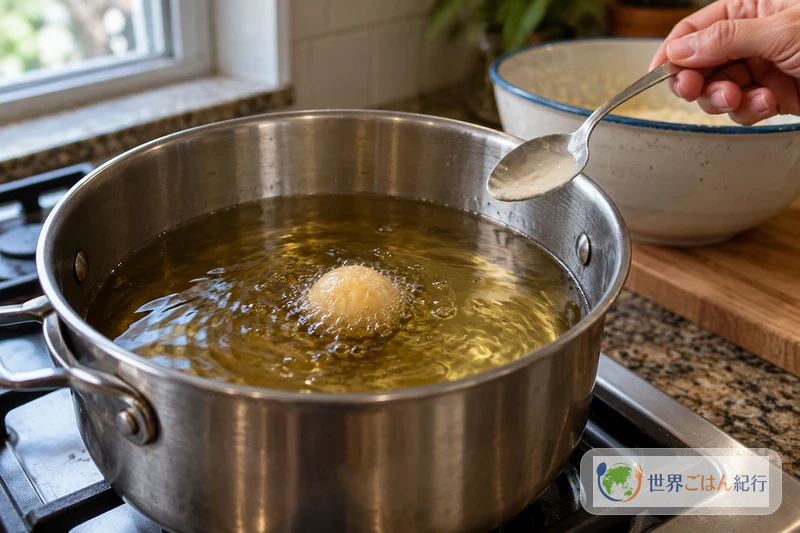
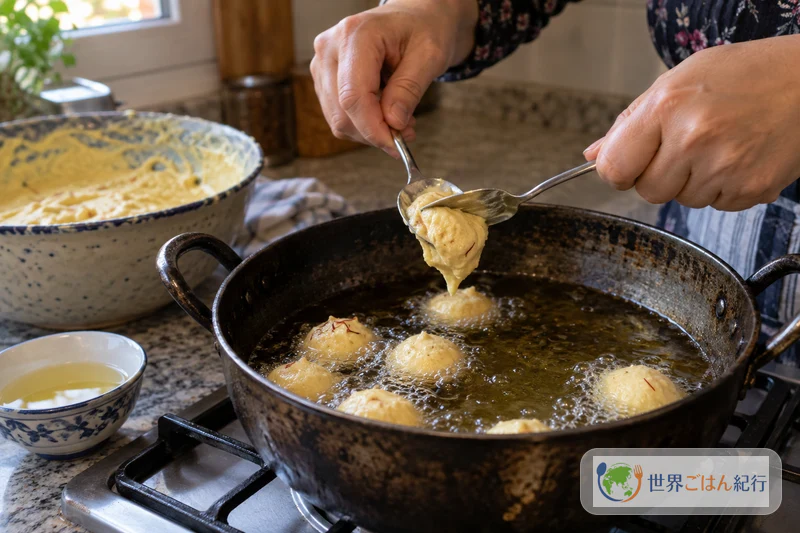
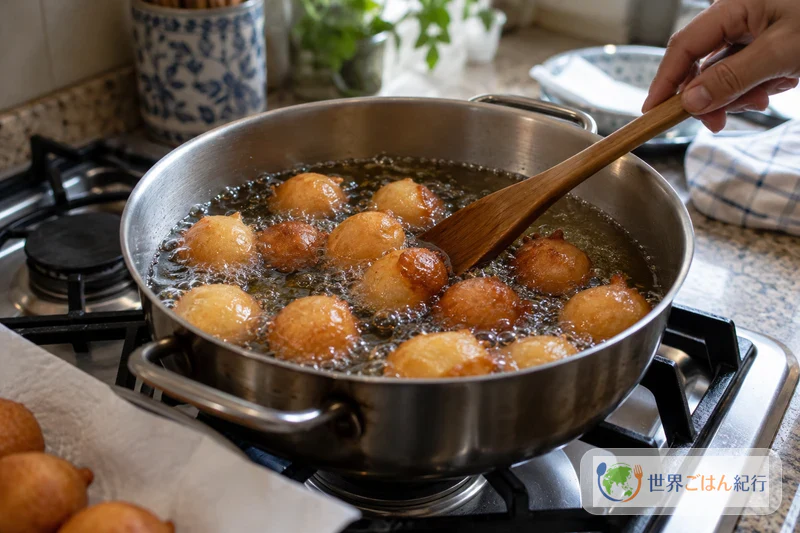
Frying has its own trick. Scoop up the batter with a spoon and push it into the oil with a second spoon. Rolling the balls around in the hot oil as they fry colors them evenly and helps them hold a round shape. Some households add yogurt to the batter or scatter sesame seeds, so slightly different methods are passed down.
Sourcing Saffron and Date Syrup
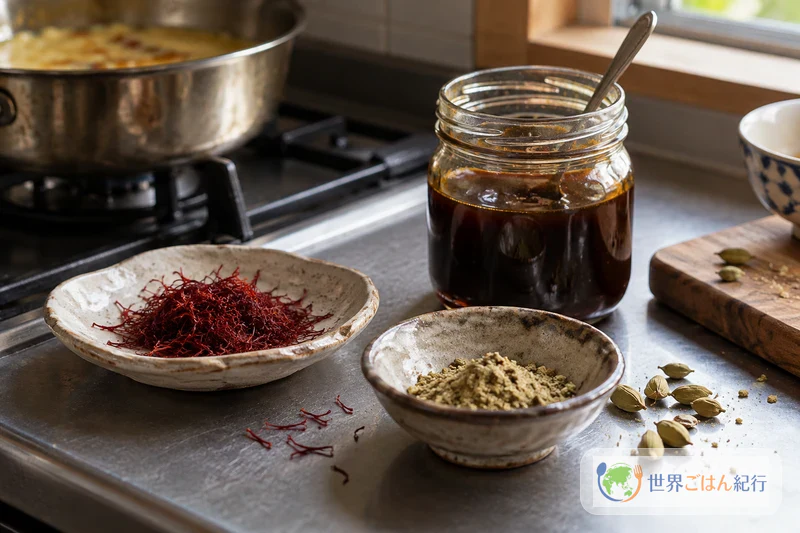
Most of the ingredients can be found at an ordinary supermarket. All-purpose flour is the closest to what is used, but if you do not have it, mixing equal parts cake flour and bread flour gives suitable springiness and lightness. Dry yeast is available in the baking aisle.
Saffron, the key to the aroma, is sold in small jars in the spice aisle. It is pricey, but this recipe uses only a pinch. For cardamom, cracking the whole pods and grinding the seeds inside gives a stronger fragrance, while powder is more convenient.
Date syrup can be found at Middle Eastern or international grocery stores, or online. If you cannot find it, honey is a substitute that Gulf households also use. Honey gives a lighter sweetness; date syrup gives a rich, deep sweetness.
Ingredients (about 25 pieces, serves 4)
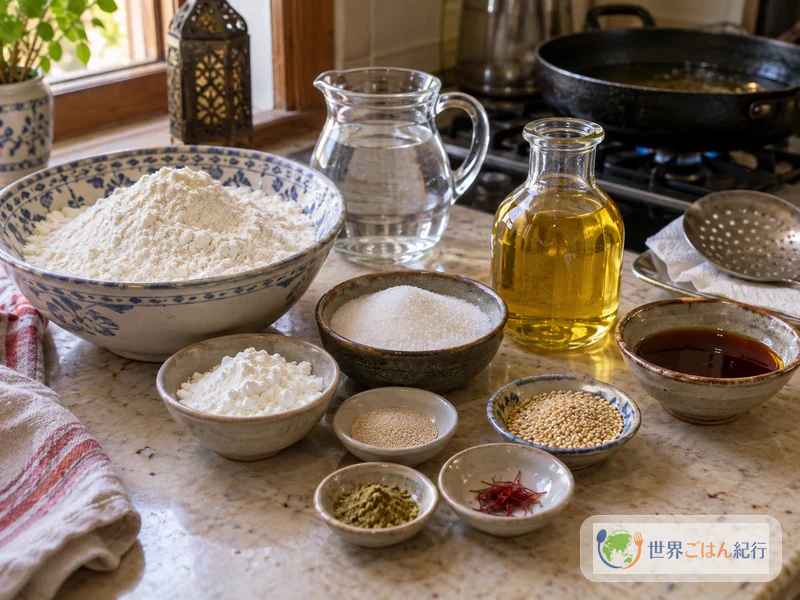
Lukewarm water should be a little warmer than body temperature, around 40°C. If it is too hot, the yeast weakens. Different flours absorb different amounts of water, so start with a little less than 3/4 cup and add while watching the batter. A little heavier than pancake batter is the right looseness.
Before using, soak the saffron for about 5 minutes in a part of the lukewarm water (about 2 tablespoons), and the yellow color and aroma pass into the water and spread evenly through the whole batter.
Frying oil is very hot. When dropping the batter, do not hold it too close to the oil; tilt the spoon just above the surface and let it down gently. If the oil starts to smoke, it has gotten too hot, so turn off the heat at once. Wait until the used oil has cooled completely before handling it.
Syrup poured over piping-hot ones makes them soggy from the steam. Muna Kenny, answering a reader's question, also recommends letting them cool a little before pouring the syrup to keep them crisp.
If you have leftover batter, put it in a deep bowl in the refrigerator. It rises a lot because of the yeast, so choose a large container. Bring it back to room temperature before frying.
With Arabic Coffee
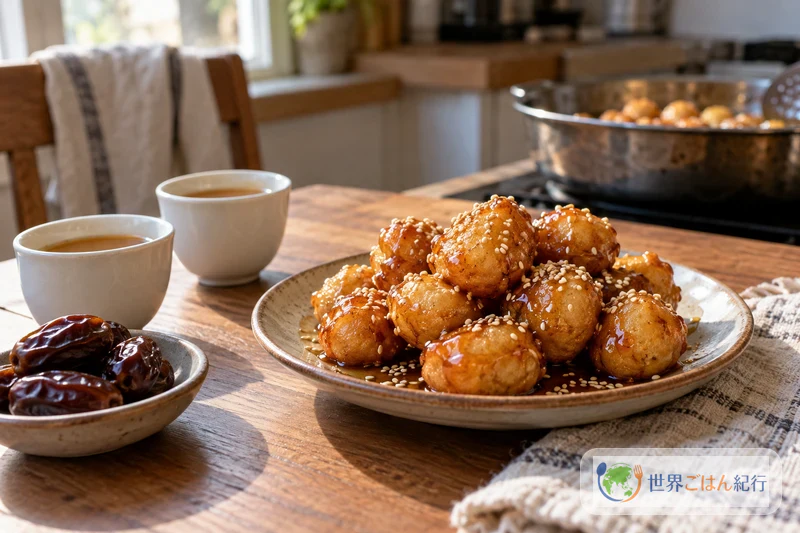
In Gulf homes, luqaimat is served with Arabic coffee (qahwa) or tea. To enjoy it elsewhere, adding a pinch of cardamom to lightly roasted coffee, or pairing it with milk tea, connects with the cardamom in the batter.
Since you can pick them up one at a time with your fingers, they also suit a big platter when people gather. In the Gulf countries it is a sweet indispensable at Ramadan and celebrations, but in your own kitchen you can easily make it as a weekend snack.
From the same Gulf region, Bahrain's spice-cooked rice machboos and Saudi Arabia's kabsa (in Japanese) are ideal meals to eat before luqaimat. To compare sweets, Oman's Omani halwa (in Japanese) is also a sweet scented with saffron and cardamom.
Frequently Asked Questions
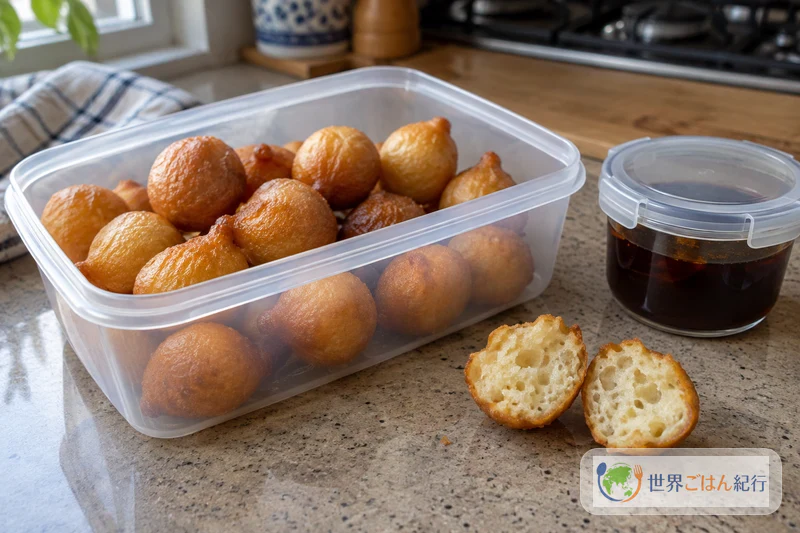
I worry they are not cooked through inside.
Break one open; if the inside is a moist sponge, it is cooked through. If thick batter remains in the center, the oil may be too hot and only the outside has colored first. Lower the heat a little and fry longer.
They do not come out round.
If the batter is too loose, it spreads flat; if too stiff, the shape turns lumpy. Use the weight at which it falls thickly from a spoon as your guide, and adjust with lukewarm water or flour. Rolling them often while frying helps them hold a round shape.
Can I make them ahead?
The crisp texture is lost over time, so eating them the day you fry them is best. If there are leftovers, store them without syrup in an airtight container, warm lightly in a toaster oven before eating, then pour on the syrup.
Is there a substitute for date syrup?
Honey is the easiest substitute. Gulf households too sometimes use honey or sugar syrup. A brown-sugar syrup such as Japanese kuromitsu brings it toward a rich sweetness.
Are there ingredients to watch for allergies?
The batter uses wheat flour. If you scatter sesame seeds, also watch for sesame allergy. Even without sesame, you can fully enjoy the flavor of luqaimat.
Sources
- Munaty Cooking, "Luqaimat Recipe (Crispy Emirati Sweet Dumplings)." Accessed and checked 22 October 2026. https://www.munatycooking.com/crunchy-sweet-dumplings-luqaimat/
- Gulf News, "Traditional Emirati Luqaimat." Accessed and checked 22 October 2026. https://gulfnews.com/food/cooking-cuisines/traditional-emirati-luqaimat-1.1609659664372
- Wikipedia, "Lokma." Accessed and checked 22 October 2026. https://en.wikipedia.org/wiki/Lokma