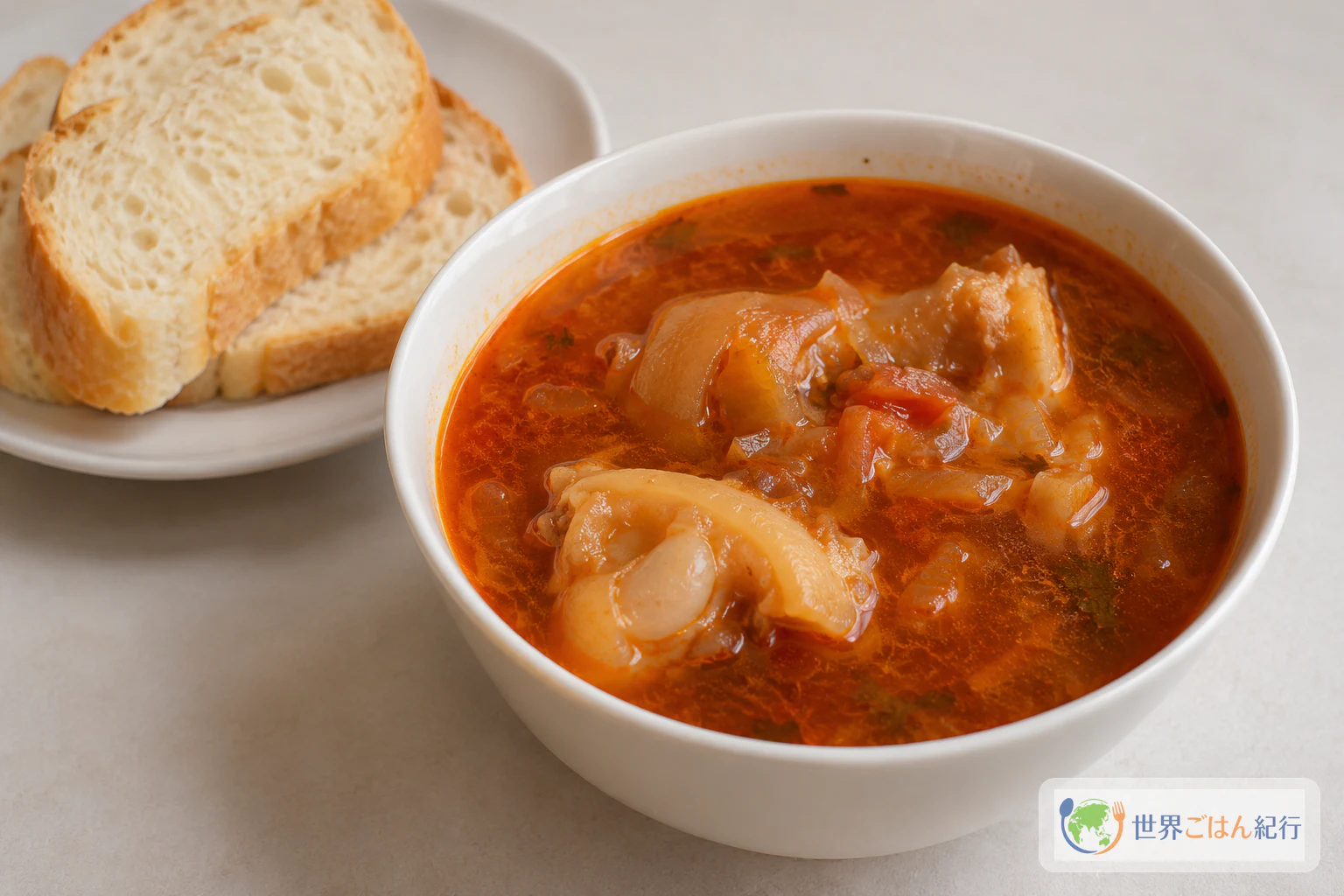
Leg Soup: Two Pots of Water, Then a Long, Quiet Simmer
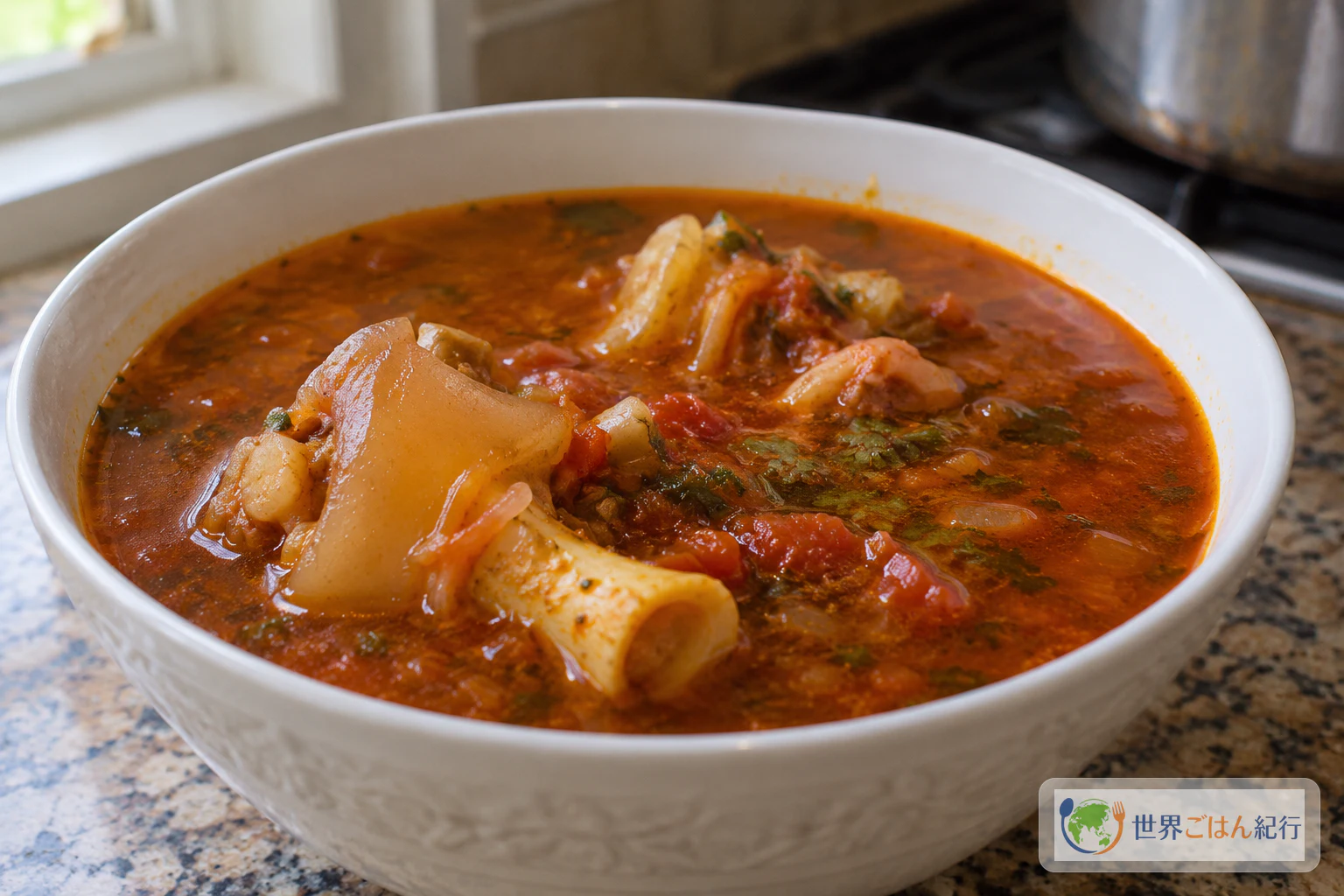
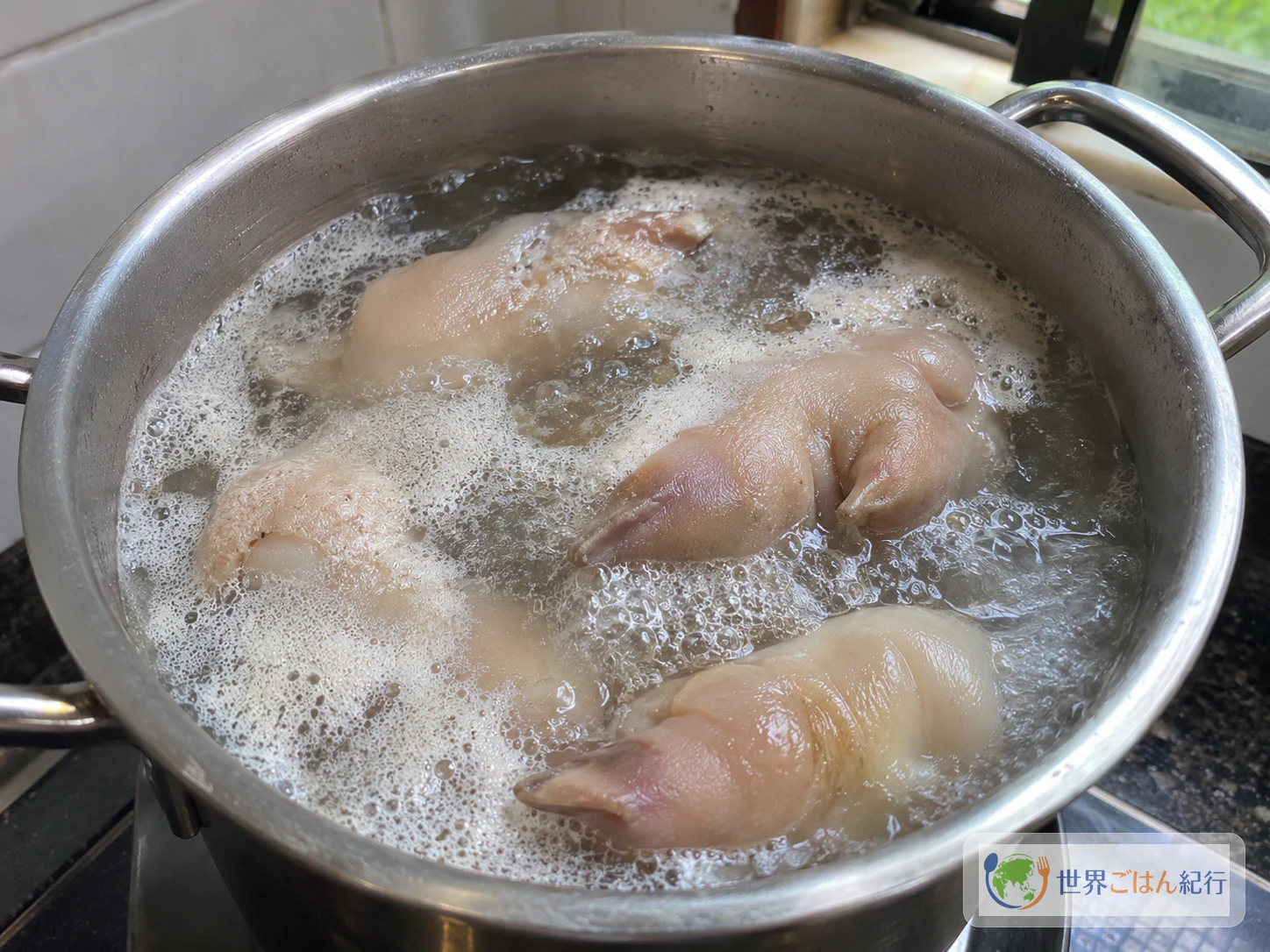
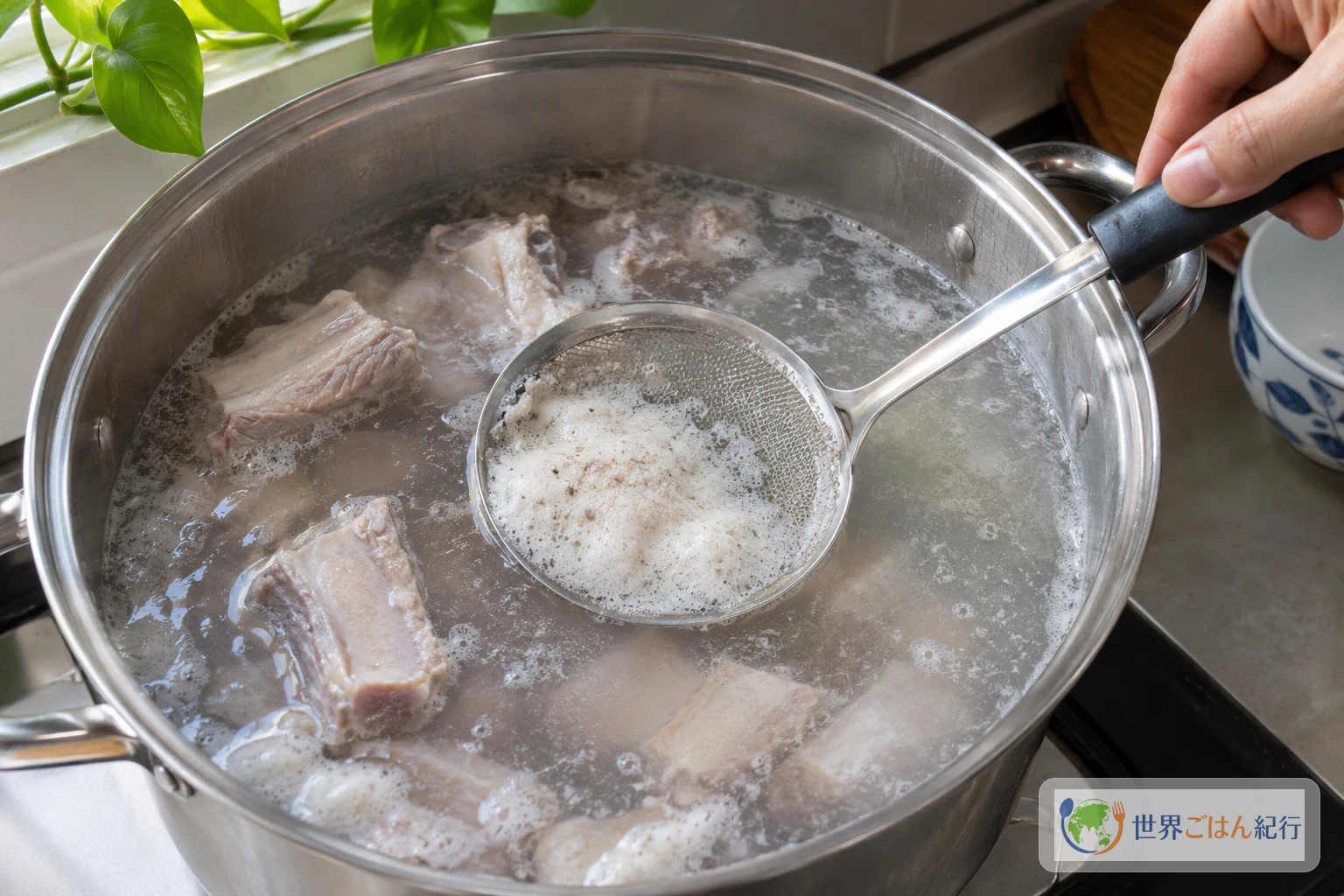
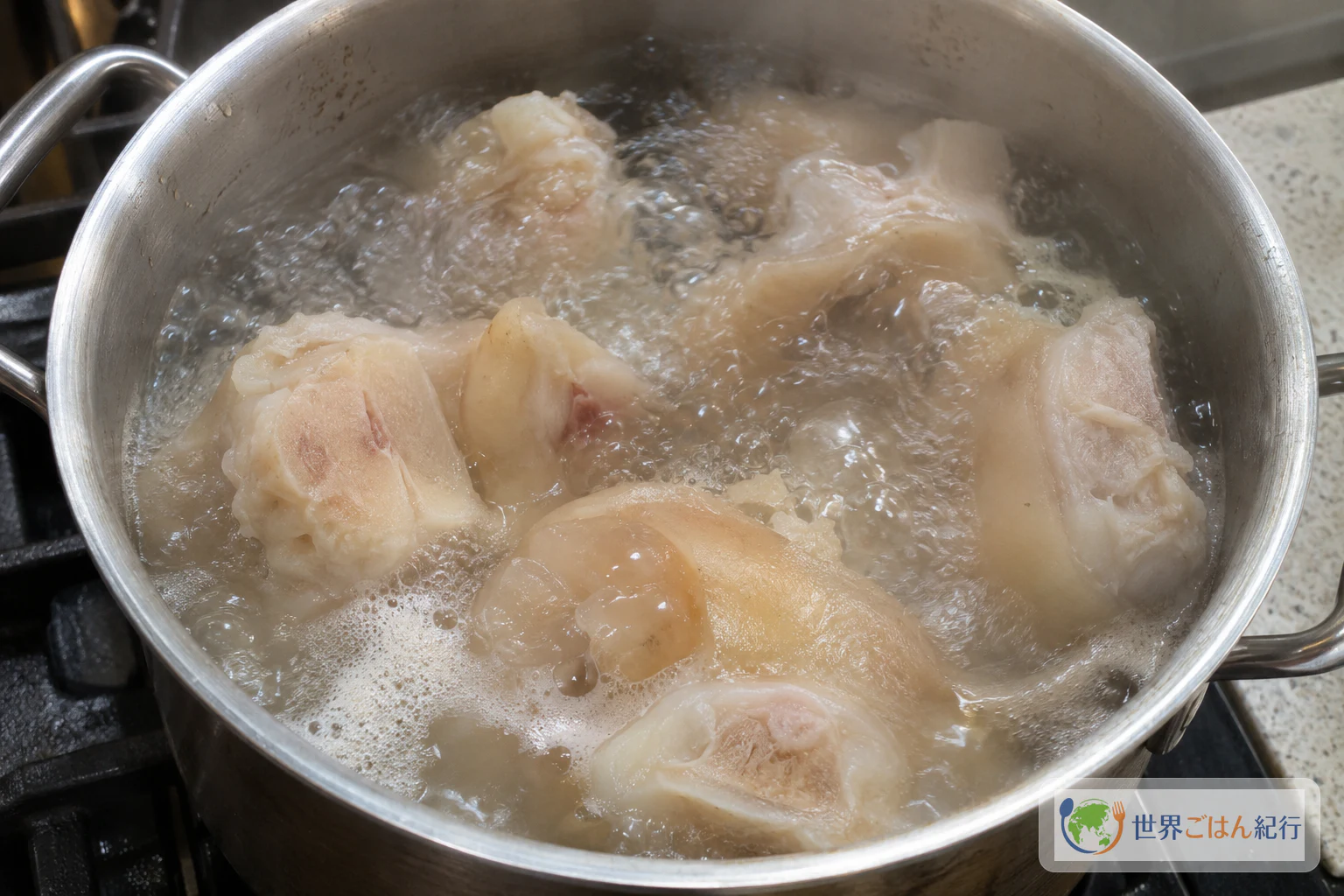
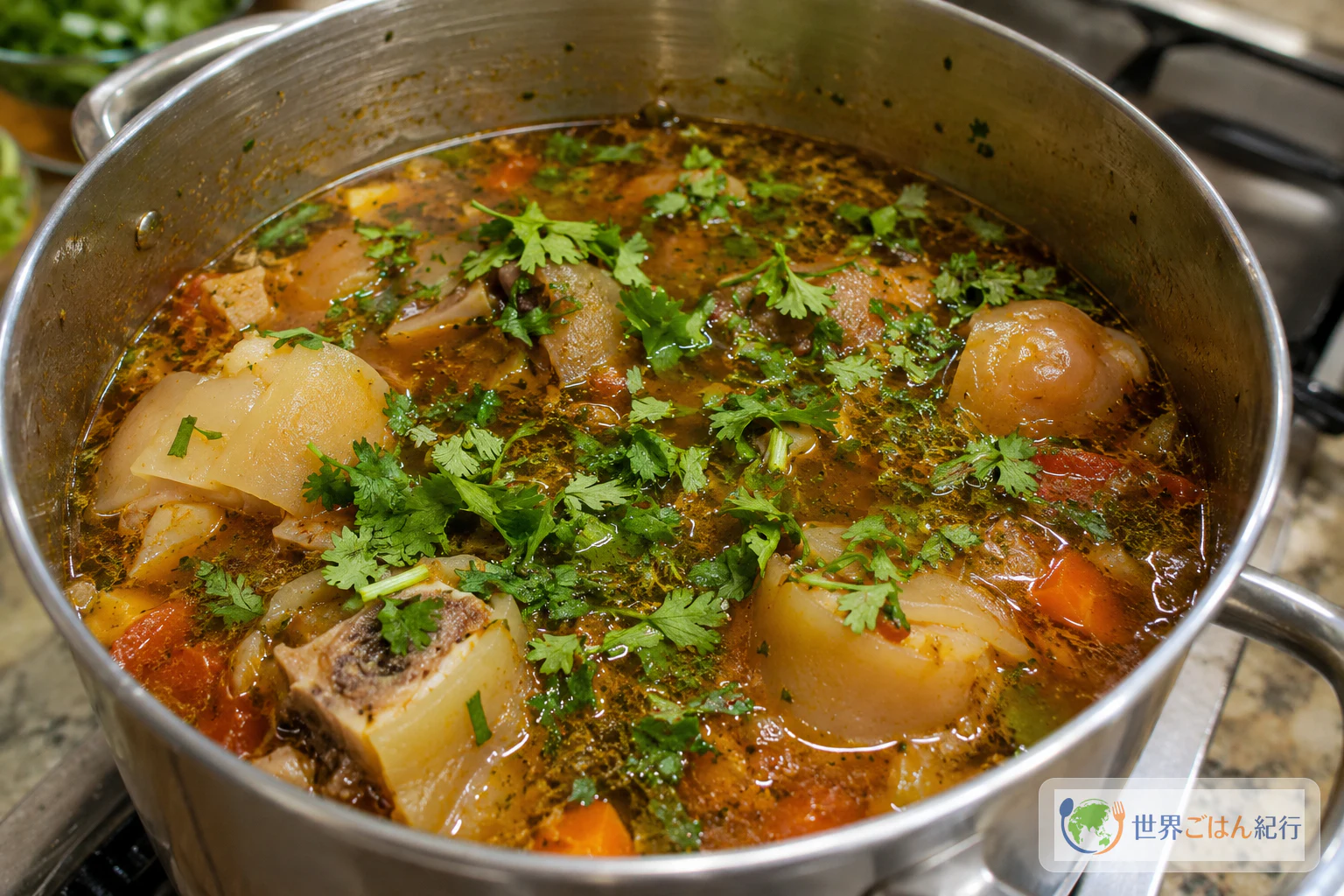
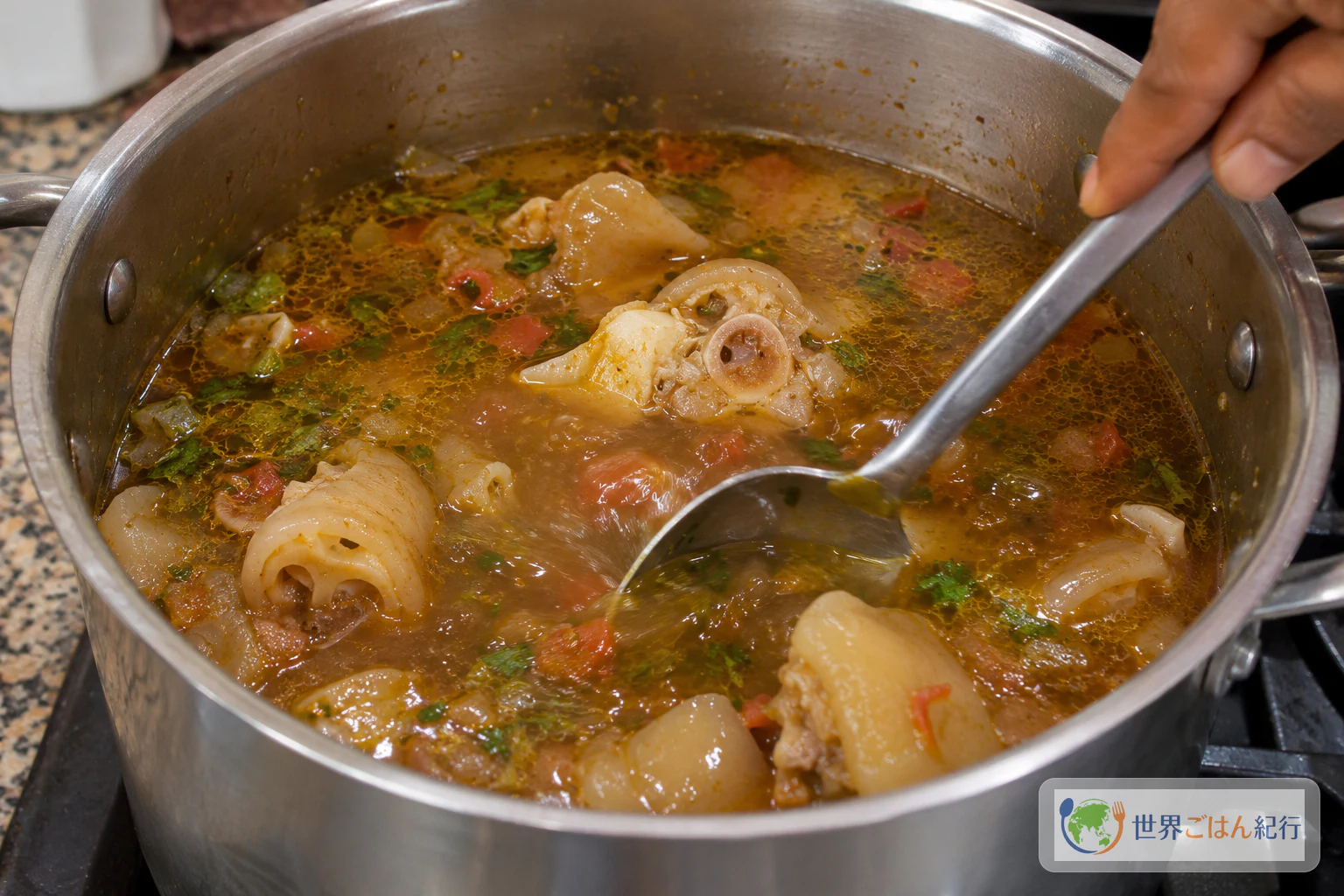
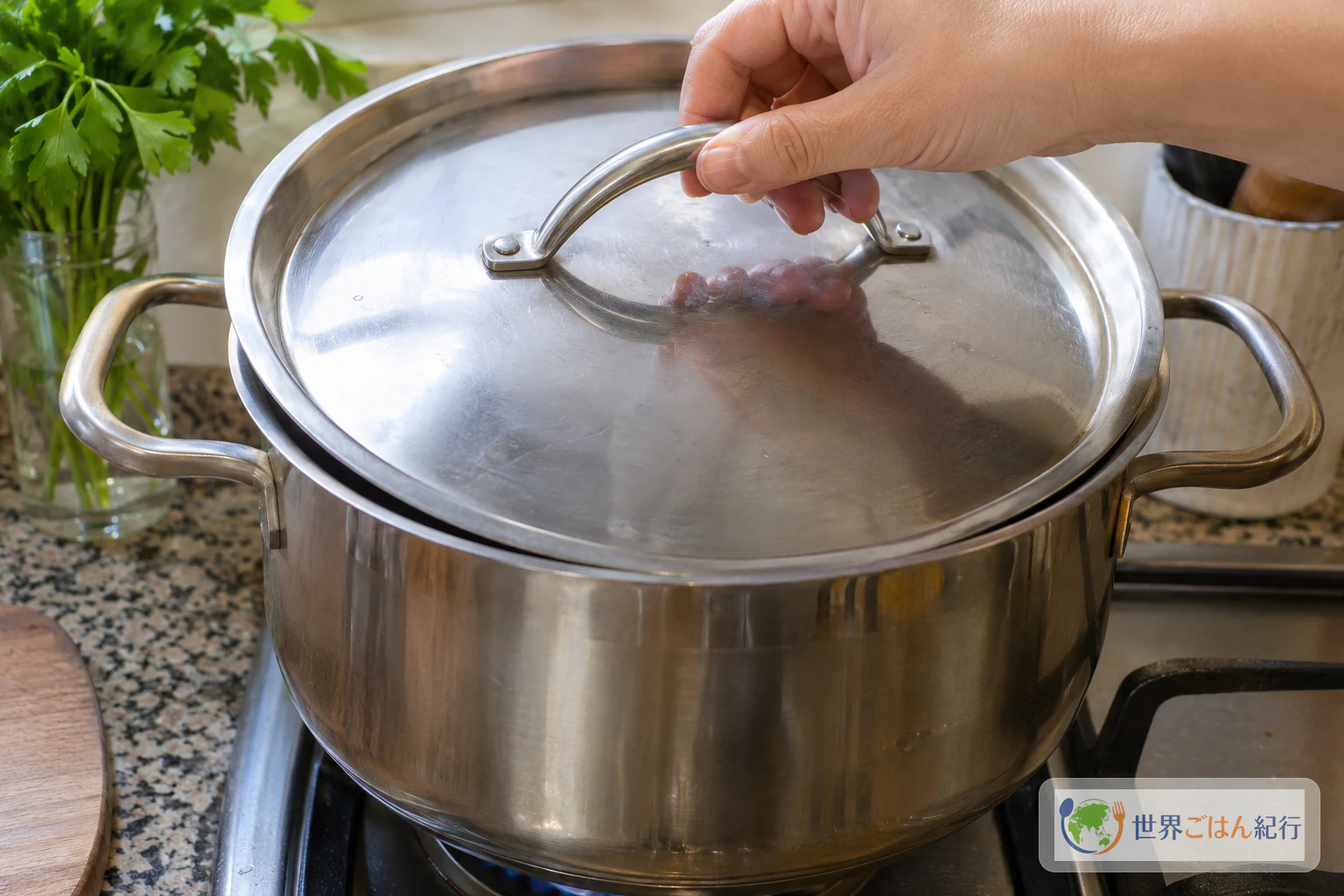
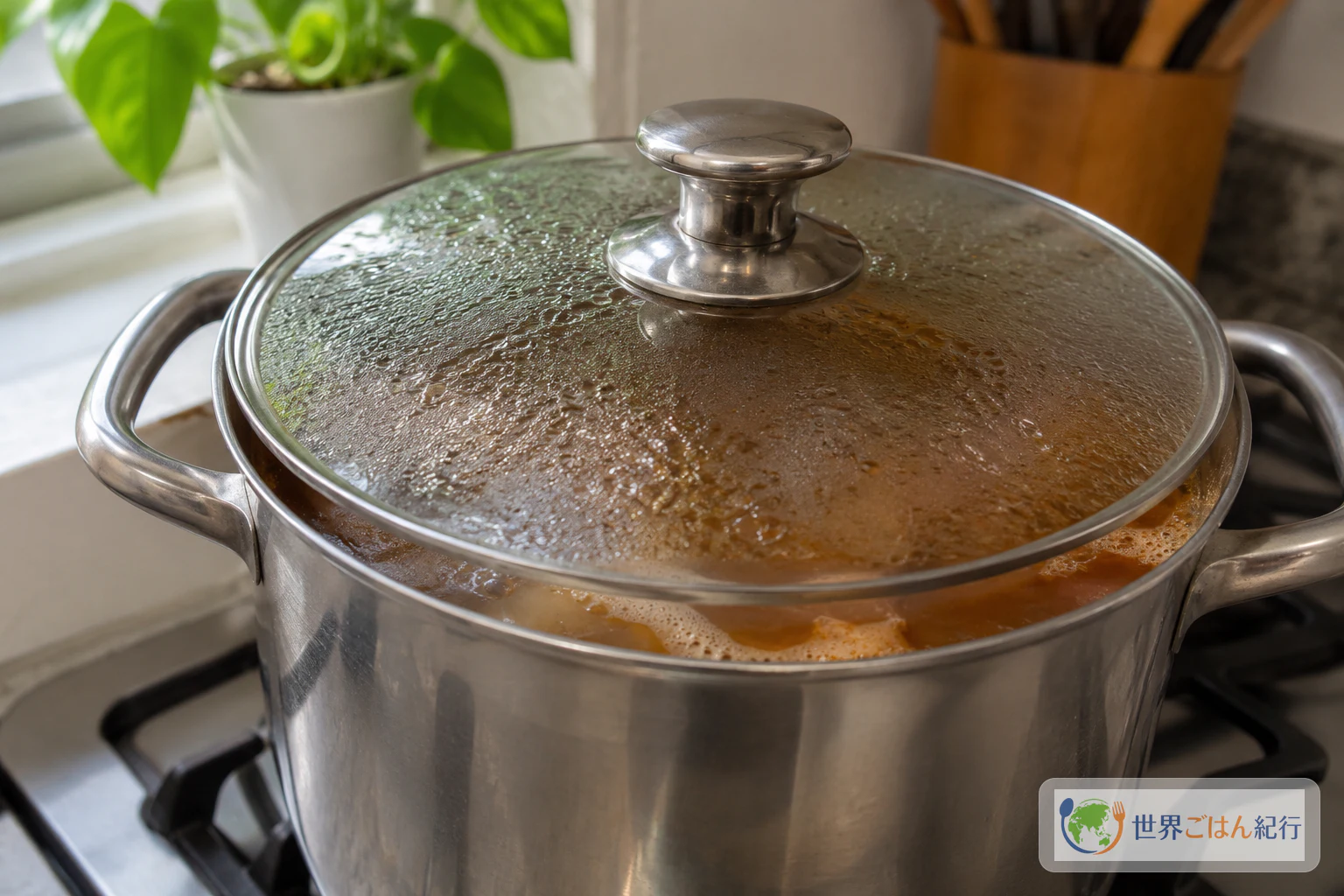
Boil the foot pieces twice in plain water and skim both times. Then add the seasonings, cover the pot and simmer on low until the pieces are soft. The cilantro cooks in the pot and is not used as a fresh garnish.
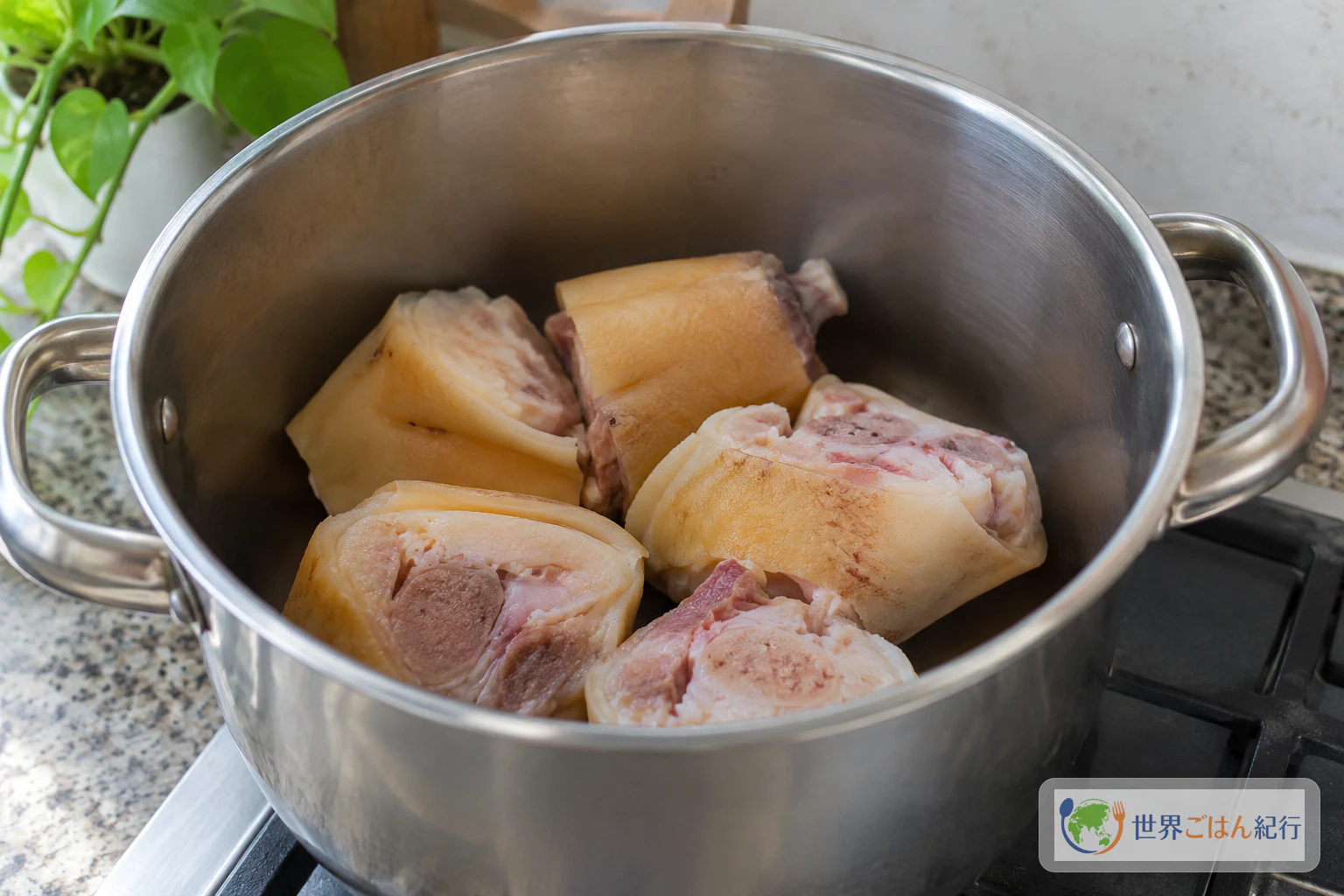
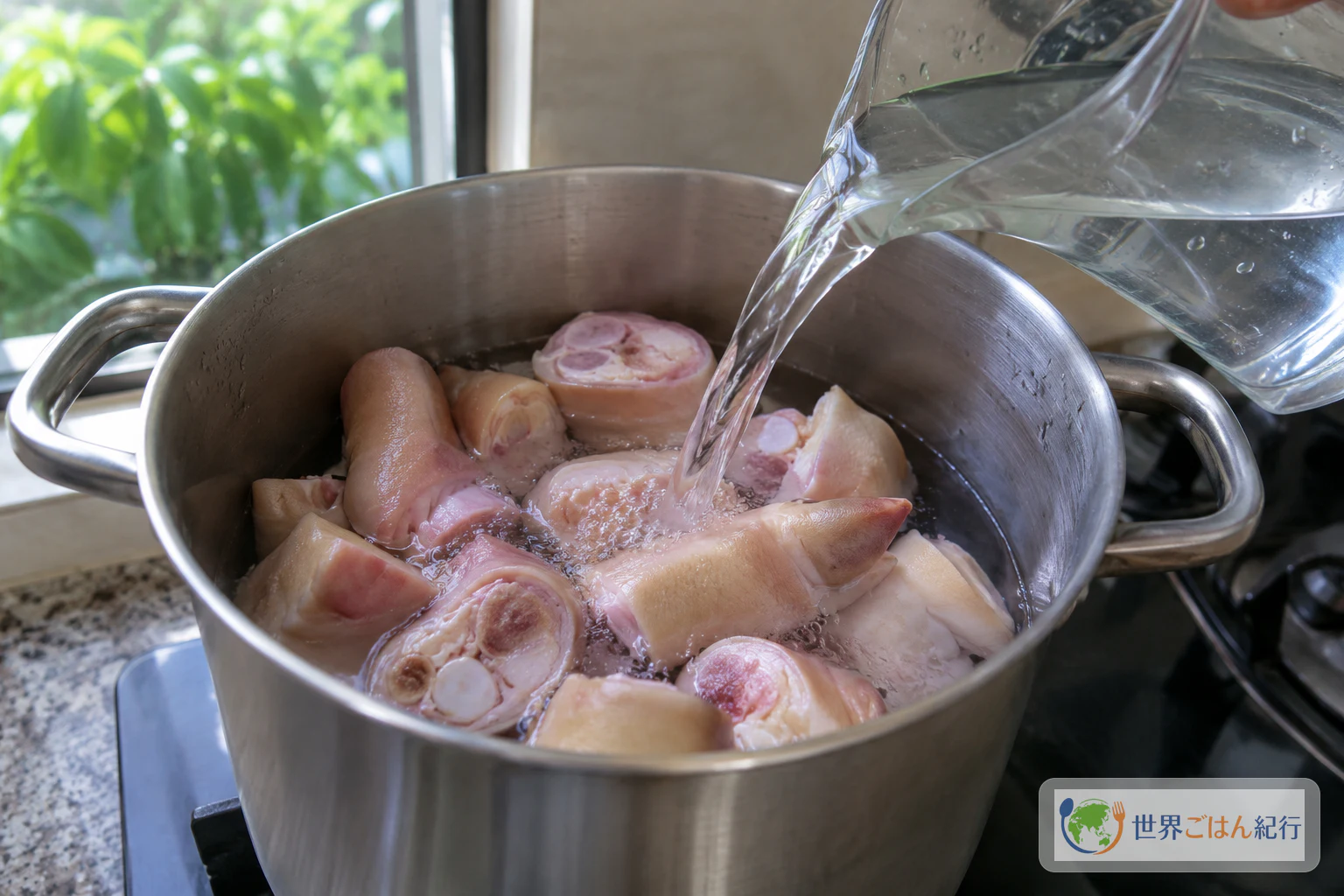
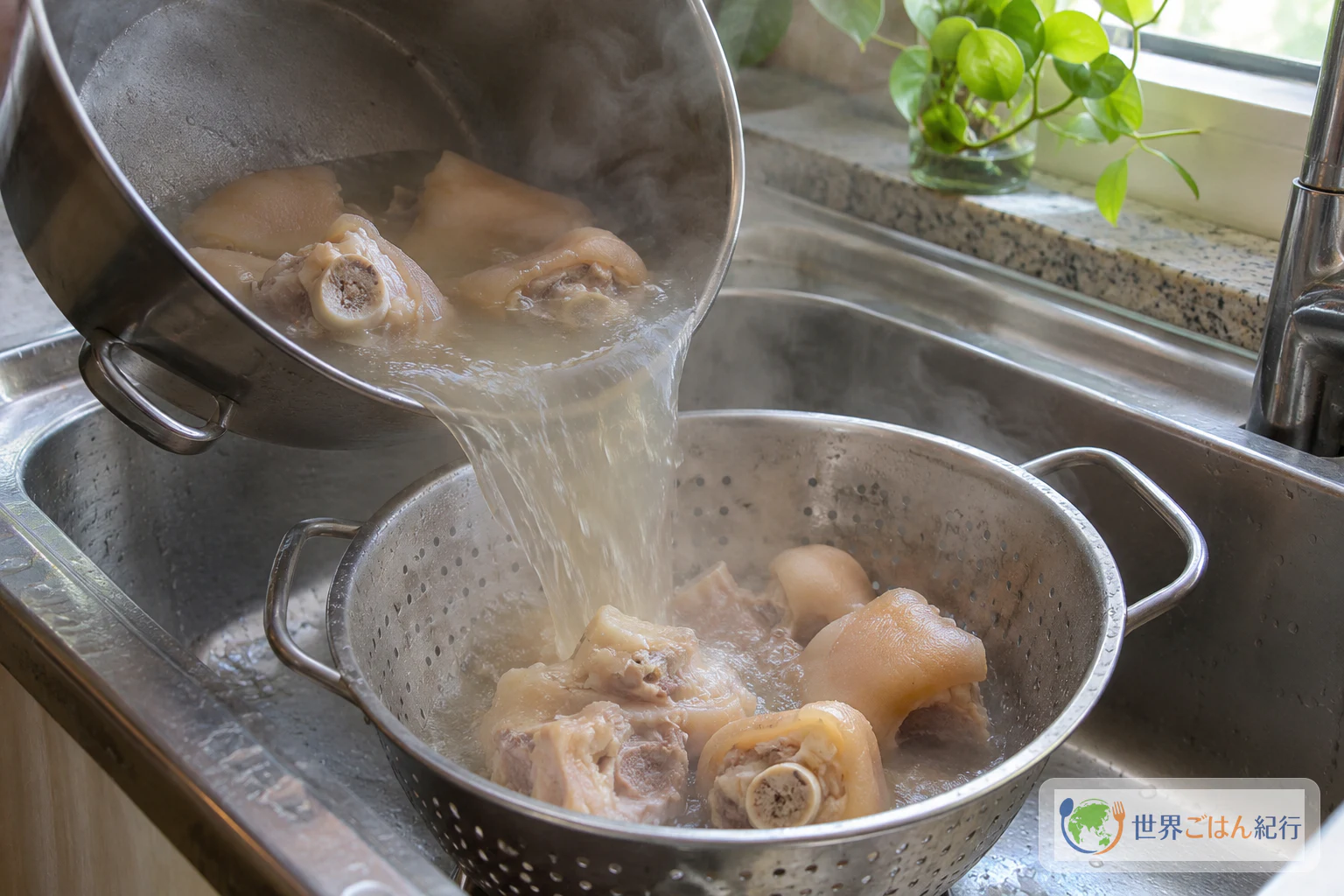
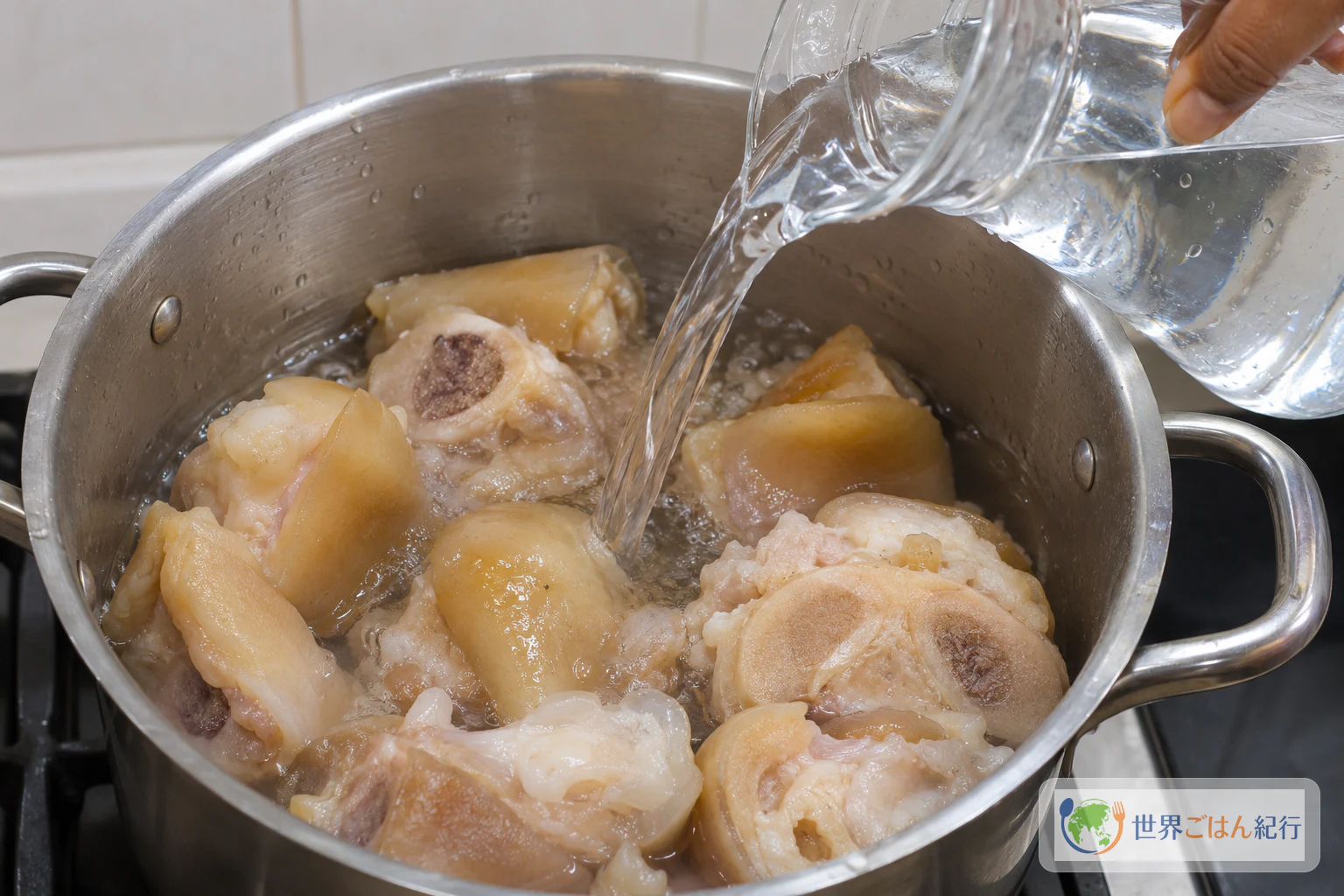
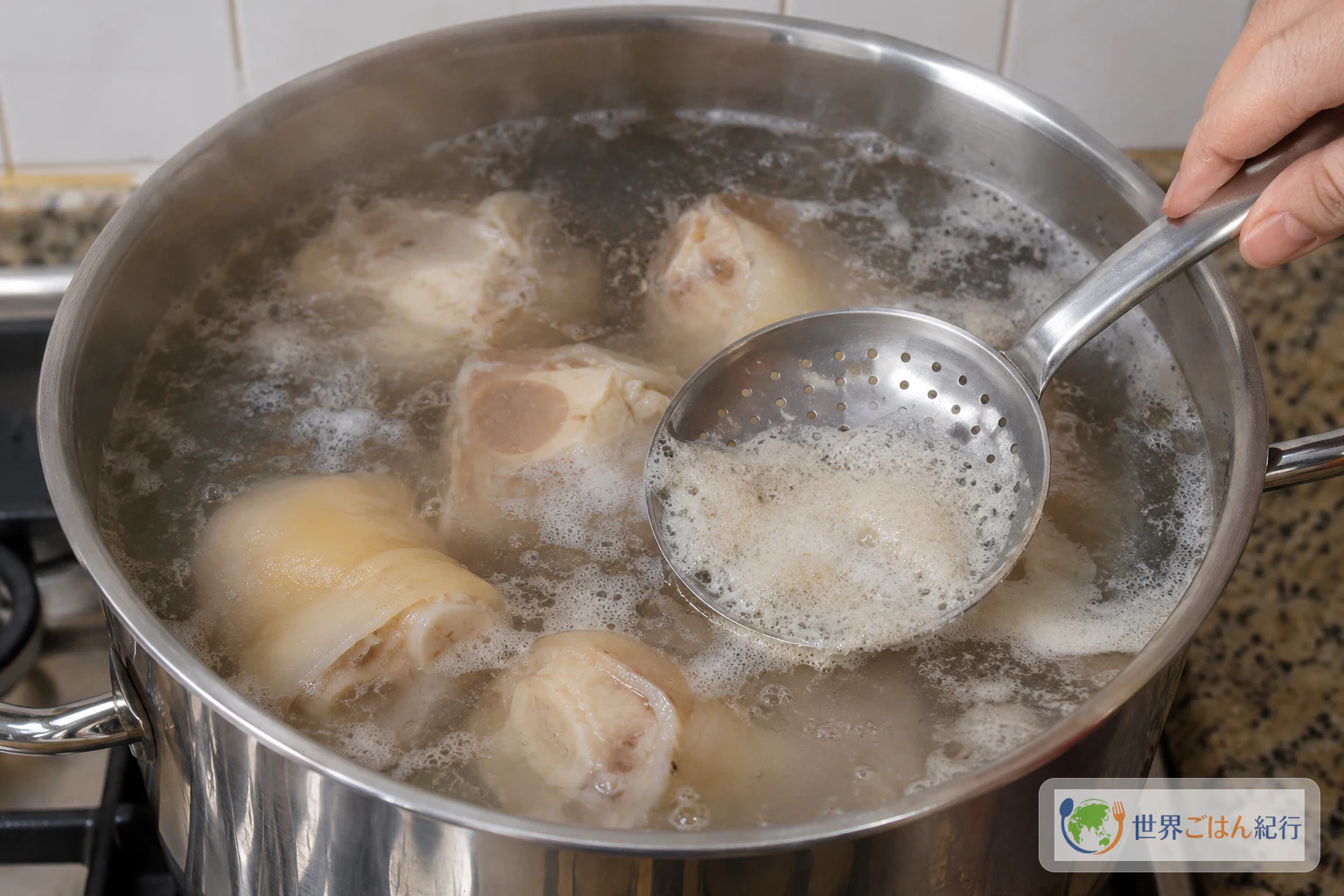
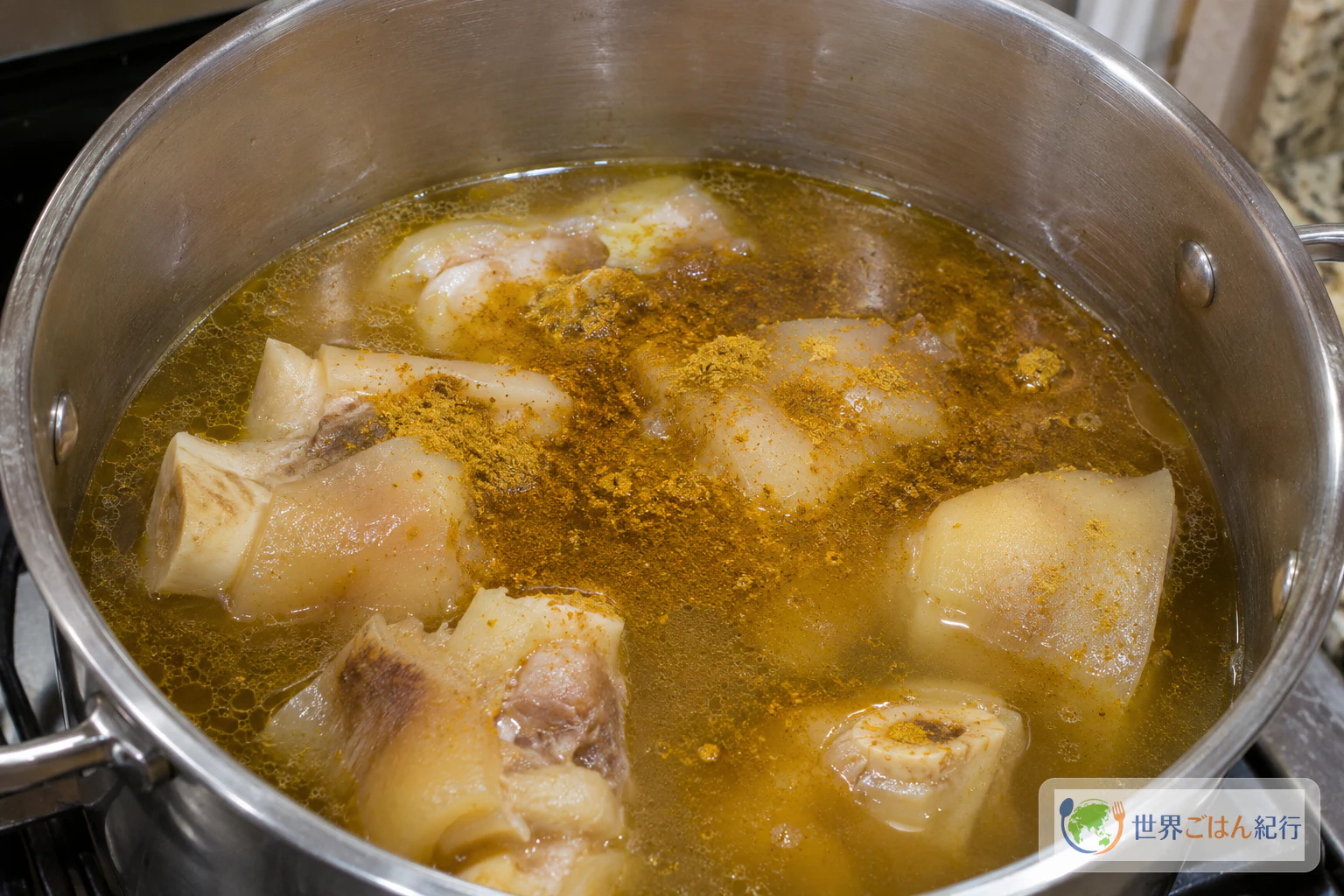
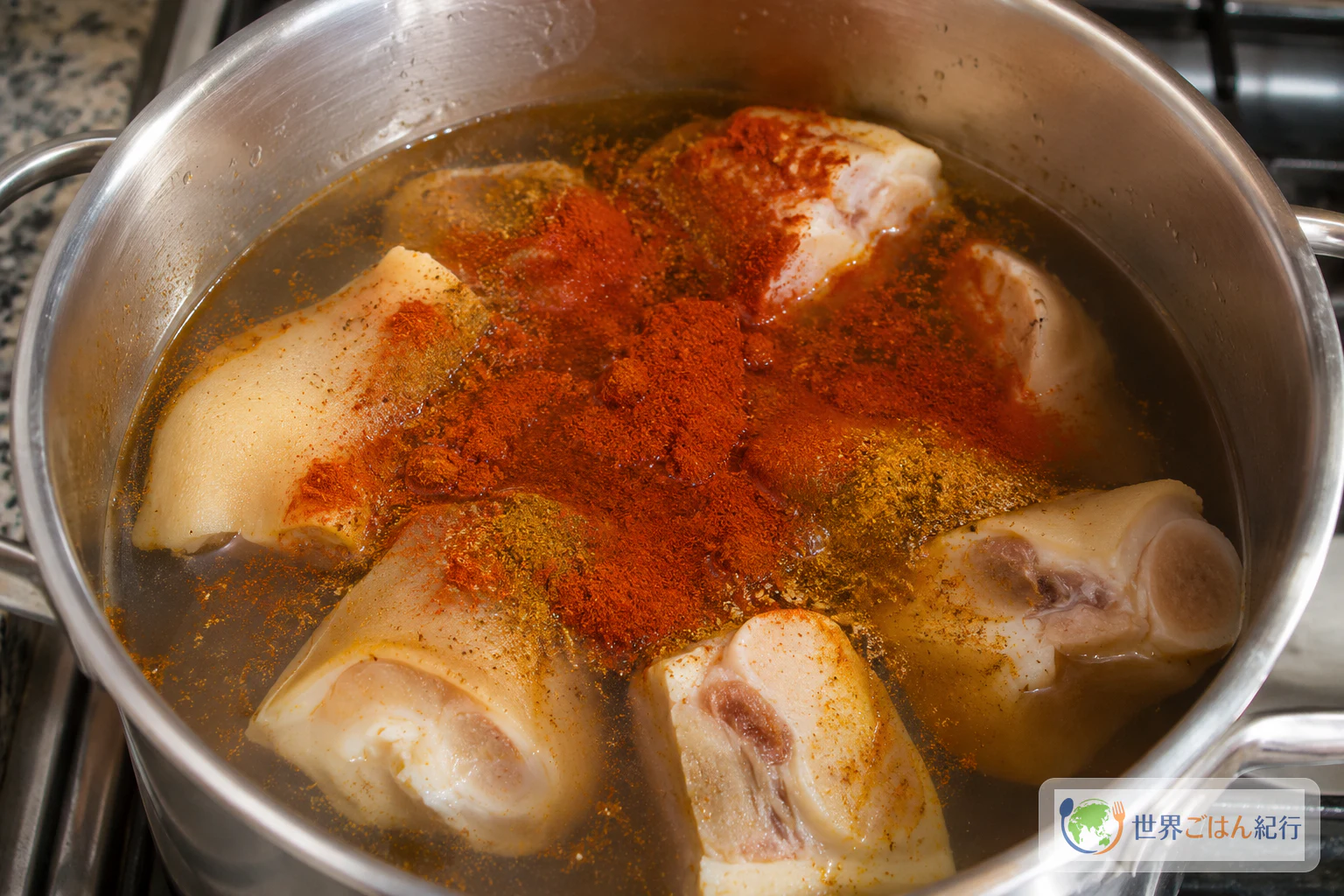
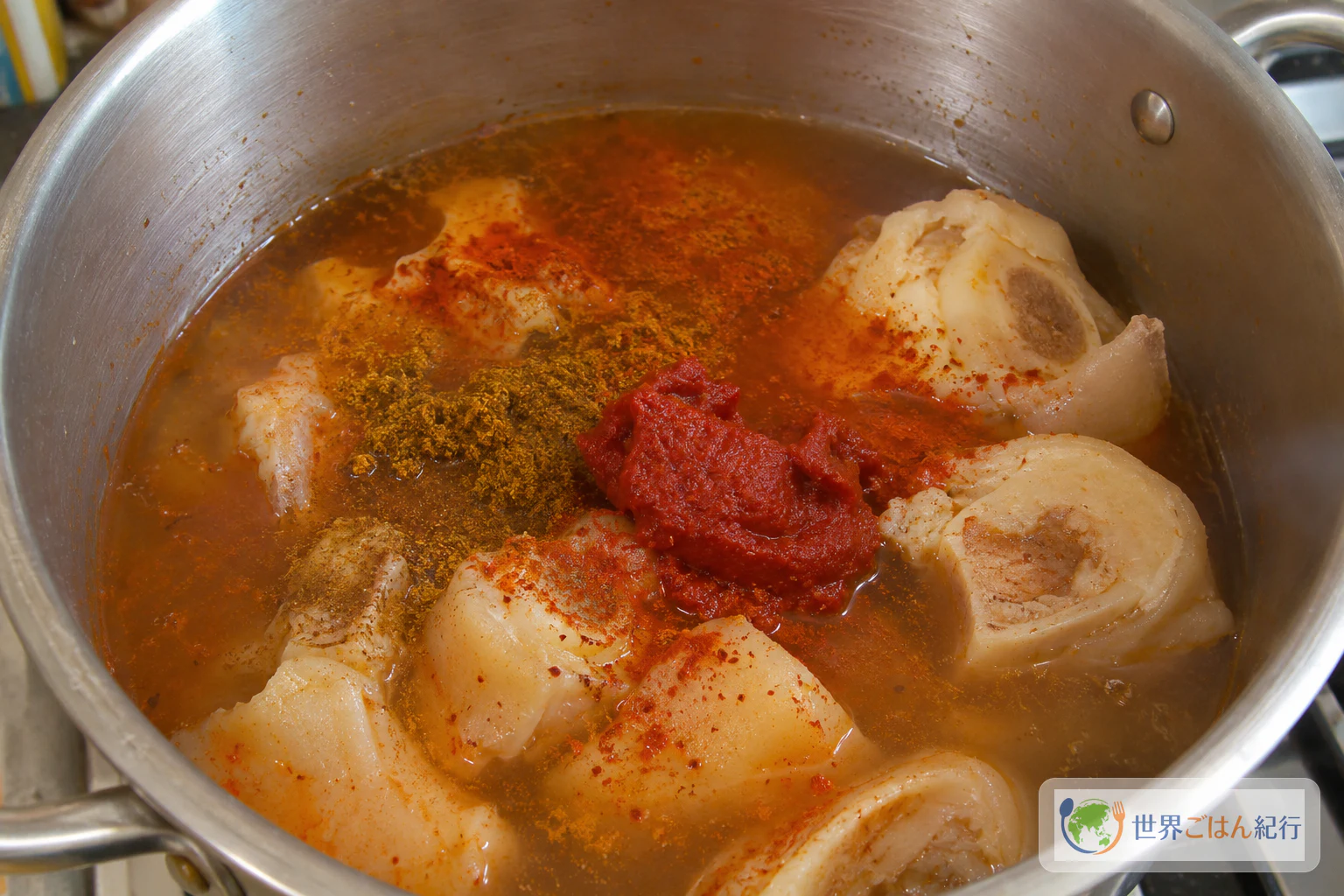
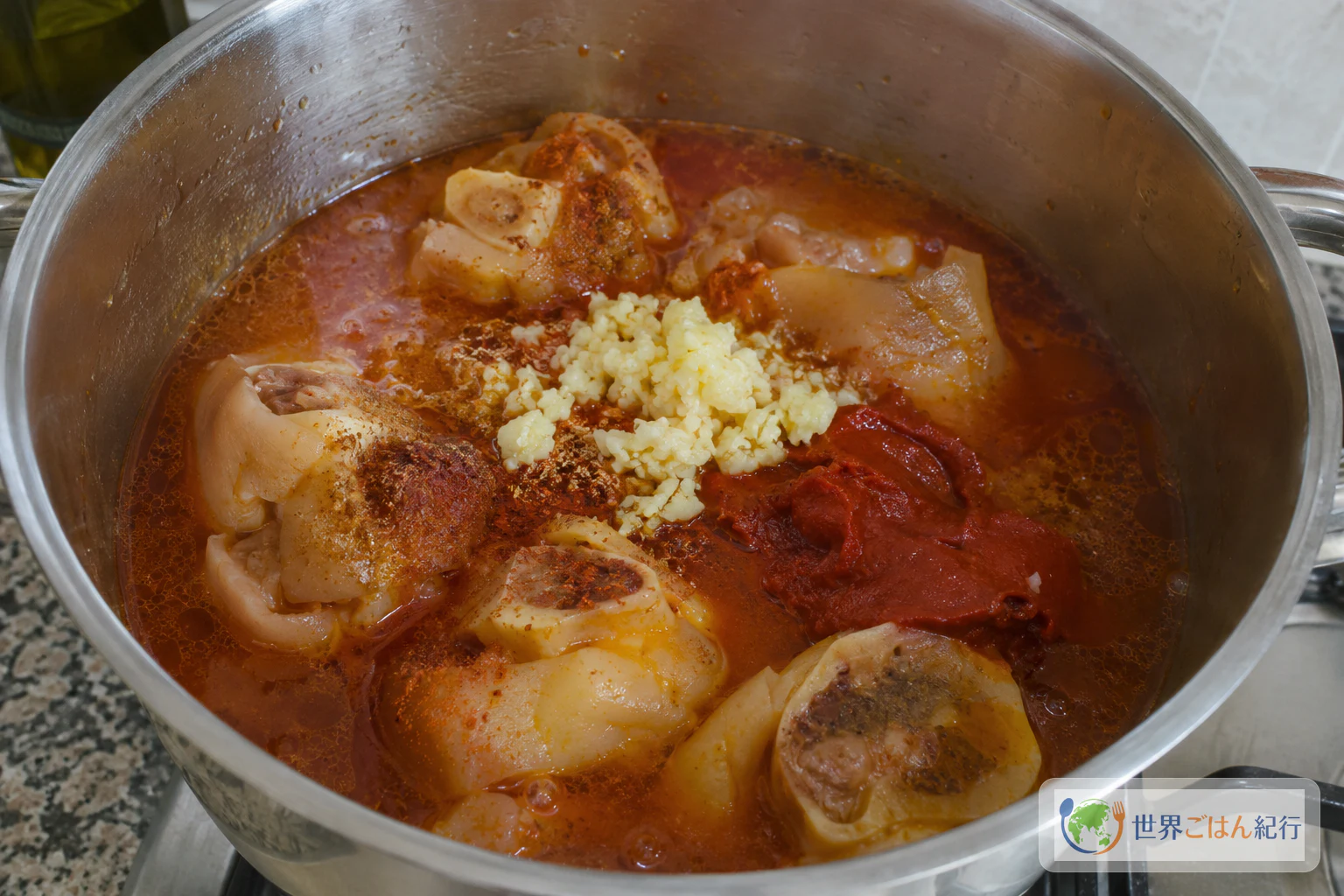
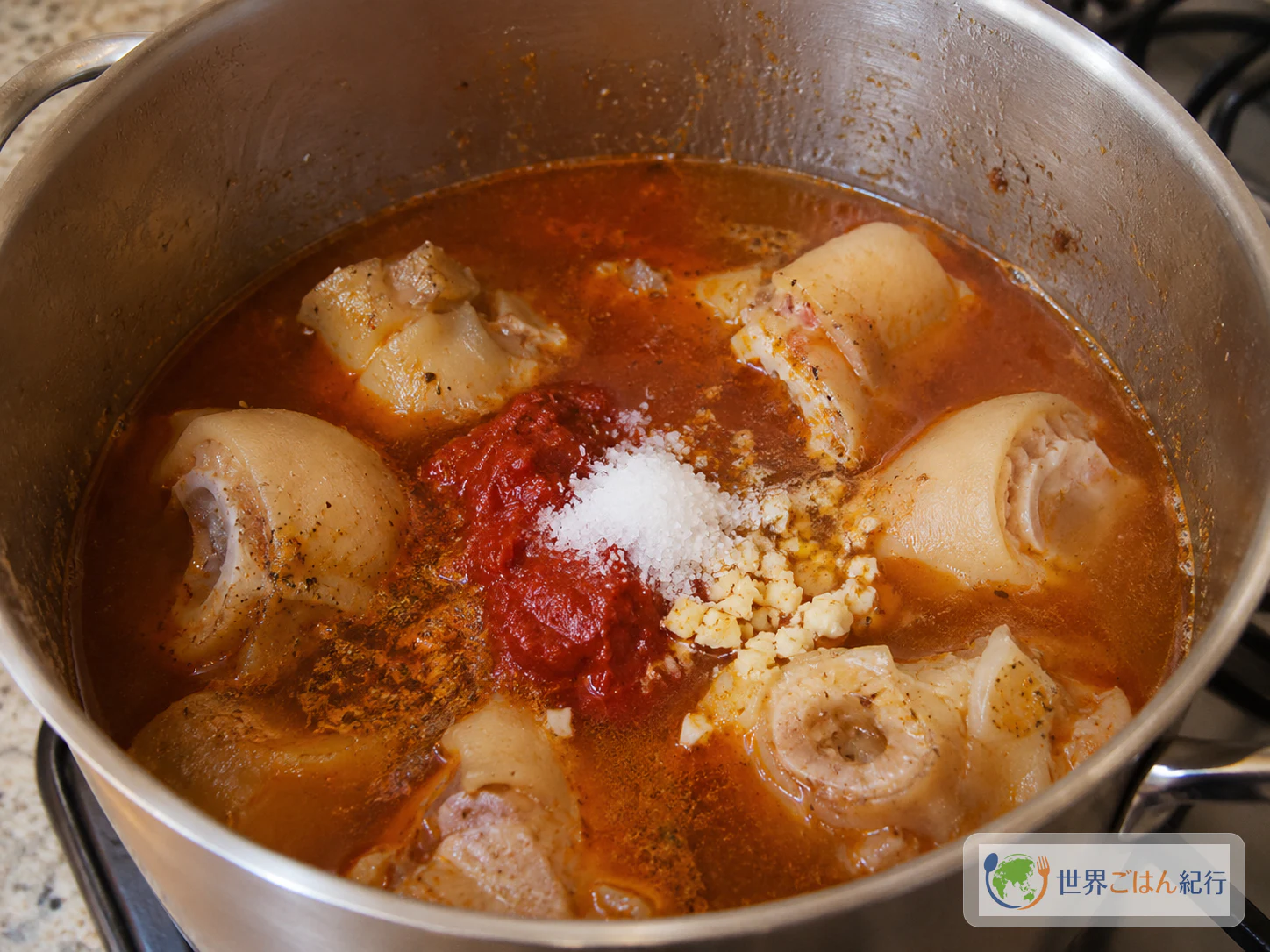
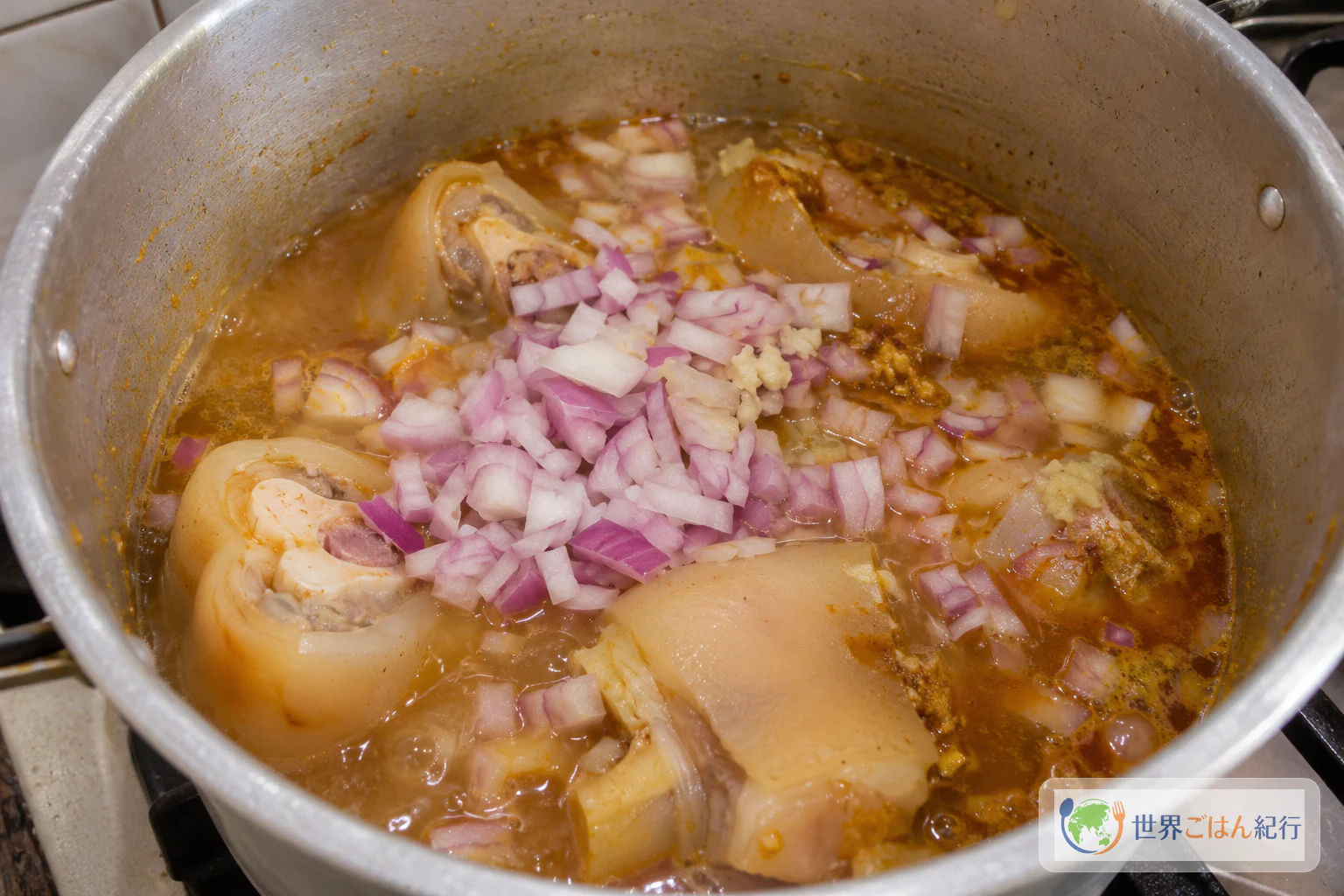
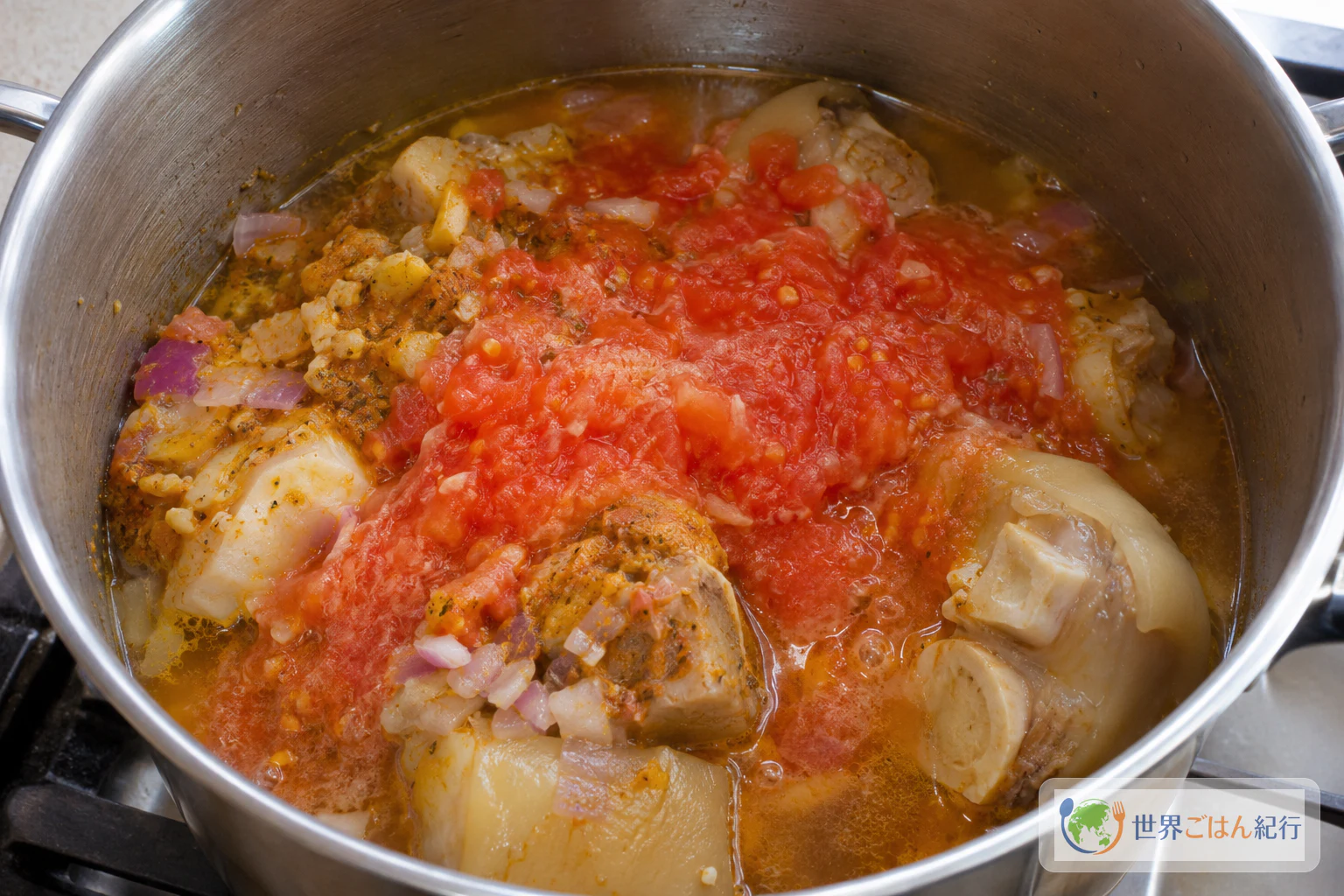
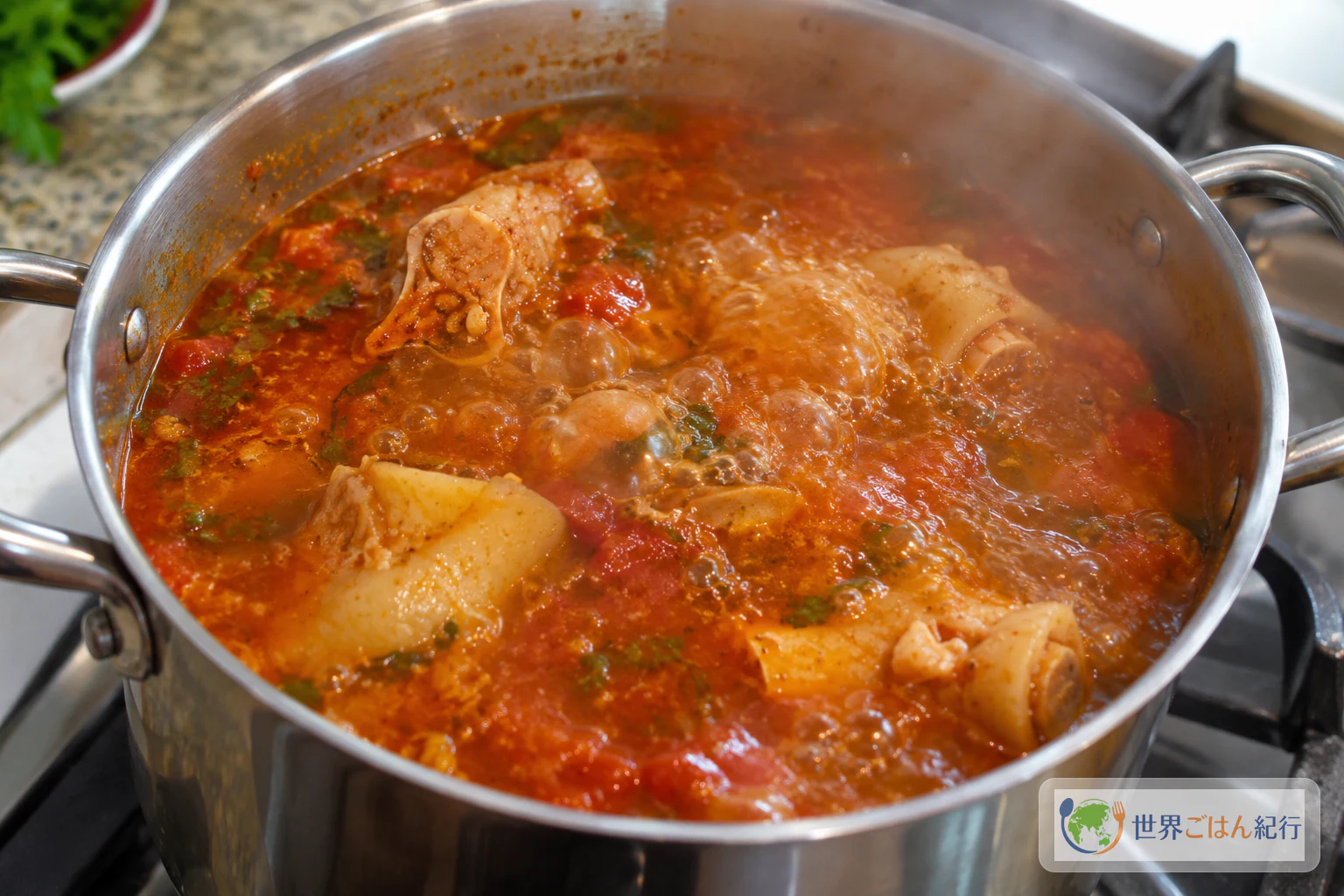
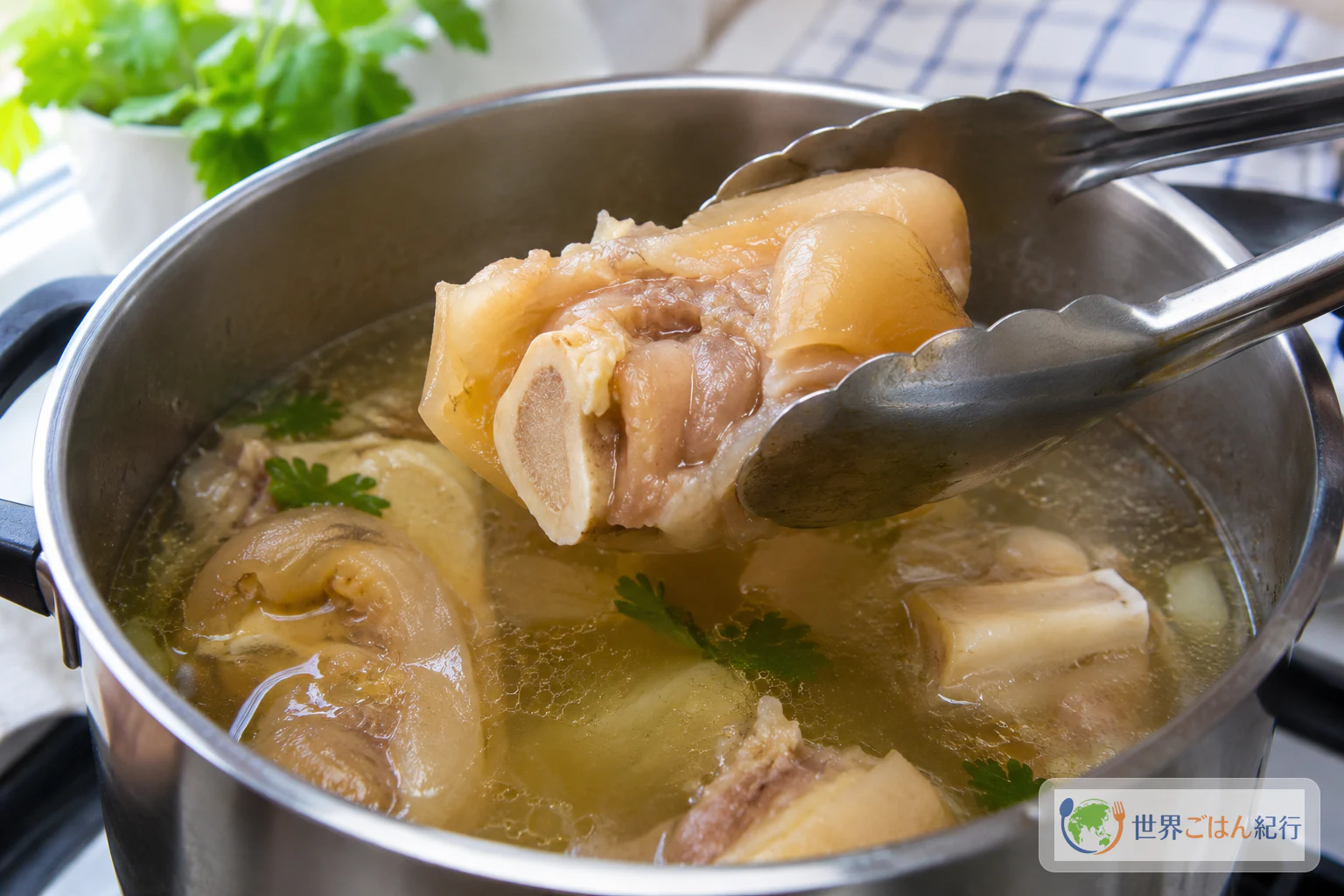
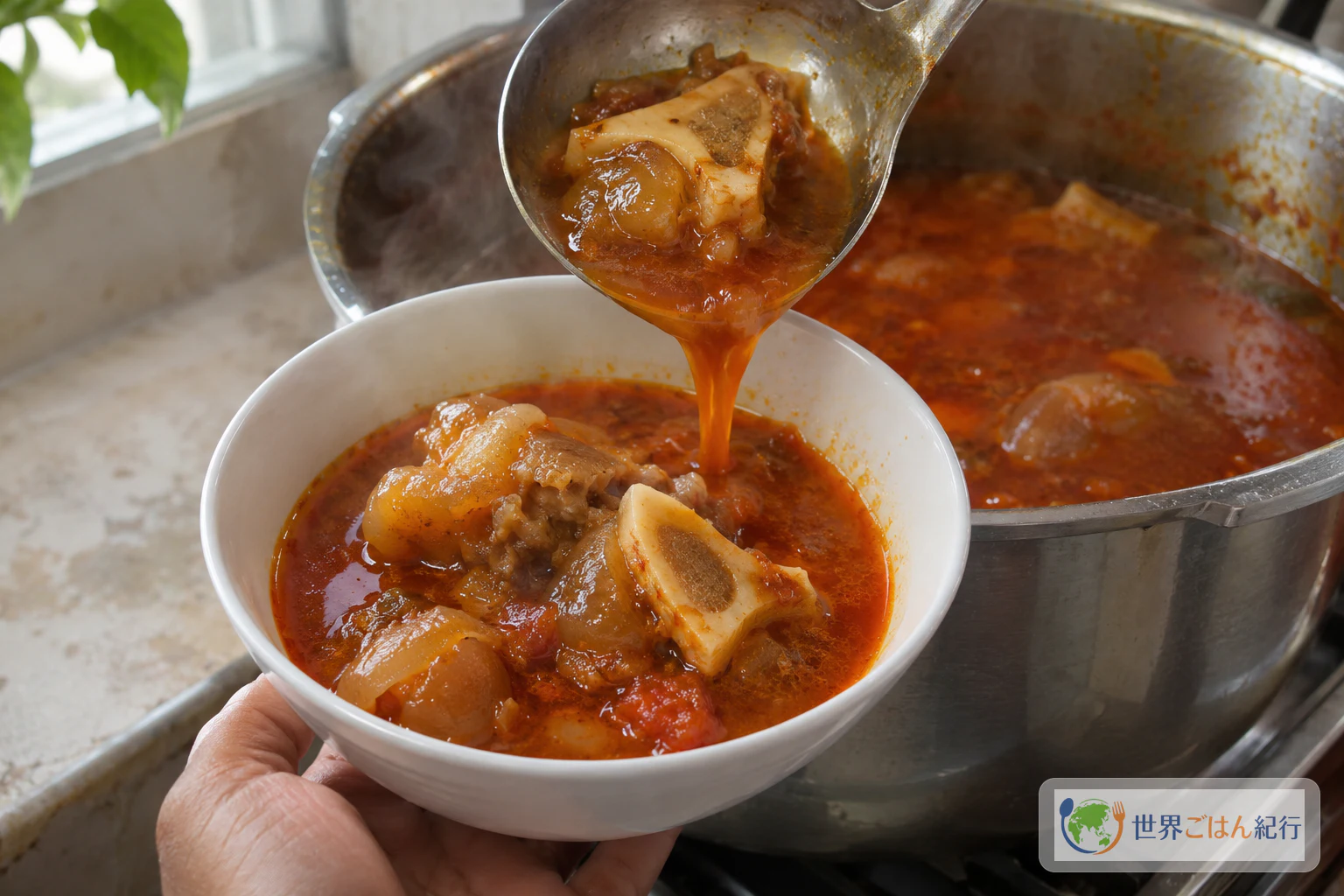
Ten pieces of cow or calf foot go into a pot of plain water. It comes to a boil, the foam is skimmed, and that water is poured away. Fresh water goes in, and the pot is boiled and skimmed again. Only then come the soup hawaij, sweet paprika, tomato paste, garlic, salt, onion, grated tomatoes and cilantro, followed by a lid and low heat.
This version comes from Boaz Brothers of Shuk HaTikvah, as published on October 11, 2023 by FOODISH, the food-culture project of ANU Museum of the Jewish People. FOODISH presents it as "Cow Foot Soup" under a Yemen tag. It is one named contributor's recipe, so please don't read it as the way every Yemenite household makes this soup, or as the dish's single origin.
FOODISH lists 10–12 portions, 30 minutes of preparation and 8 hours of cooking. Those are the published figures. We have not kitchen-tested this recipe, so they are not results from our own kitchen.
Ingredients: 10–12 Portions
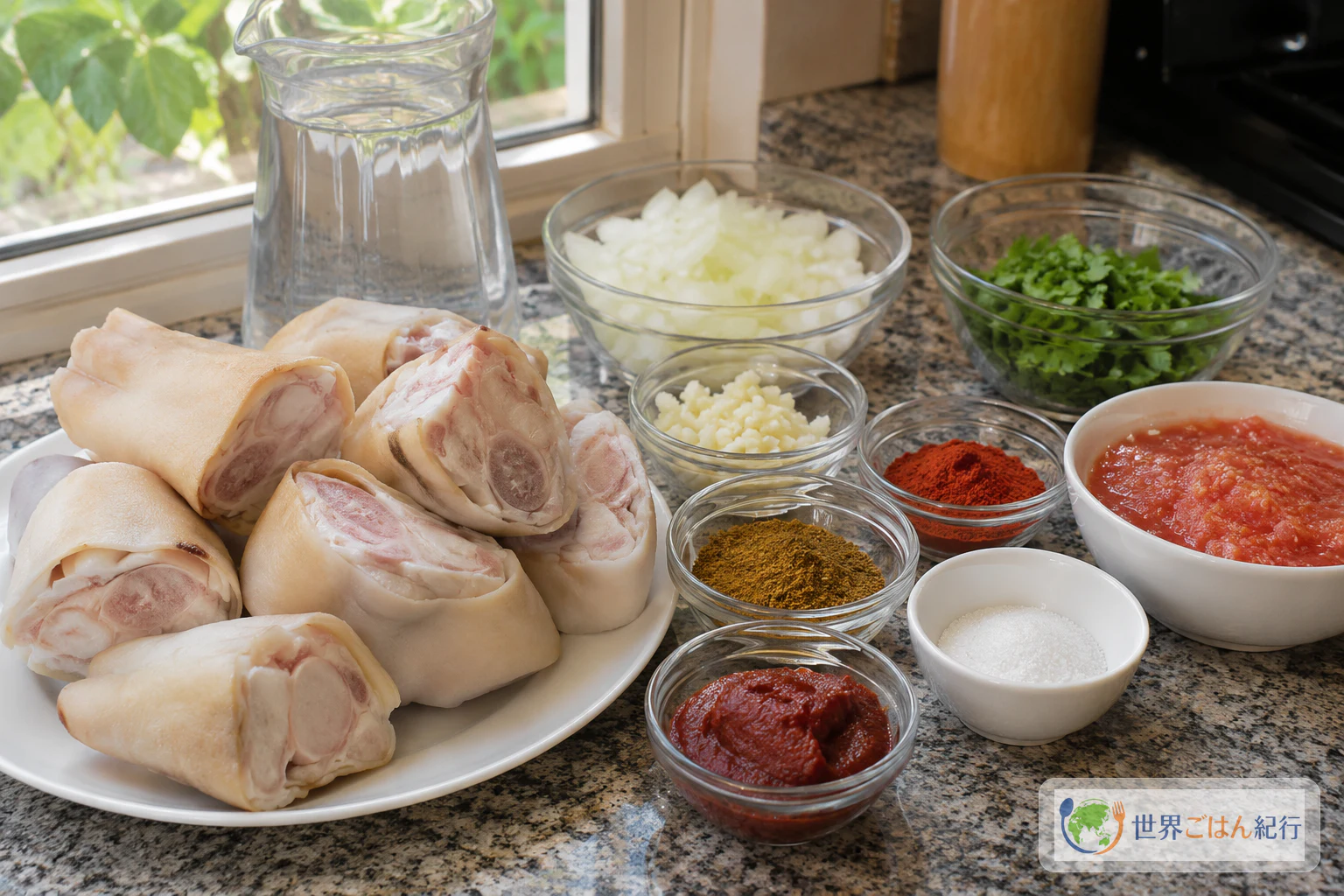
Equipment
- Large, stable pot with a lid
- Heatproof skimmer
- Stable heatproof colander that sits securely in the sink
- Heatproof spoon
- Heatproof tongs
- Ladle
- Knife, cutting board and grater
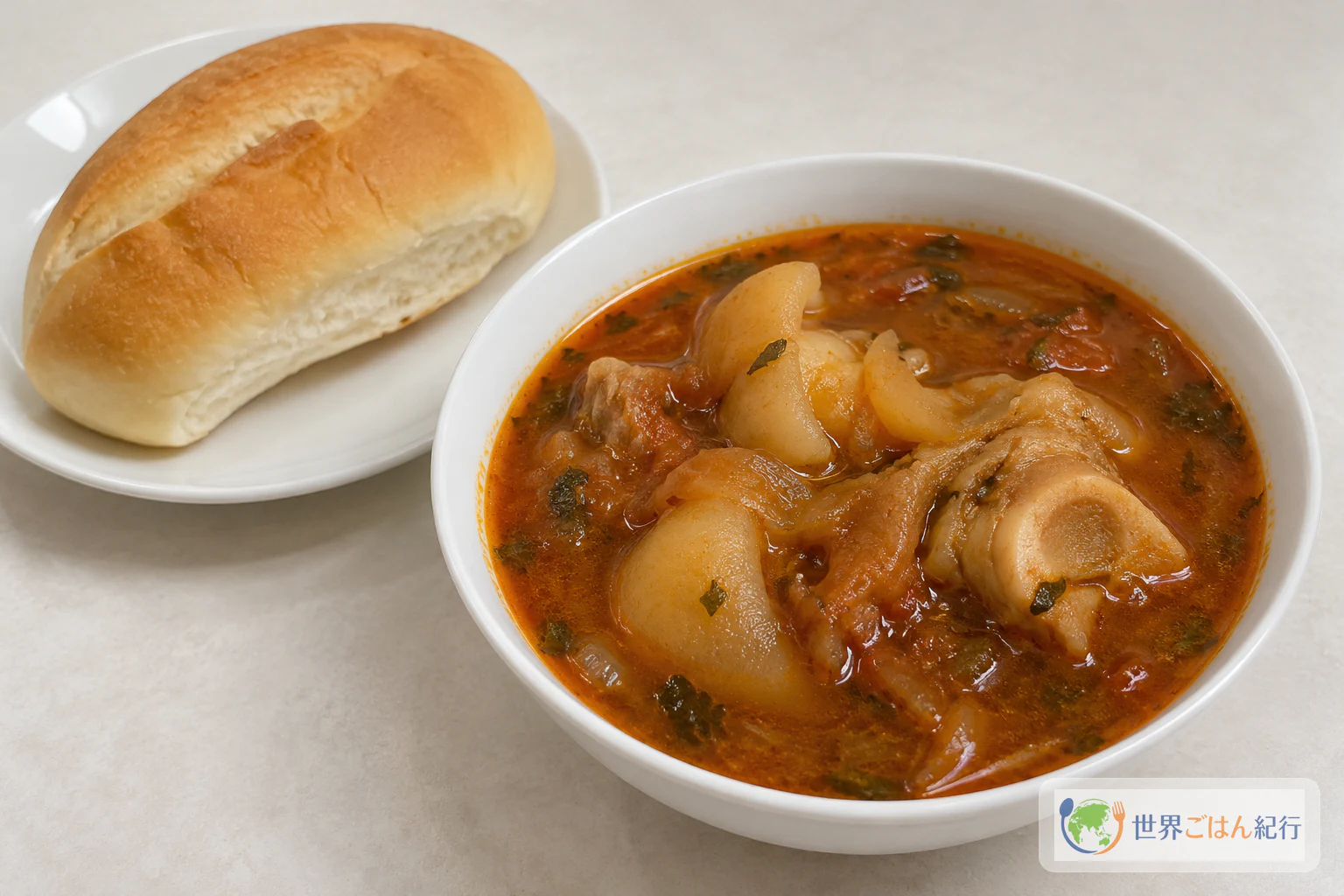
- Soup bowls, plus a side plate if serving bread
Choosing the Foot Pieces and Hawaij
Foot pieces. Buy cow or calf foot that has already been commercially processed for food. Nothing here involves home slaughter, trimming hooves or sawing bone. There is no required weight, thickness or cut shape, so use the pieces as sold.
No equivalent cuts. Shank, neck meat, pig's feet and chicken feet are not stand-ins for cow or calf foot. Using them makes a different soup, and these amounts and steps don't carry over to them.
Hawaij. Look for the blend meant for soup. Sweet hawaij is a separate blend, so it should not replace the soup blend here.
Tomato. The paste and the grated tomatoes are separate ingredients, and the soup uses both. There is no set tomato variety or weight.
Method: Two Boils, Then the Lid
- Use a stable heatproof colander when draining, and keep bare hands and your face away from steam and hot food.
- Keep raw foot pieces away from foods that won't be cooked. Wash your hands and any tools that touched them.
- Plan the simmer for a time when you can stay with the pot. Don't leave it unattended or let it boil dry.
- Softness tells you about texture. It does not prove the soup is safe.
Before you start, chop the onion and cilantro, crush the garlic and grate the tomatoes. The seasonings appear one at a time below so each is easy to follow. The images illustrate each action, but they don't prove time, temperature, quantity or safety.
If the Pot Goes Off Course
| What you notice | What to do |
|---|---|
| The foot pieces aren't soft after 8 hours | Cover the pot and keep cooking on low, then check again. Softness is the sign to stop, along with the listed time |
| The liquid is running low | Add water as needed and return to a low simmer. Don't let the pot boil dry |
| The soup is boiling hard under the lid | Turn the heat down |
| Foam remains after the second skim | Skim once more before adding the seasonings |
| You have only sweet hawaij | Find soup hawaij rather than swapping it in, because the sweet blend is a different mix |
| You can't find cow or calf foot | Choose a different soup rather than swapping the cut. Shank, neck, pig's feet and chicken feet are not equivalents |
How It Varies: Serving Choices and Related Soups
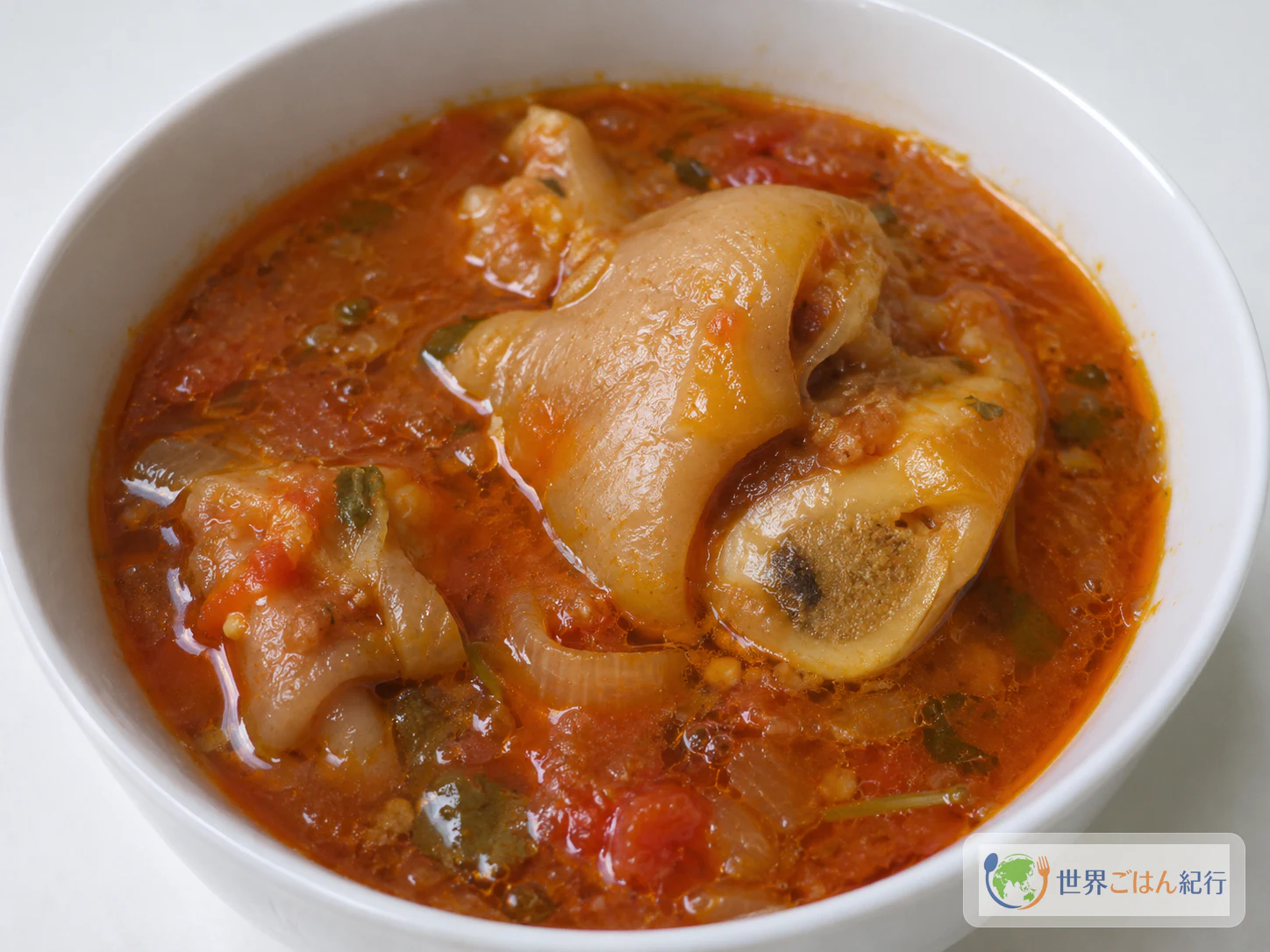
Boaz Brothers' recipe gives some choice at the table. The foot pieces can be taken out or left in. This article keeps the pieces in the bowl and offers only optional plain bread on a separate plate. It adds no potatoes, rice or bread to the pot.
Two other recipes show how far soups with similar names can differ. They are worth reading as separate dishes, and nothing from them has been mixed into this one.
| Recipe | What sets it apart | Relationship to this article |
|---|---|---|
| Boaz Brothers, on FOODISH | Cow or calf foot pieces, soup hawaij, tomato and an 8-hour covered simmer | The recipe used here |
| Limor Tiroche, "Yemenite Leg Soup" (מרק רגל תימני), 2013 | Neck meat, calf-leg bone slices, potatoes and soup hawaij | A different formula with the same "leg soup" name, for comparison only |
| Hilla Segev, Jewish Food Society, "Yemenite Soup With Chicken and Hawaij" | A family chicken soup with vegetables and hawaij | Context for hawaij and marak temani, not a source for this formula |
Where This Soup Sits
The Jewish Food Society piece, shared by Hilla Segev, gives one family's marak temani, a Yemenite soup made with chicken, vegetables and hawaij. It also separates the hawaij blend for soup from the sweet one. That is one family's account, and it gives useful context without defining this recipe.
The foot soup here reaches us through a named contributor, Boaz Brothers, and a museum's food-culture project. Limor Tiroche's Hebrew-language recipe shows that the "Yemenite leg soup" name also covers a different mix of meat and bone. Together, these sources show a family of related soups, and they don't establish a single fixed recipe or origin. For more from the country, see our Yemen recipes.
Frequently Asked Questions
Is this made with leg or foot?
Foot. "Leg soup" is the dish name, and the Boaz Brothers recipe calls for cow or calf foot pieces, with no shank or neck meat. Limor Tiroche's recipe under the "leg soup" name is built differently, with neck meat and calf-leg bone slices.
How much water do I need?
The recipe doesn't give a measured amount. Covering the foot pieces is our practical reading of "boil in water," not a measurement from the recipe. For the same reason, we give no weight or cut size for the pieces.
Can I convert the tablespoons to grams or cups?
We have kept the units as published and not converted them, because tablespoon sizes and ingredient densities aren't given.
Do the seasonings need to go in one at a time?
The recipe adds them together as one group. We split them into separate steps, in the order listed, to make each one easy to follow. The authors did not test this as a required order.
Should I finish it with fresh cilantro?
Not in this version. The cilantro goes in before the 8-hour simmer. Some other Yemenite soups use fresh herbs at the table, but that belongs to those recipes.
Do 8 hours and soft foot pieces mean the soup is safe?
No. Time and softness describe this recipe's cooking and texture, and neither is a validated safety process for this cut. Japan's Ministry of Health, Labour and Welfare offers general home guidance on hygiene and on keeping raw foods from contaminating others. For heat-cooked foods, it gives a guide of 75°C for 1 minute. That guidance is general and separate from the 8 hours and the softness check. It does not guarantee the safety of this recipe.
How long does it keep, and how should I reheat it?
None of the sources behind this article gives a storage period or reheating method for this soup, so we don't offer one. Don't leave the soup sitting out at room temperature for a long time.
Does it have nutrition or collagen benefits?
We make no nutrition, beauty or health claims for this soup, because the sources behind this recipe don't support any.
Sources
- FOODISH / ANU Museum of the Jewish People; Boaz Brothers - Shuk HaTikvah, "Cow Foot Soup - Recipe," October 11, 2023. Basis for this recipe's attribution, Yemen tag, yield, times, ingredients and method, including the choice to remove or keep the foot pieces. https://foodish.anumuseum.org.il/en/recipe/cow-foot-soup/
- Limor Tiroche, מטבח מקומי, "מרק רגל תימני (Yemenite Leg Soup)," February 1, 2013. Used only to compare a different formula with the same name, made with neck meat, calf-leg bone slices, potatoes and soup hawaij. https://limortiroche.com/2013/02/yemenite-soup/
- Jewish Food Society; shared by Hilla Segev, "Yemenite Soup With Chicken and Hawaij," November 2, 2022, updated June 11, 2024. Used for family context on marak temani and the difference between soup and sweet hawaij. https://www.jewishfoodsociety.org/recipes/yemenite-soup-with-chicken-and-hawaij
- Ministry of Health, Labour and Welfare of Japan (厚生労働省), "家庭でできる食中毒予防の6つのポイント" (Six points for preventing food poisoning at home). Used for general hygiene and heating guidance, which is not a validated process or storage guidance for this recipe. https://www.mhlw.go.jp/stf/seisakunitsuite/bunya/kenkou_iryou/shokuhin/syokuchu/01_00006.html