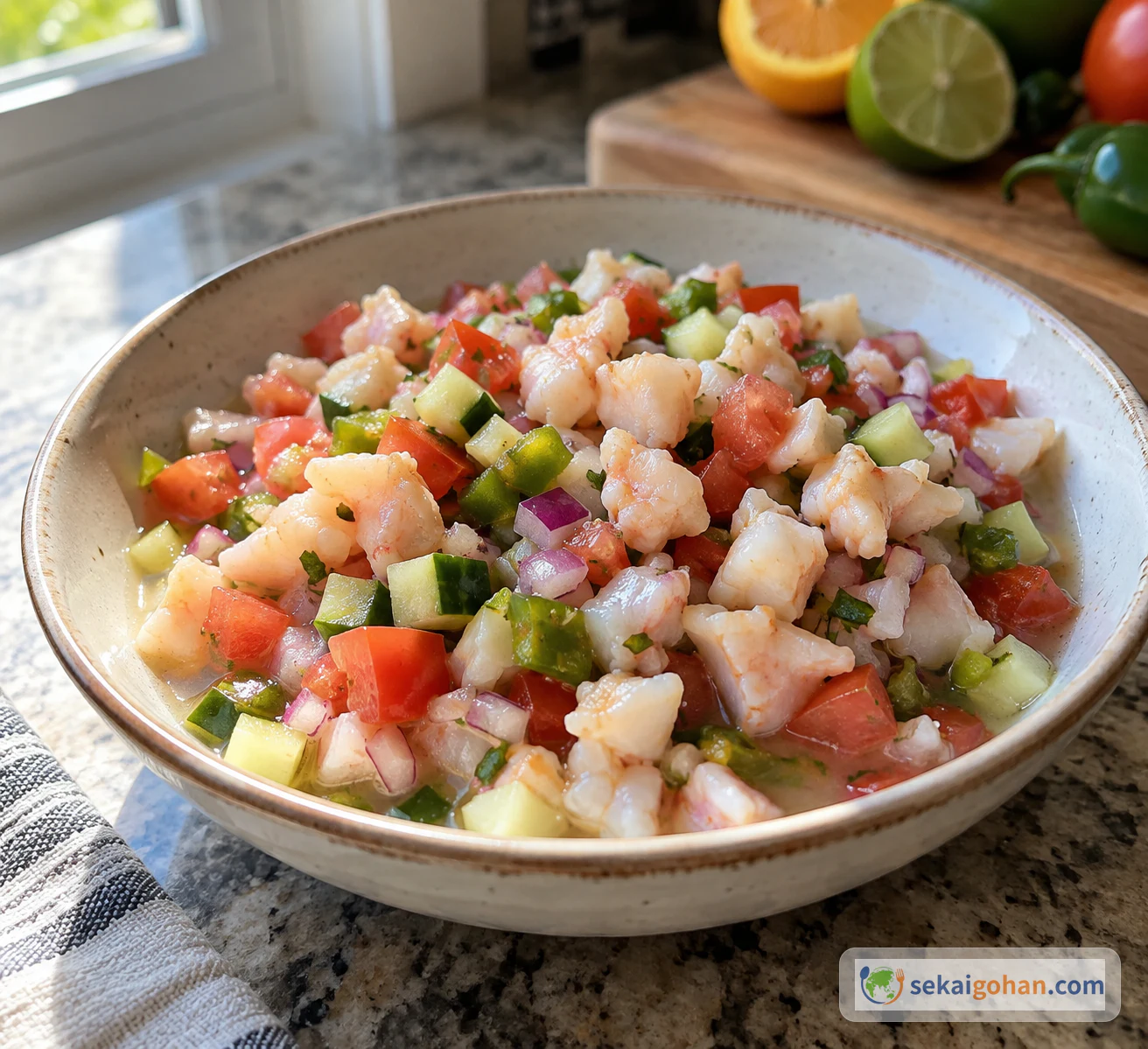
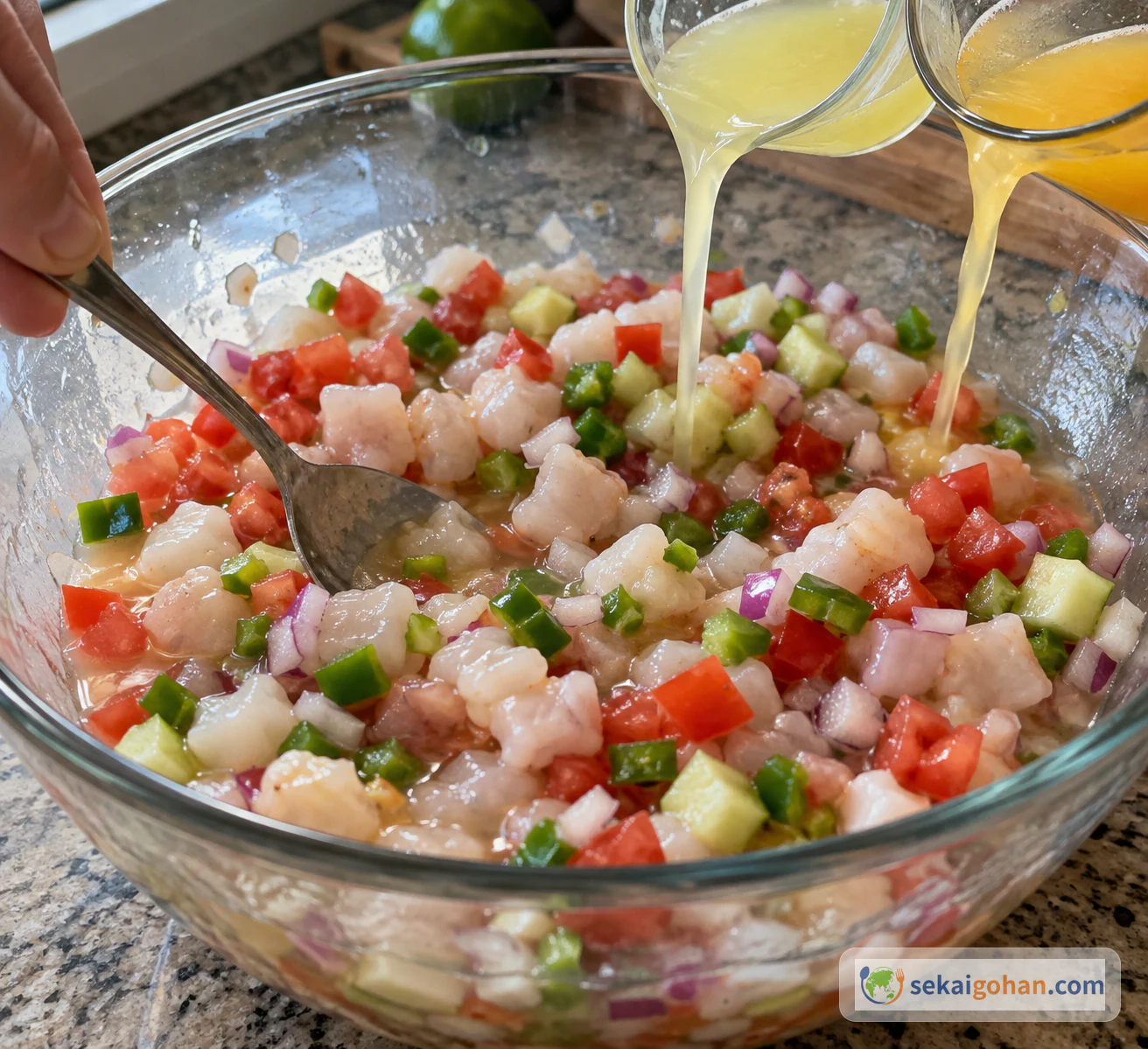
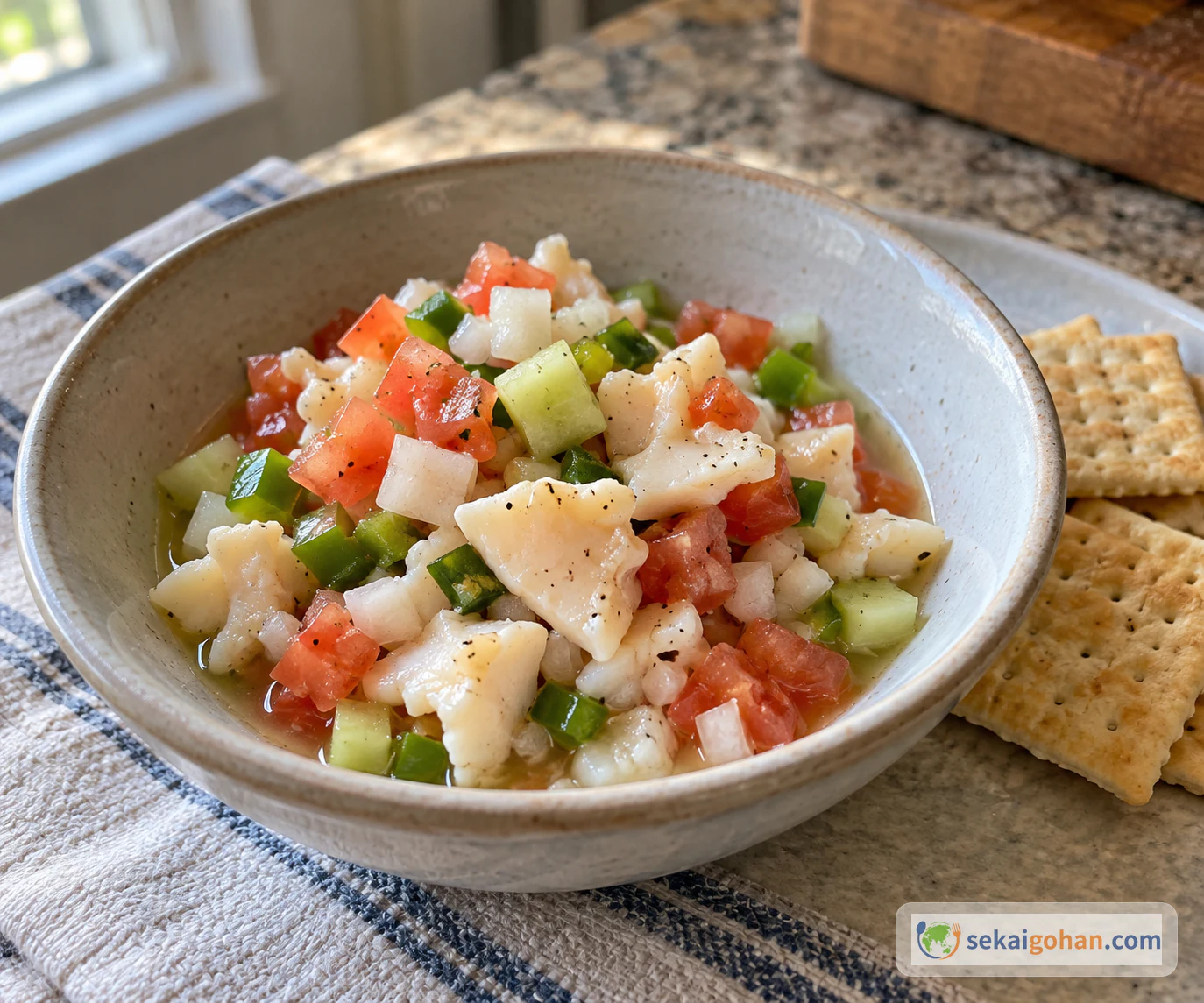
On a hot day in Nassau, conch salad arrives cold: a bowl of small pale cubes of conch, flecks of red tomato and green pepper, all sitting in a shallow pool of lime and orange juice. The first taste is sharp lime, then the orange rounds it off. The conch has a clean, firm chew, and the cucumber and pepper crunch between bites.
This is the raw way of eating conch in The Bahamas. Chopped conch meets onion, sweet pepper and fresh citrus, a little chili adds heat, and the whole bowl is chilled briefly and eaten right away. It tastes of salt water, sour fruit and fresh green vegetables, and it is made to be light enough for the hottest part of the day.
One Shellfish, Many Plates, and the Raw One Everyone Orders
Conch turns up on Bahamian tables in more than one form: raw, fried, stewed. The salad is the raw one. Its base never moves far: diced raw conch, onion, sweet pepper, lime juice and orange juice. From there each stand and each household makes its own bowl. Some push the heat with goat pepper, a small hot chili used locally. Others add fruit and turn it into a sweeter, tropical salad.
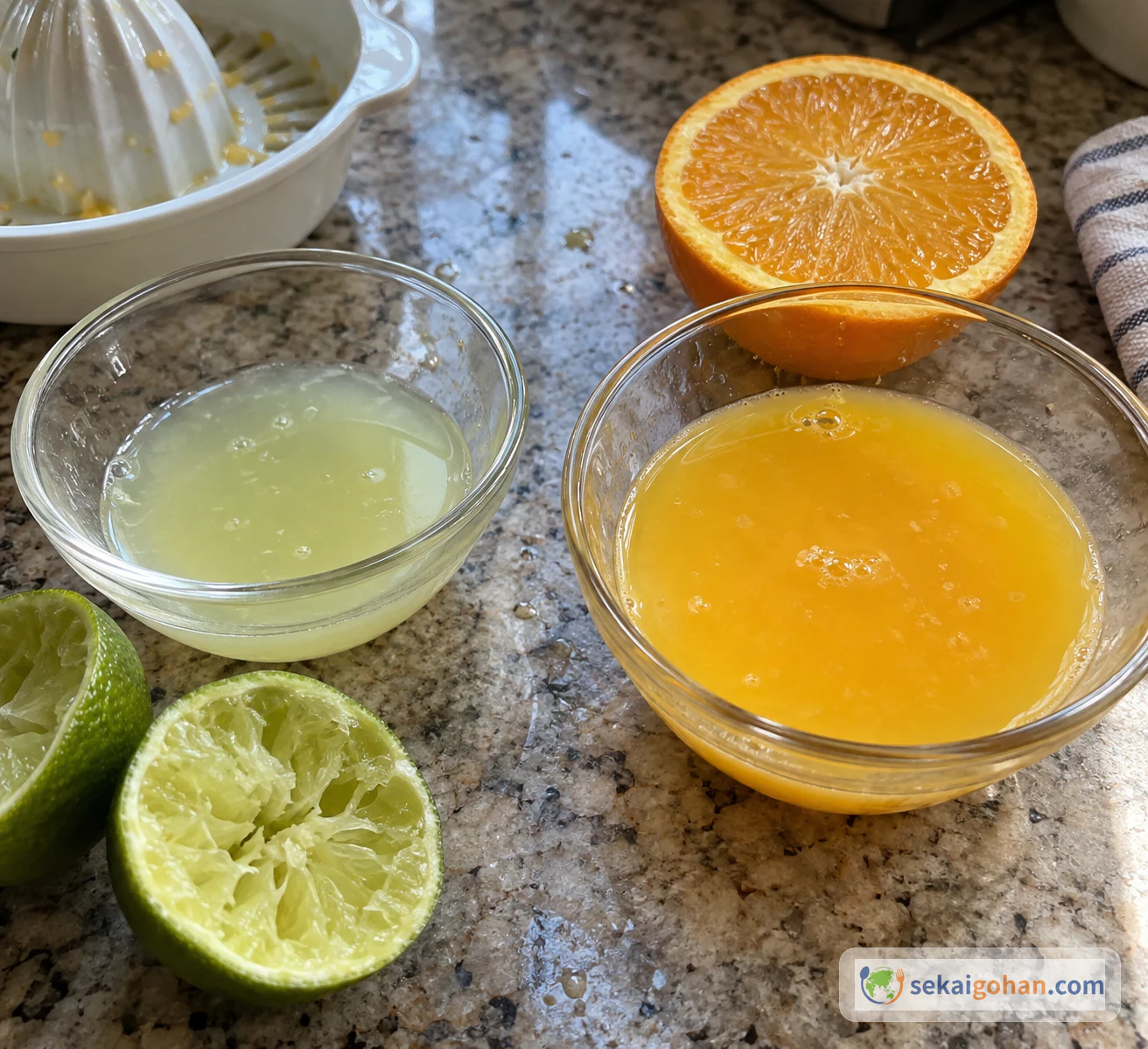
The amounts change from cook to cook too. One home version uses a much larger share of lime against the orange than this one, and brings in sour orange in place of sweet. Others add scotch bonnet, which makes the bowl seriously hot, so it stays optional. The version here uses twice as much lime as orange, which keeps it bright while the orange softens the edge.
Salad, scorched conch and the cousins across the water
A close relative sits on the same menus. Scorched conch is a separate plate, and the difference is what comes with the conch: the salad carries the chopped tomato, cucumber and bell pepper, while scorched conch leaves them out. Order one of each and the contrast is clear.
Conch salad is often eaten on its own as a light meal, set beside fish dishes, or served with johnny cake on the side. Lime and raw seafood also meet in Peru's ceviche and Mexico's aguachile. The Bahamian bowl stands apart for its orange juice and its tight, crunchy dice of vegetables. Other islands in the region make conch salads of their own.
If a menu lists both, the salad is the one with tomato and cucumber in it. Scorched conch is a separate dish with its own method, so treat it as a different order rather than a lighter version of the salad.
Ingredients
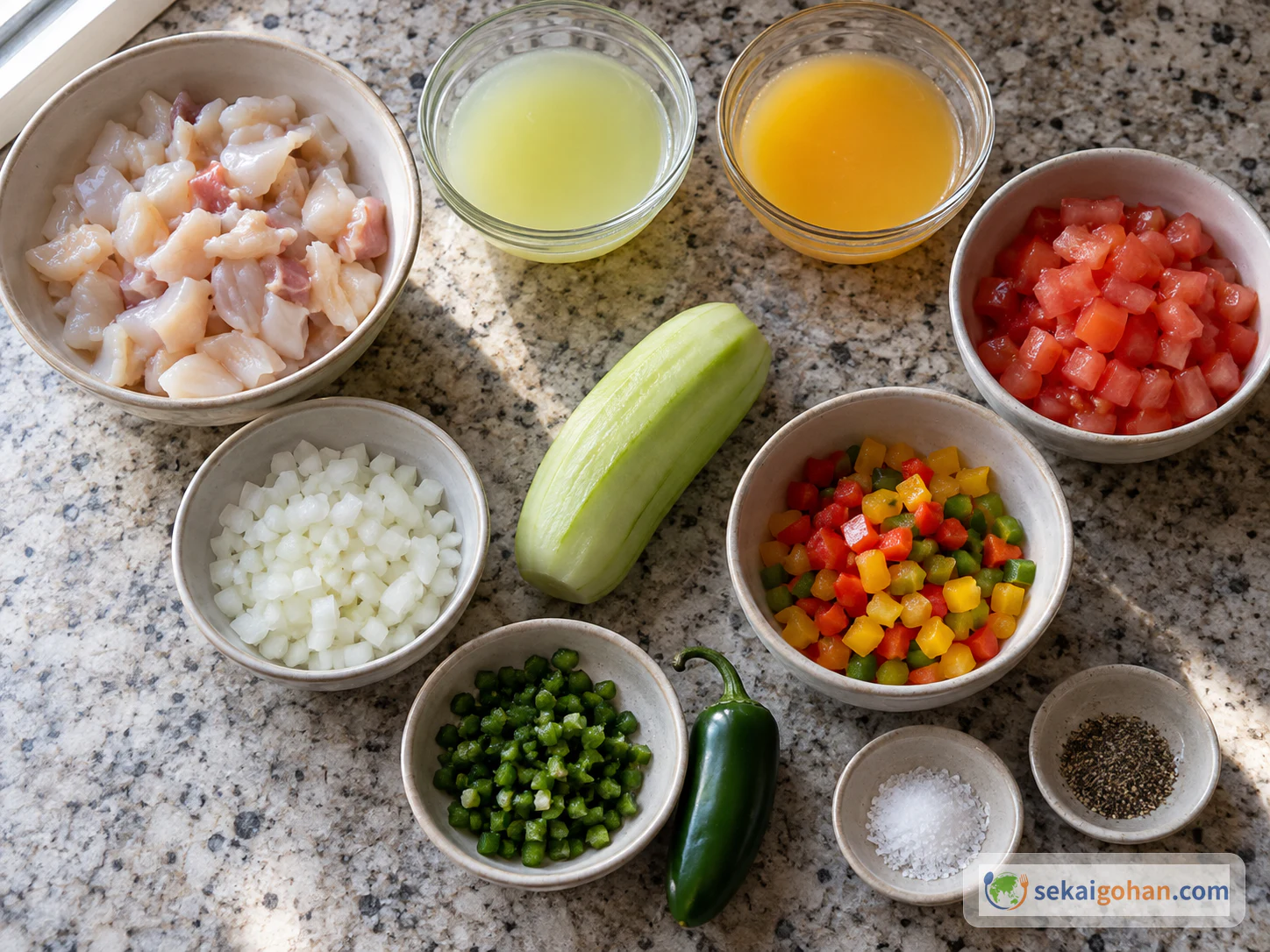
The aroma of this salad comes from just-squeezed lime and orange. Squeeze them close to mixing time and measure them separately, so the balance between the two stays exactly as written.
Conch is a mollusc shellfish. Anyone with a shellfish allergy should not eat this dish.
Equipment
- A sharp knife
- Two clean cutting boards, one for the conch and one for the vegetables
- Measuring spoons and cups
- A citrus juicer (handy for the amount of juice, though a hand squeeze works)
- Two small bowls for the juices
- A large bowl, glass works well, with a lid or cover
- Gloves for the jalapeños, if you like
Buying Conch and Choosing the Rest
Conch is the one ingredient worth a special trip. Look for cleaned conch meat sold for eating raw, from a fishmonger or seafood market you trust, or from a seller online who carries Caribbean seafood. Ask where it was harvested. Conch can carry germs from the waters it came from, and as a predatory sea snail it can build up natural toxins, and neither is something lime juice removes. A seller who can tell you the origin and kept it cold the whole way is the seller to buy from.
There is no stand-in that tastes or chews like conch. Cooked shrimp or crab make a good citrus seafood salad, but it becomes a different dish (see the variations below). For the rest, the supermarket has everything:
| Ingredient | What works | What it changes |
|---|---|---|
| Lime | Fresh limes only for the main juice | Lemon gives a softer, more floral sourness and moves the bowl away from its Bahamian taste |
| Orange | Ordinary sweet oranges | Sour orange gives a sharper, more bitter bowl, closer to some home versions |
| Onion | Any onion | A sweet onion bites less; a strong onion stands out more against the conch |
| Bell pepper | Any colour, or a mix | Red and yellow taste sweeter; green tastes greener and slightly bitter |
| Jalapeño | Fresh jalapeños | Goat pepper gives a hotter, more local heat |
- Buy conch sold for eating raw, or from a fishmonger you trust.
- Keep it cold, refrigerated at 40°F (4°C) or below, until you cut it, and eat the salad the same day.
- Wash your hands with soap for at least 20 seconds before and after handling the conch, and use clean boards and knives kept apart from the vegetables and other food.
- Lime and orange juice season the conch. They do not cook it or make it safe.
- People who are pregnant, elderly, very young or have weakened immunity should skip the raw version and choose a dish made with fully cooked seafood.
Method
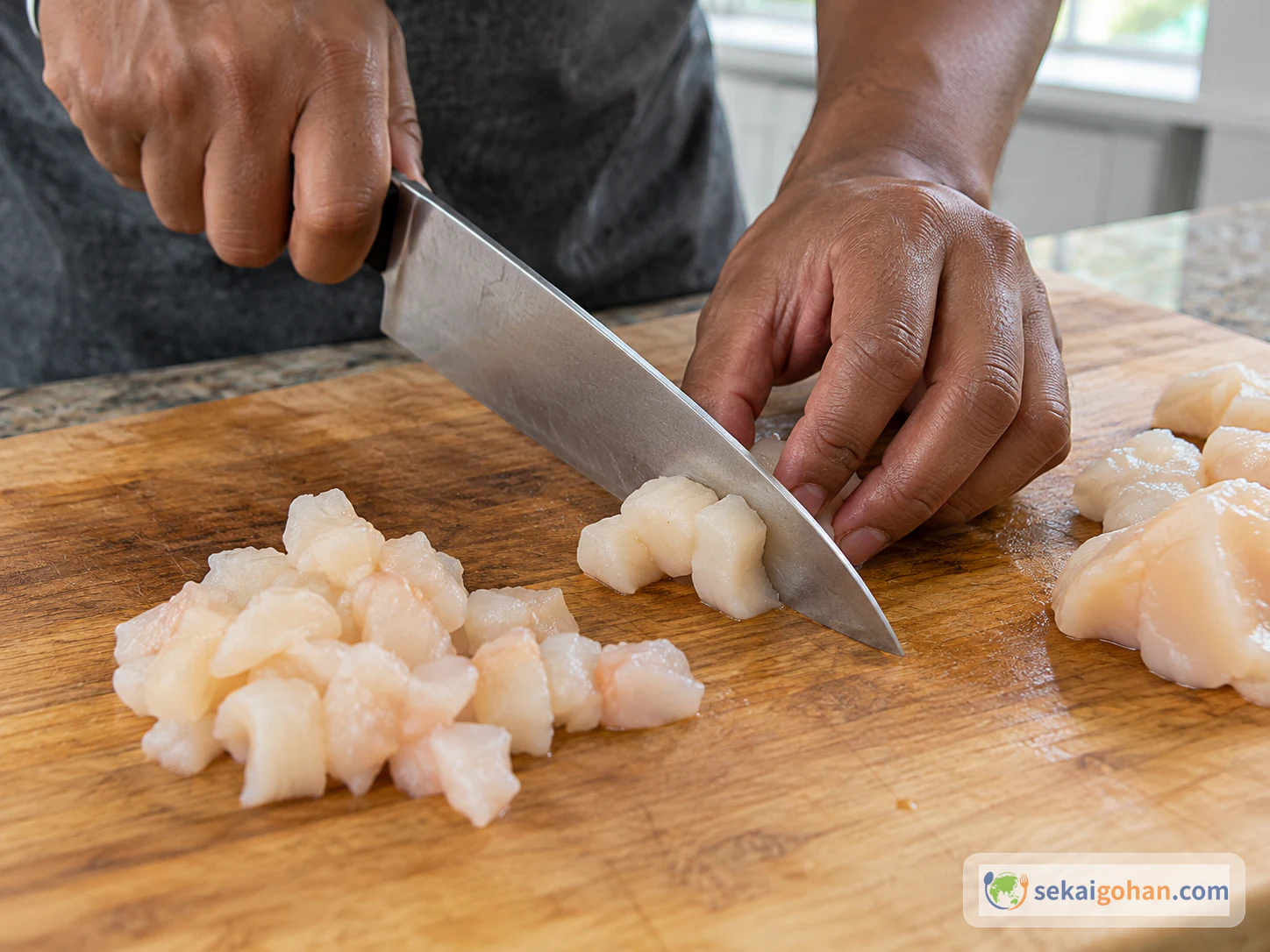
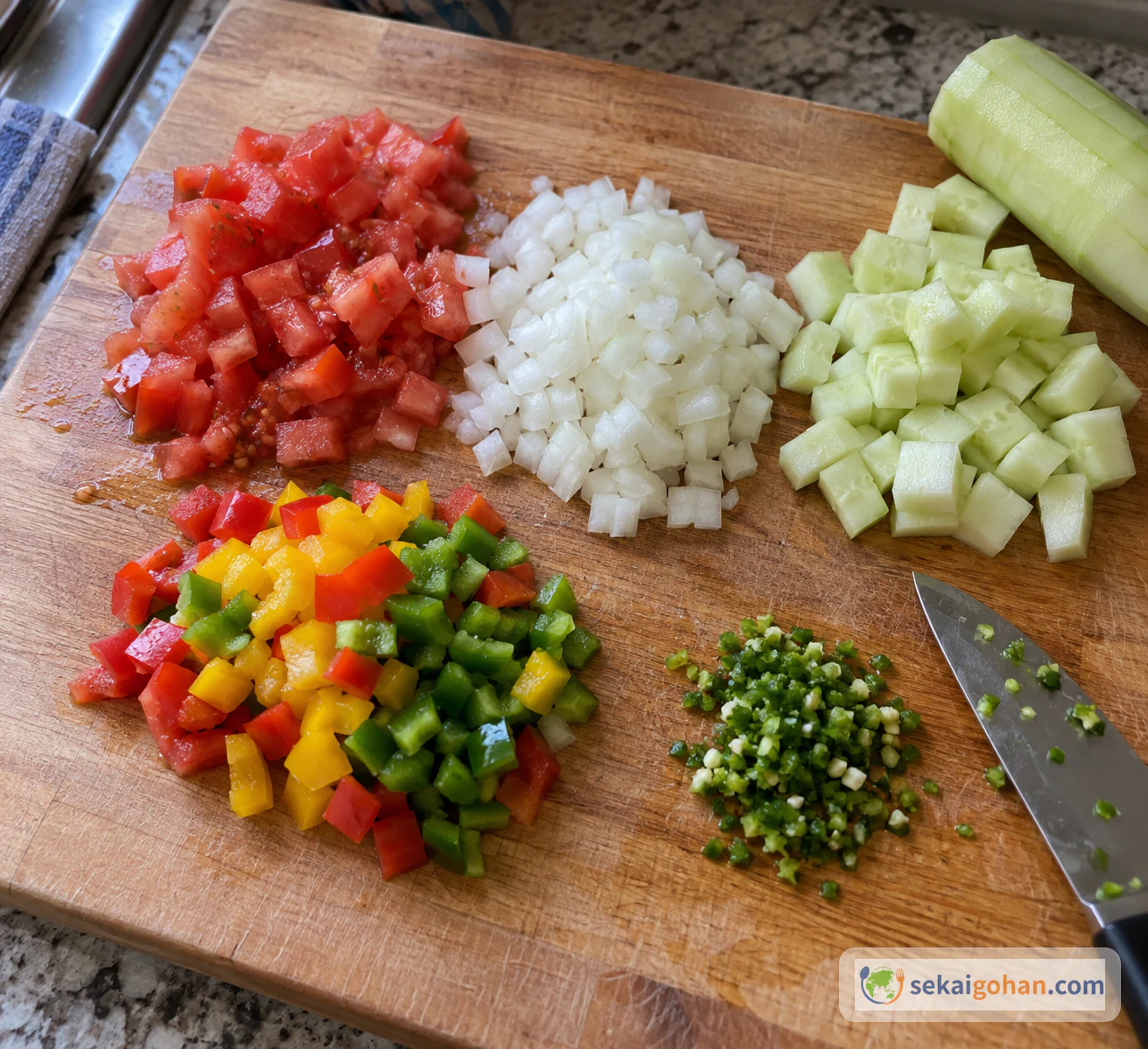
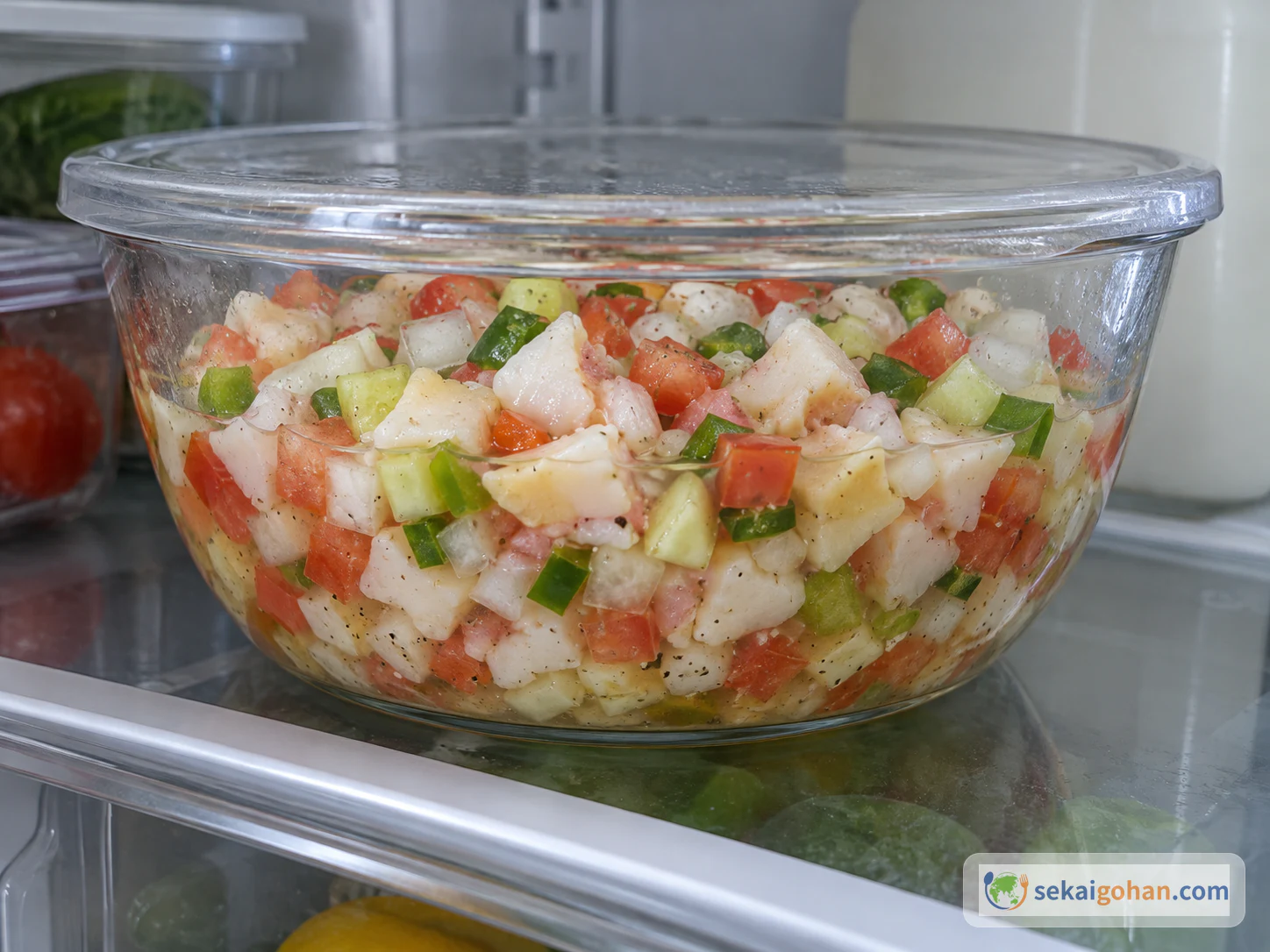
The work is all knife work, then a short rest in the refrigerator. Cut the conch first and put it straight back in the cold. Then cut the vegetables on a separate board and squeeze the citrus. Everything comes together in one bowl, and the chill of 15 minutes to 2 hours is the only hands-off time. Have serving bowls ready before it goes in, so it moves from refrigerator to table without waiting around.
When It Goes Wrong
| What you see | Why | What to do |
|---|---|---|
| Big chewy pieces of conch | The dice were cut too large | Cut the conch smaller next time; small, even dice are what make it easy to eat |
| A watery, diluted bowl | Cucumber seeds left in, or the vegetables were wet | Seed the cucumber fully and pat wet vegetables dry before dicing |
| Too sharp and sour | The lime is outweighing the rest | Check the salt first, since salt balances the lime; next time measure the two juices carefully |
| Too hot | The third jalapeño, or the pieces were too large | Stay with 2 jalapeños and mince them finely so no single bite holds the heat |
| Flat, dull taste | Not enough salt, or juice squeezed long before | Add salt a pinch at a time; squeeze the citrus just before mixing |
Serving, Variations and Keeping
On the table
Conch salad belongs to hot days and light meals. Serve it straight from the refrigerator, in small bowls, with a spoon for the juice. Crackers are the simple choice. For a fuller Bahamian plate, set it beside a fish dish or serve it with johnny cake.
Variations
- Tropical conch salad. Add diced fruit such as mango. The bowl turns sweeter and softer, and the lime reads less sharply.
- Goat pepper heat. Swap the jalapeños for goat pepper. The heat climbs and takes on a fruitier, more local character.
- Milder bowl. Use fewer jalapeños. The citrus and onion take the lead. The raw conch and the precautions stay exactly the same.
- Cooked shrimp or crab. Use fully cooked shrimp or crab in place of the conch. This is a different citrus seafood salad, and it suits anyone who should skip raw conch.
Keeping it
Make only what you will eat. Keep the salad covered in the refrigerator until it goes to the table, and eat it the same day. The two hours in the method is the marinating window, not a storage time.
Frequently asked questions
Can I leave it marinating longer than two hours?
No. Two hours is the far end of the marinating time. Mix it so it reaches the table within that window, and start later rather than earlier if guests run late.
Can I use frozen conch?
Yes, if it is cleaned conch sold for eating raw and comes from a seller you trust. Freezing does not remove every germ, so frozen conch gets the same care as fresh: keep it cold, keep its board separate and eat the salad the same day.
Does the colour of the bell pepper matter?
Any colour works. Red and yellow peppers make a sweeter, brighter bowl, and green adds a fresher, slightly bitter note.