

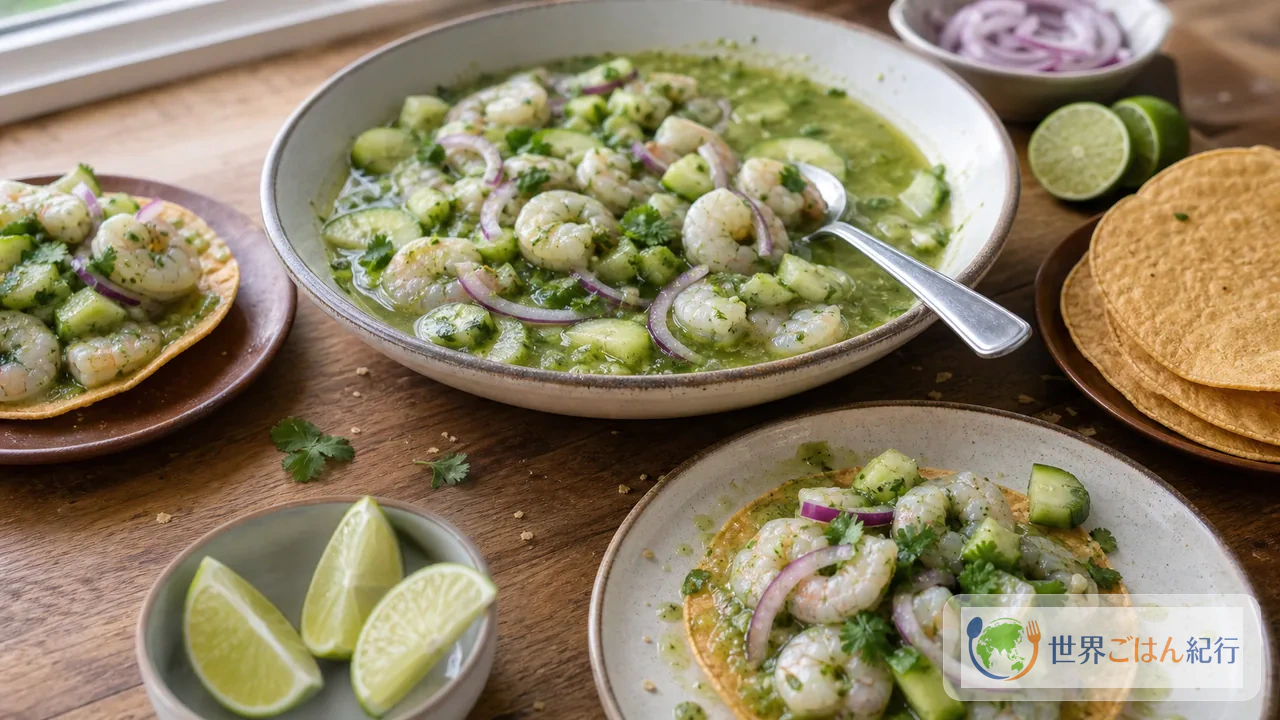
The scent of lime comes first: a plate from the Sinaloa sea
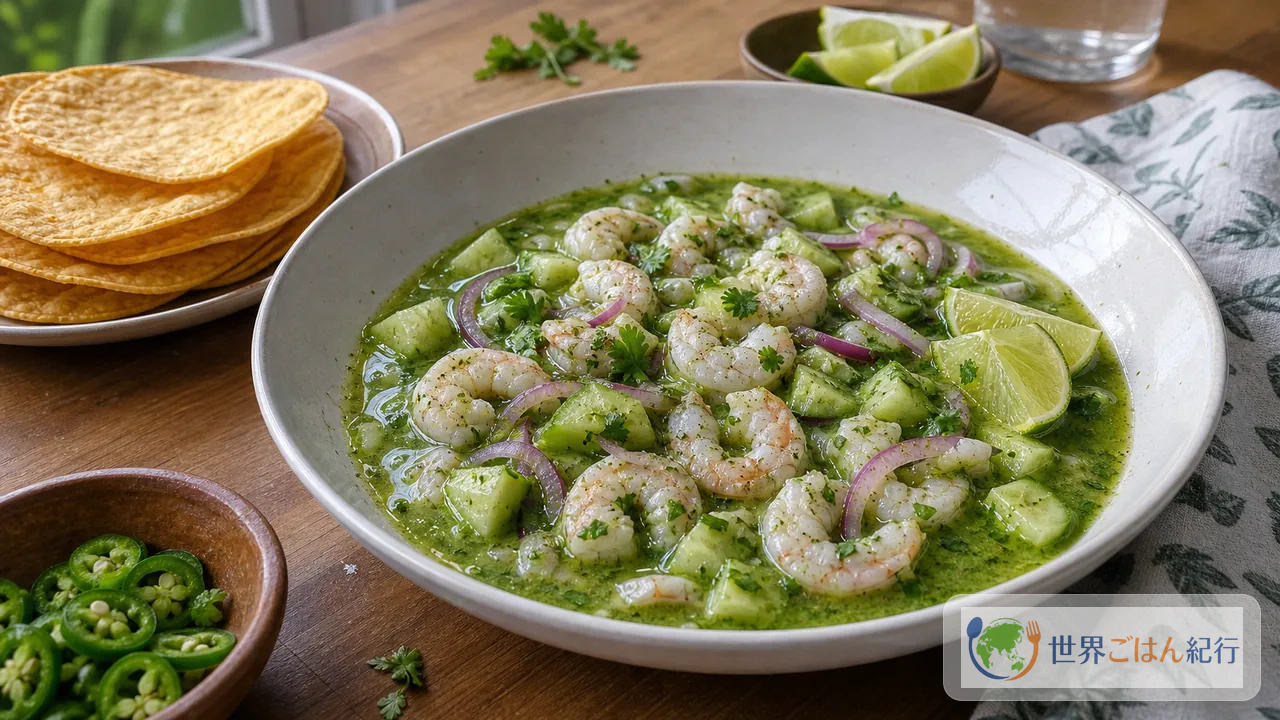
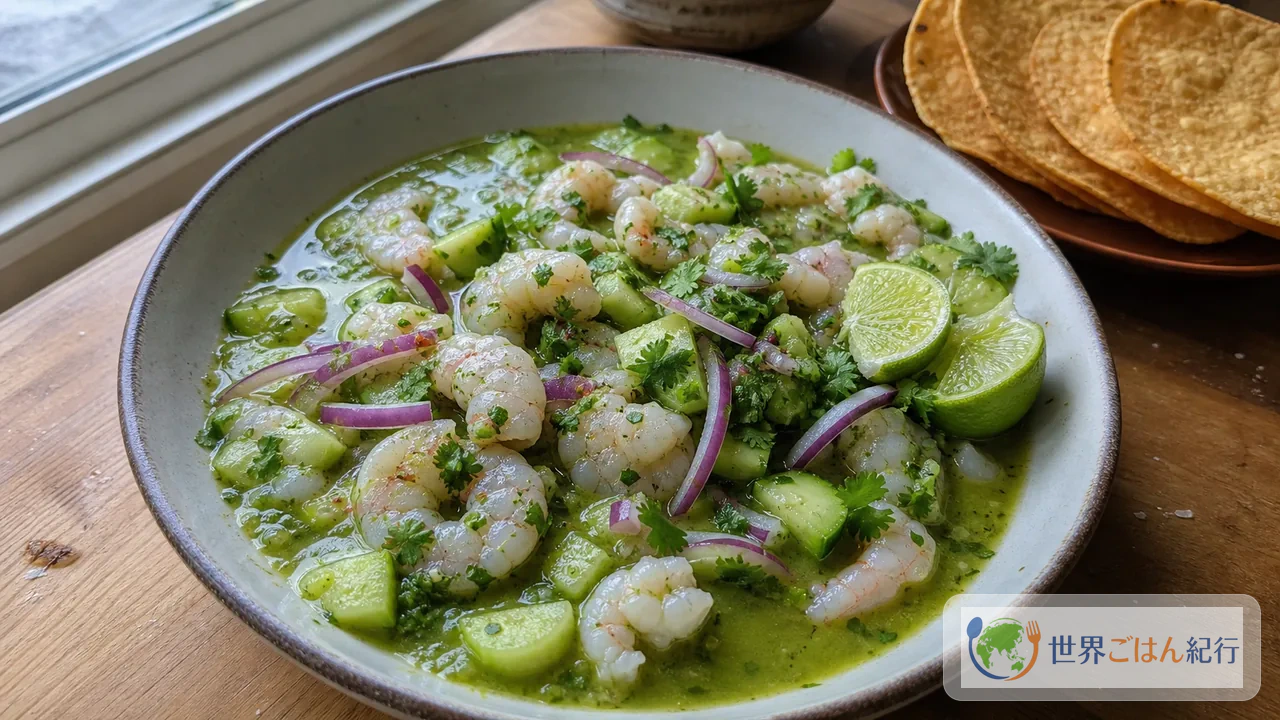
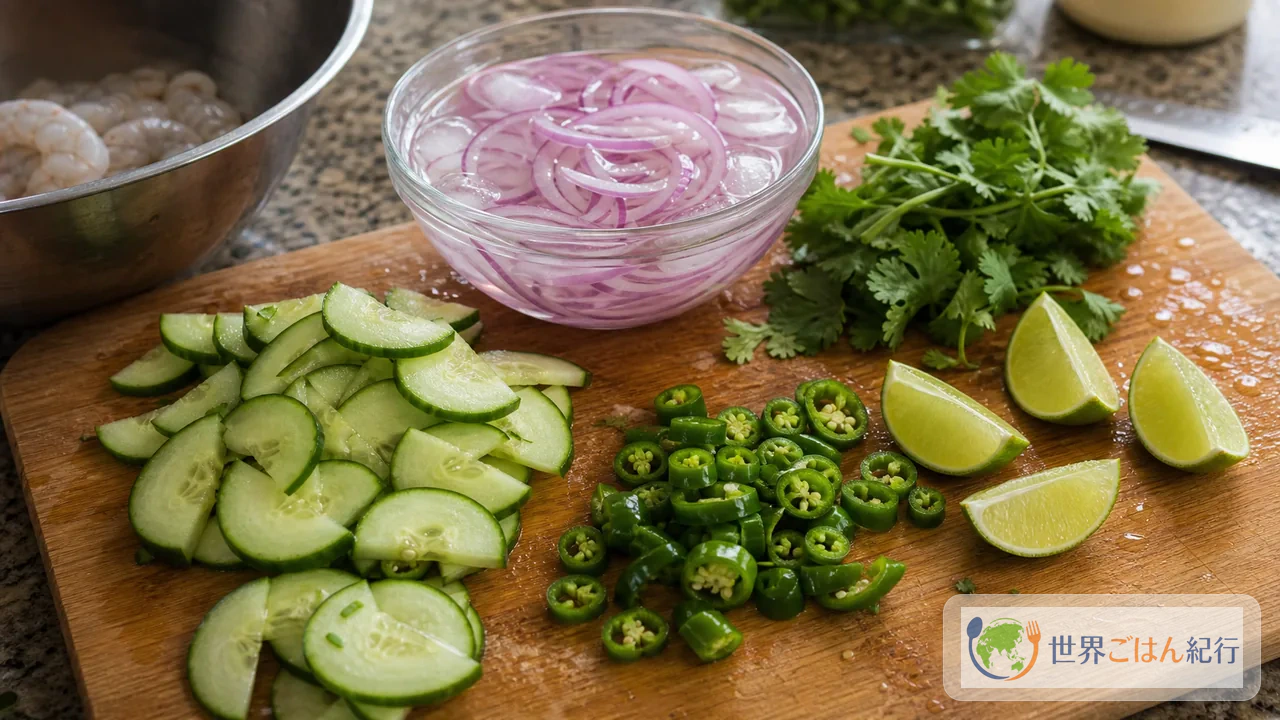
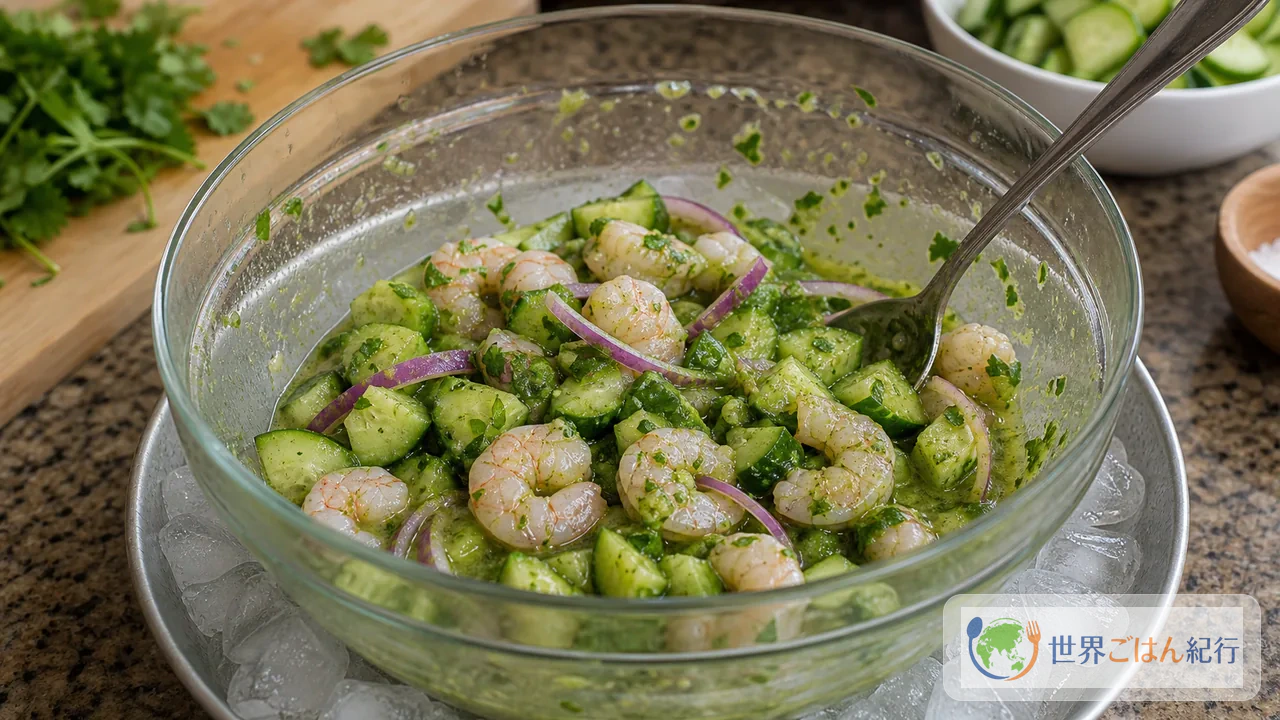
The moment you squeeze the lime, the air in the kitchen turns a notch cooler. Add green chiles and cilantro, and the aroma becomes less a sauce than a sea breeze at midday with some heat still in it. Aguachile is a dish from the coast of Sinaloa state in northwestern Mexico, in which shrimp are eaten with lime, chiles, cucumber and red onion.
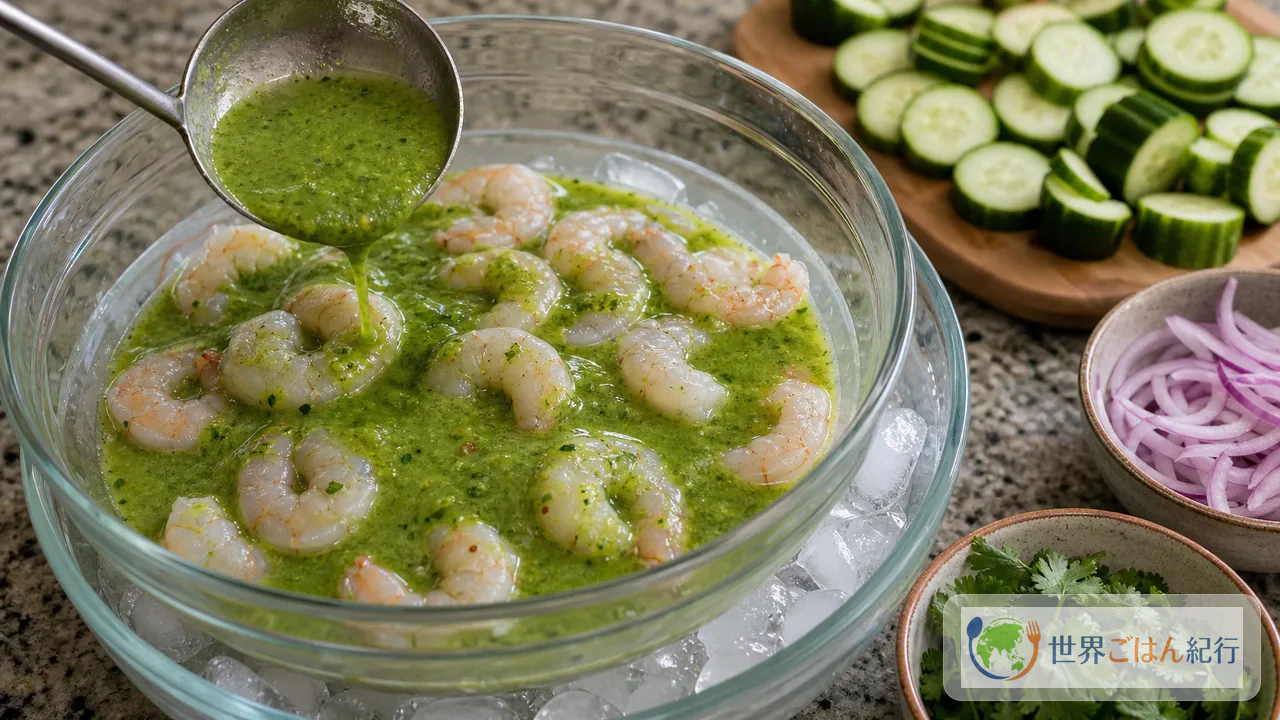
It looks similar to Peruvian ceviche (in Japanese). But aguachile is more impatient. Rather than marinating seafood for a long time until it turns white and firm, you pour over a cold, chile-forward liquid and bring it to the table in a short time. The sweetness of the shrimp, the sourness of the lime, the heat of the green chile and the water in the cucumber all arrive at once, so the impression of the flavor is quite sharp.
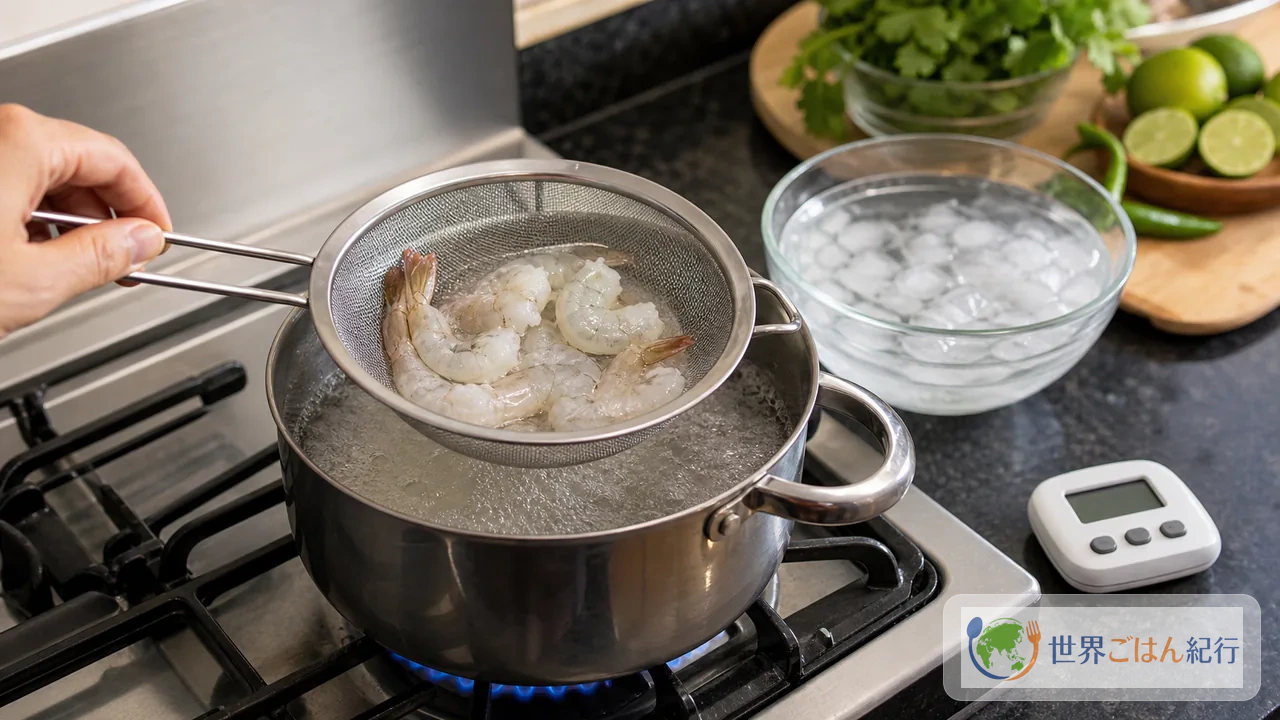
This article separates a way of making it with raw-eating shrimp close to the local feel from a short-cook version that leans toward safety for a home kitchen. Lime acid turns the surface of shrimp whitish, but that alone doesn't guarantee food safety. If you eat it raw, use shrimp labeled for raw consumption or sashimi grade; if you have any doubt, don't force it, and cook the shrimp until opaque through the center, then chill it.
It is often explained that the name comes from the Spanish agua (water) and chile. It's not a dish thinned out with water; thinking of it as a dish of a strong, cold liquid combining lime juice, green chile, salt and the savoriness of seafood makes it easier to get the taste right.
If you keep cooking Mexican food, you can redirect the tostadas from chilaquiles, the red onion from tinga de pollo and the lime from pozole rojo (in Japanese) into this plate. It isn't a stew, so where you hesitate when shopping is "which shrimp to choose" and "how spicy to make it."
Ingredients: think of the green heat and the freshness of the seafood separately

Lime juice denatures the protein in shrimp, but it is not itself protection against bacteria or parasites. Don't use shrimp not meant for raw eating raw. If children, older adults, pregnant people or those with weakened immunity will eat it, it is safer to make it with cooked shrimp or shrimp cooked until opaque through the center.
What you can substitute and what is hard to replace
| Role | Ingredient to keep | What can substitute | What changes |
|---|---|---|---|
| Sourness | 160 ml lime juice | Mix in lemon up to 40 ml | The aroma rounds off and the green, Mexican character weakens |
| Heat | Serrano, jalapeño, chiltepin | Green chiles, shishito + a very little habanero powder | Using only red heat changes the look and the aroma |
| Texture | Cucumber, red onion | Radish, a little celery | Without the cucumber's water, the heat feels stronger |
| Base | Tostadas | Thick corn chips | Thin chips break easily in the liquid |
When shopping, what's worth looking at online isn't the fresh shrimp or cucumber. The things that are hard to replace nearby are chile powder for fine-tuning heat on the plate, a mortar to crush green chiles and lime, and a thermometer to be on the safe side with shrimp meant for cooking. A mortar isn't essential, but it brings out a rounder aroma than chopping the green chiles with a knife alone.
Don't settle the heat for the whole sauce
Aguachile is a spicy dish, but not everyone has to eat the same heat as in a hot pot. For a first try, hold the green chiles to 2 and stop the whole sauce at "a little spicy." Only those who like heat can add a tiny pinch of habanero powder or one thin slice of green chile at a time just before eating, which adjusts without crushing the sweetness of the shrimp.
If you use a mortar, crush only the chiles, garlic and salt first, and thin it with lime at the end. Because grains remain more than with a blender, the green aroma is less likely to scatter when set on a tostada. On a day you use shrimp not meant for raw eating, check the opaqueness of the center with a thermometer before worrying about heat. A stronger lime is no substitute for cooking.
| How to divide at the table | Base sauce | What to add at the plate |
|---|---|---|
| Kids or people who dislike heat at the table | 1 green chile, seeds removed | Cucumber, a little lime |
| Adults only | 2 green chiles, half the seeds left in | A pinch of habanero powder |
| Sharper, closer to the local style | 2 green chiles, a little chiltepin | Thin slices of green chile, a pinch of salt |
Method: keep the shrimp cold and set them briefly
Aguachile is often called an "easy dish that uses no fire," but in a home kitchen, managing cold is the core of the dish. Don't leave the shrimp at room temperature for long. Make the sauce just before serving. After mixing, eat it without lingering. If you keep to these three, both flavor and safety stay steady.
Where it goes wrong, and branching toward safe cooking
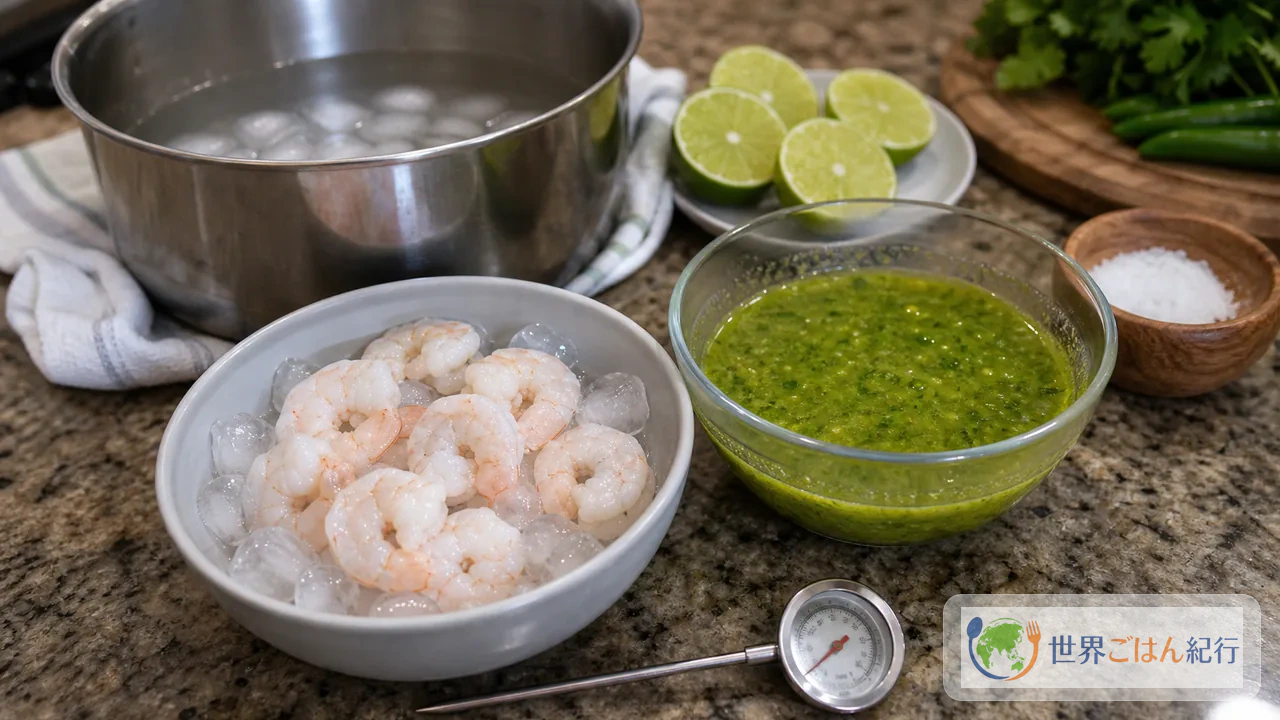
Failures in aguachile cluster into four: weak flavor, too spicy, hard shrimp, and unease about eating it. It isn't a dish where adding more lime solves everything. Look at sourness, salt, heat and coldness separately.
| Problem | Why it happens | How to bring it back |
|---|---|---|
| Watery | Moisture from the shrimp and vegetables wasn't patted off | Set aside 2 tbsp sauce and add a little chile and salt. Next time, drain the moisture |
| Too spicy | All the chile seeds and pith went in | Add 1/2 cucumber and thin with 1 tbsp lime juice and 1 tbsp cold water |
| Hard shrimp | Marinated too long, or not chilled after cooking | Stop at 5 minutes next time. After cooking, put them straight into ice water |
| Uneasy about rawness | Used shrimp not meant for raw eating | Rather than starting over, take out just the shrimp, cook through the center, chill and return them |
| Only sourness stands out | Not enough salt, weak chile aroma | Add a pinch of salt and a little chopped cilantro |
Made with raw-eating shrimp, it keeps the translucence that is characteristic of local aguachile. On the other hand, even with cooked shrimp, if you serve it cold and bring up the lime and green chile, it makes a perfectly good home dish. Rather than forcing it toward raw, put the health of the people eating and the labeling of the shrimp you bought first.
As with ceviche, it's also important not to think that the whitened look from acid means it's "cooked." Even if it looks white, it hasn't been cooked. Shrimp that aren't sashimi grade, shrimp whose thawing state you're unsure of, and shrimp whose smell bothers you should go into cooked dishes rather than aguachile.
Eating and storing: break the tostada last

It's easiest to eat if you serve aguachile on a big platter with the tostadas on a separate plate. Add small spoons so each person scoops shrimp and liquid and tops the tostadas a little at a time. Because it is a wet dish, if you load everything onto a tostada from the start, it breaks before you start eating.
| How to eat | Pairs with | Good for |
|---|---|---|
| Appetizer | Cold tostadas, lime, green chile | The first plate on a Mexican-food day |
| Lunch | A little avocado, a bean salad | When you want to soften the heat a little |
| Dinner | Chilaquiles, tinga de pollo | Reusing tostadas and onion |
| Side-by-side tasting | Peruvian ceviche (in Japanese) | When you want to learn the regional differences in lime-cured seafood |
For storage, the basic rule is to finish it within 2 hours of making it. If you must keep some, move the shrimp and vegetables to a clean container and eat it the same day in the refrigerator. Left until the next day, the shrimp get too firm, the cucumber weeps and the aroma of the sauce fades. If you want to prepare ahead, keep only the sauce in the refrigerator for half a day, and prepare the shrimp and vegetables separately, uncut.
If you have no tostadas, thick unsalted corn chips can substitute. Thin snack chips absorb liquid and break easily, so rather than laying them on the plate, it's more realistic to hold one and scoop a little at a time. You can eat it rolled in a wheat tortilla, but the toasty corn aroma disappears and the lightness characteristic of aguachile weakens.
The background of the dish: the more impatient flavor of the northwest, compared with ceviche
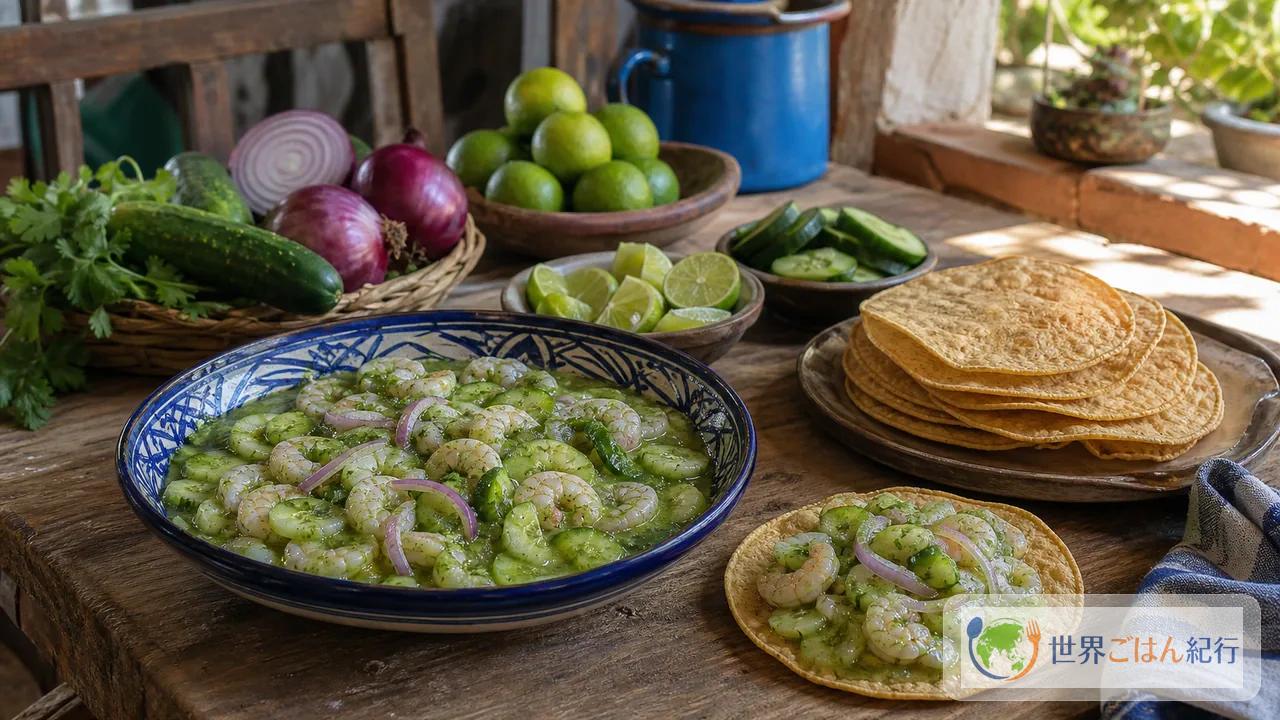
Larousse Cocina explains aguachile as a dish tied to Sinaloa state, centered on shrimp, lime, chile, cucumber and onion. English-language food articles also often present it as a seafood dish eaten in less time than ceviche and with the heat up front.
Small chiles such as chiltepin are mentioned for the original heat, but serrano and jalapeño are easier to find in many kitchens. Made with green chiles alone, the aroma is close but the way the heat arrives changes. If you can get dried chiltepin or chile piquín, crushing in just a little adds a sharp heat to the green sauce.
There are regional differences too. Besides the green aguachile verde, there is a darker aguachile negro made with dried chiles, soy sauce and Worcestershire sauce, and a red aguachile rojo made with red chiles. For a first try, green is recommended because the role of each ingredient is easiest to see. If these four hold (lime, green chile, shrimp, cucumber), you can adjust the heat and herbs from the next time on.
What to keep at home is "serving it cold and brief." Rather than marinating for a long time until it turns sour and firm, finish it after people are seated. Eat it before the tostadas get soggy. That's where the vigor of this dish is. Unlike the stewed mole poblano or the big-pot pozole rojo (in Japanese), aguachile is a dish that loses appeal the longer it waits.
FAQ
Can I still make it if I don't have raw-eating shrimp?
Yes. But avoid using shrimp not meant for raw eating raw. Boil the shrimp meant for cooking until opaque through the center, chill them at once in ice water and then combine them with the sauce. The translucence is reduced a little, but if you bring up the lime and green chile firmly, it comes together deliciously as a home version.
Is it okay to use only lemon instead of lime?
Replacing it entirely changes the aroma. Lemon alone still makes a sour dish, but the green bitterness and lightness of aguachile weaken. For a first try, make lime the star and mix in lemon only up to 40 ml for what's missing.
Can I make the heat kid-friendly?
Reduce the green chile to 1/2, remove the seeds and pith, and increase the cucumber to 2 1/2. But leaving the chile out entirely makes it much less like aguachile. When sharing with the family, it's easier to adjust by making the base sauce mild and adding chopped green chile or chiltepin only to the adults' plates.
Can I make it with seafood other than shrimp?
You can make it with sashimi-grade white fish, scallops or octopus. White fish gets closer to ceviche, scallops have a strong sweetness and octopus has a firm texture. In every case, check that it is labeled for raw eating, and cook anything not eaten raw before chilling it.
Can I make it ahead or put it in a lunch box?
The finished dish isn't suited to being made ahead. The shrimp firm up, the cucumber weeps and the tostadas break easily. The realistic way is to make only the sauce half a day ahead and cut and combine the shrimp and vegetables just before eating. I don't recommend it for a lunch box, because the texture drops even with thorough cooling.