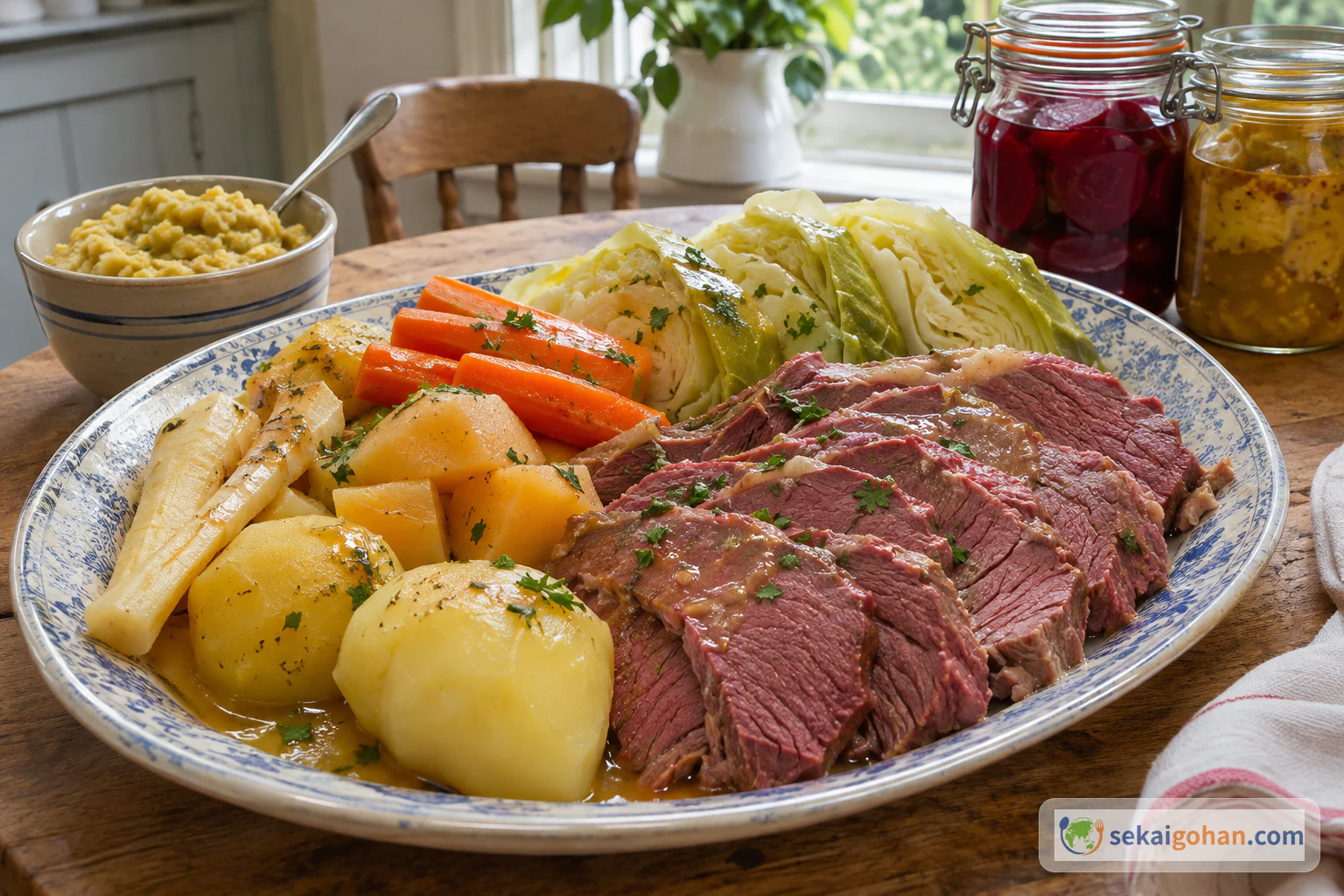
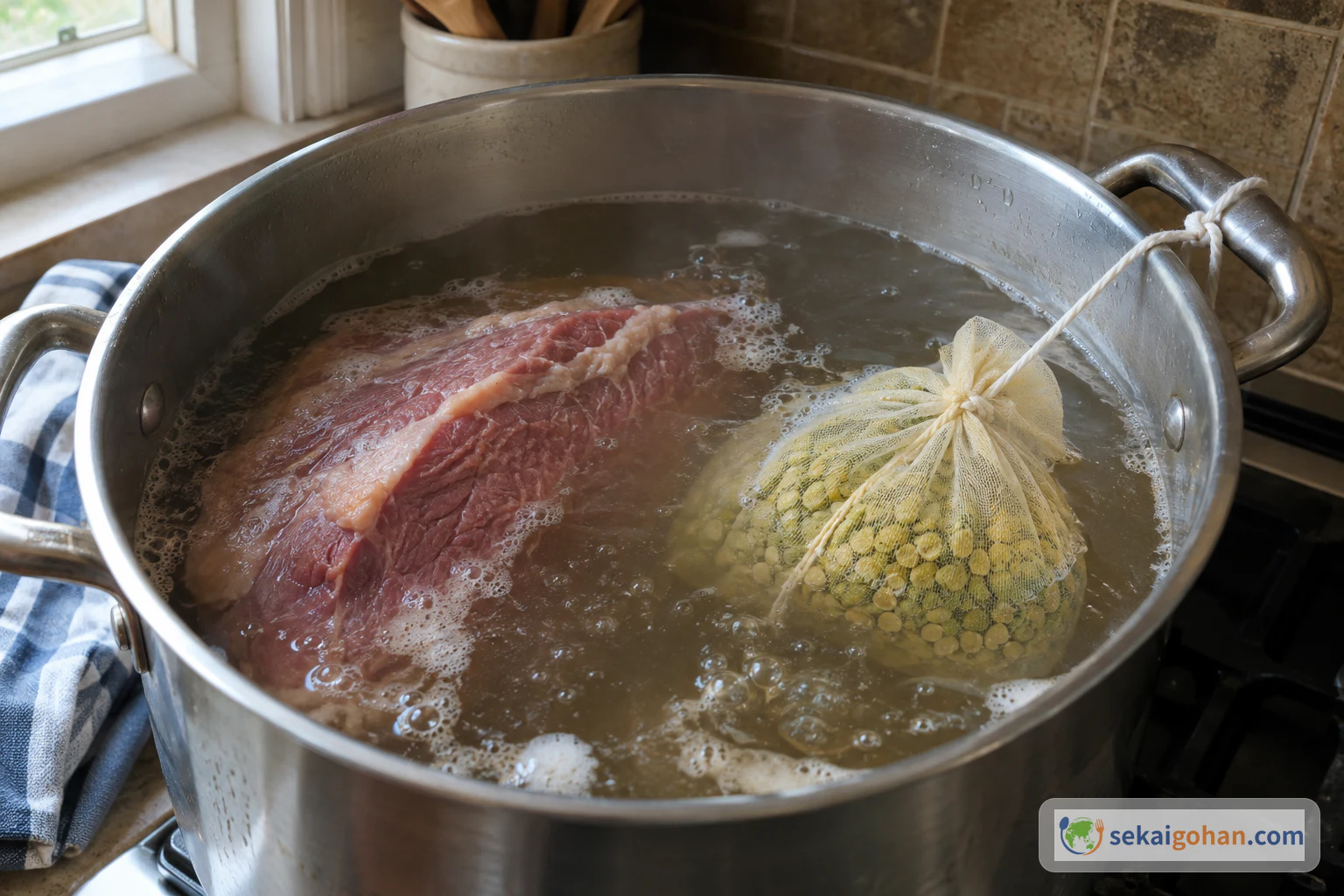
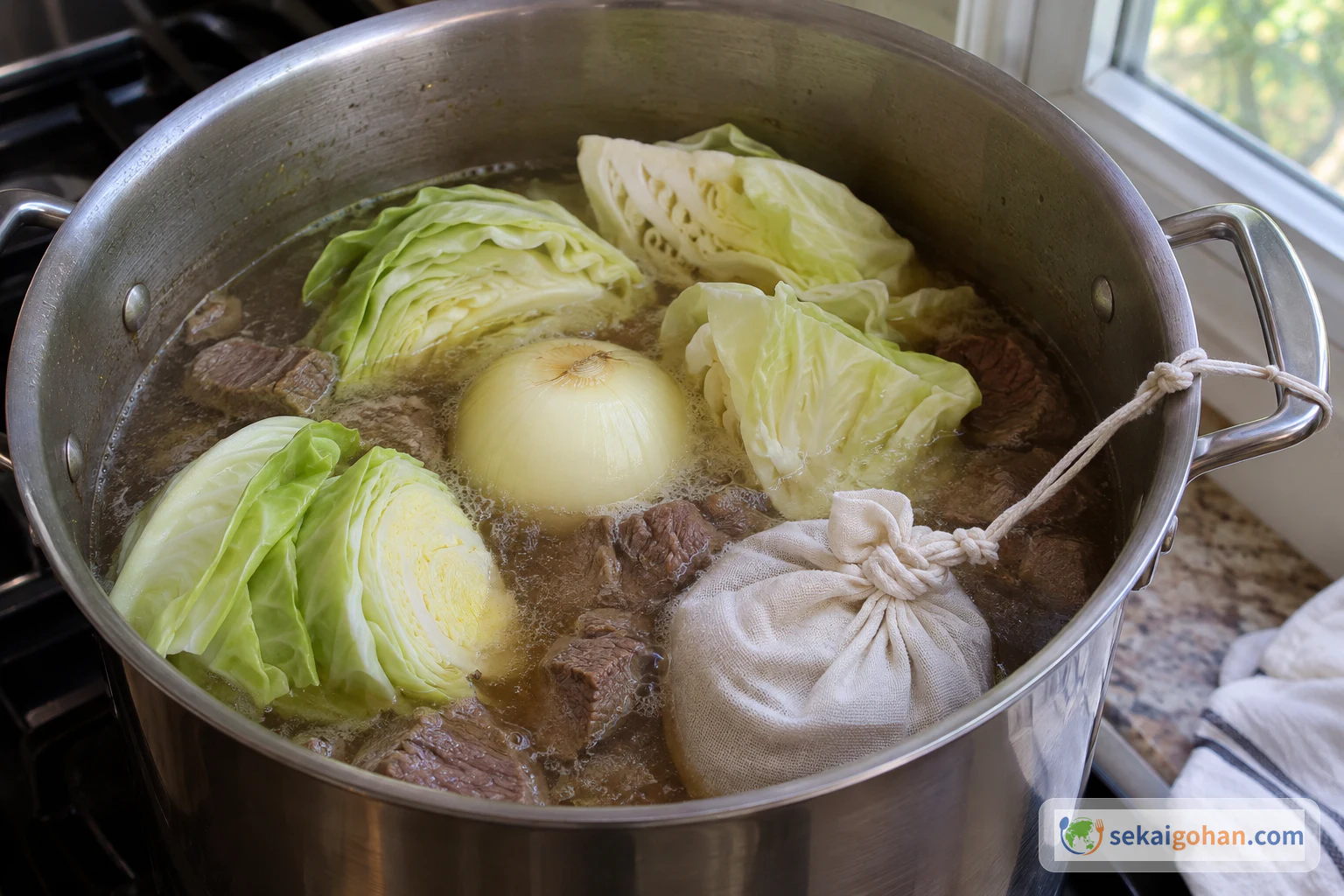
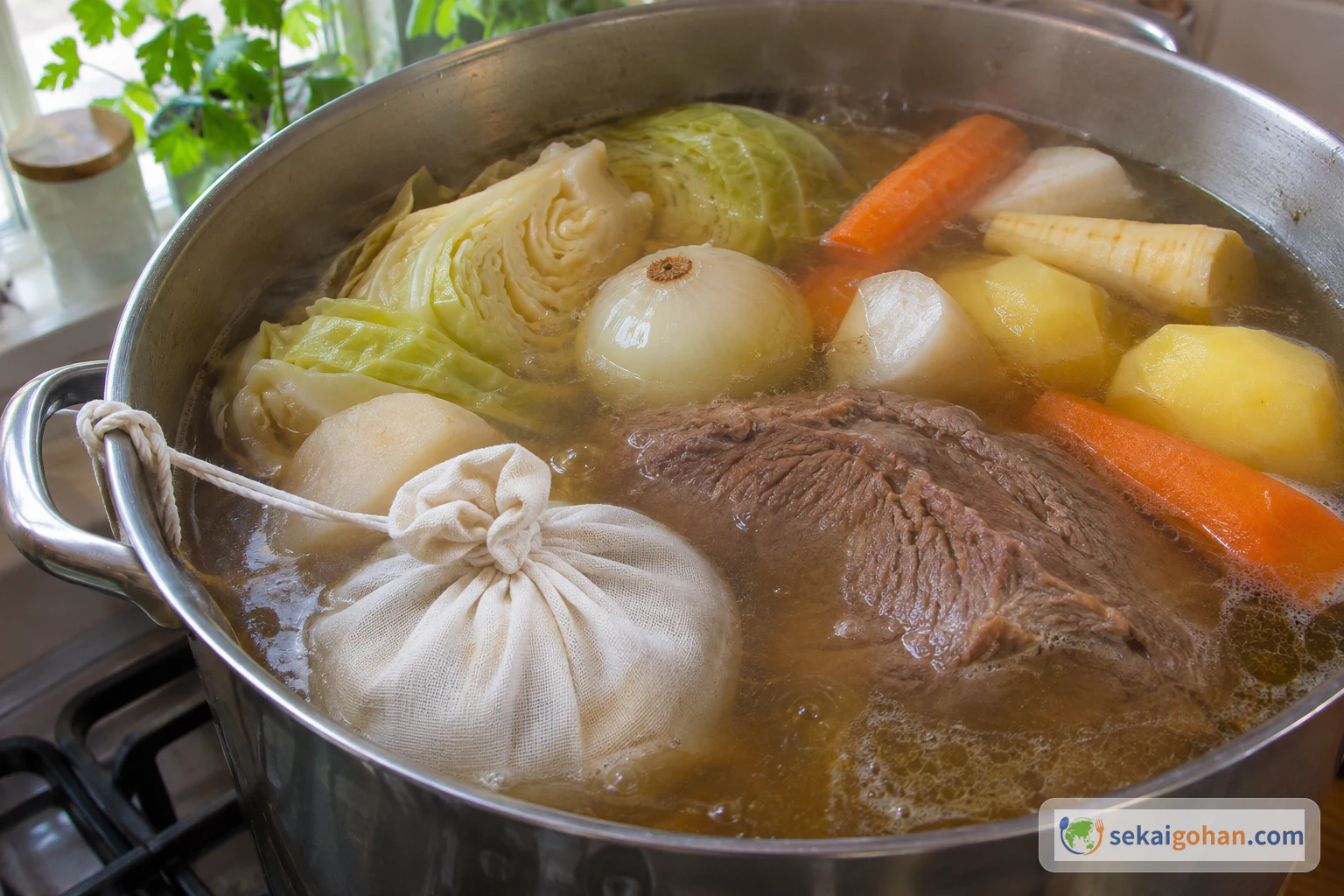
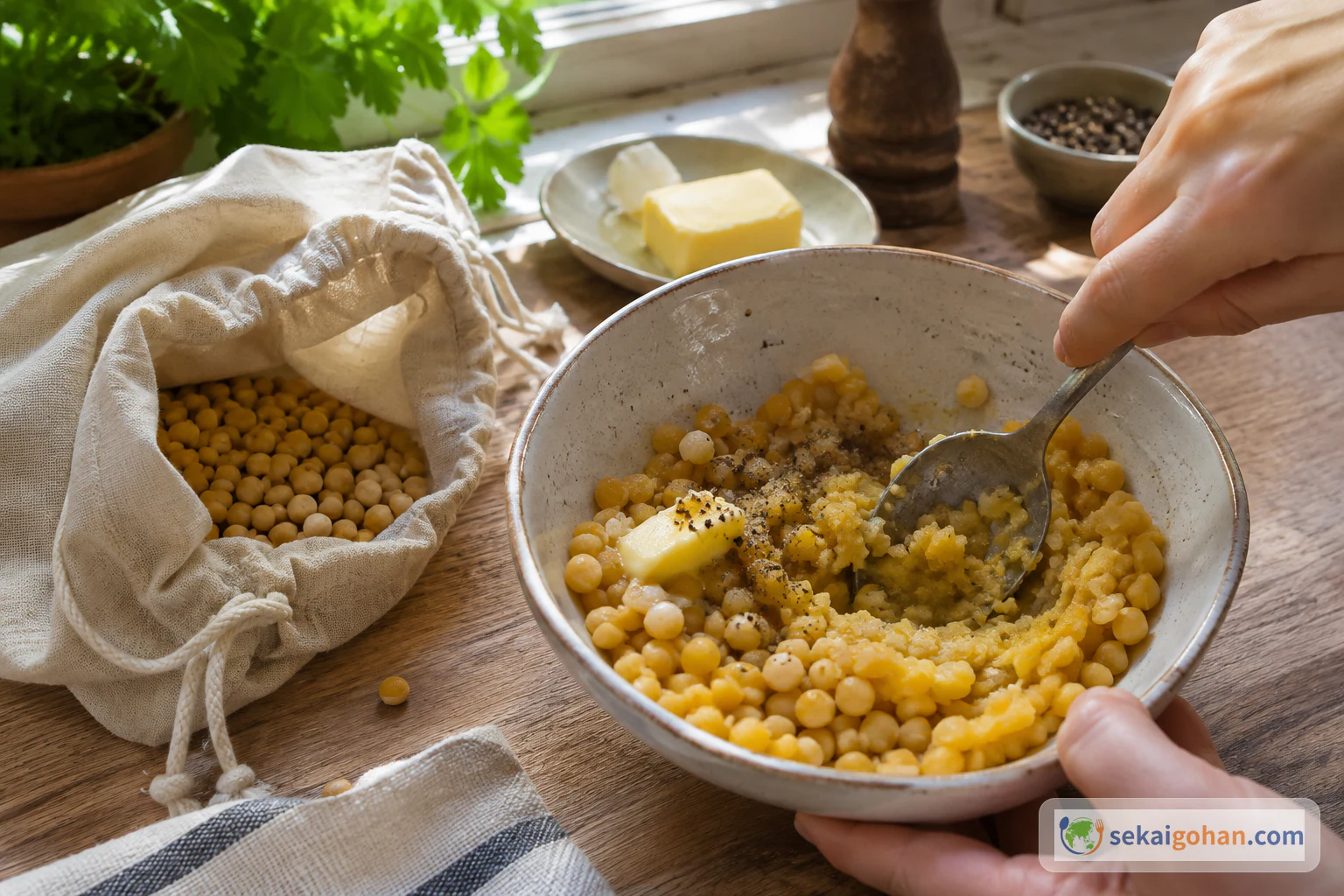
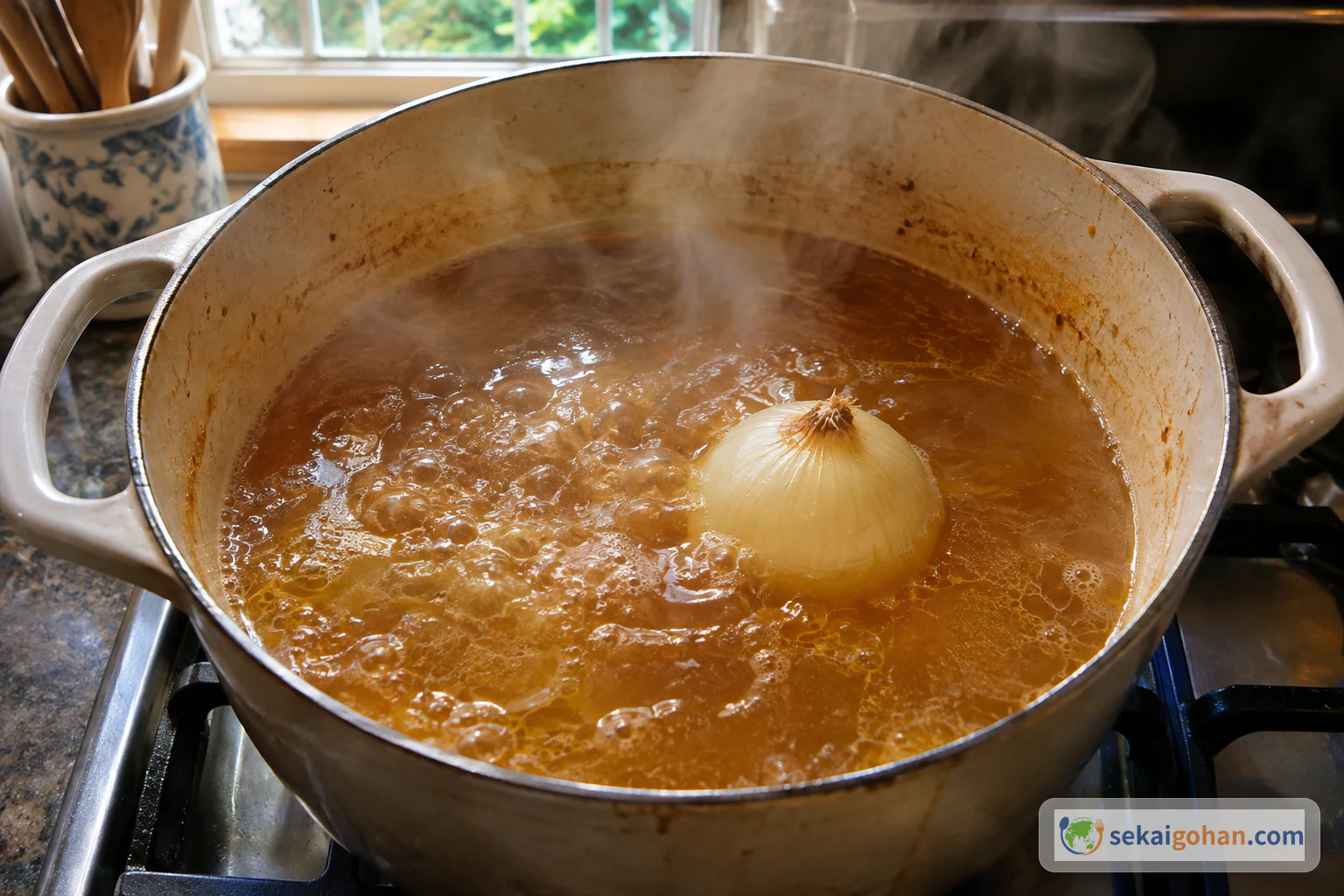
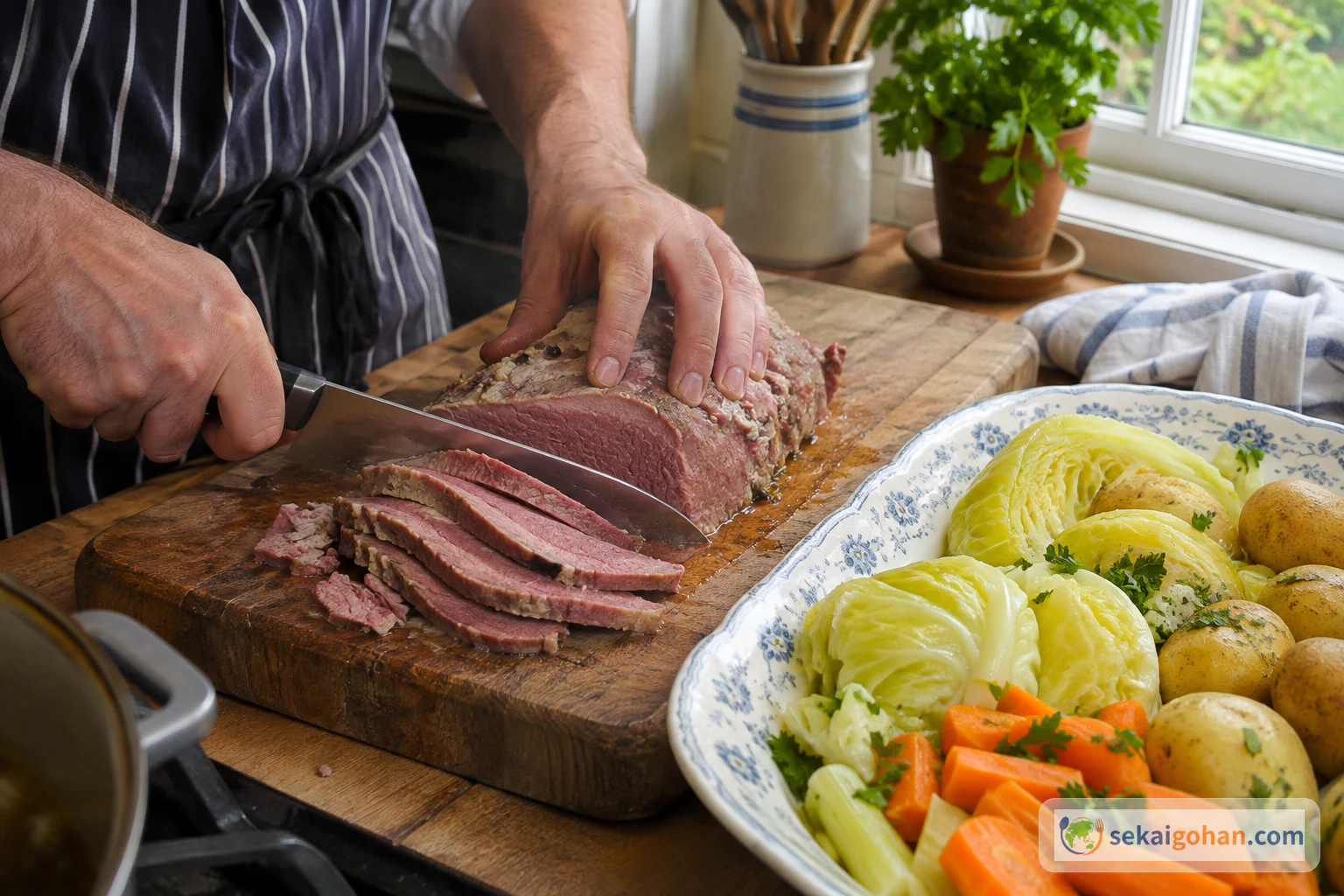
A big pot sits steaming on the back burner all Sunday afternoon. A length of string runs from its handle down into the water, and on the end of that string a cloth bag of yellow peas has been bobbing beside a slab of salt beef for hours. Late in the afternoon the cabbage goes in, then the turnip and carrots, then the potatoes and parsnips, and the kitchen fills with the smell of salty broth and sweet roots. Jiggs dinner is Newfoundland's boiled dinner. Everything cooks in one pot: the beef salts the broth, the vegetables soak up that salt, and the broth is cooked down at the end and spooned over the platter. On the plate it tastes savoury and clean, with soft, sweet vegetables, a spoonful of buttery pease pudding, and sharp pickled beets on the side.
A Sunday pot from the outports
In Newfoundland the meal goes by several names: boiled dinner, cooked dinner or simply Sunday dinner. It is a fixture of outport cooking, the food of the island's small fishing communities, and it is built around salt meat, usually trimmed navel beef or short ribs. Pease pudding, made from yellow split peas boiled in a bag in the same pot, is a favourite on the side. Some families roast a turkey to go with it, though the salt beef is what makes it Jiggs dinner.
It is a family meal more than a set recipe, so every household makes it its own way. Families disagree about which vegetables go in, how long the peas cook, and what goes on the table beside it. Salt beef, turnip, carrots, cabbage, potatoes and pease pudding turn up nearly everywhere.
Where the name comes from
The name is usually traced to Jiggs, the main character of George McManus's comic strip Bringing Up Father. Other stories get told too, but they are treated as folklore. When "Jiggs dinner" became the everyday name is not settled either.
The folklore explanations are worth knowing because people still tell them at the table: that the name comes from jig dancing, from a New York company's "Jiggs" brand of salt meat, or from jigging for cod. None of them replaced the comic-strip explanation, which remains the usual one.
What else is on the table
Jars sit at the edge of the table every time: pickled beets and sweet mustard pickles. Their sharp, sweet bite is what the salty beef and the soft vegetables need. Some people pour the pot liquor, the cooking broth, into a mug and drink it alongside. Leftovers have a job too. On Monday the beef and vegetables are chopped and fried as hash.
New England has a close relative, the boiled dinner, which is usually made with pork and served with horseradish. The Newfoundland pot sticks to salt beef and serves it with beets and pickles. For more of Canada's home cooking, the Canada page collects it all, from tourtière to fricot.
Ingredients (serves 4 to 6)
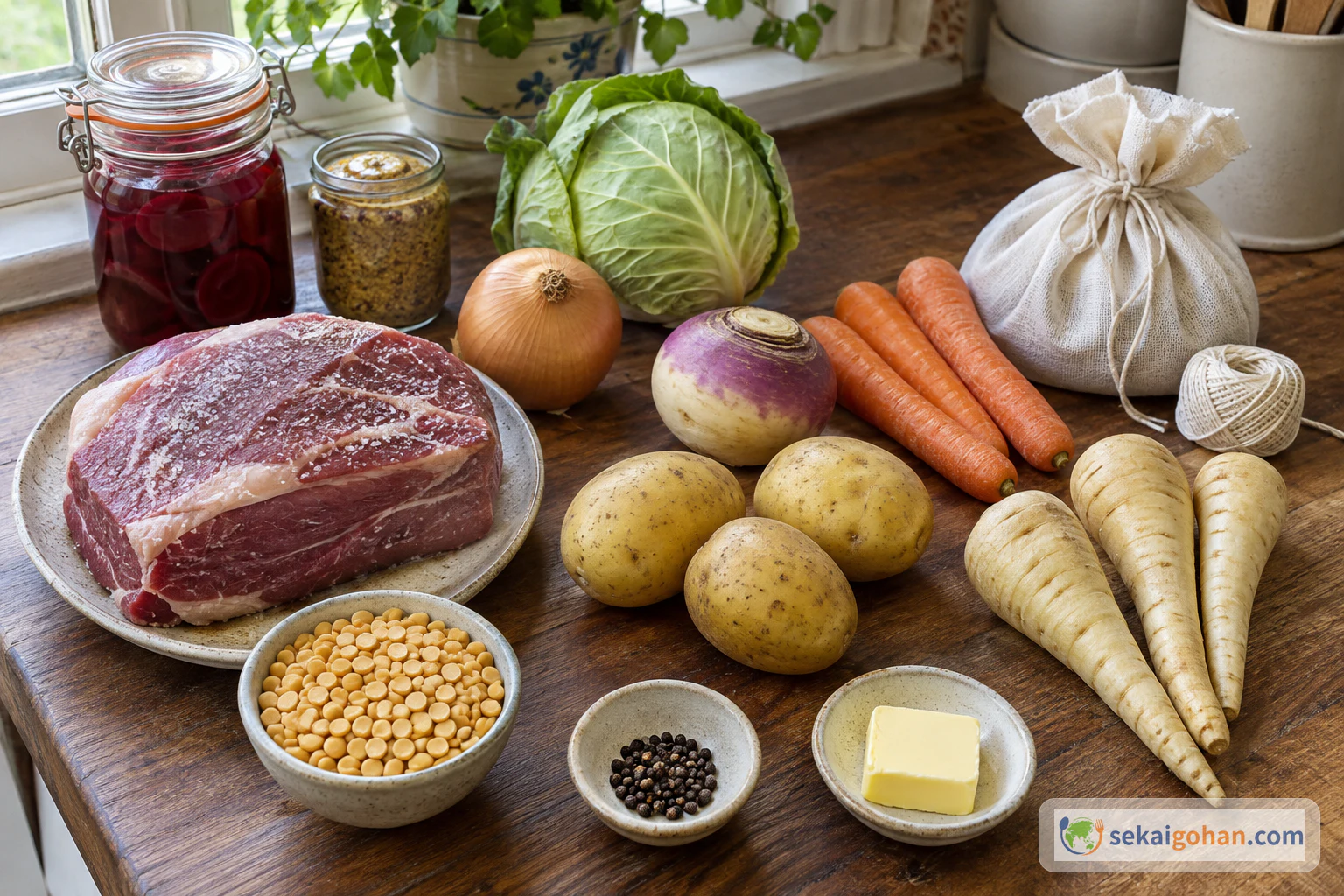
All the seasoning comes from the beef, so no salt goes in the pot or the peas. The beef's salt flavours everything after the soak.
The pease pudding contains butter (milk). Check the labels on salt beef, corned beef and jarred pickles for any additional allergens.
Equipment
- A large, deep stockpot that holds the beef, the pea bag and all the vegetables under water
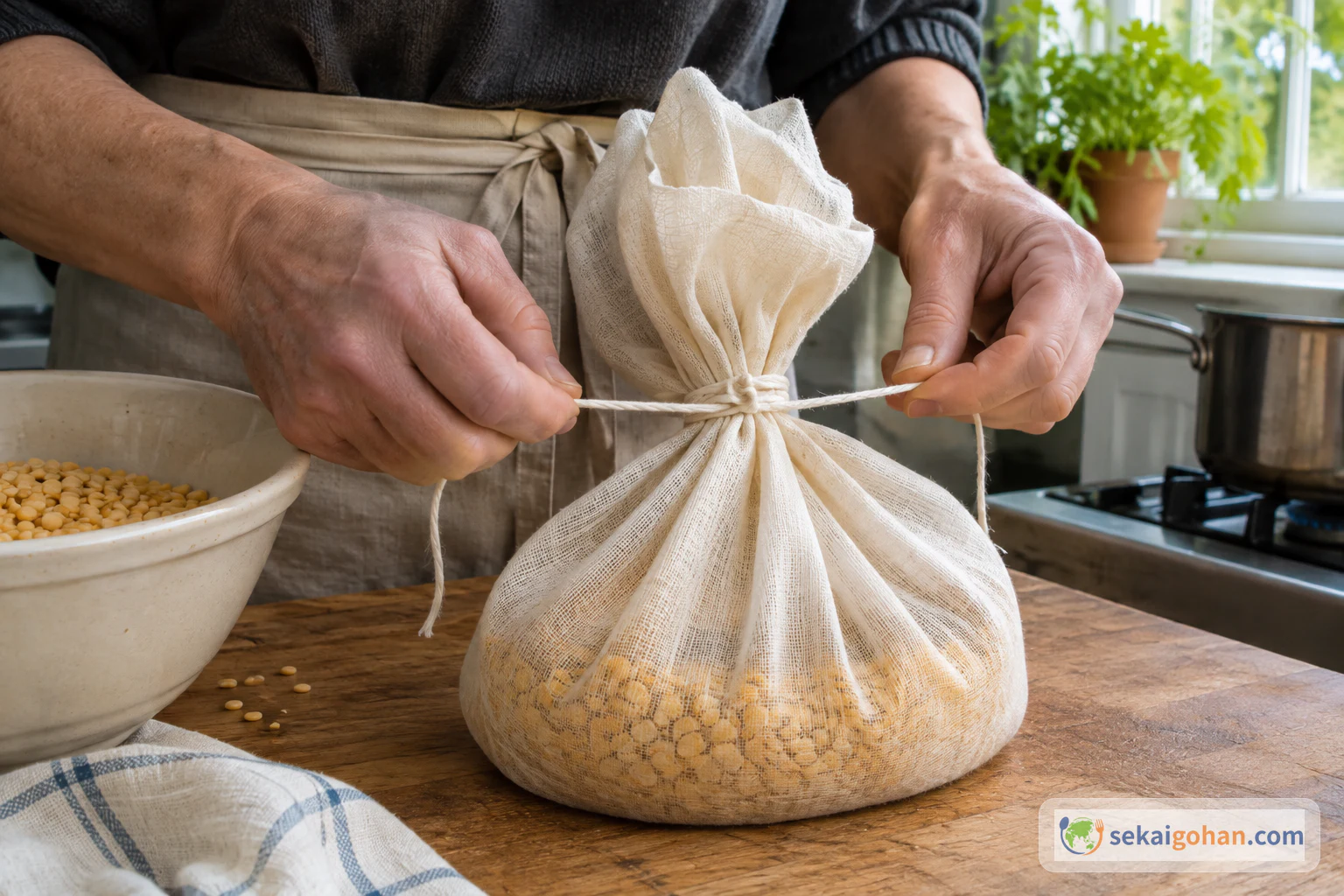
- A cloth pudding bag, or a clean cloth or several layers of cheesecloth
- Kitchen string
- A large bowl for soaking the beef
- A skewer
- A slotted spoon or spider
- A small bowl, a fork or masher, and aluminium foil for the pease pudding
- A large serving platter, a cutting board and a sharp knife
Choosing the beef, the peas and the jars
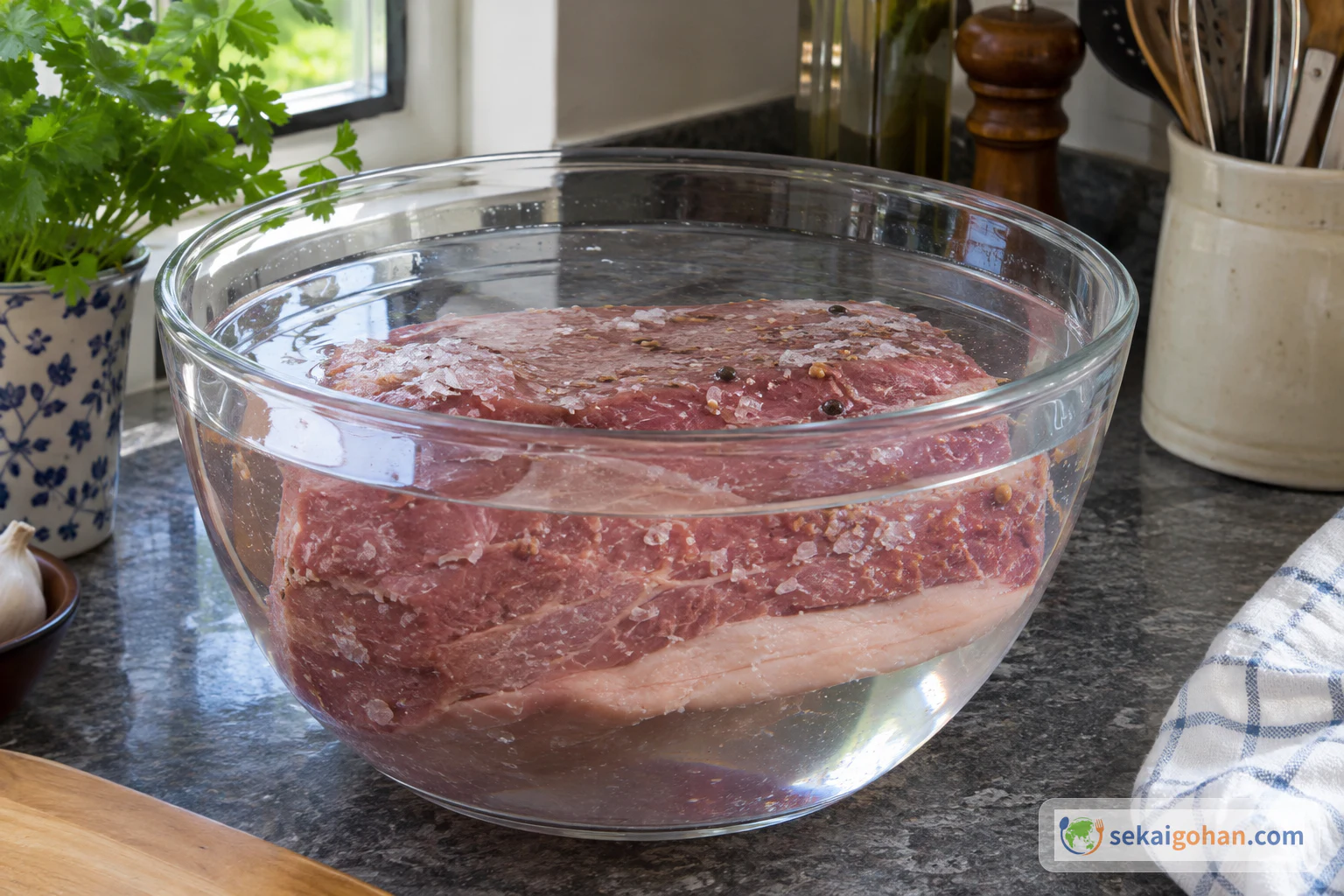
Salt beef is the first choice, and it is worth asking for at a butcher or a shop that carries Newfoundland or Atlantic Canadian goods. Salt beef and corned beef are different things. A raw corned beef brisket is cured differently, so its saltiness is not the same, and the soaking taste check in step 1 matters even more with it. Canned corned beef will not work. It is already cooked and falls apart in the pot.
Buy yellow split peas. Green peas or cooked canned beans give a different colour and texture and will not set into a pudding. Yellow split peas can be found in specialty food shops and online.
| Ingredient | If you can't find it | What changes |
|---|---|---|
| Turnip | The word covers both small white turnips and the larger yellow rutabaga (swede). Use whichever you find | Rutabaga is denser and sweeter, small turnips are milder and softer |
| Parsnips | Leave them out | The plate loses a nutty sweetness. Extra carrots are not a stand-in, since they bring a different sweetness |
| Potatoes | Any potato works | Waxy potatoes hold their shape better in the long simmer |
| Mustard pickles | Put out pickled beets and grainy mustard | The table keeps its sharpness, but loses the sweet mustard relish |
| Pudding bag | A clean cloth or layered cheesecloth tied with kitchen string | It works the same, as long as it is clean and tied securely |
The peas swell a lot as they cook. Tie the bag with plenty of slack above the peas. A bag packed tight either bursts or turns out hard, dense pudding.
Method
Start the night before. The beef needs a long soak in cold water, and that is the only real prep. The next day the beef and the pea bag simmer for two hours with almost no attention. After that the vegetables go in in three waves, the slowest-cooking last, so everything turns tender at the same moment. While the broth reduces at the end, there is time to mash the peas and set the table.
A full stockpot of boiling broth is heavy and holds a lot of heat. Lift the pea bag by its string with a slotted spoon underneath, let it drip over the pot, and keep your face away from the steam. Make sure the beef is cooked all the way through before you slice it.
The three waves exist so each vegetable finishes at the same moment. If one wave cooks faster in your pot, bring the next forward. Judge with the skewer and stop when the potatoes and parsnips are just tender.
When it goes wrong
| What you see | Why | What to do |
|---|---|---|
| The beef and broth taste harshly salty | The soak was too short, or the beef was saltier than usual | Next time give the full soak and taste a sliver. During cooking, swap in fresh hot water after the first hour |
| The jus is too salty | It reduced too far | Stir in a little hot water off the heat, and next time taste as it reduces |
| Cabbage and potatoes fall apart | The pot boiled hard, or they went in too early | Keep the simmer gentle and add vegetables in the order given. Use waxy potatoes |
| The pease pudding is hard and packed | The bag was tied too tightly to let the peas swell | Mash with the butter while hot. Next time leave much more slack in the bag |
| Broth has seeped in and the pudding is watery | The bag was loose at the neck or torn | Tip the peas into a sieve to drain before mashing. Next time tie the neck firmly and use a sound cloth |
Serving, variations and leftovers
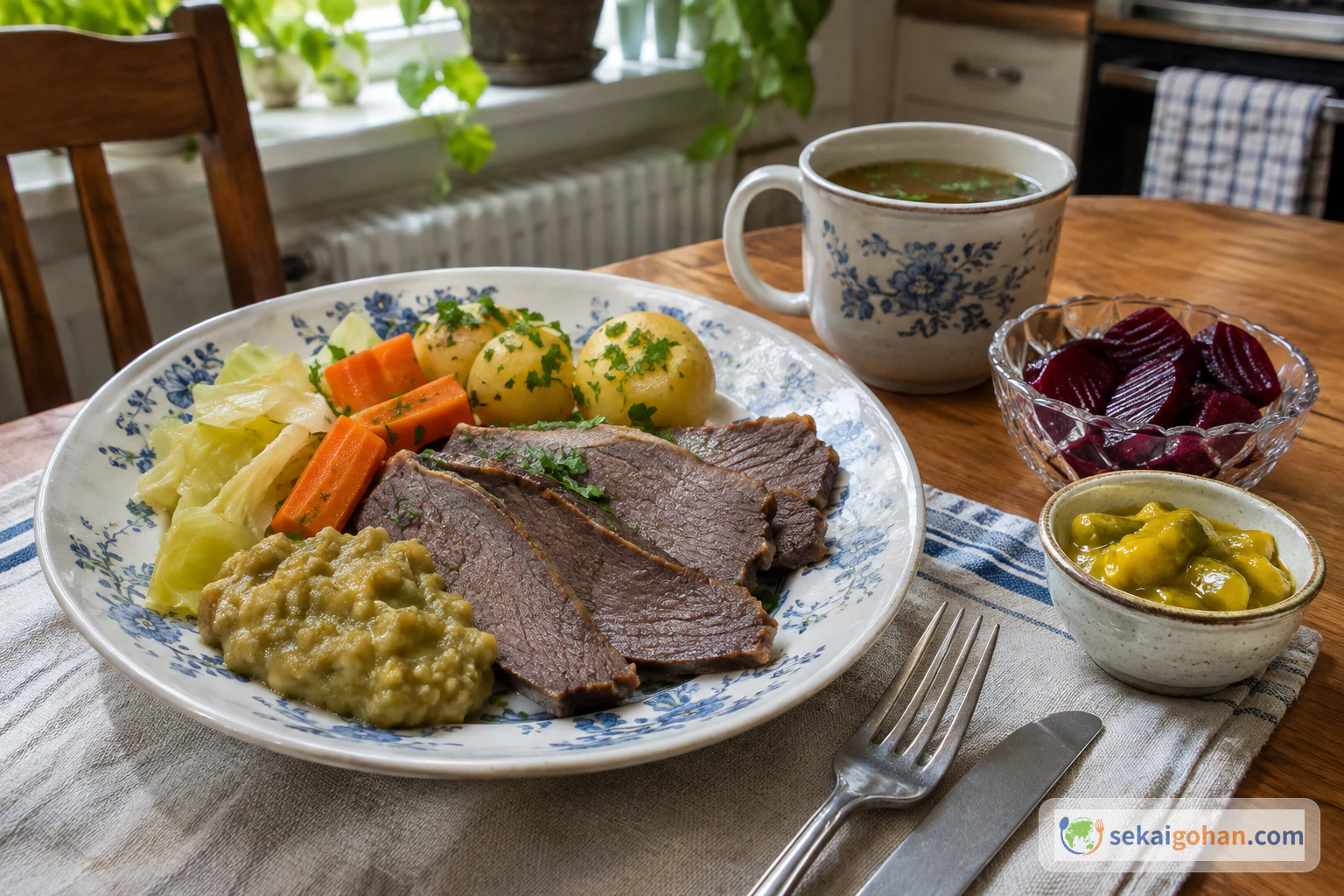
Bring the platter, the bowl of pease pudding and the jars to the table together and let everyone build their own plate. A slice of beef, a cabbage wedge, a few roots, a spoonful of peas and a pickled beet beside it is the usual plate. If anyone wants the broth to drink, keep back a mugful before you reduce it.
Variations
- Chicken or turkey alongside. Some families roast a chicken or a turkey and serve it with a dressing of bread crumbs and savoury, and with a flour-thickened gravy made from the broth. That gravy is the newer habit. The jus in this recipe is lighter and keeps the beef's flavour cleaner.
- Salt pork riblets. Some households make the pot with salt pork riblets in place of beef. The broth turns porkier and richer.
- Blueberry duff. A pudding of blueberries tied in cloth and boiled in the same pot for about two hours turns the meal's one pot into dessert as well.
Leftovers and Monday hash
Leftover beef and vegetables become Monday hash: chop them, then fry in a hot pan until browned in places. Cool leftovers, cover them, and keep them in the refrigerator. Reheat until steaming hot all the way through.
Frequently asked questions
Should I add salt to the vegetables or the peas?
No. The soaked beef salts the broth, and that broth seasons everything that cooks in it. Taste the jus and the pease pudding before serving. If they need anything, a little pepper usually does it.
Why is the onion thrown away?
The whole onion is there to sweeten and round out the broth over the long simmer. By the end it has given most of its flavour to the jus and turned very soft. Lifting it out keeps the platter to the beef and the roots.
Do I have to make gravy?
No. The reduced jus does the gravy's job and is lighter. Families who like a thicker sauce make gravy from the broth, but it is a newer addition to the dish.
Can I cook a turkey as well?
Yes. Some families roast a turkey alongside the boiled dinner. Roast it separately, and let the salt beef stay at the centre of the meal.