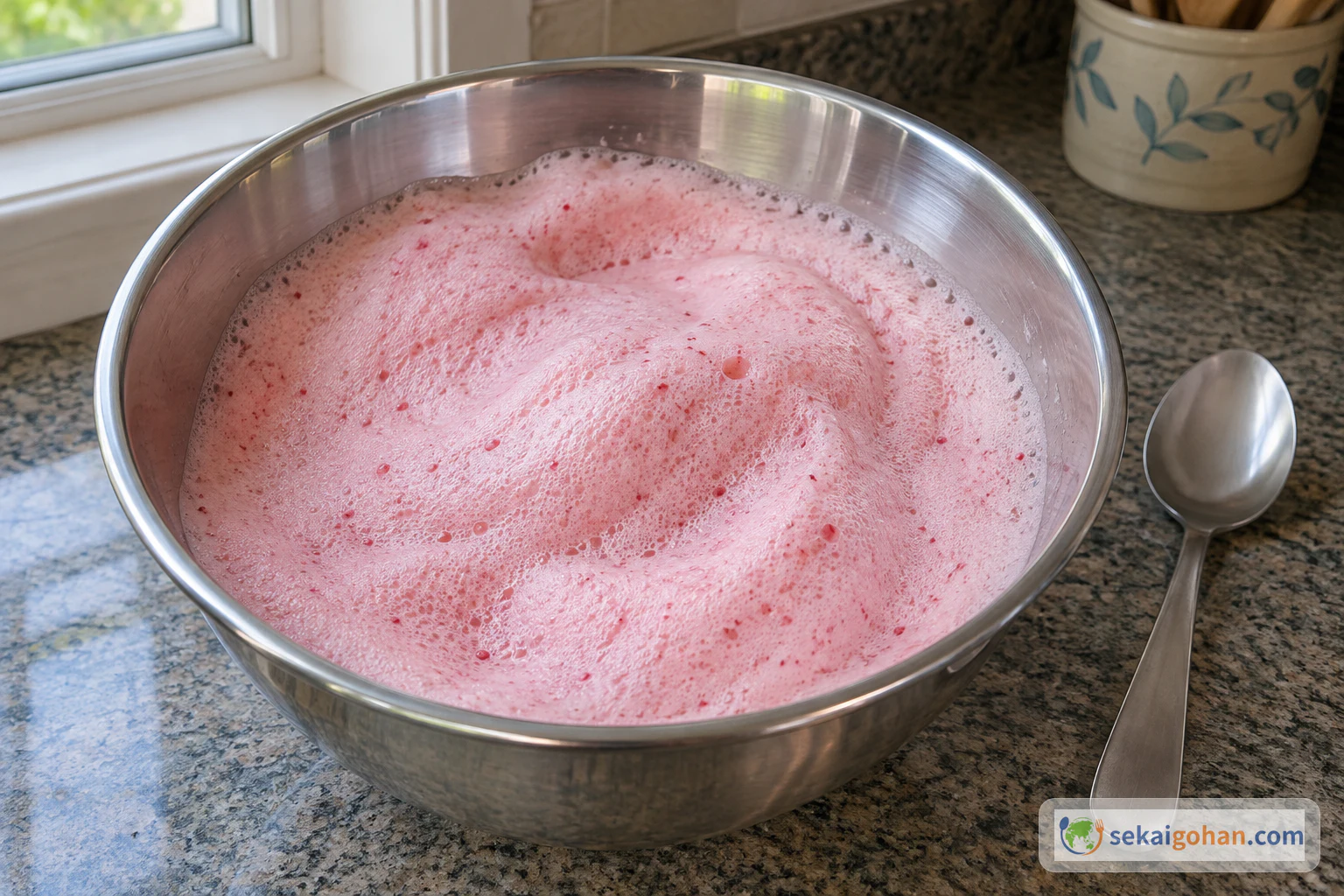
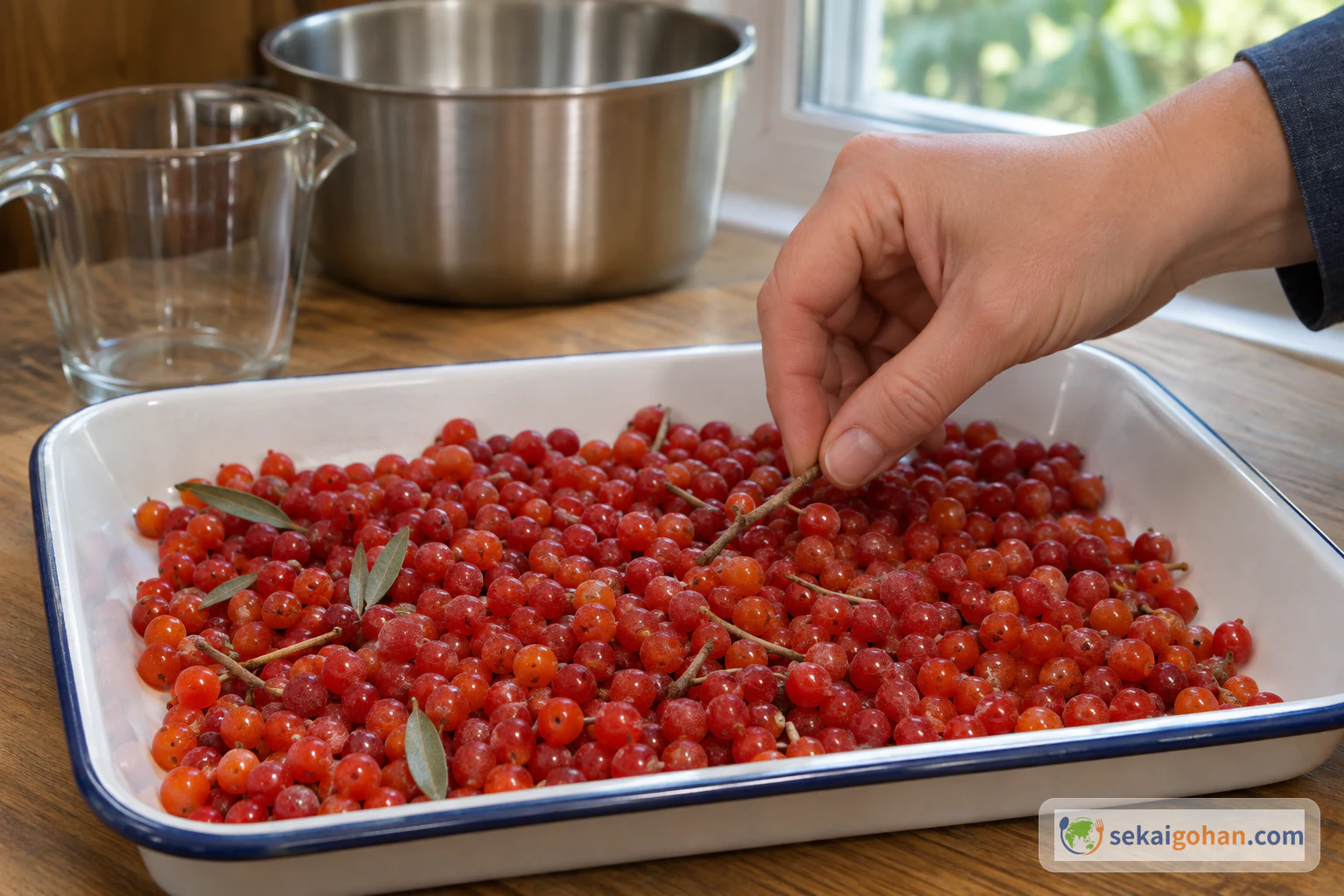
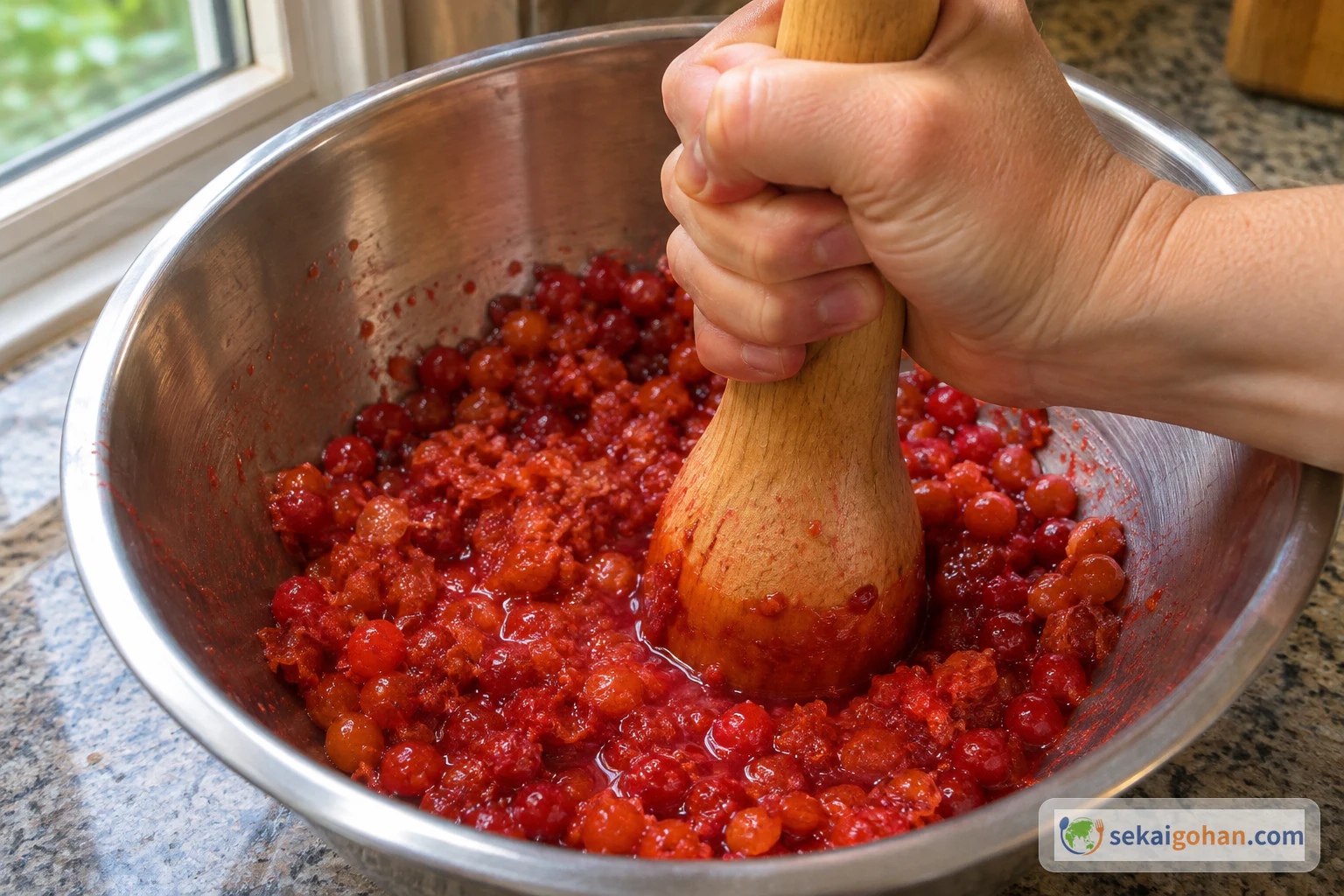
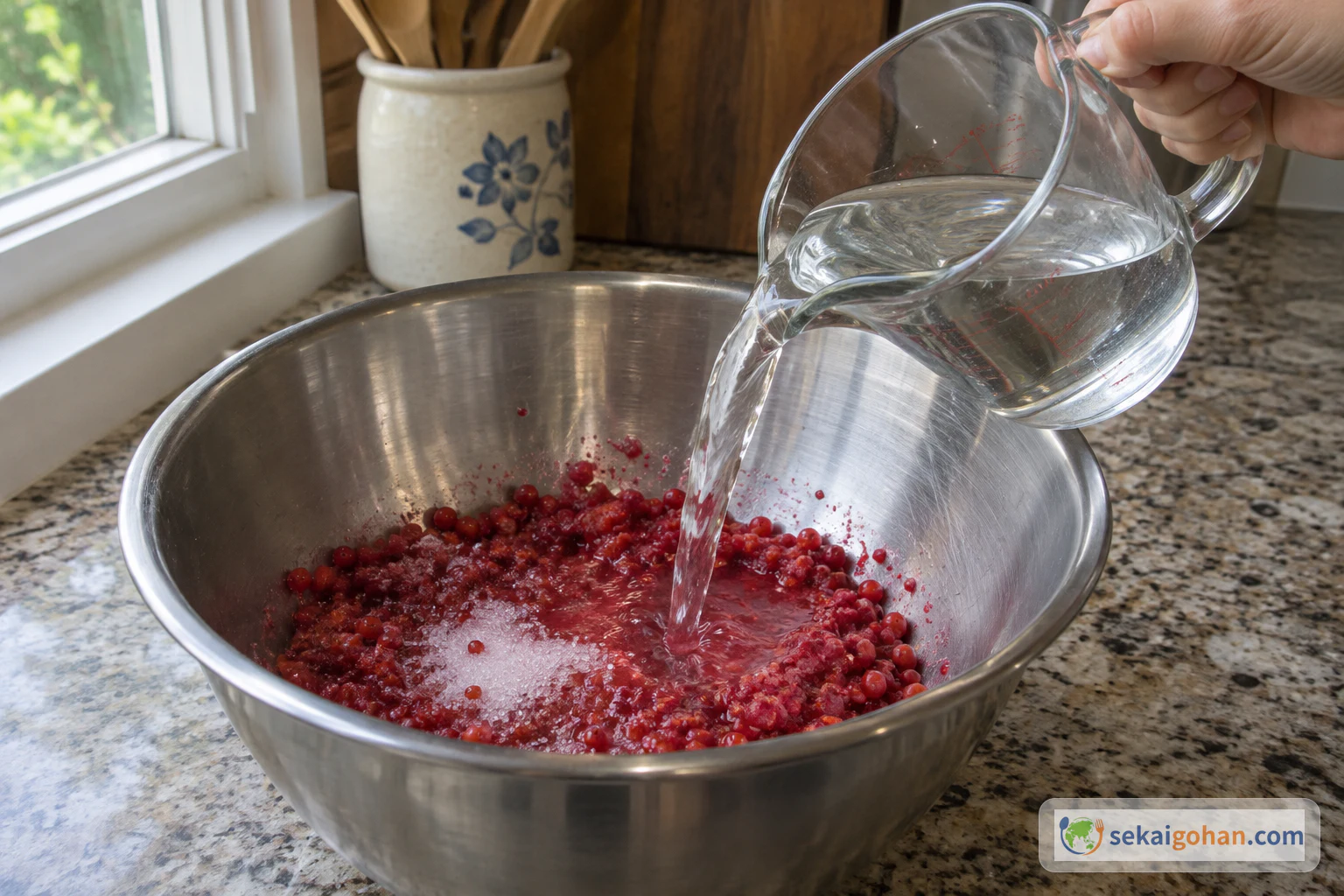
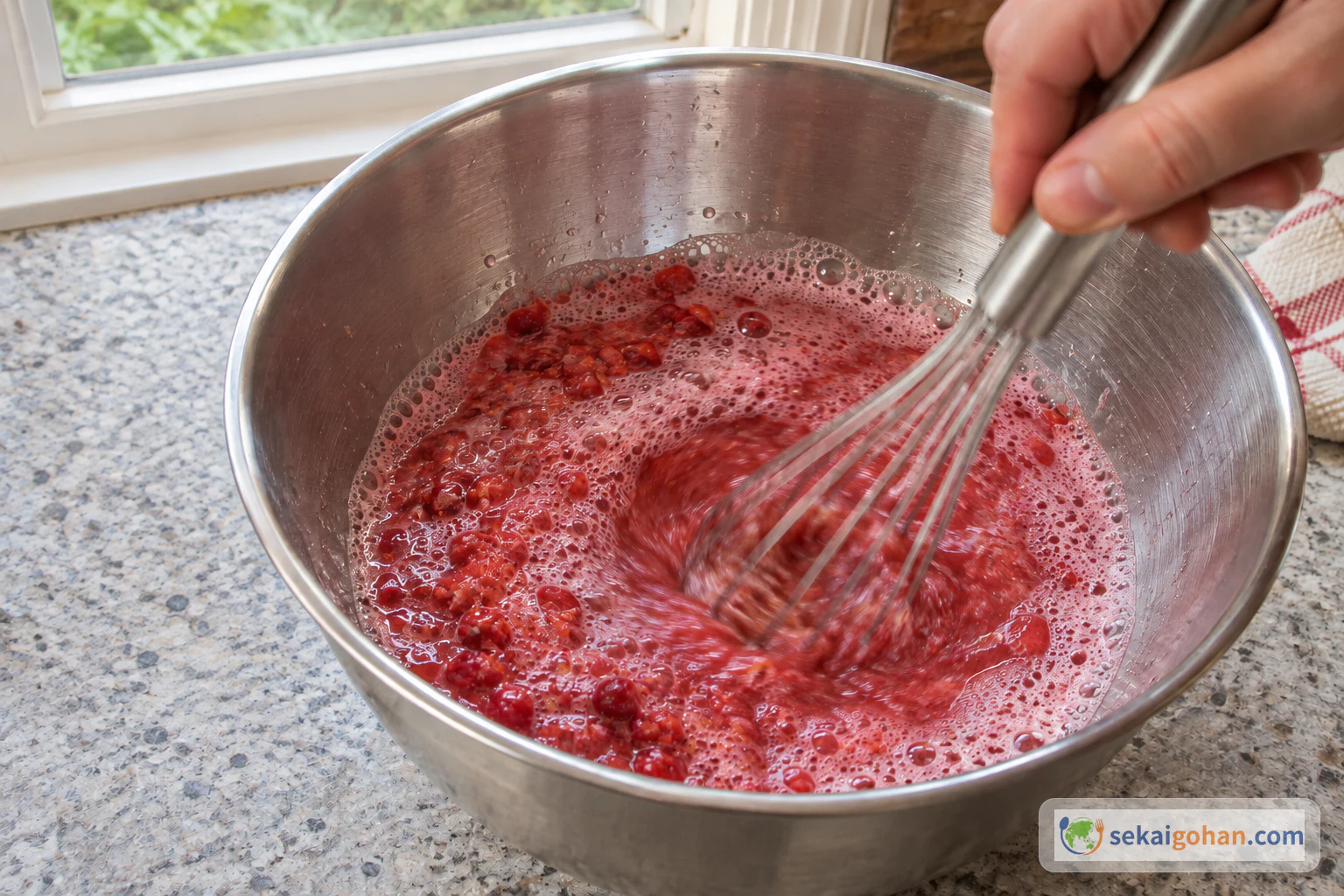
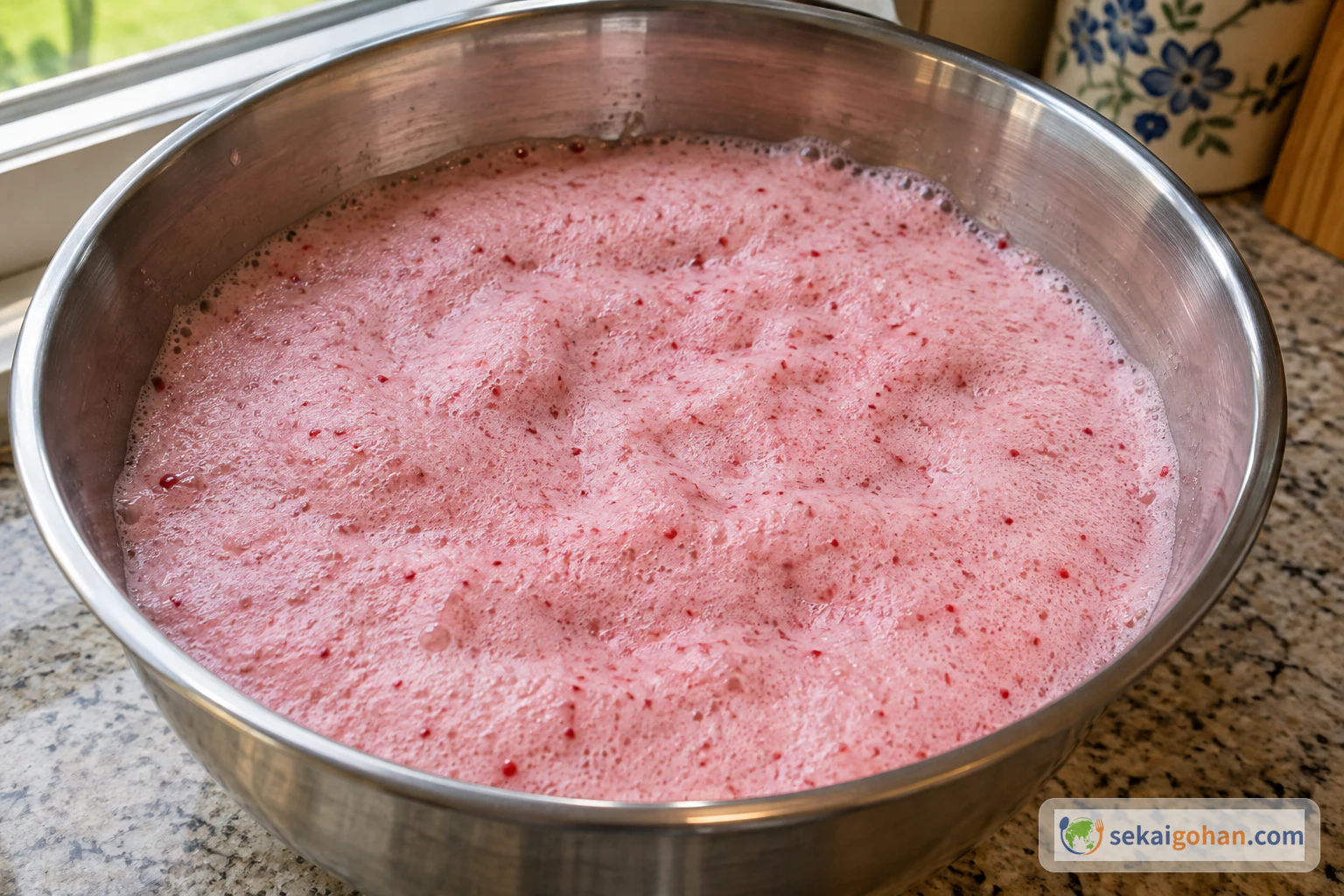
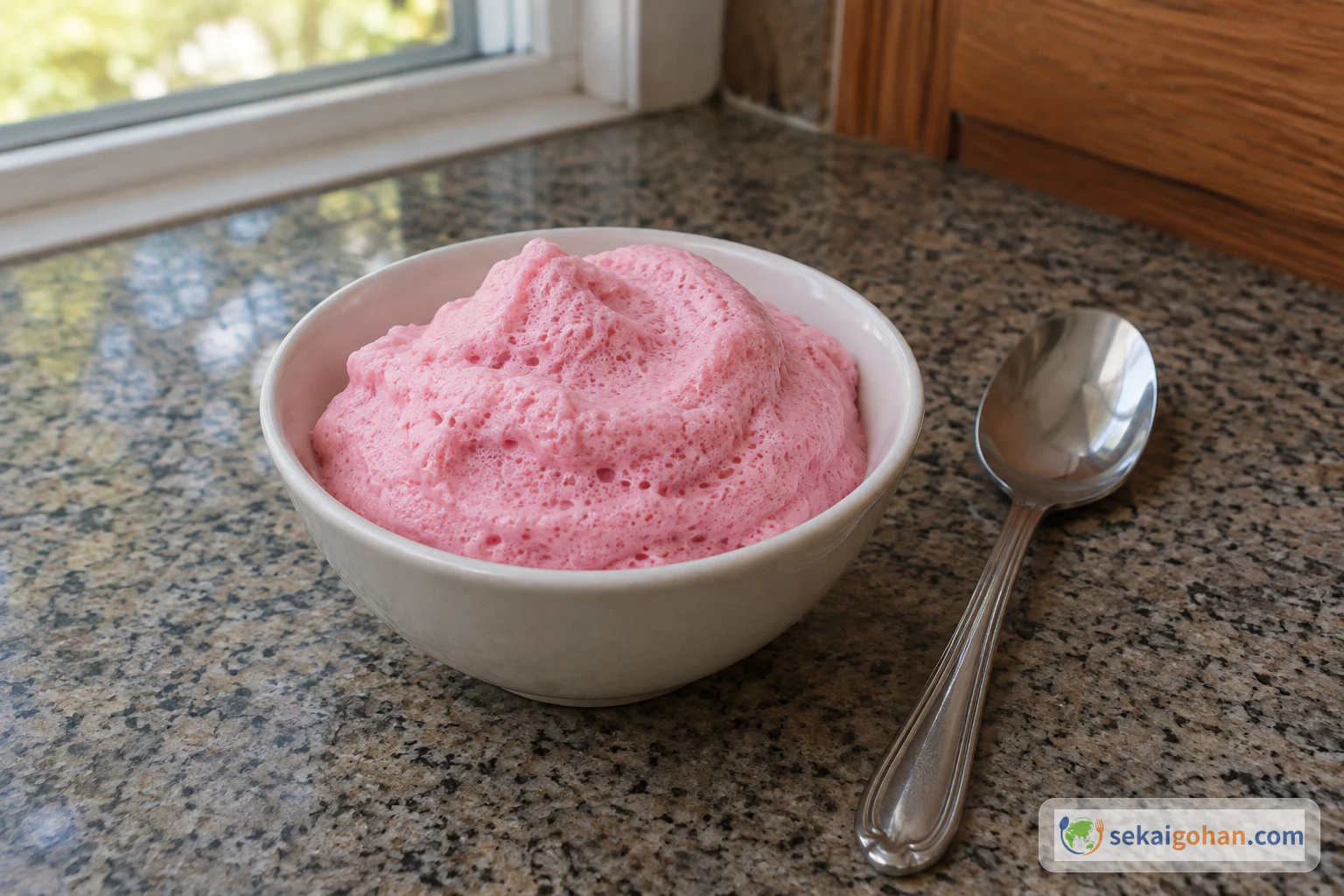
A few minutes into whisking, the cloudy red water in the bowl starts to change. It lightens, thickens and rises, and soon the whisk is moving through a pink foam as fluffy as whipped cream, dotted with tiny red flecks of berry skin. That is sxusem (pronounced /ˈskʊʃəm/), made from soapberries and water and nothing else that matters. It belongs to the Indigenous peoples of interior British Columbia. The first spoonful is cool and airy, and it tastes sour with a clear bitter edge, so it is usually eaten with sweet berries or a little sugar.
Berries That Foam: Where Sxusem Comes From
The plant is Shepherdia canadensis, a shrub known in English as soapberry, buffaloberry, foamberry or soopolallie. The small red berries are high in saponins, the same family of compounds that makes soap lather. Crush them in water, beat the mixture hard, and the saponins hold the air in place. That is the whole trick, and it is why the dish has only two ingredients.
Sxusem is usually traced to Interior Salish territory in British Columbia, though where it was first made is not settled. Today the name turns up most often in the Cariboo region. At Canim Lake, a Secwepemc family tradition carries on: the berries are picked in July by beating the branches over a sheet spread on the ground, so the fruit rains down and the leaves stay mostly on the bush. Elsewhere people shake the bushes over a mat. Soapberries ripen from mid-summer into early autumn. They are bitter when fresh and turn sweeter after a frost. For many Indigenous peoples in Canada the berry is an important food and medicine, and it has long been traded into places where the shrub does not grow.
A treat for after the feast
Whipped soapberries were an event. The foam was served after feasts, in special bowls with special spoons, and the mood around it was playful. The old beater was a bundle of peeled willow branches tied to a stick. Other households beat it with cedar bark, branches of thimbleberry or salal, or a twist of timbergrass. Today an electric mixer does the same work much faster. In the Cariboo the finished foam is described as looking like strawberry ice cream, pink and creamy with tiny red flecks. The English nickname "Indian ice cream" is still the term many people search for, but sxusem is the dish's own name, and it is the one used here.
Soopolallie comes from Chinook Jargon: soop (soap) plus olallie (berry). Sxusem is also written xusum. The sour, bitter taste is an acquired one, and the sweet berries served alongside are part of the dish.
Sweetening has always been local. Before cane sugar arrived, cooks beat in salal berries, thimbleberries, fireweed petals or cooked camas. Today some cooks stir in milk or eggs. Each household also decides how much water goes in, and that choice moves the foam anywhere between a drinkable froth and a thick, spoonable cream. For other dishes from across the country, see the Canada recipe collection.
Ingredients
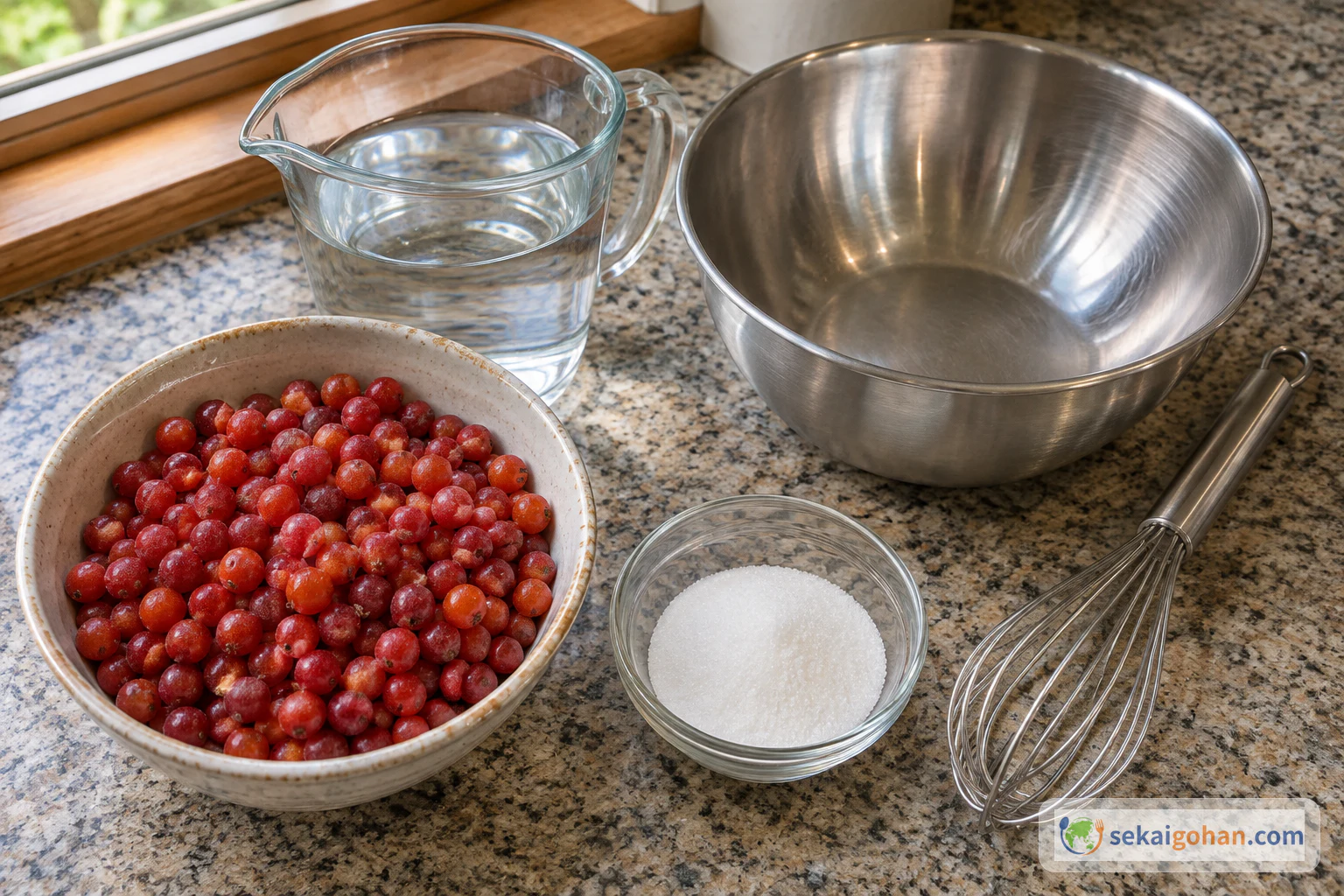
Sugar does more than sweeten. It thickens the foam, so add less if you want it light. If you use vanilla, use real extract. Imitation vanilla makes the foam loose.
Any trace of oil or butter in the bowl, on the whisk or on your hands stops the berries from foaming. Use a metal bowl. Keep plastic bowls, which hold onto grease, and anything that has touched cream or butter away from the berries.
Soapberries, water and sugar contain none of the major allergens. Check the label on any vanilla or sweetener you add. If you stir in milk or eggs, the foam then contains dairy or egg.
Equipment
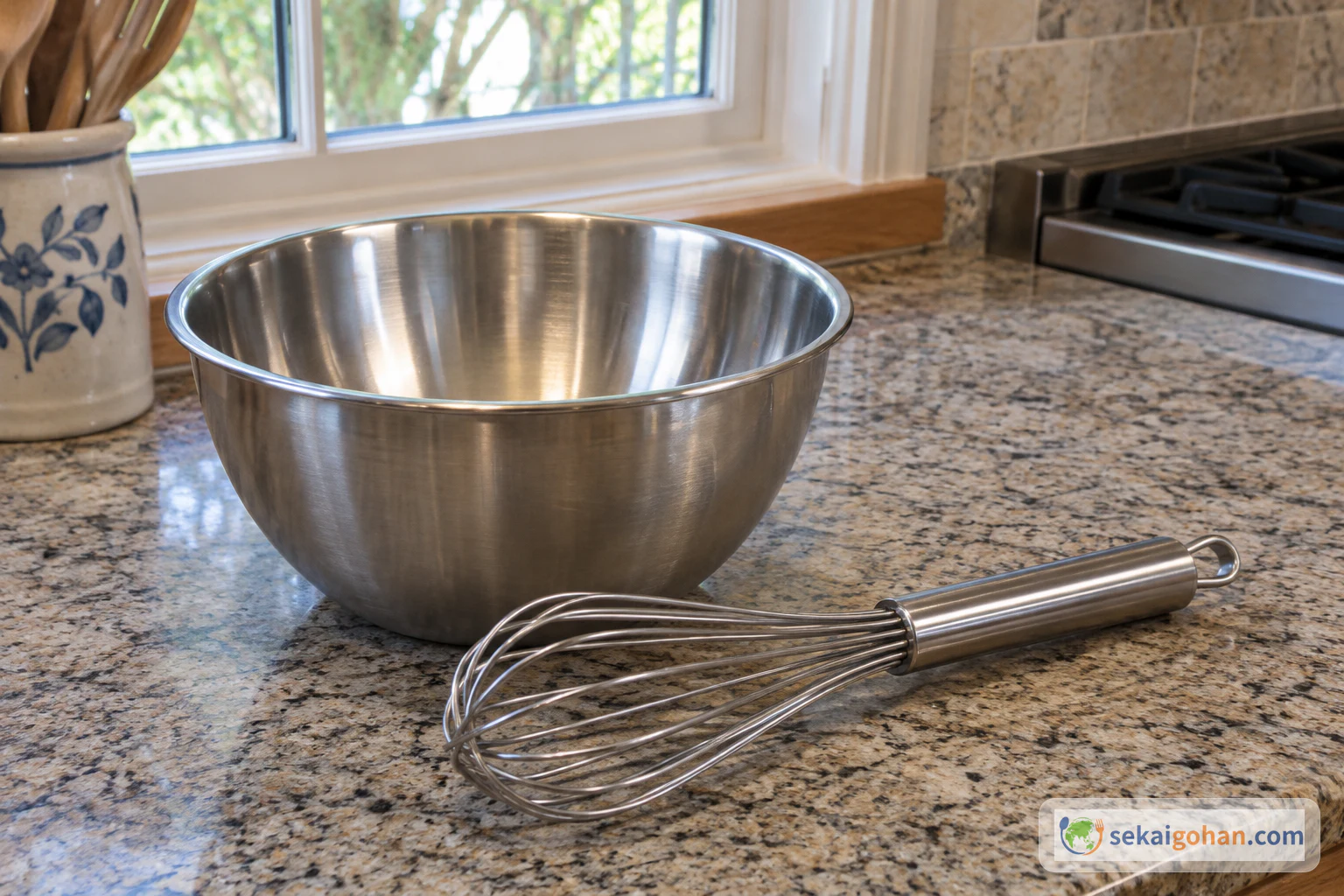
- Large stainless steel mixing bowl
- Balloon whisk, or a hand mixer
- Liquid measuring cup
- Potato masher or wooden spoon
- Baking tray for sorting the berries
- Clean, dry dish towel
- Small bowls and spoons for serving
Choosing Berries and Sweeteners
Soapberries are the one thing you cannot swap. The foam comes from their saponins, and no other berry whips up this way. Use whole fresh or frozen berries and crush them yourself, not juice. Buy them from people who know the plant and harvest it, and do not pick wild shrubs yourself. A misidentified berry eaten raw is a real danger. Frost-touched berries are gentler and need less sweetening. Early-summer berries are more bitter.
| Sweetener | What it does |
|---|---|
| None | The sharpest version, with the most bitterness and a light pink colour |
| Sugar | Sweet and noticeably thicker. The easiest choice to find anywhere |
| Salal berries or thimbleberries | The older way. Sweetness and colour come in bursts rather than evenly |
| Cooked camas or fireweed petals | Other old sweeteners, used where those plants are part of the local larder |
| Real vanilla | Takes the edge off the sour taste. Imitation vanilla loosens the foam |
Method
Most of the work happens before you whisk. You clean the equipment, sort the berries and crush them. Then comes about ten minutes of steady, hard beating, and there is no waiting time anywhere. Make it right before you plan to eat, because the foam goes straight from the bowl to the table.
Soapberries are high in saponins. Eaten in large amounts, they can cause vomiting and diarrhea. Some people also get an upset stomach from swallowing so much air with the foam. Start with a small bowl. Anyone with health concerns should skip it.
When It Goes Wrong
| What you see | Why | What to do |
|---|---|---|
| The liquid stays flat after minutes of whisking | Grease in the bowl, on the whisk or on your hands | Wash a fresh metal bowl and whisk as in step 1, move the mixture over and whisk again |
| Bubbles form but never build | The berries were not crushed enough, or only juice went in | Crush the pulp again in the bowl, then go back to whisking |
| The foam is thin and runs off the spoon | Too much water | Serve it as a drinkable froth, or use less water next time |
| The foam is too dense and stiff | Too little water, or a lot of sugar | Use equal volumes of berries and water next time, and add less sugar |
| Too bitter to enjoy | Fresh, pre-frost berries are naturally bitter | Add sweet berries or sugar, or choose berries picked after a frost |
| A heavy, bloated feeling after eating | The airy foam and the saponins | Serve small bowls and eat slowly |
Serving, Variations and Storage
At the table
Sxusem is a finish to a meal, served after a feast as a shared treat. Bring it out in small bowls with spoons and set a plate of sweet berries beside it. Everyone eats it right away, while it is still light. The occasion is meant to be fun, and passing the bowl and watching the foam rise are part of it.
Variations
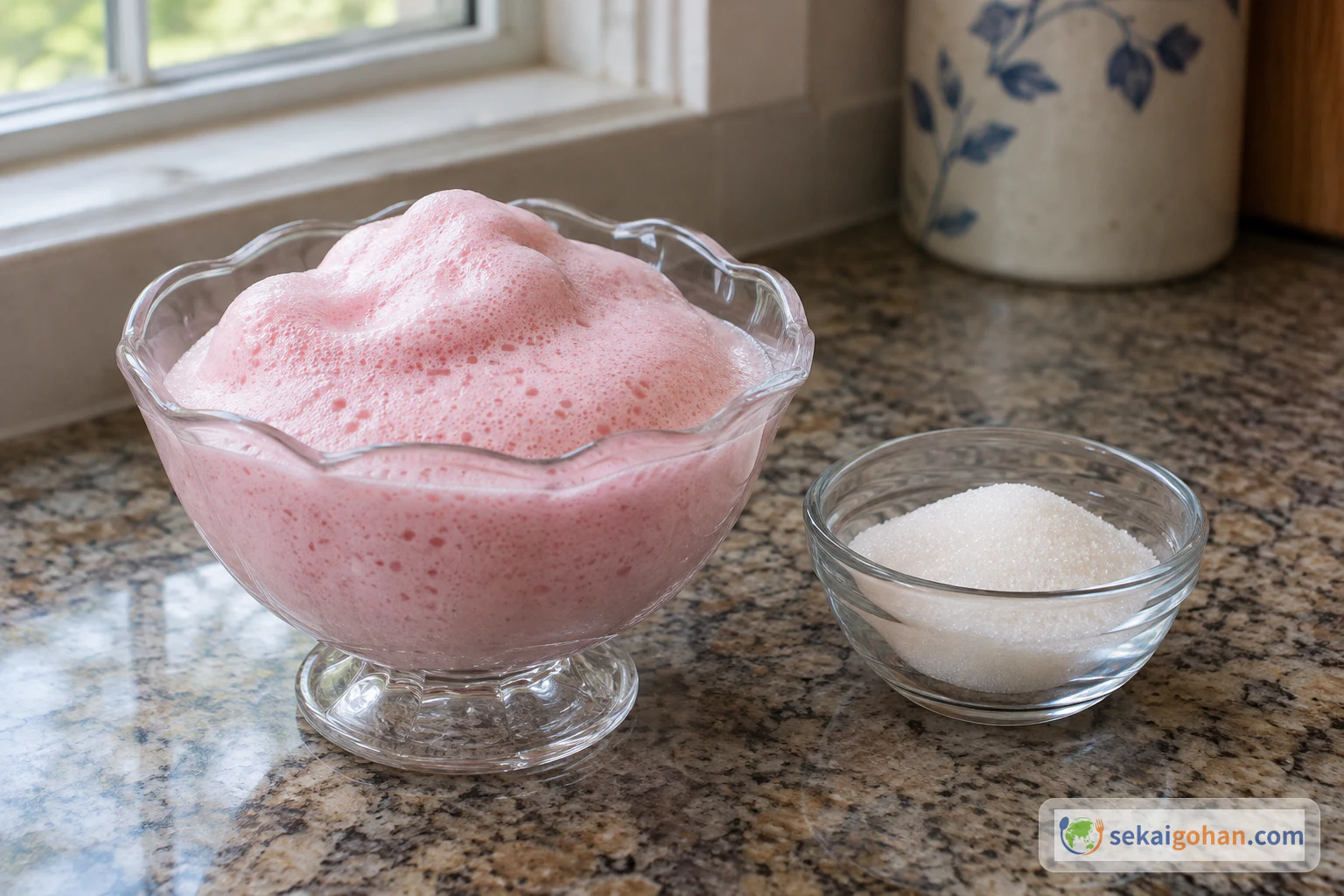
- Sweetened with berries: Fold in salal berries or thimbleberries just before serving. The sour taste stays, softened by bursts of sweetness.
- Thick or drinkable: Cut the water for a dense, ice-cream-like foam, or add more for a froth you drink from a cup.
- From jarred berries: Some households cook the berries in a pot with just enough water to cover them, jar them hot, and later whip the jarred berries without adding more water.
- With milk or eggs: Some cooks now stir these in. The foam gets richer and moves away from the two-ingredient original, and it then contains dairy or egg.
Storing
Whip only as much as you will eat, and serve the foam as soon as it is made. Keep the berries, not the foam. Soapberries are kept frozen, canned, dried or smoked, and frozen berries can be used in place of fresh ones.
Frequently asked questions
Can I use frozen soapberries?
Yes. Freezing is one of the usual ways to keep the berries, and frozen ones go into the recipe in place of fresh. Sort out any leaves or stems and crush them in the clean metal bowl as in step 3.
Is an electric mixer as good as a hand whisk?
It works well and is much faster. People have whisked sxusem with willow branches, cedar bark and grass, and today they also use electric beaters. Check that the beaters are as free of grease as the bowl.
Why does it turn pink?
The colour comes from the red skins of the crushed berries spreading through the foam. The tiny red flecks you see are bits of those skins. Unsweetened foam stays pale pink. Berries folded in add stronger red in spots.
Can I make it ahead for guests?
Whip it right before serving. Do the prep ahead instead: clean the bowl and whisk, sort and measure the berries, and measure the water. Then the ten minutes of whisking is all that is left when the meal ends.