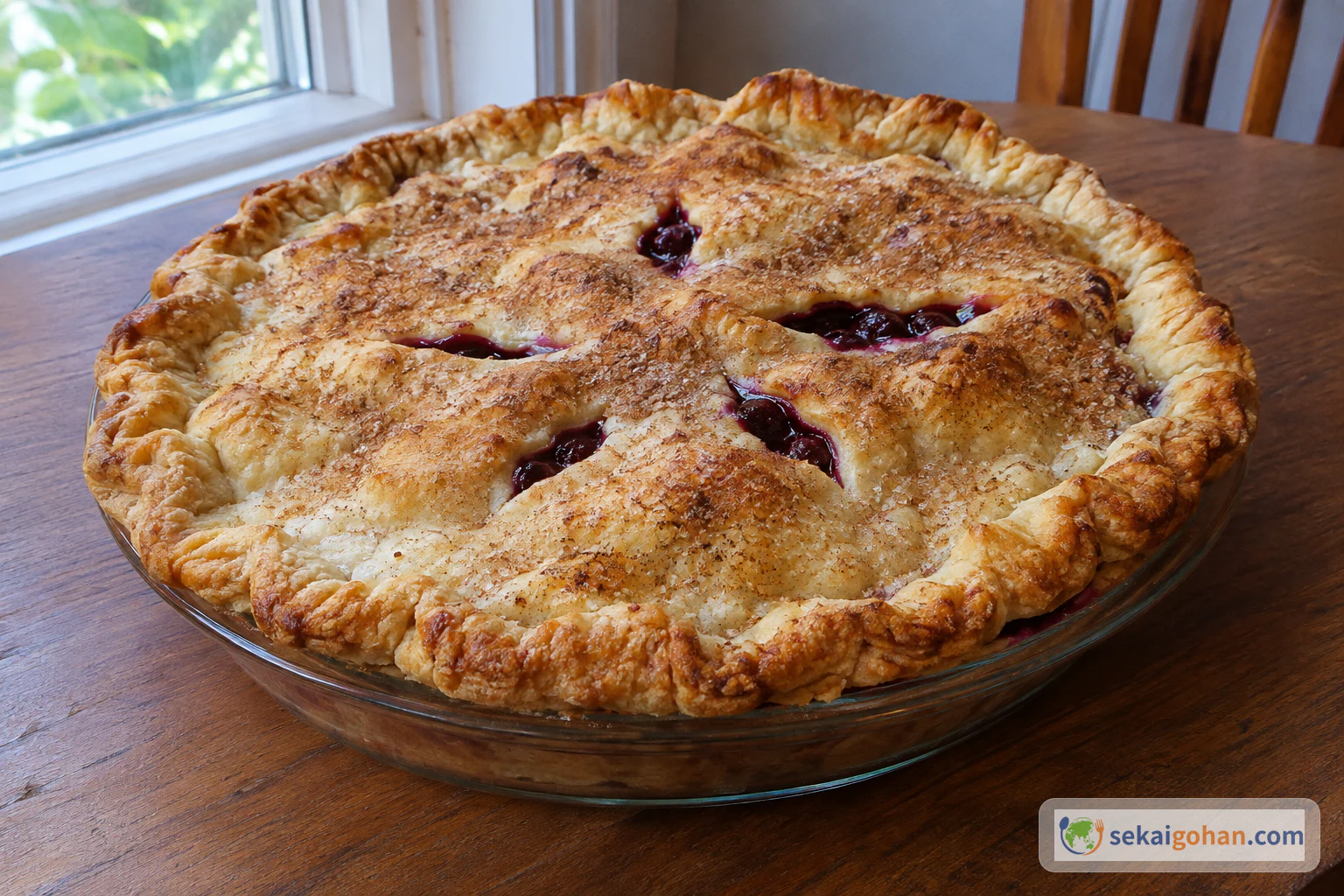
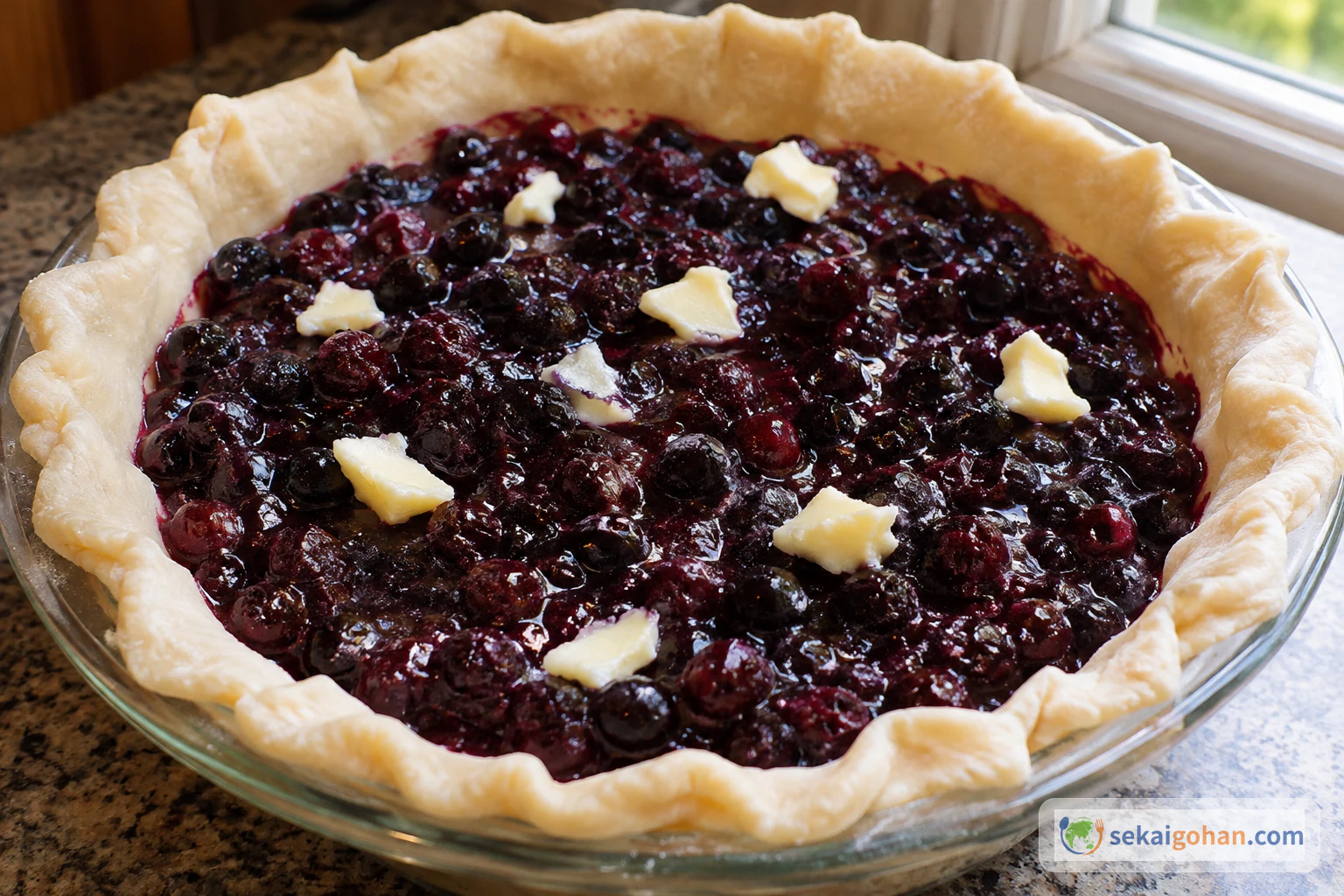
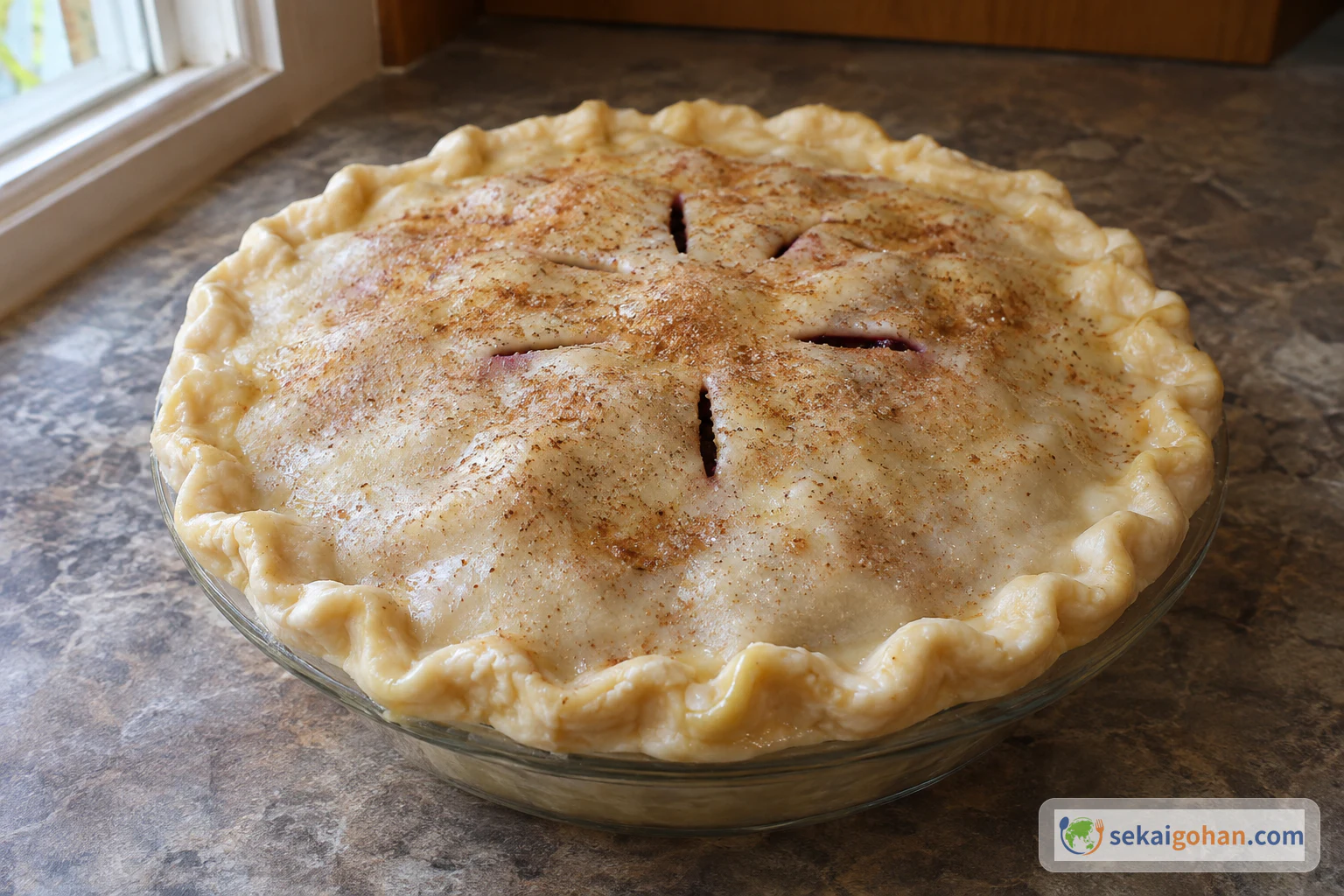
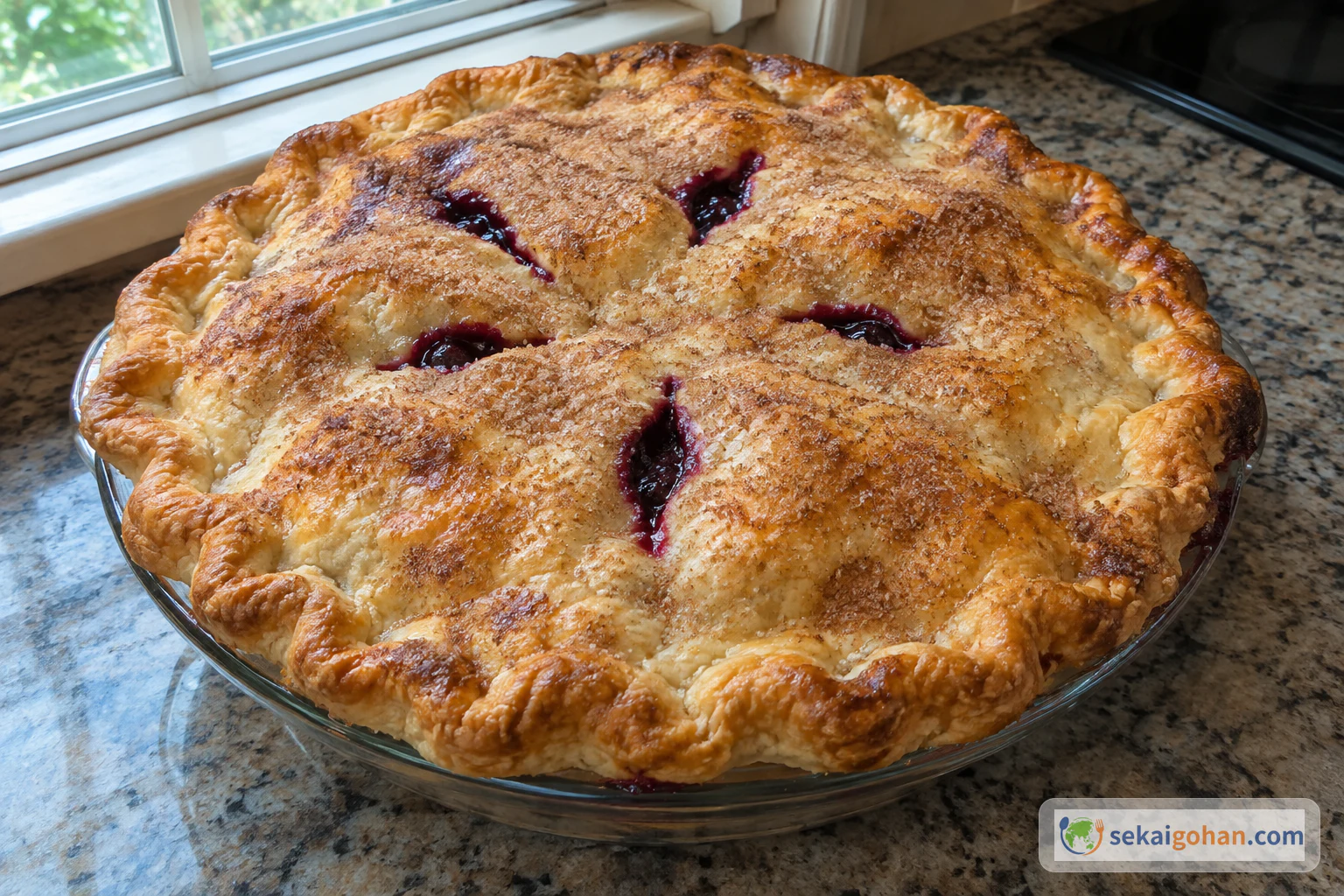
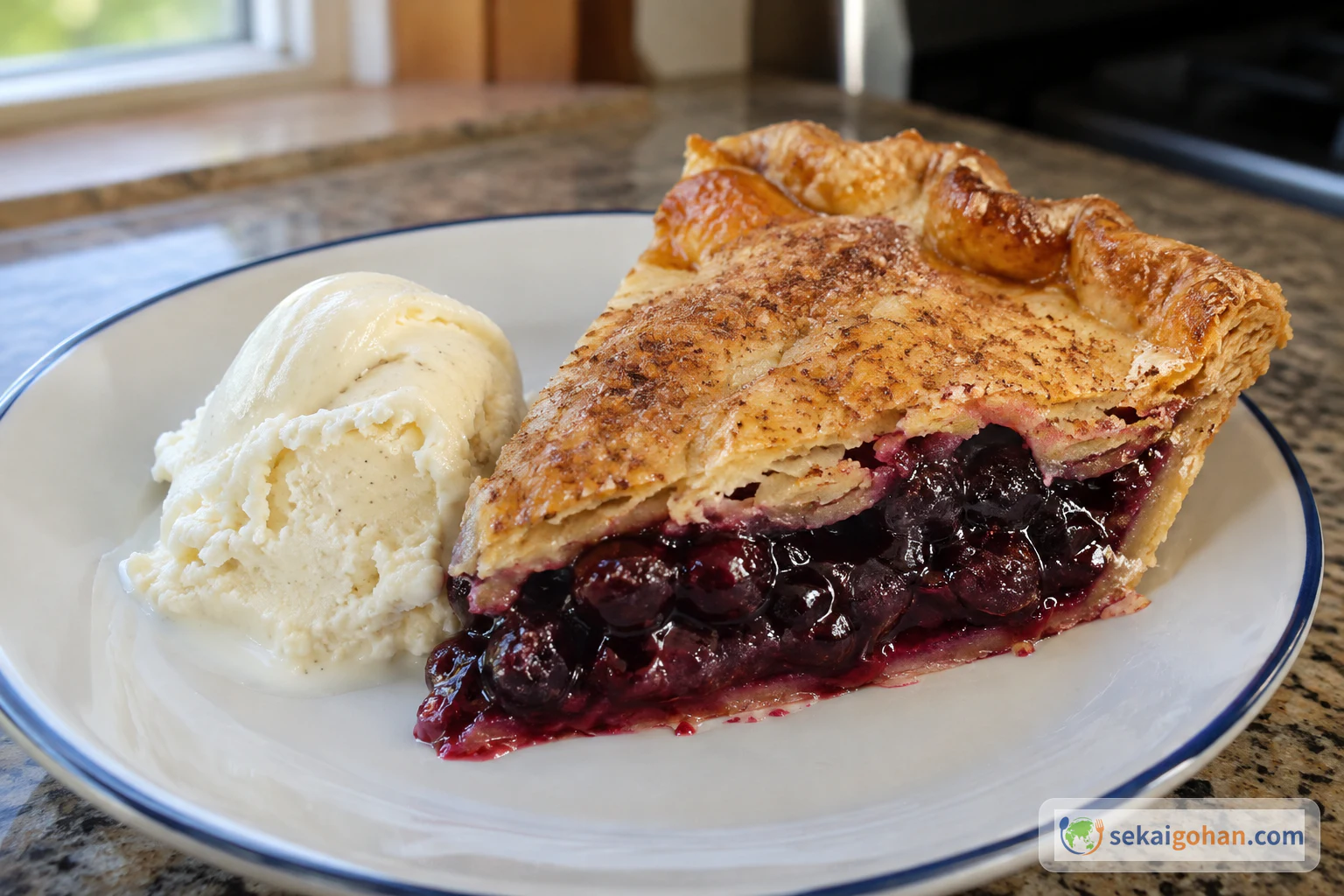
Late in the bake, the kitchen smells of hot pastry and cinnamon, and dark purple juice starts to push up through the slits in the top crust and bubble there. That bubbling tells you the pie is done. Saskatoon berry pie belongs to Canada's prairies, where the berries ripen in the middle of summer and get baked between two sheets of short, crumbly pastry. The filling is sweet with a little lemon sharpness, thick enough to hold a slice, and best eaten warm with vanilla ice cream melting into it.
A Prairie Berry Under a Pastry Lid
Saskatoon berries grow on Amelanchier alnifolia, a shrub native to a wide band of Canada that runs from western Ontario to British Columbia and the Yukon. On the shrub, the fruit turns from white to red to a deep purple, and ripe berries are soft. They ripen from mid- to late July, so the fresh season is short. That is why so many pies are baked from frozen berries the rest of the year.
On the plate they look like blueberries. Botanically they are pomes, the same kind of fruit as an apple, and they are sweet and fleshy. One variety, 'Smoky', has a strong almond-like flavour. Some cooks add almond extract to their filling. For a long time on the prairies the berries were a main ingredient of pemmican. Today they are eaten fresh, dried, cooked into jam and baked into pies. Saskatchewan has made the saskatoon its provincial fruit.
From wild shrubs to orchards
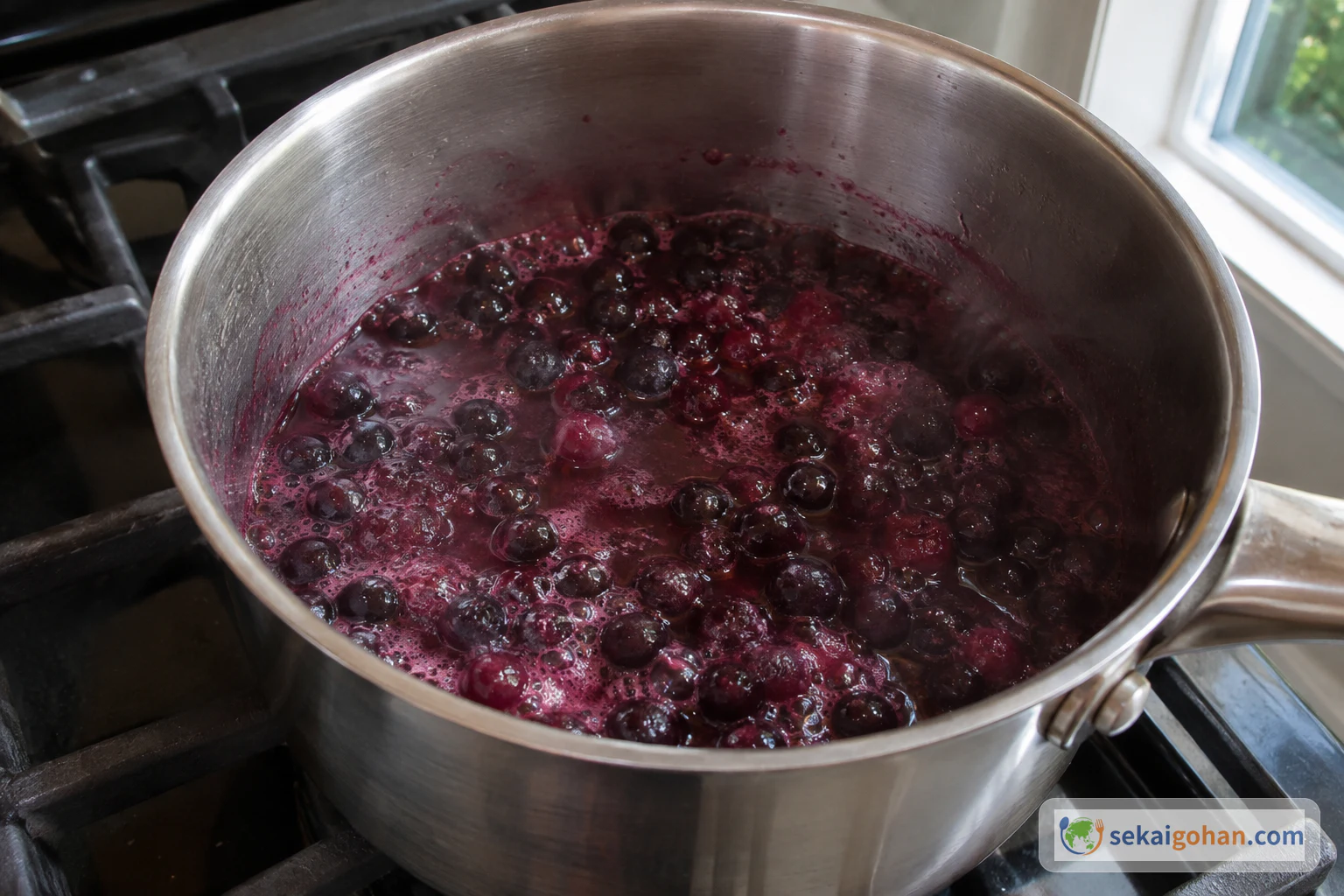
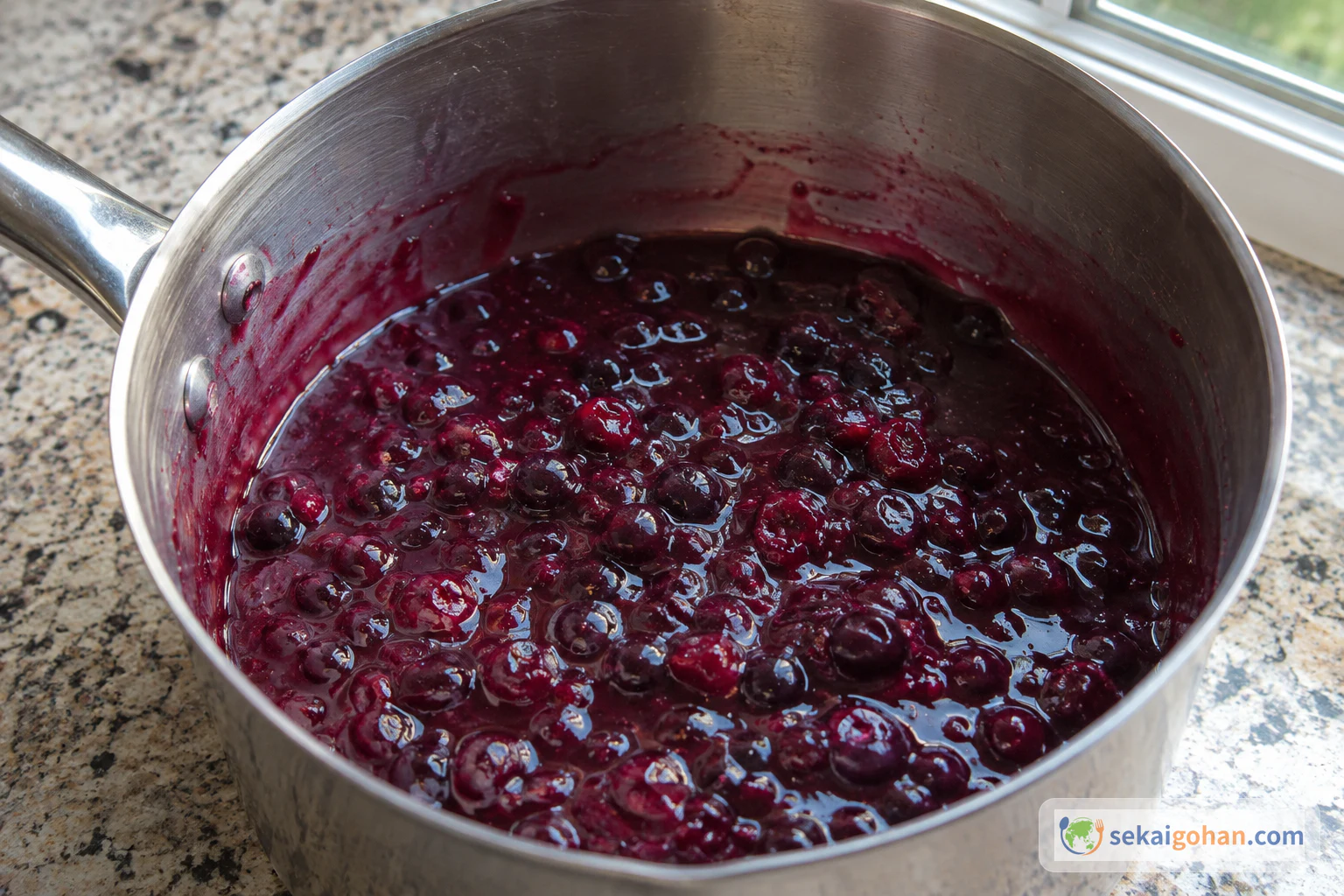
Commercial saskatoon orchards started in the late 1980s, mostly in Manitoba, Saskatchewan and Alberta. Their berries are sold fresh and frozen and are also made into products such as pie filling. For a home baker, that means frozen saskatoons are a normal starting point. The pie here cooks the berries briefly on the stove before they go into the crust, so you know how thick the filling is before the oven door closes.
"Saskatoon" comes from Cree. The city of Saskatoon carries a Cree-derived name too, but how the city and the berry came to share it is not settled.
Other prairie households make this pie differently. Some pack raw berries straight into the crust with cornstarch and give the pie a long bake at a single moderate temperature. Others cook the filling down until it is thick like jam, sometimes with almond extract, and bake it hotter for a shorter time. If you want more of Canada's pastry cooking, the spiced meat pie tourtière uses the same double-crust idea, and butter tarts are the country's sweet pastry in miniature. You can find more dishes on the Canada page.
Ingredients (one double-crust pie)
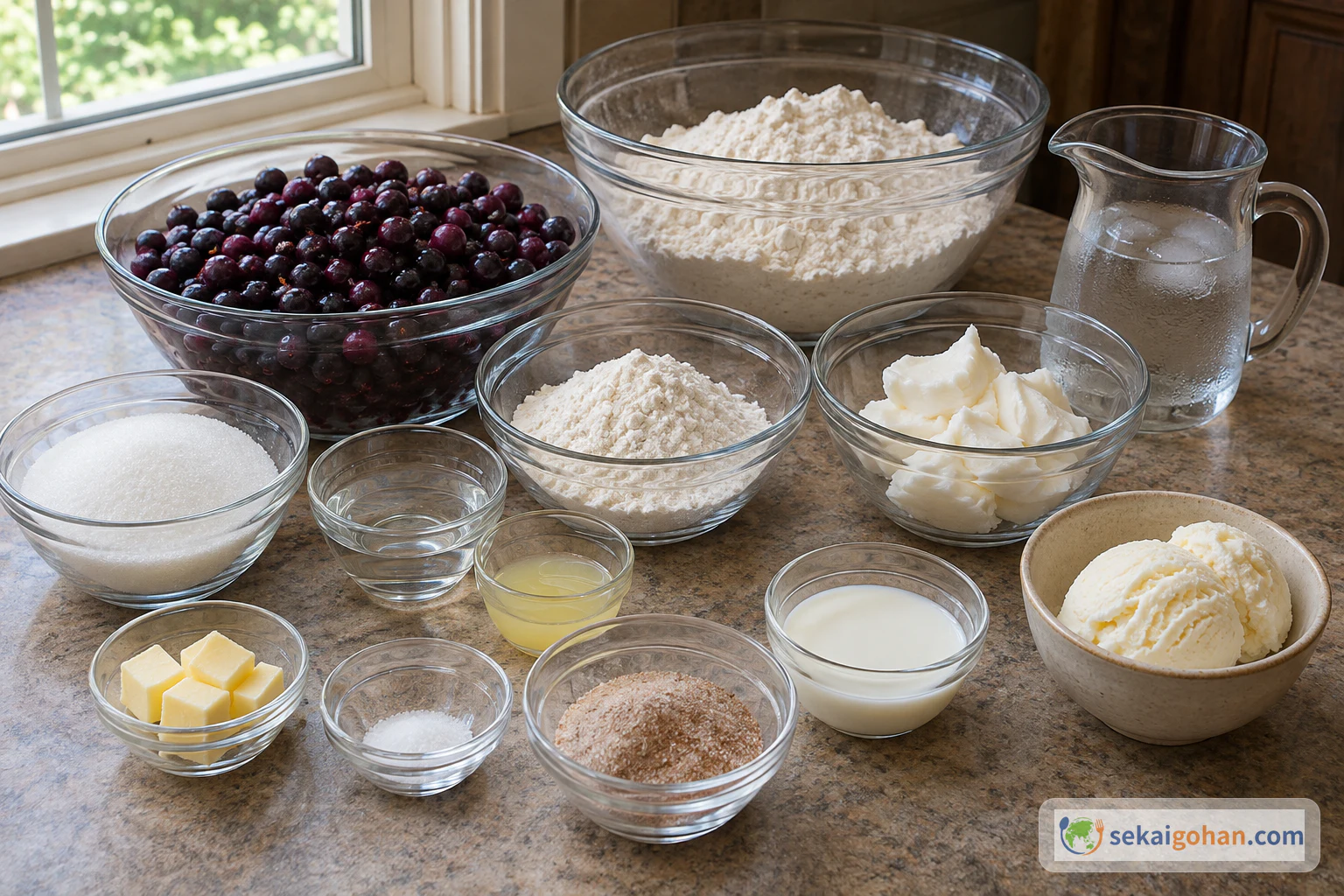
This pie contains wheat (flour in the crust and filling) and milk (butter and milk, plus the ice cream served with it). If you use lard instead of shortening, the pie contains animal fat.
Equipment
- Saucepan
- Two mixing bowls
- Sifter or fine sieve
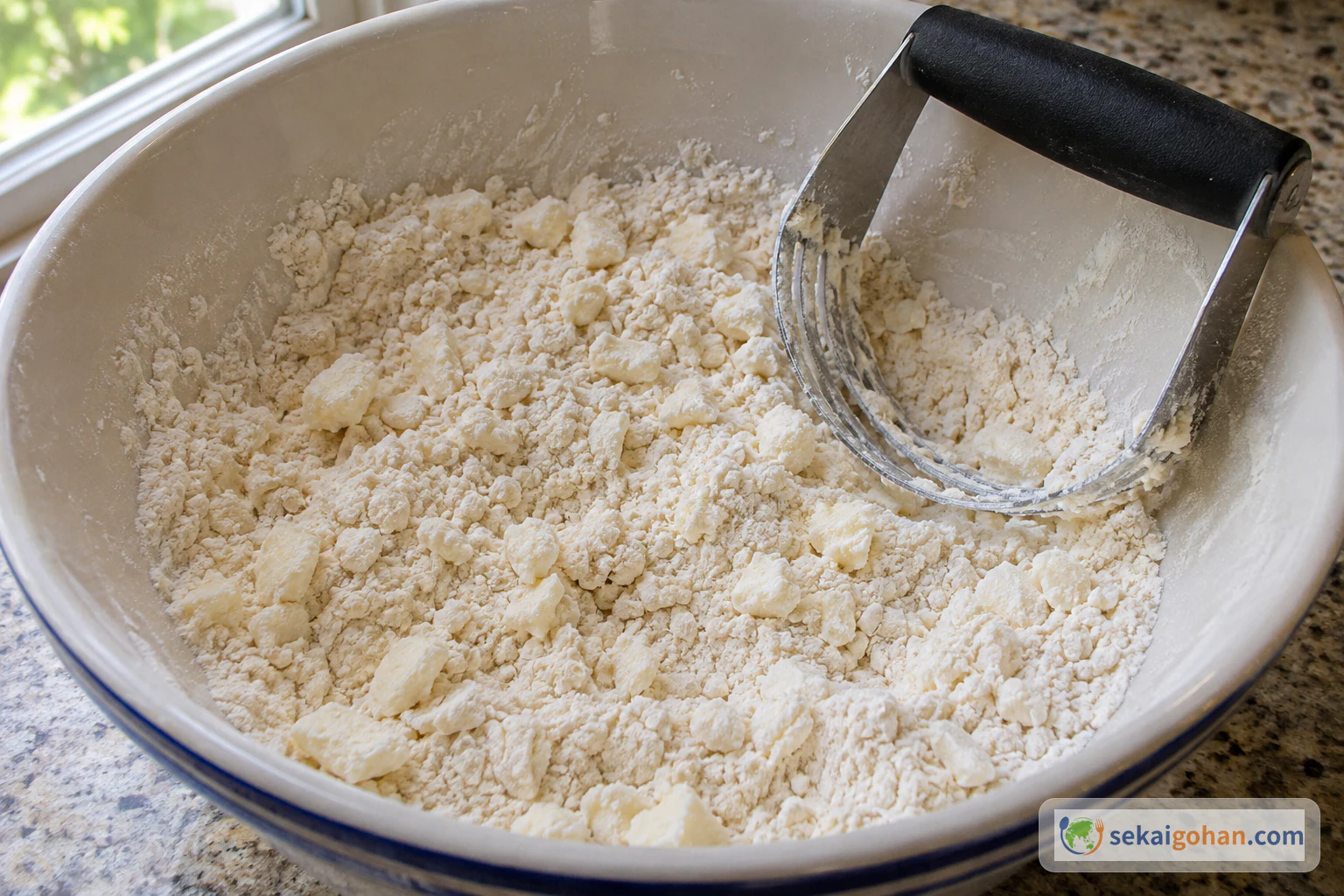
- Pastry cutter or food processor
- Fork
- Rolling pin
- 9-inch (23 cm) pie dish
- Small sharp knife
- Pastry brush
- Baking sheet
- Aluminum foil
Choosing Berries, Fat and Flour
Frozen saskatoon berries are the ingredient worth looking for. Fresh berries keep for 3 to 5 days in the refrigerator, and freezing is the way to keep them longer. That means a frozen bag works just as well as fresh for this pie.
Blueberries can go in alongside saskatoons when your bag runs short, and the pie will still taste of saskatoon. If you use only blueberries, you get a good blueberry pie, but it is a different pie from this one.
| Ingredient | What to use | What a swap changes |
|---|---|---|
| Fat for the crust | Shortening, or lard in its place | Butter makes a crust with a different texture and flavour from this short, crumbly prairie style |
| Flour | All-purpose for both the crust and the filling | Using the same flour keeps the thickening and the crumb consistent |
| Lemon | Fresh juice | Fresh juice gives the clean sharpness the filling needs |
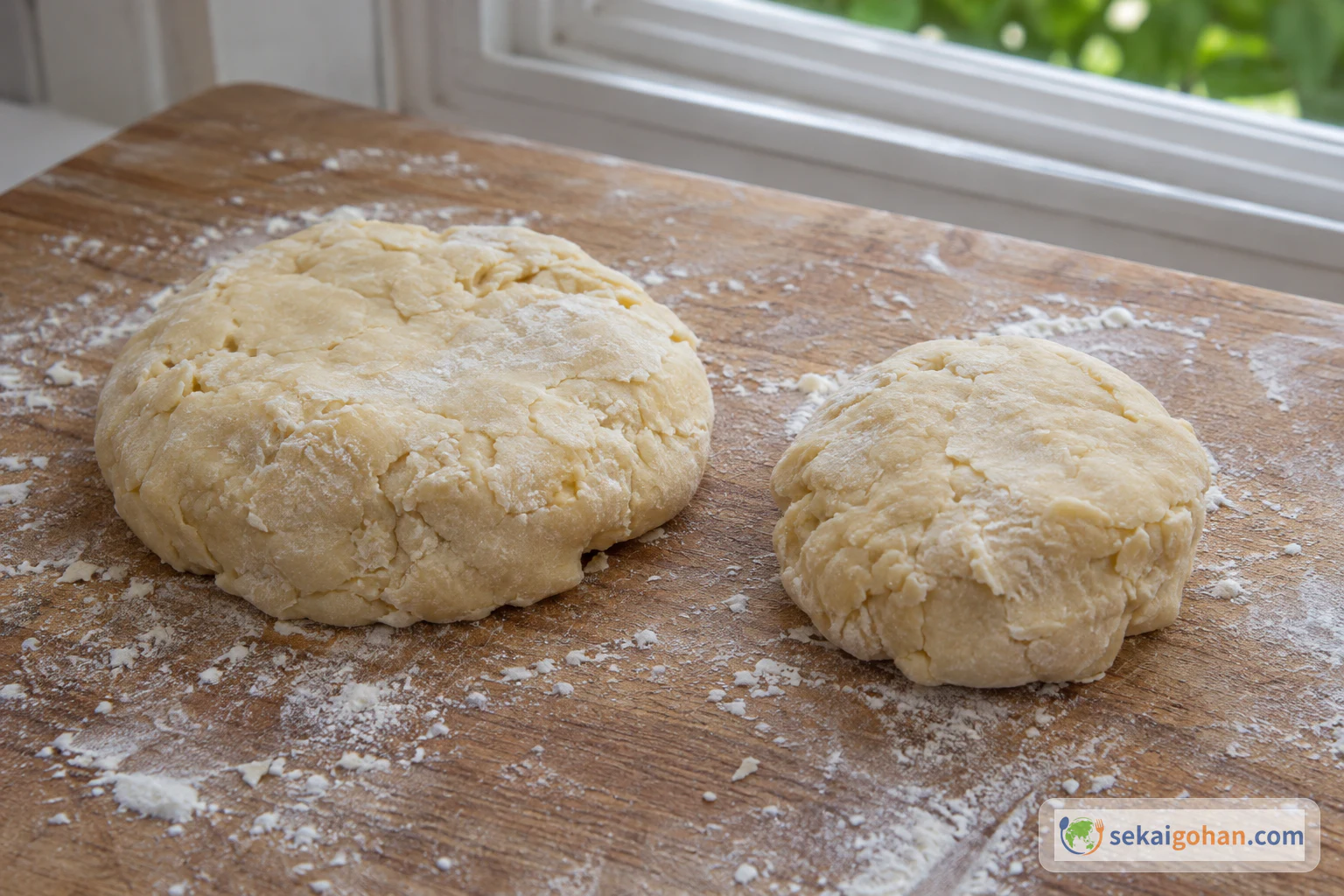
Two cups of flour has to make both the bottom and the top crust, so roll each half thin. A thin, even sheet also bakes through by the time the filling bubbles.
Method
Make the filling first, because it has to cool completely before it meets the pastry. While it cools, make and divide the dough, then heat the oven. The hands-off part is the bake of about an hour, which starts hot and finishes at a lower temperature.
When It Goes Wrong
| What you see | Why | What to do |
|---|---|---|
| The edge is dark before the top is golden | The edge bakes fastest in a hot oven | Cover the edge with aluminum foil and finish the bake |
| The crust is hard and tough | The dough was mixed too long after the water went in | Next time, add the water 1 tsp at a time and stop as soon as it holds when pressed |
| The bottom crust is wet | The filling went in while still warm | Cool the filling completely before it touches the pastry |
| Juice burns on the oven floor | Filling bubbled over through the vents | Always bake with a baking sheet on the rack below |
| The edges split open in the oven | The two crusts were not pressed together firmly | Wet the edge with a little water and press it closed all the way around |
Serving, Variations and Storage
At the table
Serve this pie warm, with vanilla ice cream. The cold ice cream meets the hot fruit and runs into the crust, and that is how it is meant to be eaten. It is a summer pie on the prairies, when the July berries come in, and a bag of frozen berries brings it back in any other month.
Variations
- Raw-filled pie: Mix raw berries with sugar and cornstarch, pack them into the crust, and give the pie a long bake at a single moderate temperature. The berries stay more whole, but you can't check how thick the filling is until you cut the pie.
- Jam-thick filling: Cook the filling longer with more water until it turns thick like jam, then cool it completely. The slices stand up more firmly and taste more like preserves.
- Almond note: Add a little almond extract to the filling. It pulls the flavour toward the almond-like taste of the 'Smoky' variety.
- Half blueberry: Make up a short bag of saskatoons with blueberries. The pie tastes milder and closer to a blueberry pie.
Storage
Bake the pie before you store it. Let it cool, cover it, and refrigerate it promptly. Eat it within 3 to 4 days. Use the filling the day you make it, in the pie, and do not can it at home.
Frequently asked questions
Do frozen berries need to be thawed first?
No. Put them into the saucepan frozen with the water and lemon juice. Simmer until they have softened and released their juice, then add the sugar and flour.
Can I make the crust with butter?
Yes, but the crust will be different. Shortening and lard give the short, crumbly texture that suits this pie. Butter changes both the texture and the flavour.
Should I add cinnamon to the filling?
Keep the cinnamon on top of the crust. Mixed with the sugar and scattered on the top crust, it adds aroma and a little crunch, and the berry filling keeps its own taste.
How do I say "saskatoon"?
Say it like the Canadian city of Saskatoon: sas-kuh-TOON, with the stress on the last syllable.