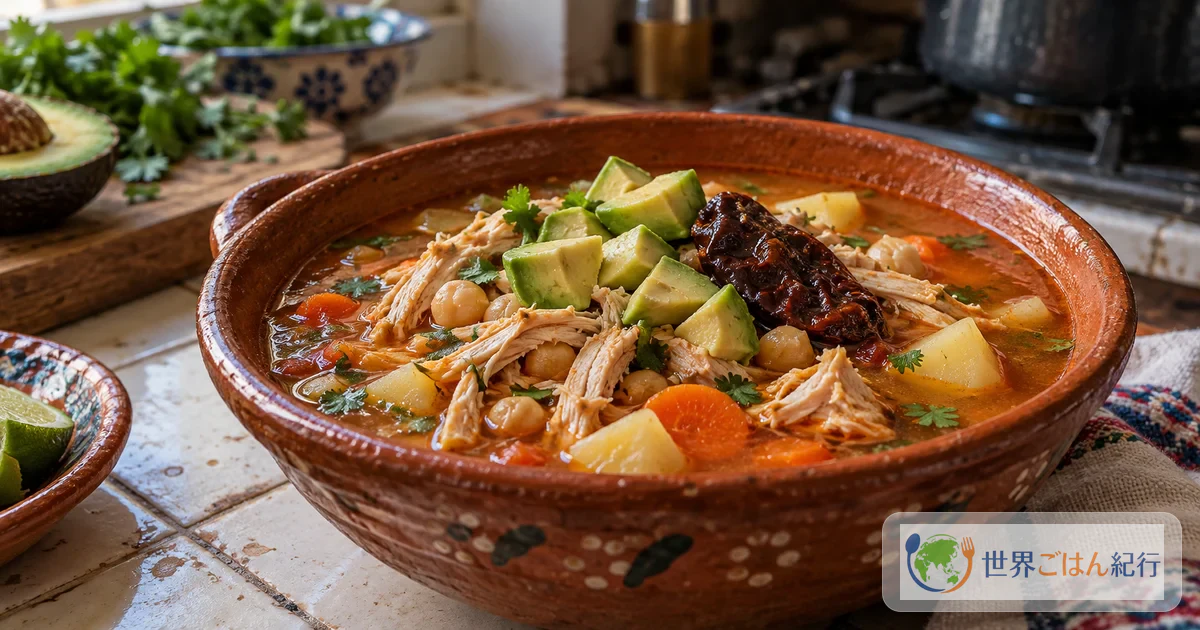
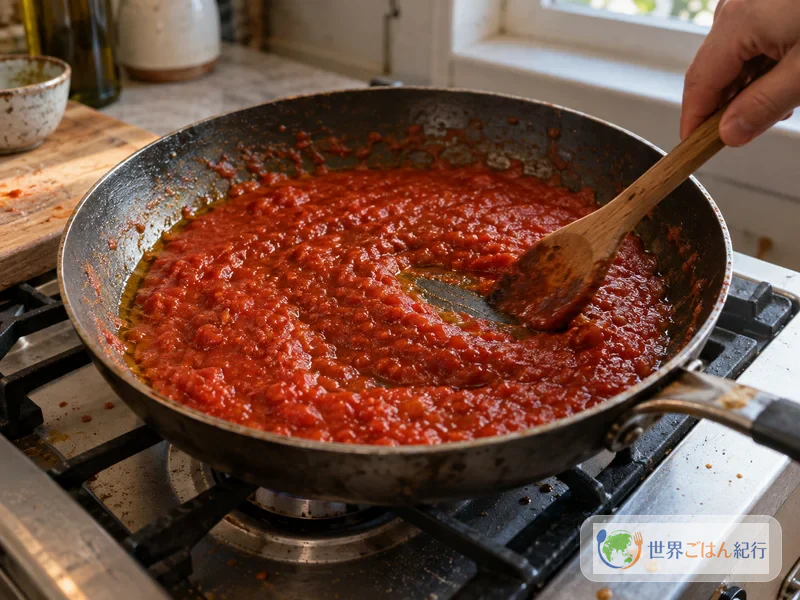
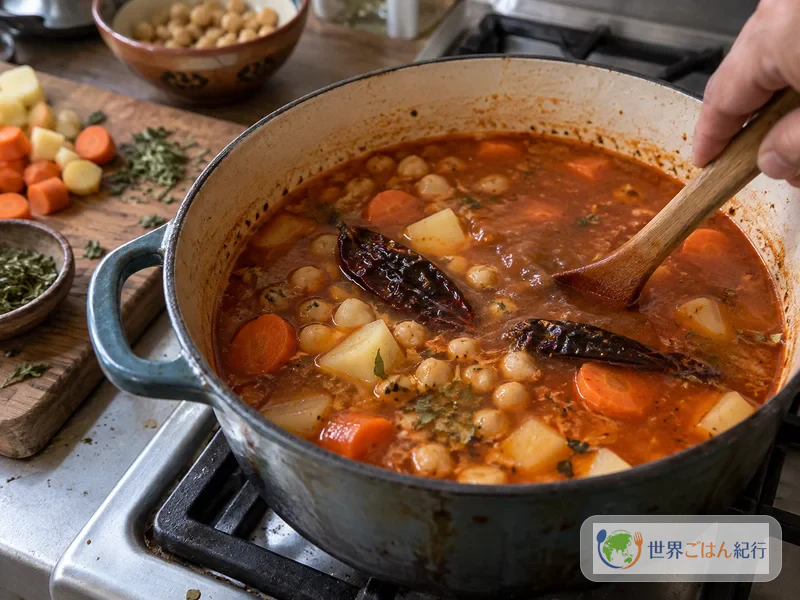
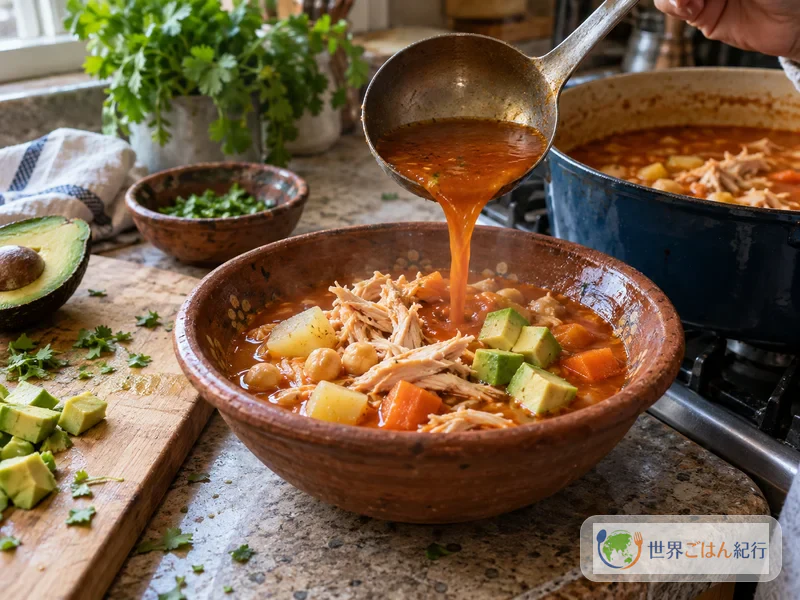
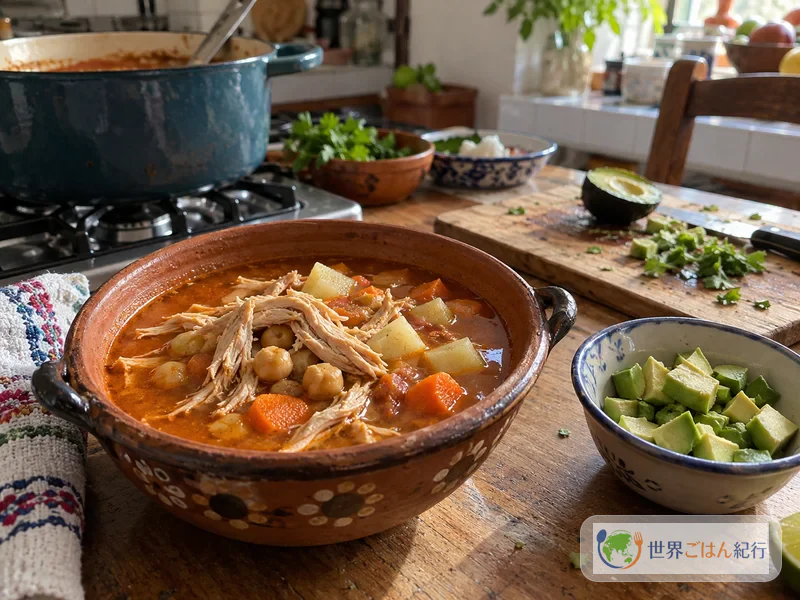
In a steaming earthenware bowl: shredded chicken, chickpeas, carrots and potatoes. From the reddish broth rises a faint smoky aroma. Its source is chipotle, a chile that is dried and smoked. Float diced avocado on top, sip it piping hot, and a mild heat and smokiness warm you to the core. This is chicken soup scented with chipotle, caldo tlalpeño, named for Tlalpan in the south of Mexico City. With a can of chipotles in adobo, you can make it as it is in any home kitchen.
The hungover general and the soup of Tlalpan
Tlalpan is a district in the south of Mexico City, close to the forest. The Mexican newspaper Excélsior, drawing on Larousse's culinary dictionary, places the soup's origin in Tlalpan, in a story going back to the 19th century when the San Agustín fair was held. The Mexico City magazine Chilango goes so far as to call it the only traditional dish born in Mexico City.
A widely told story involves Antonio López de Santa Anna, the 19th-century president of Mexico. The morning after a celebration, a hungover Santa Anna asked for something warm and spicy, and a local cook made a bowl of chicken soup with vegetables from the fields, chipotle and epazote. Asked its name, the cook answered, "It is caldo tlalpeño, sir." There is no firm record of this, but as a story the people of Tlalpan have handed down, it is still told today in restaurants and festivals.
There is another account. According to Excélsior, at the terminus of the Tlalpan tram line, women at street stalls sold travelers and laborers a chicken soup with chipotle to keep out the cold, and the customers called it "the soup of Tlalpan."
Earthenware bowls and the festival of Tlalpan
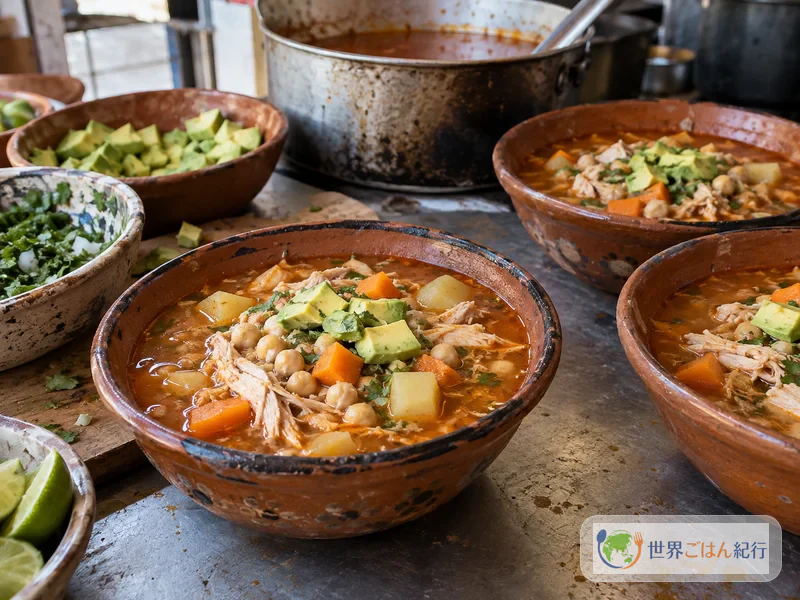
This soup has long been served in earthenware bowls. According to Chilango, there are still eateries in the markets of Tlalpan serving it, and the standard is to top the bowl with as much diced avocado as you like. Some places also add cheese or choconostle, the sour cactus fruit.
The borough of Tlalpan also holds a festival for this soup. In 2026, the "Festival del Caldo Tlalpeño" was held from June 24 to 28 in the Plaza Bolero in central Tlalpan, with cooks bringing their own recipes. The soup, handed down for nearly 150 years, is still alive as the town's specialty.
In the traditional caldo tlalpeño, dried chipotle meco is rehydrated in water and added whole, only to pass its aroma into the broth. Excélsior says that at home it is common to use canned chipotles pickled in adobo (a sweet-sour sauce of tomato and vinegar), fruit and sauce together.
That canned chipotle in adobo is also what you rely on elsewhere. It is available at Latin American grocers or online, and a small amount gives a solid smokiness and heat. Epazote is, in Mexico, a herb with a distinctive aroma used in bean dishes and soups; dried epazote is available from specialty grocers and online.
Ingredients (serves 4)
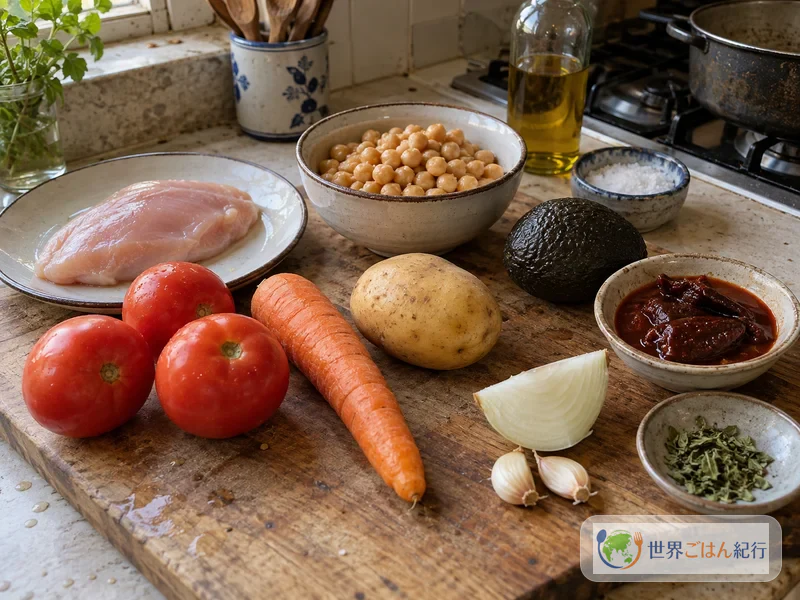
This is based on the traditional recipe in Excélsior, adapted to ingredients that are easy to find.
A can of chipotles in adobo is often more than you can finish once opened. Move any leftover chiles and sauce together to a clean container and refrigerate, and use them up soon in a stew or a sauce.
Chipotle is a hot chile. When taking it from the can or chopping it, don't touch your eyes or face with your hands. If there are children or people who don't like heat, put just 1 in the soup and let everyone add the rest at the table.
How to make caldo tlalpeño
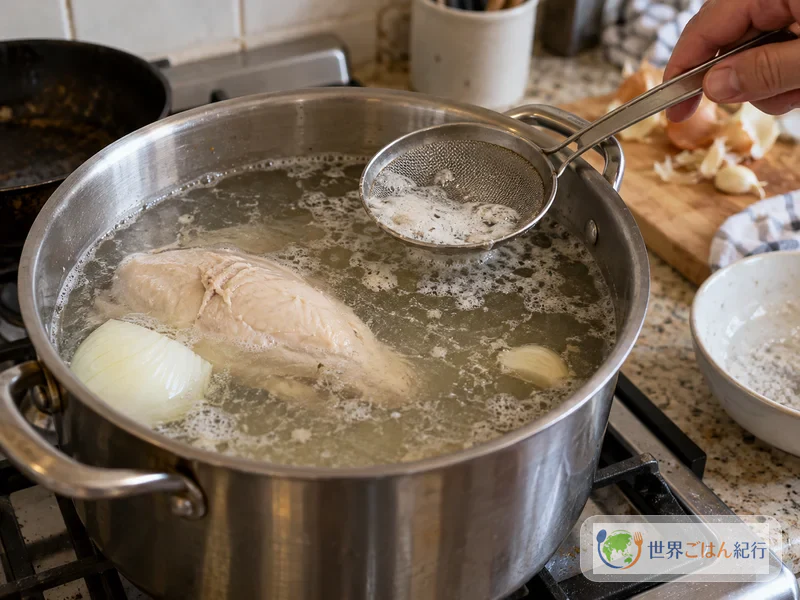
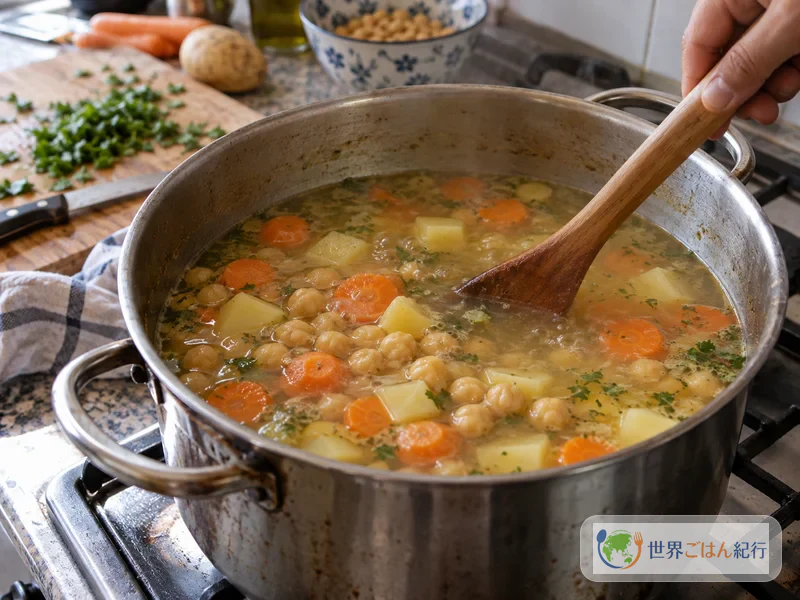
Allow about 15 minutes for prep and about 60 minutes for simmering the chicken and vegetables and finishing the soup.
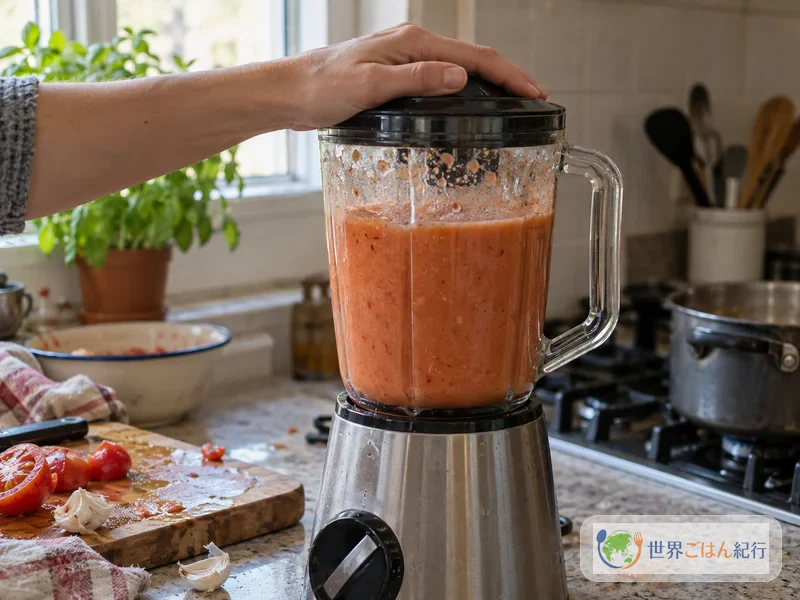
Pouring the tomato sauce into hot oil makes it spatter vigorously. Hold the lid like a shield and pour from a little distance.
Tips for setting the heat and smokiness
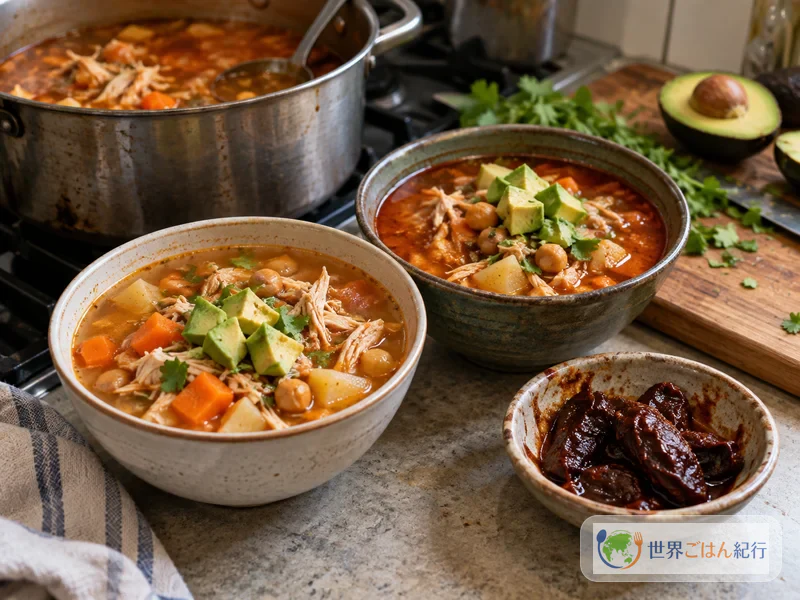
The heat of caldo tlalpeño changes a great deal with how many chipotles you add and whether you chop them or add them whole. Whole, the aroma leads and the heat is mild; chopped, the heat comes out firmly. The way to avoid failure is to start with 2 whole chipotles and adjust as you taste.
Adding a little of the adobo sauce deepens the color of the soup and increases the sweet-sour taste and smokiness. Add from 1 tsp, and stop where you like it.
Too much epazote gives a strong, medicinal aroma. If you use the dried herb, keep to 1/2 tsp. If you can't get it, leave it out; the chipotle aroma still gives plenty of caldo tlalpeño character.
Take the chicken out of the soup as soon as it is cooked, and it is less likely to dry out. Using chicken thigh instead of breast adds the savor of fat for a richer soup.
Adding cheese or green beans: ways to vary it
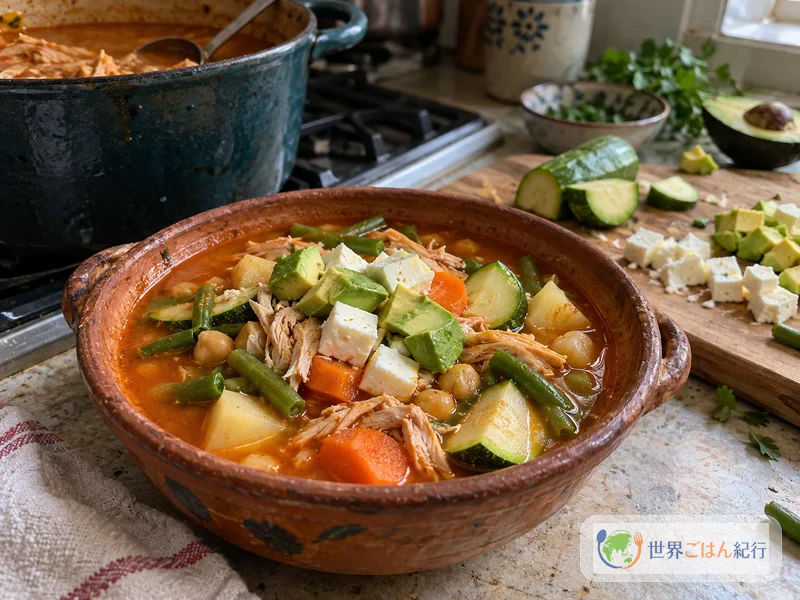
According to the Excélsior article, the traditional recipe sometimes includes green beans or calabacita, a Mexican squash similar to zucchini. Simmering green beans and zucchini together with the carrots and potatoes makes it heartier.
Adding diced fresh cheese when you eat is also the Tlalpan way. Cottage cheese or small cubes of mozzarella are easy substitutes. They melt a little in the hot soup and soften the heat of the chipotle.
How to eat it
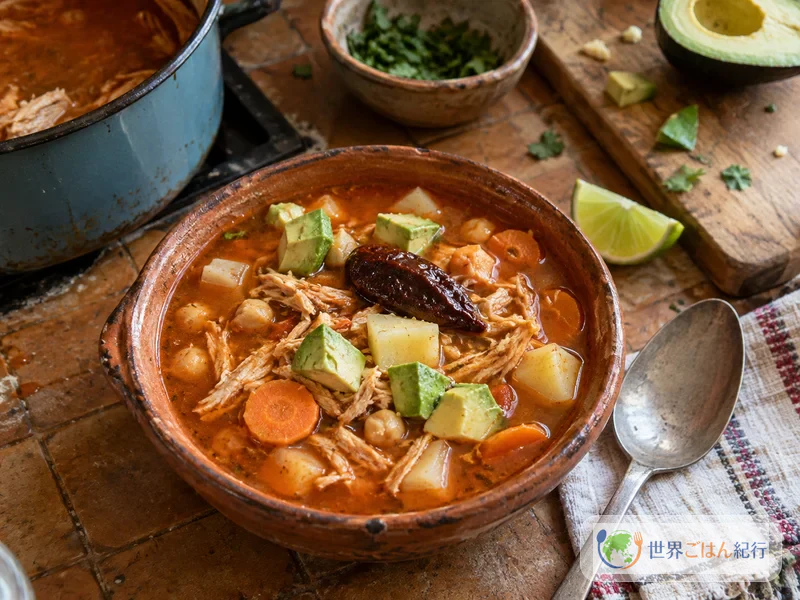
Start sipping the soup while the bowl is hot. Mash the avocado with your spoon and bring it to your mouth with the chicken and vegetables, and the creamy avocado goes beautifully with the smoky broth. Squeezing lime over it or serving tortillas on the side is delicious too.
If you like the combination of chipotle and chicken, try tinga de pollo, shredded chicken simmered with chipotle and tomato. Even with the same ingredients, a soup and a stew make completely different dishes. And for a soup-stew with meat, pozole rojo (in Japanese), made with hominy, is also recommended.
FAQ
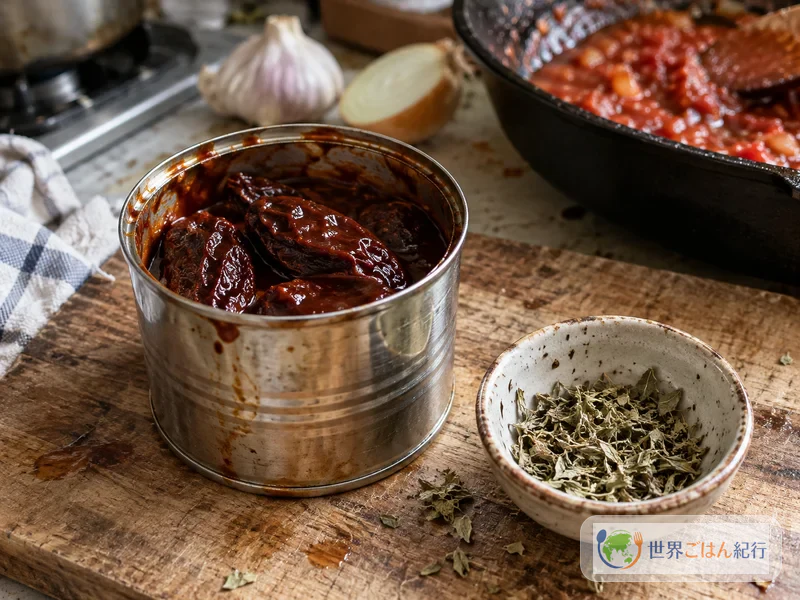
What should I do if I have no chipotle?
The smokiness of chipotle is hard to reproduce with other ingredients. Heat alone can be supplied with chile flakes, but the aroma characteristic of caldo tlalpeño will not come. Having canned chipotles in adobo is the surest way.
Can I make it with dried chickpeas?
Yes. Soak dried chickpeas overnight, boil them separately until soft, and then add them as you would cooked ones.
Can I make it ahead?
Refrigerate the soup and chicken separately, and when eating, rewarm the soup before pouring it into bowls. I can't give a clear storage time, so eat it up soon. Cut the avocado right before eating.
Does it cure a hangover?
It is told as the legend of Santa Anna and as a bowl for the morning after, but there is no evidence confirming that it works. Enjoy it as a warm soup, according to how you feel.
Sources
- Marisela Valencia, "Prepara un caldo tlalpeño para los días lluviosos, el clásico de la CDMX," Excélsior, published 24 April 2026. (accessed and checked 22 October 2026). https://www.excelsior.com.mx/recetas/receta-caldo-tlalpeno-tradicional
- Fabiola Barrera, "Historia del caldo tlalpeño, un clásico para curar la resaca," Excélsior, published 15 September 2026. (accessed and checked 22 October 2026). https://www.excelsior.com.mx/recetas/historia-caldo-tlalpeno-clasico-para-curar-resaca
- Liz Basaldúa, "Caldo Tlalpeño: el único platillo tradicional que nació en la CDMX," Chilango, published 26 May 2025. (accessed and checked 22 October 2026). https://www.chilango.com/comida-y-tragos/caldo-tlalpeno-unico-platillo-tradicional-cdmx/
- Chilango, "Festival del Caldo Tlalpeño 2026: ¿cuándo y dónde será la celebración del platillo más emblemático de CDMX?," published 19 June 2026. (accessed and checked 22 October 2026). https://www.chilango.com/que-hacer/festival-del-caldo-tlalpeno-2026-cdmx-fecha-horario-sede/