Carnitas: Pork That Falls Apart Inside and Crisps Outside
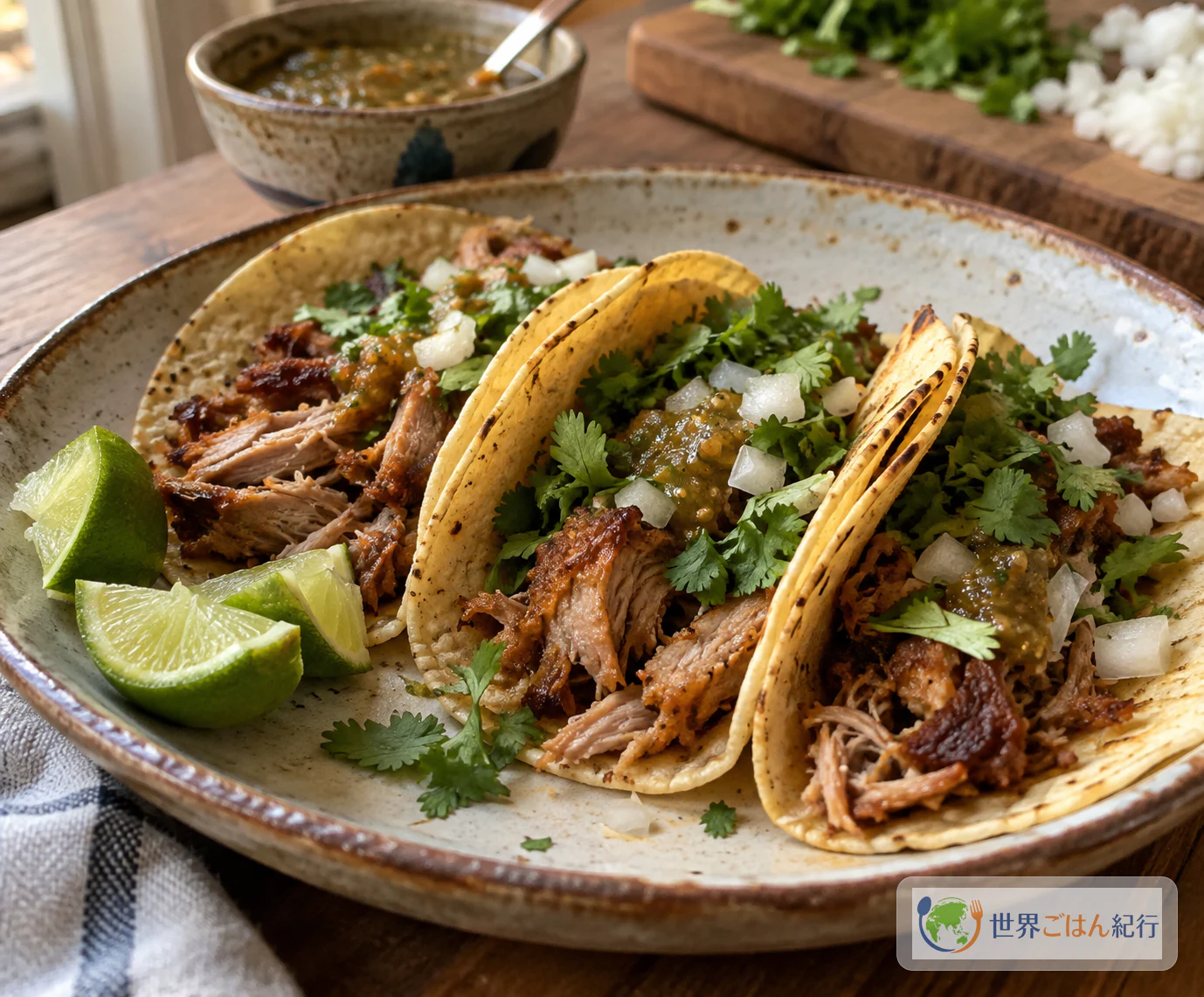
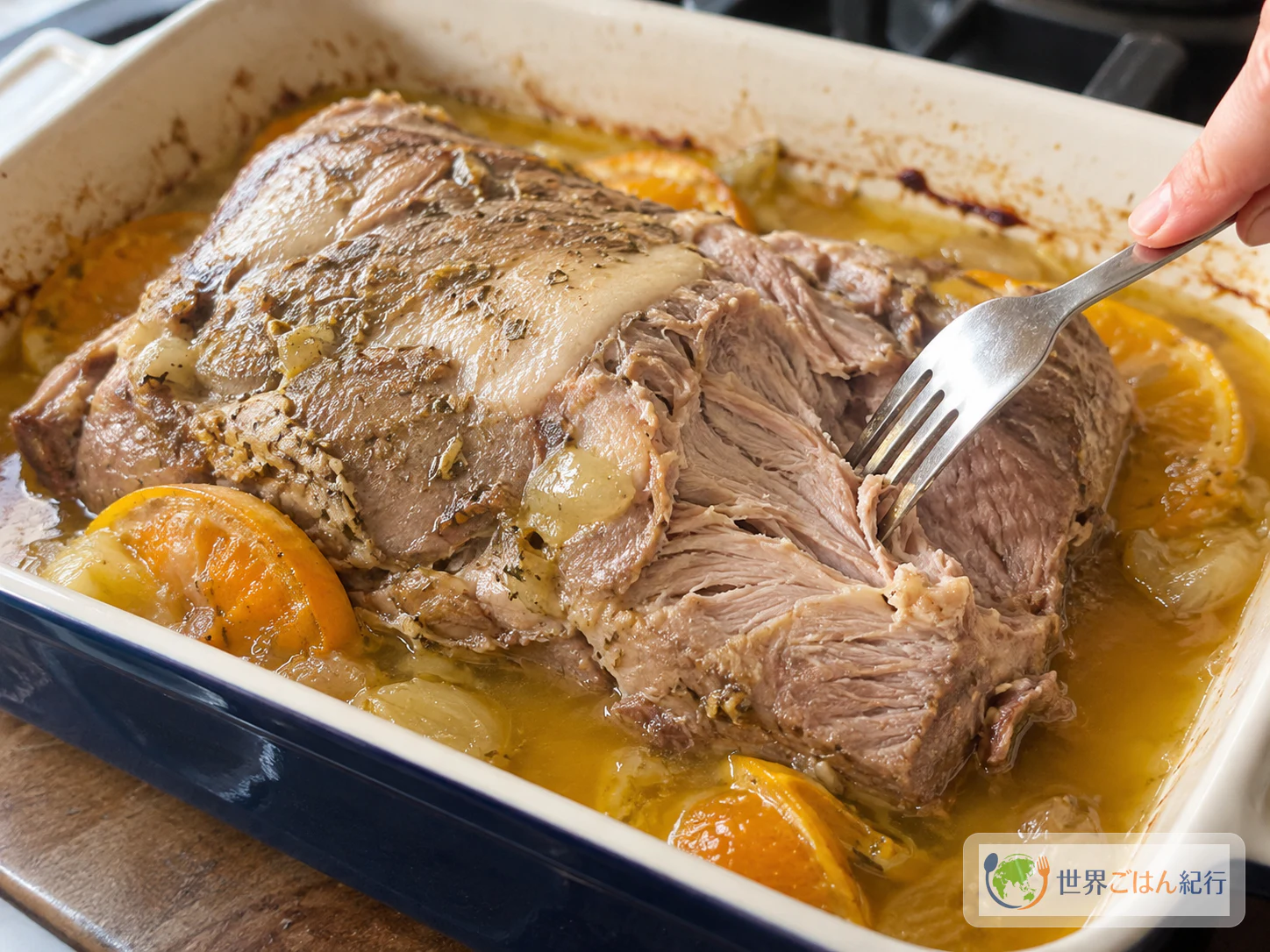
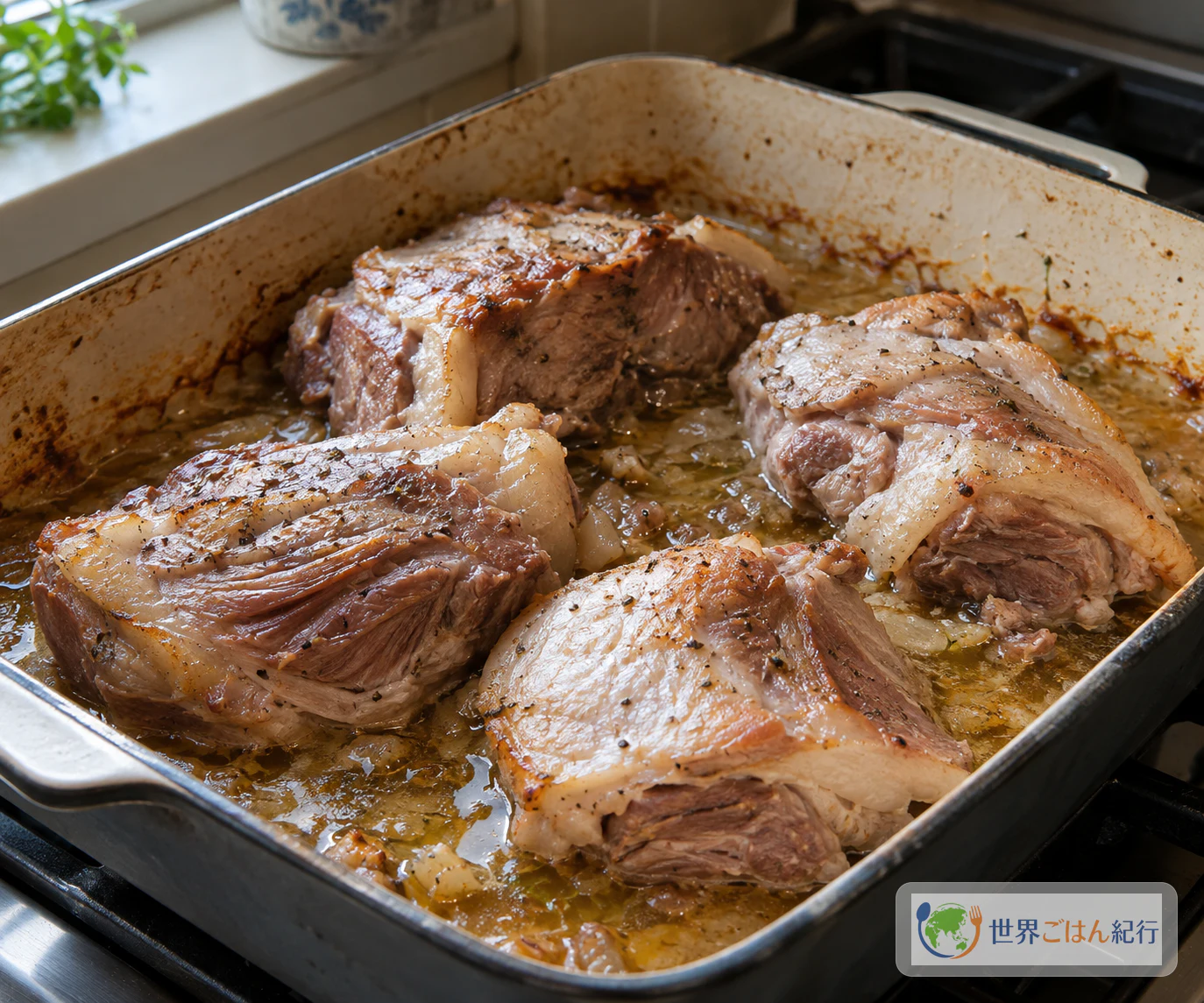
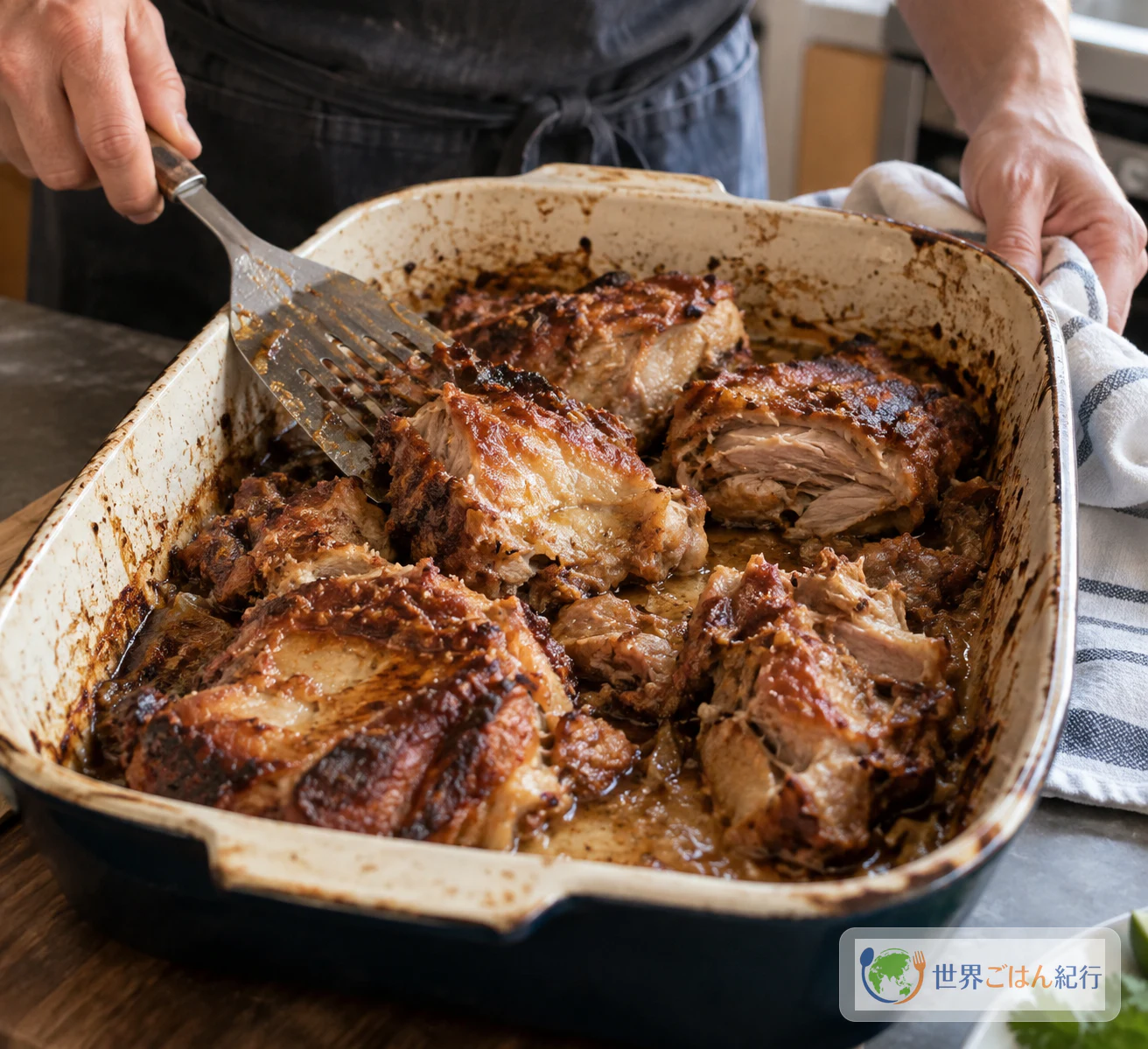
Meat that is soft enough to pull apart with little effort, and an outside that has turned a deep golden brown in its own fat. Everything in this recipe serves that contrast.
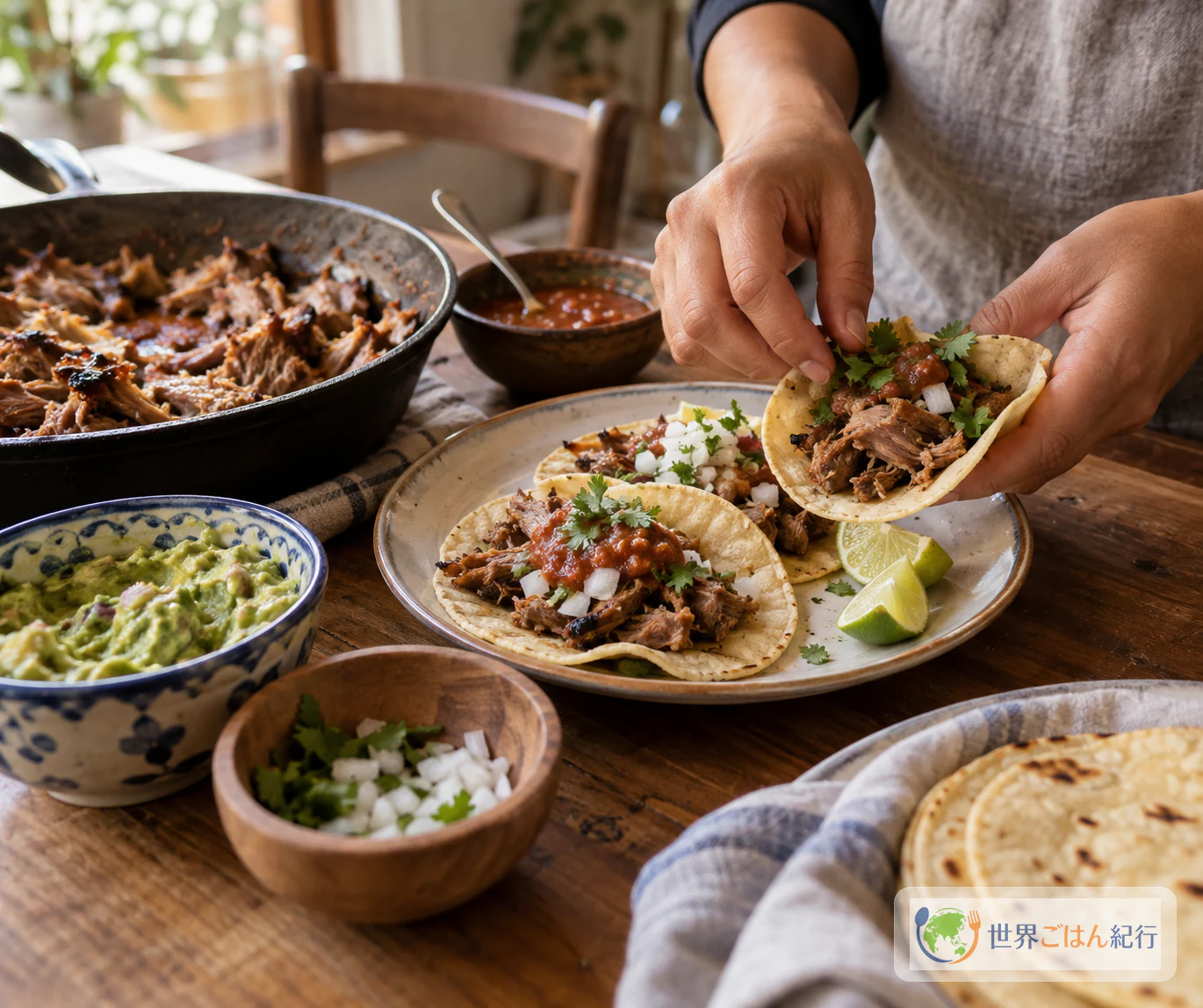
Carnitas is a Mexican pork dish built on a contrast of textures: the meat is cooked slowly until it is tender, then the surface is finished until it is browned and fragrant. Tucked into a warm corn tortilla with salsa, guacamole and a squeeze of lime, the richness of the pork meets the brightness of acid at the table.
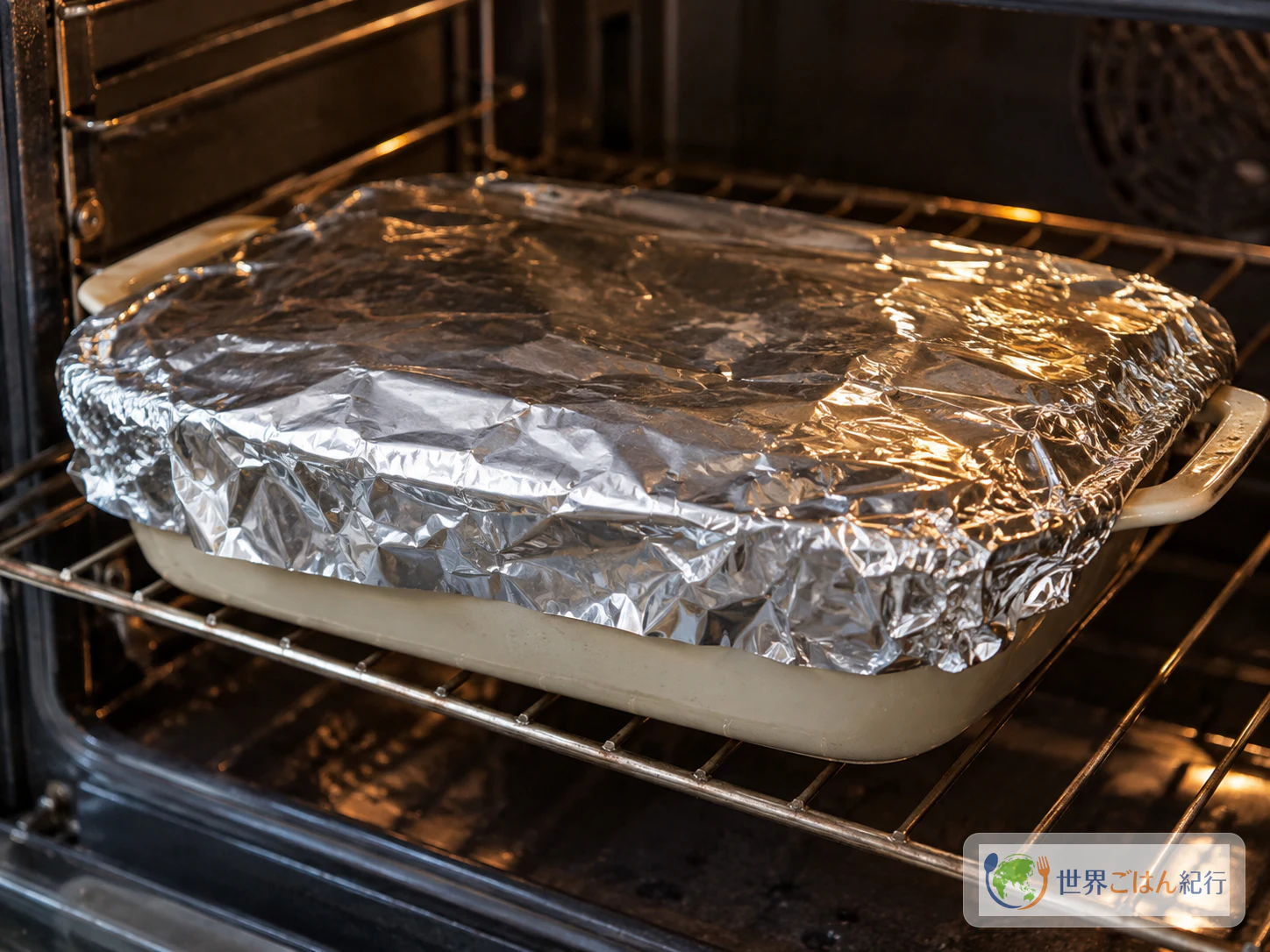
The best-known way to make carnitas is in a large pot, cooking big pieces of pork slowly in lard. That is a different process from the one here. This recipe is a home oven version: a pork shoulder is braised with a small amount of liquid under tightly sealed foil, then uncovered at a higher temperature so the liquid cooks away and the pork browns in the fat it has released. No extra lard is added. It uses only pork shoulder, which is easy to find in ordinary supermarkets.
Carnitas is the Spanish name used in Mexico and widely in English. On menus you will often see it as tacos de carnitas.
Where Carnitas Comes From: Michoacán and Beyond
Tacos de carnitas began in Michoacán, and the taco has since spread throughout the country. The dish remains closely tied to Michoacán.
In Michoacán, carnitas draws on a wide range of cuts. Beyond maciza, other parts of the pig, including those that are not muscle meat, are eaten too, and each brings its own texture. A shoulder-only version like this one is practical for a home kitchen.
Methods differ too. The large-pot style cooks a great deal of pork in a great deal of fat, while home versions braise the meat and then brown it. Both produce tender pork with a browned surface.
Ingredients: Pork Shoulder, Salt and a Little Liquid
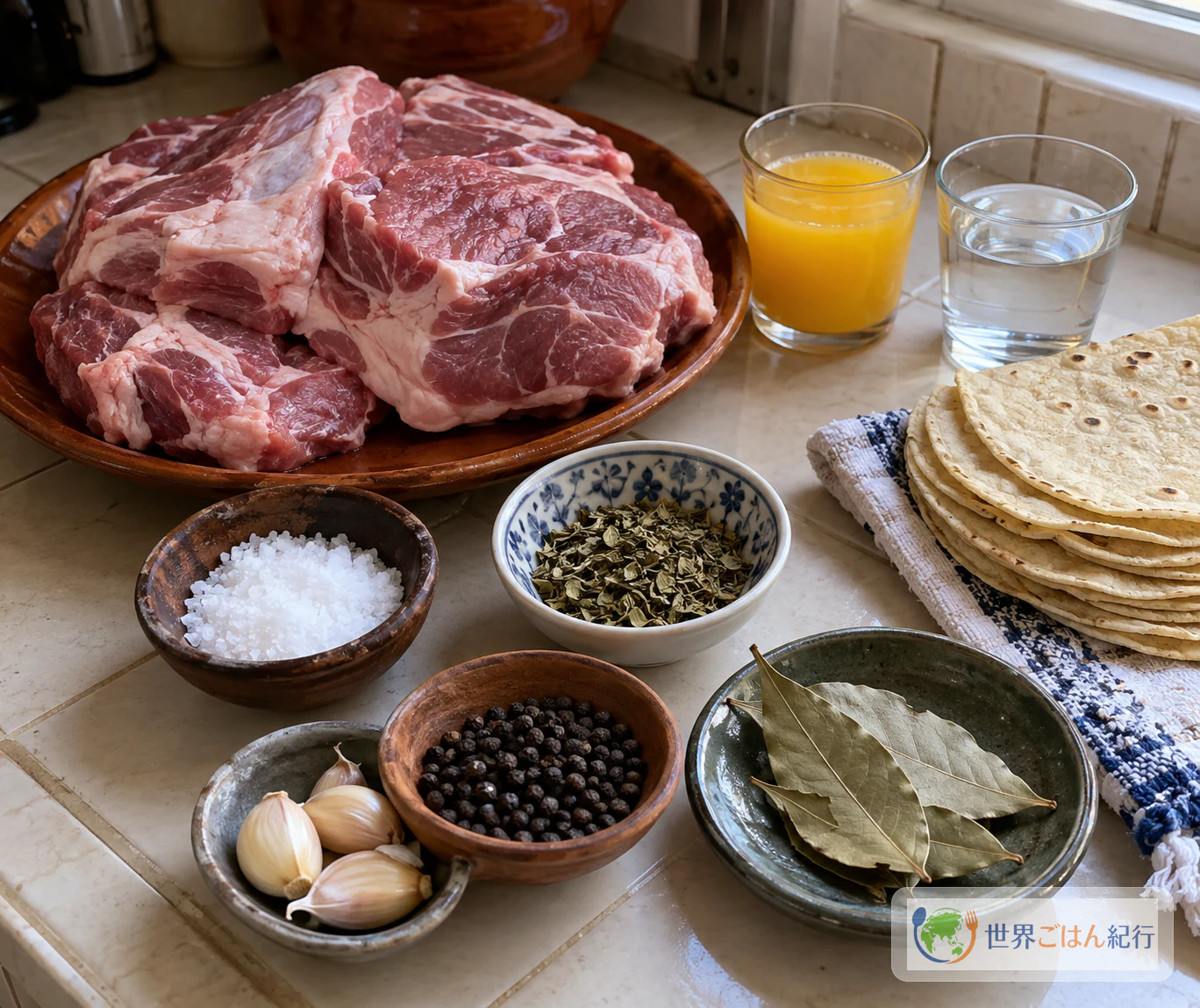
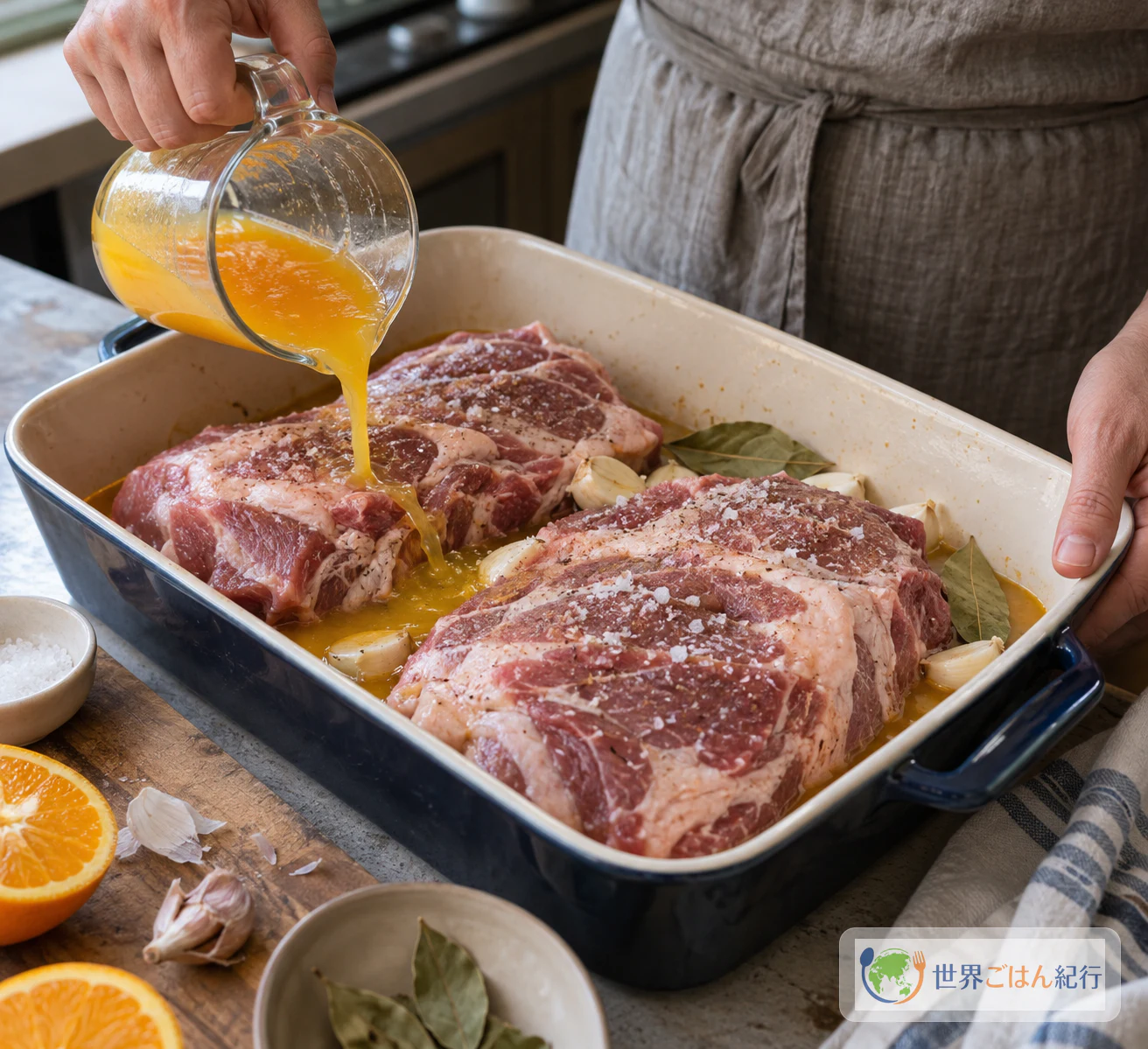
You need pork shoulder, salt and one liquid: orange juice or water. Garlic, bay leaves, Mexican oregano and black pepper are optional, and the dish still works without them. This amount of pork makes about 1.5 lb of cooked meat, or about 15 tacos.
Choosing and Substituting
Pork. Pork shoulder or pork butt is the cut to look for; a boneless shoulder roast that you can cut into thick slabs is easy to handle. Choose a piece that still has some fat. A leaner cut is more likely to dry out during the browning stage, because the pork browns in the fat it releases.
Salt. Different salts have different grain sizes, so the same spoonful can taste saltier or milder. Use at least 2 tsp and adjust by tasting the finished meat.
Orange juice or water. Orange juice adds a sweet aroma and helps the surface brown. Water lets the flavor of the pork itself come forward. Either works.
Garlic and herbs. Garlic can be left out. Garlic powder gives a different aroma, so don't swap it in one for one. Mexican oregano and the Mediterranean oregano common in many supermarkets smell different. If you use the Mediterranean kind, start with less.
Tortillas. Corn tortillas are the classic pairing. Flour tortillas will work but change the texture. Check the ingredient labels on tortillas and on store-bought salsa.
Lime. Lemon can add acidity in its place, though the aroma is different.
Carnitas itself is a simple meat dish, but check the ingredient labels and any cross-contact statements on tortillas and store-bought salsa. Keep the utensils and cutting board you use for raw pork separate from those for cooked food, or wash them thoroughly between uses.
Equipment
- An ovenproof baking dish just large enough to hold the pork snugly
- Aluminum foil
- A fork, for checking tenderness
- A large spatula, for turning and breaking up the meat
- A food thermometer, for checking the center of the meat
Method: Braise Under Foil, Then Brown in the Pork's Own Fat
The times below are guides. Move from one stage to the next by what you see and feel: how the fork goes in, how much liquid is left in the dish, and how deep the color has become. Before serving, check the center of the meat with a thermometer.
Troubleshooting: Tough, Pale or Dry
| Problem | Likely cause | What to do |
|---|---|---|
| The meat is still tough | The connective tissue hasn't softened yet | Re-cover with foil and keep baking in 20-minute rounds, checking with a fork each time |
| The browning is weak | Liquid is still left in the dish | Check the dish for liquid and let it cook off. Don't rush with heat so high that the surface scorches |
| The meat is dry | Too much fat trimmed off, or the meat was broken up too finely | Next time keep more fat and larger chunks. For now, toss the meat with a little of the fat and juices from the dish, adding a bit at a time |
Variations
Large-pot lard method versus the home oven. The Michoacán-style method cooks big pieces of pork slowly in lard or oil, then finishes them briefly at a higher heat. A large-batch version uses around 18 lb of bone-in shoulder and roughly 4 gallons of fat, with a thermometer to control the oil. It is a separate method for large batches, so don't scale it down or mix its temperatures into this recipe.
Orange juice or water only. Orange juice gives a sweeter aroma and deeper color; water keeps the focus on the pork. Some home versions also use cola or sweetened condensed milk, mainly to encourage browning.
The aromatic version. Adding garlic, bay leaves and Mexican oregano gives the braising liquid and fat a fuller aroma. Leaving them out gives a plainer, pork-forward result.
More or less fat. A fattier piece of shoulder tends to stay moister and brown more richly; a leaner piece is firmer and needs more care not to dry out during browning.
Tacos or a plate. Wrap the pork in corn tortillas, or serve it on a plate with salsa and lime alongside.
Frequently Asked Questions
Can I make carnitas without lard?
Yes. In this home version, the pork browns in the fat it releases during cooking, so no extra lard is needed. The large-pot style that cooks pork in lard is a different method.
Is orange juice essential?
No. Water works too. Orange juice changes the aroma and helps the surface brown, but the dish holds together without it.
Can I make it ahead?
For leftovers, divide the meat into shallow containers so it cools quickly, then refrigerate it. Don't leave it sitting out at room temperature.
Is this the authentic way to make carnitas?
Carnitas is closely tied to Michoacán, and recipes vary, from the large lard pot to oven-braised home versions. In Michoacán, many different cuts are used. This recipe is a home-kitchen version that uses pork shoulder only.
Explore more dishes from Mexico. Compare these with tacos or with cochinita pibil, a different Yucatán pork preparation using achiote and a leaf wrapping.
Sources
- Rick Bayless, "Home-Style Pork Carnitas." The home recipe used here: 3 lb pork shoulder in 2-inch slabs, at least 2 tsp salt, 1/2 cup water or orange juice, optional garlic, bay leaves, Mexican oregano and black pepper; covered braising at 325°F until nearly tender, then cooking off the liquid at 450°F and browning in large chunks; serving with tortillas, salsa, guacamole and lime; the role of orange juice and other browning aids; the approximate yield. https://www.rickbayless.com/recipe/home-style-pork-carnitas/
- Rick Bayless, "Michoacan-Style Pork Carnitas." The large-batch Michoacán-style method cooking pork in lard or oil, and its difference in scale from the home version. https://www.rickbayless.com/recipe/michoacan-style-pork-carnitas/
- Sistema de Información Cultural, Secretaría de Cultura (México), "Michoacán: Gastronomía México." The description of Michoacán as the origin of tacos de carnitas, their spread across Mexico, and the range of cuts used. https://sic.cultura.gob.mx/ficha.php?disciplina=&table=gastronomia&table_id=29
- Ministry of Health, Labour and Welfare (Japan), "家庭でできる食中毒予防の6つのポイント" (Six points for preventing food poisoning at home). The guideline of 75°C at the center for at least 1 minute for cooked foods, keeping raw and cooked items and utensils separate, and cooling leftovers in shallow containers. https://www.mhlw.go.jp/stf/seisakunitsuite/bunya/kenkou_iryou/shokuhin/syokuchu/01_00006.html