

The story of taquitos: an evening when fried tortillas crackle
Put a tortilla rolled thin into hot oil, and small bubbles appear first, then quickly change to a dry sound. The filling is not showy: boiled, shredded chicken, onion, a little spice. But the moment the corn tortilla sets to a golden brown and you top it with lettuce and salsa, the table moves straight to a street-stall snack.
Taquitos are small tortillas rolled around a filling and fried. In Mexico they are also called tacos dorados or flautas, and the boundaries between the names shift a little by region and restaurant. Searched for in Japanese, they tend to be described as "Mexican spring rolls," but at the core is not a spring roll wrapper but the aroma of corn. Keep that, and it is no longer just a fried roll.
You may fill them with a rich chicken stew such as tinga de pollo, but for the first time a drier chicken filling is less likely to fail. If the filling is wet, it may be fine just after rolling, but during frying the tortilla cracks and the filling scatters in the oil. This article leans toward a home version, with ingredients easy to find, that resists cracking and does not turn greasy.
The difference between taquito, taco dorado and flauta
México en mi Cocina presents taquitos dorados and flautas as a dish in which long thin tortillas are rolled and fried and eaten with salsa, crema, cheese, lettuce and so on. The English-language Mexico in My Kitchen explains that the difference between flauta and taquito is mainly size, and the names are often interchanged. Wikipedia's Taquito entry also explains that the fried taquito sold in Mexico is also called tacos dorados or flautas.
| Name | Common usage | How to understand it when making it at home |
|---|---|---|
| taquito | A small rolled taco. On the US side it also spread as the name of a frozen food | Suits a home version made with ordinary store-bought corn tortillas about 15 cm across |
| taco dorado | Literally "golden taco." Both folded and rolled types exist, varying by region | Think of it as a broad name for the group of dishes fried until crisp |
| flauta | A long, flute-like shape. Often made with larger, long tortillas | Without long tortillas, think of it as a slightly thicker, longer version than a taquito |
So while this article names the dish taquitos, don't be surprised if tacos dorados or flautas appear at a local eatery. More important than the name is not overfilling, warming the tortillas before rolling, and not letting the frying oil temperature drop.
Ingredients (serves 4)
This amount makes 16 small taquitos. It divides into 4 servings as a main dish, or about 6 as an appetizer or a snack with drinks. Corn tortillas 14 to 16 cm across are easy to roll and make a thinner roll than tortillas meant for folded tacos.

This dish uses chicken, dairy and corn products. Store-bought tortillas may contain wheat, soy and milk. Cook the chicken to 74°C or above at the center as a guide, and keep the meat after poaching and the utensils that touched raw meat separate.
If you buy extras the first time, the priority goes to oregano, the axis of the aroma; smoked paprika, which can add smokiness in place of chipotle; and a thermometer that lets you check the oil temperature and the doneness of the chicken. Chicken, lettuce, cheese and oil can be bought nearby, so they are left in the ingredient table.
Method
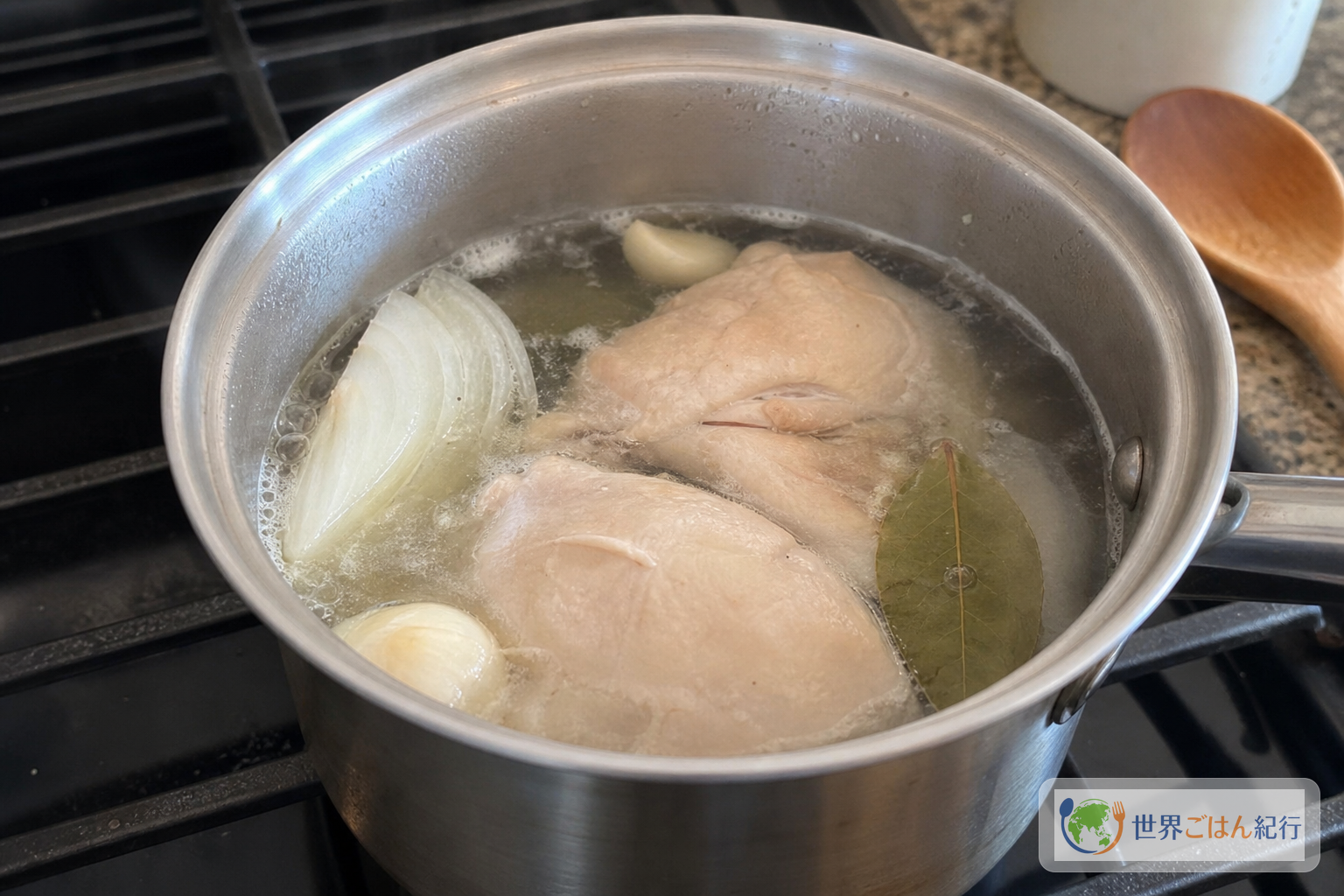
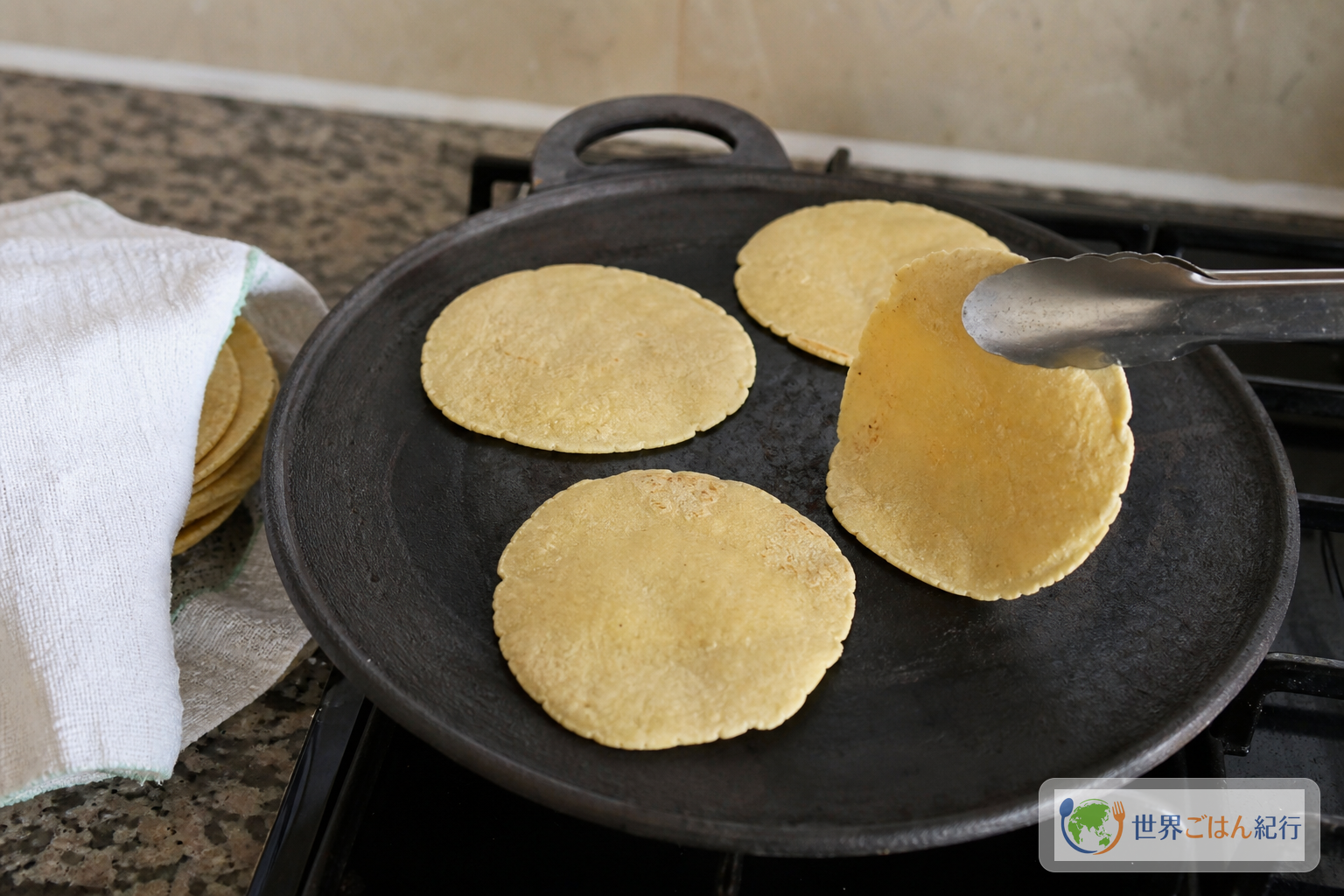
Taquitos are decided "before rolling" and "before frying." Cook the chicken until moist, drive off the moisture from the filling at the end, and don't roll the tortillas cold. Keep these three, and they are less likely to crack in the oil.
Tips for no cracking and no greasiness
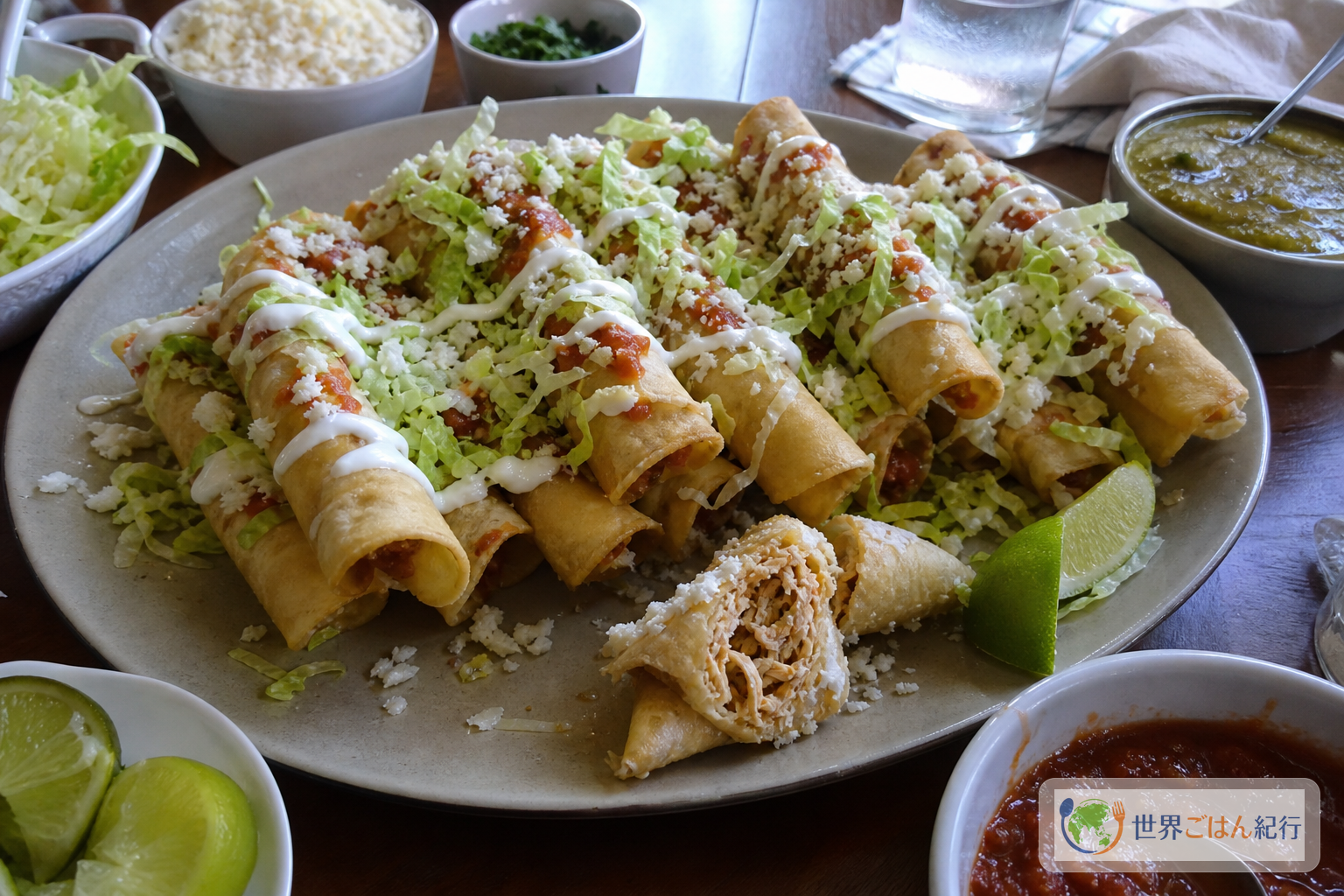
Failures with taquitos come from physics more than from seasoning. The tortilla cracks, it unrolls in the oil, it has gone limp by the time you eat. These three are mostly decided by the state of things before rolling.
| Failure | Main cause | How to fix |
|---|---|---|
| Cracks while rolling | The tortilla is cold, or old and dry | Warm in a medium-heat frying pan or in a 600 W microwave, and keep warm in a cloth |
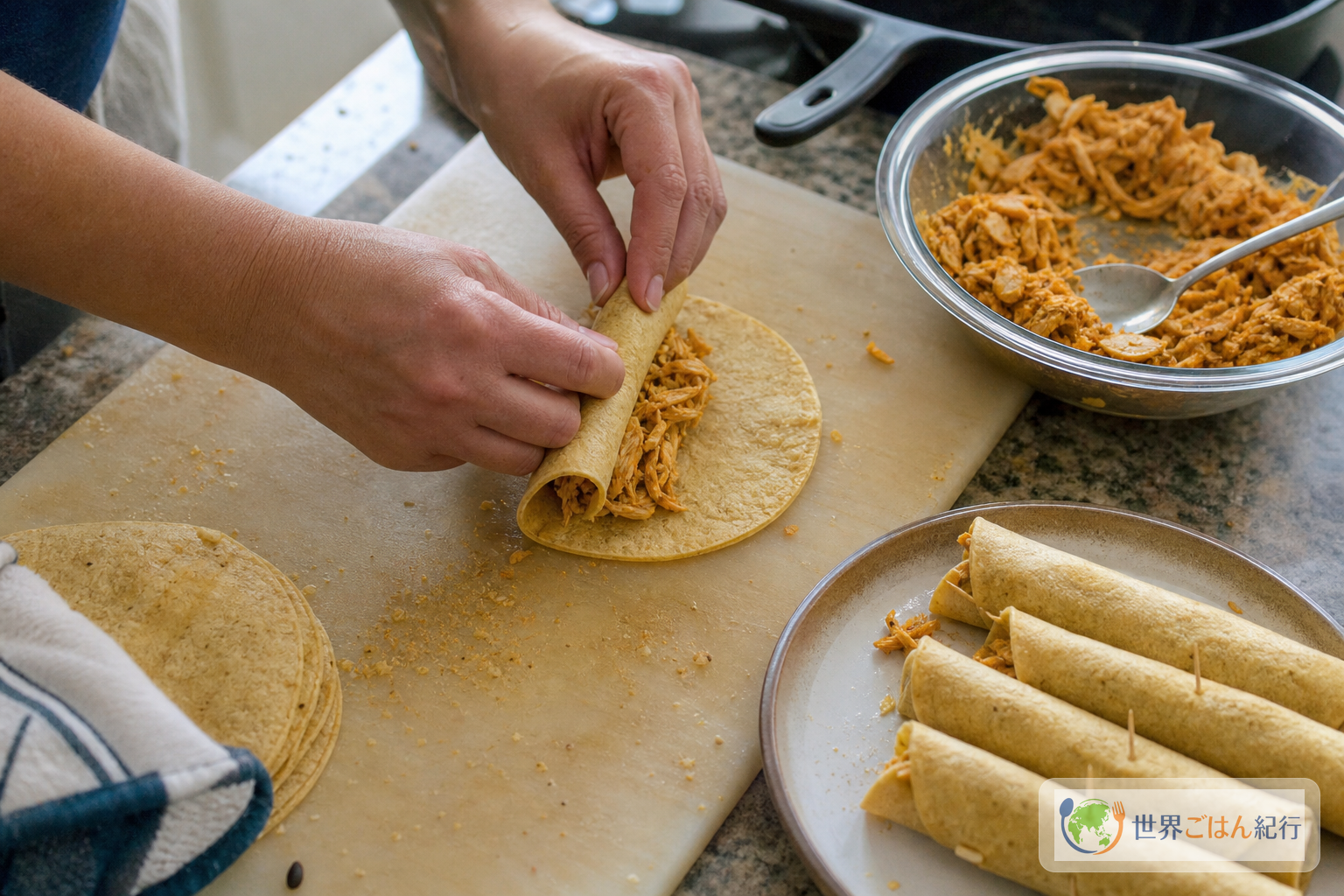
| Unrolls when fried | The seam faces up, or too much filling | Put it in the oil seam side down, and aim for 25 g per roll |
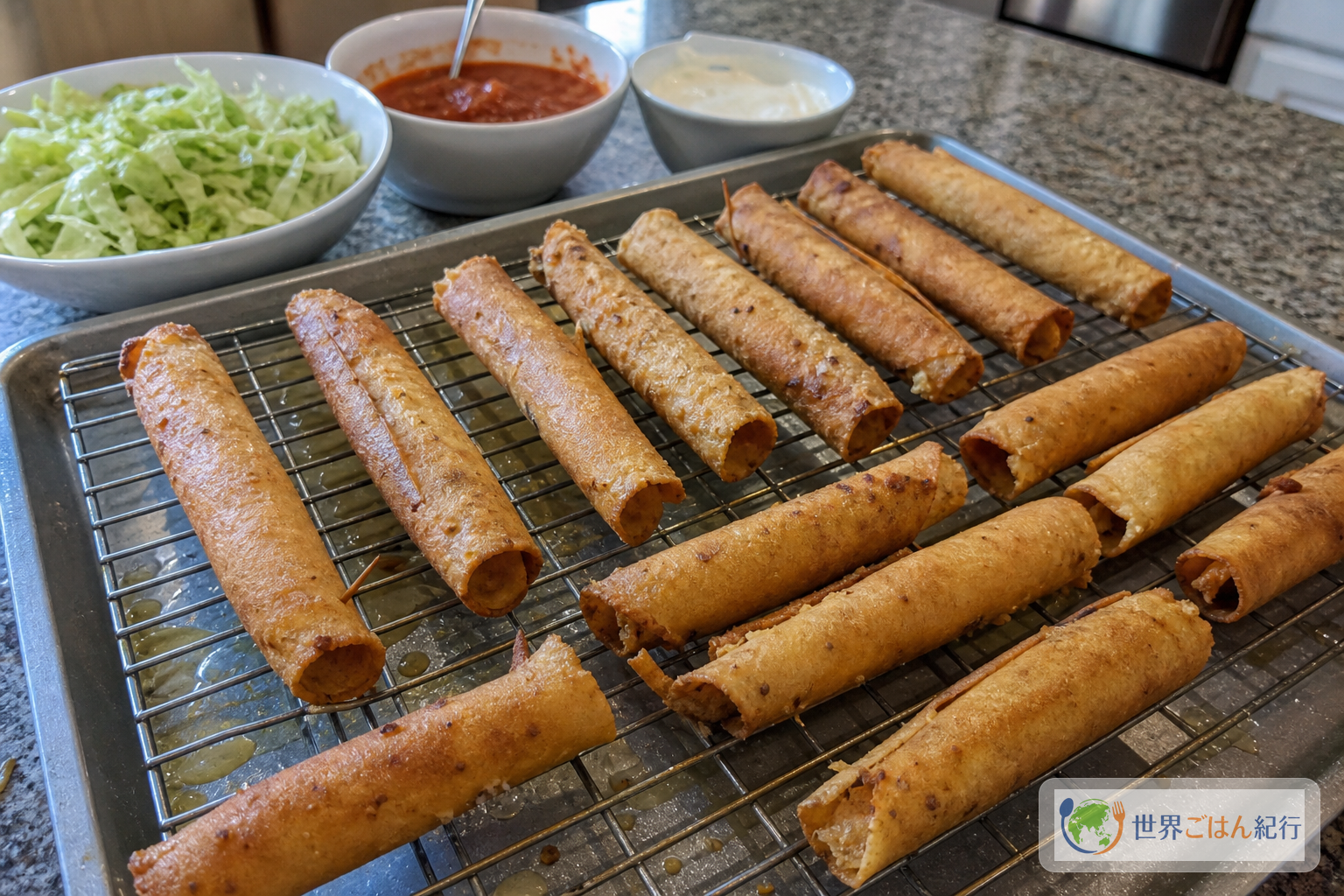
| The shell is greasy | The oil is below 160°C, or it steams on paper after frying | Keep 170 to 175°C, and set on a rack when lifted out |
| The filling spills out | The filling is watery, or stuffed to the ends | Fry the filling over medium heat to drive off moisture, and leave 1.5 cm free at both ends |
| The flavor is flat | The saltiness is even with only chicken | Add acidity and the roundness of dairy with salsa, crema and lime |
If you have canned chipotle, using 2 tsp of the chipotle adobo sauce instead of smoked paprika gives a more Mexican smoky aroma. But it adds moisture, so cook 1 minute longer in step 2 and bring it back to where the filling does not run.
How to eat them and link them to a menu
Taquitos are a dish finished on the plate. Don't treat the fried tubes alone as complete; the salsa, crema, lettuce and cheese poured over the top create differences in temperature and texture.
| What to pair | When it suits | Related article |
|---|---|---|
| Salsa roja, crema, lettuce | The basic snack. An evening nibble, a weekend lunch | The sauce feel is close to chilaquiles |
| Tinga de pollo | A day when you want to fill them with leftover chicken stew for a stronger taste | Tinga de pollo |
| A side bowl of pozole | Served in small portions as a side to a big-pot dish | Pozole rojo (in Japanese) |
| A little mole poured over | A celebration plate, a day to enjoy a rich sauce | Mole poblano |
| Alongside a savory pork dish | As one dish for a taco party, to add variety | Tacos al pastor |
| Compared with a meat stew | To show the differences among beef, soup and fried food | Birria de res |
To make ahead, cool the fried taquitos, put them in an airtight container, and finish within 2 days in the refrigerator. For reheating, 6 to 8 minutes in a toaster oven at 220°C, or 4 to 5 minutes under low heat in a fish grill. In the microwave alone the shell goes soft, so finishing in a toaster oven to drive off moisture helps bring them back.
To freeze, wrap the rolled, unfried ones one by one in plastic wrap, with 2 weeks in the freezer as the guide. When frying, don't thaw them completely; half-thaw in the refrigerator and fry in 170°C oil 1 minute longer than usual. Put frozen into hot oil, only the surface colors and the center stays cold.
Frequently asked questions
Can I make them with flour tortillas?
You can, but the texture is a different thing. Flour tortillas are easy to roll, but fried, the shell is thick and the impression leans toward a fried burrito. To get the lightness of taquitos, choose corn tortillas the first time.
The chicken breast is dry.
If you keep it boiling hard during poaching, breast gets tough quickly. Lower to low heat once it boils, and when it is cooked, rest 5 minutes before shredding. Returning 1 to 2 tbsp of the poaching liquid when you fry the filling prevents it from drying out.
Can I fry them without toothpicks?
With practice you can, but for the first time it is safer to fasten them. Put them in the oil seam side down and wait 20 to 30 seconds without moving them, and the shape sets more easily. If you used toothpicks, be sure to remove them before bringing them to the table.
Can I make them in an oven or air fryer?
Yes. Brush the surface lightly with oil and bake at 220°C for 12 to 15 minutes, turning once partway. In an air fryer, 8 to 10 minutes at 200°C is the guide. However, the shell holds together less than in the oil-fried version and the ends dry out easily, so they are better eaten warm with salsa and crema.
How can I use leftover filling?
Wrap it in warm corn tortillas for simple tacos, or put it on rice and squeeze lime over for a weekday dinner. To simmer it again with liquid, add 2 tbsp tomato purée and 100 ml of the poaching liquid, and it moves toward use like tinga de pollo.