Elote: Charred Corn, Tangy Mayonnaise, Crumbled Cheese and a Dusting of Chile
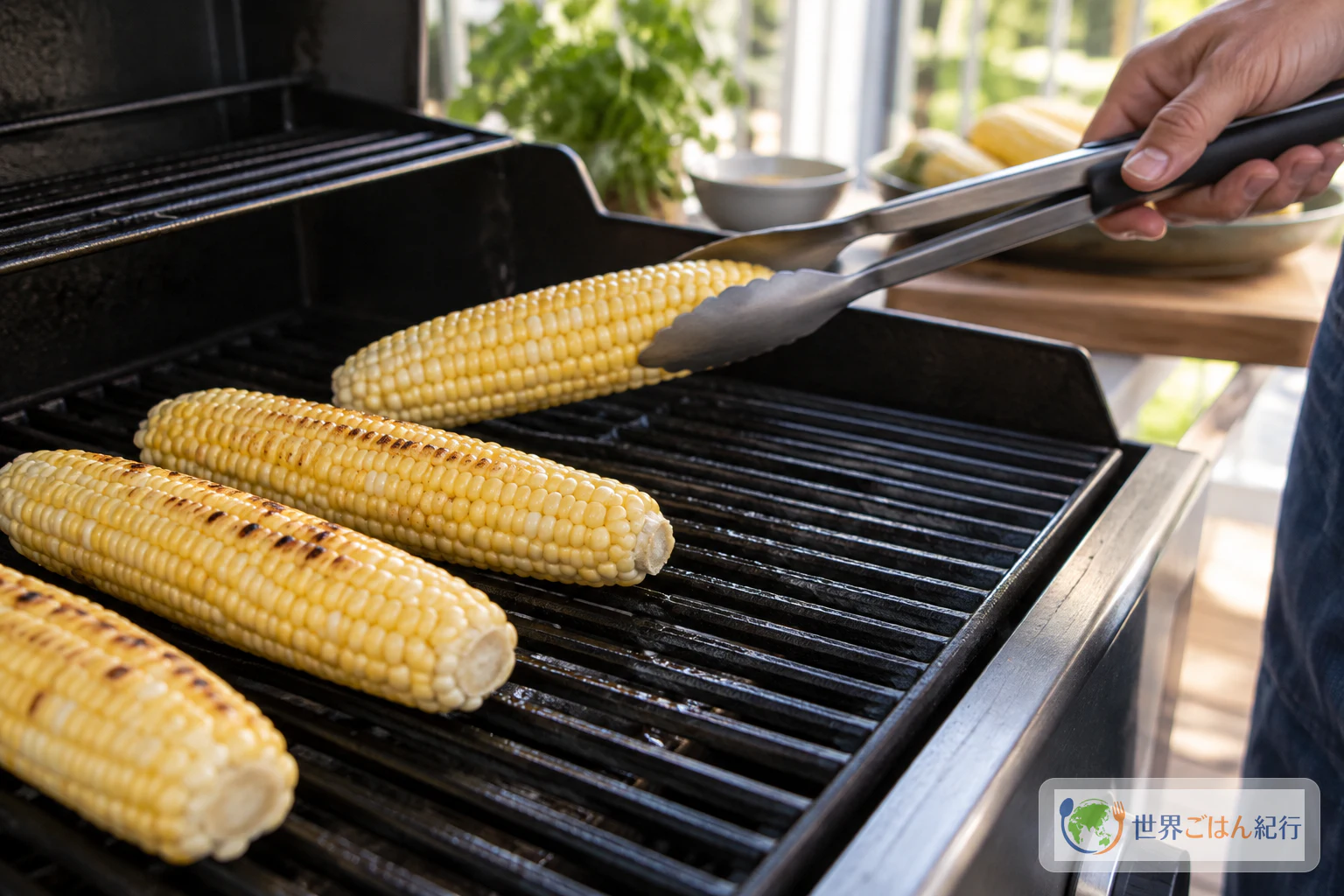
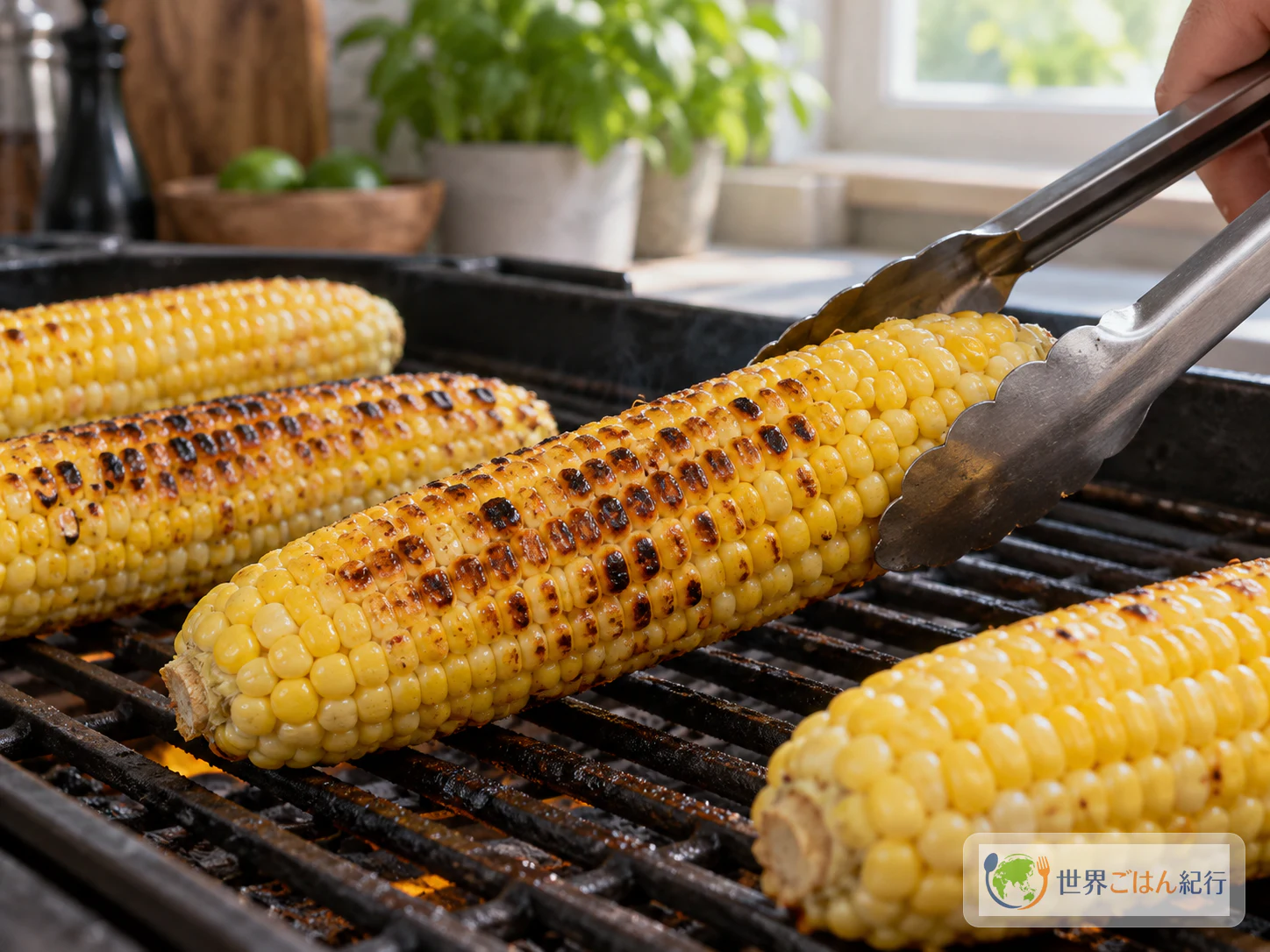
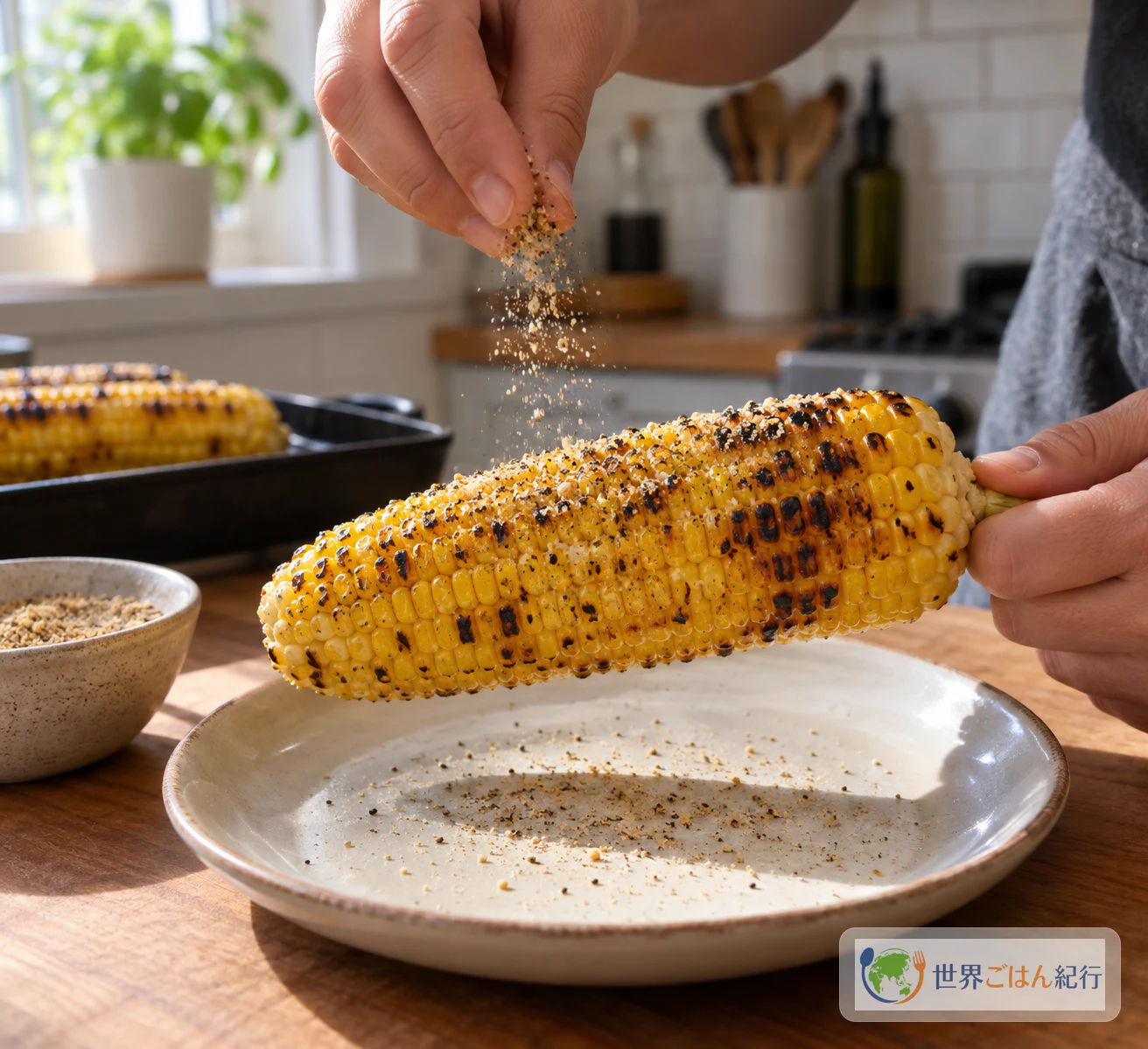
Grill the corn until it is hot and tender with browned spots on several sides. Then layer the seasonings in order while the corn is still warm, thinly enough that you can still taste the kernels.
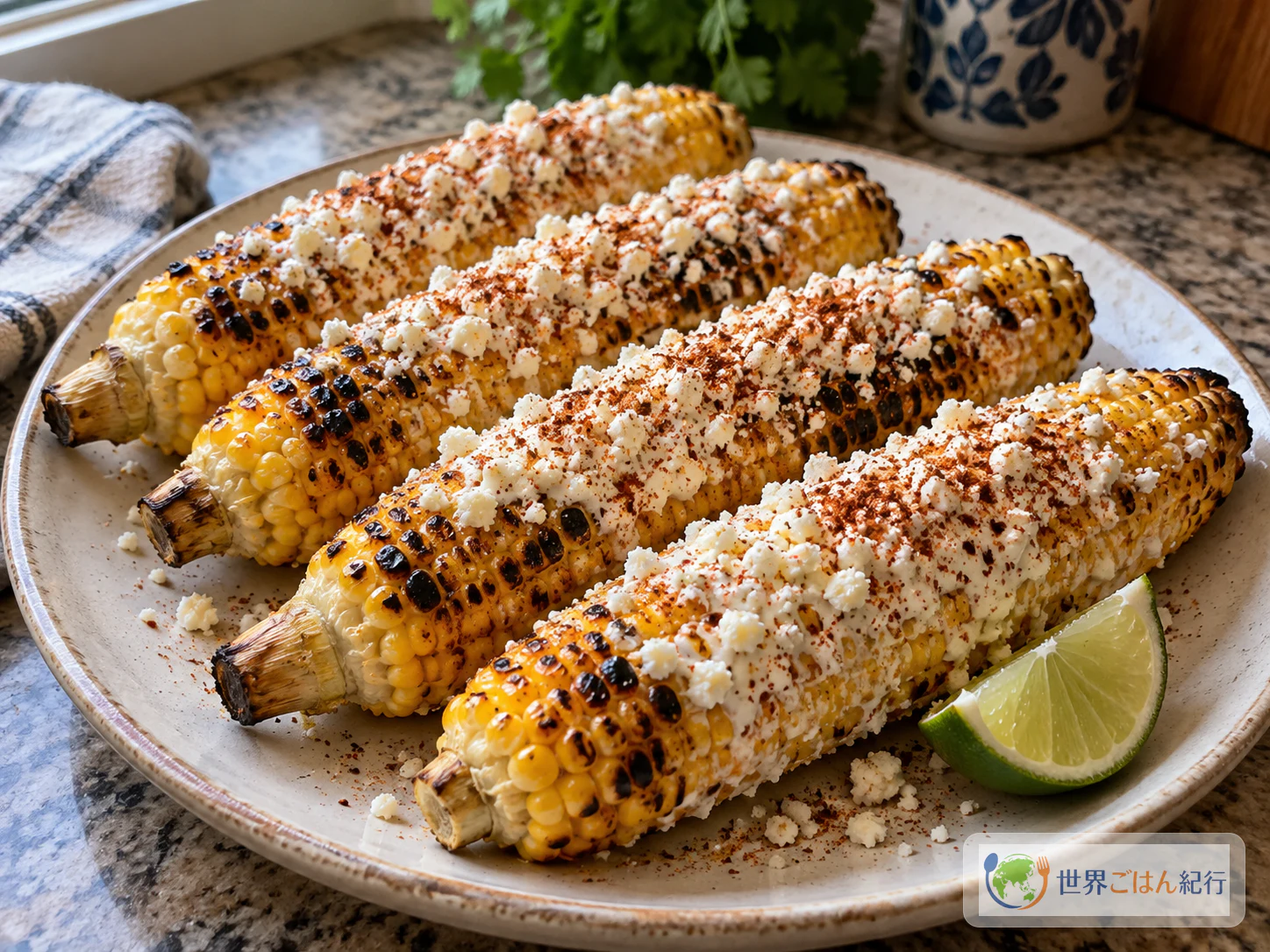
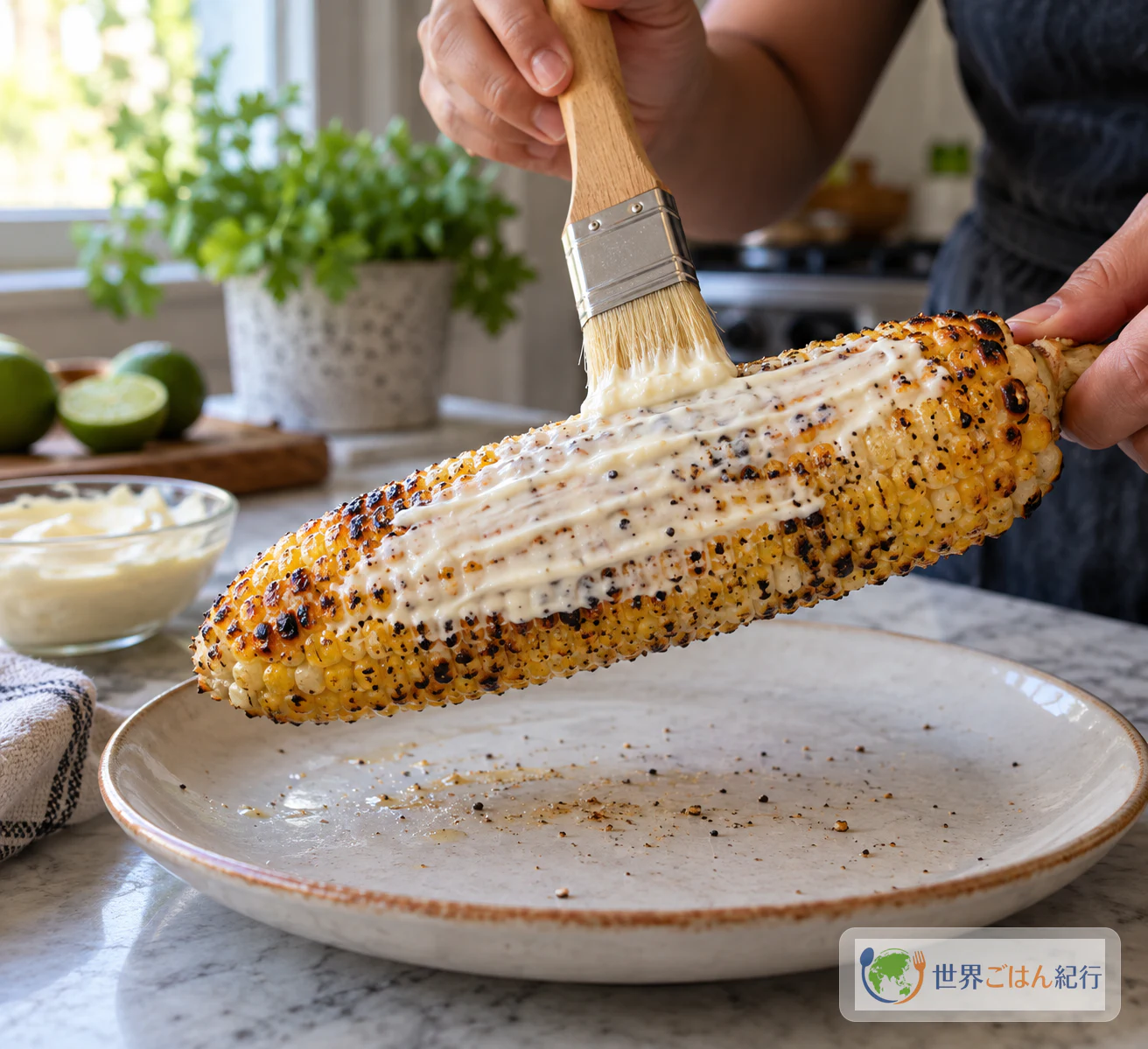
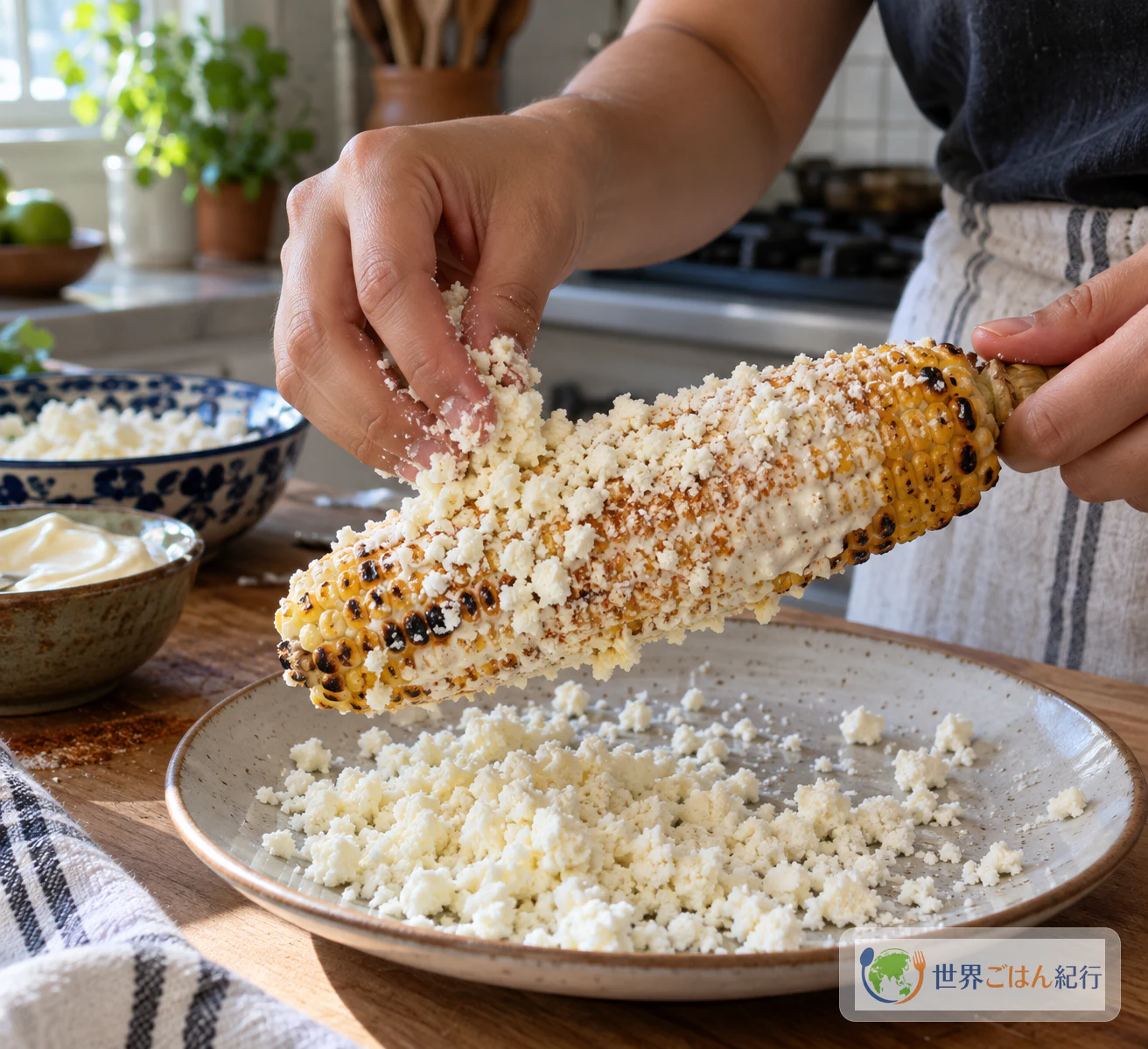
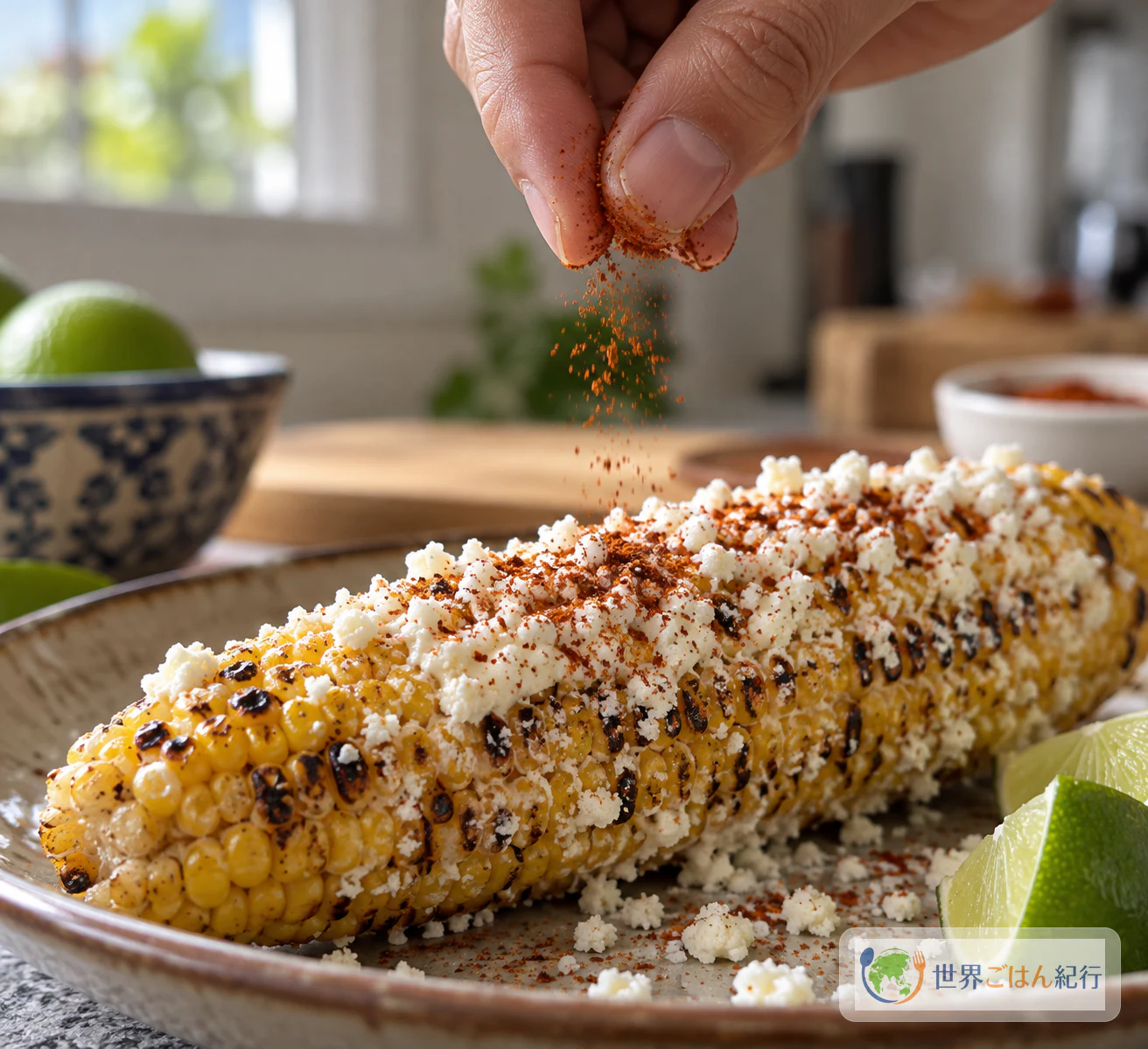
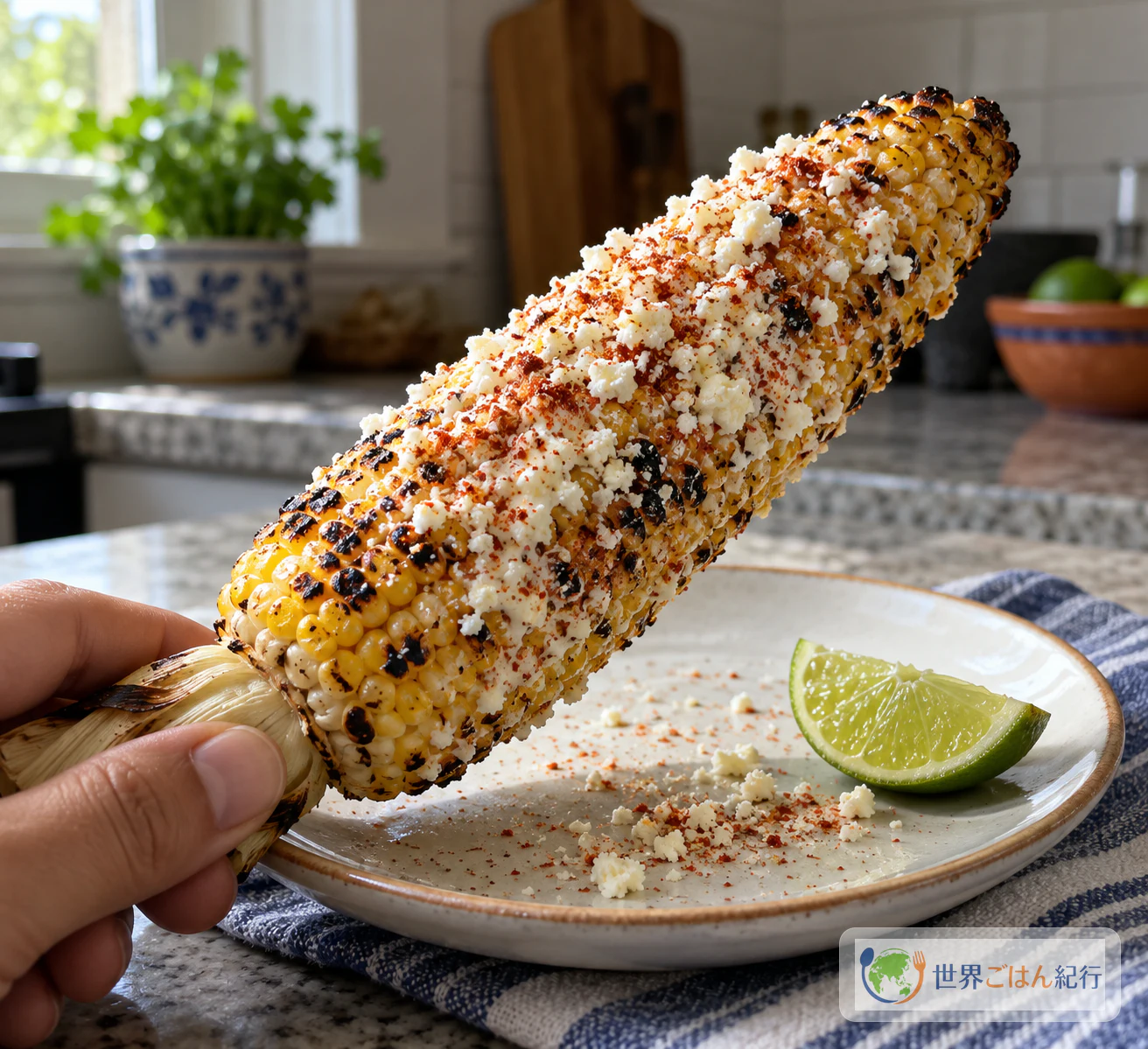
Kernels blister and brown in patches on the grill, and the ear comes off hot. A light pinch of seasoning goes on first, then a thin coat of lime-flavored mayonnaise, then crumbled white cheese, and last a red dusting of chile. Each bite brings sweet corn, a little acidity, salty cheese and gentle heat together. This is elote, corn on the cob eaten this way in Mexico, and often called "Mexican street corn" in English.
There is no single way to make it. Across Mexico, elote is boiled or grilled, and the cheese, chile and extra toppings change with the region and the seller. This article follows one grilled version for four, based on a recipe published by Goya Foods. It is an editorial home adaptation: branded seasonings are described as general ingredients, and the cobs are kept whole rather than halved as in the source. It is not a universal "authentic" formula, and it is not a tested copy of any commercial product's flavor.
If the kernels are cut off the cob and served in a cup, the dish becomes esquites, a related but separate form. The comparison is explained below.
Elote Is Both the Young Ear of Corn and the Dish Made from It
The word elote first names the ingredient. The Real Academia Española and the Association of Academies of the Spanish Language (RAE/ASALE) define it as the young ear of maize, eaten boiled or roasted, and record the word in use in Mexico and in Central American countries. The dictionary entry describes the word and its use. It does not date the modern dish with mayonnaise and cheese, so this article doesn't infer the dish's origin from the word.
As a dish, elote keeps the ear whole. Larousse Cocina presents elotes and esquites together as Mexican antojitos (snacks) that share ingredients but differ in form: elote stays on the cob, and esquites are kernels taken off the cob and served loose. Their basic seasonings can look alike, but they are not the same dish.
Larousse also describes how the names, extra toppings and cooking methods change from place to place. Some corn is boiled and some is grilled, and the chile can be "the kind that's hot or the kind that isn't." Goya's recipe is one grilled example for four people, and it is the one this article adapts.
Ingredients (4 servings)
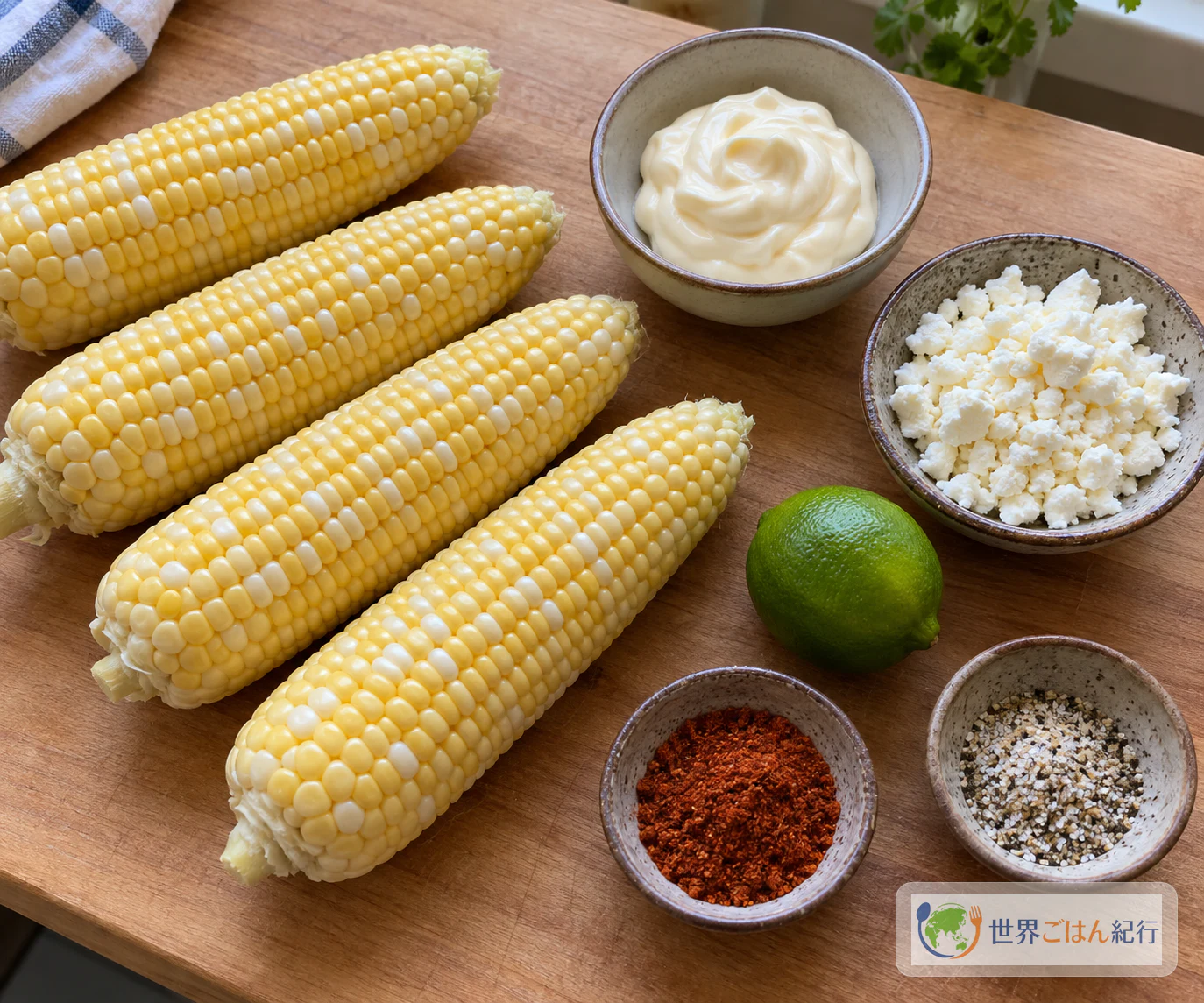
Amounts are in US units. Use US measuring cups and spoons. The cheese is measured by volume.
Mayonnaise. Use mayonnaise already flavored with lime. If you only have plain mayonnaise, use it in the same amount and serve lime at the table for each person to squeeze. It won't taste the same as a lime-flavored product, so add lime to taste rather than to a formula.
Cheese. Queso fresco, Cotija and Parmesan are different cheeses with different salt and flavor, and they are not 1:1 swaps. Queso fresco is the mild choice used here. Cotija appears in other elote recipes, but it is a separate cheese. If you use a saltier or drier cheese such as Cotija or grated Parmesan, add it a little at a time and taste before you add more.
Chile and adobo. Chile seasonings and chili powders differ in heat, aroma and salt from one product to the next. Sprinkle a little, taste, and keep more on the table for anyone who wants extra. Adobo seasoning already contains salt and pepper. Taste the cheese and chile seasoning before adding any extra salt. Using a pinch of salt and pepper separately lets you adjust more easily, but that is not adobo seasoning itself.
The cheese contains milk, and mayonnaise often contains egg. Check the package labels of the mayonnaise, cheese and seasoning blends for allergens. Grill grates, tongs, metal skewers and freshly grilled corn get very hot, so use long tongs, keep hands away from the grate, and let the corn cool briefly before anyone holds it.
Equipment
| Equipment | Notes |
|---|---|
| Grill or grill grate over medium-high heat | Use the heat source you already own safely. Follow your appliance's instructions |
| Long tongs | For placing and turning the corn |
| Pastry brush or spoon | For spreading the mayonnaise thinly |
| A plate | For rolling the corn in cheese |
| Skewers (optional) | 8-inch skewers make handles for halved cobs. Soak wooden skewers in water for 30 minutes beforehand. You can skip skewers |
Method: Grill First, Then Layer the Seasonings in Order
Halved cobs take about 10 minutes of prep and 25 minutes in total, with about 7 minutes on the grill; the 30-minute skewer soak is extra. Whole cobs, other grills and other heat levels have not been tested, so judge by the state of the corn, not the clock.
The order is fixed: grilled corn, then adobo seasoning, then mayonnaise, then cheese, then chile. Get the seasonings ready by the grill before you start, so each layer goes on while the corn is still warm.
This article does not give storage or reheating guidance. Make elote to eat right away.
Charred Outside, Bare Spots, Too Salty: Fixing Common Problems
| What happens | Likely cause | What to do |
|---|---|---|
| Outside burns while the kernels stay firm | Heat too strong, or the cob sat on one side | Turn more often and move away from the hottest part of the grate. Don't rely on a fixed time, especially with whole cobs |
| Pale, watery corn with little browning | Wet surface or too little heat | Pat the kernels dry before grilling. If you boiled the corn first, drain and dry it well |
| Cheese won't stick | Too little mayonnaise, or the corn cooled down | Spread the mayonnaise while the corn is warm and roll the cob directly in the cheese on a plate |
| Too salty | Salty cheese plus salted seasonings | Go lighter on the adobo next time and taste the cheese and chile seasoning first. With Cotija or grated cheese, add a little at a time |
| Too hot | The chile product is stronger than expected | Sprinkle less, and set aside unspiced cobs before adding chile. Put the chile on the table instead |
Variations Worth Knowing
Corn, cheese and chile each change the result a lot. To compare, change only one element from the base recipe.
- Charcoal-grilled elote asado. Larousse's dictionary of Mexican gastronomy describes elote asado: husked corn turned constantly over charcoal on an anafre (a small brazier) until deep brown. The entry describes it as popular in the former Distrito Federal and central Mexico, eaten with limón, salt and chile piquín. A home grill is not the same setup, so treat this as a direction for flavor rather than a method to copy.
- Boil first, then char. The Culinary Institute of America's deconstructed elotes boil the corn in salted water, or grill it in its husk, before giving it a light char. That recipe takes the kernels off the cob, so it is only an example of the cooking approach. If you boil first, dry the corn well before it goes on the grill.
- Boiled or grilled with epazote. Larousse Cocina also records versions boiled or grilled with epazote, among its regional examples.
- Queso fresco or Cotija. Queso fresco gives this recipe its mild saltiness. Cotija is a different, saltier choice seen in other recipes. Use less and taste as you go.
- Chile on the side. Serve the chile seasoning separately so each person chooses their own heat.
- Plain mayonnaise and lime. If you can't find lime-flavored mayonnaise, use plain mayonnaise and squeeze lime at the table. The aroma and acidity won't match the product.
- Halved cobs, as in the source. Cut the 4 cobs in half before grilling to follow the source's shape. The source's 7-minute reference applies to this cut.
- Kernels in a cup. Once the kernels come off the cob, you are making esquites, a separate dish rather than another name for elote.
Elote and Esquites: On the Cob or in a Cup
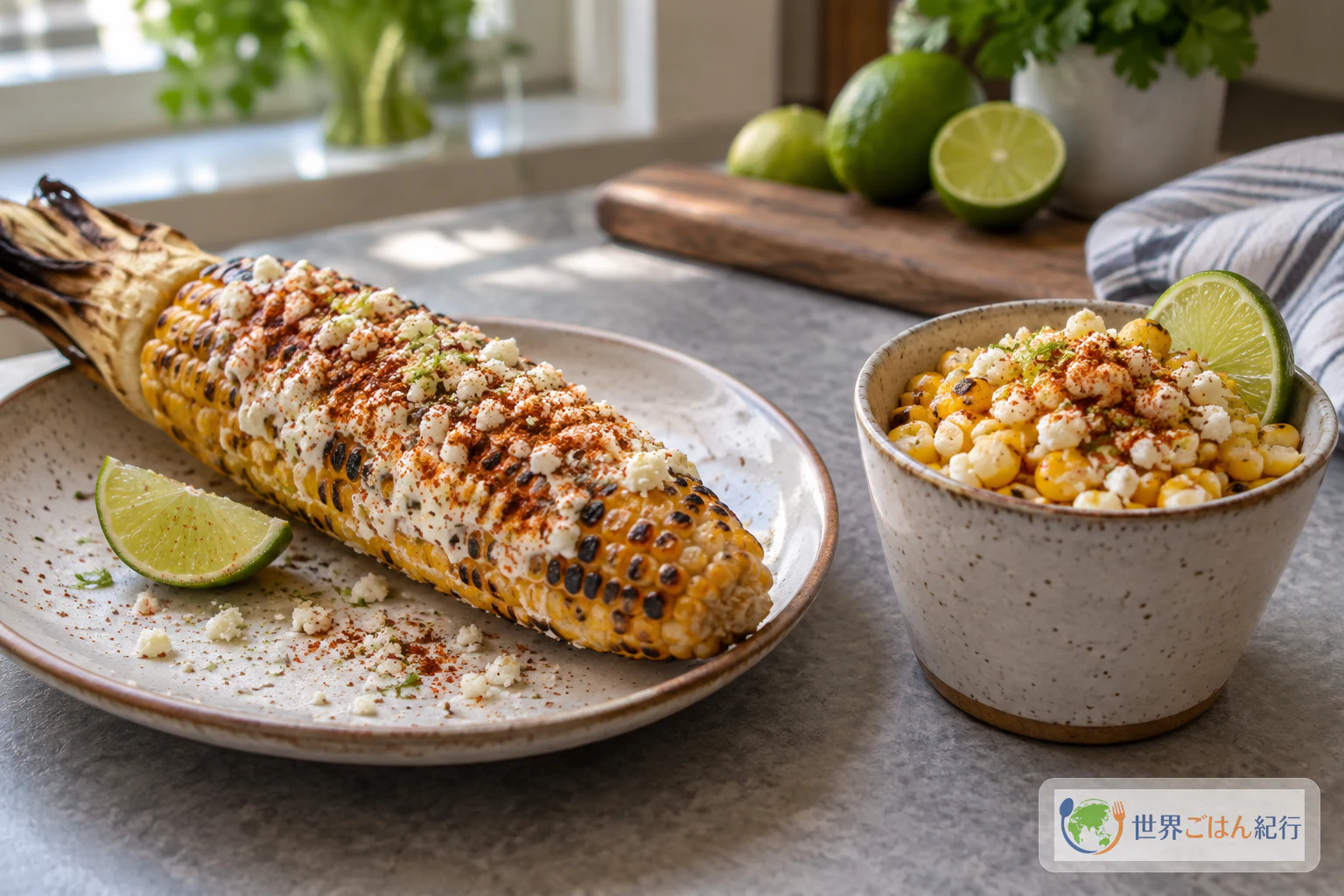
The difference is the form. Elote is held and eaten on the cob. Esquites are kernels off the cob, served in a cup or similar container. Larousse Cocina notes that both can carry the same basic combination of limón (lime), mayonesa, queso, sal and chile. It also notes that names, extra toppings and methods change across Mexico. Its examples include vasolote in Michoacán, chasca in Aguascalientes and elote en vaso in Monterrey. These are examples, not a complete map, and no single version stands for the whole country.
Corn at this young stage also belongs to a wider way of using maize. Mexico's Secretaría de Cultura records, for the Totonacapan region in north-central Veracruz and northern Puebla, that elote is eaten boiled or roasted there, separately from mature corn, which is processed into nixtamal. That record describes that region. It does not establish where the elote dish came from or what is done nationwide.
Corn has its own place in Mexican cookbooks too. The Secretaría de Cultura's library catalogue lists a 1983 book, Recetario mexicano del maíz, compiled from dishes sent in from different places, and its table of contents includes a chapter on elote. Only the catalogue page is cited here, not the book's recipes.
For other dishes from the same country, see More Mexican recipes.
Frequently Asked Questions
Can I make elote under an oven broiler or in a small indoor grill?
The source recipe uses a grill grate. Home broilers and small indoor grills haven't been tested for this recipe. If you try one, follow the appliance's instructions, turn the cobs regularly, and judge by tender kernels and browned spots on several sides rather than by a set time.
Why keep the cobs whole when the source cuts them in half?
Whole cobs are easy to serve one per person at home. This is an editorial change. The source's grilling time of about 7 minutes is for halved cobs, and whole ears may need longer, so keep turning and checking. To follow the source exactly, cut the cobs in half.
Will it be ready 25 minutes after I start?
Not necessarily. The source's 25-minute total refers to its own halved-cob recipe. Wooden skewers need a 30-minute soak beforehand, and whole cobs, your grill and your heat level can all change the timing.
Can I boil the corn before grilling?
Yes. Boiled and grilled corn both appear in the sources. After boiling, dry the surface well so it browns on the grill, then season in the same order.
What can I use instead of queso fresco?
Cotija or grated Parmesan can stand in, but none of them is the same cheese. Each has its own salt and flavor. Use less of a saltier, drier cheese, taste, and cut back on the adobo seasoning to match.
Can I make it without spicy heat?
Yes. Leave out the chile seasoning or serve it on the side. The other layers still work, and anyone who wants heat can add it at the table.
Is elote the same as esquites?
They share ingredients, but they are different forms. Elote stays on the cob, while esquites are kernels taken off and served in a cup.
Sources
- Goya Foods, "Mexican Corn on the Cob – Elote." The base grilled recipe for four, with ingredients and amounts. Supports the medium-high grilling for about 7 minutes until browned all around, the combination of mayonnaise, cheese and chile seasoning, and the soaking of wooden skewers. A brand recipe using the company's own products. https://www.goya.com/en/recipes/elote/
- The Culinary Institute of America, "Deconstructed Elotes (Mexican-Style Street Corn)." Example of boiling the corn in salted water or grilling it in the husk, then charring it lightly. A kernels-off version, not a whole-cob reference. https://www.ciachef.edu/wp-content/uploads/2024/06/cia-mexican-style-street-corn-recipe.pdf
- Larousse Cocina, "¿Con chile del que pica o del que no pica? Elotes y esquites." The basic combination of limón, mayonesa, queso, sal and chile, and the regional variation in names, toppings and methods. Also the serving of esquites as kernels off the cob. A collection of examples, not a single or complete recipe. https://laroussecocina.mx/blog/con-chile-del-que-pica-o-del-que-no-pica-3/
- Larousse Cocina, Diccionario enciclopédico de la Gastronomía Mexicana, "Elote asado." Husked corn turned constantly over charcoal on an anafre until deep brown, described as popular in the Distrito Federal and central Mexico and eaten with limón, salt and chile piquín. Gives no amounts or times. https://laroussecocina.mx/palabra/elote-asado/
- Secretaría de Cultura, Sistema de Información Cultural, "Atoles, tamales y fermentados de maíz de la región del Totonacapan." Corn use in Totonacapan, including elote boiled or roasted, as distinct from making nixtamal from mature corn. A regional record only. https://sic.cultura.gob.mx/ficha.php?disciplina=&table=frpintangible&table_id=65
- Secretaría de Cultura, Centro de Información y Documentación Alberto Beltrán, "Recetario mexicano del maíz." The catalogue record of the 1983 corn cookbook, its table of contents with an elote chapter, and its compilation from dishes sent from various places. Not used for any recipe or for the word's meaning. https://cid-albertobeltran.cultura.gob.mx/biblioteca-3/recetario-mexicano-del-maiz/
- Real Academia Española / ASALE, "elote," Diccionario de la lengua española. The meaning of elote as the young ear of maize, eaten boiled or roasted, with use recorded in Mexico and Central American countries. Does not date or define the seasoned dish. https://dle.rae.es/elote