Waiting for the Lid to Lift: Cayman Christmas Beef
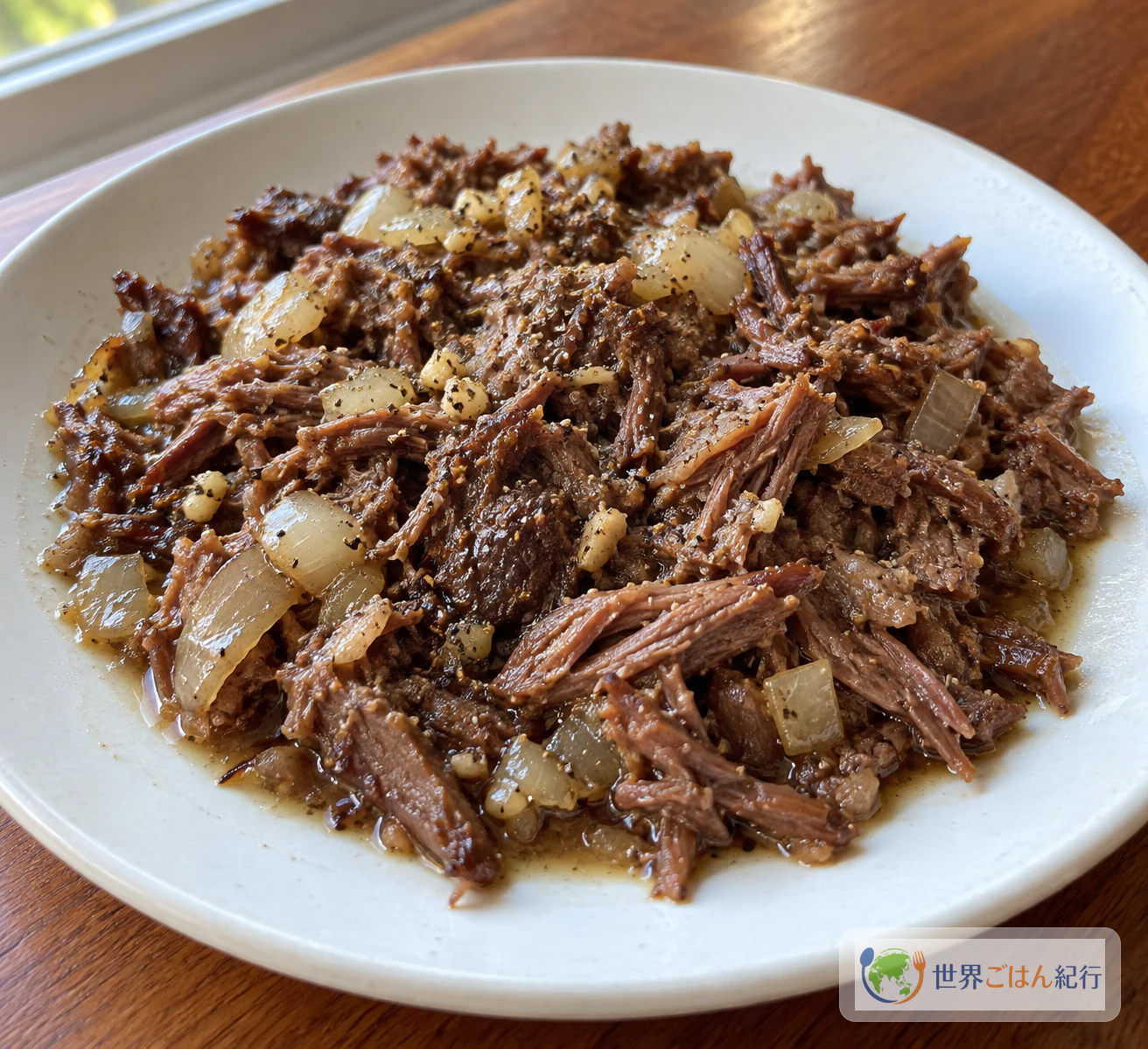
Melt the beef's own fat and cook the seasoned meat in it. Keep the lid closed and the heat low, and lift out the whole Scotch bonnet carefully at the end. Then stir the beef until it falls into strands.
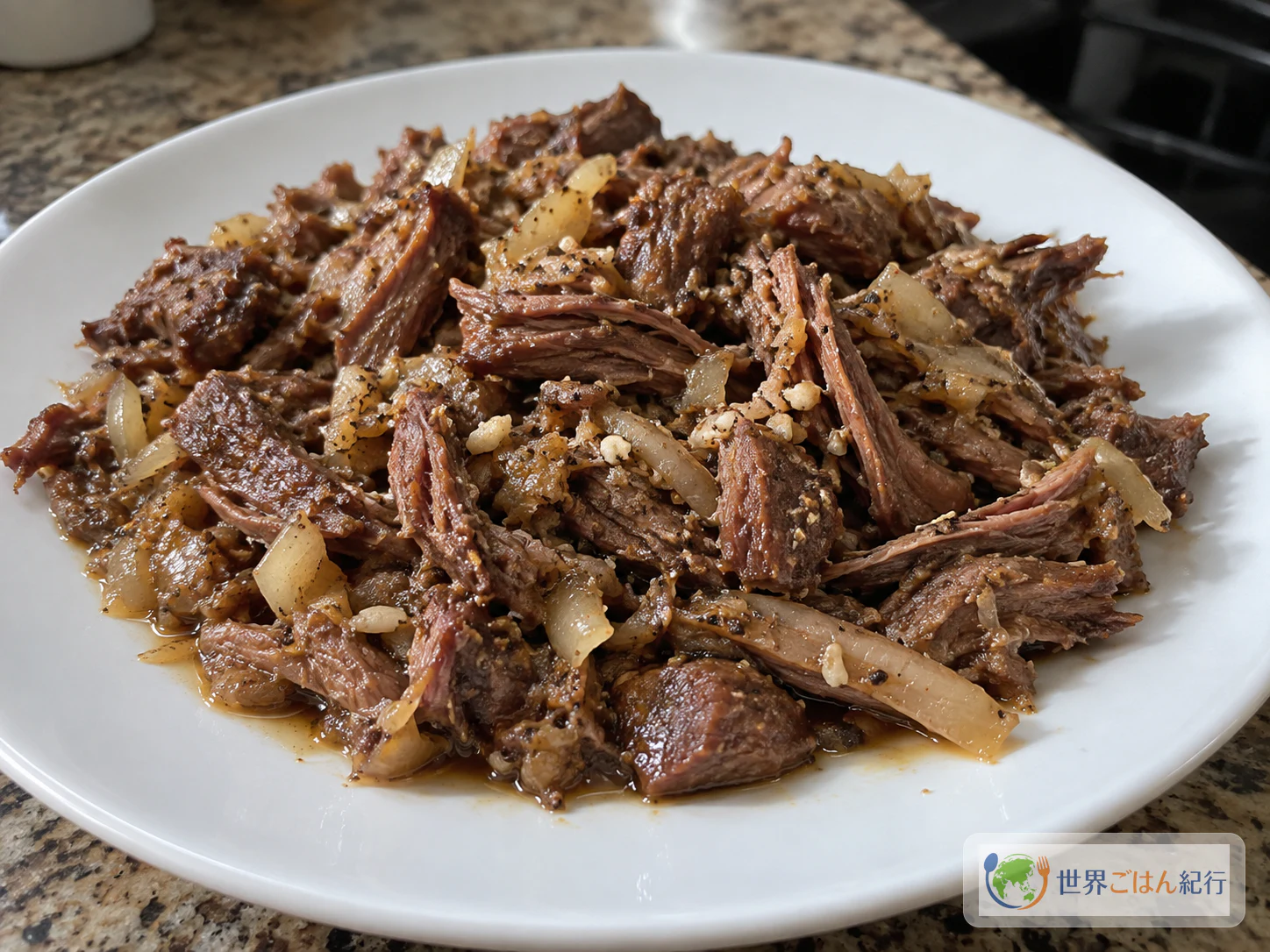
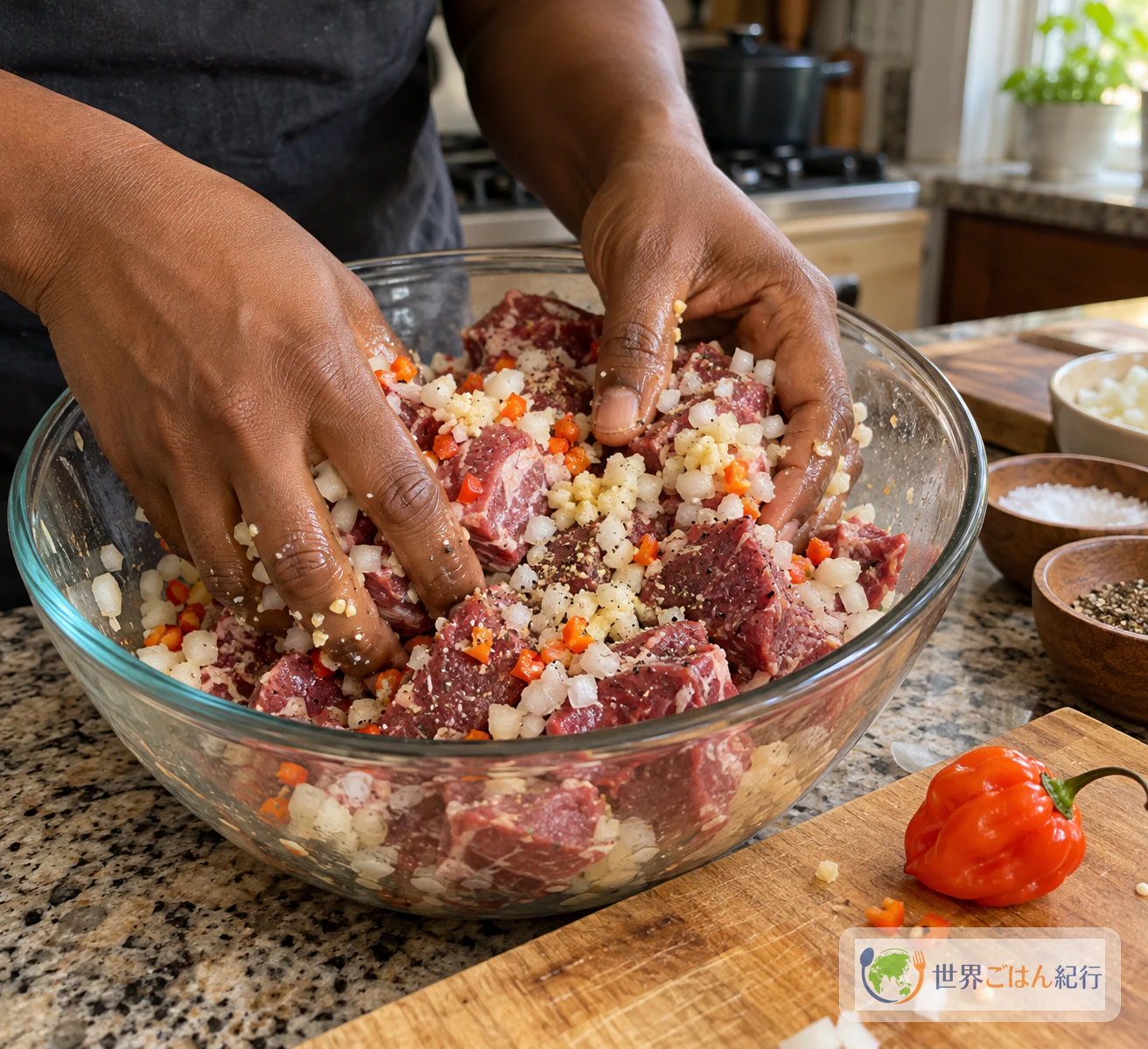
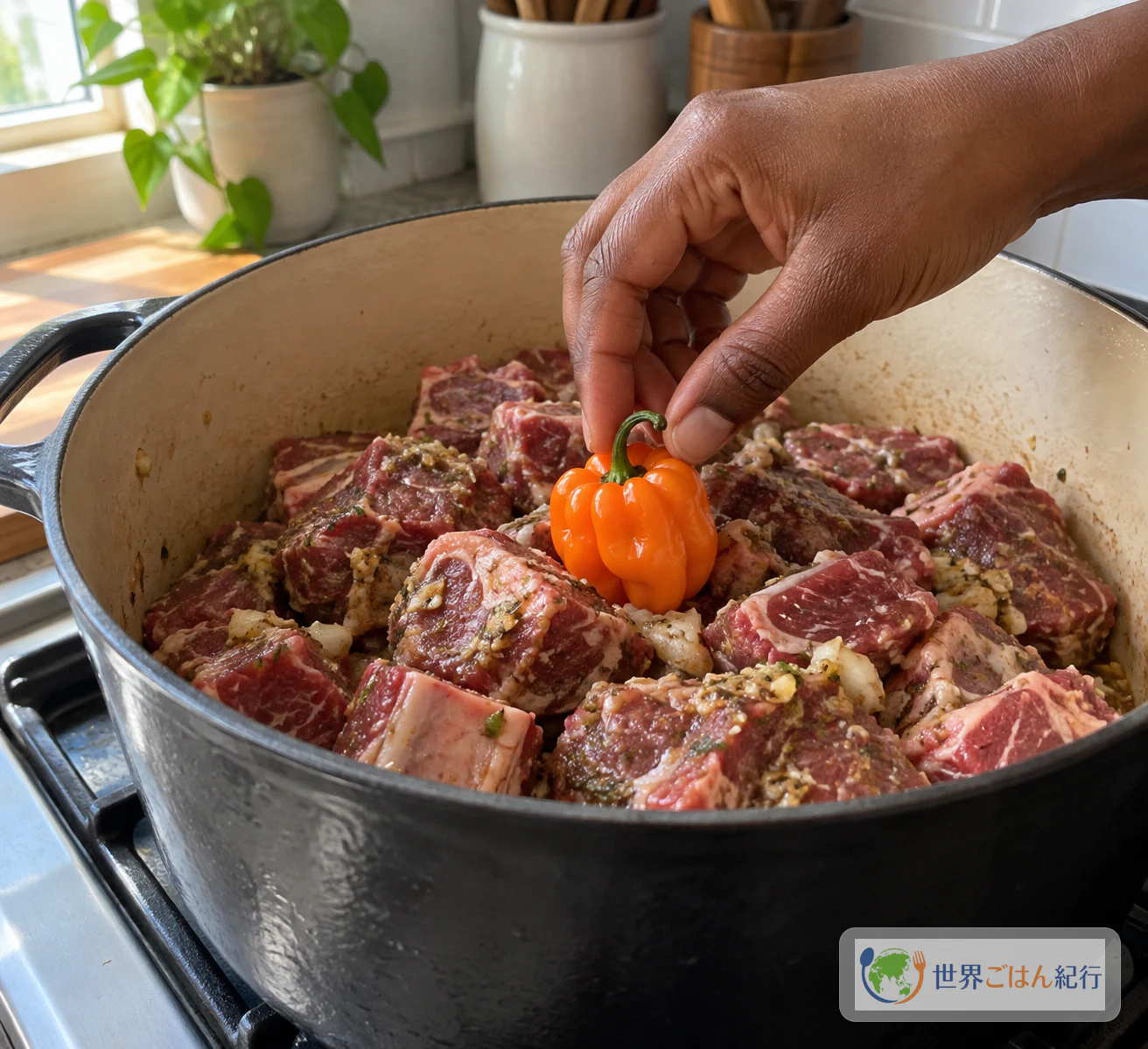
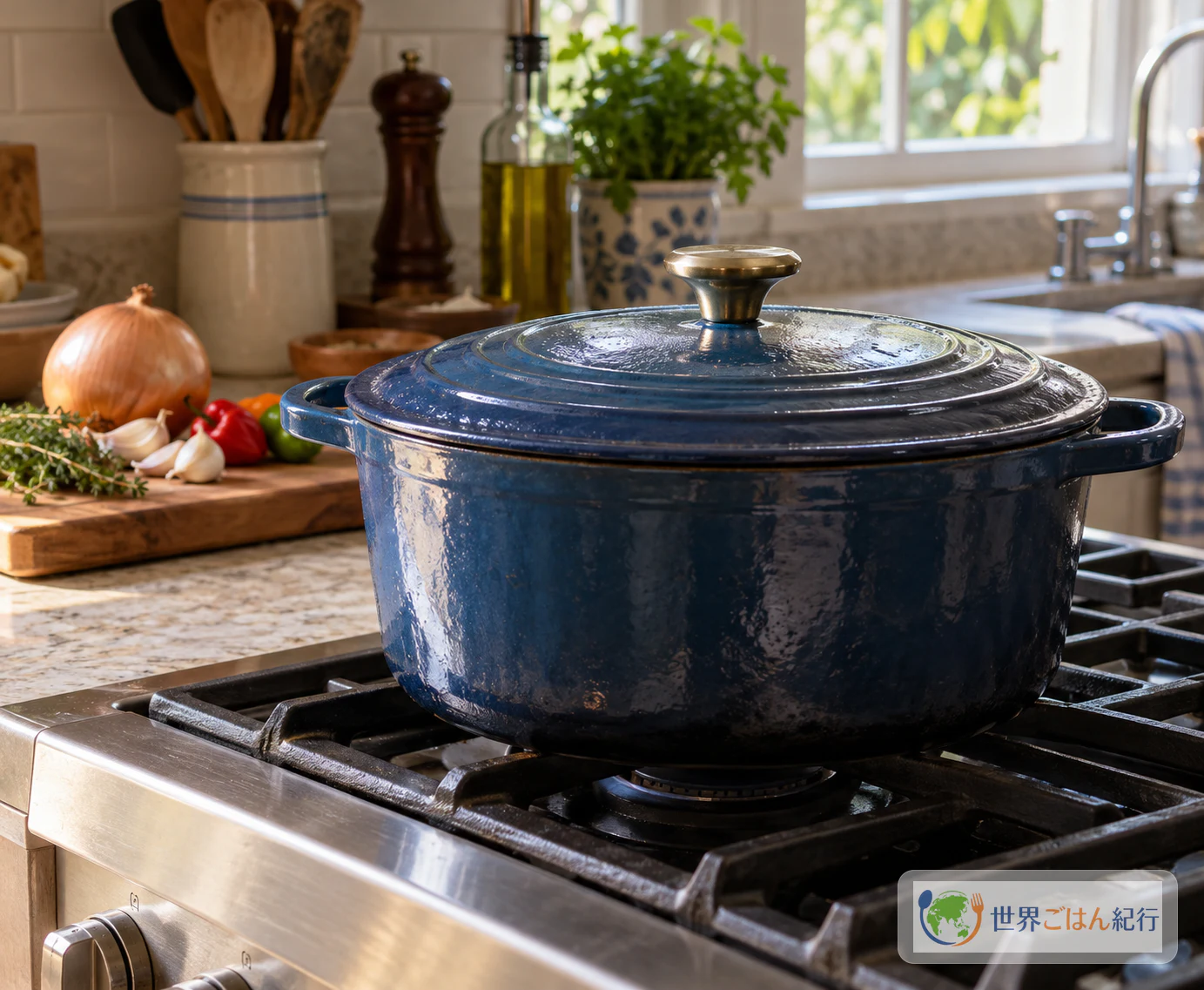
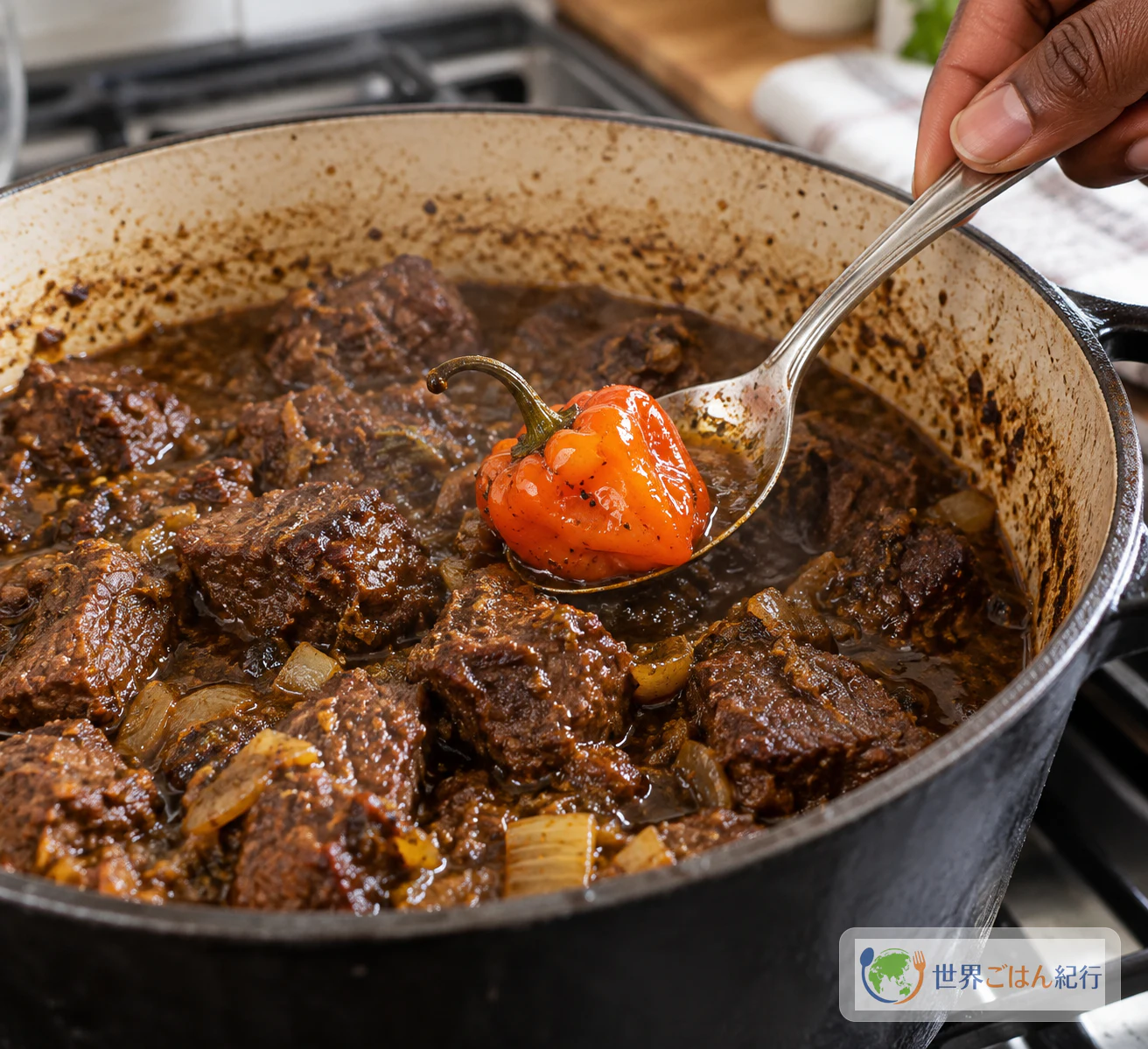
A heavy pot sits on the stove with its lid pressed down and the flame turned low. Inside is beef with its fat, seasoned with onion, garlic, black pepper, salt and chopped seasoning pepper. A whole Scotch bonnet rests on top. Nothing else goes in. Hours later the lid comes off, the pepper is lifted out, and the meat is stirred until it gives way into tender strands. The Cayman Islands Department of Tourism presents this dish, Cayman-style beef, as a popular traditional Caymanian dish.
Many people call it Christmas beef. The Cayman Compass recalls a time when beef was expensive, and for some households Christmas was the occasion to enjoy it. That is one strand of the dish's story, from certain families and a certain era, and not every islander's experience. The Brasserie Cayman likewise ties Christmas cooking to family and to recipes passed down through generations.
There is no single fixed formula for Cayman-style beef. Local writing shows versions that differ in cut, in whether pork goes in, in the seasoning blend, in whether the meat is browned, and in whether it cooks on the stove or in the oven. This article follows one of them: the recipe credited to Mr. Alvin A. McLaughlin of East End, Grand Cayman, published by the Department of Tourism. It is scaled down to a quarter for a home kitchen. The other versions appear further down for comparison, but none of their ingredients or steps are mixed into this recipe.
The quarter-batch amounts below are calculated from the original 10 lb recipe. They are not measured from a test cook. The original gives no number of servings or finished yield, so none is stated here.
What Cayman-Style Beef Is: Shredded Beef Cooked in Its Own Fat and Pepper
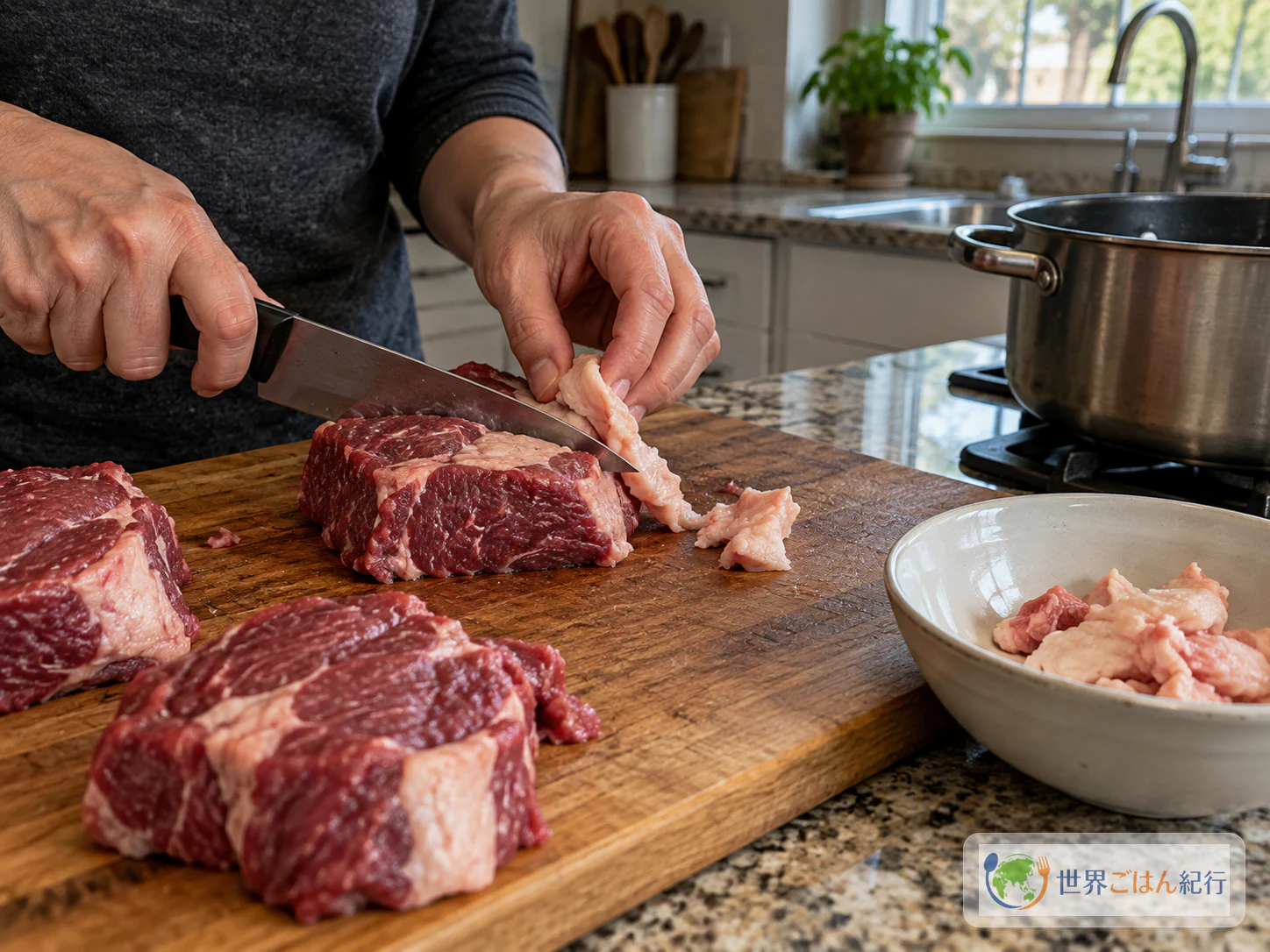
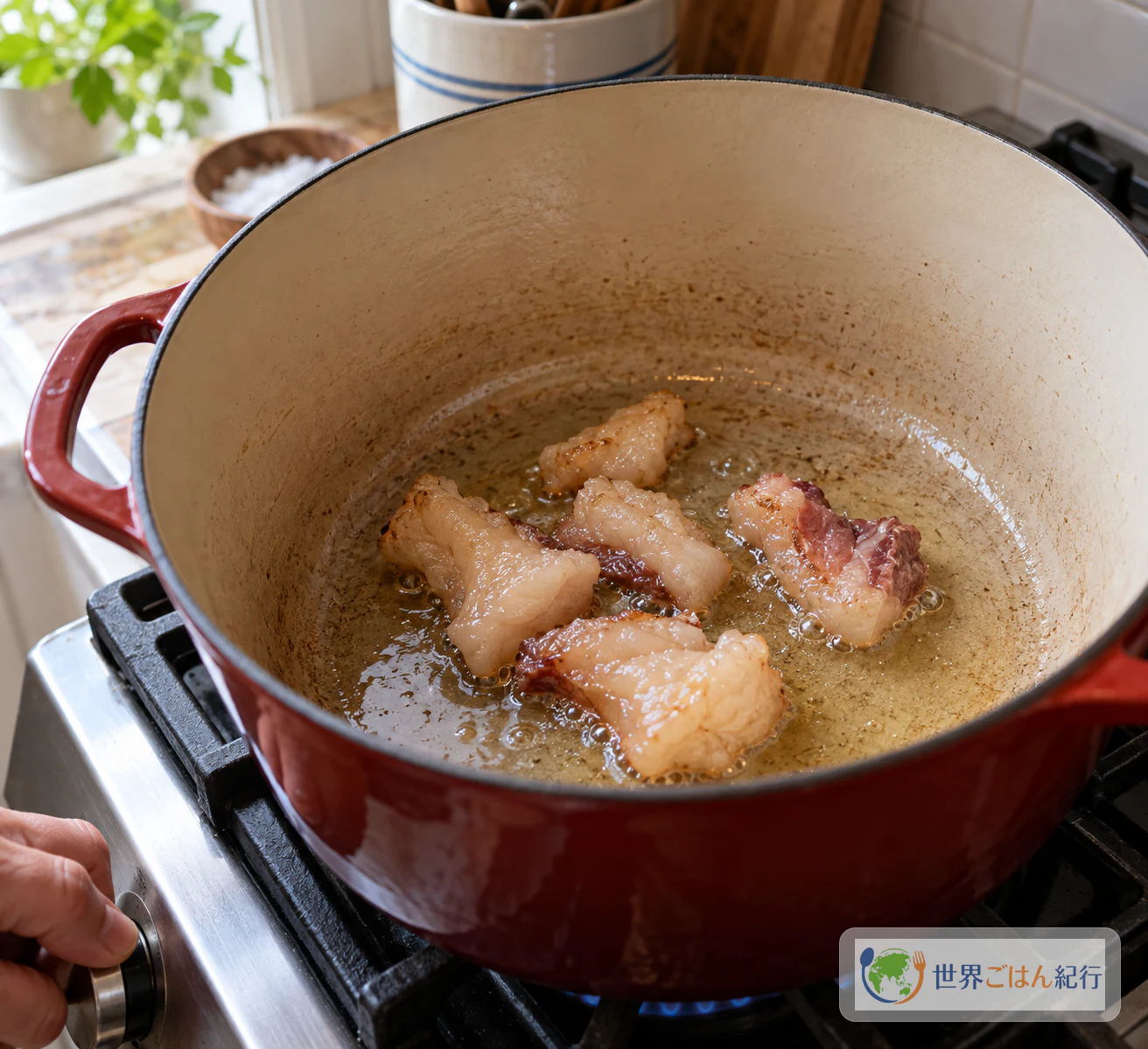
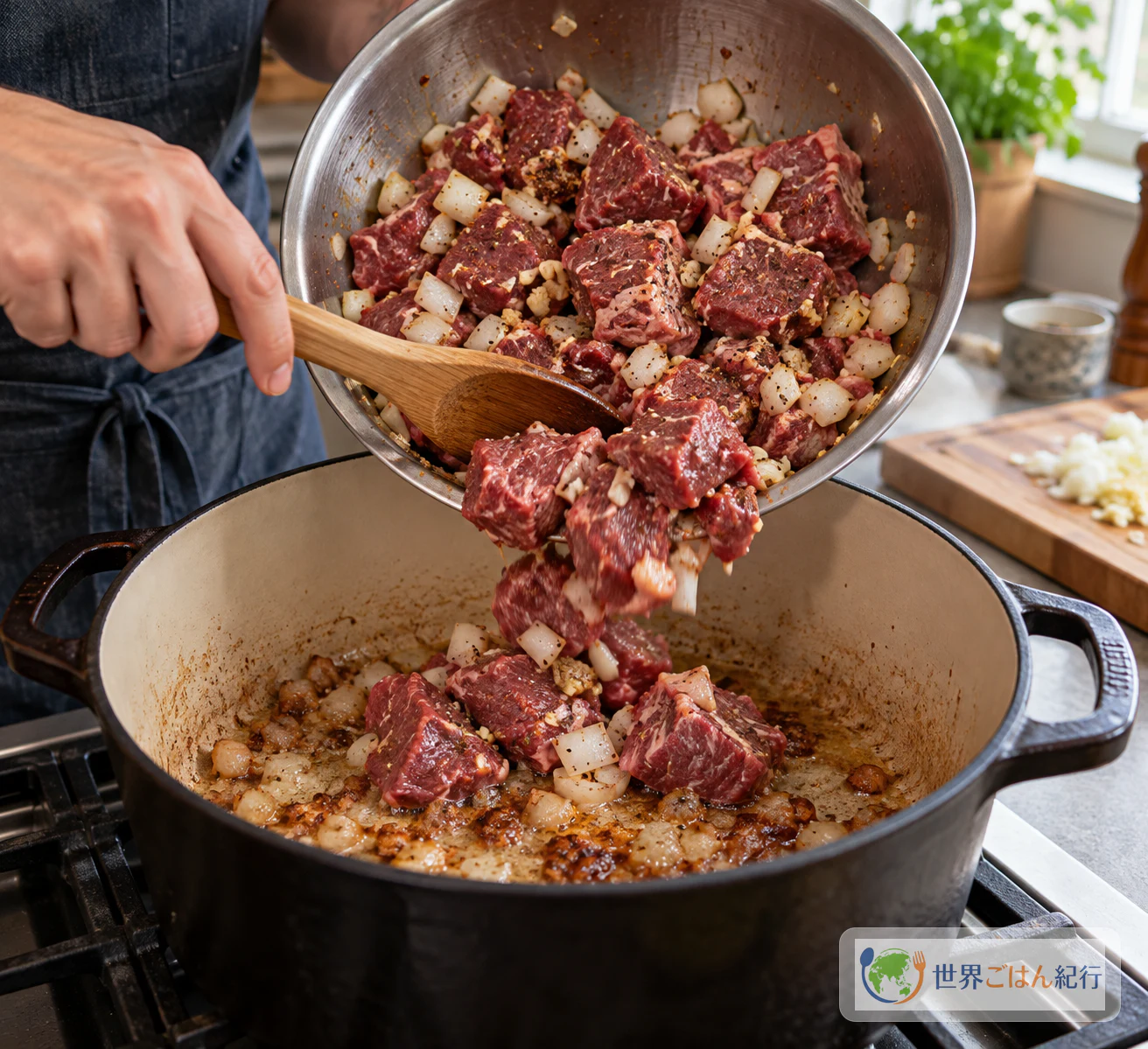
The method is simple. Thick pieces of fat are cut away from the beef and set aside. The meat is seasoned, the reserved fat is melted in a large heavy pot, and the seasoned beef goes into that fat. The pot is covered tightly and left over low heat until the beef is tender enough to shred. The beef's own fat is the cooking fat, so no oil, water or stock is added in this version.
Two peppers do different jobs. The Scotch bonnet goes in whole. It sits on top of the meat through the long cook and is taken out carefully afterward, without bursting it, so it gives heat without being chopped into the dish. Seasoning pepper is seeded, chopped and mixed into the seasoning with the onion and garlic, and the amount is to taste. Morritt's describes onion, garlic, and Scotch bonnet or seasoning pepper as common flavors in Cayman-style beef. This article doesn't try to name a botanical variety for the local seasoning pepper.
Other dishes of slow-cooked, shredded beef can look similar on the plate, such as Cuban ropa vieja. Their ingredients and methods are their own. What sets this East End version apart is how little goes into the pot: beef and its fat, a few aromatics, and one whole hot pepper.
Ingredients: A Quarter of the East End Recipe
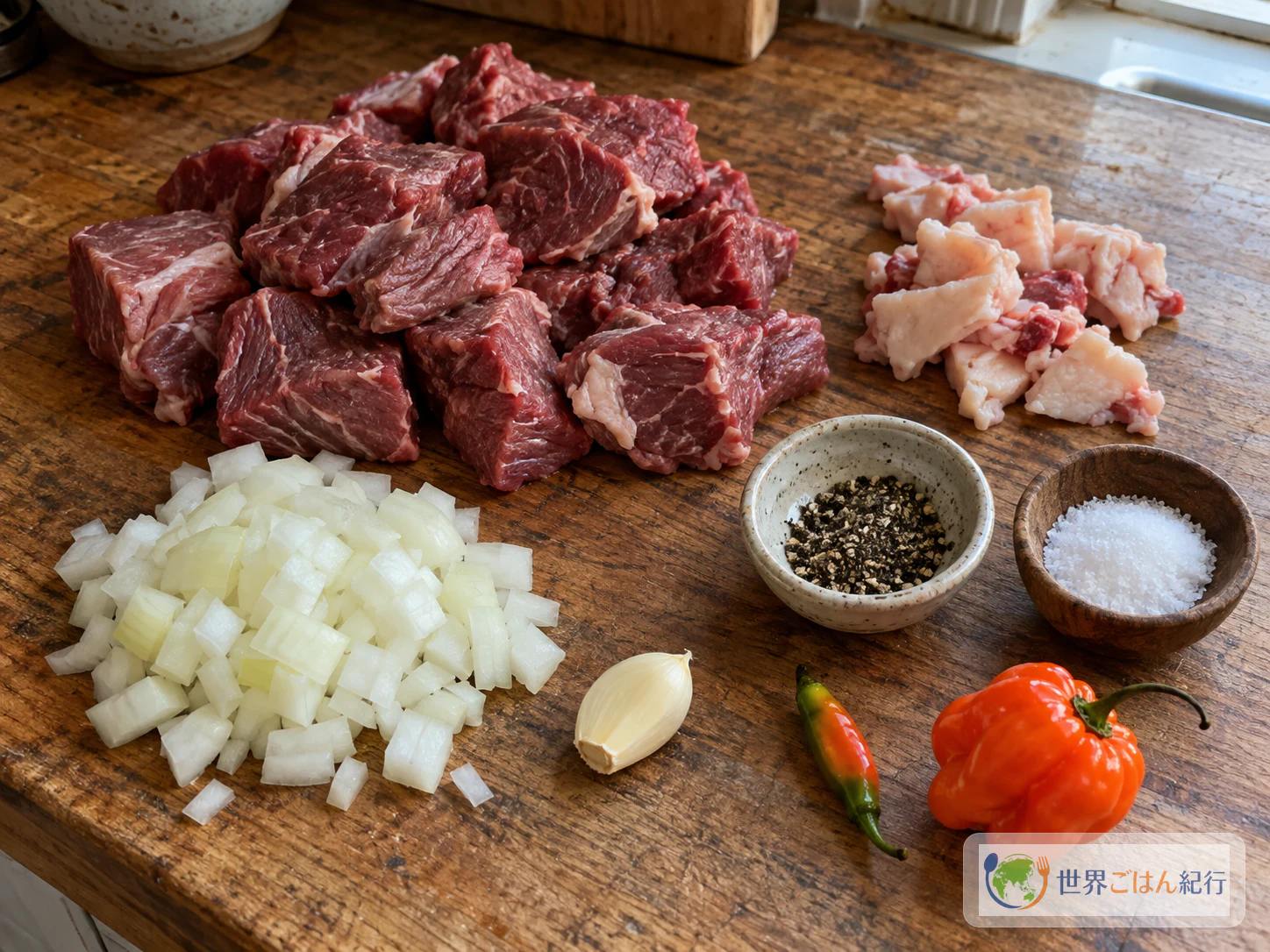
The original recipe is written for 10 lb of beef. The measured beef, onion, garlic, black pepper and salt amounts are divided by four; the peppers follow the separate choices below. The original doesn't give servings or yield. Spoon amounts assume a 15 ml tablespoon and a 5 ml teaspoon, which is a rounded convention used here and not a measured equivalent of the original.
Why one whole Scotch bonnet? The original calls for two peppers for 10 lb, adjusted to taste. A strict quarter would be half a pepper, but this dish needs the pepper whole and uncut. So this version uses one whole pepper, which is a choice made for this article and not something the original specifies. One whole Scotch bonnet is still strongly hot, and heat varies from pepper to pepper. If you want less heat, see the notes below.
The ingredients are beef, onion, garlic, black pepper, salt and chili peppers. As long as you don't add sauces or condiments, the recipe adds no wheat or soy. Don't taste raw or seasoned raw beef. Keep the board, knife, bowl and plates you use for raw beef separate from those for cooked beef, or wash them well before reusing. As a general guideline from Japan's Ministry of Health, Labour and Welfare, heat food until the center reaches 75°C for at least 1 minute. That guideline is about safety. It is not a test of when this beef is tender, and it was not tested with this recipe.
Choosing Beef and Peppers Outside the Cayman Islands
The original asks for "pieces of every cut" with some fat. Supermarkets and butchers elsewhere often sell a single cut, so a home batch won't match that mix exactly. A practical approach is to ask a butcher for a stewing piece that comes with its fat on. If your beef is lean, you can ask for beef fat separately to melt in the pot. Either way the result is close to the original but not the same cut composition.
If you can't find seasoning pepper, a small amount of green bell pepper or sweet pepper can stand in. Its aroma is different, and it is a substitute suggested here, not one the original allows. It adds no heat, so any heat still comes from the Scotch bonnet.
For less heat, you can leave out the Scotch bonnet. Don't swap in another very hot chili, such as a habanero, at the same amount without thinking. If you use a different hot chili you can get, start small and keep it whole. Keep it intact either way, because cutting or crushing the pepper releases much more heat.
Equipment
- A large heavy pot with a tight-fitting lid
- A knife and cutting board for raw beef
- A bowl for seasoning the beef
- A small dish for the reserved fat
- A spoon for lifting out the pepper
- A fork for checking tenderness
- A clean food thermometer for checking the center
Method: Low Heat Until the Beef Falls Apart
The original simmers its 10 lb batch over low heat for 4–6 hours. This quarter batch has not been tested, so that range is a reference point only. It doesn't promise the beef will be ready within that time, and 6 hours is not a hard stop. Judge by how tender the meat is.
Dry, Tough, Too Hot: Fixing Problems in the Pot
| Condition | Likely cause | What to do |
|---|---|---|
| The meat is drying out or the bottom is scorching | Heat too high; the lid isn't sealing; the pot has little fat | Don't raise the heat. The original relies on low heat, rendered fat and a tight lid. Adding water is an adjustment outside the original; if you do, note it |
| The beef won't shred | Not cooked long enough for this cut and pot | Don't stop just because 4 hours have passed. Keep cooking over low heat and check again. The 4–6 hours applies to the original 10 lb batch and is not a fixed limit |
| Lumps of fat haven't melted | Thick pieces of fat | You may lift out unmelted pieces before they burn. The original doesn't give this instruction |
| Little fat in the pot | Lean beef | Next time, ask a butcher for beef fat to melt in step 3 |
| Much hotter than expected | The Scotch bonnet split, or it was cut or crushed | Handle the pepper gently and keep it whole. For less heat, leave it out next time |
Leftovers: Cool Quickly, Reheat Thoroughly
The original recipe gives no storage advice, so this section follows the general home food-safety guidance of Japan's Ministry of Health, Labour and Welfare. Use clean utensils. Divide leftovers into clean, shallow containers so they cool quickly, and refrigerate them promptly. Don't leave the beef at room temperature. Reheat until it reaches 75°C or higher. No dish-specific storage period is given here.
Christmas Beef Differs from Home to Home
The Cayman Compass reproduces a separate Christmas beef recipe from Miss Cleo. It uses 4.5 lb of boneless rump or sirloin tip, a seasoning blend, Worcestershire sauce, Pickapeppa sauce and browning, and the meat is browned and then cooked in the oven. It is a roast-and-braise dish with its own logic. None of its ingredients belong in the East End recipe above.
The Brasserie Cayman describes a chef's Christmas variation in which beef and pork are slow-cooked together. It uses salt, black pepper, thyme, seasoning peppers, mutton peppers and pimento berries, with an overnight marinade and at least 3 hours of gentle simmering. The same article describes mutton peppers as a distinct Caymanian pepper, less fiery than others, and discusses how scarce they became after Hurricane Ivan.
These versions show how much room the dish has. They don't rank one above another or mark any of them as the only real Cayman beef. The East End recipe in this article is one published version among several.
Variations Worth Making
- Milder: Leave out the Scotch bonnet. With one whole pepper the dish is still strongly hot, so don't think of one as a small amount. Neither choice is the original's default amount.
- No seasoning pepper: Use a small amount of green bell pepper or sweet pepper for aroma, and keep in mind that the scent is different.
- Lean beef: Ask a butcher for separate beef fat to use as the cooking fat. This brings the pot closer to the original method, though it doesn't recreate the original mix of cuts.
At the Island Table: Rice and Beans and More
The East End recipe pairs the beef with rice and beans. Morritt's, a resort on Grand Cayman, also suggests roasted breadfruit and fried plantain as ways to serve Cayman-style beef. These are examples, not required sides. The salt of the seasoning and the heat of the pepper are what the plate is built around, so one simple starch is plenty.
Christmas beef also carries family memory. The Cayman Compass recalls it as a holiday treat in households where beef was once costly, and the Brasserie Cayman writes about recipes handed down through families. A covered pot left on low heat for hours fits that kind of day.
Frequently Asked Questions
What if I can't get seasoning pepper?
Its role is aroma, not heat. A small amount of green bell pepper or sweet pepper is a suggested stand-in, but the scent won't be the same. The Scotch bonnet still carries the heat.
How hot is the Scotch bonnet here?
The original leaves the number of peppers to taste and cooks them whole on top of the meat, removing them carefully afterward. This version uses one whole pepper, which is still strongly hot, and heat varies between peppers. If you want it milder, leave the pepper out. If it splits or is cut, the dish gets much hotter.
How long does it really cook?
The original says 4–6 hours over low heat for 10 lb of beef. This quarter batch hasn't been tested, and pots and cuts differ. Use the beef's tenderness as your guide rather than the clock alone, and keep cooking if it isn't ready to shred.
Can I prepare it the day before?
The East End recipe seasons the beef and cooks it straight away. It doesn't call for a marinade. The overnight marinade belongs to a different beef-and-pork version, so it isn't part of this recipe. If you cook ahead, cool the beef quickly in clean shallow containers and refrigerate it promptly. Reheat it to 75°C or higher before serving.
How many people does this serve?
The original recipe gives no servings or yield, so none is stated here. This version is a quarter of the original amounts, starting from 2.5 lb of beef.
Sources
- Cayman Islands Department of Tourism, "Cayman-Style Beef." Source of the recipe: Mr. Alvin A. McLaughlin, East End, Grand Cayman. Covers its description as a popular traditional dish, the original ingredients and amounts, rendering the reserved fat, seasoning the beef, the whole Scotch bonnet, the covered low simmer of 4–6 hours, removing the peppers and shredding, and serving with rice and beans and "stemmed vegetables." https://www.visitcaymanislands.com/en-gb/inspiration/cayman-style-beef
- Cayman Compass, "Christmas beef: A Caymanian tradition." Covers beef once being expensive, with Christmas as the time some households enjoyed it, slow-cooked Christmas beef, and Miss Cleo's separate roast-and-braise version. https://www.caymancompass.com/2022/12/21/christmas-beef-a-caymanian-tradition/
- Brasserie Cayman, "Christmas Dinner in Cayman." Covers a beef-and-pork Christmas variation, the family meaning of holiday food and inherited recipes, and mutton peppers and their scarcity after Hurricane Ivan. https://brasseriecayman.com/christmas-dinner-in-cayman/
- Morritt's, "Three 'Must-Have' Caymanian Dishes." A supplementary description of Cayman-style beef as slow-cooked and shredded, its common flavors of onion, garlic and Scotch bonnet or seasoning pepper, and serving with rice and beans, roasted breadfruit or fried plantain. https://www.morritts.com/blog/three-must-have-caymanian-dishes/
- Ministry of Health, Labour and Welfare (Japan), "家庭での食中毒予防" (Preventing food poisoning at home). General guidance on heating to a center temperature of 75°C for at least 1 minute, reheating to 75°C or higher, clean utensils, cooling leftovers quickly in small shallow portions, and avoiding room-temperature storage. https://www.mhlw.go.jp/stf/seisakunitsuite/bunya/kenkou_iryou/shokuhin/syokuchu/01_00008.html