Atole: A Warm Cup Thickened with Corn
The corn flavor and gentle body of masa harina, the deep sweetness of piloncillo, and the warmth of cinnamon and vanilla. Six ingredients, three steps, served hot.
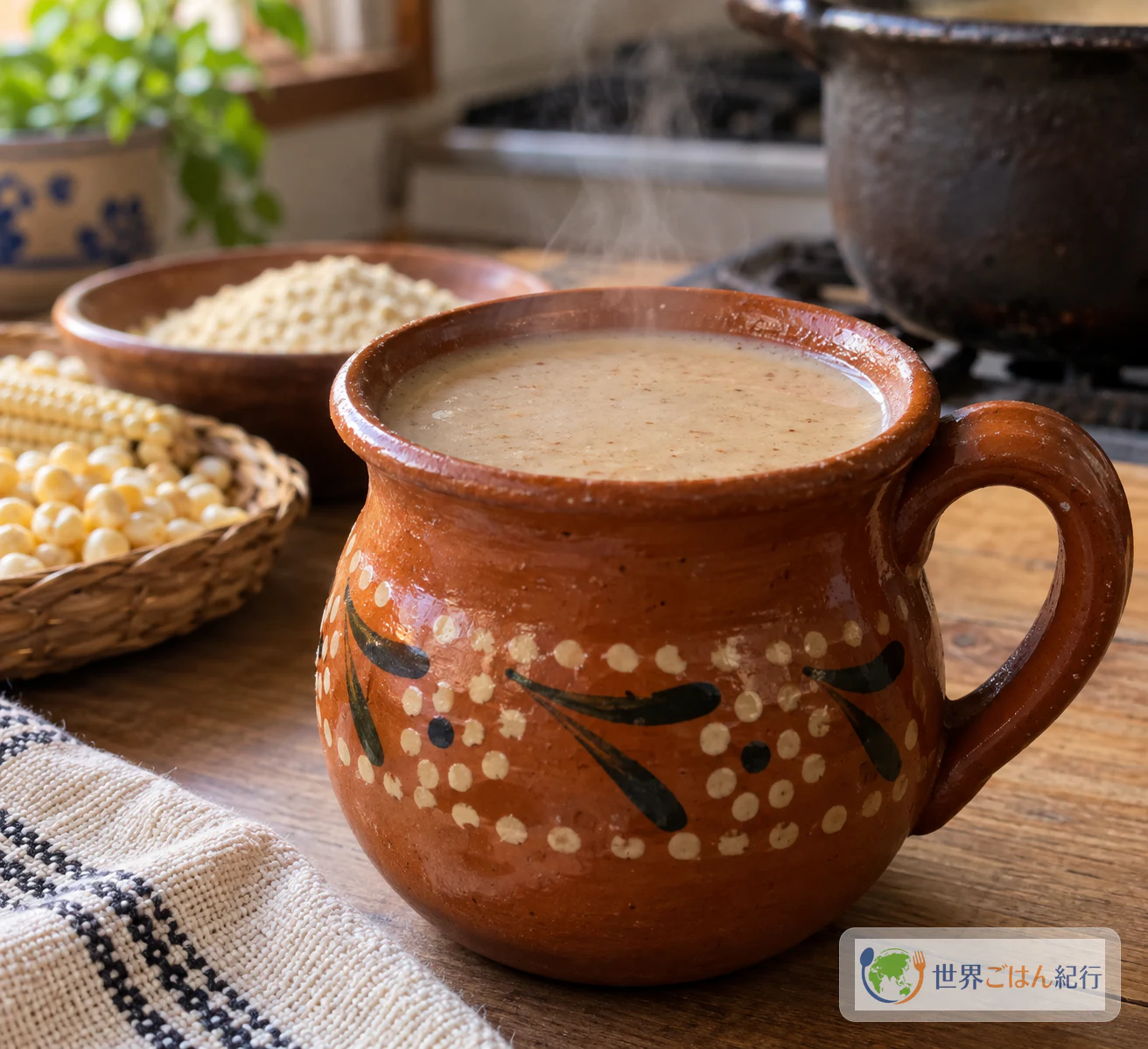
A cup of atole steams beside a plate of tamales. Mexico's Ministry of Culture describes atole as a drink made from corn masa (masa de maíz) with water or milk, and notes that tamales and atoles are a long-standing pairing on the Mexican table. Goya Foods' recipe page also presents atole alongside tamales.
It would be easy to call atole a "sweet corn drink" and leave it there, but that misses what makes it distinctive. The masa does more than sweeten or flavor: it gives the drink body, so it pours thick and soft rather than thin like flavored milk. This recipe follows chef Rick Bayless's basic atole, built on milk and water, piloncillo, cinnamon, masa harina and vanilla. It is one well-defined version, not the single national recipe.
What Is Atole, and How Is It Different from Champurrado?
Atole is a drink made from corn masa with water or milk. That is the core of the description from Mexico's Ministry of Culture, which also places atoles next to tamales as a traditional combination.
The same source lists many different atoles, with different ingredients, flavors and methods depending on the region. It mentions types such as xocoatolli, a sour atole; atoles made with pinole; and versions built on fruit, beans or chiles. In other words, atole is not fixed to one flavor, and it is not always sweet.
This article covers the basic sweet version with cinnamon and piloncillo. Champurrado is a related drink that adds chocolate. It is worth treating separately rather than as a synonym for atole in general.
Choosing Masa Harina and Piloncillo
Masa harina is not just a starch. It is the flour used for corn dough, and in atole it carries the corn flavor as well as the thickness. Cornstarch and potato starch are different products, so don't swap them in at the same amount. A package labeled only "corn flour" may not be masa harina; look for the name masa harina itself.
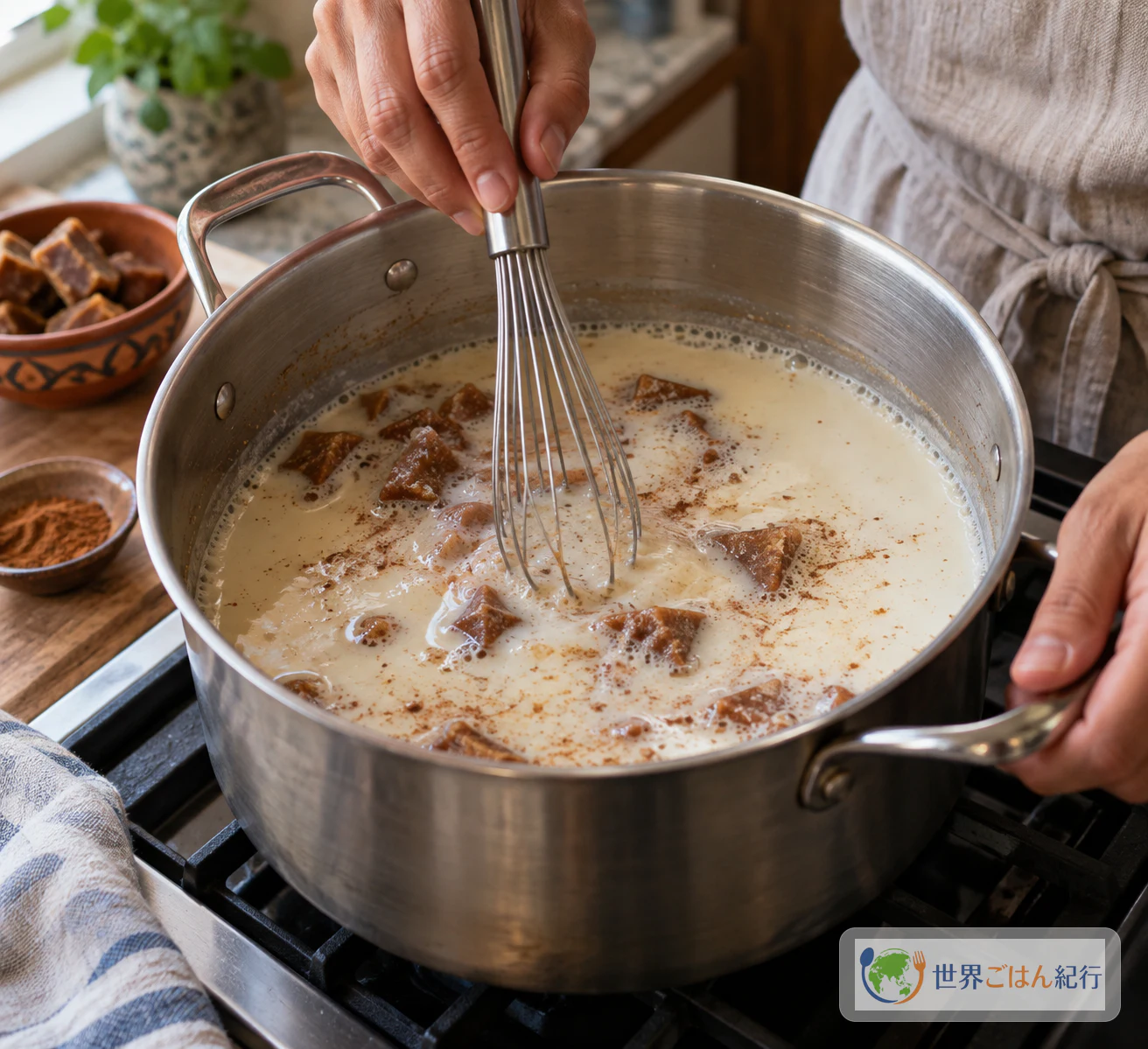
Piloncillo is Mexican raw sugar, sold in solid form, so it needs chopping before it goes into the pot. This recipe uses chopped piloncillo as the main version. The original recipe also offers brown sugar as an alternative, which works if piloncillo is hard to find, though the flavor won't be an exact match. If you reach for another unrefined sugar, treat it as a substitute with its own flavor rather than the same thing.
What sets this recipe apart is the mix of milk and water, plus ground cinnamon and vanilla extract. Fruit, chocolate, salt or a cinnamon-stick garnish are not part of it.
Ingredients
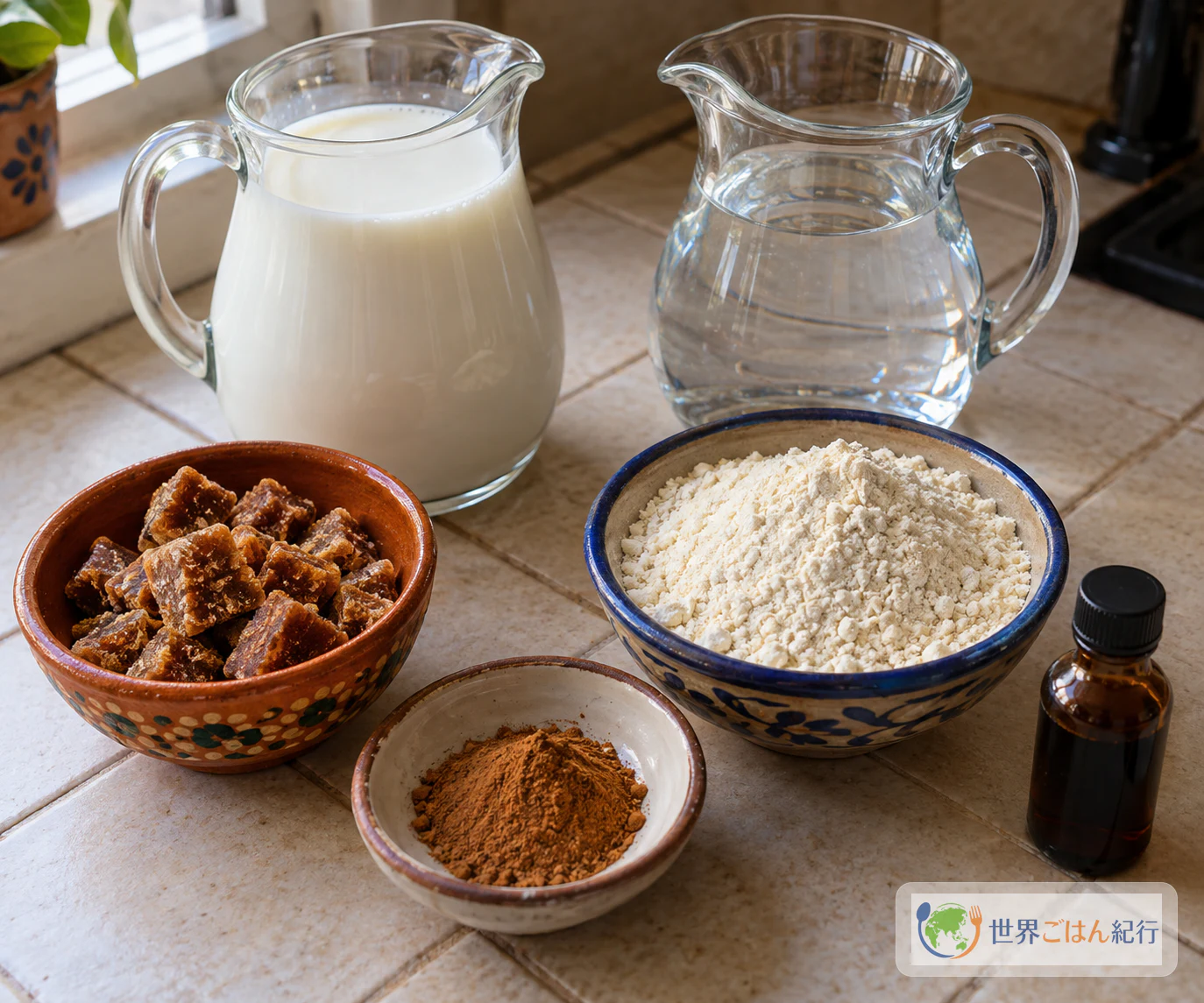
These are the amounts from the Rick Bayless recipe, in its original units. The recipe does not state a yield or number of servings, so none is given here.
The recipe page does not define its cup. If you measure in metric, this article takes 1 cup as 240 ml and 1 tsp as 5 ml. That gives 480 ml milk, 480 ml water, 120 ml chopped piloncillo by volume, 120 ml masa harina, 5 ml ground cinnamon and 2.5 ml vanilla extract. These are volume equivalents only. The sugar and masa harina are not converted to grams, and the starting liquid is not the finished amount.
Tamales to serve alongside are optional. Prepare them separately in whatever amount you like, and keep them out of the drink itself.
Substitutions and Choosing Notes
- Brown sugar for piloncillo: allowed by the original recipe. The flavor won't be identical.
- Ordinary ground cinnamon for canela: fine, since the recipe says canela is "preferred," not required.
- Masa harina: there is no confirmed substitute. Cornstarch or potato starch at the same amount is not equivalent.
- Vanilla: the recipe calls for vanilla extract. Imitation vanilla or vanilla essence differs in strength, so the same amount may not give the same result.
- Milk: plain, unsweetened milk is the editorial choice here. The recipe doesn't specify fat content. A plant-based milk makes a different drink, not the same finish.
This recipe contains milk. If you serve tamales alongside, check their ingredients and labeling separately.
Equipment
- A large saucepan. The recipe calls for a large 4-quart one, which is roughly a 3.8 L deep pot if you read it as US quarts. Don't size down to a small pot just because the starting liquid looks modest.
- A whisk
- A clean spoon for tasting once the atole is cooked
Method: Three Steps, and the Whisk Never Rests for Long
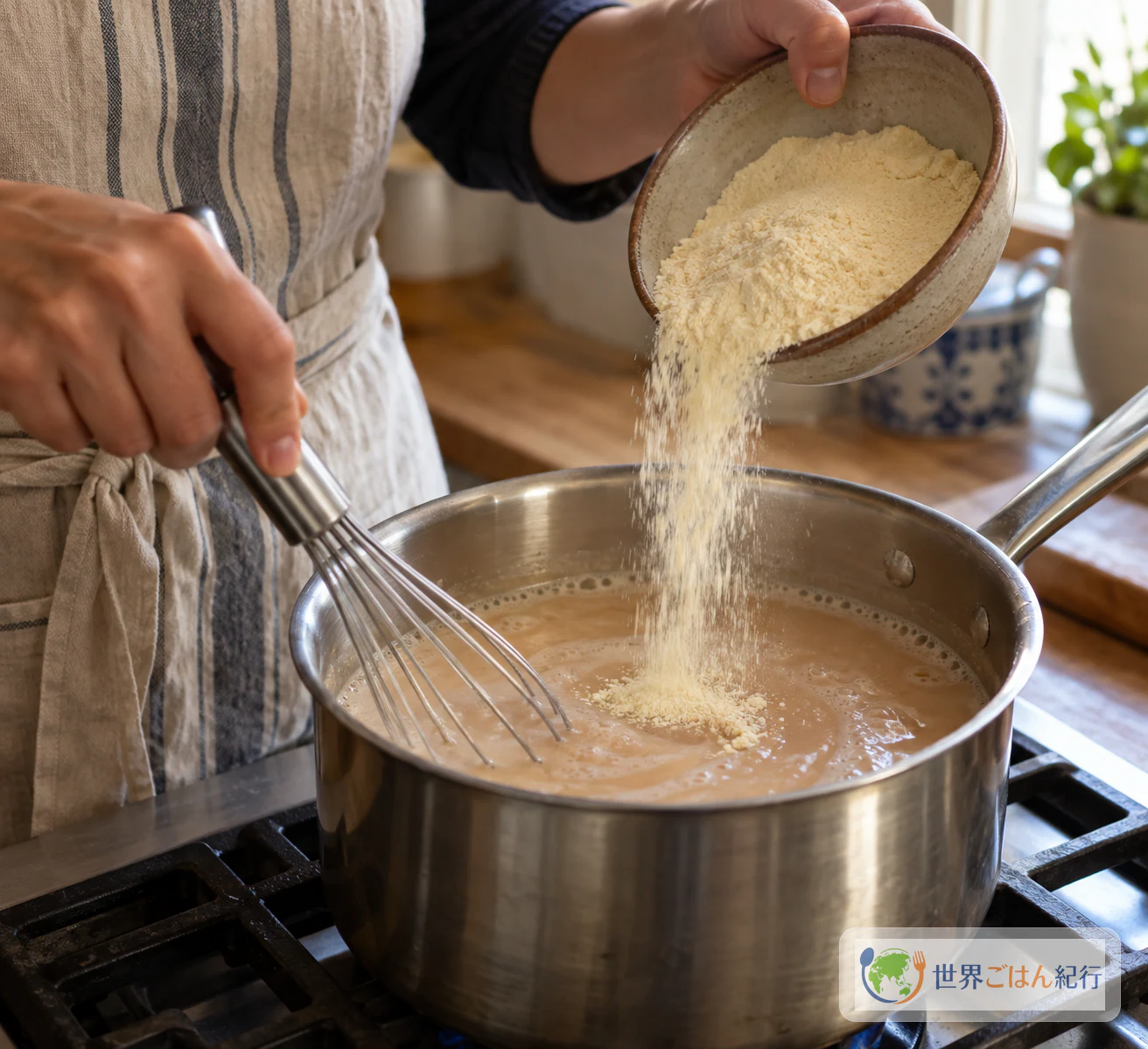
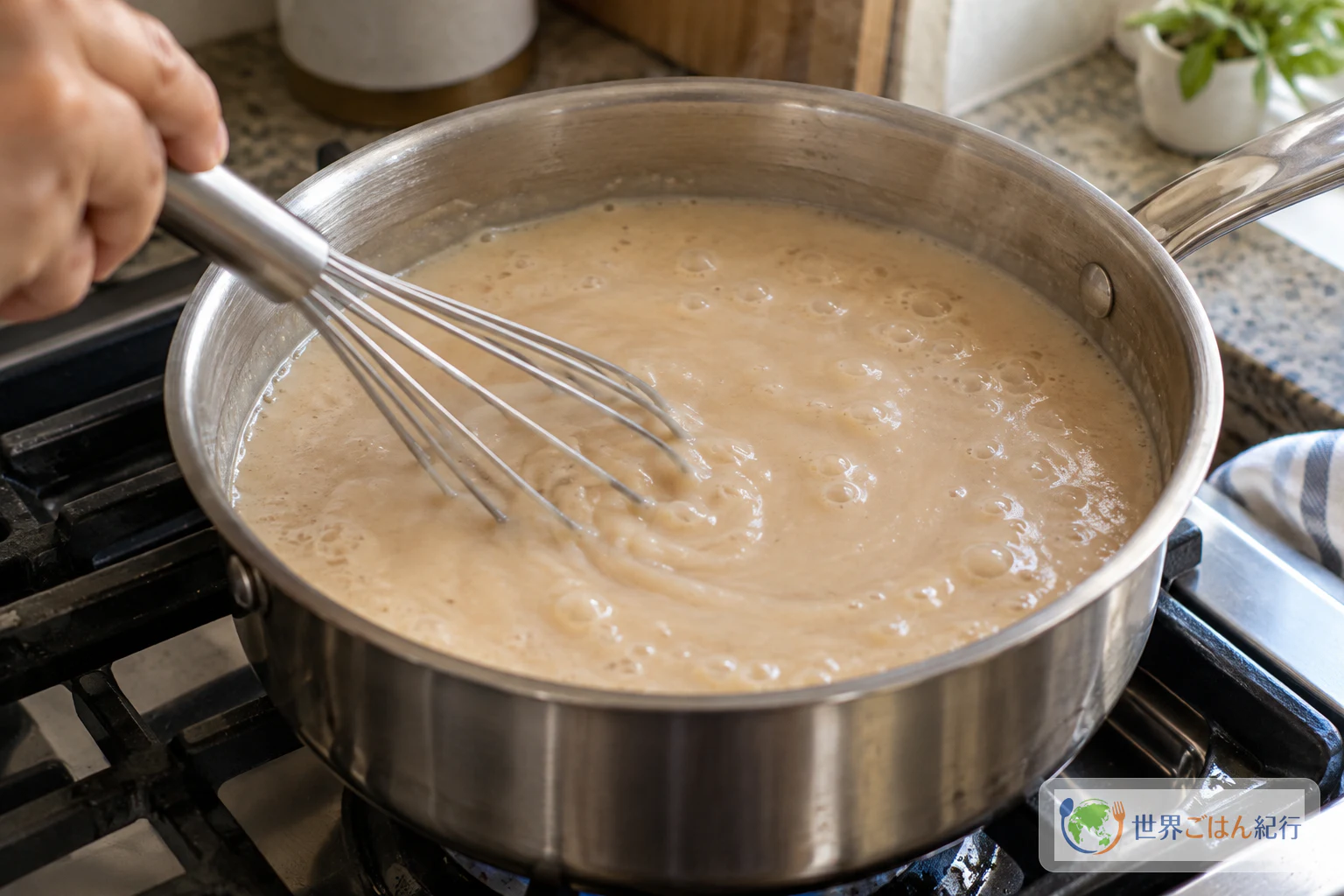
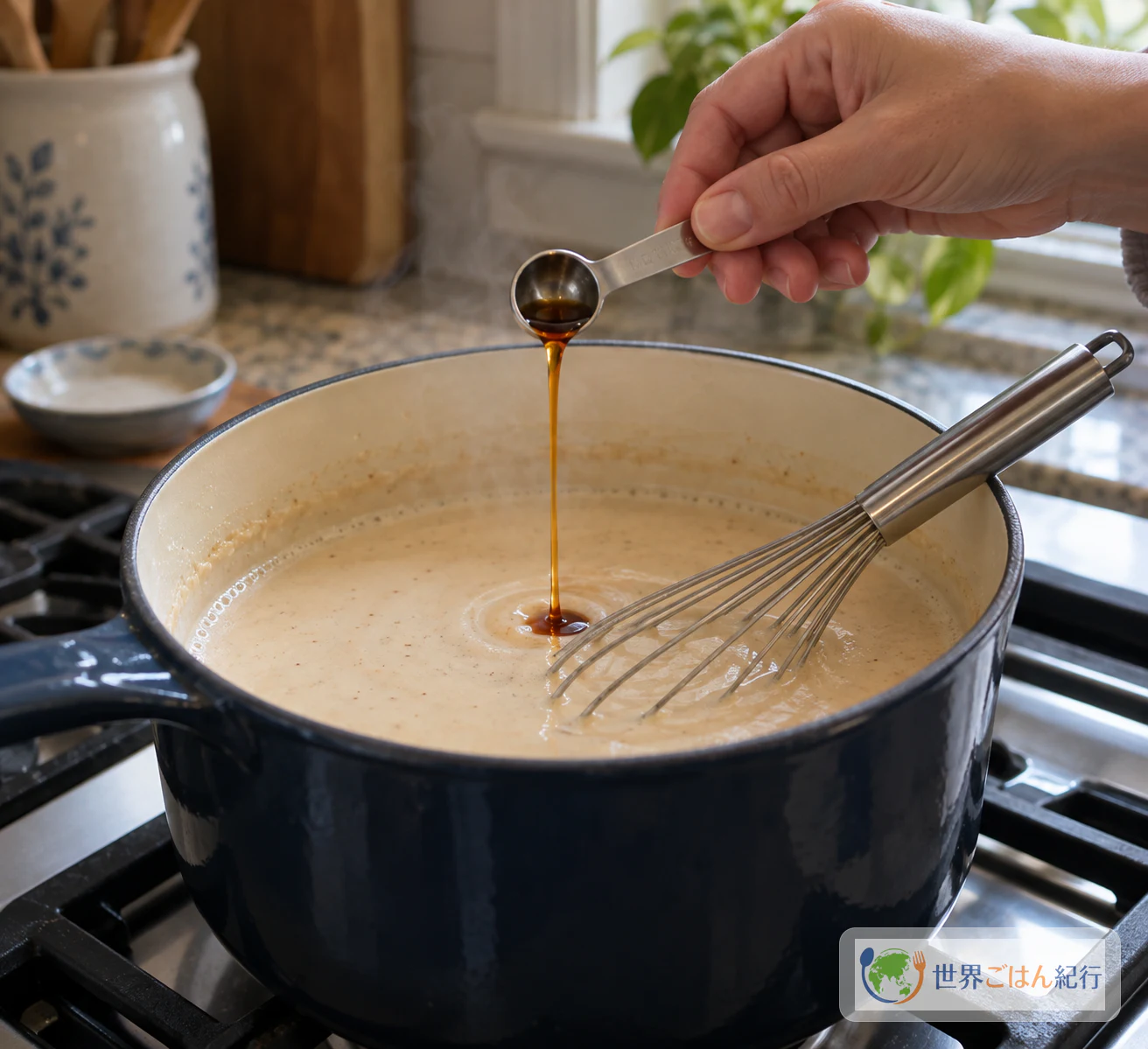
Have the masa harina measured and the vanilla extract within reach. Everything happens in one pot, and the drink is served the moment it comes off the heat.
Lumps, Thickness, Scorching: What the Recipe Covers and What It Doesn't
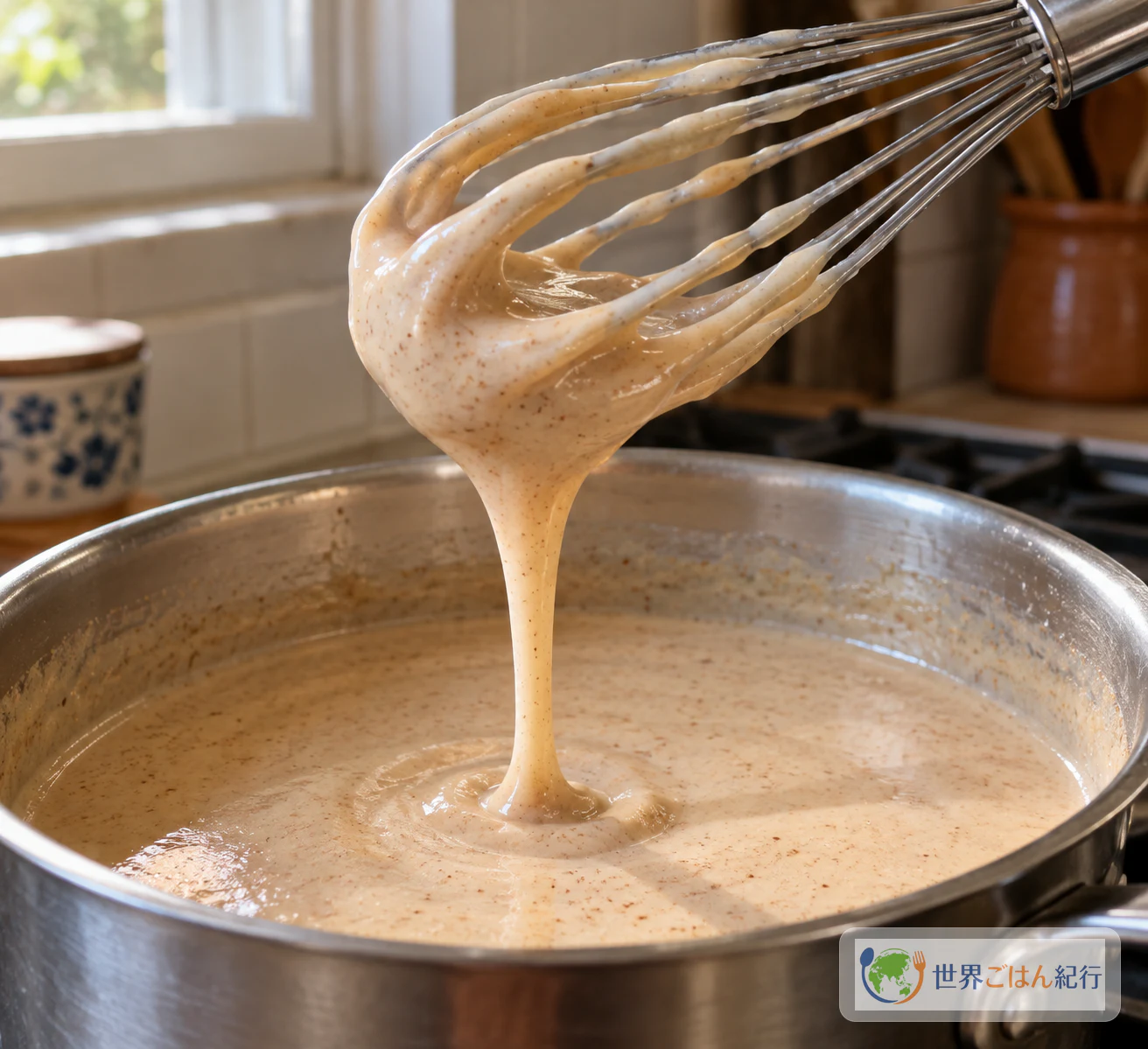
The recipe is short, and it gives few rescue instructions. It's better to know where the firm guidance ends than to rely on guesses.
| Situation | What you can rely on | What isn't settled |
|---|---|---|
| Lumps when the masa goes in | Sprinkle it gradually and keep whisking, as the recipe directs | A straining method isn't given in the sources |
| Coarse masa harina | Cook a little longer after it returns to a boil | No exact extra time is specified |
| Too thick or too thin | Stick to the stated amounts for a first try | The recipe gives no amount of liquid for adjusting thickness |
| Worried about scorching | Moderate heat and steady whisking (editorial caution) | No method for rescuing a scorched pot is confirmed |
| Thicker after sitting | Serve immediately, as the recipe says | The texture can change as it cools; reheated texture isn't verified |
Don't taste the liquid while the masa is still raw. Taste only after it has cooked, using a clean spoon.
Other Atoles, and a Different Method You May See
Each of these is its own drink. Treat this recipe as the base and the others as different paths, not additions to the same pot.
Mexico's Ministry of Culture lists a wide range of atoles beyond the sweet cinnamon type:
- Xocoatolli: a sour atole.
- Pinole-based atoles
- Fruit atoles
- Bean atoles
- Chile atoles
The source does not give amounts for these types, and none are invented here.
Goya Foods says some households add fruit or chocolate to their atole. That describes some households, not all of them. Its own recipe also uses a different method. It warms water, piloncillo and cinnamon sticks first, dissolves the masa harina in milk, and then simmers over low heat for about 10 minutes, until the drink thinly coats a spoon. It's a separate recipe with its own proportions, so don't mix its steps or amounts into this one.
At the Table: Atole with Tamales
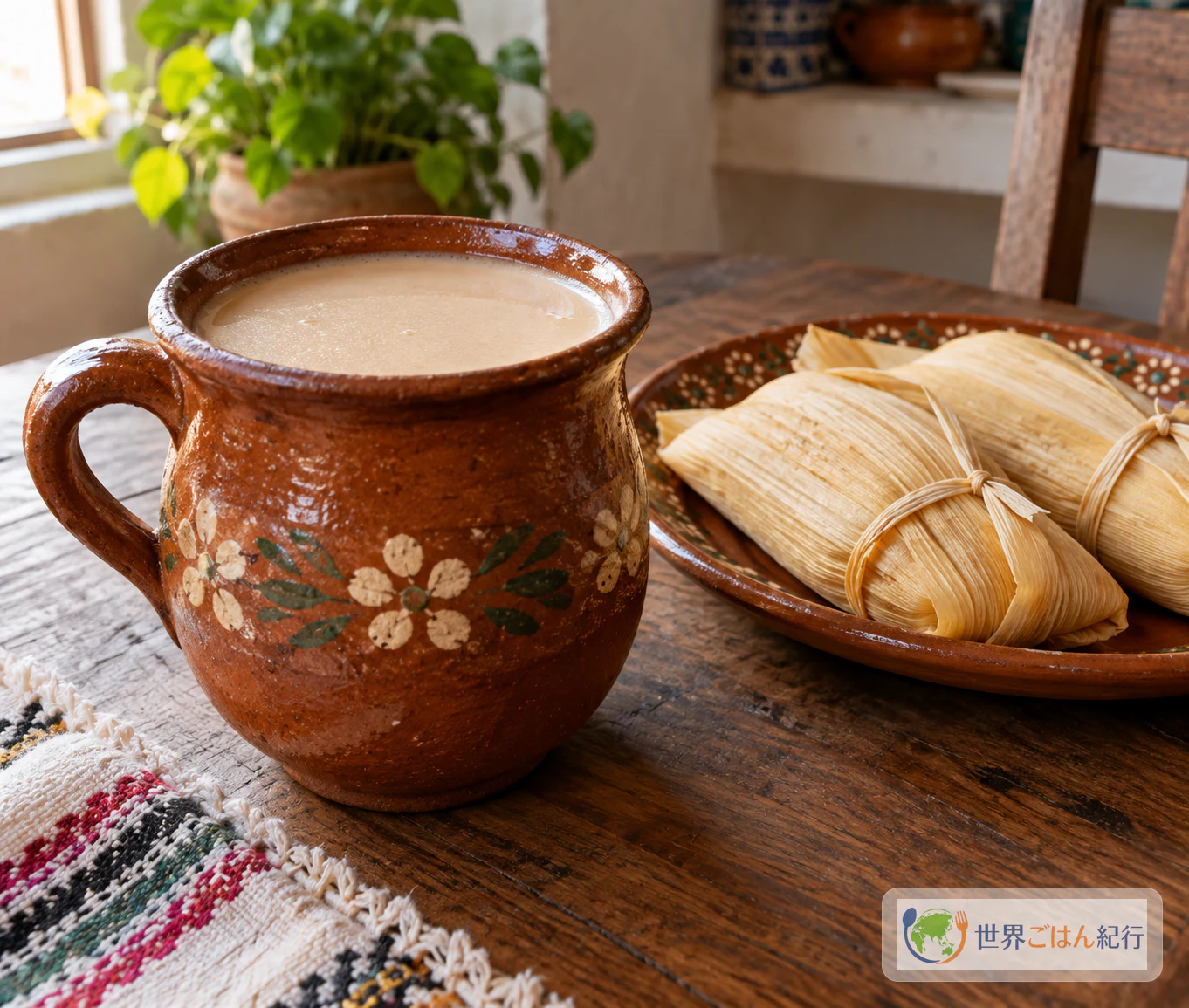
The pairing the Ministry of Culture highlights is atole with tamales: a warm, thick drink beside something solid and corn-based. Goya also presents atole this way. Beyond that pairing, the sources don't describe specific festivals or rituals, so none are added here.
If you want a chocolate version, look to champurrado, the related drink that brings chocolate into the cup. For more of the country's cooking, see dishes from Mexico.
The recipe is written to be served straight away, and that's the best way to enjoy it. Atole contains milk, so don't leave leftovers out at room temperature for long. Divide them into clean, shallow containers, cool them quickly and refrigerate. Japan's Ministry of Health, Labour and Welfare gives reheating to 75°C or above as a general household guide. How long this particular atole keeps in the refrigerator, and how its texture holds up after reheating, has not been verified and is not guaranteed.
Frequently Asked Questions
What can I use instead of masa harina?
No substitute is confirmed. Unlike piloncillo, which the recipe allows you to replace with brown sugar, masa harina has no stated alternative. Cornstarch or potato starch at the same amount will not give the same drink, because masa harina carries corn flavor as well as thickness.
What's the difference between atole and champurrado?
Chocolate is the main difference. Champurrado adds chocolate, while this basic atole is flavored with piloncillo, cinnamon and vanilla.
How many servings does this make?
The original recipe doesn't say, and its cup isn't defined, so no serving count is given. The starting liquid volume is not the same as the finished amount.
Can I make it ahead and store it?
The recipe says to serve it immediately, and it gives no storage guidance. If you have leftovers, cool them quickly in shallow containers, refrigerate, and reheat to at least 75°C as a general guide. The keeping time for this recipe isn't established.
Can I use brown sugar instead of piloncillo?
Yes. The original recipe offers brown sugar as an option. The flavor will be close, but not identical to piloncillo.
Sources
- Rick Bayless, "Atole." The adopted recipe: ingredients and amounts, the order of heating, the choice of piloncillo or brown sugar, the use of masa harina, the large 4-quart saucepan, and stirring in the vanilla before removing from heat and serving immediately. This is the author's own recipe and not a single national standard; the page does not state a yield or define its cup. https://www.rickbayless.com/recipe/atole/
- Sistema de Información Cultural, Secretaría de Cultura de México, "Los atoles." Atole as a drink made from corn masa with water or milk, the pairing of tamales and atoles, and the many regional types with different ingredients, flavors and methods. This is an overview and does not support the adopted recipe's amounts. https://sic.cultura.gob.mx/ficha.php?table=gastronomia&table_id=95
- Goya Foods, "Atole Estilo Mexicano." A different recipe used only for comparison: its method of dissolving masa harina in milk and simmering, some households adding fruit or chocolate, and serving atole with tamales. Its amounts and steps are not mixed into the adopted recipe. https://www.goya.com/es/recipes/mexican-style-atole/
- Ministry of Health, Labour and Welfare (Japan), "Food poisoning prevention at home." General household guidance on dividing leftovers into shallow portions, cooling them quickly, and reheating to 75°C or above. It is not a storage or quality test of this recipe. https://www.mhlw.go.jp/stf/seisakunitsuite/bunya/kenkou_iryou/shokuhin/syokuchu/01_00008.html