Huevos Rancheros: Warm Tortillas, Fried Eggs and a Charred Tomato Salsa
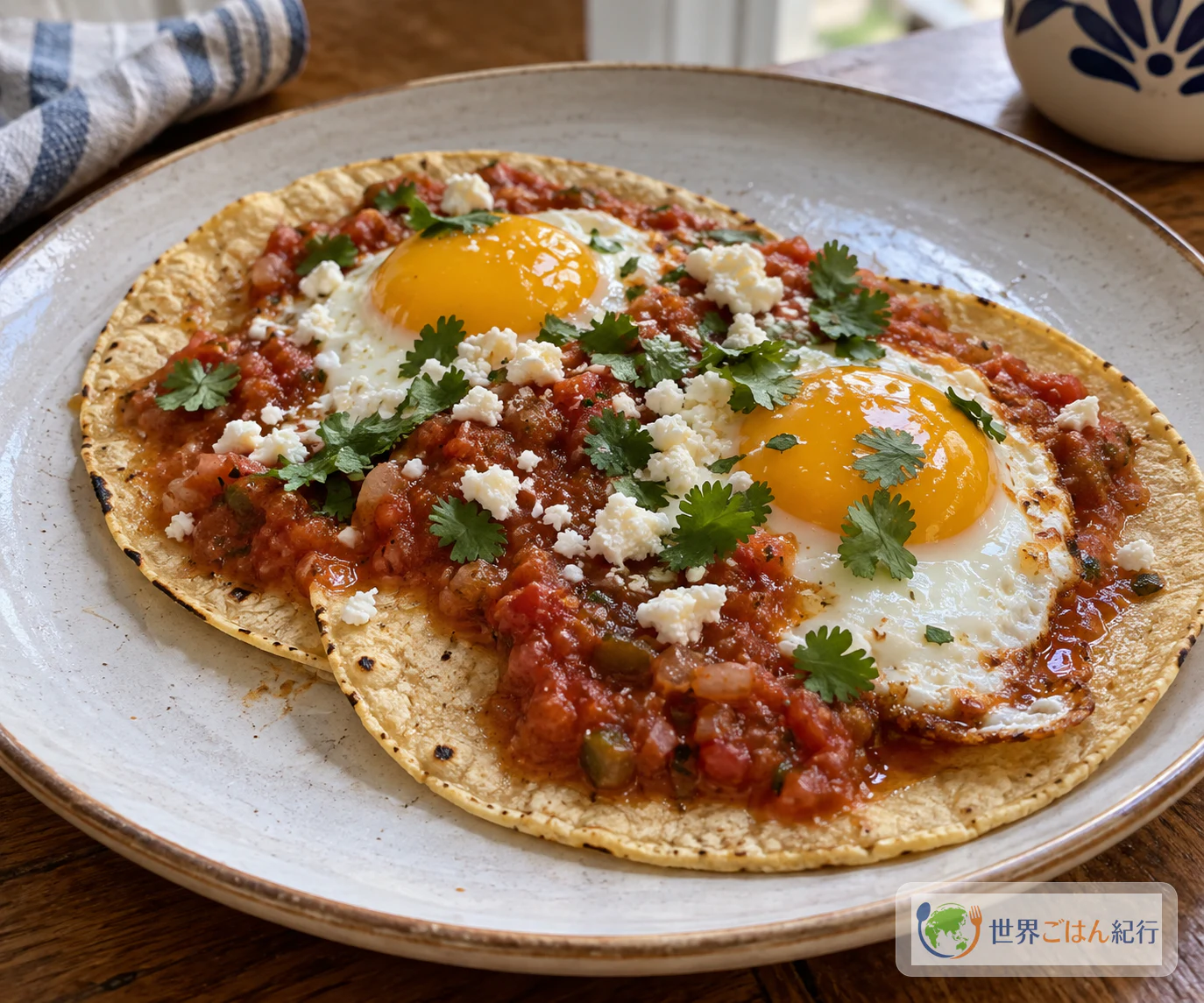
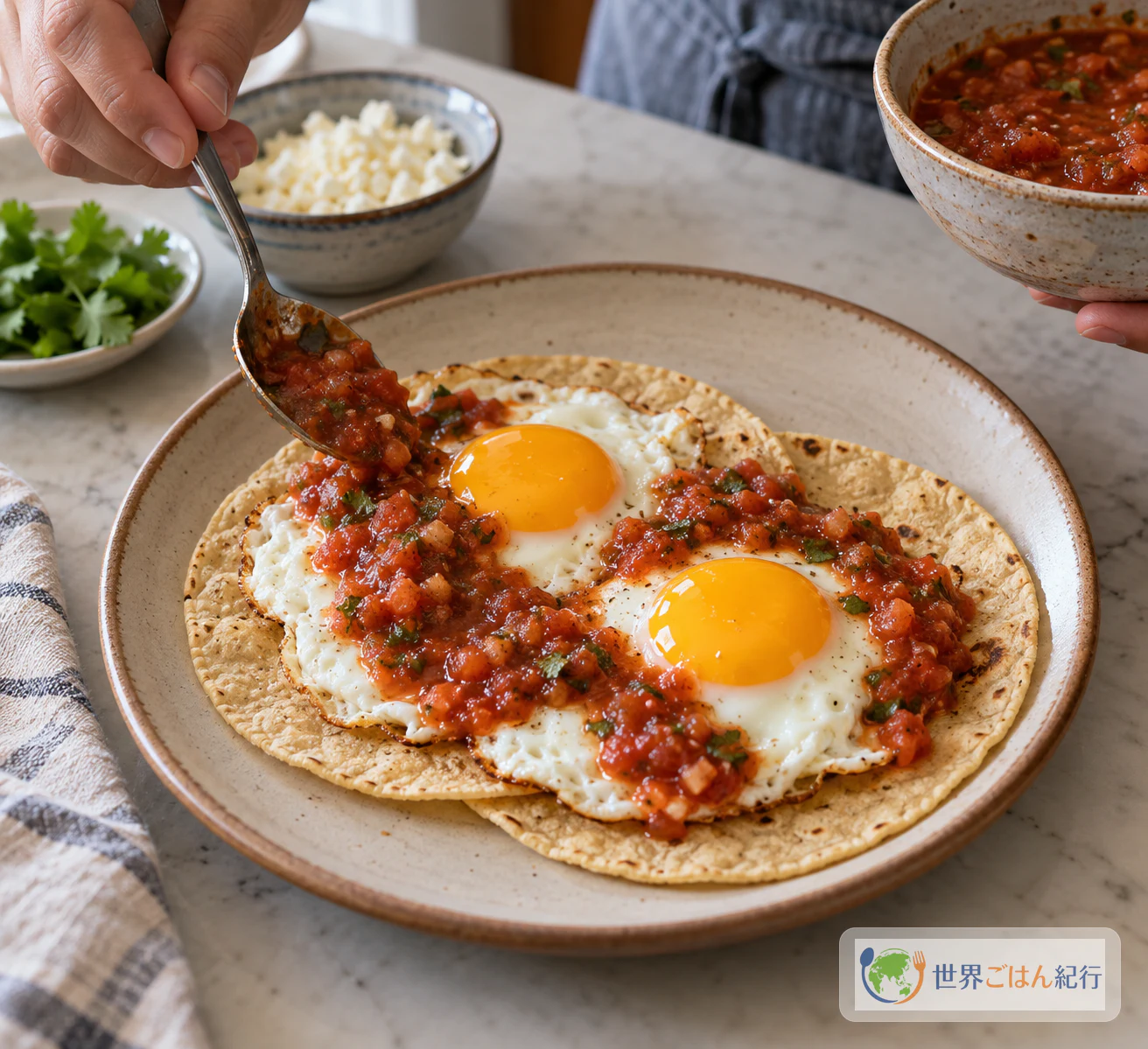
Two soft corn tortillas, two fried eggs and a coarse, smoky salsa spooned on at the last moment, with the yolks left showing.
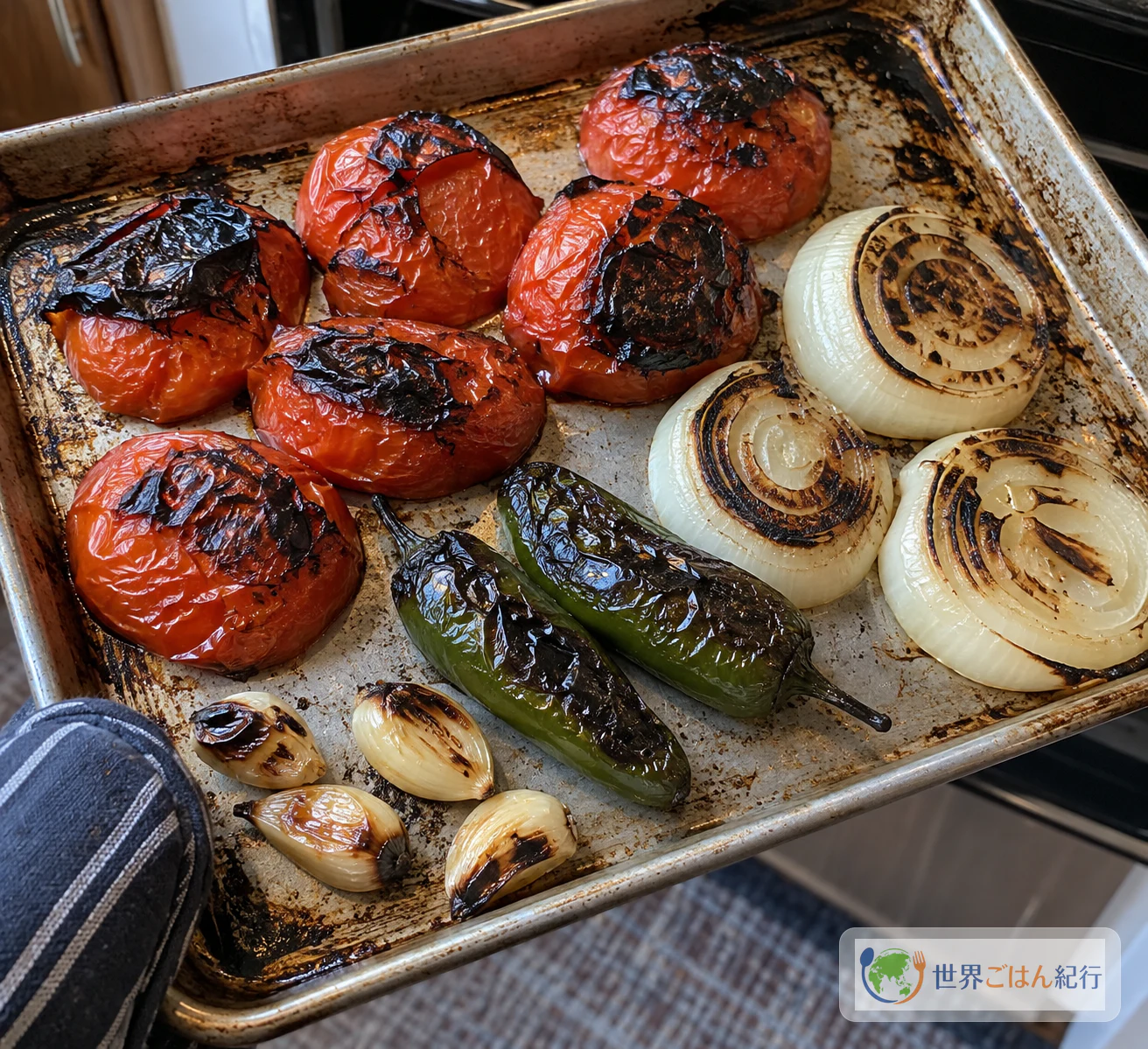
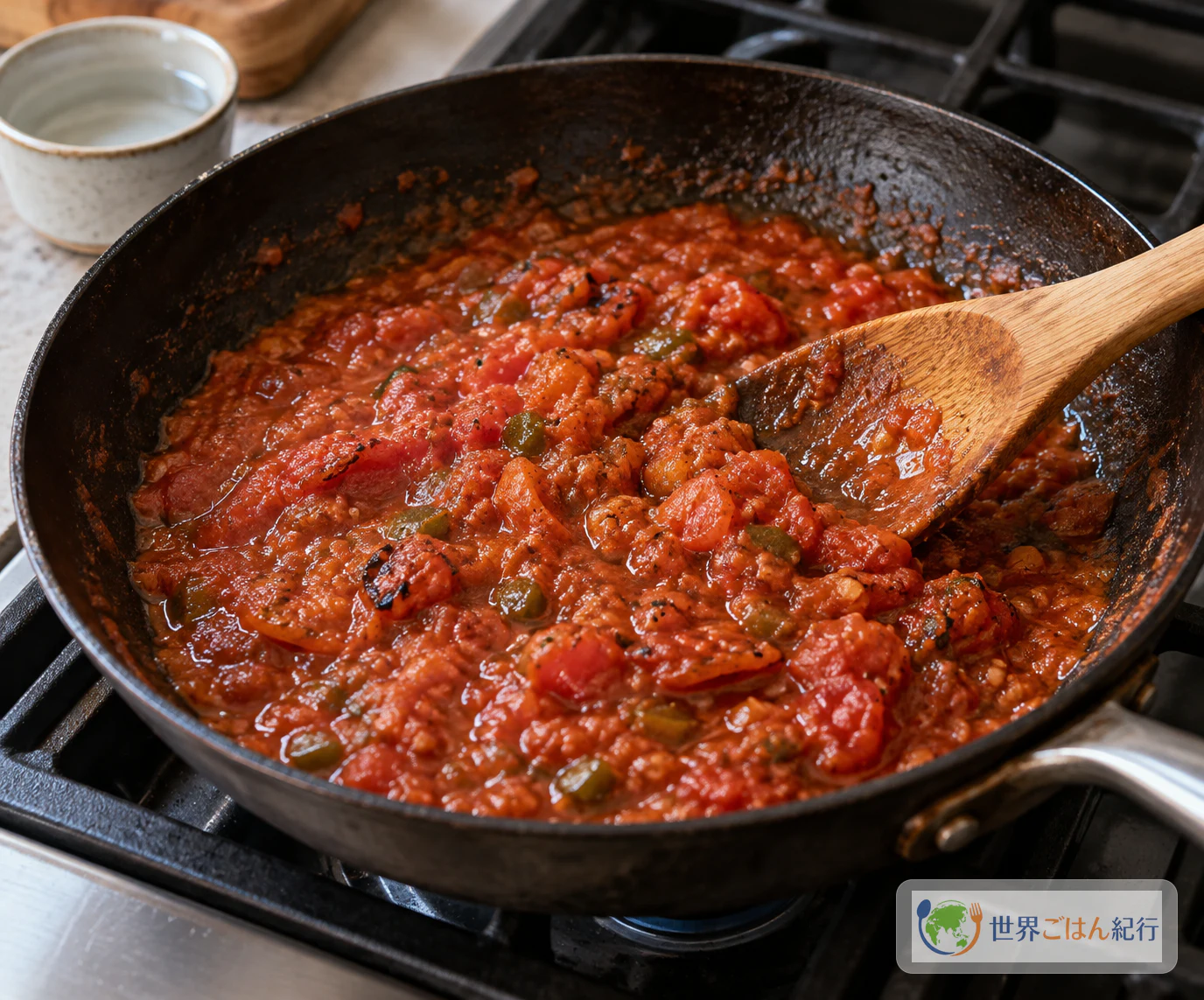
Two soft corn tortillas go onto a warm plate, slightly overlapping. Two fried eggs follow, their whites set and their yolks bright. The salsa, which has just come to a boil in the same skillet, goes over the whites and stops short of the yolks. It is coarse and red and carries the scent of tomatoes and chiles charred under the broiler. A little crumbled queso fresco and some cilantro finish the plate, and it goes to the table right away.
The name translates as "ranch-style eggs," and we can't confirm anything about it beyond that translation. Stories that ranch hands invented the dish are not supported by the sources behind this article, so we leave them out. This is also not the only form of the dish: beans, roasted poblano or fried plantain join the plate in different parts of Mexico.
The recipe here follows one modern version, Rick Bayless's Huevos Rancheros with his linked Roasted Tomato Salsa. His stated yield is 4 plates, which is a published figure and not a measured one. The amounts stay in his US units and are not converted to grams or Japanese cups, and nothing from other recipes is mixed in.
This recipe has not been kitchen-tested by Sekai Gohan. The runny yolk is how the dish is designed, but a runny yolk is not fully cooked. Older adults, children aged 2 and under, pregnant people and anyone with weakened immune function should have the fully cooked version described in step 5 and under Egg Safety.
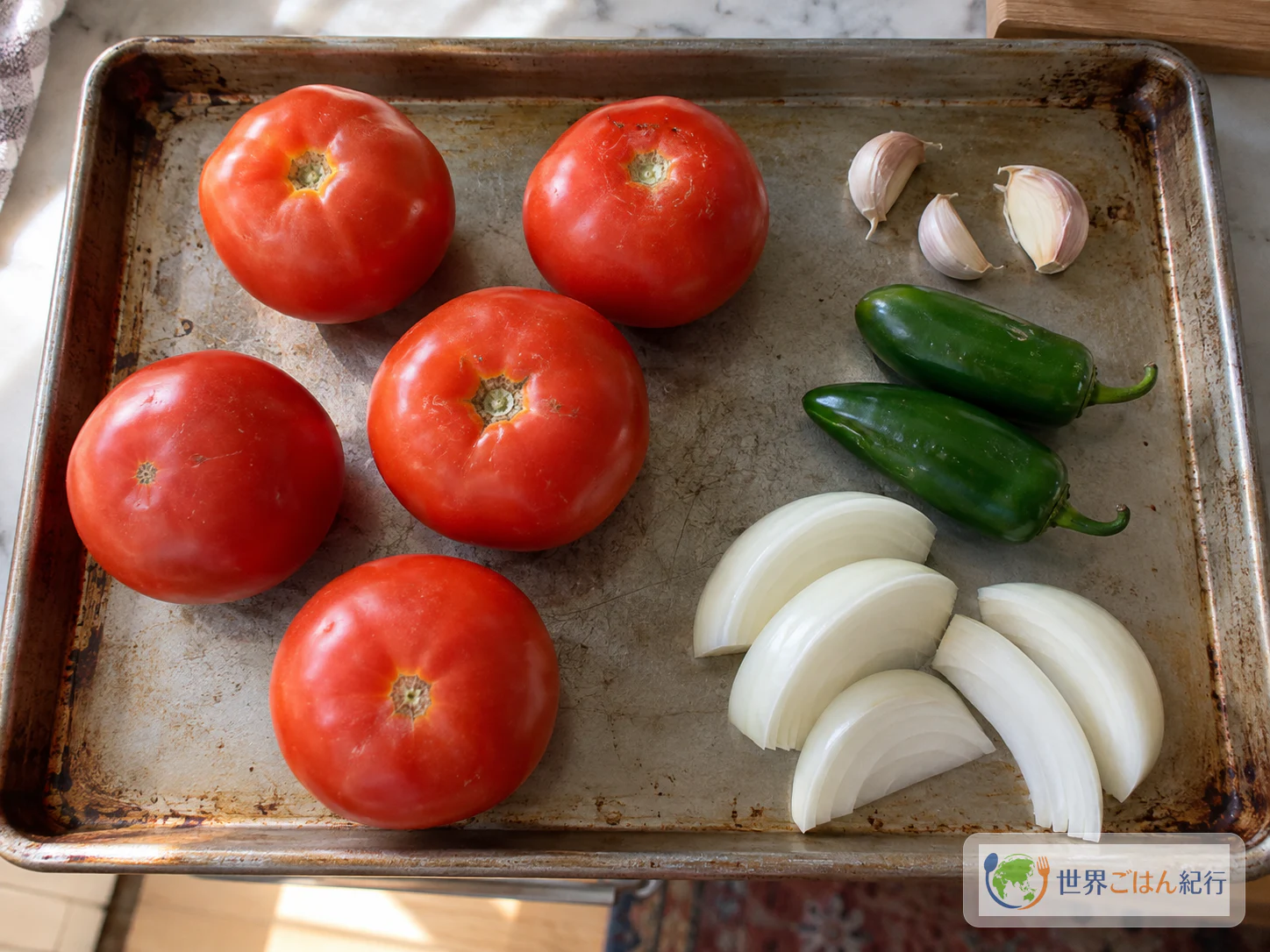
Ingredients for 4 Plates
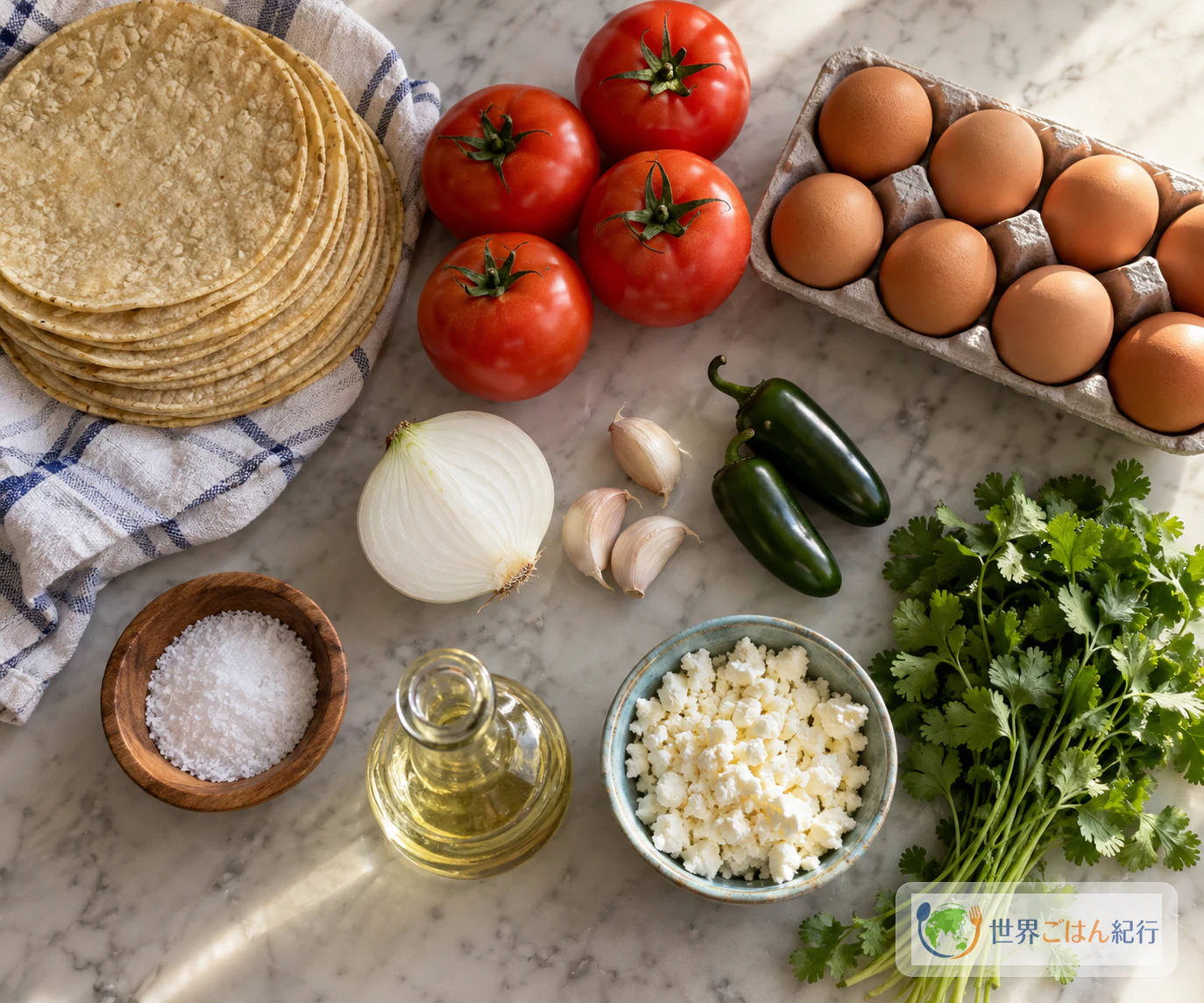
Choose fresh tomatoes or canned tomatoes for the salsa, not both. The water is listed twice because it is used at two separate moments.
Equipment
- Oven with a broiler
- Rimmed baking sheet
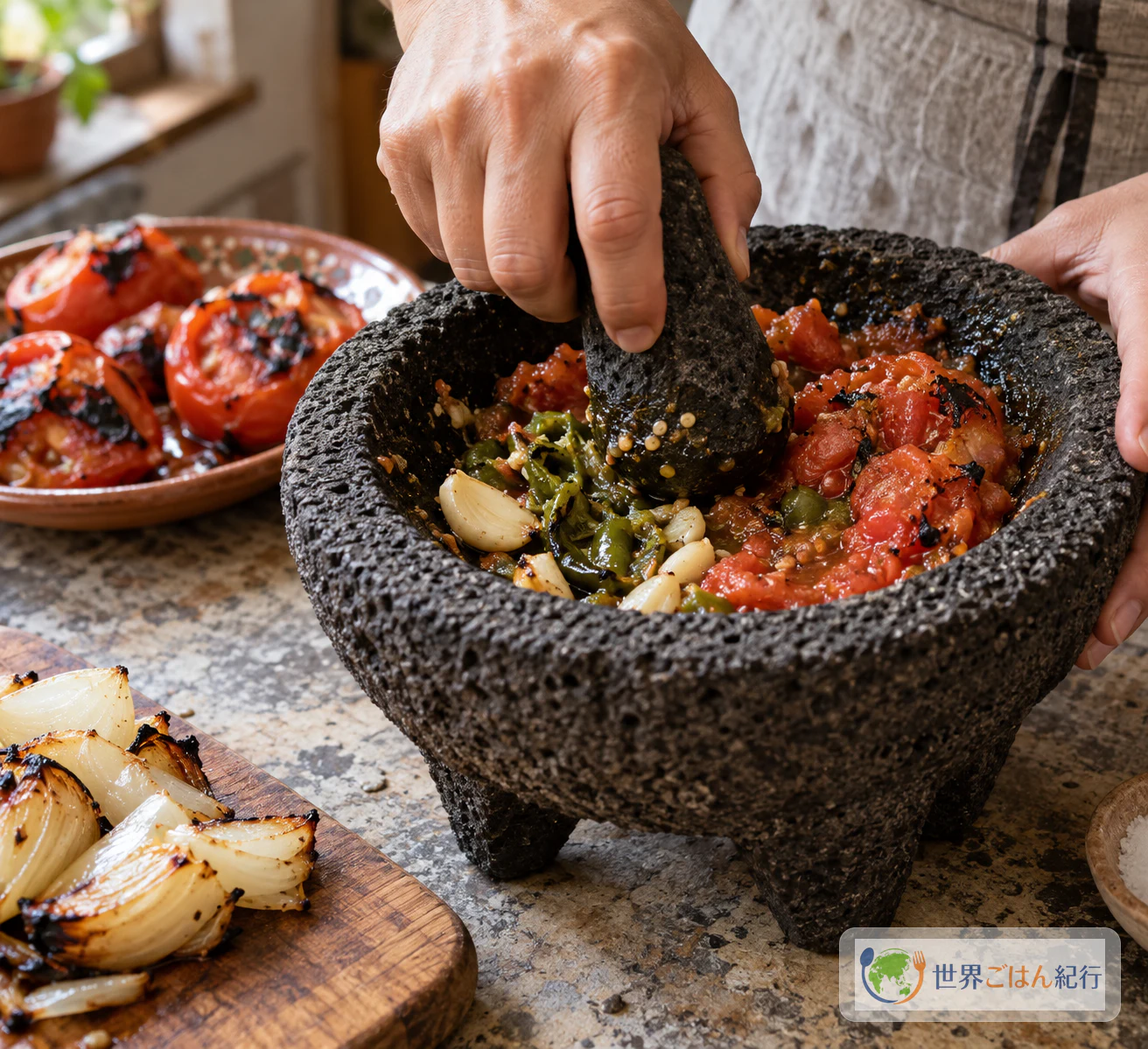
- Molcajete or food processor
- Large heavy skillet, about 12 inches
- Microwave and a microwave-safe bag
- Measuring cups and spoons
- 4 warm plates
Choosing and Substituting
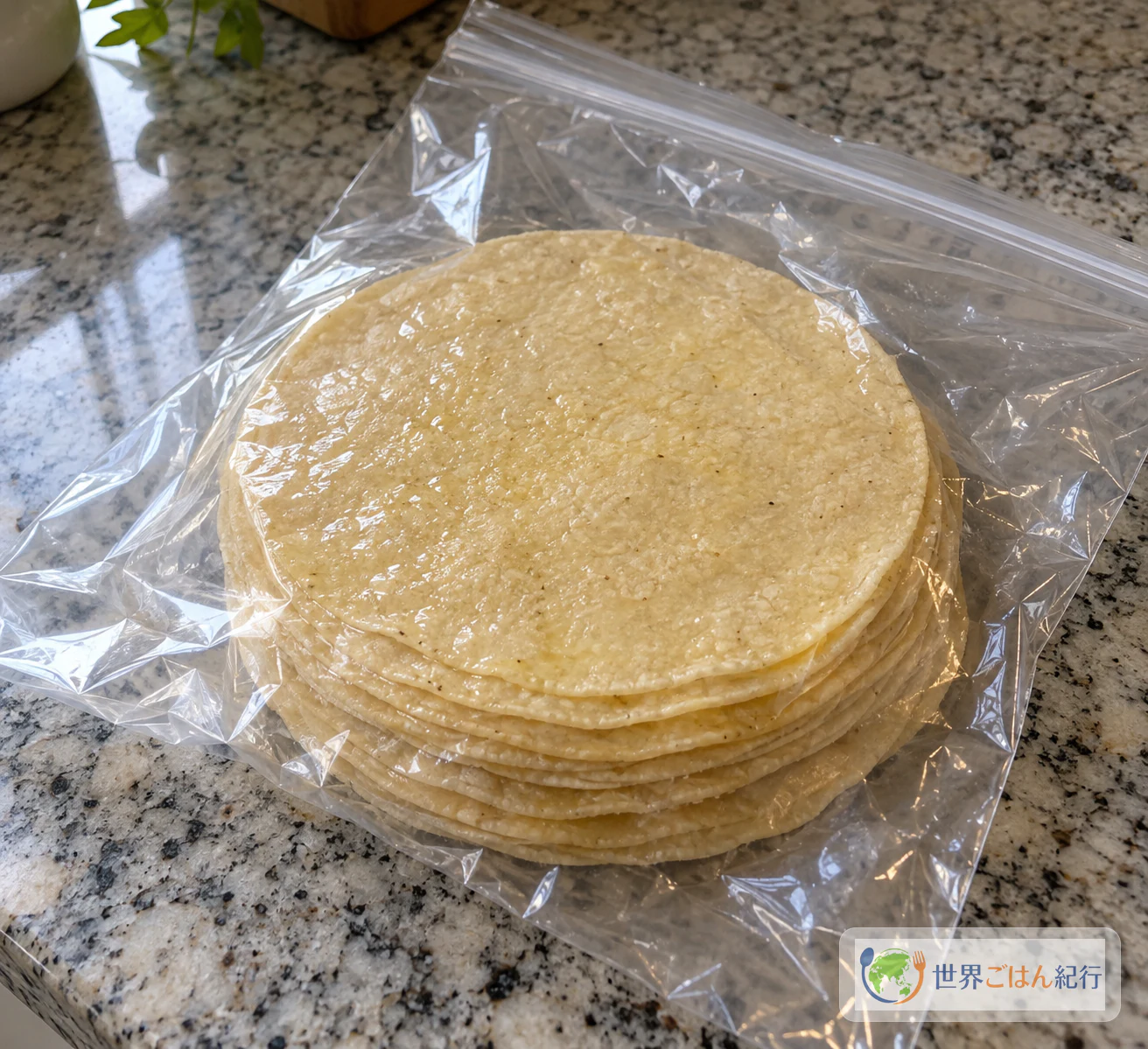
Corn tortillas. Look in Mexican grocers and import food shops. Flour tortillas will work as a stand-in, but they change the aroma and texture, so the result isn't the same dish.
Jalapeños. Fresh is the first choice. Pickled or canned jalapeños are possible, but they add acidity and salt, so add them gradually and taste as you go. For a milder salsa, use one small chile rather than two.
Queso fresco. Feta or goat cheese can stand in, but both change the salt and tang, so start with less. Feta tends to run salty. An unsalted fresh cheese moves closer to queso fresco, though it won't be identical.
Cilantro. The herb shapes the impression of the plate, so its aroma is part of the dish and not just decoration.
Molcajete. This volcanic-stone mortar is not essential. A food processor makes a coarse purée that works well here.
Broiler. Not every oven uses this name for the function. If yours has a high-heat top grill, check the manual and watch the vegetables closely.
Canned tomatoes. Fire-roasted tomatoes bring their own cooked, charred flavor. They are a replacement for fresh tomatoes, so don't combine the two.
Method: Salsa First, Then Tortillas, Eggs and Plates
Making the salsa first lets the eggs and plating follow one after another without a break.
At the Table
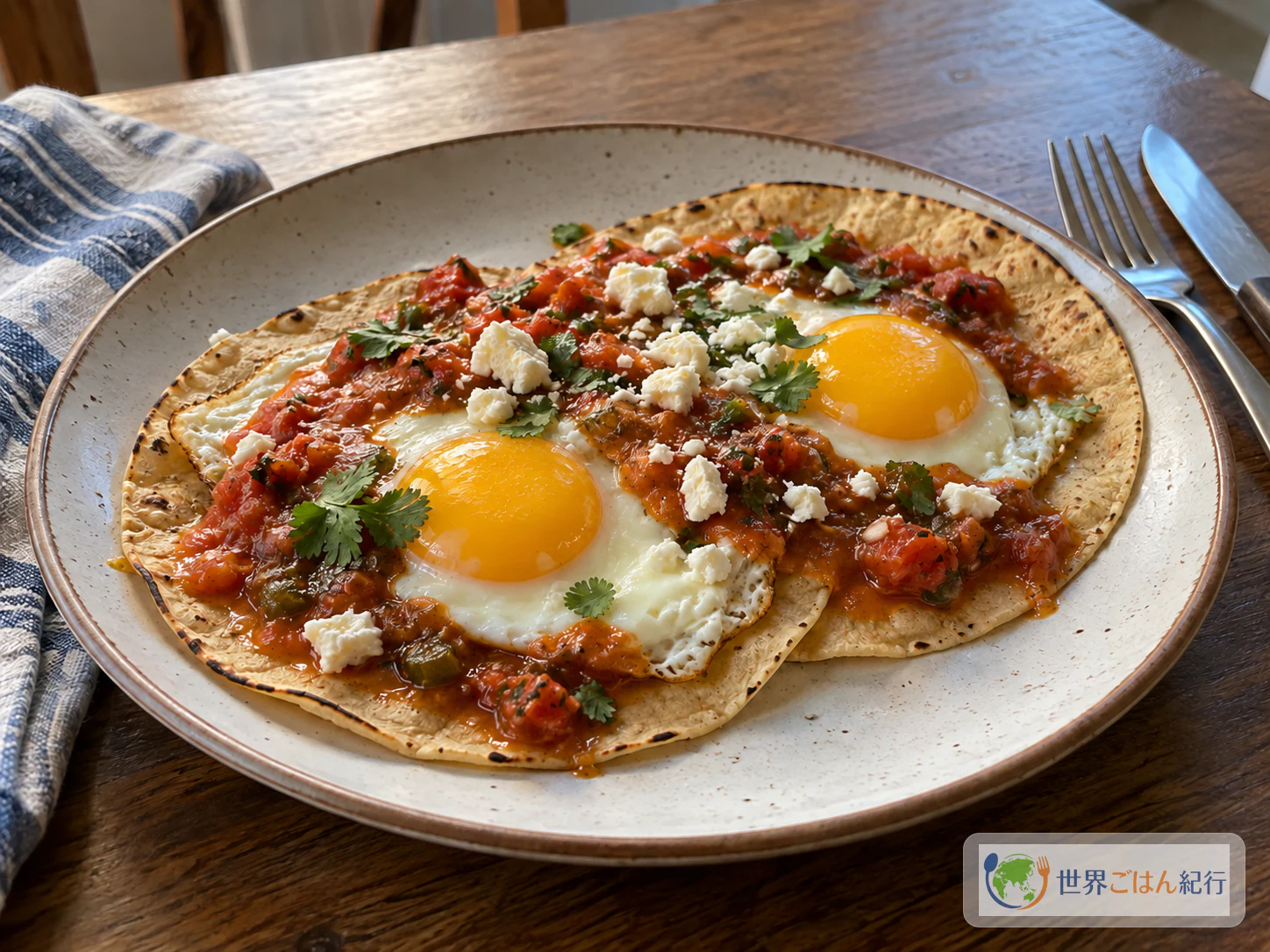
Each plate is complete as it stands: two tortillas, two eggs, salsa, cheese and cilantro. Beans, avocado and hash browns are not part of this version, so there's no need to add them for it to be finished. To see how this breakfast fits with other dishes, browse more food from Mexico.
Egg Safety: Runny Yolks and Firm Yolks
The runny yolk comes from the recipe's own description of the finished dish, and it should not be read as general food safety advice. Public food safety pages from Aichi and Shimane prefectures in Japan give the following guidance:
- Refrigerate eggs as soon as you get them home. Keep them at 10°C or below as a guide.
- Choose eggs without cracks, and don't use cracked eggs.
- When cooking shell eggs, the Aichi page gives a standard of 70°C for at least 1 minute, or a method with an equal or greater sterilizing effect. At home, the guide for sufficient cooking is that both the yolk and the white are set.
- Older adults, children aged 2 and under, pregnant people and people with weakened immune function should avoid raw eggs and eat thoroughly cooked egg dishes. For them, make this dish with the yolks cooked firm.
- A plate with a flowing yolk is not fully cooked.
Wash your hands after touching eggs, and wash the cilantro well under running water before using it raw.
This dish contains egg and milk (queso fresco), and it gets its heat from chiles. Check for allergies and heat tolerance before serving.
Plate the eggs as soon as they are fried and eat them right away. The sources give no storage or reheating times for this dish, so we don't suggest any, and we don't recommend setting cooked eggs aside for later.
When Something Goes Wrong
| Problem | Likely cause | What to do |
|---|---|---|
| The salsa is too thick or coarse to spoon | Not enough liquid | Add water a little at a time, stopping before it runs off the tortilla |
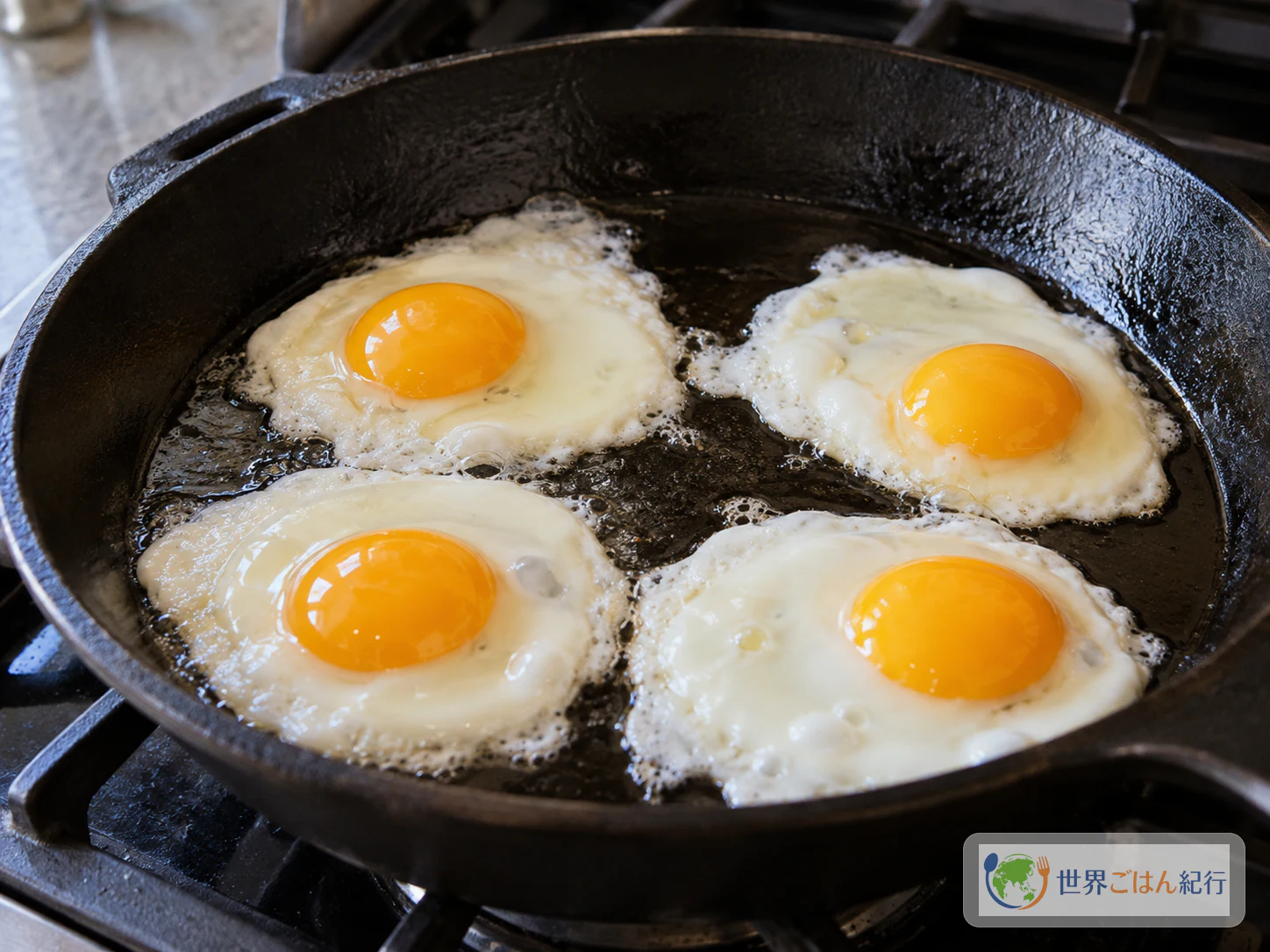
| The edges of the egg whites are scorched | The heat is too high | Keep the heat gentle and adjust it as you watch the whites set |
| The eggs are crowded in the pan | Too many eggs at once | Fry in batches, even in a 12-inch skillet |
| The yolks are buried | The salsa was spooned over the whole egg | Spoon over the whites, and do it just before eating |
| There is not enough salsa | The batch came up under 2 US cups | Measure before you cook the eggs, and make more if needed |
| The vegetables are charred but still firm | The broiler is judged by time alone | Go by softness as well as color, and adjust for your oven |
Variations: Keep Them Separate From the Base Plate
The Larousse Cocina dictionary of Mexican gastronomy describes the basic form as corn tortillas passed through oil, topped with fried eggs and a spicy red jitomate (tomato) sauce. It also notes regional additions:
| Where | What may be added |
|---|---|
| Some areas, per the dictionary's regional examples | Frijoles refritos (refried beans) between the tortilla and the egg |
| Some areas, per the dictionary's regional examples | Poblano rajas (strips) and crumbled queso fresco |
| Gulf coast and southern Mexico | Fried plátano macho (plantain) on the side |
If you want to try these, treat them as a different plate built on the same idea. The amounts and steps above don't include them and don't tell you how to cook them.
Background: One Name, Several Plates
Huevos rancheros is easy to confuse with its relatives. Huevos divorciados usually keeps two eggs apart under two different salsas. Huevos a la mexicana is a different dish, made by cooking eggs with chopped tomato, onion and chile. Larousse Cocina describes huevos rancheros as popular in Mexico City and central Mexico, and as a dictionary entry it doesn't claim to cover every household's version.
A look at an older recipe shows how much the plate can shift. In 2012, Cristina Barros and Marco Buenrostro reproduced a huevo ranchero recipe for 8 people in their La Jornada column, taken from Alejandro Pardo's cookbook El verdadero práctico, which they describe as published in 1913. Its sauce grinds roasted jitomate (300g), onion (50g), 1 clove of garlic, 1 green chile, 6 cilantro leaves and 3 black peppercorns, then fries the mixture in oil. The eggs are fried in lard and served with thin tortillas, queso fresco, roasted and fried poblano, and avocado.
That recipe differs from the modern version in its fat, its sauce and its finish, so we present it only as a comparison and don't blend its amounts or frying method into this recipe. It also has clear limits as evidence. It reaches us through a newspaper transcription, we haven't seen the cookbook itself, and it doesn't prove when or where the dish began.
Frequently Asked Questions
What exactly is huevos rancheros?
At its core, it is eggs, corn tortillas and a red salsa. Other ingredients change with the region and the household. This article follows Rick Bayless's version, with no claim that it is the one authentic form.
Do the tortillas have to be fried?
No. The Larousse Cocina entry describes tortillas passed through oil, and that is a valid style. The Bayless version brushes them lightly with oil and warms them in a bag in the microwave, which keeps them soft.
Can I use store-bought salsa?
The recipe uses homemade salsa, so a store-bought one is our own time-saving suggestion and will taste different. Add it gradually, checking the salt and heat, because products vary.
Do I need beans or avocado?
Not for this version. Refried beans appear in the regional examples from Larousse Cocina, and avocado appears in the 1913 recipe quoted by La Jornada, but neither is part of the Bayless plate.
Is it okay to leave the yolk runny?
The Bayless recipe calls for a runny yolk, so that is how the dish is meant to look. It is not the same as fully cooked egg. The prefectural guidance from Aichi and Shimane says that sufficient cooking at home means both yolk and white are set, and it advises older adults, children aged 2 and under, pregnant people and people with weakened immune function to eat thoroughly cooked egg dishes. Choose firm yolks for them, or whenever you prefer.
How much salsa does the recipe make?
The salsa recipe doesn't state a yield. Measure it once it's made, and if you have less than the 2 US cups you need, make more before frying the eggs.
Sources
- Rick Bayless, "Huevos Rancheros." The 4-plate quantities, warming the tortillas, frying the eggs, warming the salsa and plating. https://www.rickbayless.com/recipe/huevos-rancheros/
- Rick Bayless, "Roasted Tomato Salsa / Salsa de Molcajete." The salsa ingredients and tomato options, broiling, crushing in a molcajete or food processor, and guidance on water and salt. The recipe states no yield. https://www.rickbayless.com/recipe/roasted-tomato-salsa-2/
- Larousse Cocina, "Huevos rancheros," Diccionario enciclopédico de la Gastronomía Mexicana. The basic form and regional examples, not the amounts in this recipe. https://laroussecocina.mx/palabra/huevos-rancheros/
- Cristina Barros and Marco Buenrostro, "Huevos rancheros," Itacate, La Jornada, 2012. A transcription of the recipe from Alejandro Pardo's El verdadero práctico, described there as published in 1913. Used for historical comparison only, not as proof of the dish's origin. https://www.jornada.com.mx/2012/02/28/opinion/a08o1cul
- Aichi Prefecture, "卵の衛生管理" (Egg hygiene management). The heating standard for shell eggs, the guide for sufficient cooking at home, who should avoid raw eggs, and refrigeration. https://www.pref.aichi.jp/soshiki/eisei/0000008894.html
- Shimane Prefecture, Pharmaceutical Affairs and Food Sanitation Division, "卵の取扱い" (Handling eggs). The guide for sufficient cooking, who should avoid raw eggs, choosing uncracked eggs, and refrigeration. https://www.pref.shimane.lg.jp/life/syoku/anzen/eisei/kisotisiki/eg.html