


The Smell of Shrimp Left in the Wooden Spoon's Trail: Louisiana's Sauce over Rice
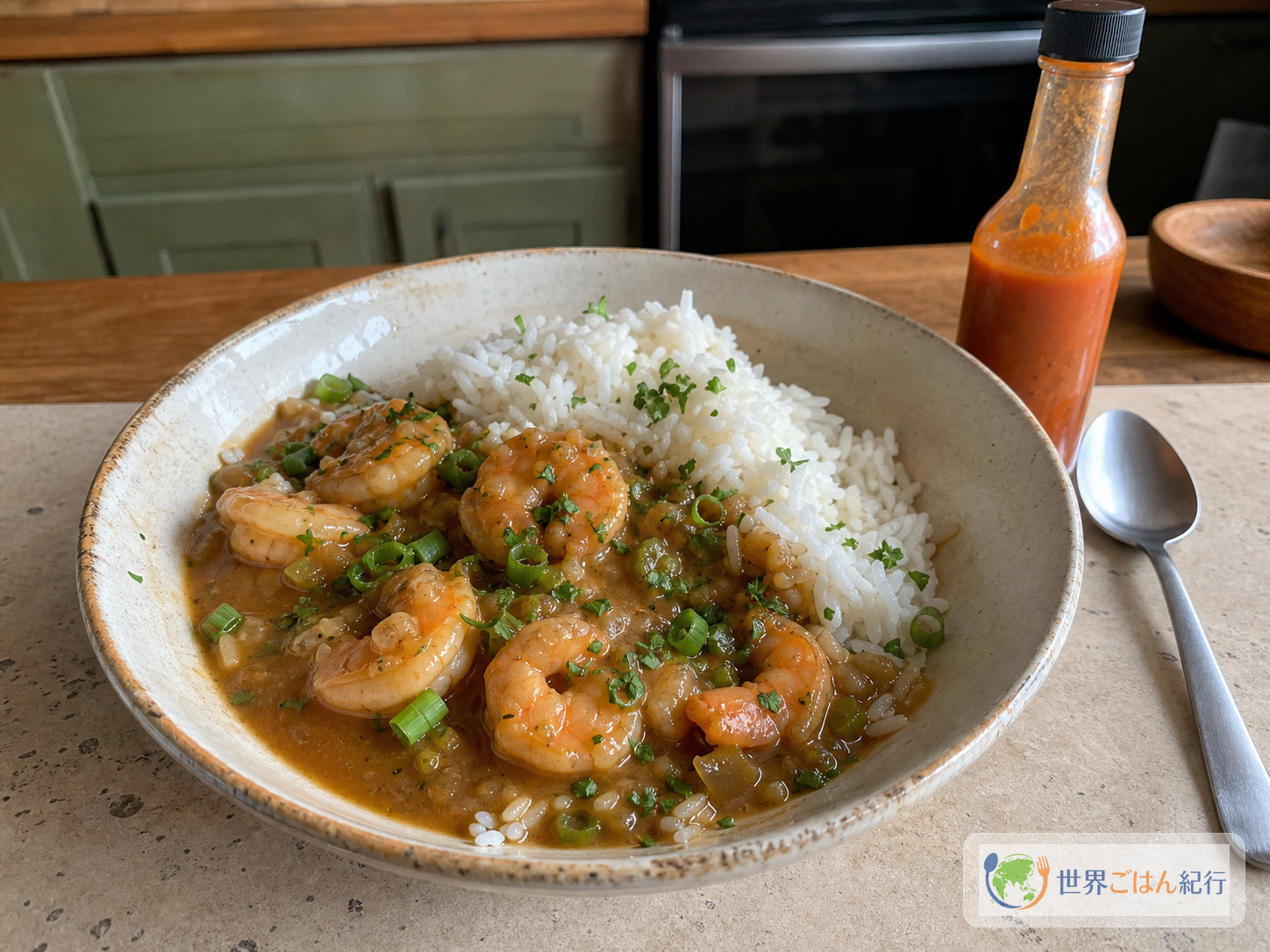
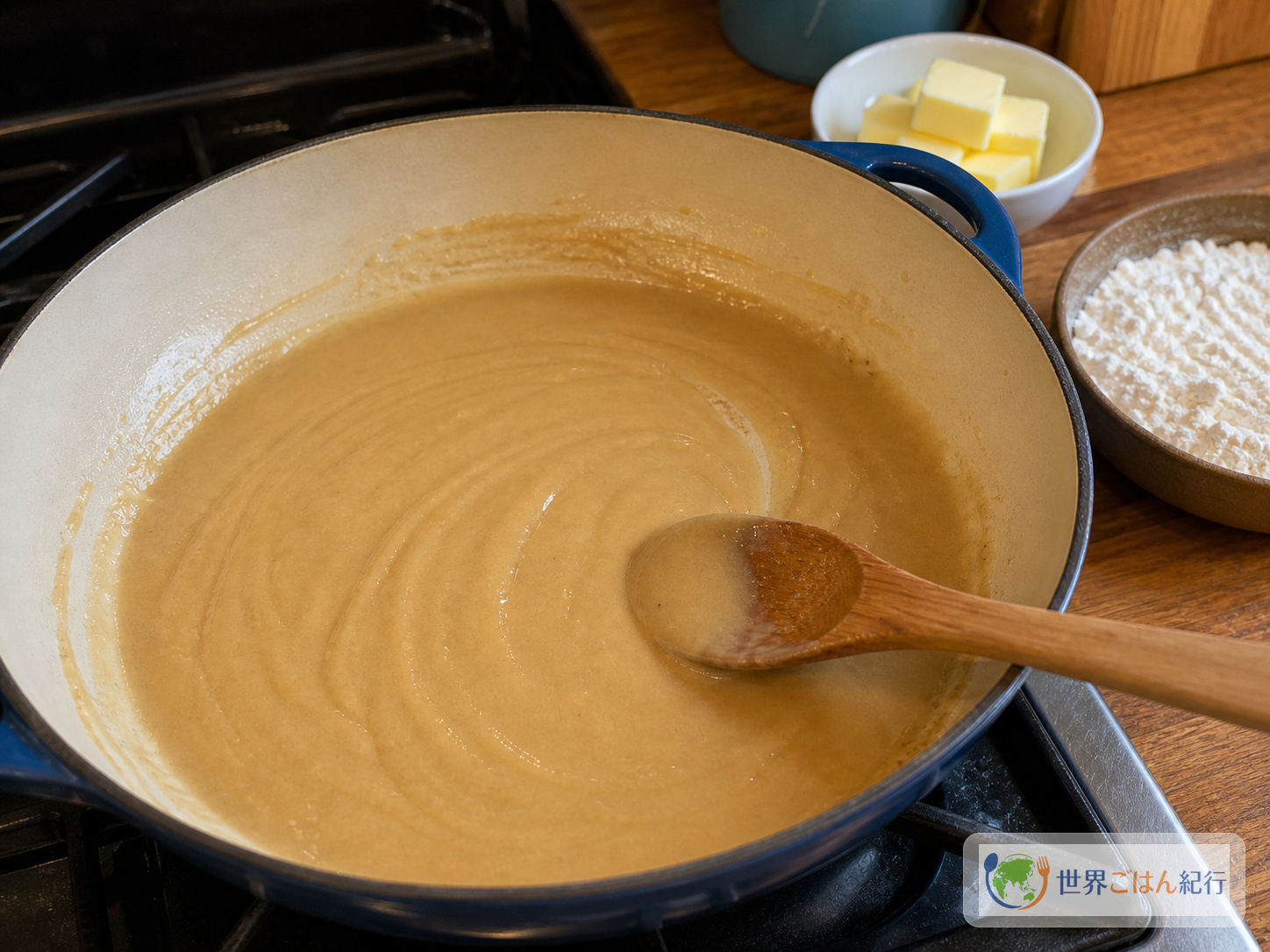
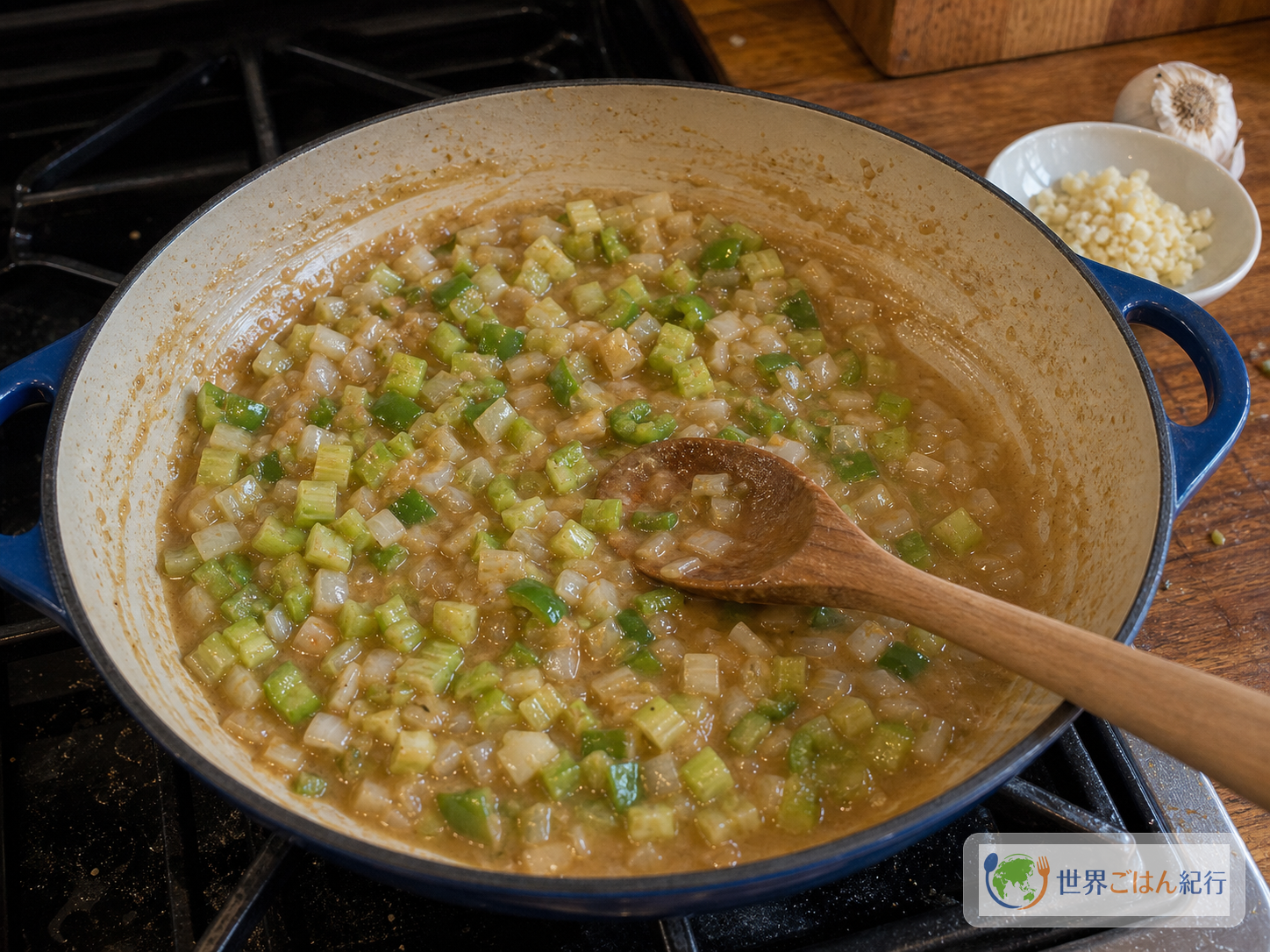
Stir butter and flour slowly in a pot, and the roux, white at first, turns a pale peanut color. The moment onion, celery, and bell pepper go in, a sweet smell and a green smell rise together, and the air in your kitchen moves a little closer to a New Orleans diner. Étouffée (Étouffée / Etouffee) is a Louisiana dish in which shrimp or crawfish are wrapped in a thick sauce and served over white rice.
The name is explained as close to the French meaning "smothered" or "cooked covered." Crawfish étouffée is famous locally, but to make it reliably at home, it is realistic to start with large shrimp. Rather than hunting down crawfish, making a short stock from shell-on shrimp and keeping to a light roux, the holy trinity of vegetables, and a short final cook will raise the finish of the plate.
Shrimp Creole coats the shrimp in a red tomato sauce, and gumbo (in Japanese) ladles a dark-roux soup over rice. Étouffée sits between them. It is not as soupy as gumbo and does not push tomato forward like shrimp Creole. Served over rice, the sauce drops between the grains and the sweetness of the shrimp and the aroma of butter spread slowly.
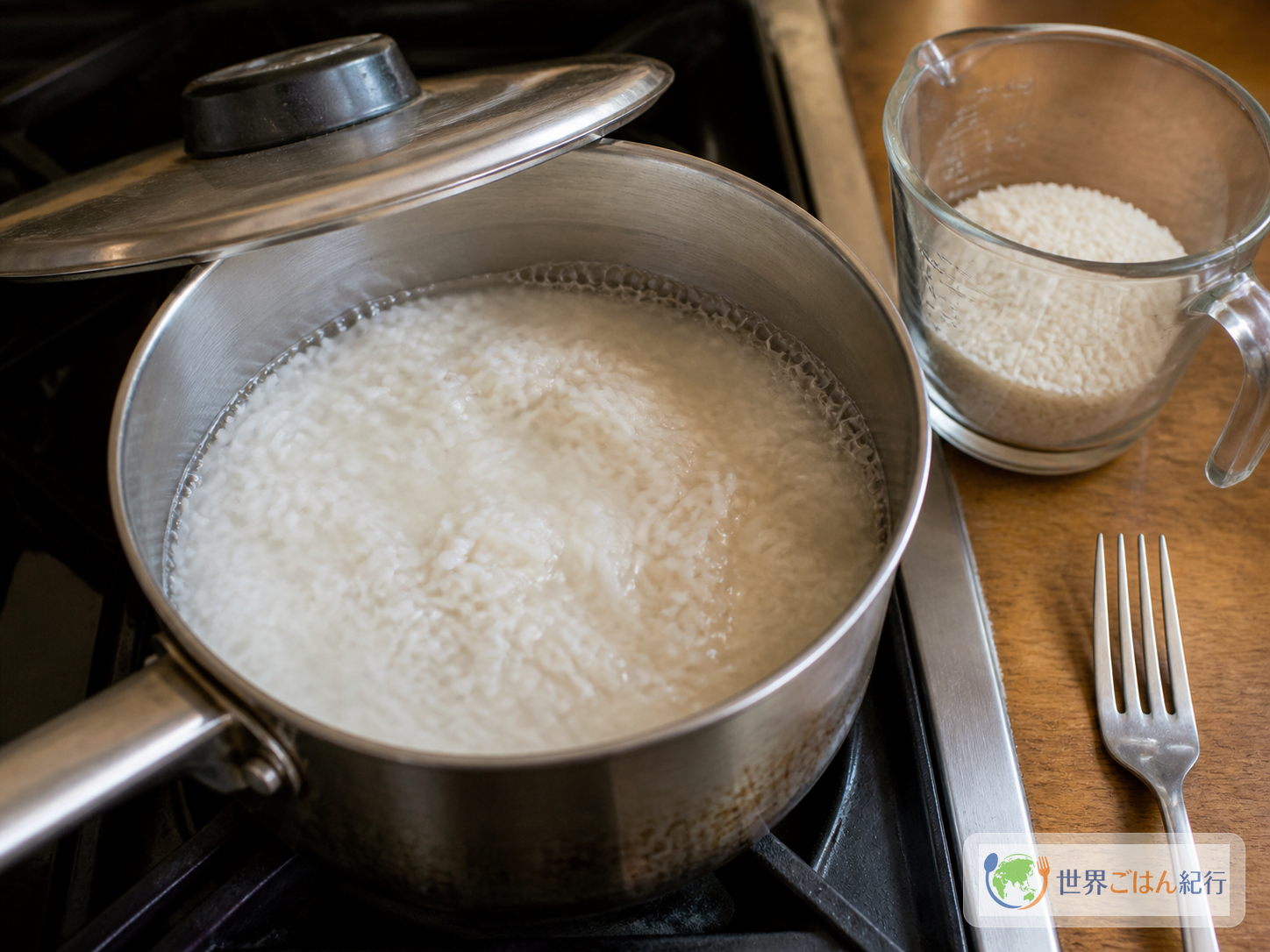
Unlike jambalaya (in Japanese), where rice is cooked in the pot, here the rice and sauce can be fixed separately. For the first batch, cook long-grain rice, judge the thickness of the étouffée by the trail of the wooden spoon, and cook the shrimp briefly at the end. With that separation, you can cut failures a good deal even in a home kitchen.
Étouffée is decided by the light roux, the holy trinity, and the thickness before the shrimp go in. Cook the shrimp for only 3–5 minutes at the end and stop when they are white and opaque through the center. If you set the heat up so hot sauce is added at the plate rather than settled in the pot, it is easier to eat at home.
Ingredients (serves 4)
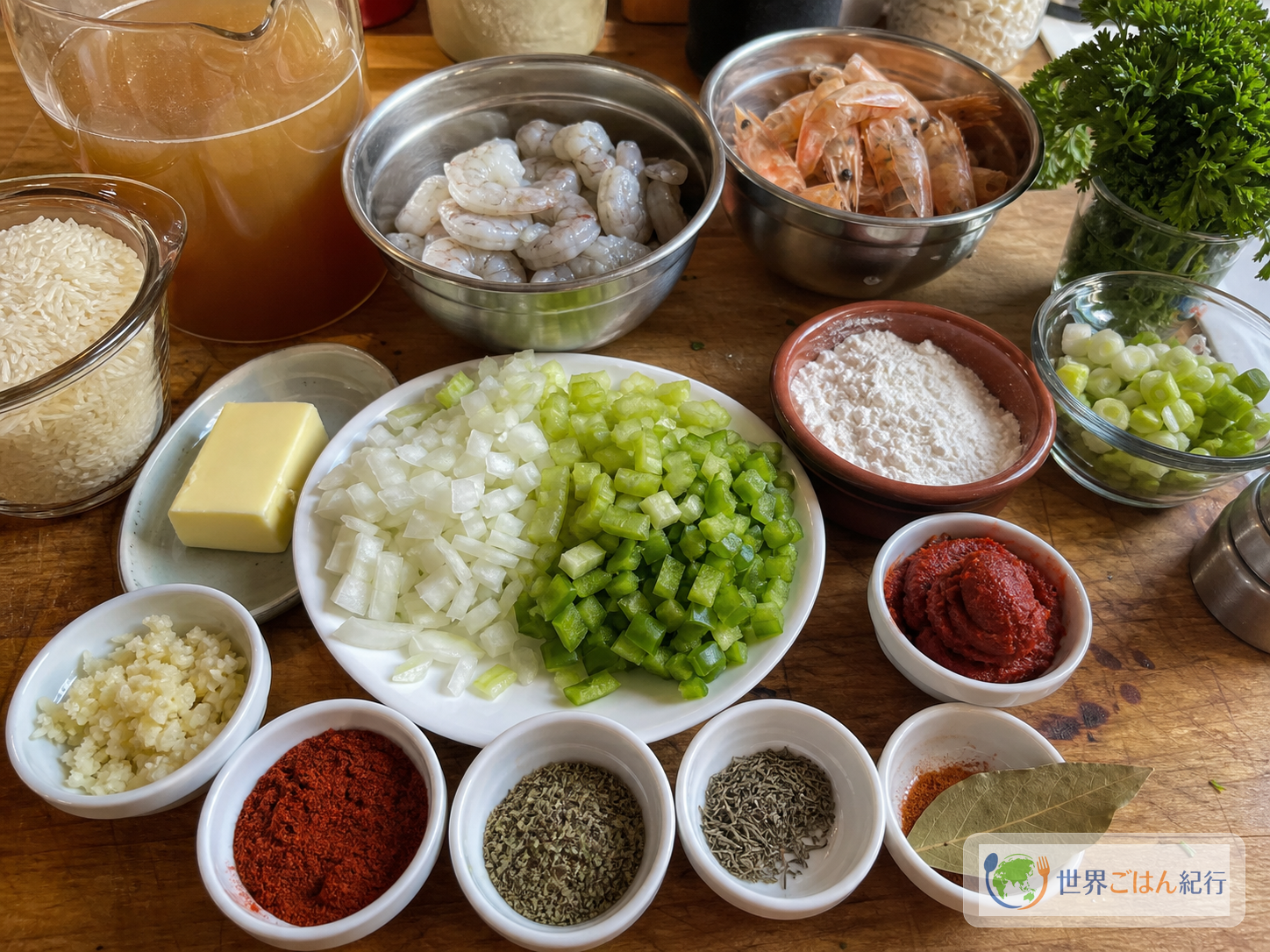
The amounts are for a heavy pot or deep frying pan 24–26 cm across. You can make it with peeled shrimp, but if you can get shell-on shrimp, a short stock from the shells deepens the aroma of the sauce. Long-grain rice holds up to the weight of the sauce; jasmine rice, basmati, and Calrose are candidates.
This recipe uses shrimp, wheat, dairy, and Worcestershire sauce, which may contain wheat depending on the product. If anyone at the table has a crustacean allergy, do not substitute in the same pot; keep the utensils separate too. The guide for shrimp is flesh that has turned white and opaque and firmed up. If you use a food thermometer, use 63 degrees C as the guide for seafood.
Shopping Notes

Shrimp, onion, celery, bell pepper, butter, and flour are fine from a nearby supermarket. They are not ingredients to hunt for specially. What makes a difference is the spices that pull a flavor drifting too far toward tomato or butter back toward Louisiana cooking, and a thermometer so that the shrimp are not overcooked.
Smoked paprika is a supporting line for a home version that has no andouille or crawfish fat. Étouffée does not contain smoked meat, but a little smoke aroma keeps the butter-and-flour sauce from leaning too far toward a Western-style cream stew. It can also go into gumbo (in Japanese) and jambalaya, so if you plan to keep cooking Louisiana food, it is a high priority.
Oregano, even in a small amount, links the butter, shrimp, and bell pepper. If you have an old jar at home, smell it, and if it is weak it is worth buying again. Do not use it up on étouffée alone; it can go to shrimp Creole, jambalaya, and gumbo.
You can read the doneness of shrimp by looking, but in a thick sauce it is easy to be unsure. With large shrimp, thawed frozen shrimp, or a first-time pot, a thermometer lets you decide calmly whether to cook one more minute or stop now.
Method
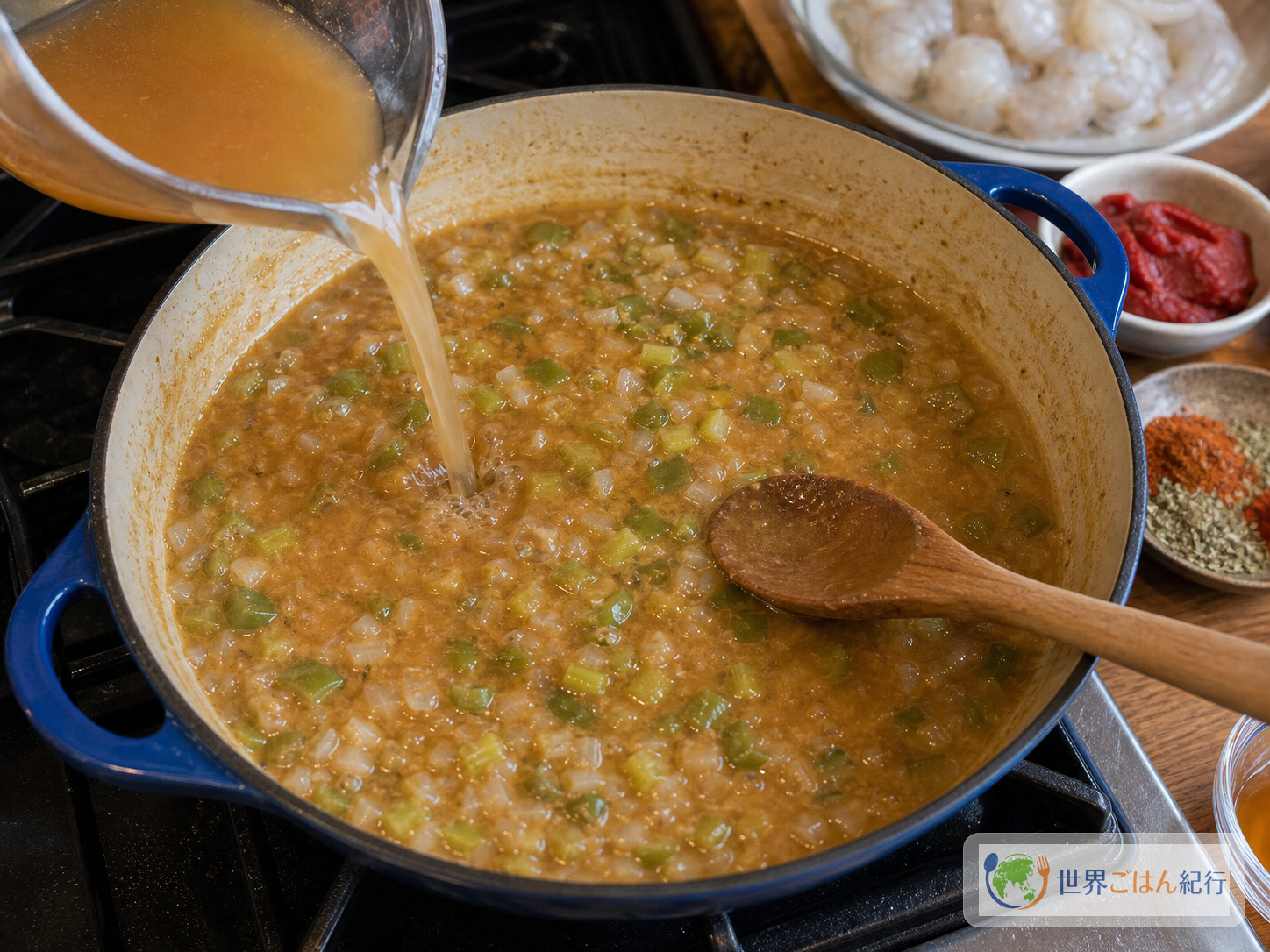
Étouffée proceeds with the rice, the shrimp prep, and the thickness of the sauce kept separate. It is not a dish where you scorch the roux to deepen it, but one where a light roux holds the aromatic vegetables and the shrimp stock. Decide the thickness before the shrimp go in, and once they are in, do not hesitate.
A Decision Table for Thickness and Cooking
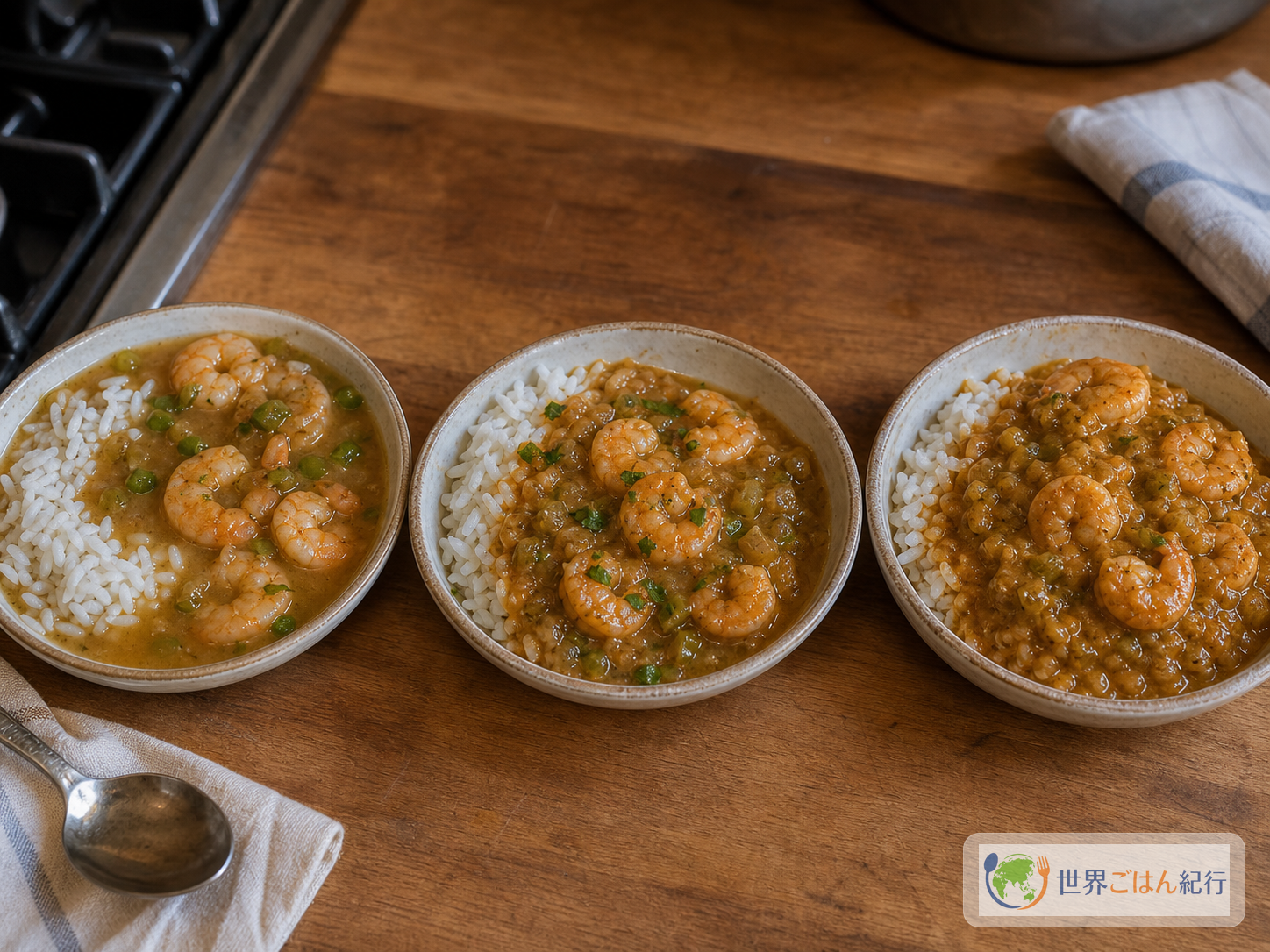
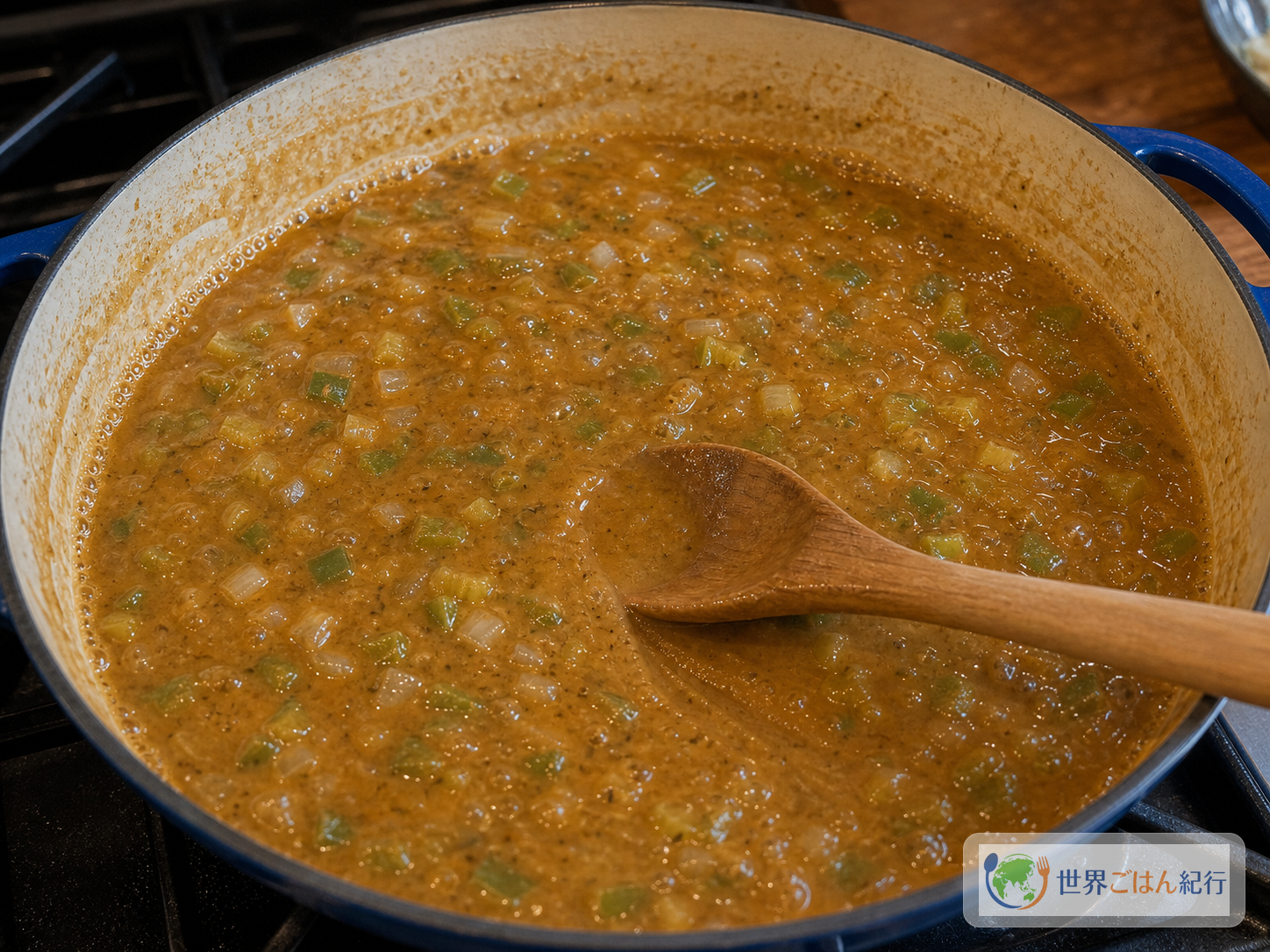
In étouffée, failures of thickness stand out more than failures of seasoning. Too thin and the rice turns watery; too thick and the heaviness of the flour wins. Trying to fix it by reducing after the shrimp are in makes the shrimp tough, so the trick is to settle it by step 6.
| Condition | Cause | How to fix |
|---|---|---|
| The sauce is thin | Too little roux, not reduced enough, too much water from the shrimp | Add 3–5 minutes at medium-low before adding the shrimp. Next time, pat the shrimp dry |
| Floury | Roux undercooked; lumps from adding stock all at once | Work it in over low heat for 3 minutes. Next time, cook the roux to a pale peanut color in step 3 |
| Bitter | Black burnt specks in the roux | The bitterness does not come back. Start over the moment it burns |
| Thick and heavy | Reduced too far; the sauce is too rich for the rice | Add 2–4 tbsp stock and cook over low heat for 1 minute. A little lemon at the plate |
| Tough shrimp | Reduced after adding the shrimp; boiled hard | Stop the shrimp at 3–5 minutes. Next time, settle the thickness first |
| The aroma leans Western-style | Left out the bell pepper; weak spices | Keep the trinity and add a little smoked paprika and oregano |
If you want to hint at tomato in the Creole direction, 15 g of tomato paste, as in this article, is easy to handle. Adding a lot of diced tomato moves it toward shrimp Creole. Conversely, to lean toward Cajun, leave out the tomato paste, make the roux only a little darker, and add cayenne and black pepper at the plate for direction.
Storage, Reheating, and How to Eat It
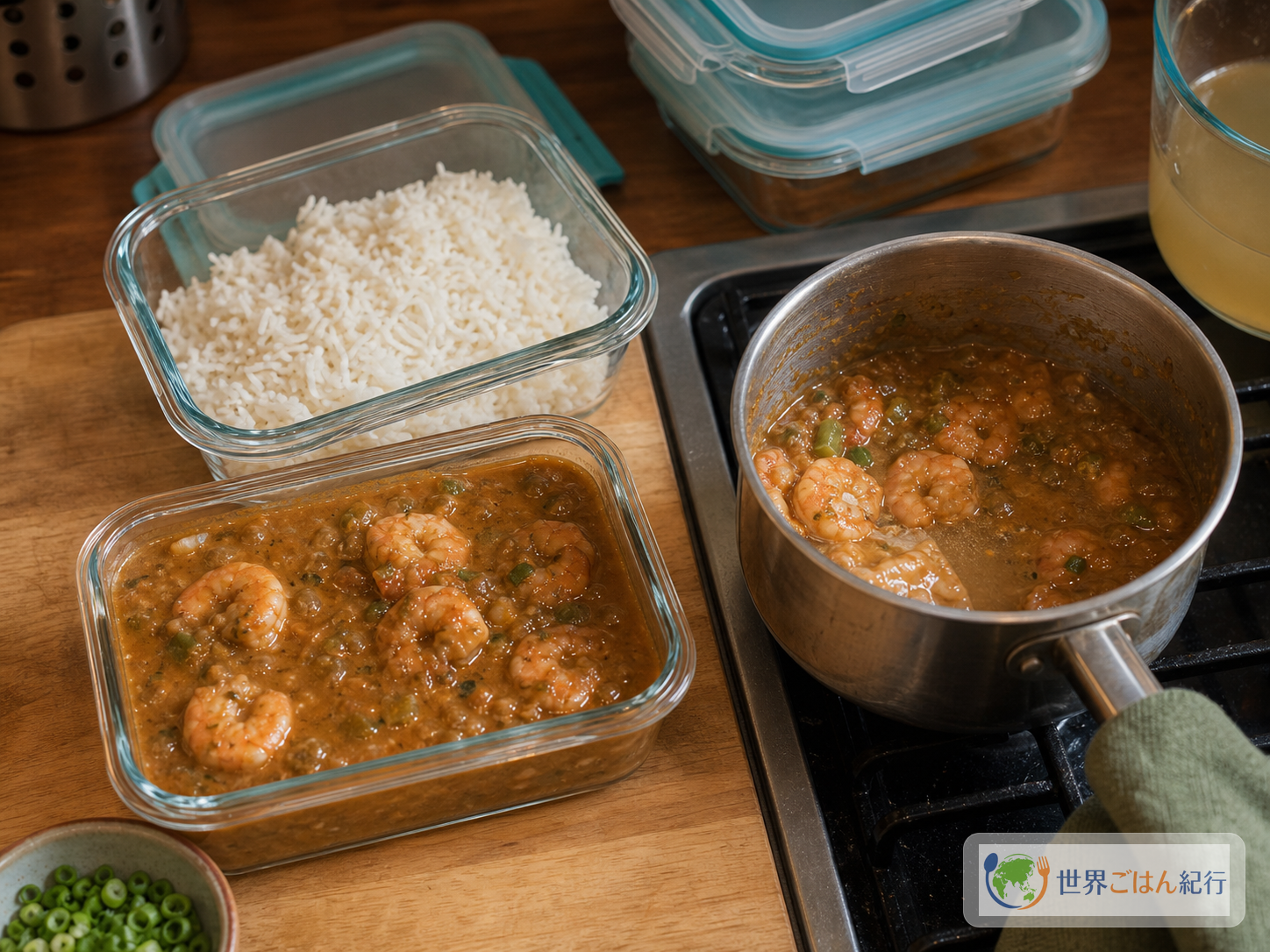
Étouffée gives the most shrimp aroma freshly made. To store it, separate the sauce and rice, let the heat go off, and put them in shallow containers. Because it contains shrimp, do not leave it at room temperature, and finish it within about 1 day refrigerated. You can freeze it, but the shrimp tend to turn tough, so if you are making it ahead, use a little fewer shrimp and eat the sauce part first for better satisfaction.
To reheat in a pot, add 1 tbsp stock or water per serving and warm over low heat for about 3 minutes. Stop as soon as it bubbles; do not simmer it long. In a microwave, put it in a deep dish, cover loosely with plastic wrap, heat at 600 W for 1 1/2 minutes, stir once, and add 30 seconds at a time. Stop when hot through the center, and a few scallions and some lemon dilute the make-ahead feel.
At the table, putting hot sauce, lemon, and scallions out separately lets each plate be adjusted. For sides, rather than a heavy meat dish, cucumber pickles, a leafy salad, or a tart coleslaw go well. If you keep cooking Louisiana food the same week, using up leftover celery and bell pepper by moving on to dirty rice or red beans and rice wastes nothing.
Its Place in Louisiana Cooking
Étouffée is a dish spoken of in both Cajun and Creole cooking. According to local tourism descriptions, the skeleton is shared: crawfish or shrimp, the trinity of vegetables, a thick sauce, and rice. The Cajun side often leaves out tomato, while the Creole side sometimes takes in a butter roux and tomato. This article uses a light butter roux and a little tomato paste so that it is easy to reproduce at home.
There is no need to feel awkward about using shrimp in place of crawfish. American explanations also treat étouffée as a dish made with crawfish or shrimp. Frozen peeled shrimp, however, hold a lot of water, so it matters to pat them dry after thawing and to reduce the sauce first. On days when you can get shell-on shrimp, simply making a stock from the shells supplies a little of the depth that crawfish fat would give.
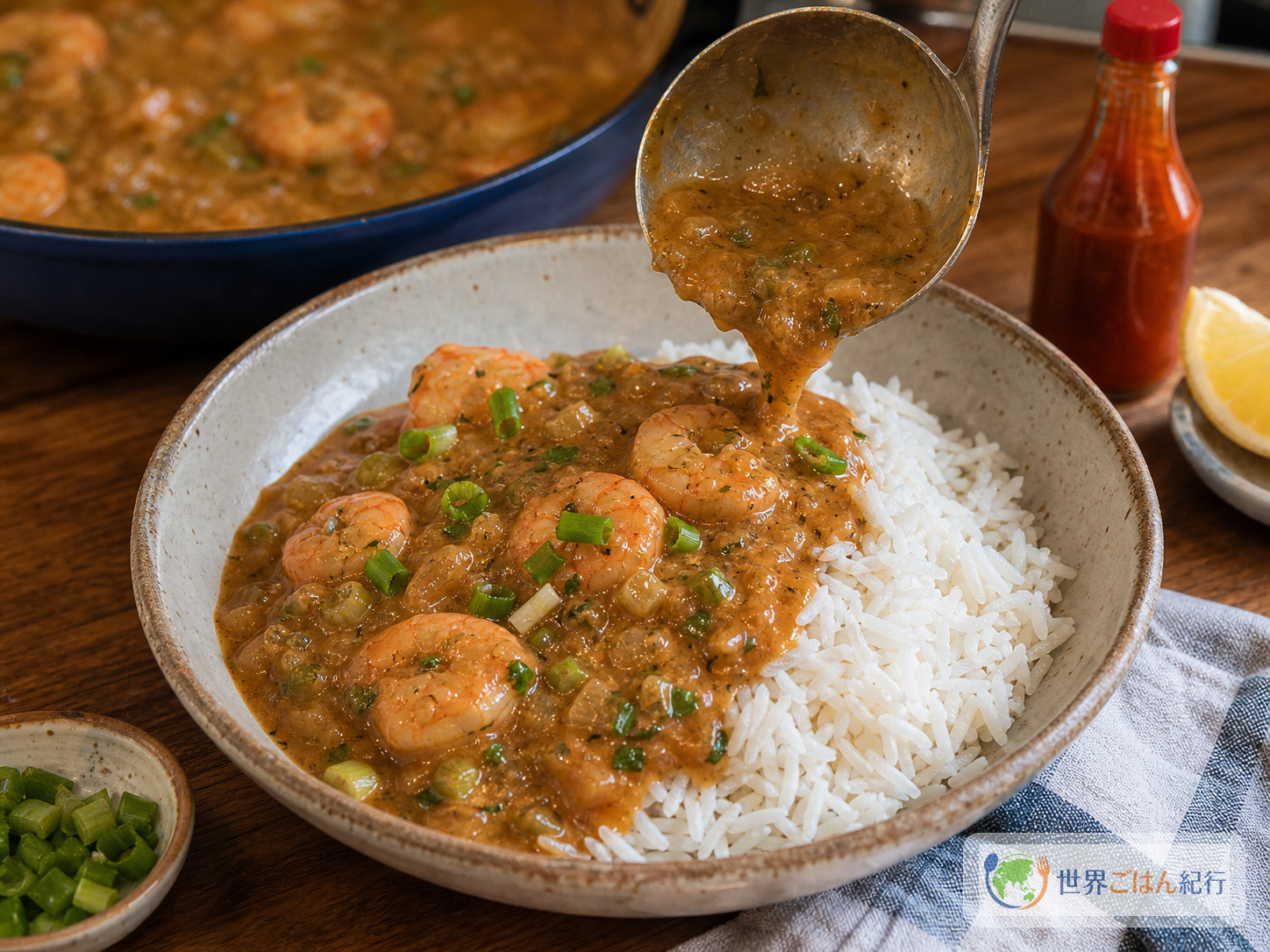
Set beside gumbo, jambalaya, and shrimp Creole, the role of étouffée becomes clear. Gumbo is a soup in which roux and ingredients are cooked a long time, jambalaya is a dish in which rice is cooked in the pot, and shrimp Creole is shrimp stewed in tomato sauce. Étouffée is a thick shrimp gravy spooned over white rice. The star of the plate is not only the shrimp, but the thickness of the sauce that clings to the rice.
Frequently Asked Questions
Does it have to be crawfish to be étouffée?
No. Crawfish étouffée is famous, but shrimp étouffée is also commonly spoken of. Because it is hard to buy edible crawfish reliably, making stock from shell-on shrimp is more reproducible. Even if you only have peeled shrimp, use stock and do not overcook the shrimp, and it is delicious enough.
What color should I cook the roux to?
A pale peanut color is the guide. If you darken it to a milk-chocolate color as for gumbo, the toastiness comes out but the sweetness of the shrimp in étouffée tends to feel heavy. Stop after the raw-flour smell has gone and before black specks appear.
Can I make it with short-grain rice?
Yes. Cut the water slightly and cook it firm, and when done spread it on a plate or tray for about 5 minutes to let the steam escape. Thick sauce over soft short-grain rice makes everything heavy. Even just for the first time, using long-grain rice changes the impression of the dish a great deal.
Is it correct to put in tomato?
It varies by household. On the Cajun side, many versions leave out tomato, while on the Creole side there are examples that use it. In this article, instead of diced tomato, a small amount of tomato paste is used, and the result is a thick sauce of butter and shrimp stock, not a red sauce.
How spicy is it?
It is modest in the pot. Cayenne totals 3/8 tsp, and hot sauce is added at the table. If you want it spicier, raising it all at once in the pot makes saltiness and acidity feel strong too, so add at the plate first and raise the cayenne to 1/2 tsp next time.
Is there a substitute for people with a crustacean allergy?
Rather than simply swapping in the same pot, it is safer to make it as a separate dish. To approach the direction of the flavor, cut 350 g chicken thighs small, sear the surface before step 4 and set it aside, return it in step 6, and cook to a core temperature of 74 degrees C. Do not share utensils or cutting boards with crustaceans.
Summary
Étouffée is not a dish where you add many special seasonings. Make a light roux without scorching it, saute the onion, celery, and bell pepper properly, and settle the thickness before the shrimp go in. Once that is set, the shrimp only need a short cook.
In a home kitchen, shell-on shrimp stock, long-grain rice, spices that keep their aroma, and a thermometer do more than hunting for crawfish. Made as a plate spooned over rice, it shows the pleasure of Louisiana, "eating rice with a thick sauce," which is different from jambalaya and gumbo.
Sources
- Explore Louisiana, Crawfish Étouffée Recipe
- Explore Louisiana, Everything You Need to Know About Crawfish Etouffee
- Wikipedia, Étouffée
- FoodSafety.gov, Cook to a Safe Minimum Internal Temperature
- FoodSafety.gov, Safe Selection and Handling of Fish and Shellfish