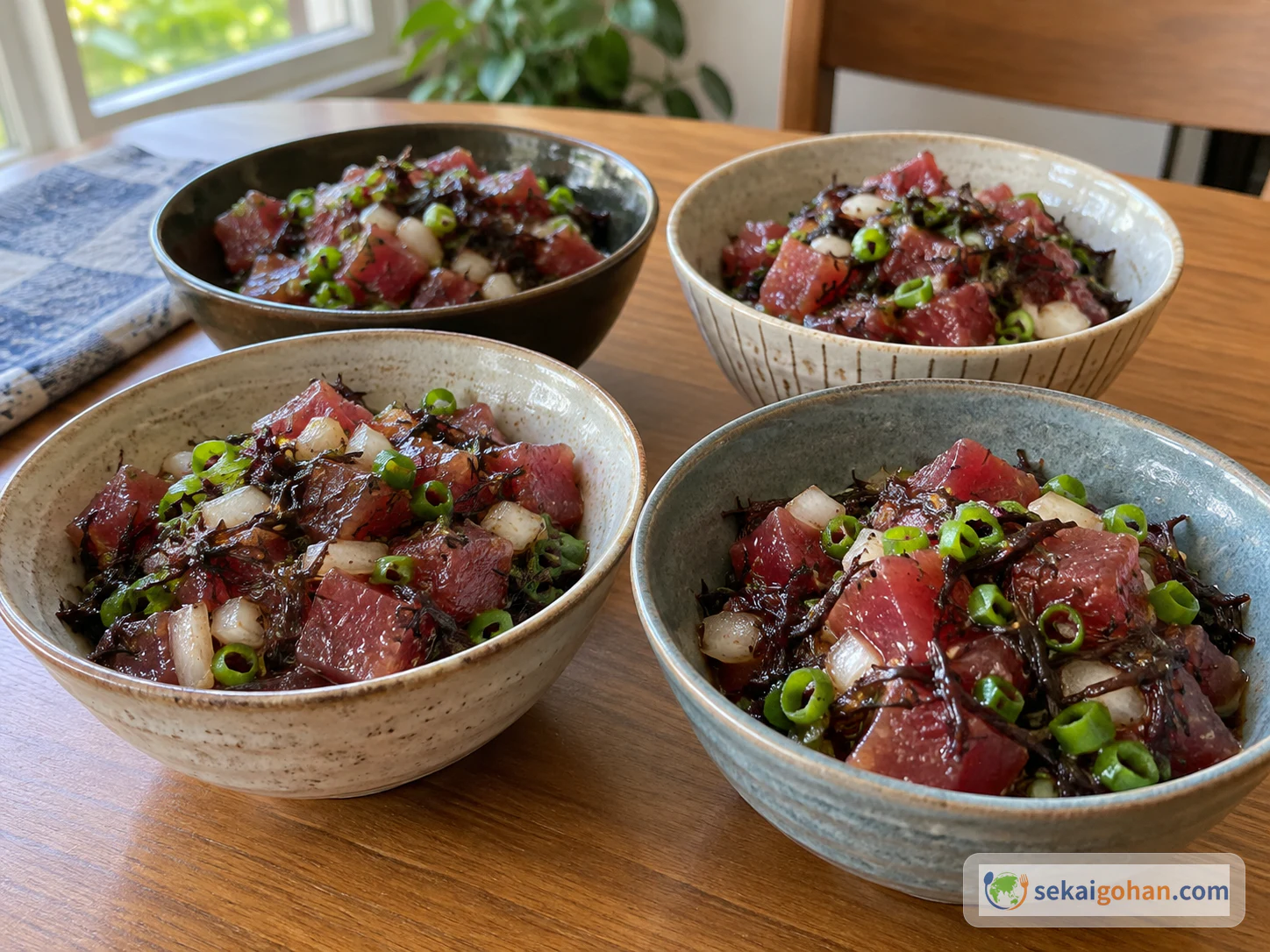
Hawaiian Ahi Poke: Cubes of Raw Tuna, Seaweed and a Little Salt
The raw fish stays at the center, with limu, salt, shoyu and a little sesame oil around it. Because the fish is not cooked, how you buy it and keep it cold matters as much as how you season it.
In 2016, Hawaiʻi Public Radio reported from a Foodland poke counter in Hawaiʻi, where many kinds of poke were laid out and the selection changed from day to day. That is one report from one moment, not a description of every store today, but it shows how wide the word "poke" can be.
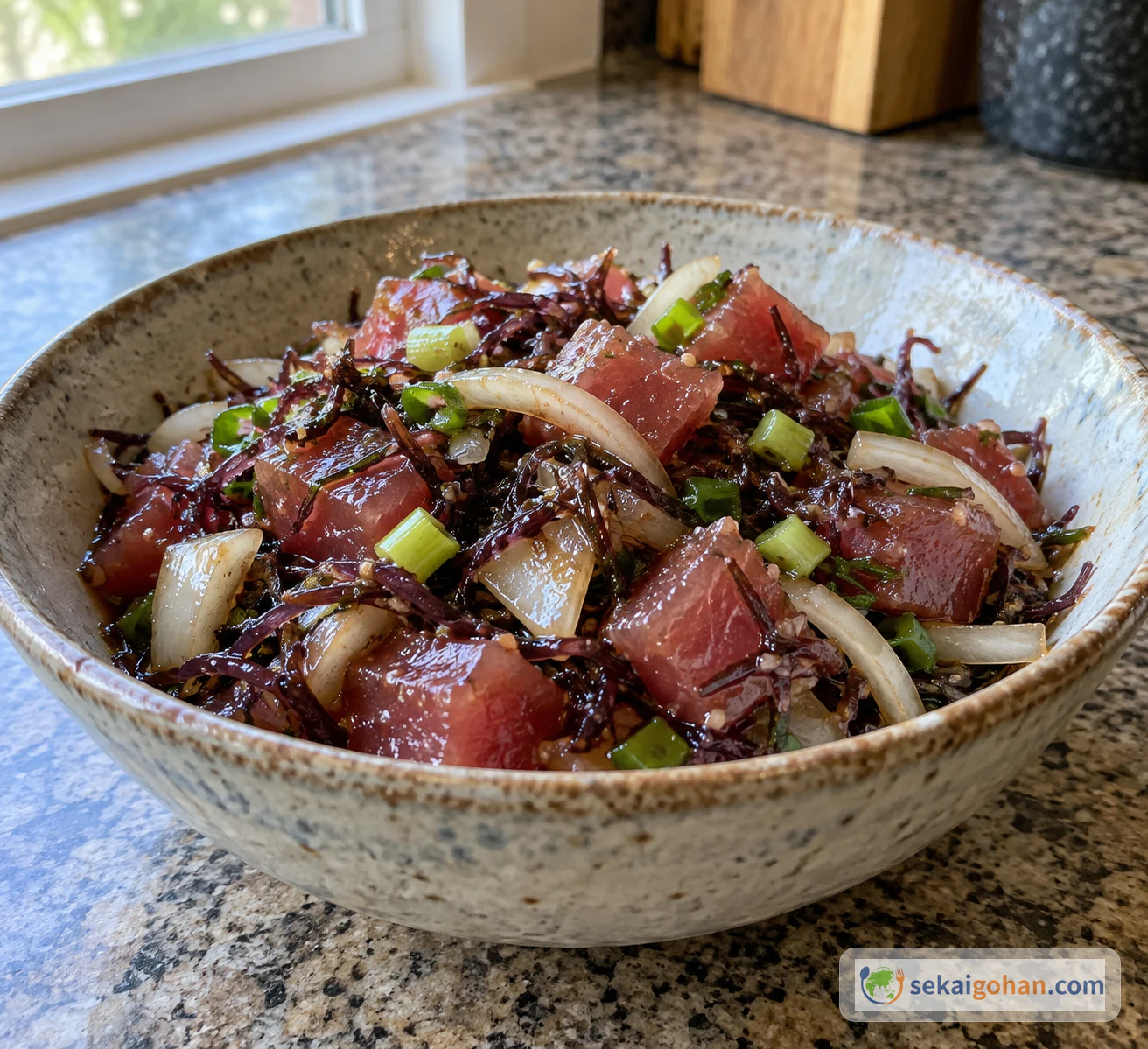
This article narrows that range to a single bowl: the 4-serving Ahi Poke published by the Hawaiʻi Nutrition Center at the University of Hawaiʻi CTAHR. It combines raw ʻahi (yellowfin tuna), limu (ogo seaweed), Hawaiian salt, shoyu, sesame oil, onion, green onion and red chili pepper. It is one published version with shoyu in it, not the only traditional form of poke.
That recipe gives no preparation time, chilling time or cube size, so none are added here. Sekai Gohan has not kitchen-tested this recipe.
This dish is eaten raw. Read "Before You Start: Handling Raw Fish" below before you shop, including the list of people who should avoid it.
Ingredients (4 Servings)
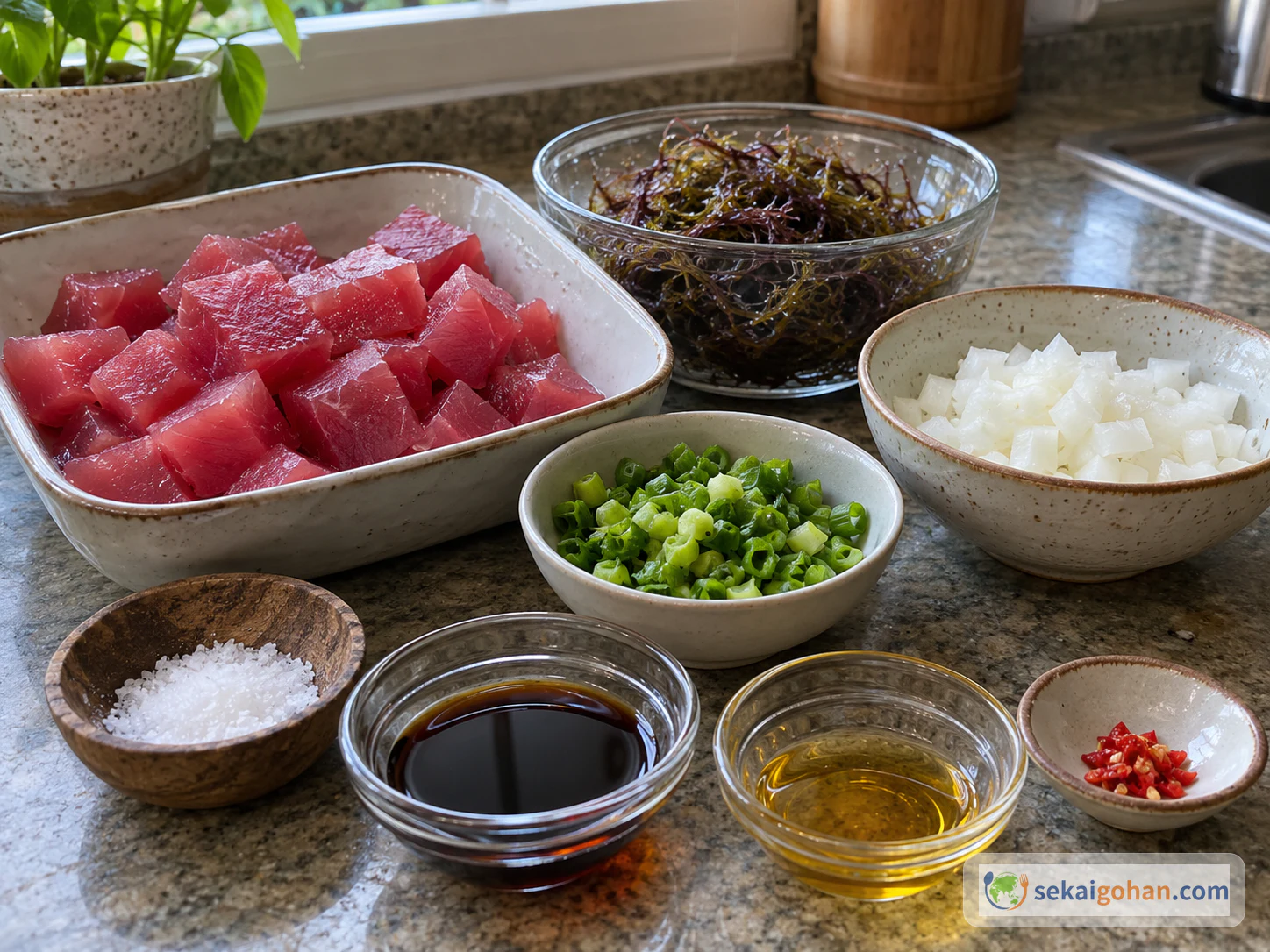
Rinse the onion, green onion and any fresh red chili pepper well under running water before using them. Keep the fish cold until you cut it.
Choosing the Fish, Limu and Seasonings
- Tuna: Check the species on the label, and buy fish clearly sold for raw eating from a seller you trust. Do not use fish meant for cooking, or fish when you cannot tell whether it is suitable for raw eating. Color alone does not tell you how fresh it is.
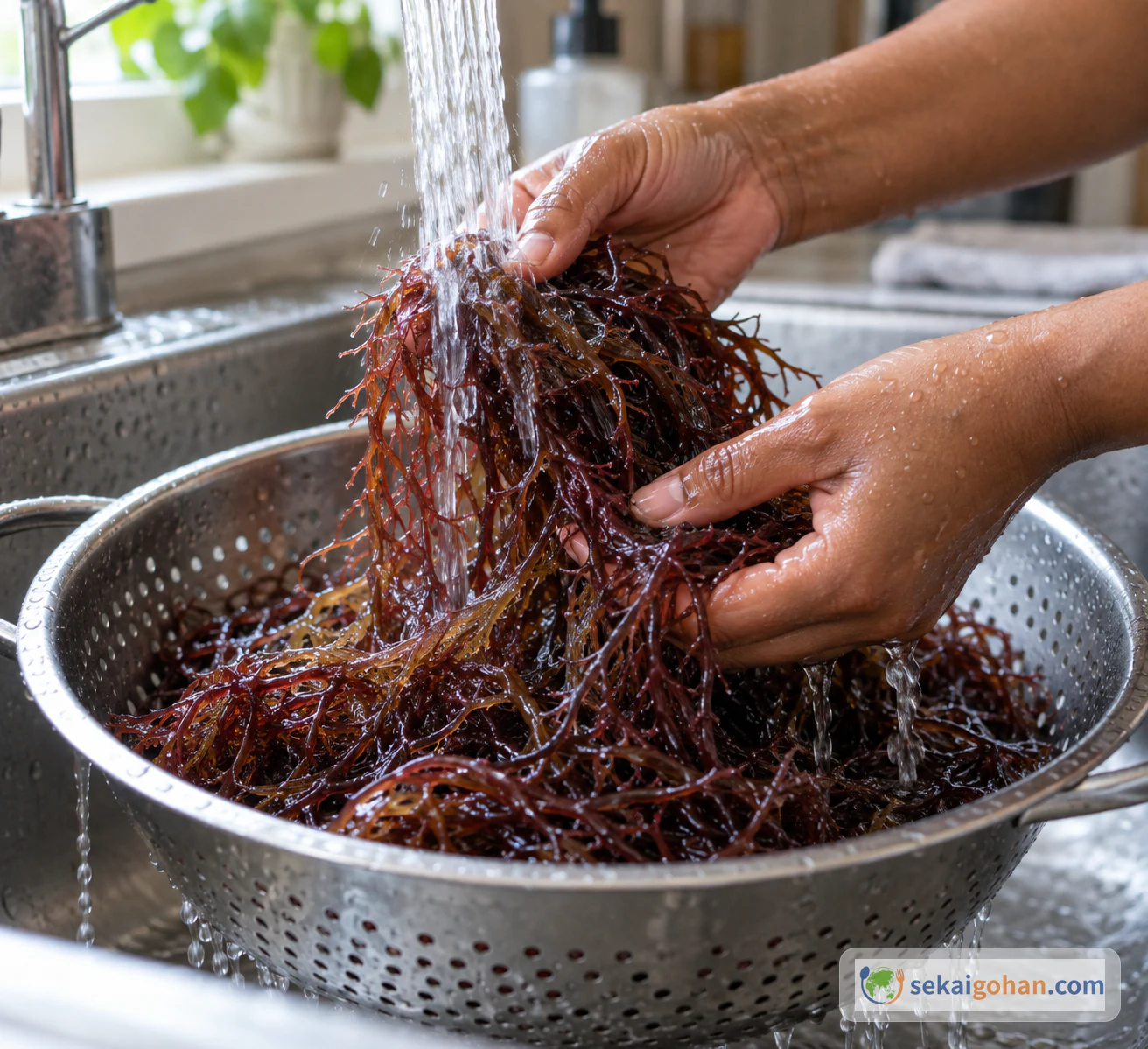
- Limu: Ogo can be hard to find. Other seaweeds differ in texture, saltiness and aroma, and dried or salted seaweed differs again in how it rehydrates and how salty it is. Do not swap one in at the full 1/2 cup. Add a small amount and check the flavor. This is a suggested workaround, and the result will not taste the same.
- Hawaiian salt: Grain size and saltiness vary, so there is no exact conversion to table salt. If you use another salt, add it little by little.
- Soy sauce: Ordinary soy sauce plays a similar role to shoyu, though it may not be identical.
- Red chili pepper: Check the form of what you are buying, since ground and fresh chili are not the same.
Equipment
- Colander
- Medium bowl
- Cutting board and knife for the seaweed and vegetables
- Separate cutting board, knife and bowl for the raw fish
- Measuring cups and spoons
- Covered food-safe container
- Serving bowls
Before You Start: Handling Raw Fish
The U.S. Food and Drug Administration (FDA) advises people who are pregnant, children, older adults and people with weakened immune systems to avoid raw or undercooked seafood, including sashimi. Do not give this dish to babies or young children. If you are concerned about your health, talk to a doctor first. If you develop severe abdominal pain or similar symptoms after eating, seek medical care.
Buy fish sold for raw eating. Choose yellowfin tuna or ʻahi sold as "for raw consumption" or sashimi from a seller you trust. Japan's Ministry of Health, Labour and Welfare (MHLW) advises consumers to choose fresher fish and to look for and remove Anisakis larvae by eye.
Freezing conditions differ by agency. The two sets of guidance below have different scopes and conditions, and both include or target food businesses. They are shown side by side, and this article does not merge them into one home number.
| Agency | Conditions given |
|---|---|
| MHLW (Japan), for Anisakis | Freeze at -20°C for at least 24 hours, or heat to 70°C or above, or 60°C for 1 minute |
| FDA (US), business guidance on parasites | -20°C or below for a total of 7 days; or frozen solid at -35°C or below and stored at -35°C or below for 15 hours; or frozen solid at -35°C or below and stored at -20°C or below for 24 hours. These may not suit large fish more than 6 inches thick |
The temperature of a home freezer is hard to confirm. Choose fish the seller labels for raw eating, or fish clearly stated to have been freeze-treated. If you freeze fish yourself, do so only on the basis of not falling short of the public conditions above.
Seasoning does not kill parasites. MHLW states that vinegar, salting, soy sauce and wasabi do not kill Anisakis larvae. FDA business guidance says salting and pickling may reduce parasite risk but do not eliminate it. The salt and shoyu here are for flavor only.
Freezing does not remove all germs. The FDA explains that freezing does not kill all harmful germs and that thorough cooking is the safest choice. Freezing is one help against parasites, not a guarantee.
Keep it cold and eat it soon.
- Keep the fish refrigerated or on ice after buying, and chilled until you use it.
- Under general FDA guidance, do not leave perishable food out of the refrigerator for more than 2 hours, or more than 1 hour when the temperature is above 90°F (32°C).
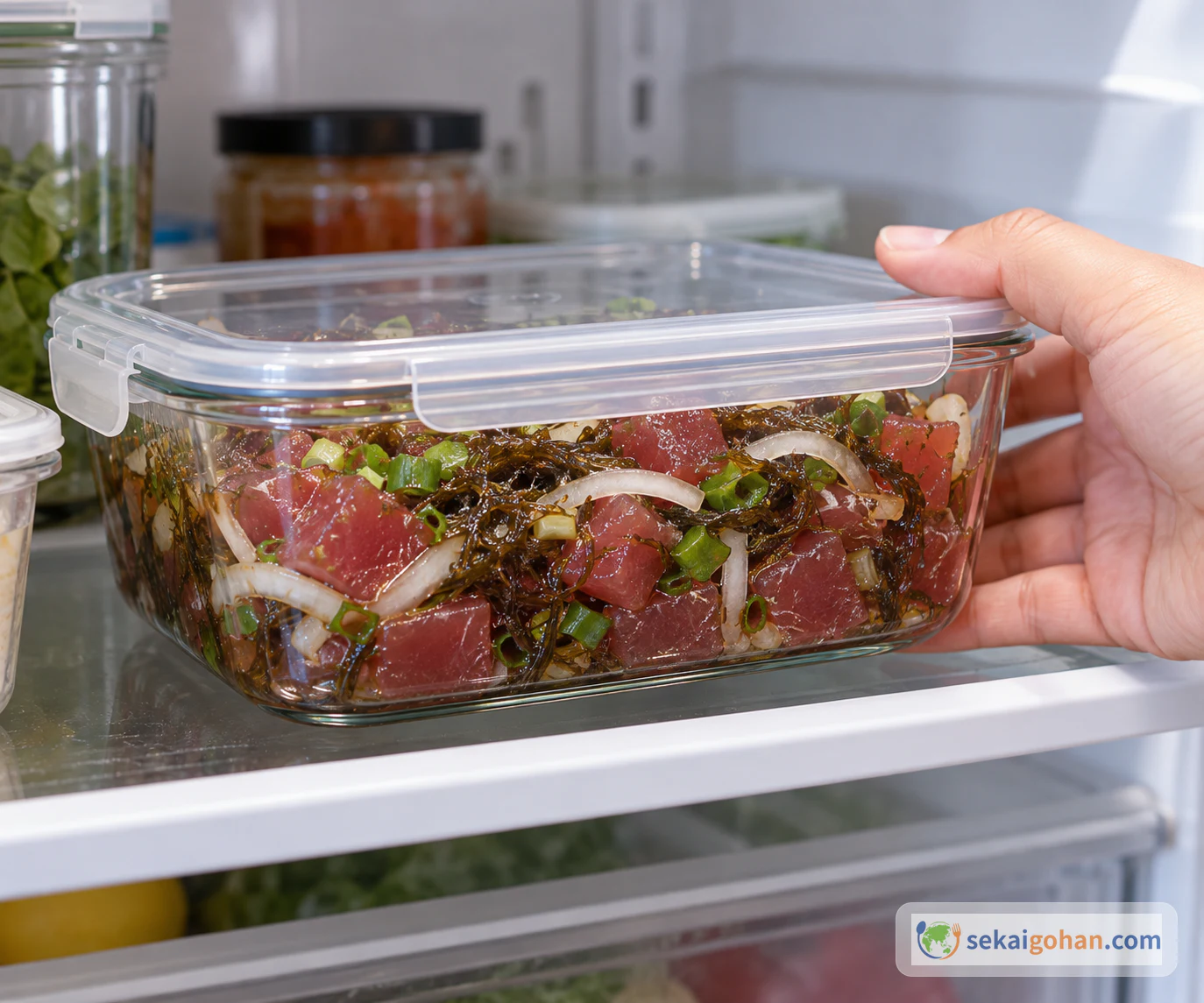
- Once mixed, chill the poke and eat it as soon as you can.
- If you are unsure about leftovers, do not eat them.
Keep raw fish apart.
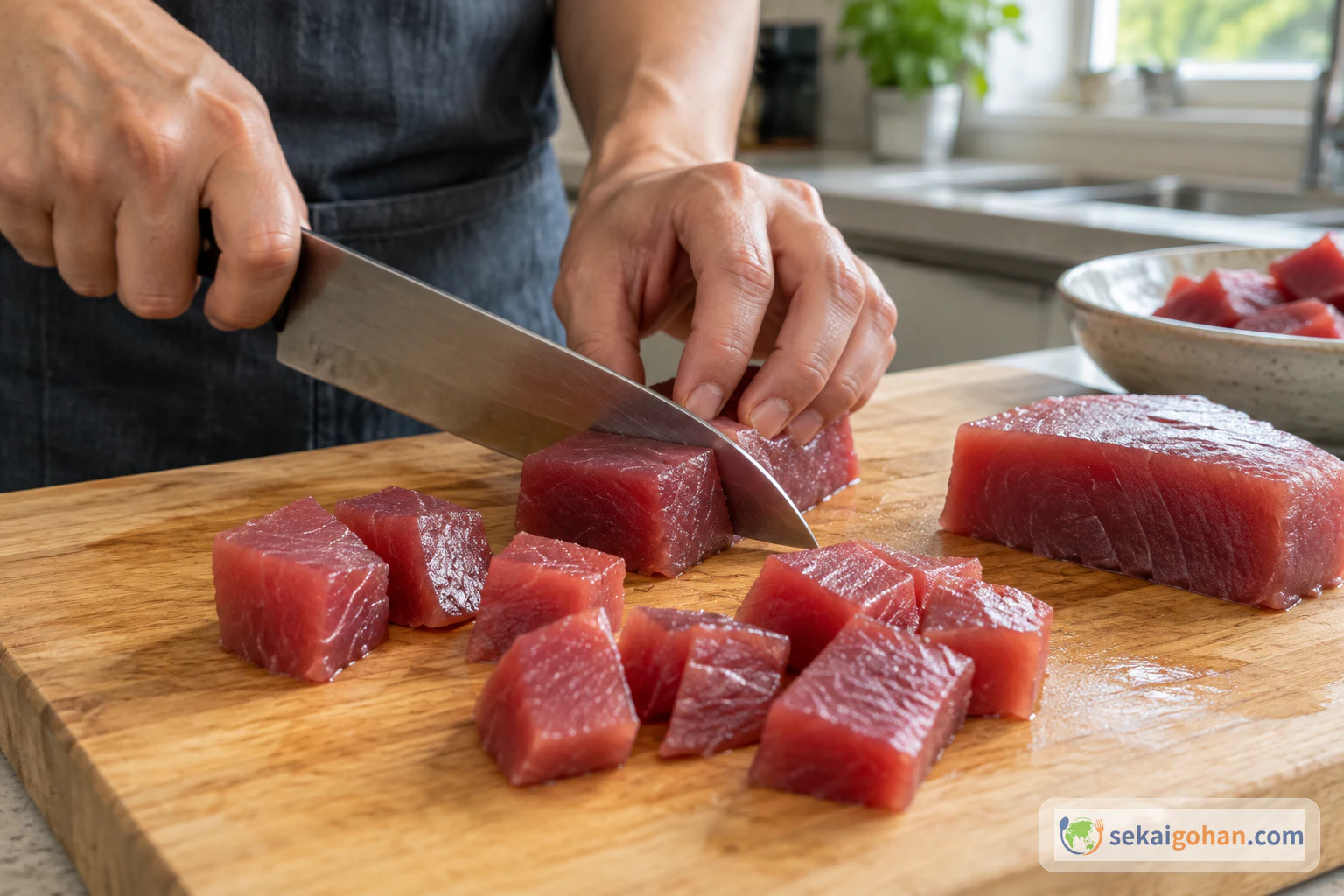
- Use a separate cutting board, knife and bowl for the raw fish, away from onion, green onion and other foods.
- The FDA advises washing cutting boards, dishes, utensils and counters with soap and hot water while handling raw food.
- After touching raw food, wash your hands with soap and warm water for at least 20 seconds.
- Wash used tools before using them for other ingredients.
Rinse the raw aromatics. Rinse the onion, green onion and fresh chili under running water. This does not make a raw fish dish safe.
Allergens. This dish contains fish, soy (shoyu) and sesame. Check product labels.
Method: From Seaweed to Chilled Bowl
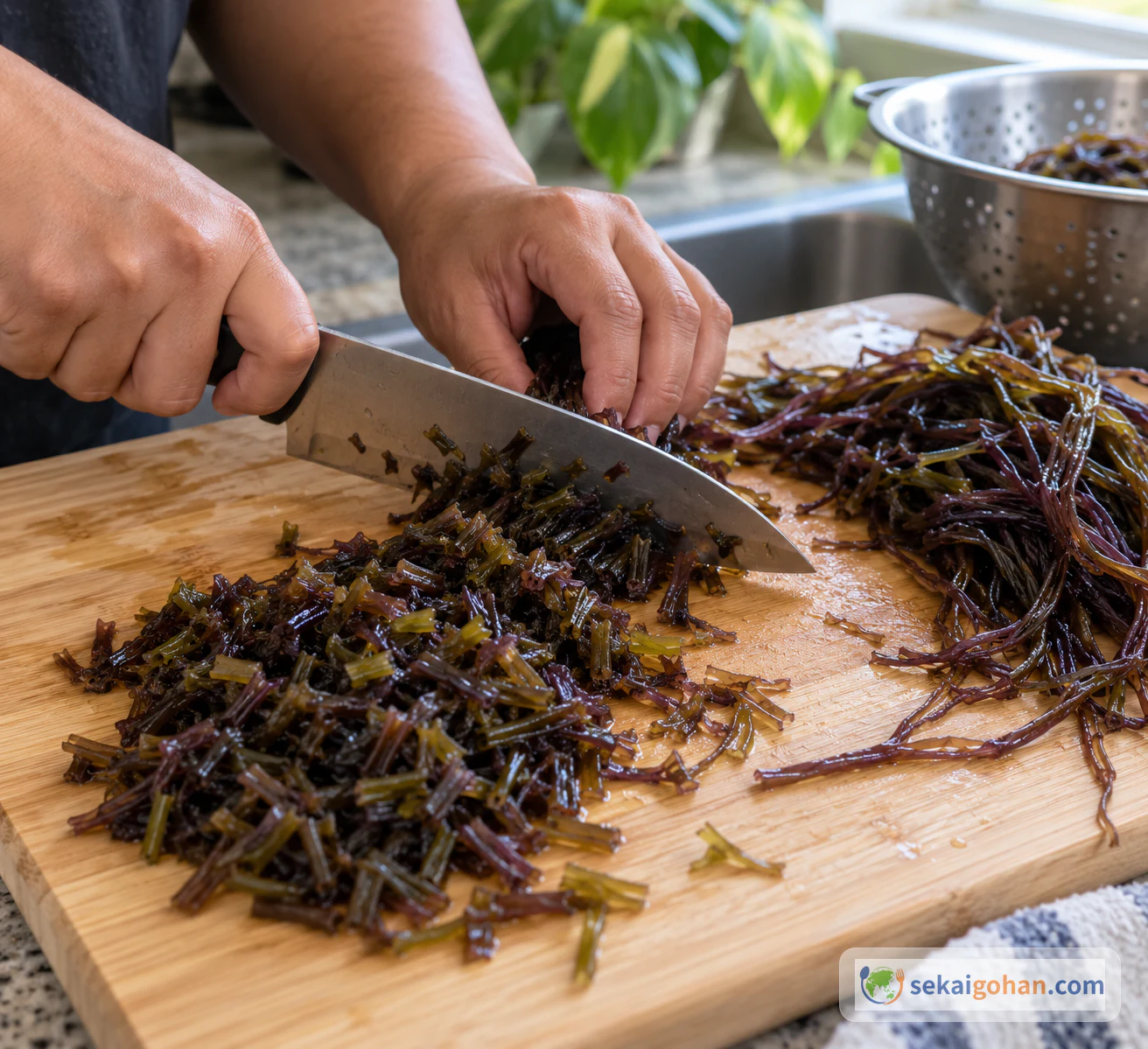
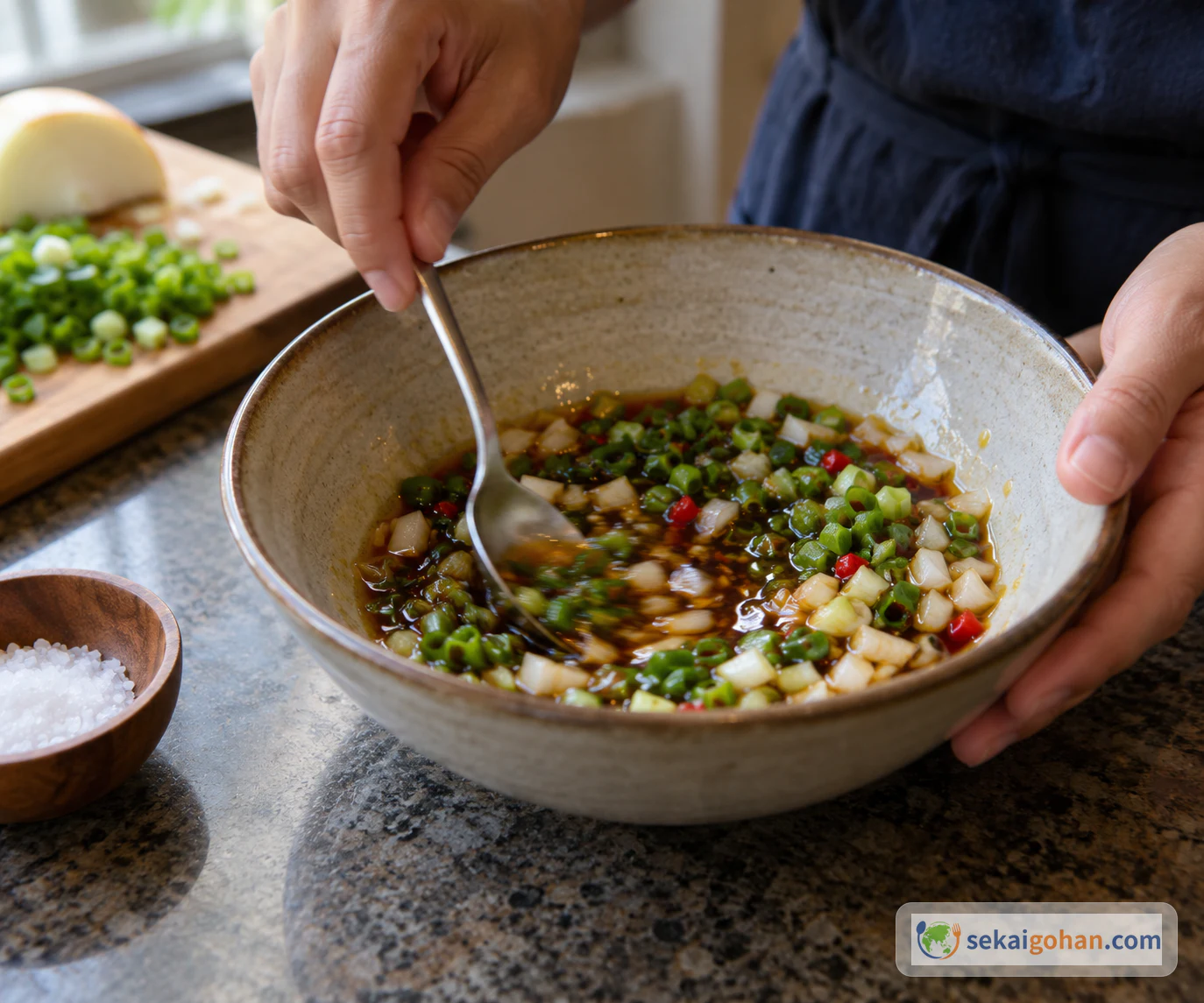
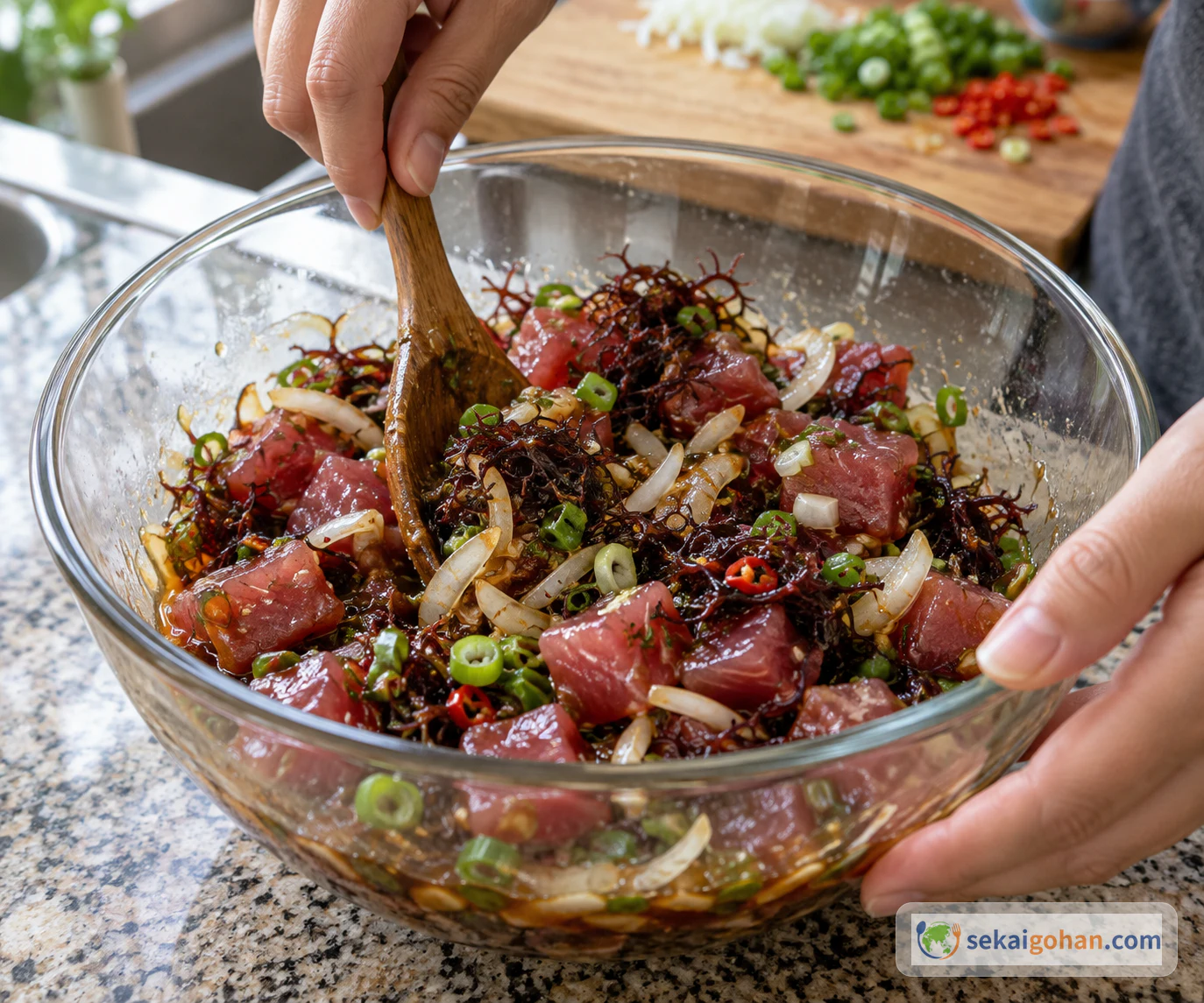
Prepare the limu and seasoning first, while the fish stays in the refrigerator. Cut the fish last, using its own board and knife.
When Something Goes Wrong
| Situation | What to do |
|---|---|
| You cannot tell whether the fish is suitable for raw eating | Do not use it for this dish. Buy fish sold for raw eating, or cook the fish as a different dish |
| You see what looks like a parasite in the fish | Remove it. Salt and shoyu will not kill Anisakis larvae, so do not rely on the seasoning. If you are in doubt about the fish, do not eat it raw |
| The fish or finished poke has been out of the refrigerator too long | Past 2 hours (1 hour above 90°F/32°C), do not eat it |
| The fish cubes are breaking apart | Stop mixing. Combine gently rather than kneading |
| A substitute seaweed makes the bowl too salty or too strong | Use less next time. Add a small amount and check the flavor rather than using the full 1/2 cup |
| The raw fish touched a board or knife used for vegetables | Wash the tools with soap and hot water before using them again, and keep raw aromatics and other foods away from anything the fish has touched |
Variations, and Where They Stop Being This Recipe
The 4-serving mix above stays as it is. Everything below is a different direction, and no amounts are given where none have been confirmed.
- Without ogo: Use another seaweed as described above, and treat the result as an adaptation.
- With ʻinamona: Bishop Museum describes ʻinamona, roasted kukui nut with salt, as a traditional seasoning for poke. It is not part of this recipe. Making it would need its own amounts and allergen check, so none are given here.
- With rice: Hawaiʻi Public Radio mentions poke served with rice as one way of eating it in Hawaiʻi. Rice is not an ingredient in the University of Hawaiʻi recipe, so here it stays optional and on the side.
- Other seasonings: Bishop Museum notes modern poke seasoned with kimchi, oyster sauce, wasabi and more. These belong to stores, regions and households, and are not added to this mix.
- Avoiding raw fish: Cooking the fish is a reasonable safety choice, but the result is a different dish and not this poke recipe.
What Poke Is: Cut Fish, Sea Salt and a Changing Bowl
Bishop Museum's history of poke describes the basic act of cutting fish into small pieces, and distinguishes it from lomi, in which the fish is worked with the fingers. It also describes fish seasoned with paʻakai (sea salt) and served with ʻinamona and limu, a way of eating that values the fresh flavor of the fish. That is a context for tradition, not a claim that all poke uses those ingredients or that poke has a single origin.
Modern poke draws on many fish and on seasonings from elsewhere, including Japanese cooking, according to Bishop Museum. Shoyu belongs to that later range of flavors, so the University of Hawaiʻi recipe should not be read as an ancient formula.
Hawaiʻi Public Radio's 2016 report also followed poke beyond the islands, where bowls had changed to include ingredients such as quinoa and kale. It noted that people from Hawaiʻi care about how the tradition is represented. A poke counter in Hawaiʻi and a customizable bowl elsewhere share a name, but they are not the same thing.
For more dishes from across the country, see recipes from the United States.
Frequently Asked Questions
Is frozen tuna safe to eat raw?
Not automatically. According to the FDA, freezing is a measure against parasites, but it does not kill all harmful germs. MHLW and the FDA give different freezing conditions, both shown above, and a home freezer's temperature is hard to confirm. Choose fish labeled for raw eating or clearly stated to have been freeze-treated. The risk does not go to zero.
How long does poke keep in the refrigerator?
The University of Hawaiʻi recipe gives no storage period, and this article does not invent one. Keep it chilled and eat it as soon as you can. If you are unsure about leftovers, do not eat them.
Can I make it with salmon?
Bishop Museum explains that many kinds of fish are used in poke today. Salmon would be a variation using a different fish, not this ʻahi recipe. The same rules about buying fish for raw eating, keeping it cold and who should avoid it still apply.
What form of red chili pepper should I use?
The University of Hawaiʻi recipe lists 1/8 tsp of red chili pepper without saying whether it is ground or another form. Check what you have and add it with that in mind.
Is this the same as banana poke?
No. Banana poke from the Cook Islands shares part of the name, but it is a banana dish made with ingredients such as coconut milk. It is unrelated to this raw fish dish in its ingredients and region.
Is the word spelled differently elsewhere?
Writing in other languages, including Japanese, may render the word in more than one way. The spelling used in Hawaiian sources is poke. This article does not try to settle the fine details of its etymology.
Sources
- Hawaiʻi Nutrition Center, University of Hawaiʻi CTAHR, "Ahi Poke." Ingredients, amounts, 4 servings, rinsing and chopping the limu, mixing, and chilling until serving. https://nutritioncenter.ctahr.hawaii.edu/ahi-poke/
- Bishop Museum, "The History of Poke in Hawaiʻi." Traditional pairings of fish with paʻakai, ʻinamona and limu, the difference between lomi and cubed fish, and the range of modern fish and seasonings. https://blog.bishopmuseum.org/history/the-history-of-poke-in-hawai%CA%BBi/
- Hawaiʻi Public Radio, "Why Hawaii Poke Is Taking The Mainland By Storm," 2016. The Foodland poke counter and its variety, changes to bowls outside Hawaiʻi, how people from Hawaiʻi view them, and an example of serving with rice. https://www.hawaiipublicradio.org/general-assignment/2016-11-03/why-hawaii-poke-is-taking-the-mainland-by-storm
- U.S. Food and Drug Administration, "Selecting and Serving Fresh and Frozen Seafood Safely." Previously frozen fish for raw eating, the limits of freezing, people who should avoid raw seafood, time out of refrigeration, and cleaning and handwashing. https://www.fda.gov/food/buy-store-serve-safe-food/selecting-and-serving-fresh-and-frozen-seafood-safely
- U.S. Food and Drug Administration, "Fish and Fishery Products Hazards and Controls Guidance, Chapter 5: Parasites." Freezing conditions for parasites, the note on large fish, and the limits of salting and pickling. This is guidance for businesses. https://www.fda.gov/files/food/published/Fish-and-Fishery-Products-Hazards-and-Controls-Guidance-Chapter-5-Download.pdf
- Ministry of Health, Labour and Welfare, Japan, "アニサキスによる食中毒を予防しましょう" (Let's prevent food poisoning from Anisakis). Freezing and heating conditions for Anisakis, the fact that vinegar, salt, soy sauce and wasabi do not kill the larvae, and choosing fresher fish and checking by eye. https://www.mhlw.go.jp/stf/seisakunitsuite/bunya/0000042953.html