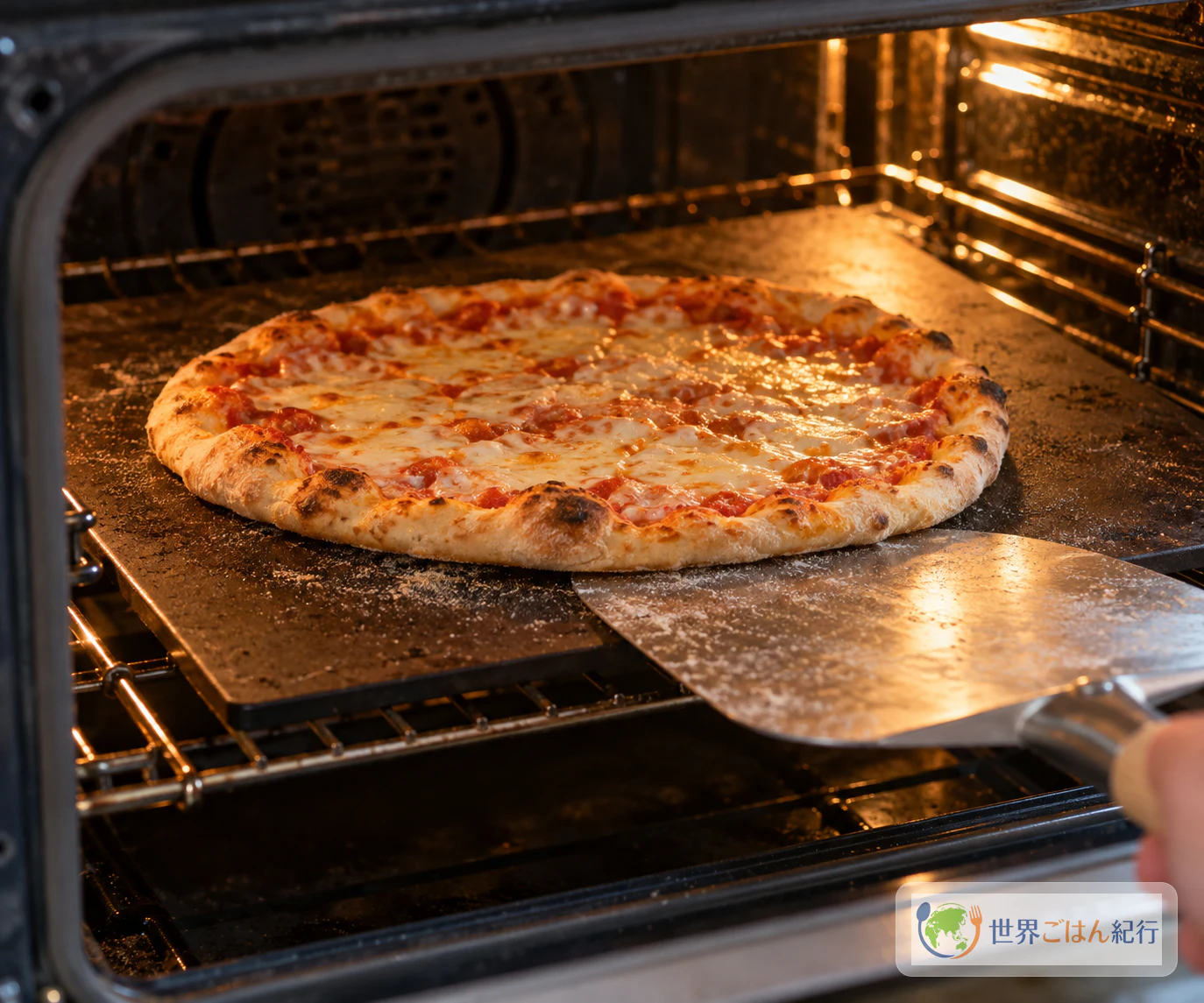
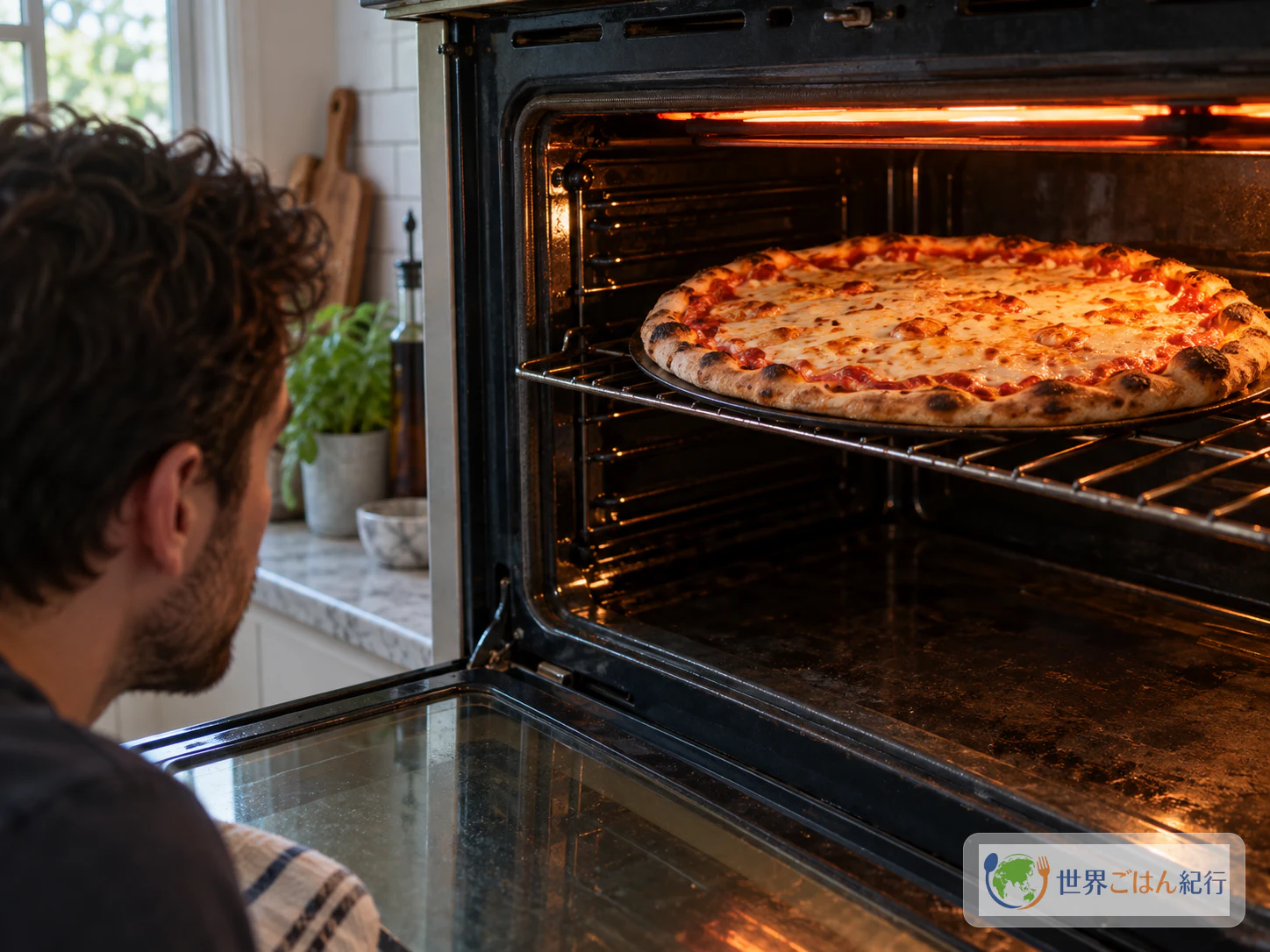
New York-Style Pizza: A Slice Folded in Half
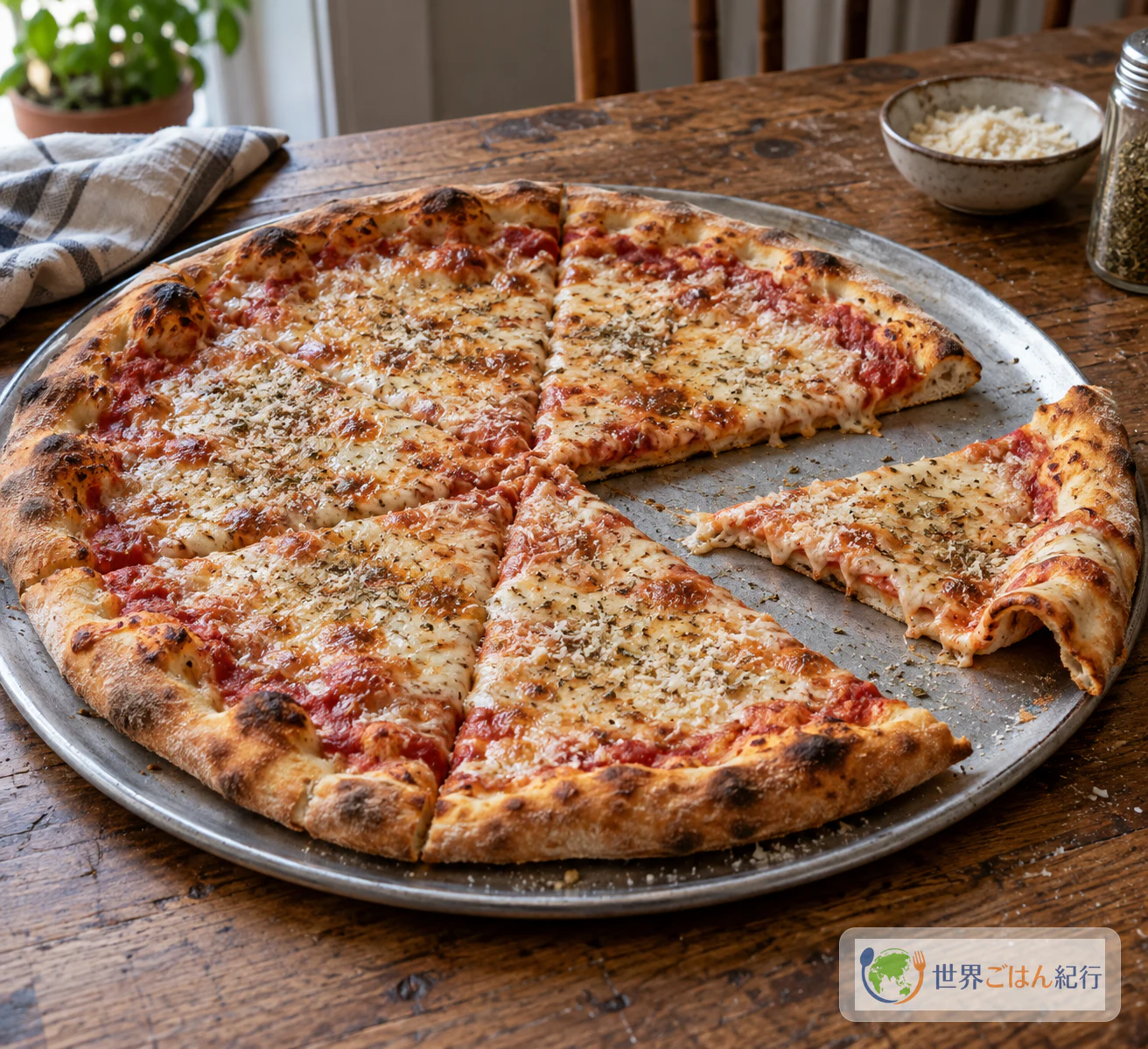
A large, thin round with a chewy, flexible crust and spotty browning on the bottom. It should be thin enough to fold, and the tip of a folded slice should stay up instead of drooping.
In New York in the United States, a broad triangle is cut from a big round pie, folded lengthwise, and eaten on the move. The Museum of the City of New York describes the slice as an everyday food in the city, eaten on the street, on a park bench or on the couch at home. How can a crust be that thin and still hold its tip level once it is folded?
This recipe follows King Arthur Baking's home version, which describes the New York slice as thin and foldable, with chew from bread flour and a tip that doesn't droop. It makes two 13-inch (about 33 cm) pizzas. The dough gets a long rise at room temperature, then bakes on a stone or steel that has been preheated for an hour, with a short finish under the broiler. This is one home recipe, not the one official standard for every pizzeria in New York. Crust thickness, browning, the balance of sauce and cheese, and toppings all vary from shop to shop.
What New York-Style Pizza Is: Immigrant Pizza Adapted to the City's Ovens
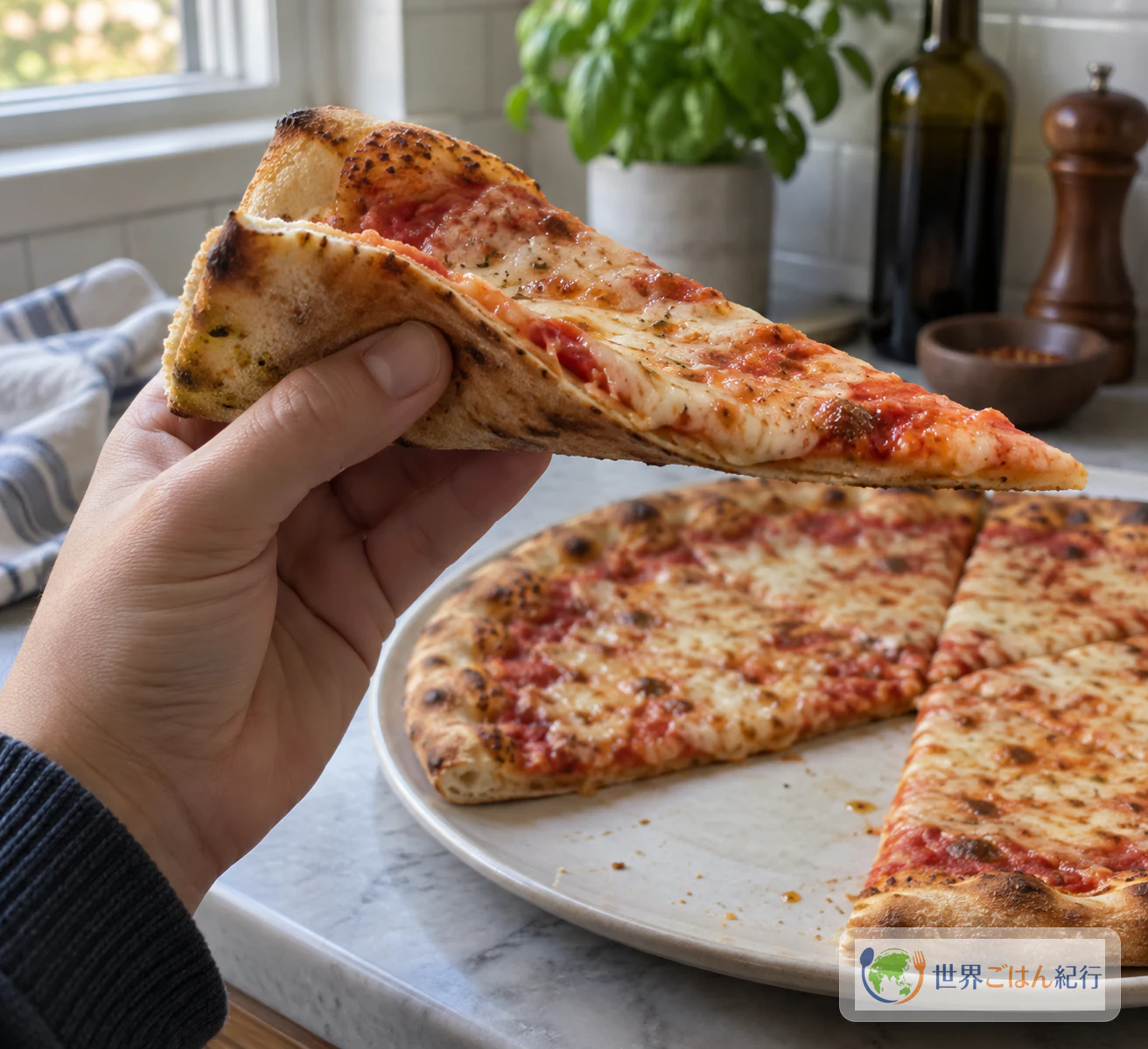
The National Park Service at Ellis Island traces modern pizza to Naples. It explains that Italian immigrants brought pizza to the United States in the late 19th century. The Museum of the City of New York tells the New York part of the story. In its account, pizza culture from southern Italy arrived with immigrants in the late 19th and early 20th centuries, then changed to fit the city's bread ovens and fuels. Pizza became a large round that could be cut into slices.
The museum also connects the shift from coal-fired to gas ovens with changes in the pizza. Oil went into the dough to slow drying during a longer bake, and toppings changed to suit that bake. This is the museum's interpretation, and it is one thread of the history rather than a single cause.
The features most people recognize are the thin, wide round, the slice, and the fold that makes it easy to carry. Neapolitan pizza is a separate regional style, and its formal definition doesn't apply here. Comparing the two in terms of oven, size and how people eat them shows how one food took different forms in different places. This home recipe is not presented here as an official standard for every New York pizzeria.
Ingredients for 2 Pizzas (13 inches / about 33 cm each)
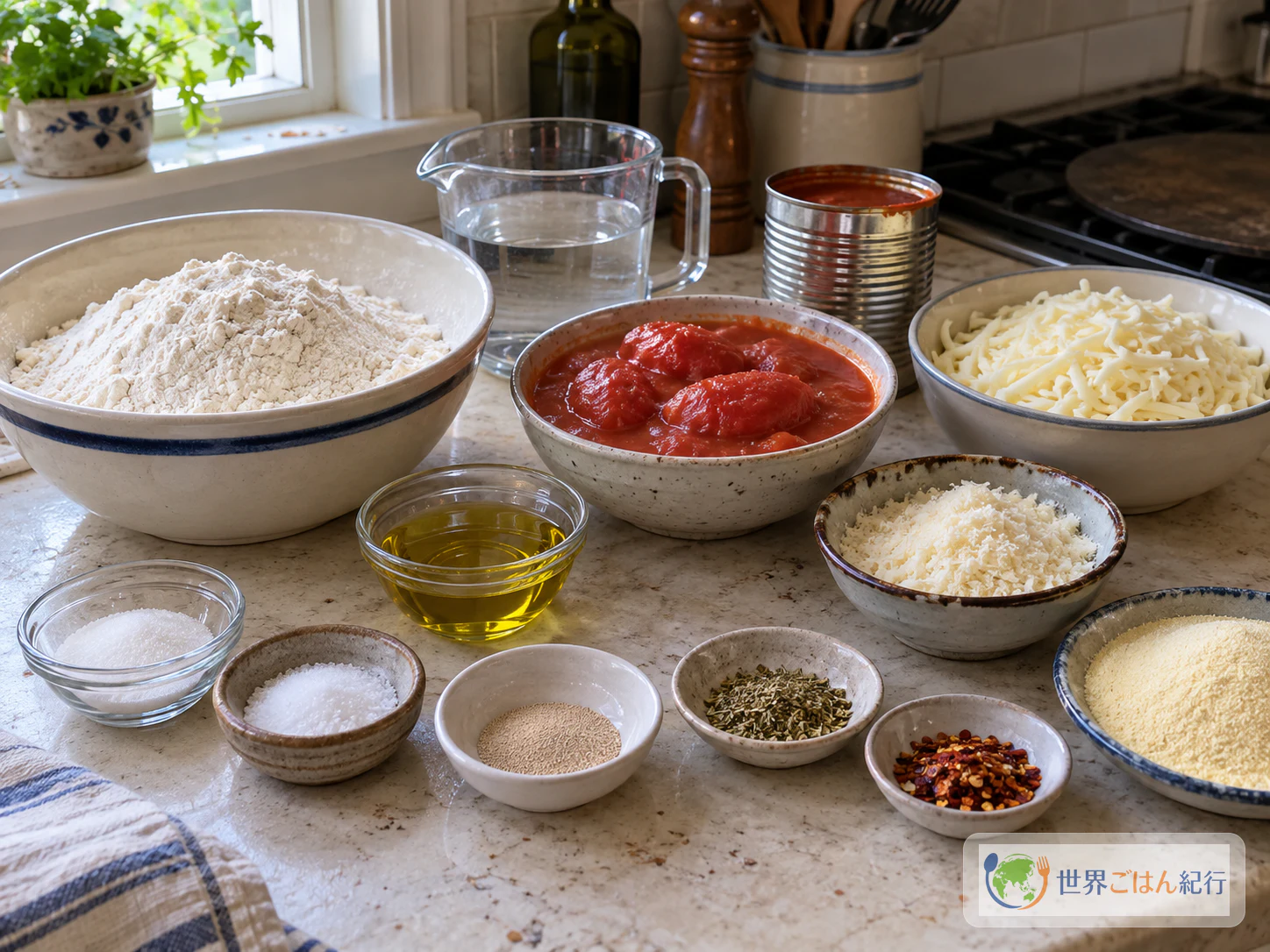
Where a weight is given, use the weight. The sauce recipe makes more than two pizzas need: only part of it goes onto the pies.
This pizza contains wheat (flour, semolina) and milk (mozzarella, Parmigiano-Reggiano). Check the labels on cheese, flour and cornmeal.
Choosing and Substituting
- Bread flour: The recipe uses bread flour only. Other high-protein bread flours can stand in, but protein content and water absorption differ by product, so the dough may feel and stretch differently. Keep the water at the original 206g to start. If the dough is sticky, use more dusting flour instead of cutting the water without a reason.
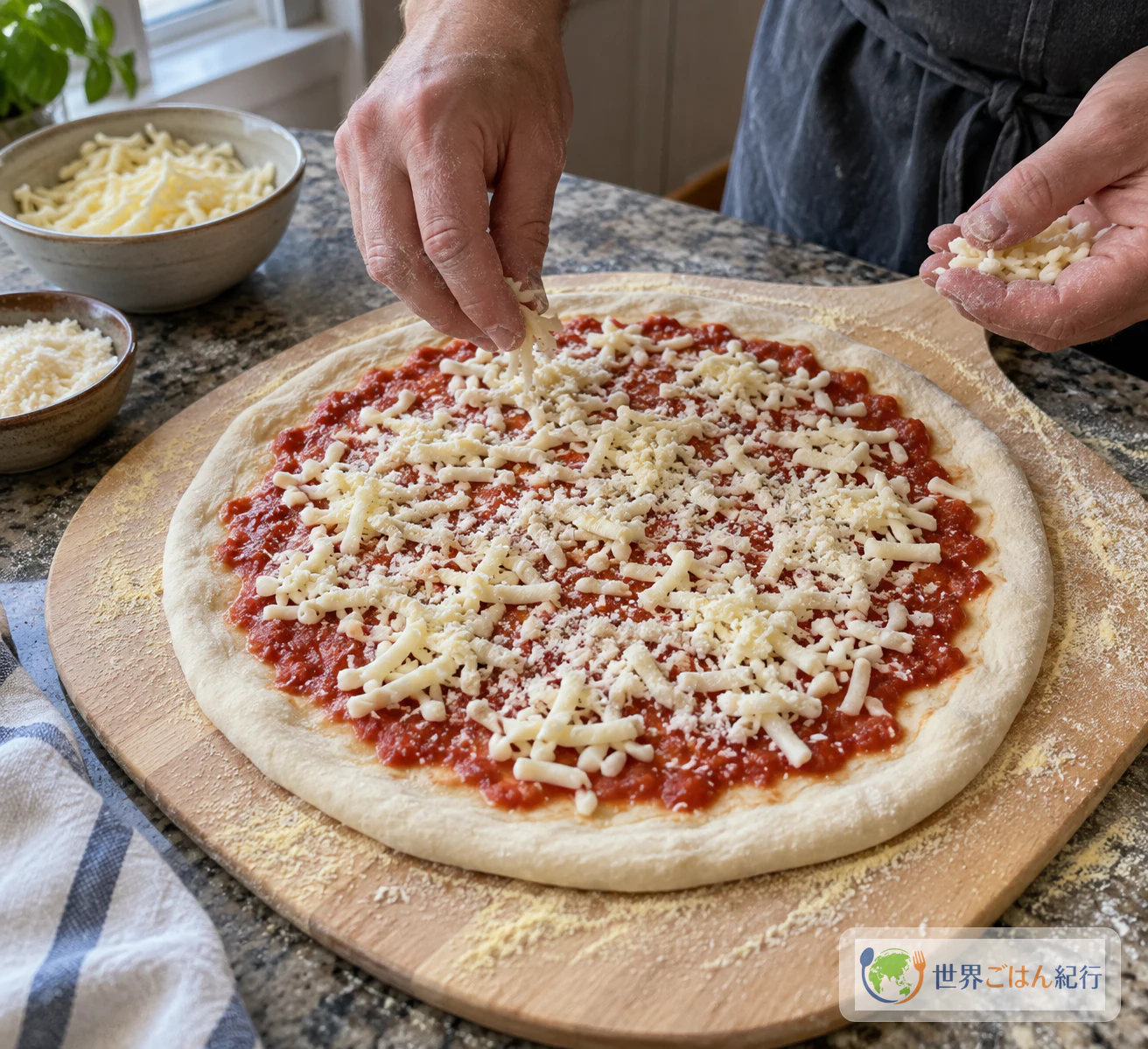
- Low-moisture mozzarella: Look for the drier block or shredded type. The recipe prefers whole milk. A lower-fat version melts differently and tastes less rich, so treat it as a different result. Fresh mozzarella holds much more water and can make the surface watery. Don't swap it in at the same weight.
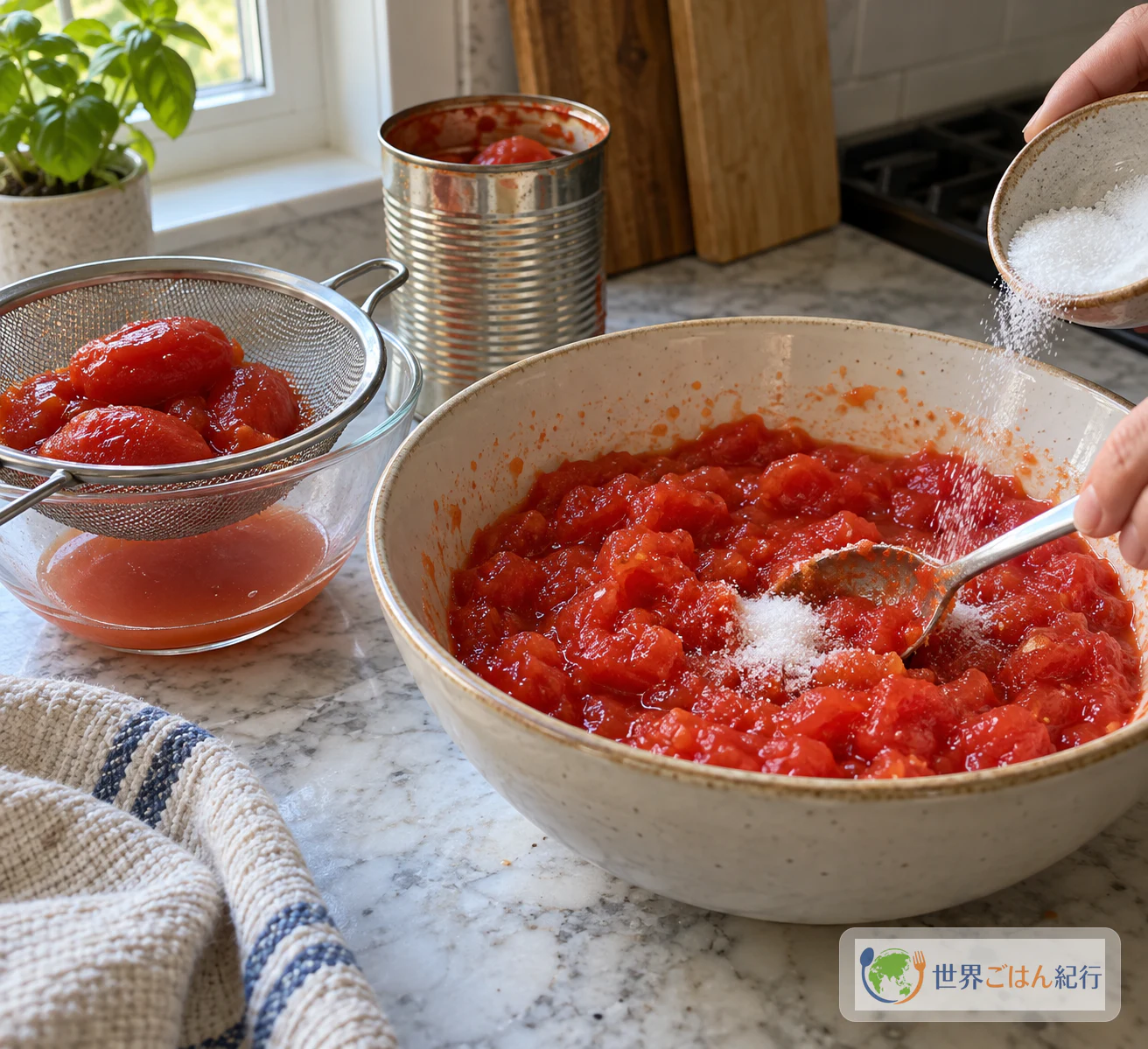
- Canned tomatoes: Ordinary whole peeled tomatoes in a can work. The 794g refers to the can before draining.
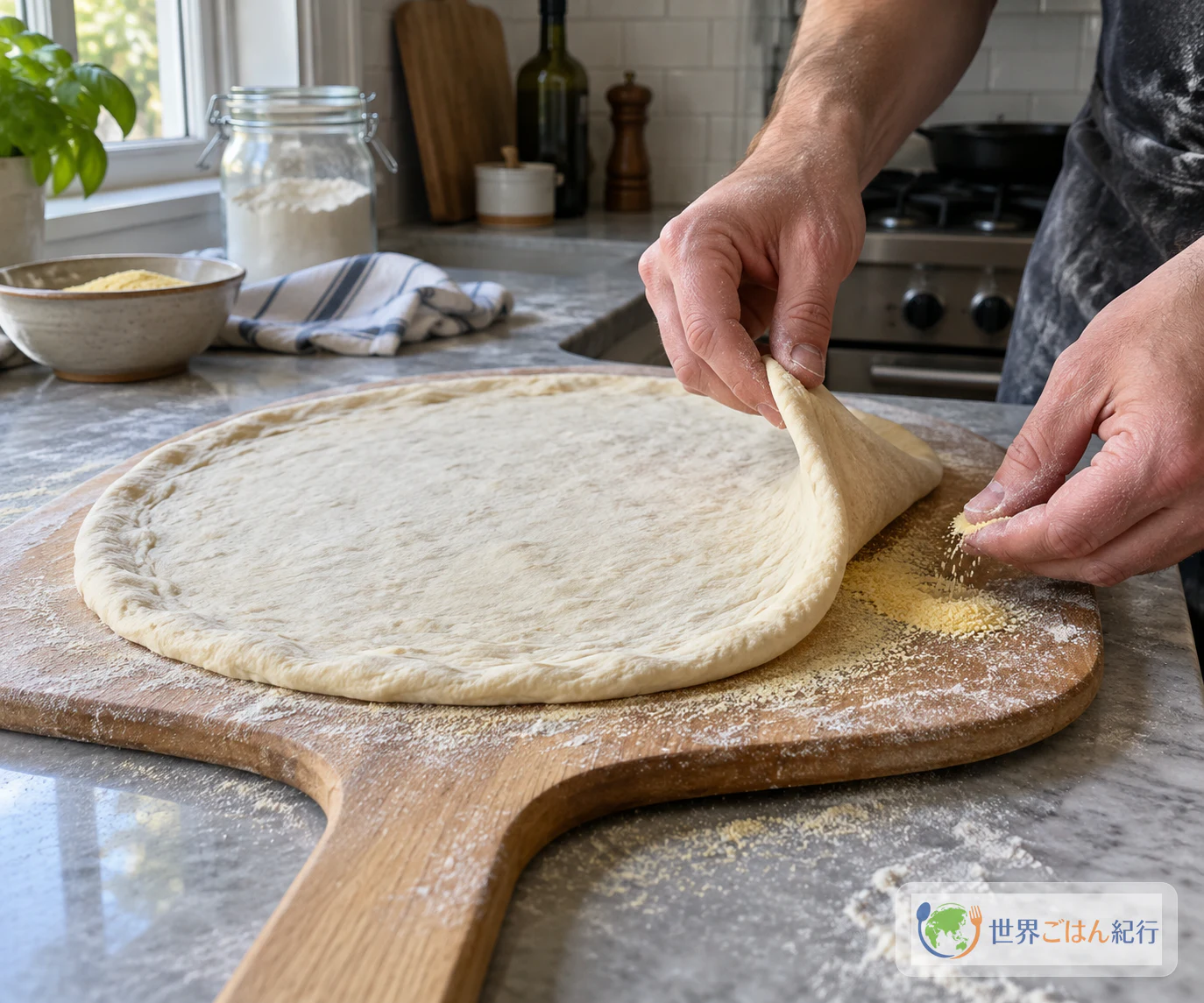
- Semolina or cornmeal: If you don't have semolina, yellow cornmeal does the same anti-stick job. The grit under the crust feels slightly different.
- Water: You don't need New York tap water. The popular claim that the city's water makes the pizza isn't a requirement for this recipe.
- No extras in the main recipe: Olive oil, fresh basil and pepperoni are not part of this formula.
Equipment
- Large mixing bowl
- Lightly oiled container(s) with an airtight cover, for the dough balls
- Strainer, for draining the tomatoes
- Food processor, for pulsing the tomatoes coarsely
- Baking stone or baking steel
- Pizza peel, or an upside-down baking sheet
- Cooling rack
- Oven mitts
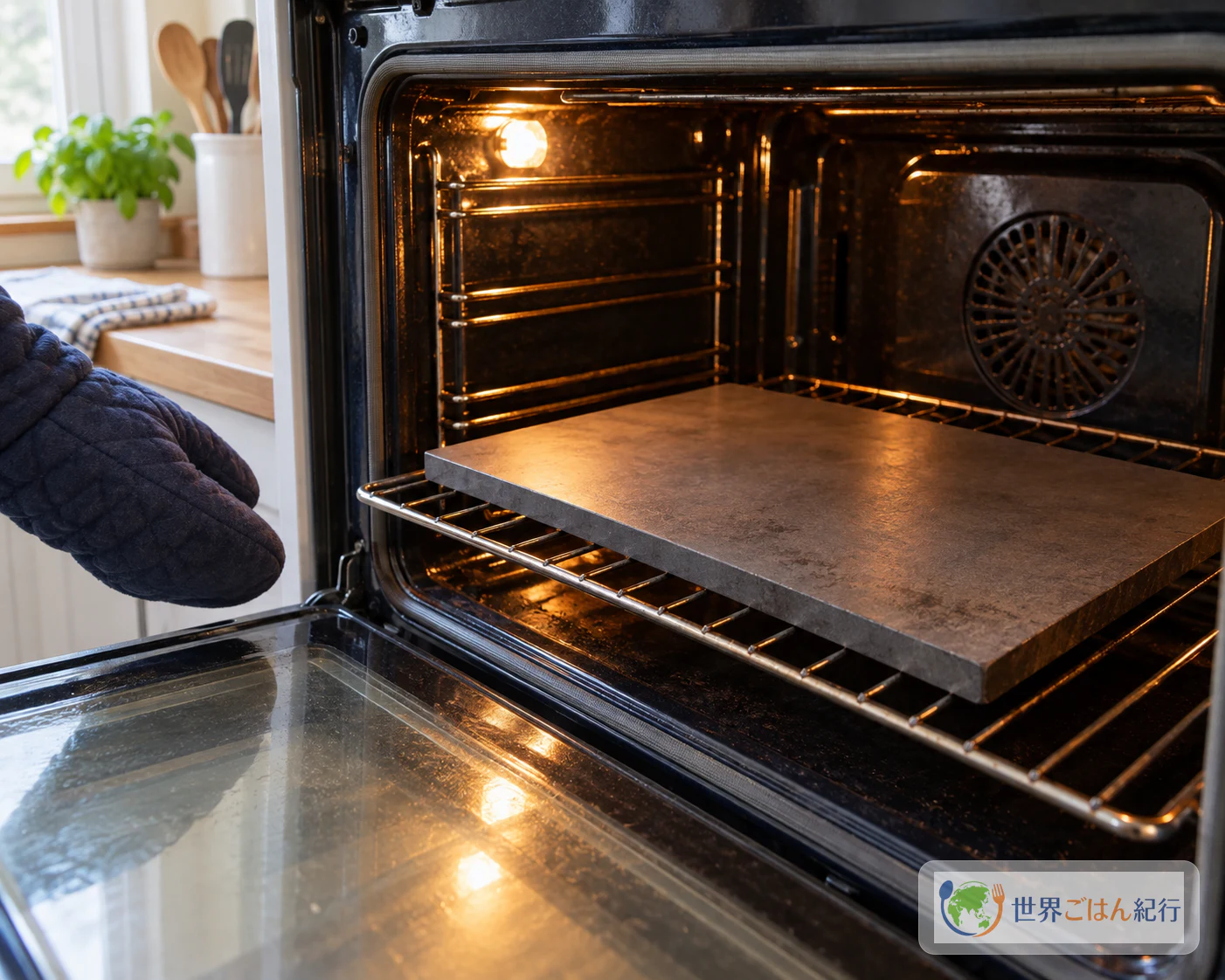
This recipe preheats to 500°F (about 260°C) for an hour, then uses the broiler. Whether a home oven, stone or steel can handle that depends on the model. Read the manufacturer's instructions for the maximum temperature and for broiler use, and never set the oven above what your equipment is rated for. A hot stone or steel stays dangerously hot long after the oven is off.
Method: From Dough to Folded Slice
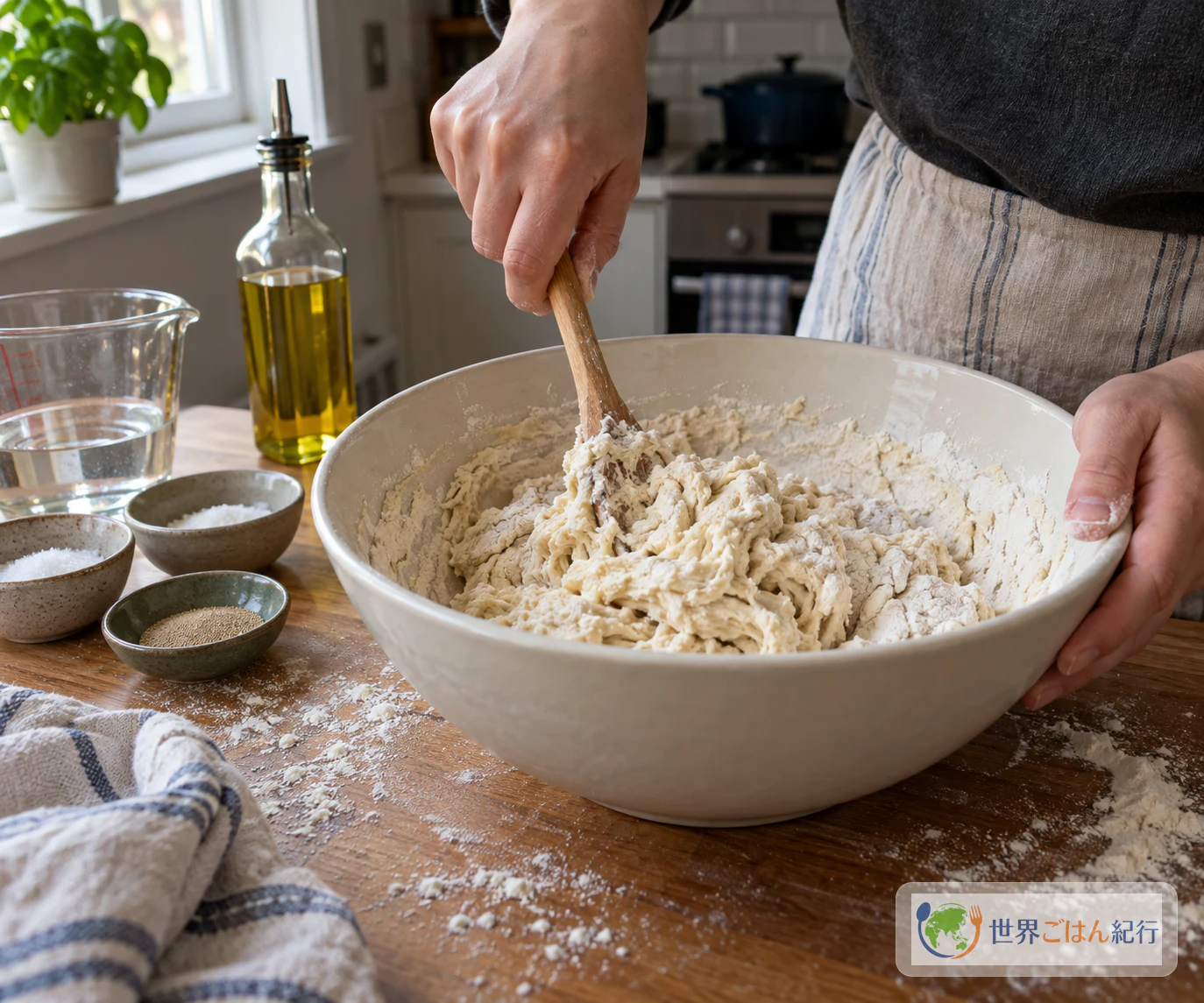
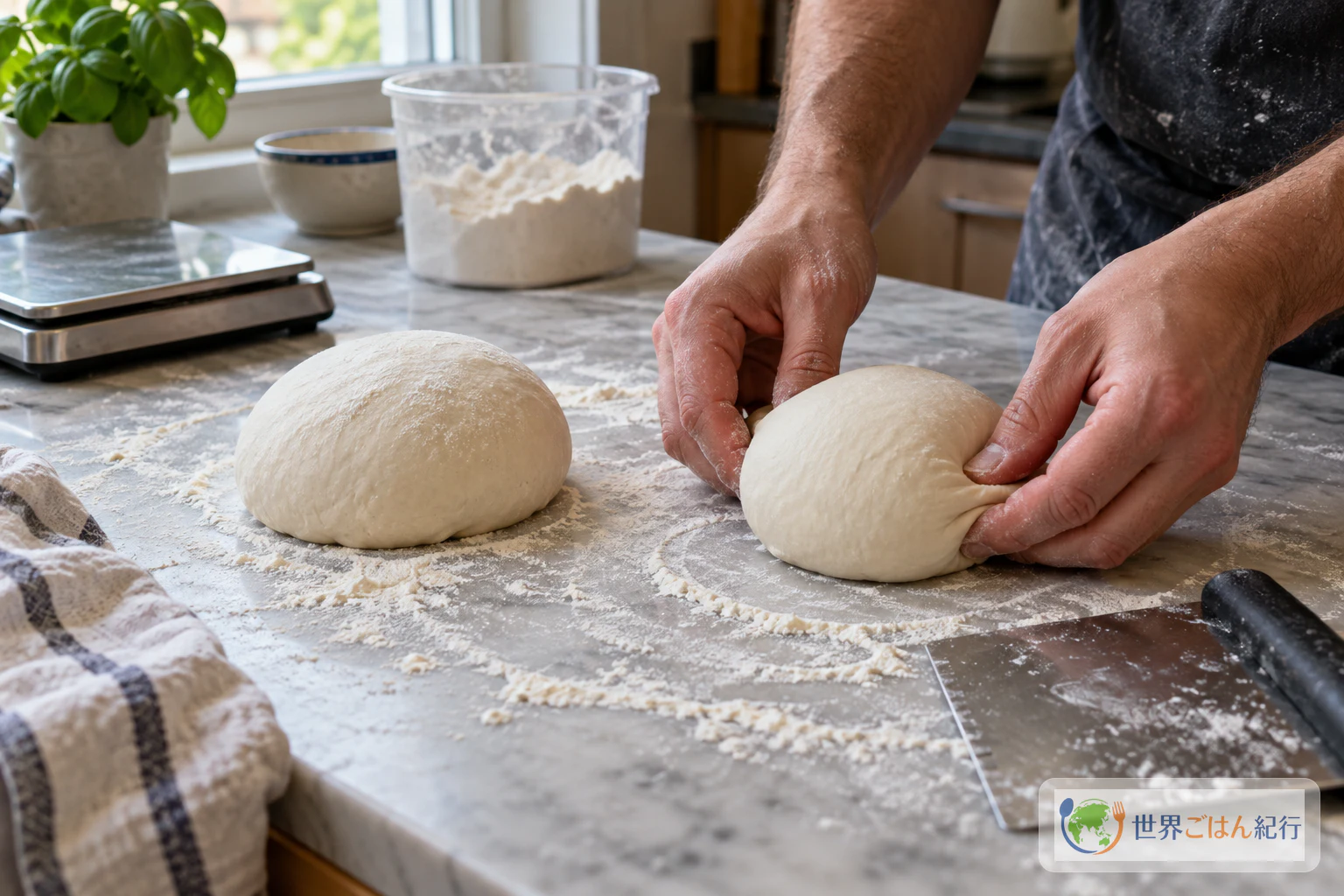
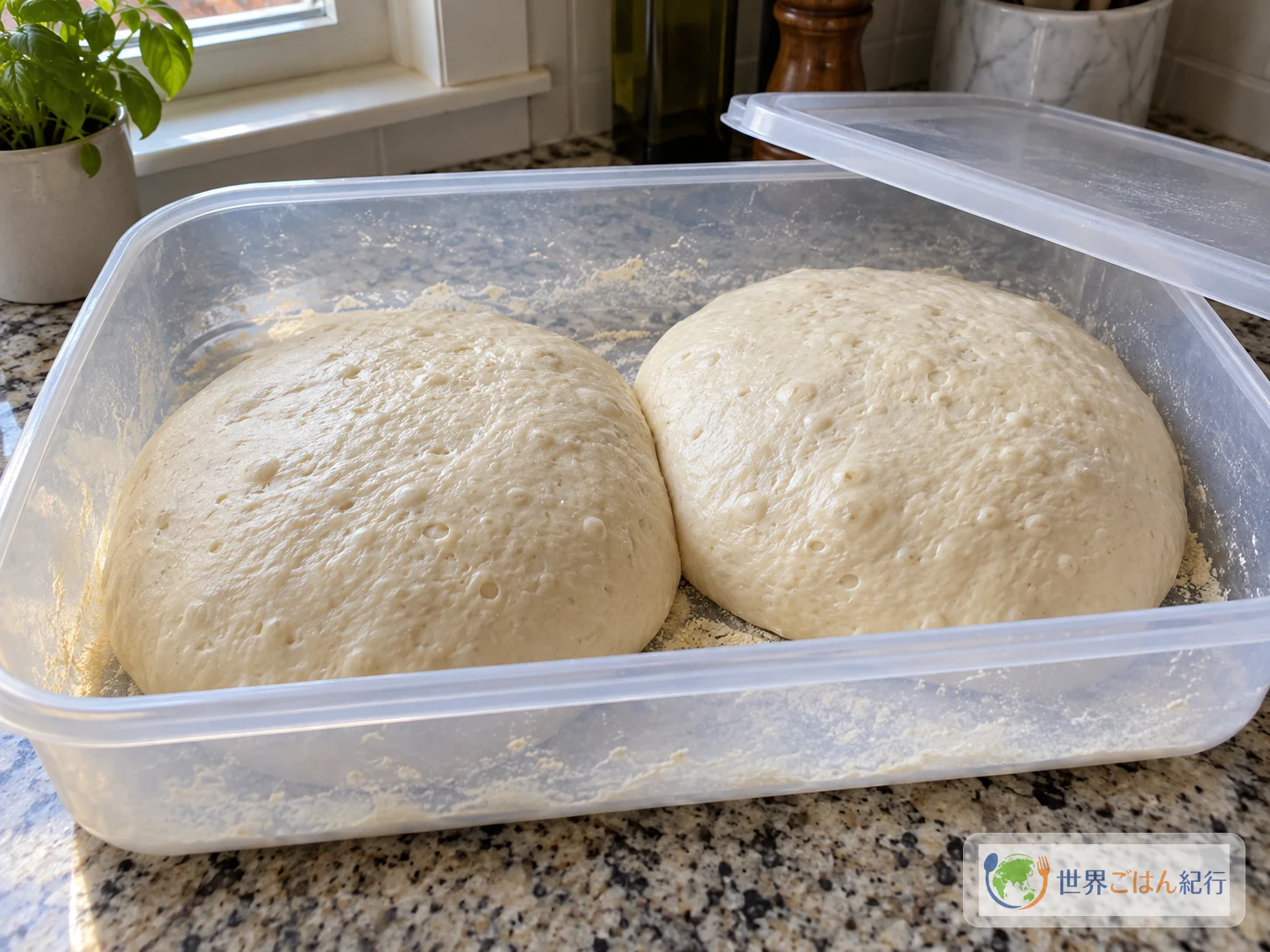
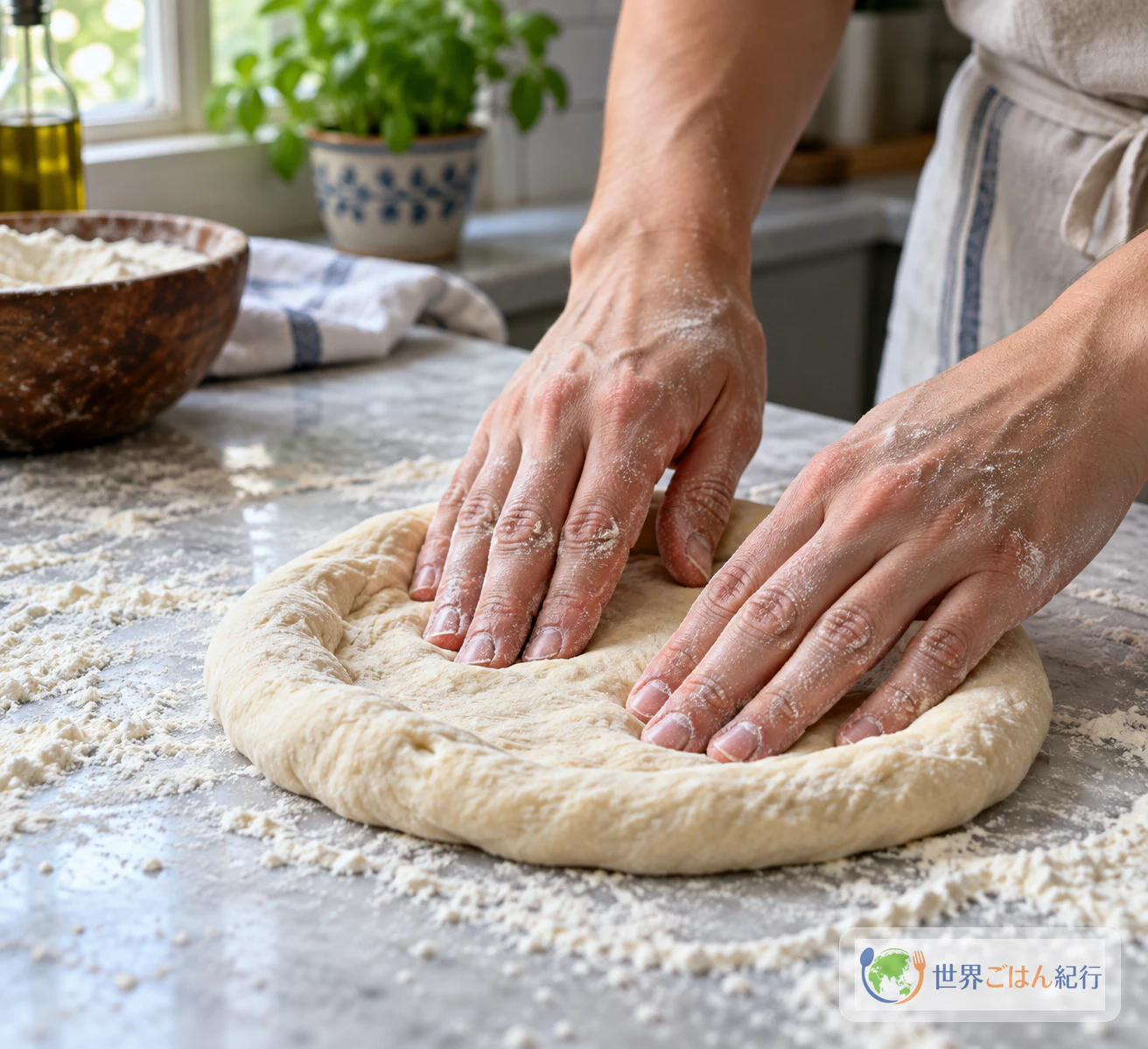
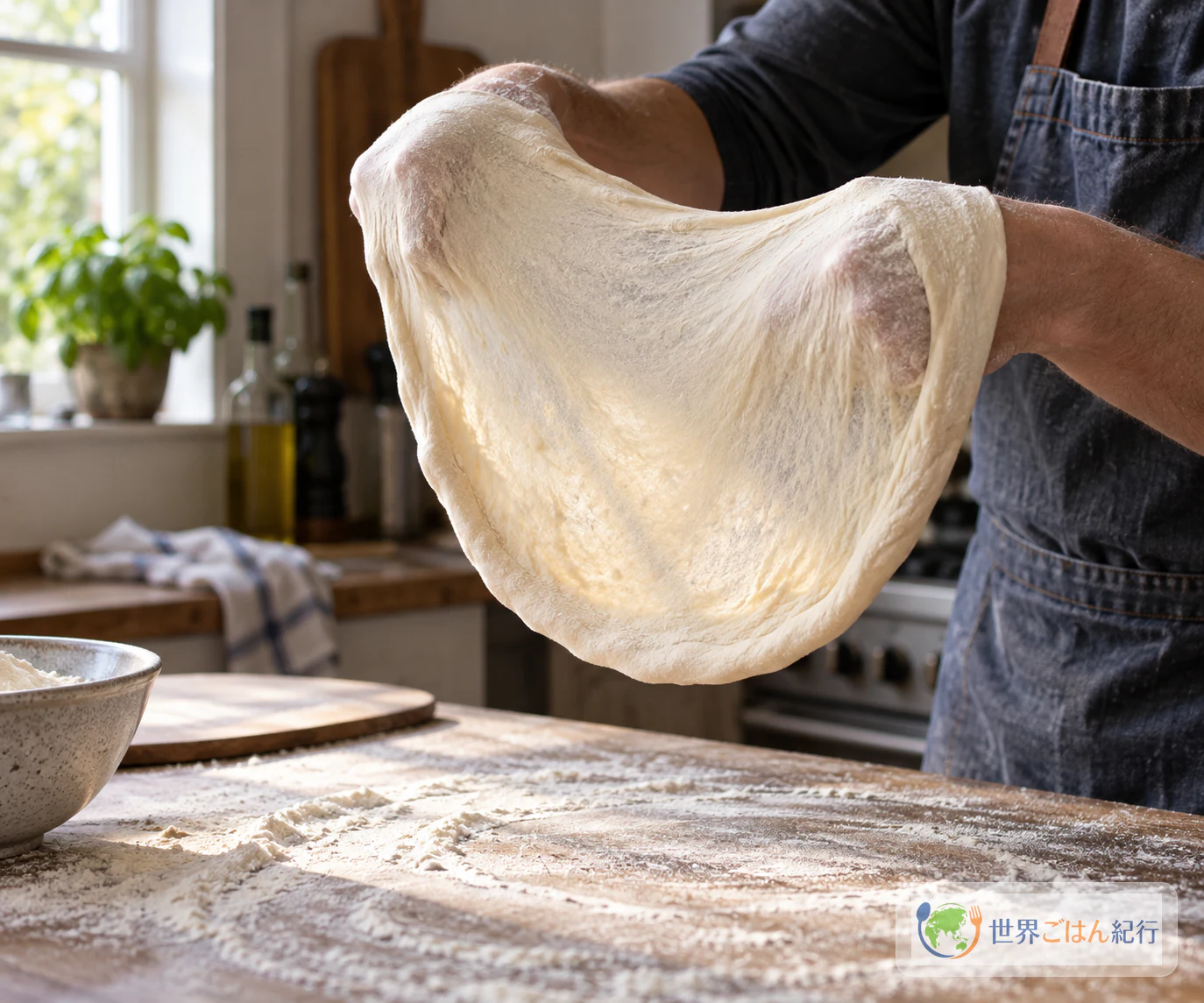
After mixing, the dough rests for 1 hour, then rises at room temperature for 8 to 10 hours. The oven needs at least 1 hour of preheating on top of that. Refrigerating the dough comes only after the room-temperature rise, and it can wait there for up to 3 days.
Troubleshooting
| Problem | Likely cause | What to do |
|---|---|---|
| Dough shrinks back while stretching | The gluten is tight | Let it rest 5 to 10 minutes, then continue. Keep the rim |
| Dough sticks to the peel | Not enough semolina, or topped before checking | Check that it slides before topping. Lift the stuck edge and add semolina. Don't leave it sitting on the peel |
| Dough is sticky | Flour brand differences | Use more dusting flour. Don't cut the water without a reason |
| Bottom isn't browning | Oven or surface differences | Extend the first bake by 1 to 2 minutes. Never exceed your equipment's maximum temperature |
| Top burns | The broiler works fast | Even 2 to 3 minutes can burn it suddenly. Stay at the oven the whole time |
Storage and Leftovers
- Leftover sauce: King Arthur Baking suggests refrigerating it covered for up to 5 days, or freezing it for longer storage.
- Leftover baked pizza: FoodSafety.gov advises refrigerating cooked leftovers within 2 hours, using them within 4 days, and reheating them to 74°C. The recipe also suggests rewarming leftover slices on the stone or steel to recrisp the bottom.
Variations
- Different bread flours: Bread flours stretch differently from brand to brand. Start with the original 206g of water. Changing the hydration is a separate experiment.
- Cornmeal instead of semolina: Yellow cornmeal keeps the dough from sticking just as well, with a slightly different grit.
- Whole-milk or lower-fat mozzarella: The recipe prefers whole milk. Lower-fat mozzarella melts differently and is less rich, so don't treat it as identical.
- Stone or steel: The recipe gives both as options. They transfer heat and brown the crust differently, so the times are a guide, not a promise.
- Six slices or super slices: Cutting the pie into 6 slices or 2 large ones changes how it's eaten, not the formula.
From a New York Slice to Your Home Oven
The Museum of the City of New York presents the slice as practical food: quick, portable and easy to fold, at home or out in the city. At home, three choices shape the result: when you start the long rise, which mozzarella you buy, and whether you bake on a stone or a steel. Set those to fit your kitchen and your oven's limits, and the fold of the slice will tell you how close you got.
Frequently Asked Questions
How is this different from Neapolitan pizza?
This home version is a large, thinly stretched round meant to be cut and folded, with a formula built for a longer bake in a home oven. Neapolitan pizza is a separate regional style. Neither is the single standard for the other.
Can I use any bread flour?
The recipe uses bread flour only. Other high-protein bread flours can stand in, but products differ, so the dough may absorb water and stretch differently.
What if I don't have a pizza stone?
The recipe also offers a baking steel. A cast-iron pan rated for the temperature is another option, but its heat is different, so it may not bake in the same time. Go by the color of the bottom.
Can I make the dough the day before?
Yes. After shaping the balls and letting them rise at room temperature for 8 to 10 hours, refrigerate them for up to 3 days. Before baking, let the dough sit at room temperature for at least 1 hour while the oven preheats.
What do I do with leftover sauce and pizza?
Refrigerate leftover sauce for up to 5 days or freeze it. Refrigerate baked pizza within 2 hours, eat it within 4 days, and reheat it to 74°C.
Sources
- King Arthur Baking, "New York-Style Pizza Recipe." The home recipe used here: its description of a thin, foldable slice with chew from bread flour; the yield of two 13-inch pizzas; ingredient weights; room-temperature rise and refrigeration; shaping; preheating to 500°F with a stone or steel; broiler finish; and storing leftover sauce. https://www.kingarthurbaking.com/recipes/new-york-style-pizza-recipe
- Museum of the City of New York, "New York by the Slice." The museum's interpretation of pizza culture brought by southern Italian immigrants, the adaptation to the city's bread ovens and the change from coal to gas, the large sliced pie, and the folded slice eaten around the city and at home. https://www.mcny.org/story/new-york-slice
- National Park Service, Ellis Island, "A Slice of History - Pizza in America." Supporting background that traces modern pizza to Naples and its arrival in the United States with Italian immigrants in the late 19th century. It is not used for the details of the New York style. https://www.nps.gov/elis/learn/news/a-slice-of-history-pizza-in-america.htm
- FoodSafety.gov, "People at Risk of Food Poisoning." Refrigerating cooked leftovers within 2 hours, using them within 4 days, and reheating them to 74°C. https://www.foodsafety.gov/people-at-risk
- FoodSafety.gov, "Cook to a Safe Minimum Internal Temperature." The reheating temperature of 74°C for leftovers. https://www.foodsafety.gov/food-safety-charts/safe-minimum-internal-temperatures