White Christmas: A Snowy Name for a Slice Set in the Fridge
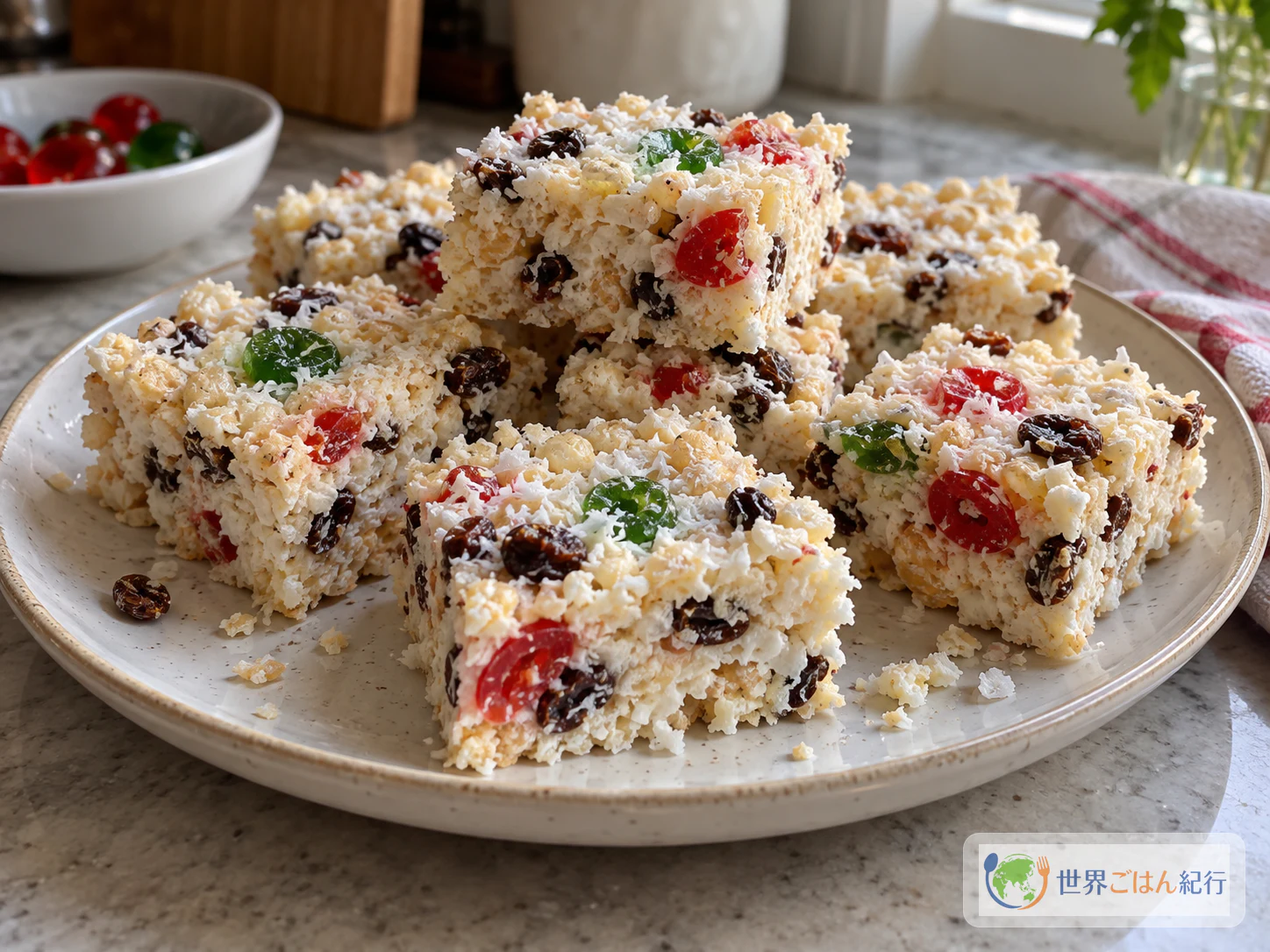
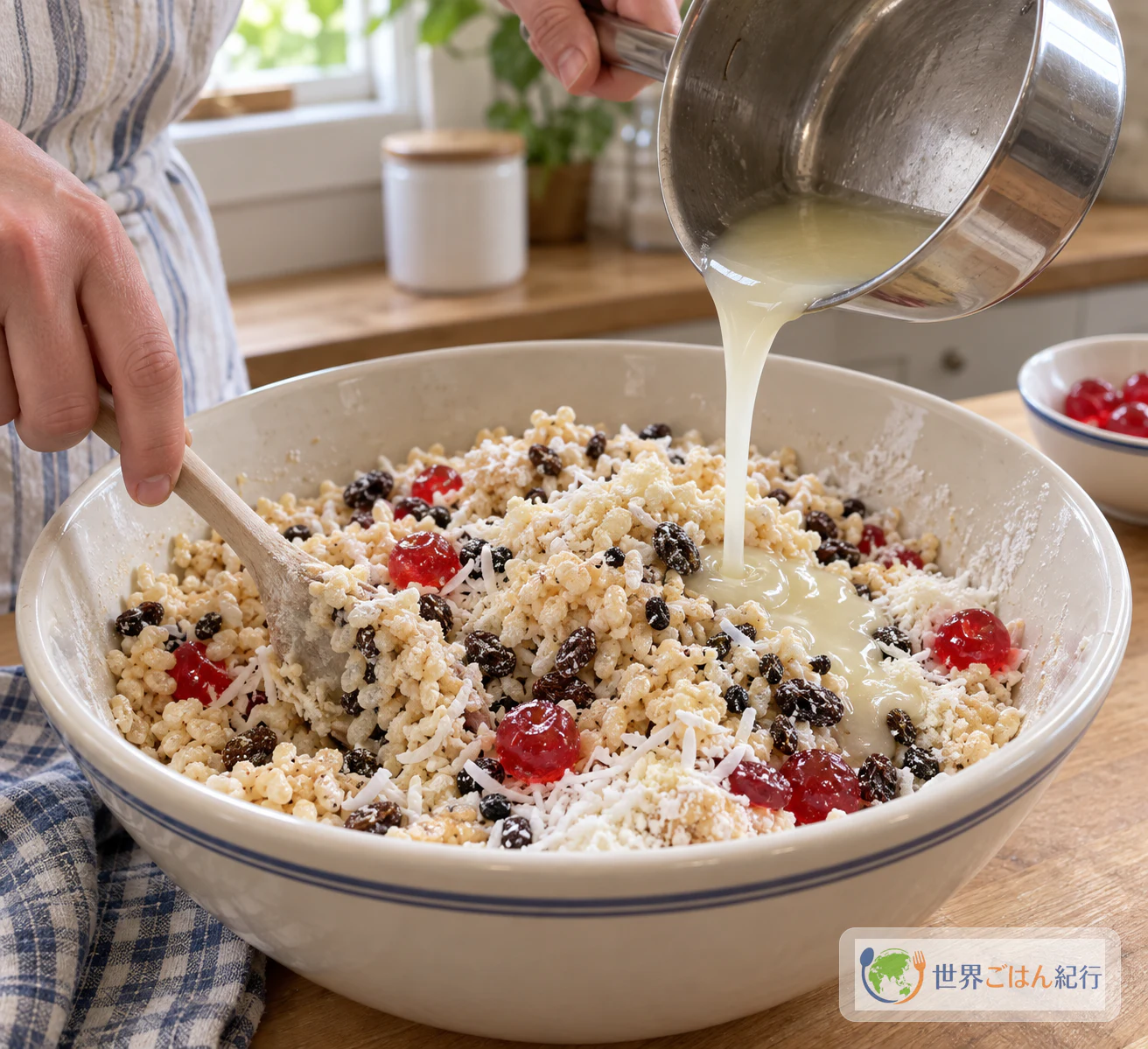
Rice puffs that stay light and crisp, a white base bound only by melted Copha, and red and green cherries scattered through. Nothing is baked. The slice firms up as it chills.
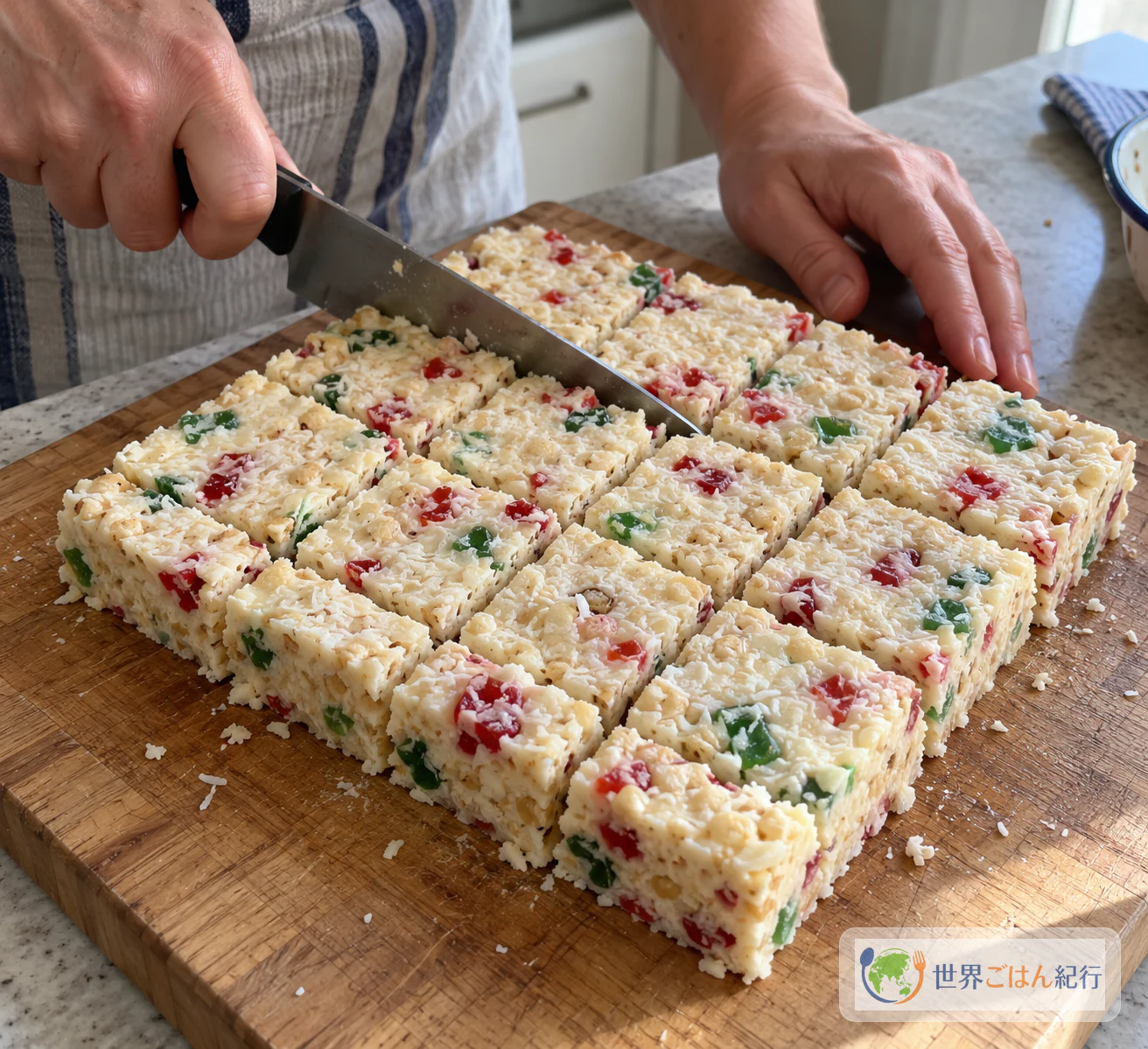
The name suggests snow, but White Christmas has nothing to do with frost or icing. It is a pale, speckled slab of rice puffs, coconut, milk powder and dried fruit, held together with melted Copha, pressed into a tin, set in the refrigerator and cut into small squares. SBS Food introduces it as a sweet that Australian households eat in the festive season. Australian magazine and supermarket recipes all show the same picture: a no-bake slice that is chilled, then sliced.
In Australia, Christmas falls in summer. That is part of the appeal of a treat made with no oven at all, one that waits in the fridge until it is needed. In this article, that seasonal setting is background only. It is not offered as an explanation of the name. Where the name came from has not been confirmed.
Several recipes share the name White Christmas. Coles describes an older style built on Copha and milk powder and a newer style made with white chocolate. SBS Food also publishes a version using condensed milk and white chocolate with no rice puffs. This article follows one recipe only, the Copha and milk powder version published by The Australian Women's Weekly Food. If you'd like to explore more of the country's food, see our Australia page.
Name and Table: What Can and Can't Be Said About Its Origins
White Christmas is presented as a confection that developed in Australia, and that is how Coles describes it. When it first appeared is much harder to pin down. The Australian Food Timeline, a food-history timeline compiled by an individual editor, notes that the origin is difficult to establish. The oldest printed recipe its author found ran in an Adelaide newspaper in 1959. That makes 1959 the earliest example one researcher located. It is not the year the slice was invented, and this article does not treat it as one.
The same timeline also gathers its author's notes on the history of Copha as an Australian product. Those notes are one writer's account. They do not establish when the slice spread or credit any brand with creating it.
What the sources do agree on is how White Christmas is eaten today. It is mixed, pressed into a tin, chilled until firm, and cut into pieces to share during the festive season. The Coles recipe page also shows that the idea has branched into related forms. Recipes and family habits vary, and no single formula is followed in every Australian home.
Ingredients for One 19 x 29 cm Pan (20 Pieces)
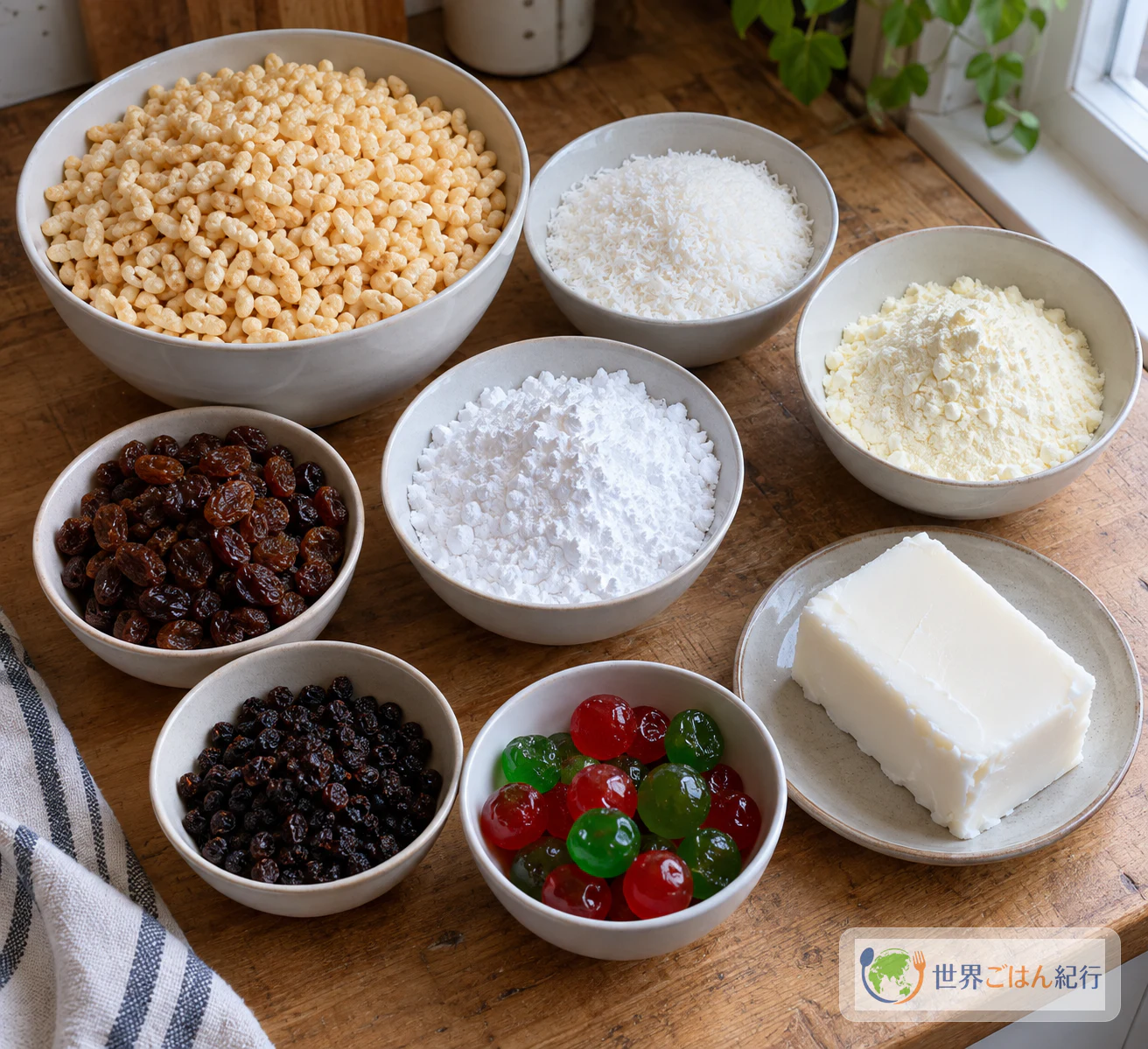
These are the amounts from The Australian Women's Weekly Food recipe, unchanged. The cup measures are Australian cups as printed in the source, and each one is given with a weight. Weighing is the more reliable way to reproduce the recipe, so use the weights where you can. If a cup measure and its weight disagree, go by the weight.
This recipe contains milk (milk powder) and coconut. Check the labels of the puffed rice cereal, icing sugar mixture, glacé cherries and Copha for ingredients and shared-facility statements. Don't assume what any of them is made from. Nuts are not part of this recipe, so don't add them.
Equipment
- A 19 x 29 cm slice pan (no depth is specified)
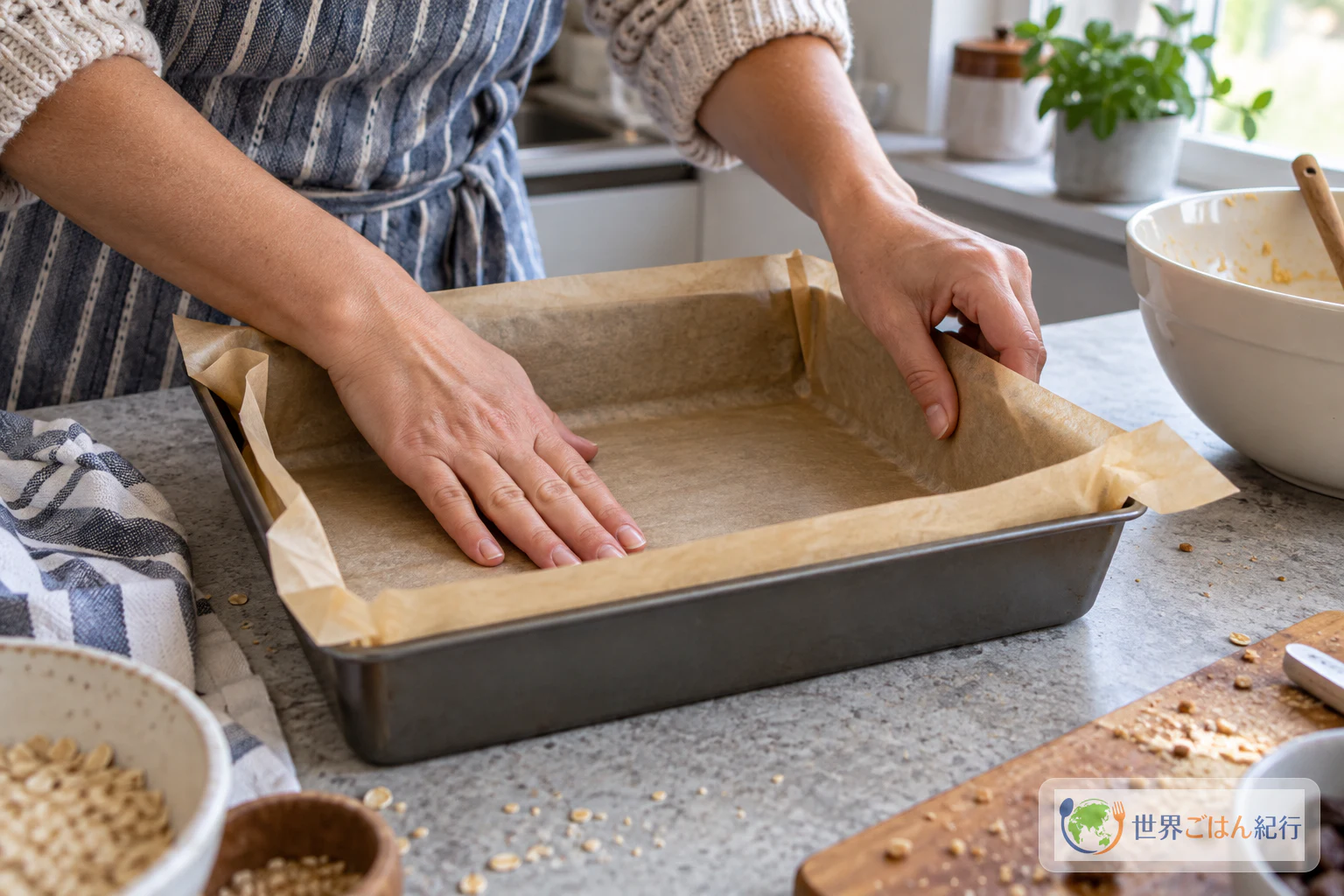
- Baking paper to line the base and sides
- A large mixing bowl
- A small saucepan
- A large spoon, for mixing and pressing
- A long knife and a board for cutting
You don't need to buy a special pan. A rectangular tin of about this size that you already own will do.
Finding the Ingredients Outside Australia
Several items on the list are Australian names or products, and translating them loosely can change the slice.
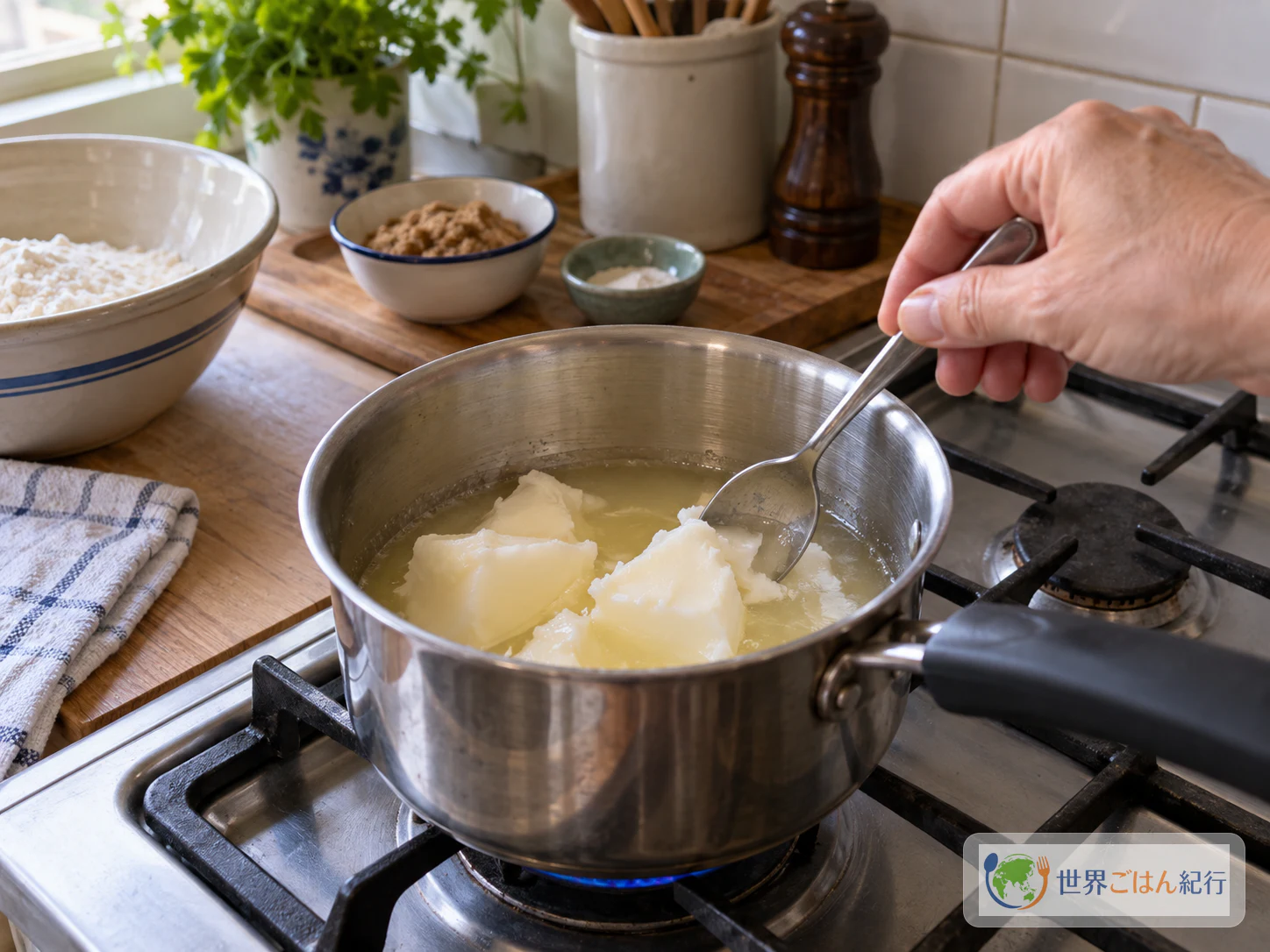
Copha is a solid vegetable shortening sold in Australia. In this recipe it does the binding: the slice is soft while warm and firms up when cold. Don't count on finding the same product everywhere. Read the label of any product you consider, rather than assuming what it is made from. No substitute fat has been confirmed to give the same firmness or the same way of melting in the mouth. If you use a different fat, treat it as an untested change of your own.
Rice Bubbles is a brand name. Look for plain puffed rice and weigh out 70 g. Sugar-coated or flavoured cereals will change the sweetness and the taste of the finished slice.
Milk powder is not specified as full-cream or skim in the source. Either can be used, but products differ, and your choice may change the texture and how milky the slice tastes.
Icing sugar mixture is the Australian product named in the recipe. Powdered or icing sugar sold elsewhere may not be the same thing, especially in whether starch has been added, so check the label. Plain powdered sugar is a substitution, not the original ingredient.
Currants here means small dried currants, a type of dried fruit. They are not fresh blackcurrants. If you can't find them, raisins can stand in, but the pieces will be larger and the sweetness different. That is an untested change.
Glacé cherries are candied cherries. If you can't find red and green ones, other candied cherries sold where you live can be used, with differences in colour and sweetness. Keep the amount at 100 g and don't change anything else.
Method: Mix, Melt, Press and Chill
These steps follow The Australian Women's Weekly Food recipe as written. Sekai Gohan has not kitchen-tested it. The 20-piece yield, the roughly 15 minutes of work and the 2 hours of chilling are the source's figures, not our own measurements.
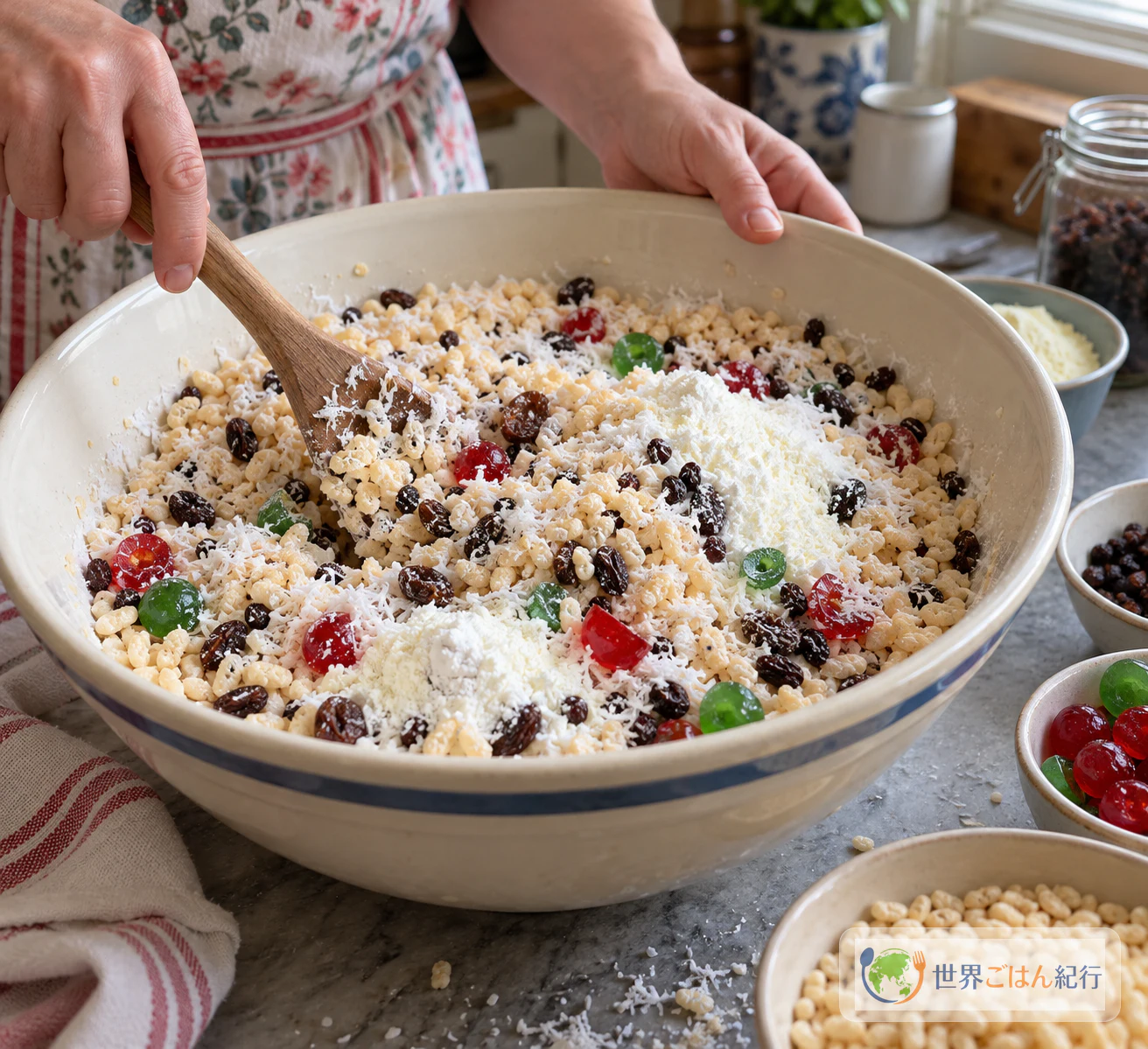
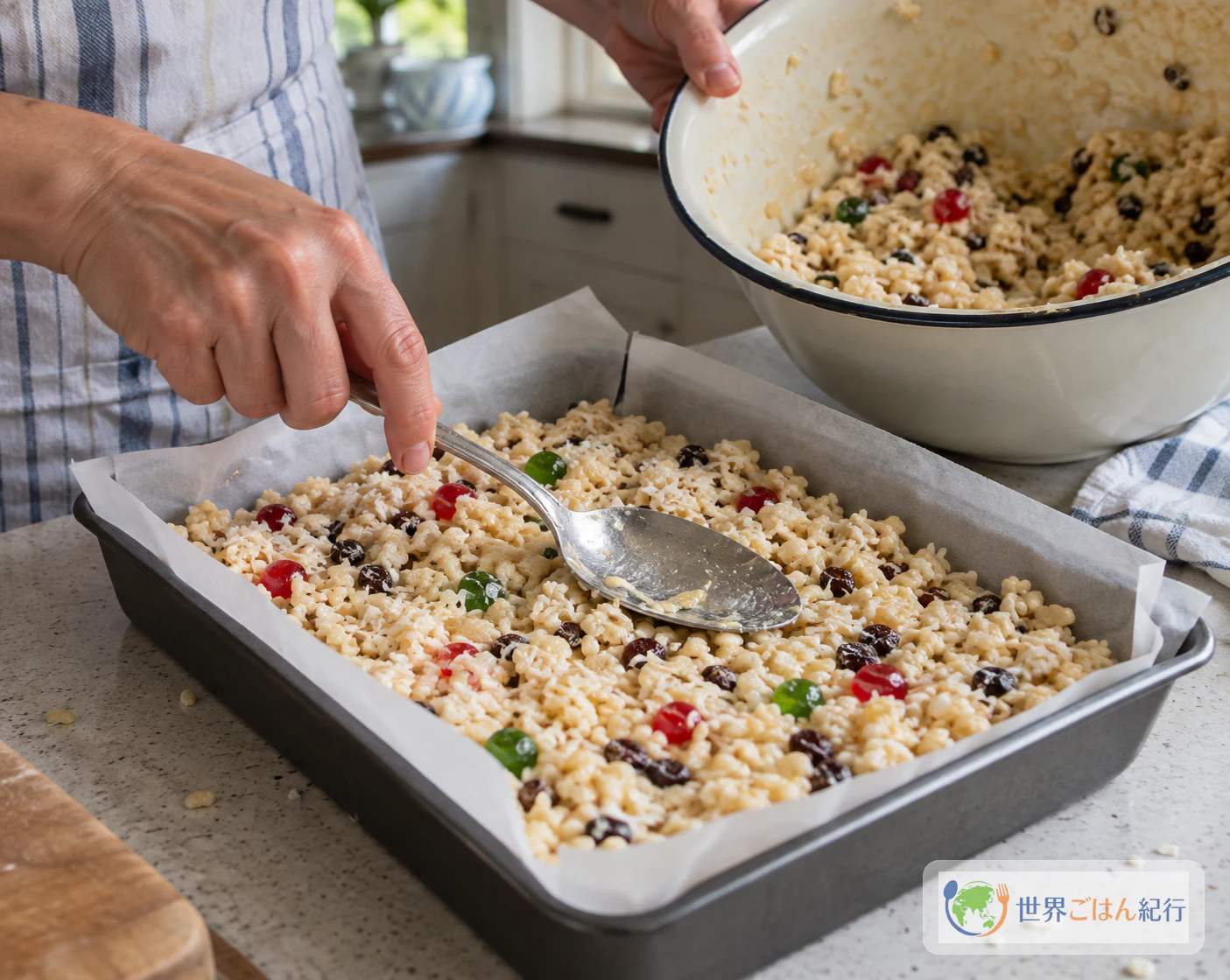
The work goes in a clear order: dry ingredients first, then the melted Copha, then pressing into the pan. The slice is ready when it has set and chilled, so check its firmness rather than only watching the clock.
Serving and Keeping It Cold
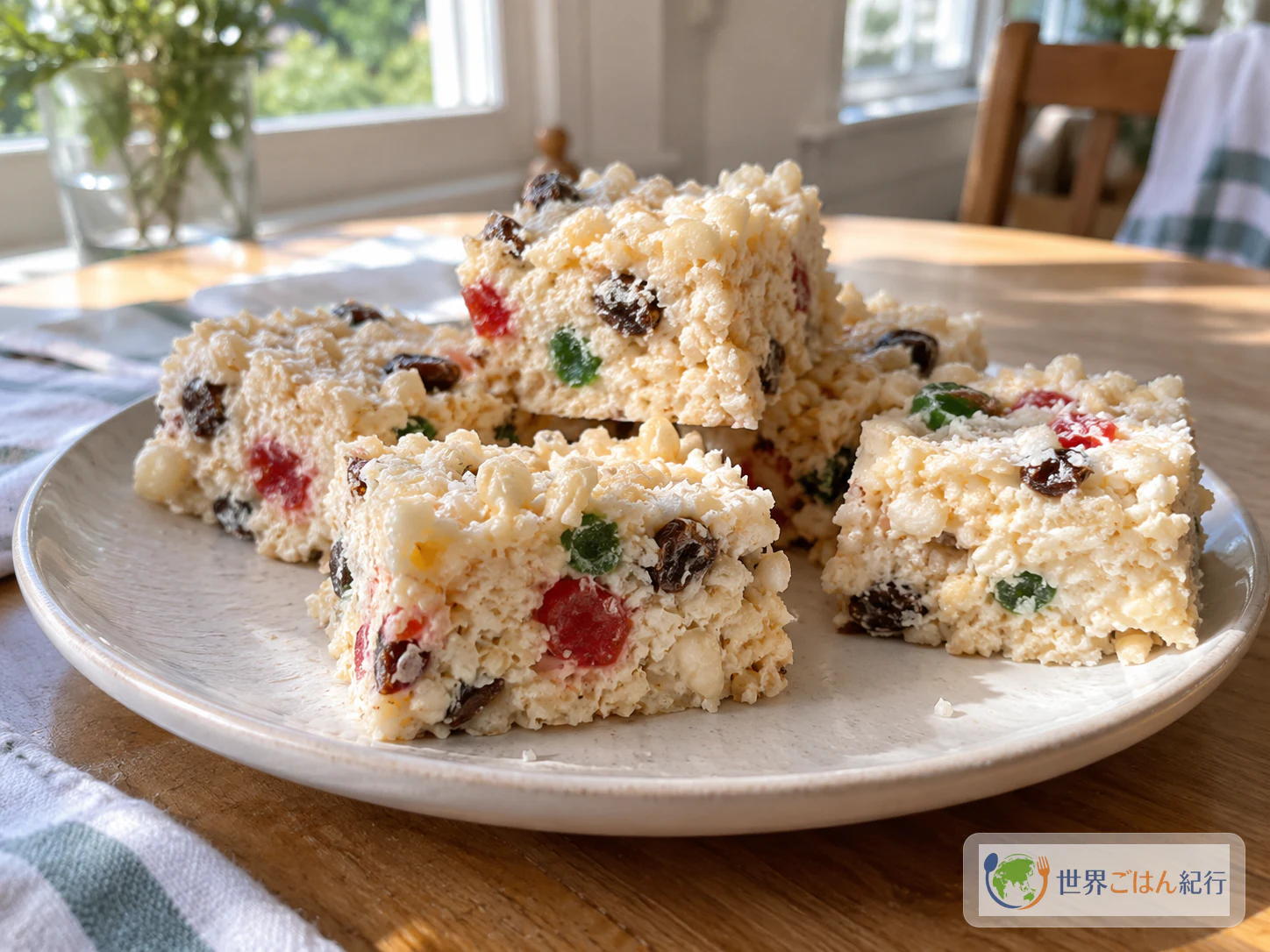
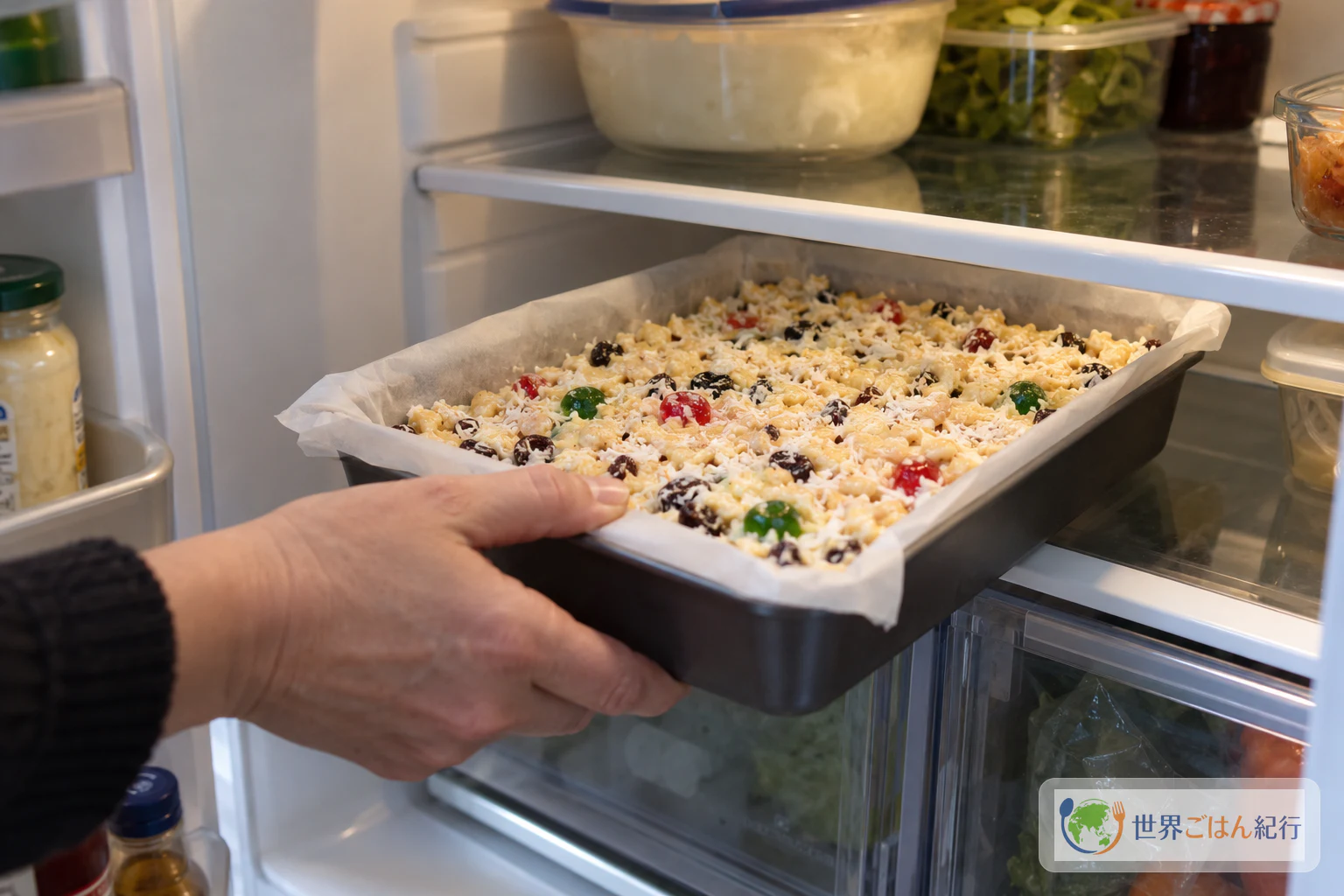
White Christmas is at its best cold. The Australian Food Timeline notes that the fat can soften if the slice sits at room temperature for a long time. Bring out only what you plan to serve, and return the rest to the refrigerator afterwards. Keep it refrigerated and away from warm places. The source recipe gives no storage period, so none is given here.
Fixing a Slice That Won't Set or Falls Apart
| Problem | What to check | What to do |
|---|---|---|
| It hasn't set | Has it had the full 2 hours of chilling? Was a fat other than Copha used? | If it is still soft after 2 hours, chill it longer. With a different fat, the same firmness isn't guaranteed |
| It crumbles when cut | Was the mixture pressed firmly into the corners? Were the proportions changed? | Keep the source ratios and press the mixture densely across the whole pan. Don't borrow ratios or nuts from other recipes |
| Rice puffs are soft or clumped | Was the Copha spread evenly? Did the mixture sit before going into the pan? | Pour the Copha evenly over everything, mix quickly and get it into the pan |
Most problems come down to three things: the proportions, how firmly the mixture was pressed, and whether it was chilled long enough. Check those before adding anything new.
Variations to Consider
None of these variations has been tested. If you try one, keep every other amount, Copha included, exactly as written, so you can tell what made the difference.
- Shift the balance of red and green cherries. Use more of one colour and less of the other while keeping the total at 100 g. The look changes but the recipe stays the same.
- Use the candied cherries you can find. If red and green glacé cherries aren't available, other candied cherries can take their place. Colour, sweetness and moisture may differ. Leave the other amounts unchanged.
- Use raisins instead of currants. The fruit pieces will be larger and the sweetness different, so the result is a step away from the source recipe.
- Set it in small paper cases instead of a pan. The Australian Food Timeline also shows the mixture shaped in cups. This article's method uses a pan.
- Make a white chocolate version as a separate recipe. The Coles and SBS Food recipes use white chocolate, and the SBS version uses condensed milk too. They are different formulas with the same name. Don't mix their ingredients into this one; follow their own recipes instead.
Frequently Asked Questions
Where does White Christmas come from?
It is presented as a Christmas confection that developed in Australia. The year it originated is not settled. The oldest printed recipe the Australian Food Timeline's author found dates from 1959, but that is not an invention date.
What can I use if I can't find Copha?
No substitute has been confirmed to give the same result. A different fat will affect how firmly the slice sets and how it melts in the mouth, so treat any swap as an experiment.
What if I can't get Rice Bubbles?
Look for plain, unsweetened puffed rice and weigh out 70 g. Other puffed grains or sugar-coated cereals will change the texture and sweetness.
Does White Christmas contain white chocolate?
Not in this classic Copha and milk powder version. Recipes from Coles and SBS Food use white chocolate, and the SBS one also uses condensed milk. These are separate recipes that share the name.
How many pieces does it make?
The source recipe gives a yield of 20 pieces from a 19 x 29 cm pan. That figure comes from the source, not from our own measurement.
Sources
- The Australian Women's Weekly Food, "Easy white Christmas." The recipe followed in this article: ingredients and amounts, the 19 x 29 cm pan, the 20-piece yield, mixing the dry ingredients before adding Copha melted over low heat, and 2 hours of refrigeration. https://www.womensweeklyfood.com.au/recipe/quick-and-easy/white-christmas-23759/
- Coles, "White Christmas crackles." White Christmas presented as a confection that developed in Australia, the difference between the older Copha and milk powder style and white chocolate versions, and the chill-and-slice way of serving along with related forms. The recipe on this page is a white chocolate version and is not mixed into this one. https://www.coles.com.au/recipes-inspiration/recipes/white-christmas-crackles
- Australian Food Timeline, "1959 White Christmas recipe using Copha." A food-history timeline compiled by an individual editor: the difficulty of dating the slice's origin, the author's note that the oldest printed recipe they found appeared in a 1959 Adelaide newspaper, the author's notes on Copha's history, and reference points on keeping the slice cold. https://australianfoodtimeline.com.au/1959-white-christmas-recipe-using-copha/
- SBS Food, "White Christmas." White Christmas introduced as a sweet eaten in Australian homes in the festive season, and the existence of versions with milk powder, fruit and rice puffs alongside a condensed milk and chocolate version without rice puffs. The recipe on this page is a different formula and is not used here. https://www.sbs.com.au/food/recipe/white-christmas/heox09jep