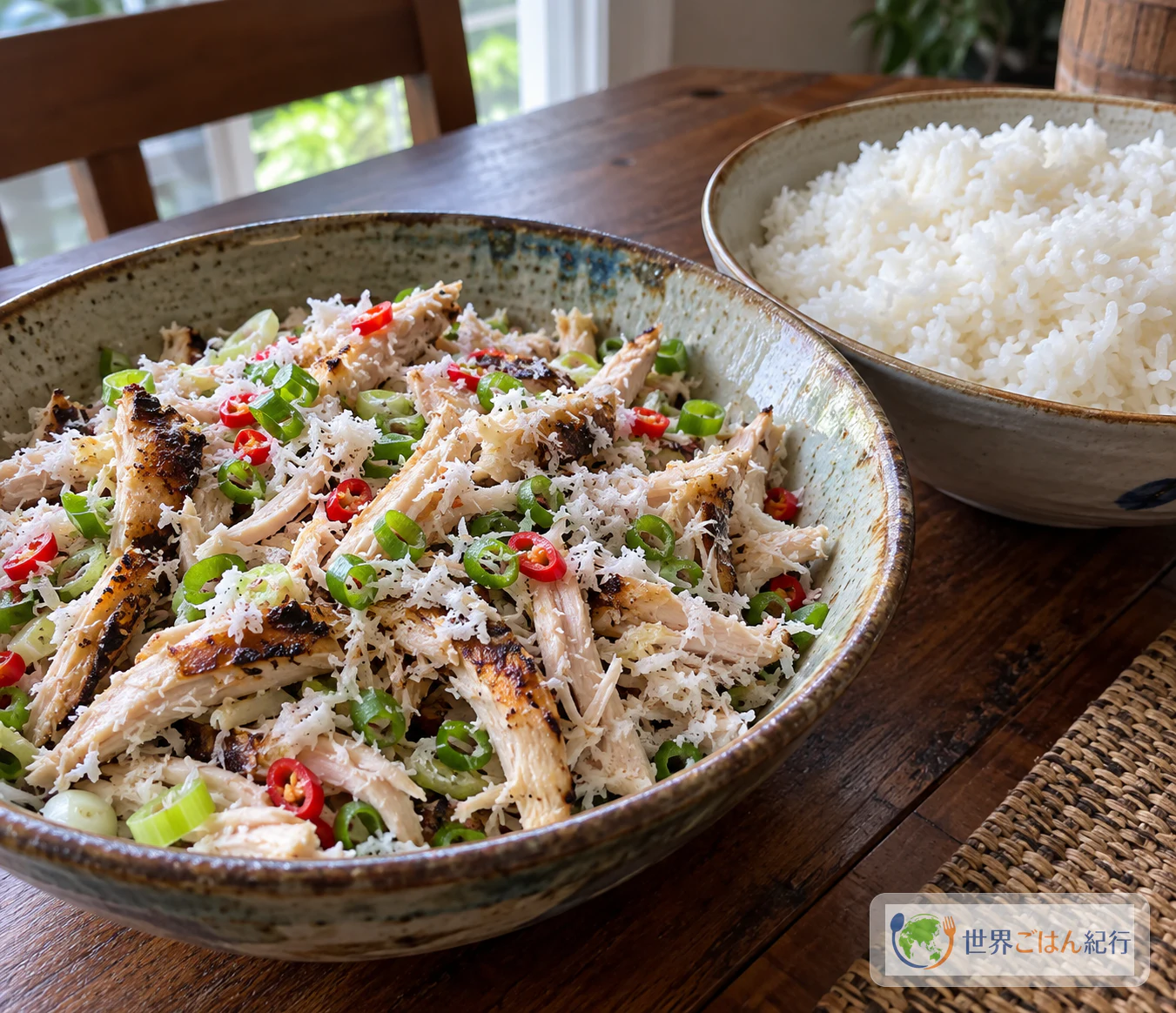
Chicken Kelaguen: Smoky Chicken, Sharp Lemon and Soft Coconut
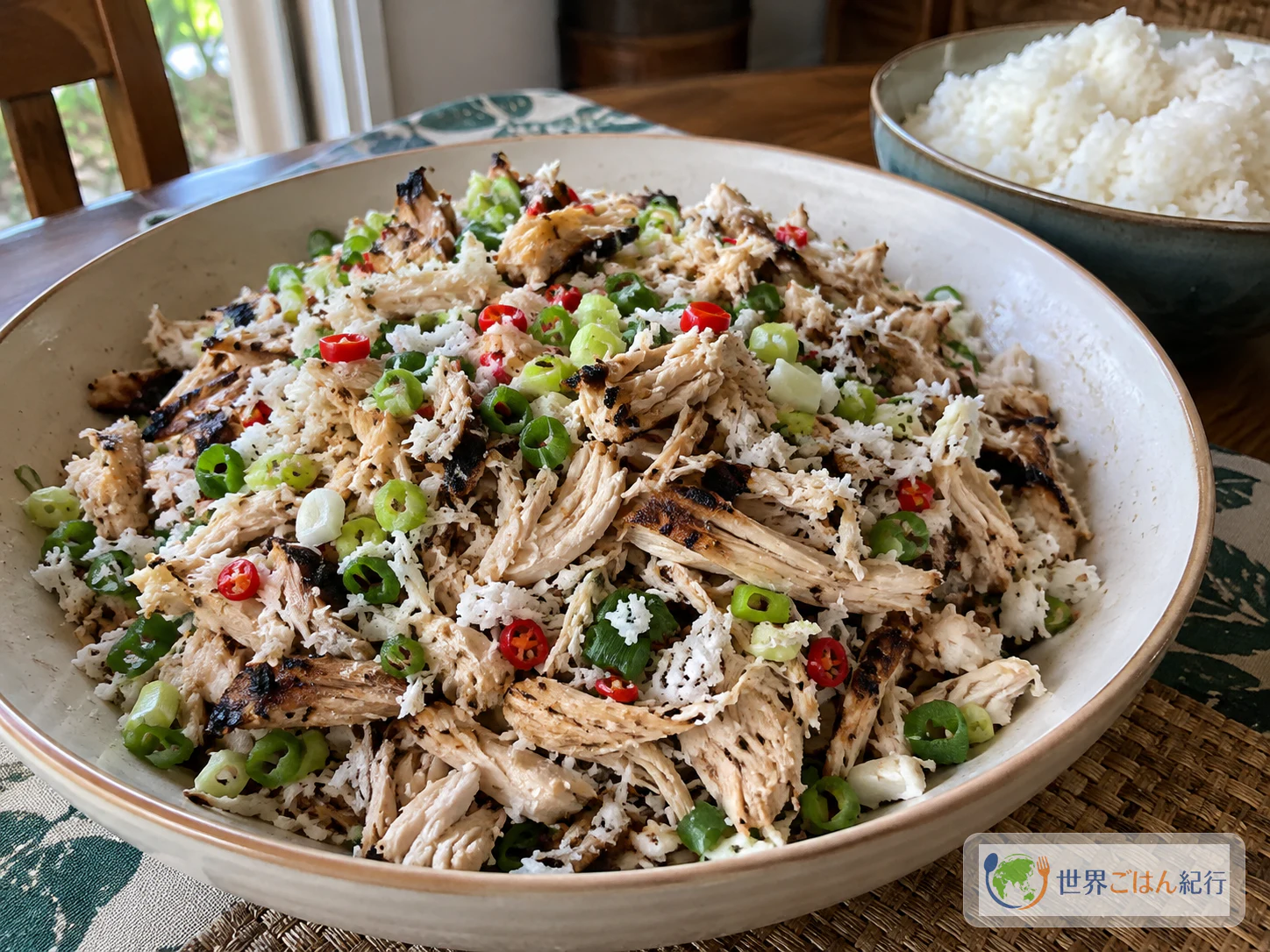
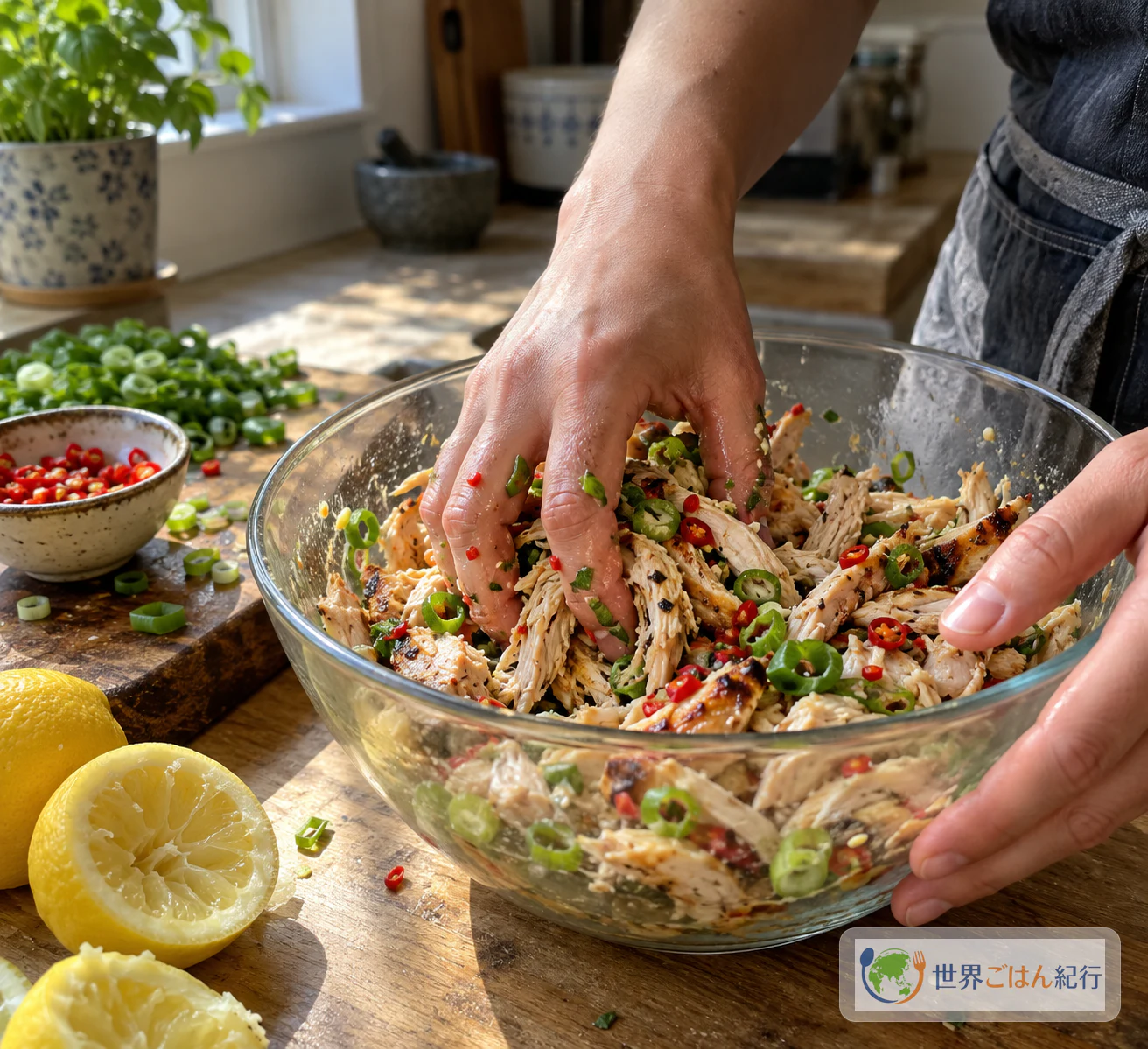
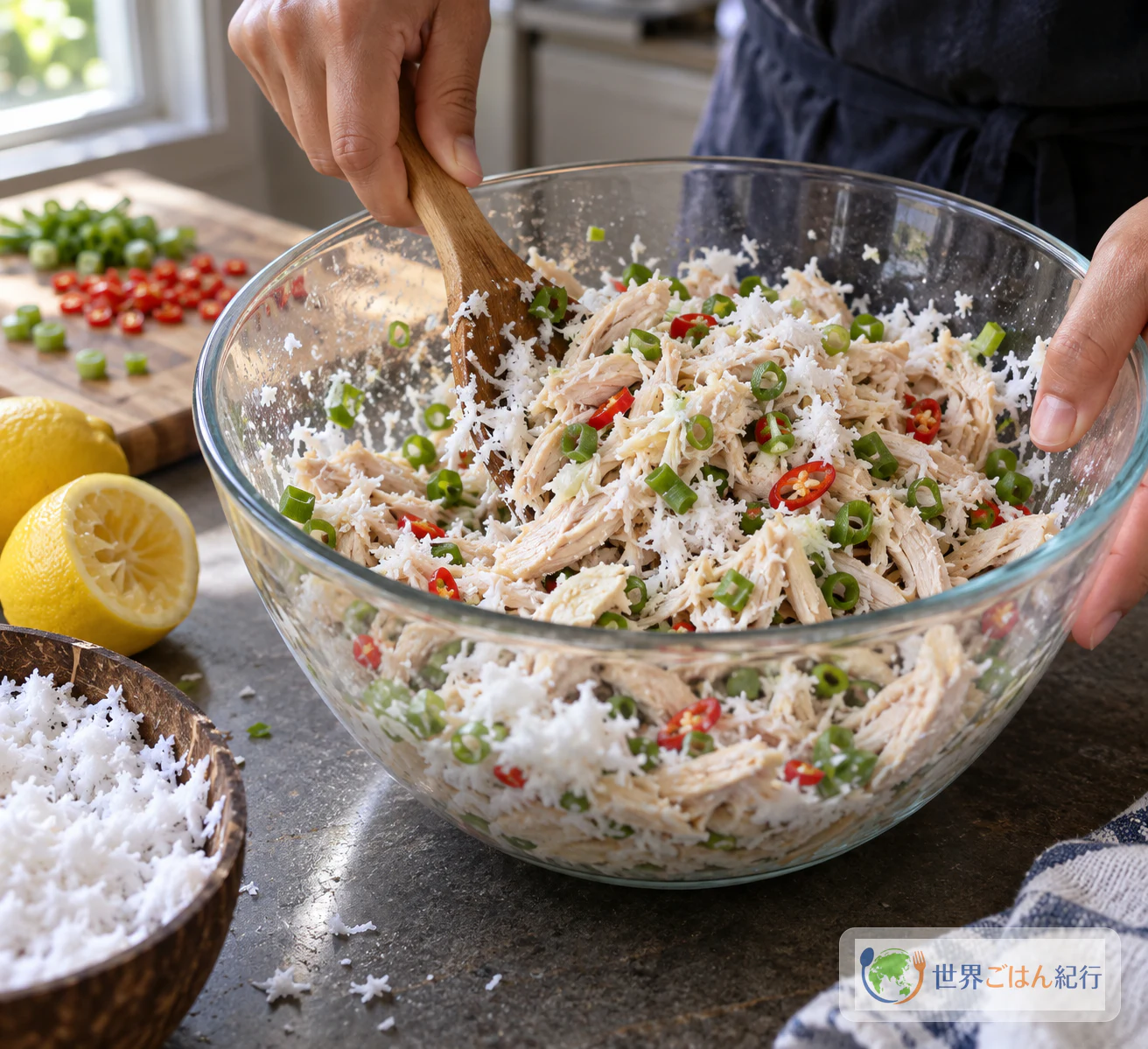
Grill the chicken over charcoal and cook it through completely. Then toss it with plenty of fresh lemon juice, scallions and chile, and fold in just enough unsweetened coconut to leave it moist and fluffy, not soupy.
On Guam, kelaguen shows up wherever people gather. The Guam Visitors Bureau describes Kelaguen Mannok, the chicken version, as a dish for barbecues, weddings, fiestas and baptisms. It is chopped meat dressed with lemon juice, salt, grated coconut and hot chile.
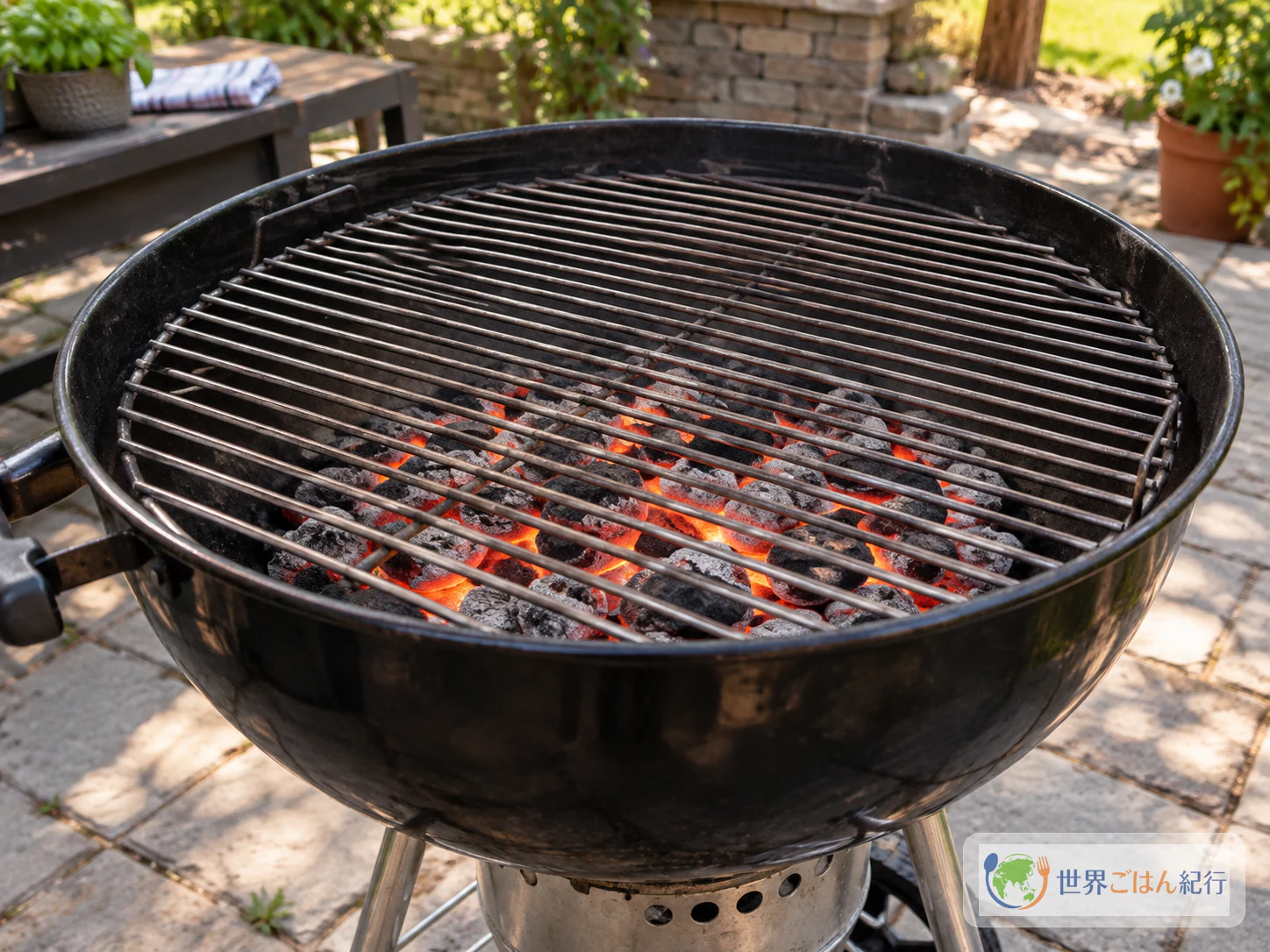
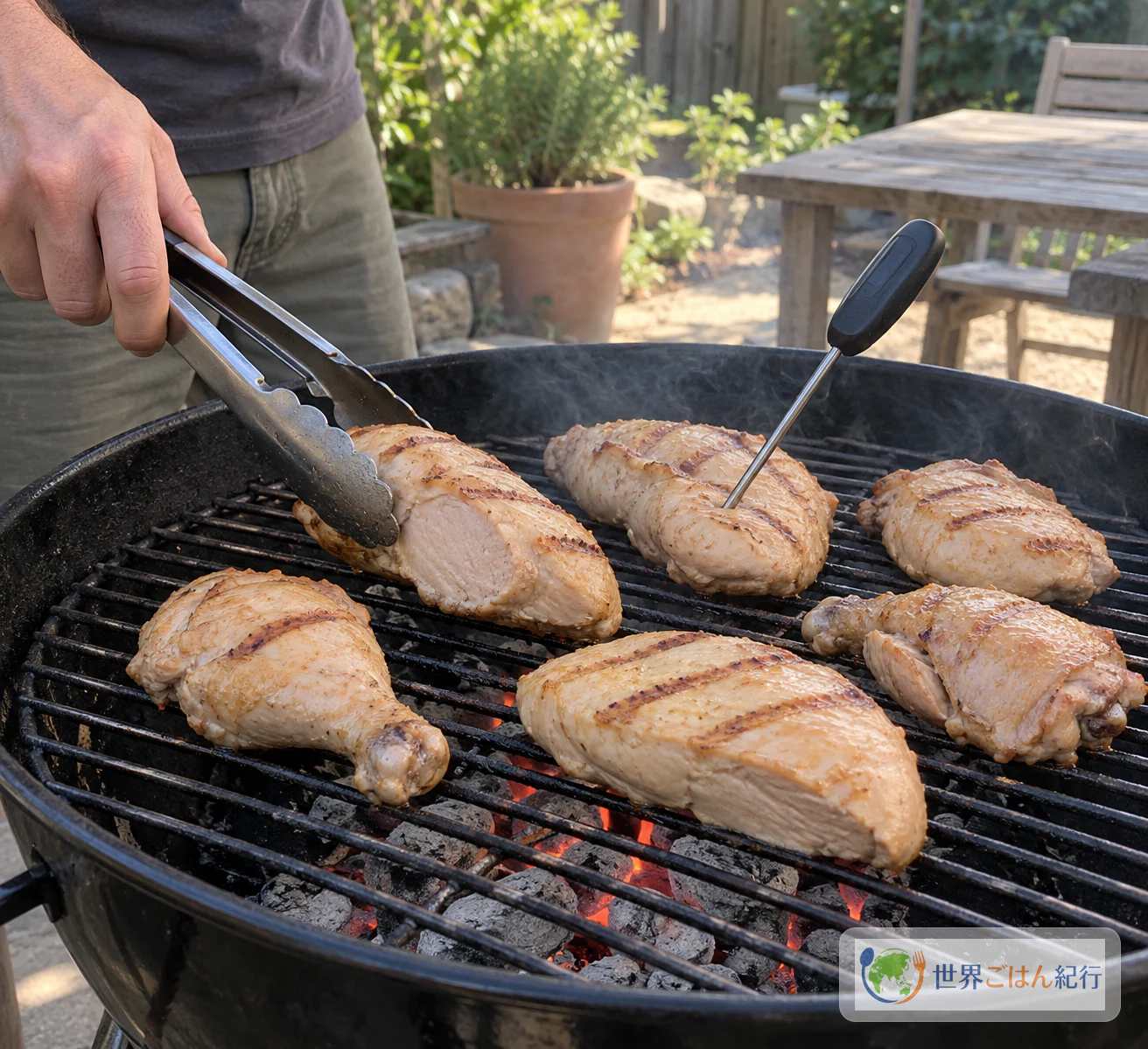
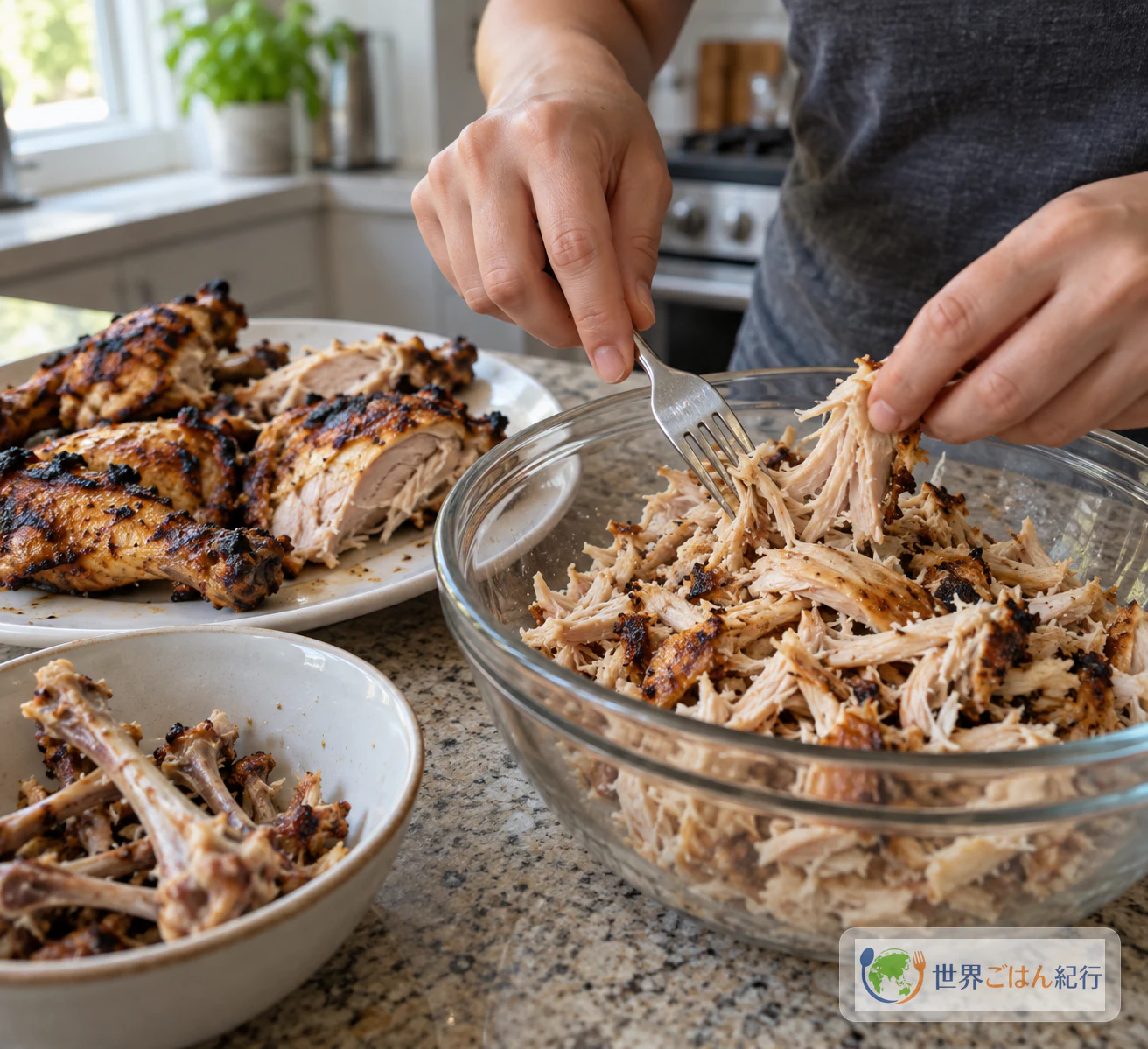
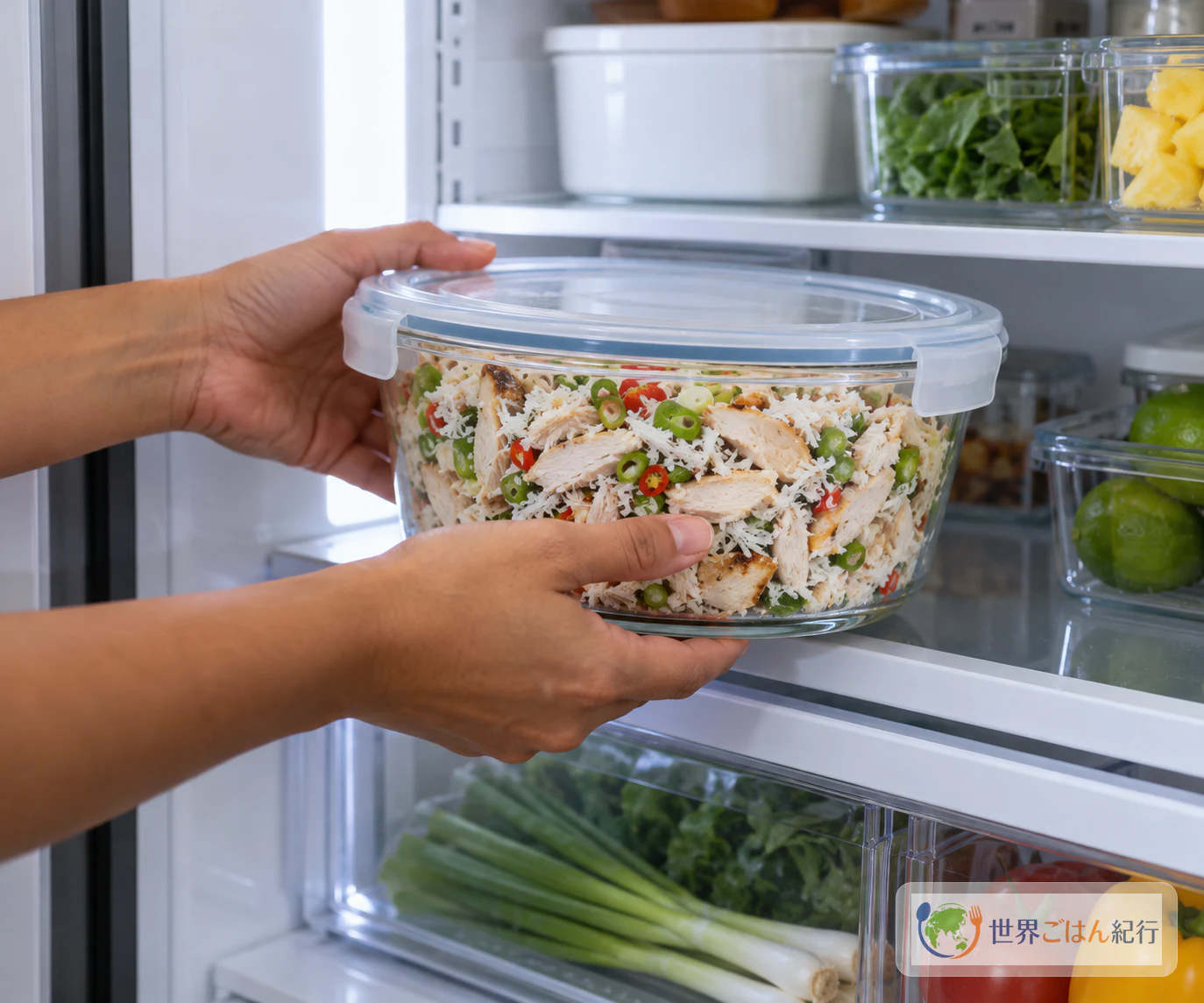
This recipe follows a CHamoru chicken kelaguen published by Saveur and written by Larkin Fegurgur Clark. Our editors have not kitchen-tested this recipe. A whole chicken, skinned and cut into pieces, is grilled over medium-high charcoal until it has light char and is fully cooked. The meat comes off the bone and is shredded fine. Then it goes into a bowl with a full cup of fresh lemon juice, scallions and seeded bird's-eye chiles, and finally freshly grated coconut. After a rest in the refrigerator it goes to the table with warm white rice or CHamoru titiyas.
One rule comes before everything else: the lemon juice adds flavor; it does not cook the chicken. The chicken must be fully cooked before it ever meets the citrus.
The English name is chicken kelaguen. Saveur gives the CHamoru name as kelaguen månnok, and the Guam Visitors Bureau feature spells it Kelaguen Mannok. Spellings vary between sources, so it helps to search with more than one.
What Chicken Kelaguen Is
Kelaguen is a CHamoru way of dressing chopped protein with citrus, coconut and chile. Saveur presents it as a common dish in the region, eaten at fiestas and outside them too. It also notes that fish, beef, venison and even Spam can all be made into kelaguen. The Guam Visitors Bureau feature also mentions kelaguen made with other proteins.
This article covers only the chicken version, and only one recipe: the Saveur version, scaled to one whole bird and made with fresh lemon juice. Home cooks on Guam vary it in many ways. Some leave out the coconut. Some use rotisserie chicken, and some use lemon powder in place of fresh juice. Those versions use their own amounts, so they appear further down as separate options and are never mixed into the main recipe.
Ingredients: One Whole Chicken, Dressed with Lemon, Scallion, Chile and Coconut
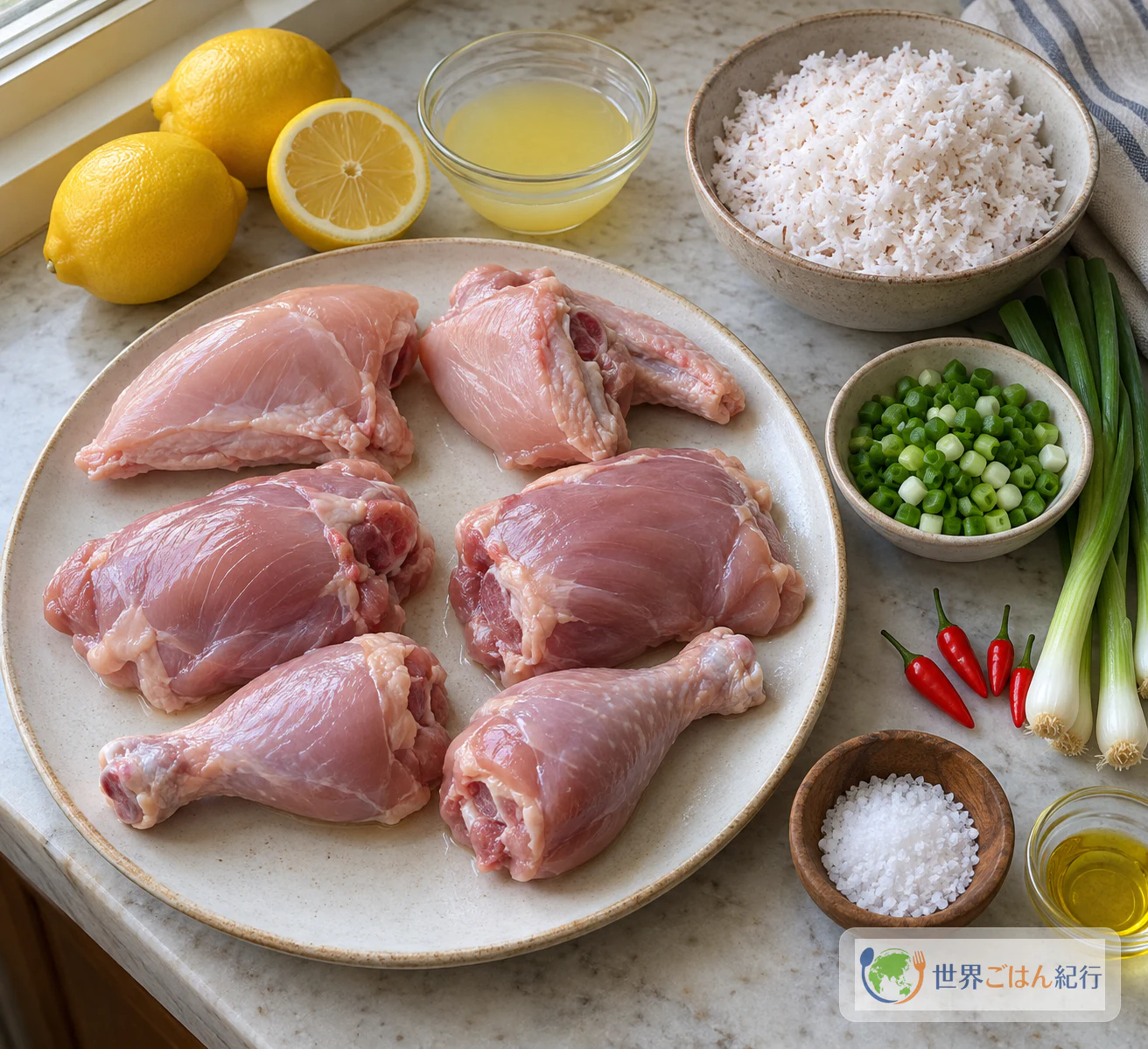
The amounts below are the Saveur recipe's own, in its own units. The recipe doesn't give a number of servings. It says one bird gives about 5 cups of shredded meat, but that is a rough guide to what you get after cooking, not a measured yield or a serving count. The 4½ lb is the weight of the whole chicken, not the weight of boneless cooked meat.
Equipment
- Charcoal grill
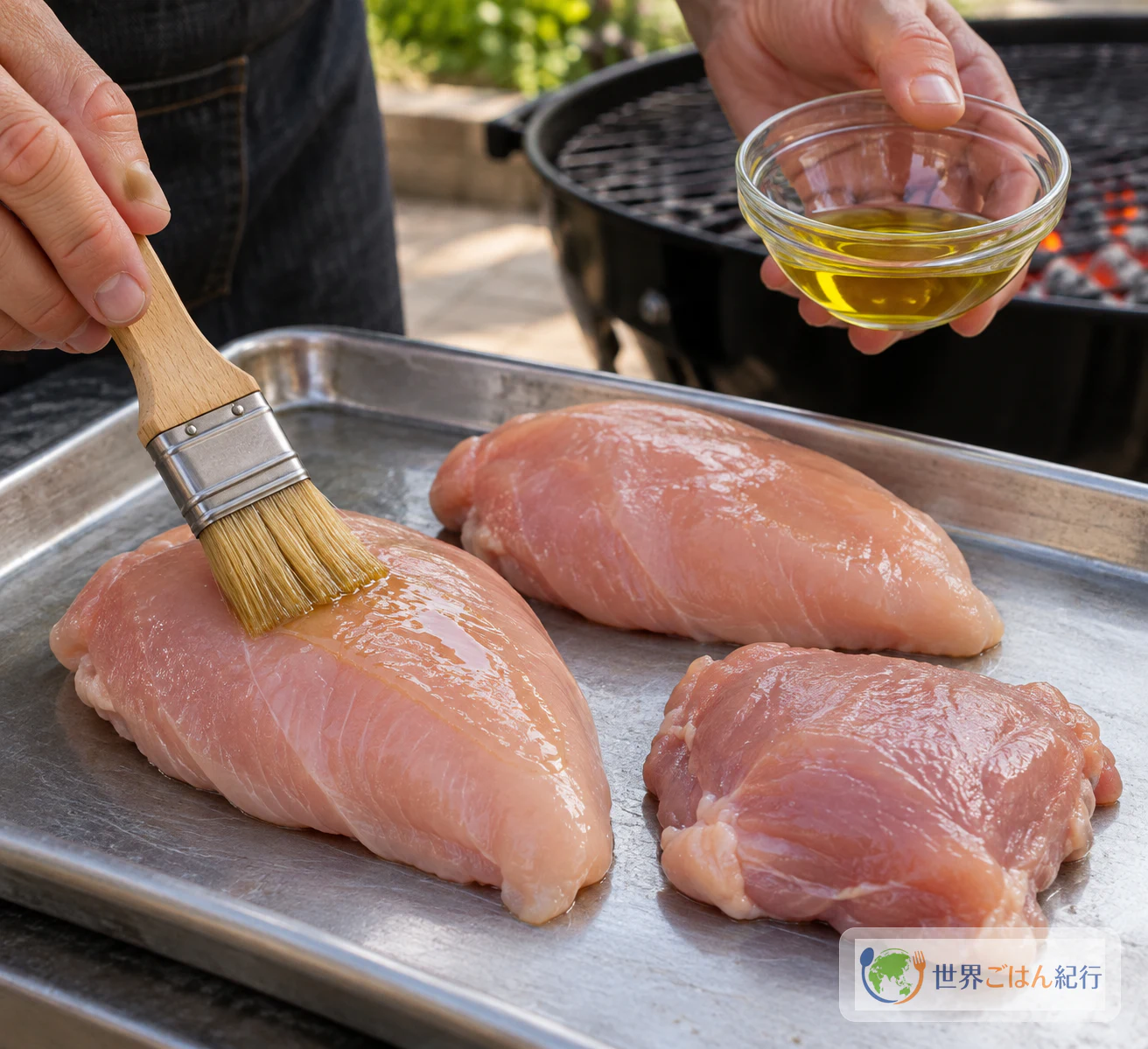
- Tray or plate and tongs for the raw chicken
- A separate clean plate and clean tongs for the cooked chicken
- Pastry brush (if using the oil)
- Food thermometer
- Knife and cutting board
- Large non-reactive bowl, such as glass
- Container with a lid, or plastic wrap, for chilling
Choosing and Substituting Ingredients
Coconut. The main recipe uses freshly grated coconut. The source lists frozen, thawed coconut as an alternative. It also allows dried unsweetened coconut, but dried coconut has a different moisture content. Don't expect the same volume or weight to give the same result. If you use it, add a little at a time and judge by how moist the mixture looks. Avoid sweetened baking coconut, which adds sweetness the dish doesn't call for. Home cooks also specify unsweetened coconut.
Salt. The ingredient list gives 1 tsp kosher salt, and the method says to season to taste. Use that teaspoon, tasting as you go, rather than treating salt as open-ended. Flake size varies by brand, so the same spoonful of fine table salt won't necessarily taste equally salty. Check your brand and grain size, and start with less if your salt is finer.
Citrus. The main recipe uses fresh lemon juice only. Paula Quinene's home recipe uses lemon China or calamansi, and notes that kelaguen made with all lemon juice is more sour. That recipe has its own amounts, so treat it as a different recipe rather than swapping juices one-for-one here.
Chiles. Bird's-eye chiles vary from one to the next. Removing the seeds is part of the source's preparation. If you want less heat, see the variations below.
Handle raw chicken with its own tray and tongs, and use separate clean ones once it's cooked. Don't put cooked meat back on the plate that held raw chicken. Citrus juice does not make chicken safe to eat. This dish contains coconut. The general precautions for chicken and chiles apply as with any dish.
Method: Grill, Shred, Dress, Chill
Judge the chicken by how well it is cooked, not by the clock. Judge the coconut by how the mixture looks, not by using up the full amount.
Troubleshooting
| Problem | Likely cause | What to do |
|---|---|---|
| The kelaguen is soupy | Juice from the chicken and the lemon varies from batch to batch | Fold in coconut ¼ cup at a time, staying within the 2 cups total. Don't add any other ingredient to soak up the liquid |
| It feels heavy or dry with coconut | All the coconut went in at once | Next time, start at 1½ cups and add more only as needed. With dried coconut, add even less at a time, since it absorbs liquid differently |
| It's too sour | A full cup of lemon juice is sharp by design | Keep the 1 cup for this batch. Next time, as an editorial adjustment, try changing the juice a little at a time and tasting as you go. Don't balance it with sugar or water |
| It's too hot | Chiles vary in heat | Next time, use fewer chiles and be sure to remove the seeds (see variations) |
| You're unsure the chicken is done | Time, color and char can't tell you | Check the thickest part, away from the bone, with a thermometer. Put underdone pieces back on the grill with clean tongs. Never rely on the lemon juice |
Variations
These are separate from the main recipe. Each one changes the flavor or texture, so treat it as its own version rather than quietly changing the base recipe.
- Milder heat. The source uses 4 chiles, seeded. Using fewer is a change to the recipe, so expect a different balance against the lemon.
- No coconut. Some home versions on Guam leave the coconut out. The dish loses its soft, creamy texture and the sweet coconut aroma, and the lemon tastes sharper.
- Dried unsweetened coconut. Add it in small amounts and stop when the mixture looks moist and fluffy. Don't assume it swaps cup-for-cup with fresh coconut.
- Rotisserie chicken when charcoal isn't practical. Annie's Chamorro Kitchen shows a home version made this way. Saveur notes that you lose the charcoal flavor and will need to adjust for moisture. Store-bought chicken also brings its own salt, so check the seasoning again rather than adding the full teaspoon automatically.
- Titiyas instead of rice. Both Saveur and Annie's Chamorro Kitchen pair kelaguen with titiyas.
Home recipes that use lemon powder, from Paula Quinene and Annie's Chamorro Kitchen, have their own proportions. They are separate recipes, not something to combine with the fresh-juice version here.
On the Table in Guam
According to the Guam Visitors Bureau feature, Kelaguen Mannok belongs to gatherings: barbecues, weddings, fiestas and baptisms. Saveur adds that kelaguen also appears outside fiestas and can be made from fish, beef, venison or Spam as well as chicken.
The Guam Visitors Bureau describes kelaguen as meat dressed with lemon juice, salt, grated coconut and hot chile. Home cooks vary the citrus, the coconut and the chicken itself, which is why recipes from different kitchens rarely match exactly. To see more of the island's dishes, explore food from Guam.
Frequently Asked Questions
Can lemon juice "cook" raw chicken for kelaguen?
No. In this recipe the chicken is fully cooked on the grill first, and the lemon juice is added only for flavor. Confirm the chicken is done before it goes into the bowl. Citrus is not a substitute for cooking.
Can I leave out the coconut?
Some home versions do. Expect a different texture and less coconut aroma. If you keep it, start at 1½ cups and stay within 2 cups.
What do you serve with chicken kelaguen?
Warm white rice, or warm CHamoru titiyas.
Can I make it the day before?
Yes. The recipe calls for chilling it covered for 1 to 24 hours. For leftovers, Saveur gives up to 3 days in the refrigerator. Take out only what you'll serve and return the rest promptly.
I don't like much heat. What should I change?
Remove the seeds, as the recipe directs, and use fewer than the original 4 chiles. Taste with a little rice to judge the balance.
Sources
- Saveur, "Chicken Kelaguen," recipe by Larkin Fegurgur Clark. The CHamoru name kelaguen månnok and the dish's place in regional cooking, served at fiestas and beyond; the main recipe's ingredients, amounts and method, including the grilling guide and the warning to cook the chicken through; chilling time, serving with white rice or titiyas, the 3-day leftover guidance, and the flavor difference when using rotisserie chicken. https://www.saveur.com/recipes/chicken-kelaguen-recipe/
- Stars and Stripes Guam / Guam Visitors Bureau, "Taste of Guam: Spotlight on island's traditional fiesta foods." The spelling Kelaguen Mannok; kelaguen at barbecues, weddings, fiestas and baptisms; its lemon juice, salt, grated coconut and chile; kelaguen made with other proteins. https://guam.stripes.com/food-drink/taste-of-guam-spotlight-on-island%27s-traditional-fiesta-foods.html
- Paula Quinene / PaulaQ.com, "Chicken Kelaguen BBQ Chicken." Lemon China or calamansi as citrus options; the note that all-lemon kelaguen is more sour; a separate lemon-powder formula. Used for comparison only. https://www.paulaquinene.citymax.com/f/CHAMORRO_CHICKEN_KEL_WITH_CITRUS_JUICES.pdf
- Annie's Chamorro Kitchen, "Chicken Kelaguen & Flour Titiyas." A home version with rotisserie chicken and lemon powder; coconut as optional; using unsweetened coconut; serving with titiyas. Used for comparison only. https://www.annieschamorrokitchen.com/chicken-kelaguen-flour-titiyas/
- Ministry of Health, Labour and Welfare (Japan), "家庭での食中毒予防" (Preventing Food Poisoning at Home). General home guidance: cook until the center reaches 75°C for at least 1 minute, prevent cross-contamination, and divide leftovers into shallow containers to chill quickly. https://www.mhlw.go.jp/stf/seisakunitsuite/bunya/kenkou_iryou/shokuhin/syokuchu/01_00008.html