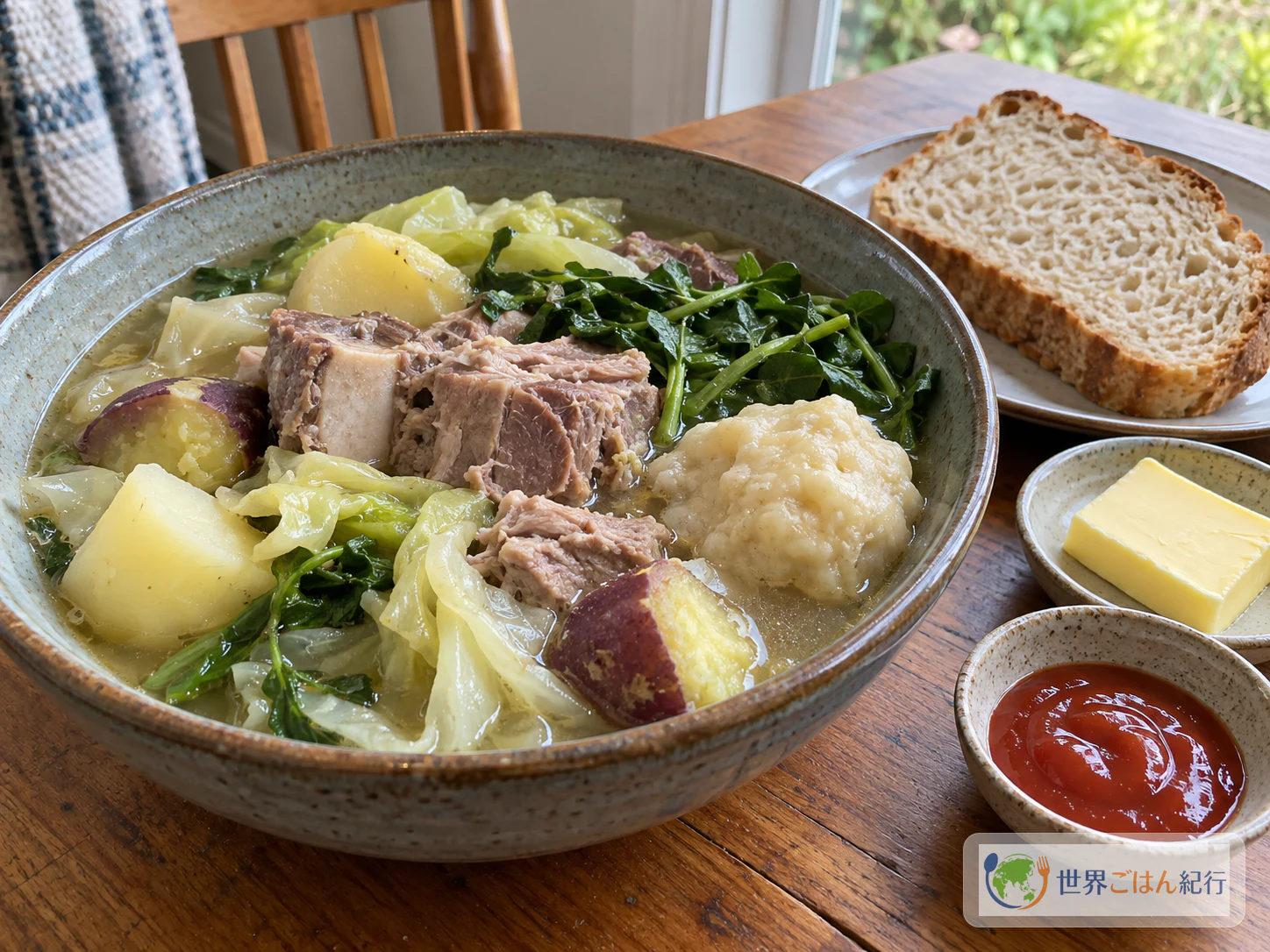
Boil-Up: A Big Pot of Pork Bones, Root Vegetables, Greens and Doughboys
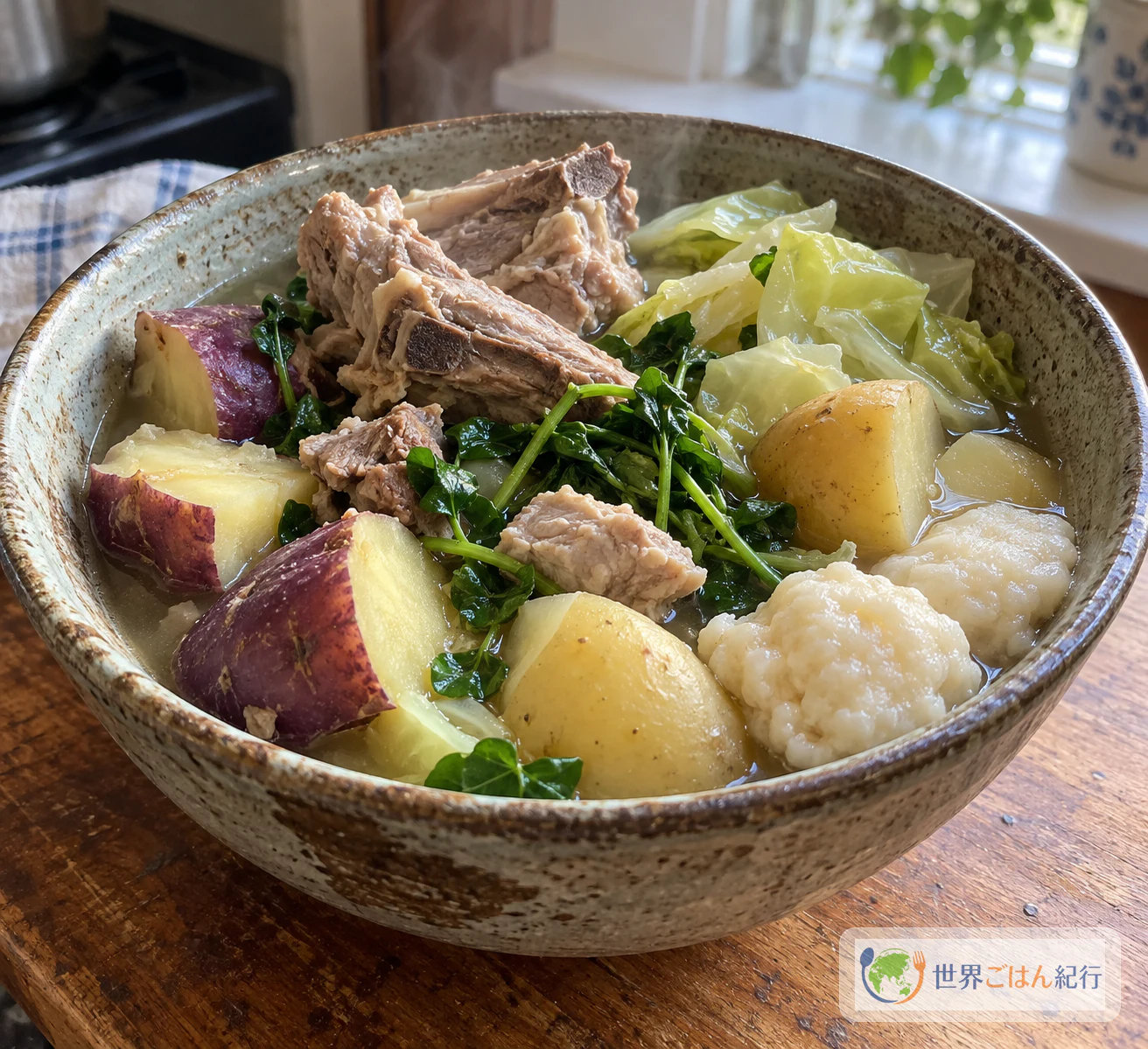
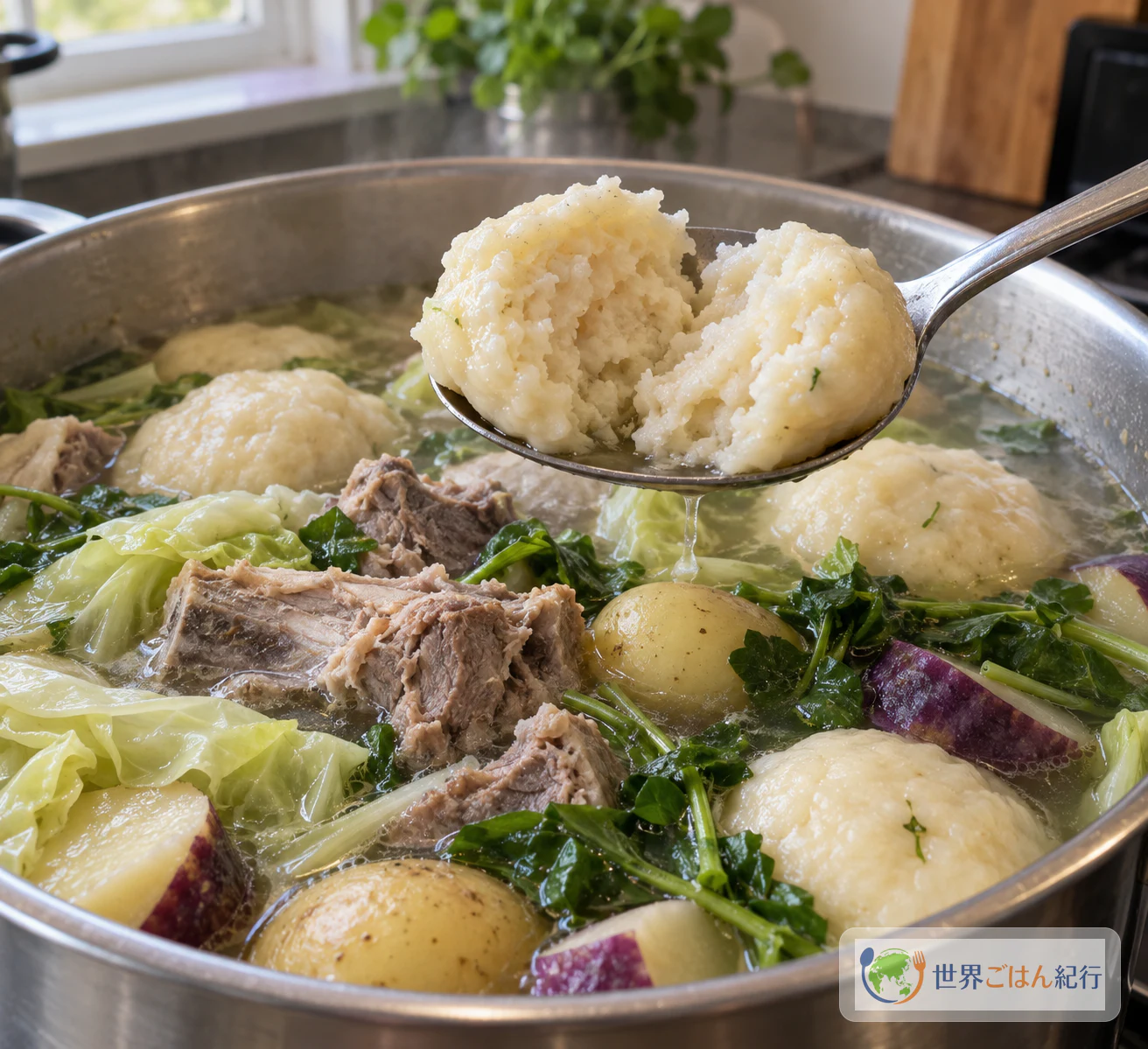
Meaty pork bones simmered gently until the meat is tender, root vegetables that hold their shape, greens added near the end, and soft doughboys cooked through to the center. The broth ties it all together.
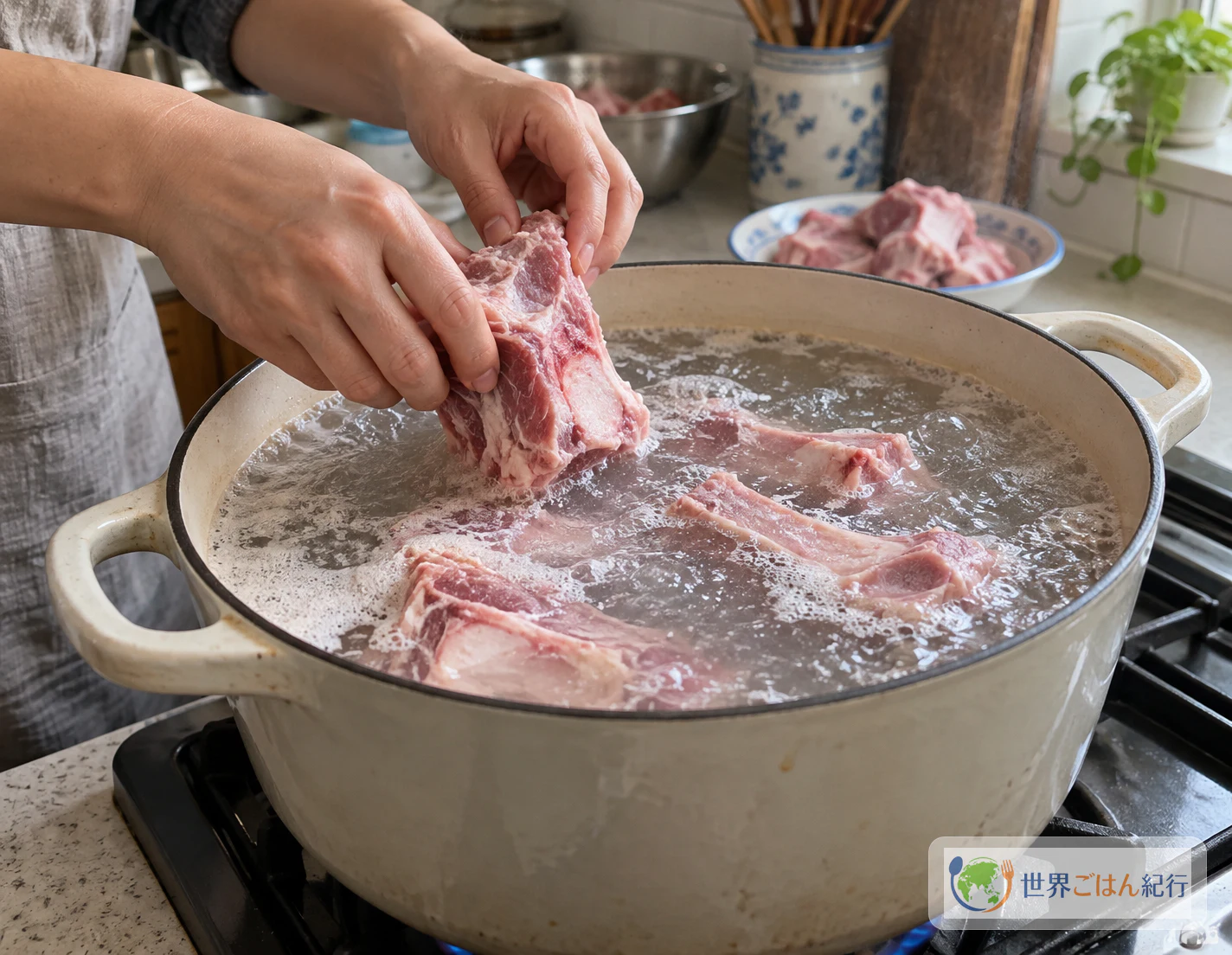
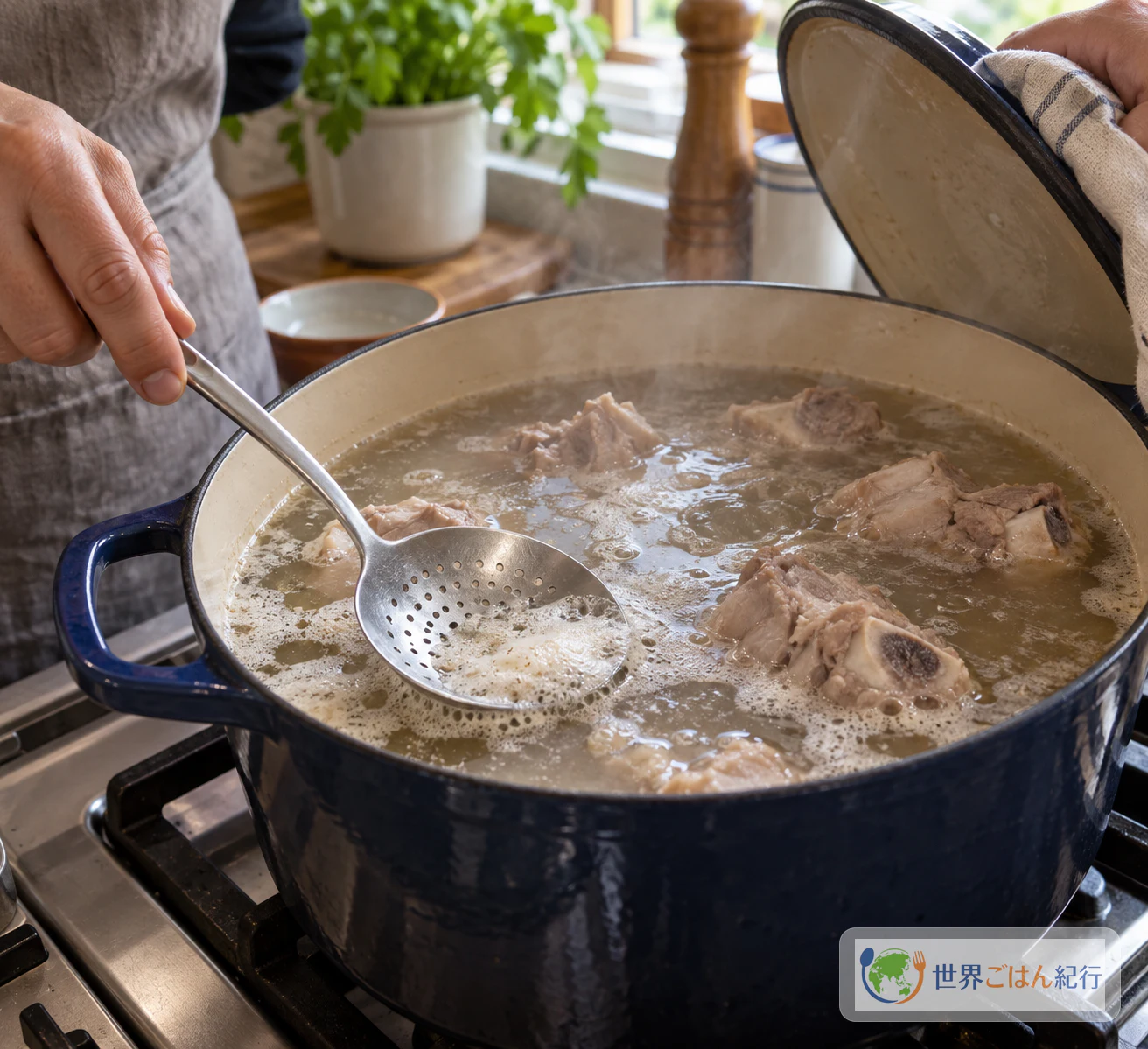
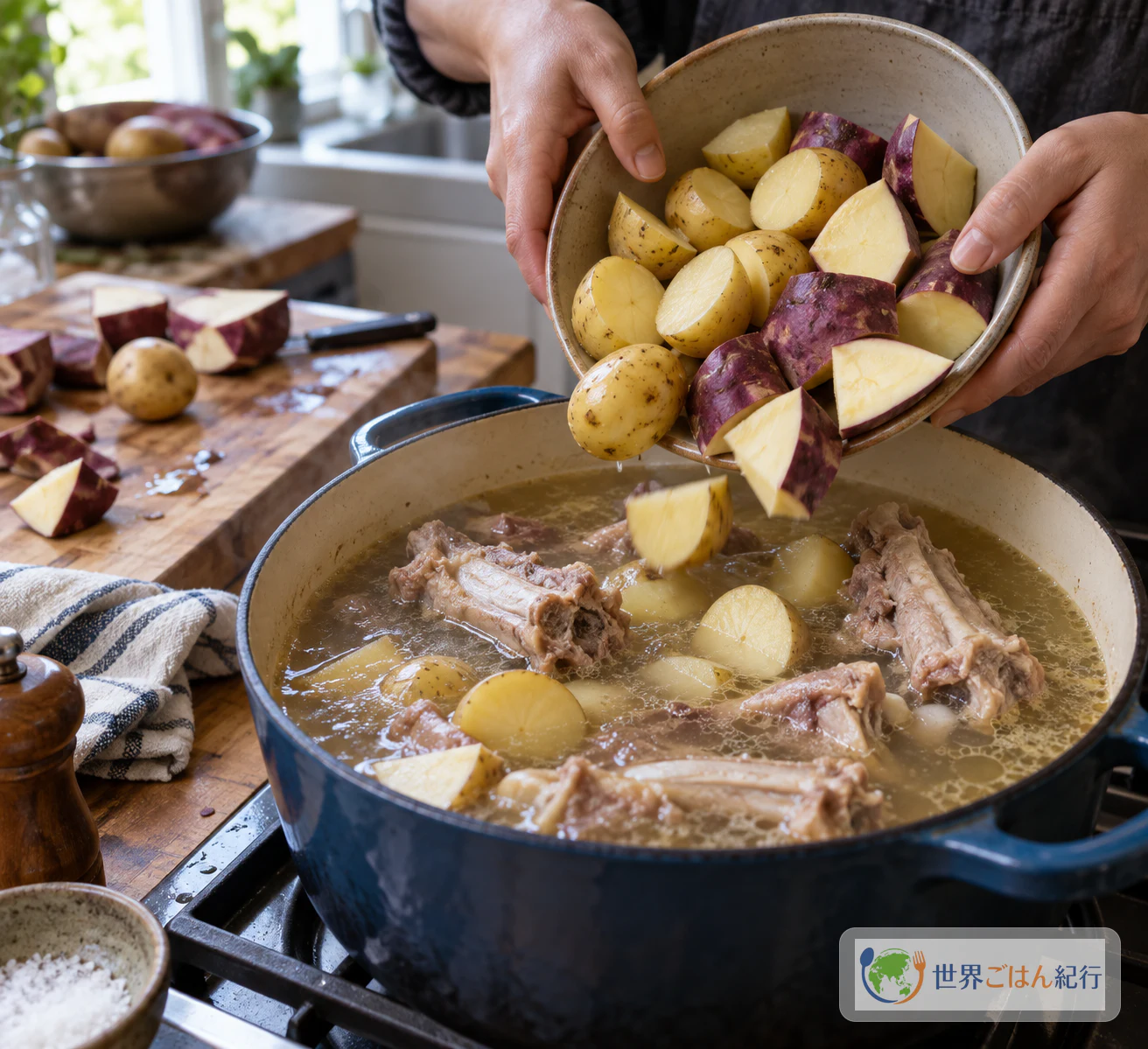
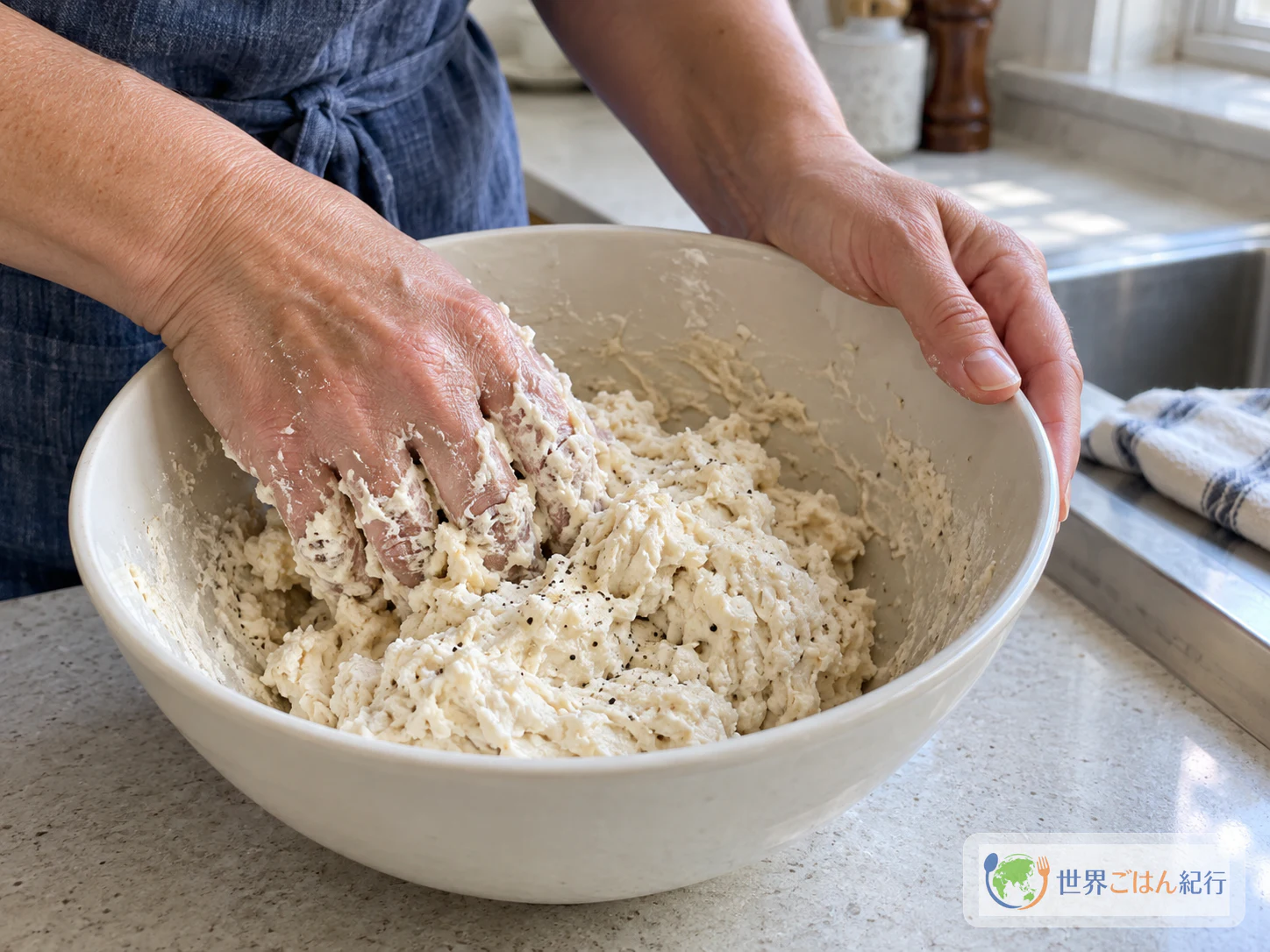
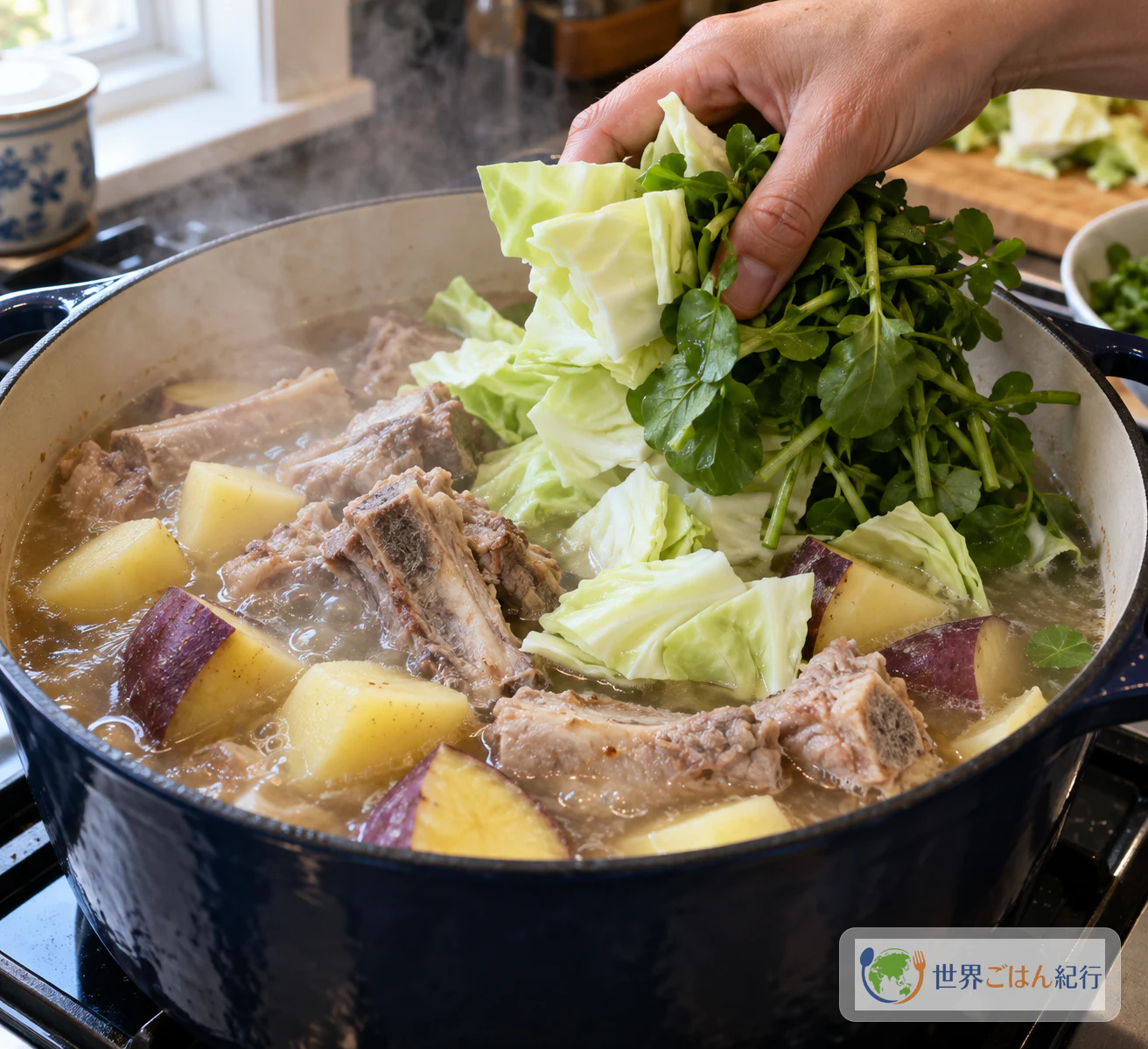
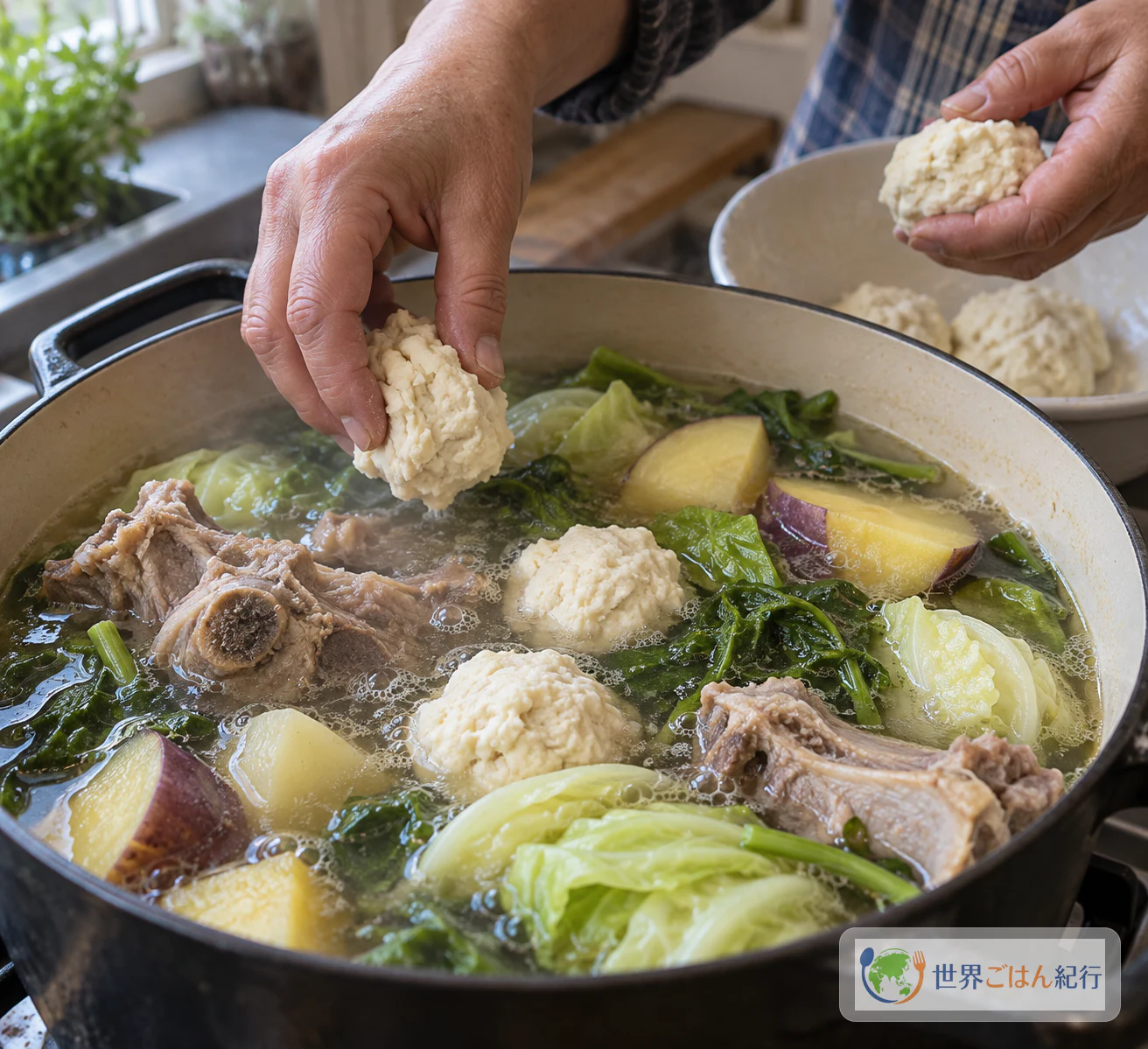
A large pot goes on the stove with pork bones and water. The bones simmer quietly, then potatoes and kūmara go in. Near the end come cabbage and watercress, and finally small rounds of soft flour dough are dropped into the broth to cook. This is boil-up, a dish from Aotearoa New Zealand closely tied to Māori food culture.
Te Ara, the Encyclopedia of New Zealand, describes boil-up as a dish made in a big pot, with enough to feed family and visitors. That generosity is part of its character: this is a pot meant for a table with many people around it.
This recipe follows the home-style "Anika's go-to boil up" published by New World, which is listed for 4–6 people. It is one household's version, not a single fixed standard. Families make boil-up with different meats, greens and vegetables, and the variations later in this article show some of that range. For more dishes from the same country, see our New Zealand recipes.
Belize has a dish with a similar name, but it is a different dish. This article is only about the New Zealand Māori boil-up.
How Boil-Up Became a Staple: Where Introduced and Māori Foods Met
According to Te Ara, foods brought by European settlers — including pigs, potatoes and wheat — came together with Māori ingredients and ways of cooking. A meal of pork, pūhā and potatoes became a new staple, and it is this combination that came to be called boil-up. Tourism New Zealand gives a similar account, noting that potatoes were easier to grow than kūmara, which helped them spread.
So boil-up is not best described as an unchanging ancient dish with one correct formula. It grew out of a meeting of foods, and the contents of the pot still shift from household to household.
Three ingredient names are worth keeping apart:
| Name | What it is | In this recipe |
|---|---|---|
| Kūmara | A root crop of Polynesian origin, long part of Māori food culture | Purple kūmara, cut into large chunks |
| Pūhā | Sow thistle, the green named in the classic pork, pūhā and potato combination | Not used here; an optional addition in some recipes |
| Kōwhitiwhiti | Watercress, which grows near water | Fresh watercress, added near the end |
Pūhā and watercress are different plants, and cabbage is different again. New World's recipe uses cabbage and watercress and mentions pūhā only as an optional extra.
Ingredients for 4–6 Servings (as Published by New World)
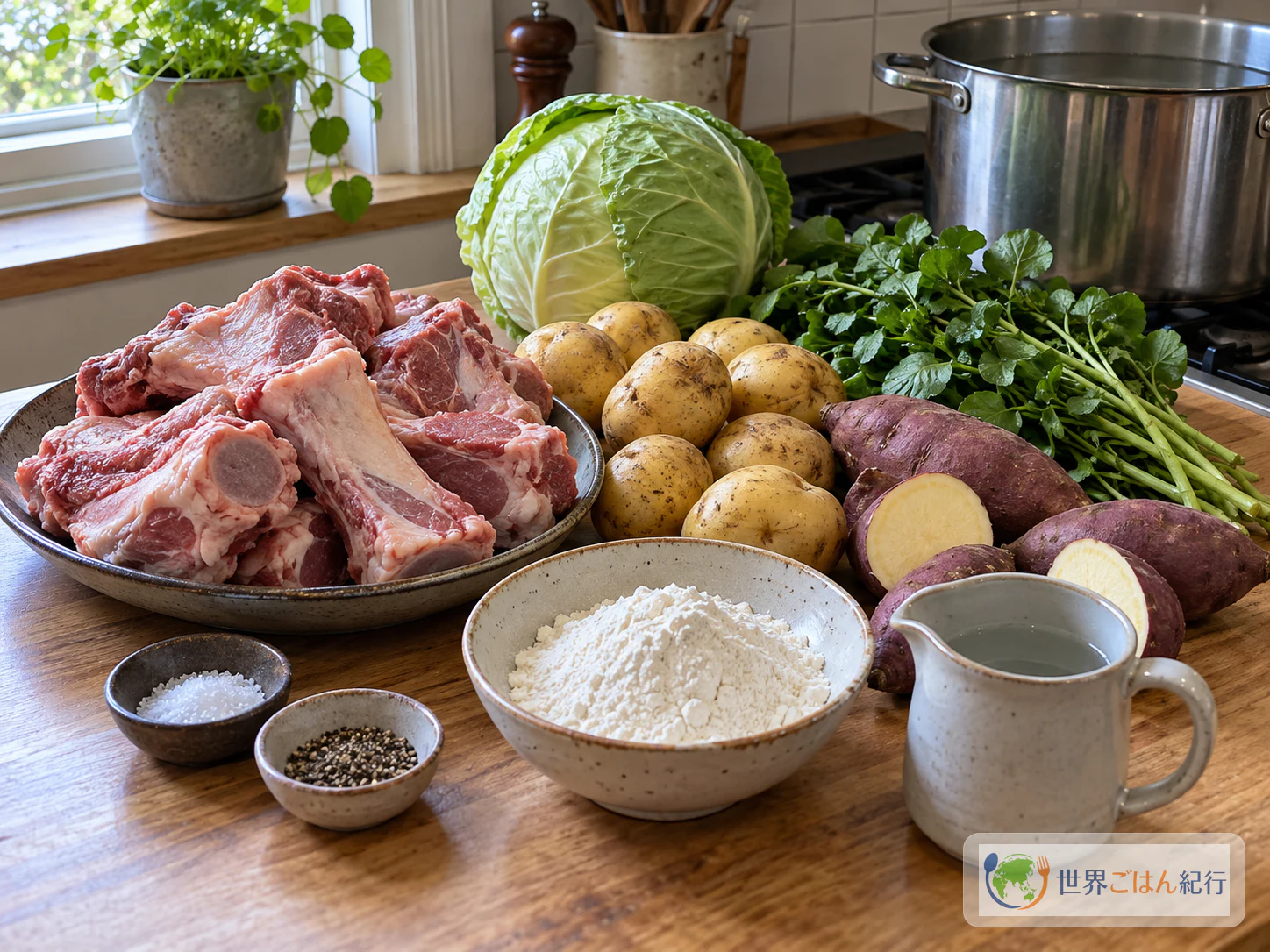
The amounts below are those of the published recipe. The recipe gives the flour, dough water and watercress in cups without defining the cup size; for this article a 250 ml cup has been chosen, and those volumes are shown alongside. The flour and leaves are not converted to grams. The water for the pot and the salt and pepper are not given as numbers in the recipe, so none are added here.
The doughboys and rewena bread contain wheat, the butter served on the side contains milk, and the dish is built on pork. Alternative flour blends are outside the scope of this recipe. Check the labels of any packaged products you use.
Choosing and Substituting: Pork Bones, Kūmara, Watercress and Flour
Pork bones. Look for bone-in pork with meat on it, such as spare ribs or similar cuts that include both bone and meat. Other cuts will give a different texture and fat level, so treat them as a change to the dish rather than the same thing.
Kūmara. If the specified purple kūmara is unavailable, Japanese sweet-potato varieties are an editorial substitution; sweetness, texture and color may differ. The recipe says "purple kūmara" without naming a variety. In the produce specification of Foodstuffs North Island, the purple category is described as having dark purple skin and white to yellow flesh. That describes a retail category, not every purple kūmara, and does not establish the variety or flesh color of the particular kūmara used in the source recipe. The article images follow that retail specification.
Watercress. Ordinary supermarket watercress fits the recipe. Pūhā is a different plant; this article does not cover finding, identifying or foraging it.
Self-raising flour. Use a product sold as self-raising flour and check its label. Plain flour on its own is not the same flour. This recipe does not give a ratio for making your own with plain flour and baking powder, so none is suggested here.
Equipment
- A large, heavy pot with a lid, big enough to hold all the ingredients and the broth with room to simmer
- A slotted spoon for skimming foam
- A mixing bowl and a spoon for the dough
- A measuring cup (this article uses 250 ml)
- A kettle or second pot for boiling water, for topping up
- Separate utensils and boards for raw pork, and clean ones for serving
- Deep bowls for serving
Method: Pork Bones First, Then Root Vegetables, Greens and Doughboys
The recipe gives about 1½–2 hours of cooking in total. The potatoes and kūmara go in 1 hour after you start. Fifteen minutes before the end, add the cabbage and watercress; 5 minutes after that, add the doughboys. That leaves the root vegetables roughly 30–60 minutes and the doughboys about 10 minutes — figures worked out from the recipe's timeline, not guarantees. Pot size, bone size and heat level all change how things cook, so check the food itself.
Keeping the Pot on Track: Common Problems
| What you see | Likely reason | What to try |
|---|---|---|
| Bones sticking out of the liquid | Evaporation during the long simmer | Add a little boiling water to cover them again |
| Cloudy broth, vegetables breaking up | The pot boiled too hard for too long | Turn the heat down to a gentle simmer and keep the lid on |
| Doughboys raw in the middle | Dough balls too large, or the broth not simmering | Keep simmering gently and break one open again. Make them smaller next time |
| Meat still firm on the bone | Large bones, or low heat | Keep simmering and check the thickest meat again; go by its state, not the clock |
| Broth tastes flat | Seasoning left until too late | Add salt and pepper a little at a time at the end |
Leftovers and Reheating
Don't leave the big pot of pork bones sitting at room temperature for a long time. As general guidance from Japan's Ministry of Health, Labour and Welfare, divide leftovers into shallow containers, cool them quickly and refrigerate them, and reheat until the food reaches 75°C or above. Specific storage times and reheating times have not been established for this recipe, so none are given here. Wash the boards and utensils used for raw pork before using them for anything else.
Variations from Household to Household
Te Ara's account shows how much boil-up varies, and no single version is the only correct one.
- Meat: Alongside pork bones, Te Ara mentions bacon bones, brisket and sausages.
- Greens: The classic combination names pūhā. New World's recipe uses watercress and cabbage, with pūhā as an option.
- Vegetables: Te Ara also mentions pumpkin, kūmara and kamokamo.
- Doughboys: This recipe drops them into the broth. Te Ara also describes doughboys placed on top to steam. Both are part of the range.
- At the table: Rewena bread, butter and tomato sauce on the side, as in New World's recipe. They are accompaniments, not required ingredients.
Frequently Asked Questions
What is boil-up?
A one-pot dish from New Zealand closely tied to Māori food culture. Te Ara and Tourism New Zealand describe a meal of pork, pūhā and potatoes that became a new staple after European foods arrived. Today's versions vary by household.
Are kūmara and sweet potato the same?
The substitution discussed here is specifically the use of Japanese sweet-potato varieties in place of the recipe's purple kūmara. It is a practical cooking alternative, not a claim about a botanical distinction; sweetness, texture and color may differ.
Are pūhā and watercress the same?
No. Pūhā is sow thistle, and watercress (kōwhitiwhiti) is a different plant that grows near water. Recipes use them, and cabbage, in different ways.
What are doughboys?
Simple dumplings made mainly from flour and water. In this recipe they are self-raising flour, water and a little salt and pepper, dropped into the broth near the end. Recipes vary in their mix and in how the doughboys are cooked.
Can I use plain flour for the doughboys?
This recipe calls for self-raising flour, which contains raising agent. Plain flour alone is not the same, and no plain-flour-and-baking-powder ratio is given here.
Is this related to Belizean boil up?
The names are similar, but they are different dishes. This article covers only the New Zealand Māori boil-up.
The Heart of the Pot
Boil-up rests on four things: broth from pork bones, the sweetness of the root vegetables, the fresh bite of the greens, and the comfort of soft doughboys. If you substitute sweet potato for kūmara, or choose a different cut of bone-in pork, accept that the taste and texture will shift a little.
Sources
- New World (Foodstuffs New Zealand), "Anika's go-to boil up." The recipe this article follows: ingredients and amounts, the listed 4–6 servings, the order of cooking and timing, and the serving suggestions. https://www.newworld.co.nz/recipes/soup/go-to-boil-up
- Te Ara – The Encyclopedia of New Zealand (Ministry for Culture and Heritage), "Māori foods – kai Māori: Foods introduced by Europeans." The introduction of European foods, pork, pūhā and potatoes becoming the staple called boil-up, cooking in a big pot for family and visitors, and household variations in meat, vegetables and doughboys. https://teara.govt.nz/en/maori-foods-kai-maori/page-4
- Tourism New Zealand, "Traditional Māori foods." Background on kūmara, pūhā and kōwhitiwhiti (watercress), and potatoes being easier to grow than kūmara. https://www.newzealand.com/ca/feature/traditional-maori-foods/
- Foodstuffs North Island, "Produce Specification: Kumara," version 1, 26/03/2024. The purple kūmara category described as dark purple skin with white to yellow flesh. https://www.foodstuffs.co.nz/-/media/Produce-Specifications/PS%20-%20Kumara.pdf
- Ministry of Health, Labour and Welfare (Japan), "Preventing food poisoning at home" (家庭での食中毒予防). General guidance on heating food to 75°C at the center for at least 1 minute, preventing cross-contamination, cooling leftovers quickly in shallow containers, and reheating to 75°C or above. https://www.mhlw.go.jp/stf/seisakunitsuite/bunya/kenkou_iryou/shokuhin/syokuchu/01_00008.html