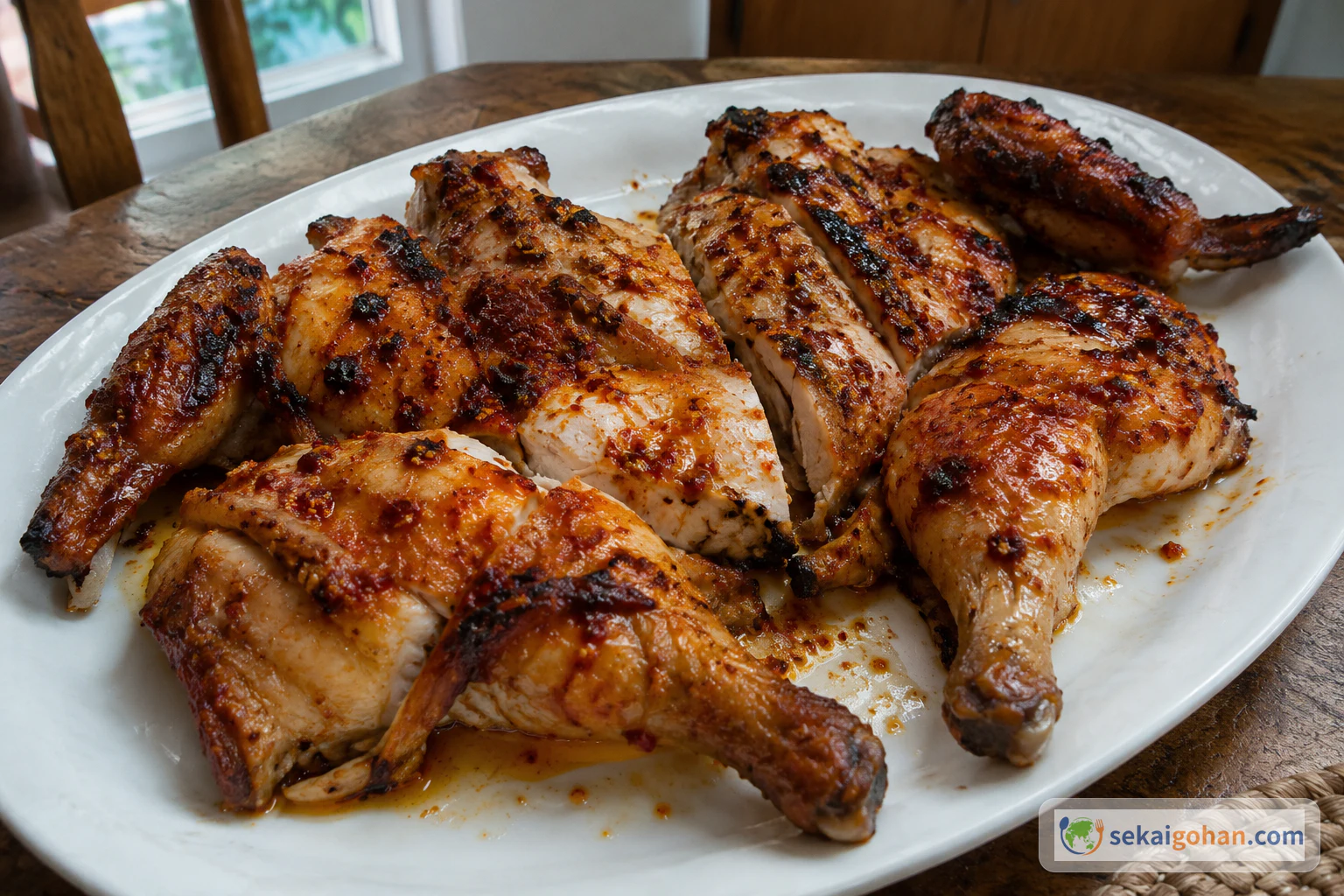
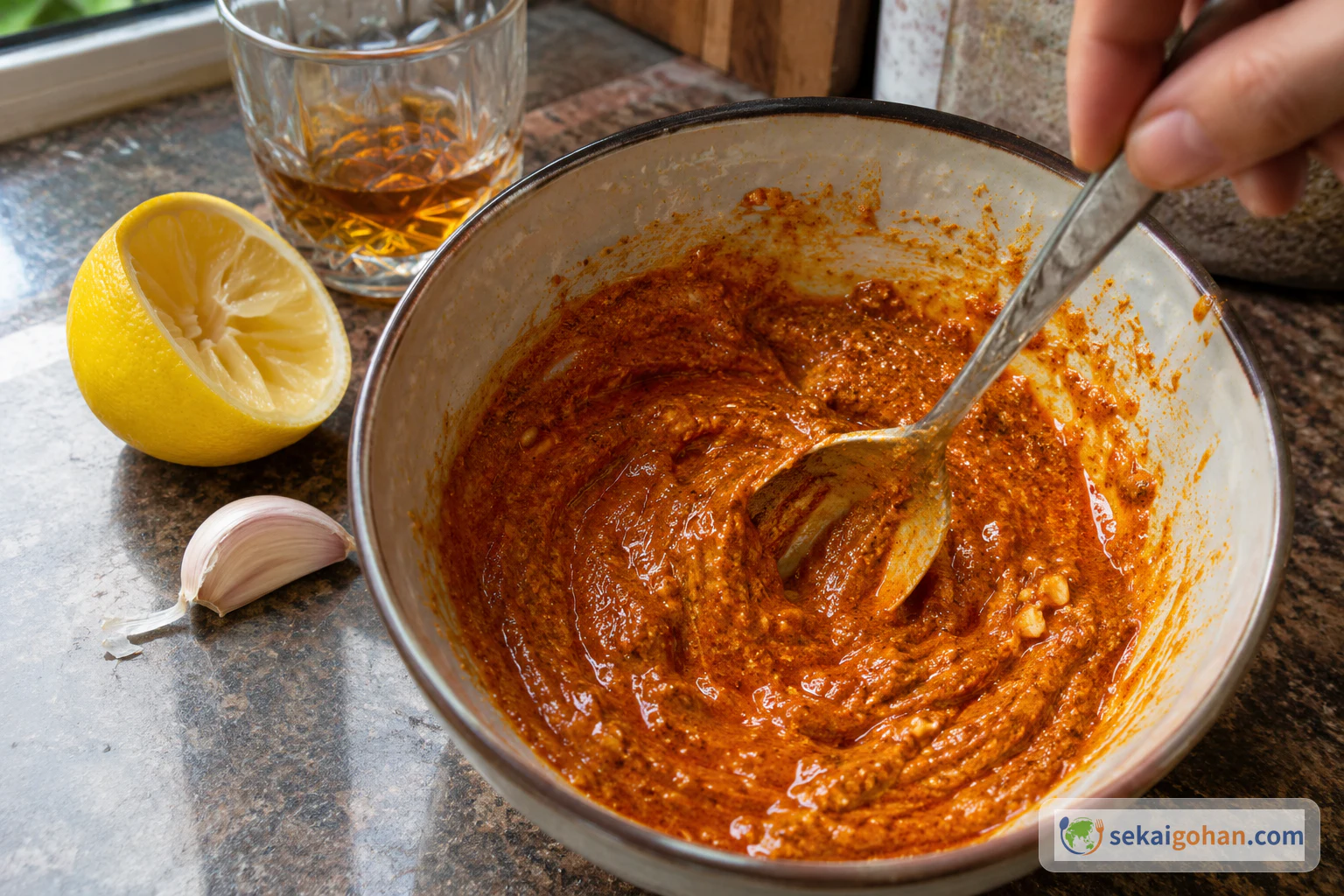
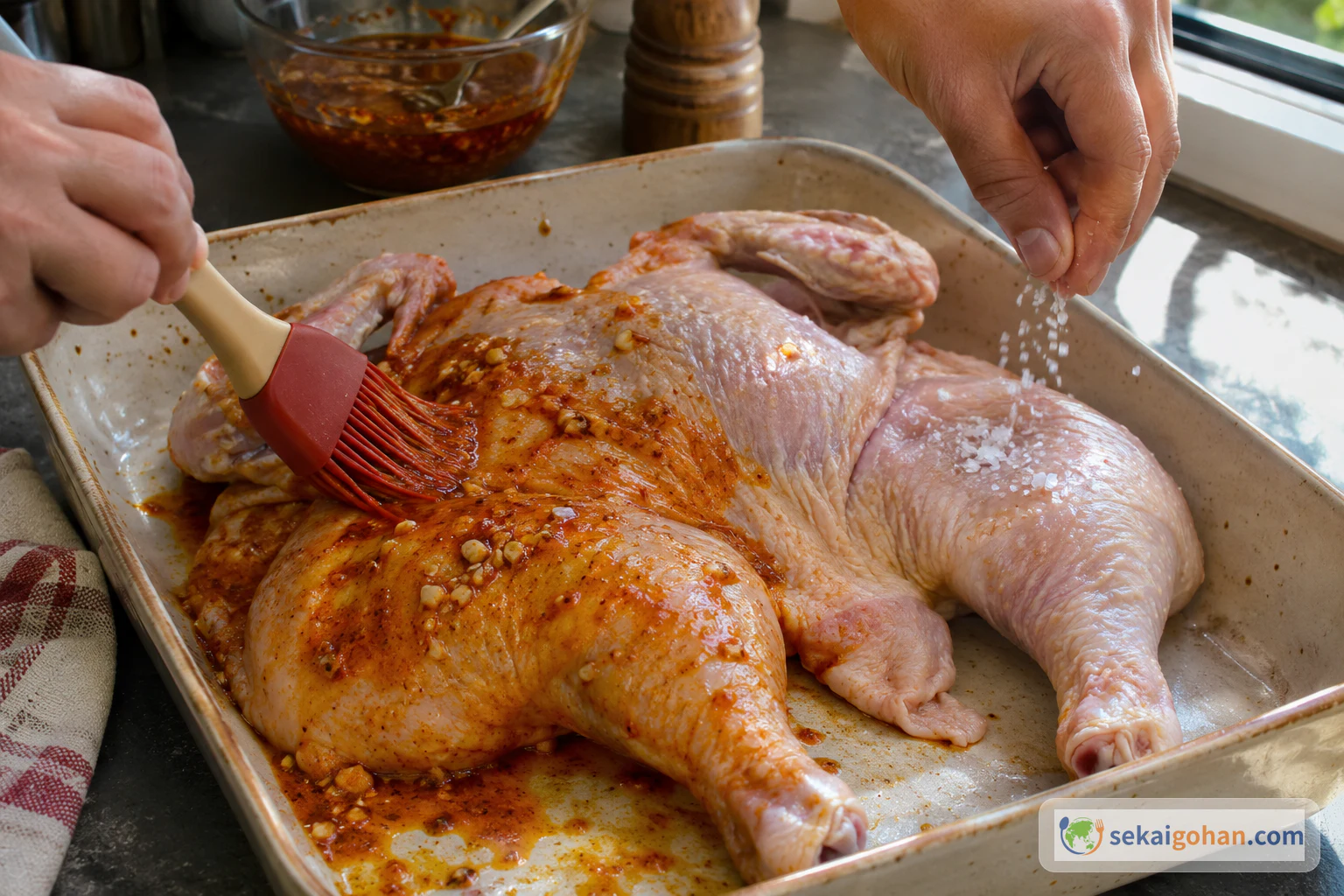
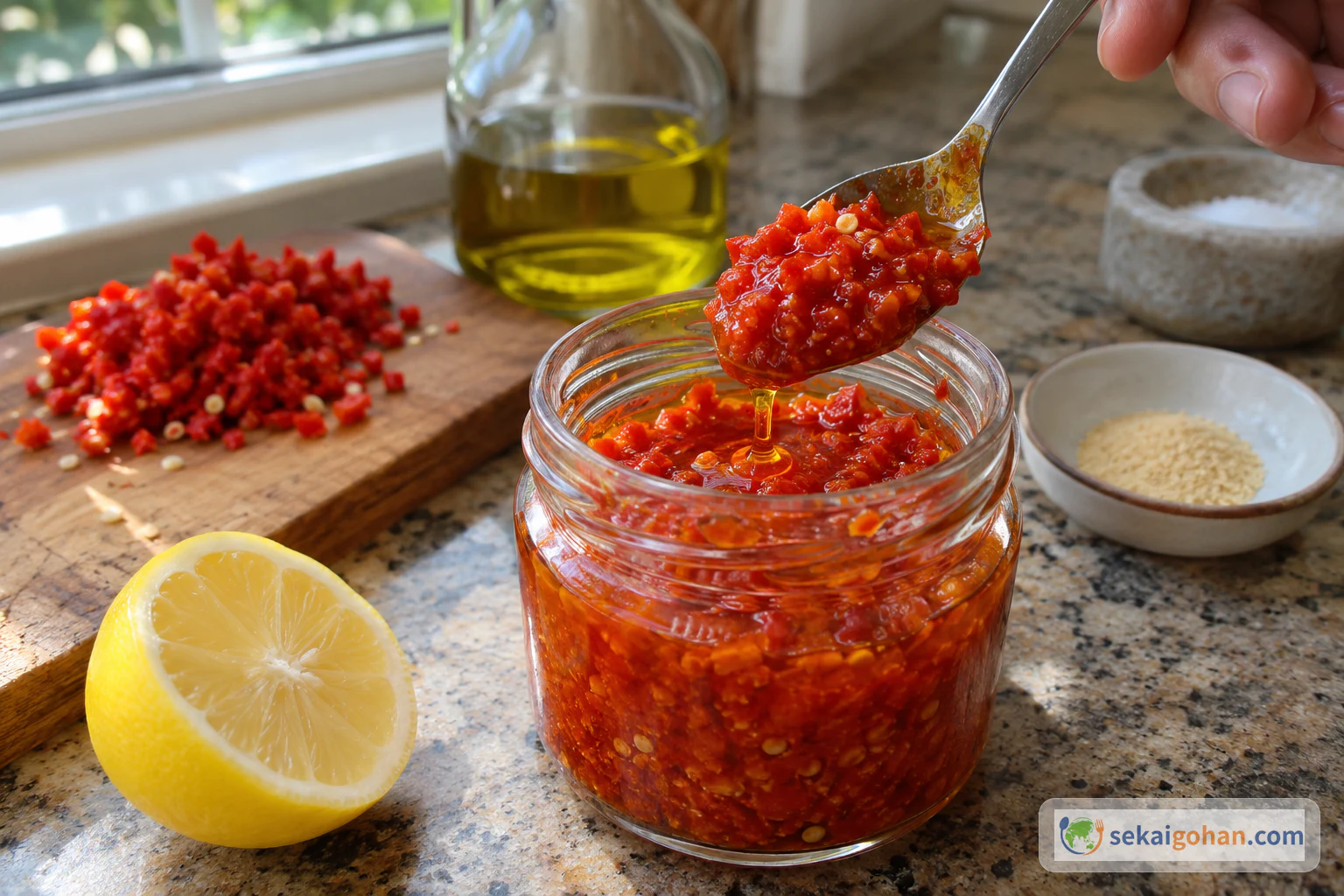
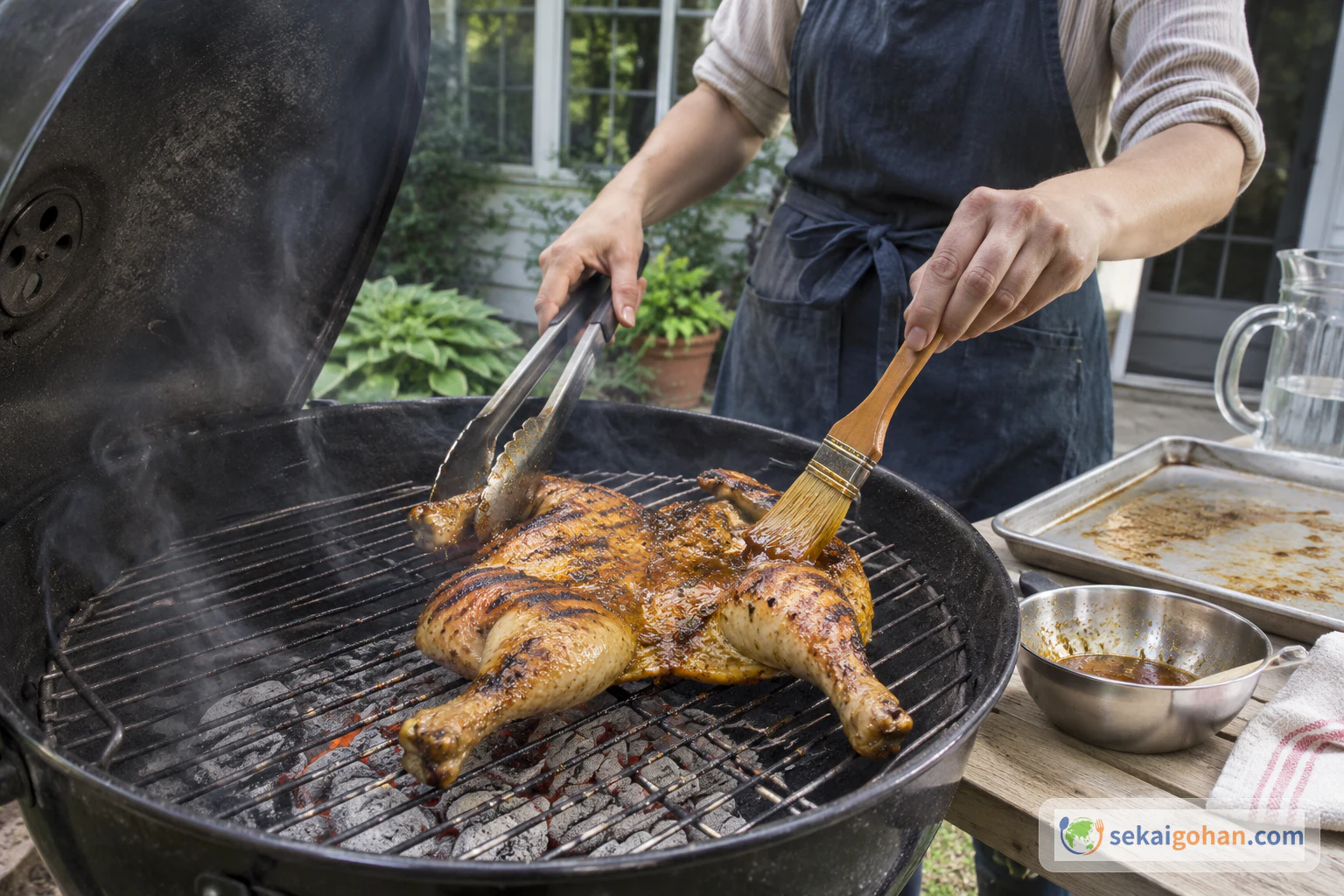
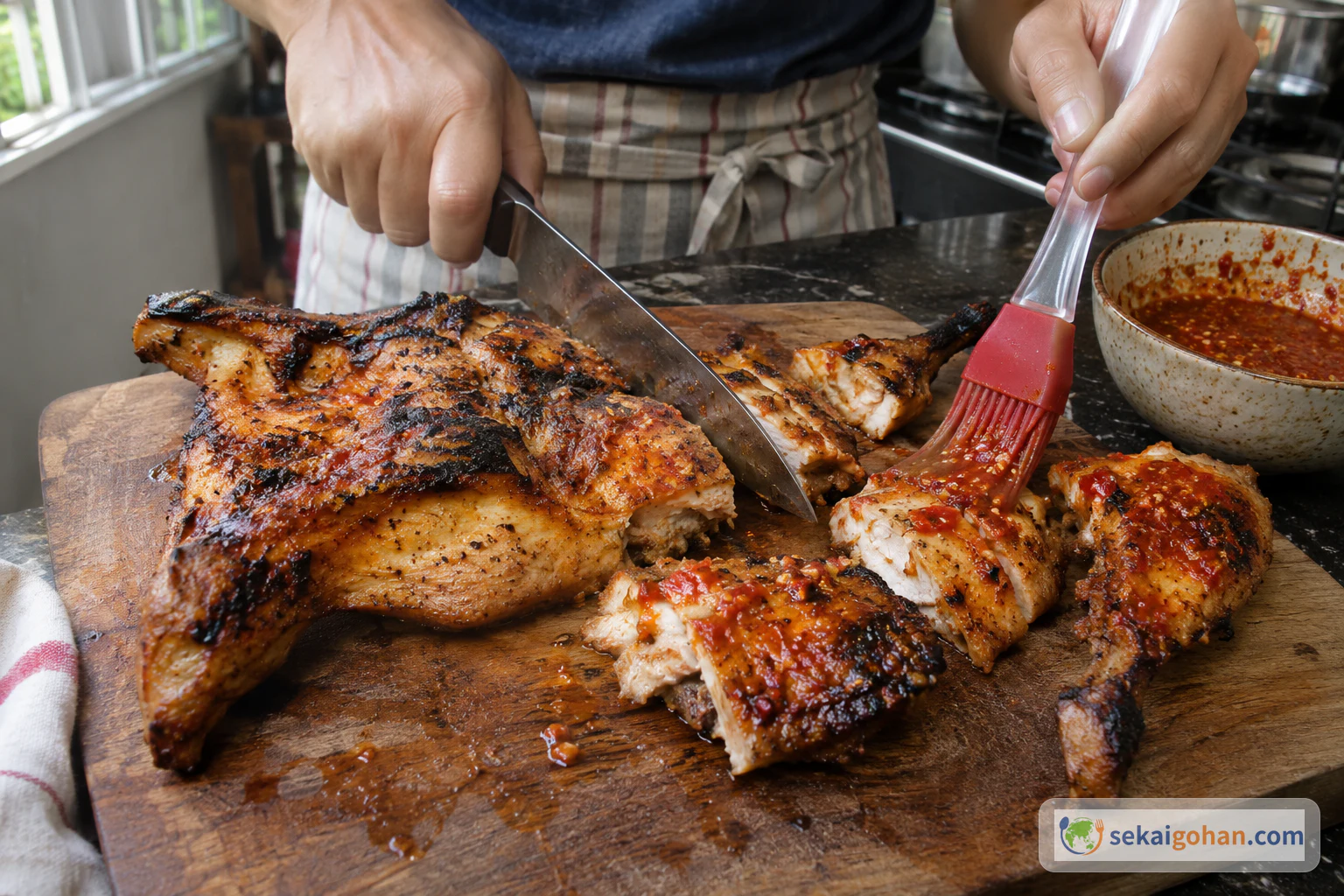
The bird lies flat on the grate, opened out like a book. Each time you turn it, the butter and paprika in the marinade drip onto the coals and send up a puff of sweet smoke, and the skin blisters a little further from gold toward dark brown. When it comes off, it is cut into pieces on the board and painted with a coarse red sauce of chopped chilli and olive oil. Charcoal chicken is the shop chicken of Australian cities. This version comes from the Portuguese-Australian shops: garlic, lemon, bay and a splash of whisky under smoky, slightly charred skin, with sharp chilli heat added at the end and served with chips and salad.
A chicken shop on every high street
In Australia, "charcoal chicken" names a kind of shop more than a single recipe. You walk in, order a half or a whole bird, and it comes off the grill with hot chips and a tub of sauce. The shops come from at least two migrant traditions, and the flavour depends on who runs the grill.
The Portuguese line
The Portuguese style is tied to Petersham in Sydney's inner west. In 1989 Frangos opened its first shop there. The founding family had moved from Madeira to Angola for ten years, and the marinade grew out of a grandmother's cooking remembered from those years. The shop began by grilling ten birds a day, and word of mouth took it to fifty. Its cooking joins Portuguese charcoal technique with flavours from Angola, and its house-made chilli sauce goes on everything: the chicken, the burgers and the chips. Frango is simply Portuguese for chicken.
The streets around the shop grew into a Portuguese food destination over the last forty years. The area around Audley Street and New Canterbury Road is now officially called Little Portugal: the local council resolved on the name in July 2019, and the state's Geographic Names Board approved it on 15 May 2020. The Bairro Português festival has run there every year since 2003.
Further back, the trail runs through Africa. In Portugal, chilli-marinated grilled chicken is often given the name "African", with its development usually credited to Portuguese settlers in Africa, Mozambique above all. Chillies reached the East African coast in the sixteenth century. That makes this dish neither a purely Australian invention nor a Portuguese classic carried over unchanged. It is a recipe that travelled through several countries before it reached the Sydney grill.
Other grills, other sauces
Lebanese-Australian shops grill chicken over charcoal too, and theirs comes with toum, the white garlic sauce, plus pickles and bread; many also sell tawook, marinated chicken breast off the grill. Rotisserie shops turn whole birds on spits. Both are charcoal chicken to an Australian, and neither is less authentic than the Portuguese version made here. If you have eaten piri-piri chicken, you know the family resemblance. Australian charcoal chicken is a shop plate: a whole bird butterflied, a marinade with whisky, bay and butter, basting over coals, and chips and salad on the side. For more of the country's food, see Australian dishes.
The seasoned salt shaken over Australian chips started in a chicken shop. In the early 1970s, a shop in Gawler, about 40 km north of Adelaide, combined the seasonings it used on rotisserie chicken into one mix. It turned out to suit chips, spread through takeaways, and went national after the recipe passed to a food manufacturer with the sale of the business in 1979.
Ingredients (serves 6)
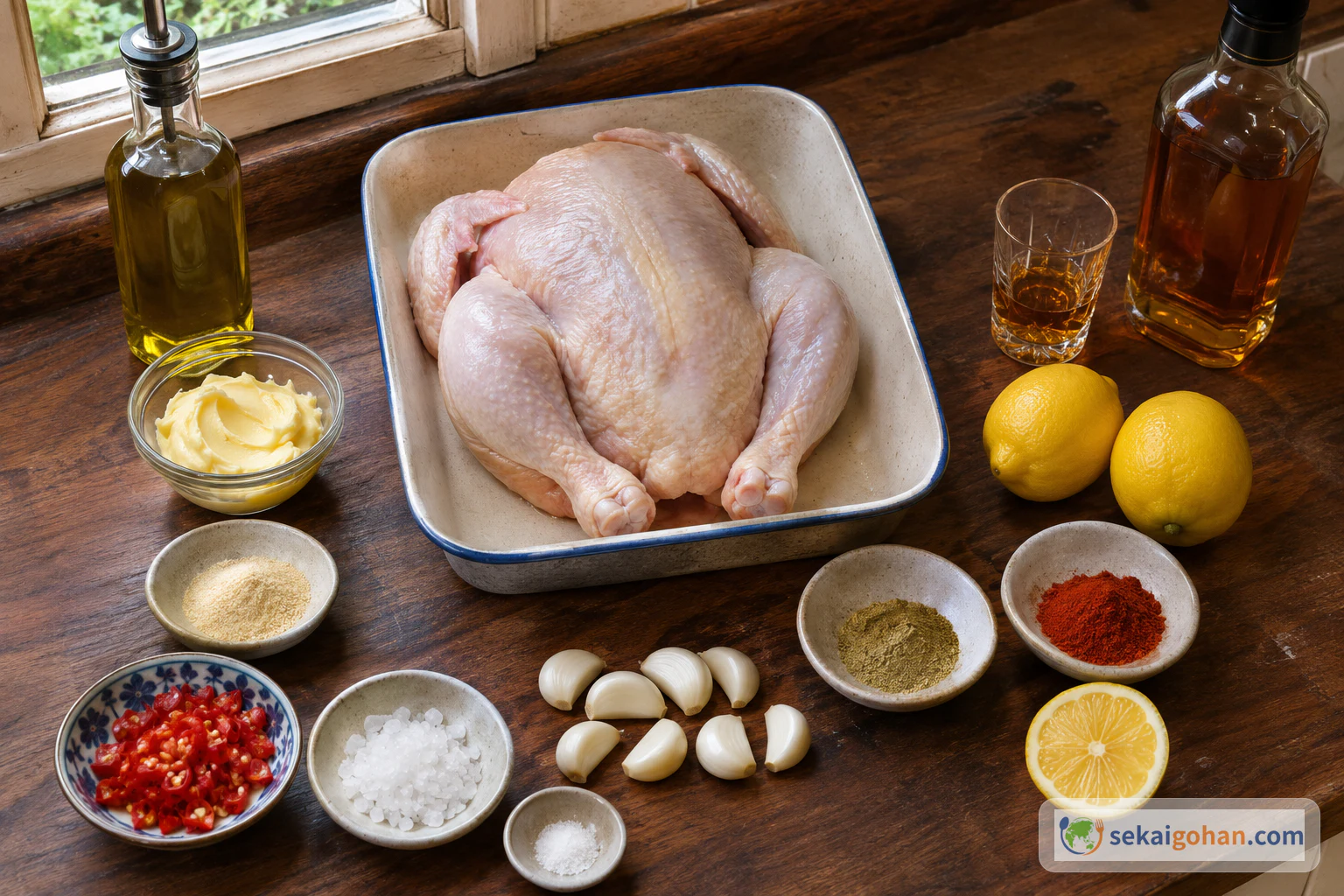
The ingredients fall into two groups. The marinade goes on the raw bird and is used again for basting. The chilli sauce is made in its own jar and only meets the chicken once it is cooked.
The marinade contains dairy (butter) and alcohol (whisky). Some of the alcohol cooks off on the grill, but not all of it. Shop-bought chilli sauce and chicken salt can contain wheat, soy and other allergens depending on the product, so read the labels on anything you add at the table.
Equipment
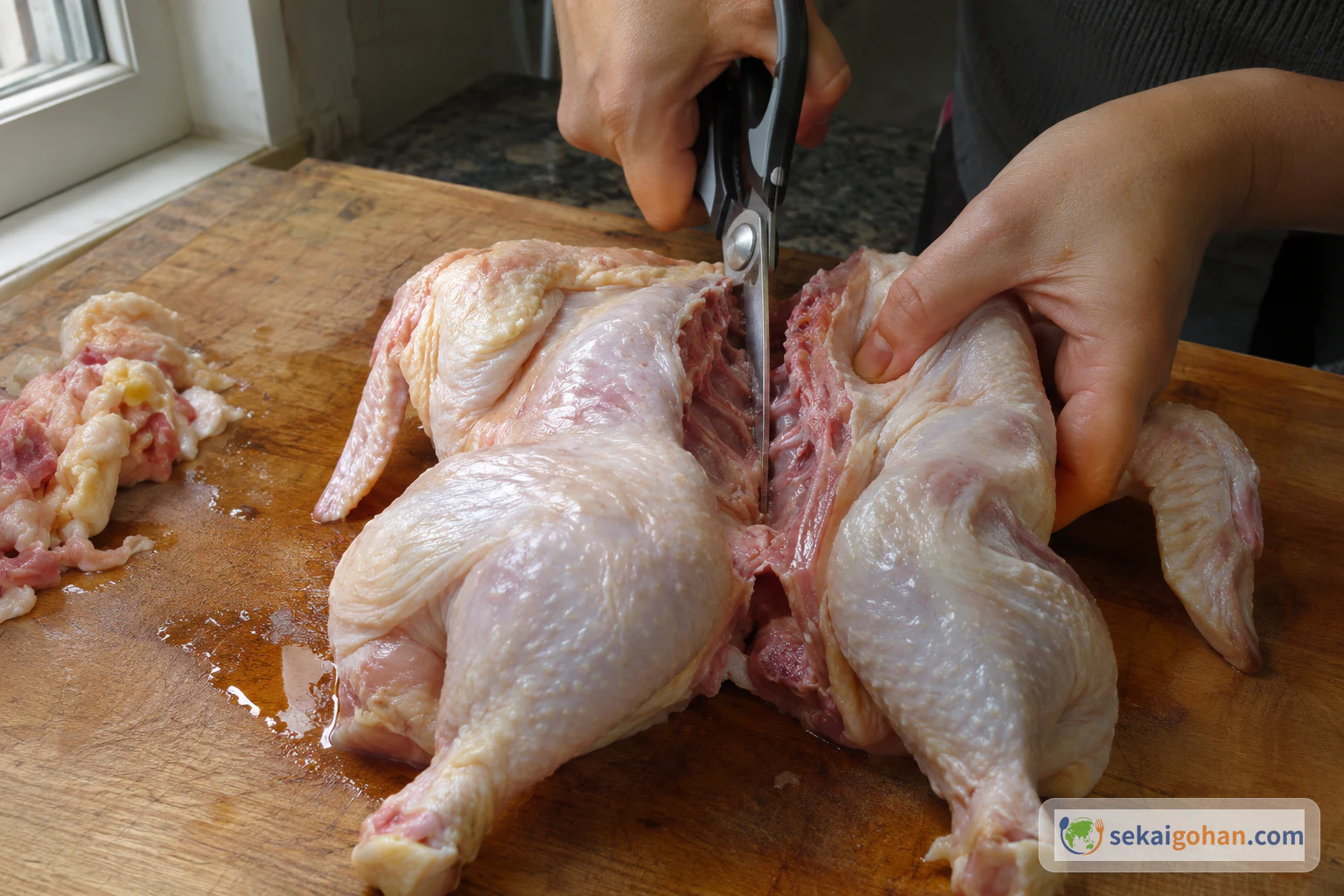
- Kitchen scissors, for cutting through the breastbone
- Sharp knife and a cutting board
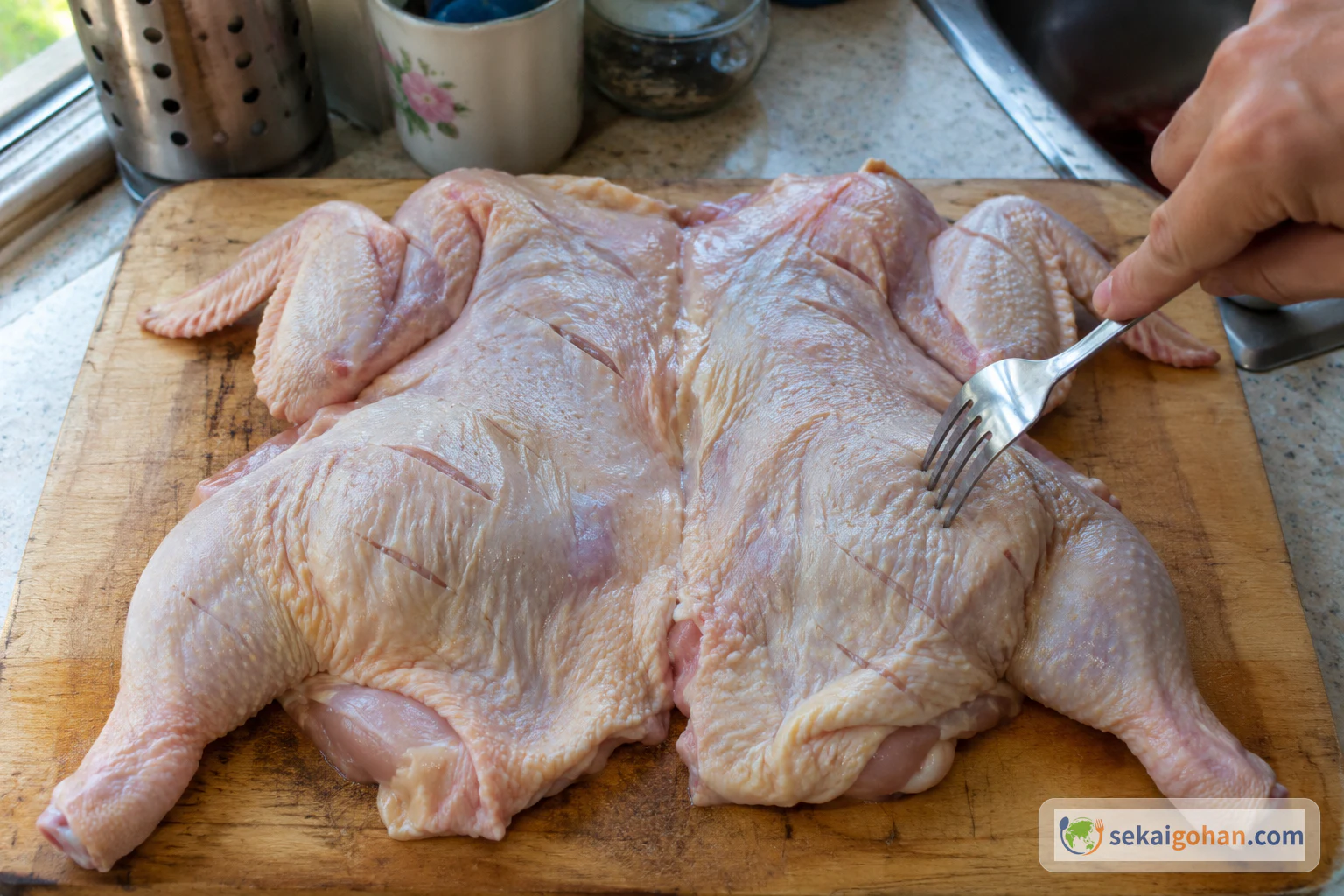
- Fork, for pricking the skin
- Medium bowl for the marinade and a shallow tray for marinating
- Small jar or bowl for the chilli sauce
- Silicone pastry brush (one for the marinade, a clean one for the chilli sauce)
- Kettle charcoal grill, charcoal and firelighters
- Long tongs, kept for raw chicken only, plus separate tongs or chopsticks for the cooked meat
- Instant-read thermometer
- Mortar and pestle, if you grind your own bay leaves
Choosing and substituting
The bird should be large; 2½–3½ lb (1.2–1.6 kg) is a good size, fresh or thawed. Kitchen scissors make the cut through the breastbone quicker and safer than a knife. If butterflying a whole chicken puts you off, 4 bone-in chicken legs work instead; they cook faster and char differently, and the result moves away from the shop's whole-bird plate.
Bay leaf powder is the ingredient you may have to hunt for at a spice shop or online. Bay is the signature smell here, and without it the marinade turns flat. If you cannot find the powder, grind 1–2 dried bay leaves to a fine powder in a mortar. Whole leaves stay leathery in the mouth and do not spread their aroma through the paste.
The rest of the swaps, one line each:
| Swap | What changes |
|---|---|
| Bottled 100% lemon juice for fresh lemons | Works, with less fragrance |
| Smoked paprika for sweet paprika | The aroma becomes smoky and turns into a different dish |
| Unsalted butter | Works; adjust with rock salt |
| Olive oil in place of the butter | Works, with a different flavour and less browning |
| Leave out the whisky | Less aroma and richness, and the lemon comes forward. Leave it out when cooking for children, pregnant guests or anyone driving |
| Garlic paste from a tube for crushed cloves | Avoid: the extra water loosens the marinade |
| Fresh garlic for the garlic powder in the sauce | Avoid: the sauce turns runny |
| Neutral oil for the olive oil in the sauce | Works, but the sauce loses its fruity olive note |
The chillies decide how hot the table gets. Ten to twelve small red chillies make a seriously hot sauce, so use fewer, or scrape out the seeds to take off the sharp edge.
Method
Start with the bird: cut it open and flatten it, then mix the marinade and get the chicken into the fridge. The 30–45 minutes it chills is your window to make the chilli sauce and light the charcoal. Once the chicken is on the grill, stay with it; the turning and basting are the cooking.
Wash your hands, knife, board and scissors after they touch raw chicken. Keep separate tongs for raw chicken and separate tongs or chopsticks for cooked meat. The salad and the chilli sauce must never touch anything that held raw chicken.
When it goes wrong
| What you see | Why | What to do |
|---|---|---|
| Skin is black but the inside is still raw | The heat is too fierce, or the bird is uneven in thickness | Press it flatter, move it to steadier heat and turn more often. Keep strong heat for the final colour only |
| The marinade burns onto the skin | Butter, paprika and whisky catch quickly | Turn more often, brush thinner coats, and concentrate the basting in the last 10 minutes |
| Flames jump when you baste | Fat and alcohol dripping onto hot coals or a gas burner | Brush on small amounts at a time and keep the lid handy |
| The meat is pink near the bone | It is not cooked through | Return it to the grill until the centre holds 167°F (75°C) for at least 1 minute |
| The sauce is too hot | Ten to twelve chillies is a lot | Use fewer next time and seed them; serve the sauce on the side so each person chooses |
| The sauce is runny | Fresh garlic, or too little garlic powder | Stir in more garlic powder; it is what thickens the sauce |
Serving and variations
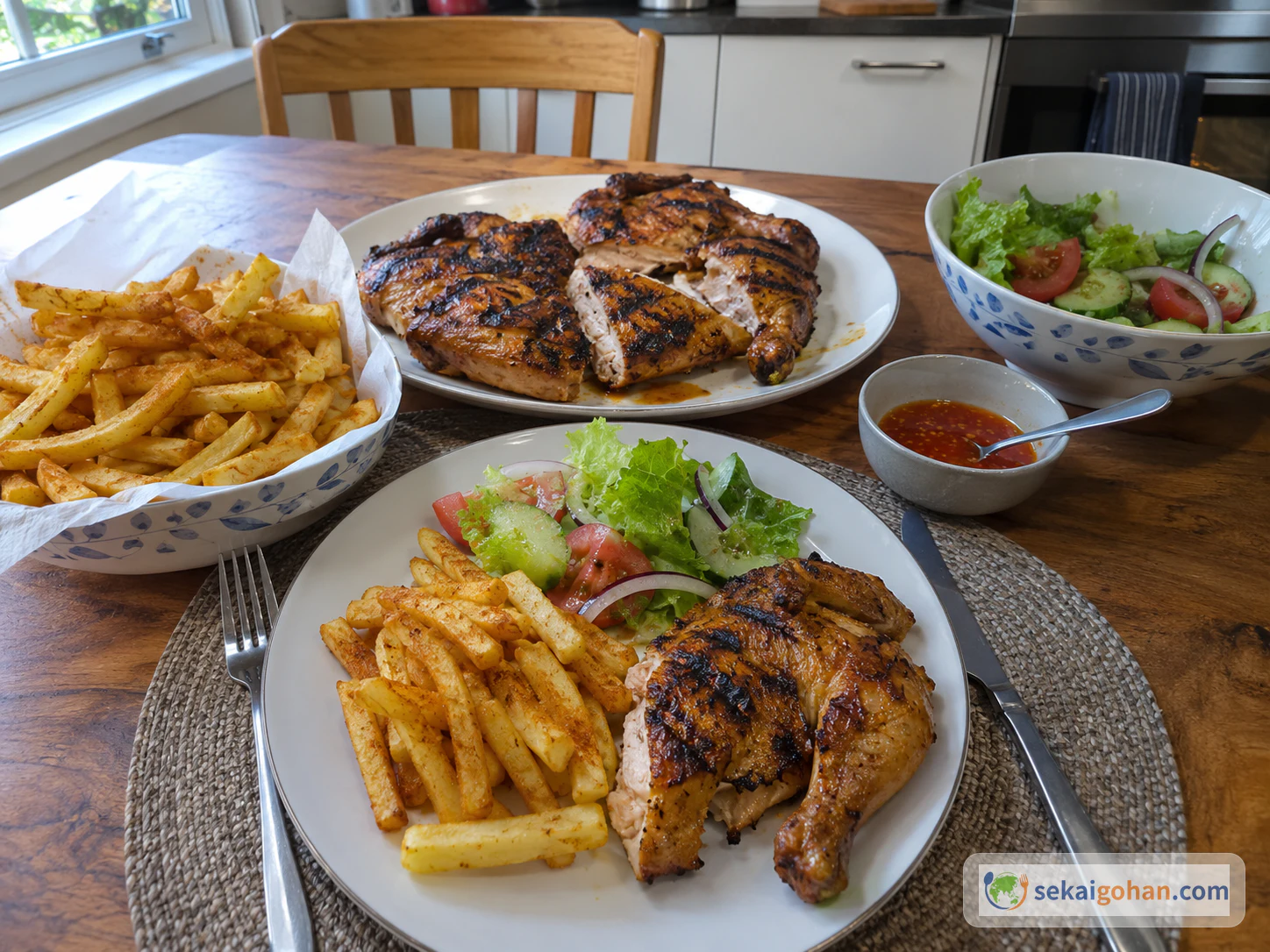
The shop plate at home
Put the chicken on a platter in the middle of the table with hot chips, a simple salad and the chilli sauce, and let everyone build their own plate. A shake of chicken salt on the chips finishes the takeaway feel. Keep the salad well away from the raw-chicken board and tongs, since it is eaten as it is.
Variations
- Two levels of heat. Brush the chilli sauce on only half the bird and serve the rest in a bowl. The marinade has no chilli, so children and heat-shy eaters get the same chicken.
- Bone-in legs. Four bone-in legs take the place of the whole bird when butterflying feels like too much. They cook faster and char unevenly, so turn them more often and check each one with the thermometer.
- Oven and broiler. Without a grill, roast the marinated bird skin side up on a rack over a tray at 390°F (200°C) for 35–45 minutes, then finish under the broiler for colour. The thermometer has the final word: 167°F (75°C) at the centre for at least 1 minute. A few smoking chips on a gas grill bring back some of the charcoal smell.
- Next-day sandwich. Burgers sit beside the chicken on the Petersham menu, so leftovers in a roll with chilli sauce follow the shop's own habit. Pieces over salad work too. Reheat leftovers until the centre reaches 167°F (75°C).
Frequently asked questions
Can I marinate the chicken overnight?
Keep to 30–45 minutes for this marinade. The lemon and whisky work quickly, and the flavour comes mainly from the basting on the grill. Overnight marinating belongs to a different Portuguese-style mix of piri-piri oil and lemon juice.
Does the alcohol in the whisky cook off?
Part of it does over the coals, and some stays in the meat. For children, pregnant guests or anyone driving, leave the whisky out. The chicken still tastes good, with the lemon a little more forward.
Why use garlic powder in the sauce when the marinade uses fresh garlic?
Fresh garlic makes the chilli oil runny, while the powder thickens it so it clings to the cut chicken. In the marinade, fresh crushed garlic is right, because it cooks on the grill.
Can I use the leftover marinade as a dipping sauce?
No. Once it has touched raw chicken, it goes only onto the bird on the grill. The table sauce is the chilli sauce from its own jar.