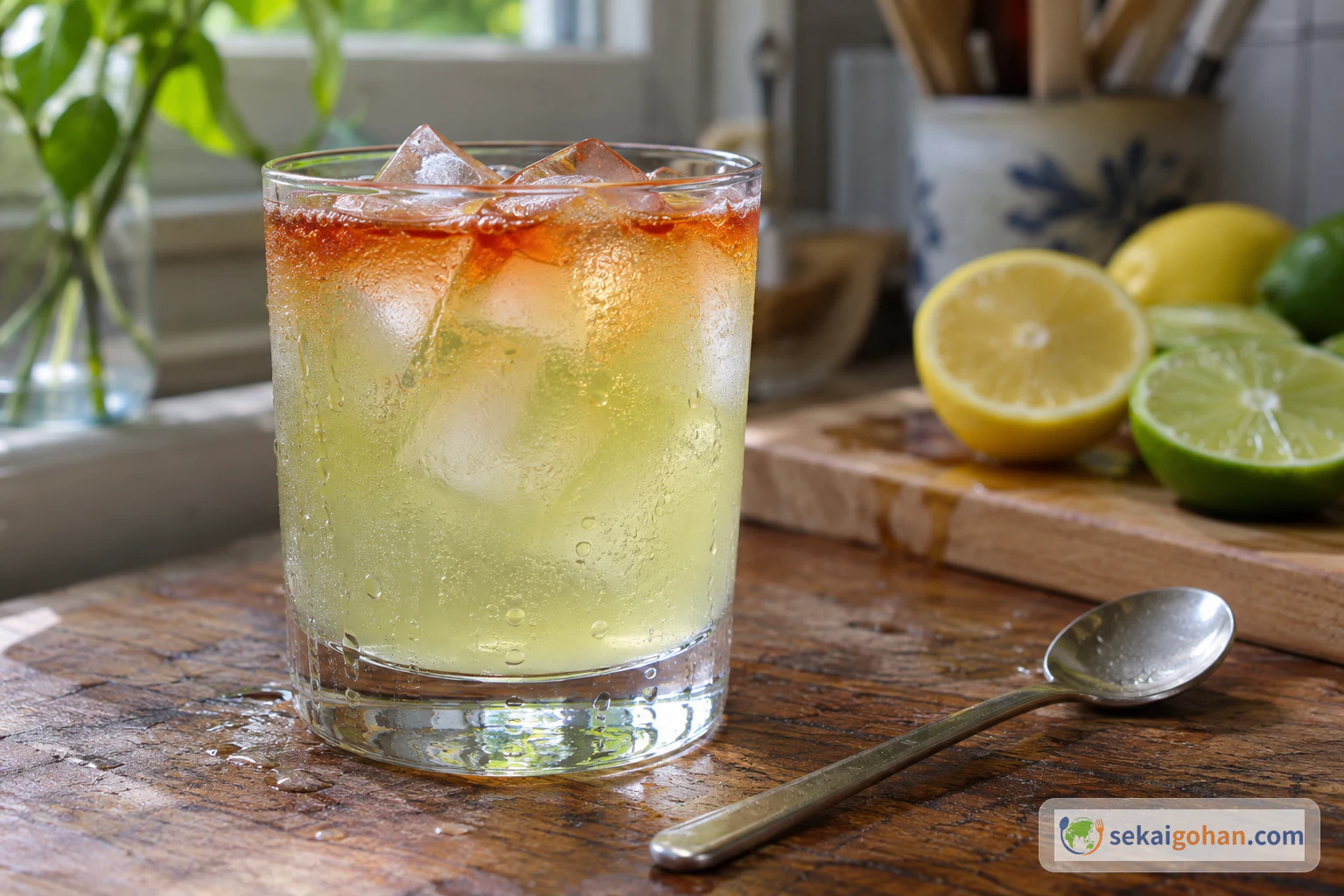
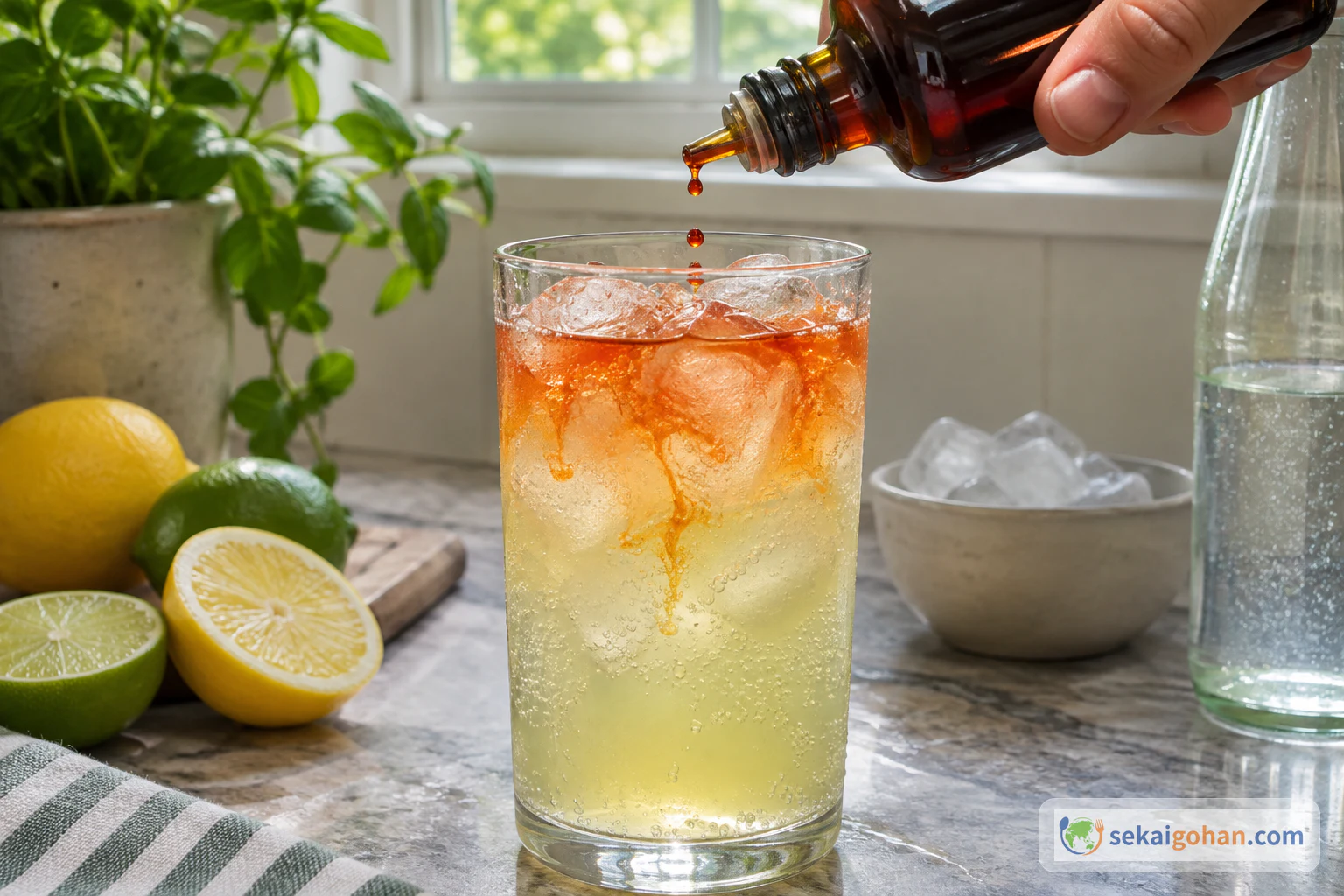
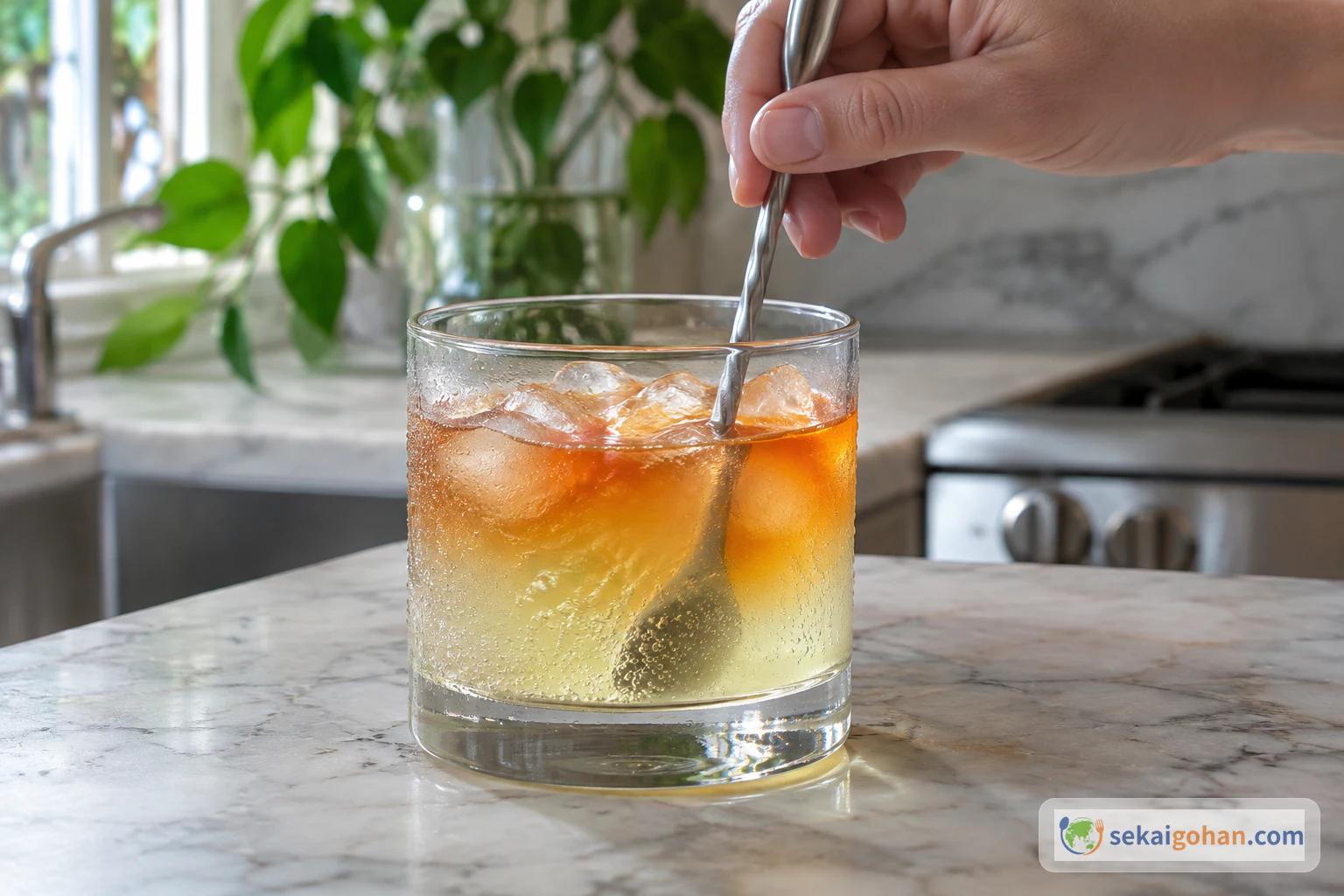
The bitters go in last. You drop half a teaspoon onto the fizz and it sits on top as a rust-orange band, running down through the ice toward the pale yellow-green below. For a moment the glass looks like a sunset, and then the spoon goes in. Lemon, lime and bitters, ordered as "LLB" at the bar, is the soft drink Australians ask for at the pub, the golf club and the restaurant table, and it is common in New Zealand too. It tastes sharp and only lightly sweet, with lemon and lime up front and a dry, herbal bitterness underneath, so it drinks like something more grown-up than a soda.
From a Ship's Medicine Chest to the Pub Counter
What goes in the glass
The classic version has three parts: clear lemonade, lime cordial and aromatic bitters, and the bitters are almost always Angostura. In Australia and New Zealand, "lemonade" means a clear, sparkling lemon soft drink. It is a fizzy drink from a bottle, very different from the still, freshly squeezed lemonade of the United States. If you keep that in mind, the drink makes sense: it is a bubbly lemon soda sharpened with lime and darkened with a few drops of bitters.
The recipe below is a fresh modern take built on club soda, homemade syrup and fresh-squeezed lemon and lime. It takes about three minutes and makes one glass. The pub way, with cordial and a bitters-coated glass, comes later, after the method. Together they belong among the everyday drinks of Australian food. In 2018 more than 100 million glasses were being poured in Australia each year, and it is often called the country's national drink. At pubs it is one of the soft drinks people most often order with a meal. It is also a very local order: visitors often have no idea what the shortened name means.
Not quite zero alcohol
LLB is sold and served as a mocktail, but it is not alcohol-free. Angostura bitters are 44.7% alcohol by volume, and even a small measure leaves a trace in the glass. Worked out for the recipe here, a glass comes to about 0.6% alcohol, slightly more than commercial kombucha. The pub pour is often put at 0.2%. The figure moves with the number of dashes, the size of the glass and how the sum is done, so take each number on its own terms.
Standard aromatic bitters contain alcohol, so a lemon, lime and bitters made with them is not alcohol-free. If you avoid alcohol completely, are serving children, are pregnant or breastfeeding, or are about to drive, do not treat it as an alcohol-free drink. Make it with spirit-free bitters (All the Bitter and Dram are two such brands) for a glass with no alcohol at all.
Navy ships, colonial verandas and the golf club
The bitters came first. Johann Siegert went to Venezuela at 24 and became surgeon-general in Bolívar's army. Around 1824 he perfected a tincture of herbs and spices, later named after the town of Angostura, today's Ciudad Bolívar. In 1867 he founded a company with his son Carlos, and he died in 1870. The business moved to Port of Spain in Trinidad and Tobago, took the name Amargo de Angostura in 1904, and today is the House of Angostura. Sailors bought small bottles and carried them home, which spread the bitters around the world.
By the 1840s, Royal Navy ships carried bitters as a remedy for seasickness. Sailors mixed them into gin and called it Pink Gin. In the colonies, lemonade and bitters spread as the non-alcoholic version of that drink. In Australia, Angostura was already being advertised in the newspapers in 1867 and 1868, and in 1879 Carlos Siegert toured the country to promote it. In the 1880s a journalist in Ceylon wrote about the tropical habit of drinking "lemonade, angosturas, and ice." The drink kept turning up in print after that. A country newspaper in Victoria brought it up during the bank crisis of 1893. In 1910, middle-class young people in London were said to favour it. By the early twentieth century it had become a home remedy for car sickness.
When lime joined lemonade and bitters to make the three-part drink is not settled. One common story says it was first mixed in Australia around the 1880s, when lime was added to the older remedy drink. Nobody knows whether the first glasses used fresh lime or cordial, though cordial is what most pubs pour today. The golf club link is just as open. LLB is plainly a favourite at golf clubs, and some tie its spread to the spread of golf, but where that story came from is unknown.
In colonial days, lemonade and bitters was also known by the nickname "Campbell." Today the full name is usually cut down to three letters at the bar, which is part of why travellers can be left guessing what their neighbour just ordered.
Cousins around the world
Angostura spread through the same ports and ships everywhere it went, so the same idea has relatives elsewhere. Nigeria has the Chapman, which mixes orange juice, grenadine, lemonade and bitters. In Hong Kong the Gunner uses ginger ale or ginger beer with lemon and bitters. Closer to home, soda, lime and bitters swaps the lemonade for soda water. Ready-made LLB is also sold in bottles. One well-known brewed version uses real lemons and limes brewed for seven days, with cinnamon quills, clove buds and gentian root for the bitter edge.
Ingredients (serves 1)
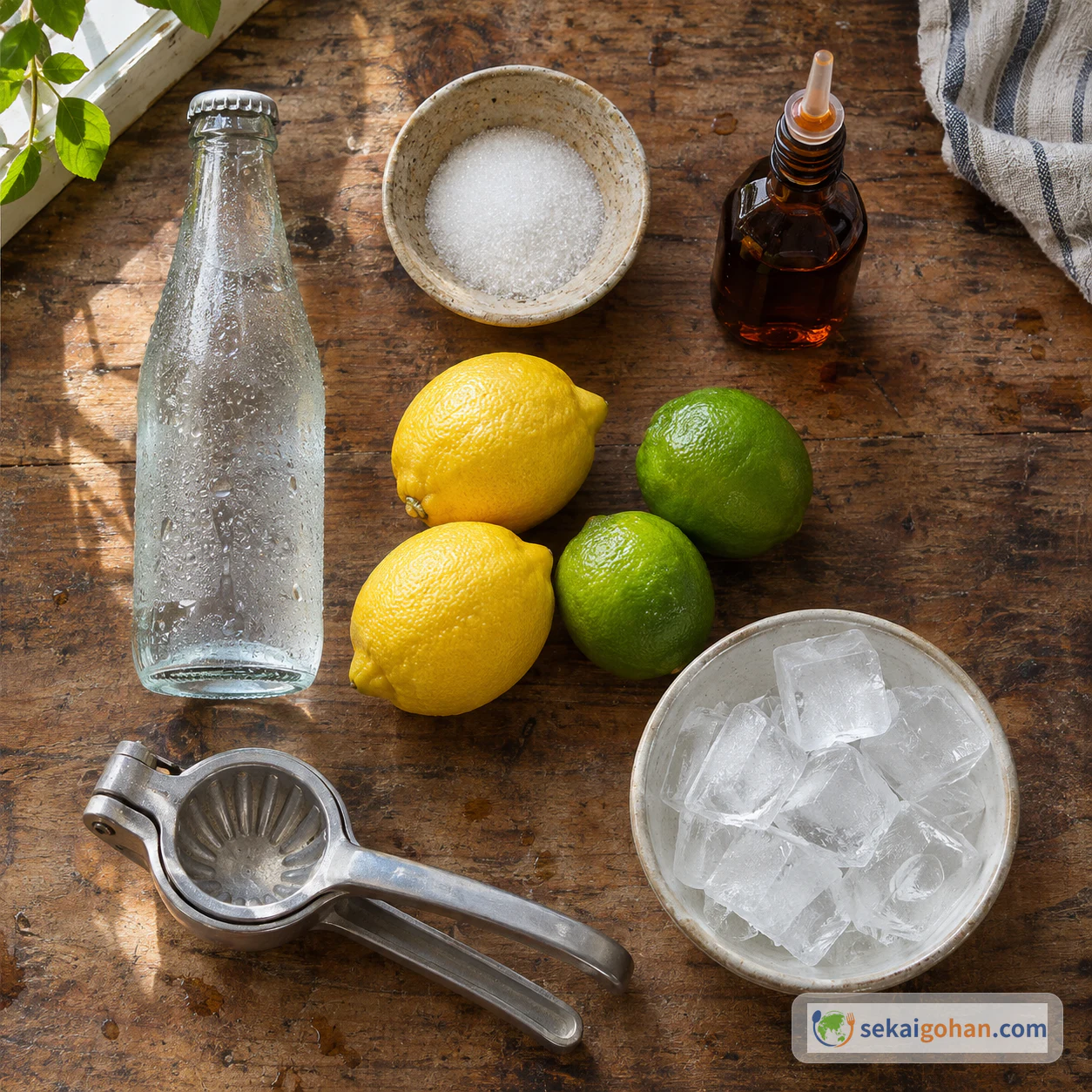
Cold soda holds its bubbles longer. Leave the bottle in the fridge until the glass is full of ice and the juice is squeezed, then pour.
Bitters, lime cordial and bottled soft drinks are made differently by each brand. Check the label on each bottle for the ingredients you need to avoid.
Equipment
- Rocks glass
- Jigger or measuring cup marked in ounces
- Measuring teaspoon
- Citrus squeezer
- Bar spoon
Choosing and Substituting
Use club soda rather than seltzer. Club soda has a little salt, and the salt holds the citrus and bitters together. If seltzer is all you have, dissolve a pinch of salt in the citrus juice before it goes into the glass. Use plain club soda here and save the lemon-lime soft drinks for the pub version below. In this recipe the syrup does all of the sweetening, so a sweet soda would throw the balance off.
For the citrus, buy whole lemons and limes and squeeze them yourself. Fresh juice is what makes this version taste bright. Simple syrup is just equal parts sugar and water, so there is nothing special to buy for it.
The one bottle you may need to hunt for is aromatic bitters. Import food shops and liquor stores carry Angostura in a bottle with a built-in dasher stopper. Spirit-free bitters take its place when you want no alcohol at all, and they give a slightly different aroma. For the pub version you will also want lime cordial, which import shops often sell as sweetened lime juice.
Method
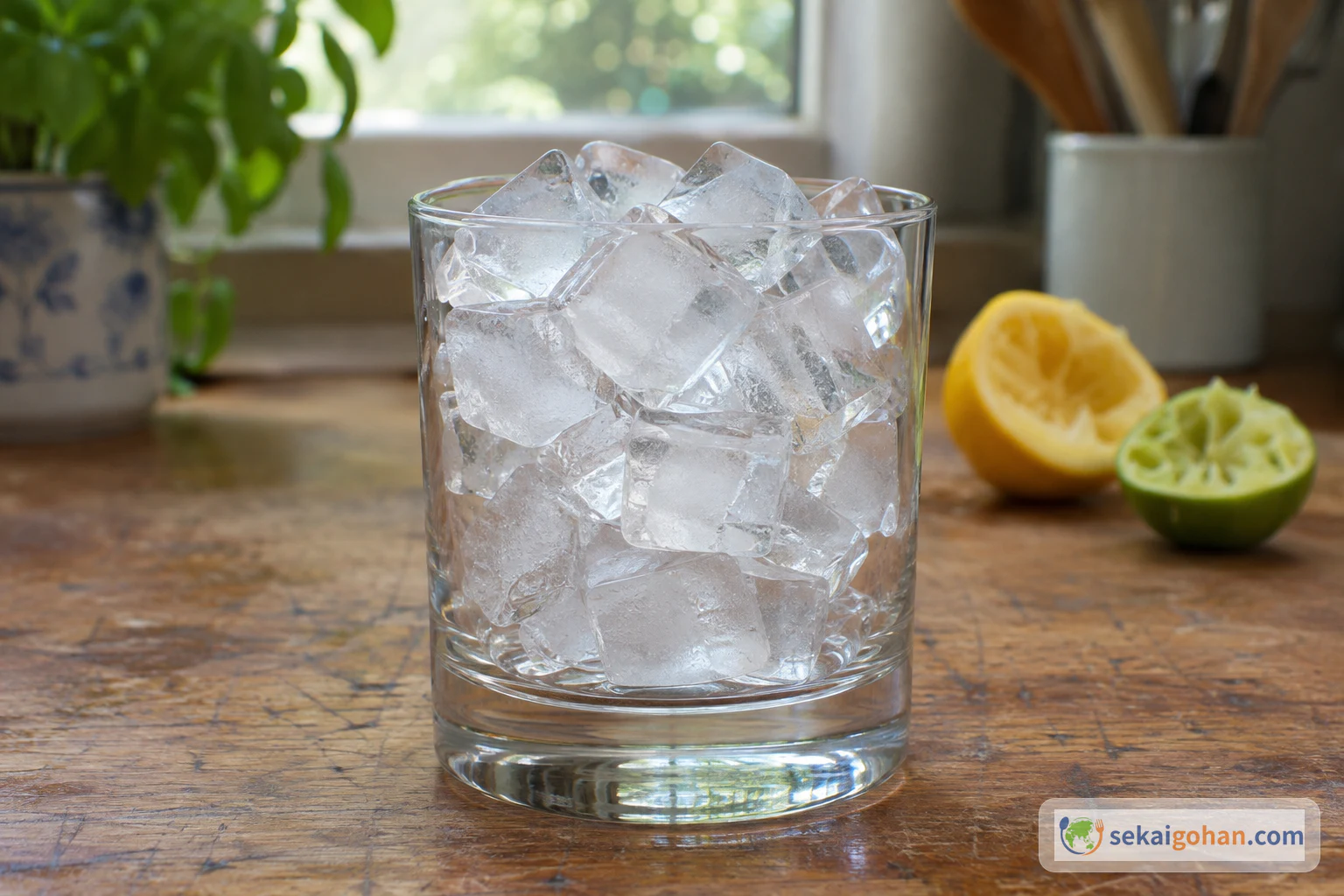
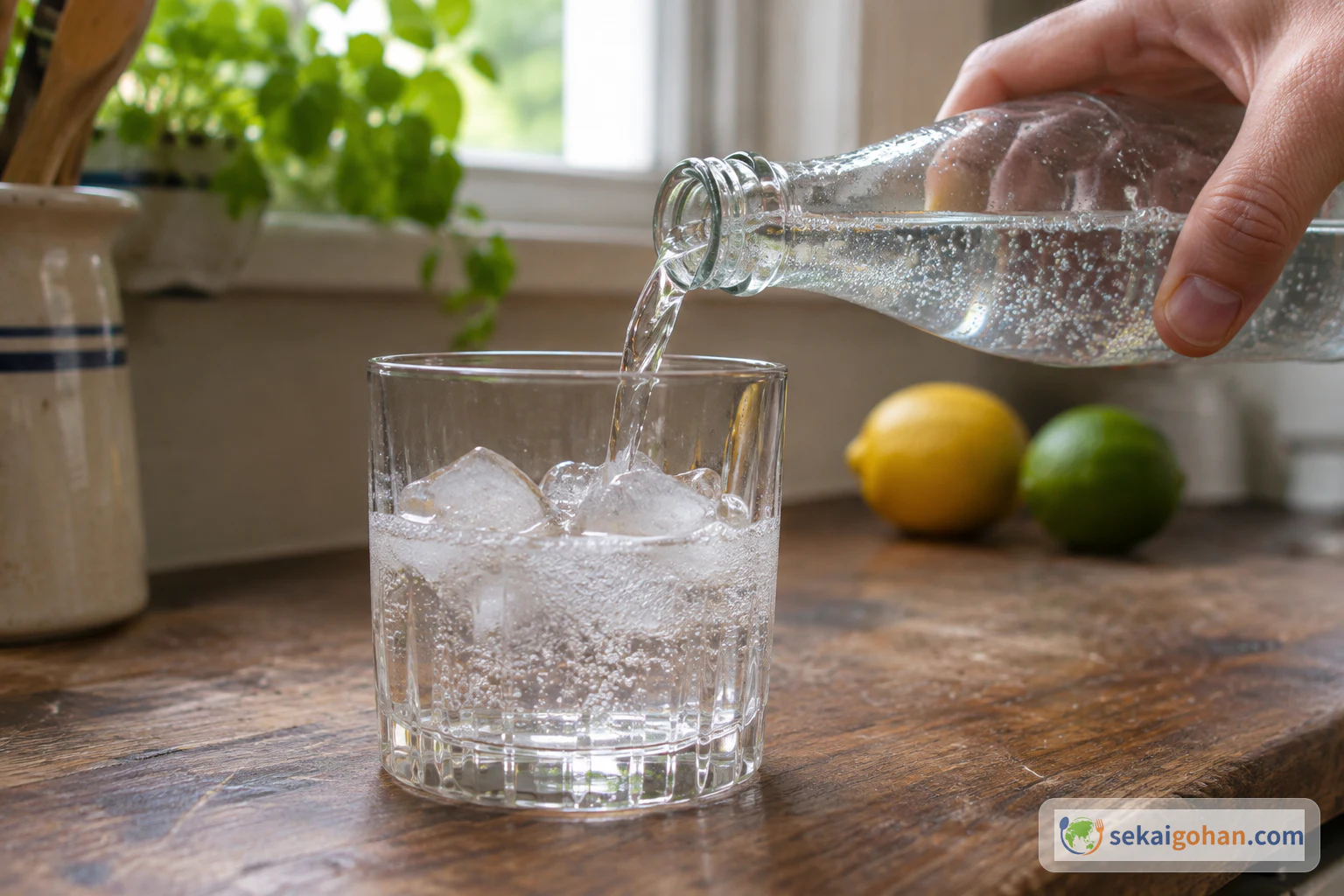
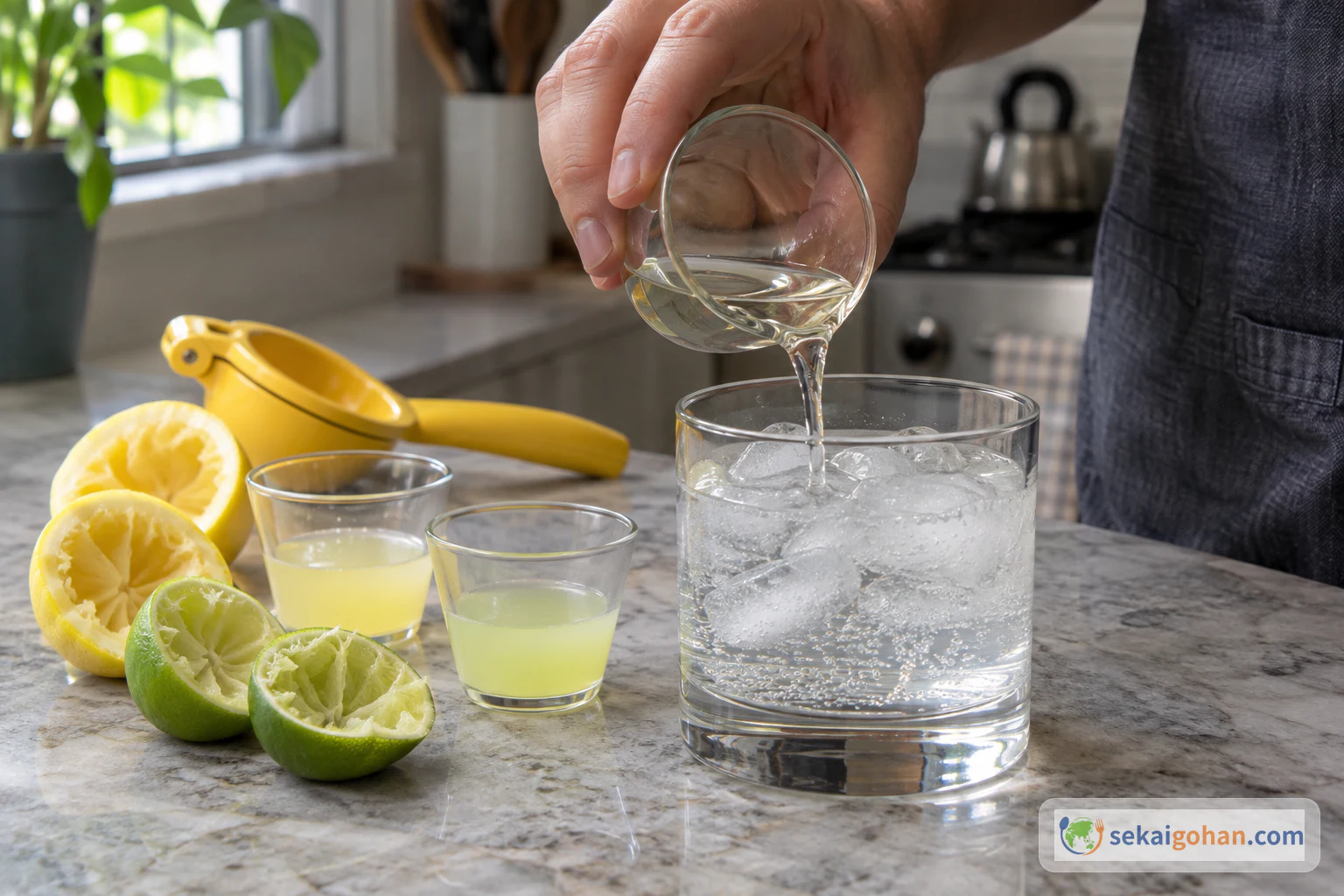
Squeeze the citrus and make the syrup before you start, because once the soda is poured the rest moves fast. The order matters more than anything else. Ice goes in first, then soda, then syrup and juice. The bitters go on top, and you stir only at the very end.
When It Goes Wrong
| What you see | Why | What to do |
|---|---|---|
| The drink is flat | The soda was warm, or was opened and poured too early | Keep the soda in the fridge and open it only at step 2 |
| No orange layer, just an even tint | The bitters were poured in hard, or the drink was stirred before they settled | Tip the bitters gently onto the surface and stir only once the band has formed |
| Too bitter and medicinal | The bitters were shaken straight from the bottle instead of measured | Measure ½ tsp in a spoon for this recipe, and keep dashes for the pub version |
| Tastes thin, the citrus doesn't hold together | Seltzer was used in place of club soda | Dissolve a pinch of salt in the citrus juice next time |
Serving, Variations and Making Ahead
At the table
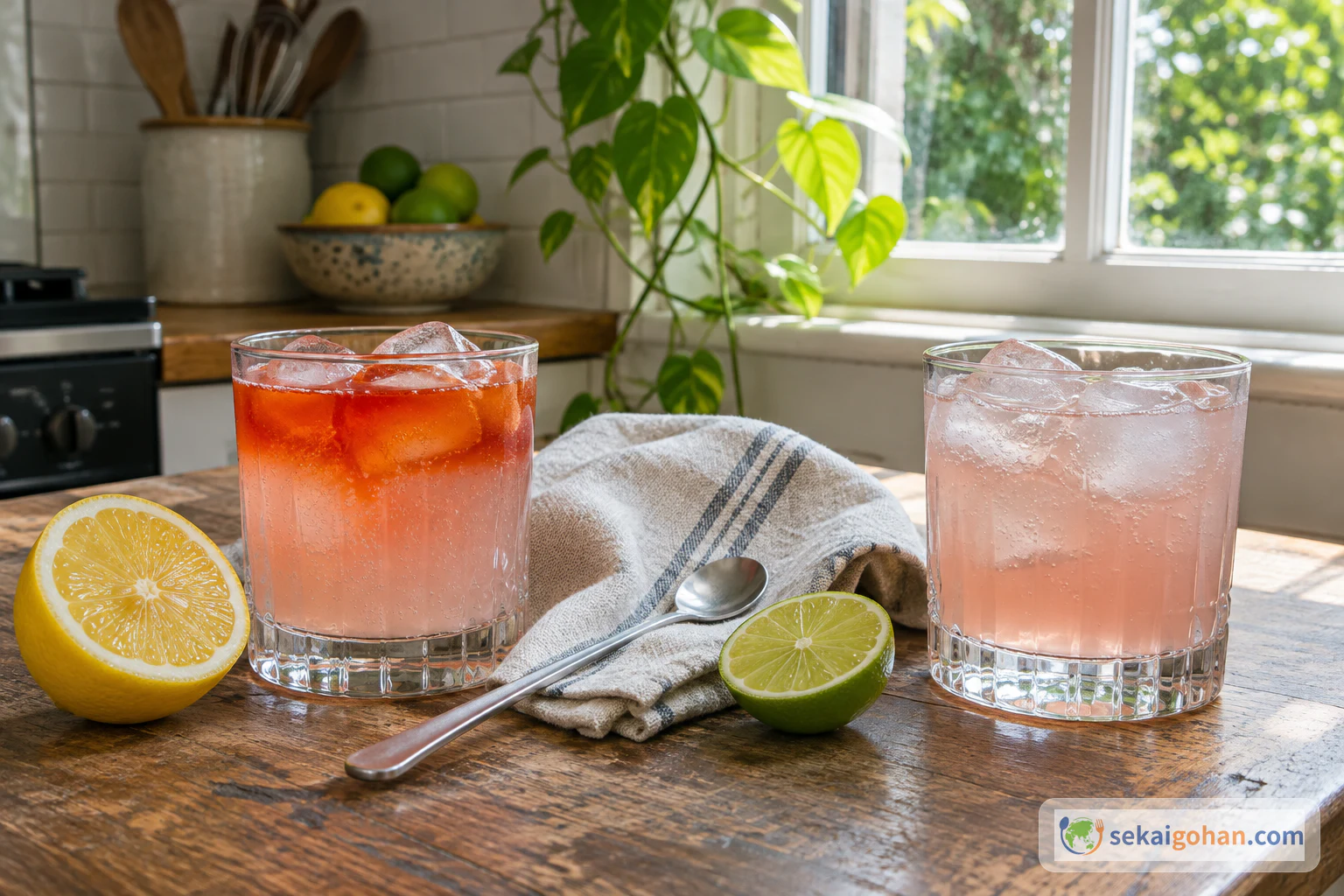
In Australia, LLB is the drink for the table when you are driving, at a long lunch or after a round of golf. It goes with whatever is on the plate, the way cola does. Its sour, dry finish works well with fried food and salty bar snacks, because the drink is never heavy.
The pub way: cordial and a coated glass
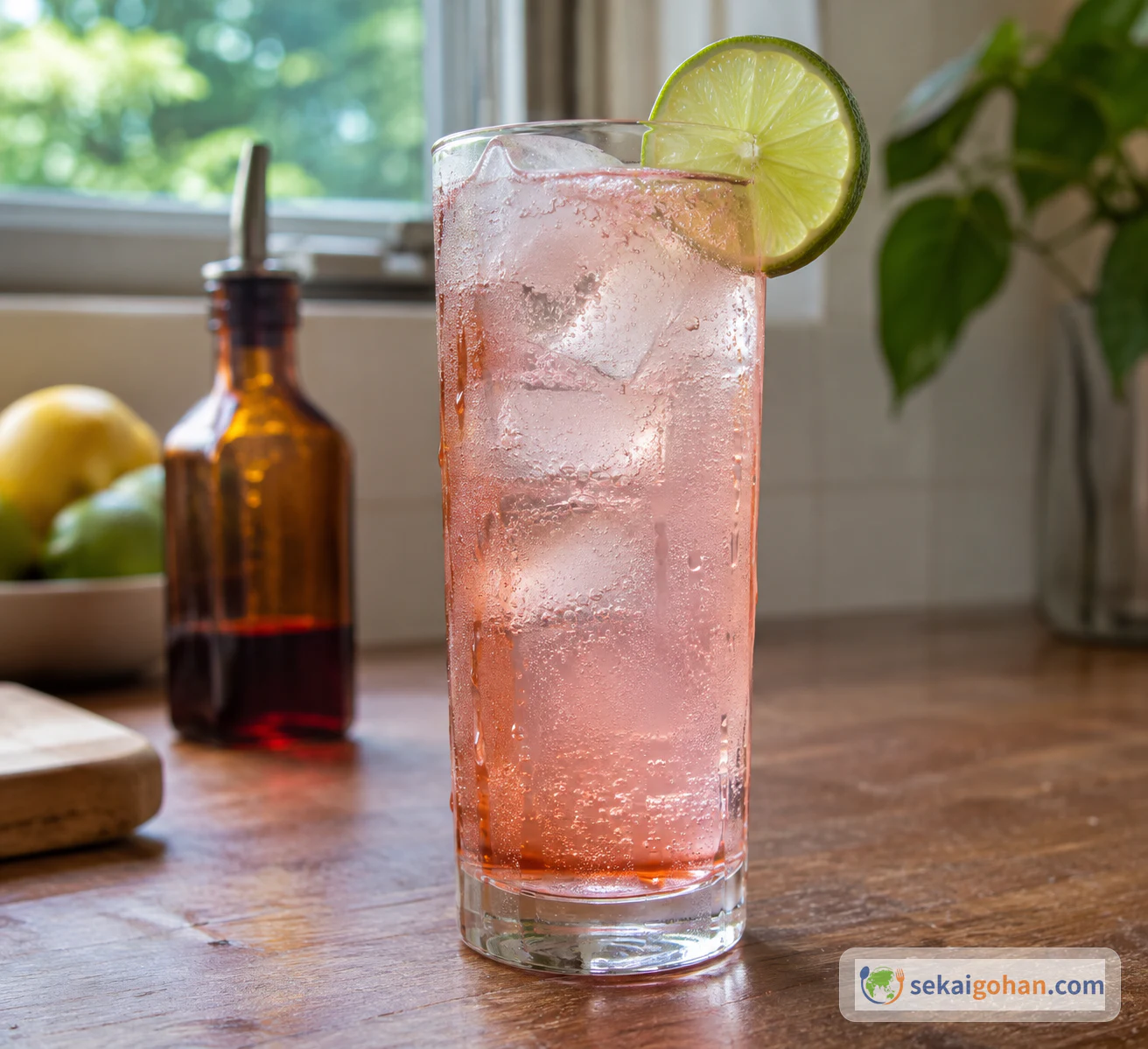
At the pub the order is built differently. In the best-known pour, 4 to 5 dashes of Angostura are swirled around the inside of the glass to coat it. Clear lemonade goes in with 1 to 2 tbsp (15 to 30 ml) of lime cordial, and a wedge of lemon or lime finishes it. A home version along the same lines uses 6 to 8 dashes of bitters with ¾ cup of lemon-lime soda or lemonade, ice, and either the juice of 1 fresh lime or 1 tbsp of lime cordial, topped with thin slices of lemon or lime. With a straw in the glass, each drinker can stir the bitters through as much as they like. The method changes the colour. A coated glass turns the whole drink pale pink, while bitters floated on top leave a deep red crown.
Variations
- Spirit-free bitters. Swap them in for Angostura to make a glass with no alcohol at all. The aroma shifts slightly, but the build stays the same.
- Grapefruit or tangerine. Use grapefruit or tangerine juice in place of the lemon or lime, in the same amounts. The drink gets a softer, rounder citrus note.
- Other bitters. Peychaud's, orange bitters or celery bitters each change the aromatic top of the drink, and that aroma is the first thing you smell when you lift the glass.
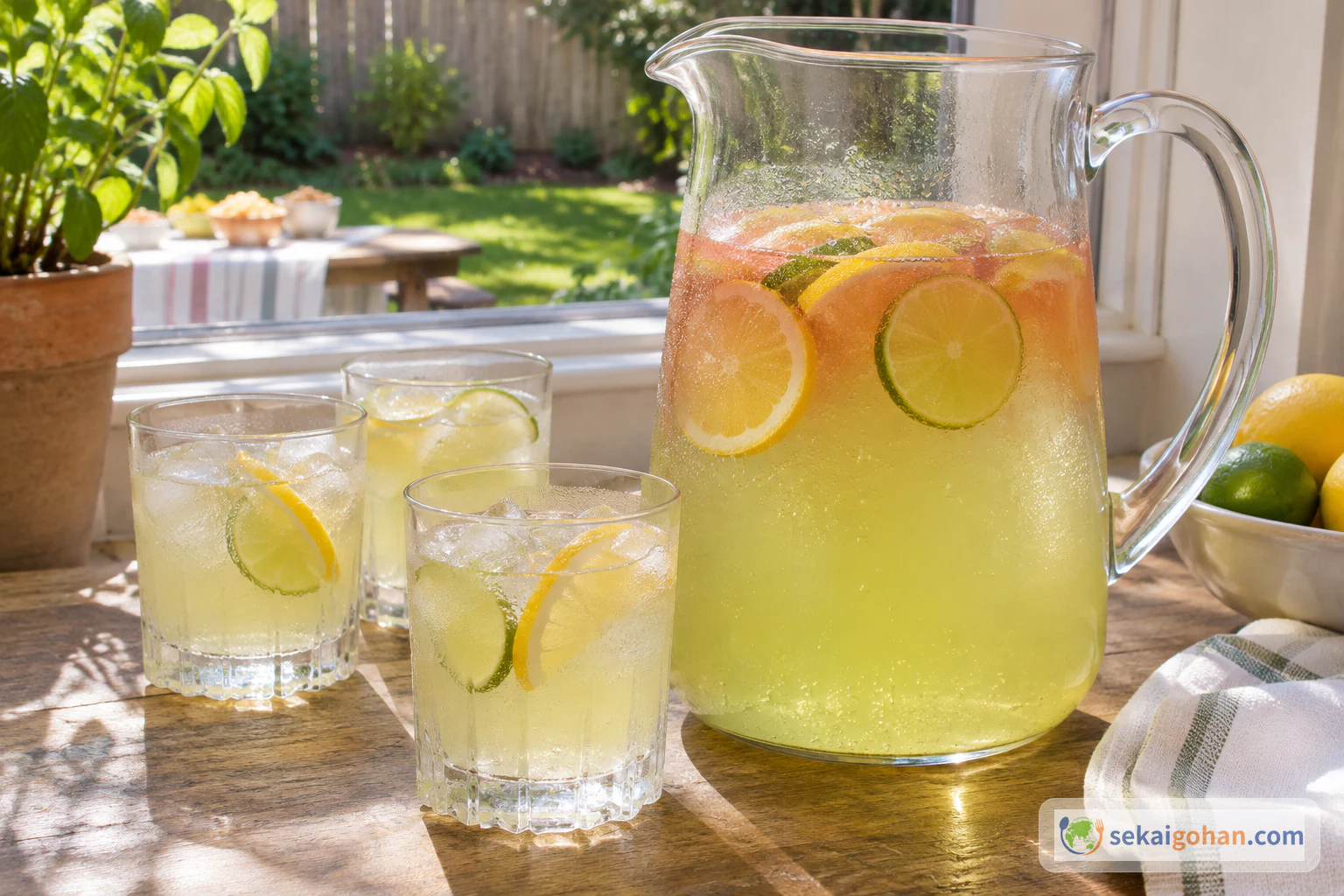
- A jug for a crowd. Scale the same proportions up into a large pitcher and float thin lemon and lime slices on top. Add the soda just before pouring, then serve over ice in small rocks glasses.
Making ahead
You can mix the citrus juice, syrup and bitters into a base up to 3 hours ahead. Simple syrup keeps for up to 5 days in a sealed container in the fridge. Add the soda only when you serve, pouring it over ice in each glass. Drink each glass as soon as it is made.
Frequently Asked Questions
How much is a dash?
A dash is one shake from the stopper built into the neck of a bitters bottle. It is a pourer's measure rather than a fixed volume, which is why this recipe uses a measured half teaspoon and the pub version counts dashes.
Fresh lime or lime cordial, which is right?
Both have a place. Most pubs pour cordial today, which makes a sweeter drink with a candied lime flavour. Fresh lime is brighter and sharper, and nobody knows which one the first glasses used.
What is soda, lime and bitters?
It is the same drink with soda water in place of the sweet lemonade, so it comes out much drier and less sweet. It is a common order in its own right, for people who want the bitters and lime without the sugar of a soft drink.
Did anything like it exist before?
One early relative is the Angostura Phosphate of 1912, made with acid phosphate, lemon syrup, bitters and soda water. It shares the sour, sweet and bitter balance over fizz that LLB is built on.