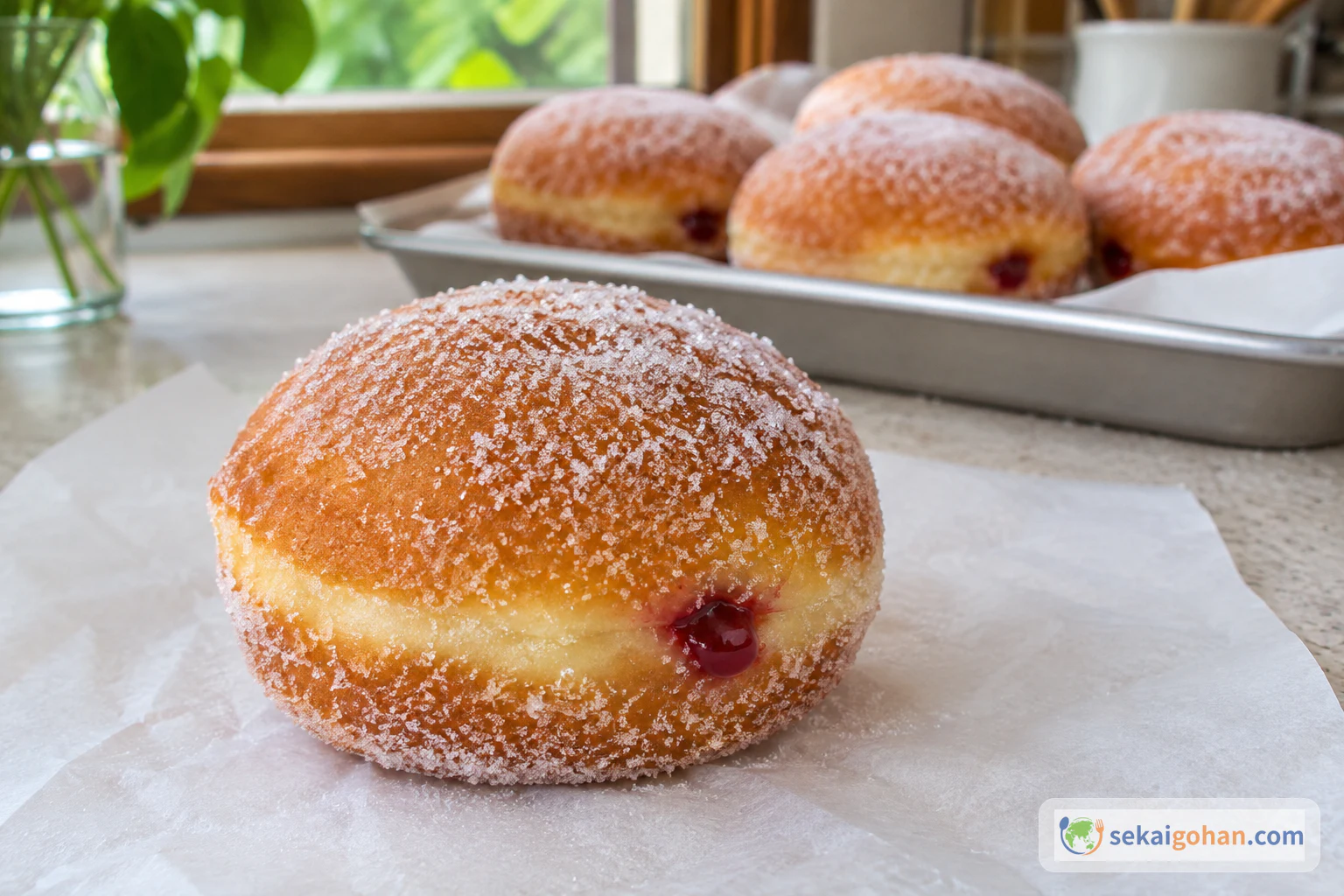
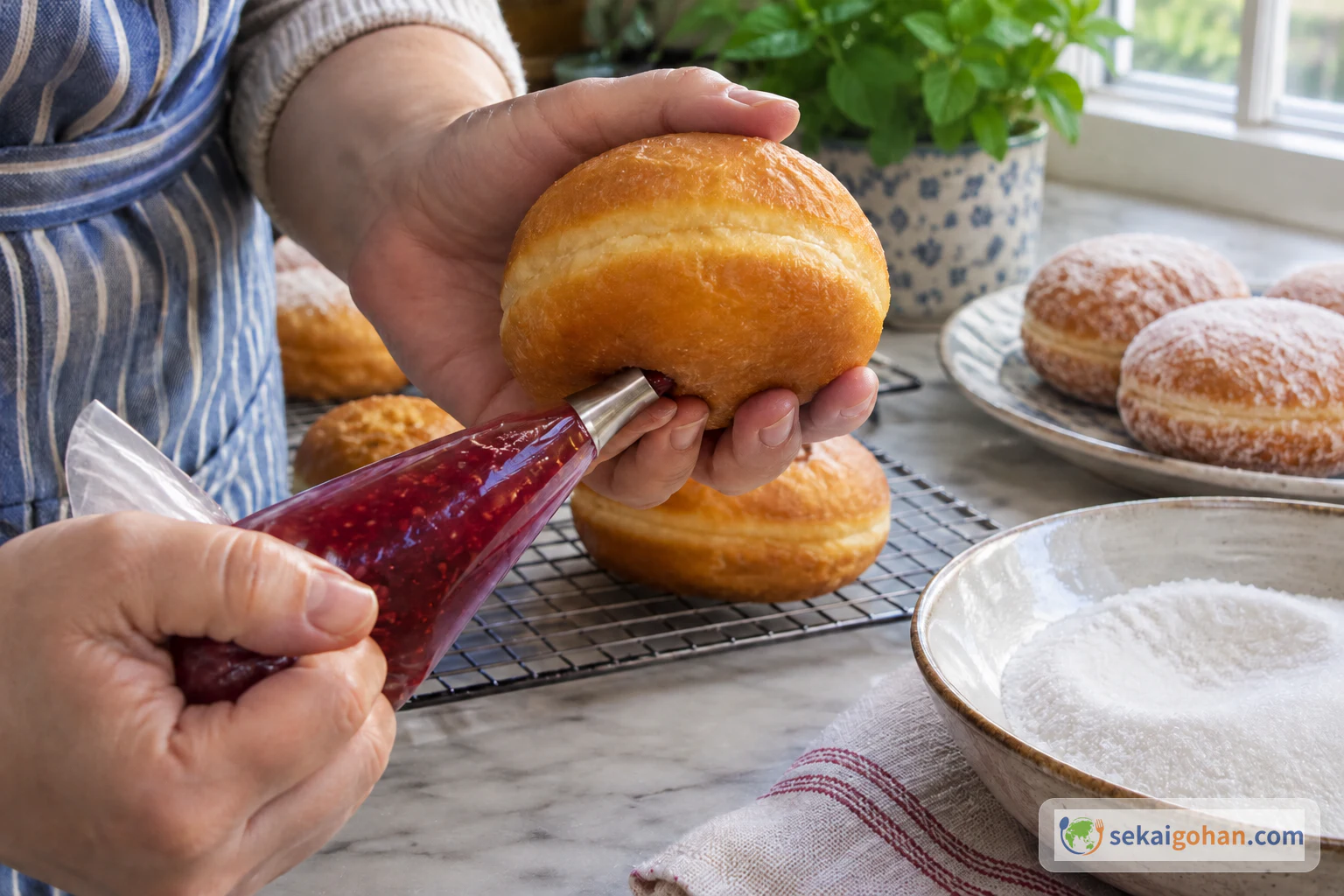
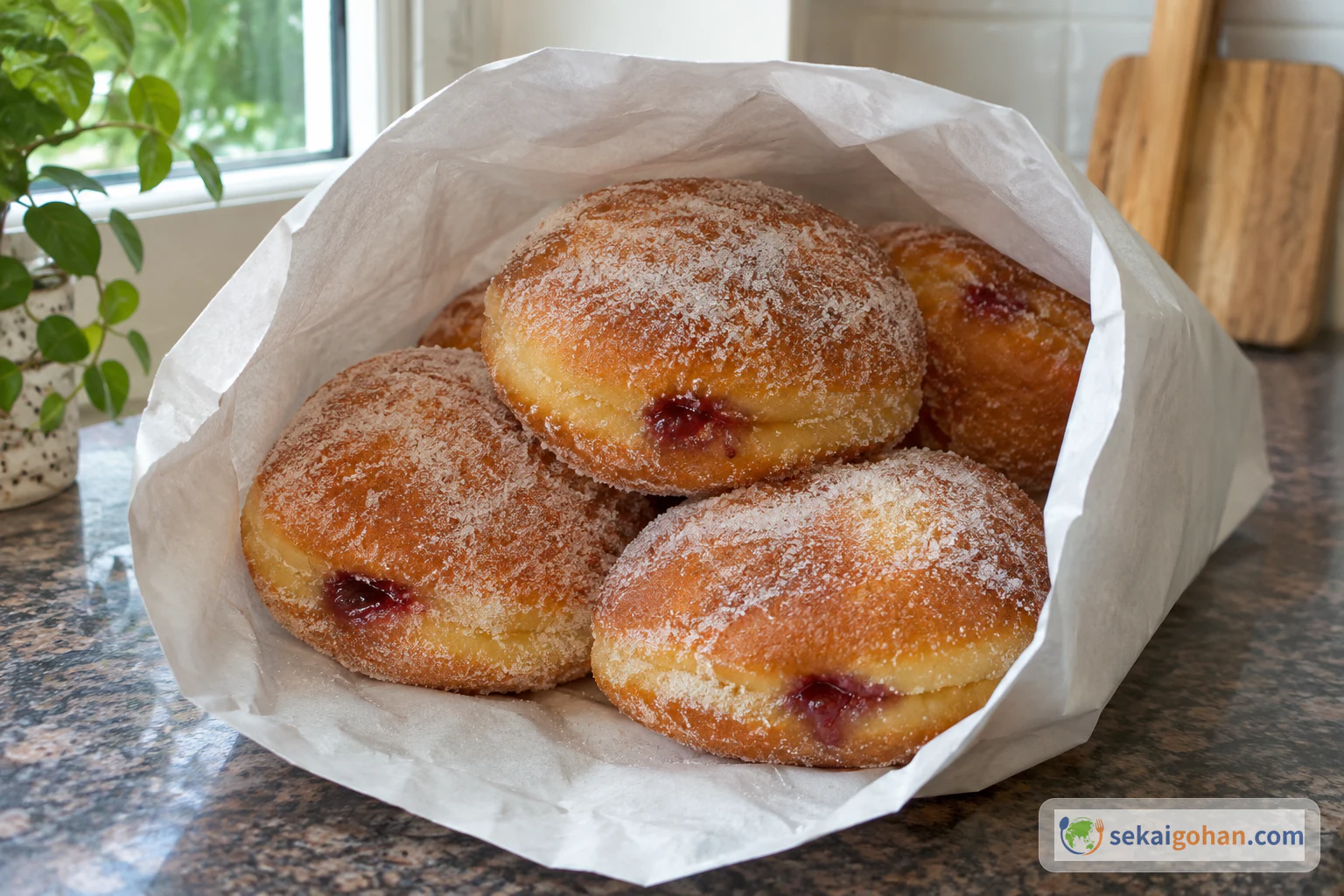
A golden round comes out of the oil, gets rolled through caster sugar while it is still too hot to hold comfortably, and drops into a white paper bag. By the time it reaches your hand, the jam piped into its base has warmed through from the heat of the dough. In Melbourne this is what a doughnut means: a soft yeast round with no hole, a crust that crackles faintly with sugar, and a pocket of raspberry jam inside, eaten standing up within minutes of the fryer. The sweetness is simple and the pleasure is all in the temperature. You bite in from the side with the hole, and you take that first bite carefully.
A Doughnut Melbourne Eats Hot
A van at Queen Victoria Market
The best-known hot jam doughnuts in Melbourne come from a van at Queen Victoria Market. In 1950 Arnold Bridges and David Christie bought the business from William Kither. It had been called the German Doughnut Kitchen, and in the mood after the Second World War the new owners renamed it the American Doughnut Kitchen, judging that "American" would sell better. The van stands in front of D-shed, opening at 7am and at 6am on Saturdays.
The same family still runs it, now into a third generation. The second generation stepped back in 2023, and Belinda, a granddaughter of the founders, carries it on with Justin Donaghey. A shop at Prahran Market opened in 2024, and there are no franchises. The recipe has not changed since 1950 and is kept secret under confidentiality deeds. On a busy day the kitchen mixes up to 250 kg of dough. The doughnuts are fried in beef fat, so the stall's own doughnuts suit neither vegans nor vegetarians. In 2024 five doughnuts cost A$11 and ten cost A$20, and in 2023 the business won the Lord Mayor's Small Business Award.
Vans, train stations and roadside stalls
Hot jam doughnuts spread well beyond the market. They are sold at stalls on game day at the MCG and from roadside vans from Frankston to Preston, and out at Tooradin, Coldstream and Bendigo. In the 1960s former staff of the market van started Dandee Donuts, sending vans to Dandenong Market, Hallam and Berwick Market. At Footscray station, Olympic Doughnuts traded for more than 30 years and became known for a contraption that piped jam into each doughnut through the nose of a dolphin. Station redevelopment moved it from a van to a kiosk, where it still trades.
Why "hot" is the Melbourne part
Jam-filled doughnuts without a hole are made all over the world, and almost everywhere they are sold cold. Selling the yeast-dough kind hot, straight from the fryer, is a Melbourne and Victorian habit rather than an Australian one. This also sets it apart from the jelly doughnut of the United States, which shares the filling but not the moment of eating. The family the dough belongs to is the German Berliner, and how far back that goes is not settled. One story puts its invention in 1756, by a baker in the army of the Prussian king. If you are planning a wider spread of the country's food, start from Australia.
In German-speaking countries the same filled, hole-less doughnut is a Berliner, a Pfannkuchen in some regions, and a Krapfen in Bavaria. Melbourne's version stands out among them only because it is handed over hot.
Ingredients (makes 15)
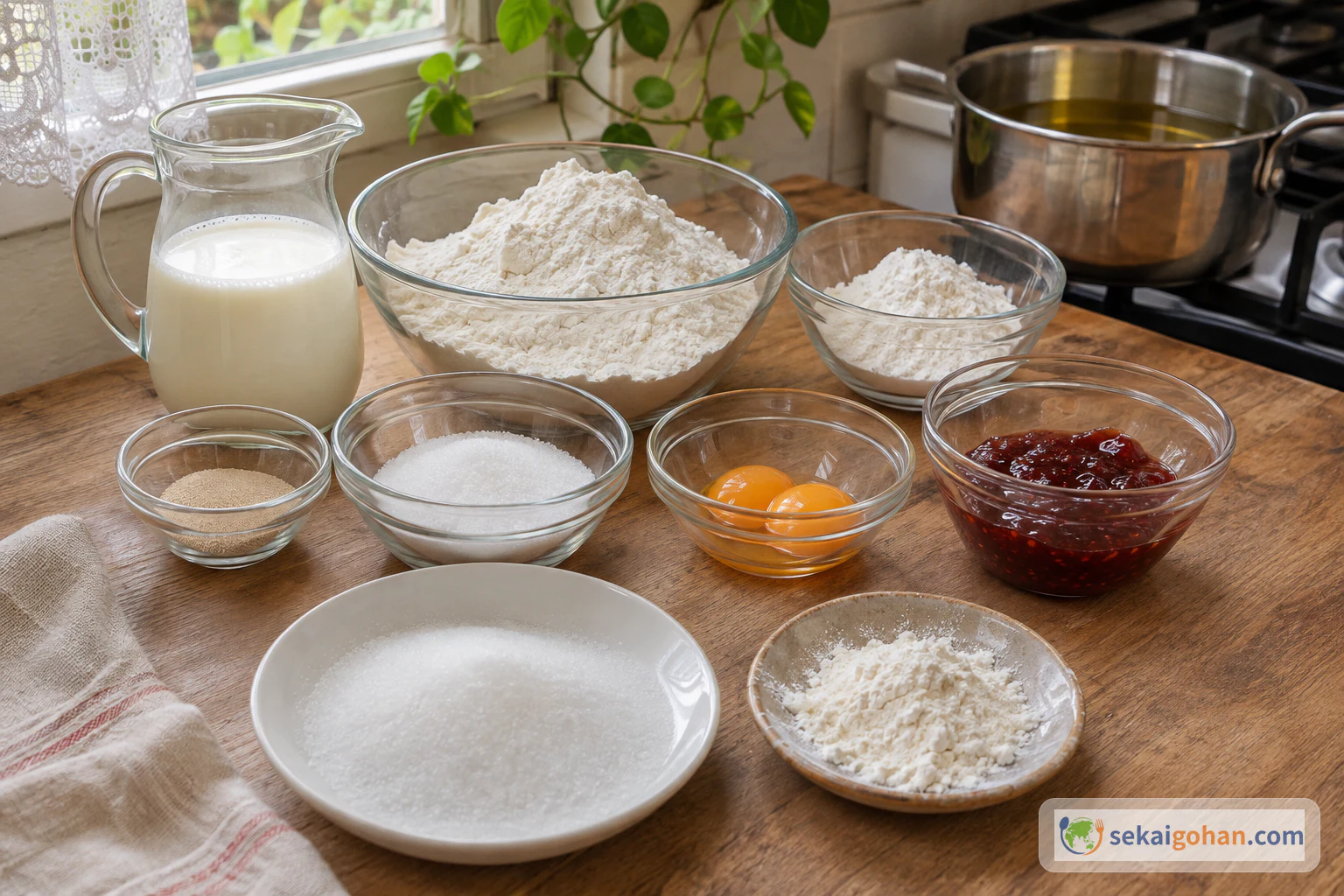
These doughnuts contain wheat (both flours), milk and egg (the yolks). Check the labels on your jam and frying oil if anyone at the table has other allergies.
Equipment
- Jug for the yeast and milk
- Sieve
- Electric stand mixer with a dough hook
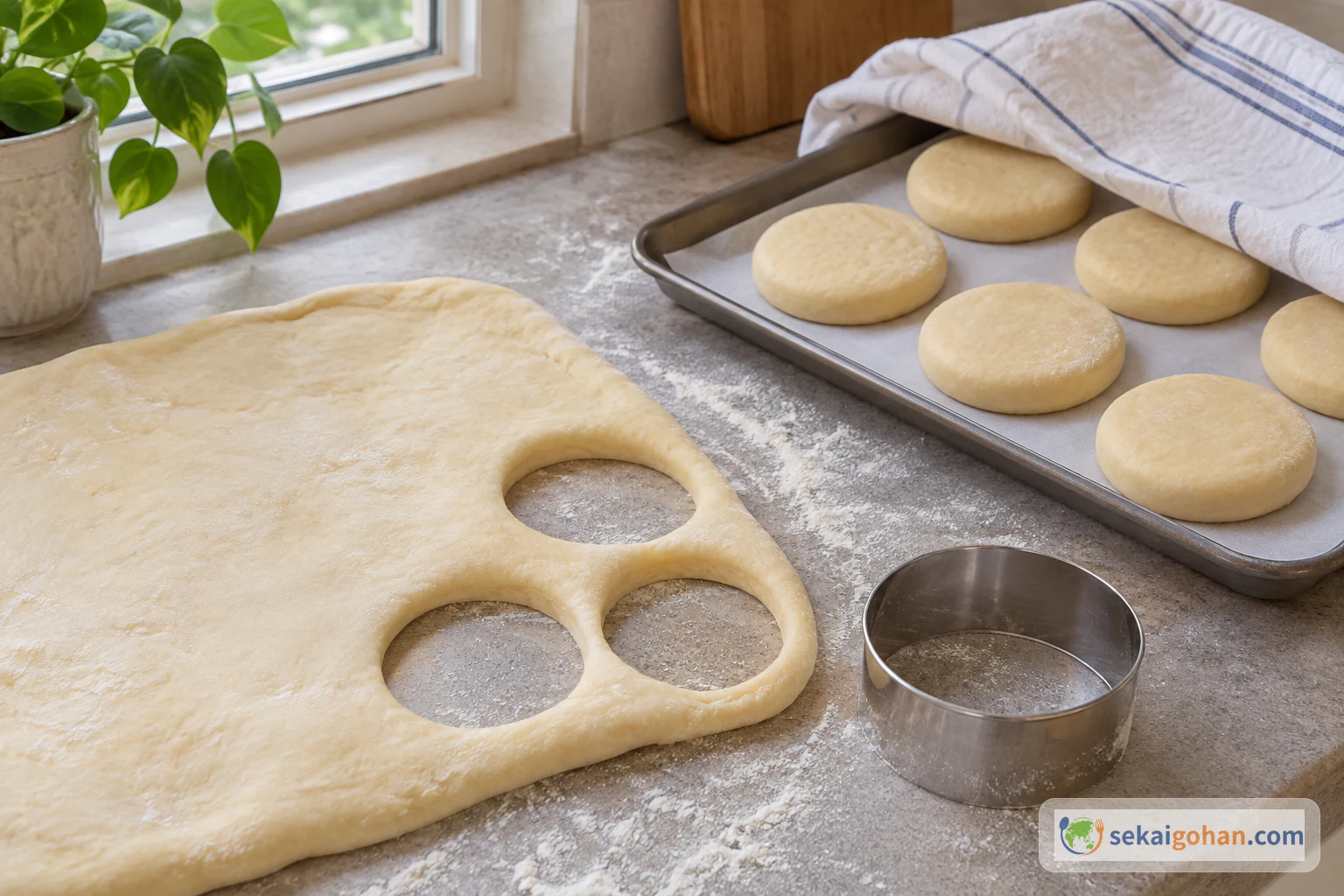
- Round cutter, 2⅜ inches (6 cm) across
- Tray and a clean tea towel
- Deep saucepan or deep-fryer
- Deep-fry thermometer
- Slotted spoon and paper towels
- Small knife with a sharp point
- Piping bag with a plain nozzle
- Shallow dish for the coating sugar
Choosing and Substituting
Caster sugar is the fine-grained sugar the doughnuts are rolled in; its small crystals settle into an even coat on the hot crust. Granulated sugar also works and gives a coarser, crunchier coat. Plain flour is the everyday flour of an Australian kitchen and corresponds to all-purpose flour. Plain cake flour is a low-gluten flour sold in supermarkets, and it is what makes the crumb fine and tender, so keep it in the dough.
Yeast sachets come in different sizes from country to country. Weigh out 7 g rather than counting packets. Raspberry jam keeps the flavour of the market van; a smooth, seedless jam pipes more easily through a plain nozzle.
Frying oil is the one place a home kitchen departs from the van on purpose. Vegetable oil gives a clean-tasting doughnut that vegetarians can eat, while the beef fat used at the market adds a savoury depth to the crust. What has to stay for the doughnut to taste like Melbourne is the hole-less yeast dough, the cold jam piped into the base, the sugar going on while the crust is hot, and eating it straight away.
Fill the piping bag with jam and pour the coating sugar into its dish during the 30-minute rest. Once the oil is hot, frying, filling and sugaring run back to back, and every minute a doughnut waits makes the sugar cling less.
Method
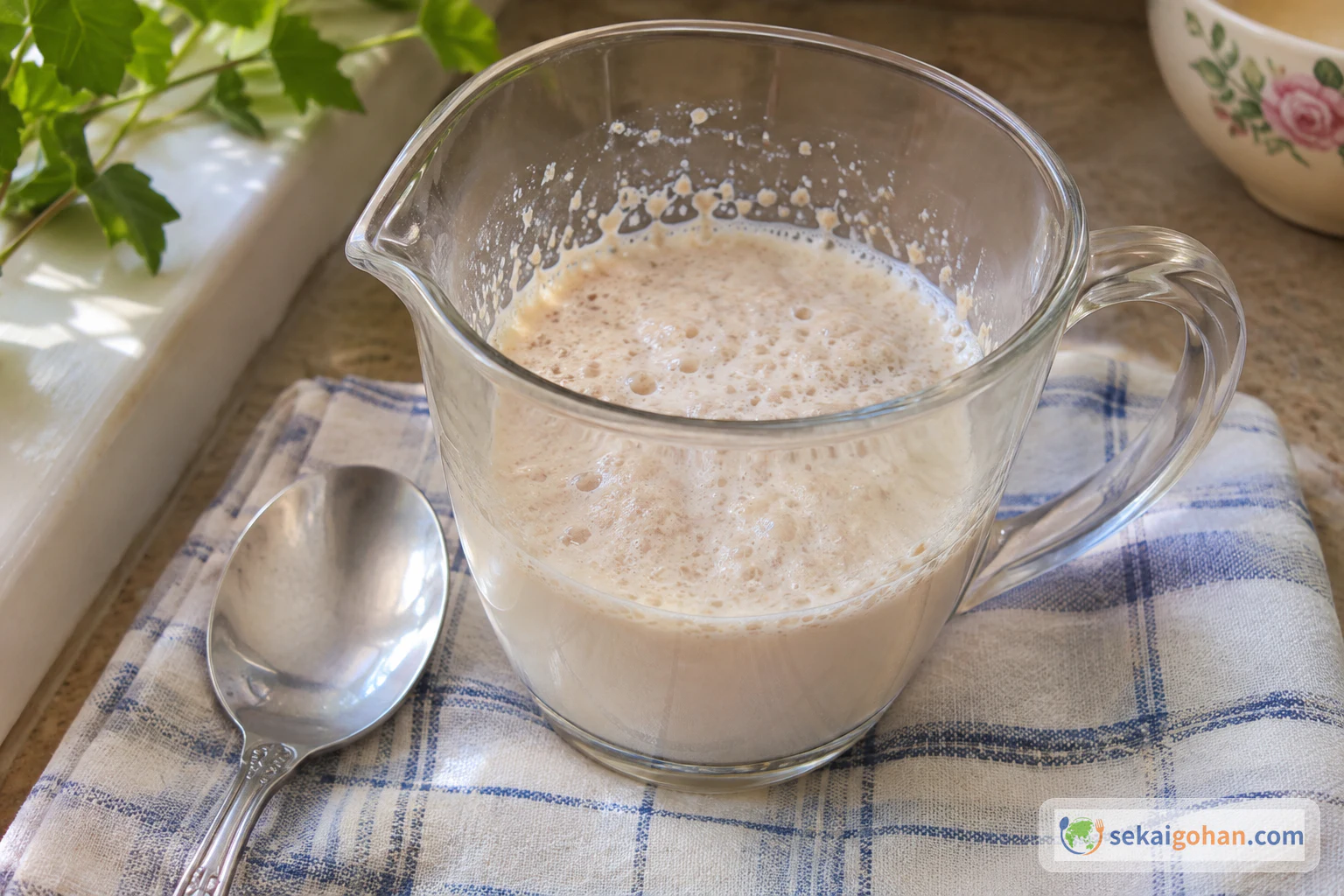
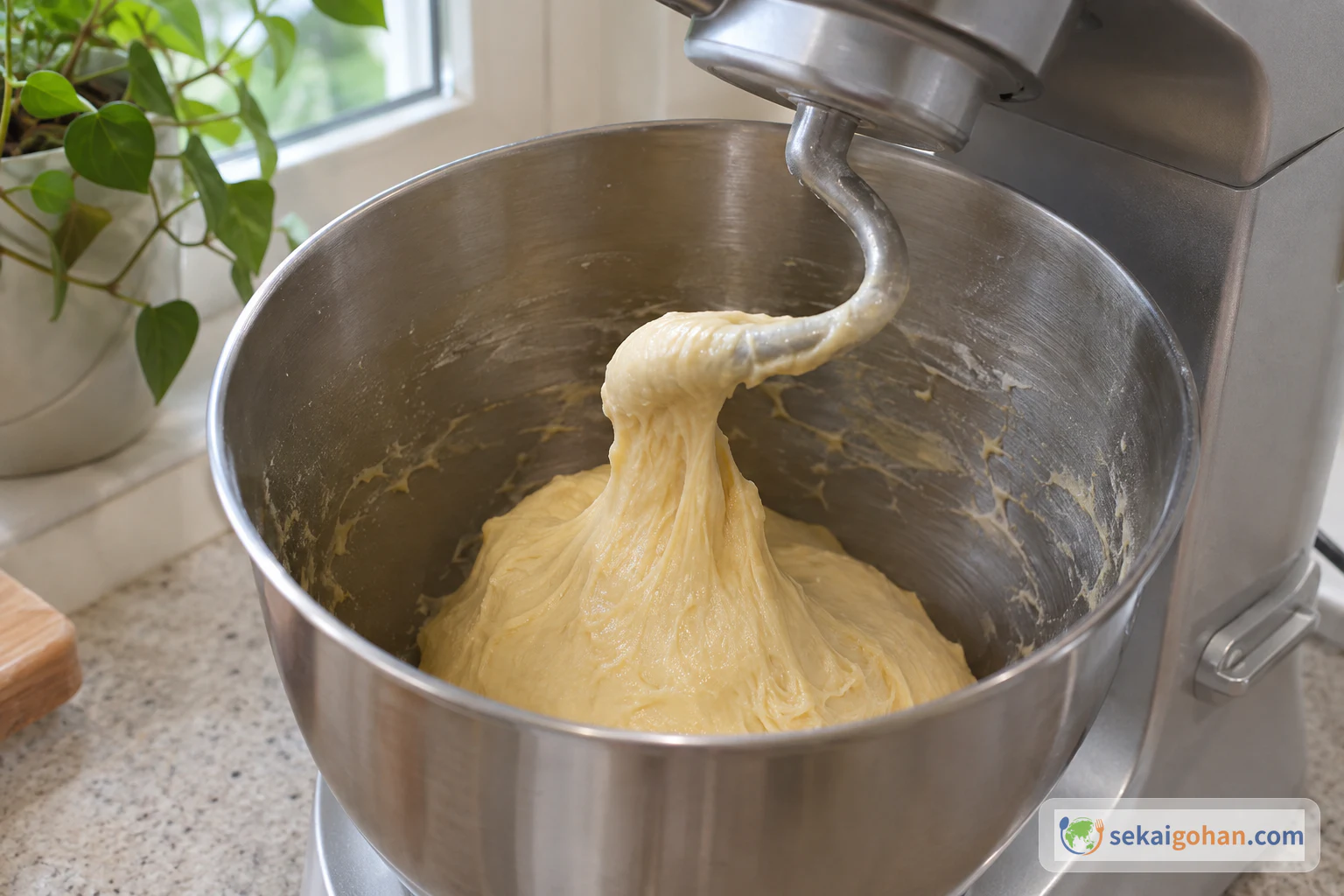
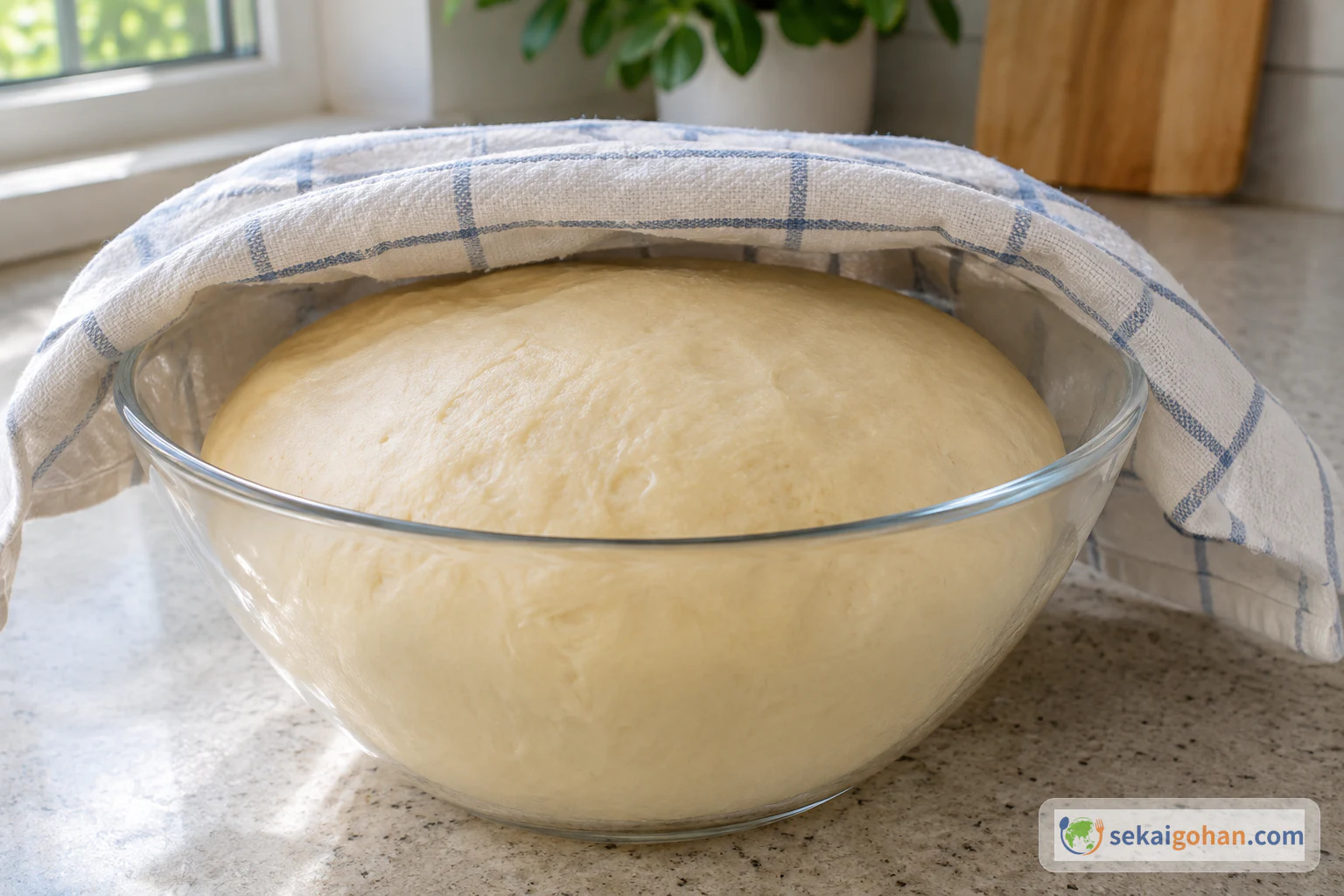
The active work comes in short bursts. Waking the yeast takes about 10 minutes and kneading 3, then the dough sits covered for 2 hours, and the cut rounds rest another 30 minutes. Frying, filling and coating come last and move fast, so set out everything for them before the pan goes on the stove.
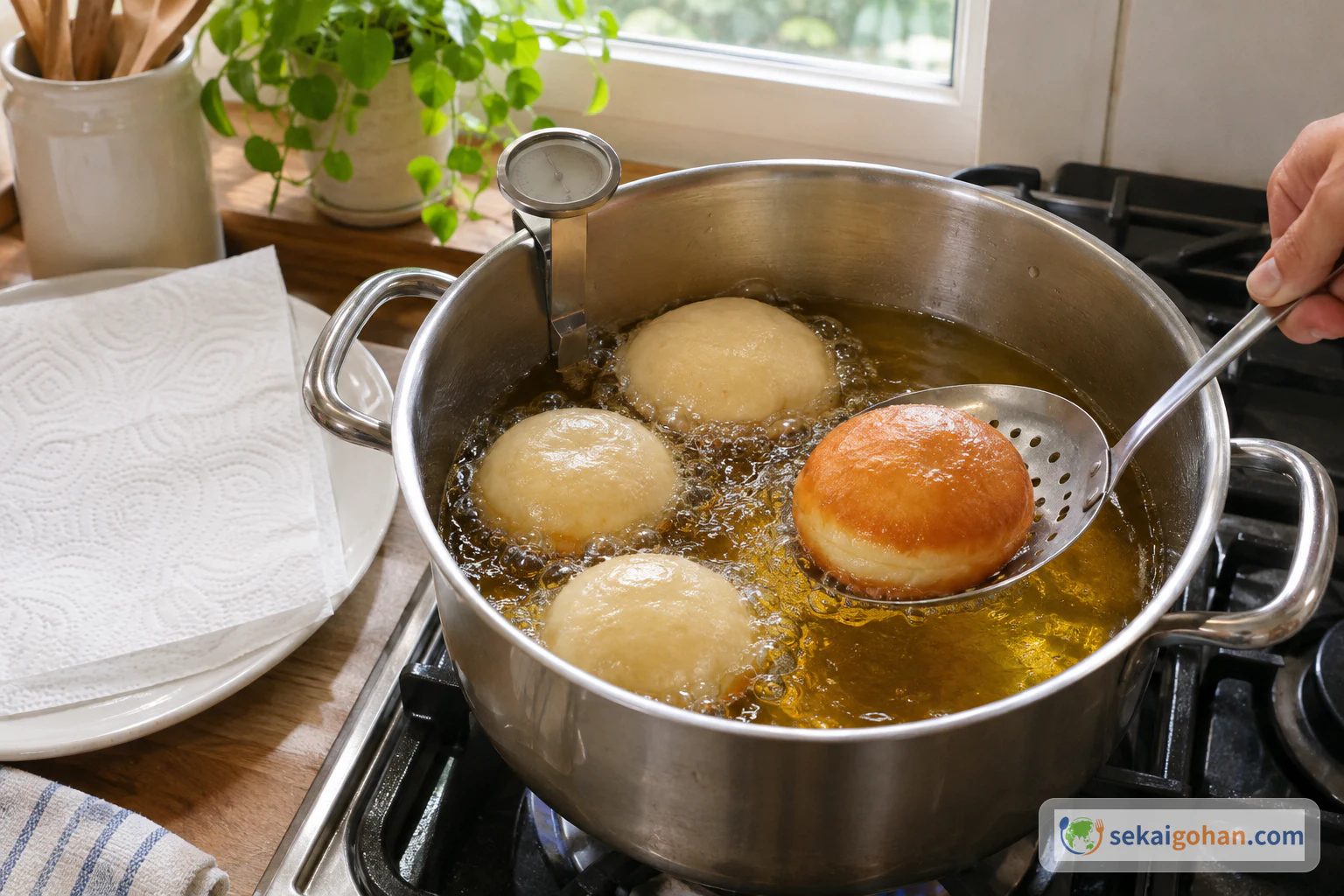
A thermometer clipped to the pan shows you how the oil is moving; the bread cube shows you what that means for the dough. Check before each batch, because the temperature drops every time cold dough goes in.
Keep the pan at the back of the stove with the handle turned in, lower the doughnuts in gently, and never leave the oil unattended. The jam warms inside the doughnut and can burn the mouth or splash onto clothes, so let each one sit a moment before the first bite.
When It Goes Wrong
| What you see | Why | What to do |
|---|---|---|
| No froth on the milk after 10 minutes | The spot is too cool or the yeast is not active | Move the jug somewhere warm and draught-free; if it still stays flat, start again with fresh yeast |
| Dough has not doubled after 2 hours | The room is cold | Keep it covered in a warmer place and wait until it has doubled |
| Dark outside, raw in the middle | The oil is hotter than 320°F (160°C) | Lower the heat and test again with a bread cube before the next batch |
| Pale and greasy | The oil is too cool, or too many doughnuts went in at once | Fry fewer at a time and wait for the bread cube to go golden in 20 seconds |
| Sugar slides off | The doughnut cooled too far before coating | Coat each one straight after filling while the crust is still hot |
| Jam squirts out on the first bite | The jam is hot and sits near the hole in the base | Bite in from the side with the hole, after letting the doughnut cool a moment |
Serving and Variations
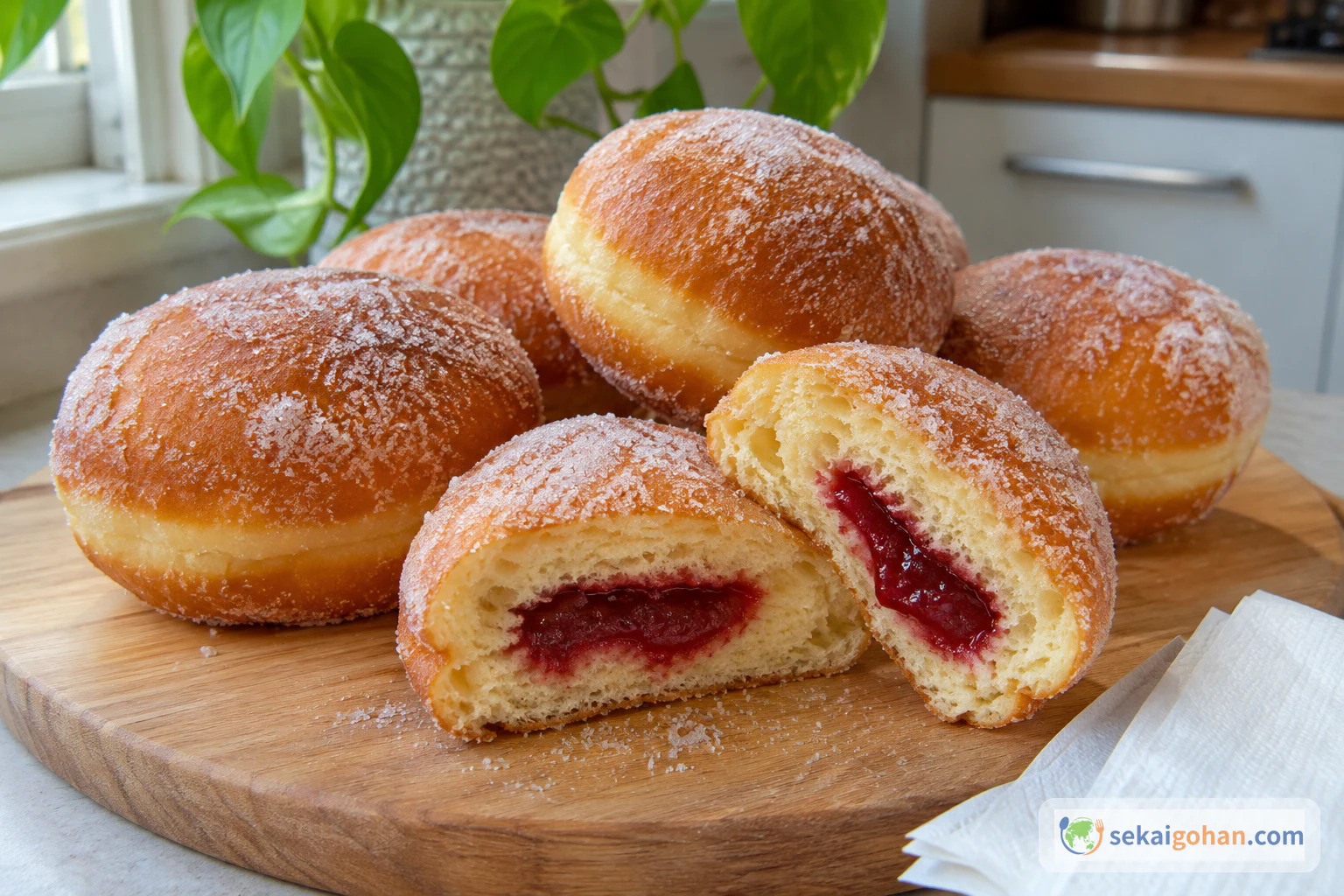
These are eaten hot, straight away, the way they come out of the van window: tipped into a white paper bag and passed around with napkins. Take the first bite from the side with the hole, where the jam is, and go carefully. They belong to the day they are fried. If one has gone cold, warm it in the microwave for 10 seconds and no longer; any more turns it into a different thing.
Variations
- Raspberry-plum jam. The market van fills its doughnuts with a raspberry and plum jam, which is deeper and a little tarter than raspberry alone.
- Granulated sugar coating. Swap the caster sugar for granulated for a coarser, crunchier crust; the dough itself stays the same.
- Beef fat for frying. Frying in beef fat brings the doughnuts closer to the market van's, with a savoury note in the crust; they are then no longer suitable for vegetarians.
Frequently Asked Questions
If they are called hot jam doughnuts, why does the jam go in cold?
The "hot" describes the doughnut, not the jam. The jam is piped in cold and warms inside the freshly fried dough, which is exactly how it is done at the market.
Is this the Queen Victoria Market recipe?
No. That recipe has stayed secret since 1950. This is a home recipe built around the same ideas: a hole-less yeast dough, cold jam piped into the base and sugar on a hot crust, fried in vegetable oil instead of beef fat.
Can I fry them hotter to save time?
Keep this dough at 320°F (160°C) for 4 minutes. Recipes for mini hot jam doughnuts fry at a higher temperature, but they use a different dough with strong flour and a whole egg, and that temperature belongs to that dough. At higher heat these rounds brown before the centre cooks through.