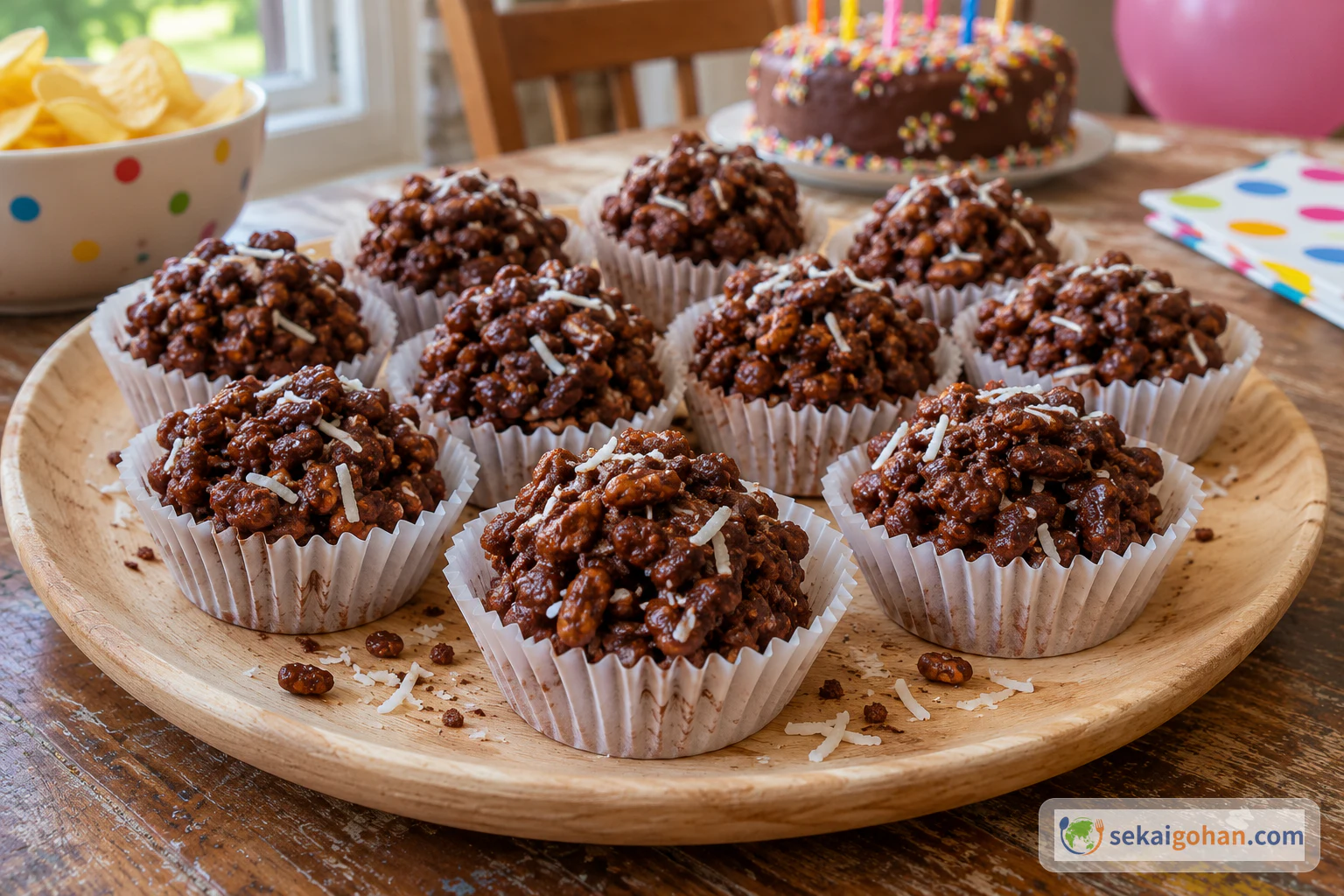
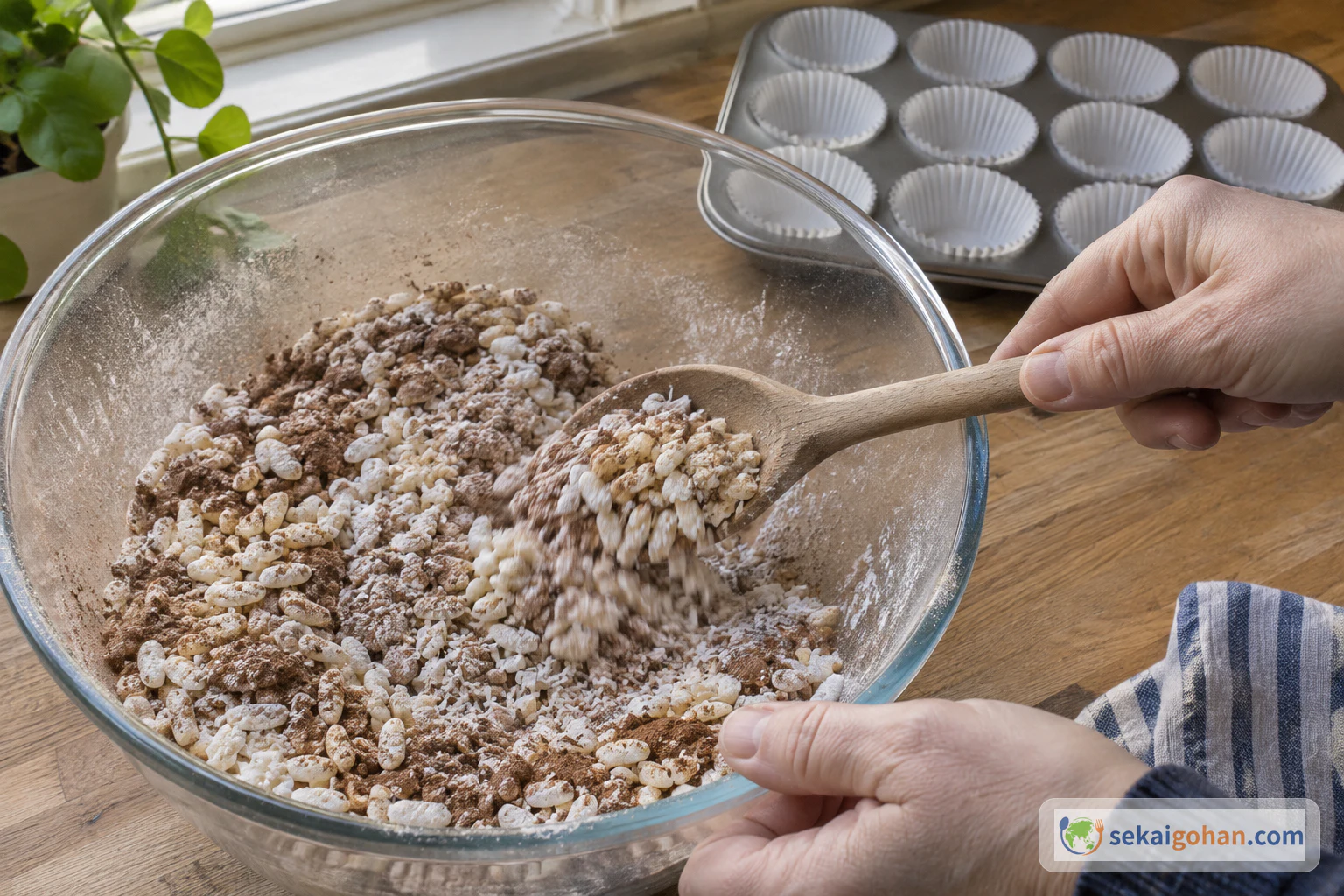
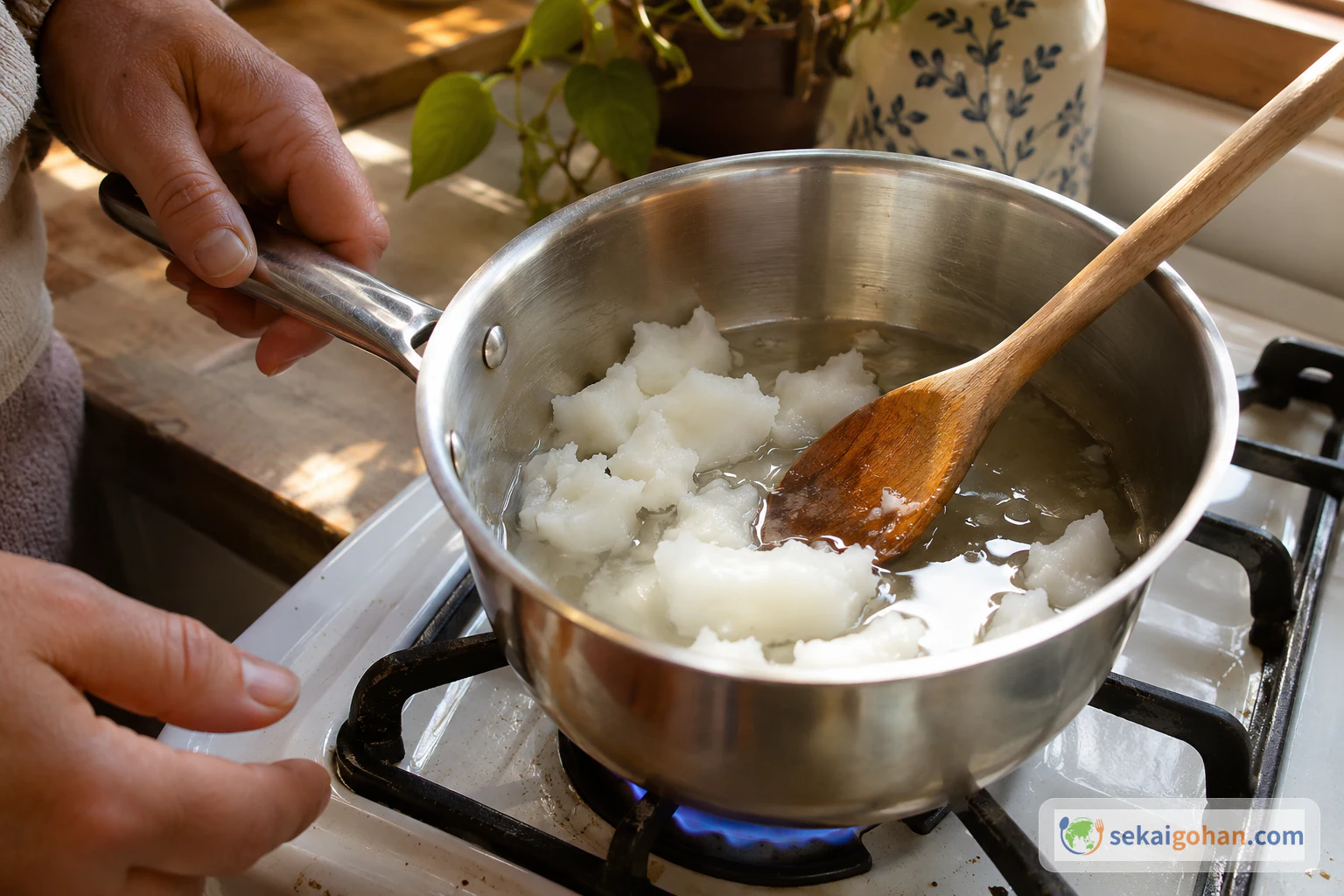
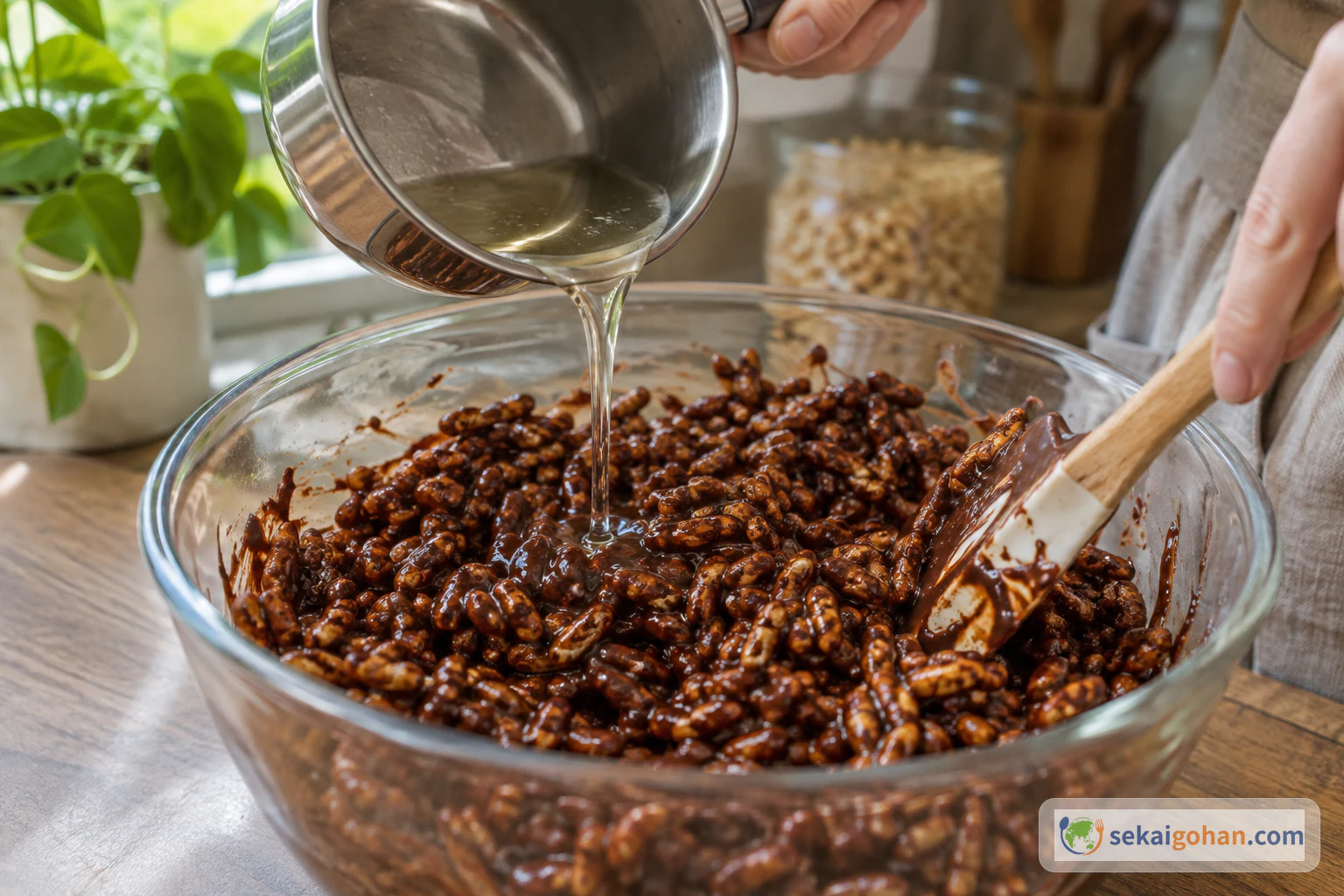
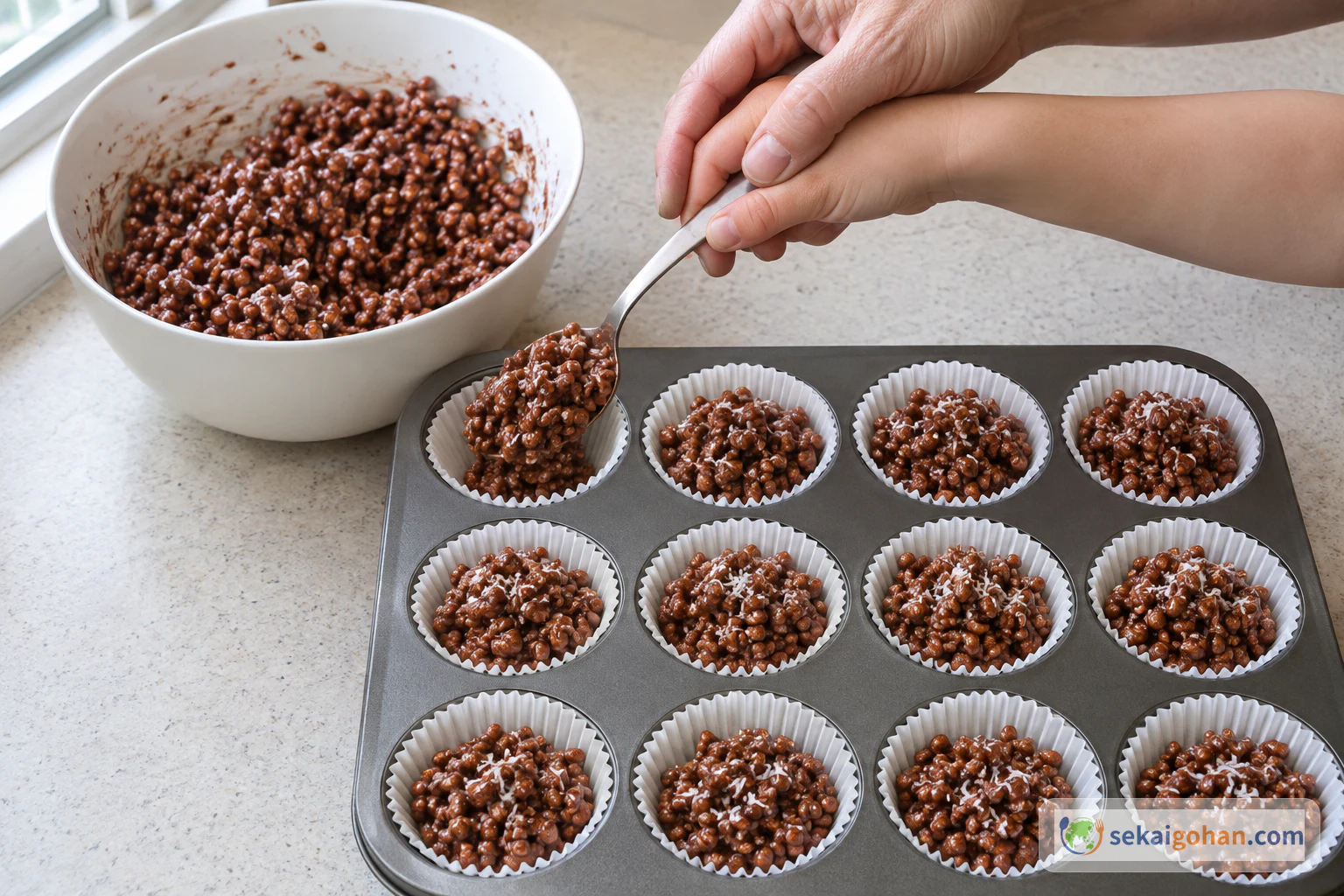
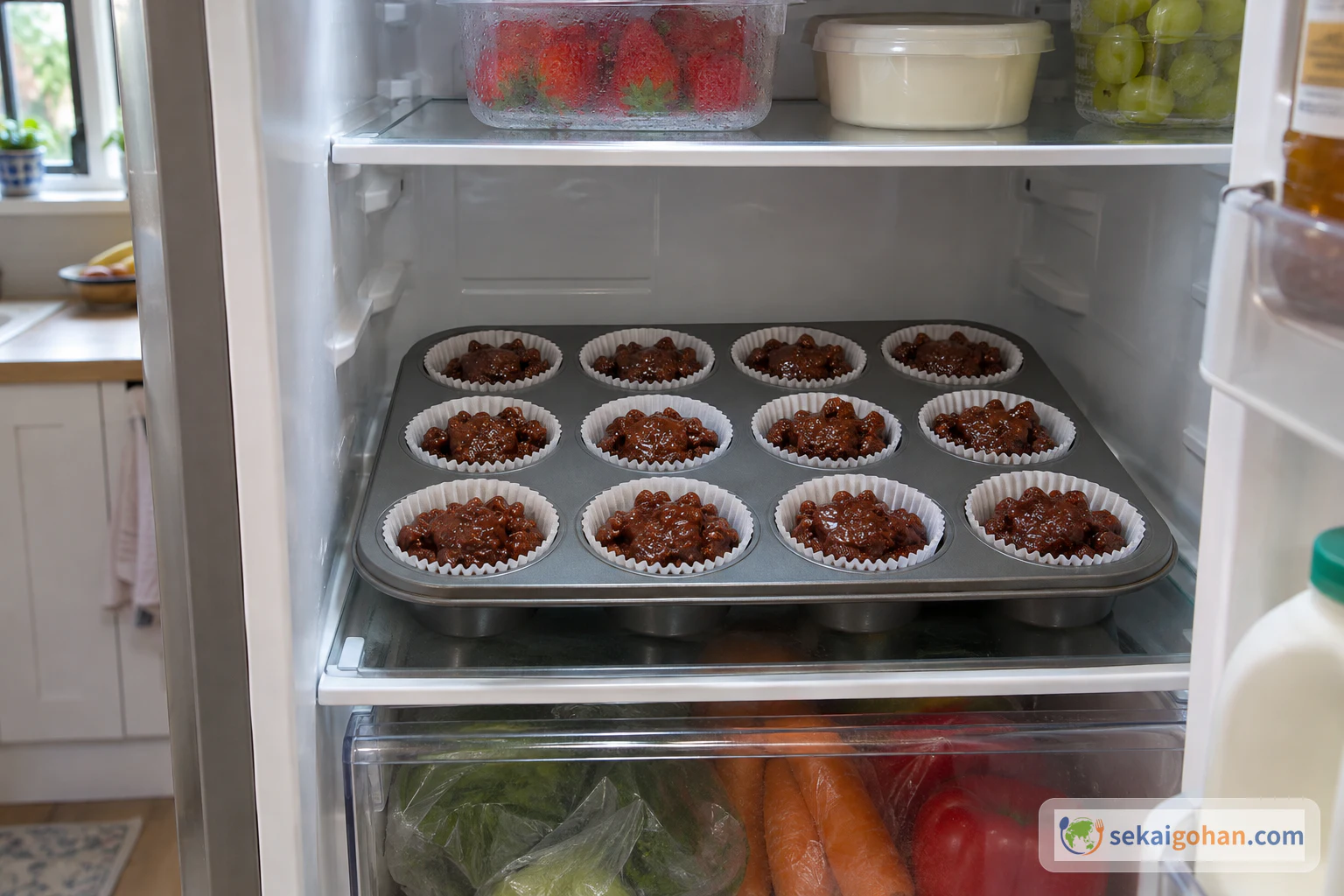
Clear melted fat goes over a bowl of cocoa-dusted puffed rice. Within a few turns of the spoon the pale, powdery grains go glossy and dark. An hour in the fridge later they are crisp clusters sitting in white paper cases, and they snap and crumble when you bite them. Chocolate crackles turn up at children's birthday parties and school fetes all over Australia and New Zealand. They taste of cocoa and coconut, sweet without being heavy, and the cereal keeps its crunch inside a coating that sets firm and melts as you eat it.
Birthday Parties, Fetes and a Recipe on the Box
Put a plate of crackles on a party table and it empties first. They belong to the parts of childhood in Australia that happen in back gardens and school halls: birthday parties, the school fete, the cake stall and the tuckshop. Nothing goes in the oven, so they are often the first thing young children "cook". Children measure the cereal, stir the dry bowl and spoon the mix into cases, and an adult handles the hot fat.
Where the recipe comes from
The earliest known recipe appeared in an Australian women's magazine in December 1937. Copha, the solid coconut shortening that holds crackles together, had been on sale since 1933. The recipe was printed on the Copha pack and handed out free on Rice Bubbles cereal boxes. That is why so many households make the same five ingredients the same way. In 2003 Kellogg's applied to trademark the chocolate crackles recipe itself. People who run cake stalls and community bake sales were alarmed, because to them this was a recipe that belonged to everyone.
Across the Tasman and beyond the classic
New Zealand makes the same sweet. The only difference is the shortening, which is sold there as Kremelta and used in the same way as Copha. Families and show-day bakers also change things up: they stir in fruit, scatter mini marshmallows or sprinkles on top, or pile the mix into ice-cream cones. The base stays the same, though. Puffed rice, coconut and cocoa are bound with set fat and chilled until crisp.
Chocolate crackles are also called chocolate bubble cakes. The name is usually tied to the crackle and snap of the puffed rice, which is the main ingredient.
Ingredients (makes 12)
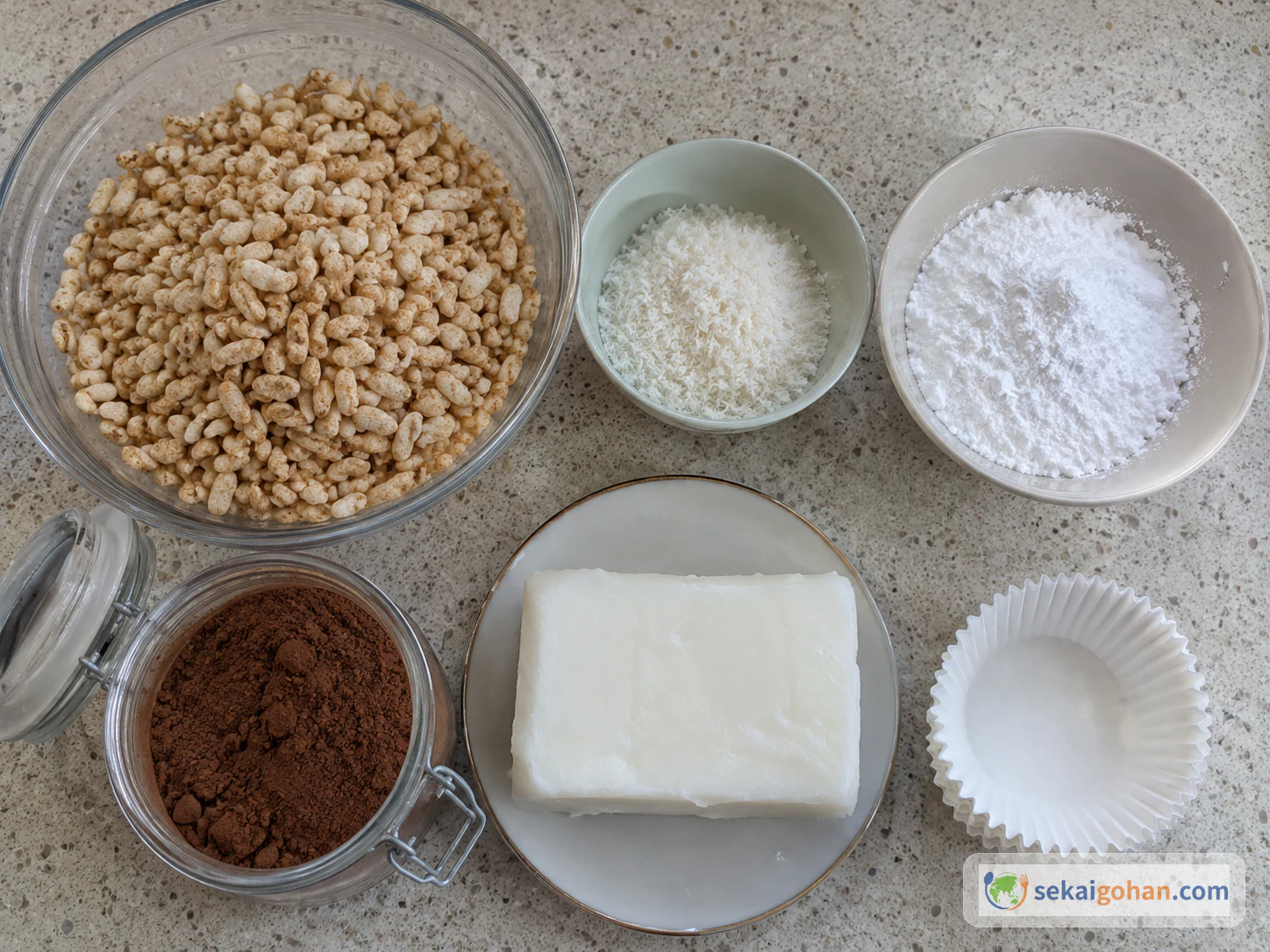
This mix is a little less sweet than the traditional version, so the cocoa and coconut come through clearly.
Icing sugar dissolves into the warm fat and gives a smooth coating. Granulated sugar stays as crystals and makes the crackles gritty.
This recipe contains coconut, in the desiccated coconut and in Copha or coconut oil. Copha also contains a small amount of soy lecithin, so it contains soy. Copha is made on a dedicated line but carries no gluten-free label. Check the labels on your cereal and cocoa as well if gluten matters at your table. If you add mix-ins, check them for nuts and other allergens.
Equipment
- 12-hole muffin tin
- 12 paper patty cases (muffin cases)
- Large mixing bowl
- Small saucepan
- Chopping board and knife for the shortening block
- Wooden spoon or spatula
- Spoon for portioning
Choosing and Substituting: The Fat Decides Everything
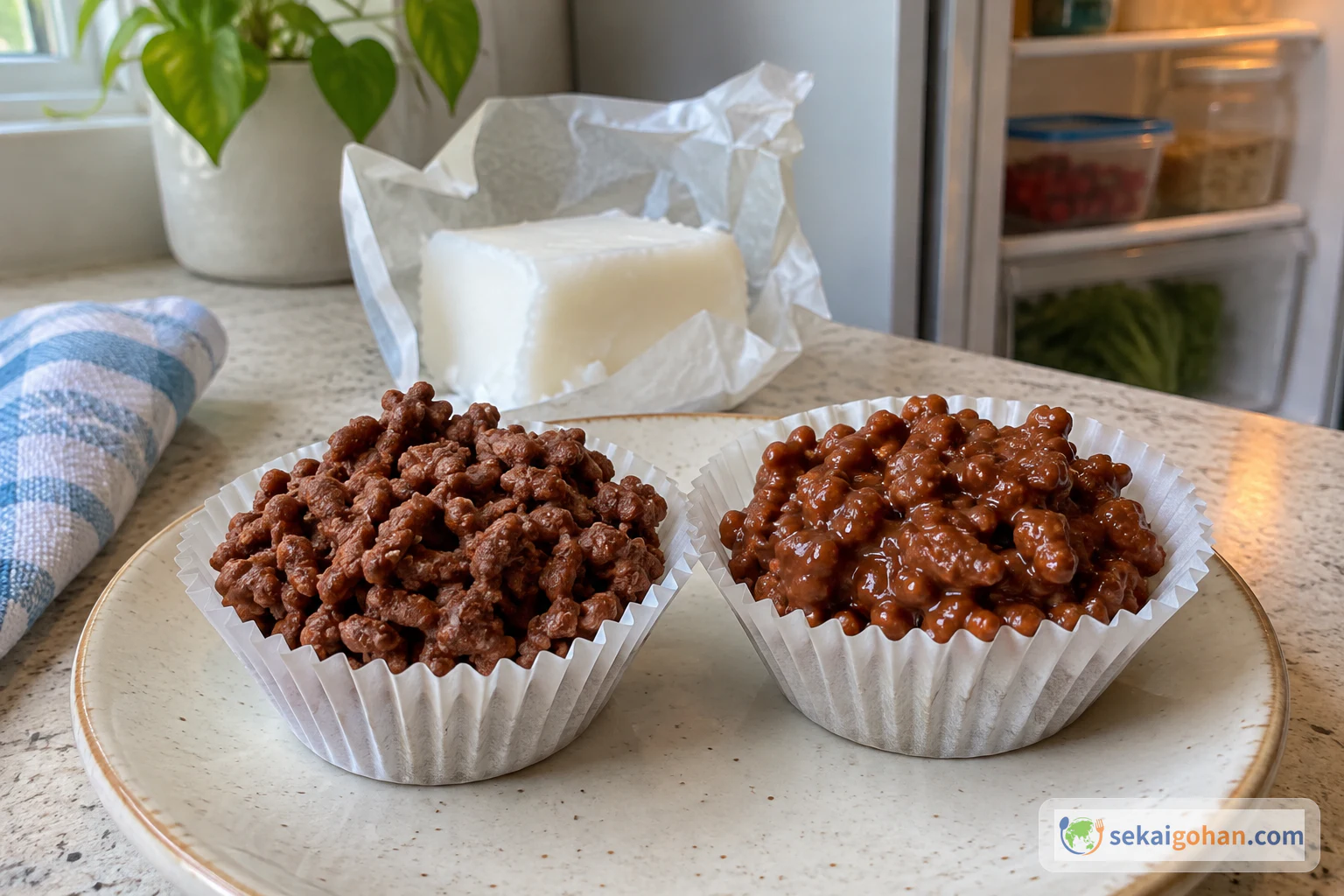
Copha is the ingredient that makes a crackle a crackle. It is more than 99 percent coconut oil with no palm oil, and it stays solid up to 97°F (36°C). That is why Copha crackles hold their shape on a warm party table. In New Zealand, buy Kremelta and use the same amount.
If you cannot get either, use refined, unscented coconut oil in the same amount. Use the solid kind. Refined oil has no coconut smell to compete with the cocoa. It softens at around 75°F (24°C), though, so coconut oil crackles must stay in the fridge until you serve them. Butter tastes good but sets much softer. Melted chocolate makes a different sweet altogether, closer to a chocolate cluster than a crackle.
| Ingredient | Best choice | What a swap changes |
|---|---|---|
| Shortening | Copha or Kremelta | Refined coconut oil works but softens sooner. Butter sets soft. Melted chocolate gives a different sweet |
| Cereal | Plain puffed rice | Coco Pops also work. Flavoured cereals change the sweetness, the salt and the crunch |
| Coconut | Unsweetened desiccated | Sweetened coconut pushes the sweetness up, so cut back the icing sugar |
| Cocoa | Unsweetened pure cocoa | Sweetened drinking cocoa makes the crackles far too sweet |
| Sugar | Icing sugar | Granulated sugar stays gritty |
Method
Everything moves fast once the fat is melted, so line the tin and mix the dry bowl first. The melting takes only a few minutes at the stove. After that, an hour in the fridge does the rest. Children can do the dry mixing and the spooning. The melting and pouring are adult jobs.
When It Goes Wrong
| What you see | Why | What to do |
|---|---|---|
| Crackles stay soft or fall apart | Too little fat, or a warm kitchen softened them | Measure the full block of shortening, chill until firm and keep them cold until serving |
| They go soft on the party table | Coconut oil softens at around 75°F (24°C) | Keep coconut oil crackles in the fridge and bring them out just before serving |
| The coating feels gritty | Granulated sugar was used | Use icing sugar next time. It dissolves into the fat |
| Dusty, powdery patches inside | Not enough mixing after the fat went in | Fold until every grain is glossy, especially at the bottom of the bowl |
| Greasy, uneven coating | Fat went in before it fully melted | Melt until completely clear and liquid before pouring |
| Dense, heavy crackles that lose their shape | Cereal crushed by hard stirring, or no paper cases | Fold gently and always set the mix in paper cases |
Serving, Variations and Storage
At the table
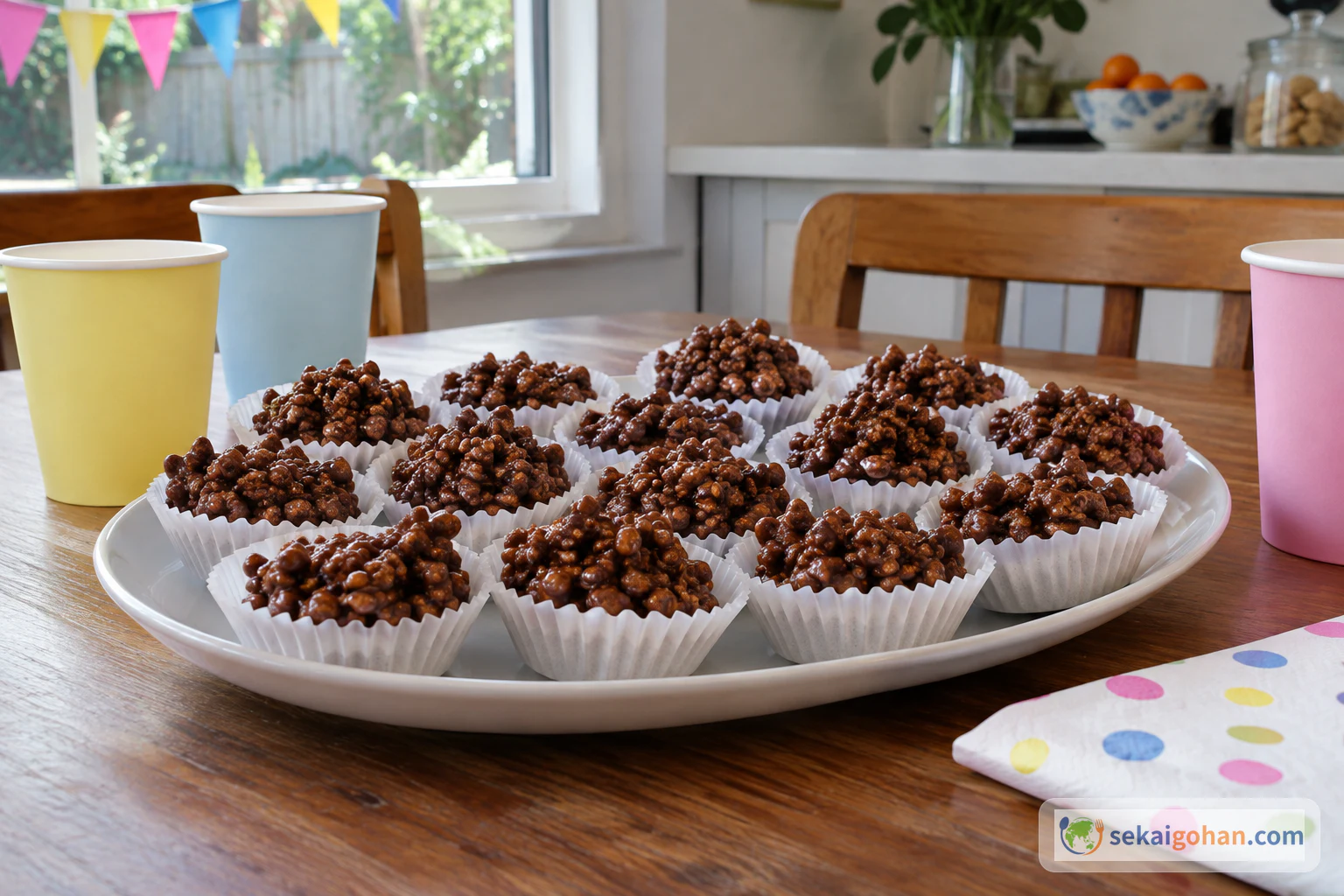
Crackles go out in their paper cases on a platter, next to the party cups, the birthday cake and whatever else the children are grabbing. Each one is a few crunchy bites. At a fete or cake stall they sell by the plateful. Bring them straight from the fridge, especially on a hot day, and keep the plate out of the sun.
Variations
- Honey and butter crackles. Toast 4 cups (60 g) puffed brown rice and 1 cup (80 g) desiccated coconut in the oven at 320°F (160°C) for 8 minutes. In a fan-forced oven, set it 36°F (20°C) lower. Melt 4¼ oz (120 g) unsalted butter, ½ cup (180 g) honey, 1 tbsp vanilla and ⅓ cup (35 g) cacao or cocoa over low heat, then let it cool for 2 minutes. Mix everything together, spoon it into a 12-hole muffin tin and chill for 30 minutes. This makes 12 softer, honey-sweet crackles with a toasty edge, and they are kept in the fridge.
- Raw cacao. In the honey and butter version, raw cacao in place of cocoa gives a darker, slightly sharper chocolate flavour.
- Party toppings. Stir in fruit or top the crackles with mini marshmallows or sprinkles before chilling. These make them sweeter and more festive.
- In cones. Spoon the mix into ice-cream cones instead of paper cases and chill until set. Children can hold them like ice creams.
Never give honey to babies under 1 year old. The honey and butter crackles are only for older children and adults.
Storage
Keep crackles in an airtight container in the fridge for up to 5 days. To freeze, wrap each one, pack them into an airtight container and freeze for up to 2 months. Let them stand about 1 hour at room temperature before serving. Crackles made with coconut oil go back in the fridge as soon as the party is over.
Frequently asked questions
Can I use Coco Pops instead of plain puffed rice?
Yes, chocolate crackles are made with Coco Pops as well as Rice Bubbles. The cereal is already chocolate-flavoured and sweetened, so the crackles taste sweeter and more chocolatey. Taste a grain of your cereal before you start and decide whether to cut back the icing sugar.
Are chocolate crackles gluten-free?
Copha is made on a dedicated line but is not labeled gluten-free. Puffed rice cereals and cocoa also differ by brand. If someone at the table must avoid gluten, read the label on every product you use.
What can young children do safely?
They can measure the cereal, coconut, sugar and cocoa, stir the dry bowl, and spoon the coated mix into the paper cases. An adult melts the shortening and pours it into the bowl, because the fat is very hot. Once the mix is in the cases it is safe to handle, and checking the fridge to see whether the crackles have set becomes the hardest wait of the afternoon.