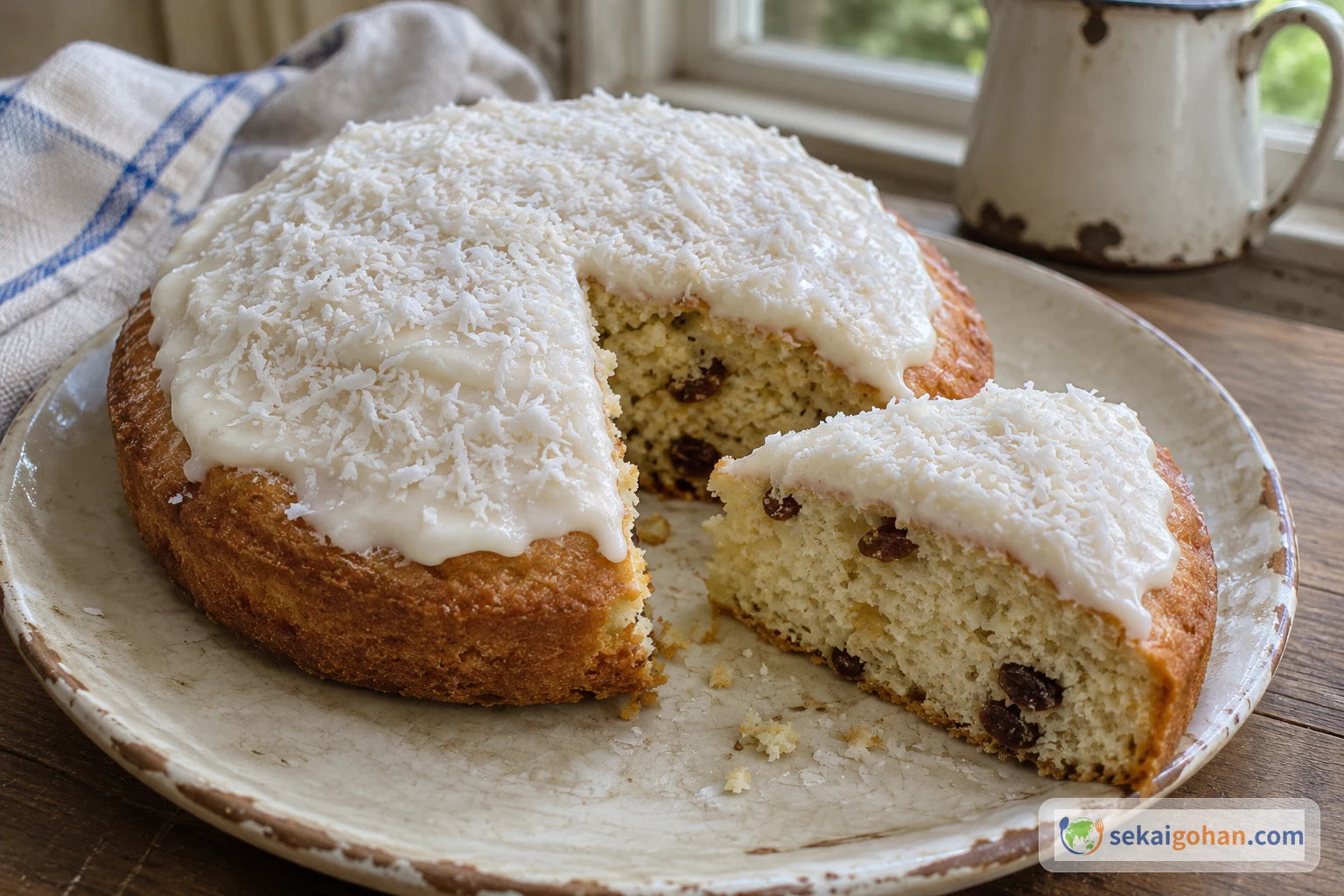
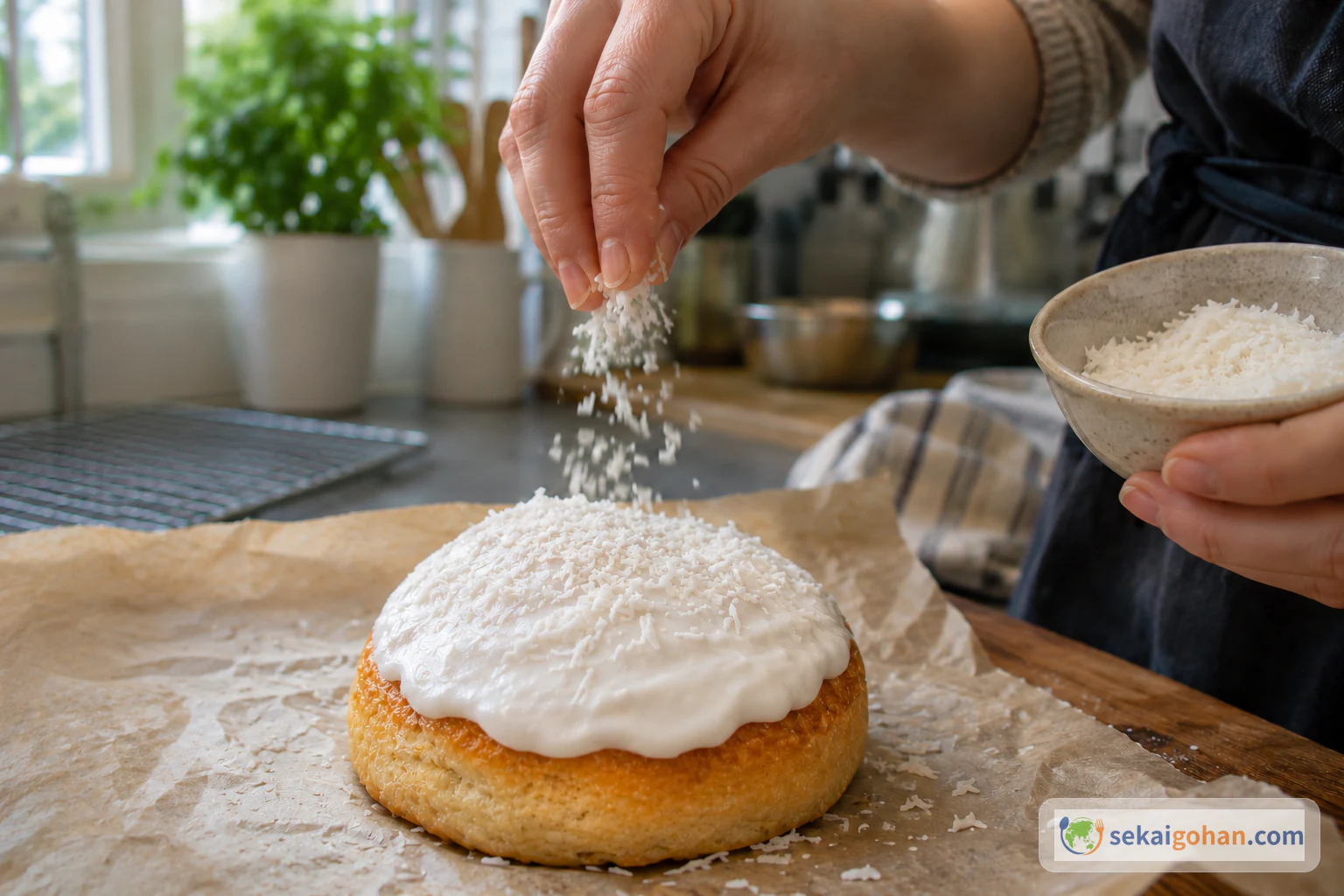
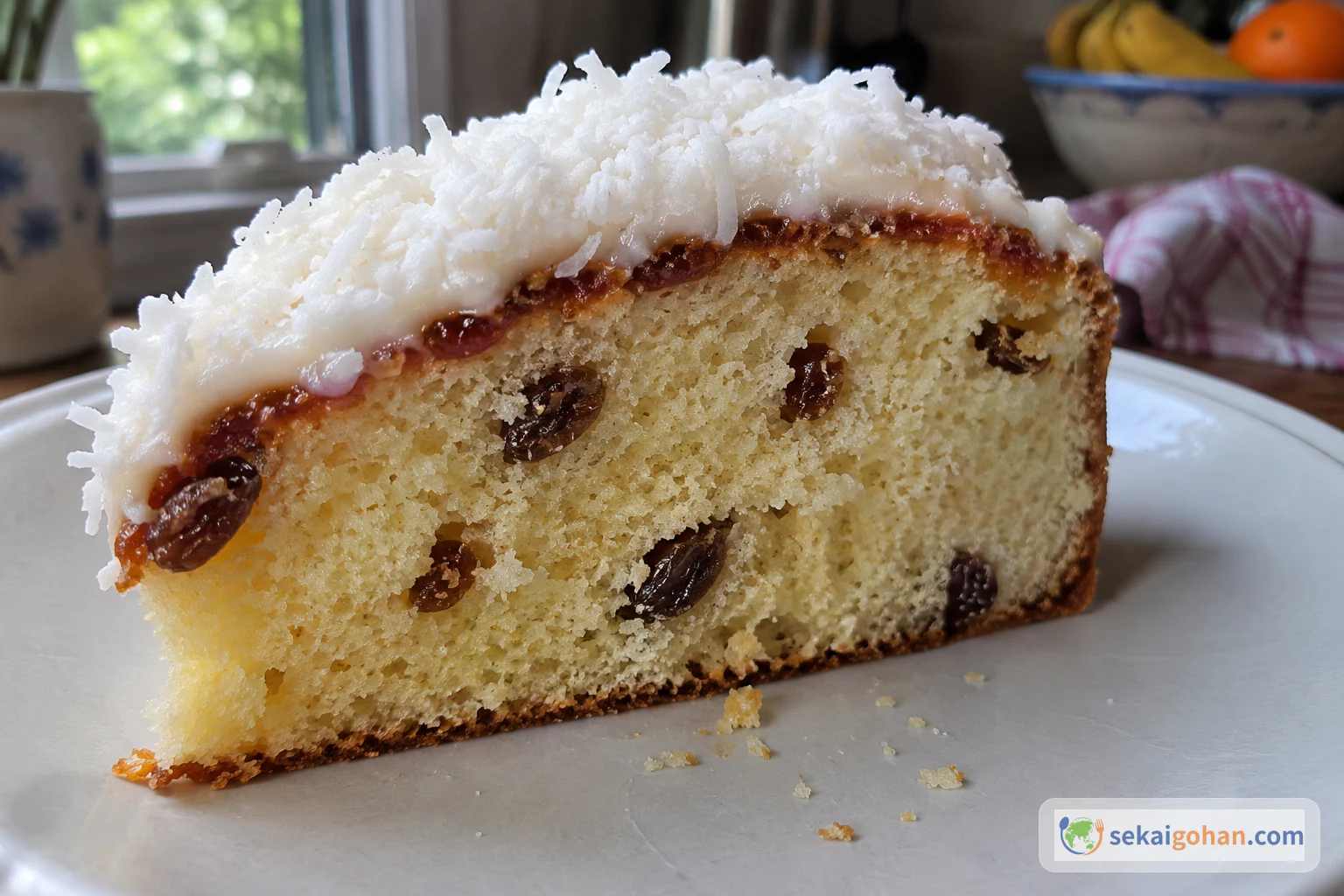
The knife has to press through a thick cap of white icing before it reaches the bun. The first wedge comes away with a fine snow of coconut on top, a ring of bare golden crust at the edge, and dark sultanas scattered through a pale, soft crumb. In Australia and New Zealand this round bun is cut into wedges at morning tea, eaten at room temperature, and often spread with soft butter. It tastes of warm spice and plenty of sugar. The crumb is moist and closer to a scone than to bread, and the traditional dough is built on a cup of mashed potato.
Potato Under the Icing, and a Name That Points Nowhere
The surprise sits in the first line of the ingredient list. The traditional Boston bun starts with plain mashed potato, stirred warm with sugar before any flour goes in. You will not taste potato in the finished bun. It gives you a crumb that stays moist and soft under all that icing. A common explanation is that potato stretched scarce flour in the early twentieth century. Another links it to bulking out home baking under wartime rationing. Neither story is settled, and both are told as likely rather than certain.
The name is just as hard to pin down. The bun has no connection to Boston, Massachusetts, and nobody knows why it carries the city's name. Sultanas and raisins are usually dated to the 1930s, so the earliest buns were plainer than the ones in bakery cases now.
In New Zealand the same iced, coconut-topped fruit bun often goes by Sally Lunn, and which name you hear depends on which part of the country you are in. The English Sally Lunn is a different bread from Bath, dating to the seventeenth century, with neither raisins nor icing.
One name, several buns
The name covers several quite different bakes. One quick home version skips the potato, uses buttermilk and bicarbonate of soda, and has a thin icing poured over the top. A modern bakery style is a yeasted, enriched dough with orange and lemon zest and vanilla, baked in a cooler oven. Most bakery Boston buns are yeast doughs with no potato at all.
The bun here is the old potato and self-raising flour version, an everyday bake you will find in home kitchens across Australia. Keep its amounts separate from the other styles. The balance of potato, sugar and flour is what makes it work, and mixing in a yeasted or buttermilk method gives you a different bun.
Ingredients
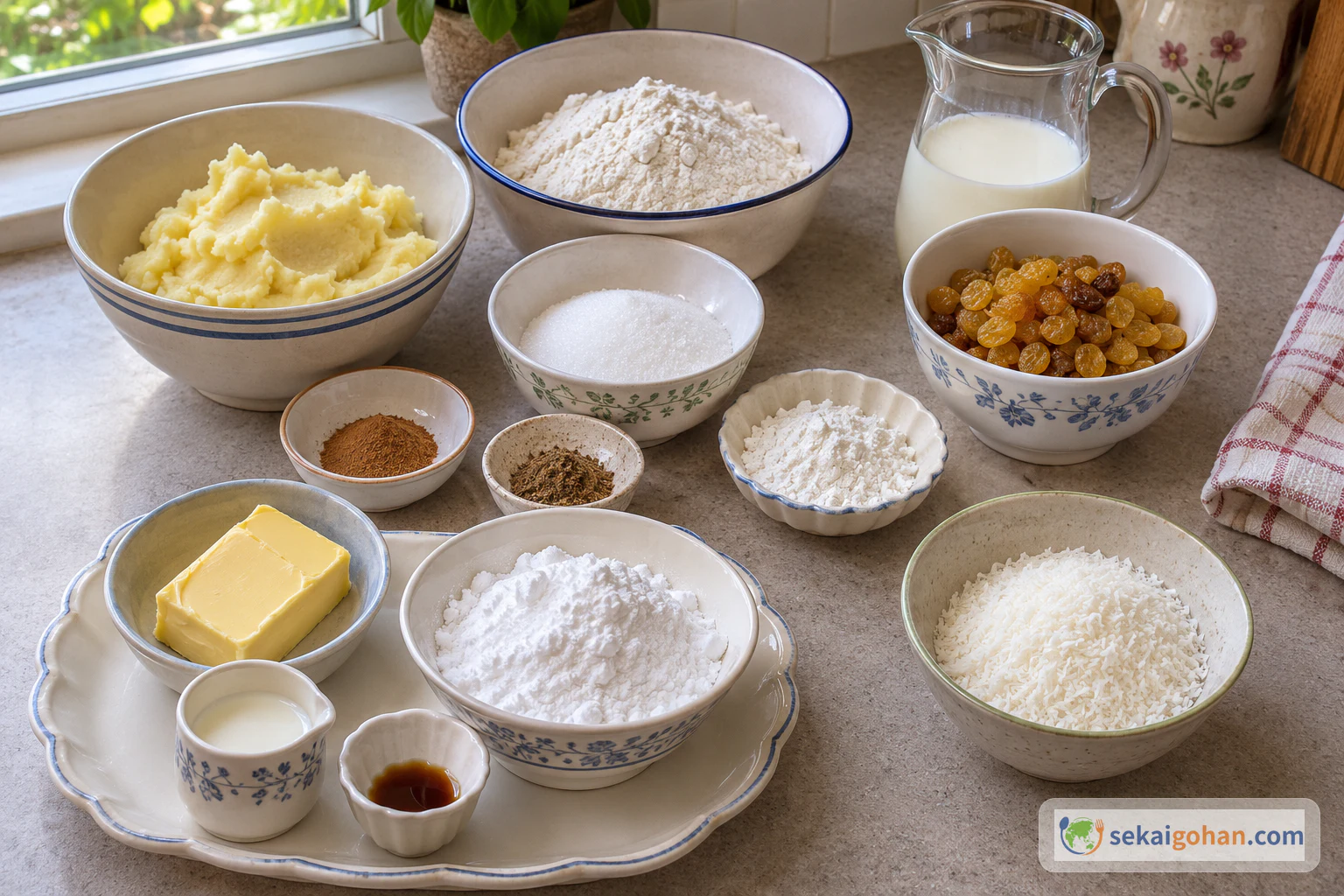
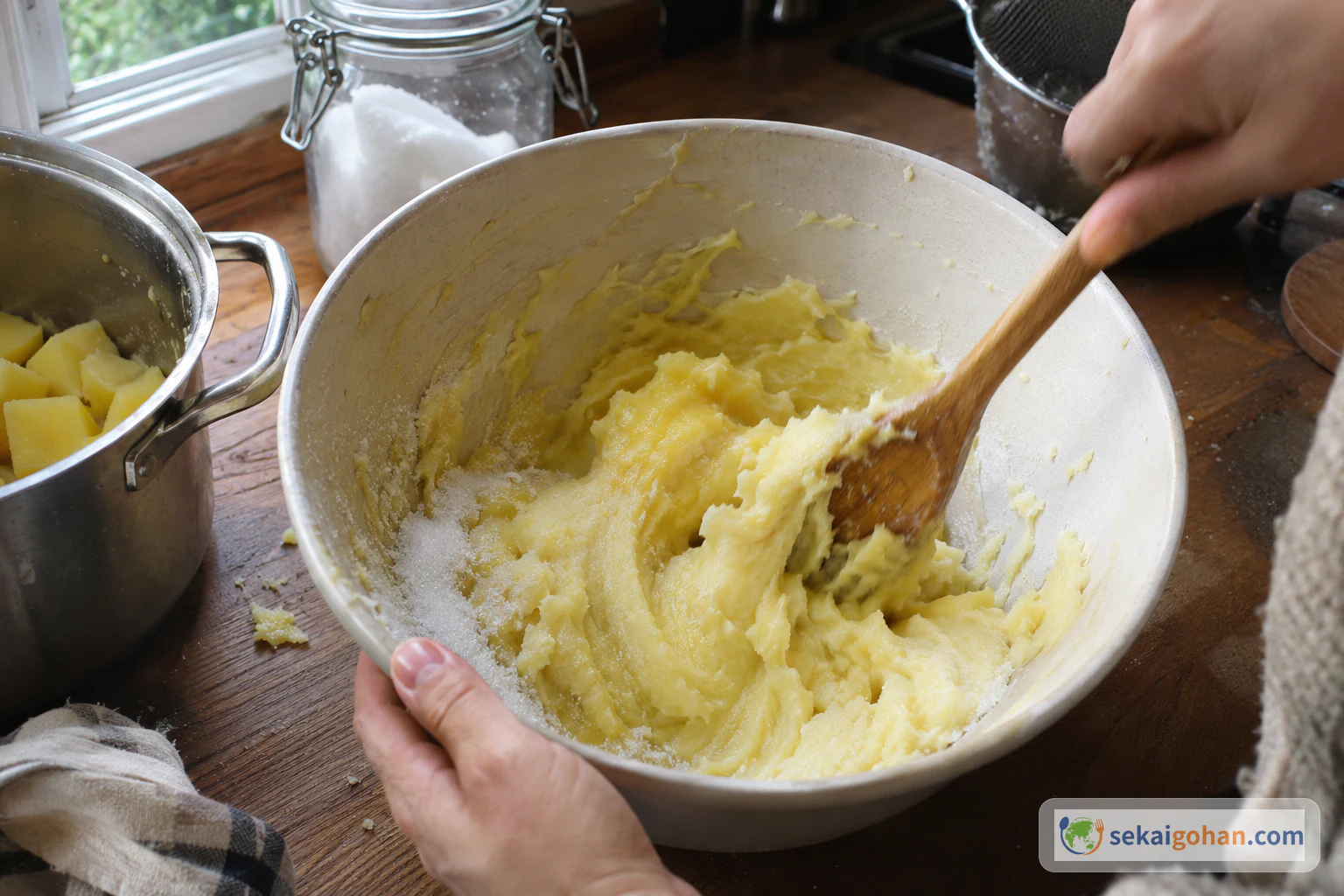
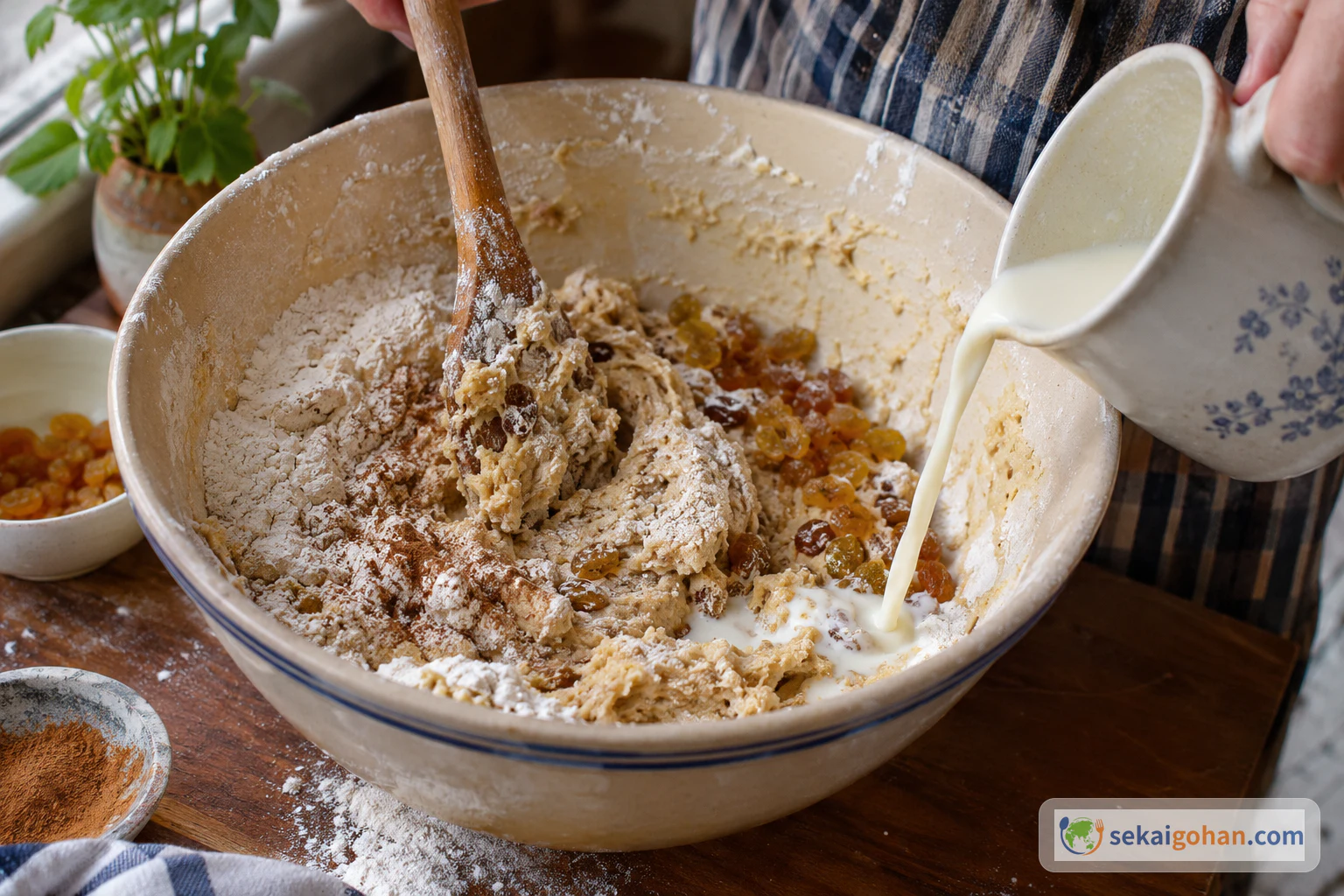
Boil and drain the potato well, then press it through a ricer or sieve with nothing added. Do not add milk, butter or salt. Measure it while it is still warm, because the sugar dissolves into warm potato and sits grainy in cold mash.
This bun contains wheat (gluten), milk (milk and butter) and coconut. Some sultanas are treated with sulfur dioxide, so check the pack if sulfites are a concern. Bakery-bought Boston buns can carry other allergens, such as soy, that this home recipe does not use. If you tint the icing, use food-grade colouring only.
Equipment
- Baking tray and baking paper
- Pencil
- Potato ricer, masher or sieve
- Large mixing bowl and a sieve for the flour
- Wooden spoon
- 250 ml metric measuring cup and measuring spoons
- Electric hand mixer and a small bowl for the icing
- Bamboo skewer or cake tester
- Wire rack
- Small palette knife
Choosing and Swapping
Self-raising flour is the one ingredient worth buying rather than improvising. It is the only leavening in the dough, and plain flour mixed with baking powder changes how the bun rises. Mixed spice is a ground spice blend, and blends differ from brand to brand. Icing sugar mixture contains a little starch, which helps it set. Pure icing sugar makes a looser, glossier icing, so add the warm milk a little at a time.
What to keep and what can change:
| Ingredient | Swap | What changes |
|---|---|---|
| Mashed potato | None | This is the bun; leave it in |
| Caster sugar | Granulated sugar | Coarser grains; stir longer until none remain |
| Sultanas | Raisins | Darker colour and a sharper, more acidic bite |
| Milk in the dough | Soy or oat milk | Less richness |
| Desiccated coconut | Fine shredded coconut | Nearly the same |
| Butter in the icing | Unsalted butter | The faint saltiness goes |
| Warm milk in the icing | Water | Less richness |
| Vanilla extract | Vanilla bean paste | Stronger vanilla |
| Pink liquid colouring | Powdered food colouring | The colour comes through differently |
The dough has no salt and no fat, and the sultanas fill a full cup. Keep it that way. Salt or butter in the dough makes a different bun.
Method
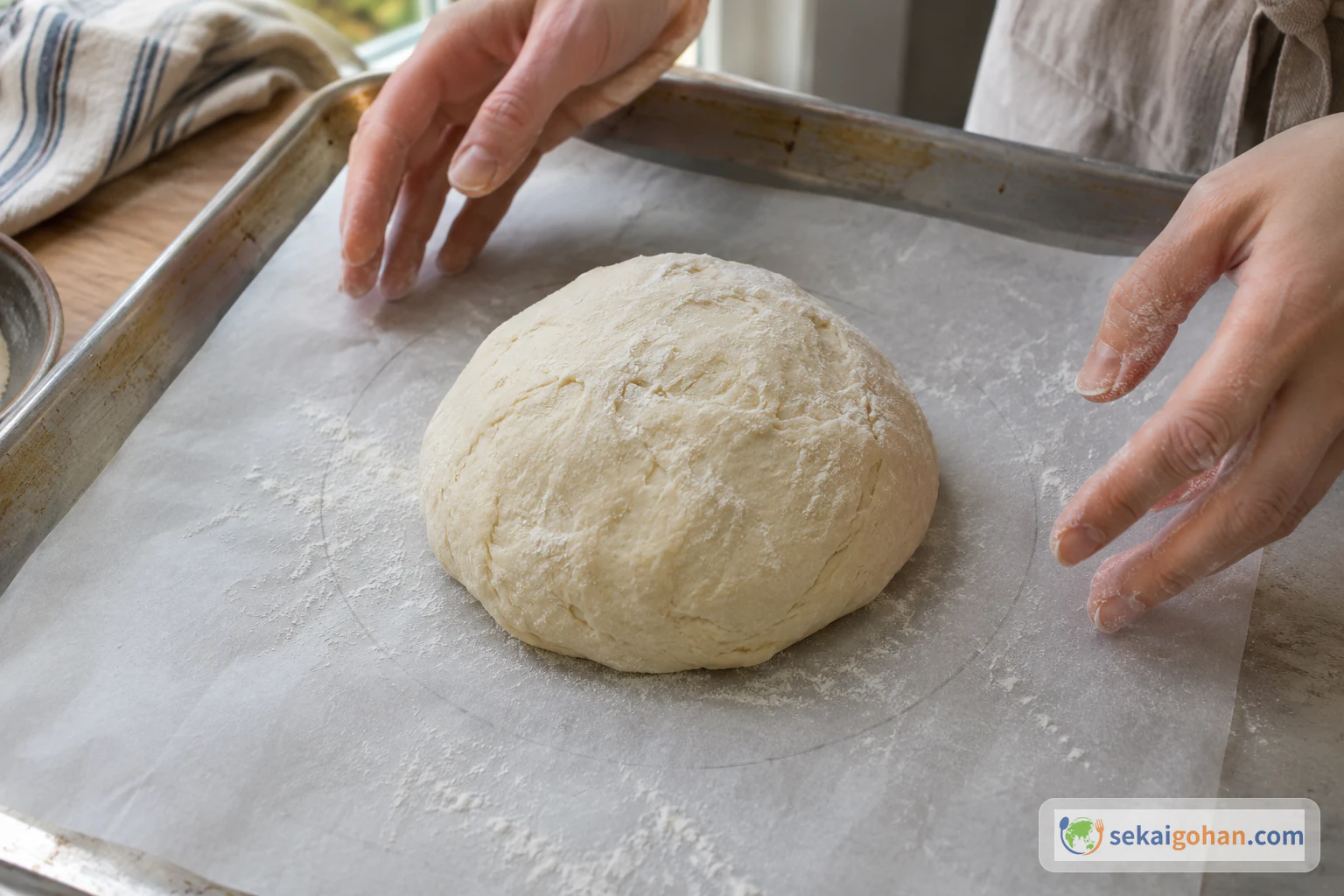
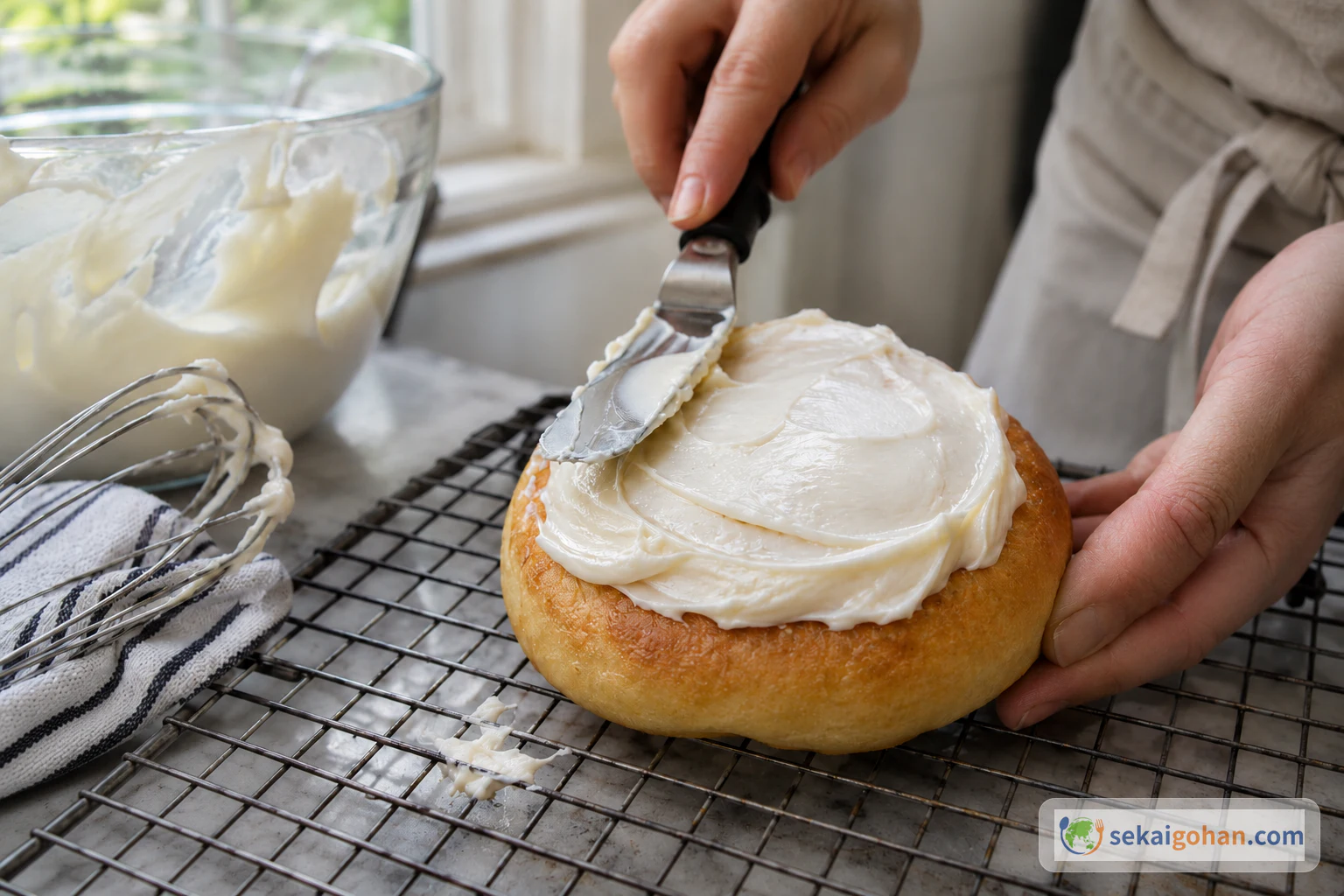
Mash and sieve the potato first and keep it warm. While the oven heats, set up the tray. From there the mixing goes quickly, and the bun needs no proving. The longest wait comes after baking, because the icing goes onto a completely cold bun, so leave yourself that time before you start.
The dough rises on the raising agent in the flour, not on gluten. A few gentle turns until it looks smooth keep the crumb soft. Working it hard makes the bun tight and tough.
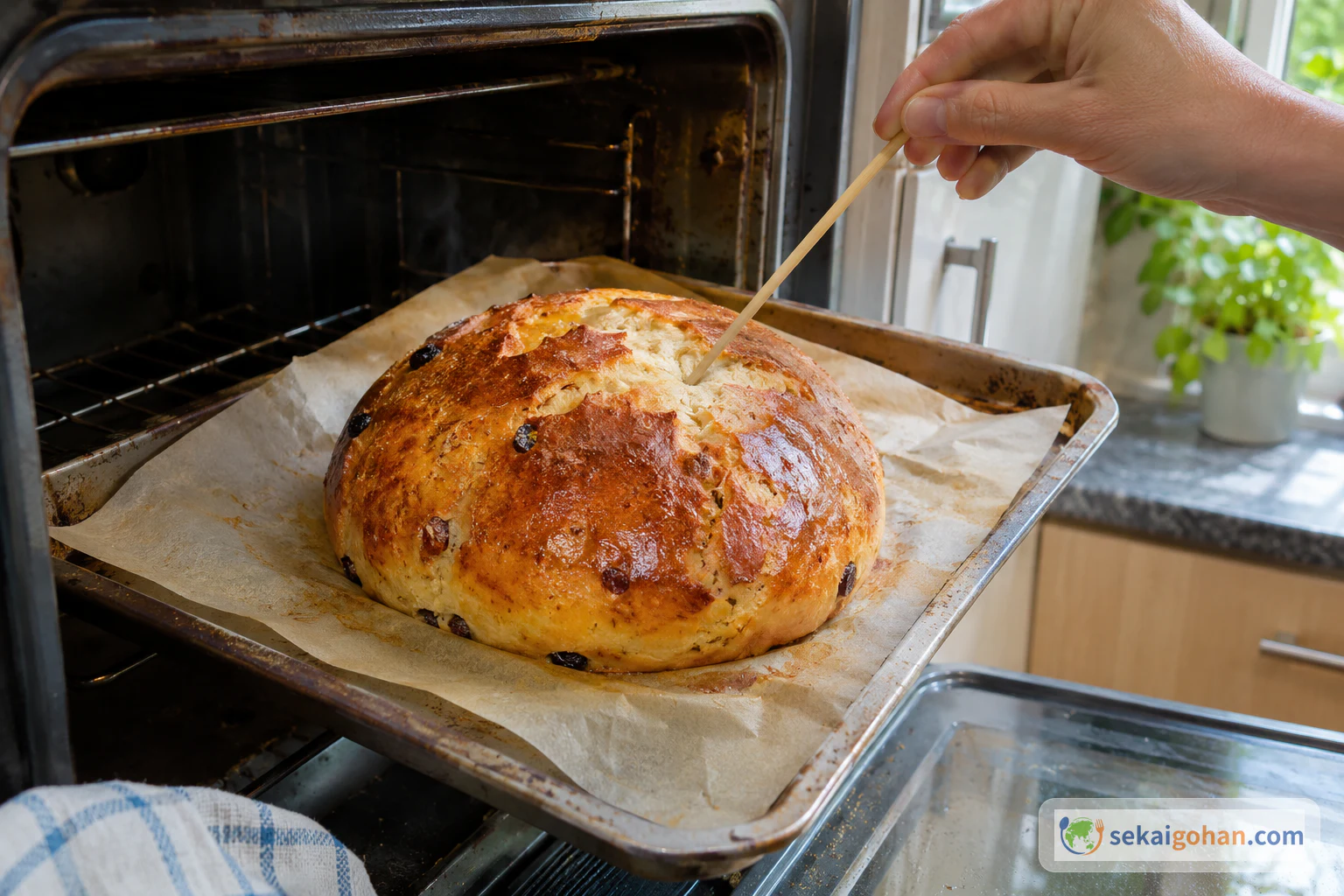
Do not eat the bun until the skewer comes out of the center clean. Raw dough in a thick round bun hides under a well-browned top. Use oven gloves for the tray and the foil, and let the bun cool on the rack, not in your hands.
When It Goes Wrong
Most problems with this bun come from three places: how much the dough was handled, how wet the potato was, and how hot the oven really runs.
| What you see | Why | What to do |
|---|---|---|
| Wet dough on the skewer after 25 minutes | Oven runs cooler than its dial, or the dome is too tall | Bake 5 minutes more at a time; next time preheat longer and shape a lower dome |
| Top dark, center still raw | Strong top heat or the tray sits too high | Cover loosely with foil and move the tray to a lower shelf |
| Hard, dry bun | Kneaded too long, or the potato was dry | Mix and knead only until the dough comes together; measure the potato drained but still moist |
| Dough too slack to hold a dome | Watery mash or extra liquid | Work in dusting flour on the bench until it holds; drain the potato better next time |
| Icing slides off | The bun was still warm, or too much milk | Wait until the bun is fully cold; beat in a little more icing sugar to stiffen it |
| Icing crumbly and stiff | Pure icing sugar, or cold butter | Beat in milk 1 tsp at a time; let the butter soften to room temperature first |
If the bun tastes very sweet, slice it thinner rather than cutting the sugar. Sweetness is part of the bun, and cutting the sugar changes the dough.
Serving, Variations and Storage
At the table
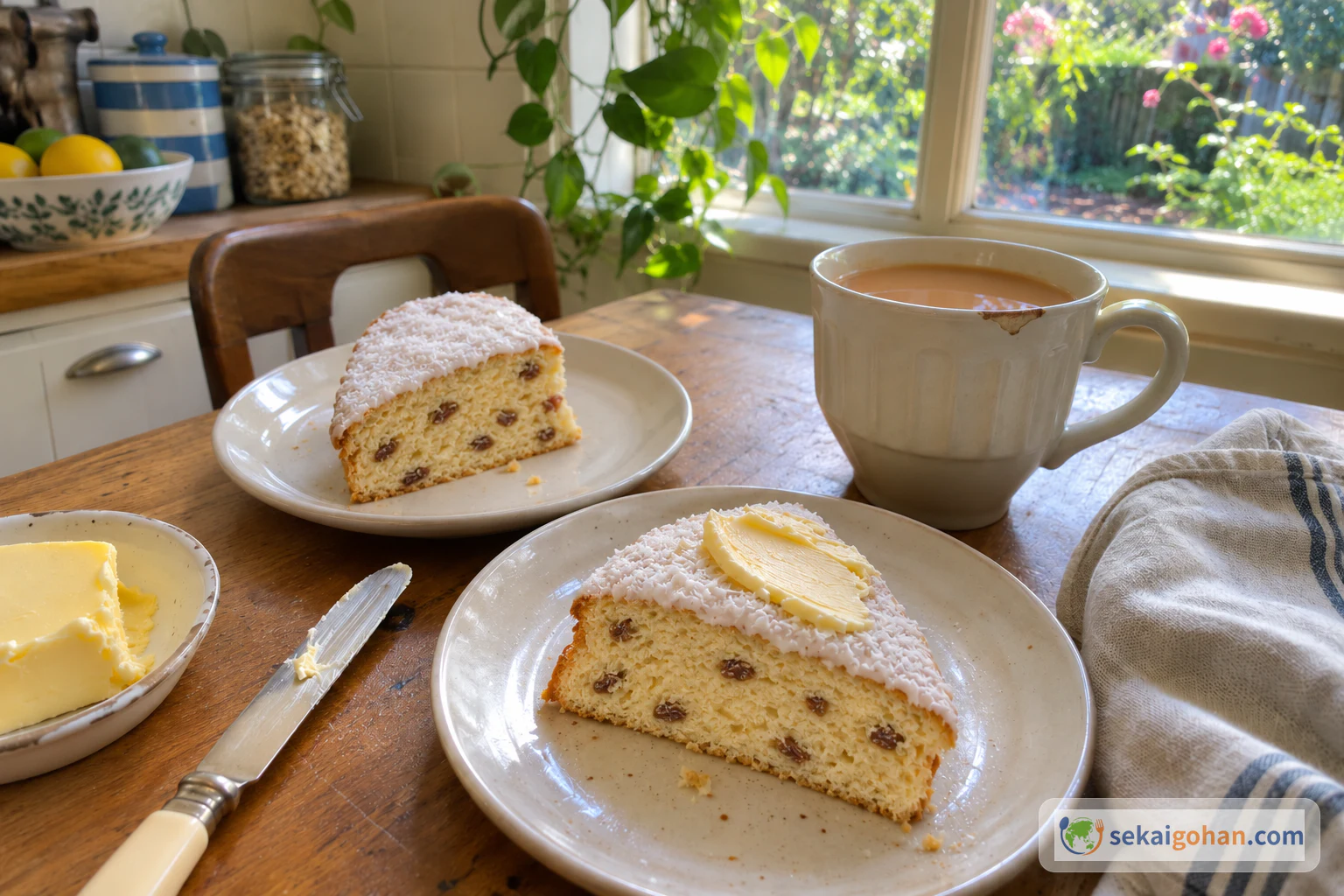
The Boston bun belongs to morning tea, the mid-morning break in Australian and New Zealand homes and workplaces. It has long been a fixture of school tuck shops and bakery display cases. The whole round goes on a board and is cut into wedges for everyone. Each person takes a slice with a cup of tea, often milky, and some spread soft butter thickly over the crumb. Cut thin slices. The icing is rich, and a thin wedge with butter and tea is the way it is meant to be eaten.
Variations
- Pink icing: Tint the icing with food colouring, a drop at a time. Only the colour changes, and pink makes a cheerful tray for a children's party.
- Cardamom and nutmeg: Use these instead of mixed spice. The aroma turns lighter and more floral.
- Other dried fruit: Swap the sultanas for chopped dried apricots or cranberries. The sourness comes forward against the sweet icing.
- A round pan: Bake the dome in a 7-inch (18 cm) round pan instead of on a marked tray. The sides come out straight and the wedges cut more evenly.
Keeping it
The bun is at its best the day it is baked. Once it is completely cold, keep leftovers in an airtight container at room temperature, away from humidity. Do not refrigerate it, because the crumb firms up and turns dry.
Frequently asked questions
Does the bun taste of potato?
No. The potato disappears into the crumb, and what you notice is how moist and soft the bun is. Plain, well-sieved mash keeps it that way, with no lumps and no buttery potato flavor.
Can I use leftover mashed potato?
Only if it is plain mash made from drained potato with nothing added. Mash made with milk and butter adds fat and liquid the dough is not built for. Warm cold leftovers before you stir in the sugar, so the sugar dissolves.
Why leave a bare rim of crust?
It gives you something to hold. You can pick up a wedge by its crust without icing on your fingers, and the thick icing stays in the center where it belongs.
Why is there no salt or butter in the dough?
The dough is built on potato, sugar, flour and milk alone. The potato supplies the moisture, and the richness comes from the icing and the butter at the table. Salt sharpens the flavor, but it makes a different bun, so leave it out.