A Fruit-Packed Pudding Carried to the Christmas Table
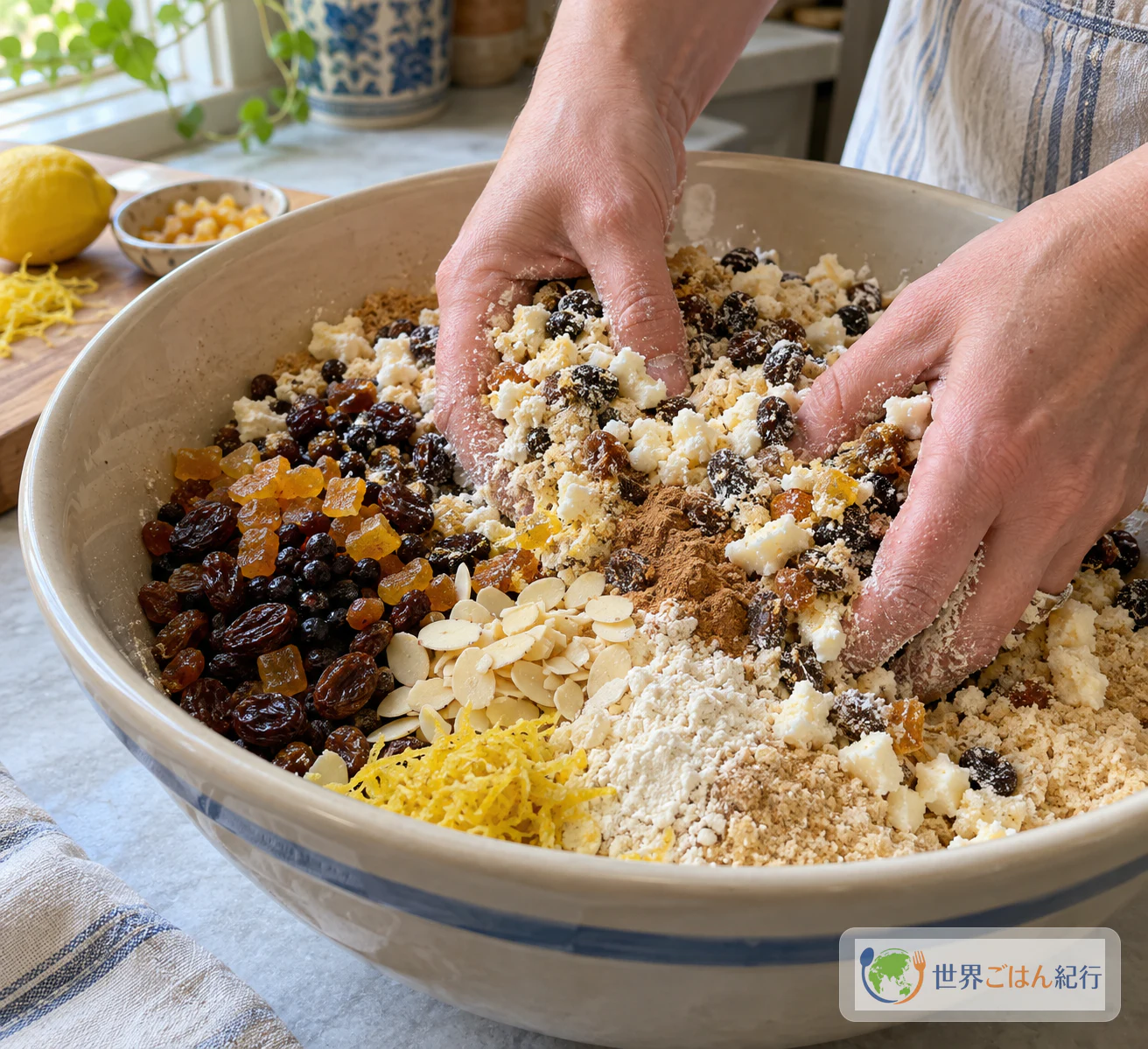
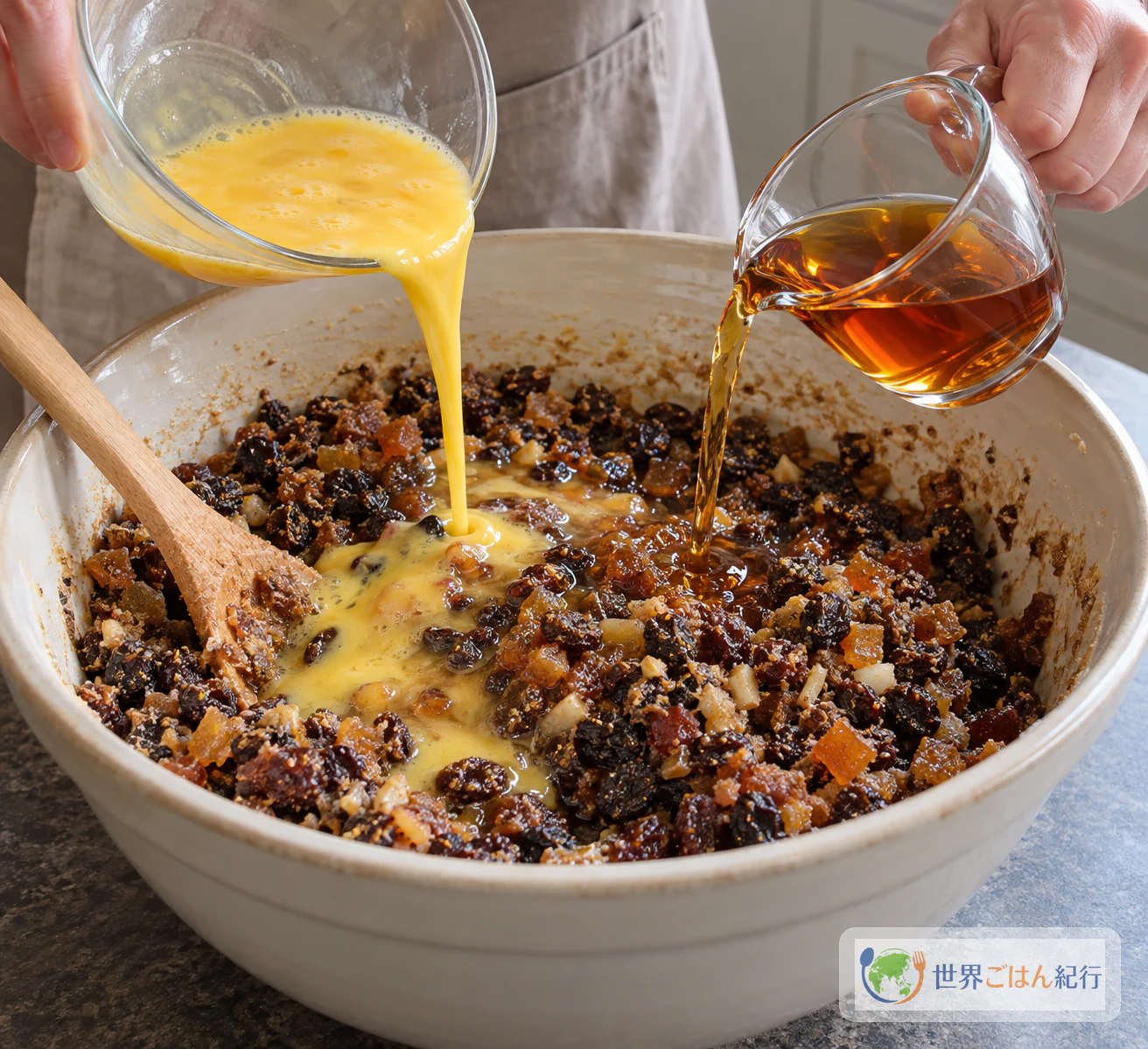
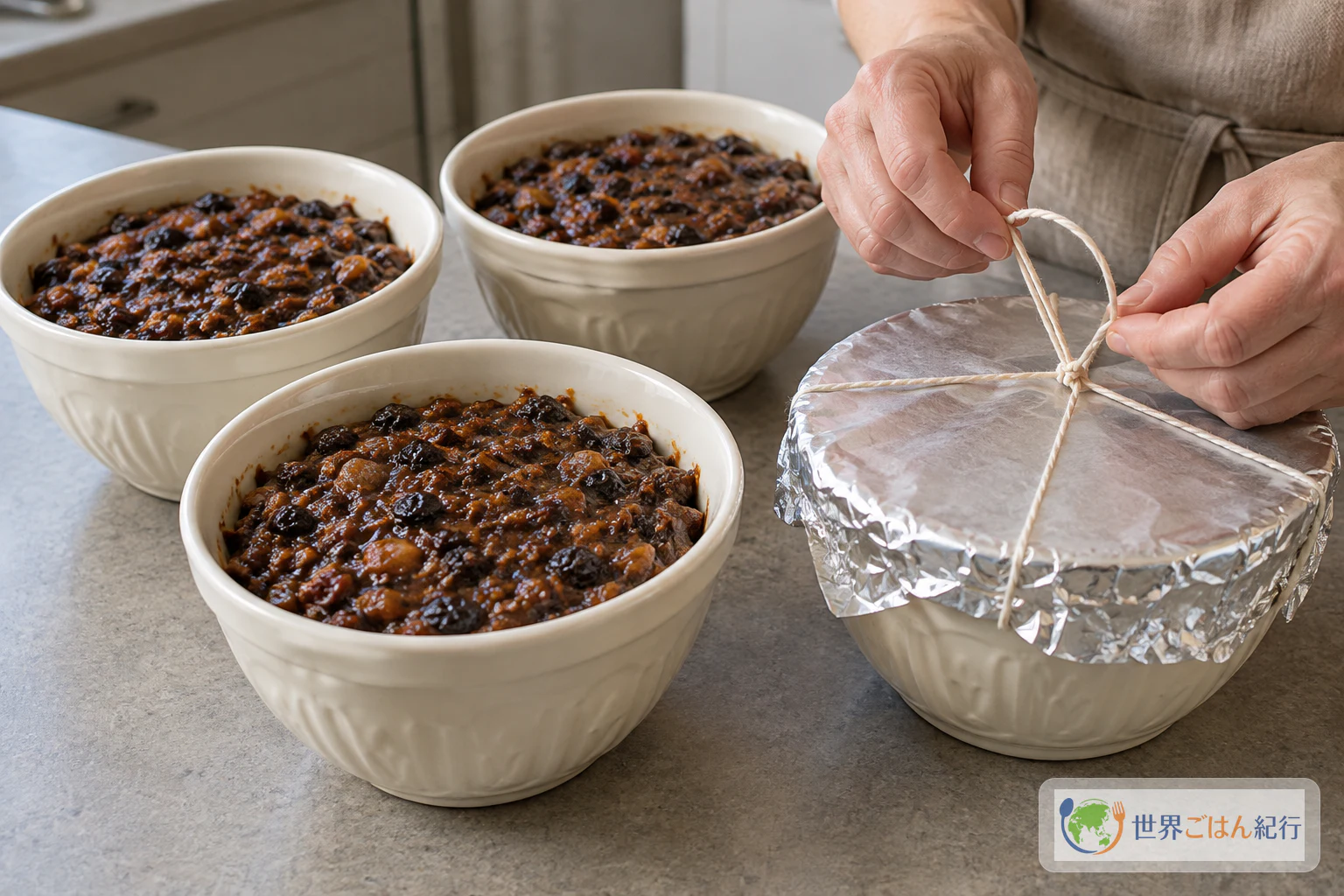
Mix the dried fruit, suet, crumbs and spice until the mixture is even, then bind it with eggs and brandy. Seal each basin well, give it the full steaming time, and keep the water out of the pudding.
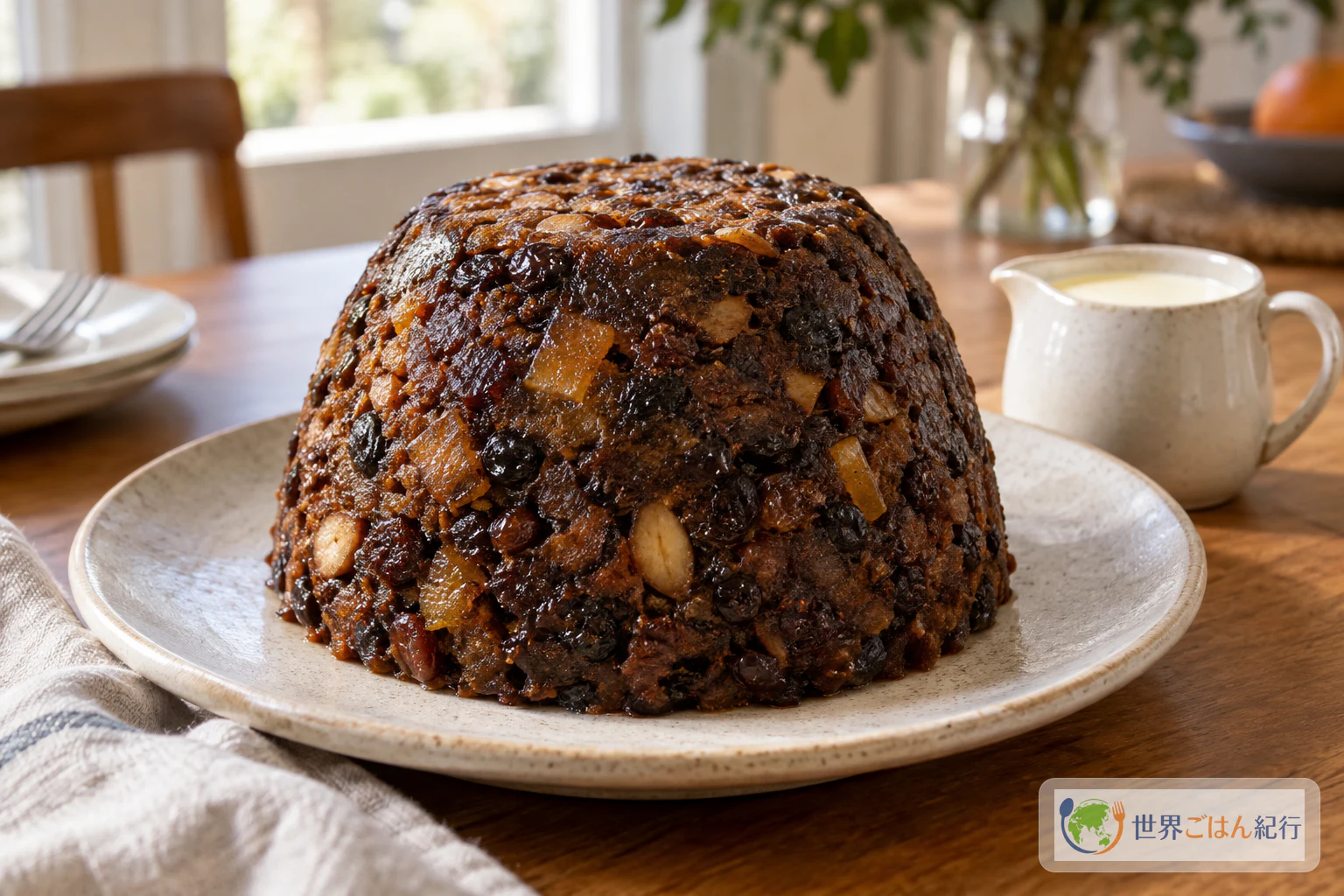
A dark, round pudding comes to the table still wrapped in steam, dense with raisins and sultanas. In its account of Charles Dickens and the Victorian Christmas feast, the British Library describes how Dickens portrayed making the pudding as a family Christmas event, a dish whose arrival the whole household looked forward to. That picture comes from English literature, but the pudding itself travelled far beyond England, and today it is part of Christmas cooking in Australia too.
Christmas pudding, also called plum pudding, belongs to a family of puddings made by combining dried fruit, fat, breadcrumbs or flour, eggs and spirits and then steaming them for a long time. The recipe here is the BBC Food version, used exactly as published: four 600ml basins, labelled as 6–8 servings. It is a British recipe chosen as a reliable home base, not a single "official" Australian formula. For more from this country, see our Australia page.
This recipe has not been kitchen-tested by Sekai Gohan. Amounts, basin sizes and steaming times follow the BBC Food recipe. The pudding contains wheat, eggs and almonds, so it is not vegan; serving it with cream, as shown here, adds dairy. Check the labels on the breadcrumbs and the vegetarian suet for their ingredients. Alcohol is cooked in the pudding, but it is not guaranteed that none remains after steaming.
In Australia: A British Pudding, Sometimes Layered with Local Ingredients
Australian publications carry more than one kind of Christmas pudding. ABC News (Australia) has published an old-fashioned recipe that uses suet and no sugar, boiled in calico and left to mature, and that recipe page mentions the tradition of the family each taking a turn to stir and make a wish. It is a very large, sugar-free batch made by a different method from the basin pudding below, so it is presented here only as a comparison.
ABC has also published an "Australian Christmas Pudding" described as a local twist on the traditional one. That version uses dried apricot, fig, prune, apple and peach along with macadamia, wattle seed and lemon myrtle oil. It is one published example, not a standard eaten across the whole country, and none of those ingredients are mixed into the recipe below. If you are curious about wattle seed or lemon myrtle, treat that as a separate recipe to explore, not as an add-in for this one.
Ingredients: Four 600ml Basins, 6–8 Servings
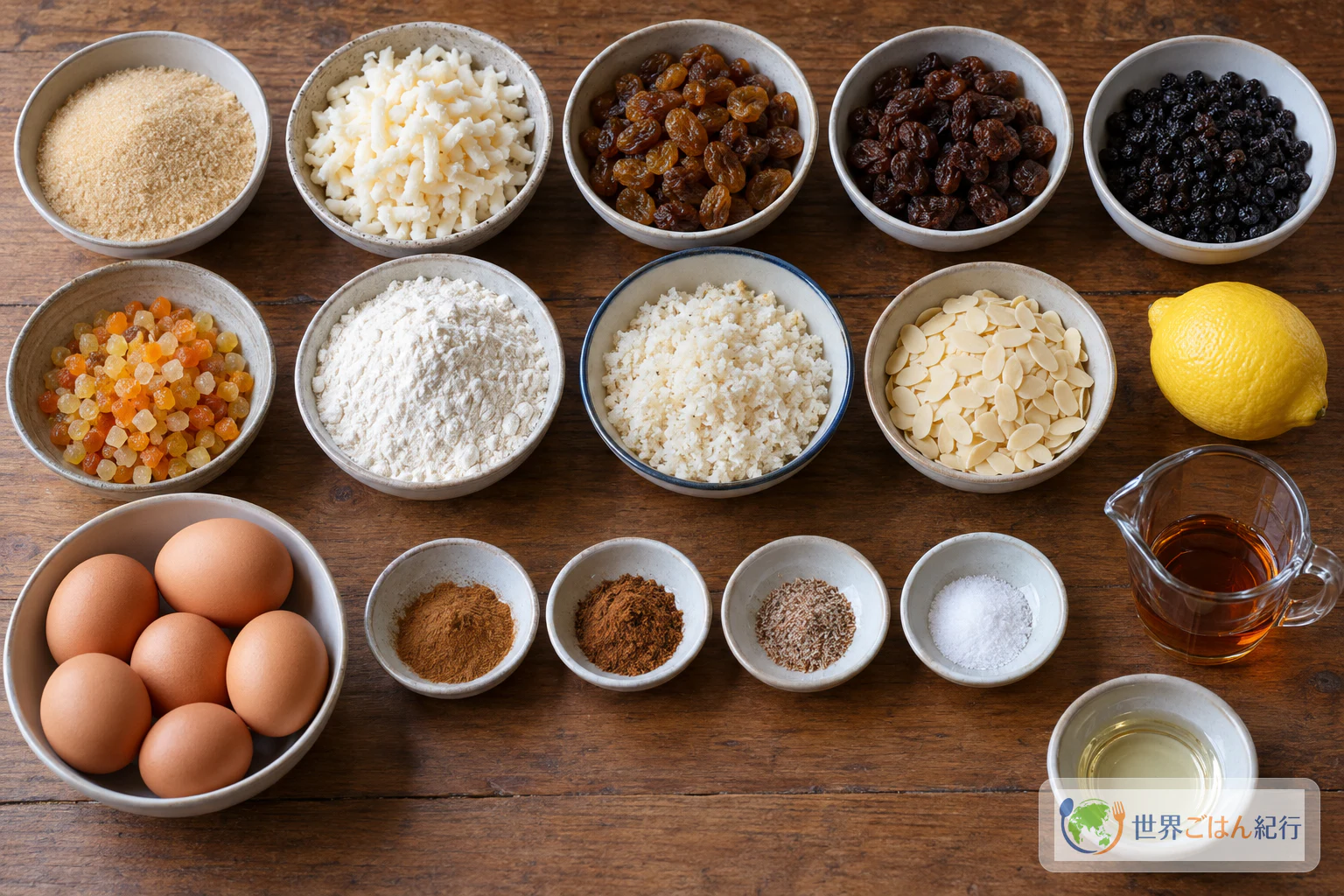
These are the BBC Food amounts, without scaling up or down. The serving count and the number of basins are the recipe's own labels. Choose either brandy or rum for the 150ml of spirit; this article uses brandy.
Equipment
- Four 600ml pudding basins (or two 1.2L basins)
- A large mixing bowl
- A fine grater for the lemon zest and nutmeg
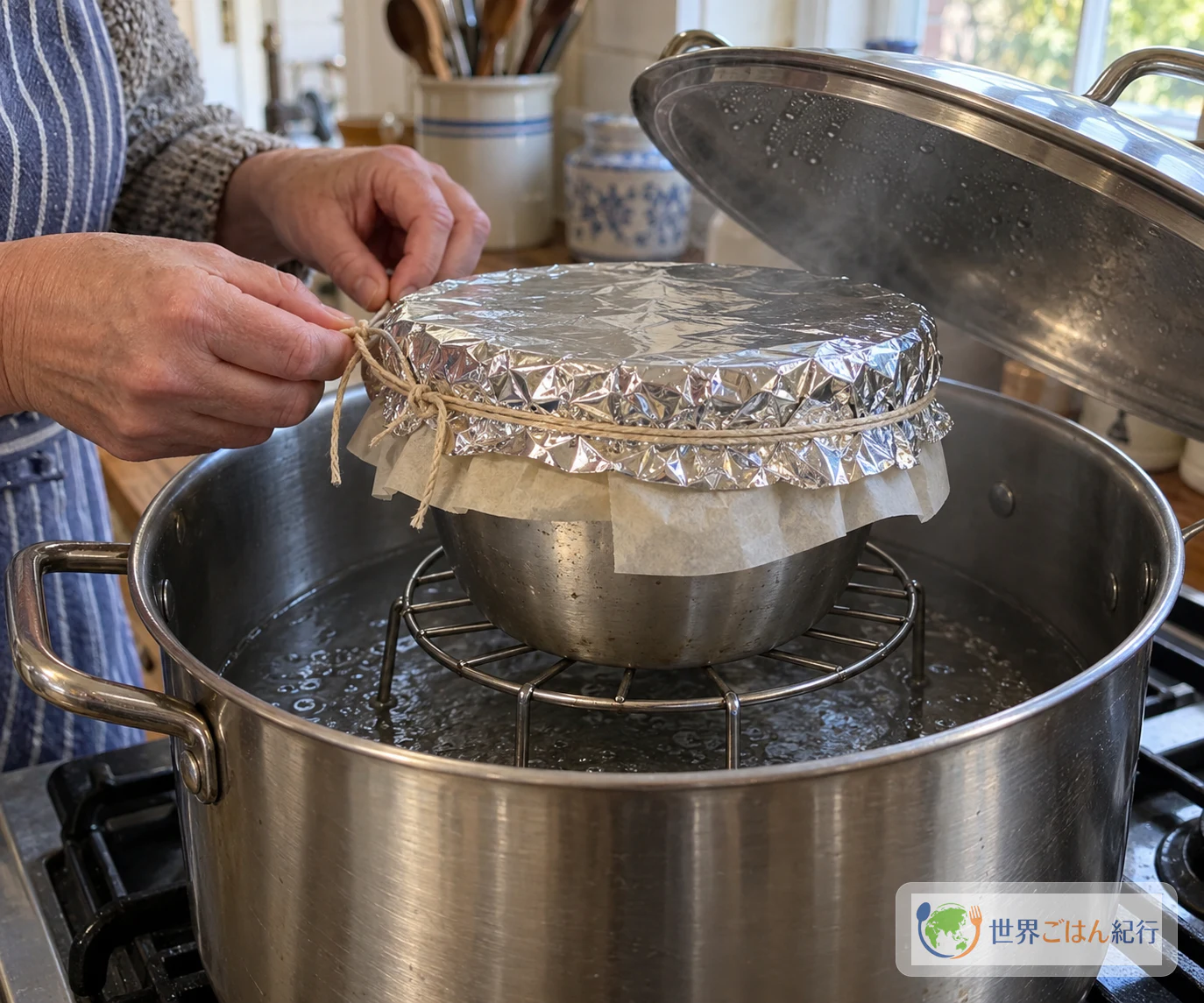
- Baking parchment and aluminium foil
- Kitchen string
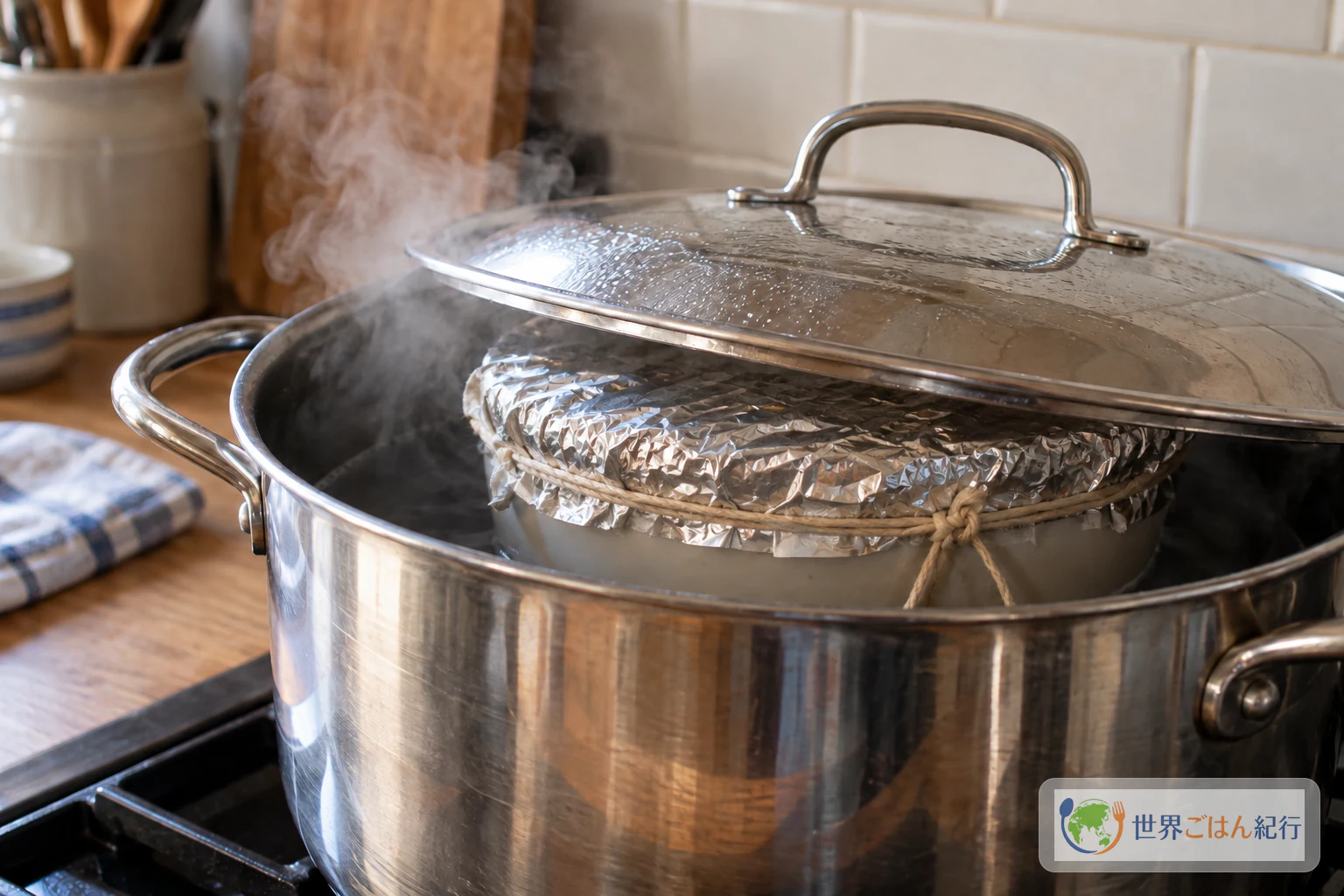
- A large lidded steamer, or a large lidded pot with an upturned saucer for the base
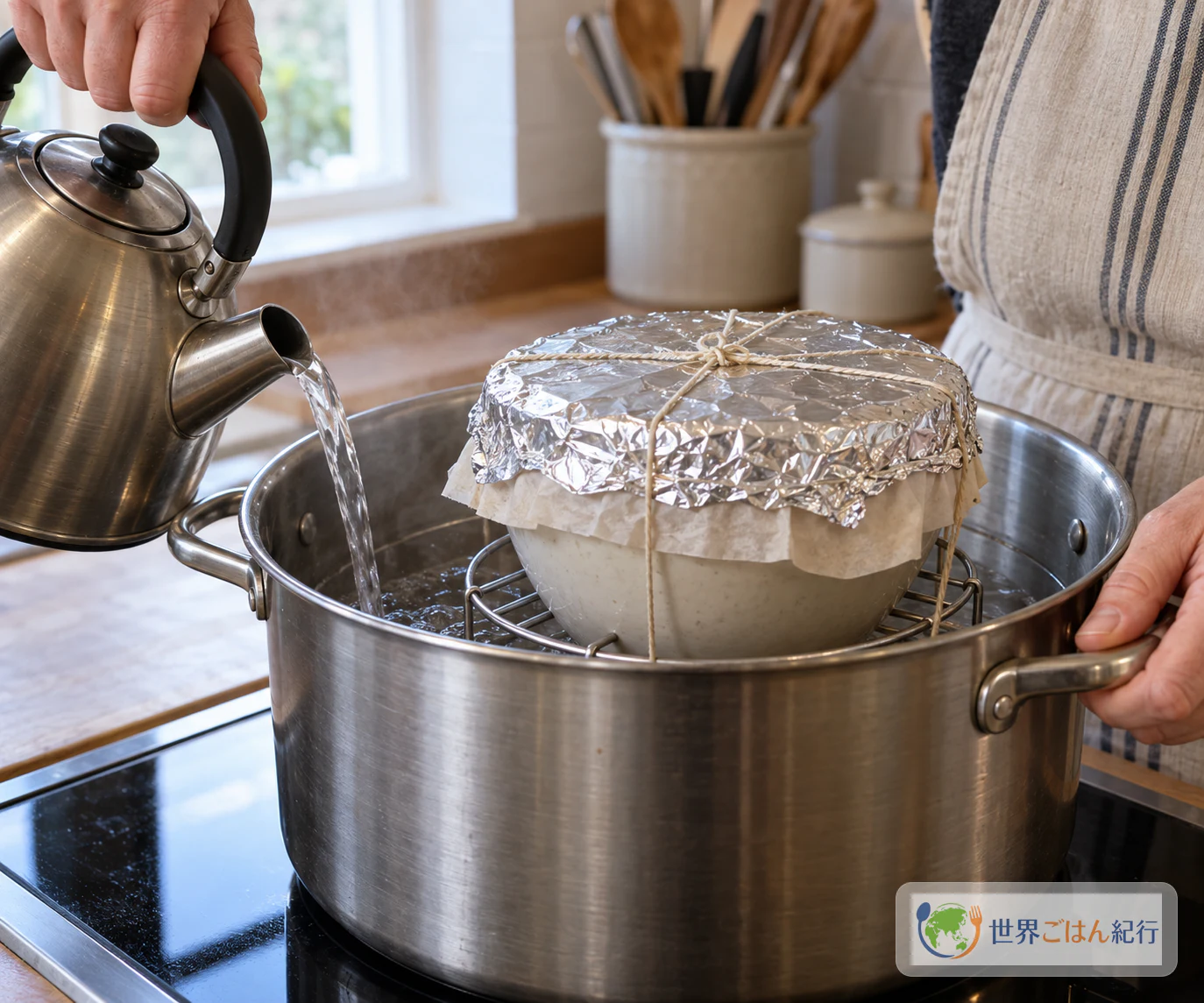
- A kettle or a pouring jug with a handle, for topping up with boiling water
Choosing and Substituting
Golden caster sugar. Fine granulated sugar brings the texture closer, but the flavour and colour that come from golden sugar will not be the same.
Vegetarian suet. Look for "vegetarian suet" or "vegetable suet" at import or specialty grocers. Switching to butter or another fat changes the structure, and no substitute has been confirmed for this recipe. Vegetarian suet makes a vegetarian pudding possible, but check each product's label.
Currants. These are small dried grapes. Do not confuse them with blackcurrants (cassis).
Mixed spice. This is a British sweet spice blend. It is not Chinese five-spice and should not be swapped for it.
Breadcrumbs. Use fresh white breadcrumbs. Dried breadcrumbs absorb liquid differently and cannot be treated as the same thing. If you are avoiding dairy, check the bread's label.
Plain flour. A soft wheat flour works as an approximation.
Spirits. Brandy or rum, as the source allows. An alcohol-free version has not been confirmed for this recipe.
Method: Mix, Seal, Steam, Chill, Re-steam
Steaming takes 5–6 hours, and re-steaming on the day you serve takes another 2 hours. This is not a pudding to make on the day.
The BBC recipe suggests storing the puddings in a cool cupboard. This article does not use long cupboard storage as the home method, and it does not promise the matured flavour that long storage is meant to bring.
Turning Out and Serving
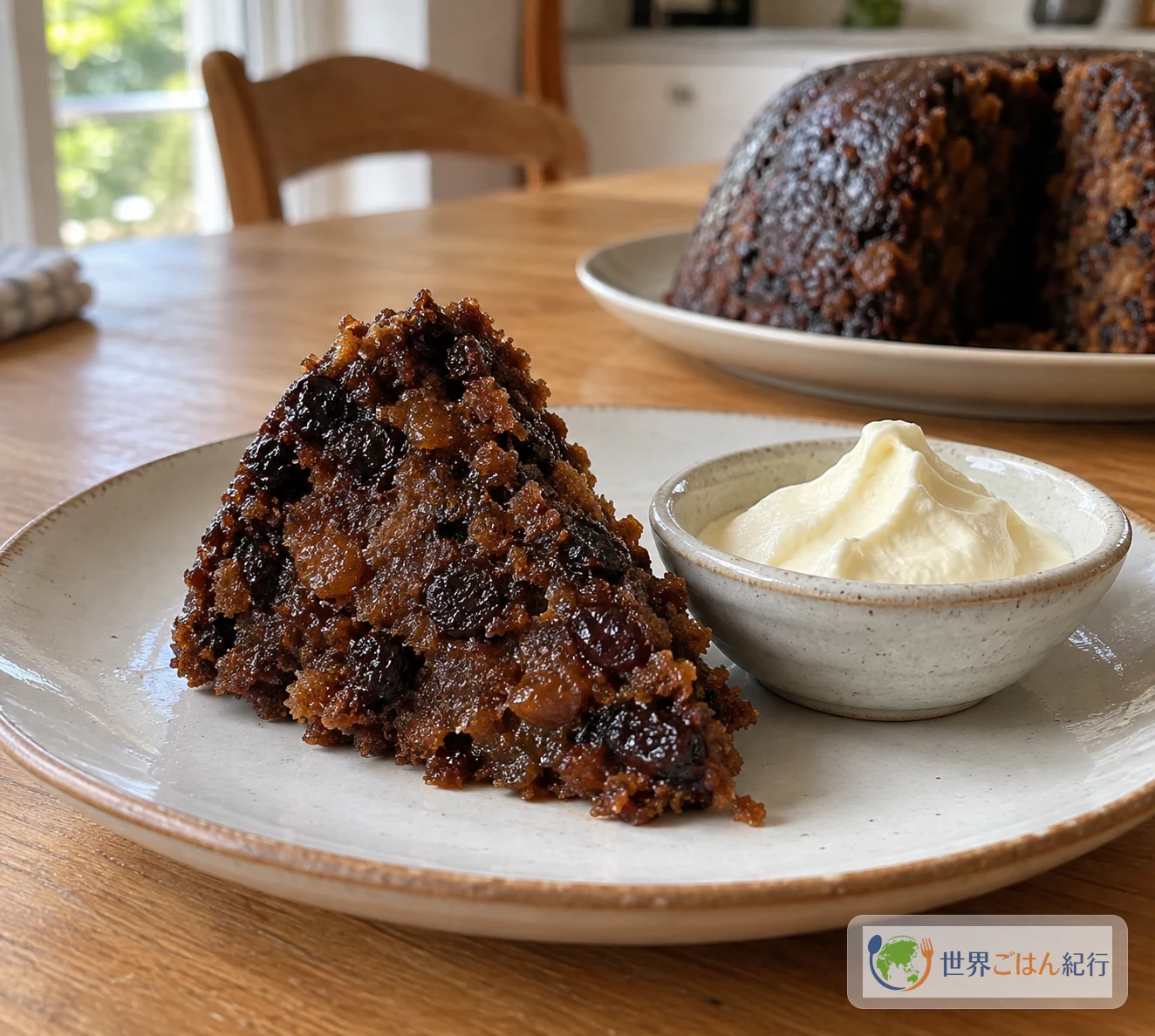
Lift the hot basin out by its string handle, remove the covering and turn the pudding out onto a plate. The inside should be dark and closely packed with fruit.
The BBC recipe suggests serving it with brandy butter, rum sauce, cream or custard. This article serves it with plain, unsweetened dairy cream, prepared separately. Whatever you choose, keep the accompaniment on the side rather than mixing it into the pudding. Setting the pudding alight is not recommended here, because the sources give no method or safety procedure for it.
Leftovers
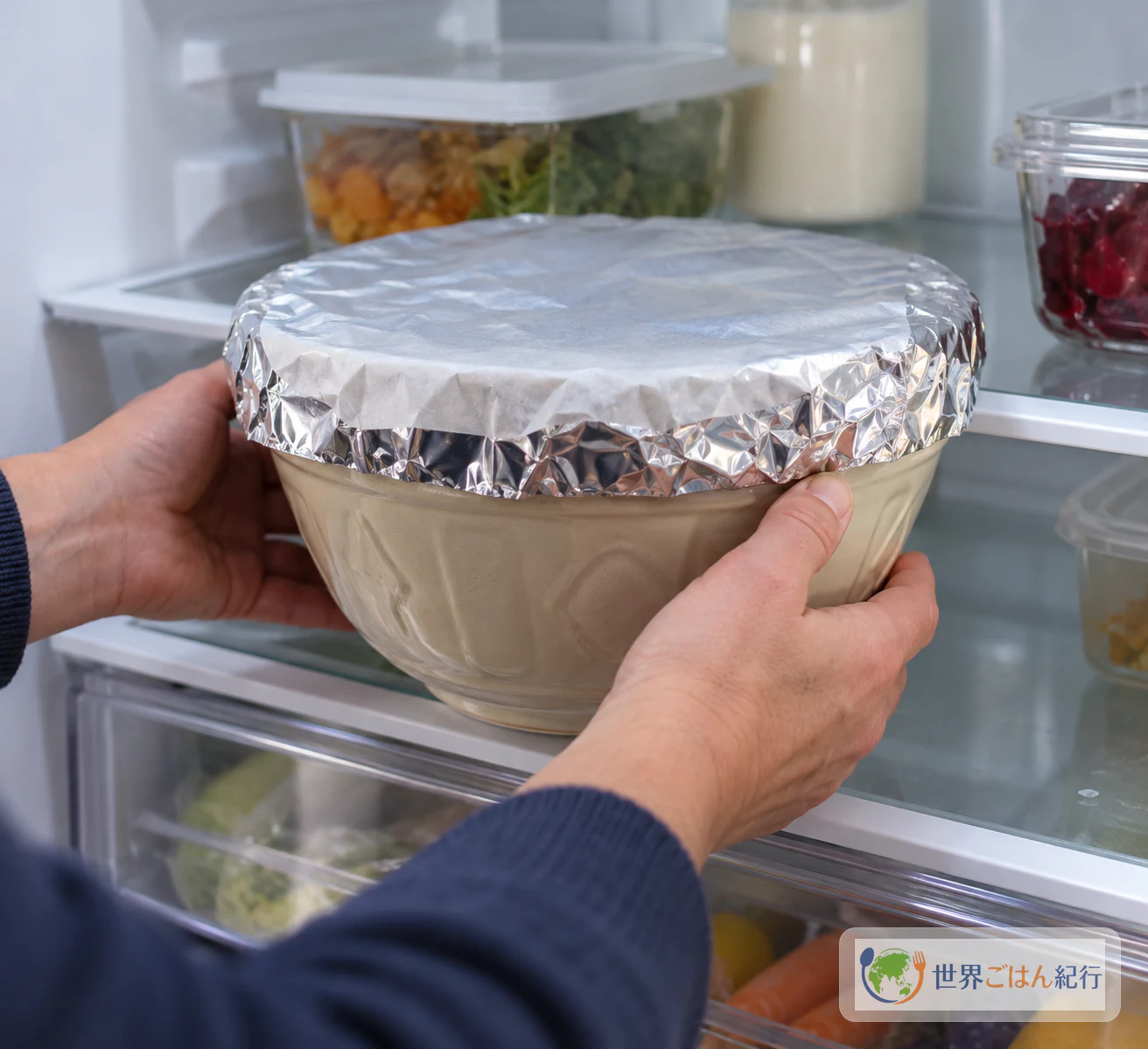
Don't leave leftover pudding sitting out. Divide it into shallow portions, cool it promptly, cover it cleanly and refrigerate it. Before eating, reheat it until it is thoroughly hot to the centre. As a general guideline, aim for 75°C at the centre for at least 1 minute. No keeping period has been established for this pudding, so none is given here.
Troubleshooting
| Problem | Likely cause | What to do |
|---|---|---|
| Water got into the pudding | Covering not tied tightly, or water level too high | Tie the parchment and foil firmly with string. In a pot, keep the water at about one third of the basin's height |
| The pot boiled dry | Water not checked over the long steam | Check regularly and top up with boiling water, pouring into the outer pot |
| The basin is hard to lift out | No string handle | Tie a string handle across the top before steaming |
| Mixture overflowing or covering bulging | Basin overfilled | Fill according to the basin's labelling, leaving room for expansion and the covering |
| Texture doesn't match the recipe | Dried breadcrumbs, butter or other swaps | Use fresh white breadcrumbs and vegetarian suet; other swaps are not confirmed equivalents |
| Pudding not hot in the middle when served | Re-steamed too briefly | Re-steam for the full 2 hours and check that it is hot to the centre |
Variations
- Rum instead of brandy. The source allows either spirit. Rum changes the direction of the aroma.
- Two 1.2L basins instead of four 600ml. The source offers this container size for the same quantity. Don't set your own shorter steaming time.
- The ABC Australian version. Make the macadamia, wattle seed and lemon myrtle pudding as a separate recipe rather than adding parts of it to this one.
- Choosing the accompaniment. Cream, custard, rum sauce or brandy butter, as the BBC recipe suggests, always served on the side.
Frequently Asked Questions
Are Christmas pudding and plum pudding the same thing?
Both names are used in English for this kind of steamed dried-fruit pudding. This article does not try to settle where the word "plum" came from.
Is this an Australian recipe?
No. The recipe here is the BBC Food British version. There is no single national Australian formula; ABC News has published one example with local ingredients, along with an old-fashioned suet pudding.
Can I make it on the day?
Not with this recipe. Steaming takes 5–6 hours, plus 2 hours of re-steaming before serving.
How long does it keep?
No keeping period has been established here. Cool it, cover it cleanly, refrigerate it, and reheat it thoroughly before eating.
Is it vegan?
No. It contains whole eggs, and serving it with cream adds dairy. Vegetarian suet can make it vegetarian, depending on the product label.
Does the alcohol cook off?
It cannot be guaranteed that no alcohol remains after steaming. Keep that in mind when serving anyone who avoids alcohol.
Sources
- BBC Food, "Easy Christmas pudding." The recipe used here: ingredient amounts, basin sizes, mixing, covering, steaming for 5–6 hours with water topped up, cooling and storing, re-steaming for 2 hours, and serving suggestions. https://www.bbc.co.uk/food/recipes/richchristmaspudding_8935
- ABC News (Australia), "Australian Christmas Pudding." A local twist on the traditional pudding using dried apricot, fig, prune, apple and peach, macadamia, wattle seed and lemon myrtle oil. Used for comparison only. https://www.abc.net.au/news/2008-04-10/australian-christmas-pudding/8920480
- ABC News (Australia), "Christmas Pudding." An old-fashioned pudding using suet and no sugar, and the family stirring-and-wishing tradition described on that page. Used for comparison only. https://www.abc.net.au/news/2009-11-25/christmas-pudding/8914422
- British Library, "Charles Dickens and the Victorian Christmas Feast" (Simon Callow). Dickens's depiction of pudding-making as a family Christmas event, and the pudding's place in the Victorian feast. https://www.britishlibrary.cn/en/articles/charles-dickens-and-the-victorian-christmas-feast/
- Ministry of Health, Labour and Welfare (Japan), "家庭での食中毒予防" (Preventing food poisoning at home). General home guidance: heating to 75°C at the centre for at least 1 minute, dividing leftovers into shallow portions, cooling promptly, and reheating thoroughly. Not a storage period or test condition for this pudding. https://www.mhlw.go.jp/stf/seisakunitsuite/bunya/kenkou_iryou/shokuhin/syokuchu/01_00008.html