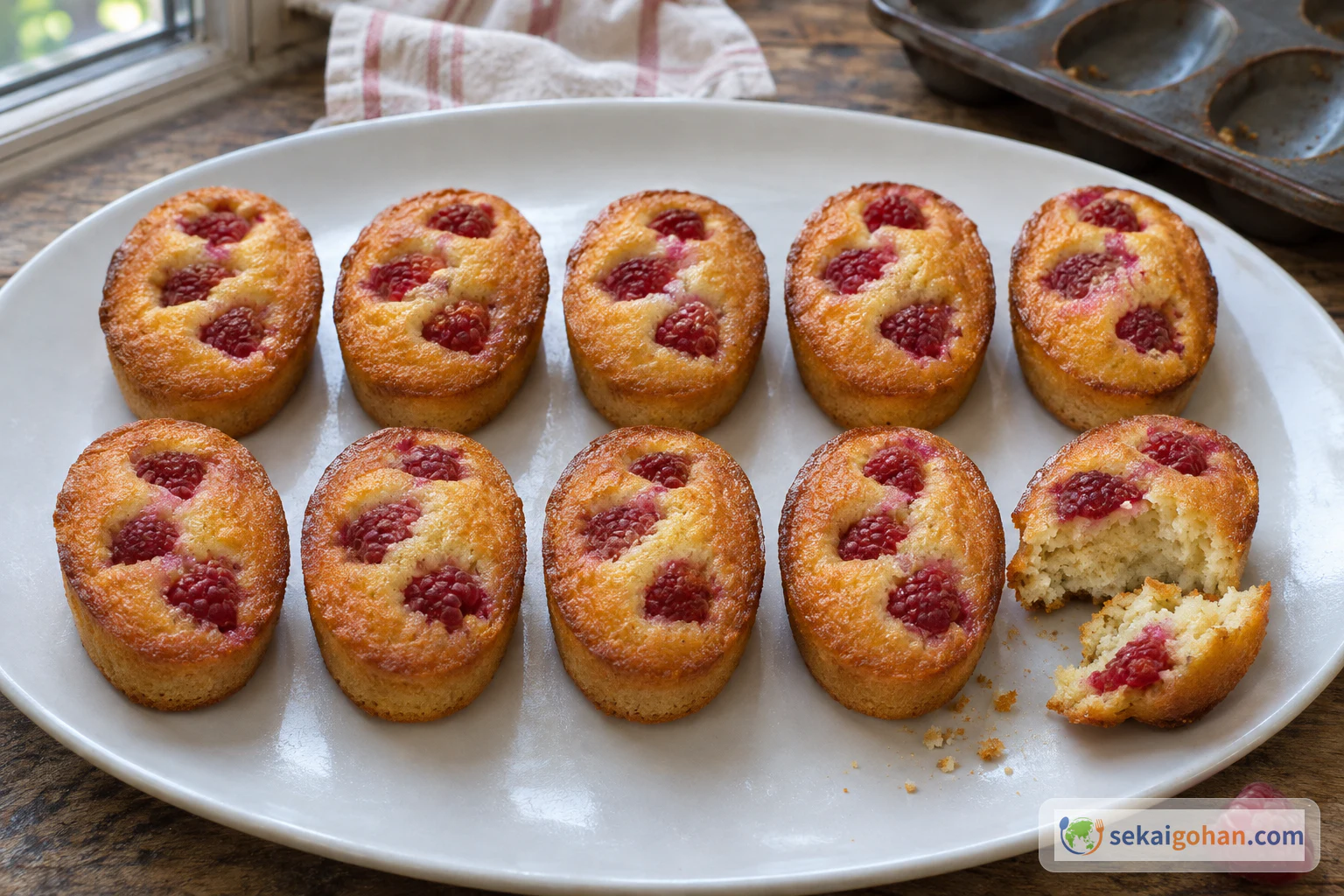
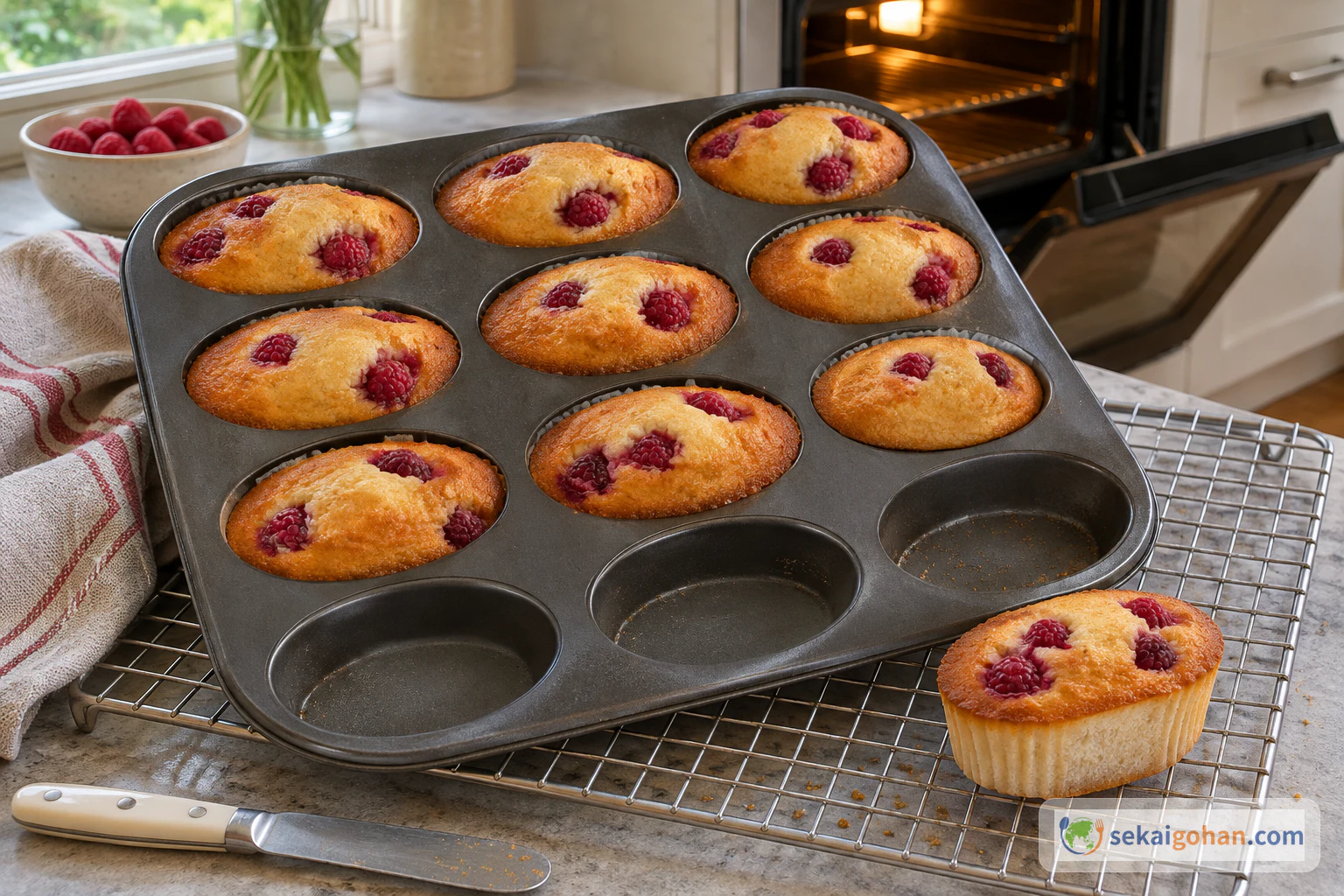
A friand comes out of the tin with crisp, golden edges and a domed top. Three raspberries have sunk into the top as it baked. Break one open and the inside is moist and fine, close-textured from almond meal and fragrant with brown butter and lemon. These small oval cakes sit in the glass case at Australian cafés beside the coffee machine, and New Zealand home cooks bake them too. They are sweet, nutty and a little tart where the fruit is, and they are what you make when you have a bowl of egg whites left over.
Cafés, Bullion Bars and a French Word
In Australia, friands are a café cake you can easily make at home. You eat one with a coffee or a cup of tea in the afternoon. At home they answer an old kitchen question: what to do with the whites after the yolks have gone into custard or a sauce. The batter is egg whites, almond meal, a lot of icing sugar, browned butter and only a little flour. That short list is easy to keep in the cupboard. They belong just as much to New Zealand, where another egg-white sweet, pavlova, is also a favourite. More dishes from the country are on the Australia page.
The friand's closest relative is the French financier, and the two are best thought of as cousins. Financiers bake in small rectangular moulds shaped like gold bars. Friands bake in oval tins, stand taller, and usually carry fruit: raspberries, blueberries or cherries. One account credits the financier to a pastry cook named Lasne in late nineteenth-century Paris. His shop was on rue Saint-Denis near the Bourse, the stock exchange, and the cake was designed so that people could eat it without a knife or fork. Another account traces it further back, to visitandines, the almond cakes nuns had made for centuries. Where the financier really began is not settled.
The line between the two cakes is loose. Bake friand batter in a rectangular financier tin and it comes out lower, closer to a financier in both name and texture. Leave the fruit off an oval cake and many people would call it a financier anyway. Home kitchens vary too. Some New Zealand versions add coconut to the batter, and some cooks whip the whites to a soft foam, which gives a lighter, airier cake. The version here leaves the whites unwhipped, so the crumb stays dense and moist.
In French, friand means something delicious. In France the word usually refers to a small savoury pastry, and sweet little things are called friandises. The almond cakes on this page are the sweet Australian and New Zealand friand.
Ingredients (makes 10)
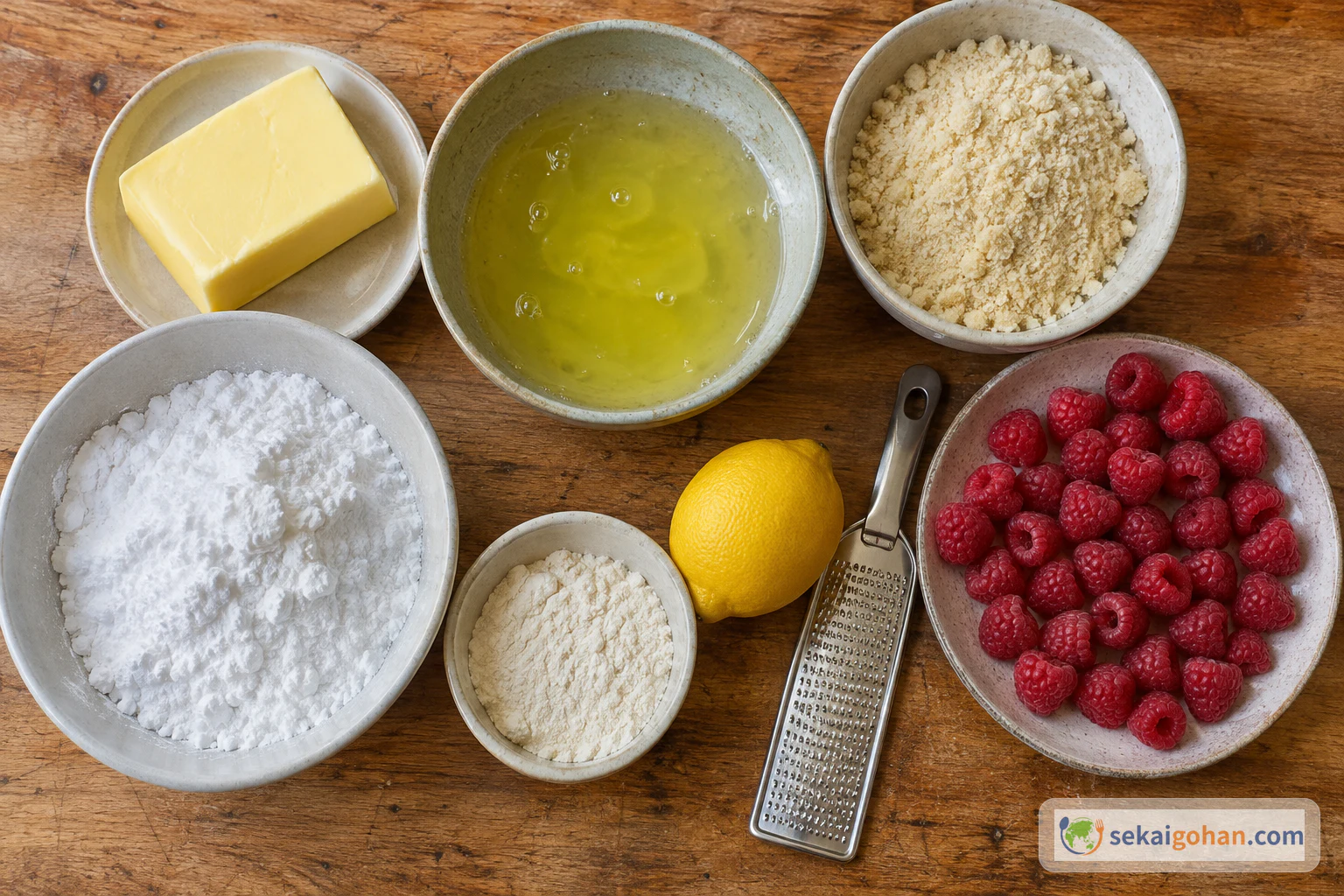
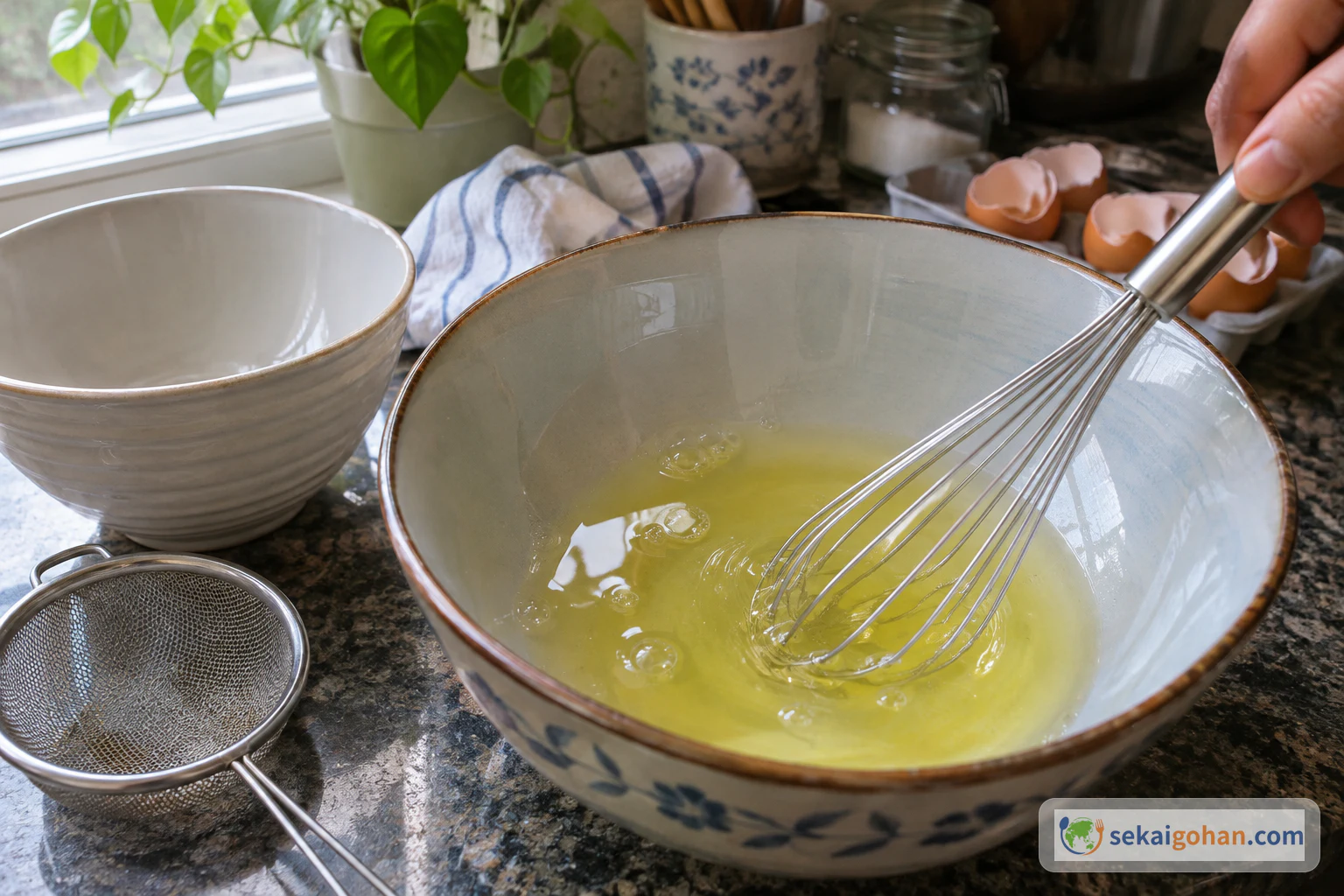
Eggs vary in size, and six whites do not always reach 7¾ oz (220 g). Put the bowl on a scale and keep adding white until you reach the weight, even if that means part of a seventh egg. The weight decides the batter, not the egg count.
Friands contain egg (egg whites), milk (butter), tree nuts (almond meal) and wheat (flour). The batter holds raw egg white, so do not taste it before baking.
Equipment
- 12-hole oval friand tin (each hole about ½ cup / 125 ml)
- Small saucepan
- Pastry brush
- Baking paper and scissors
- Two large mixing bowls
- Fine sieve
- Balloon whisk
- Rubber spatula
- Digital kitchen scale
- Fine grater or zester
- Jug for pouring the batter
- Wire rack
- Bamboo skewer
Choosing and Swapping
Blanched almond meal gives a pale, even crumb. Baking aisles and online shops sell it as almond meal or almond flour; buy the blanched kind made without skins. For the sugar, buy pure icing sugar. Icing mixture contains cornstarch and is a different product, so check the label before you buy. Use unsalted butter, because salted butter adds salt to every cake. An unwaxed lemon gives zest you can grate without scrubbing.
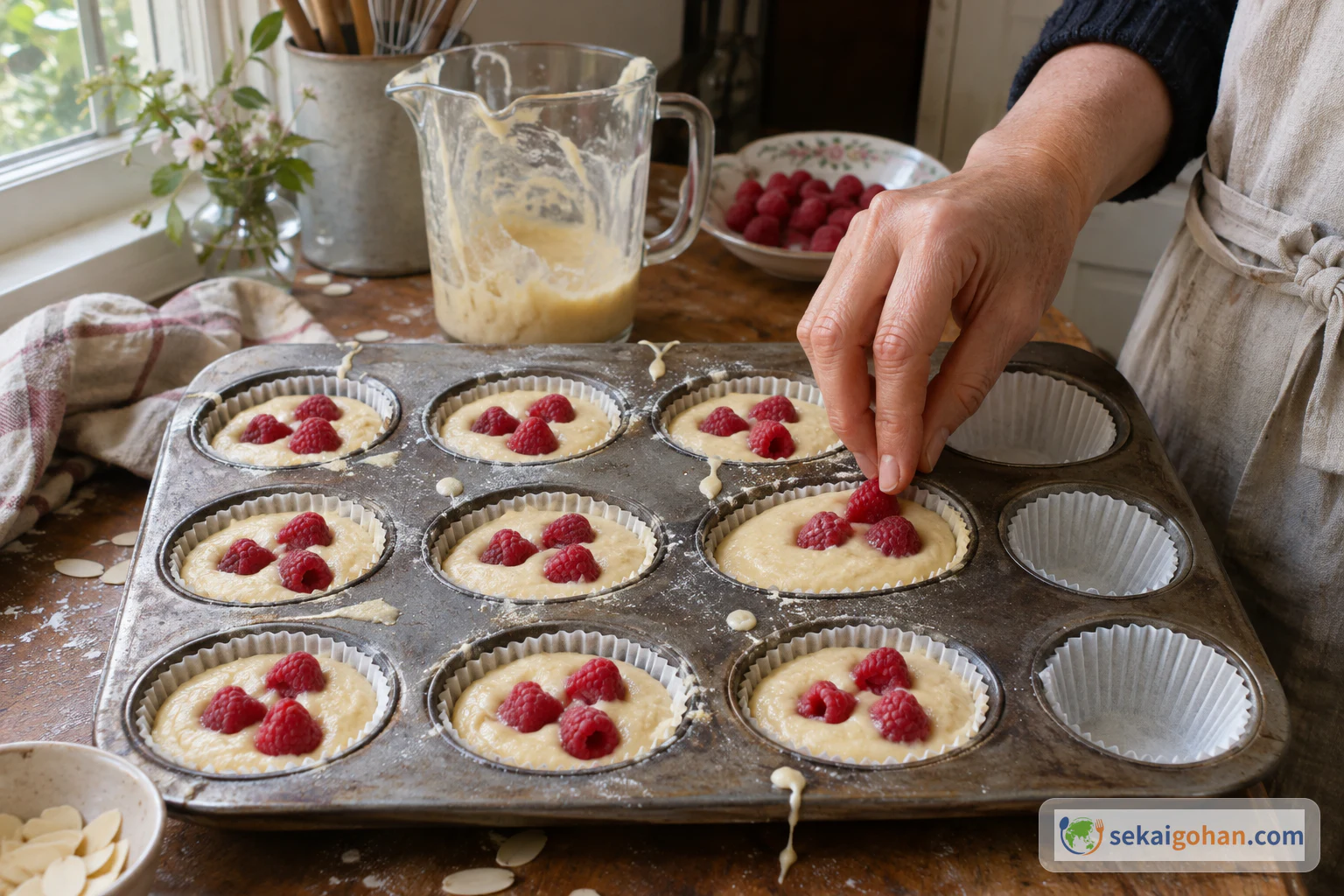
Fresh and frozen raspberries both work. Frozen berries are easy to buy all year and go onto the batter straight from the freezer, which keeps their colour from bleeding into the cake. Granulated sugar does not replace the icing sugar well; see the questions at the end. For the tin, a ½-cup (125 ml) muffin pan works if you cannot find an oval friand tin, and the questions cover that too.
Method
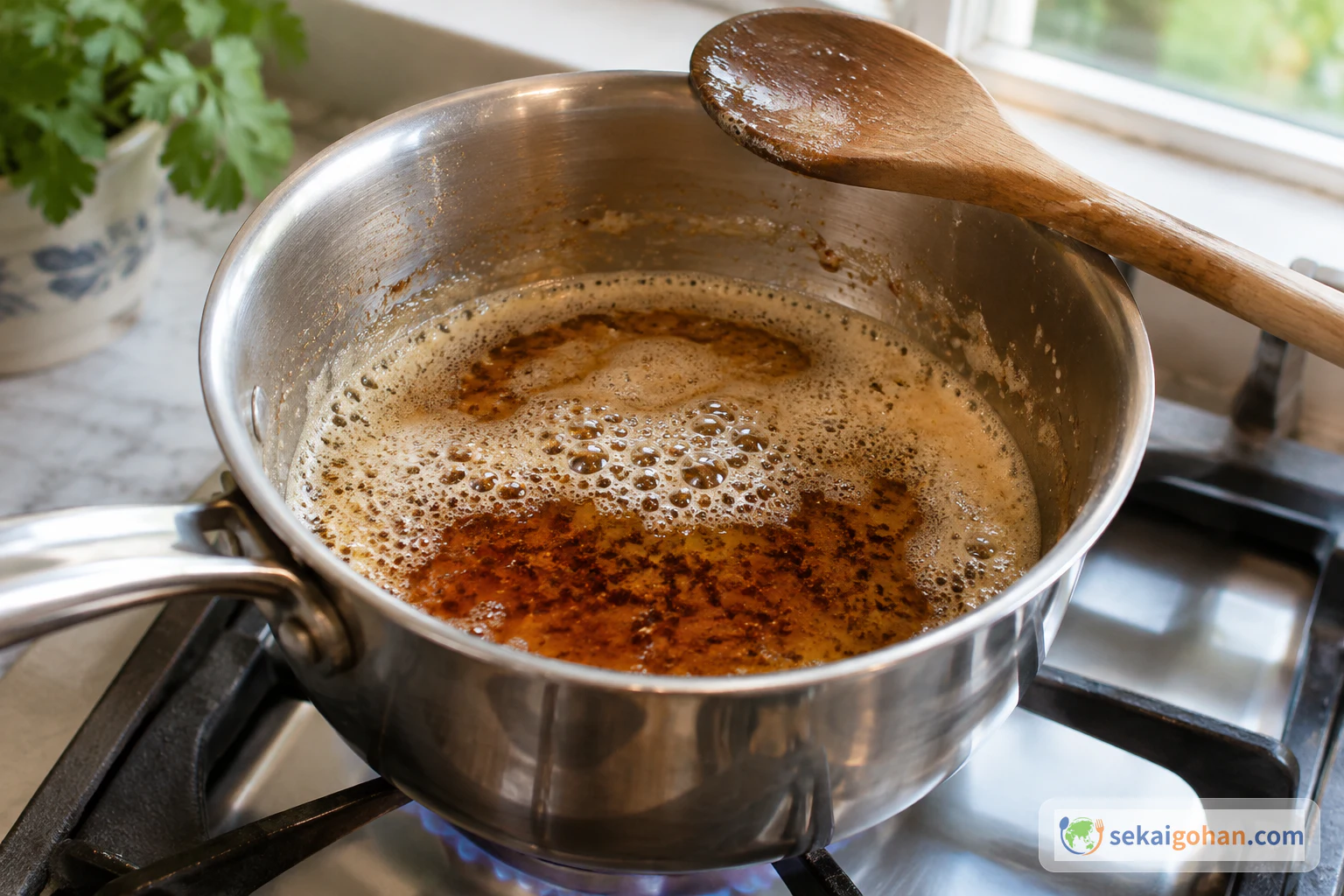
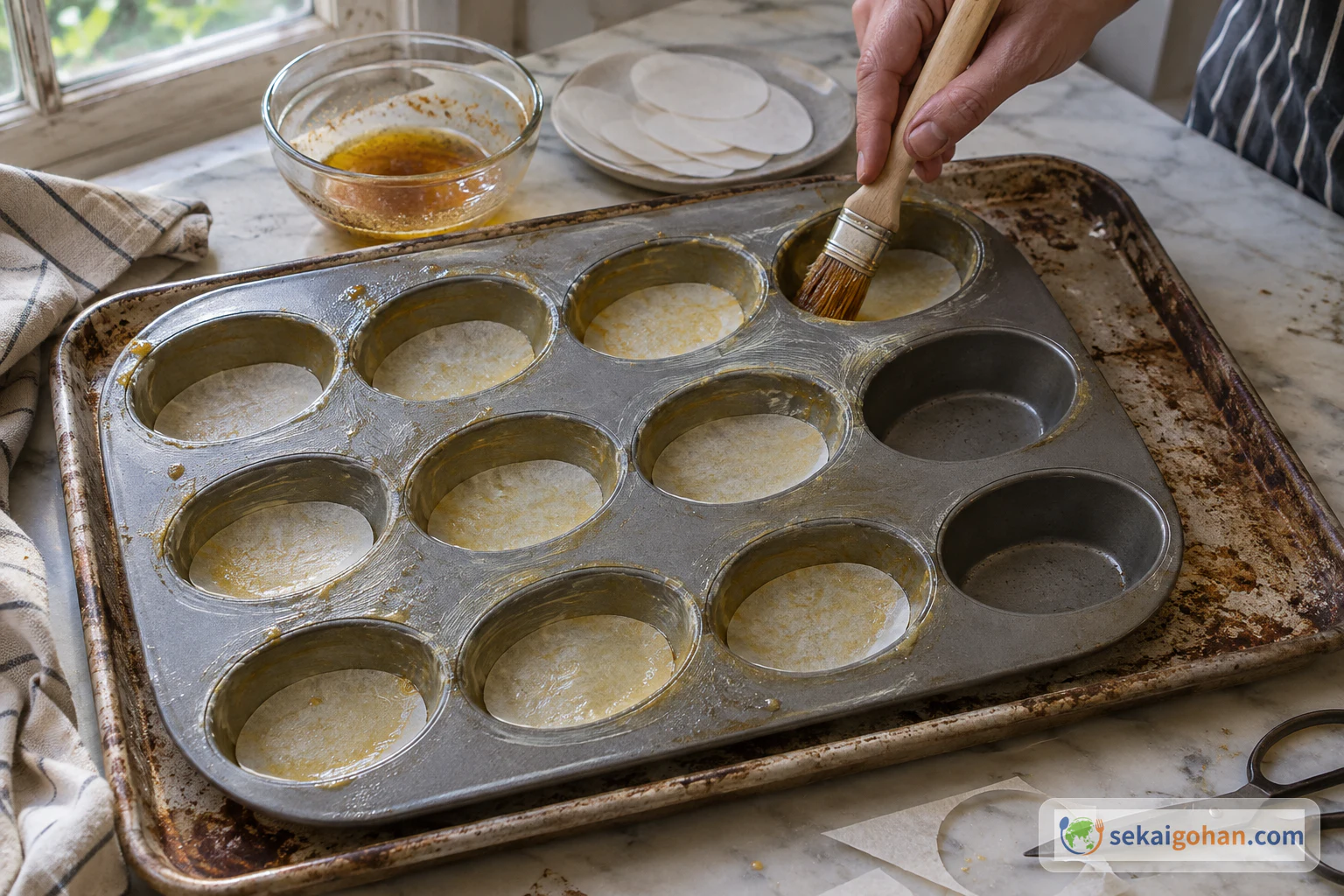
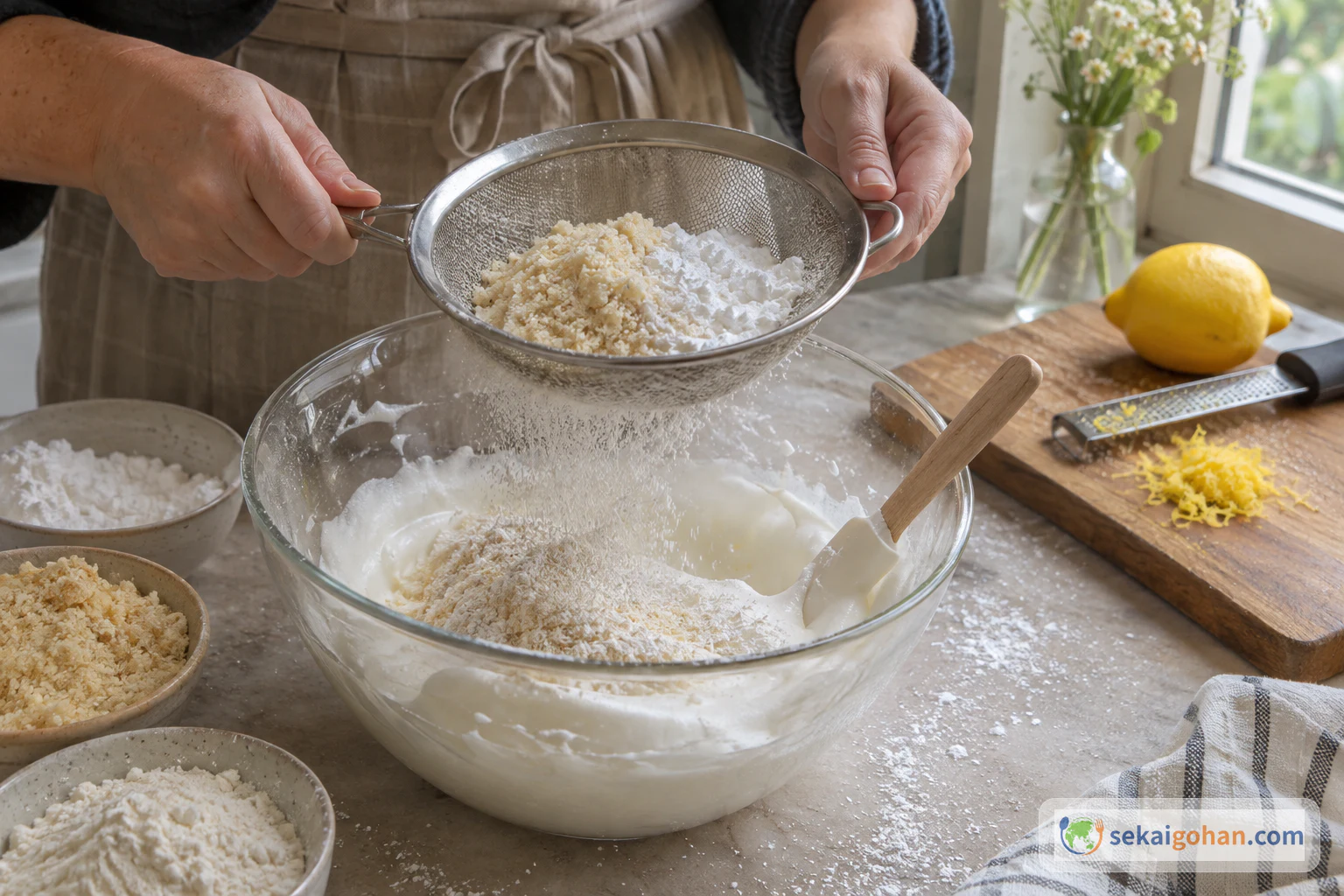
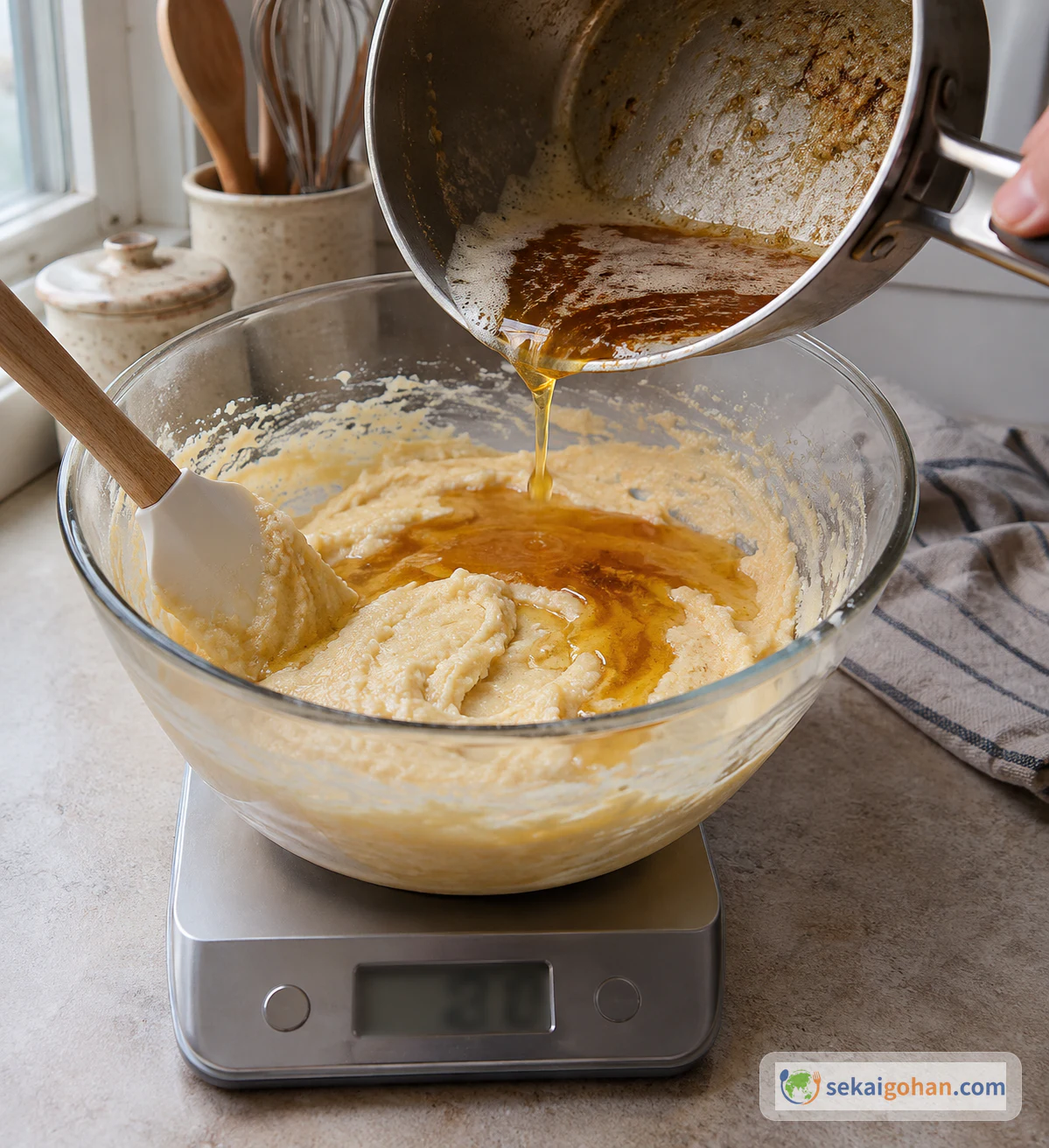
Brown the butter first, because it has to cool before it meets the egg whites. While it cools, prepare the tin and heat the oven, then mix the whites and the dry ingredients. The batter comes together in about fifteen minutes. The 25 minutes in the oven is the hands-off part.
Browning butter foams and spits. Use a dry saucepan, keep your face back from it, and put the hot pan on a heatproof surface. Let the butter cool before it touches the egg whites, because hot butter cooks them.
The brown butter makes the cake smell and taste like a friand, so take it to a full deep brown before you pull it off the heat. A pale, barely golden butter gives a cake that tastes only sweet.
When It Goes Wrong
| What you see | Why | What to do |
|---|---|---|
| Flat, dry cakes that shrink as they cool | The whites were whipped, or the batter was overmixed | Next time, whisk the whites only until combined and fold just until the dry ingredients disappear |
| A bitter, burnt taste | The butter went from brown to black | Start again with fresh butter. The bitterness carries through the whole batch |
| Wet batter on the skewer after 25 minutes | The holes are deep or overfilled | Return the tin to the oven for 5 minutes and test again |
| Cakes stick to the tin | No paper on the base, or patchy greasing | Run a blunt knife around each cake while it is still warm, then lift it out |
| Pink streaks spread into the crumb | Frozen raspberries were thawed first | Put them on frozen next time |
| Edges dark before the centre is set | The oven runs hot, often a fan oven set too high | Use 310°F (155°C) for fan-forced |
Serving, Variations and Storage
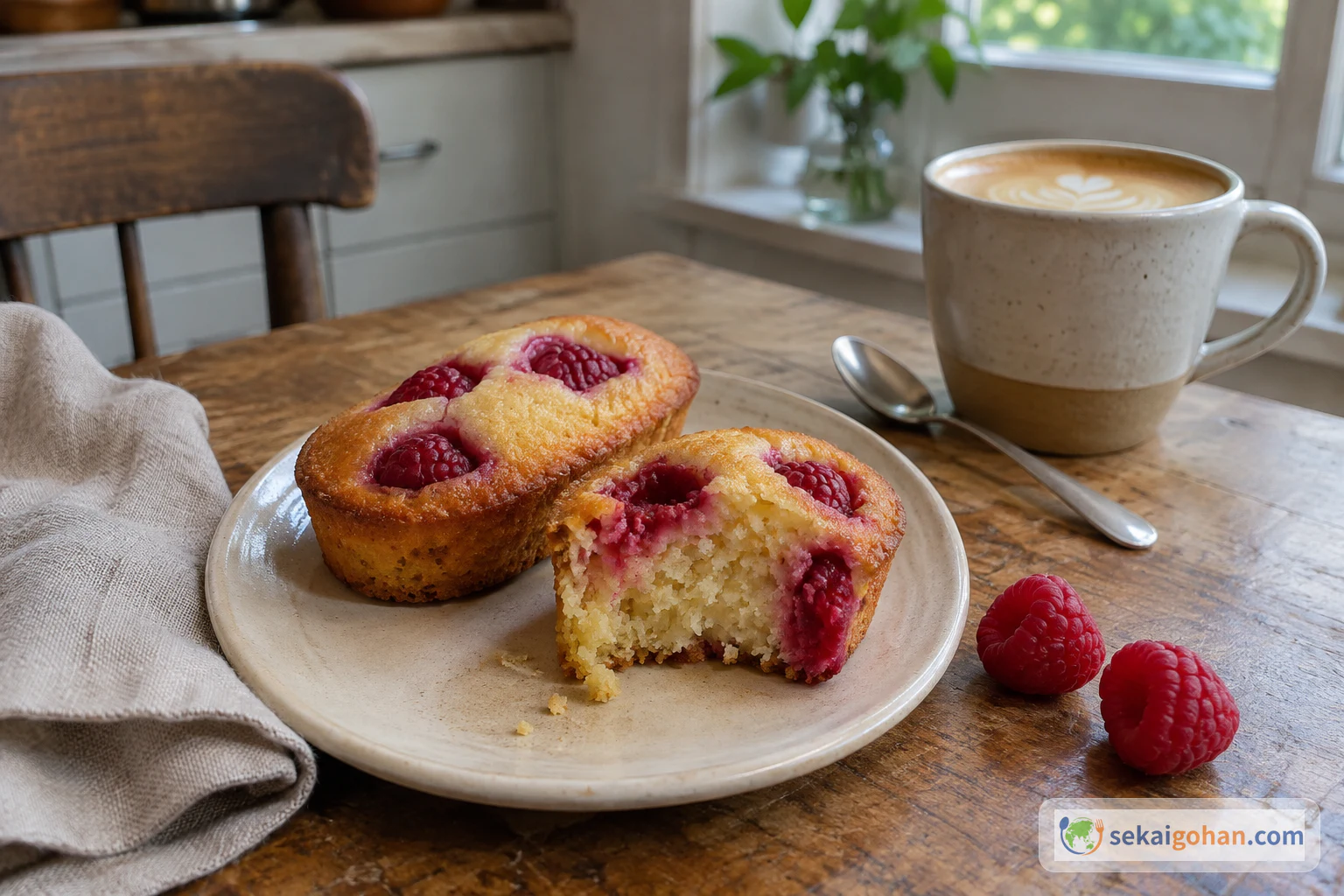
Friands go on the table with coffee or tea in the afternoon, eaten with the fingers. They need no icing or cream. The brown butter, almond and fruit already make them a complete little cake, and that makes them easy to carry to work or put out for guests.
Variations
Keep the method above exactly as written, including the browned butter, the unwhipped whites and the oven temperature, and change only the flavourings.
- Raspberry and white chocolate: fold 3½ oz (100 g) coarsely chopped white chocolate into the batter and top with the raspberries as usual. The cakes turn sweeter and creamier, with soft pockets of chocolate.
- Lime and coconut: leave out the lemon and raspberries. Mix 2 tsp lime zest, 1 tbsp lime juice and ¼ cup (20 g) desiccated coconut into the batter, then sprinkle ⅓ cup (15 g) flaked coconut on top. This gives a sharper, tropical cake with a toasted top.
- Chocolate and hazelnut: replace all the almond meal with hazelnut meal, fold in 3½ oz (100 g) chopped dark chocolate, and scatter ¼ cup crushed hazelnuts over the top. The result is deeper, darker and more like a dessert.
- Citrus and poppy seed: add 2 tsp lemon or orange zest and 1 tbsp poppy seeds. If you use lemon, count the lemon zest already in the recipe as part of the 2 tsp. The poppy seeds add a fine crunch.
Storage
Friands are best on the day they are baked. Keep leftovers in an airtight container for up to 2 days, or freeze them for up to 3 months. To serve frozen friands, wrap them in foil and warm them in a moderate oven for about 15 minutes, or unwrap them and microwave on high for about 30 seconds.
The crisp edge is at its best on the day the cakes come out of the oven. If they are for guests, bake them that morning.
Frequently Asked Questions
I have no oval friand tin. What can I use?
Use a muffin pan whose holes hold about ½ cup (125 ml). Grease and line ten holes and leave two empty, the same as with the friand tin. Deeper holes change how long the cakes take, so start checking with a skewer at 25 minutes and bake until it comes out clean.
Can I use granulated sugar, or less icing sugar?
Keep the full weight of icing sugar. The icing sugar and almond meal together replace part of the flour, so they shape the texture as well as the sweetness. Granulated sugar or a smaller amount gives a different cake.
Can friands be gluten-free?
The plain flour can be swapped for gluten-free plain flour, though the cake may bake a little differently. If you are baking for someone who avoids gluten, check the labels on the almond meal and icing sugar as well.
What happens if I bake the batter in a financier tin?
The rectangular moulds give a lower, flatter cake that is closer to a French financier in shape and texture. Bake until the edges are golden and a skewer comes out clean. Shallow moulds are ready sooner than deep oval ones.