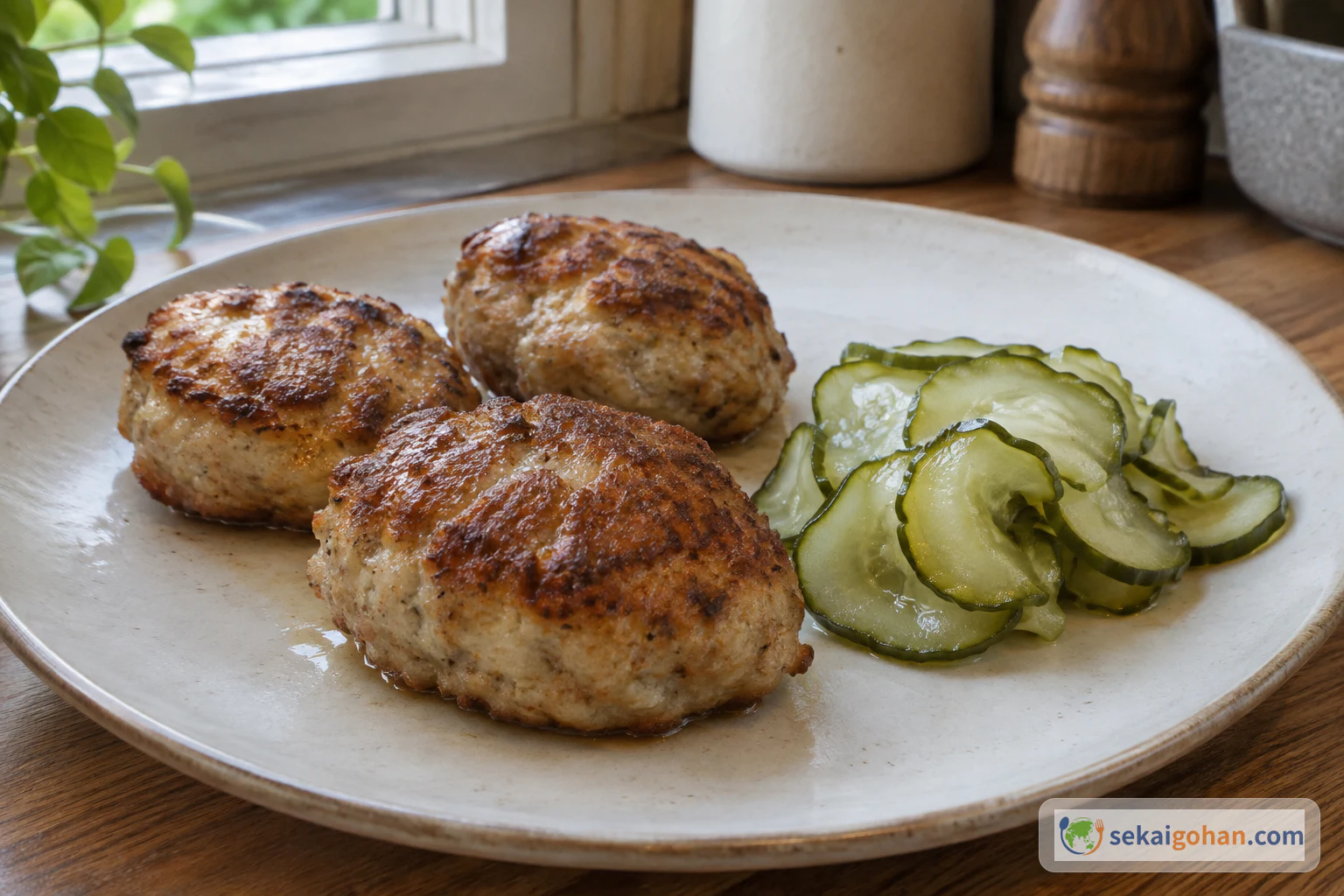
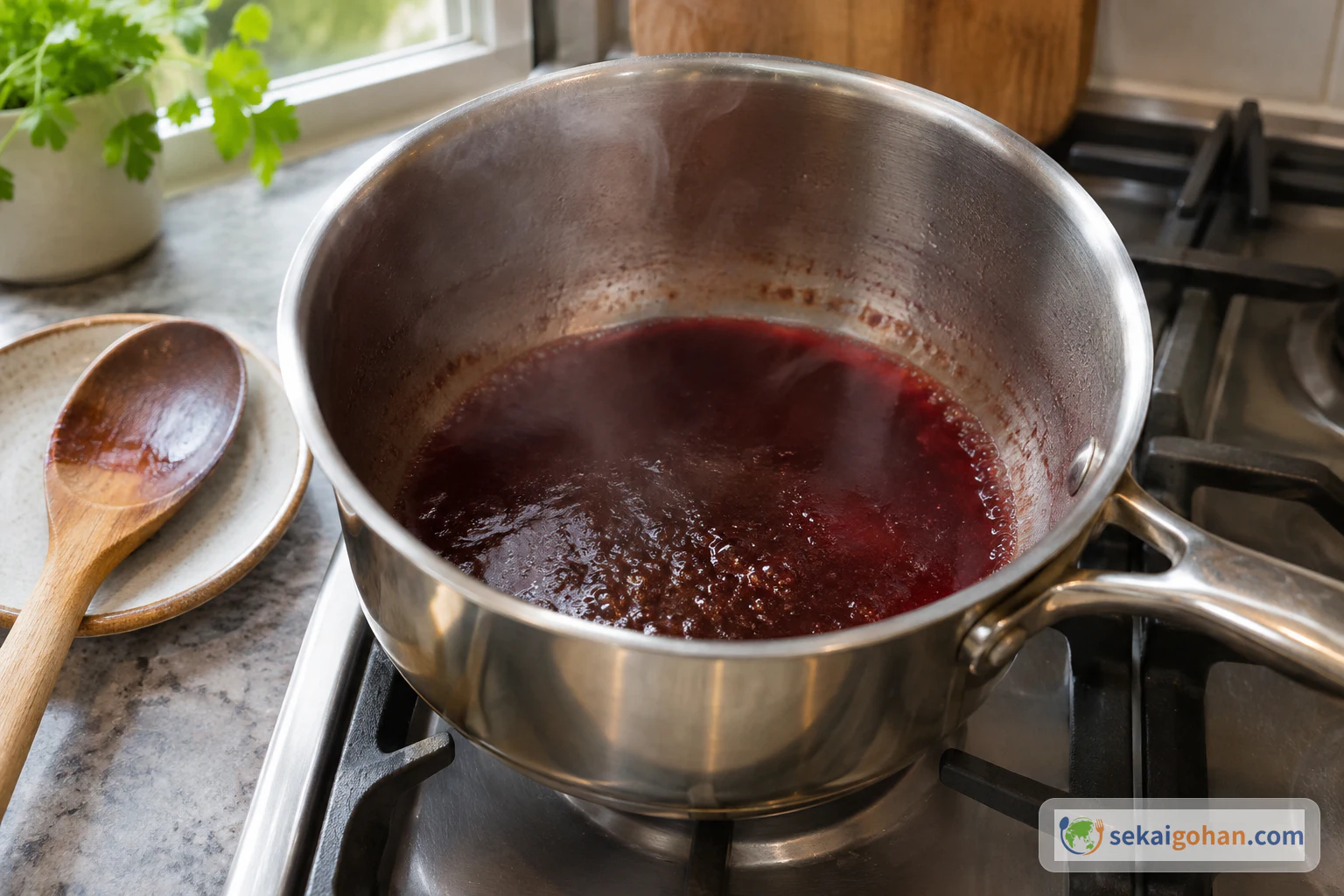
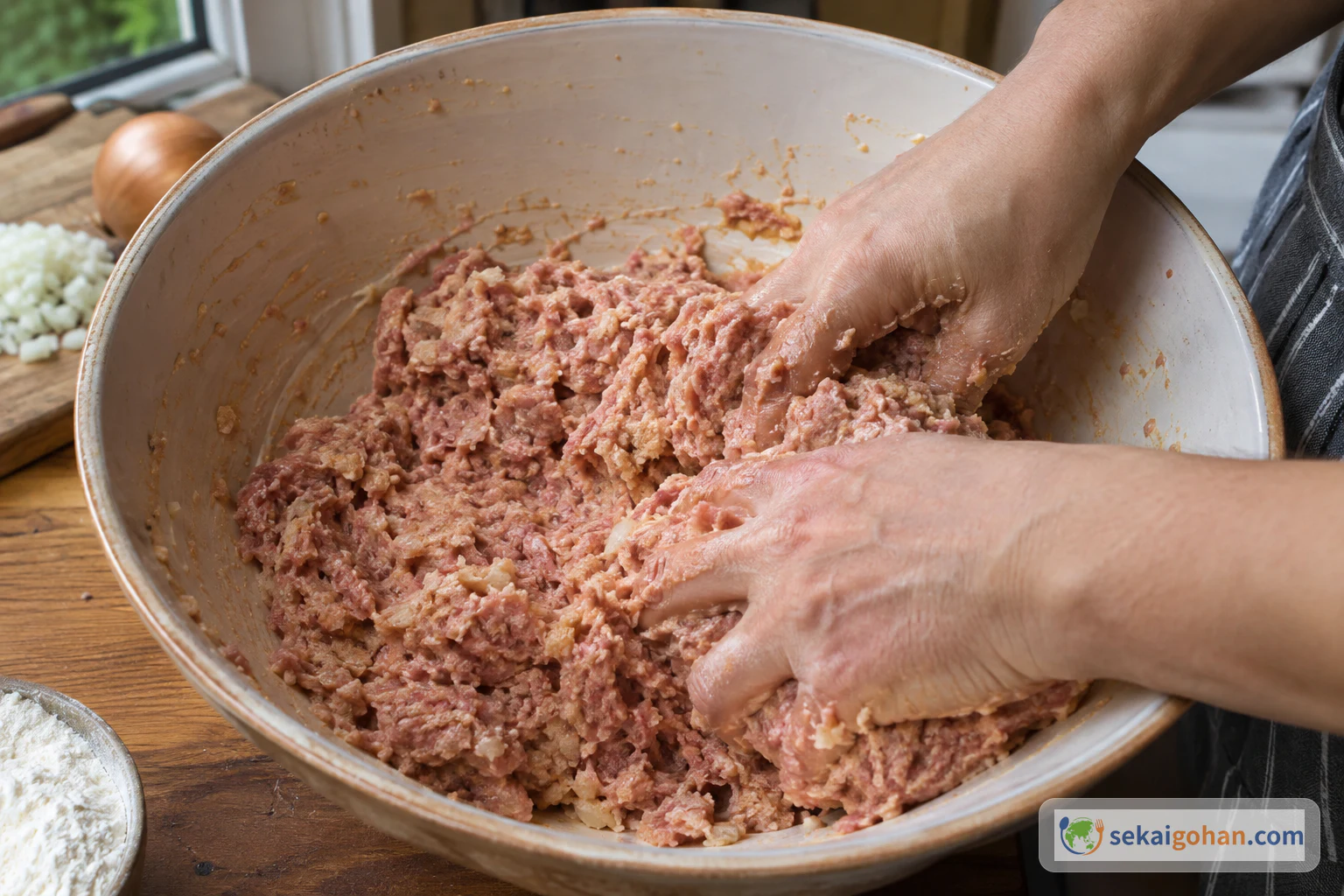
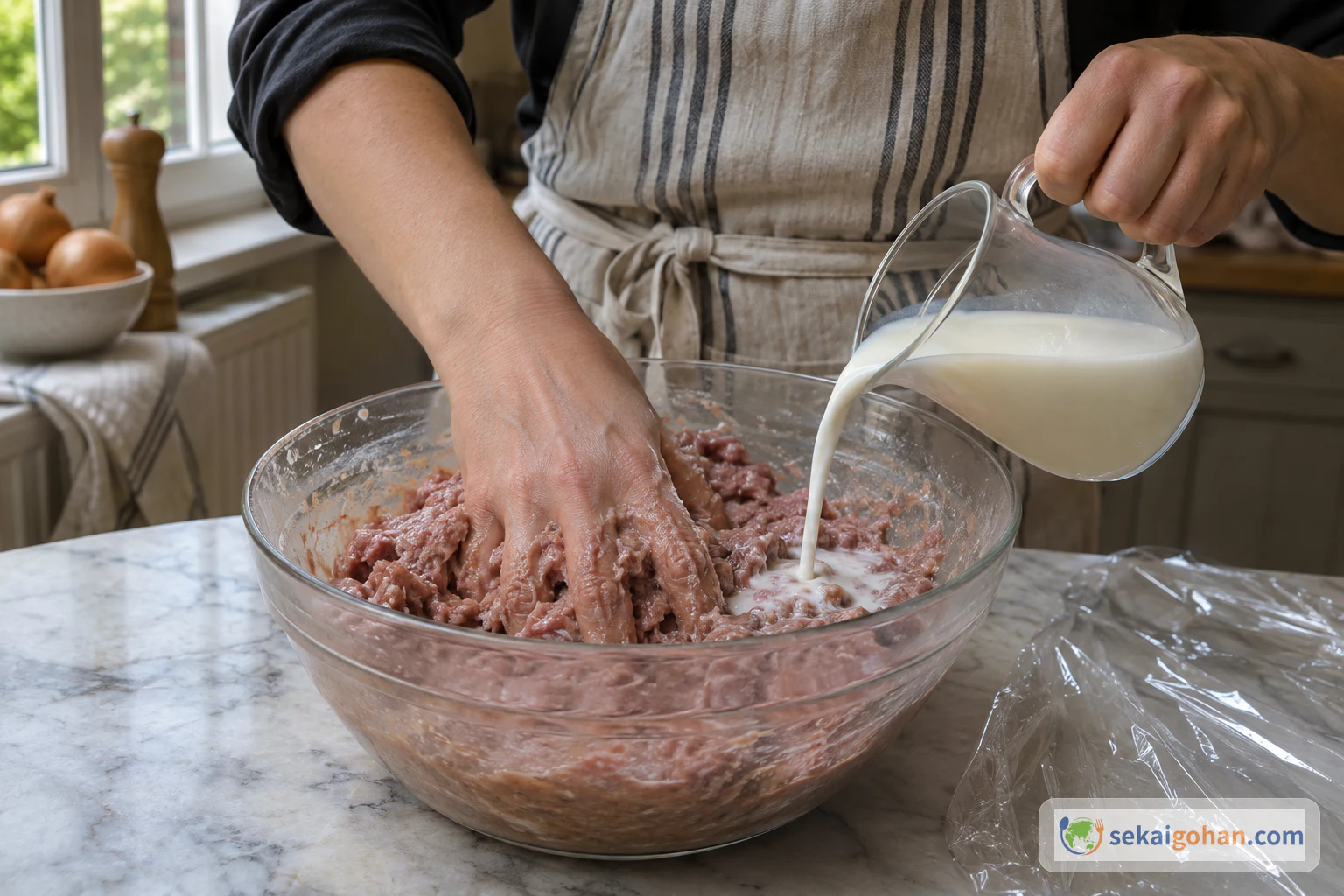
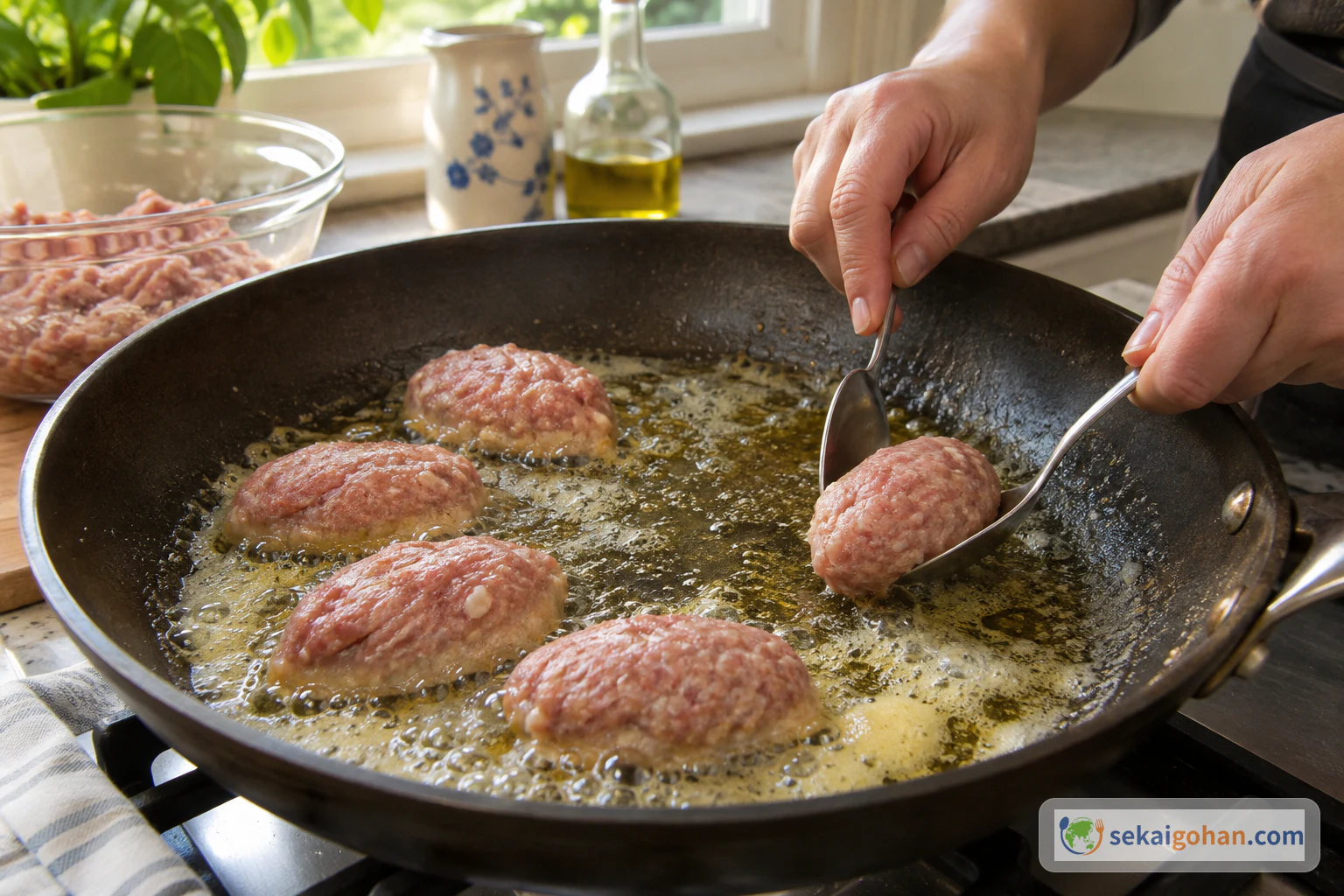
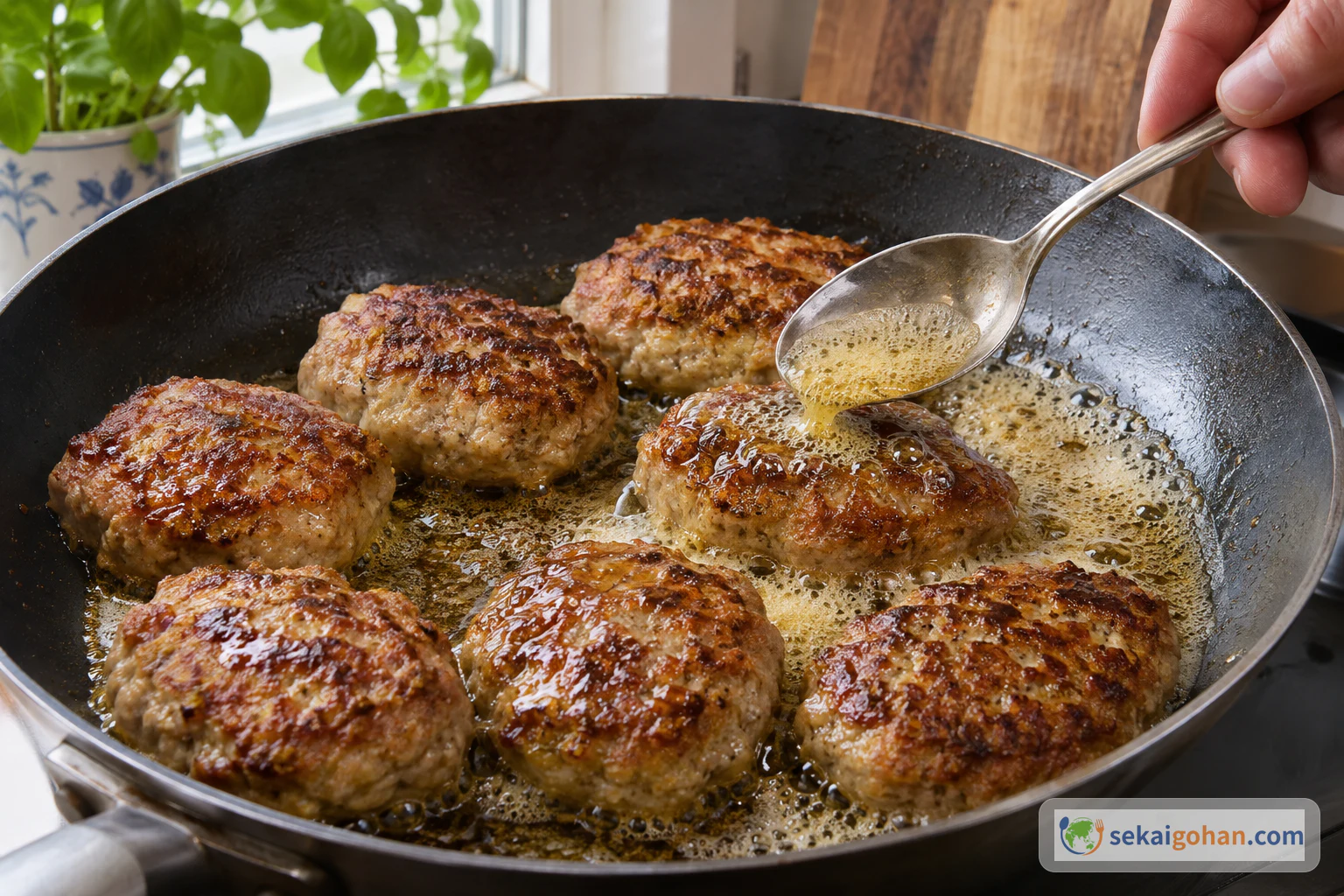
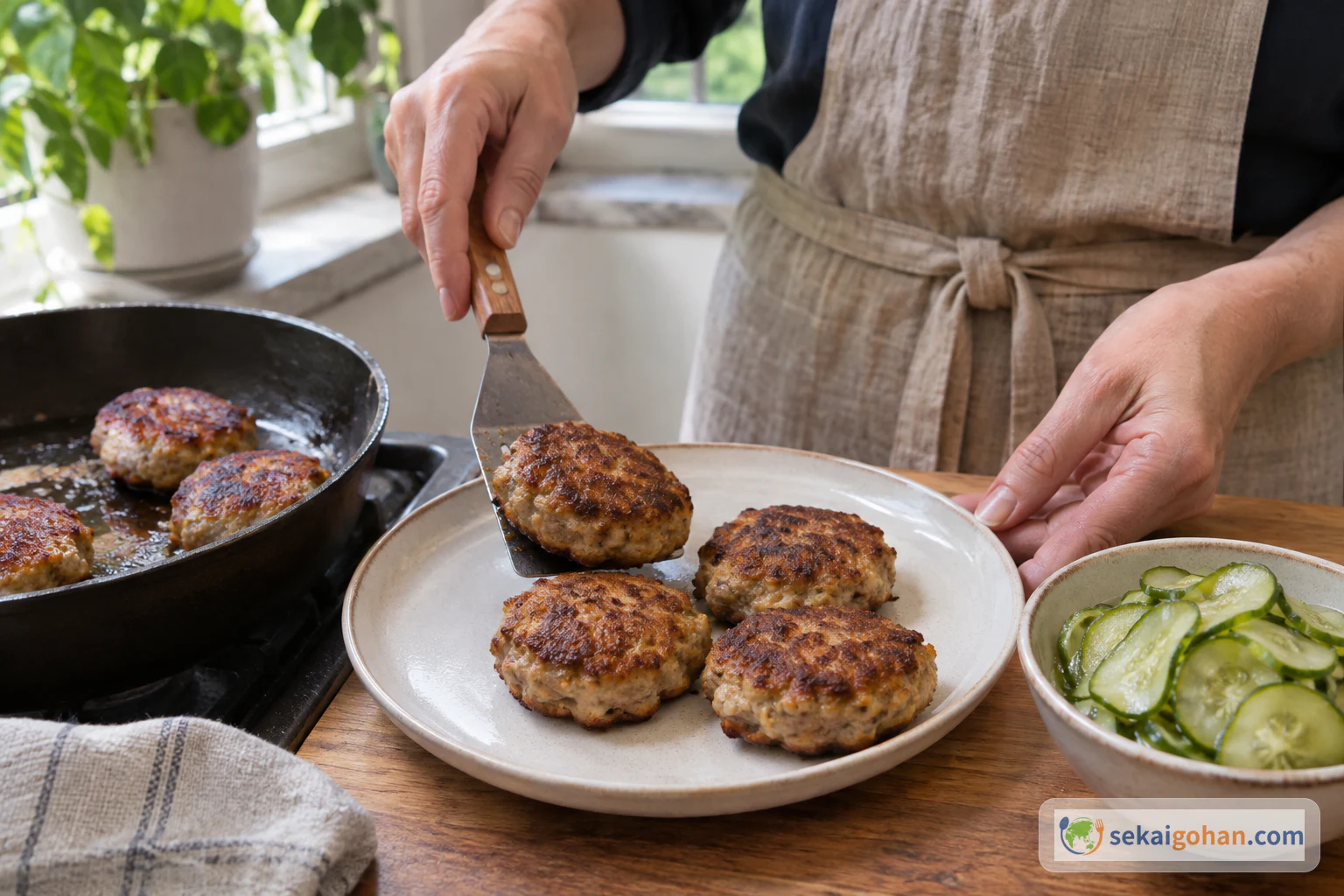
The butter goes in with a little olive oil, and when it starts to foam you drop in the first spoonful of soft, pale mixture. It hisses and settles onto its flat base, and from then on you keep tilting the pan and spooning hot butter over the tops until every side turns deep gold. Frikadeller are Danish meatballs, made flat instead of round and fried in a pan, and they have become a regular dish in Australian kitchens as well. This version is very tender because a lot of milk goes into the mince. It also has a savoury depth that comes from chicken stock and red wine boiled down to a small, concentrated pool before they go in. The outside tastes of browned butter, the middle is soft and well seasoned, and a sharp pickled cucumber salad on the side cuts through the richness.
A Danish Meatball That Travelled Well
In Denmark, frikadeller are a national dish, and they show up at more than one meal a day. At lunch they are sliced onto rye bread as smørrebrød, the open sandwich, and they are eaten cold. At dinner they come to the table hot as the main course, often with a classic potato salad. Elsewhere you will find them with boiled potatoes and gravy, or with creamed cabbage. They work hot or cold, which is why a batch made for dinner so often turns up again the next day.
Where frikadeller first came from is not settled. Denmark and Germany both have a claim. The word itself is German and appears in the late 17th century. It is usually linked to the French fricandeau and to the Latin frīgere, meaning to fry or roast. Danes are relaxed about this. Their own view is that frikadeller are not a Danish invention, since minced-meat dishes appear in food cultures all over the world, from köfte and kebab to Swedish köttbullar.
Neighbours with the same idea
The shape is the clue. A frikadelle is rounded but flat-bottomed and fried in a pan, and it is often compared to the German pan-fried meatball. German speakers have at least sixteen regional names for that dish, among them Boulette or Bulette, Fleischpflanzerl, Fleischlaberl, Fleischküchle, Grilletta and Faschiertes Laibchen. In Poland, kotlety mielone (called sznycle in some regions) is one of the most popular home dishes. Ukraine and Russia have their kotlety. Sweden uses the same word for something different: there, frikadeller are boiled meatballs, not the buttery fried Danish kind.
Frikadeller are easy to confuse with Dutch frikandel, a long, skinless deep-fried sausage of minced meat, and with South African frikkadel. They are separate dishes. Frikadeller can be made from pork, veal, lamb, beef or even fish, but the Danish classic is pork-based and fried in butter.
At the Australian table
In Australia, frikadeller travel under the name Danish meatballs. They appear on food television as a party or picnic dish, on a South Australian supermarket's recipe page with gravy, mashed potato and berry sauce, and at workplace lunches that celebrate the many cuisines Australians cook at home. Australians already have a home-style meatball of their own in rissoles: large patties firmed up with breadcrumbs, usually made from beef, with every family keeping its own recipe. Rissoles are often described as similar to frikadeller. The Danish version is softer, richer with milk and egg, and finished in foaming butter.
Ingredients (serves 6–8)
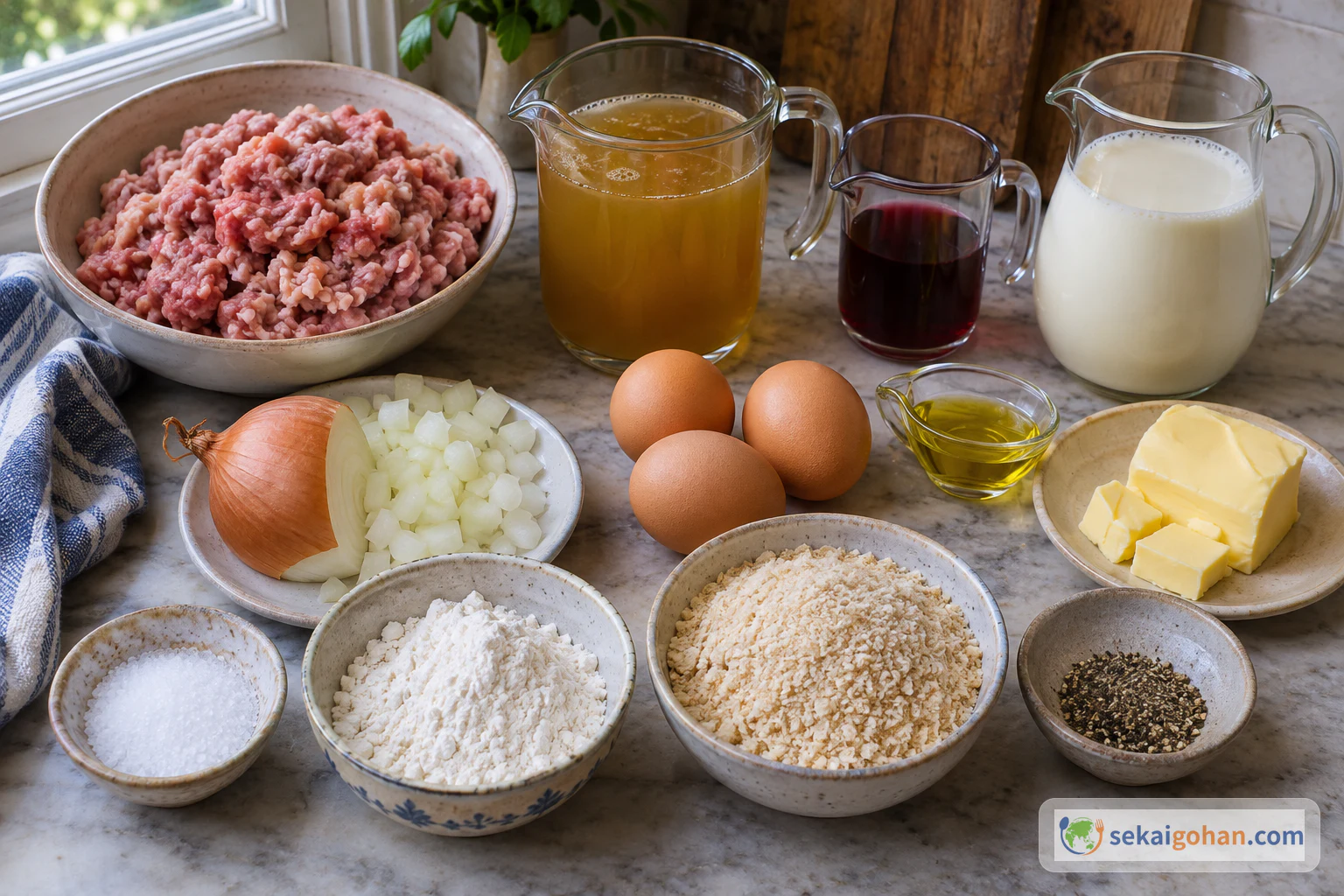
This recipe contains wheat (flour, breadcrumbs), milk (milk, butter) and egg. Bought chicken stock and breadcrumbs can contain other allergens, so check their labels. There are no nuts in the ingredient list.
Equipment
- Kitchen scale (salt, flour and breadcrumbs are weighed)
- Saucepan for the reduction
- Large mixing bowl
- Plastic wrap or a cover for the bowl
- Large, heavy frying pan
- Dessert spoon for shaping
- Spoon for basting
- Meat thermometer
- A clean plate for the cooked meatballs
Choosing and Substituting
Pork and veal mince gives the softest, mildest result, and it is the mix to keep if you can. Veal mince is not always in supermarket cases, so ask a butcher for veal mince to go with the pork. Pork and beef mince also works, and some Australian home versions use it. Beef makes the meatballs a little firmer and gives them a stronger, beefier flavour.
A brown onion is the everyday yellow-skinned onion. Use plain dried breadcrumbs, not seasoned or panko-style crumbs, so the salt stays where it should be. Choose low-salt stock, because the reduction concentrates whatever salt is in it, and the mince already gets its full measure of salt. Use any red wine you would drink. Butter is used in generous amounts, because it gives the browning and the flavour, so have plenty on hand.
The salt is weighed against the full weight of mince and goes in before anything else. Weigh it, and keep it to that measure. Most of the seasoning in the finished meatball comes from this salt.
Method
Start with the stock and wine, because the reduction has to boil down before it can go into the meat. While it simmers, chop the onion and weigh the dry ingredients. The mixture then needs at least 1 hour in the fridge, and that is your hands-off time. Frying comes last, in batches.
Spooning the butter over the top is how the frikadeller get their colour and flavour. Keep the spoon moving through the whole fry, and keep the heat at medium so the butter foams rather than scorches.
Fry only as many as fit with space around each one. A crowded pan cools down, and the meatballs steam in their own juices instead of browning.
Minced meat must be cooked all the way through. Check the centre with a meat thermometer: 167°F (75°C). Never put cooked frikadeller back on a plate or board that held raw mixture. Hot butter spatters, so tilt the pan away from you when you baste.
When It Goes Wrong
| What you see | Why | What to do |
|---|---|---|
| Dark outside, still raw in the middle | The heat is too high | Keep the pan at medium, keep basting, give the batch its full time, and check for 167°F (75°C) in the centre |
| The mixture is too loose to shape | It went into the pan without enough chilling | Cover and chill for the full hour or longer, then shape it straight from the fridge |
| Seasoning tastes uneven from one meatball to the next | The salt went in with everything else | Mix the salt into the mince first, then add the other ingredients in order |
| Pale, grey sides and liquid in the pan | The pan is crowded | Fry fewer at a time so each one sizzles and browns |
Serving, Variations and Storage
On the table
With potatoes, frikadeller make a full dinner. They also suit a party spread or a picnic basket, since they are good cold. A Danish dinner puts them next to classic potato salad. Other good partners are boiled potatoes with gravy, or creamed cabbage. In South Australian homes they come with gravy, mashed potato and berry sauce. The next day, slice cold frikadeller onto buttered rye bread for Danish-style smørrebrød, the way Danes often eat them at lunch.
Variations
- Mostly beef, with bread soaked in milk: a South Australian home style uses mostly beef with a smaller share of pork. It swaps the breadcrumbs for white bread soaked in milk and adds a little ground clove. The balls are shaped into ovals in the palm, fried until golden and drained on absorbent paper. The clove gives a warm spice note, and the beef gives a firmer bite.
- Pork and beef with parsley: another Australian version uses pork with some beef, grated onion, chopped parsley, a little optional garlic, and eggs as the binder. It leaves out the stock and wine, so the flavour is lighter and more herby. Chicken or turkey mince can replace the pork and beef.
- Danish pork-only with oats: a Danish home mixture uses pork mince with a spoonful of oats, garlic and much less milk, fried in butter. It is firmer and more compact than the milky version above.
Leftovers
Cool leftovers quickly, put them in a shallow covered container and refrigerate promptly. Eat them cold on rye bread, or reheat them until they are steaming hot all the way through.
Frequently asked questions
Are frikadeller the same as Australian rissoles?
They are close relatives. Rissoles are large, mostly beef patties firmed up with breadcrumbs, and every family has its own recipe. Frikadeller are softer and richer with milk and egg, and they are fried and basted in butter.
Why do some Swedish recipes boil frikadeller?
In Sweden the word means boiled meatballs, which are a different dish from the Danish fried kind. For the golden, buttery crust here, fry them.
Can I mix the meat the day before?
Chill the mixture for at least 1 hour before shaping. The Danish pork-and-oat recipe on denmark.dk notes that its mixture can be made the day before and kept refrigerated; this milky mixture has only the 1-hour minimum given here, so treat a longer chill as untested.
Can I leave out the red wine?
The reduction is what gives this version its savoury depth, and the wine is part of that. No substitute for the wine is given for this recipe, so keep it in for this version.