Lamingtons: A Thin Chocolate Coat, a Snow of Coconut, and a Cup of Tea
A light, airy sponge; a thin film of dark chocolate icing rather than a thick shell; and dry coconut on every side. Most of the work toward that result happens before the icing bowl comes out: the sponge has to be completely cool.
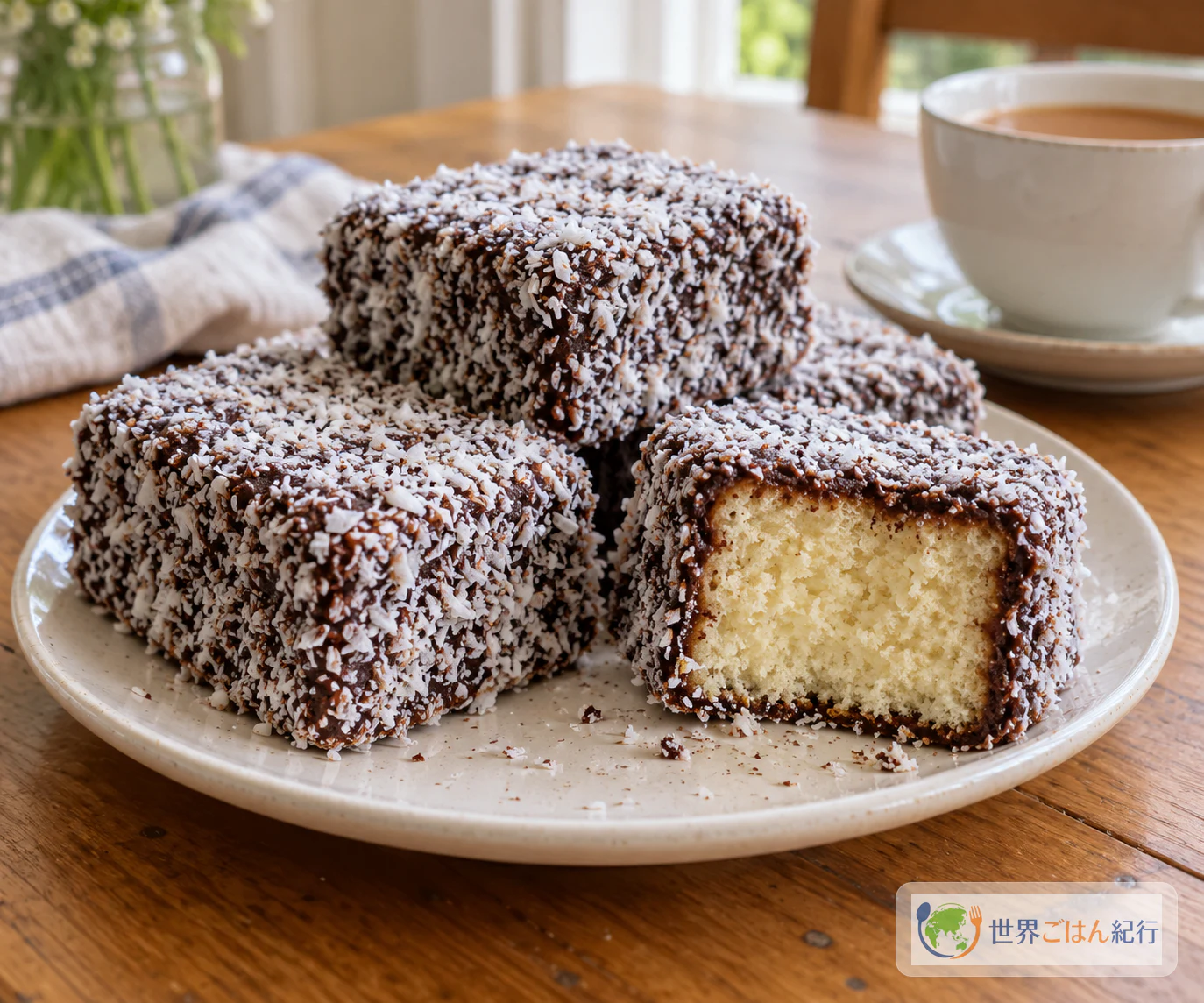
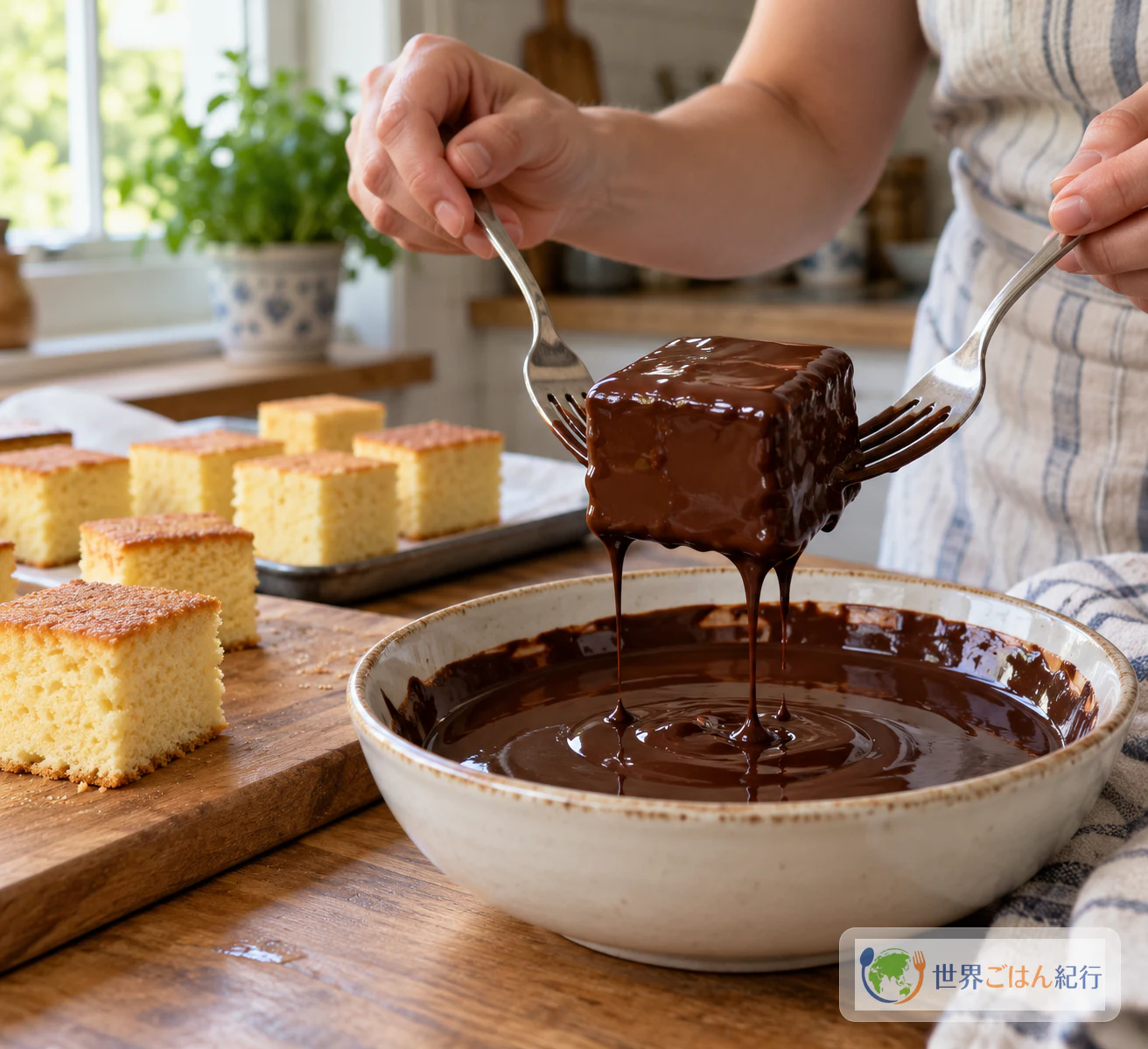
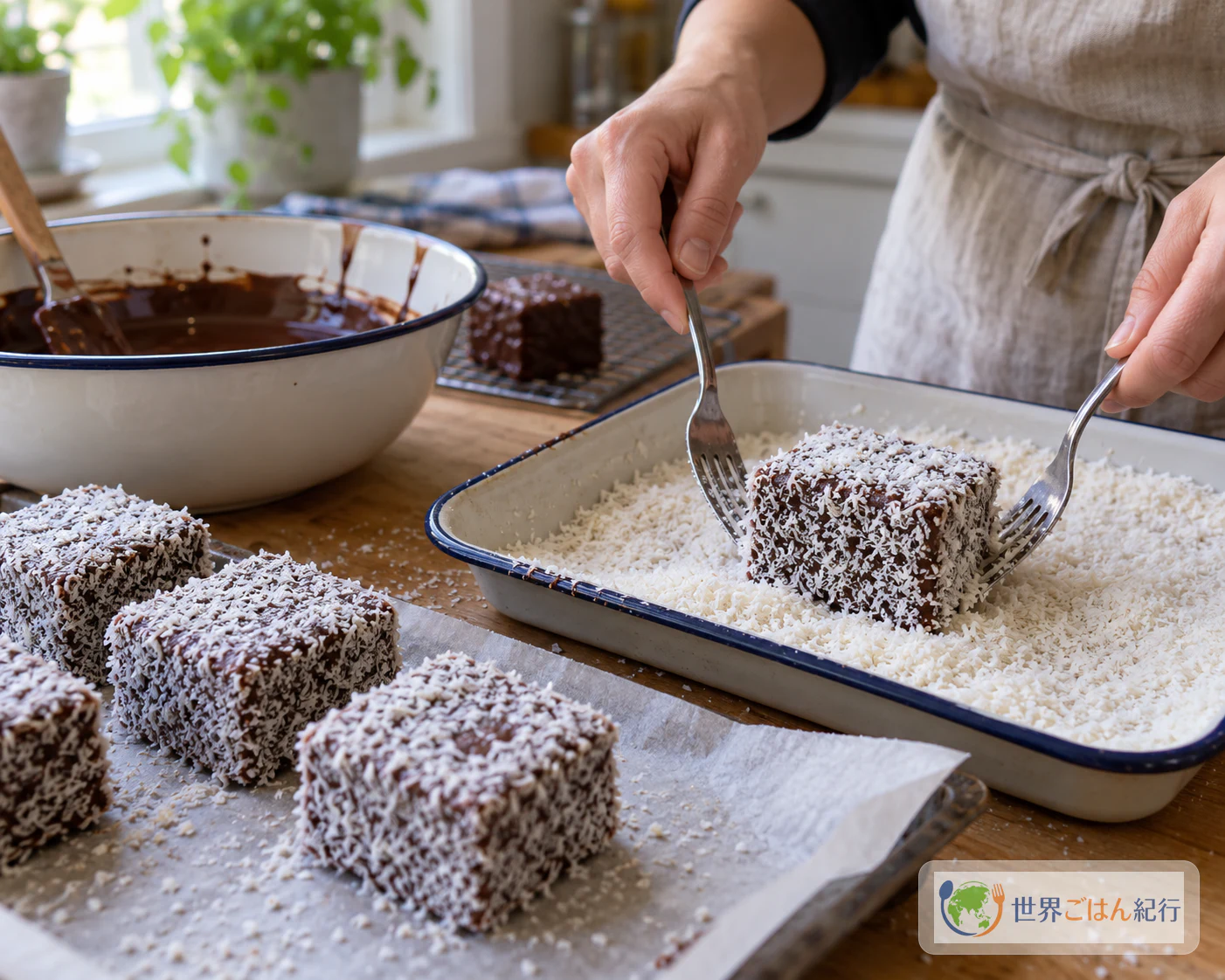
A square of pale sponge is lowered on two forks into glossy chocolate icing, lifted out, and left to drip for a moment. Then it goes into a tray of desiccated coconut and is turned until every face is covered. That is a lamington, a cake that Old Government House at the Queensland University of Technology (QUT) describes as a favourite at school and sports-club fundraising sales for more than a century, and one eaten with a cup of tea.
It looks simple, and the ingredient list is short. What decides whether it works is less the icing than the sponge underneath. A sponge that is still warm, or one whose air was knocked out during mixing, soaks up chocolate, sheds crumbs into the bowl and slumps on the fork. This recipe follows SBS Food's classic 20-piece lamington, built on a whisked-egg sponge and dark chocolate icing, and explains the signs to look for at each stage so you can judge by the state of the batter, cake and icing rather than by the clock alone.
Lamington, lamingtons and the casual Australian "lammos" all refer to the same cake.
What a Lamington Is: Square Sponge, Chocolate Icing, Coconut
A lamington is a square of sponge cake coated in chocolate icing and then in desiccated coconut. The building blocks are the same across the recipes cited here: a cake square, a chocolate coating, and coconut on the outside.
Within that frame, recipes differ. SBS Food uses a whisked-egg sponge, lightened with cornflour and finished with a little melted butter. TAFE Queensland, by contrast, publishes a version based on a butter cake made by creaming butter, along with chocolate and vanilla icings and a raspberry jam option. Coles offers a version with jam or cream inside. These are treated below as separate variations; the ingredient table uses the SBS recipe only, without mixing in quantities from the others.
Origin Stories and a Recipe Printed in 1900
The question of who made the first lamington is still argued. According to the curator at QUT's Old Government House in Brisbane, the cake was created by the French chef Armand Galland for a large "At Home" held by Lady Lamington in June 1900, and was named after the Lamingtons. QUT presents this as the curator's view and also notes that other claims exist, including claims from elsewhere and from New Zealand. It is best read as one well-argued account rather than a settled fact.
What QUT can show more concretely is a printed record. It reprints a recipe titled "Lamington Cakes" that it says appeared in Queensland Country Life on 17 December 1900. Reading that early recipe beside a modern one is a reminder that the name has stayed while the method of making and assembling the cake has not stood still. Today's fully coated whisked sponge is one present-day way of making a cake whose name goes back more than a century.
Ingredients: 20 Pieces from a 20 × 30 cm Pan
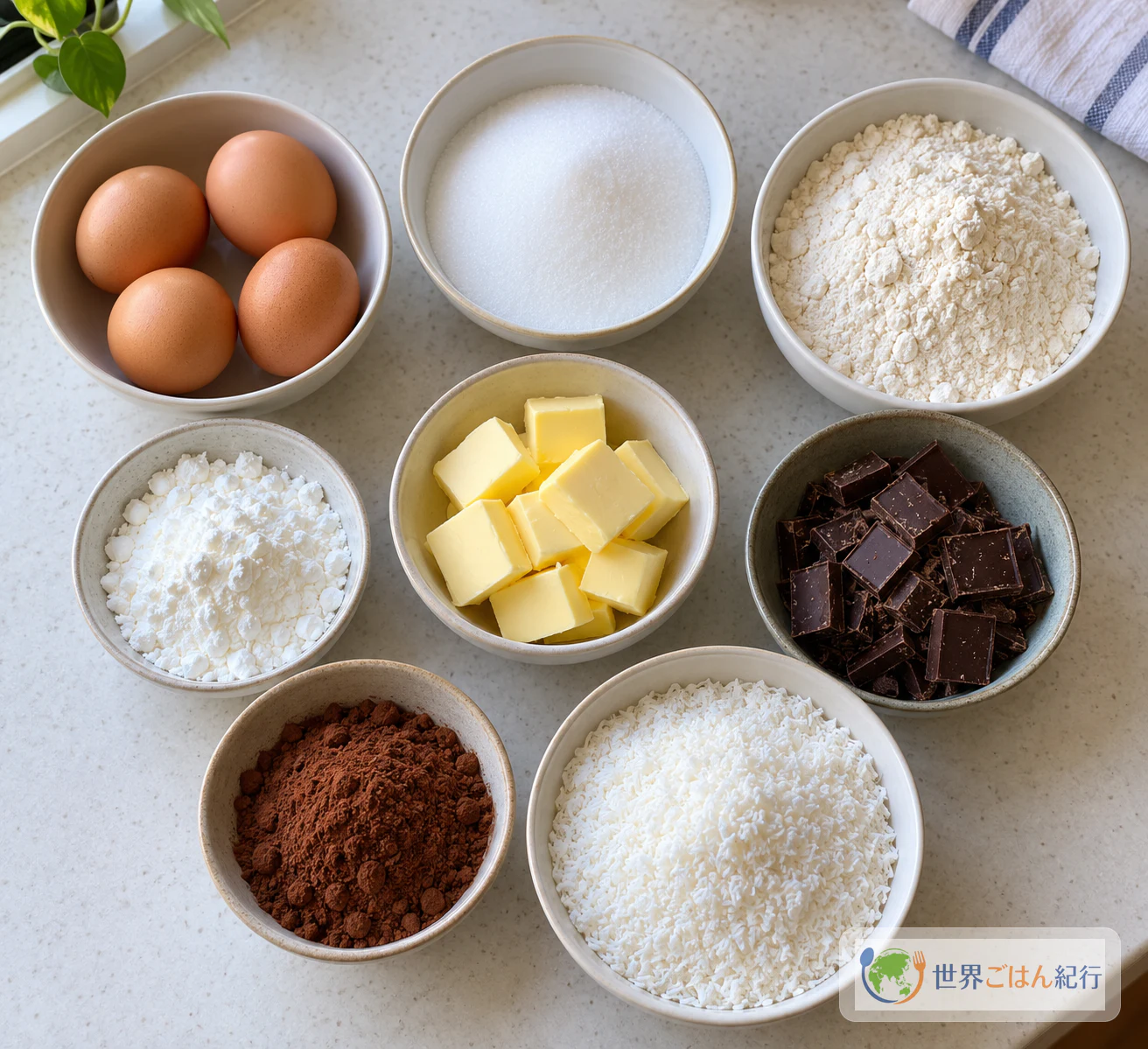
The quantities follow SBS Food's classic lamington. Weigh the dry ingredients and sugar rather than using cups. SBS's eggs are Australian standard eggs of about 55–60 g each, so choose eggs close to that size.
- Cornflour in an Australian recipe means cornstarch. Potato starch is a different starch; don't treat the two as interchangeable at the same weight.
- Self-raising flour already contains raising agent, and the blend varies by brand. This recipe has not confirmed a home-made substitute ratio, so use ready-made self-raising flour rather than guessing at a flour-plus-baking-powder mix.
- Coconut: unsweetened desiccated coconut is the standard. Sweetened shredded coconut makes the whole cake sweeter and changes how the coconut clings.
- Chocolate: about 70% dark chocolate gives bitterness and a coating that sets. Milk chocolate makes the icing sweeter and changes how it sets and how thick the coat feels.
This recipe contains wheat, eggs and milk (butter). Check chocolate and cocoa labels for milk and other allergens, and keep in mind that coconut can be a concern for some eaters; check labelling on each product you use.
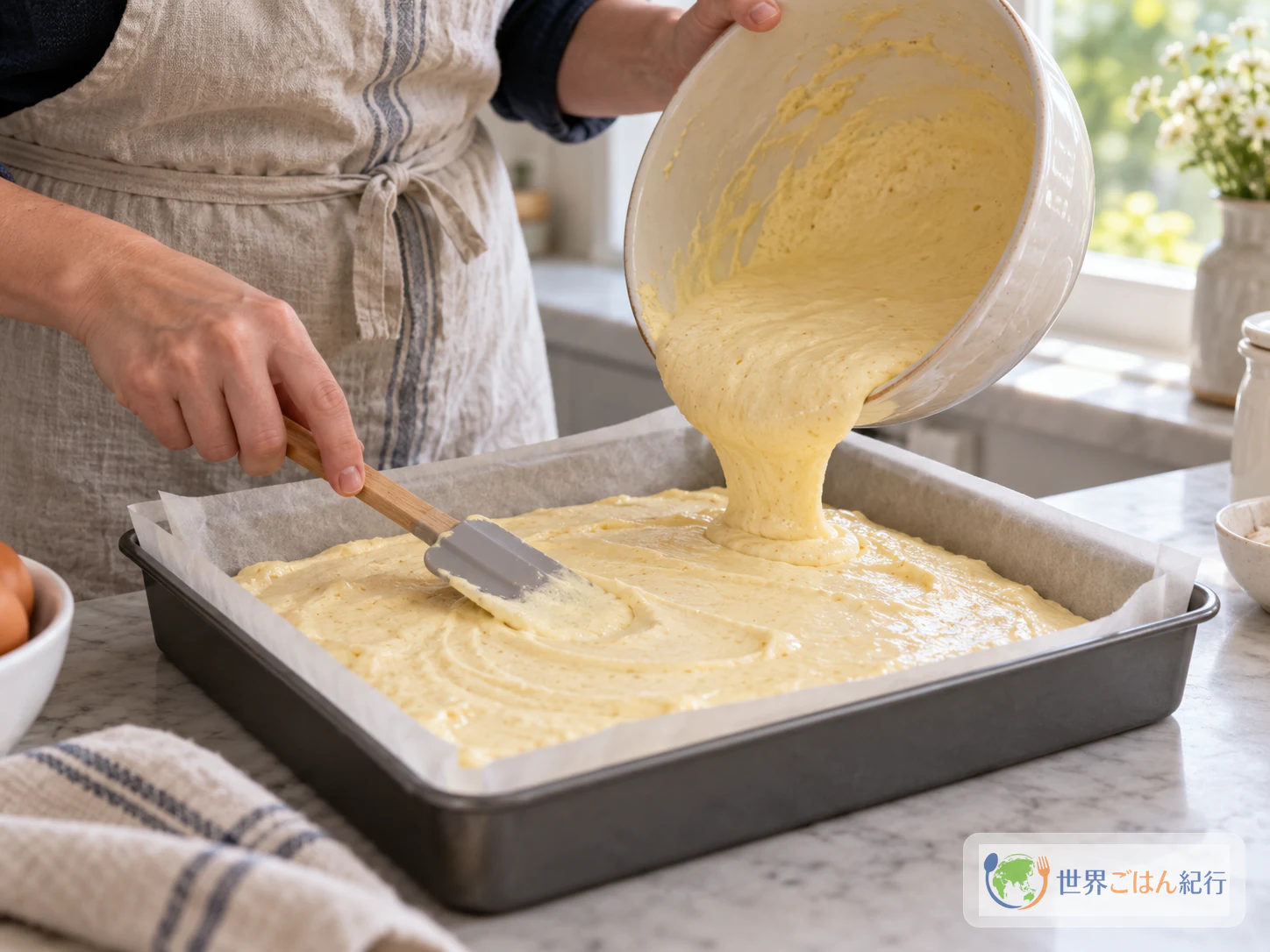
Pan and timing: a 20 × 30 cm (about 8 × 12 inch) rectangular pan. A dedicated lamington tin is just a pan of this size; any similar rectangular cake pan you already own will do. Allow about 30 minutes of preparation and about 25 minutes of baking, then extra time for cooling the sponge and for the coating to set. Give yourself a generous window rather than planning to finish in one hour.
Method: Whisk, Fold, Bake, Cool, Coat
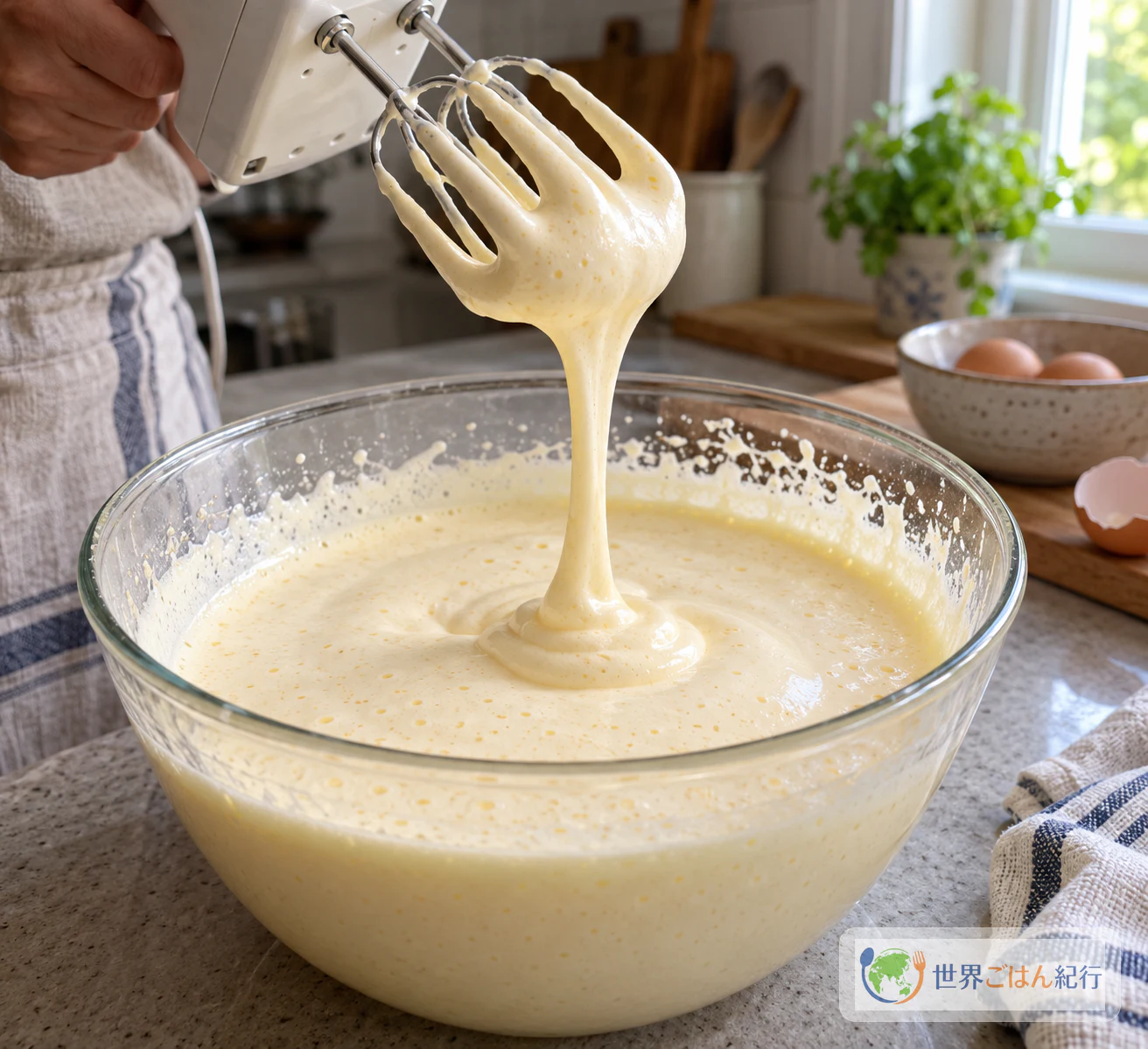
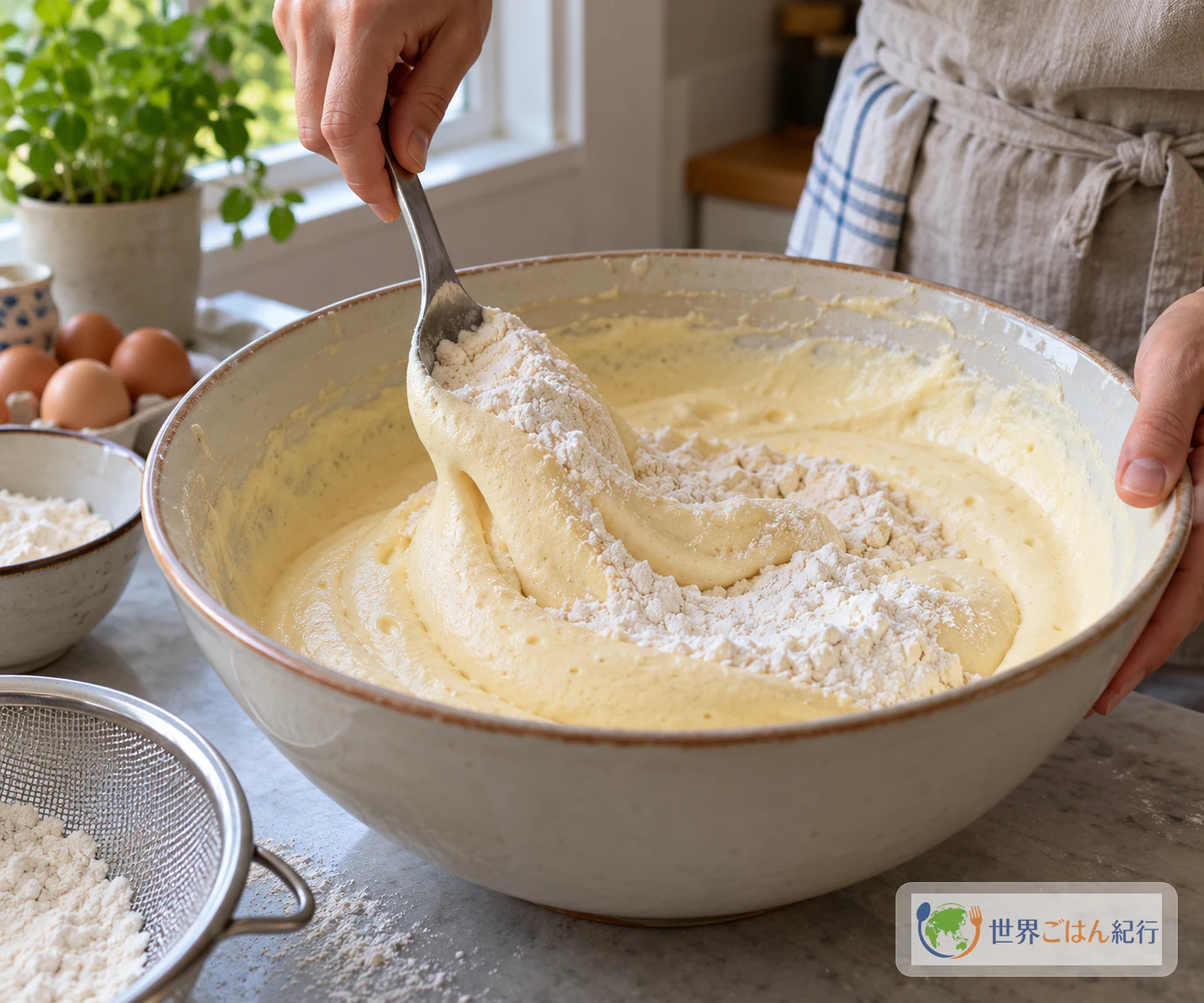
The thickness of the egg foam before the flour goes in, and the temperature of the sponge before it meets the icing. Everything else is careful handling.
Dense, Crumbling, Patchy: Fixing Common Problems
| Problem | Likely cause | What to do |
|---|---|---|
| The sponge is dense and heavy | The eggs weren't beaten to a thick ribbon, or the batter was over-mixed after the flour went in | Check for the ribbon before adding flour. Fold rather than stir, and stop as soon as the dry flour disappears |
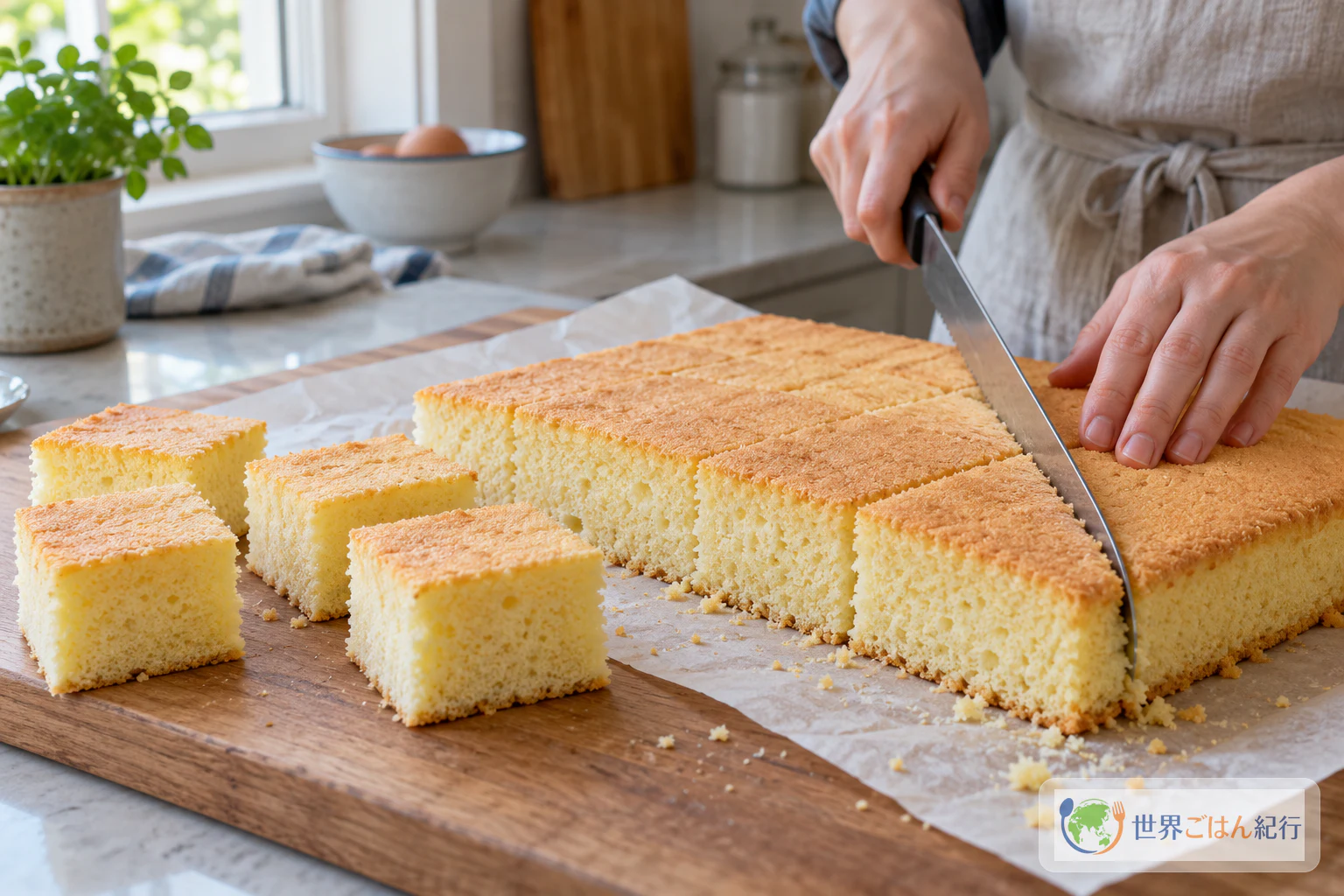
| The sponge falls apart in the icing | The sponge was still warm, or it sat in the icing too long | Cool it completely, and chill or briefly freeze it if needed. Dip briefly and support the piece from below with the forks |
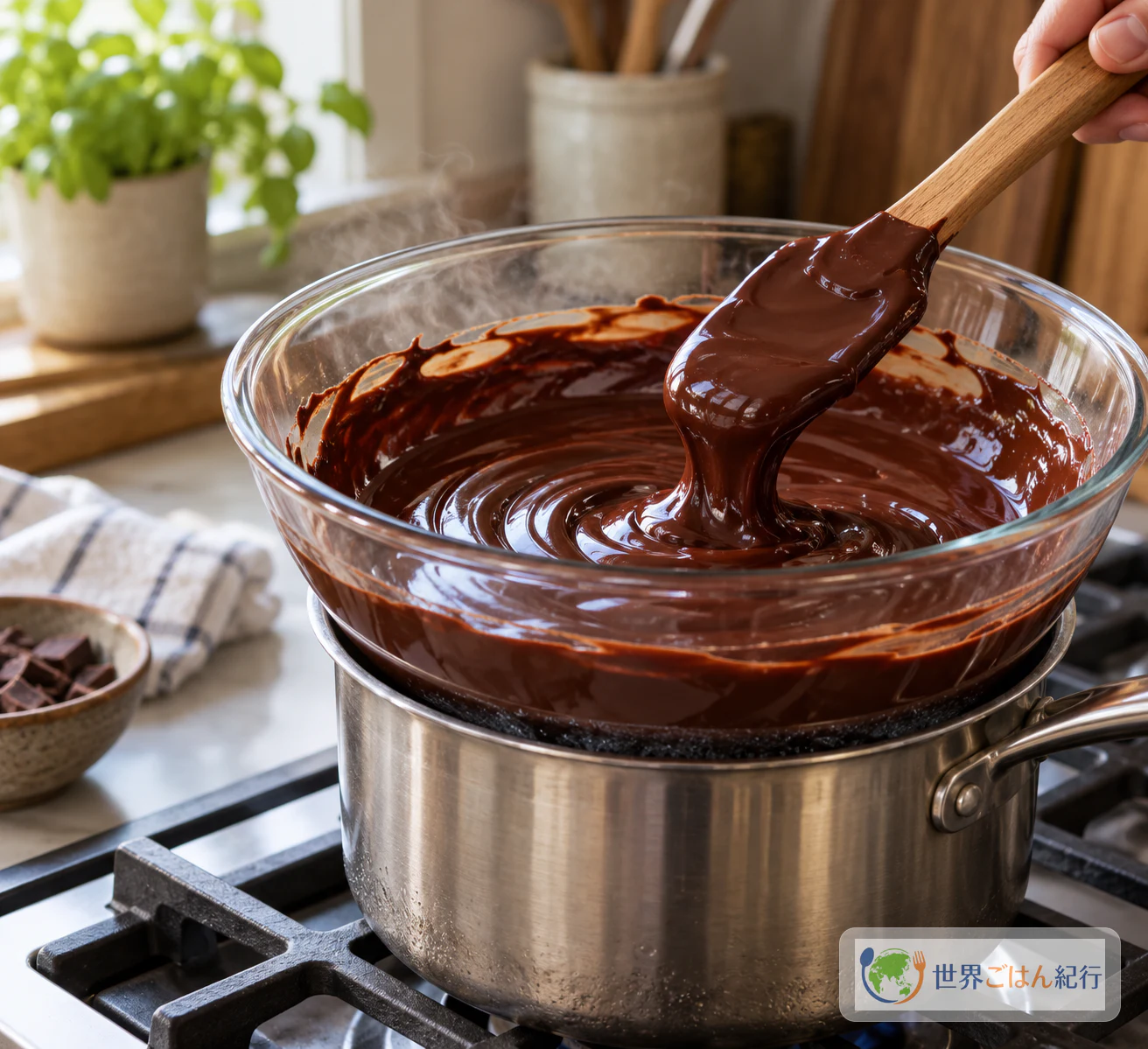
| The icing is thick and the coat comes out heavy | The icing has cooled and thickened | Rewarm it over the water bath until fluid. Let each piece drip over the bowl before coating |
| The icing runs off and the coat is thin and patchy | The icing is too loose | Adjust the consistency and let it thicken slightly before dipping |
| The coconut won't stick | The icing has dried before rolling | Roll each piece in coconut straight after dipping. Spread the coconut in a shallow tray and turn the cake rather than pressing it in |
| Crumbs are floating in the icing | Loose crumbs on the cut pieces, or a soft, warm sponge | Brush crumbs off after cutting, and firm the sponge in the fridge or freezer before dipping |
Storage
Once the lamingtons are completely cool and set, store them in an airtight container. They don't need reheating. Cream-filled versions must be refrigerated. How long they keep depends on your kitchen and the variation you make, and the recipes cited here differ, so this article doesn't give a fixed number of days; it is best to eat them soon.
Variations: Jam, Cream and a Butter-Cake Base
Try the plain chocolate-and-coconut version first, then change one thing at a time.
- A thin layer of jam. Coles shows a version with jam inside, and TAFE Queensland's recipe includes raspberry jam. To try it with this sponge, wait until the sponge is completely cool, then spread jam thinly between layers before coating. Keep the jam thin so the pieces still hold together on the forks.
- Cream-filled. Coles also suggests cream as a filling. Treat this as a separate cake from the base recipe: once cream goes in, the lamingtons need to be kept in the fridge.
- A butter-cake base. TAFE Queensland's "best-ever" lamingtons use a cake made by creaming butter rather than whisking eggs, which gives a different texture and workflow from the light SBS sponge. Both are examples of how home recipes differ; follow one recipe's quantities rather than combining them.
- Different icings. Alongside chocolate, TAFE Queensland offers a vanilla icing option, so the outer coat is another place where recipes vary.
Fundraising Sales and Afternoon Tea
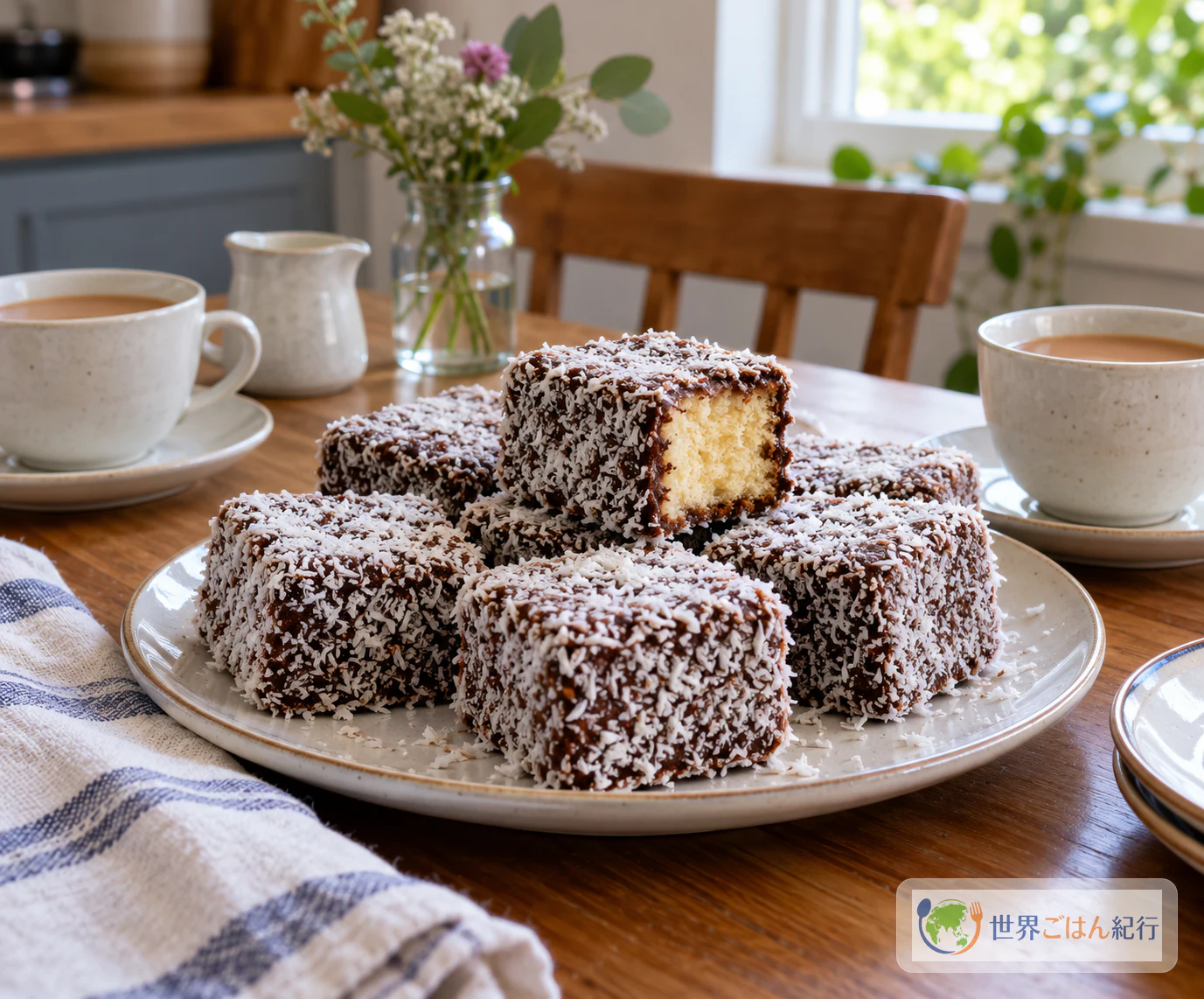
QUT's Old Government House describes lamingtons as a cake that has been baked for school and sports-club fundraising sales for more than 100 years, and as something eaten with a cup of tea. The shape suits that role well: a single slab cut into squares makes many even pieces that can be coated, set and handed out one at a time, with no slicing at the table.
That description is about how the cake has been shared, not a rule for every Australian table. At home, a plate of lamingtons next to a pot of tea is a natural way to serve them.
Frequently Asked Questions
Can I use potato starch instead of cornflour?
It's better not to. In an Australian recipe, cornflour means cornstarch, and it helps keep this sponge light. Potato starch is a different starch, so swapping it in at the same weight is not a like-for-like replacement. Use cornstarch.
I don't have self-raising flour. What should I do?
Self-raising flour already contains raising agent, and the blend differs by brand. A substitute ratio has not been confirmed for this recipe, so the most reliable choice is ready-made self-raising flour. If you use it, don't add extra baking powder.
Why does my sponge collapse into the chocolate?
Check three things in order: whether the sponge was completely cool, whether the egg foam was knocked out during folding, and whether each piece stayed in the icing too long. Chilling the sponge before coating, dipping briefly and supporting each piece from below with the forks all help.
Can I bake the sponge the day before?
Yes. SBS recommends baking the sponge the day before or chilling it for a few hours, because a firmer sponge is easier to coat. Wrap it or keep it in an airtight container so it doesn't dry out.
Can I add jam?
Yes, as a variation. Spread a thin layer of jam between layers of the completely cooled sponge before coating. If you use cream instead, keep the lamingtons in the fridge.
What should I serve them with?
Tea. QUT describes lamingtons as a cake eaten with a cup of tea, as well as a long-standing fundraising bake. That's how they have been shared, not the only way people eat them.
For more dishes from the same country, see recipes from Australia.
Sources
- SBS Food, "Classic lamington recipe." Used for the 20-piece recipe and its quantities, the 20 × 30 cm pan, oven temperatures of 180°C conventional / 160°C fan, the baking time of about 25 minutes, whisking the eggs and sugar and folding in the flour and butter liquid, cooling and chilling the sponge before coating, cutting into about 5 cm pieces, the water-bath chocolate icing, and dipping with forks before rolling in coconut. https://www.sbs.com.au/food/recipe/classic-lamington/z49b7cotq
- TAFE Queensland, "Best-ever lamingtons." Used as a comparison only: a separate recipe with a creamed-butter cake, chocolate and vanilla icings, and a raspberry jam option. Its quantities are not combined with the SBS recipe. https://tafeqld.edu.au/news-and-events/blogs/best-ever-lamingtons
- Old Government House, Queensland University of Technology, "Battle of the Lamington." Used for lamingtons as a fundraising bake and a cake eaten with tea, the curator's account of the cake's origin and the existence of other claims, and the "Lamington Cakes" recipe it reprints from the 17 December 1900 Queensland Country Life. https://www.ogh.qut.edu.au/history/house-bites/house-bites2/battle-of-the-lamington
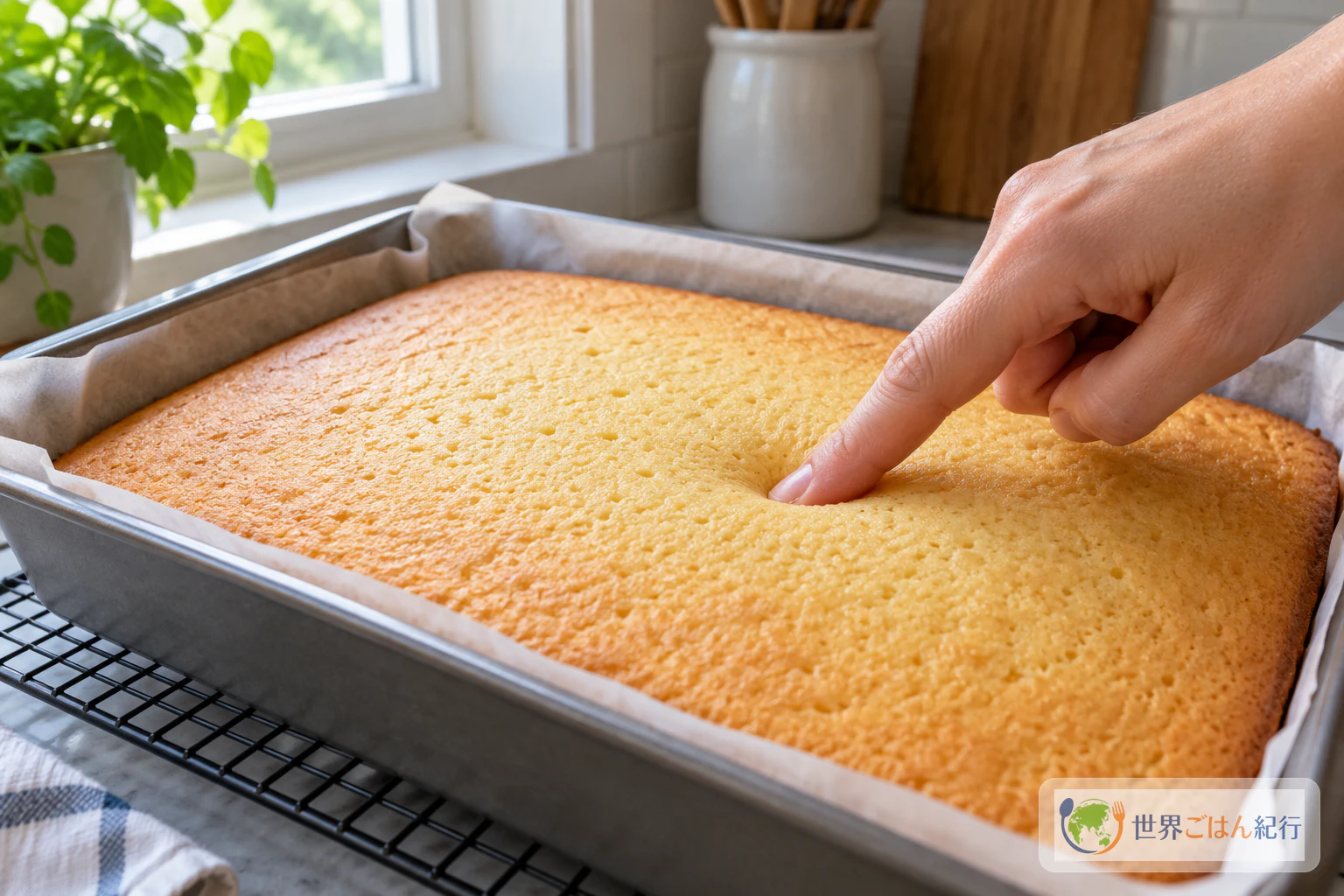
- Coles, "Basic chocolate lamingtons." Used as supporting guidance on not over-folding the flour, checking that the baked sponge springs back, handling the icing with forks, and jam or cream fillings. Not used for cultural history, and its storage suggestions are not treated as a guaranteed shelf life. https://www.coles.com.au/recipes-inspiration/recipes/basic-chocolate-lamingtons