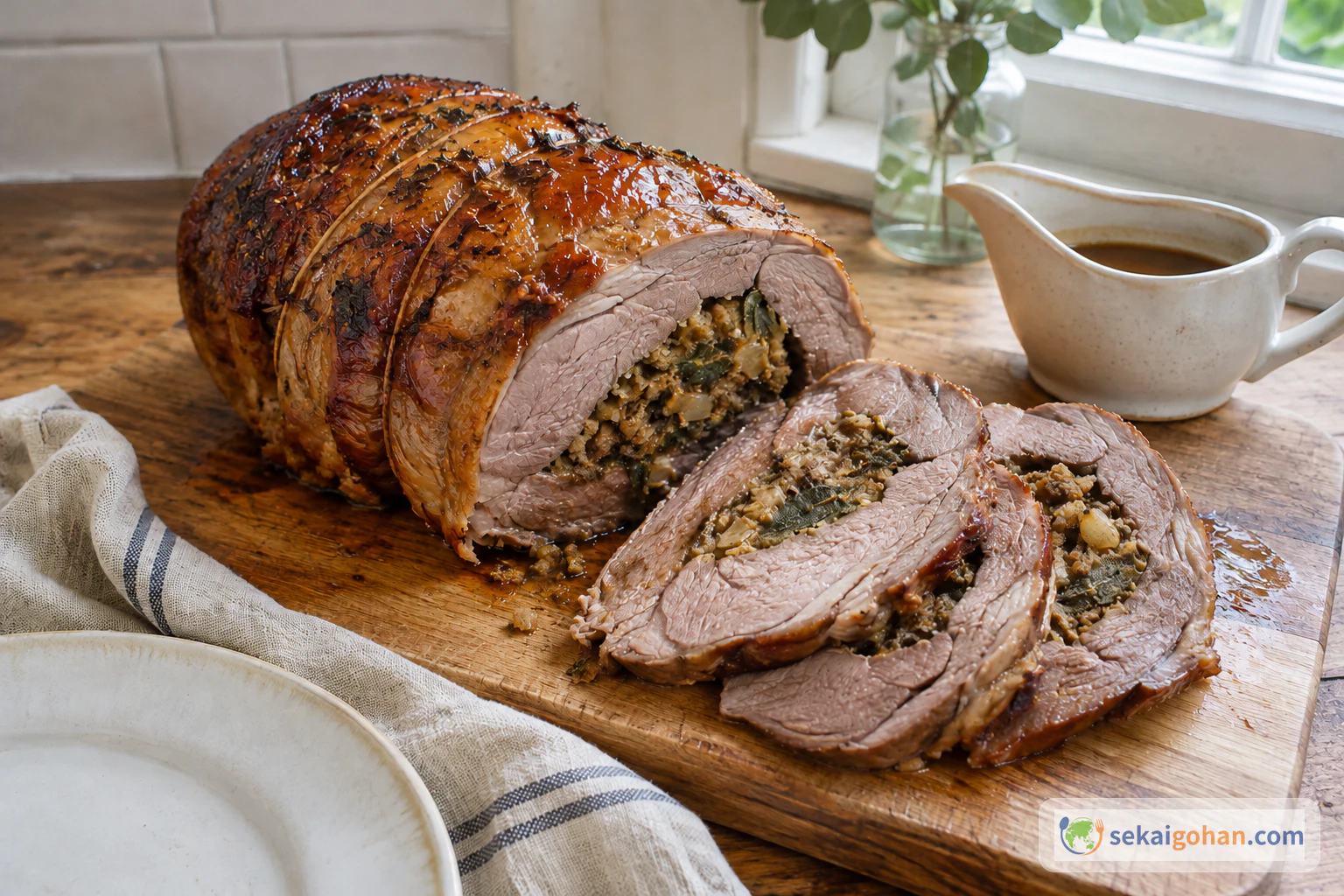
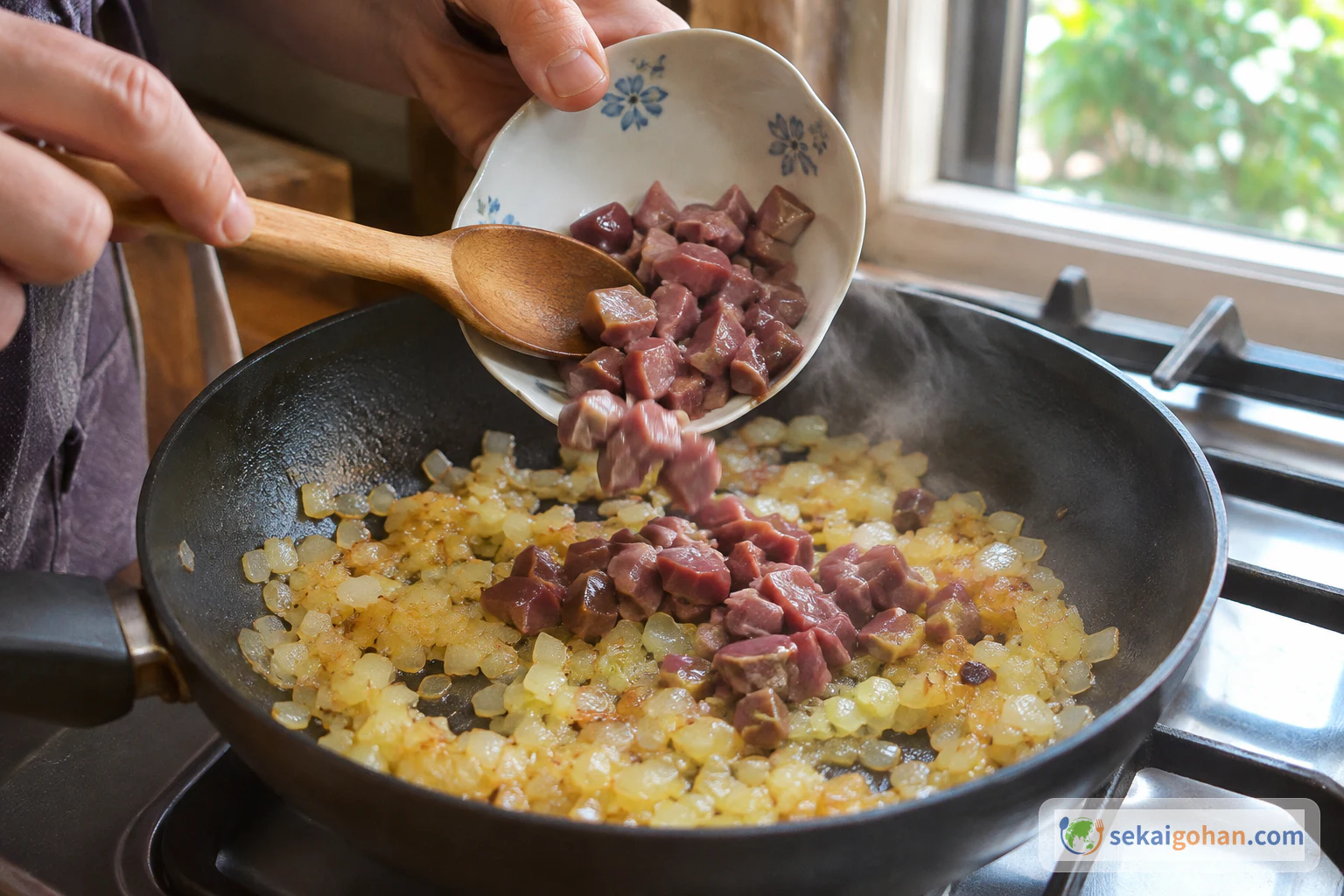
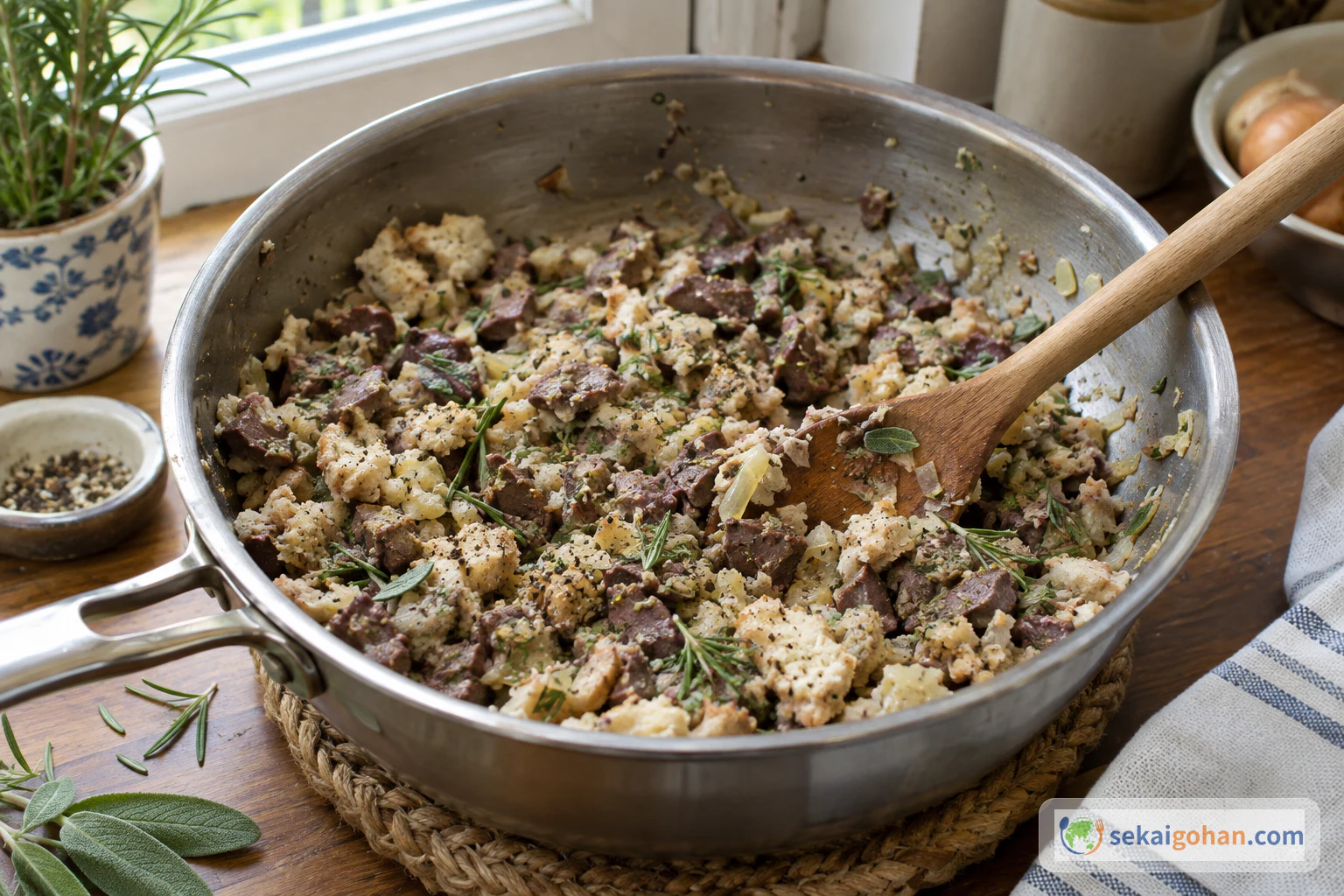
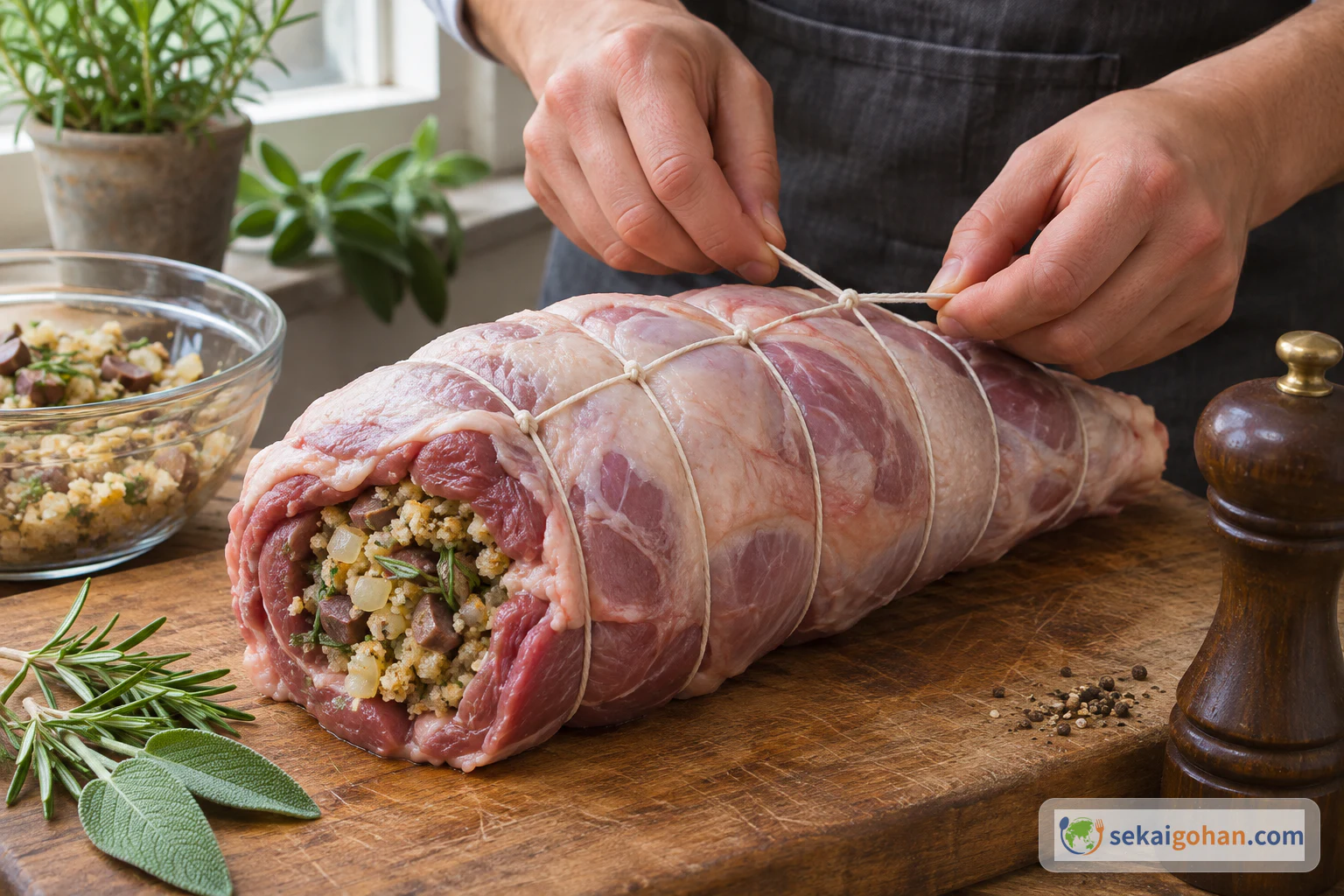
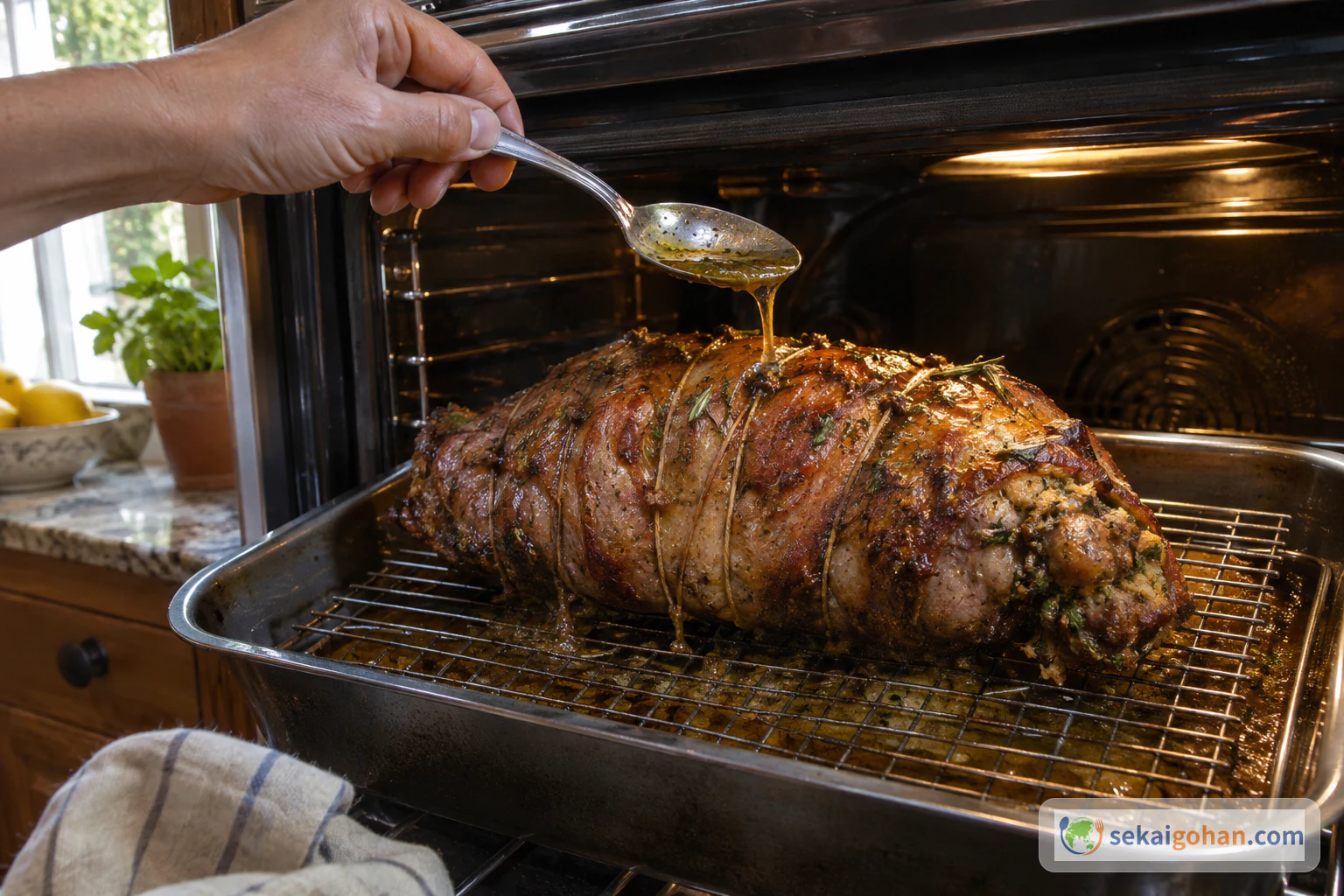
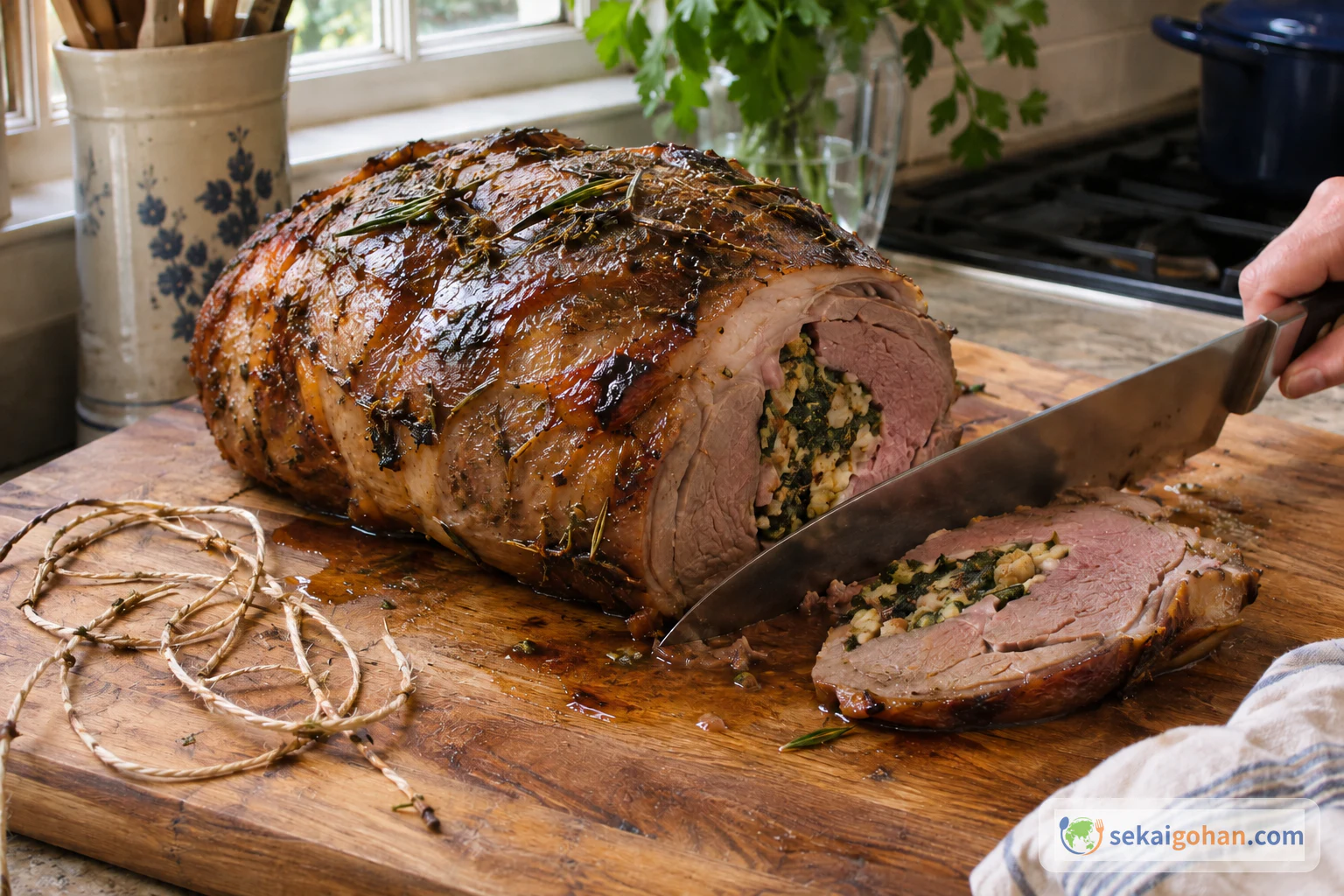
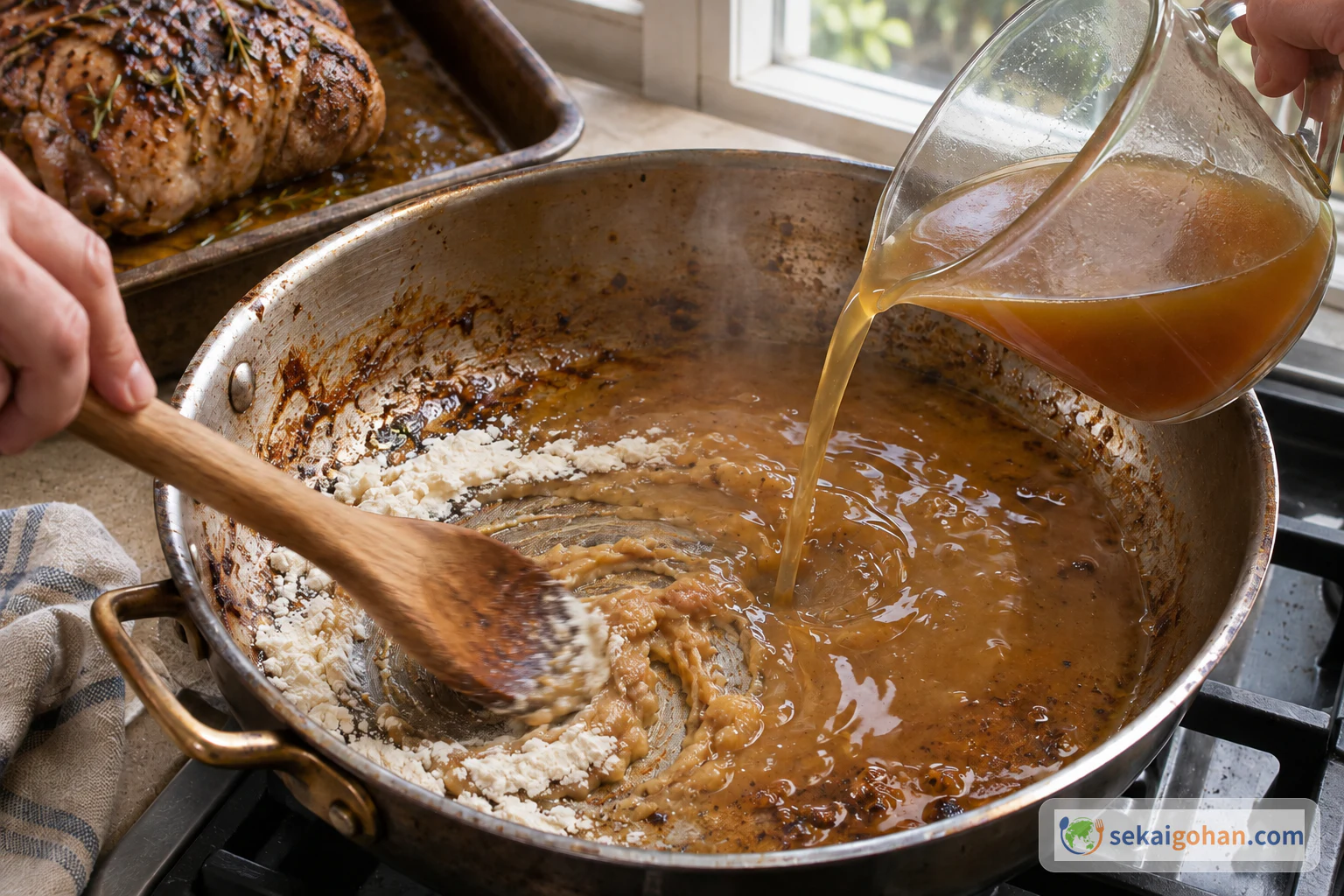
Once the roast has rested, the string comes away in loose loops. The first slice falls onto the board with a round of dark, herb-flecked stuffing set into the browned lamb. The kitchen smells of sage, butter and roasting fat while the gravy thickens on the stove. Colonial goose is lamb dressed as a goose: a leg boned, filled with onion, kidney, breadcrumbs and herbs, tied into a neat roll and roasted the way a goose would be. Each slice gives crisp peppered crust, lamb and a soft, savoury middle that drinks up the brown gravy. It belongs to the British-style roast dinners of Australia and New Zealand.
A Goose With Wool On It
Mutton in place of the Michaelmas bird
In Britain, roast goose was the dish of Michaelmas, the September feast at harvest time. Settlers in Australia and New Zealand found geese scarce and costly, and sheep everywhere. So they took a joint of mutton, boned it, stuffed it, rolled it and roasted it as they would a goose, and gave it the bird's name.
The name is explained two ways. One is plain dressing-up: a grander title for the mutton that settler households served day after day. The other is about shape. Leave the shank on, cut into the joint, and as the meat roasts the leg folds back until the whole roast looks like a goose. Both explanations have stayed in circulation side by side.
Stuffed boned mutton is older than the colonies. British cooks were stuffing mutton joints in the late 1600s, and the shaped colonial goose is usually traced to Northumbrian Duck, a stuffed mutton dish from the north of England that a Newcastle butcher sold from the 1880s into the 1920s. Whether Australia or New Zealand made it first is not settled; it is an Australasian dish, eaten on both sides of the Tasman.
On the eating-house menu in the 1870s
By 1870 a Melbourne cannery, the Metropolitan Meat Preserving Works, was selling colonial goose in tins. In the early 1870s it turned up on the menus of cheap eating houses, such as the Crown & Anchor in Sydney. In Melbourne in 1872, diners thought it tasted like young veal, while another account insisted colonial goose was simply another name for black swan. In New Zealand it was a first prize at a Wanganui regatta in 1874, and in 1879 a newcomer who tasted it said it seemed like a goose that had grown wool.
The earliest Australian recipe known, from 1878, is a single line: bone a shoulder of mutton, make an onion and sage stuffing as for an ordinary goose, put it where the bone was, sew it up and roast it.
The 1870s rumour that colonial goose was really black swan never stuck; the dish has always been mutton or lamb. Mock goose is a different roast made from a leg of pork. Burdekin duck, also Australian, has no bird in it either: it is corned beef wrapped in damper dough and fried.
Shoulder, leg and the butcher's goose
New Zealand recipes of the 1890s fill a leg or shoulder of mutton with ham or lean bacon, suet, breadcrumbs, eggs, small onions, parsley and mixed herbs, seasoned with salt and cayenne. A shoulder was boned, rolled and tied at both ends and in the middle. Most New Zealand recipes use the shoulder, and only a couple tell the cook to shape the meat into a goose.
That shaping was butcher's work. Leckie's in south Dunedin sold ready-made colonial geese into the 1970s, and a butcher in Palmerston kept making them for Friday trade long after that. During wartime rationing offal needed no coupons, so stuffed roasts built on offal came back to the table. New Zealand cooks revived the dish in the 1980s, and a modern New Zealand version marinates the leg in red wine and fills it with honey and dried apricots.
The Australian roast here takes the leg, fills it with onion, lamb kidney, soft breadcrumbs, rosemary and sage, and roasts it on a rack until the crust is deep gold. It comes back at Christmas in July, when Australians sit down to a British-style Christmas dinner in the middle of their winter.
Ingredients
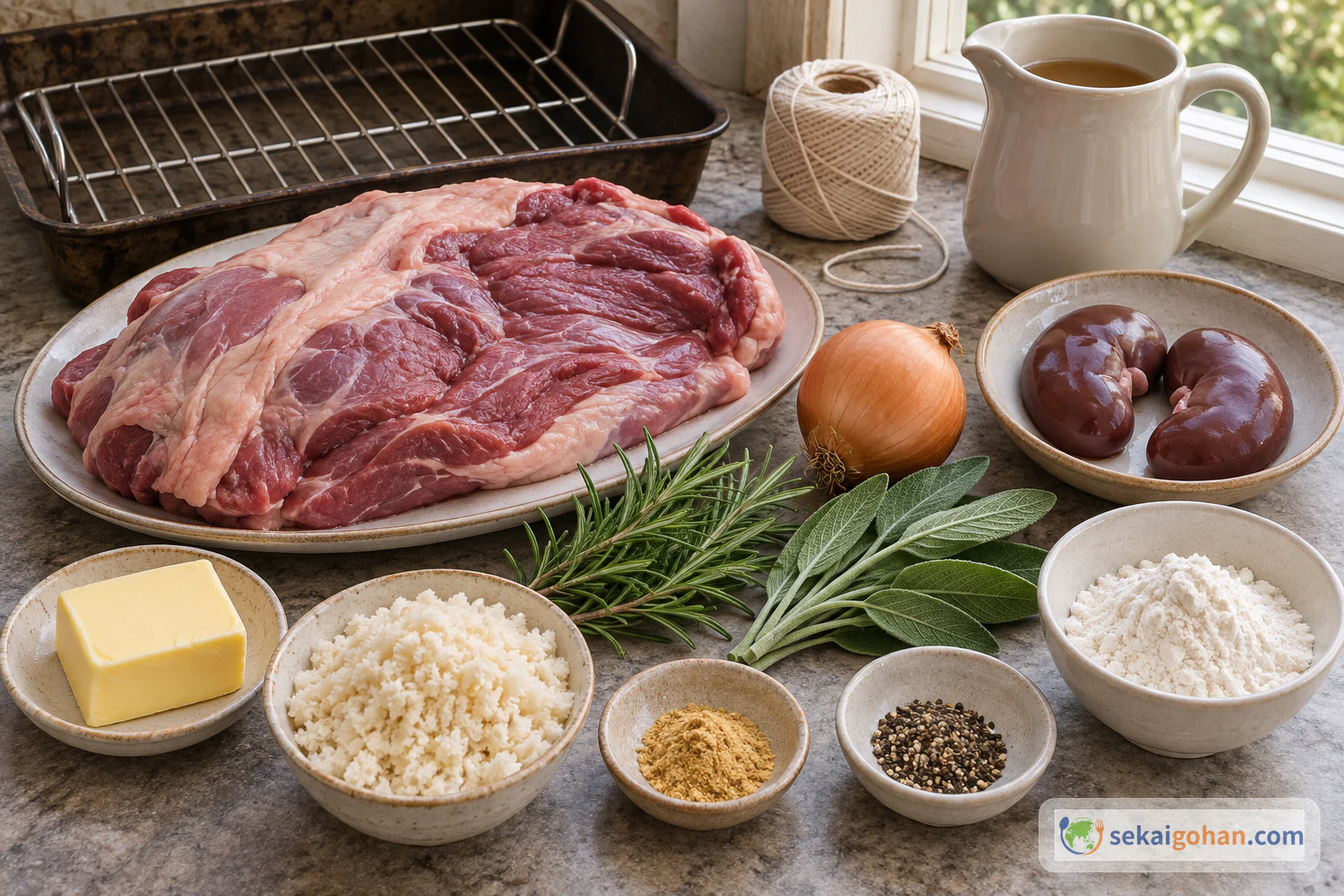
The breadcrumbs and gravy flour contain wheat, and the butter is dairy. Lamb kidney is offal; tell guests before serving.
Equipment
- Frying pan and wooden spoon
- Roasting tray with a wire rack
- Cotton butcher's twine
- Carving board and sharp carving knife
- Kitchen scissors
- Gravy jug or gravy boat
Shopping and Swaps
The leg is the one item to order ahead. Ask the butcher to bone the leg of lamb and keep it in one piece, so you have a pocket to fill. Lamb kidneys come from the same counter; ask for them at the same time, and check they look glossy and firm.
Use soft white breadcrumbs made from fresh white bread. They soak up the butter and turn tender in the oven, while dry pack crumbs stay sandy. Fresh rosemary and sage give a greener, brighter stuffing; dried herbs work at the smaller measure in the table and taste more muted and dusty. Buy cotton butcher's twine. Plastic or coated packing string melts or taints the meat in the oven.
| Keep | Let go if you must |
|---|---|
| Sage and onion in the stuffing, the tie, the rack roast and the pan gravy | The kidneys, which take depth with them and leave a milder stuffing |
| Butter for frying the onion | Fresh herbs, swapped for dried at the smaller amount |
Method
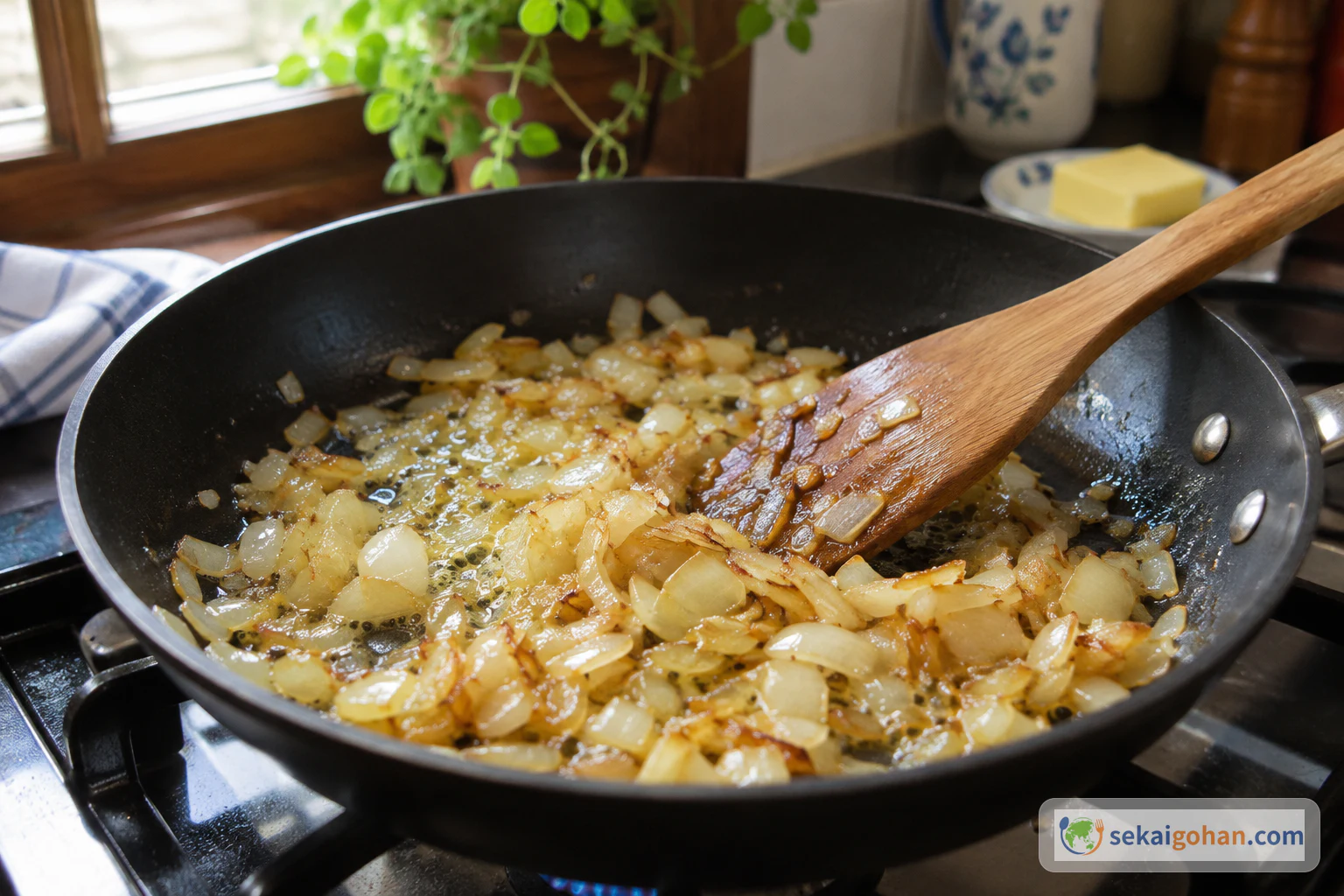
The stuffing comes first and is all frying-pan work. Let it cool while you open out the leg, then fill and tie it. After that, the roast is mostly hands-off: two hours in the oven with a few bastes, then twenty minutes of rest, which is when you make the gravy in the roasting tray.
When It Goes Wrong
| What you see | Why | What to do |
|---|---|---|
| The roll splits or the string snaps in the oven | The stuffing was packed too tight | Next time fill the leg loosely; this time, carve carefully and lay the stuffing back on each slice |
| The stuffing at the centre is lukewarm or its juices are cloudy | The roast came out too soon, especially at the shorter time | Return it to the oven and keep roasting until the centre is thoroughly hot and the juices run nearly clear |
| The gravy is lumpy | The stock went in too fast | Take it off the heat and stir hard until smooth, then add the rest of the stock in small pours |
| The dark gravy tastes bitter and burnt | The flour scorched | Burnt flour cannot be saved; brown the flour over low heat, stirring all the time |
| A piece of string turns up on a plate | A loop was missed when cutting the string | Before carving, run your fingers along the whole roll and count the loops you remove |
At the Table
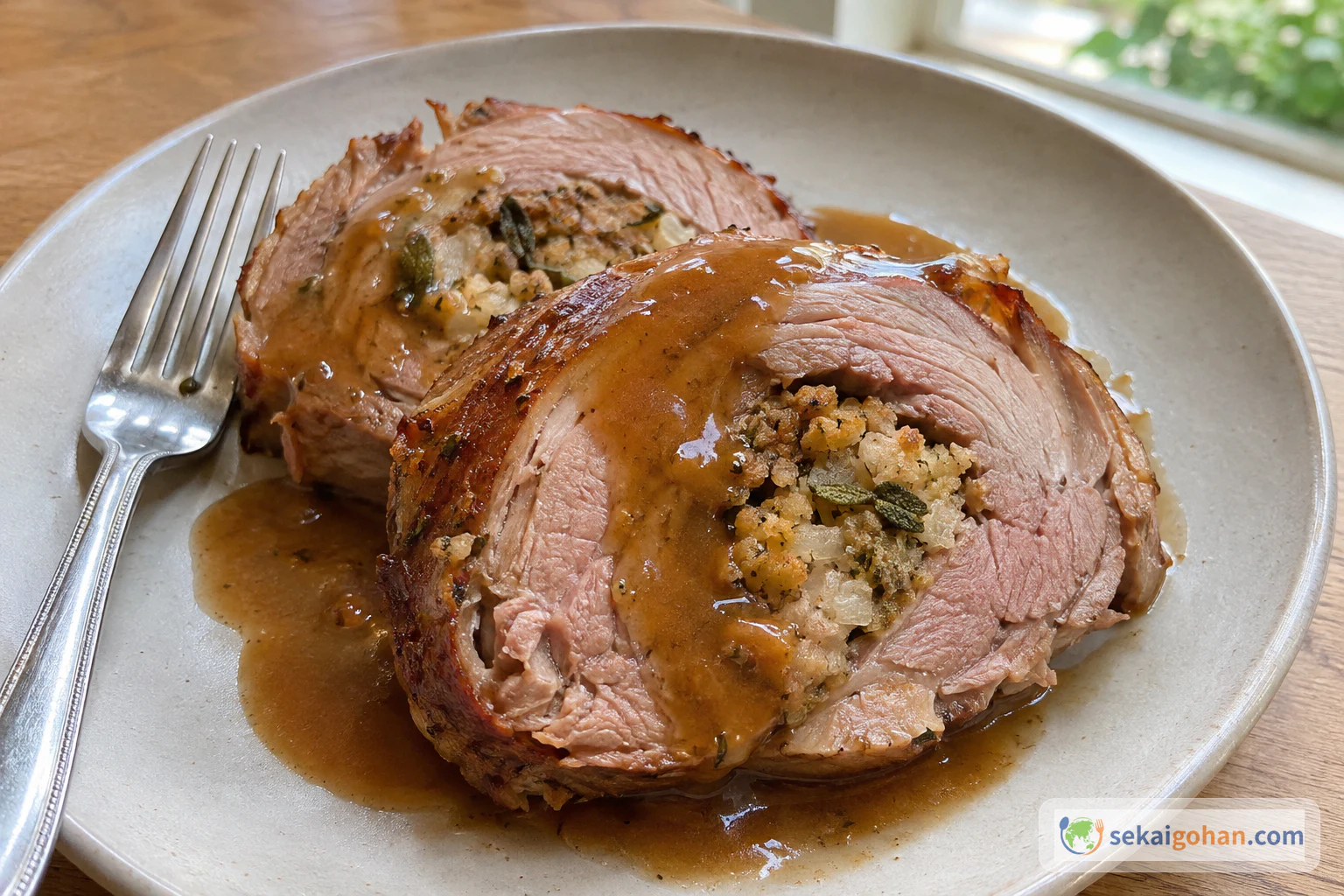
Colonial goose is a Sunday or celebration roast, carved at the table and passed with the gravy jug. Lay thick slices so the round of stuffing shows, and pour the gravy over the stuffing so it soaks in. Carve it and eat it the day you roast it, while the slices are hot.
Variations
Pot-roasted. For the Australian pot-roast, fry bacon, onion and kidney for a few minutes, season with salt, pepper and nutmeg, then mix off the heat with breadcrumbs and mixed herbs. Fill a 3¼–4½ lb (1.5–2 kg) leg, sew both ends with needle and thread, and cook it in a heavy covered pot with a little water and dripping over low heat for about two hours. Brown it in a 320°F (160°C) oven for 30 minutes. Reduce the pot juices until the dripping runs clear and cook potatoes in it. Stir 2 cups cold water and 1 tbsp plain flour into the pan scrapings for gravy. Rest the meat 30 minutes and pull out all the thread before serving. The meat comes out moister and softer, with a smoky, nutmeg-scented stuffing and less crust.
Shoulder, the oldest way. Use a boned shoulder, fill it with the same stuffing, roll it and tie it at both ends and in the middle. Roast until the stuffing at the centre is thoroughly hot. This is the cut of the earliest recipes, with more fat running through the meat.
Shaped like a goose. Ask the butcher to bone the leg but leave the shank on, then cut into the joint. As it roasts, the leg folds back and the joint takes on the outline of a goose on the platter.
Without kidney. Leave the kidneys out and fry only the onion before mixing in the crumbs and herbs. The stuffing turns lighter and milder, with sage and onion in front.
Frequently Asked Questions
Do I really need a butcher to bone the leg?
Yes. Boning a leg in one piece without tearing it takes practice and a boning knife, and the cavity has to stay whole to hold the stuffing. Ask when you order the lamb and pick it up ready to fill.
Can I sew the roast instead of tying it?
Yes. Sewing the ends shut with a needle and cotton thread is the older way and holds the stuffing in well. Pull out every stitch after resting, before you carve.
Can I serve the lamb pink?
Yes. Roast it for the shorter time if you like the meat medium pink. The stuffing still has to be thoroughly hot at the centre, so check it before the roast leaves the oven.