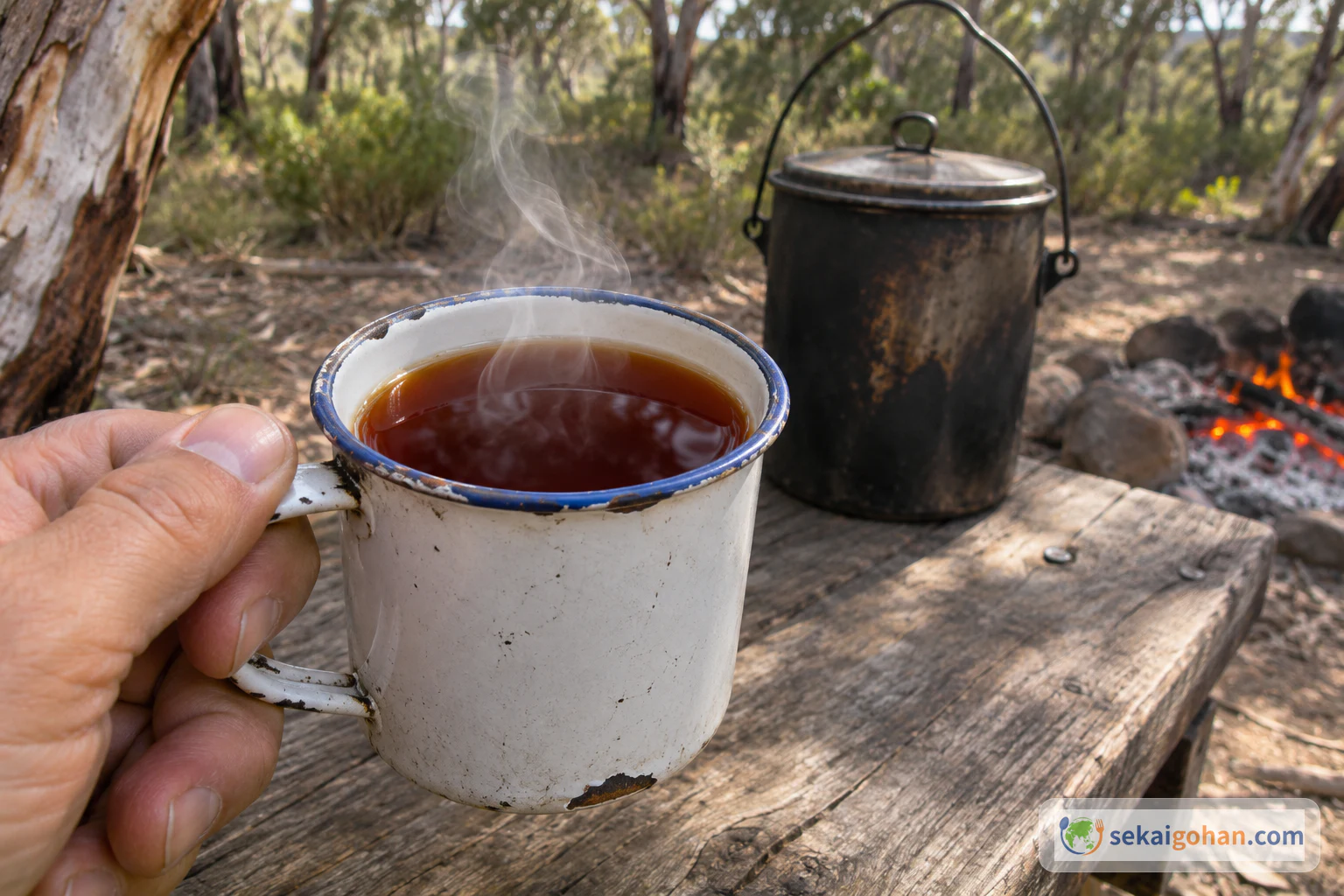
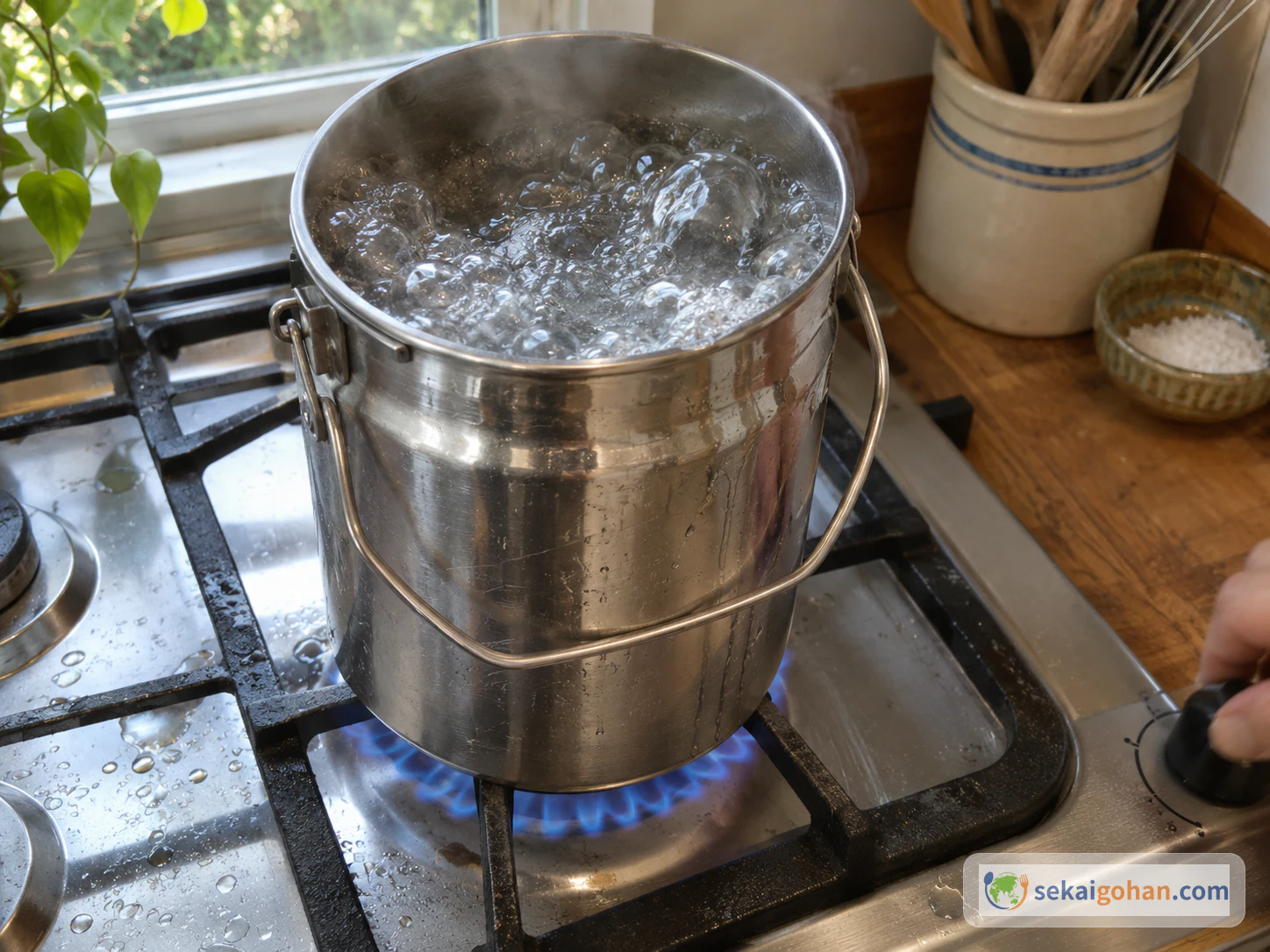
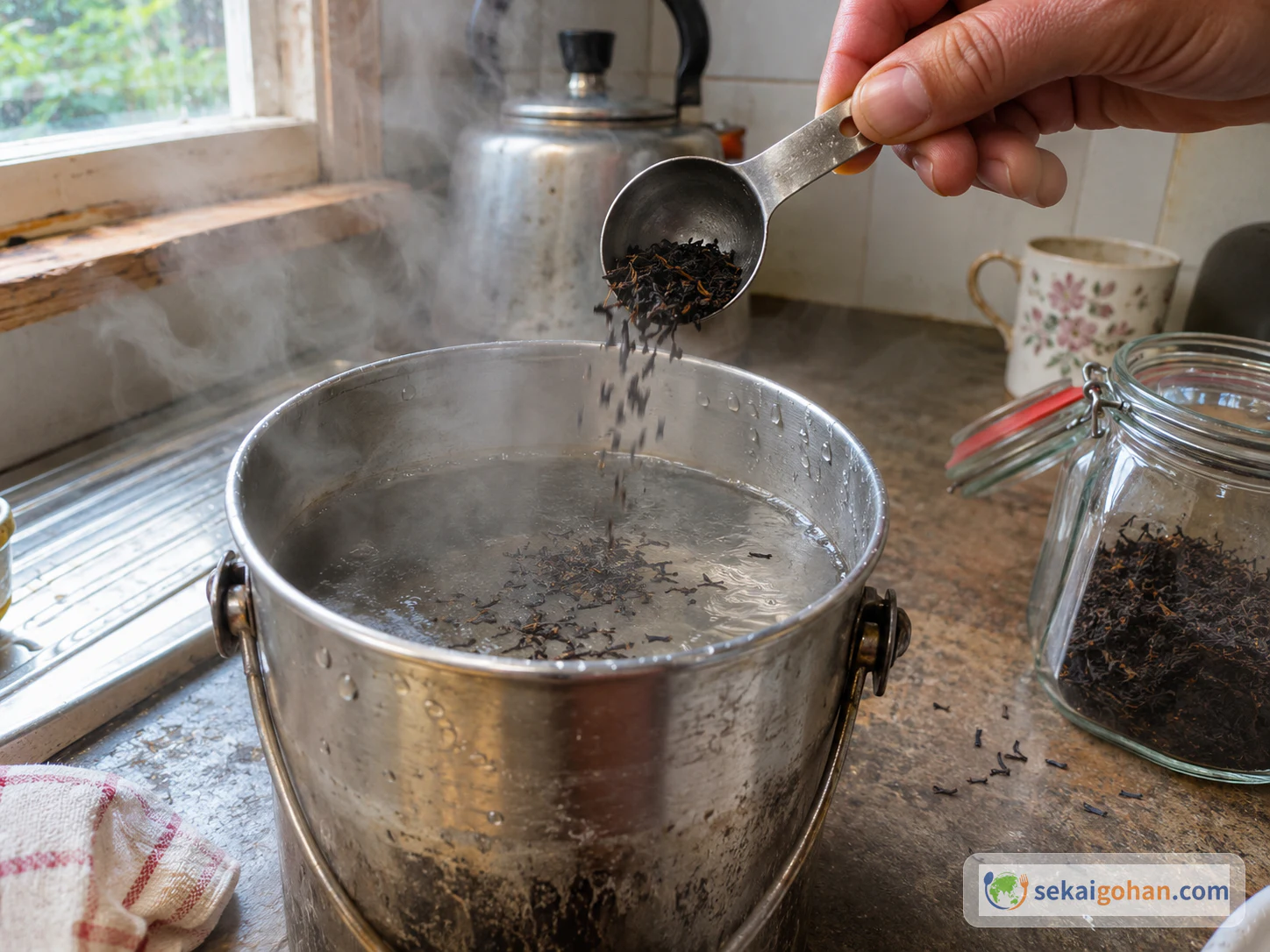
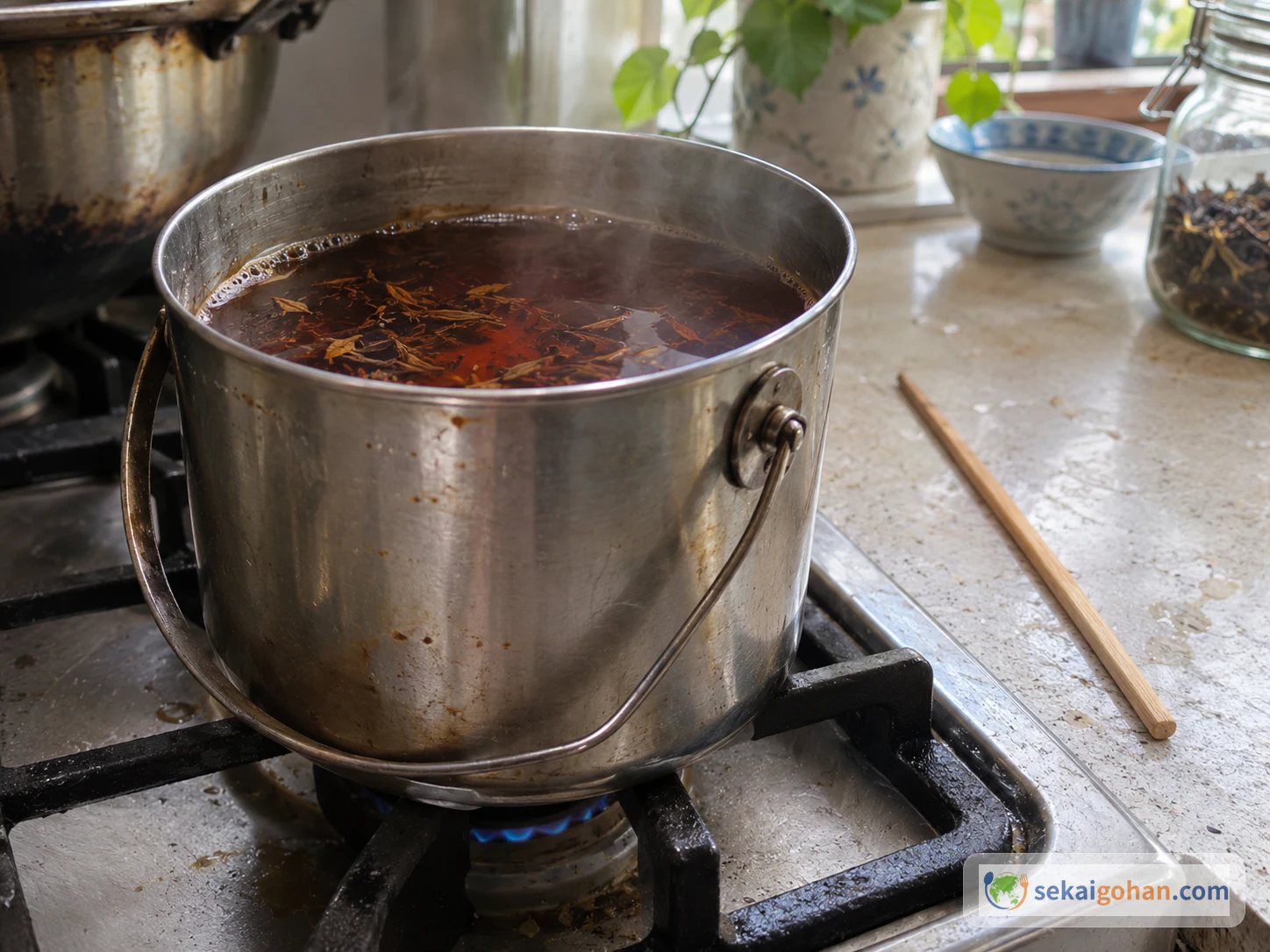
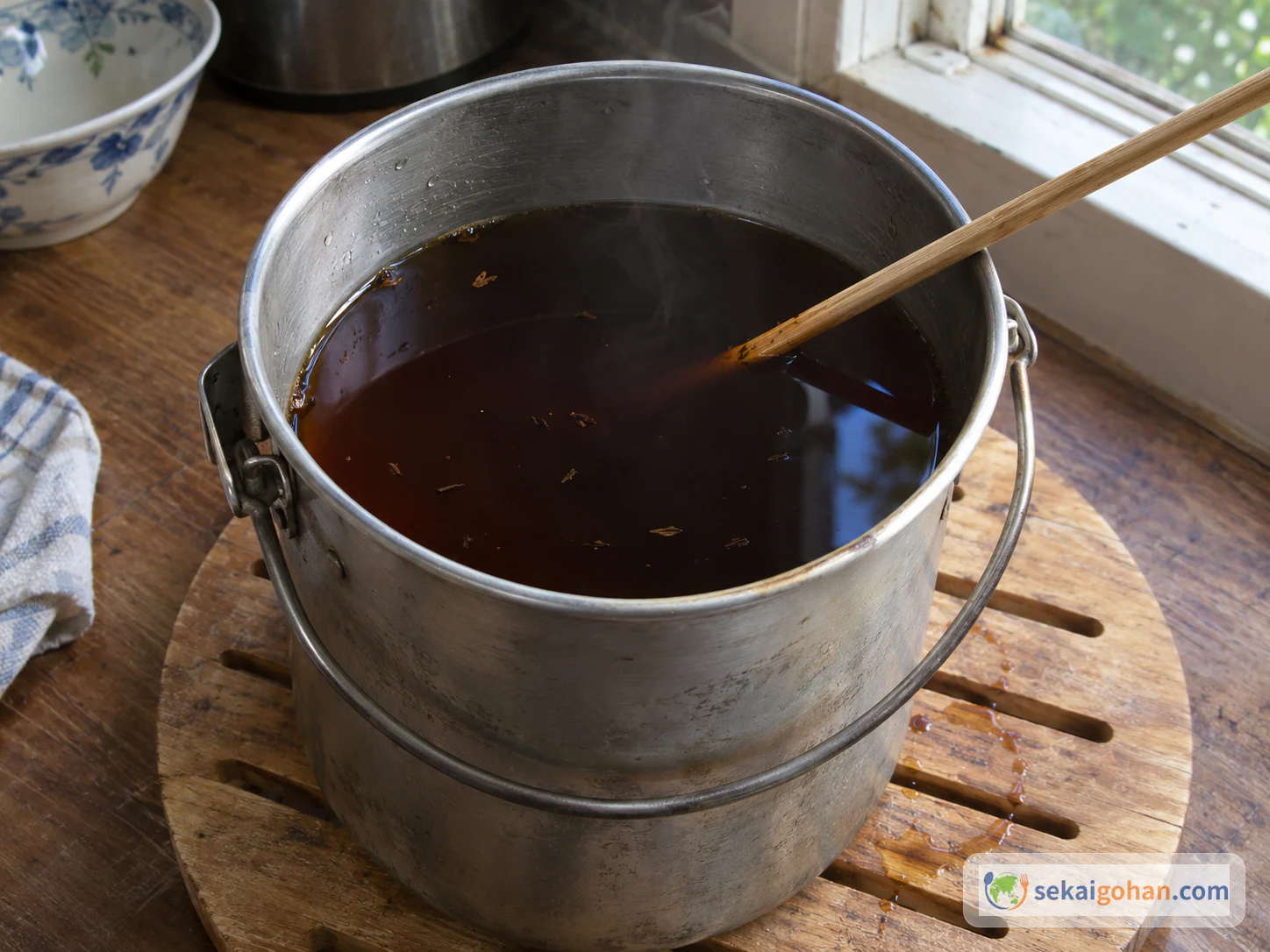
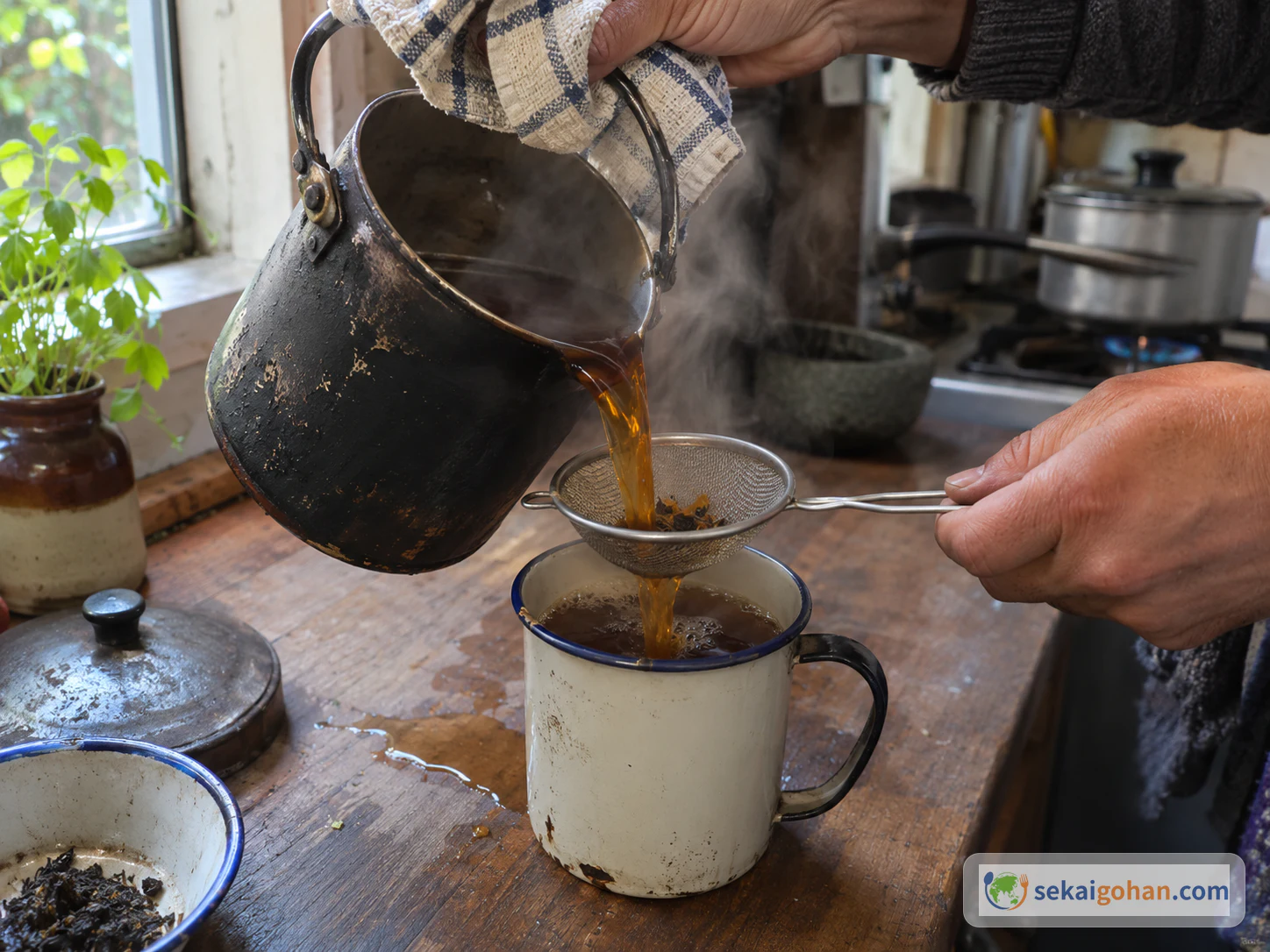
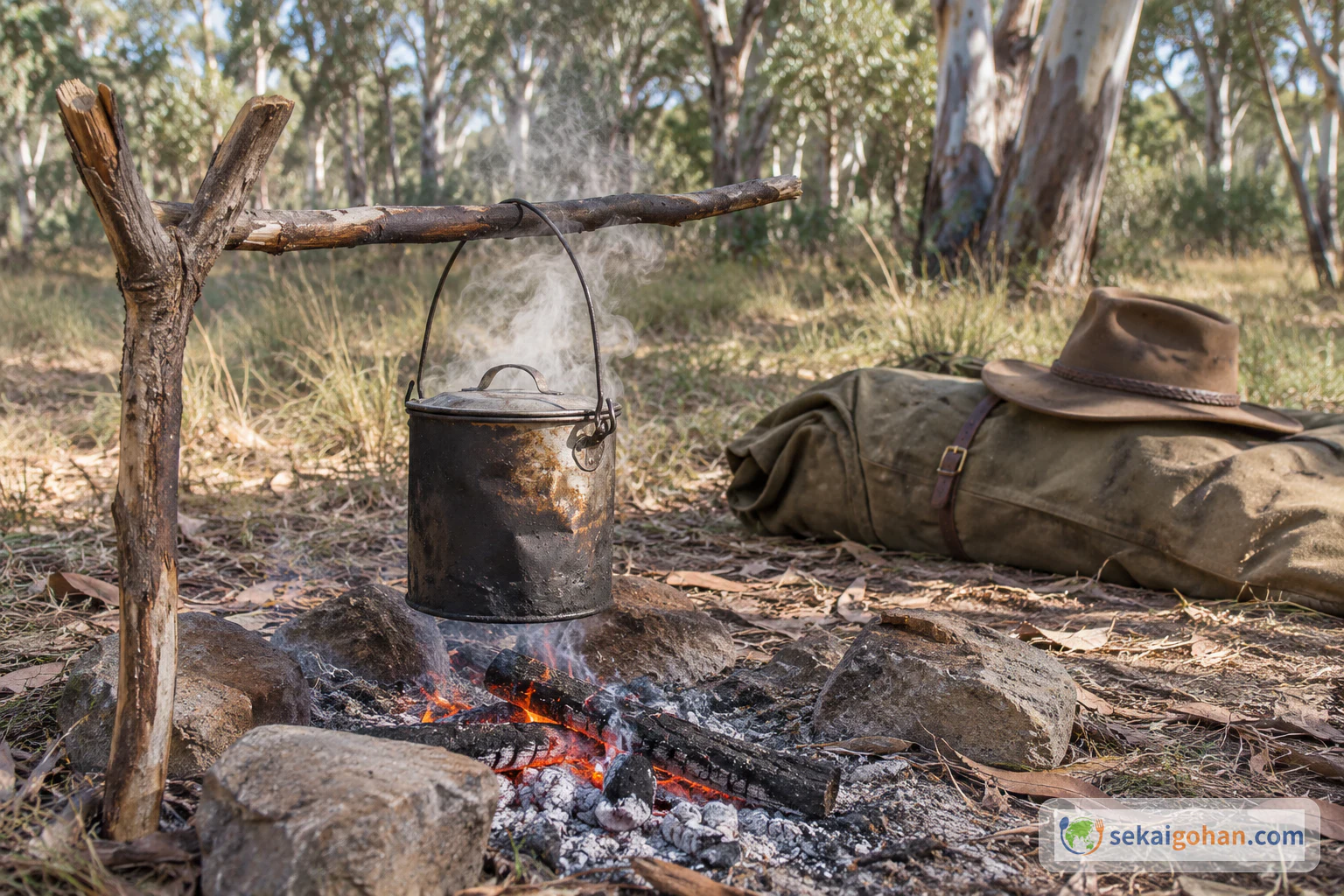
The billy sits over the coals with its wire handle tipped back and the water inside rolling hard. Then the tea leaves go straight in, the heat drops, and for ten minutes the water darkens to a deep reddish-brown while steam lifts off a surface that barely trembles. The can comes off the heat and stands until the leaves sink, and the tea is poured into enamel mugs with chipped rims. Billy tea is the stewed black tea of the Australian bush: strong, brisk and tannic, a little toasty from the long simmer, and traditionally scented with gum leaves.
A Tin Can, a Campfire and a Song
A way of brewing
Tea arrived in Australia with the British in 1788 and soon took its own shape there. One of the first differences was the billy, a light metal can for boiling water over a fire, with a wire handle that lets it hang from a stick or sit in the coals. Billy tea names the whole method: black tea leaves boiled in that can, with a couple of gum leaves for scent. Any black tea works, and no variety or growing region is tied to it.
The can itself carries a lot of memory. An enamel billy was how tea travelled from a farmhouse kitchen out to someone working in the paddock. During the First World War, "comfort billies" packed with food and sweets were sent to Australian soldiers overseas, from the troops stationed in Cairo before Gallipoli right through to the end of the war. The billy turns up again and again in bush poetry, and it sits at the centre of the campfire scenes that run through Australian cooking; more of the country's dishes are gathered on the Australia page.
Billy Tea and Waltzing Matilda
Billy Tea, with capitals, was James Inglis's tea brand, sold with a picture of a swagman boiling his billy on the pack. The song tied to it began in 1895 at Dagworth Station near Winton, where Banjo Paterson put words to a tune Christina Macpherson played. Early in the twentieth century Inglis bought the rights to Waltzing Matilda, and some of Paterson's lines were changed to suit the product. Marie Cowan, the wife of Billy Tea's manager, arranged the music, and her name went on the cover. Inglis proposed giving the new sheet music away free with each pack of tea.
That arrangement was printed as an advertisement for Billy Tea, and it is the earliest published version of the song. The year of that first printing is not settled: both 1903 and 1905 are given.
billy tea is the brew, Billy Tea is the brand that sold it with a swagman on the pack, and the billy can is the tin you boil it in. Billy tea is the method, whatever leaves are in the tin.
The swing
The famous move comes after the simmer. The boiling billy is swung overhead in a full circle, three times by tradition, to drive the leaves to the bottom. It takes real momentum; hesitate halfway and the tea comes out over the person swinging it. People who learn it practise with cold water first.
Do not swing a billy of hot tea at home. Taking it off the heat and letting it stand for 2 minutes settles the leaves just as well. To show someone the move, use an empty billy or one filled with cold water.
Ingredients
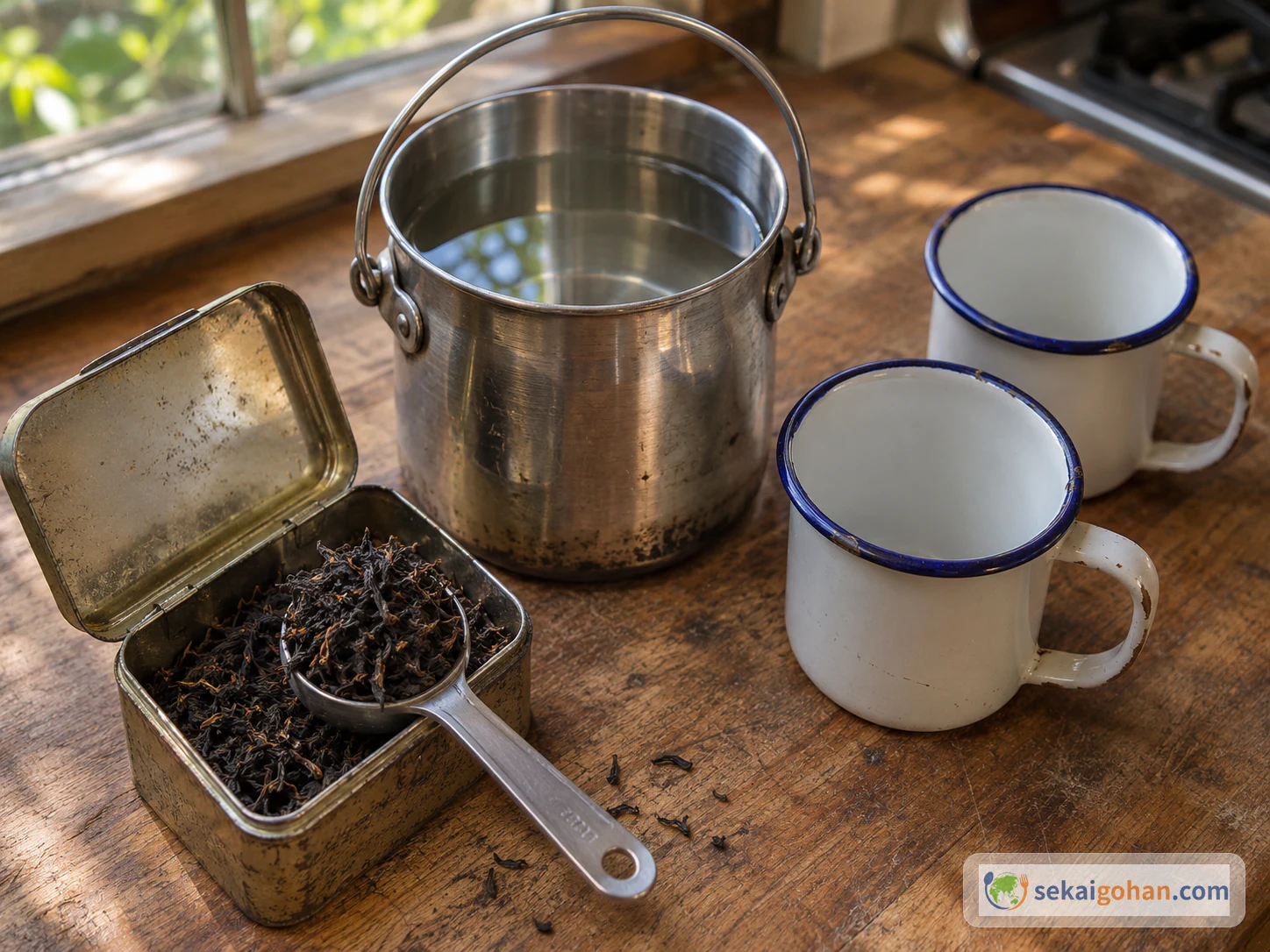
Use the full 40 ml (2 tbsp + 2 tsp) of loose tea, measured by volume. A short measure gives a thin, flat cup.
Tea, water and the optional leaves carry no major allergens. If you add milk or condensed milk at the table, the cup contains milk. Never add eucalyptus essential oil, not even a drop.
Equipment
- Billy can of about 1½ quarts (1.5 L) with a wire handle, safe over an open flame, or a stainless steel or enamel saucepan of the same size
- Tablespoon and teaspoon measures
- Wooden chopstick or long spoon
- Trivet or wooden board
- Folded cloth for the hot handle
- Fine-mesh tea strainer
- Enamel or metal mugs
Choosing the Tea, the Can and the Leaves
Buy whole loose-leaf black tea: Assam, Ceylon or a breakfast blend. Whole leaves loosen in the water and settle well after the rest. Very fine tea is harder to keep out of the cup after ten minutes in the pot, so keep a fine strainer at hand either way.
A billy can is sold as camping gear; search for a wire-handled can around 1½ quarts (1.5 L) that is marked safe over open flame, and skip any with plastic handles. At home, a saucepan of the same size does the job. Kettles with plastic handles or whistles melt on an open flame, so check the label before using one over a fire. Enamel mugs suit this tea: they hold a scalding, strong brew comfortably and survive a campfire better than glass or thin china.
Gum leaves or none
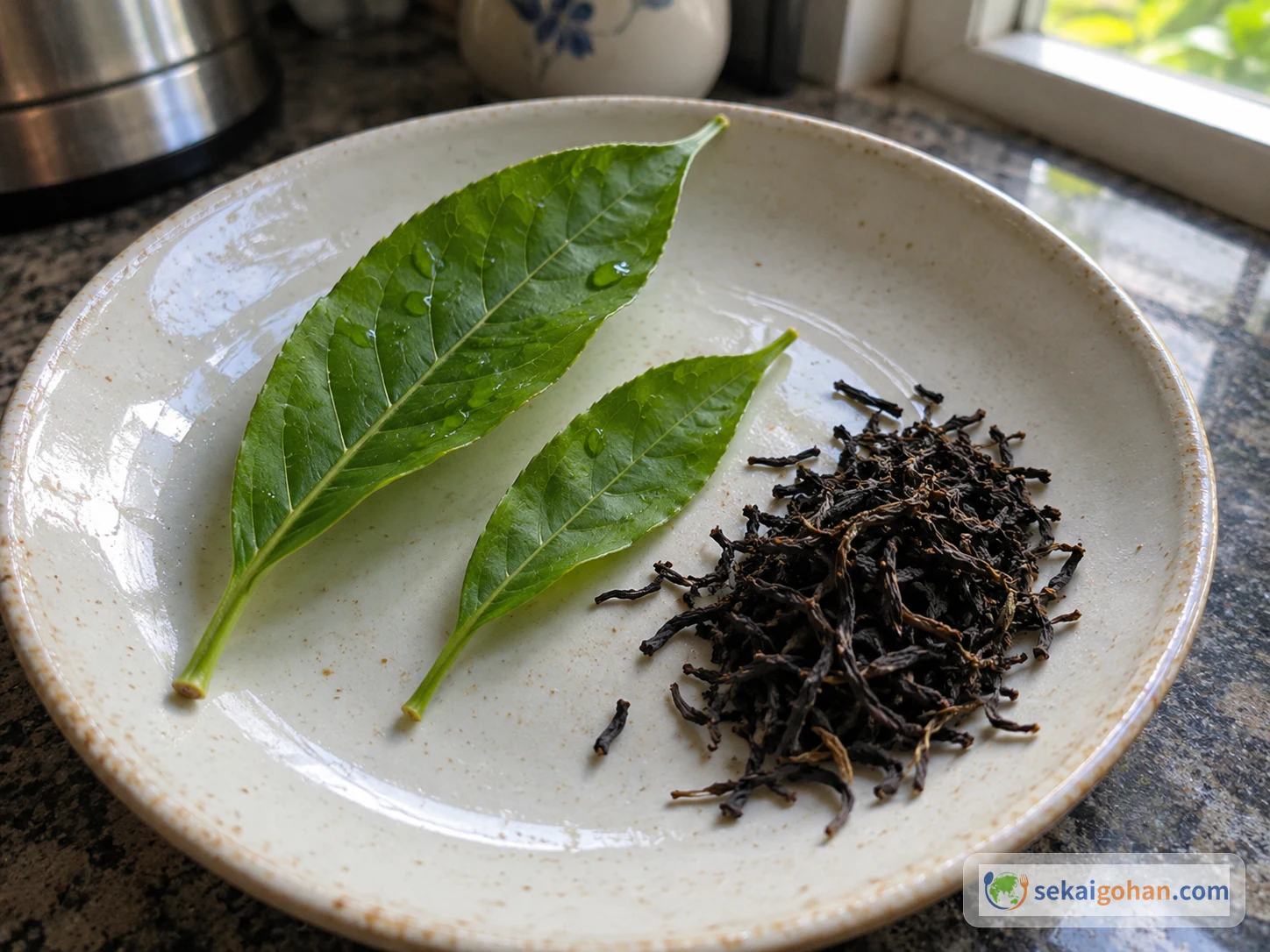
In the bush, two gum leaves go into the billy with the tea, or lemon myrtle leaves instead. At home, brew it without leaves. Eucalyptus oil is highly toxic, but how much reaches a cup brewed from a couple of leaves has not been established either way, so the plain tea is the home default. If you want the scent, use leaves sold for eating, such as dried lemon myrtle from a spice shop or online, wash them, add no more than 2, and lift them out before pouring. Lemon myrtle gives a citrus-like perfume, a different note from the cool sharpness of eucalyptus.
Eucalyptus oil is no substitute for leaves. Swallowing 2 to 3 ml (under 1 tsp) of the pure oil causes drowsiness, dizziness and unsteadiness, and 5 ml (1 tsp) or more causes serious poisoning, including coma. Symptoms usually start within 30 minutes and can be delayed up to 4 hours. In Australia, the Poisons Information Centre is 13 11 26.
Method
The work runs in one line with no prep beyond measuring the tea. Bring the water to a hard boil, drop the heat as the tea goes in, and then step back: the 10-minute simmer and the 2-minute rest are hands-off, with only an eye on the steam.
The wire handle and rim of the billy get very hot. Hold the handle with a cloth, pour away from your body, and keep the can low and steady while it is full.
When It Goes Wrong
| What you see | Why | What to do |
|---|---|---|
| Too bitter or harsh | Ten minutes is a long brew for black tea, and the measure is strong | Stretch the cup with a little hot water now; next time cut the simmer to 3–5 minutes |
| Thin, weak aroma | Stale tea, leaves left floating, or heat so low the liquid does not move | Use fresh tea, scatter it loosely, keep a gentle simmer, and keep the full 40 ml |
| Boils over | Too much water for the can, or the heat left high | Keep 5¼ cups (1.25 L) in a 1½-quart (1.5 L) can and turn the heat down as the tea goes in |
| Leaves in the cup | Short rest or a rough pour | Give the full 2 minutes plus one gentle stir, pour through a strainer, and leave the bottom behind |
| Rough, drying taste | Simmered past 10 minutes or stirred too often | Treat 10 minutes as the limit and stir only once, after the rest |
| No gum-leaf scent | The leaves were left out | Add 2 lemon myrtle leaves to the next pot; never reach for eucalyptus oil |
Serving and Variations
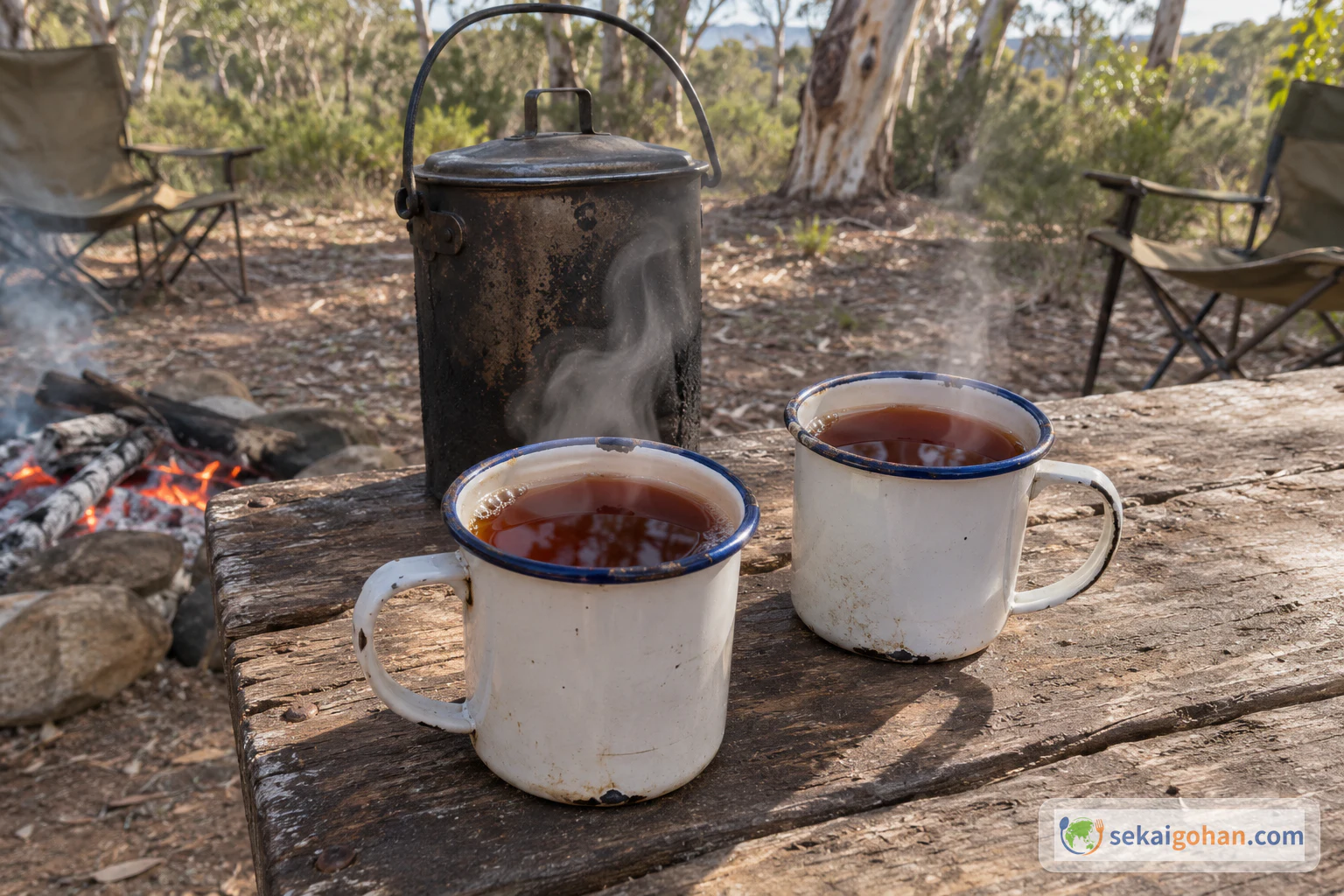
Pour it straight into enamel mugs while it steams, by the fire or at the kitchen table. Sugar, milk or condensed milk go in to taste, and households differ; plenty of people drink it black and strong. Pour only what will be drunk, because the tea keeps getting more tannic as it stands on its leaves.
Variations
- Lemon myrtle billy tea. Two dried lemon myrtle leaves with the tea give a bright citrus perfume over the dark brew.
- Short brew. A shortened version of the standard method: simmer for 3–5 minutes instead of 10. The bitterness drops back and more of the fresh tea aroma stays; this is the version to choose when you add milk.
- With milk. A little milk or condensed milk softens the strong brew into something round and sweet.
- Iced. Brew it strong, then cool it fast over ice or in cold water. Slow cooling brings the astringency forward.
Leftovers
Billy tea is made to be drunk as soon as it is poured, so brew what you will drink rather than making it ahead. Reheating dulls the flavour; if you do warm a cup again, bring it just to hot and do not let it boil on.
Frequently asked questions
Should the billy have a lid on while it simmers?
No. An open billy lets you watch the steam and the surface, which is how you keep the heat at a gentle tremble. Turn the flame down the moment the surface starts to roll.
Can I use tea bags?
Loose leaf is the base for billy tea. The fine tea inside bags sinks easily, but whole leaves loosen well in the water and settle cleanly after the rest. If you use fine tea, pour through a fine-mesh strainer.
Can I brew it over a campfire?
Yes, and the smoke adds its own note to the tea. Follow the local fire rules and the season, keep the billy over low coals rather than tall flame, and put the fire out completely when you are done. On a stove at home, a gas burner and a saucepan give the same brew.
Does billy tea contain caffeine?
Yes, it is black tea. Go easy on it before bed, and take care when serving it to children or during pregnancy.